Japanese gardens are among the most peaceful and beautiful spaces in the world. They are designed to bring harmony, balance, and calm to any outdoor area. The right plants are the heart and soul of this timeless garden style.
Each plant in a Japanese garden is chosen with great care and intention. From graceful maples to serene mosses, every plant plays a specific role. Together they create a living landscape that changes beautifully with every season.
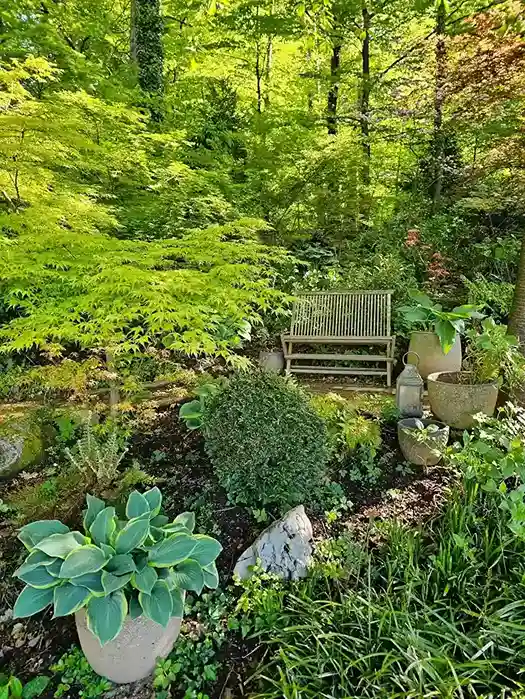
source: @omniaetnihilbeautiful
This guide covers 21 of the best Japanese garden plants in full detail. You will learn how to grow them, where to place them, and how to combine them. Whether you have a large garden or a small courtyard, these plants will transform your space completely.
What Makes a Japanese Garden Unique?
Japanese gardens follow a philosophy of simplicity, balance, and respect for nature. Every element — from rocks to water to plants — is placed with deliberate purpose. Nothing is random and nothing is wasted in a true Japanese garden design.
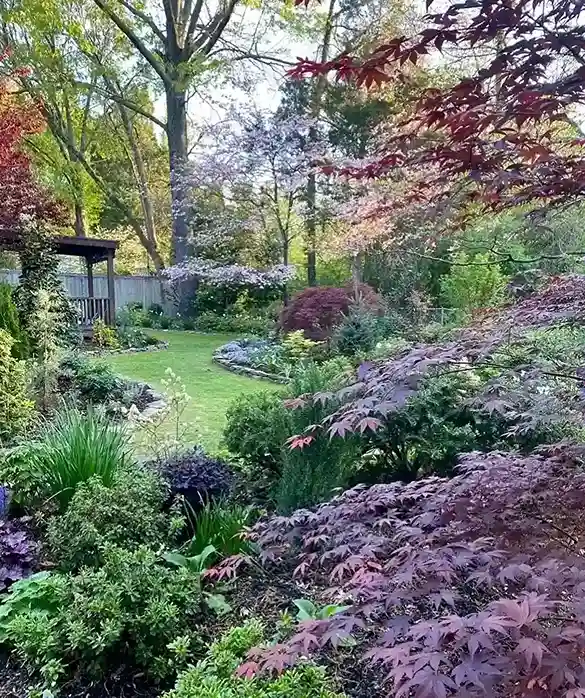
source: @thepsychgarden
Plants are chosen for their seasonal beauty and symbolic meaning. Cherry blossoms represent the fleeting nature of life. Pine trees symbolize endurance and strength. Understanding these meanings helps you design a garden with real depth and authenticity.
| Design Principle | Meaning | How Plants Reflect It |
| Ma (Negative Space) | Emptiness has value | Sparse planting with open gravel areas |
| Wabi-Sabi | Beauty in imperfection | Mossy rocks, gnarled pine shapes |
| Shakkei | Borrowed scenery | Plants that frame distant views |
| Miegakure | Hide and reveal | Layered planting along paths |
| Kanso | Simplicity | Limited plant palette, clean lines |
| Fukinsei | Asymmetry | Odd-numbered plant groupings |
Overview of All 21 Japanese Garden Plants
Before diving into each plant in detail, here is a complete overview of all 21 Japanese garden plants covered in this guide. This table gives you a quick snapshot of each plant’s type, size, and key feature at a glance.
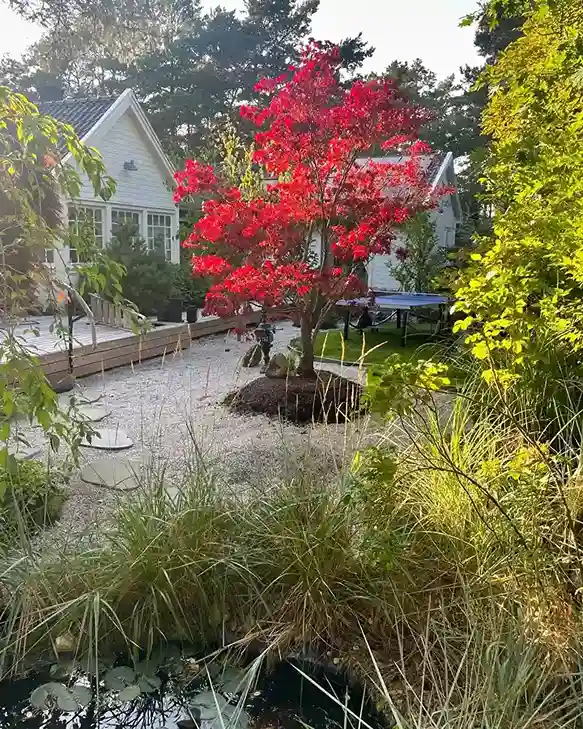
source: @japanese_garden_hollviken
Use this overview to shortlist the plants that best suit your garden’s size, light conditions, and style. Then read the detailed sections below to learn exactly how to grow and place each one.
| # | Plant Name | Type | Key Feature | Best For |
| 1 | Japanese Maple | Tree | Stunning autumn color | Focal point |
| 2 | Japanese Black Pine | Tree | Year-round structure | Backdrop / bonsai |
| 3 | Cherry Blossom (Sakura) | Flowering Tree | Spring pink blooms | Specimen tree |
| 4 | Bamboo | Grass | Tall, fast-growing screen | Privacy / sound |
| 5 | Japanese Wisteria | Climber | Cascading purple flowers | Pergola / arch |
| 6 | Moss | Ground Cover | Lush green carpet | Ground cover |
| 7 | Azalea | Shrub | Vivid spring flowers | Clipped hedges |
| 8 | Japanese Forest Grass | Ornamental Grass | Cascading golden blades | Border / shade |
| 9 | Camellia | Shrub / Tree | Winter and spring blooms | Specimen / hedge |
| 10 | Lotus | Water Plant | Sacred floating flowers | Pond / water feature |
| 11 | Japanese Iris | Perennial | Elegant purple flowers | Waterside planting |
| 12 | Fern | Perennial | Delicate, arching fronds | Shade garden |
| 13 | Weeping Cherry | Flowering Tree | Dramatic drooping canopy | Focal point |
| 14 | Pieris Japonica | Shrub | Colorful new growth | Woodland edge |
| 15 | Nandina | Shrub | Red berries and foliage | Mixed borders |
| 16 | Japanese Kerria | Shrub | Bright yellow spring flowers | Shaded areas |
| 17 | Enkianthus | Shrub | Brilliant autumn color | Woodland garden |
| 18 | Mondo Grass | Ground Cover | Dark, grass-like leaves | Path edging |
| 19 | Japanese Anemone | Perennial | Late summer white flowers | Shaded borders |
| 20 | Plum Blossom (Ume) | Flowering Tree | Early spring fragrant blooms | Specimen tree |
| 21 | Cryptomeria | Conifer Tree | Tall evergreen structure | Screen / backdrop |
1. Japanese Maple (Acer palmatum)
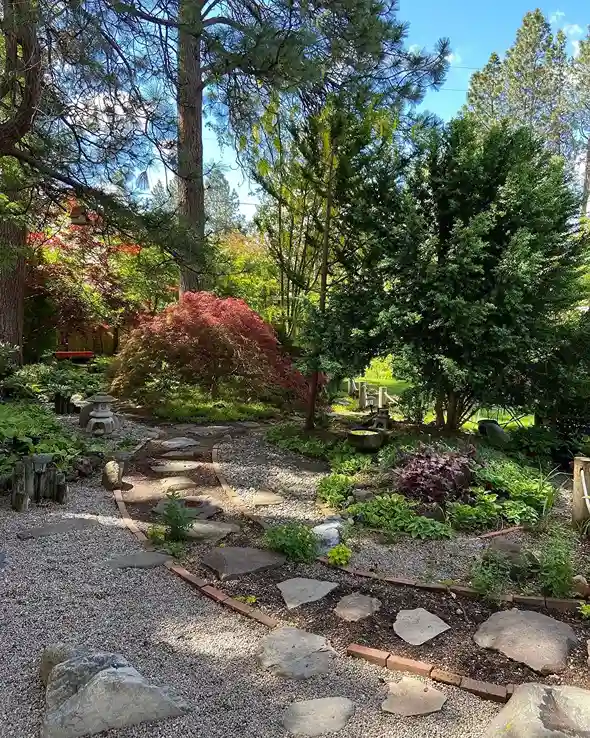
Japanese Maple is the crown jewel of any Japanese garden. Its delicate, star-shaped leaves turn brilliant shades of red, orange, and gold in autumn. No other tree creates such a breathtaking seasonal display with so little effort.
source: @oaktreecottage17
It grows well in partial shade and prefers moist, well-drained soil. Plant it as a focal point near a pond or stone lantern for maximum visual impact. It also grows beautifully in large containers on a shaded patio or courtyard. For design inspiration, see these small trees for front yard ideas that pair perfectly with Japanese maples.
2. Japanese Black Pine (Pinus thunbergii)
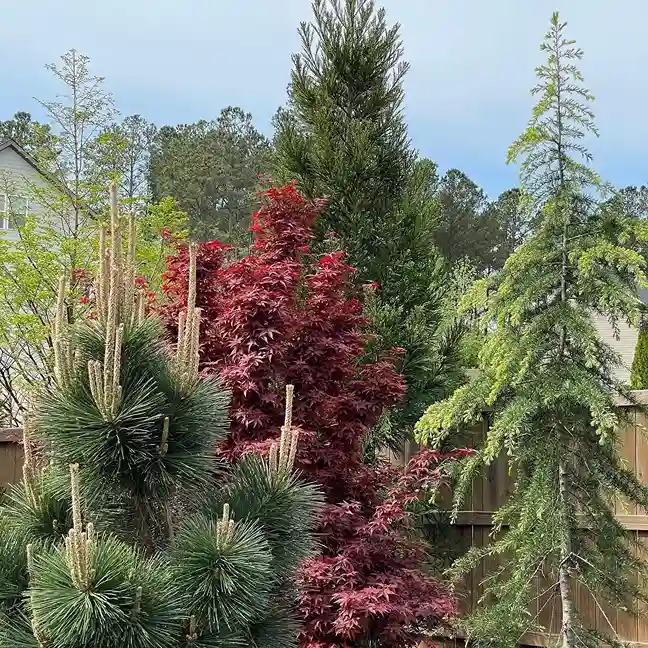
Japanese Black Pine is a symbol of strength and longevity in Japanese culture. Its rugged, twisted form gives any garden a dramatic sense of age and character. It is the most common pine used in traditional bonsai and garden design.
source: @needsmorejapanesemaples
It thrives in full sun and tolerates coastal winds and poor soils very well. Prune it carefully each year to maintain its sculptural shape and control its size. Use it as a bold backdrop element or train it over a stone garden feature for a truly authentic look.
3. Cherry Blossom — Sakura (Prunus serrulata)
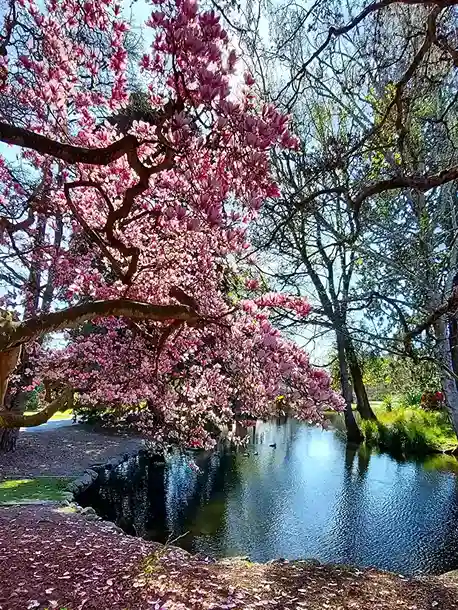
Cherry Blossom is the most iconic and celebrated plant in all of Japanese culture. Its soft pink and white flowers bloom in spectacular clouds every spring. The brief flowering season makes it even more precious and emotionally powerful.
source: @chrisnz74
Plant it in full sun with well-drained soil and give it plenty of space to spread. It grows into a beautiful medium-sized tree with attractive bark even when not in flower. Pair it with flowering trees to extend the season of bloom throughout your garden.
4. Bamboo (Phyllostachys and Fargesia species)
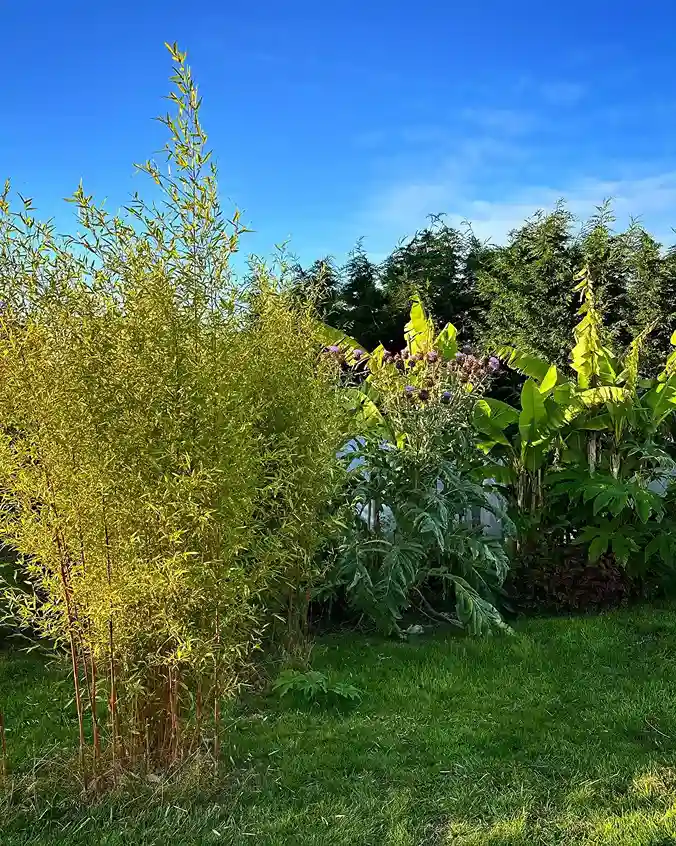
Bamboo is one of the most versatile and dramatic plants in Japanese garden design. It creates instant privacy screens, rustling sound effects, and striking vertical structure. Few plants grow as fast or make as powerful a visual statement.
source: @thetropicalplantguy
Always choose clumping bamboo varieties to prevent invasive spreading. Running bamboo must be contained with root barriers or it will take over your entire garden. Use bamboo as a living screen or privacy plant along a fence or boundary wall for a truly stunning natural effect.
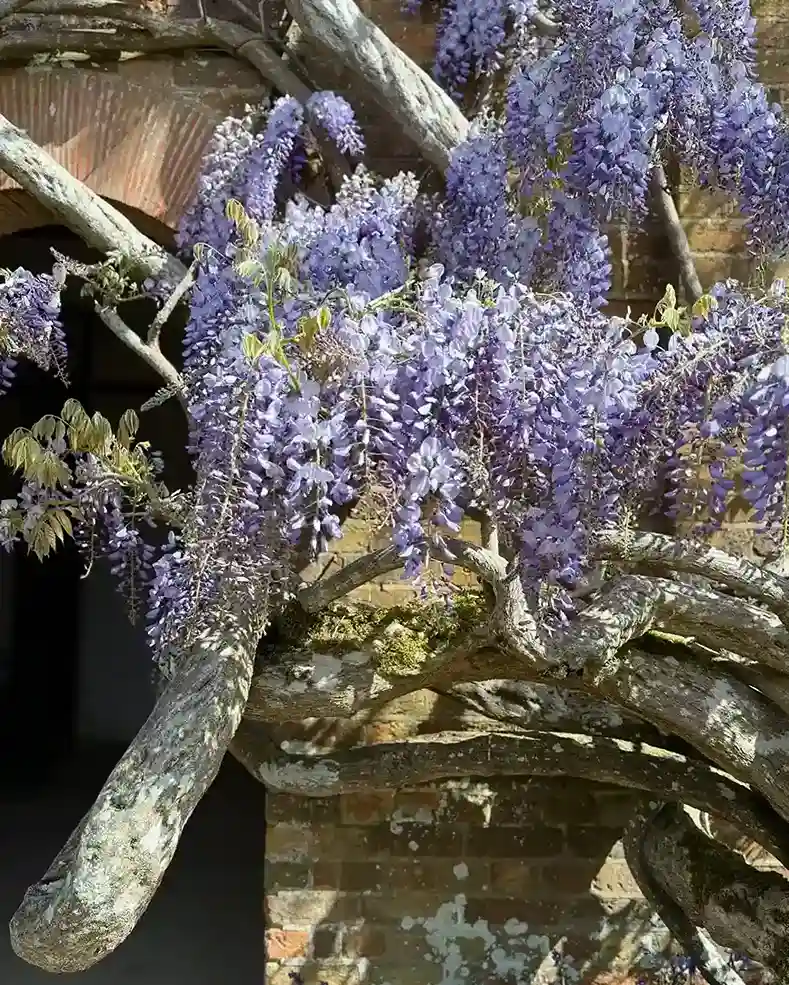
5. Japanese Wisteria (Wisteria floribunda)
Japanese Wisteria is one of the most spectacular flowering climbers in the plant world. Its long, cascading clusters of purple or white flowers fill the air with an intoxicating fragrance every late spring. A mature wisteria in full bloom is absolutely unforgettable.
source: @sallylloydjone
Train it over a wooden pergola, archway, or trellis for a classic Japanese garden look. It needs full sun and strong support structures because mature plants become very heavy. Prune it twice a year in summer and winter to keep it tidy and encourage maximum flowering.
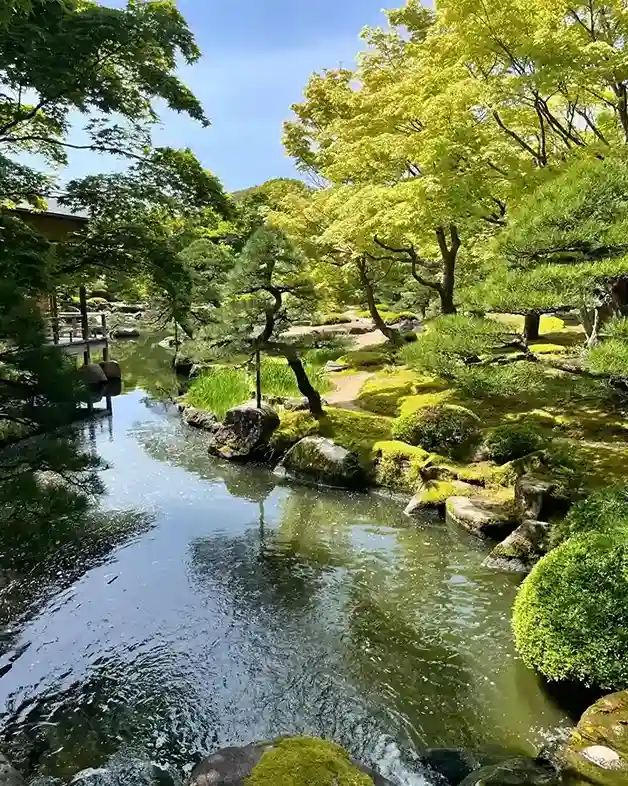
6. Moss (Various Species)
Moss is the quiet hero of Japanese garden design. It creates a soft, velvet-like carpet that gives a garden an ancient, timeless quality. A moss-covered stone or pathway instantly evokes the peaceful atmosphere of a Zen temple garden.
source: @realgrahamros
Moss grows best in cool, moist, shaded conditions with slightly acidic soil. Keep the area free of fallen leaves and debris so the moss can establish properly. It pairs beautifully with rock landscaping ideas and large landscaping boulders for an authentic woodland feel.
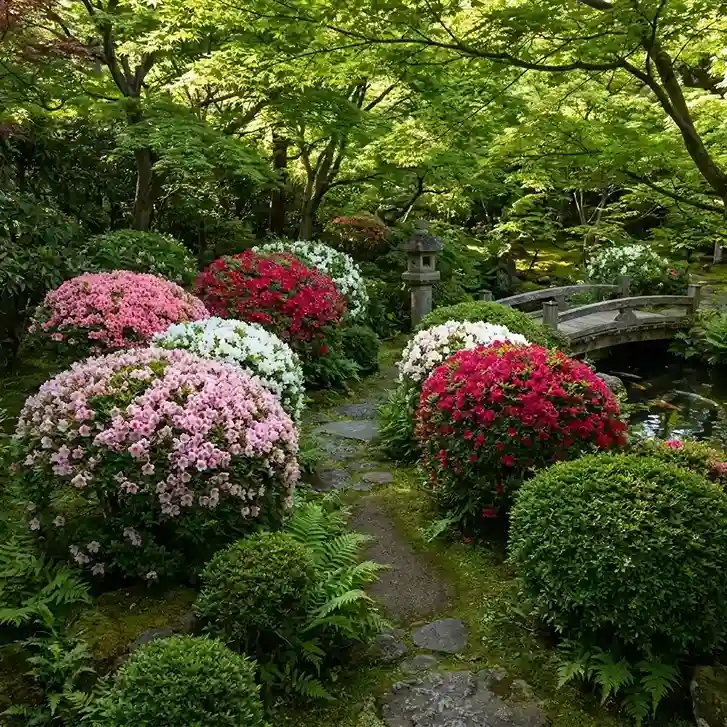
7. Azalea (Rhododendron species)
Azaleas are one of the most beloved shrubs in Japanese garden design. When clipped into smooth, rounded mounds they create the classic Japanese style known as ‘Karikomi.’ In spring they erupt into stunning masses of pink, red, white, or purple flowers.
source: @bloomprogarden
They prefer acidic, moist, well-drained soil and partial shade conditions. Plant them in groups of odd numbers for a natural, asymmetric Japanese garden composition. They also work brilliantly as flowering shrubs along a shaded garden path or woodland border.
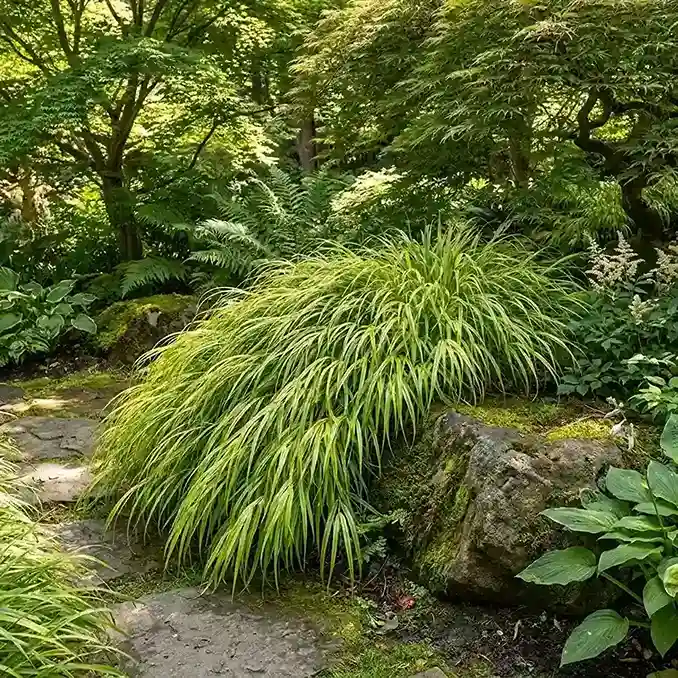
8. Japanese Forest Grass (Hakonechloa macra)
Japanese Forest Grass is the most elegant ornamental grass for shade gardens. Its arching, golden-green blades cascade beautifully like a flowing waterfall of foliage. It brightens up dark corners and shaded borders with a warm, gentle glow all season long.
source: @bloomprogarden
It grows best in partial shade with moist, humus-rich soil. Use it as a border plant along paths or to soften the edges of rocks and boulders. It also works brilliantly as ground cover beneath Japanese maples and other shade trees. Explore more shade plants that pair well with this grass.
9. Camellia (Camellia japonica)
Camellia is an elegant evergreen shrub that blooms magnificently in late winter and early spring. Its large, perfectly formed flowers come in red, pink, white, and bicolor varieties. It brings color and beauty to the garden at a time when almost nothing else is in bloom.
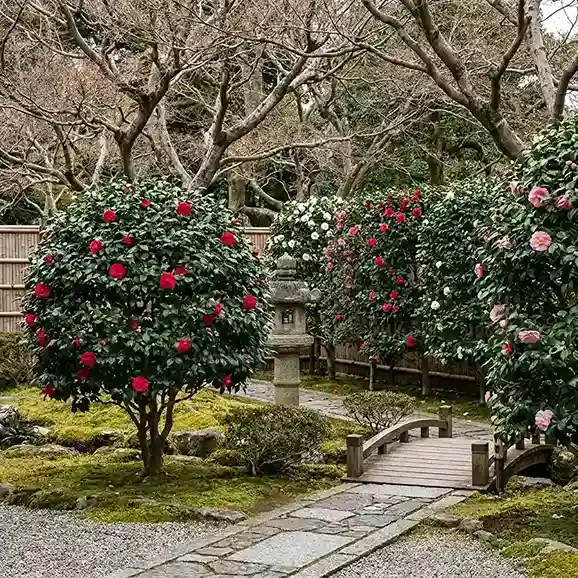
It prefers acidic, well-drained soil and partial shade, especially in hot climates. Protect it from cold drying winds which can damage the delicate flower buds. Use it as a specimen shrub, a shade shrub, or clip it into a formal hedge for a structured Japanese garden look.
10. Lotus (Nelumbo nucifera)
The Lotus is one of the most sacred and symbolic plants in all of Asian culture. Its large, perfectly round leaves float on the water surface while magnificent flowers rise above them on tall stems. It represents purity, enlightenment, and spiritual rebirth in Japanese tradition.
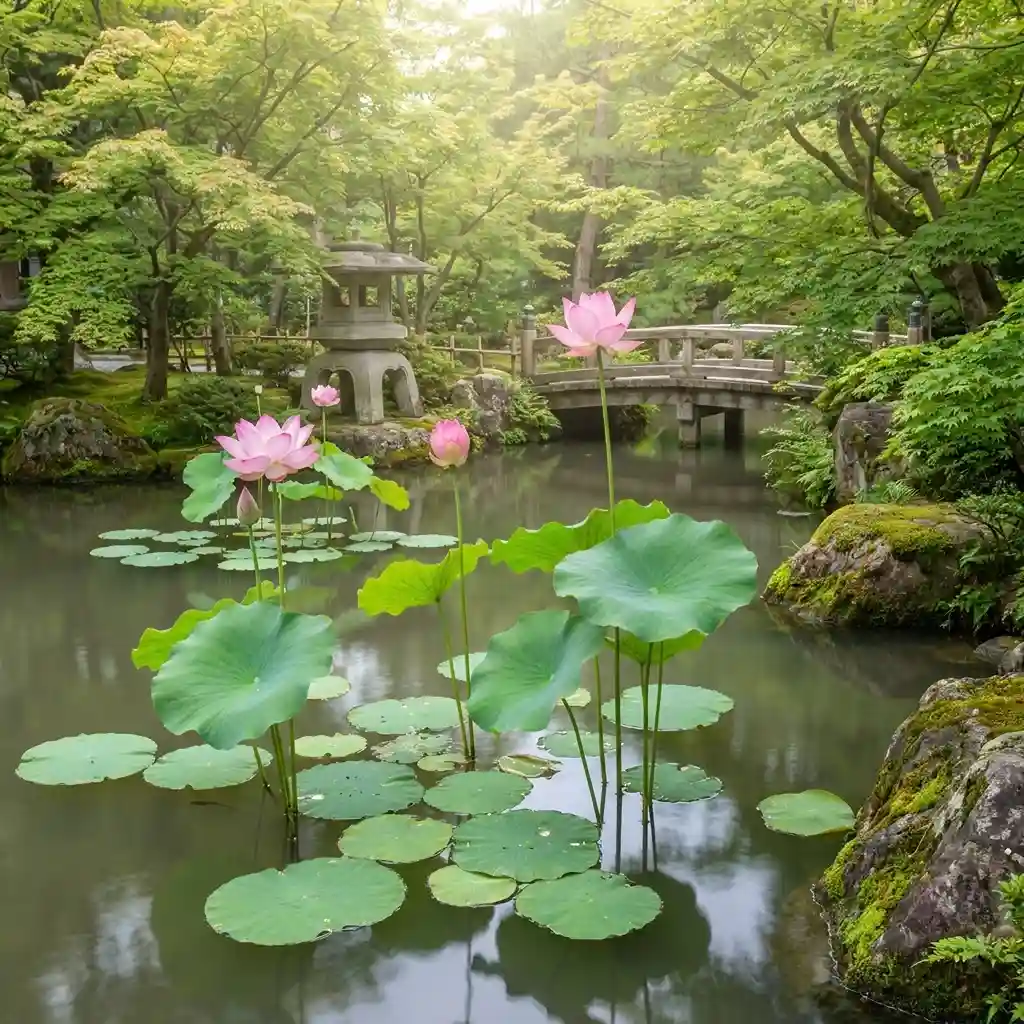
Lotus grows in still or slow-moving water in full sun. Plant it in a submerged container of heavy clay soil in a pond or water feature. It is a stunning focal point plant that makes even a simple garden feel deeply serene and spiritual. Pair it with other water plants for a complete aquatic display.
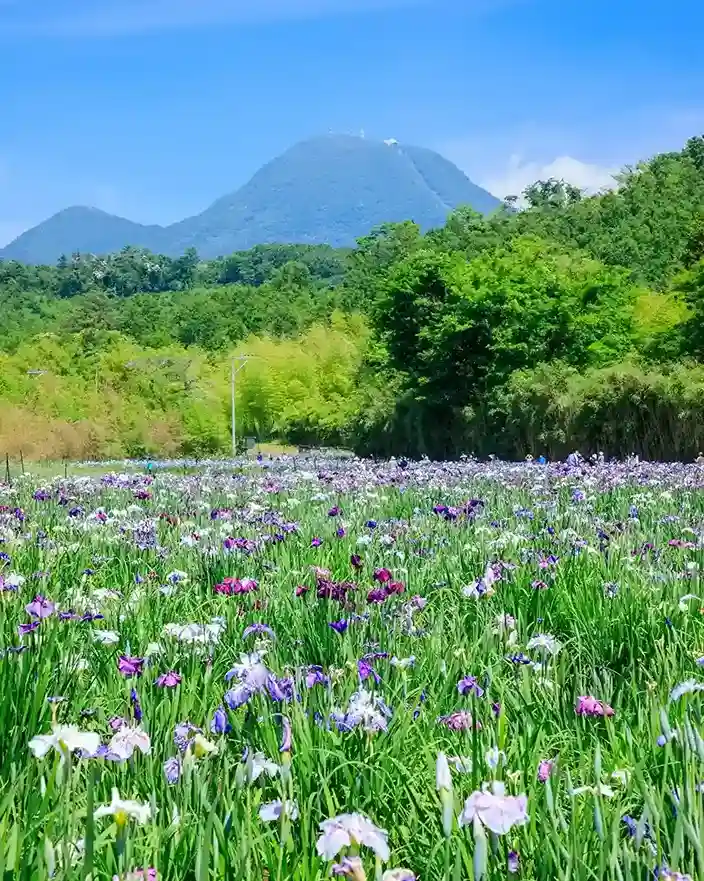
11. Japanese Iris (Iris ensata)
Japanese Iris is one of the most elegant flowering perennials for waterside planting. Its large, flat flowers in shades of purple, blue, white, and pink are extraordinarily beautiful. They bloom in early summer and create a truly breathtaking display at the edge of a pond or stream.
source: @tourismoita
It needs full sun and consistently moist or even boggy soil to thrive. Plant it in masses along the water’s edge for the most dramatic effect. It also works in a shade garden setting if given adequate moisture and at least a few hours of morning sunlight each day.
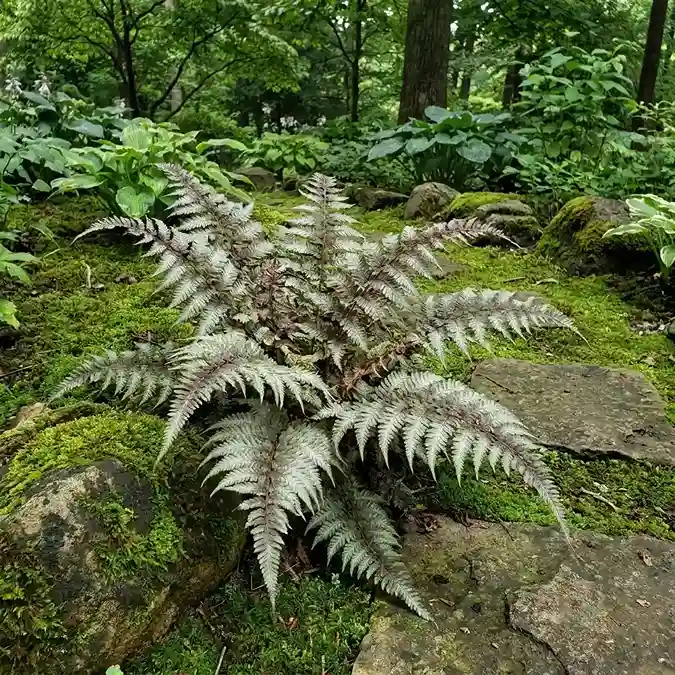
12. Japanese Painted Fern (Athyrium niponicum)
Ferns are essential plants in any Japanese-inspired garden design. The Japanese Painted Fern is especially beautiful with its silver, green, and burgundy fronds. It brings a delicate, prehistoric quality to shaded garden beds and woodland areas.
source: @bloomprogarden
It grows best in moist, humus-rich soil in partial to full shade. Use it to fill gaps between rocks, stepping stones, and larger plants in shaded areas. It pairs perfectly with hostas, mosses, and other shade perennials to create a lush, layered woodland floor planting.
13. Weeping Cherry (Prunus pendula)
Weeping Cherry is one of the most dramatic and romantic trees you can grow in a Japanese garden. Its long, arching branches cascade all the way to the ground like a curtain of pink flowers in spring. It creates an unforgettable focal point that stops people in their tracks.
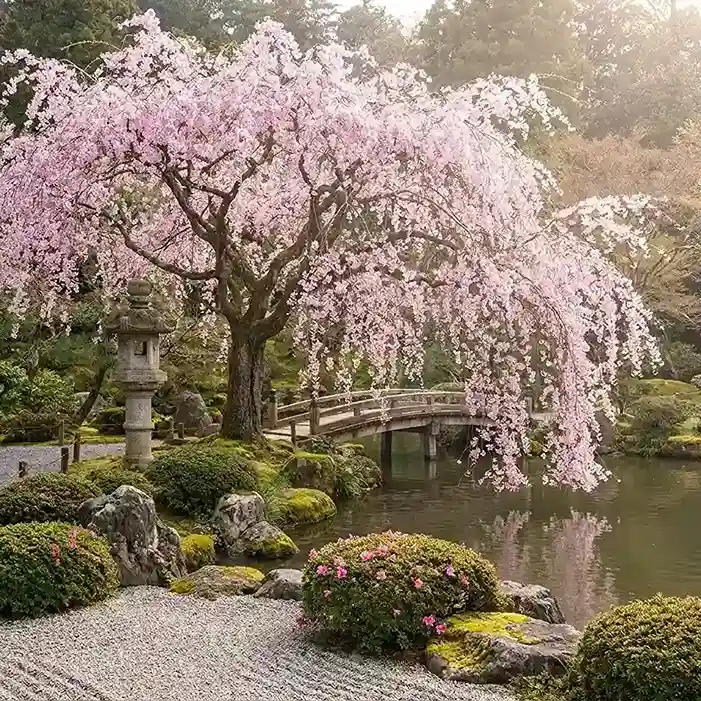
Plant it in full sun with rich, well-drained soil and give it plenty of open space. It looks most spectacular when planted near water where its reflection doubles the visual impact. Browse more tree landscaping ideas to find the perfect companions for a weeping cherry tree.
14. Pieris Japonica (Andromeda)
Pieris Japonica is a beautiful four-season evergreen shrub for Japanese garden borders. Its new spring growth emerges in stunning shades of red, pink, and cream before maturing to deep green. In late winter, it also produces chains of delicate white flowers similar to lily of the valley.
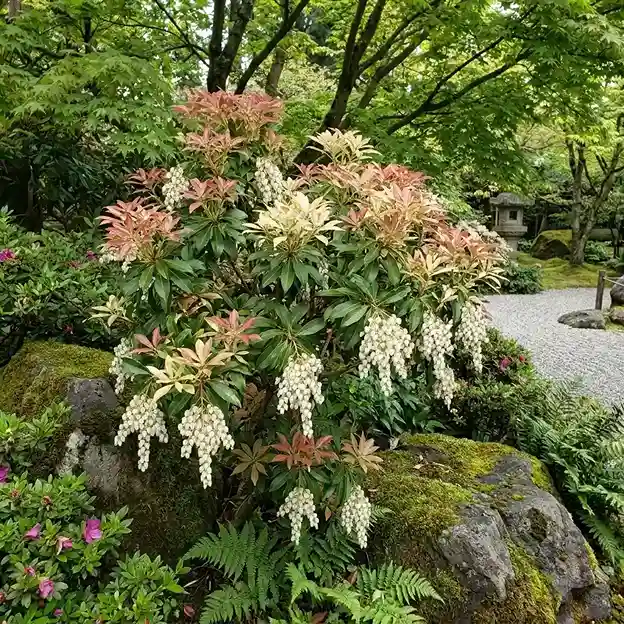
It prefers acidic, well-drained soil and partial shade in a sheltered position. Protect young plants from late frosts which can damage the colorful new growth. It works beautifully as a woodland garden plant alongside azaleas, camellias, and ferns in a layered shaded border.
15. Nandina — Heavenly Bamboo (Nandina domestica)
Nandina is a versatile, four-season evergreen shrub that earns its place in any Japanese garden. Its fine, feathery leaves turn brilliant shades of red and orange in autumn and winter. White summer flowers are followed by clusters of bright red berries that last well into the cold months.
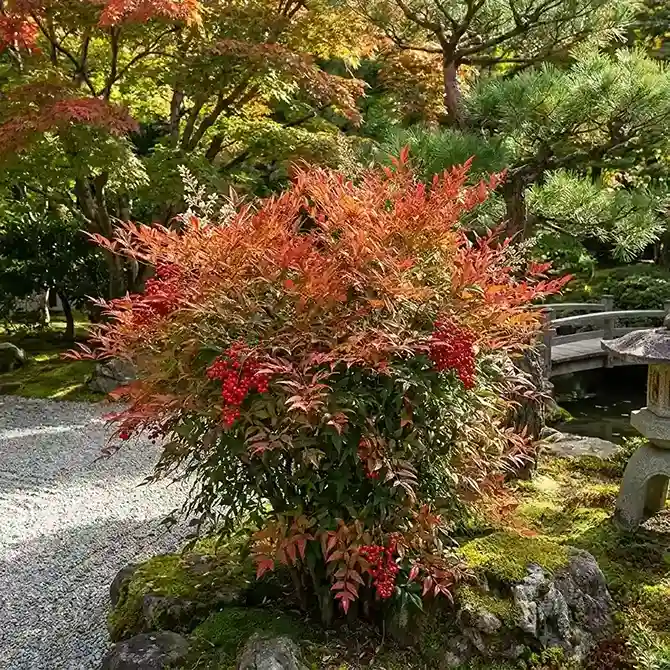
It grows in full sun to partial shade and tolerates a wide range of soil conditions. It is also quite drought tolerant once properly established in the garden. Use it as a colorful shrub to add year-round interest or as a low hedge along a path or garden border.
16. Japanese Kerria (Kerria japonica)
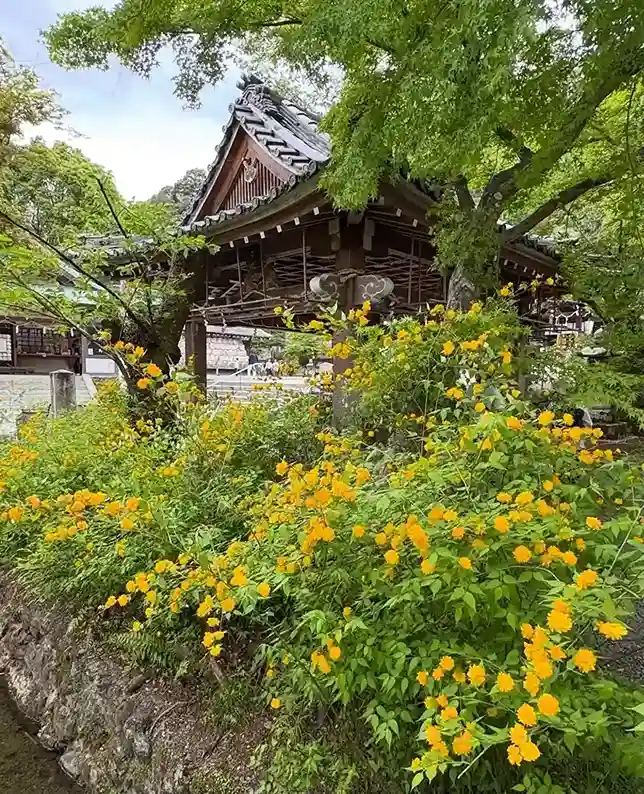
Japanese Kerria is a cheerful, underused shrub that lights up shaded areas with brilliant yellow flowers in spring. Its bright green stems remain attractive and stay green all winter long, adding subtle color to the garden even in the coldest months.
source: @maruyuzu.chir
It thrives in partial to full shade and grows happily in most soil types. It spreads slowly by suckering, so divide clumps every few years to keep it tidy. It is an excellent choice for filling shaded corners or planting beneath trees where few other flowering shrubs will grow well.
17. Enkianthus (Enkianthus campanulatus)
Enkianthus is one of the most underrated shrubs for Japanese garden design. In spring it produces small, bell-shaped flowers striped with red veins. But its real glory comes in autumn when the leaves turn extraordinary shades of red, orange, and yellow that rival even Japanese Maple.
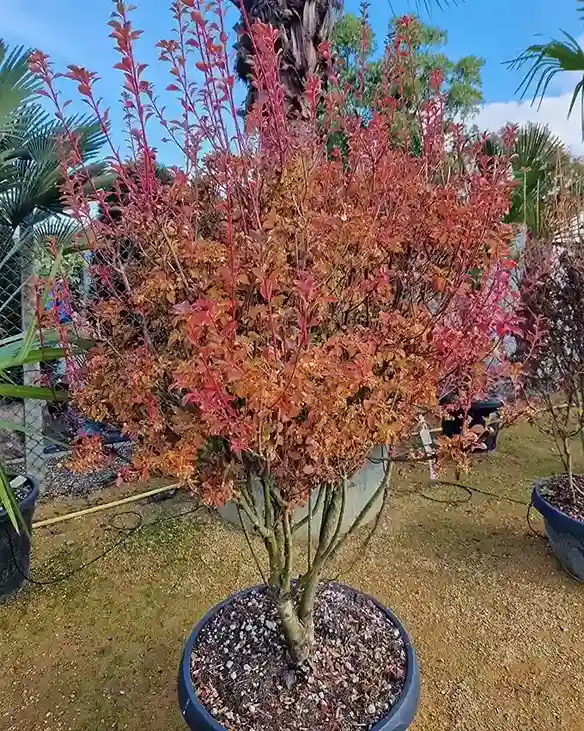
source: @creepersnursery
It prefers acidic, moist, well-drained soil and full sun to partial shade. Give it space to develop its naturally tiered, horizontal branching habit without crowding. It works beautifully in a woodland garden setting or as a stunning specimen plant in a Japanese-inspired border.
18. Mondo Grass (Ophiopogon japonicus)
Mondo Grass is a low-growing, grass-like evergreen plant widely used in Japanese garden design. Its dark green or near-black leaves form tidy, dense clumps that work beautifully as edging or ground cover. It stays neat and attractive all year round with virtually no maintenance.
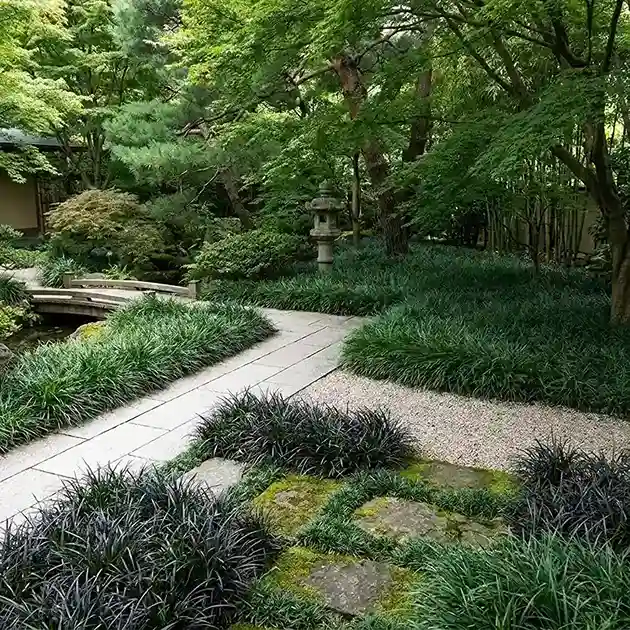
It grows well in partial to full shade and tolerates a range of soil conditions. Use it to edge pathways, fill gaps between stepping stones, or create a uniform ground cover beneath trees. Pair it with light-colored walkway ideas where its dark leaves create a beautiful high-contrast effect.
19. Japanese Anemone (Anemone hupehensis)
Japanese Anemone is a graceful perennial that extends the Japanese garden season well into late summer and autumn. Its slender stems hold delicate, saucer-shaped flowers in soft shades of pink and white high above the foliage. It sways gently in the breeze, adding movement and life to shaded garden areas.
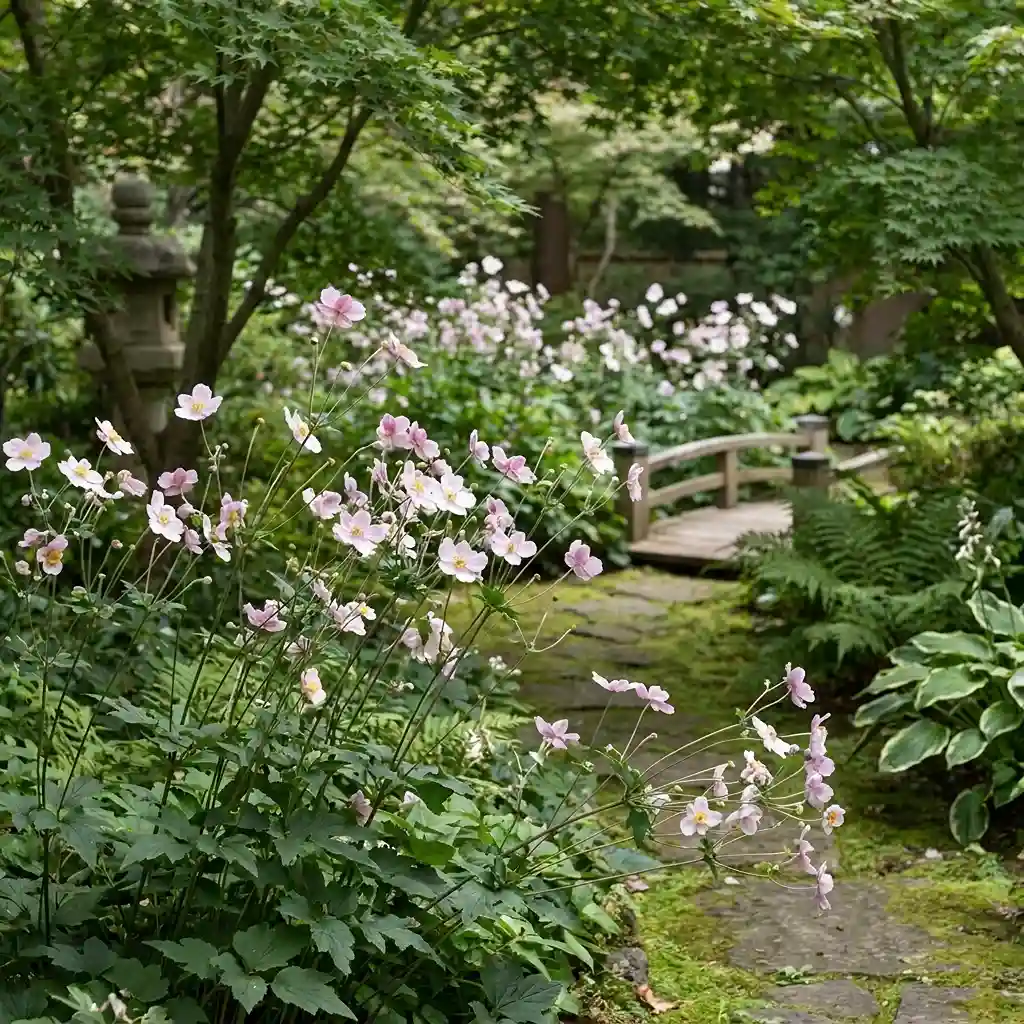
It thrives in partial shade with moist, well-drained soil and spreads gradually by underground runners. Plant it in drifts for the most natural, flowing effect. It is an excellent companion for shade perennials and works perfectly at the edge of a woodland garden or shaded border.
20. Plum Blossom — Ume (Prunus mume)
The Plum Blossom, known as Ume in Japan, is one of the most beloved and symbolic plants in Japanese culture. It blooms incredibly early in the year, often while snow is still on the ground. Its delicate, fragrant flowers in white, pink, and red announce the coming of spring long before other trees wake up.
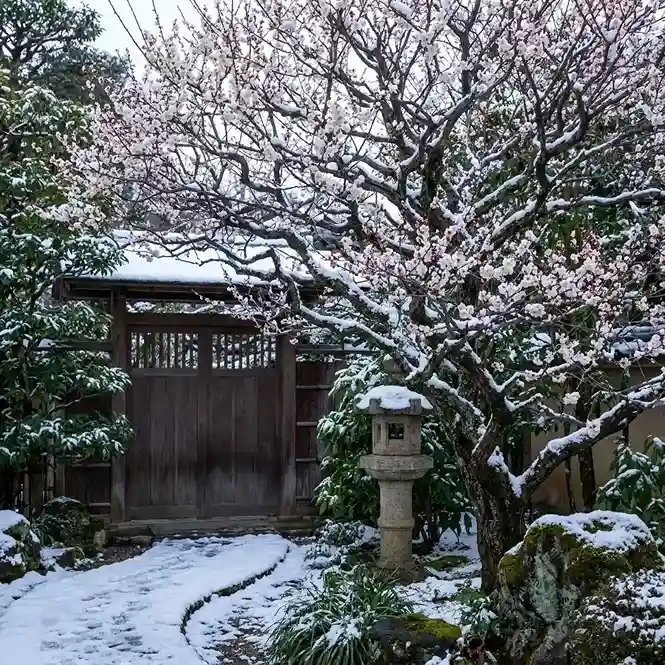
It grows in full sun with well-drained soil and is more cold-hardy than cherry blossom. The fruit is also edible and used to make traditional Japanese pickles and plum wine. Plant it where its early fragrance can be enjoyed near a path, gate, or garden entrance for maximum seasonal impact.
21. Cryptomeria — Japanese Cedar (Cryptomeria japonica)
Cryptomeria is the national tree of Japan and an iconic presence in traditional Japanese landscapes. Its tall, elegant, evergreen form provides permanent structure, privacy, and a powerful sense of scale in large Japanese garden designs. Dwarf varieties work equally well in smaller garden settings.
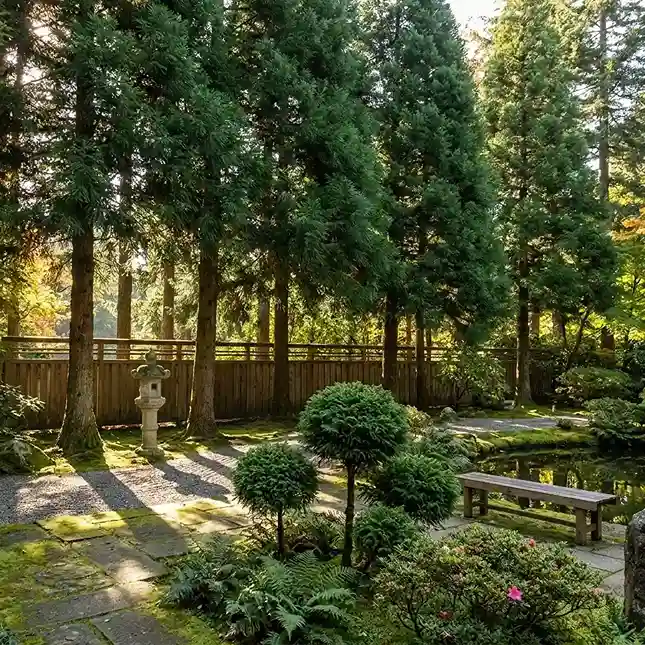
It prefers full sun and moist, well-drained soil with protection from harsh drying winds. Use tall varieties as backdrop trees or privacy trees along a fence line. Dwarf forms work beautifully as fast-growing privacy shrubs in a smaller Japanese-inspired garden.
Japanese Garden Plants: Full Care Comparison
Knowing the exact care requirements for each plant helps you plan a successful Japanese garden. This table brings together key growing information for all 21 plants in one easy reference. Use it when planning your planting layout and choosing what to buy first.
Pay close attention to the light and moisture columns. Getting these two factors right is the single most important step to growing healthy Japanese garden plants. Everything else — pruning, feeding, mulching — is secondary to getting the conditions right.
| Plant | Sun | Water | Soil pH | Height | Season of Interest |
| Japanese Maple | Part Shade | Moderate | Acidic | 4–8m | Autumn |
| Japanese Black Pine | Full Sun | Low–Moderate | Any | 10–20m | Year-round |
| Cherry Blossom | Full Sun | Moderate | Neutral | 5–12m | Spring |
| Bamboo | Full Sun–Part Shade | Moderate–High | Any | 2–10m | Year-round |
| Japanese Wisteria | Full Sun | Moderate | Neutral | 10–20m | Spring |
| Moss | Shade | High | Acidic | 2–5cm | Year-round |
| Azalea | Part Shade | Moderate | Acidic | 0.5–2m | Spring |
| Japanese Forest Grass | Part–Full Shade | Moderate | Any | 30–50cm | Spring–Autumn |
| Camellia | Part Shade | Moderate | Acidic | 1–6m | Winter–Spring |
| Lotus | Full Sun | Aquatic | Neutral | 60–150cm | Summer |
| Japanese Iris | Full Sun | High | Acidic | 60–90cm | Early Summer |
| Japanese Painted Fern | Part–Full Shade | Moderate–High | Acidic | 30–60cm | Spring–Autumn |
| Weeping Cherry | Full Sun | Moderate | Neutral | 4–8m | Spring |
| Pieris Japonica | Part Shade | Moderate | Acidic | 1–4m | Winter–Spring |
| Nandina | Full Sun–Part Shade | Low–Moderate | Any | 1–2m | Autumn–Winter |
| Japanese Kerria | Part–Full Shade | Moderate | Any | 1–2m | Spring |
| Enkianthus | Full Sun–Part Shade | Moderate | Acidic | 2–5m | Spring & Autumn |
| Mondo Grass | Part–Full Shade | Low–Moderate | Any | 10–30cm | Year-round |
| Japanese Anemone | Part Shade | Moderate | Any | 60–120cm | Late Summer–Autumn |
| Plum Blossom | Full Sun | Moderate | Neutral | 4–8m | Late Winter–Spring |
| Cryptomeria | Full Sun | Moderate | Slightly Acidic | 5–40m | Year-round |
Japanese Garden Design Ideas Using These Plants
Combining these 21 plants thoughtfully creates a garden with real depth and seasonal interest. The key is layering — tall trees at the back, medium shrubs in the middle, and low ground covers at the front. This tiered structure mimics nature and creates a sense of lush abundance.
Use rocks and boulders as anchor points between plant groups. Explore rock landscaping ideas and landscaping with boulders for creative ways to integrate stone into your Japanese garden planting scheme beautifully.
| Garden Zone | Recommended Plants | Design Role |
| Focal Point | Japanese Maple, Weeping Cherry, Plum Blossom | Anchor the design visually |
| Background / Screen | Cryptomeria, Japanese Black Pine, Bamboo | Create depth and privacy |
| Mid Border | Camellia, Azalea, Enkianthus, Nandina, Pieris | Add color and seasonal interest |
| Water’s Edge | Lotus, Japanese Iris, Fern | Frame ponds and water features |
| Ground Cover | Moss, Mondo Grass, Japanese Forest Grass | Unify the garden floor |
| Shaded Corner | Kerria, Japanese Anemone, Fern, Hakonechloa | Brighten dark areas |
| Container / Patio | Japanese Maple, Bamboo, Camellia, Azalea | Bring Japanese style to small spaces |
Using Japanese Garden Plants for Privacy and Screening
Privacy is an important consideration in any garden design. Japanese plants offer beautiful and natural ways to screen boundaries without the harsh look of solid fencing. Bamboo, Cryptomeria, and Black Pine are all excellent choices for tall, living screens.
Combine plant screens with thoughtful backyard privacy ideas for a complete solution. You can also use fast-growing hedges of clipped azaleas or camellia to create beautiful, dense, and low-maintenance garden boundaries.
Japanese Garden Plants for Small Spaces and Courtyards
You do not need a large garden to enjoy the beauty of Japanese plants. Many of these 21 plants grow perfectly well in containers, courtyards, and compact garden spaces. Dwarf varieties of maple, pine, and bamboo are especially well suited to small gardens.
Group three or five containers together with plants of different heights for a classic Japanese composition. Browse small garden ideas and container gardening guides for practical tips on making the most of a limited garden space with Japanese plants.
Companion Planting in a Japanese Garden
Companion planting in a Japanese garden is about creating harmonious plant communities. The right combinations reduce pests, improve soil health, and create visual balance. Japanese garden plants naturally complement each other when placed thoughtfully and with care.
Mosses grow beautifully beneath maples, ferns, and azaleas where the soil stays moist and shaded. Mondo grass edges pathways while wisteria climbs overhead. Use a companion planting layout approach to plan which plants will thrive together in each zone of your Japanese garden.
Sustainable and Eco-Friendly Japanese Garden Planting
Japanese garden philosophy naturally aligns with sustainable gardening principles. Using native and adapted plants reduces water use, chemical inputs, and maintenance time significantly. Many of these 21 plants are also highly attractive to pollinators and beneficial insects.
Mulch all planting beds to retain moisture and suppress weeds naturally. Explore mulch and rock landscaping ideas for sustainable coverage options. A Japanese garden built on ecological principles will be more resilient and beautiful for many years to come.
Japanese Garden Plants: Seasonal Interest Calendar
One of the greatest strengths of Japanese garden design is that it looks beautiful in every season of the year. By choosing plants with different seasons of interest, you ensure your garden always has something special to offer. Plan for all four seasons from the very beginning.
Spring is the most celebrated season in Japanese gardens, with cherry and plum blossoms taking center stage. But autumn color from maples and enkianthus can be equally spectacular. Winter reveals the structural beauty of pines, bamboo, and mosses at their best.
| Season | Stars of the Show | What to Enjoy |
| Late Winter | Plum Blossom, Camellia, Pieris | First flowers of the year, fragrance |
| Spring | Cherry Blossom, Azalea, Wisteria, Kerria | Peak flower display, fresh green growth |
| Early Summer | Japanese Iris, Lotus, Japanese Anemone (starts) | Water garden blooms, lush foliage |
| Late Summer | Japanese Anemone, Bamboo, Forest Grass | Late flowers, graceful movement in breeze |
| Autumn | Japanese Maple, Enkianthus, Nandina | Spectacular leaf color, red berries |
| Winter | Cryptomeria, Black Pine, Moss, Mondo Grass | Evergreen structure, garden bones |
Frequently Asked Questions About Japanese Garden Plants
Q1: Which Japanese garden plant is best for a beginner?
Japanese Maple is the best starting plant for beginners. It is forgiving, widely available, and delivers incredible seasonal impact. Even a single Japanese Maple transforms an ordinary garden into something extraordinary with minimal effort or expertise required.
Q2: Can I create a Japanese garden in full shade?
Yes, many Japanese garden plants thrive in shade. Moss, Japanese Painted Fern, Camellia, Kerria, and Mondo Grass all perform well in low-light conditions. Combine them with woodland-style design elements to create a beautifully authentic shaded Japanese garden space.
Q3: How do I stop bamboo from spreading everywhere?
Always choose clumping bamboo varieties like Fargesia species rather than running types. If you grow running bamboo, install a heavy-duty root barrier at least 60cm deep around the planting area. Check the barrier every year and trim any roots that escape to prevent spreading.
Q4: Do Japanese garden plants need a lot of water?
Most Japanese garden plants prefer consistently moist soil but do not like waterlogging. Mulching garden beds heavily reduces the need for frequent watering significantly. Once established, many of these plants become quite self-sufficient and need only occasional watering during prolonged dry spells.
Conclusion
Japanese garden plants offer an unmatched combination of beauty, symbolism, and seasonal interest. Each of these 21 plants brings something unique to a garden — whether it is spring blossom, autumn color, year-round structure, or peaceful ground cover. Together they create a living work of art that evolves with every passing season.
The true beauty of a Japanese garden lies in its restraint and intentionality. You do not need all 21 plants to create something magnificent. Start with five or six carefully chosen varieties that suit your space and light conditions. Let the garden grow organically and add new plants gradually over time as your knowledge and confidence develop.
A Japanese garden is not just a collection of plants — it is a philosophy made visible. It teaches you to slow down, observe the seasons, and find beauty in simplicity. Whether you have a large estate or a tiny courtyard, these 21 plants can help you create a peaceful, beautiful Japanese-inspired garden that brings joy and tranquility every single day.