Rock landscaping creates some of the most dramatic, permanent, and naturally beautiful garden features available, using the ancient authority of stone to build outdoor spaces of extraordinary character and timeless appeal.
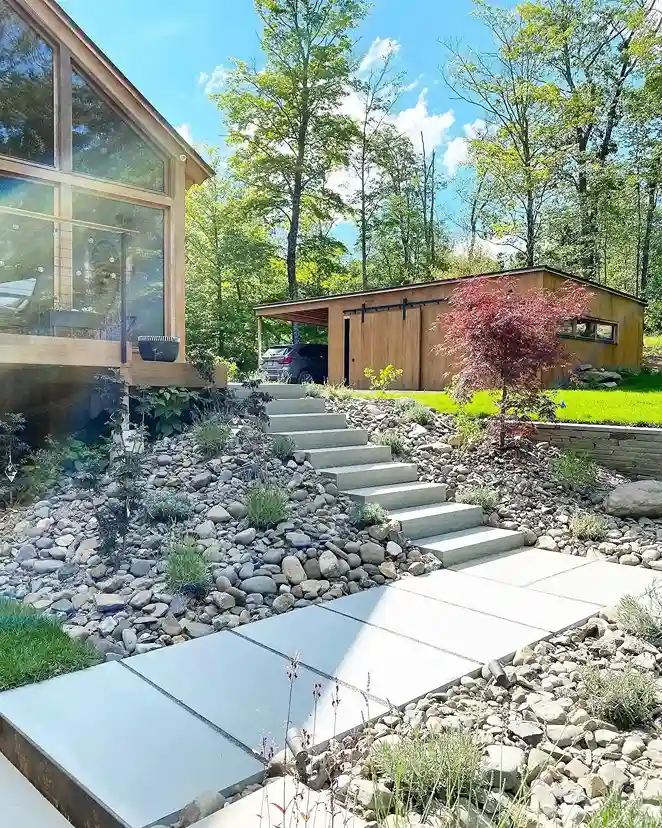
source: @srlpools
Whether you need a bold focal point, a practical retaining solution, or a stunning drought-tolerant garden, these 24 outstanding rock landscaping ideas will transform any outdoor space beautifully using our backyard landscaping ideas guide.
1. Classic Rock Garden
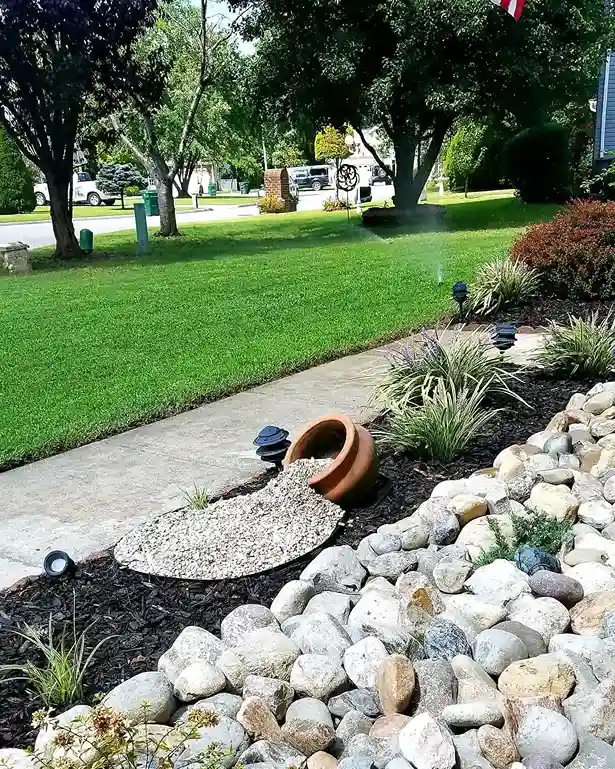
A classic rock garden uses carefully positioned natural stones of varying sizes to recreate the appearance of a natural rocky outcrop, planted with alpines, sedums, thymes, and low-growing perennials that colonise the stone crevices and ledges as they would in a genuine mountain or hillside landscape.
source: @1718lakehouse
The key to a convincing rock garden is burying at least one-third of each stone below soil level and angling them slightly backward as natural geological strata would appear, creating an authentically settled composition that looks genuinely ancient rather than recently assembled. For the best alpine and rock garden plant selections, our best outdoor plants guide covers rock garden planting and alpine plant selection in excellent, comprehensive detail.
| Feature | Details |
|---|---|
| Best Stone Types | Sandstone, limestone, granite — local stone preferred |
| Best Plants | Alpines, sedums, thymes, saxifrages, aubretia |
| Burial Depth | Minimum one-third of each stone below soil |
| Soil Mix | Well-drained — grit, topsoil, and compost blend |
| Best Position | South or east-facing slope for drainage and sun |
| Difficulty Level | Intermediate |
2. Rock Retaining Wall
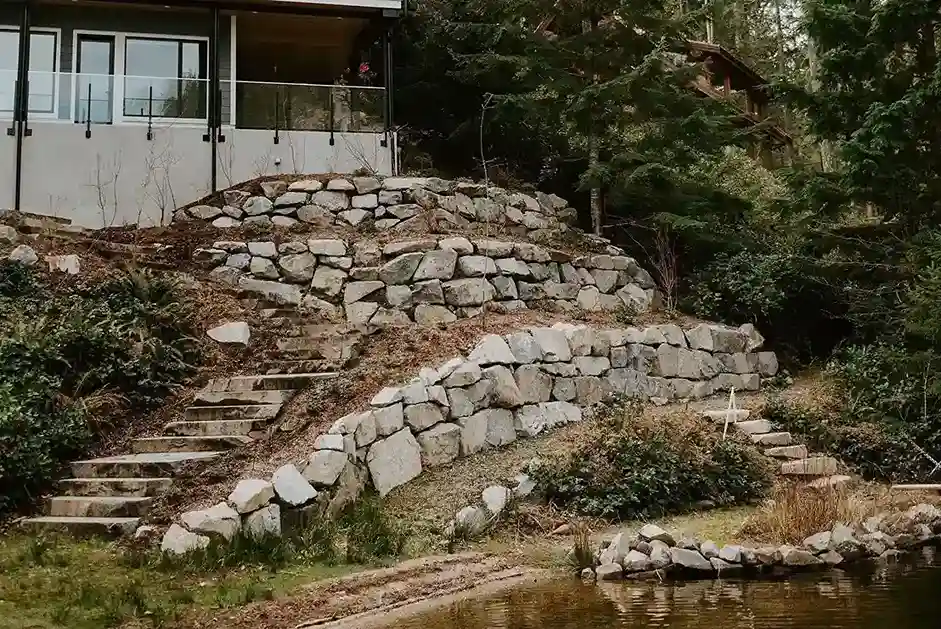
A rock retaining wall uses large natural stones stacked without mortar to hold back significant soil volumes on sloped garden sites, creating a beautifully natural, permanently effective structural feature that improves in character as mosses and small plants colonise its surface over many growing seasons.
source: @saxon_contracting_ltd_
Unlike manufactured retaining systems, a natural rock retaining wall requires no specialist materials, blends organically into the landscape, and develops increasing beauty over time as the stone weathers and living organisms establish between and across the rock surfaces. For more slope management and terracing strategies, our sloped backyard ideas on a budget guide covers rock retaining walls and sloped garden management in practical, accessible detail.
| Feature | Details |
|---|---|
| Best Rock Types | Angular stones — interlocks more effectively |
| Maximum Height | 3–4 feet without professional engineering |
| Foundation | Compacted gravel base — minimum 6 inches deep |
| Batter | Tilt wall face slightly into slope for stability |
| Drainage | Gravel backfill behind wall — essential |
| Crevice Plants | Ferns, sedums, creeping thyme, wallflowers |
3. Dry Creek Bed
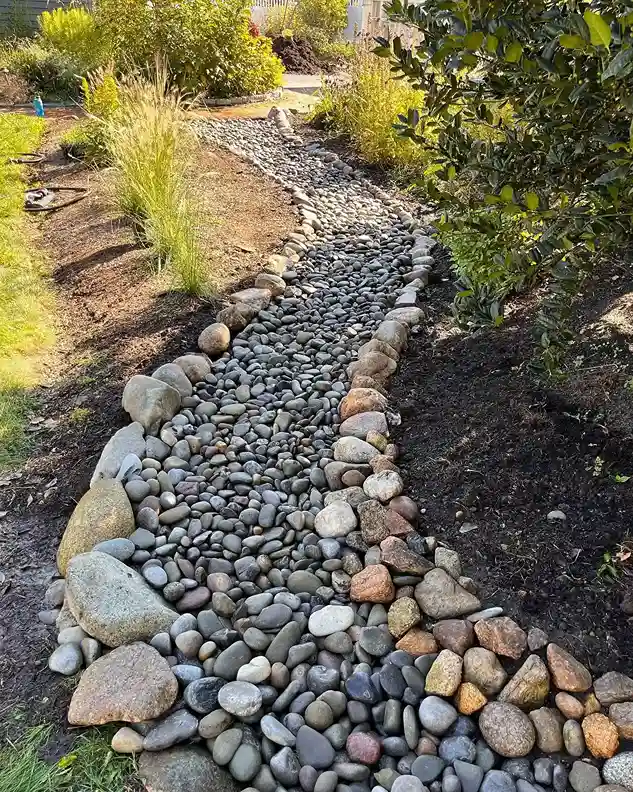
A dry creek bed rock landscaping feature uses carefully arranged river rocks, pebbles, and boulders to create the convincing impression of a natural streambed flowing through the garden, providing both an outstanding decorative feature and a practical drainage channel for managing surface water during heavy rainfall.
source: @ediblelandscapes
The most convincing dry creek beds vary the stone size along their length — larger boulders at bends and constrictions, smaller pebbles in the straight sections — just as a natural stream deposits and sorts material through its flow. For more natural water management and garden drainage ideas, our cheap landscaping ideas guide covers dry creek beds and budget rock landscaping drainage solutions in practical, money-saving detail.
| Feature | Details |
|---|---|
| Best Rock Mix | Large boulders at bends, pebbles in straight sections |
| Creek Width | 18–36 inches for most garden dry creek beds |
| Edging Plants | Ornamental grasses, irises, ferns, moisture-lovers |
| Depth | 6–12 inches below surrounding grade |
| Best For | Drainage channels and decorative naturalistic features |
| Estimated Cost | $2–$8 per square foot |
4. Rock Mulch and Gravel Garden
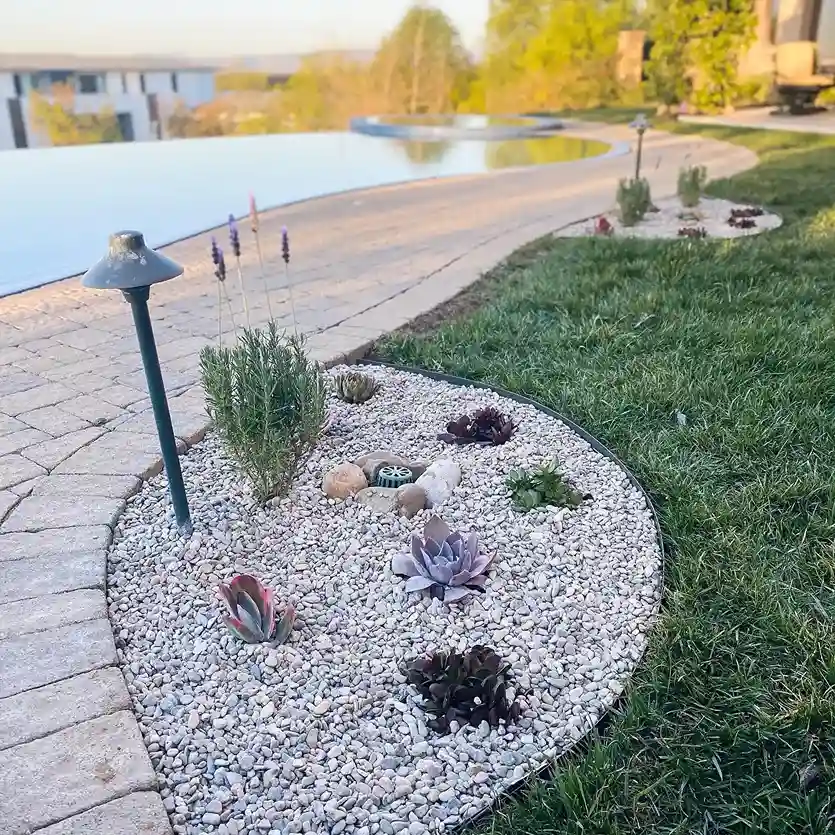
Replacing organic mulch with decorative rock mulch — crushed granite, river pebbles, slate chippings, or white marble gravel — creates a permanent, weed-suppressing, beautifully decorative garden surface that lasts indefinitely without refreshing, retains soil moisture efficiently, and creates a striking, contemporary garden aesthetic of clean, mineral beauty.
source: @henryearthworx_inc
Rock mulch is particularly outstanding around drought-tolerant plants, Mediterranean herbs, and ornamental grasses where its mineral character, excellent drainage, and heat-retaining properties create the ideal growing microclimate for these plant communities. For more gravel and stone garden surface ideas, our white stone landscaping ideas guide covers rock mulch and decorative stone garden surfaces in beautiful, practical detail.
| Feature | Details |
|---|---|
| Best Rock Mulch Types | Crushed granite, river pebbles, slate, marble gravel |
| Depth | 2–3 inches for effective weed suppression |
| Weed Membrane | Lay landscape fabric beneath for best results |
| Best Plants | Lavender, rosemary, ornamental grasses, succulents |
| Maintenance | Very low — occasional raking and top-up |
| Estimated Cost | $1–$5 per square foot |
5. Japanese Rock Garden (Zen Garden)
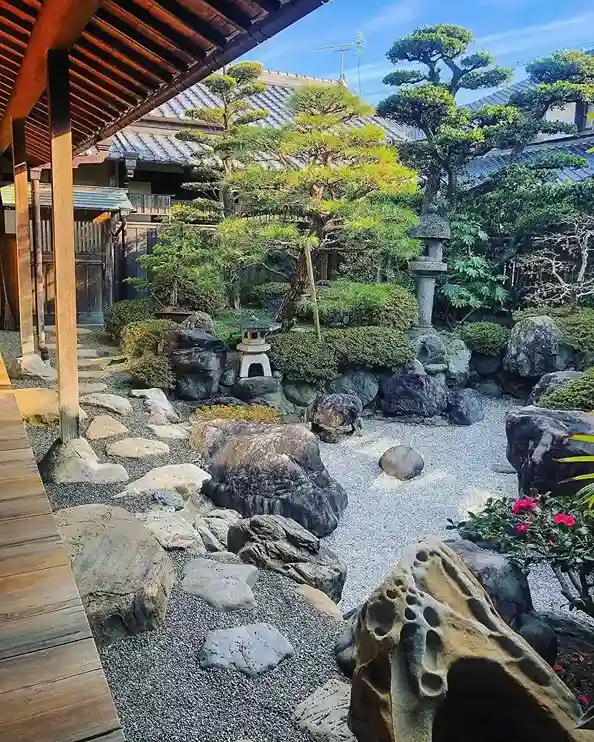
A Japanese rock garden — or karesansui — uses carefully raked fine gravel or sand surrounding precisely placed boulders representing mountains or islands to create one of the most profoundly peaceful, meditative, and aesthetically sophisticated rock landscaping designs achievable in any outdoor space.
source: @kristofferjapaboyoffcial
Odd-numbered groupings of stones in triangular compositions, surrounded by raked gravel patterns representing water, create authentic Japanese garden compositions of extraordinary visual balance and meditative depth that have been perfected over centuries of Japanese garden design tradition. For more Japanese-inspired and minimalist garden design ideas, our trending landscaping ideas guide covers Zen rock garden design and meditative outdoor space creation in current, inspiring detail.
| Feature | Details |
|---|---|
| Best Gravel | Fine decomposed granite or white gravel — raked smooth |
| Best Stone Types | Dark basalt, weathered granite, moss-covered boulders |
| Stone Groupings | Odd numbers — 3, 5, or 7 in triangular arrangements |
| Raking Patterns | Concentric circles, straight lines, wave patterns |
| Best Plants | Moss, bamboo, Japanese maple, azalea |
| Atmosphere | Meditative, tranquil, deeply considered |
6. Rock Garden Pathway
A garden pathway created from natural stepping stones, flat flagstones, or carefully laid irregular rocks set into a gravel, bark, or lawn surface creates one of the most naturally beautiful and texturally rich garden paths available, each stone bringing genuine geological character to the garden journey.
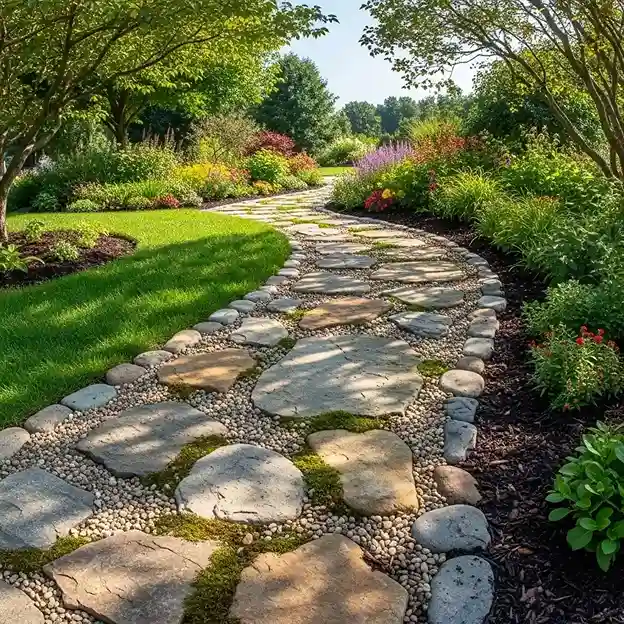
Set each stepping stone firmly into a compacted sand base with its surface flush to surrounding level for safe, stable footing, and plant the gaps between stones with creeping thyme, chamomile, or mind-your-own-business for a softly planted rock path of extraordinary natural charm. For more garden pathway design and natural material ideas, our walkway ideas for outdoor spaces guide covers rock and stone garden path construction in beautiful, practical detail.
| Feature | Details |
|---|---|
| Best Stone Types | Flat sandstone, limestone flags, slate, river rock |
| Setting Method | Firm compacted sand base under each stone |
| Stone Height | Set flush or slightly proud of surrounding surface |
| Gap Plants | Creeping thyme, chamomile, mind-your-own-business |
| Path Width | 18–24 inches for single person — wider for couples |
| Estimated Cost | $3–$15 per square foot |
7. Rock Edging for Garden Beds
Natural rock edging along garden bed boundaries creates a beautifully organic, permanent, and maintenance-free alternative to manufactured edging products, the irregular forms and warm stone tones of natural rocks adding genuine geological character to every bed margin they define throughout the garden.
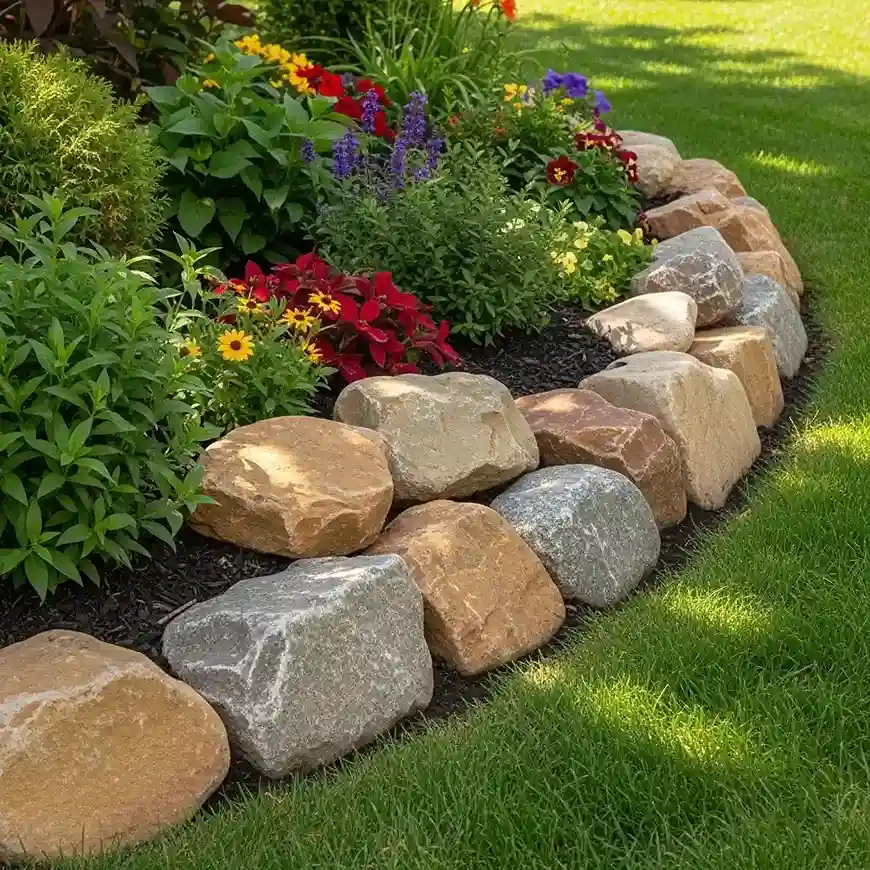
Collect fieldstones, river rocks, and pebbles locally for a completely free edging solution, setting each stone half-buried in the soil along the bed edge for a stable, convincingly natural appearance that suits cottage, rustic, and naturalistic garden styles magnificently. For more garden bed edging and natural border definition ideas, our fence line landscaping guide covers rock and natural stone bed edging in practical, creative detail.
| Feature | Details |
|---|---|
| Best Rock Types | Fieldstones, river rocks, cobbles, collected pebbles |
| Setting Depth | Bury half of each stone below soil surface |
| Collection | Local fields, riverbeds, beaches — completely free |
| Best For | Cottage, rustic, and naturalistic garden styles |
| Maintenance Level | None — permanent natural edging |
| Estimated Cost | Free (collected) to $2 per linear foot |
8. Boulder Focal Point
A single, magnificent boulder positioned as a deliberate garden focal point — on a lawn, at the end of a path, or at the centre of a planting bed — creates an immediate, commanding visual anchor of extraordinary geological authority that requires no surrounding structure to justify its powerful, permanent presence.
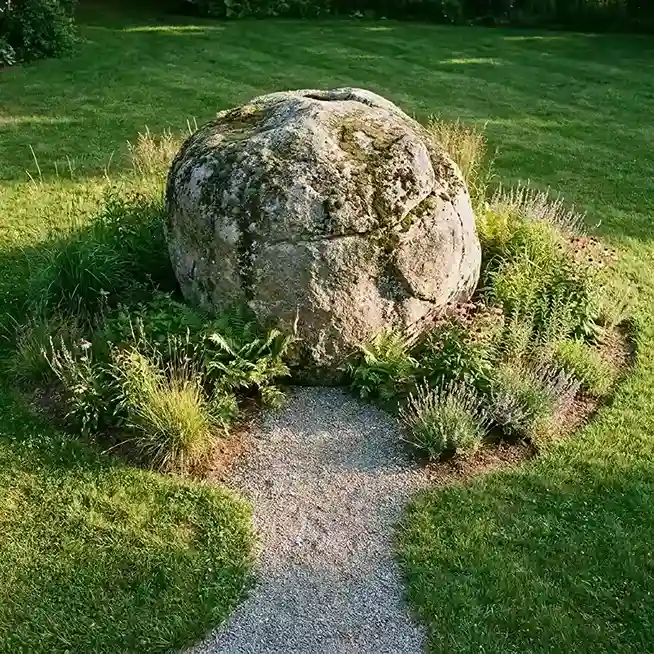
Choose the most dramatically shaped, beautifully textured, or strikingly coloured boulder available, bury one-third below ground for a settled appearance, and allow moss and low plants to establish naturally around its base for a focal point of genuinely outstanding, ever-improving natural beauty. For more garden focal point and specimen feature ideas, our yard ideas for outdoor spaces guide covers boulder focal points and structural garden feature installation in inspiring, practical detail.
| Feature | Details |
|---|---|
| Best Focal Boulder Size | Minimum 200–300 lbs for genuine visual authority |
| Best Stone Types | Dramatic granite, weathered sandstone, bold basalt |
| Burial Depth | One-third below soil — settled, permanent appearance |
| Companion Plants | Ornamental grasses, low perennials, creeping moss |
| Best Positions | Path terminus, lawn centre, bed focal point |
| Orientation | Best face toward primary viewing angle from house |
9. Stacked Stone Wall Feature
A freestanding stacked stone wall used as a garden room divider, raised bed wall, or decorative boundary creates a beautifully handcrafted, architecturally impressive rock landscaping feature of considerable permanence and natural character that becomes more attractive as it ages and weathers through outdoor seasons.
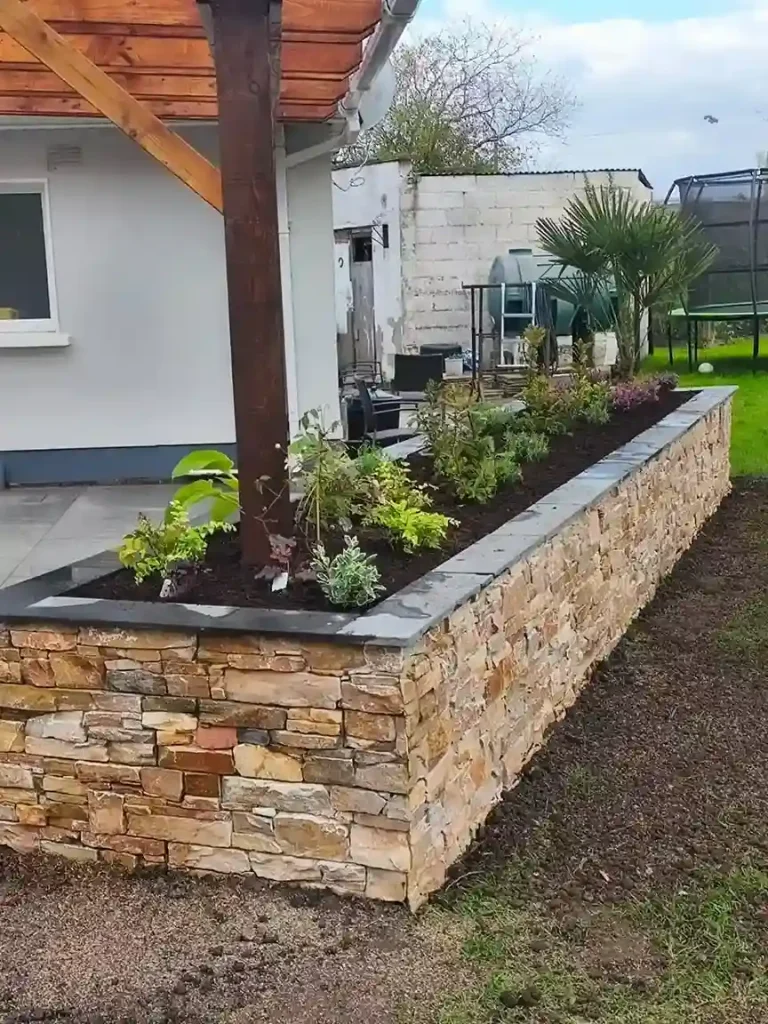
source: @cosyhome.ie
The ancient art of dry stone walling — stacking stones without mortar using their natural weight, shape, and interlocking character — creates walls of extraordinary durability that have proven their effectiveness for centuries across every climate and terrain type imaginable. For more garden wall construction and structural stone feature ideas, our garden wall ideas guide covers stacked stone wall construction and decorative stone boundary features in comprehensive, creative detail.
| Feature | Details |
|---|---|
| Best Stone Types | Limestone, sandstone, fieldstone — flat and stackable |
| Wall Foundation | Compacted gravel base — 6 inches deep |
| Batter | Slight inward lean for stability |
| Crevice Planting | Sedums, ferns, creeping thyme, wallflowers |
| Lifespan | Centuries with proper construction |
| Estimated Cost | $15–$50 per linear foot |
10. Rock and Water Feature Combination
Combining natural rocks and boulders with a moving water feature — a trickling rock waterfall, a boulder-edged wildlife pond, or a pebble-filled rill — creates one of the most sensory, naturally beautiful, and atmospherically powerful rock landscaping compositions achievable in any garden space or budget range.
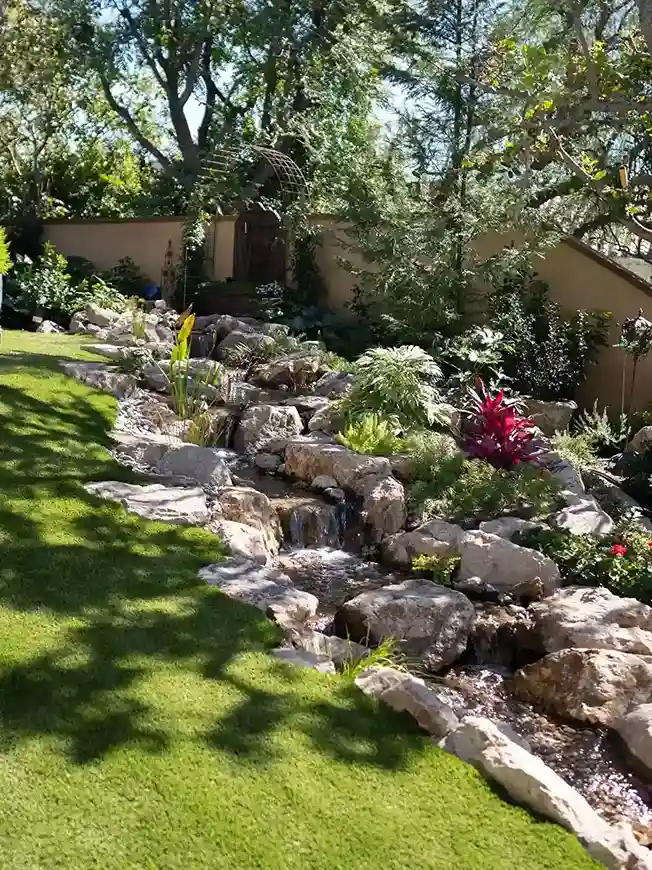
source: @aqualifeponds
Partially submerge boulders at the pond margin, let water trickle over flat-faced stones, and plant the surrounding area with moisture-loving ferns, hostas, and marginal plants for a rock and water composition of extraordinary natural beauty and ecological richness. For the best aquatic and marginal plants to complete a rock water feature, our water plants guide covers pond and water feature planting alongside rock features in comprehensive, inspiring detail.
| Feature | Details |
|---|---|
| Best Boulder Positions | Partially submerged at water margins |
| Best Stone Types | River rock, rounded granite, smooth limestone |
| Pump Size | 800–2000 litres per hour depending on scale |
| Best Aquatic Plants | Water iris, rushes, marsh marigold, water mint |
| Edge Planting | Ferns, hostas, astilbes, moisture-loving perennials |
| Estimated Cost | $100–$800 depending on feature scale |
11. Rock Garden on a Slope
A sloped garden site is one of the most naturally suited positions for rock landscaping, the gradient providing inherent drainage, natural stone placement opportunities, and an immediate visual justification for the presence of rocks that makes the landscape look genuinely geological rather than artificially imposed.
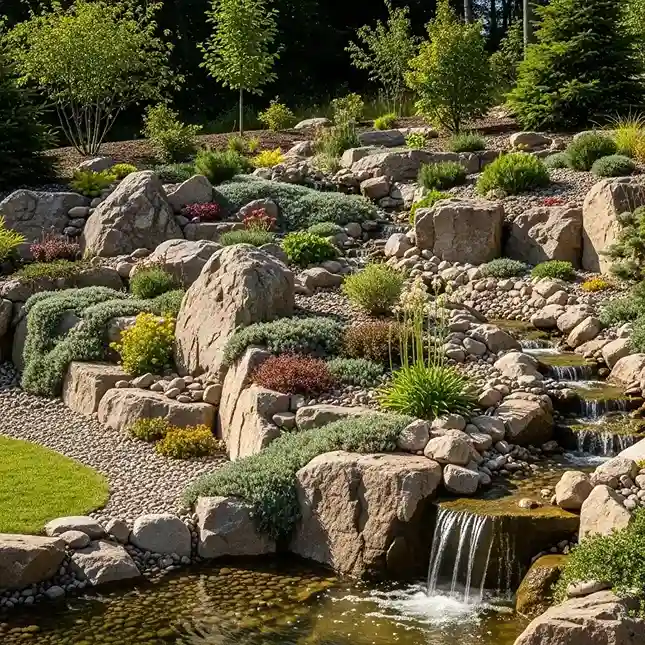
Installing rocks on a slope requires positioning each stone to lean back into the hillside rather than forward, ensuring stable installation and creating the natural stratum effect that makes rock landscaping on slopes appear completely authentic and convincingly natural. For more sloped garden design and rock landscaping on hills, our hillside landscaping guide covers rock garden installation on slopes in comprehensive, practical detail.
| Feature | Details |
|---|---|
| Stone Positioning | Lean stones back into slope — creates natural stratum |
| Best Plants | Alpines, sedums, creeping thyme, ornamental grasses |
| Erosion Control | Rocks slow water flow — dramatically reduces erosion |
| Access Path | Leave stepping stone access through rock garden |
| Best Slope Angle | 15–45° for most effective rock landscaping |
| Difficulty Level | Intermediate |
12. Succulent and Rock Garden
A rock garden planted exclusively with succulents and cacti creates one of the most architecturally dramatic, colourful, and genuinely low-maintenance rock landscaping combinations available, the geometric perfection of succulent forms contrasting magnificently with the irregular, geological character of natural stone outcrops.
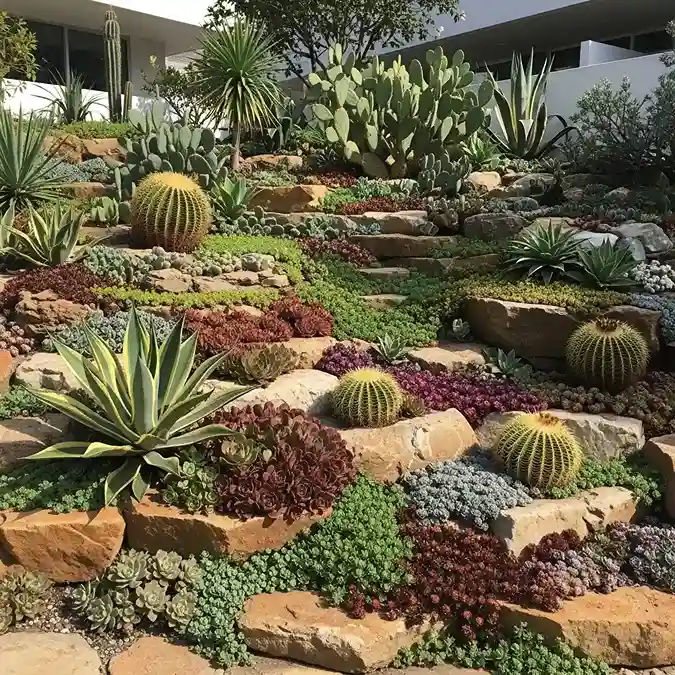
The excellent drainage created by rock outcrops and gritty soil between stones perfectly replicates the natural growing conditions in which succulents and cacti evolved, making this combination not only visually stunning but also one of the most horticularly successful rock landscaping plant pairings. For more succulent and drought-tolerant planting ideas, our container gardening flowers guide covers succulent and rock garden planting combinations in striking, creative detail.
| Feature | Details |
|---|---|
| Best Succulents | Echeveria, sedum, sempervivum, agave, aloe |
| Best Cacti | Barrel cactus, prickly pear, columnar varieties |
| Soil Mix | 50% grit, 30% perlite, 20% compost |
| Watering | Minimal — every 2–3 weeks in growing season |
| Best Position | Full sun — south or west-facing |
| Maintenance Level | Very low |
13. Rock Garden with Native Plants
A rock garden planted with native wildflowers, native grasses, and indigenous alpines creates the most ecologically valuable and naturally authentic rock landscaping possible, every plant selected specifically for its value to local pollinators, insects, and birds in a self-sustaining garden ecosystem of genuine conservation importance.
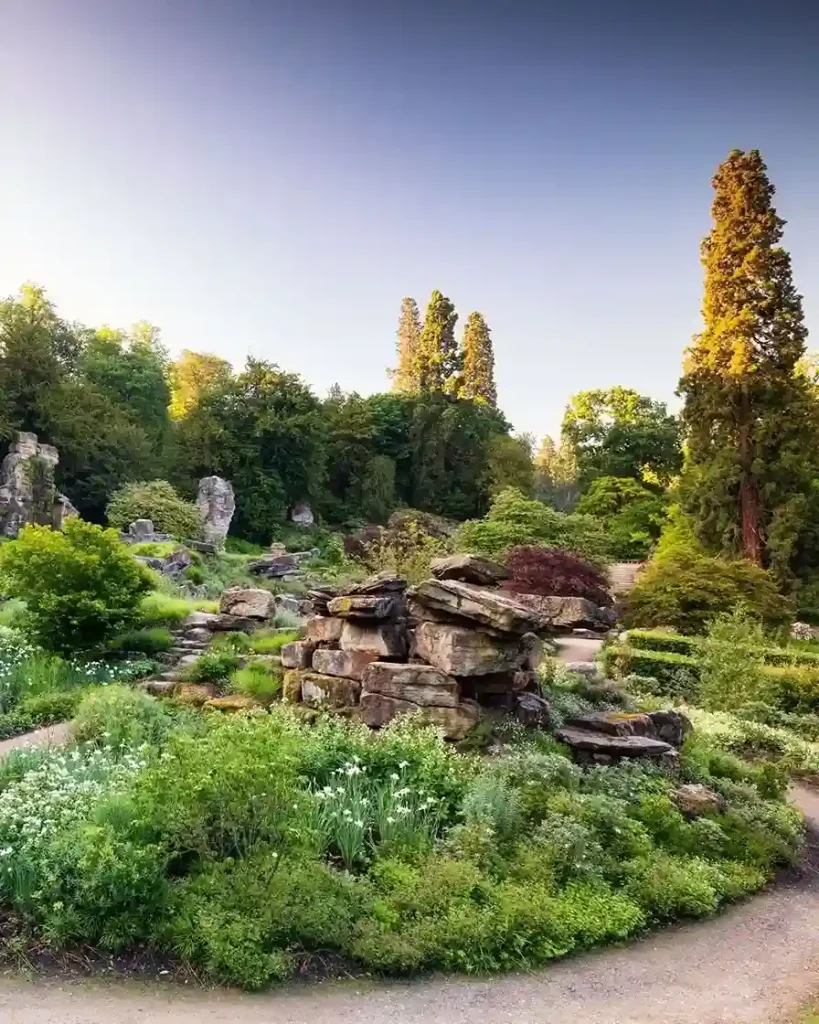
source: @gardens_illustrated @richardbloomphoto
Native rock garden plants establish more readily, require less supplementary watering, and support far greater biodiversity than non-native alpine and rock plant alternatives, making native planting the most sustainable and ecologically responsible rock landscaping approach available for any garden. For more native and wildlife-friendly planting ideas, our fast growing privacy shrubs guide covers native plant selection for rock and boundary landscaping in excellent, practical detail.
| Feature | Details |
|---|---|
| Best Native Rock Plants | Wild thyme, rock rose, native sedums, pasque flower |
| Best Native Grasses | Blue fescue, sheep’s fescue, quaking grass |
| Wildlife Value | Outstanding — supports native pollinators and insects |
| Maintenance Level | Very low once established |
| Watering | Minimal — native plants adapted to local conditions |
| Best For | Wildlife gardens and naturalistic landscapes |
14. Cottage Garden Rock Feature
Natural rocks integrated into a cottage garden setting create a beautifully harmonious, countryside quality that perfectly suits the relaxed, abundantly planted character of traditional cottage gardening, warm sandstone or limestone tones harmonising magnificently with the soft pinks, purples, and whites of classic cottage garden flowers.
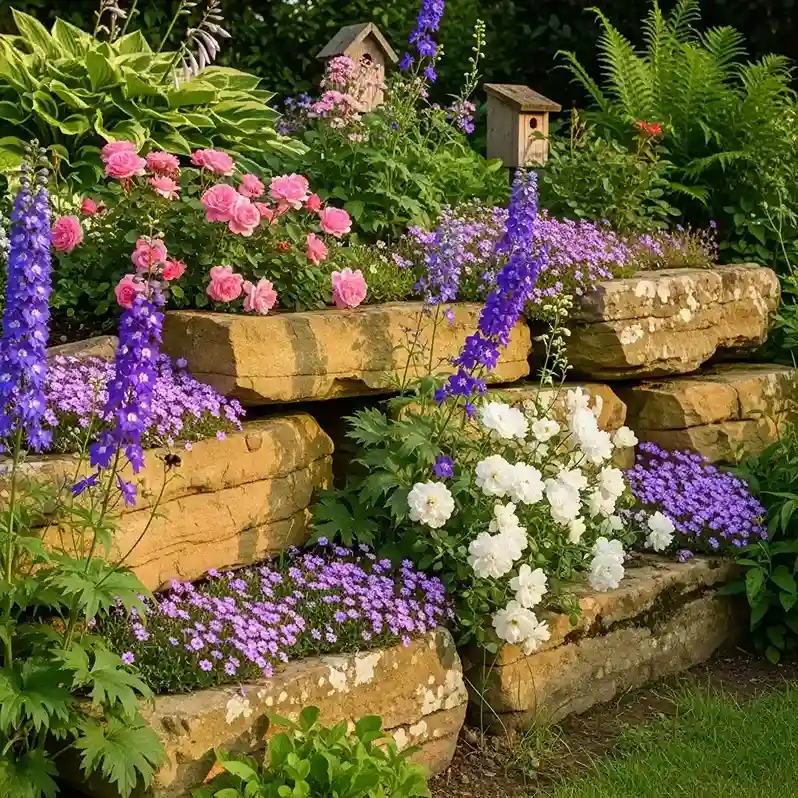
Allow cottage garden plants — hardy geraniums, alchemilla, creeping thyme, and foxgloves — to spill naturally over and around rock surfaces, blurring the boundary between stone and planting to create a landscape that looks as though the rocks have always been part of the garden’s natural evolution. For the most beautiful cottage garden rock planting combinations, our cottage garden ideas guide covers rock features in cottage and traditional garden settings in beautiful, romantic, practical detail.
| Feature | Details |
|---|---|
| Best Stone Types | Warm sandstone, limestone, reclaimed fieldstone |
| Best Companion Plants | Hardy geraniums, alchemilla, thyme, foxgloves |
| Arrangement | Informal, naturalistic — avoid rigid geometric placement |
| Moss Establishment | Yoghurt and moss blend on north-facing surfaces |
| Best For | Cottage, farmhouse, and country garden styles |
| Atmosphere | Warm, romantic, timeless, naturally beautiful |
15. Modern Rock Landscaping
Contemporary rock landscaping uses premium stone materials, precise geometric arrangements, and a restrained plant palette to create outdoor spaces of architectural sophistication and visual power, where each boulder or stone element is positioned with absolute intention and artistic precision as a pure design object.
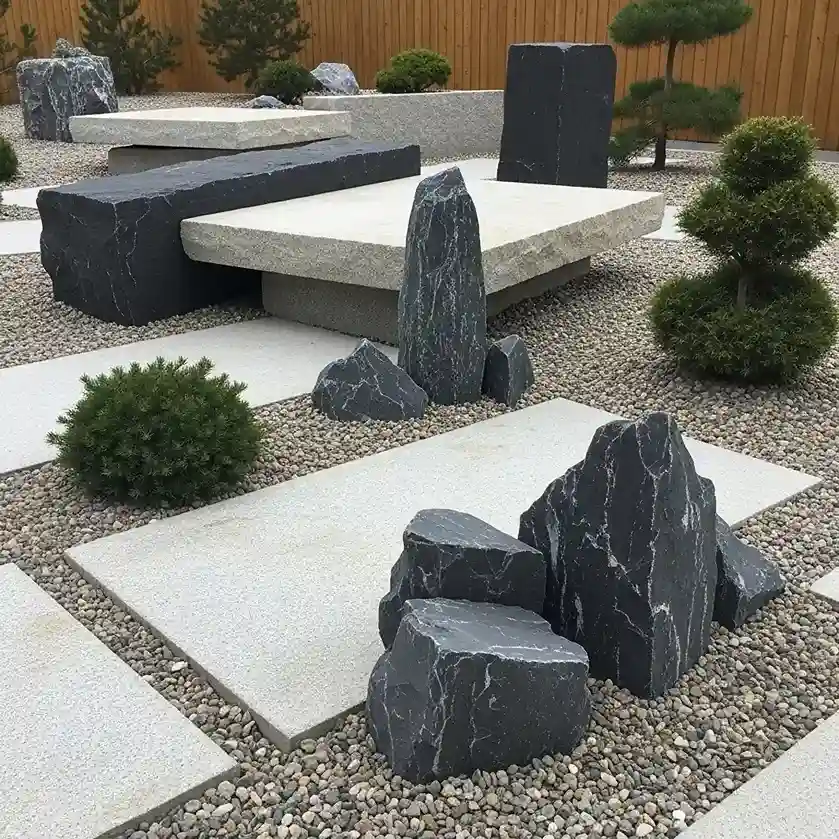
Large-format granite slabs, dark basalt boulders, and angular slate groupings in a sea of fine gravel with clipped evergreen accents create the definitive modern rock landscaping aesthetic of extraordinary elegance and design authority.
For more contemporary and minimalist garden design ideas, our trending landscaping ideas — already used in For modern rock landscaping and contemporary garden design, our small garden ideas guide covers contemporary rock landscaping and minimalist stone garden design in excellent, creative detail.
| Feature | Details |
|---|---|
| Best Stone Types | Smooth granite, dark basalt, angular slate |
| Companion Plants | Clipped box, agapanthus, blue fescue, phormium |
| Mulch | Fine gravel or decomposed granite — clean and minimal |
| Number of Stones | Less is more — single specimen or precise trio |
| Key Principle | Each stone placed with absolute intention |
| Best For | Contemporary, modern, and architect-designed gardens |
16. Rock Terrace Garden
A rock-edged terrace garden uses natural stone walls and rock outcrops to create a series of level planting platforms on a sloped site, transforming a difficult, erosion-prone gradient into a beautifully structured, multi-level garden of outstanding visual character and exceptional productive capacity.
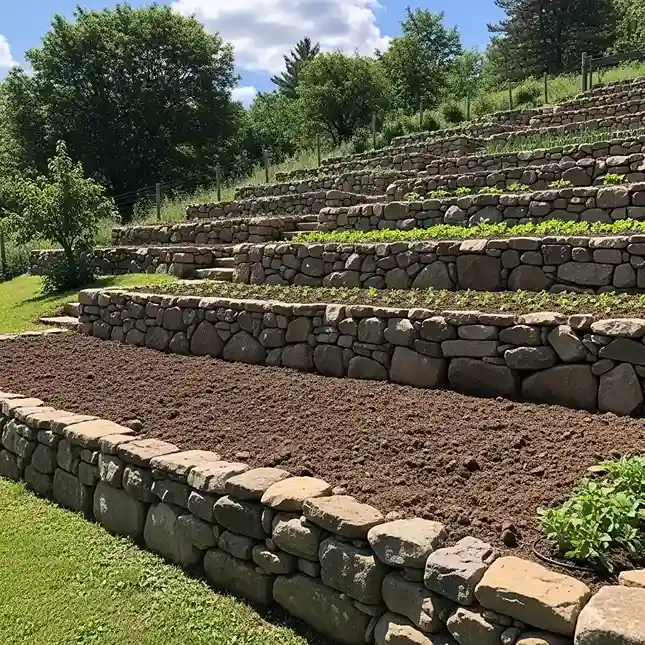
Each rock-edged terrace retains its own level area of deeply cultivated, well-drained soil, creating growing conditions dramatically superior to the raw sloped site while simultaneously creating the most visually dramatic and architecturally interesting form of garden design available for hillside and sloped positions.
| Feature | Details |
|---|---|
| Best Wall Stone | Angular fieldstone, limestone, reclaimed stone |
| Terrace Width | Minimum 4 feet for comfortable planting and working |
| Wall Height | 12–24 inches per terrace level |
| Drainage | Essential — compact backfill and gravel drainage |
| Best Plants | Lavender, herbs, vegetables, cottage flowers |
| Difficulty Level | Intermediate to advanced |
17. Pebble Mosaic Feature
A decorative pebble mosaic laid directly into a garden surface — using contrasting pebble colours to create botanical patterns, geometric designs, animal portraits, or abstract compositions — creates an extraordinarily beautiful, permanently durable, and completely unique rock landscaping art installation of remarkable craftsmanship and visual richness.
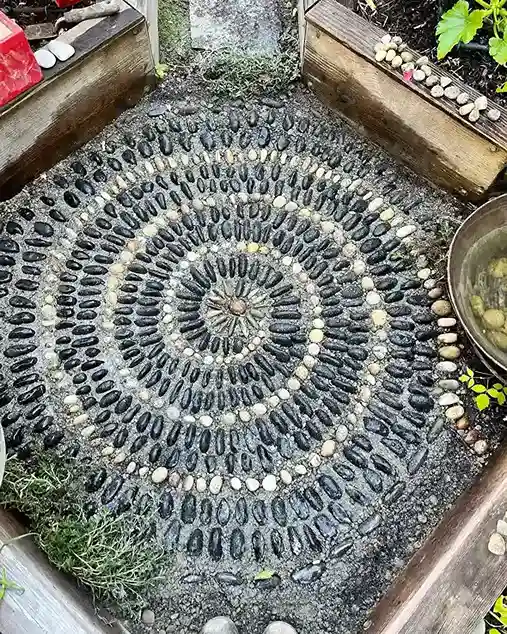
source: @sojourners_garden
Press pebbles individually into a wet mortar or compacted sand base, working from the centre outward and grouting between stones with exterior waterproof grout for a permanent, frost-resistant pebble mosaic that becomes the most admired feature in any garden it inhabits. For more mosaic and decorative rock surface ideas, our driftwood art ideas for garden guide covers pebble mosaic and decorative garden art installation in wonderful, inspiring detail.
| Feature | Details |
|---|---|
| Best Pebble Types | Contrasting colours — black, white, terracotta, grey |
| Best Mortar Base | Exterior-grade mortar or firmly compacted sharp sand |
| Best Designs | Geometric, botanical, wildlife, abstract |
| Grout | Exterior waterproof, frost-resistant tile grout |
| Lifespan | Indefinite — natural stone and mortar never deteriorate |
| Estimated Cost | $10–$40 per square foot for materials |
18. Rock Garden Around a Tree
Creating a rock garden around an established tree — using a ring of carefully positioned stones, complementary rock mulch, and shade-tolerant rock garden plants planted in the crevices — transforms the often challenging root zone beneath trees into one of the most beautifully natural and ecologically rich areas in the entire garden.
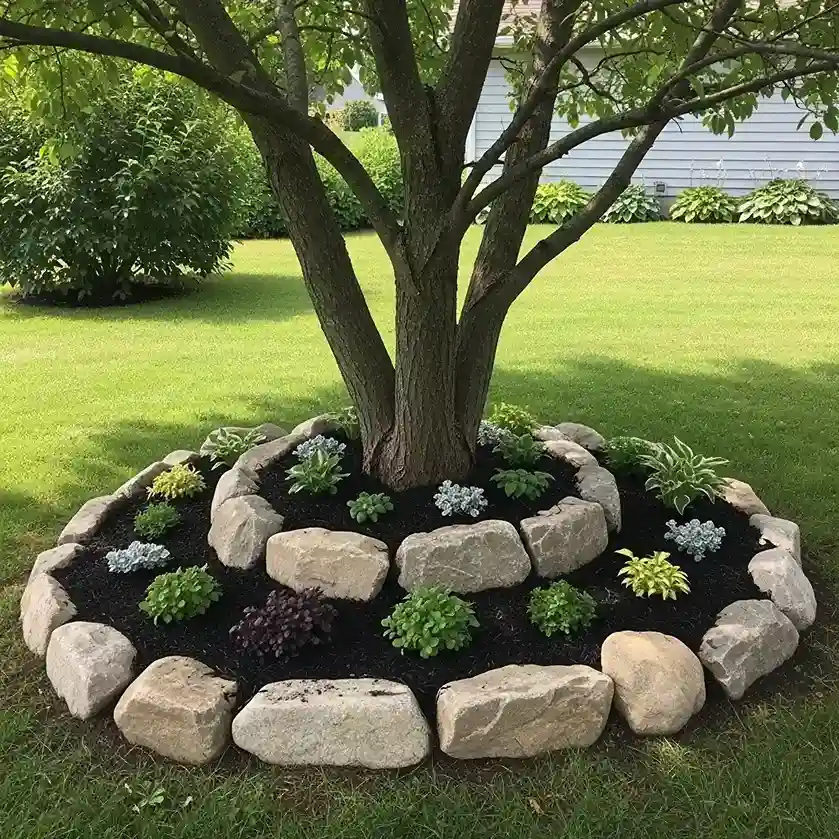
Position rocks in a naturalistic rather than perfectly circular arrangement, varying sizes and heights around the tree base, and plant between them with shade-tolerant alpines, ferns, hostas, and creeping ground covers that thrive in the tree’s dappled shadow and rock drainage. For more shade garden planting and tree underplanting ideas, our shade perennials guide covers shade-tolerant rock garden plants and tree underplanting in excellent, practical detail.
| Feature | Details |
|---|---|
| Best Rock Arrangement | Naturalistic — irregular sizes and spacing |
| Root Protection | Keep rocks off trunk — minimum 6 inch clearance |
| Best Shade Plants | Hostas, ferns, cyclamen, shade sedums, ajuga |
| Mulch | Rock mulch or fine gravel between stones |
| Wildlife Value | Habitat for beetles and soil invertebrates |
| Difficulty Level | Beginner |
19. Rock Garden for Pollinators
A rock garden specifically designed to support pollinators — planted with nectar-rich thymes, sedums, rock roses, alliums, and alpine wildflowers — creates one of the most ecologically valuable and visually beautiful rock landscaping features possible, humming with bees and butterflies throughout the warmest months.
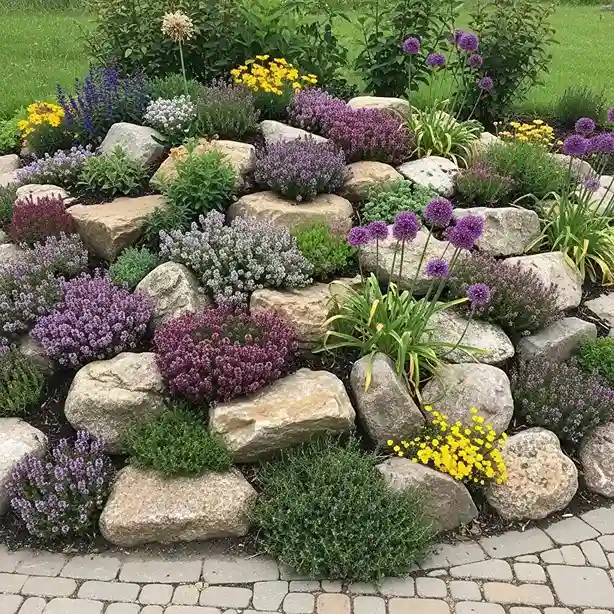
The warm, sun-heated surfaces of garden rocks attract basking bees, butterflies, and solitary bee species that use crevices between stones for nesting, making the rock garden not only a nectar source but a complete pollinator habitat of outstanding ecological richness. For more pollinator-attracting and wildlife-friendly garden feature ideas, our flowering shrubs guide covers pollinator-attracting rock garden plants and wildlife-friendly shrubs in excellent, comprehensive detail.
| Feature | Details |
|---|---|
| Best Pollinator Plants | Thyme, sedum, rock rose, allium, alpine wildflowers |
| Best Stone Surface | South-facing — warm basking surfaces for bees |
| Crevice Nesting | Leave narrow crevices for solitary bee nesting |
| Avoid | Pesticides — lethal to the pollinators you’re attracting |
| Wildlife Value | Outstanding — complete pollinator habitat |
| Best Season | April to September for peak pollinator activity |
20. Coastal Rock Landscaping
Coastal rock landscaping uses the most appropriate stone types for marine environments — granite, basalt, and quartzite — alongside salt-tolerant plants and decorative pebble mulches to create a genuinely convincing coastal landscape of extraordinary wild, windswept beauty that perfectly captures the rugged character of cliff and shoreline geology.
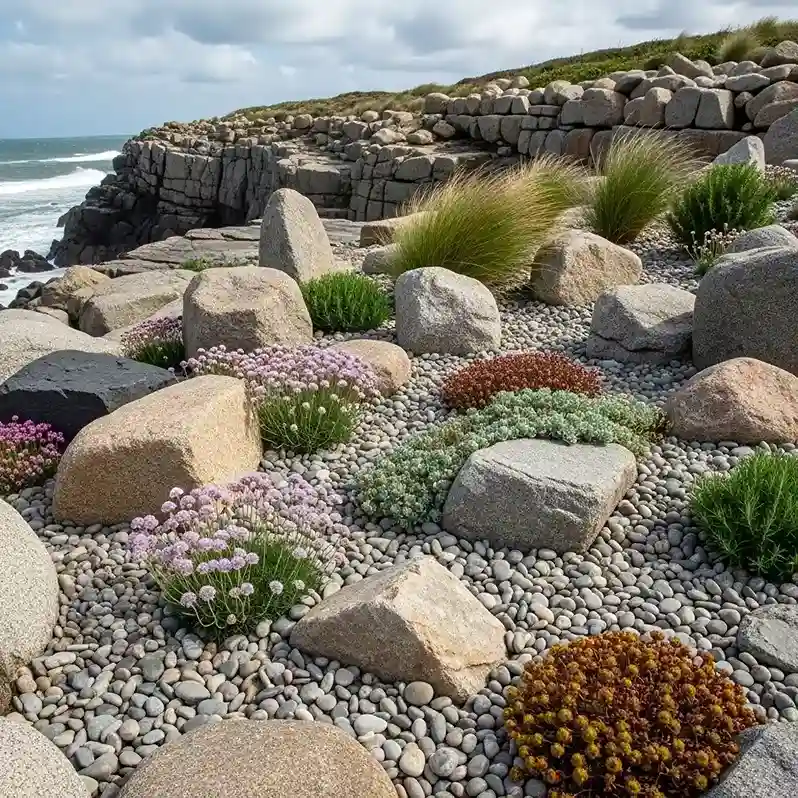
The combination of dark, salt-resistant boulders, decorative pebble mulch in ocean tones, and wind-sculpted coastal plants creates a coastal rock garden of remarkable authenticity that looks completely at home beside the sea or in any garden inspired by the wild coastal landscape. For more coastal garden design and salt-tolerant planting ideas, our coastal backyard garden guide covers coastal rock landscaping and seaside garden design in authoritative, comprehensive detail.
| Feature | Details |
|---|---|
| Best Rock Types | Granite, basalt, quartzite — hard, salt-resistant |
| Best Plants | Ornamental grasses, thrift, sea lavender, agapanthus |
| Best Mulch | Pebbles, shell grit — authentic coastal character |
| Wind Protection | Boulders provide essential plant windbreak |
| Atmosphere | Rugged, windswept, authentically coastal |
| Maintenance Level | Very low — boulders require no coastal care |
21. Rock Garden for Small Spaces
Even the most compact garden can accommodate a beautifully designed rock garden — using just three to five well-chosen stones of interesting forms in a shaded corner, beside a patio edge, or in a large container — delivering the full atmospheric impact of a traditional rock garden in the smallest possible footprint.
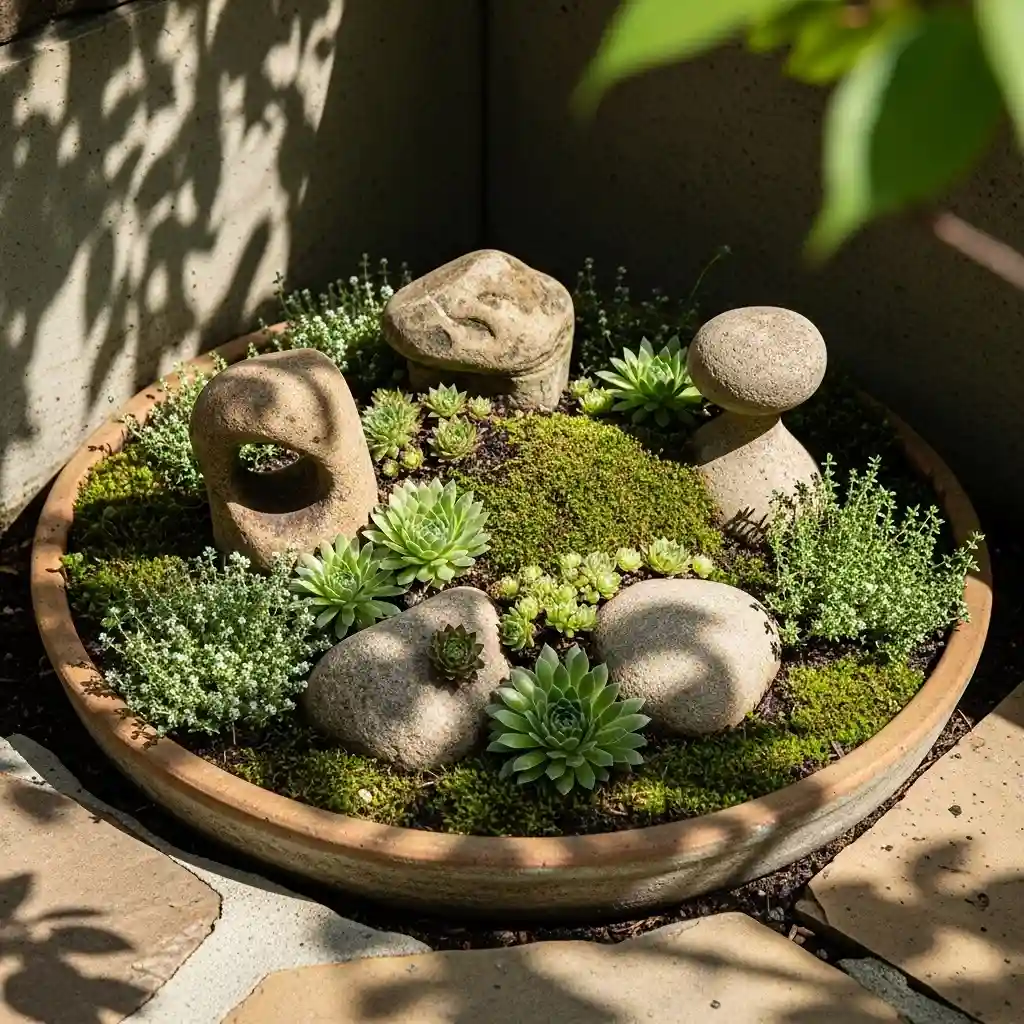
Three stones of carefully contrasting sizes arranged in a triangular composition, planted generously with compact alpines, cushion mosses, and miniature sedums, creates a completely convincing small garden rock feature of real geological character and extraordinary natural beauty. For more compact and space-efficient garden design ideas, our tiny backyard ideas guide covers small-scale rock gardens and compact stone feature design in excellent, creative detail.
| Feature | Details |
|---|---|
| Minimum Stones | 3 stones of varying sizes — triangular composition |
| Best Small Plants | Miniature sedums, cushion moss, dwarf thyme, alpines |
| Space Required | As little as 4×4 feet for a complete small rock garden |
| Container Option | Large trough or hypertufa container rock garden |
| Best Position | Sunny corner, patio edge, or raised container |
| Estimated Cost | $20–$80 for stones and plants |
22. Rock Landscaping on a Budget
Outstanding rock landscaping is completely achievable on a tight budget by sourcing stones locally for free — from farmland clearances, building sites, river banks, and online community groups — and installing smaller pieces without specialist machinery through careful manual work.
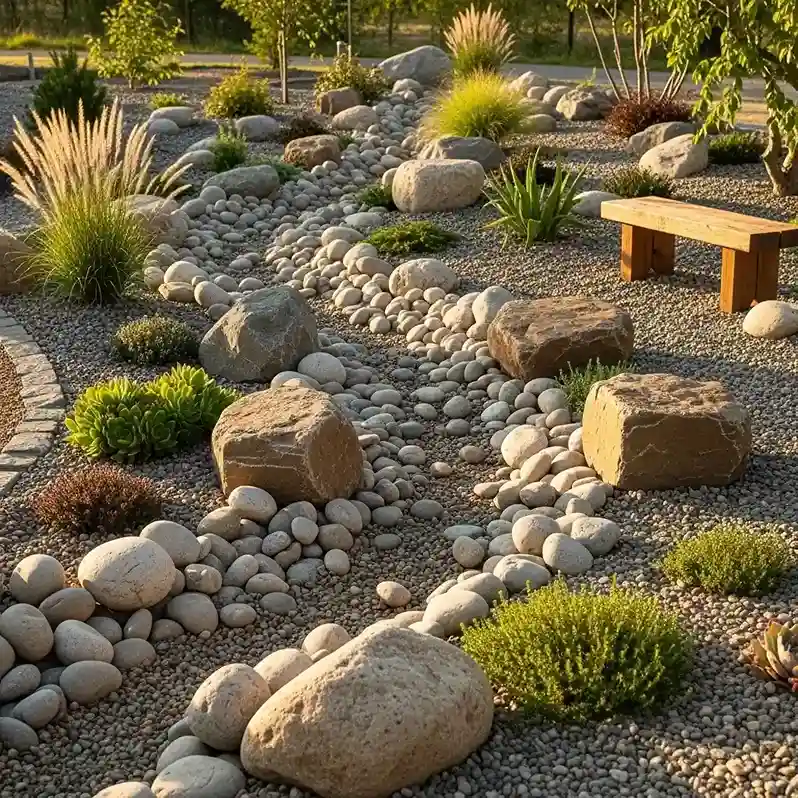
Free locally sourced stone combined with seed-grown alpine and drought-tolerant plants, a DIY gravel mulch, and creative manual installation creates rock landscaping of genuine quality and beauty for under $100 in most small to medium garden situations. For comprehensive budget landscaping strategies, our cheap landscaping ideas guide covers budget rock landscaping and free stone sourcing in genuinely practical, money-saving detail.
| Feature | Details |
|---|---|
| Free Stone Sources | Farms, building sites, river banks, online groups |
| Best Budget Plants | Seed-grown alpines, divided sedums, collected mosses |
| DIY Installation | Possible for stones under 200 lbs with basic tools |
| Gravel Mulch | Cheap pea gravel from local suppliers |
| Total Budget | Under $100 for a complete small rock garden |
| Difficulty Level | Beginner to intermediate |
23. Rock and Ornamental Grass Combination
The combination of bold, solid rocks with the fluid, animated movement of ornamental grasses creates one of the most visually dynamic and naturally compelling rock landscaping compositions available, the contrast between geological permanence and grassy movement producing extraordinary textural and seasonal richness throughout the year.
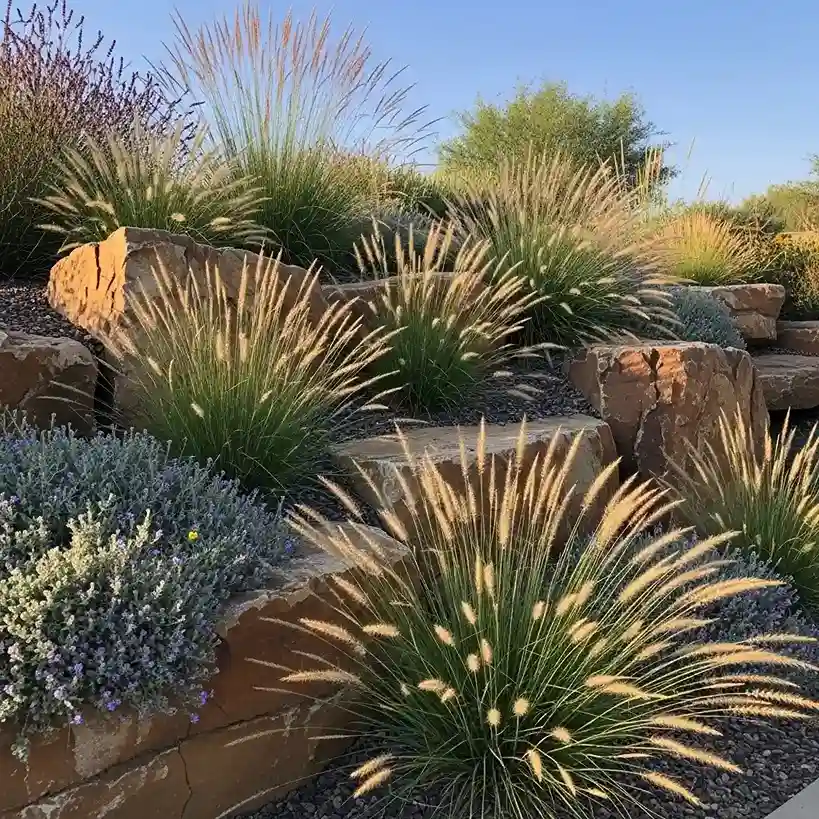
Miscanthus, Karl Foerster feather reed grass, and blue fescue all create outstanding rock garden companion plantings, their varying heights, textures, and seasonal characters ensuring the rock landscape looks completely different and equally beautiful in every month of the year. For more ornamental grass and structural planting ideas, our colorful shrubs guide guide covers ornamental grass combinations with rocks and structural garden features in vibrant, inspiring detail.
| Feature | Details |
|---|---|
| Best Grasses | Miscanthus, Karl Foerster, blue fescue, Stipa, pampas |
| Contrast Effect | Fluid grass movement against solid rock permanence |
| Best Rock Types | Any — scale to match grass height |
| Seasonal Interest | Outstanding from spring through winter skeleton |
| Maintenance Level | Low — cut grasses back once annually |
| Best For | Contemporary, naturalistic, and prairie-style gardens |
24. Rock Landscaping for Wildlife
Rock landscaping designed specifically to maximise ecological value creates an extraordinary range of wildlife habitats — warm basking surfaces for reptiles, cool damp crevices for beetles, sheltered nesting sites for solitary bees, and stable structural anchors for wildlife-supporting plant communities — in a single, permanently beautiful landscape feature.
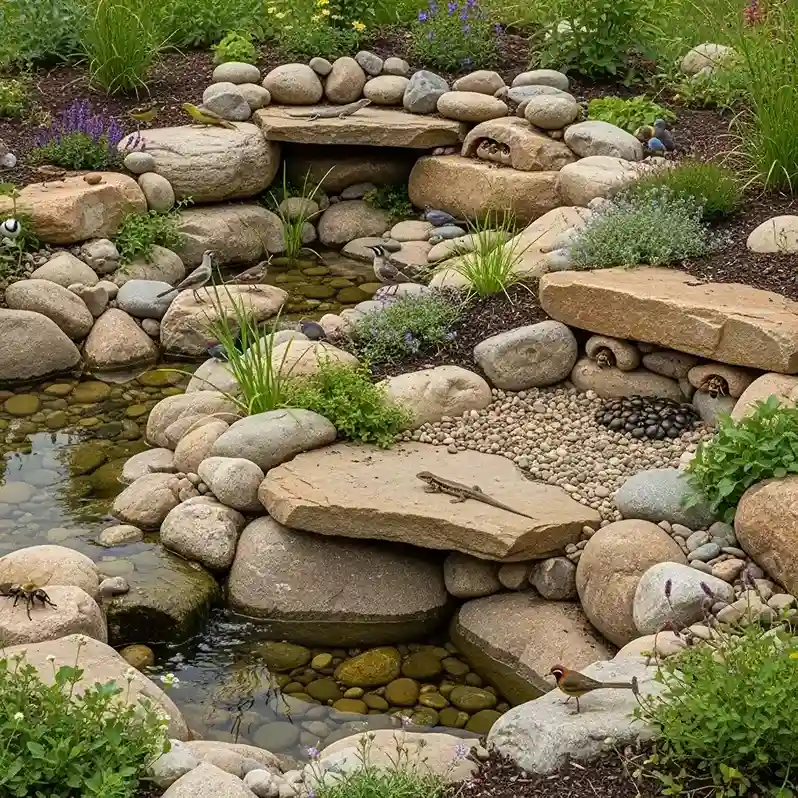
Every face of a rock garden serves a different wildlife function simultaneously, from the warm south-facing surfaces that attract basking butterflies and slow worms to the cool, damp north-facing crevices that provide essential habitat for ground beetles, woodlice, and amphibians throughout the entire year. For more wildlife garden habitat and biodiversity feature ideas, our shade plants guide covers wildlife-supporting plants that complement rock landscaping beautifully throughout every season.
| Wildlife Habitat | Species Supported |
|---|---|
| Warm south-facing surface | Reptiles — slow worms, lizards, grass snakes |
| Damp north-facing crevice | Beetles, woodlice, centipedes, mosses |
| Rock base gap | Hedgehogs, toads, ground beetles |
| Crevice planting | Pollinators, invertebrates, solitary bees |
| Nearby water feature | Frogs, newts, dragonflies |
| Surrounding planting | Birds, small mammals, butterflies |
Frequently Asked Questions (FAQs)
Q1: What rocks are best for rock landscaping?
Sandstone, limestone, and granite are the most popular and widely available rocks for garden landscaping — sandstone offers warm orange-buff tones ideal for cottage gardens, limestone suits naturalistic and Mediterranean styles, and granite creates a bold, contemporary presence. Always choose locally sourced stone that reflects the geological character of your surrounding landscape for the most natural result.
Q2: How do I make rock landscaping look natural?
Bury at least one-third of each rock below soil level, tilt stones slightly backward as natural geological strata would appear, use odd-numbered groupings, vary stone sizes significantly within each composition, and allow plants and mosses to establish naturally between stones over time. Our backyard landscaping ideas guide covers natural rock placement and authentic landscape composition in practical, helpful detail.
Q3: What plants grow best in rock landscaping?
Alpines, sedums, thymes, creeping phlox, aubretia, saxifrages, ornamental grasses, lavender, and drought-tolerant ground covers all thrive in the excellent drainage and warm microclimate created by rock gardens. Our best outdoor plants guide covers the most rewarding rock garden plants and their ideal growing conditions in comprehensive, practical detail for every garden situation.
Q4: How do I start a rock garden on a budget?
Source free stones from local farms, building sites, river banks, and online community groups, grow alpine plants from seed or divide existing garden perennials, and use locally sourced gravel as mulch between rocks. Our cheap landscaping ideas guide covers free stone sourcing and budget rock garden creation in genuinely practical, money-saving detail throughout.
Conclusion
Rock landscaping creates garden features of extraordinary permanence, natural beauty, and ecological richness that improve with every passing season as plants establish, mosses colonise, and stone surfaces develop the magnificent patina of genuine age.
Explore more garden design and landscape inspiration through our guides on yard ideas for outdoor spaces, rose garden ideas and trending landscaping ideas to create your perfect rock landscape today.