Does your sloping backyard feel like a landscaping nightmare draining your budget through erosion, limited usability, and expensive retaining wall quotes from contractors costing $5,000-$15,000?
Challenging terrain doesn’t require professional interventions—creative, budget-conscious approaches transform problematic slopes into stunning multi-level landscapes using sweat equity, natural materials, and strategic planning that works with gravity rather than fighting it.
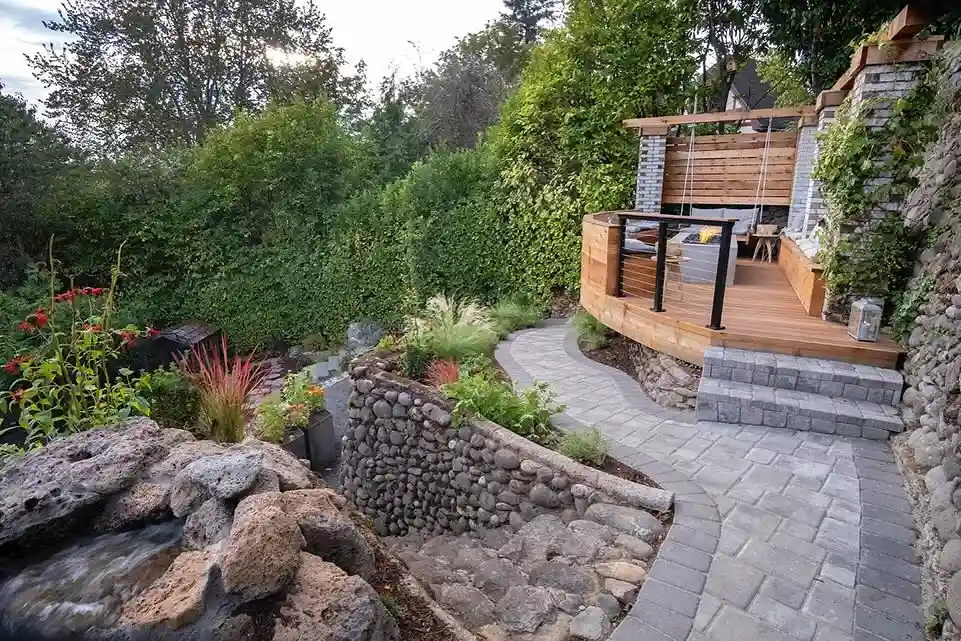
Your sloped yard actually offers unique opportunities for dramatic terracing, natural water features, and dynamic vertical interest impossible to achieve on flat properties.
Budget-friendly slope landscaping embraces DIY solutions, repurposed materials, and phased implementations allowing gradual transformation as time and finances permit. From simple groundcover plantings preventing erosion for under $200 to creative timber terracing using reclaimed materials, countless affordable strategies exist for taming slopes while creating beautiful, functional outdoor spaces.
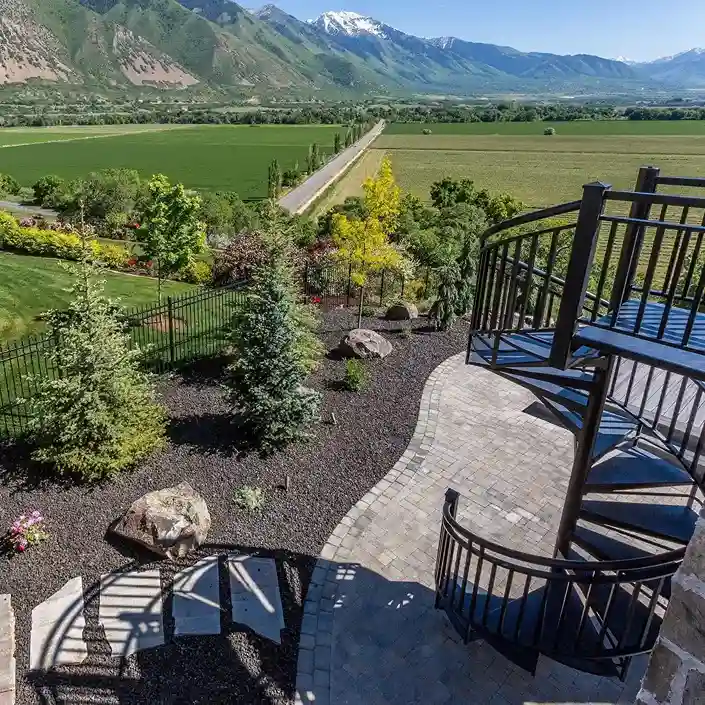
The key lies in understanding your slope’s characteristics—steepness, drainage patterns, sun exposure—then selecting appropriate solutions matching your budget, timeline, and physical capabilities for sustainable success.
Groundcover Erosion Control Planting
Establish dense groundcover plantings using affordable, fast-spreading species like creeping juniper, vinca, or pachysandra controlling erosion while eliminating mowing on dangerous slopes. These low-maintenance carpets stabilize soil with extensive root systems costing just $2-4 per plant when purchased in bulk flats.
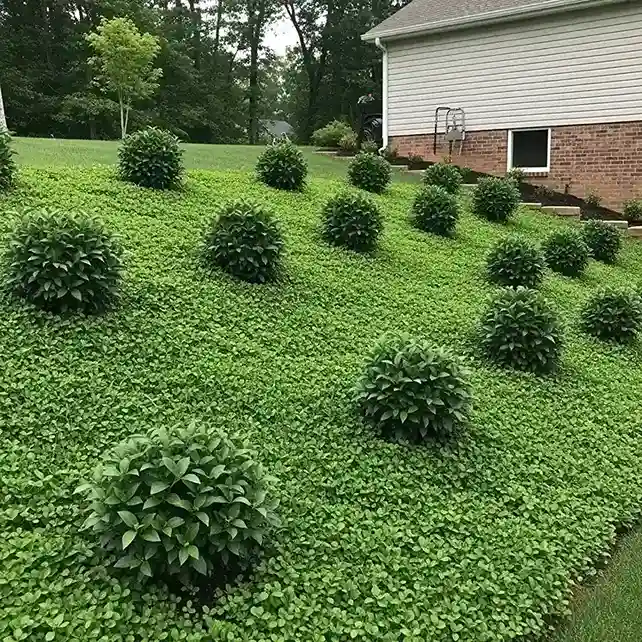
Choose groundcovers suited to your slope’s sun exposure and climate zone. Plant on contours rather than straight up-and-down preventing water channeling. This natural approach costs under $300 for average slopes compared to $3,000+ hardscape alternatives while supporting best outdoor plants that thrive naturally.
Railroad Tie Retaining Terraces
Repurpose used railroad ties creating rustic retaining walls that terrace slopes affordably for $10-20 per tie from salvage yards. These massive timbers handle substantial soil retention while their weathered appearance adds character costing significantly less than new landscape timbers at $30-50 each.
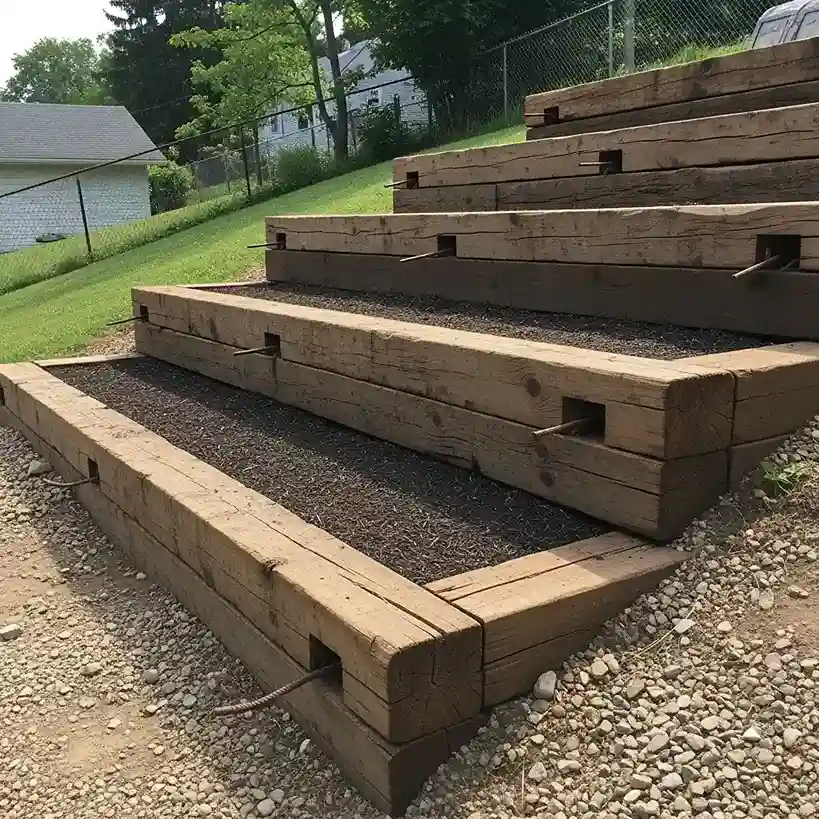
Anchor ties securely with rebar driven through drilled holes deep into hillsides. Step terraces back slightly for stability. This heavy-duty approach creates level planting beds transforming unusable slopes into productive growing spaces reflecting cheap landscaping ideas that prioritize function over expensive installations.
Native Plant Slope Stabilization
Select deep-rooted native plants adapted to your region’s slopes creating natural stabilization requiring no irrigation once established. Native grasses, shrubs, and perennials cost $5-15 per plant at native nurseries while evolved handling local soil and climate conditions without amendments or special care.
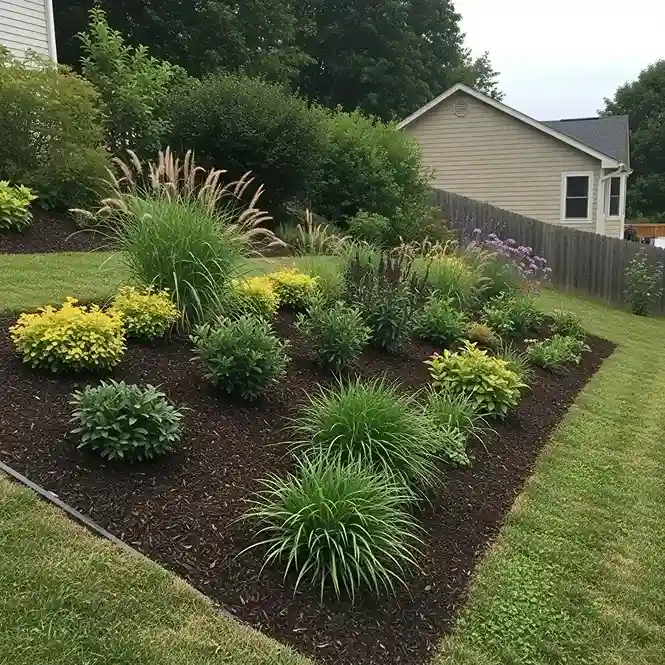
Research plants native to hillside ecosystems in your area—these species naturally thrive on slopes. A complete native slope planting might cost $400-600 total, preventing erosion while celebrating regional biodiversity through sustainable plantings requiring minimal ongoing maintenance or water inputs after establishment.
DIY Stone Terracing Projects
Collect fieldstone free from properties or purchase broken concrete (urbanite) for $20-40 per ton creating dry-stacked retaining walls without mortar expenses. These gravity-dependent structures use stone weight and careful fitting stabilizing slopes while creating planting terraces affordably.
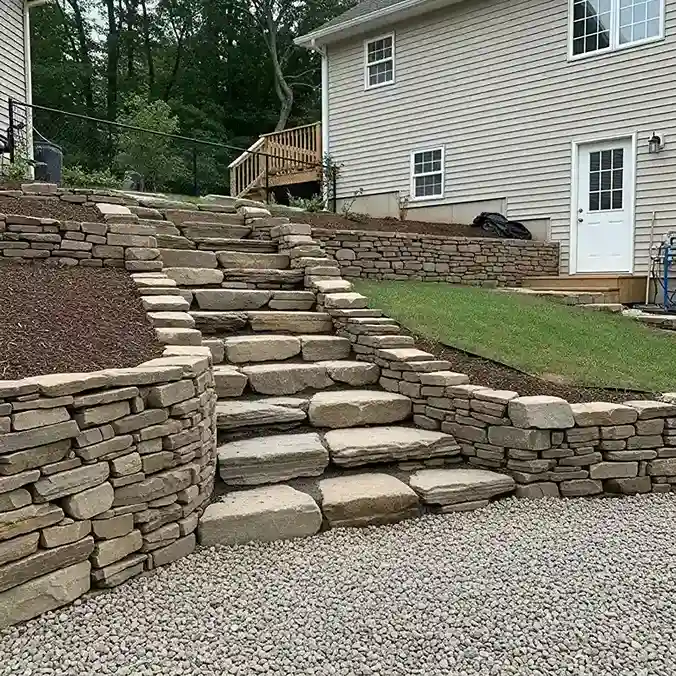
Build lower terraces first working upward, setting largest stones as foundations. Backfill with gravel for drainage. This labor-intensive but budget-friendly approach creates permanent improvements through sweat equity, transforming challenging slopes into functional garden spaces without professional mason costs exceeding $50-100 per square foot.
Mulched Pathway Switchbacks
Create switchback pathways using hardwood mulch or wood chips, navigating slopes gradually rather than straight steep climbs. These gentle zigzag routes make slopes accessible while adding visual interest, costing just $30-50 per cubic yard of mulch covering substantial pathway lengths affordably.
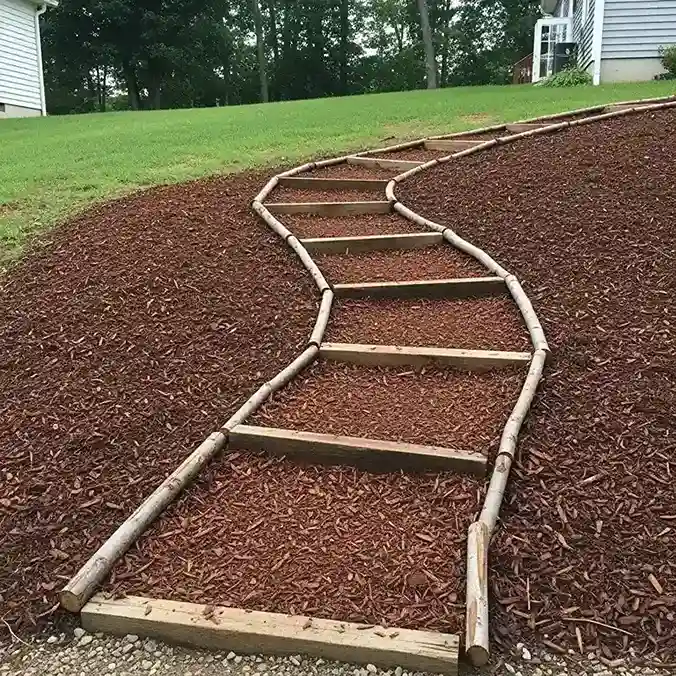
Edge pathways with branches or salvaged timbers containing mulch and defining routes clearly. Replenish mulch annually as it decomposes. This practical solution reflects walkway ideas outdoor space adapted specifically for sloped terrain challenges requiring affordable, low-tech navigation solutions under $200 total investment.
Gravity-Fed Water Features
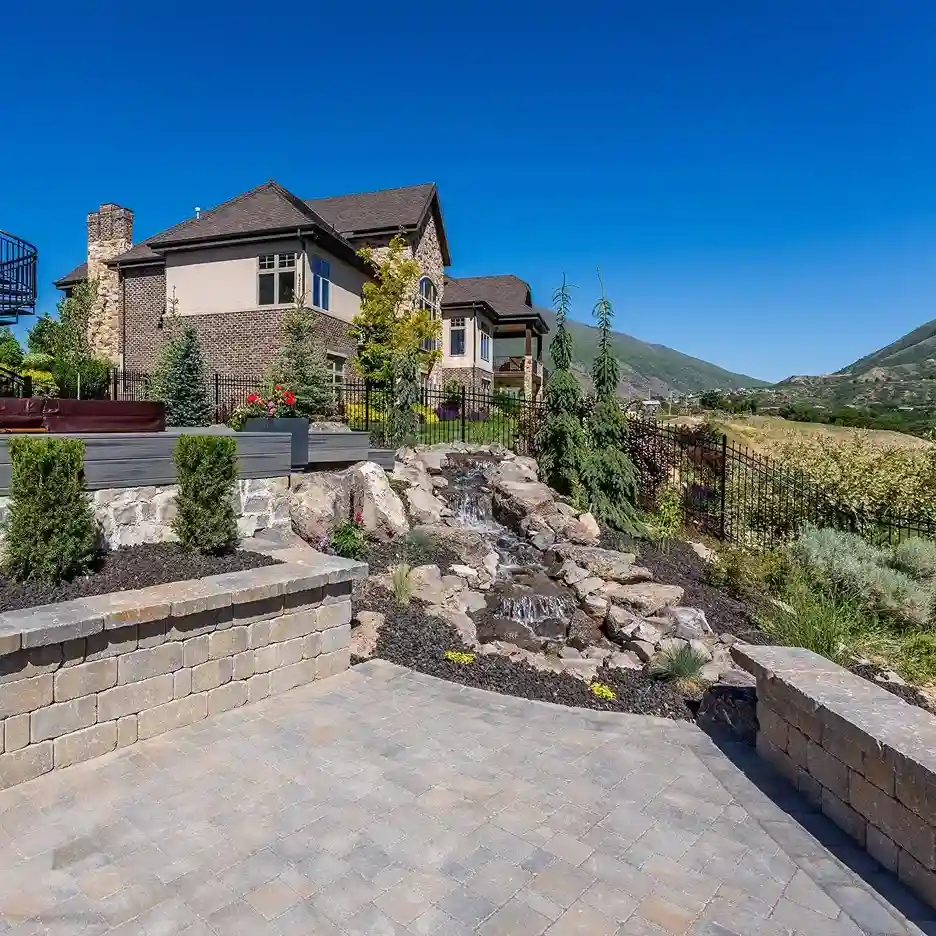
Utilize natural slope drainage, creating simple water features that work with gravity rather than requiring expensive pumps. Boulder-lined streams or cascading waterfall features cost $300-800 using the slope’s natural pitc,h creating beautiful water movement while managing runoff constructively through channeling.
Source: @decorlandscape
Position water features along natural drainage paths using stones to direct flow artistically. Add small pools or basins at intervals slowing water velocity. This approach connects to water plants guide principles creating aquatic habitats within slope management strategies serving multiple purposes simultaneously.
Terraced Vegetable Garden Beds
Build simple terraced raised beds using untreated lumber creating level growing spaces for vegetables and herbs on slopes. Cedar or pine boards cost $50-150 per 4×8 bed, filled with quality soil providing excellent drainage while transforming unusable hillsides into productive food-growing areas.
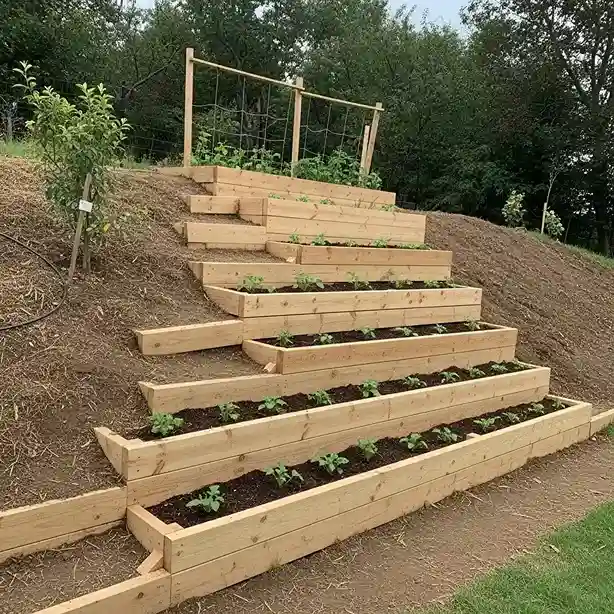
Construct beds perpendicular to slope following contour lines. Step beds uphill accessing each level comfortably. This practical approach demonstrates how tiny backyard ideas principles apply to sloped properties, maximizing limited usable space through vertical intensive growing techniques affordably.
Wildflower Slope Meadows
Seed slopes with regional wildflower mixes creating colorful, low-maintenance meadows requiring no mowing while stabilizing soil naturally. Native wildflower seed costs $50-100 per quarter-acre establishing deep root systems preventing erosion while supporting pollinators and eliminating dangerous slope mowing expenses.
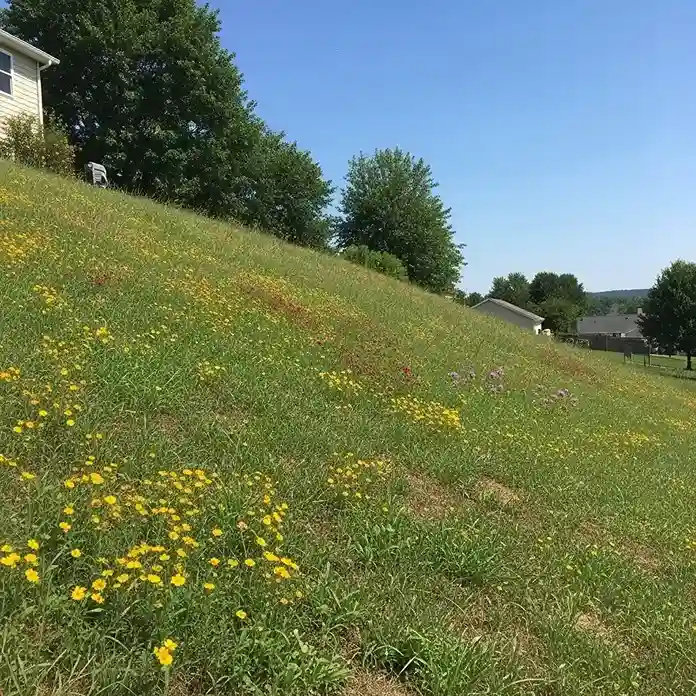
Prepare slopes by removing existing vegetation, then broadcast seed in fall or early spring following package directions. Initial watering establishes plants, but mature meadows survive on rainfall alone. This naturalistic approach creates beautiful slopes requiring minimal intervention while supporting local ecosystems sustainably and economically.
Repurposed Pallet Retaining Walls
Stack and secure wooden pallets creating makeshift retaining walls for gentle slopes. While not suitable for major retaining projects, free pallets from businesses handle small grade changes when properly anchored, costing nothing beyond securing hardware at $10-20 total for basic installations.
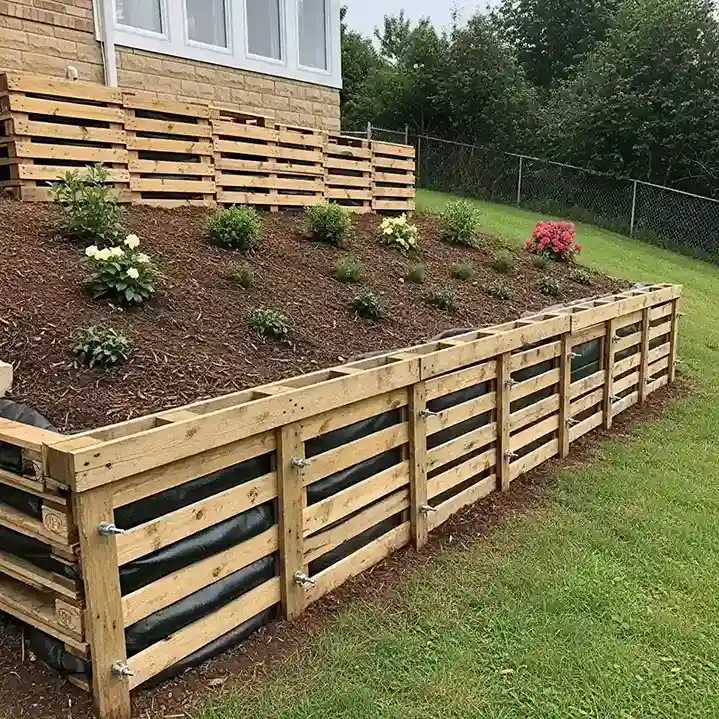
Fill pallet voids with landscape fabric preventing soil washthrough. Anchor securely to prevent shifting. This ultra-budget approach provides immediate erosion control and usability improvements while planning longer-term solutions, demonstrating creative problem-solving using free or minimal-cost materials effectively.
Ornamental Grass Slope Plantings
Establish ornamental grasses like miscanthus, fountain grass, or native switchgrass creating movement and texture while stabilizing slopes with fibrous root systems. These low-maintenance perennials cost $8-20 per plant thriving on slopes’ excellent drainage while providing year-round visual interest through changing forms.
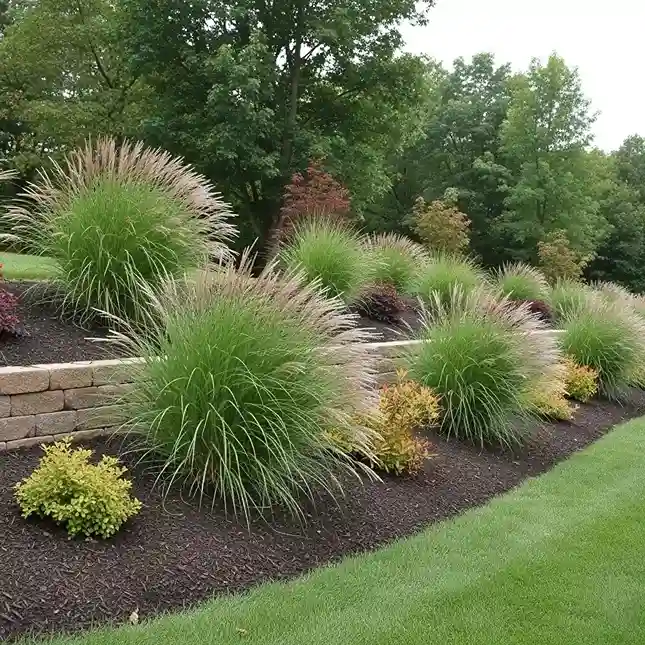
Space grasses according to mature sizes allowing natural spreading over time. Their drought tolerance once established eliminates ongoing watering costs. This attractive, practical approach combines aesthetics with function, creating slopes that contribute beauty rather than representing problems requiring expensive interventions or constant maintenance.
Boulder Accent Focal Points
Strategically position large boulders on slopes creating natural-looking focal points while helping retain soil. These permanent stone features require no maintenance while adding substantial visual weight anchoring landscape designs. Local quarries often sell boulders for $100-300 each including delivery for reasonably sized specimens.
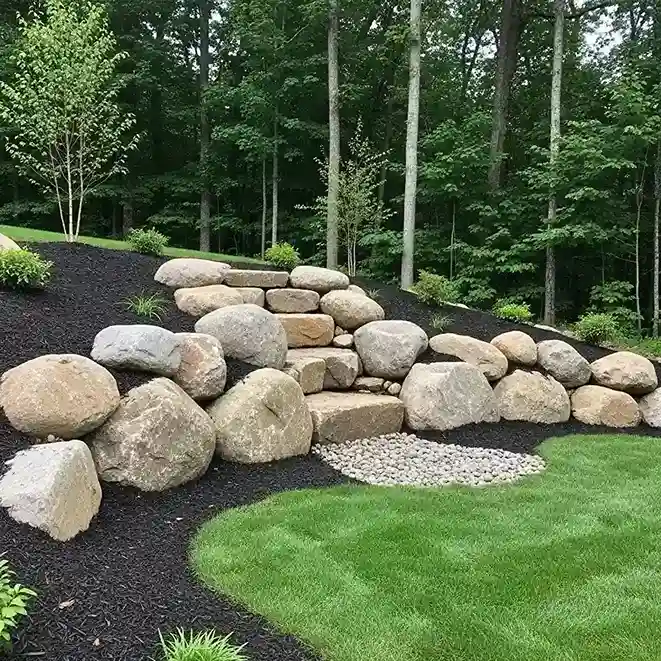
Partially bury boulders creating appearance of natural outcroppings rather than obviously placed rocks. Cluster odd numbers for natural groupings. This simple technique adds dramatic impact while serving practical retention functions, particularly effective combined with garden wall ideas for comprehensive slope management.
Timber Step Construction
Build rustic steps using landscape timbers or thick lumber navigating slopes safely and affordably. Treated 6×6 timbers cost $15-25 per 8-foot length creating substantial steps that handle foot traffic while preventing erosion along frequently traveled routes through sloped yards effectively.
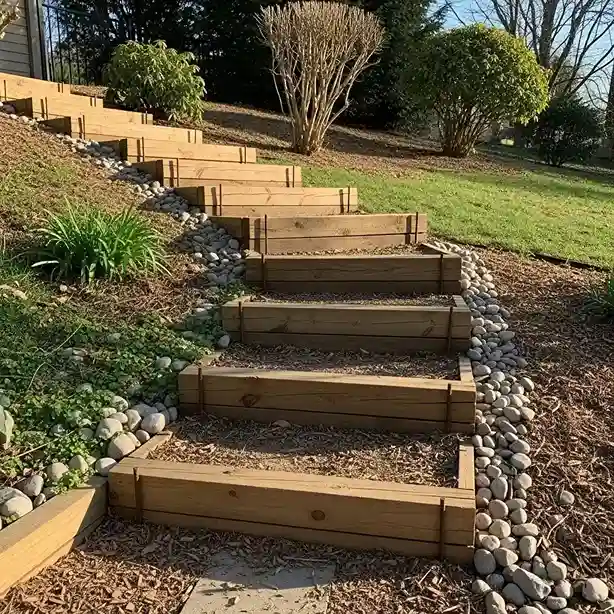
Secure timbers with rebar stakes and backfill with gravel for drainage. Space steps comfortably for natural stride lengths. This functional improvement increases slope usability dramatically while maintaining budget-friendly costs under $300 for typical residential applications compared to poured concrete steps.
Gabion Basket Retaining Walls
Construct modern gabion walls using wire cages filled with rocks creating industrial-chic retaining structures. DIY gabion baskets cost $30-60 each while rocks can be sourced affordably or free from properties, creating substantial retaining capacity for $500-1,000 compared to $5,000+ masonry walls.
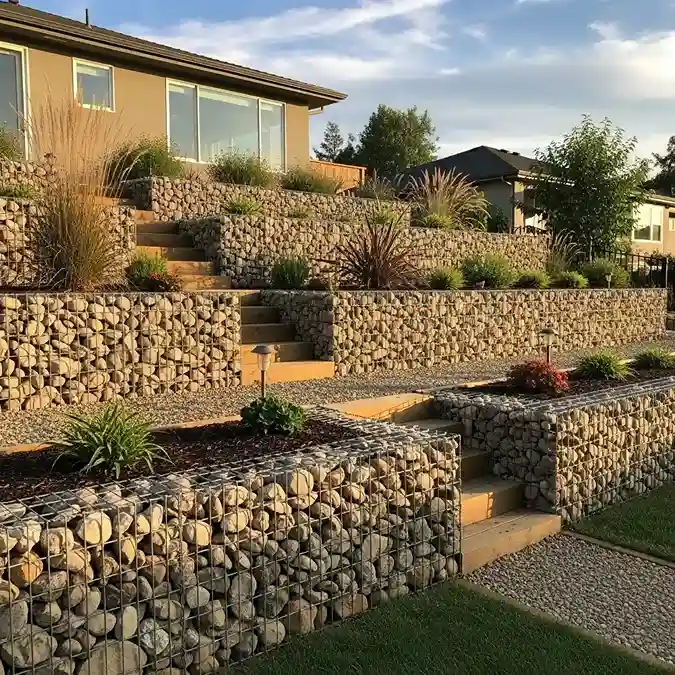
Stack and secure cages following manufacturer instructions, filling with uniform stones for clean appearances or mixed materials for rustic effects. This contemporary approach provides excellent drainage while creating distinctive modern aesthetics suitable for trending landscaping ideas on challenging terrain.
Perennial Slope Gardens
Design layered perennial gardens on slopes using drought-tolerant varieties requiring minimal maintenance once established. Strategic plant selection costing $300-600 for comprehensive slope coverage creates year-round interest while stabilizing soil through diverse root systems at various depths preventing erosion naturally.
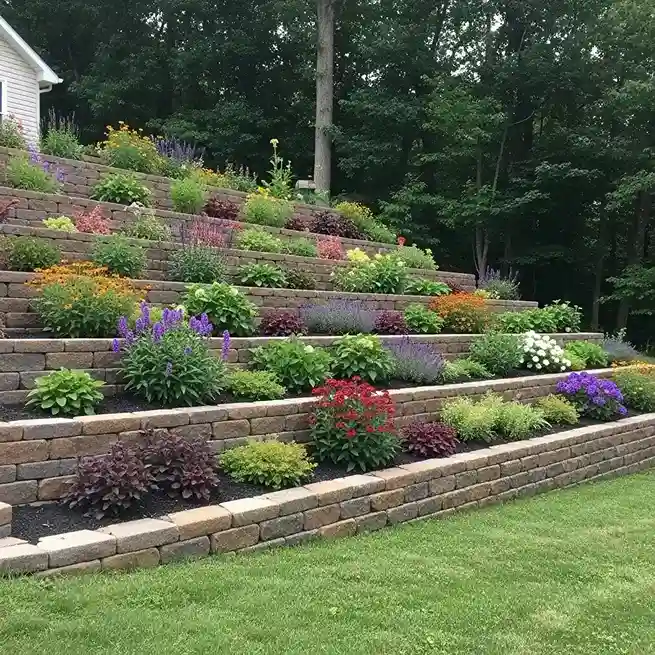
Choose plants with varied bloom times, heights, and textures creating dynamic displays. This horticultural approach transforms problem slopes into garden showcases demonstrating how backyard landscaping ideas adapt successfully to challenging terrain through thoughtful plant selection and placement strategies.
Rock Garden Xeriscaping
Create rock gardens using collected stones and drought-tolerant plants like sedums, sempervivums, and alpine species. Material costs remain under $400 including plants and supplemental stone purchases, creating low-maintenance slope gardens thriving in excellent drainage conditions while requiring minimal water once established.
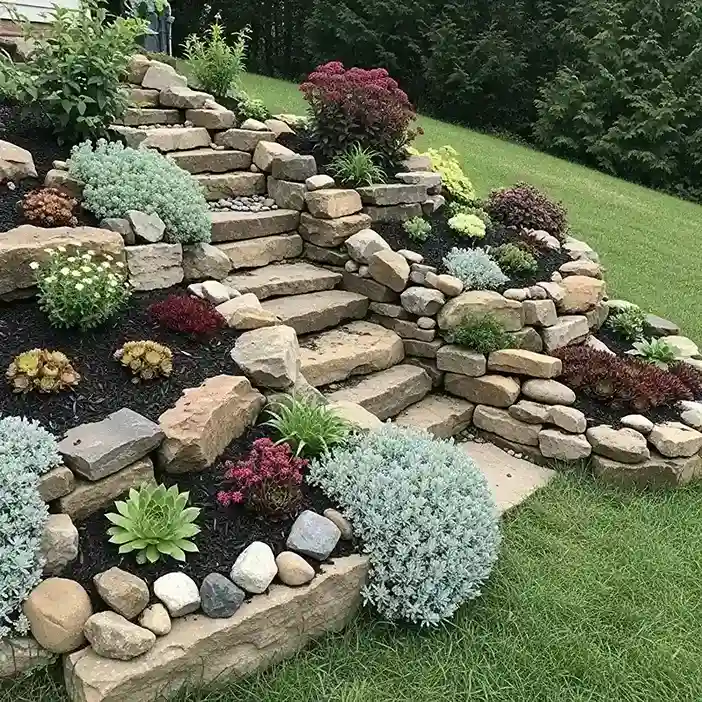
Arrange stones creating natural-looking outcroppings and planting pockets. This water-wise approach suits arid climates particularly well while demonstrating how challenging slopes become assets through design approaches celebrating their unique characteristics rather than fighting natural topography constantly.
Cascading Ground Juniper Plantings
Plant spreading junipers creating evergreen cascades flowing down slopes while stabilizing soil year-round. These tough groundcovers cost $15-30 per plant spreading several feet wide creating complete coverage within 2-3 years, establishing permanent erosion control requiring zero ongoing maintenance once established successfully.
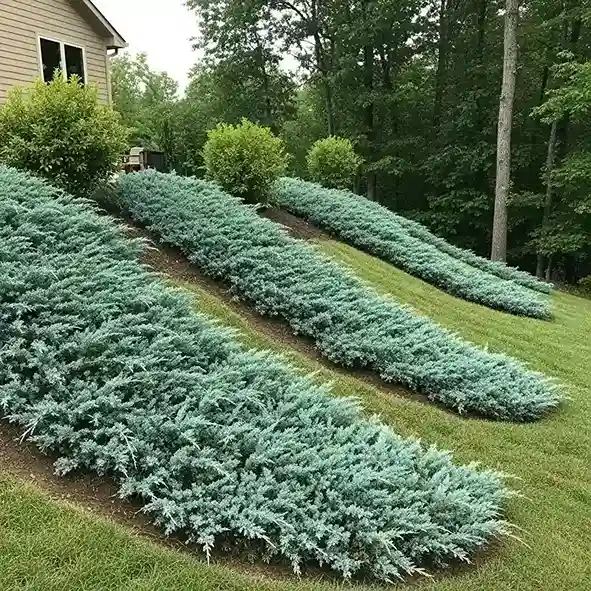
Space plants accounting for mature spread, allowing natural merging over time. Junipers’ blue-green foliage provides attractive year-round color while their dense growth prevents weed competition naturally. This set-it-and-forget-it approach suits busy homeowners seeking permanent low-maintenance solutions for challenging slopes.
Slope Lawn Alternatives
Replace traditional turf with no-mow grass alternatives like buffalo grass or fine fescue blends requiring minimal maintenance on slopes. Seed costs $100-200 per 1,000 square feet while eliminating dangerous slope mowing forever, creating safer, easier-care landscapes that remain green without constant intervention.
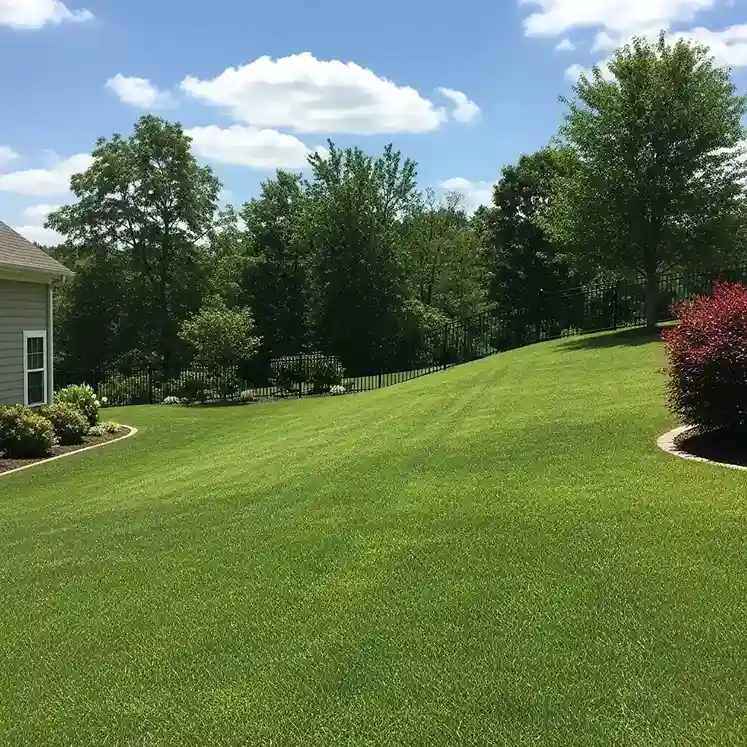
These specialty grasses grow slowly, rarely requiring cutting while tolerating drought better than traditional lawns. The reduced maintenance translates to long-term savings in time, fuel, and equipment wear, making initial seed investment worthwhile for safer, more sustainable slope management approaches.
Retaining Wall Planter Pockets
Build retaining walls leaving planting pockets between stones creating vertical gardens softening hard structures with living plants. This technique adds no material costs while transforming purely functional retaining into decorative landscape features supporting trailing plants, succulents, or alpine species thriving in well-drained pockets.
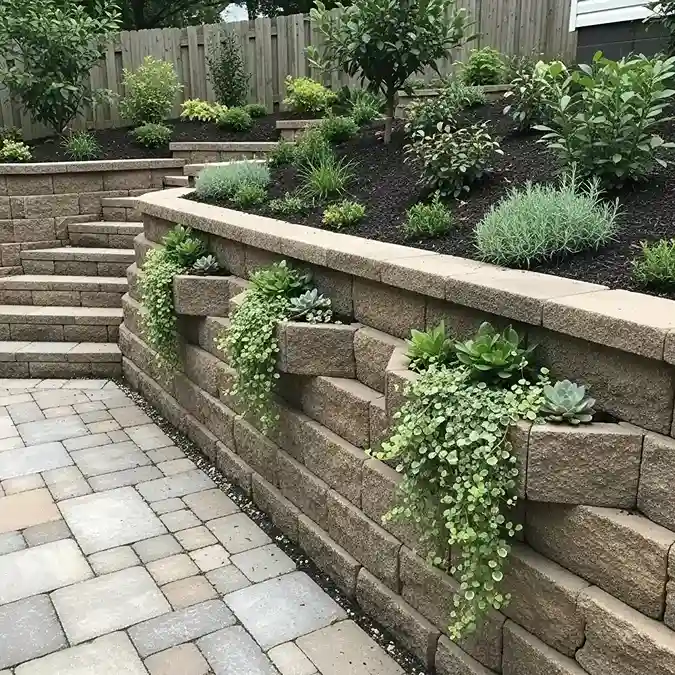
Fill pockets with quality potting mix before inserting plants. This aesthetic enhancement creates living walls rather than barren barriers, demonstrating how functional improvements incorporate beauty through thoughtful design integration costing nothing beyond original construction materials and efforts.
Shrub Mass Plantings
Plant affordable shrubs in masses creating substantial visual impact while stabilizing slopes with woody root systems. Buying smaller containerized shrubs at $10-20 each rather than large specimens saves significantly while plants establish faster, creating complete coverage within 2-3 seasons through patient affordable approaches.
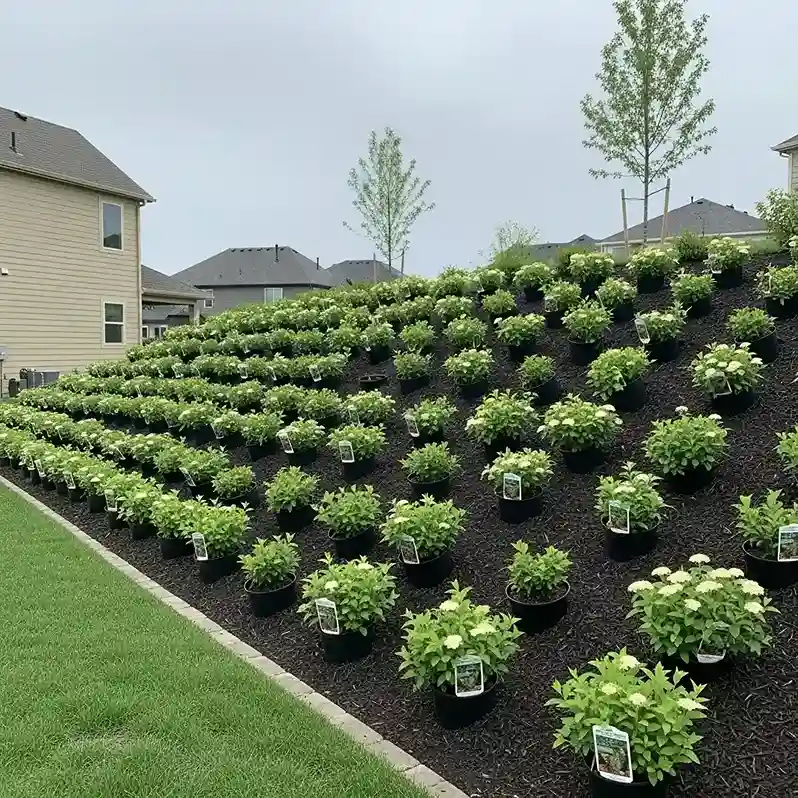
Choose proven performers like spirea, potentilla, or native shrubs suited to slope conditions. This approach reflects best shrubs for front of house principles applied to backyard slopes, creating cohesive plantings throughout properties using consistent material palettes economically.
DIY Drainage Solutions
Install simple French drains using perforated pipe and gravel managing slope water issues affordably. Materials cost $100-300 for typical installations preventing erosion and foundation problems while directing water productively toward gardens or rain barrels rather than allowing destructive uncontrolled runoff.
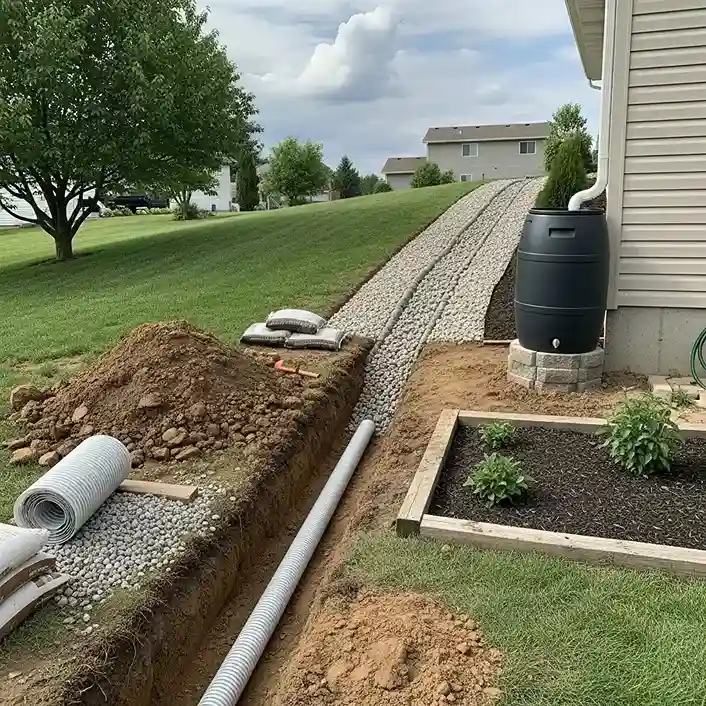
Dig trenches along problem drainage paths, line with landscape fabric, add gravel and perforated pipe, then cover with more gravel and fabric before backfilling. This practical improvement protects slope investments while managing water constructively through gravity-powered systems requiring no energy inputs.
Seating Area Terraces
Create level seating terraces on slopes using simple retaining methods, establishing usable entertaining spaces. A basic paver patio on a carved terrace costs $200-400 in materials, transforming unusable hillside into functional outdoor rooms, dramatically increasing backyard usability without expensive professional grading or massive earthmoving equipment.
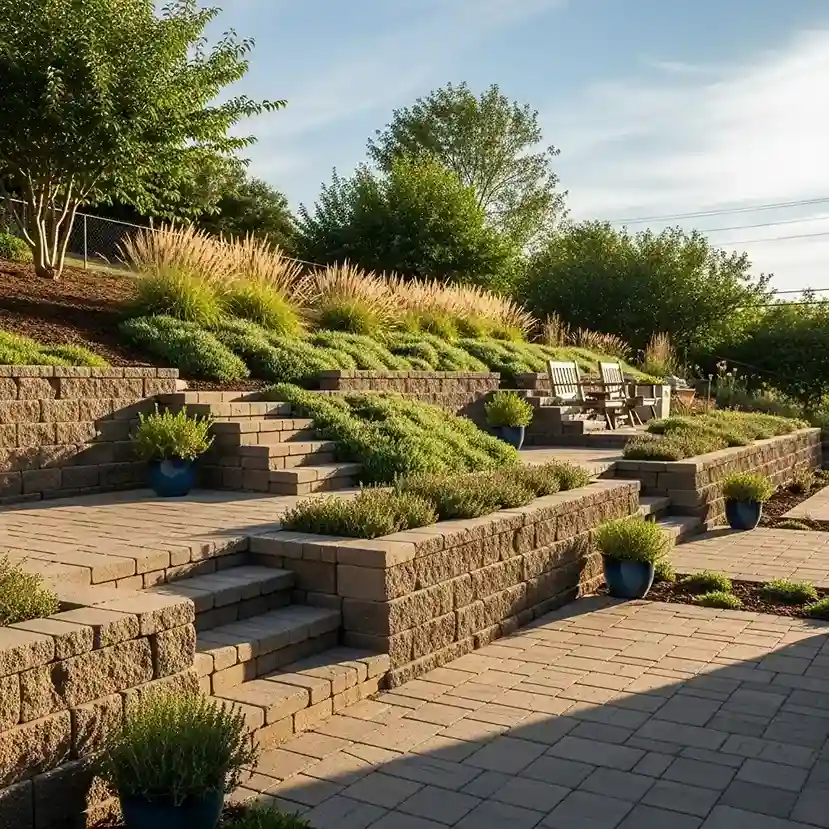
Compact soil thoroughly before laying pavers, preventing settling. Add a simple retaining wall using timbers or stacked stone. This practical improvement demonstrates how yard ideas outdoor space principles adapt to slopes, creating functional zones despite challenging topography through creative terracing.
Reclaimed Brick Terracing
Source free or cheap bricks from demolition sites or online marketplaces creating charming terraced borders and retaining walls. Reclaimed bricks cost $0.25-1.00 each compared to $2-4 for new, creating substantial savings while adding vintage character, impossible to replicate with modern materials.
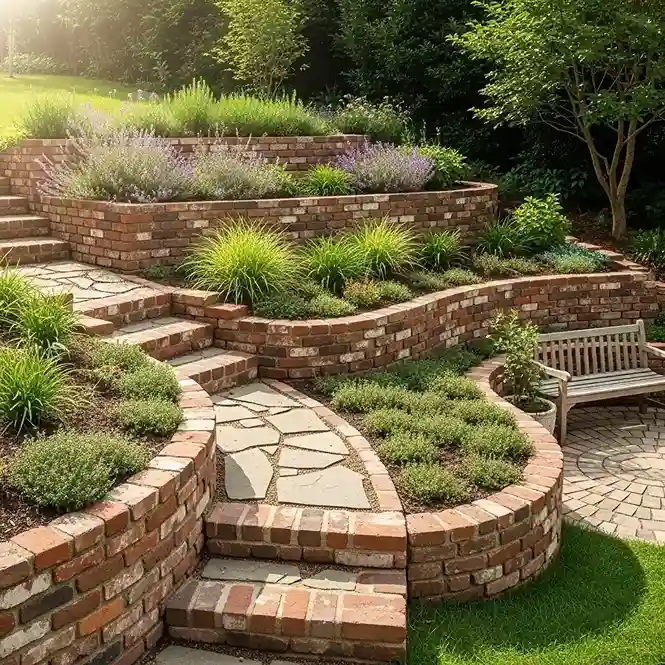
Stack bricks dry or mortar for permanence depending on slope steepness and retention needs. The warm earth tones blend naturally with plantings while adding texture and historical character. This salvage approach aligns with sustainable building practices while creating distinctive landscapes affordably.
Slope Stabilization Mats
Install biodegradable jute or coir matting providing immediate erosion control while seeds establish. These natural fiber products cost $75-150 per roll, covering significant areas, decomposing naturally after plants establish, eliminating removal needs while protecting vulnerable slopes during critical establishment periods, preventing washouts.
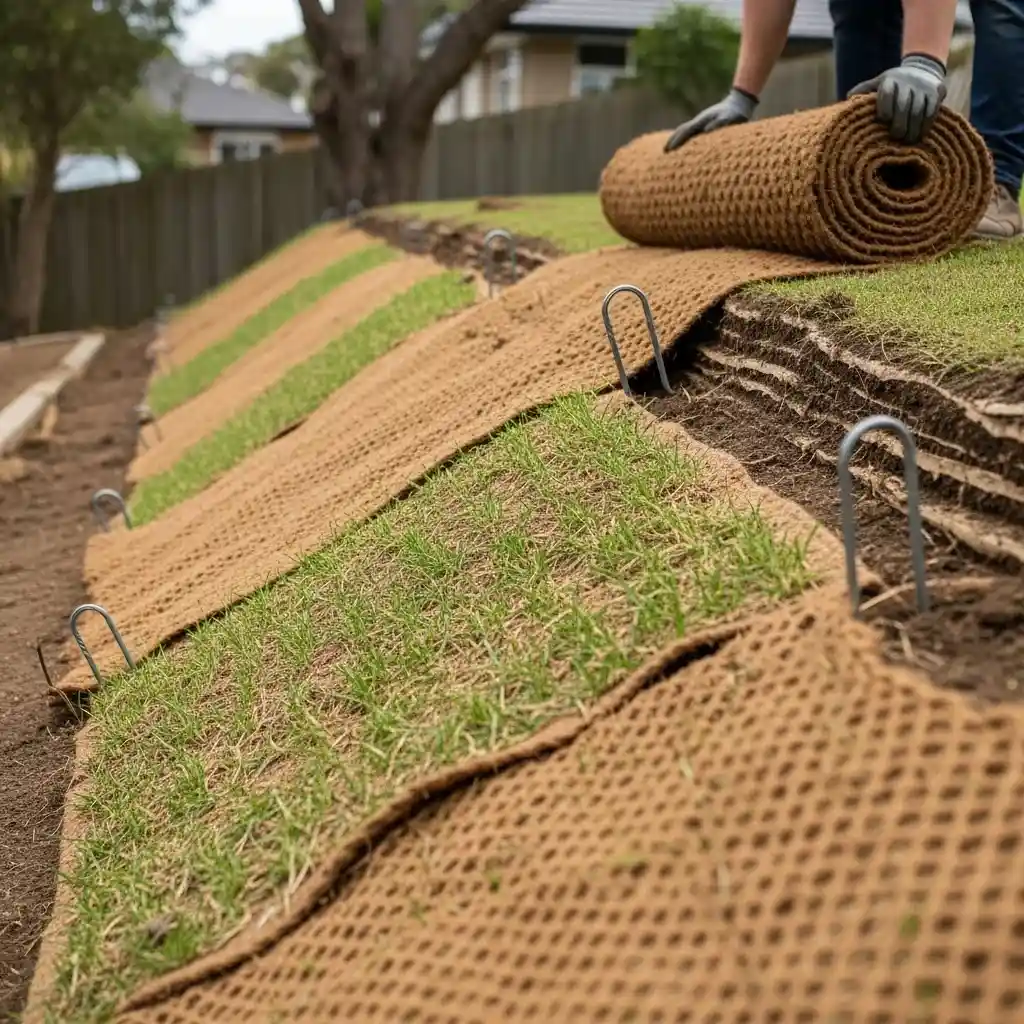
Secure mats with landscape staples and seed through openings. This temporary protection ensures planting success while preventing erosion damage during vulnerable periods. The mats’ natural materials enrich soil as they decompose, providing dual benefits of protection and eventual soil improvement through organic matter addition.
Frequently Asked Questions
What is the cheapest way to landscape a sloped backyard?
Groundcover plantings cost $200-400 for average slopes while wildflower meadows run $50-100, making these the most affordable approaches. Free materials like pallets, urbanite, and collected stones further reduce costs when labor is DIY rather than contracted professionally.
How much does slope terracing typically cost?
Professional terracing with retaining walls costs $3,000-15,000 depending on materials and scope. DIY approaches using railroad ties, urbanite, or timber cost $500-2,000 in materials for comparable projects, demonstrating significant savings through sweat equity investments over professional installations.
Can I landscape a slope without retaining walls?
Absolutely! Groundcovers, native plantings, ornamental grasses, and strategic boulder placement stabilize slopes naturally without structures. These approaches often cost less than $500 while providing equally effective erosion control through root systems rather than expensive hardscape interventions.
How do I prevent erosion on a budget?
Immediate erosion control uses mulch ($30-50 per yard), erosion fabric ($50-150), and fast-growing groundcovers ($200-400). Combined approaches provide layered protection ensuring slope stability while plantings establish, preventing costly damage through proactive, affordable interventions rather than expensive repairs later.
Sloped backyards present challenges but also unique opportunities for creative, budget-conscious landscaping that transforms liabilities into distinctive landscape assets.
Whether you tackle projects gradually through phased improvements or complete comprehensive transformations through concentrated DIY efforts, affordable solutions exist for every slope challenge and budget constraint.
Start with critical erosion control, then add aesthetic and functional improvements as time and resources permit. Your slope’s transformation doesn’t require professional budgets—it requires creativity, planning, and willingness to work with rather than against your property’s natural topography through strategic, thoughtful interventions maximizing impact while minimizing expenses.