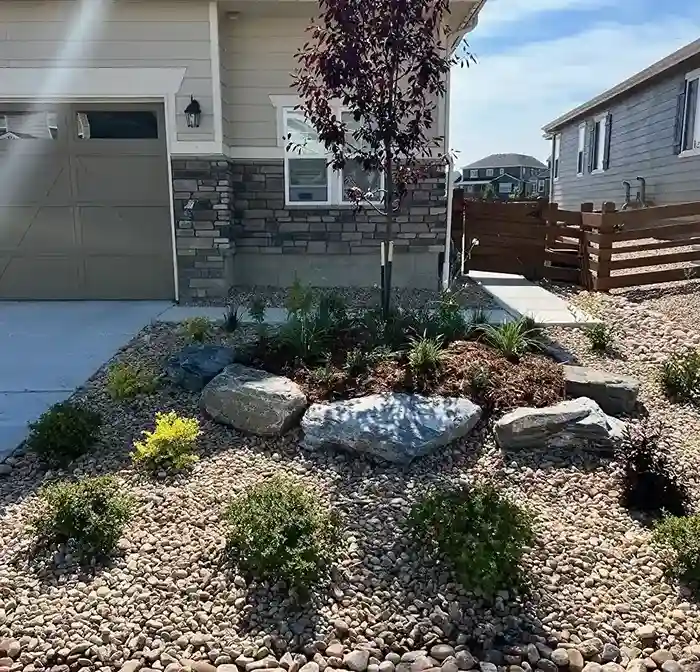
Mulch and rock landscaping provide the perfect foundation for any modern garden. These versatile materials manage moisture while adding stunning texture to your home’s exterior landscape.
Combining organic mulch with natural stone creates a professional, high-end look. You reduce maintenance time and improve soil health by using these durable groundcover solutions today.
source: @frsrllc
1. Contrasting River Rock and Dark Bark
You create a bold visual impact by pairing smooth, gray river rocks with deep chocolate brown mulch. This high-contrast look defines garden borders with professional precision.
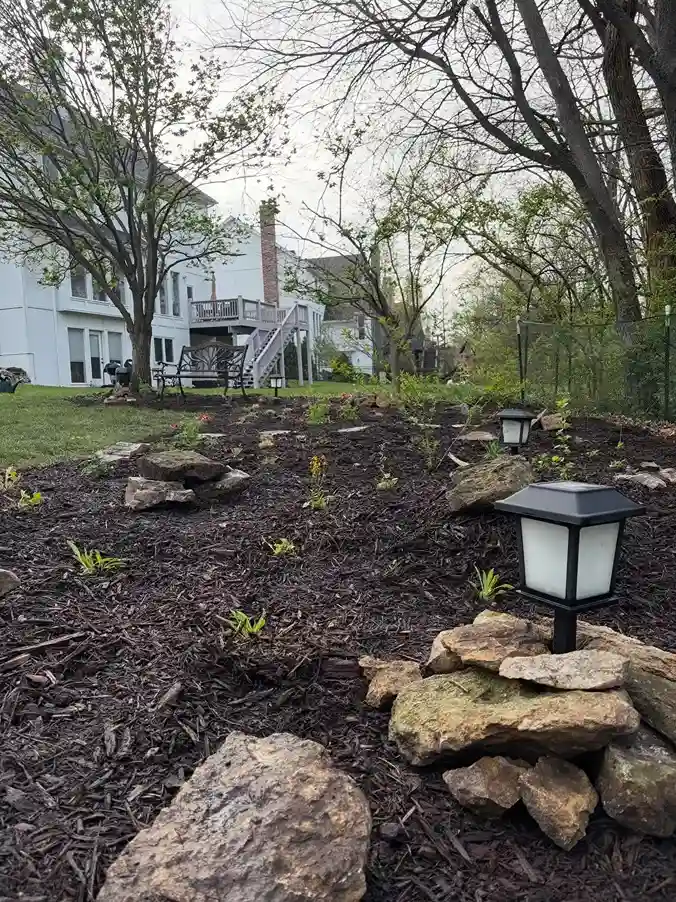
source: @root.design.co
Dark mulch retains soil moisture for your best outdoor plants. The surrounding rocks prevent the mulch from washing away during heavy rain storms.
| Feature | Material | Benefit |
| Border | Grey River Rock | Erosion control |
| Infill | Dark Hardwood Mulch | Nutrient boost |
2. White Marble Chips with Evergreens
White marble chips reflect sunlight and brighten shaded corners of your yard. You pair these stones with deep green boxwoods for a clean, sophisticated entrance.
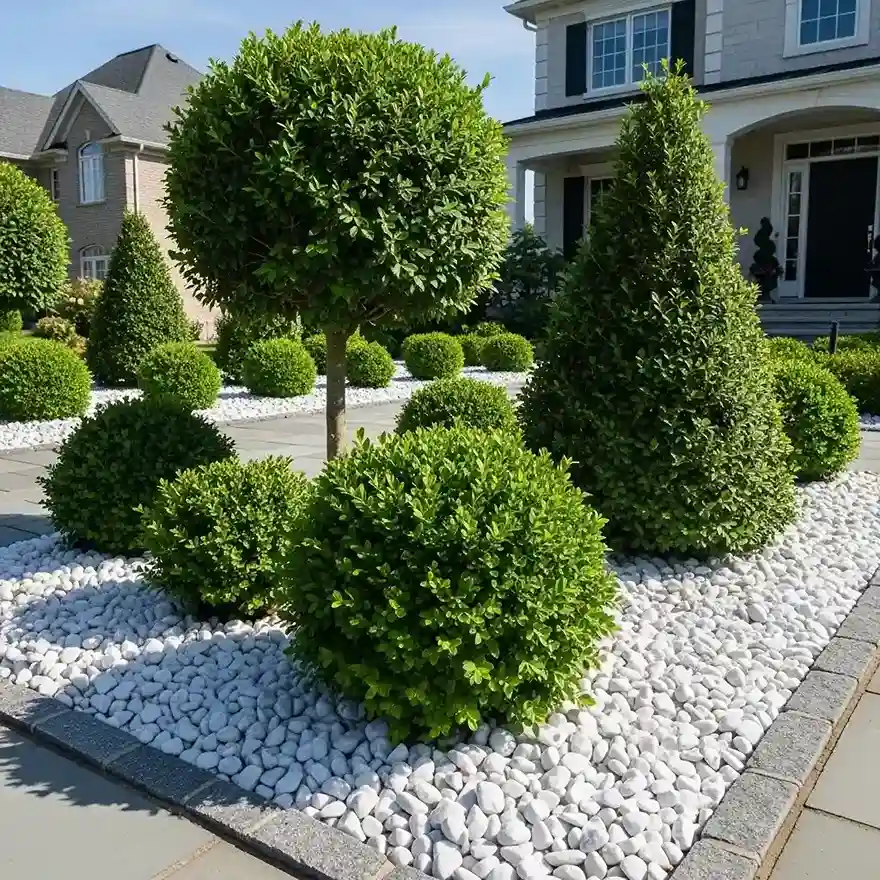
This combination works perfectly for front yard landscaping. The white stone highlights the architectural shape of your favorite evergreen shrubs.
| Feature | Material | Benefit |
| Stone | Marble Chips | Light reflection |
| Plant | Boxwood | Year-round color |
3. Red Lava Rock for Tropical Vibes
Red lava rock adds a warm, volcanic aesthetic to your garden beds. You use this porous stone to provide excellent drainage for heat-loving tropical species.

source: @roman_landscape909
This stone pairs well with backyard landscaping ideas that focus on vibrant colors. The red hue complements bright orange and yellow floral displays.
| Feature | Material | Benefit |
| Stone | Red Scoria | Porous drainage |
| Vibe | Exotic / Bold | High visual energy |
4. Cedar Mulch and Flagstone Paths
Cedar mulch releases a pleasant aroma while naturally repelling unwanted garden insects. You embed large flagstones within the mulch to create a sturdy, aromatic walkway.
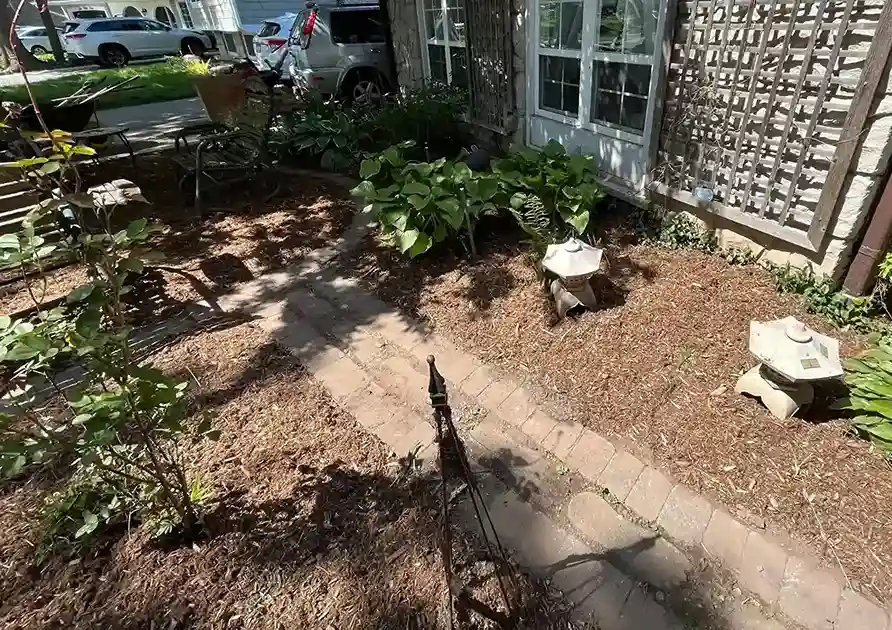
source: freshstartland
This setup improves your walkway ideas outdoor space. The mulch provides a soft cushion around the stones, making the path feel more organic.
| Feature | Material | Benefit |
| Mulch | Shredded Cedar | Insect repellent |
| Path | Natural Flagstone | Solid footing |
5. Pea Gravel and Wood Chip Zones
Pea gravel offers a soft, walkable surface for play areas or fire pits. You transition to wood chips in the garden beds to protect plant roots.
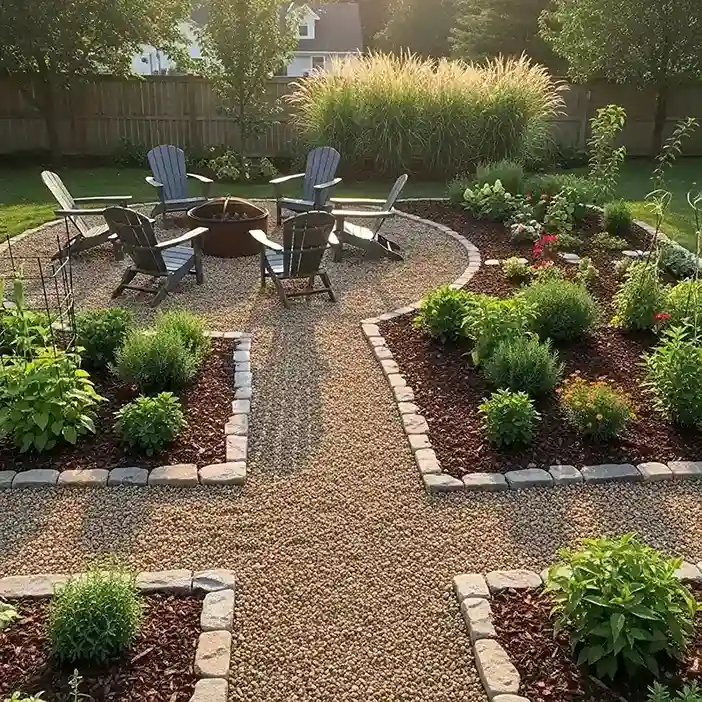
You use this mix to implement yard divider ideas. It clearly separates your active living spaces from your quiet, planted zones.
| Feature | Material | Benefit |
| Walkway | Pea Gravel | Soft texture |
| Bed | Pine Wood Chips | Weed suppression |
6. Slate Chips and Succulent Beds
Slate chips provide a sleek, flat surface that looks beautiful when wet. You use these dark stones to surround drought-tolerant succulents for a modern look.
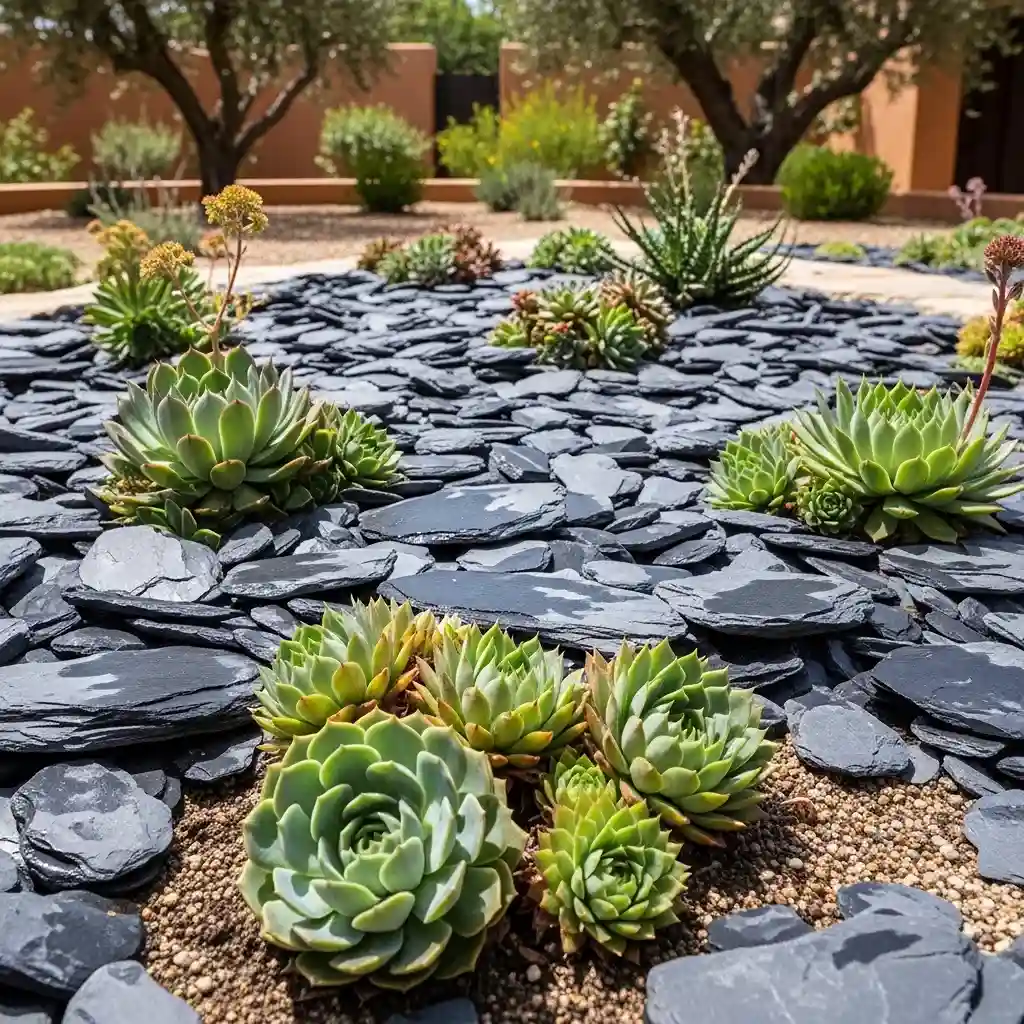
This pairing is ideal for a mediterranean garden. The slate prevents soil from splashing onto the fleshy leaves of your succulents.
| Feature | Material | Benefit |
| Stone | Grey Slate | Modern aesthetic |
| Plant | Agave / Aloe | Low water need |
7. Black Mulch and Limestone Edging
Limestone blocks provide a bright, sturdy border for dark-colored mulch beds. You use this structure to prevent grass from creeping into your floral arrangements.
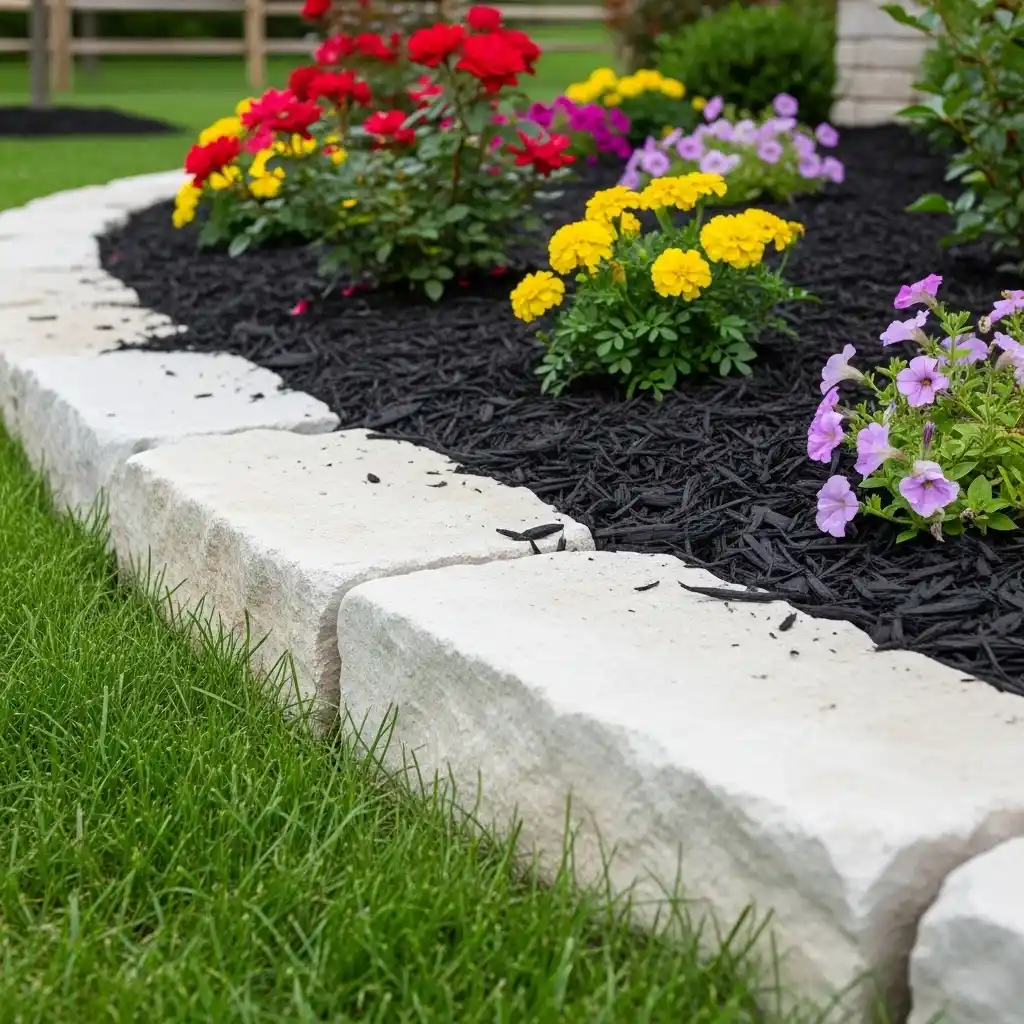
This clean look enhances your front yard fence area. The white stone and black mulch create a timeless, formal garden appearance.
| Feature | Material | Benefit |
| Border | Limestone Blocks | Crisp edges |
| Infill | Carbon Black Mulch | Sharp contrast |
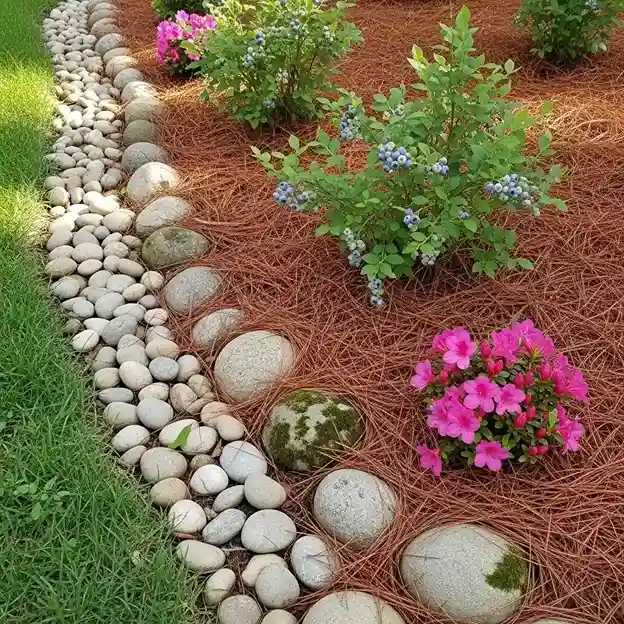
8. Pine Straw and River Stones
Pine straw provides an acidic environment that blueberries and azaleas love. You edge these beds with large river stones to keep the light straw in place.
This natural look fits perfectly with rustic garden ideas. The stones add weight and texture to the lightweight, airy pine needles.
| Feature | Material | Benefit |
| Mulch | Pine Needles | Acidifies soil |
| Edge | Cobblestones | Wind protection |
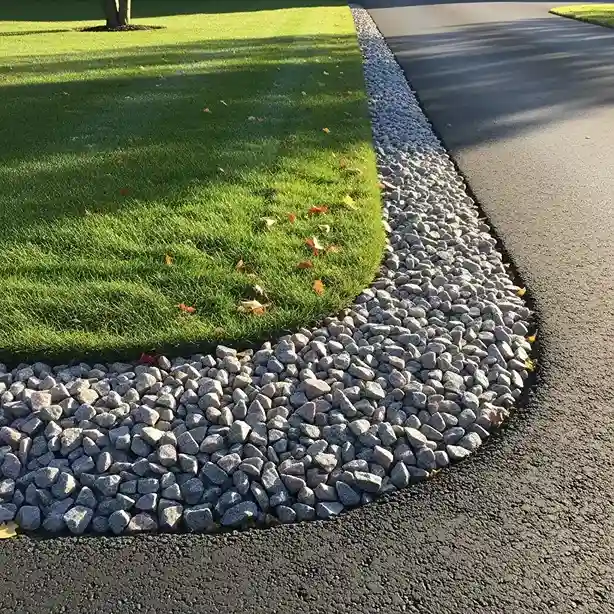
9. Crushed Granite Driveway Borders
Crushed granite provides a rugged, durable surface that handles heavy foot traffic. You use it as a transition between your lawn and your driveway ideas.
This stone is essential for a gravel driveway guide. It creates a stable base that prevents mud and looks clean year-round.
| Feature | Material | Benefit |
| Surface | Decomposed Granite | High stability |
| Utility | Path / Driveway | Low maintenance |
10. Rubber Mulch for Safe Playgrounds
Rubber mulch offers the best shock absorption for children’s play sets. You surround the area with smooth boulders to create a natural, safe boundary.

This choice supports backyard privacy ideas by creating a dedicated, safe zone. It does not decompose, so you rarely need to replace it.
| Feature | Material | Benefit |
| Mulch | Recycled Rubber | Impact safety |
| Border | Smooth Boulders | Defined zone |
11. Cobblestones and Bark for Slopes
Large cobblestones provide the weight needed to anchor soil on steep inclines. You fill the gaps with shredded bark mulch to prevent erosion during rain.
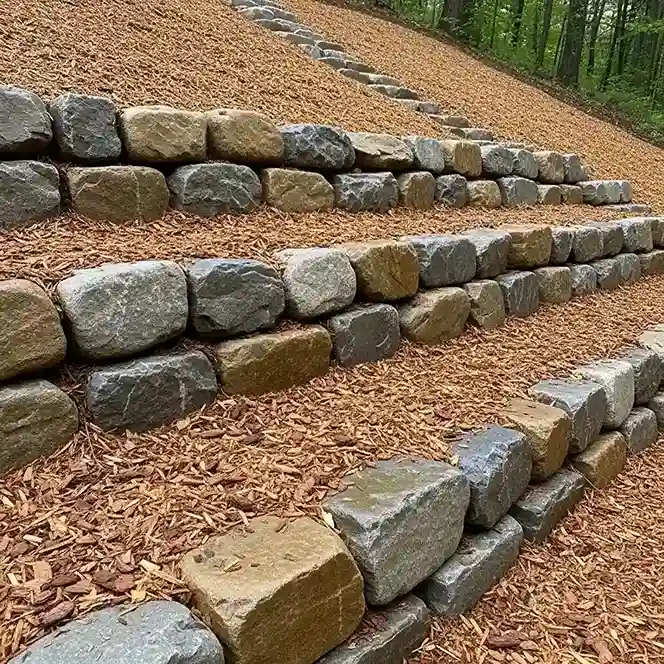
This technique is vital for steep hill landscaping. The stones act as small dams that slow down water runoff effectively.
| Feature | Material | Benefit |
| Rock | Large Cobbles | Gravity anchor |
| Mulch | Double-Shredded Bark | Soil bonding |
12. Sand and Zen Rock Gardens
Fine sand provides a canvas for meditative raking patterns in a Zen garden. You place large feature rocks to represent mountains or islands.
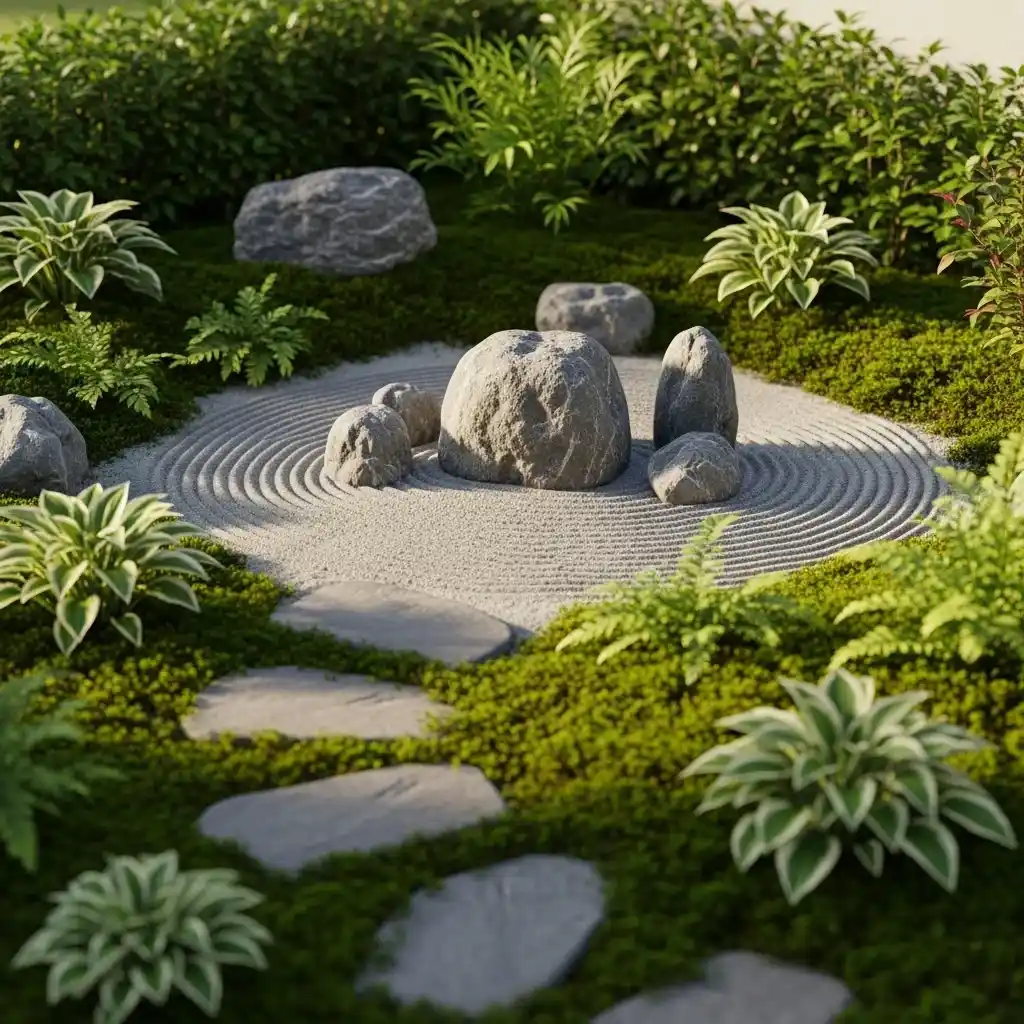
This style brings a peaceful feel to side-of-house landscaping. It turns a narrow, unused strip into a place of quiet reflection.
| Feature | Material | Benefit |
| Base | White Sand | Visual peace |
| Focal | Granite Boulders | Structural art |
13. Terracotta Shards and Mediterranean Herbs
Broken terracotta pieces provide a unique, warm-toned mulch for herb gardens. You pair these with sun-loving herbs like rosemary and thyme.
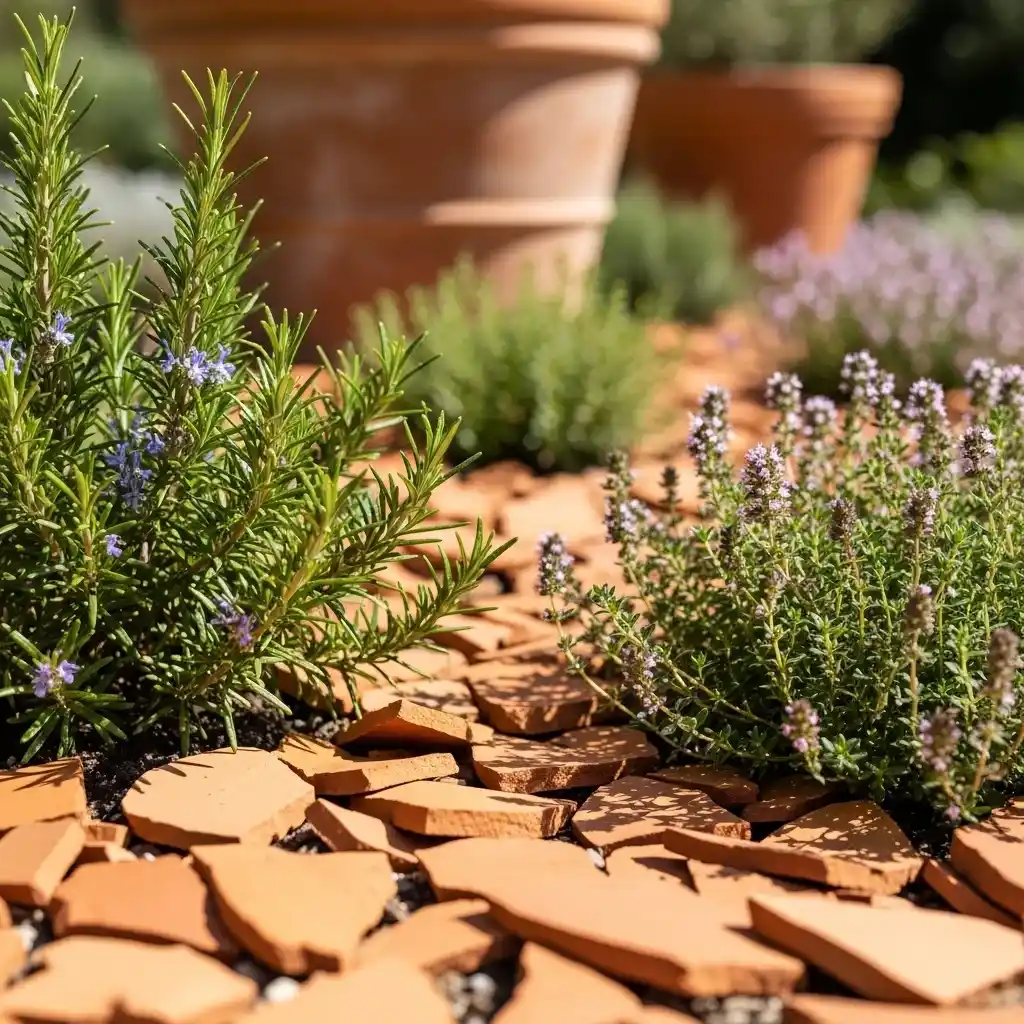
This creative mulch fits with diy yard decor. The clay shards retain heat, which helps Mediterranean herbs flourish in cooler climates.
| Feature | Material | Benefit |
| Mulch | Clay Shards | Heat retention |
| Plant | Lavender / Thyme | Drainage support |
14. Boulders and Pine Bark Nuggets
Large pine bark nuggets provide a chunky, long-lasting mulch for wooded areas. You nestle massive boulders among the mulch to mimic a natural forest floor.
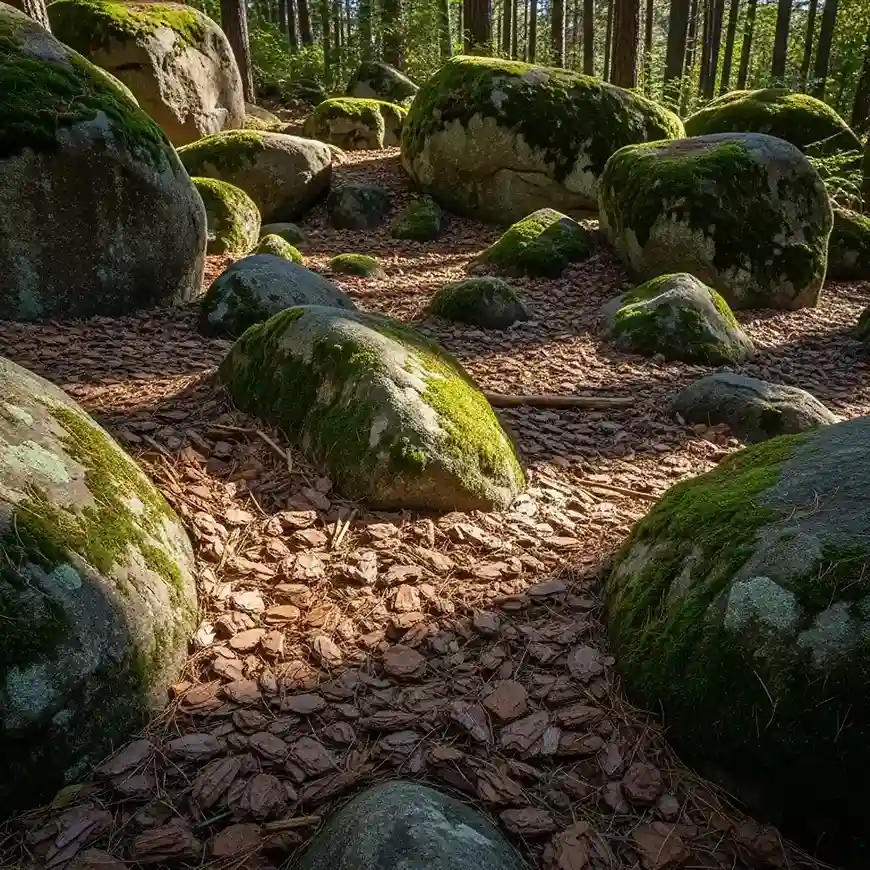
This design supports a permaculture garden design. The nuggets break down slowly, feeding the soil over several years without compaction.
| Feature | Material | Benefit |
| Mulch | Large Bark Nuggets | Longevity |
| Rock | Fieldstone Boulders | Natural look |
15. Gravel and Timber Retaining Walls
Gravel provides necessary drainage behind timber retaining walls. You use wood and stone together to create level tiers on a sloped property.
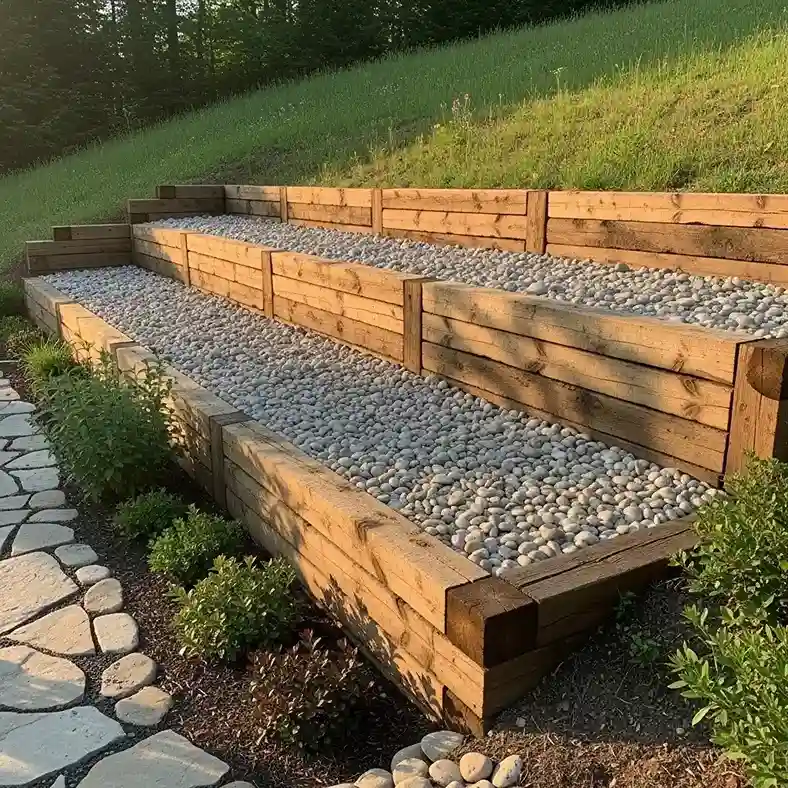
This is a staple in wood and wire fence landscapes. It prevents water pressure from building up and damaging your wooden structures.
| Feature | Material | Benefit |
| Wall | Treated Timber | Structural tiers |
| Backfill | Crushed Gravel | Hydrostatic relief |
16. Sea Shells and Coastal Grasses
Crushed sea shells provide a bright, calcium-rich mulch for coastal properties. You pair them with swaying ornamental grasses for a beach-inspired look.
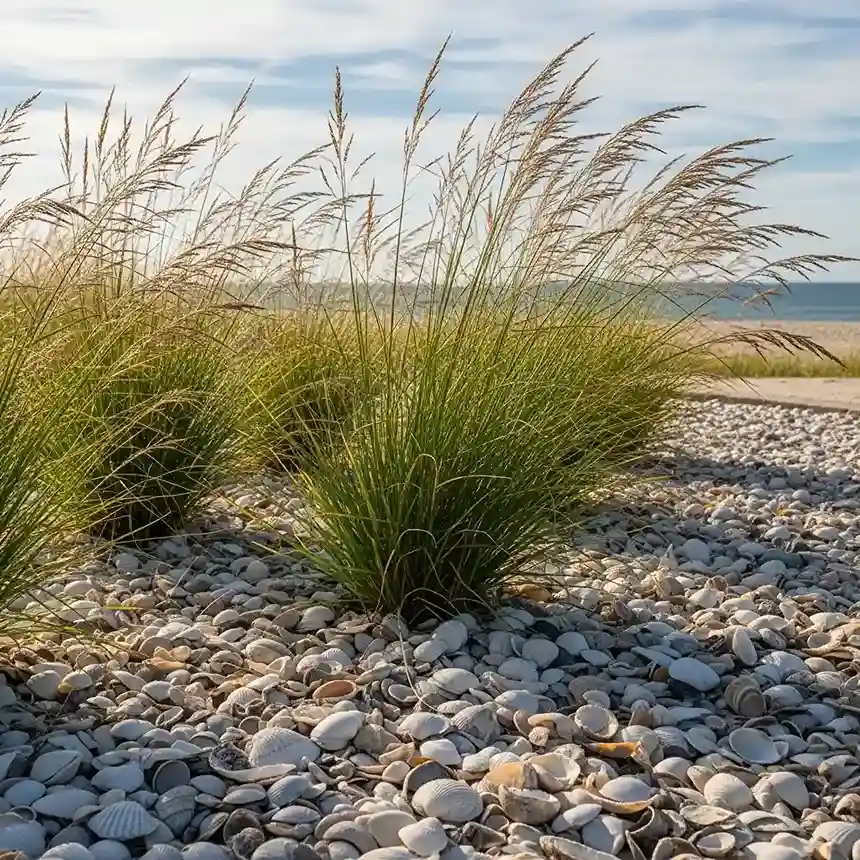
This unique material works well for side yard landscaping ideas. The shells crunch underfoot and provide a natural deterrent for garden pests.
| Feature | Material | Benefit |
| Mulch | Crushed Shells | Nutrient source |
| Plant | Sea Oats / Grasses | Salt tolerance |
17. Moss and River Pebbles for Shade
Moss thrives in damp, shaded areas where traditional mulch might mold. You surround moss patches with smooth river pebbles to create a lush, green carpet.
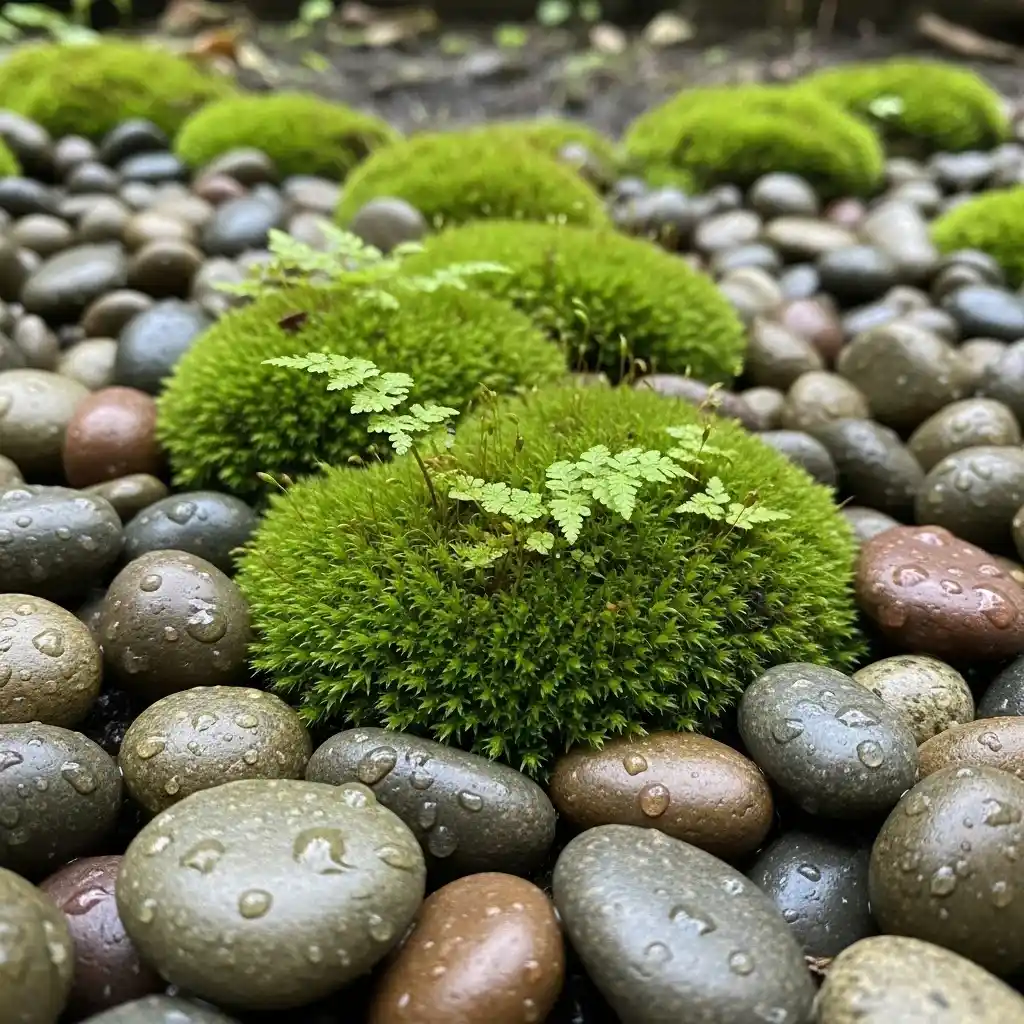
This look is perfect for a vintage garden. The pebbles provide a clean border for the soft, spreading moss to grow against.
| Feature | Material | Benefit |
| Greenery | Live Moss | Shade tolerant |
| Stone | Polished Pebbles | Moist texture |
18. Glass Cullet and Modern Sculpture
Recycled glass cullet provides a shimmering, colorful mulch for modern landscapes. You use tumbled glass to surround a central garden sculpture or fountain.
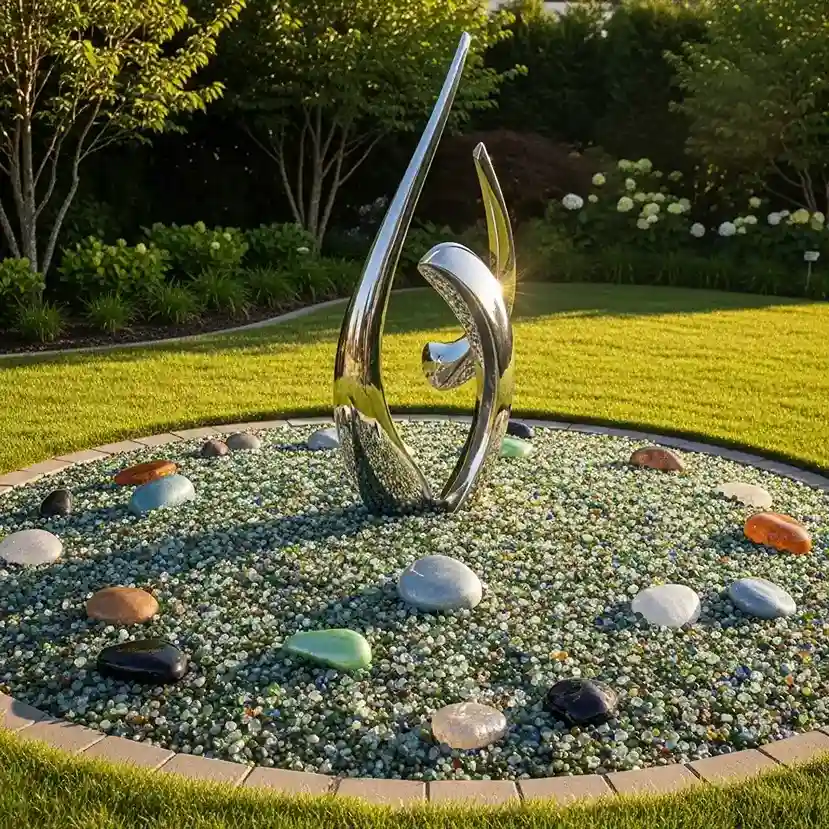
This bold choice enhances your green house interior and exterior ideas. The glass glows when paired with solar-powered pathway lighting.
| Feature | Material | Benefit |
| Mulch | Tumbled Glass | Permanent color |
| Focal | Metal Sculpture | Artistic flair |
19. Wood Chips Around the Chicken Coop
Wood chips provide a clean, dry surface for your poultry to walk on. You use them around your chicken coop plans guide to manage mud.
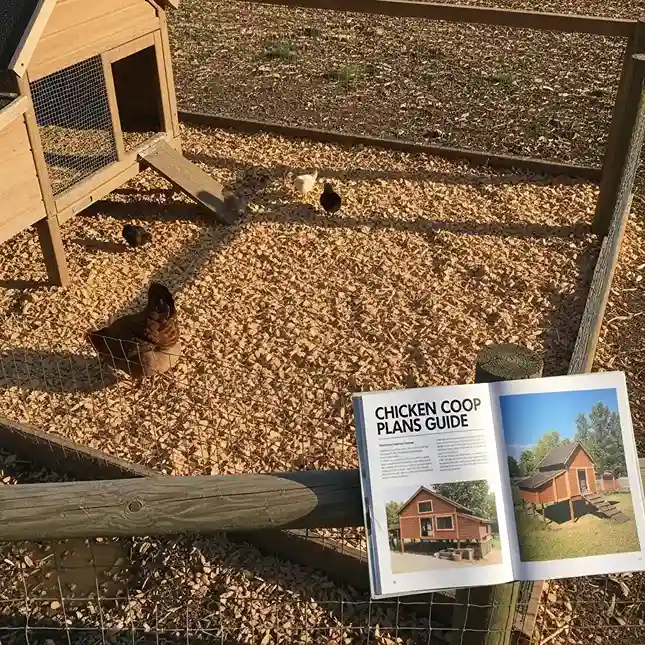
The chips absorb nitrogen from droppings, which you can later compost. This functional mulch keeps your birds healthy and your yard smelling fresh.
| Feature | Material | Benefit |
| Base | Arborist Wood Chips | Mud control |
| Utility | Chicken Run | Compostable |
20. Stone Paving and Mulch Islands
Large stone pavers create a clean path through wide mulch islands. You use this to break up large expanses of brown or black mulch.
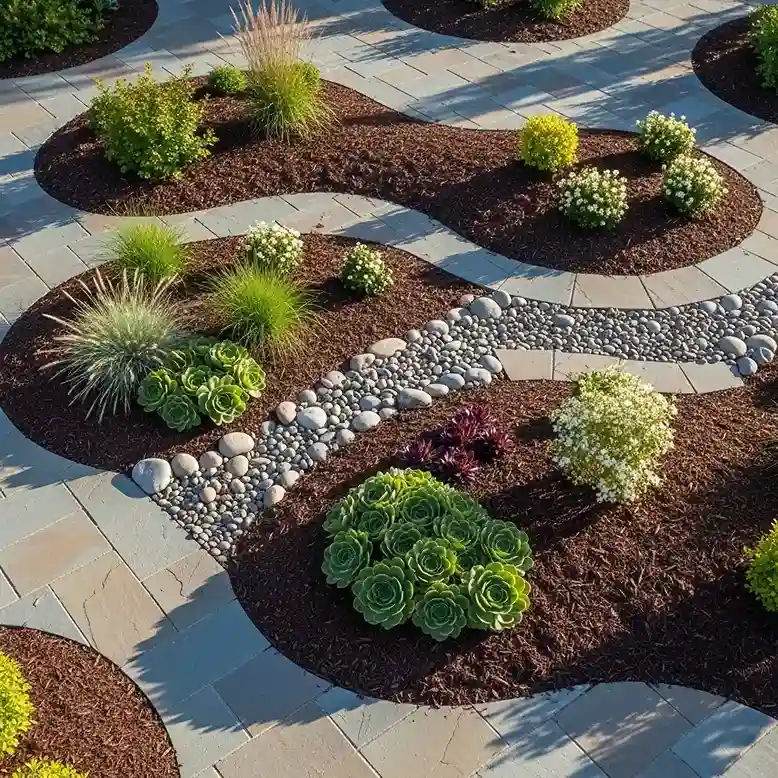
This design makes your backyard fence line look more intentional. The islands provide a home for specimen trees or large flowering shrubs.
| Feature | Material | Benefit |
| Walkway | Concrete Pavers | Easy access |
| Garden | Dyed Hardwood Mulch | Unified look |
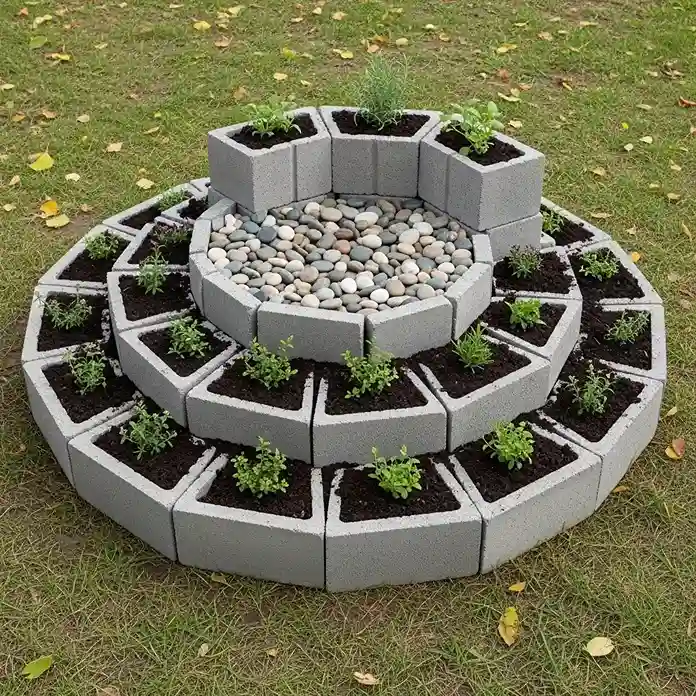
21. Cinder Block Planters with Rock Infill
Cinder blocks offer a budget-friendly way to create raised beds. You fill the center of the spiral or wall with decorative rock to improve drainage.
These cinder block garden ideas are durable and modern. The rock infill prevents the soil from becoming too compacted over time.
| Feature | Material | Benefit |
| Structure | Concrete Blocks | Fast build |
| Drainage | Lava Rock | Aeration |
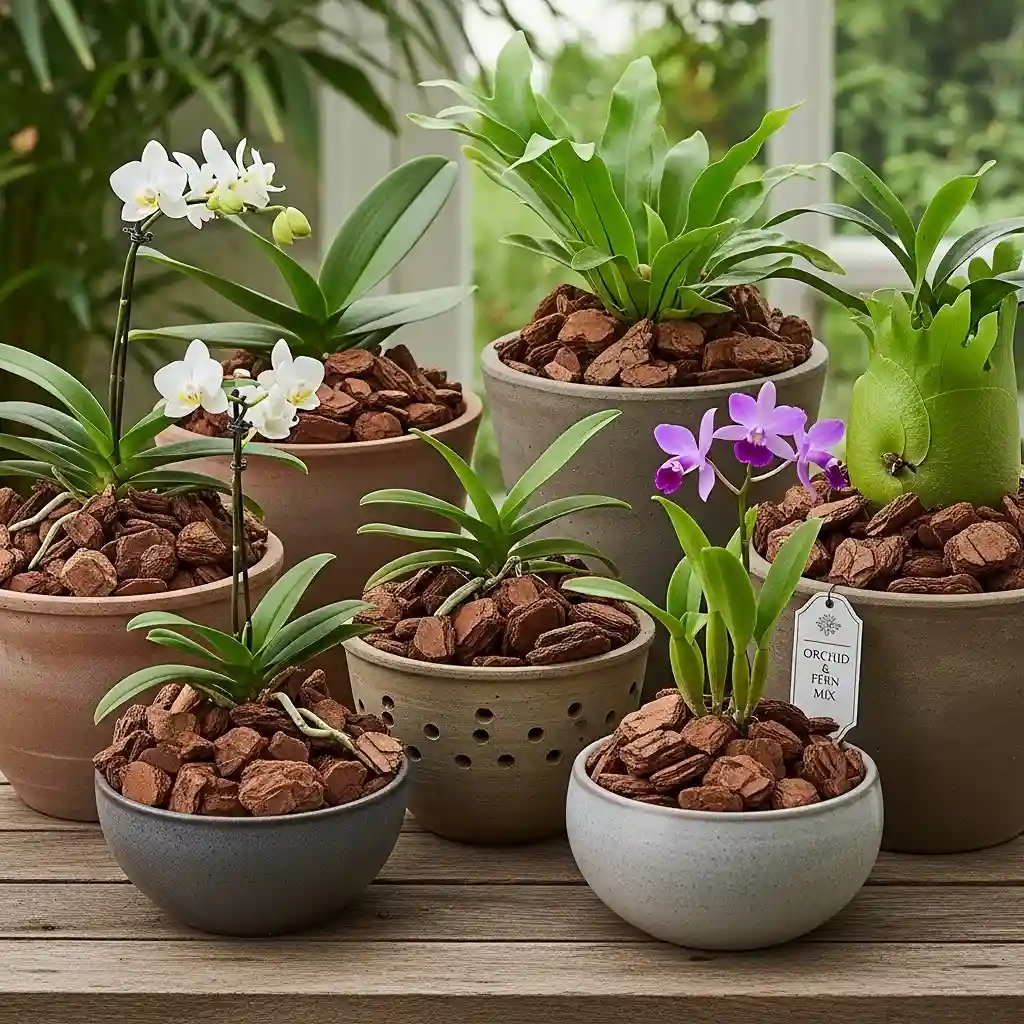
22. Bark Mulch for Orchids and Ferns
Specific bark mulches provide the airy environment that epiphytic plants need. You use this indoors or in tropical outdoor shade gardens.
You can learn how to revive an orchid using high-quality bark. It allows roots to breathe while maintaining the high humidity they crave.
| Feature | Material | Benefit |
| Media | Fir Bark | Root aeration |
| Plant | Orchid / Fern | Moisture balance |
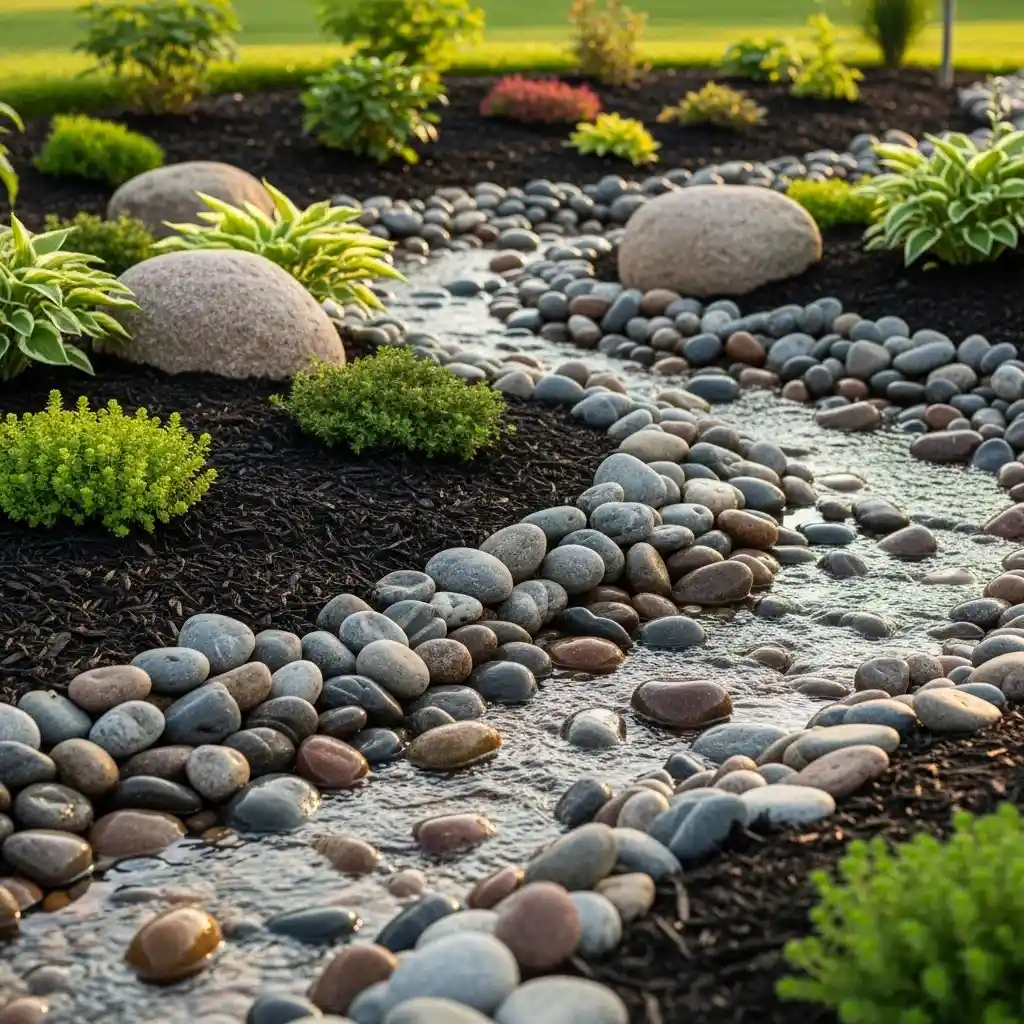
23. Polished River Stones for Water Features
Polished stones look incredibly vibrant when placed under running water. You use them in ponds or fountains to highlight the movement of the stream.
These stones are a key part of a water plants guide. They provide a stable surface for aquatic life without clouding the water.
| Feature | Material | Benefit |
| Base | Polished Stones | Visual depth |
| Utility | Pond / Waterfall | Fish safe |
24. Leaf Mold for Food Forests
Leaf mold provides a nutrient-dense, organic mulch that mimics a natural forest floor. You use this to nourish your fruit trees and berry bushes.
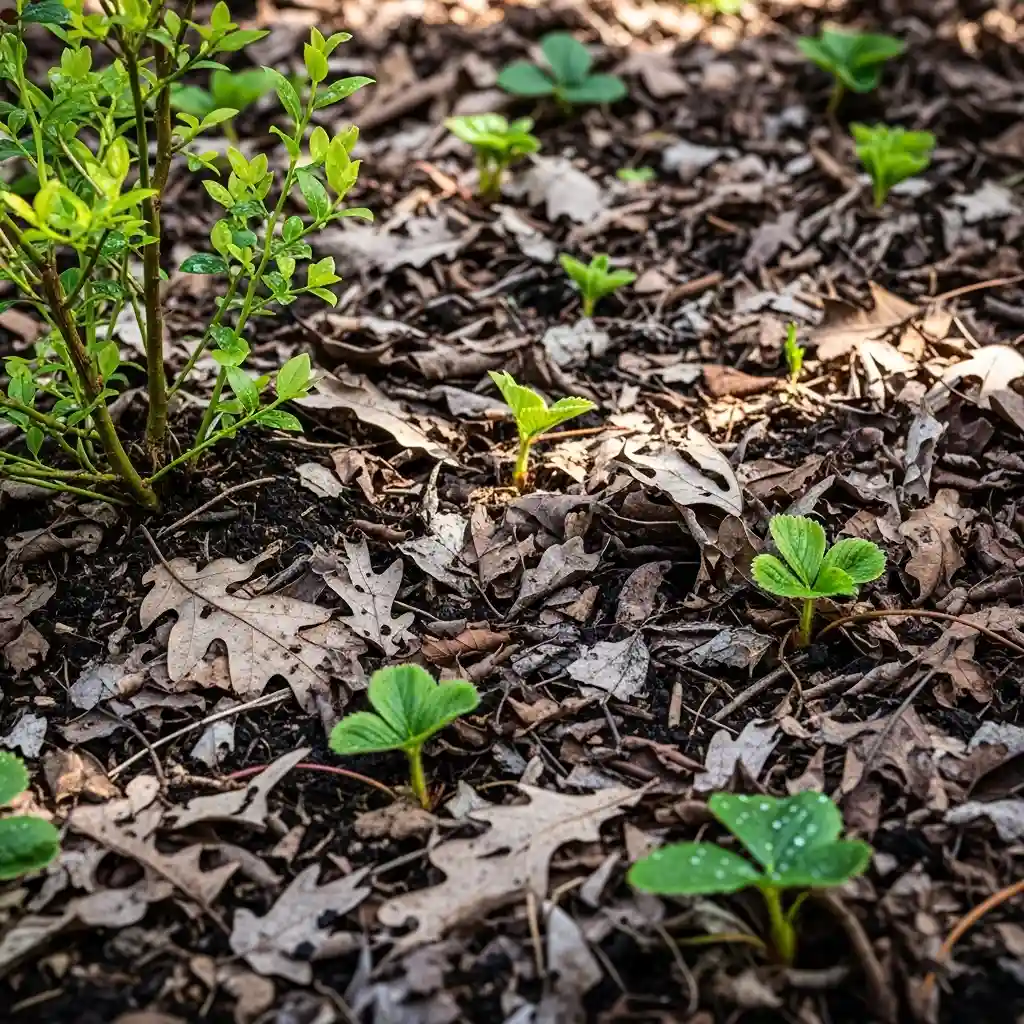
This is a vital step in how to create mini food forest. It suppresses weeds while feeding the complex soil biology needed for fruit production.
| Feature | Material | Benefit |
| Mulch | Decomposed Leaves | Fungal health |
| Plant | Fruit Trees | Self-fertilizing |
25. Crushed Brick for Red Toned Paths
Crushed brick provides a sustainable, recycled mulch option with a warm red color. You use it for paths that lead to bird baths or feeders.
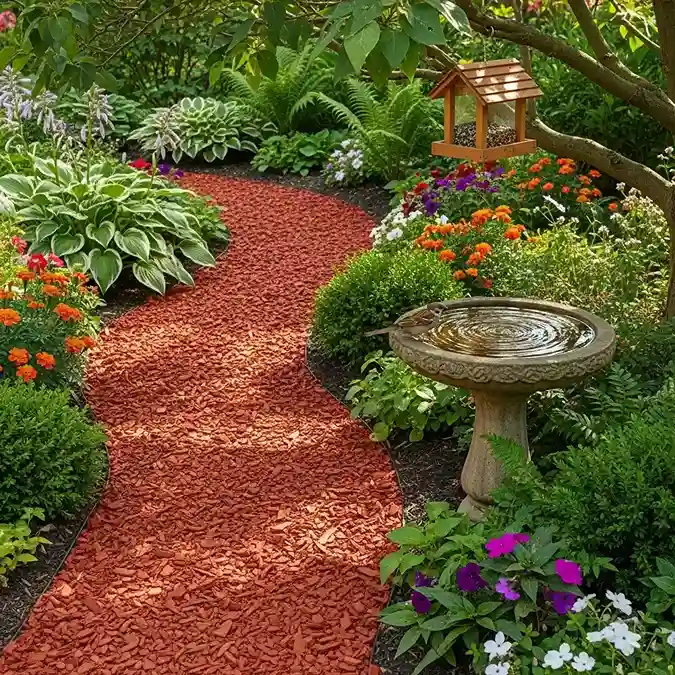
This works well with wildlife feeding station ideas. The red tone provides a rustic backdrop for colorful birds and garden visitors.
| Feature | Material | Benefit |
| Path | Recycled Brick | Eco-friendly |
| Look | Deep Red / Terra | High visibility |
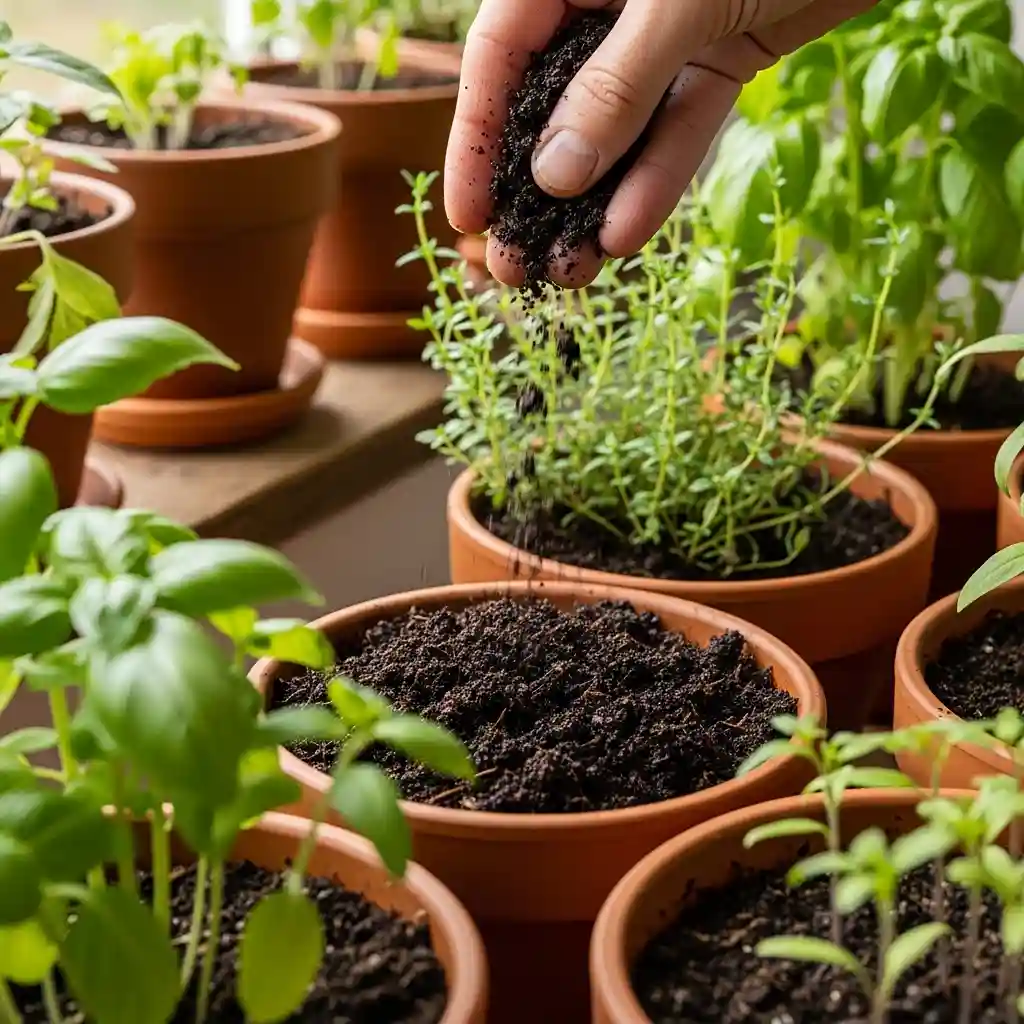
26. Screened Compost for Indoor Herbs
Screened compost serves as a “living mulch” for your indoor pots. You use it to provide a slow-release nutrient boost to your kitchen garden.
You use this when learning how to grow bell pepper indoor. It keeps the soil surface from drying out while feeding the plant.
| Feature | Material | Benefit |
| Mulch | Aged Compost | Bio-activity |
| Plant | Bell Peppers | Growth boost |
Mulch and Rock FAQs
Should I put plastic under my rocks?
You should use professional-grade landscape fabric instead of plastic. Fabric allows the soil to breathe and water to drain, while plastic can trap moisture and cause root rot.
How deep should my mulch be?
A depth of 2 to 3 inches is ideal for most gardens. If you apply it too thickly, you may prevent oxygen from reaching the plant roots or cause water to run off the surface.
Will rocks make my garden hotter?
Yes, stones absorb and radiate heat during the day. If you live in a very hot climate, use rocks for paths and mulch for the areas immediately surrounding your sensitive plants.
How often do I need to replace mulch?
Organic mulch usually needs a fresh top-off every year as it decomposes. Rocks are permanent but may require occasional rinsing or weeding to keep them looking clean.
Conclusion
Mulch and rocks transform a simple yard into a structured, low-maintenance masterpiece. By choosing the right textures and colors, you protect your plants while significantly increasing your property’s overall curb appeal.
Start with a small border or path to see the immediate difference these materials make. You will enjoy a beautiful, thriving garden that requires much less work than a traditional grass lawn.