Landscaping with boulders is one of the most dramatic, permanent, and naturally beautiful ways to transform any outdoor space, using the ancient authority of natural stone to create garden features of extraordinary character, structure, and timeless visual power.
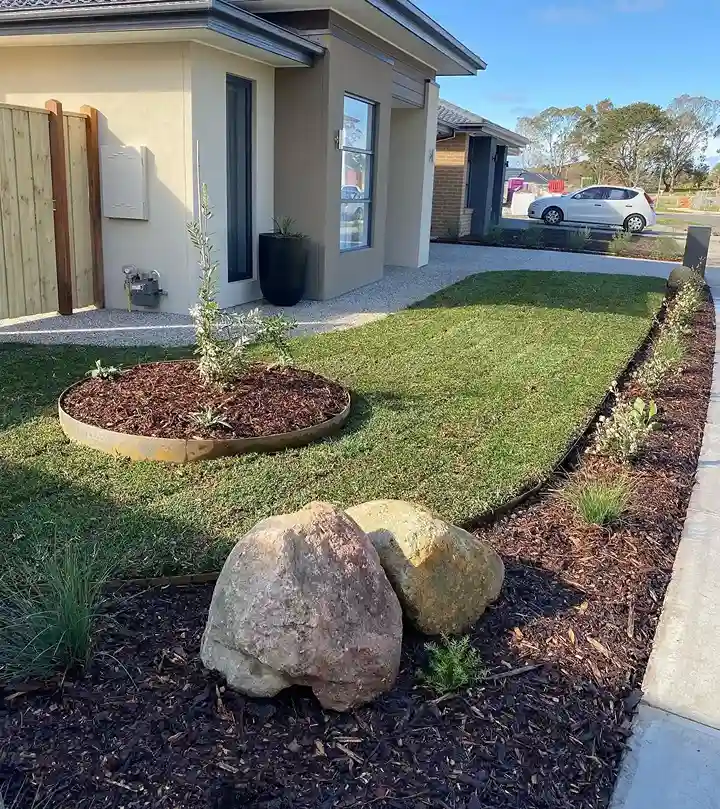
Source: @mckenzie_landscape_design
Whether you want a rugged rock garden, a naturalistic water feature, a bold retaining wall, or a striking front yard focal point, these 25 inspiring boulder landscaping ideas will help you use natural stone beautifully using our backyard landscaping ideas guide.
1. What Is Boulder Landscaping?
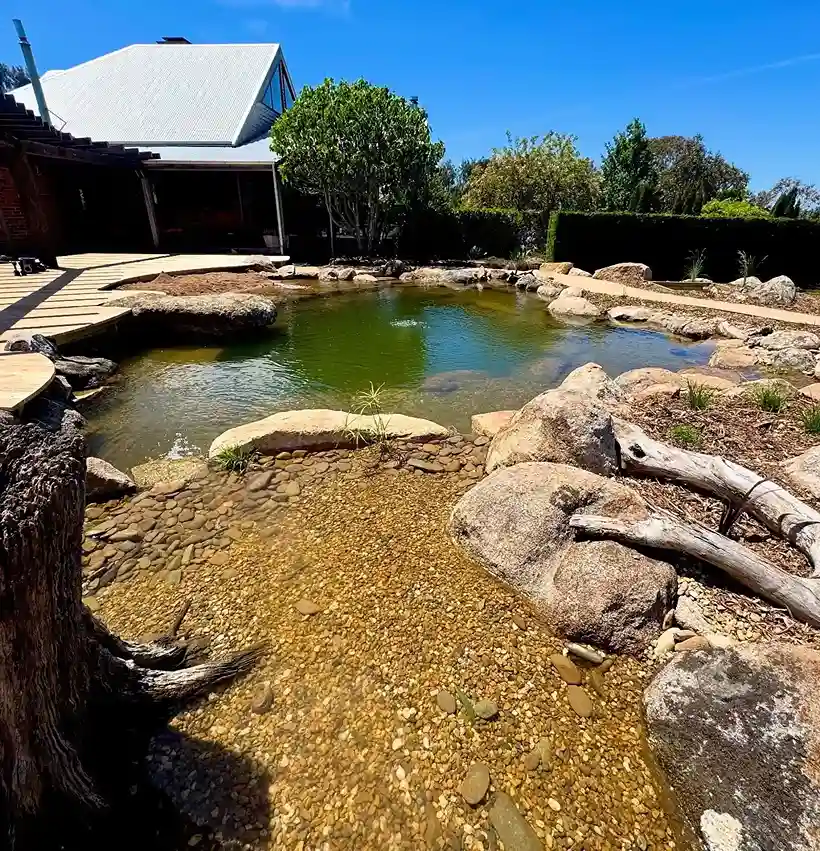
Boulder landscaping is the art of using large natural stones — typically weighing from 50 pounds to several tonnes — as primary structural and decorative elements in a garden design, creating features that combine the raw, geological power of natural stone with the living softness of surrounding plants and water.
Source: @naturebuild_insta
Unlike smaller decorative stones or gravel, boulders possess a commanding physical presence and an unmistakable sense of permanence that instantly elevates any garden landscape from pleasant to genuinely extraordinary, their scale and weight conveying a geological authority that no manufactured garden feature can replicate.
For more structural and dramatic garden design inspiration, our trending landscaping ideas guide covers boulder landscaping in current, beautifully detailed context.
| Feature | Details |
|---|---|
| Boulder Size Range | 50 lbs to several tonnes |
| Key Design Benefit | Instant permanence and natural authority |
| Best Garden Styles | Naturalistic, Japanese, Mediterranean, rustic |
| Installation | Professional machinery often required for large boulders |
| Longevity | Indefinite — the most permanent garden feature available |
| Maintenance Level | Very low once installed |
2. Choosing the Right Boulders
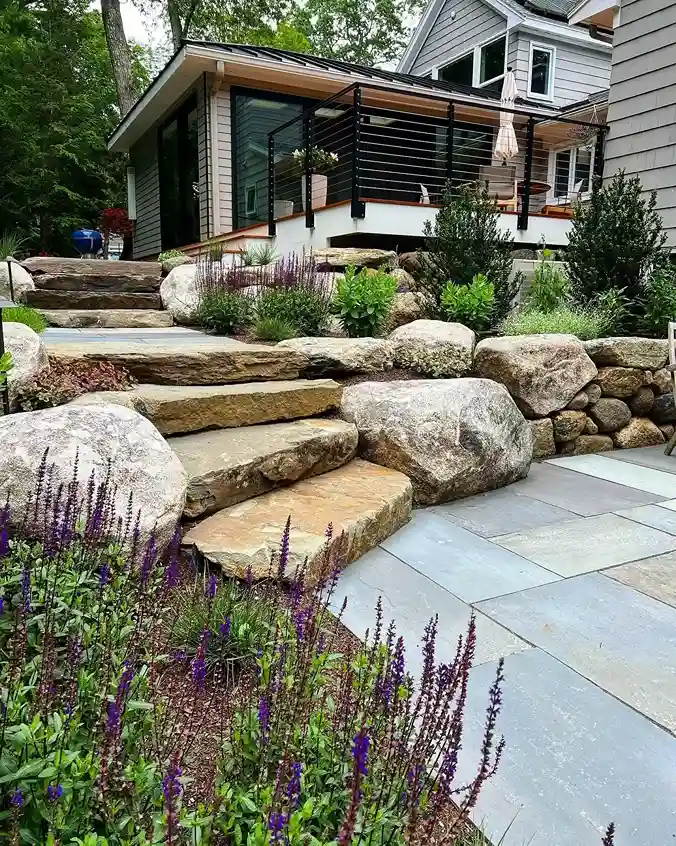
Choosing the right boulder type for your garden is one of the most critical and enjoyable decisions in the entire landscaping process, as different stone types — granite, sandstone, limestone, slate, basalt, and river rock — each bring a completely different colour palette, texture, surface character, and geological personality to the garden landscape.
Source: @gail.saari.alden
The most successful boulder landscapes use stone that is native or sympathetic to the local geological character of the surrounding landscape, creating a sense of natural inevitability that makes boulders appear to have always belonged in their garden positions rather than having been recently imported. For more natural stone surface and material selection ideas, our gabion wall ideas guide covers natural stone selection and structural stone feature design in comprehensive, creative detail.
| Stone Type | Character | Best For |
|---|---|---|
| Granite | Hard, speckled, grey-pink | Contemporary and naturalistic gardens |
| Sandstone | Warm, layered, orange-buff | Cottage, rustic, and traditional gardens |
| Limestone | Grey, pitted, weathered | Naturalistic and Mediterranean gardens |
| Slate | Dark, angular, layered | Modern and architectural gardens |
| Basalt | Dark, dense, volcanic | Japanese and minimalist gardens |
| River Rock | Smooth, rounded, varied | Waterside and naturalistic settings |
3. Boulder Rock Garden
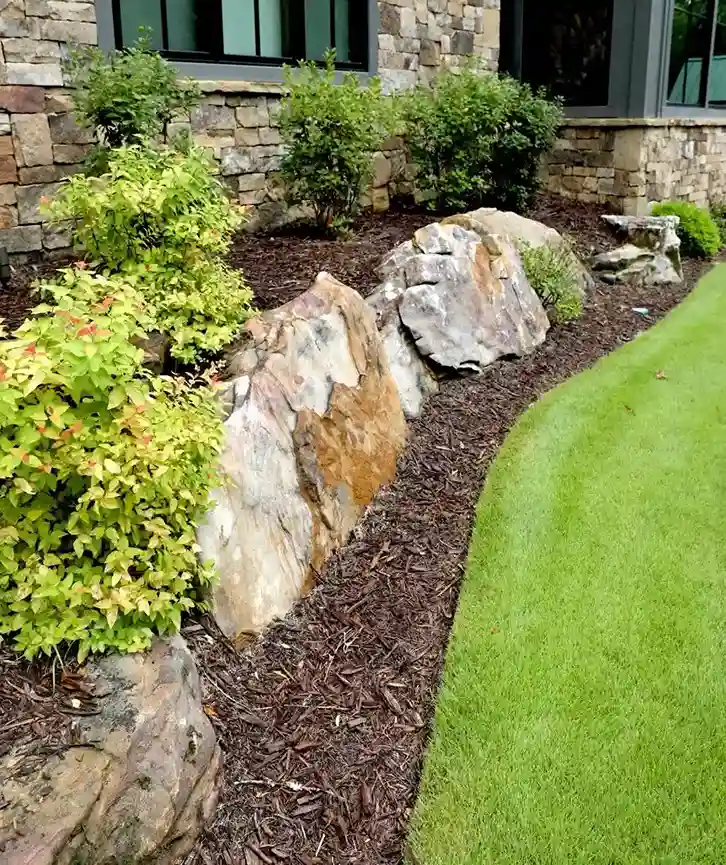
A boulder rock garden uses a carefully composed arrangement of boulders of varying sizes to create the appearance of a natural rock outcrop emerging from the ground, planted with alpines, sedums, thymes, and low-growing perennials that colonise the crevices and ledges between stones as they would in a genuine mountain landscape.
Source: @northgastone
The key to a convincing boulder rock garden is burying at least one-third of each stone below the soil surface and tilting each boulder slightly backward as if it were a natural geological stratum, creating an authentic, settled appearance that looks completely unlike the artificial, surface-placed appearance of a poorly installed rock garden. For the best alpine and rock garden plants, our best outdoor plants guide covers rock garden planting and alpine plant selection in excellent, practical detail.
| Feature | Details |
|---|---|
| Best Boulder Size Mix | Large anchors plus medium and small supporting stones |
| Burial Depth | Minimum one-third below soil surface |
| Best Plants | Alpines, sedums, thymes, saxifrages, aubretia |
| Soil Mix | Well-drained — grit, topsoil, and compost blend |
| Best Position | South or east-facing slope for drainage and sun |
| Difficulty Level | Intermediate |
4. Boulder Retaining Wall
A boulder retaining wall uses large, heavy stones stacked or set individually to hold back significant volumes of soil on a sloped garden site, creating a robust, naturally beautiful structural feature of extraordinary permanence that improves in character as mosses and plants colonise the stone surfaces over time.
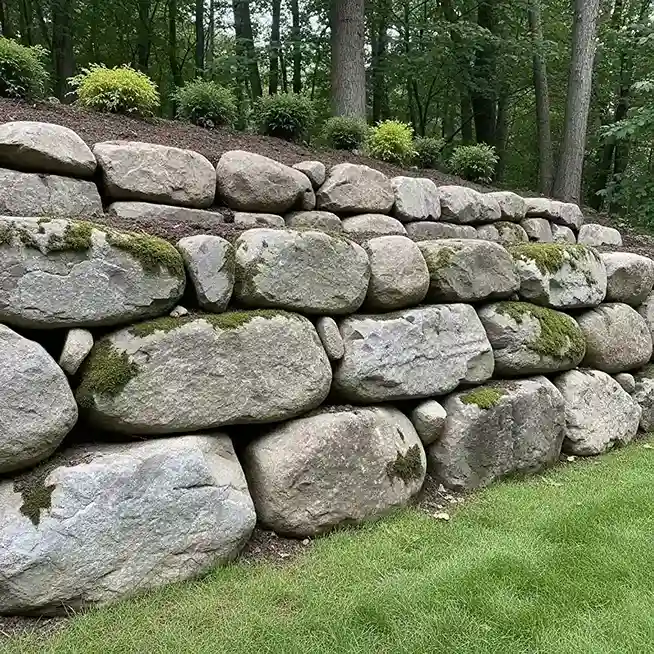
Unlike manufactured retaining wall systems, a boulder retaining wall requires no mortar, no specialist materials, and no ongoing maintenance once correctly installed, relying entirely on the weight, shape, and interlocking character of the natural stones to maintain its structural integrity indefinitely. For more sloped garden management and retaining feature ideas, our sloped backyard ideas on a budget guide covers boulder retaining walls in practical, accessible detail.
| Feature | Details |
|---|---|
| Best Boulder Type | Angular stones — interlocks more effectively than rounded |
| Maximum Wall Height | 3–4 feet without professional engineering |
| Foundation | Compacted gravel base — minimum 6 inches deep |
| Batter (Lean) | Tilt wall face slightly into slope for stability |
| Drainage | Gravel backfill behind wall essential |
| Best Plants for Crevices | Ferns, sedums, creeping thyme, wallflowers |
5. Boulder Water Feature
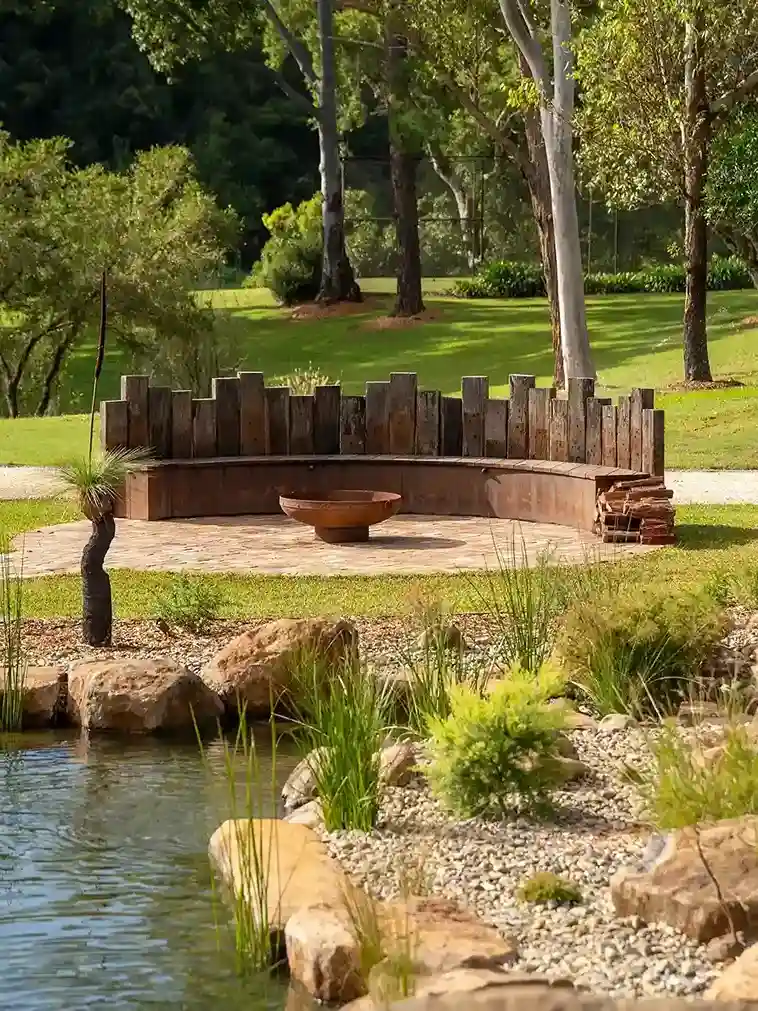
A naturalistic water feature built around large boulders — with water trickling over stone surfaces, pooling between boulder clusters, or cascading down a boulder-edged stream — creates one of the most beautiful and authentically natural garden focal points achievable at any garden scale or budget level.
Source: @hardyakka_land_and_waterscapes
The combination of natural stone and moving water creates an extraordinarily calming and sensory garden environment, the sound of water over boulders and the play of light on wet stone surfaces creating a living, dynamic feature of genuinely outstanding atmospheric quality. For the best aquatic and marginal plants to complete a boulder water feature, our water plants guide covers pond and water feature planting in comprehensive, inspiring detail.
| Feature | Details |
|---|---|
| Best Boulder Positions | Partially submerged — most natural appearance |
| Best Stone Types | River rock, granite, sandstone — all suit water features |
| Pump Size | 800–2000 litres per hour depending on feature scale |
| Best Aquatic Plants | Water iris, rushes, marsh marigold, water mint |
| Edge Planting | Ferns, hostas, astilbes — moisture-loving companions |
| Maintenance | Clean pump filter quarterly — annual inspection |
6. Boulders as Garden Focal Points
A single, magnificent boulder positioned as a deliberate garden focal point — at the end of a path, at the centre of a planting bed, or at a prominent garden viewpoint — creates an immediate, commanding visual anchor of extraordinary natural authority that requires no surrounding structure or companion planting to justify its powerful presence.
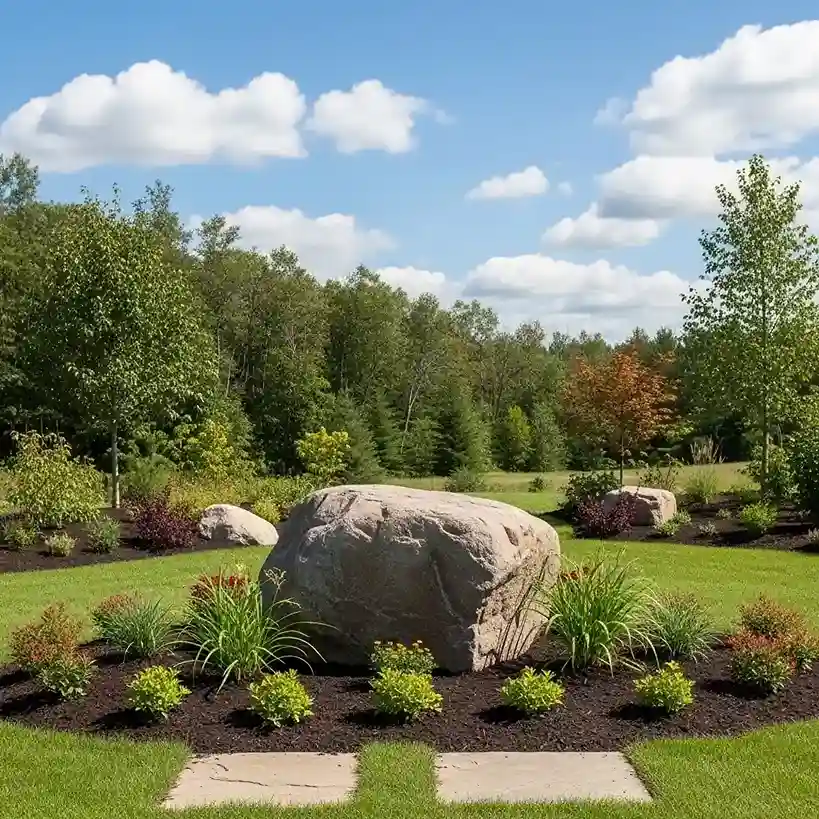
Choose the most dramatically shaped, most beautifully textured, or most strikingly coloured single boulder available for a focal point installation, positioning it so that its best face is visible from the primary garden viewpoint and from the house’s main windows throughout every season of the year. For more garden focal point design and specimen planting ideas, our yard ideas for outdoor spaces guide covers garden focal point placement and composition in inspiring, practical detail.
| Feature | Details |
|---|---|
| Best Focal Boulder Size | Minimum 200–300 lbs for genuine visual authority |
| Best Stone Types | Dramatic granite, weathered sandstone, bold basalt |
| Best Positions | Path terminus, bed centre, garden viewpoint |
| Burial Depth | Bury one-third for settled, permanent appearance |
| Companion Plants | Ornamental grasses, low perennials, moss |
| Orientation | Best face toward primary viewpoint from house |
7. Boulders in a Cottage Garden
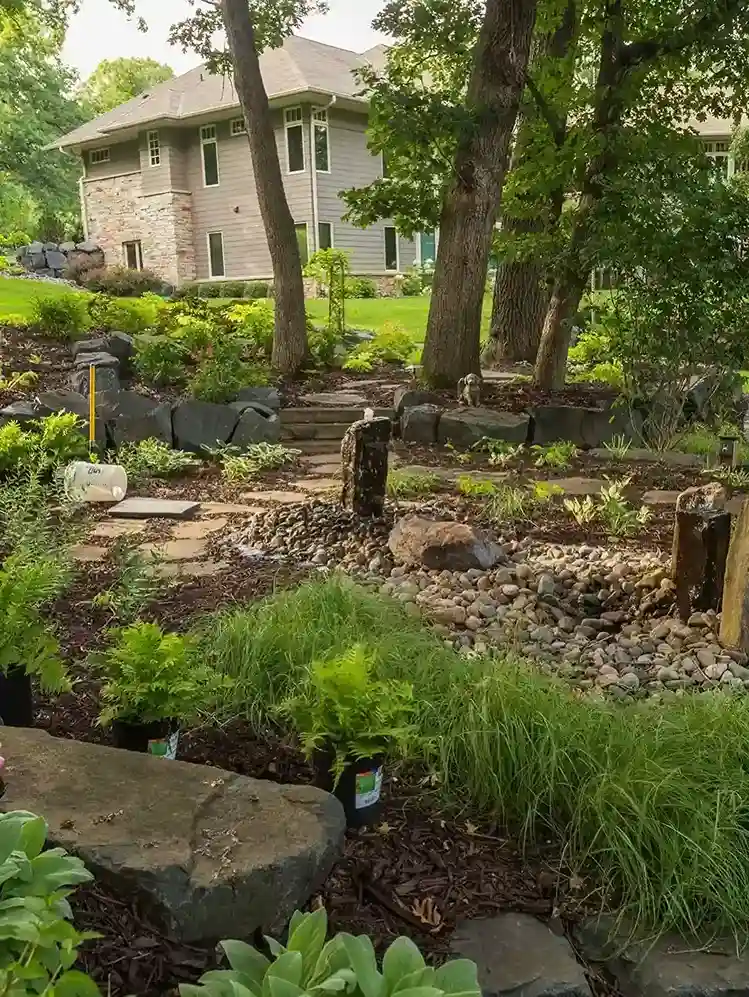
Boulders integrated into a cottage garden setting create a beautifully naturalistic, countryside quality that perfectly suits the relaxed, abundant planting style of traditional cottage gardening, the warm tones of sandstone or limestone harmonising magnificently with the soft pinks, purples, and whites of cottage garden flowers.
Source: @sarahbuerkley
Allow cottage garden plants — hardy geraniums, alchemilla, and creeping thyme — to spill naturally over and around boulder surfaces, blurring the boundary between stone and planting to create a landscape that looks as though the boulders have always been there beneath the garden’s exuberant planting. For the most beautiful cottage planting combinations to complement boulder features, our cottage garden ideas guide covers cottage-style stone garden integration in beautiful, romantic detail.
| Feature | Details |
|---|---|
| Best Stone Types | Warm sandstone, limestone, reclaimed fieldstone |
| Best Companion Plants | Hardy geraniums, alchemilla, thyme, foxgloves |
| Arrangement Style | Informal, naturalistic — avoid rigid geometric placement |
| Moss Encouragement | Paint stone surfaces with yoghurt and moss blend |
| Path Integration | Flat stone path between boulder clusters |
| Best For | Cottage, farmhouse, and country garden styles |
8. Japanese Garden Boulders
In Japanese garden design, boulders carry profound symbolic significance as representations of mountains, islands, and the ancient geological forces of the natural world, their careful placement according to established aesthetic principles creating garden compositions of extraordinary tranquility, balance, and meditative depth.
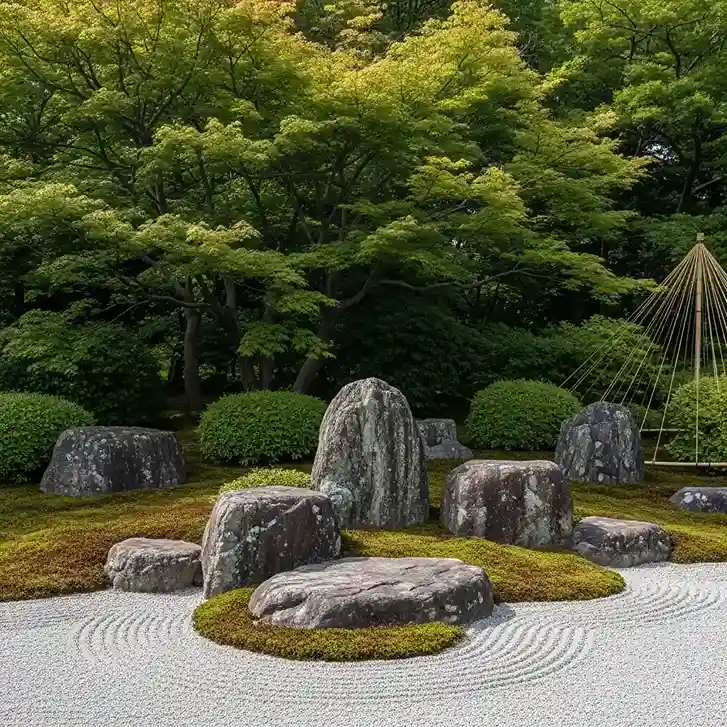
Odd-numbered groupings of three, five, or seven boulders arranged in carefully considered triangular compositions, partially surrounded by raked gravel, moss, or low ground cover planting, create the authentic Japanese garden boulder arrangements of outstanding calm and visual sophistication.
| Feature | Details |
|---|---|
| Best Stone Types | Dark basalt, weathered granite, moss-covered stone |
| Arrangement | Odd numbers — 3, 5, or 7 stones in triangular groups |
| Companion Materials | Raked gravel, moss, bamboo, water |
| Best Plants | Moss, bamboo, Japanese maple, azalea, ferns |
| Key Principle | Each stone placed with intention — no random positioning |
| Atmosphere | Meditative, tranquil, deeply considered |
9. Boulder Pathway Edging
Boulders positioned along the edges of garden paths create a bold, naturally beautiful pathway definition that is simultaneously more visually dramatic and more practically durable than any manufactured edging material available, their substantial physical presence clearly defining the path boundary while adding genuine geological character to the garden journey.
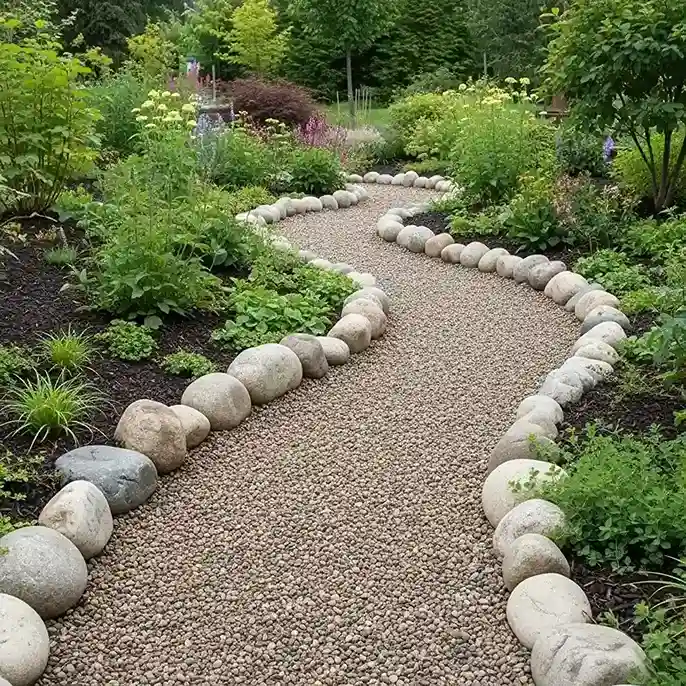
A winding informal path through a naturalistic planting, edged on both sides with a varied collection of river rocks and medium boulders partially buried in the surrounding planting, creates one of the most beautifully organic and naturally convincing garden path experiences achievable at very reasonable cost. For more garden pathway design and natural material ideas, our walkway ideas for outdoor spaces guide covers boulder path edging and natural stone path construction in beautiful, practical detail.
| Feature | Details |
|---|---|
| Best Stone Types | River rock, rounded fieldstone, smooth granite |
| Stone Size | Varied — mix large anchors with smaller companions |
| Burial Depth | Half below soil for stable, natural appearance |
| Path Style | Winding, informal — most natural with boulder edging |
| Companion Plants | Low-growing thyme, sedums between stones |
| Difficulty Level | Beginner |
10. Boulders in a Front Yard Landscape
Boulders used in front yard landscaping create an immediate, powerful kerb appeal statement that distinguishes any property from its neighbours with a dramatic, permanent natural feature of genuine geological authority that requires virtually no ongoing maintenance and improves in character with every passing year of weathering.
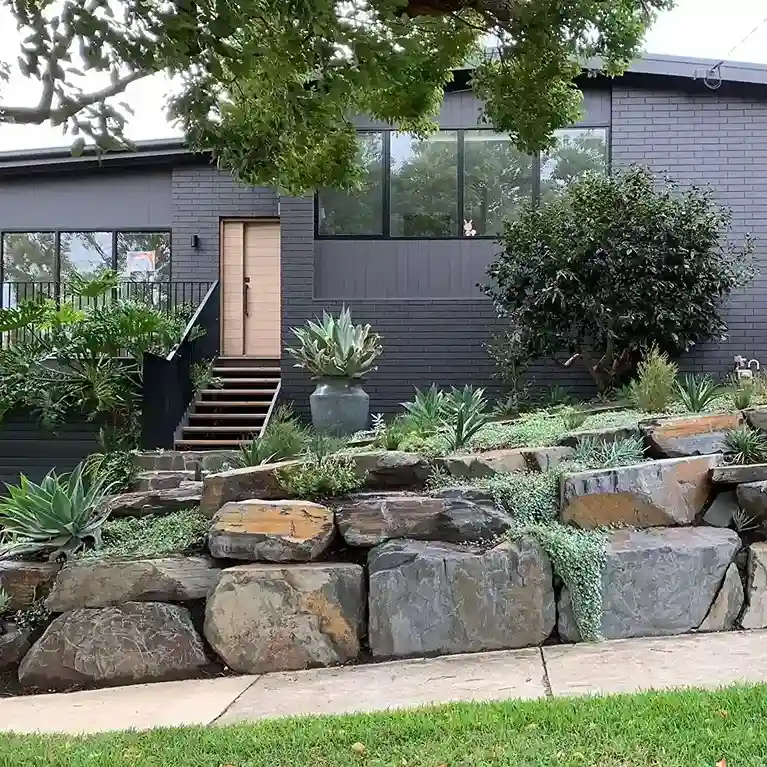
source: @riverlandprojects
A composition of three boulders of different sizes partially buried in a low-maintenance planting of ornamental grasses, lavender, and drought-tolerant ground cover creates a strikingly beautiful front yard landscape that is simultaneously bold, natural, and effortlessly low-maintenance throughout every season of the year. For more front yard design and kerb appeal ideas, our front yard landscaping guide covers boulder front yard landscape design in comprehensive, creative detail.
| Feature | Details |
|---|---|
| Best Composition | Group of 3 boulders in triangular arrangement |
| Best Plants | Ornamental grasses, lavender, drought-tolerant ground cover |
| Mulch | Gravel or bark mulch — low maintenance |
| Best Boulder Type | Locally sourced stone — most natural in context |
| Kerb Appeal Impact | Exceptional — immediate, permanent, and dramatic |
| Maintenance Level | Very low once established |
11. Boulders with Ornamental Grasses
The combination of bold, solid boulders with the fluid, animated movement of ornamental grasses creates one of the most visually dynamic and naturally beautiful planting compositions available in contemporary garden design, the contrast between stone permanence and grass movement producing a garden feature of extraordinary textural richness and seasonal interest.
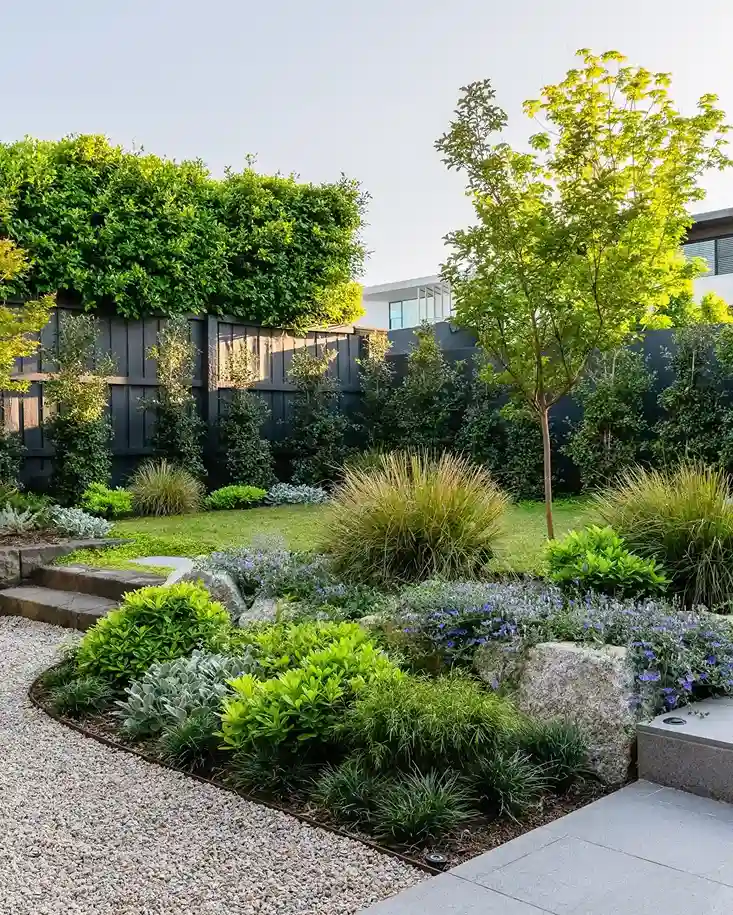
source: @simonmccurdylandscapes
Miscanthus, Karl Foerster feather reed grass, and blue fescue all create outstanding boulder companion plantings, their varying heights, textures, and seasonal interest creating a landscape that looks completely different and equally beautiful in every month of the year from spring emergence to winter skeleton.
| Best Grasses | Character with Boulders |
|---|---|
| Miscanthus sinensis | Tall, arching — dramatic scale contrast |
| Karl Foerster | Upright, architectural — elegant contrast |
| Blue Fescue | Low, silvery — ground-level interest |
| Pennisetum | Soft, feathery — gentle movement |
| Stipa gigantea | Tall, golden — spectacular in low sun |
| Pampas Grass | Dramatic — bold scale match for large boulders |
12. Boulders in a Dry Garden
Boulders are the ideal structural elements for a dry garden or gravel garden, their heat-retaining mass, excellent drainage properties, and naturally arid aesthetic creating the perfect growing conditions and visual context for drought-tolerant Mediterranean plants, alpines, and succulents that thrive in the warm, dry microclimate created by stone surfaces.
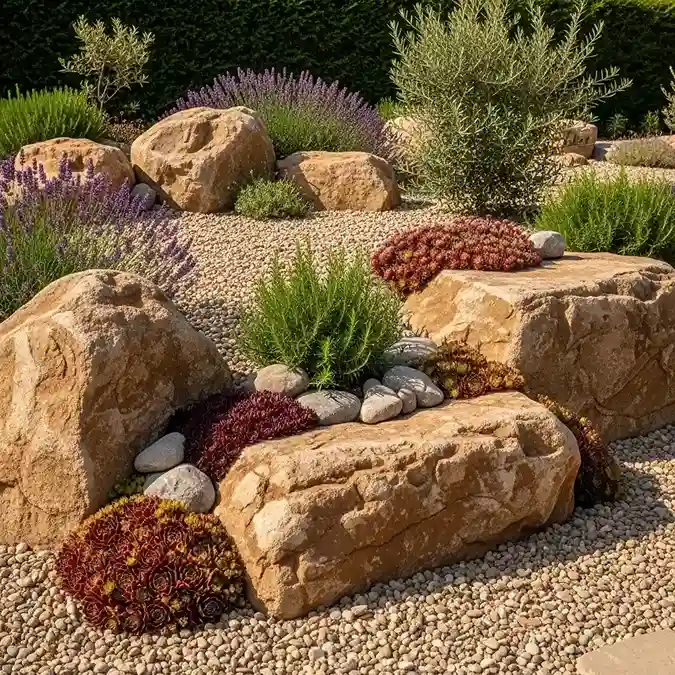
Arrange boulders in naturalistic outcrops across a gravel mulch and plant the surrounding gaps with lavender, cistus, rosemary, euphorbias, and ornamental grasses for a spectacular, completely self-sustaining dry garden landscape of outstanding beauty and virtually zero ongoing maintenance. For more drought tolerant and dry garden planting ideas, our white stone landscaping ideas guide covers gravel and stone garden design with drought-tolerant planting in beautiful, practical detail.
| Feature | Details |
|---|---|
| Best Mulch | Gravel or crushed stone — 3–4 inches deep |
| Best Plants | Lavender, cistus, rosemary, euphorbia, sedum |
| Stone Arrangement | Natural outcrop clusters — not evenly spaced |
| Watering | Minimal once established — drought garden |
| Best Boulder Types | Limestone, granite, sandstone — all suit dry gardens |
| Maintenance Level | Very low — annual weed control only |
13. Boulder Steps and Terracing
Large flat boulders used as natural stepping stones on a slope or as the treads of garden steps create a beautifully organic, architecturally impressive garden feature that combines the structural necessity of safe slope access with the natural beauty of genuine stone in a way that no manufactured step system can equal.
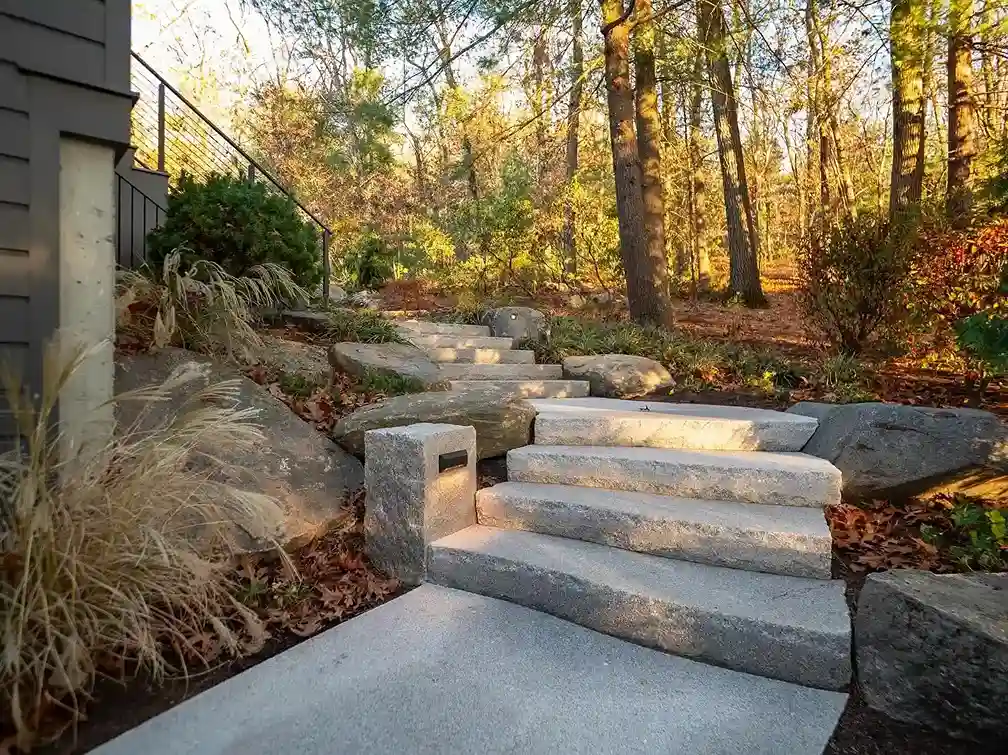
source: @mccormackbuilder
Setting large flat stones into a slope at regular intervals, with each stone partially buried and firmly bedded on compacted gravel, creates garden steps of extraordinary natural beauty that look as though they have always been part of the landscape.
| Feature | Details |
|---|---|
| Best Stone for Steps | Large flat sandstone, granite, or slate slabs |
| Minimum Tread Depth | 12 inches for comfortable stepping |
| Riser Height | 5–7 inches for comfortable climbing |
| Bedding | Firm compacted gravel base under each stone |
| Planting Between Steps | Creeping thyme, chamomile, mind-your-own-business |
| Difficulty Level | Intermediate |
14. Boulders Around a Garden Pond
Boulders arranged around the edge of a garden pond create an instantly naturalistic, beautifully convincing wildlife pond setting that looks as though the water has collected naturally between rock outcrops, completely eliminating the artificial, manufactured appearance of a liner edge that plagues most domestic garden ponds.
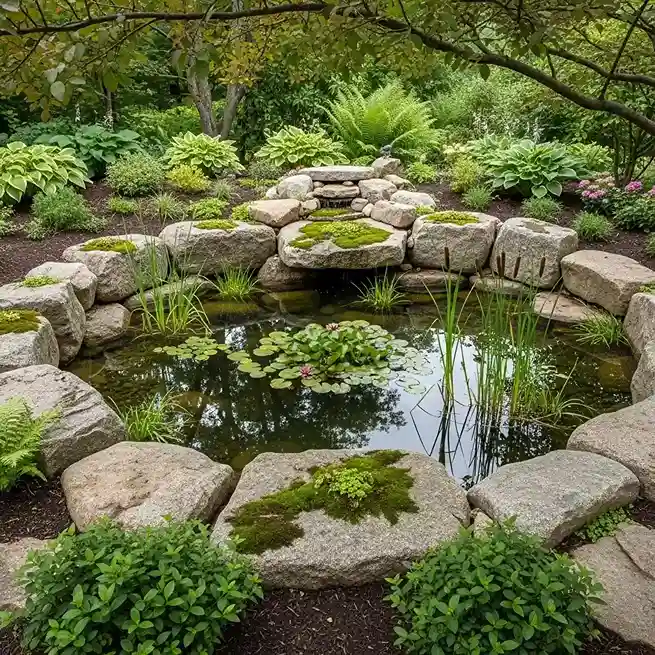
Partially submerge some boulders at the pond margin so they extend into the water, creating shelving and shallows that provide essential access points for wildlife entering and leaving the pond and creating the most convincingly naturalistic waterside boulder composition. For the best wildlife and marginal pond planting to complete a boulder pond feature, our water plants guide. For more wildlife pond and habitat garden ideas, our fairy garden ideas guide — not appropriate here. For wildlife garden feature design, our shade plants guide covers moisture-loving plants and boulder pond companions in excellent detail.
| Feature | Details |
|---|---|
| Best Boulder Positions | Partially submerged at margins — most natural look |
| Shallow Shelf | Create using flat boulders — wildlife access point |
| Best Edge Plants | Ferns, hostas, rushes, moisture-loving perennials |
| Wildlife Benefit | Frogs, newts, dragonflies — exceptional habitat |
| Best Stone Types | Rounded river rock — most natural waterside appearance |
| Liner Concealment | Boulders hide liner edge completely |
15. Boulders in a Shade Garden
Boulders positioned within a shaded garden beneath tree canopies create a beautifully atmospheric, woodland-quality landscape feature that suggests the geological character of a forest floor, their moss-covered surfaces and dappled stone tones harmonising perfectly with the ferns, hostas, and woodland plants that thrive in their shadow.
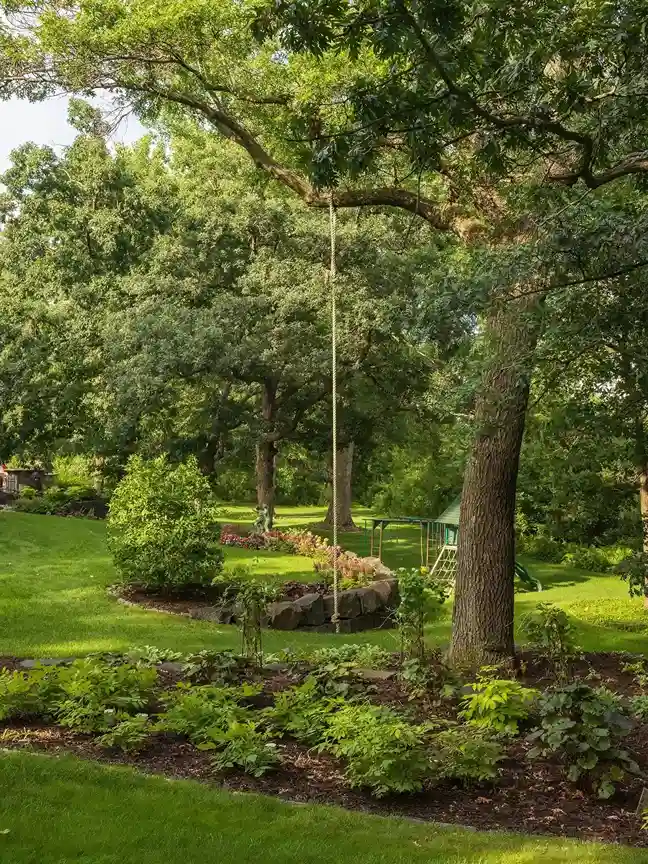
The cool, damp microclimate created on the north-facing side of large shaded boulders is particularly valuable for establishing mosses that colonise stone surfaces over several seasons to create a hauntingly beautiful, ancient quality that makes the garden feel genuinely primordial. For the most beautiful shade-loving plants to pair with boulder features, our shade perennials guide covers shade garden planting and woodland companion plants in excellent, practical detail.
| Feature | Details |
|---|---|
| Best Shade Plants | Hostas, ferns, astilbes, hellebores, mosses |
| Moss Establishment | North-facing stone surfaces — consistently moist |
| Best Stone Types | Weathered sandstone, limestone — most moss-friendly |
| Atmosphere | Woodland, primordial, hauntingly beautiful |
| Best Position | Beneath deciduous tree canopy |
| Difficulty Level | Beginner |
16. Boulders in a Coastal Garden
Boulder landscaping in a coastal garden must use appropriately hard, salt-resistant stone types that withstand the accelerated weathering of marine environments while creating a landscape that authentically reflects the rugged, wave-sculpted character of coastal cliff and shoreline geology in the garden setting.
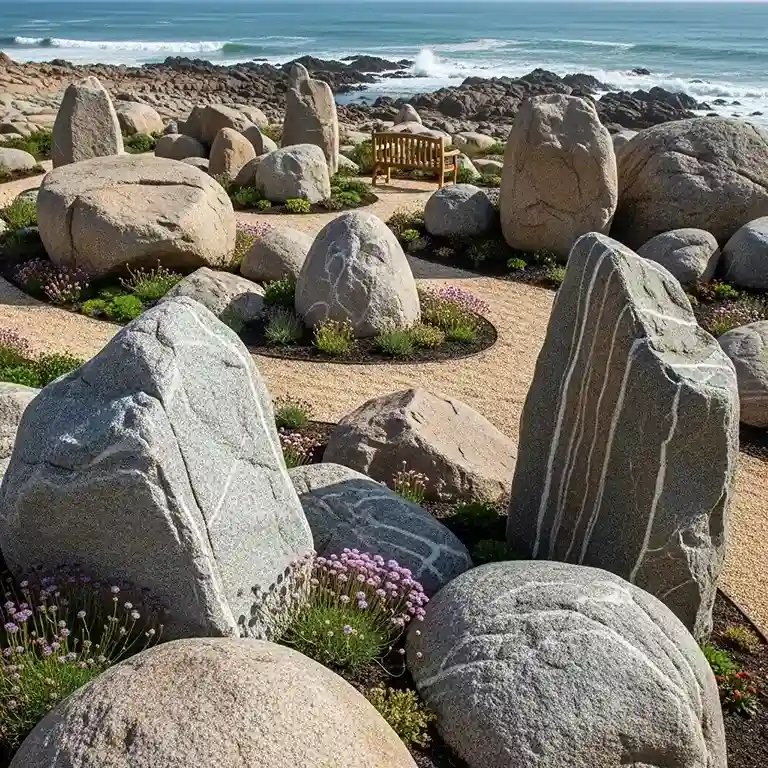
Granite and basalt are the most appropriate and most beautiful boulder types for coastal gardens, their extreme hardness, natural salt resistance, and deep grey-black tones perfectly reflecting the geology and atmosphere of exposed coastal landscapes. For more coastal garden design and plant selection strategies, our coastal backyard garden guide covers boulder and stone landscaping in coastal gardens in authoritative, comprehensive detail.
| Feature | Details |
|---|---|
| Best Boulder Types | Granite, basalt, quartzite — hard and salt-resistant |
| Best Plants | Ornamental grasses, sea lavender, thrift, agapanthus |
| Mulch | Pebble or shell grit — authentic coastal character |
| Wind Resistance | Boulders provide essential windbreak for plants |
| Atmosphere | Rugged, windswept, authentically coastal |
| Maintenance Level | Very low — boulders require no coastal maintenance |
17. Boulders with Flowering Shrubs
The combination of bold natural boulders with generous plantings of colourful flowering shrubs creates a beautifully layered landscape composition that delivers outstanding seasonal colour alongside the permanent year-round authority of the stone elements, the shrubs’ seasonal flowering cycles constantly refreshing the visual character of the enduringly stable boulder backdrop.
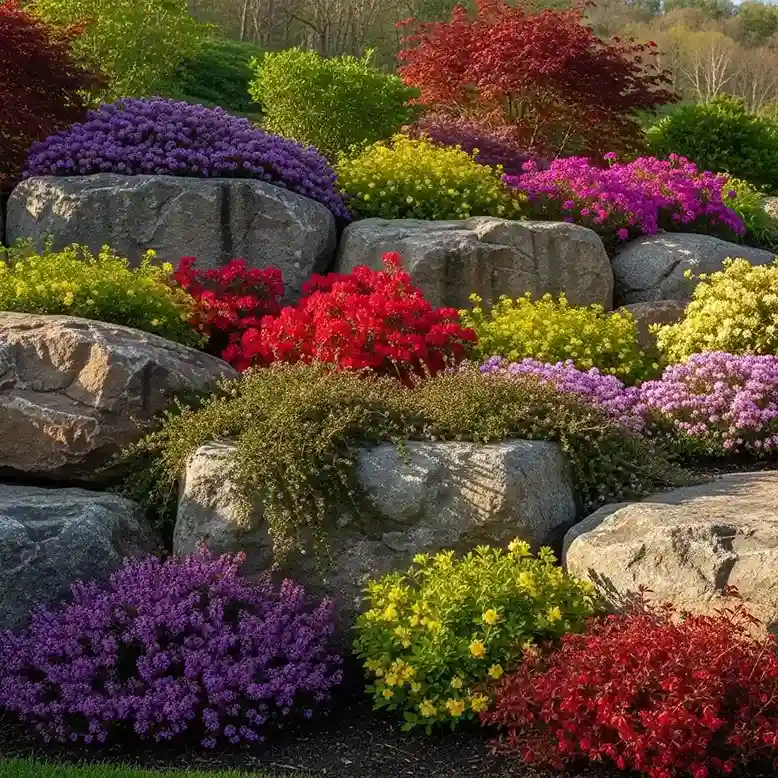
Flowering shrubs planted between and around boulder groups create a progressively more beautiful landscape year on year as the shrubs establish and expand, eventually softening the boulder composition with an increasingly generous canopy of seasonal colour that perfectly complements the stone. For the most colourful and rewarding flowering shrub selections for boulder planting, our flowering shrubs guide covers flowering shrub varieties and companion planting with natural stone in excellent, colourful detail.
| Best Flowering Shrubs | Companion Character with Boulders |
|---|---|
| Cistus | Mediterranean — perfect with limestone |
| Lavender | Fragrant, soft — beautiful against grey stone |
| Spiraea | Cascading white — softens boulder edges |
| Potentilla | Long-flowering — fills spaces between stones |
| Heather | Low ground cover — colonises between boulders |
| Hydrangea | Bold heads — dramatic against large granite |
18. Boulders as Garden Dividers
Large boulders used as informal garden dividers and room dividers create a beautifully natural, three-dimensional boundary between different garden areas that is simultaneously more visually interesting and more physically permeable than any fence, wall, or hedge, allowing the eye to move between garden spaces while clearly suggesting a change of character or function.
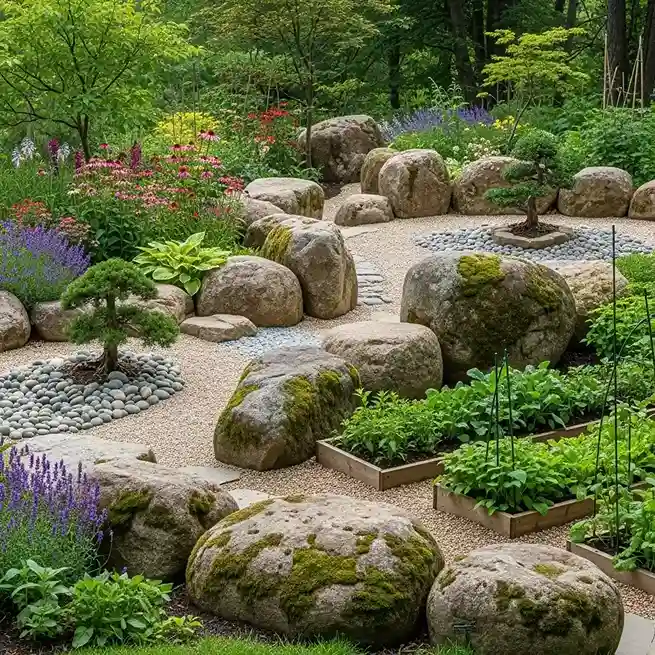
A row of three to five boulders of varying heights placed along a garden boundary between a lawn and a planting area creates an effective, beautiful, and completely maintenance-free garden division that anchors both spaces visually while never feeling oppressively enclosed or artificially defined. For more garden boundary and space definition ideas, our fence line landscaping guide covers natural boulder and stone boundary features in practical, creative detail.
| Feature | Details |
|---|---|
| Best Grouping | 3–5 boulders of varying heights — informal row |
| Best Positions | Between lawn and planting, between garden rooms |
| Companion Plants | Ornamental grasses, low perennials, ground cover |
| Permeability | Open between stones — visual division, not barrier |
| Best Boulder Types | Any — match surrounding garden character |
| Maintenance Level | None — the most maintenance-free divider available |
19. Boulders in a Children’s Garden
Boulders incorporated into a children’s garden create endlessly engaging, safe, and stimulating natural play features — climbing boulders, stepping stone trails, balancing stones, and miniature mountain landscapes — that develop physical confidence, spatial awareness, and a deep connection with the natural world from the earliest age.
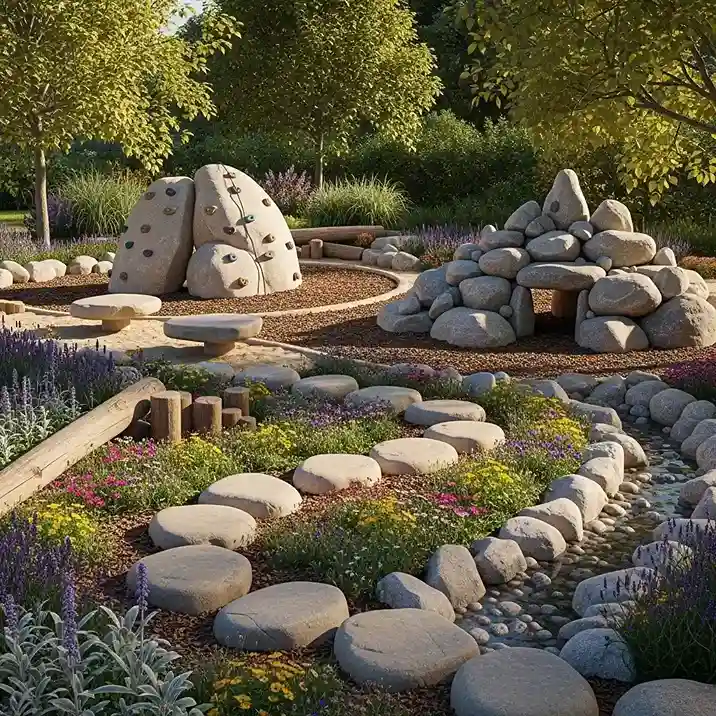
Carefully selected smooth, rounded boulders with no sharp edges or unstable configurations, bedded firmly in a cushioning mulch of bark chippings, create a completely safe and extraordinarily engaging natural play landscape that children find far more stimulating and imaginative than any manufactured plastic play equipment. For more children’s garden feature and outdoor play space ideas, our fairy garden ideas guide covers natural children’s garden features and imaginative outdoor play in wonderfully creative, engaging detail.
| Feature | Details |
|---|---|
| Best Stone Types | Smooth, rounded river rock — no sharp edges |
| Safety | Firm bedding in bark chipping mulch essential |
| Best Uses | Climbing boulders, stepping stone trail, balancing |
| Best Grouping | Graduated sizes — easy to challenging progression |
| Age Range | 2–12 years — scales to different developmental stages |
| Maintenance Level | Very low — inspect stability annually |
20. Boulders in a Bohemian Garden
Boulders integrated into a bohemian garden landscape take on a completely different character — painted with folk art patterns, decorated with mosaic tiles, used as bases for driftwood sculptures, or surrounded by wildly exuberant eclectic planting — becoming joyful, deeply personal garden art features of extraordinary individual expression.
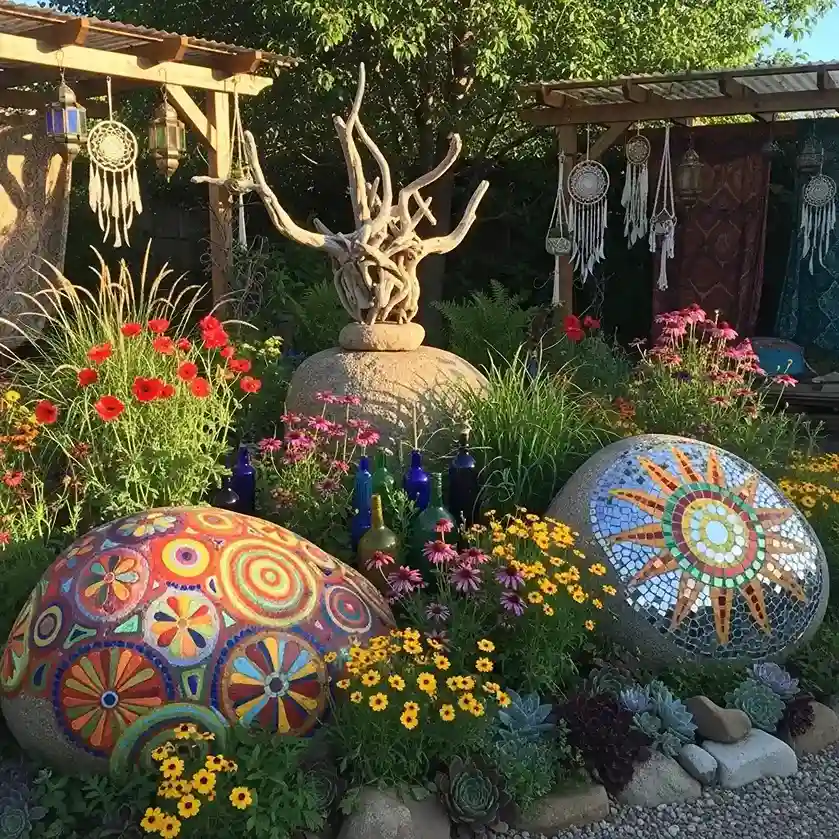
The natural weight and permanence of boulders provides the perfect grounding anchor for the spontaneous, colourful, and creatively free character of bohemian garden design, their solidity contrasting beautifully with the fluid, eclectic energy of surrounding plantings and decorative elements. For more wonderfully free-spirited outdoor design and garden art ideas, our hippie bohemian outdoor garden guide covers bohemian stone and boulder garden features in wonderfully creative, inspiring detail.
| Feature | Details |
|---|---|
| Best Decorations | Painted patterns, mosaic tiles, pressed glass |
| Best Companion Features | Driftwood art, wind chimes, eclectic planters |
| Best Plants | Wildflowers, ornamental grasses, succulents |
| Paint Type | Exterior acrylic — seal with clear outdoor varnish |
| Style | Joyful, eclectic, deeply personal |
| Estimated Cost | $10–$40 for paint and mosaic materials |
21. Boulders in a Wildlife Garden
Boulders incorporated into a wildlife garden create an extraordinary range of essential habitats — sun-warmed basking surfaces for reptiles, cool damp crevices for beetles and amphibians, sheltered roosting sites for insects, and stable structural anchors for wildlife-supporting plant communities — making them one of the most ecologically valuable features in any wildlife garden.
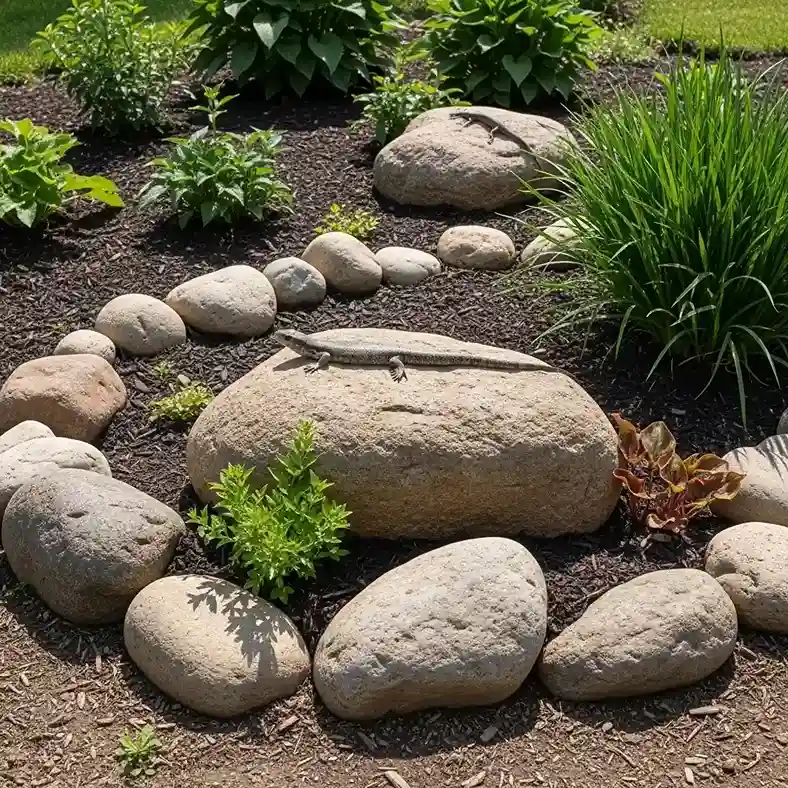
The microhabitats created on and around boulders — warm south-facing surfaces, cool north-facing crevices, damp mossy zones, and dry gravel pockets — support an astonishing diversity of invertebrate, reptile, and amphibian species that collectively contribute to a healthier, more ecologically balanced garden ecosystem. For more wildlife garden habitat and biodiversity feature ideas, our shade shrubs guide covers wildlife-supporting plants that thrive around boulder features in comprehensive, caring detail.
| Wildlife Habitat | Species Supported |
|---|---|
| Warm south-facing surface | Reptiles — slow worms, lizards, grass snakes |
| Damp north-facing crevice | Beetles, woodlice, centipedes, mosses |
| Boulder base gap | Hedgehogs, toads, ground beetles |
| Mossy boulder surface | Invertebrates, mosses, lichens |
| Boulder pond margin | Frogs, newts, dragonflies |
| Surrounding planting | Pollinators, birds, small mammals |
22. Boulders in a Modern Minimalist Garden
In a modern minimalist garden, boulders become pure sculptural objects — selected for their exceptional form, positioned with absolute precision, and surrounded by the restrained palette of gravel, clipped evergreens, and architectural plants that defines the minimalist aesthetic — creating garden compositions of extraordinary artistic sophistication and visual power.
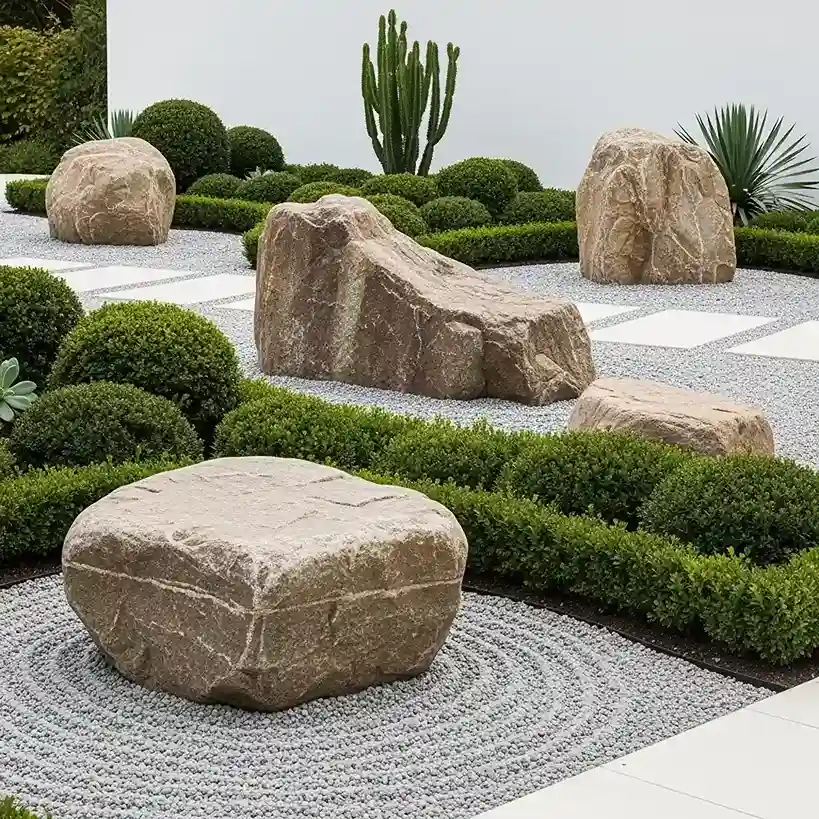
A single, perfectly chosen boulder of dramatic form, set in a sea of fine gravel with a precise halo of low, clipped planting around its base, creates a minimalist garden focal point of museum-quality sculptural impact that requires nothing further to justify its commanding garden presence. For more contemporary and minimalist garden design inspiration, our small garden ideas guide covers minimalist boulder garden design and compact stone feature installation in excellent, creative detail.
| Feature | Details |
|---|---|
| Best Stone Types | Smooth granite, dark basalt, pale limestone |
| Companion Plants | Clipped box, blue fescue, agapanthus |
| Mulch | Fine gravel or decomposed granite — clean and minimal |
| Number of Boulders | Less is more — single specimen or tight trio |
| Key Principle | Perfect positioning — every element considered |
| Best For | Contemporary, modern, and architect-designed gardens |
23. Boulders on a Budget
Creating an outstanding boulder landscape on a tight budget is achievable by sourcing stone locally from farms, building sites, and land clearances where large stones are regularly available for free collection, eliminating the most significant cost in any boulder landscaping project — the purchase price of the stone itself.
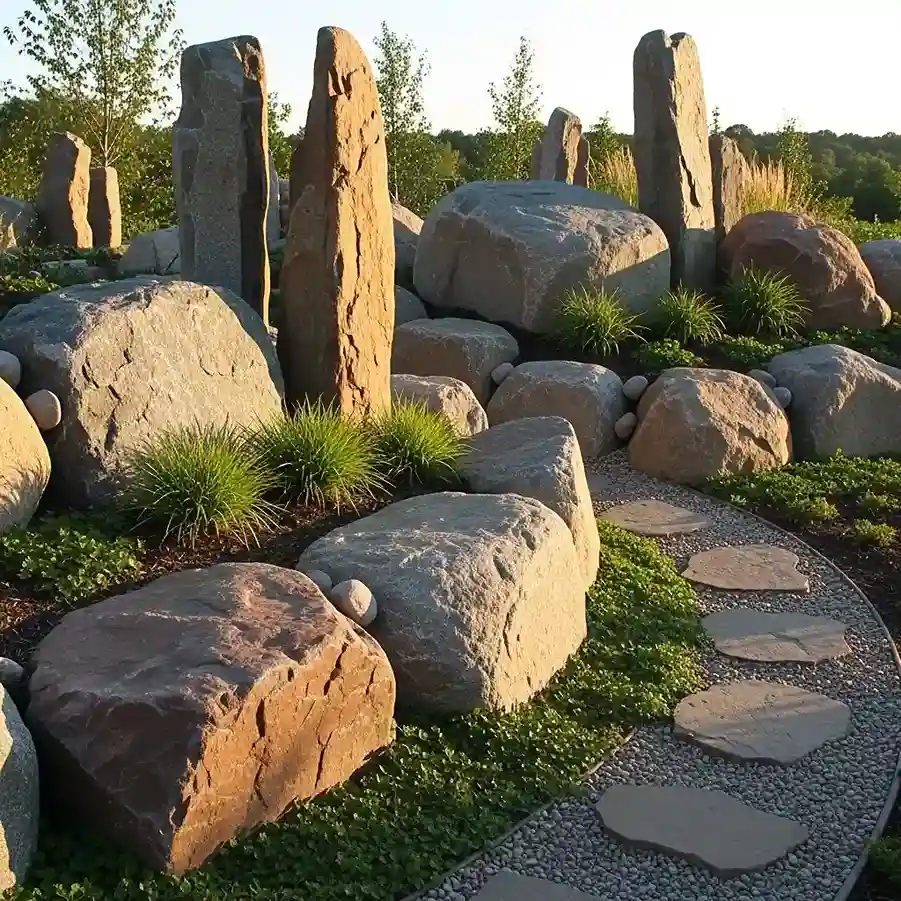
Hiring a mini-digger for a single day to position locally sourced free boulders dramatically reduces the overall installation cost while achieving professional results that would take weeks of manual labour to replicate, making machine hire one of the most cost-effective investments in any budget boulder landscaping project. For more budget-friendly landscaping and garden transformation strategies, our cheap landscaping ideas guide covers budget boulder sourcing and installation in genuinely practical, money-saving detail.
| Budget Strategy | Details |
|---|---|
| Free Stone Sources | Farms, building sites, land clearances, online groups |
| Machine Hire | Mini-digger for one day — dramatically reduces labour |
| Start Small | One striking focal boulder costs less than a group |
| Local Stone | Eliminates transport costs — often the largest expense |
| DIY Installation | Possible for smaller boulders under 200 lbs |
| Estimated Saving | Free stone plus machine hire — 60–80% cheaper than purchased |
24. Boulders for Erosion Control
Boulders are one of the most effective and naturally beautiful solutions for soil erosion control on sloped garden sites, their sheer mass and physical presence intercepting surface water flow, slowing erosion, and creating stable planting platforms where vegetation can establish and gradually take over the erosion management function entirely.
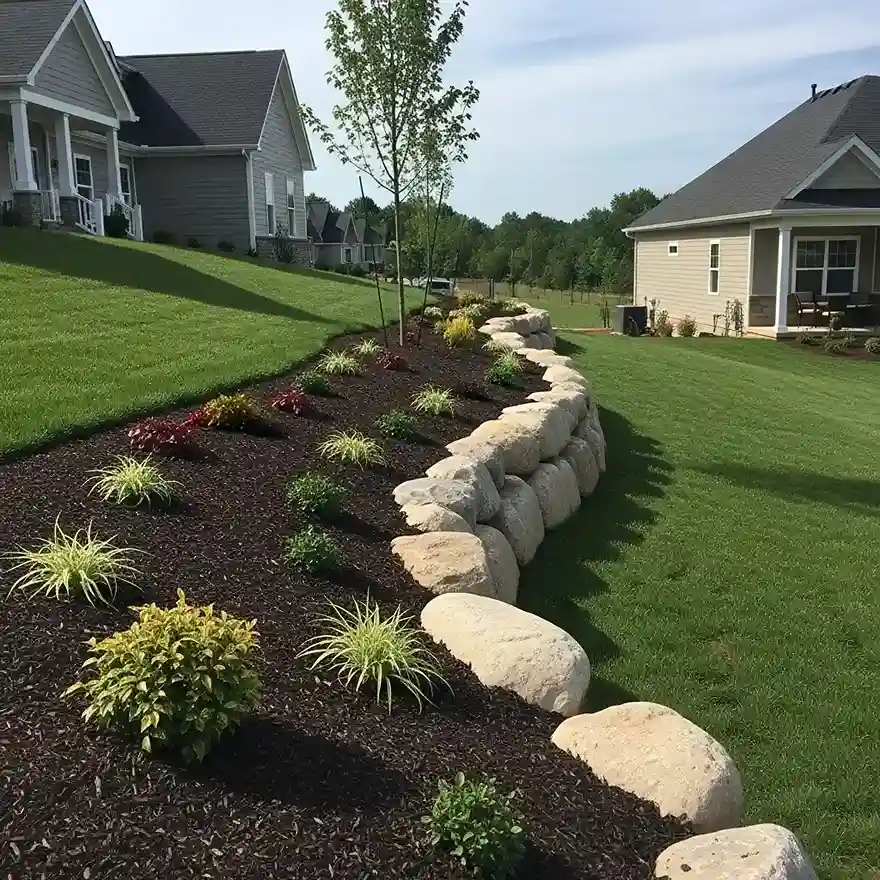
Placing boulders along the contour of a slope — perpendicular to the direction of water flow — creates a series of natural barriers that slow, spread, and infiltrate surface runoff, dramatically reducing erosion while simultaneously creating the most naturalistic and beautiful sloped garden landscape achievable at any budget level. For more erosion control and slope management ideas, our hillside landscaping guide covers boulder erosion control and sloped site management in comprehensive, practical detail.
| Feature | Details |
|---|---|
| Placement | Along slope contour — perpendicular to water flow |
| Spacing | Every 3–5 feet vertically on moderate slopes |
| Best Stone Types | Angular — interlocks with soil more effectively |
| Companion Plants | Deep-rooted grasses and shrubs stabilise between boulders |
| Effectiveness | Outstanding — one of the best erosion control methods |
| Difficulty Level | Intermediate |
25. Boulders in a Rustic and Naturalistic Garden
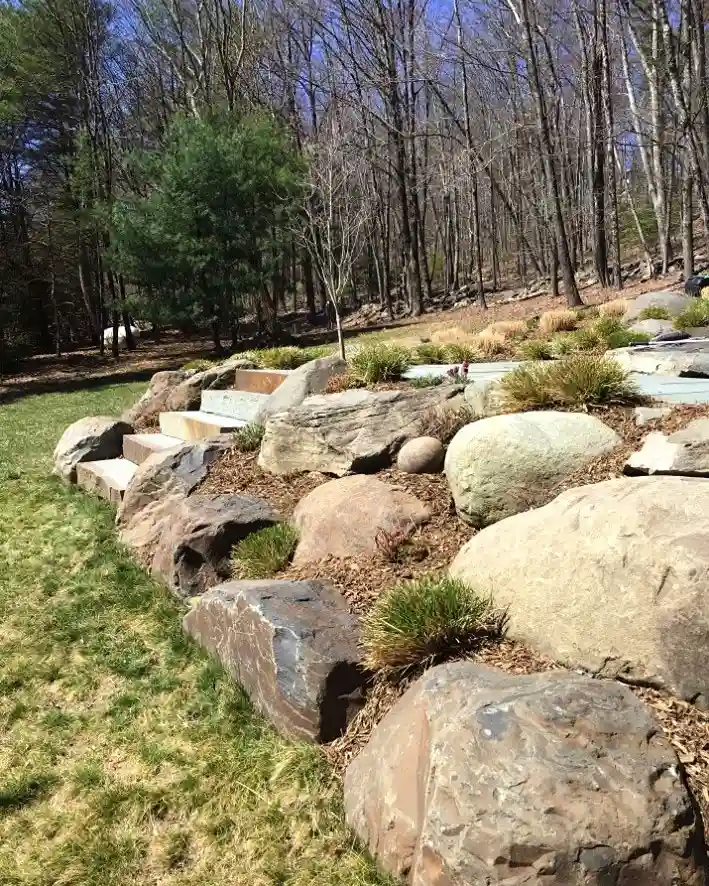
Boulders are most completely at home in a rustic and naturalistic garden setting, where their irregular forms, weathered surfaces, and geological character integrate seamlessly with wildflower planting, native grasses, informal paths, and the deliberately imperfect, abundant aesthetic of a garden designed to mirror and celebrate the wild natural landscape.
source: @earthdesignscooperative
A scattered arrangement of boulders of different sizes — some half-buried in long grass, some surrounded by wildflowers, and others colonised by mosses and creeping plants — creates a naturalistic boulder landscape of extraordinary authenticity and beauty that looks as though it has simply always been there. For more naturalistic and rustic garden planting ideas that complement boulder features beautifully, our cottage garden ideas guide is a good choice. For more wildflower and naturalistic planting ideas, our food forest guide covers naturalistic companion planting around boulder features in productive, ecological detail.
| Feature | Details |
|---|---|
| Arrangement Style | Scattered, informal — varied sizes and angles |
| Best Plants | Wildflowers, native grasses, ferns, mosses |
| Path Material | Bark chippings or mown grass — informal character |
| Moss Establishment | Encourage on north-facing surfaces — adds age |
| Atmosphere | Wild, natural, ancient, deeply peaceful |
| Best For | Naturalistic, rustic, and wildlife-focused gardens |
Frequently Asked Questions (FAQs)
Q1: How do I move large boulders in a garden?
Small boulders under 200 pounds can be moved with a sack trolley, crowbar, and rollers by two or three people working carefully and safely together. Boulders over 200 pounds require a mini-digger, telehandler, or professional landscaping team with lifting equipment. Our cheap landscaping ideas guide covers budget boulder installation strategies including machine hire options in genuinely practical, money-saving detail.
Q2: What plants grow best around boulders?
Ornamental grasses, sedums, alpines, thymes, lavender, ferns, hostas, and creeping ground covers all grow beautifully around boulders, their varied textures and forms complementing the stone perfectly. Our shade perennials guide covers the best shade-loving plants for boulder companion planting, and our colorful shrubs guide covers bold flowering shrub combinations with natural stone in excellent detail.
Q3: How deep should boulders be buried for a natural look?
Burying at least one-third of each boulder below the soil surface creates the most convincingly natural, settled appearance — as if the stone has always been part of the landscape rather than recently placed. For retaining walls and slope installations, deeper burial and proper foundation preparation are essential for structural stability and long-term performance.
Q4: Where can I source boulders for garden landscaping?
Local stone yards, quarries, and landscape suppliers are the most reliable sources for quality boulders in a range of stone types and sizes. For free or very low-cost boulders, contact local farmers clearing land, building contractors, and online community groups where large stones are regularly offered for free collection. Our backyard landscaping ideas guide covers boulder sourcing and landscape planning in practical, helpful detail.
Conclusion
Landscaping with boulders creates the most permanent, naturally authoritative, and genuinely timeless garden features available — bringing the ancient geological character of the natural world into any outdoor space with a drama, beauty, and sense of place that no manufactured garden feature can ever replicate.
Explore more structural garden design and natural landscape inspiration through our guides on hillside landscaping and trending landscaping ideas to begin creating your perfect boulder landscape today.