A backyard orchard is one of the most rewarding, productive, and deeply satisfying garden projects any homeowner can undertake, transforming an ordinary outdoor space into a beautiful, fruit-filled landscape that delivers harvests for decades to come.
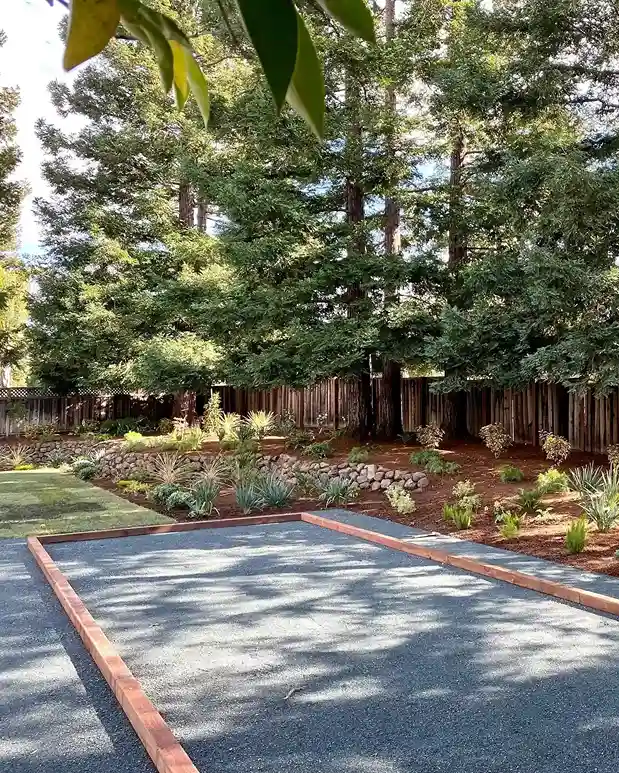
Source: @pinehouseediblegardens
Whether you have a large garden or a compact urban backyard, these 22 expert planning, planting, and growing guides will help you design and establish your own thriving backyard orchard beautifully, best when using our food forest guide.
1. What Is a Backyard Orchard?
A backyard orchard is a productive collection of fruit trees grown in a domestic garden setting, ranging from a single dwarf apple tree in a container to a full multi-species mixed orchard planted across a generous lawn or dedicated growing space. Unlike commercial orchards, backyard orchards prioritise variety, beauty, and seasonal interest alongside productivity.
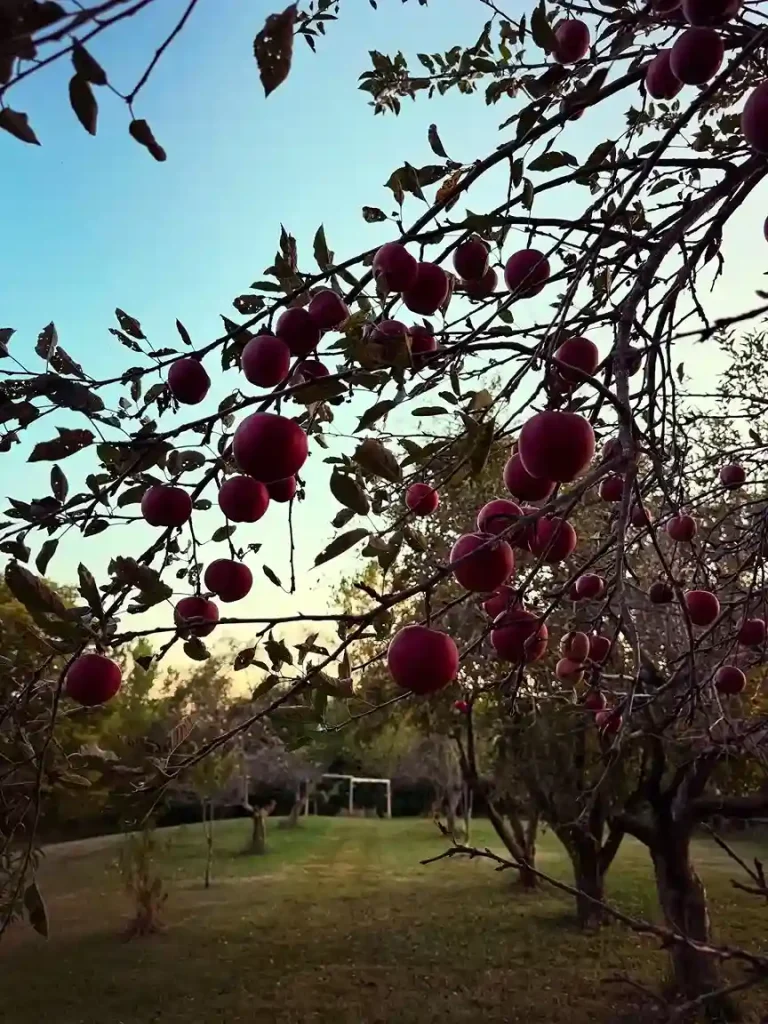
Source: @otterislandfarm
The beauty of a backyard orchard is that it works at any scale — a single trained espalier apple against a sunny fence is just as much an orchard as a dozen trees planted across a large lawn, with both approaches delivering genuine seasonal harvests and outstanding ornamental value throughout the year.
| Feature | Details |
|---|---|
| Minimum Space Required | A single 4-foot container for dwarf tree |
| Small Garden Orchard | 3–5 trained or dwarf trees |
| Medium Garden Orchard | 5–10 semi-dwarf trees |
| Large Garden Orchard | 10+ standard or semi-dwarf trees |
| First Harvest | 2–4 years depending on tree and rootstock |
| Lifespan | Decades — well-managed orchards last generations |
2. Benefits of a Backyard Orchard
Growing your own fruit trees delivers extraordinary practical, ecological, and personal rewards that go far beyond the simple pleasure of harvesting fresh fruit. A well-planned backyard orchard is one of the most multi-functional garden investments available to any homeowner at any budget level.
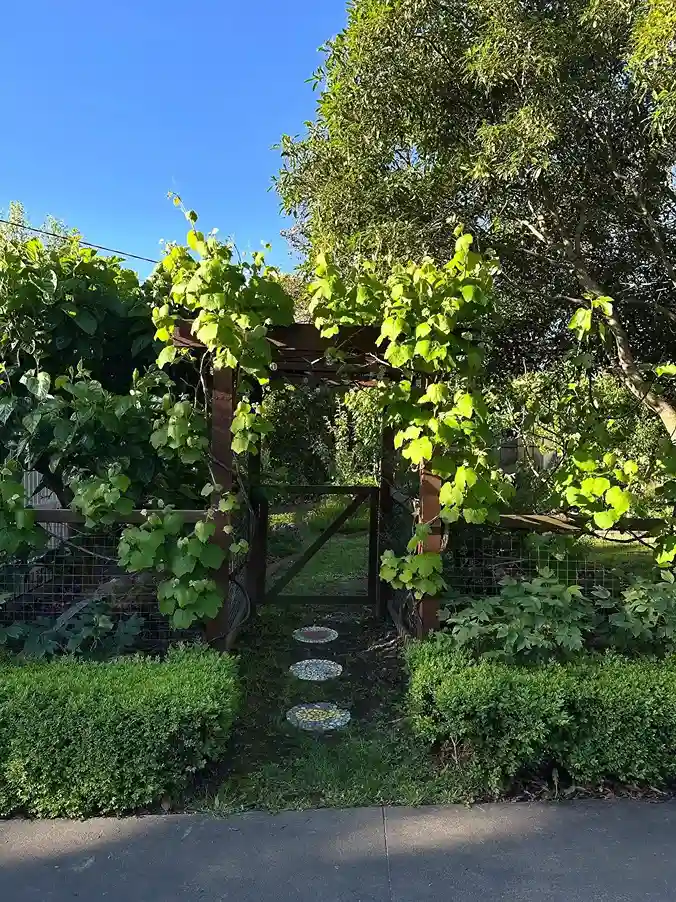
Source: @the_aussie_veggie_patch
Here are the key benefits of establishing a backyard orchard:
- Fresh seasonal fruit — harvests of apples, pears, plums, cherries, and more from your own garden
- Significant cost savings — specialist fruit varieties unavailable in supermarkets at zero ongoing cost
- Outstanding wildlife value — blossom for pollinators, fruit for birds, and bark habitat for insects
- Beautiful ornamental display — spring blossom, summer foliage, autumn fruit, and winter structure
- Increased property value — a productive, established orchard adds genuine property appeal
- Carbon sequestration — trees absorb CO₂ and improve garden microclimate year-round
- Mental health benefits — gardening and tending fruit trees is deeply restorative and rewarding
3. Assessing Your Space and Site
Before purchasing a single tree, assessing your available space, sun exposure, soil type, and existing features gives your backyard orchard the best possible foundation for long-term success and prevents costly mistakes that are difficult to rectify once trees are established.
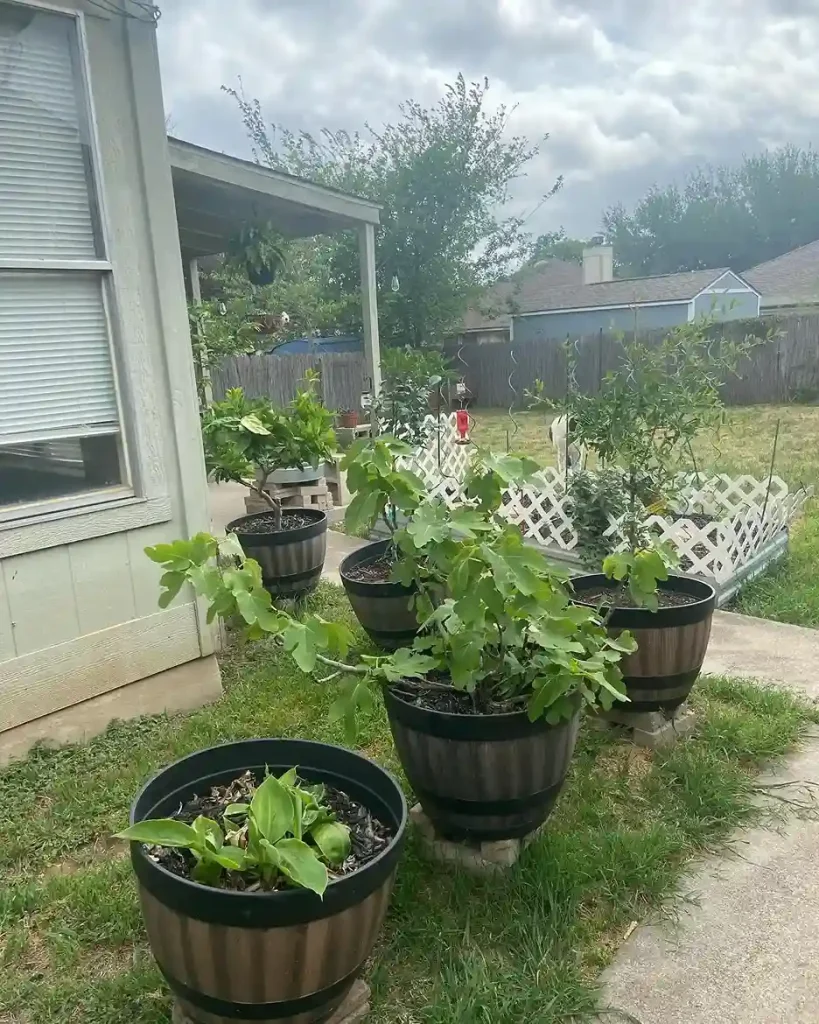
Source: @insaneinthablaine
For more garden site assessment and planning advice, our backyard landscaping ideas guide covers garden space planning and site evaluation in comprehensive, practical detail.
Key site assessment factors to consider before planning your backyard orchard:
- Sun exposure — fruit trees require minimum 6 hours direct sunlight daily for reliable cropping
- Frost pockets — avoid low-lying areas where cold air collects and damages spring blossom
- Wind exposure — strong winds damage blossom and developing fruit — consider windbreak planting
- Soil depth — fruit trees need minimum 18 inches of workable soil for good root development
- Drainage — waterlogged soils cause root rot — improve drainage before planting
- Existing features — note shading trees, buildings, and underground services before positioning trees
- Access — ensure you can comfortably reach all parts of the orchard for harvesting and maintenance
4. Choosing the Right Fruit Trees
Choosing the right fruit trees for your specific climate, soil, space, and personal taste is the single most important decision in the entire backyard orchard planning process, as fruit trees are long-lived investments that are difficult and disruptive to move once established in their permanent growing positions.
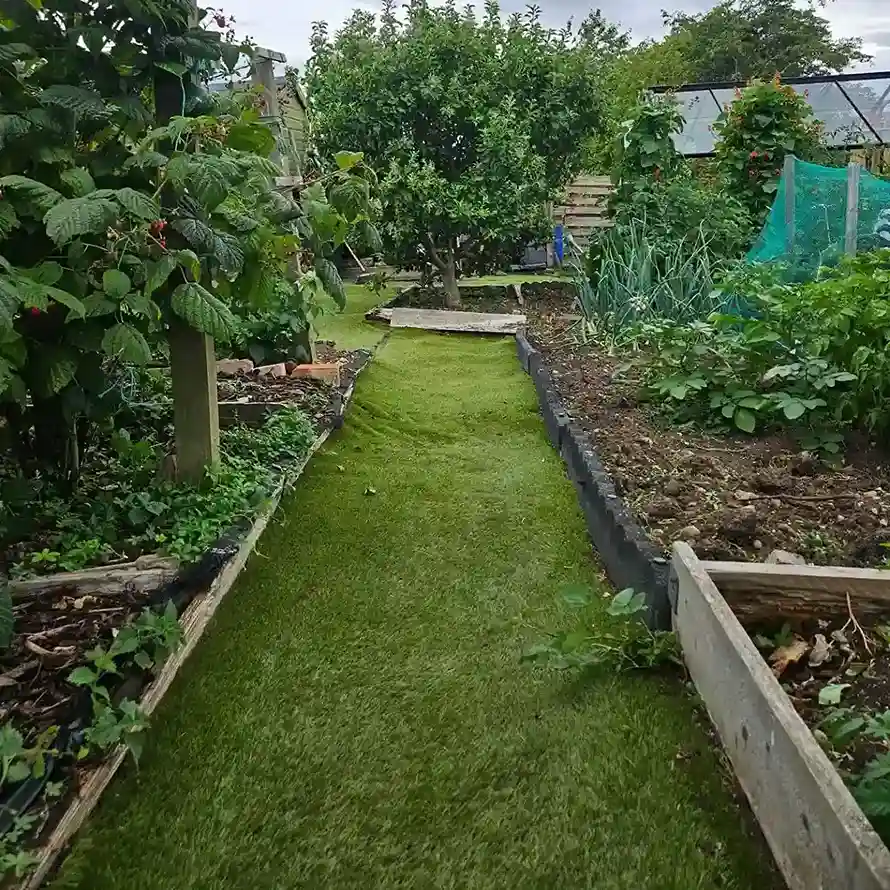
Source: @newbzresidence_no7
Prioritise varieties that suit your local climate, ripen across a spread of seasons for extended harvest, and include the necessary pollination partners that many fruit trees require to set fruit reliably.
| Fruit Type | Best Beginner Varieties | Pollination Requirement |
|---|---|---|
| Apple | Cox, Gala, Bramley, Discovery | Cross-pollination with compatible variety |
| Pear | Conference, Williams, Concorde | Cross-pollination usually required |
| Plum | Victoria, Czar, Opal | Victoria is self-fertile — others need partner |
| Cherry | Stella, Sweetheart, Morello | Stella self-fertile — sweet cherry needs partner |
| Quince | Vranja, Leskovac | Self-fertile — no partner required |
| Fig | Brown Turkey, Rouge de Bordeaux | Self-fertile — no partner required |
5. Understanding Rootstocks
Rootstock is one of the most important and frequently overlooked aspects of backyard orchard planning, as it determines the ultimate size of your fruit tree regardless of the variety grafted onto it — making rootstock selection the primary tool for controlling tree size in any garden setting.
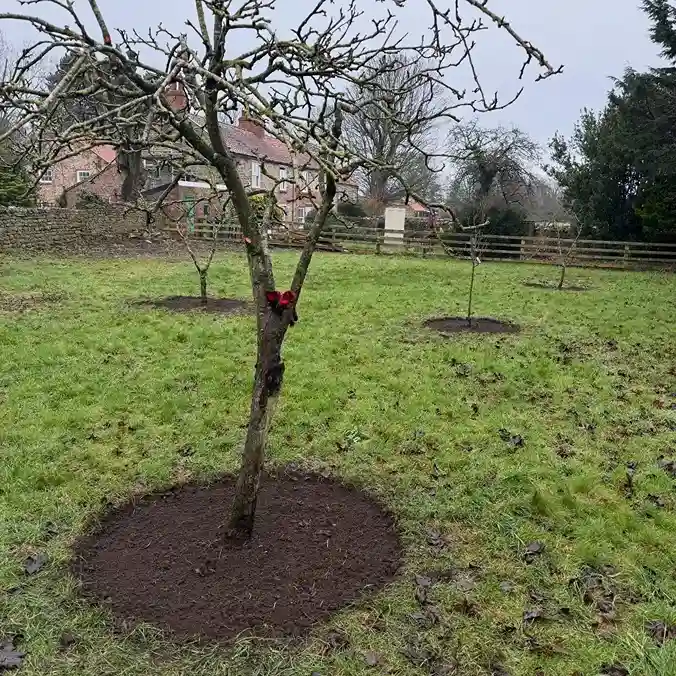
The same apple variety grafted onto different rootstocks can produce trees ranging from a 4-foot pot-grown dwarf to a 30-foot standard, making rootstock understanding absolutely essential before purchasing any fruit tree for backyard orchard planting. For more fruit tree growing and productive garden planning guidance, our food forest guide covers rootstock selection in comprehensive, expert detail.
| Rootstock | Tree Size | Best For |
|---|---|---|
| M27 (apple) | 4–6 feet | Containers and very small gardens |
| M9 (apple) | 6–8 feet | Small to medium gardens — needs staking |
| M26 (apple) | 8–12 feet | Medium gardens — semi-dwarf |
| MM106 (apple) | 12–18 feet | Medium to large gardens |
| MM111 (apple) | 18–25 feet | Large gardens — standard |
| Quince A (pear) | 10–15 feet | Standard pear in medium gardens |
6. Planning Your Orchard Layout
A well-planned orchard layout considers sun access for every tree, adequate spacing for mature canopy development, convenient access for harvesting and maintenance, and the logical grouping of pollination partners near each other to ensure reliable cross-pollination across the entire planting.
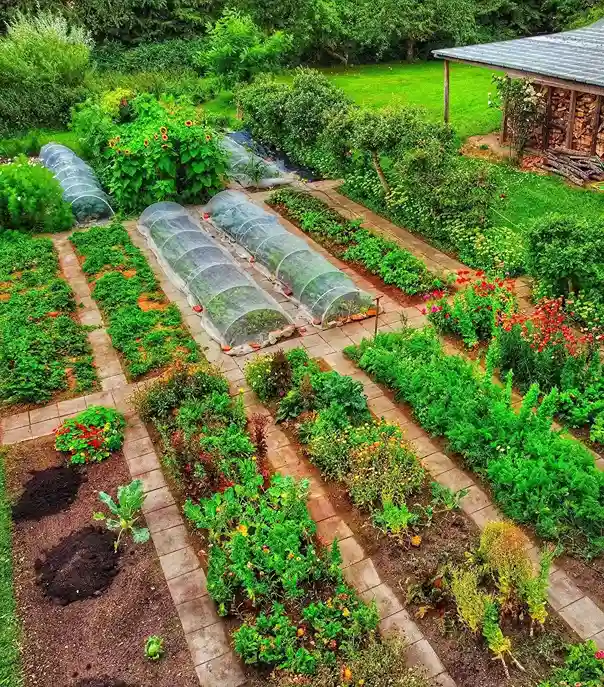
Source: @roogardening
For more garden layout and design planning ideas, our backyard landscaping ideas guide covers productive garden layout planning in comprehensive, practical detail.
Key principles for planning your backyard orchard layout effectively:
- Space trees correctly — dwarf trees 6–8 feet, semi-dwarf 12–15 feet, standards 20–25 feet apart
- Position tallest trees to the north — prevents shading of shorter trees in the same orchard
- Group pollination partners — plant compatible pairs or groups within 50 feet of each other
- Plan access paths — leave 3–4 foot grass paths between tree rows for comfortable access
- Consider mature canopy — visualise full-grown tree size before positioning — not just current size
- Allow for machinery access — if mowing beneath trees, ensure sufficient turning space
- Plan the view from the house — position most ornamental trees where they can be seen from windows
7. Soil Preparation for a Backyard Orchard
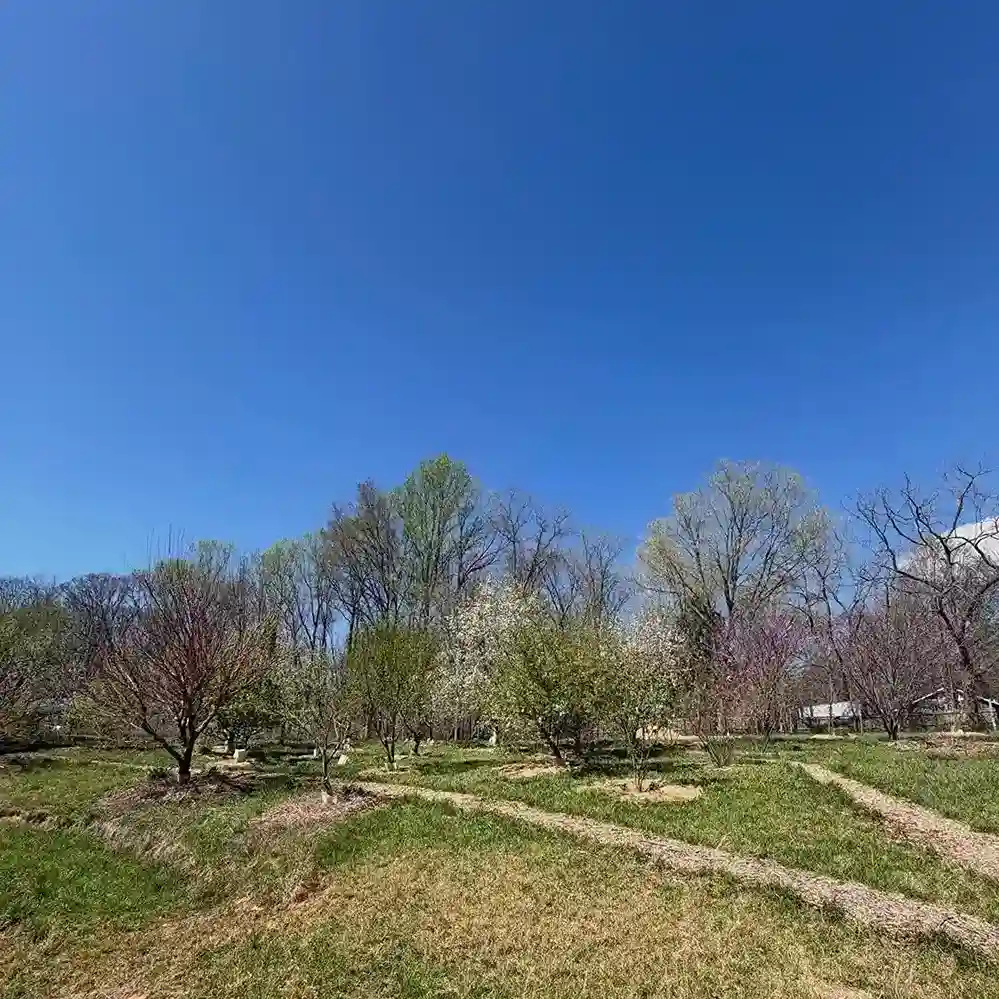
Thorough soil preparation before planting fruit trees is one of the highest-value investments of time and effort in the entire backyard orchard establishment process, as fruit trees occupy the same soil for decades and cannot be easily moved if soil conditions are inadequate for long-term productive growth.
Source: @sobremesafarm
Deep cultivation, pH testing, organic matter incorporation, and drainage improvement completed before the first tree is planted create the ideal growing foundation that allows fruit trees to establish vigorously and crop reliably from their earliest productive years. For more soil improvement and productive garden preparation advice, our food forest guide covers orchard soil preparation in comprehensive, expert detail.
| Soil Preparation Step | Details |
|---|---|
| pH Testing | Aim for 6.0–6.8 — add lime if below 6.0 |
| Drainage Improvement | Add grit or create raised mounds on heavy clay |
| Organic Matter | Incorporate well-rotted compost or manure |
| Weed Clearance | Remove all perennial weeds before planting |
| Cultivation Depth | Dig to minimum 18 inches throughout orchard area |
| Pre-Plant Fertiliser | Slow-release balanced fertiliser worked into topsoil |
8. Planting Fruit Trees Correctly
Correct planting technique is fundamental to fruit tree establishment and long-term health, as incorrectly planted trees — especially those planted too deeply — are significantly more vulnerable to root and crown disease, poor anchorage, and reduced early growth vigour than correctly planted specimens.
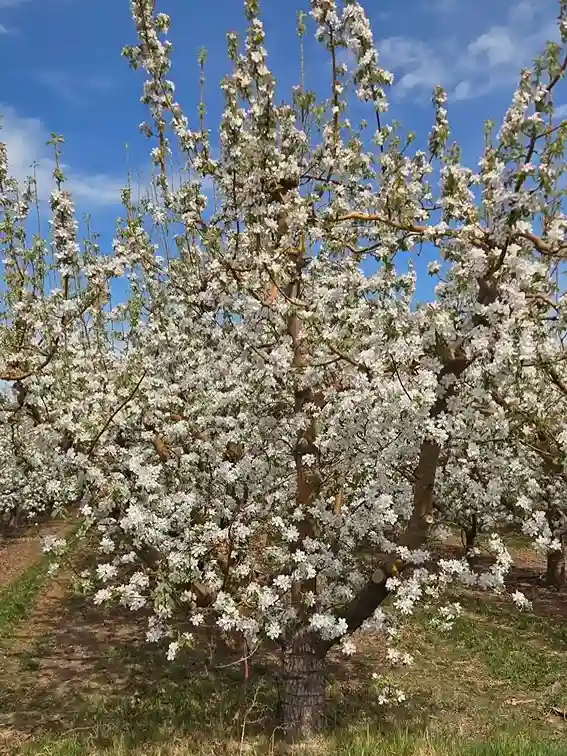
For step-by-step tree planting guidance, our tree landscaping ideas guide covers fruit tree planting techniques in comprehensive, practical detail.
Follow these essential steps for correct fruit tree planting every time:
- Soak bare-root trees for 2–4 hours in water before planting to rehydrate dry roots thoroughly
- Dig the hole twice the width of the root ball but no deeper than the root depth
- Check the graft union — plant with the graft union at least 4 inches above soil level at all times
- Spread roots naturally outward — never curl, fold, or force roots into the planting hole
- Firm the soil gradually in layers as you backfill — eliminate air pockets throughout
- Stake and tie — use a short stake at 45° angle and a proper tree tie — not wire or rope
- Water thoroughly after planting and apply a 3-inch bark mulch keeping clear of the stem
9. Best Time to Plant a Backyard Orchard
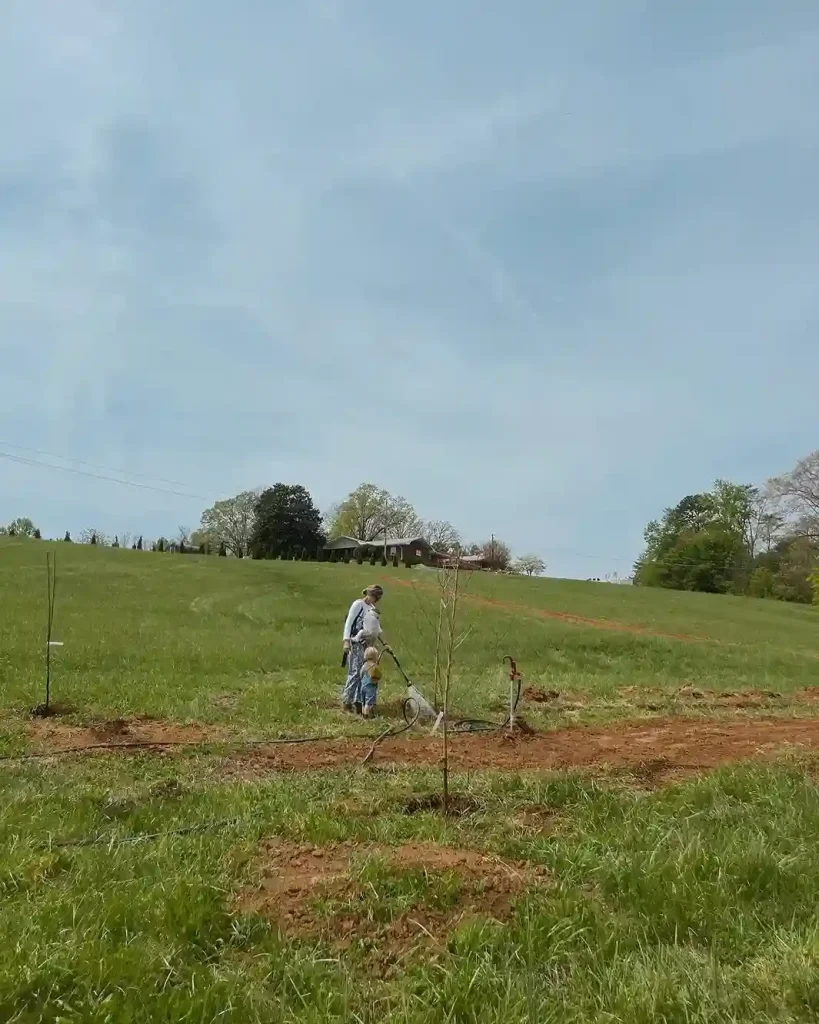
Timing fruit tree planting correctly gives every tree the best possible establishment conditions, minimises transplant stress, and maximises the root development that determines long-term tree health and productivity. For more seasonal garden planning and tree establishment advice, our cheap landscaping ideas guide covers budget orchard establishment and seasonal planting strategies in practical, helpful detail.
Source: @firstfruitsfarmstead
The best planting times for backyard orchard trees by type:
- Bare-root trees — November to March while fully dormant — best establishment and lowest cost
- Container-grown trees — any time of year but spring and autumn give best establishment results
- Avoid planting during hard frosts when ground is frozen or compacted and unworkable
- Avoid planting in midsummer heat when establishment stress is at its highest for all species
- Autumn planting — roots establish through winter before spring growth demand begins
- Spring planting — second-best option for bare-root — plant as early as ground allows
- Pot-grown trees — can be planted even in summer with consistent watering and mulching
10. Pollination in a Backyard Orchard
Pollination is one of the most critical factors in backyard orchard planning, as many fruit tree species and varieties require pollen from a compatible partner variety in the same or adjacent flowering group to set a reliable crop of fruit each year without which even a perfectly healthy tree will fail to produce.
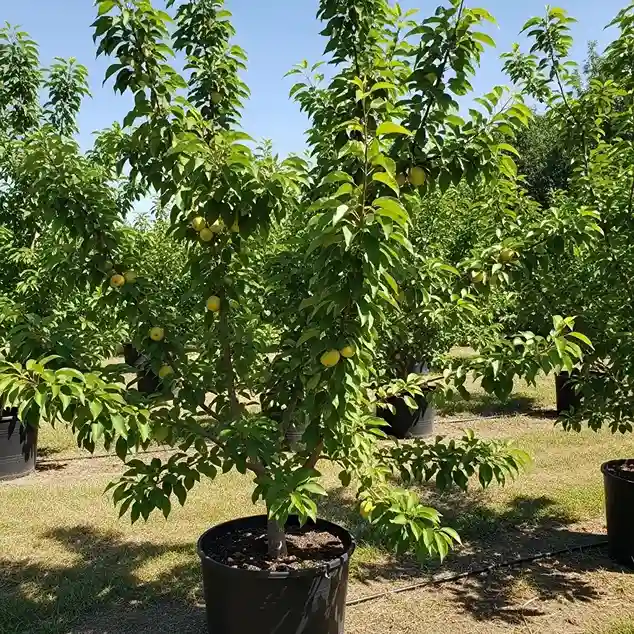
Understanding which trees are self-fertile (needing no partner), partially self-fertile (performing better with a partner), and self-sterile (absolutely requiring a compatible partner) before purchasing allows you to plan a complete, reliably cropping backyard orchard from the very beginning. For more companion planting and garden productivity strategies, our garden herb pairing guide covers companion planting principles that apply equally to orchard pollination planning.
| Pollination Type | Examples | Notes |
|---|---|---|
| Self-fertile | Victoria plum, Stella cherry, fig, quince | Crops reliably alone — partner improves yield |
| Partially self-fertile | Cox apple, Conference pear | Crops alone but significantly better with partner |
| Self-sterile | Most sweet cherries, many apples | Requires compatible partner variety nearby |
| Universal pollinators | Crab apple, Bramley apple | Pollinates wide range of apple varieties |
| Pollination Groups | Apples grouped 1–7, pears 1–5 | Plant varieties from same or adjacent groups |
| Bee dependency | All fruit trees | Encourage pollinators with companion flowers |
11. Training Systems for Backyard Orchard Trees
Choosing the right training system for each fruit tree in a backyard orchard dramatically affects how much space the tree occupies, how accessible the fruit is for harvesting, how much light reaches the developing fruit, and ultimately how productive and beautiful the overall orchard appears throughout the growing season. For creative trained fruit tree ideas and vertical garden applications, our vertical gardening guide covers espalier, fan, and cordon training systems in comprehensive, creative detail.
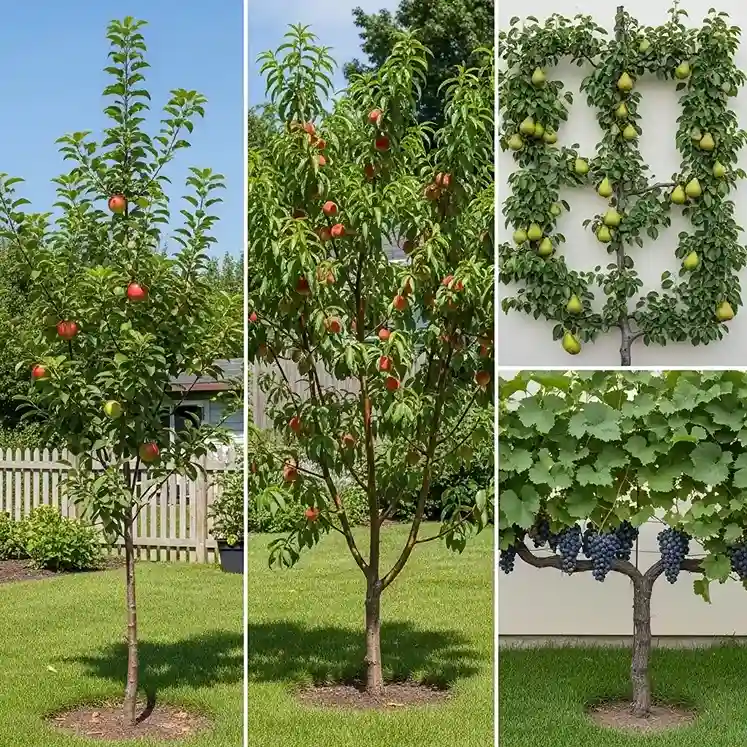
The main training systems available for backyard orchard fruit trees:
- Free-standing bush — the most natural form — open centre or central leader — suits most gardens
- Espalier — flat against a wall or fence — space-efficient — spectacular ornamental effect
- Fan-trained — fan shape against wall — ideal for plums, cherries, and peaches on warm walls
- Cordon — single oblique stem — very space-efficient — ideal for small gardens
- Stepover — horizontal low espalier — charming edging for vegetable beds and paths
- Standard — tall clear stem — creates traditional orchard character with room beneath for grazing or mowing
- Dwarf bush — compact — ideal for small gardens on dwarfing rootstock — easy to harvest
12. Companion Planting in a Backyard Orchard
A companion planting strategy throughout a backyard orchard dramatically improves pollination rates, suppresses weeds, builds soil fertility, and manages pest populations naturally — creating a beautifully diverse, self-sustaining orchard ecosystem that reduces maintenance while increasing productivity and ecological richness year on year.
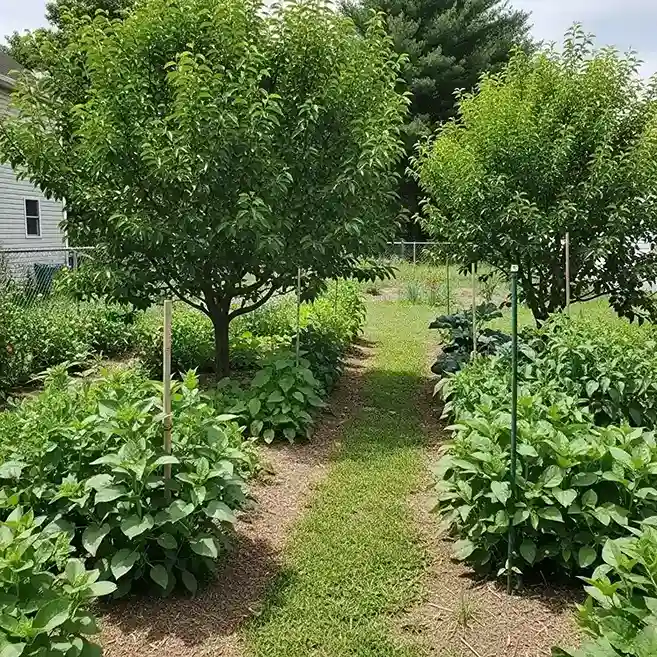
Planting a rich selection of pollinator-attracting flowers, dynamic accumulator plants, nitrogen-fixing ground covers, and pest-deterrent herbs throughout the orchard creates the classic permaculture fruit tree guild that is the foundation of productive natural orchard management. For detailed companion planting strategies and guild design, our garden herb pairing guide covers orchard companion planting in practical, expert detail.
| Companion Plant | Function | Best Position |
|---|---|---|
| Comfrey | Dynamic accumulator, mulch, pollinator | Around tree drip line |
| Clover | Nitrogen fixation, pollinator attraction | Throughout grass understorey |
| Nasturtium | Aphid trap crop, pollinator | Orchard edges and paths |
| Phacelia | Outstanding pollinator plant | Between tree rows |
| Chives and garlic | Pest deterrence, fungal disease prevention | Around tree bases |
| Yarrow | Predatory insect attraction, accumulator | Throughout orchard |
13. Watering Your Backyard Orchard
Correct watering practice throughout the first three years of a backyard orchard’s establishment is one of the most significant factors determining whether fruit trees develop the deep, extensive root systems that will sustain them through drought conditions and support productive cropping throughout their long growing lives. For more garden water management and irrigation strategies, our yard ideas for outdoor spaces guide covers garden irrigation planning and water-wise outdoor space management in practical, helpful detail.
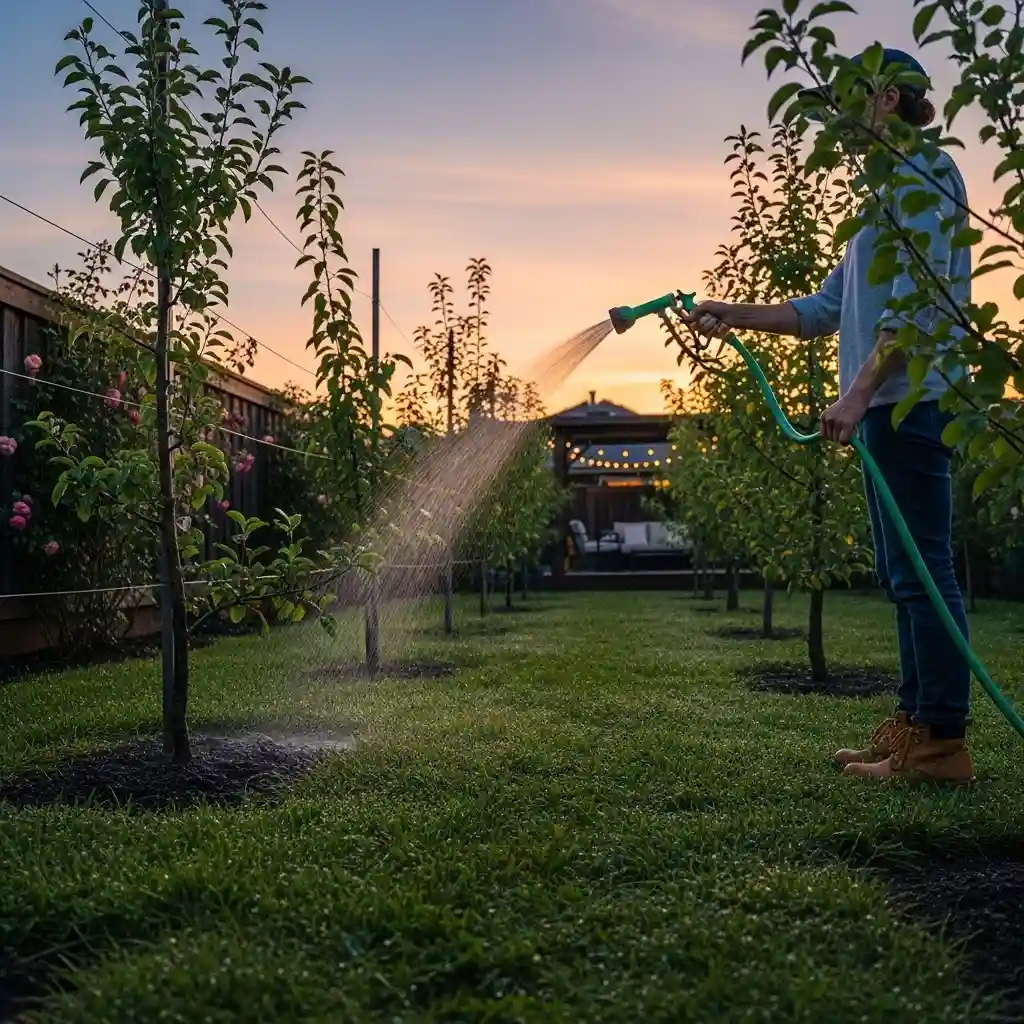
Essential watering guidelines for a newly established backyard orchard:
- Year one — water deeply every 5–7 days throughout the growing season — never allow wilting
- Year two — water deeply every 10–14 days in dry periods — beginning to establish independently
- Year three onward — supplementary watering during extended dry spells only — deeply not frequently
- Mulch generously — 3–4 inch mulch around each tree dramatically reduces watering requirement
- Avoid shallow watering — encourages shallow roots vulnerable to drought stress in later seasons
- Avoid waterlogging — ensure drainage is adequate — standing water causes root rot rapidly
- Drip irrigation — most efficient system for established orchards — delivers water directly to root zone
14. Feeding and Fertilising Fruit Trees
Fruit trees have specific nutritional requirements that change throughout their annual growth cycle, with the timing, type, and quantity of fertiliser applied having a significant impact on both the quality and quantity of fruit produced, the health and vigour of the tree, and its long-term resistance to pest and disease problems.
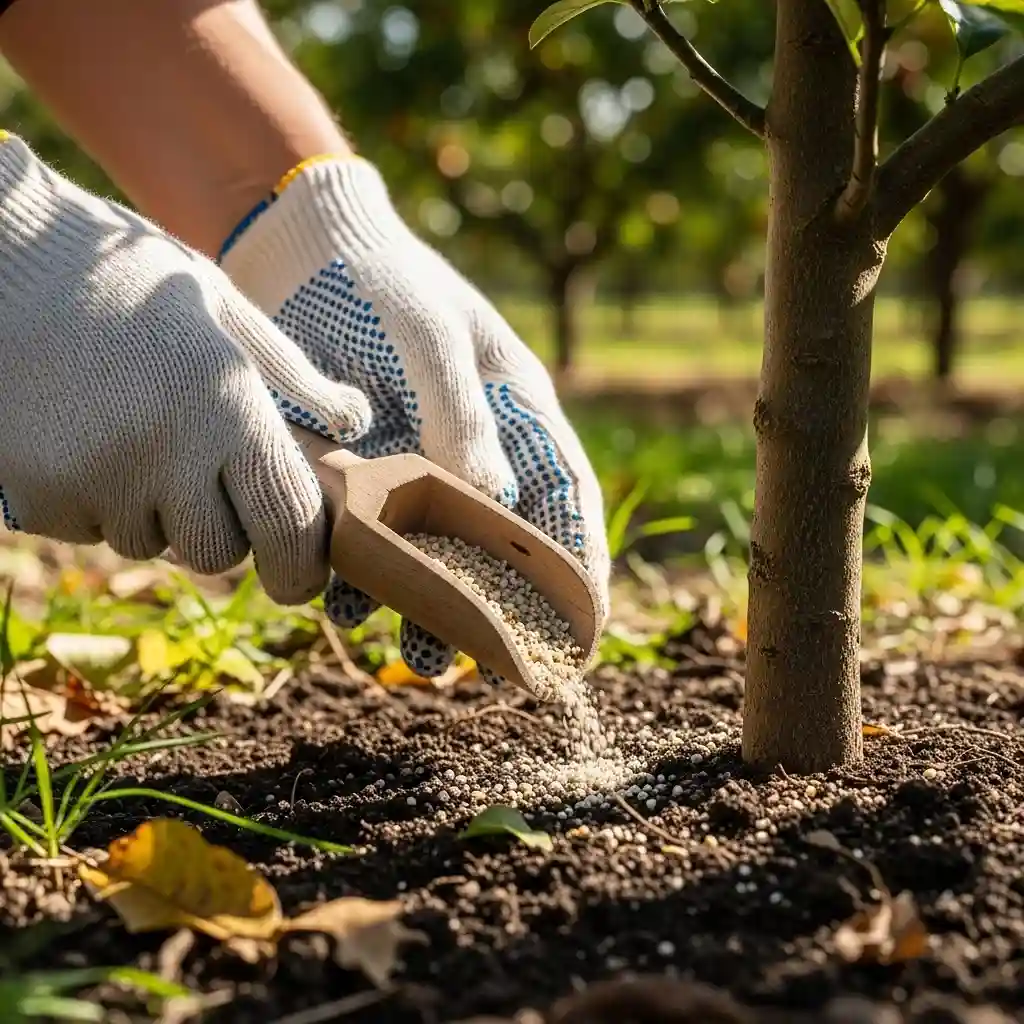
Understanding the difference between nitrogen feeding for vegetative growth, potassium feeding for fruit quality, and the range of trace elements that support overall tree health allows orchard growers to feed their trees with precision and confidence.
| Nutrient | Function | Best Source |
|---|---|---|
| Nitrogen (N) | Leaf and shoot growth | Balanced fertiliser, comfrey liquid |
| Potassium (K) | Fruit quality, flavour, disease resistance | Sulphate of potash, wood ash, comfrey |
| Phosphorus (P) | Root development | Bone meal, well-rotted manure |
| Calcium | Cell wall strength, bitter pit prevention | Ground limestone, gypsum |
| Magnesium | Chlorophyll production | Epsom salts foliar spray |
| Timing | Feed in late winter to early spring | Never feed after midsummer |
15. Pruning a Backyard Orchard
Regular, correctly timed pruning is one of the most important ongoing management tasks in any backyard orchard, improving light penetration into the canopy, stimulating productive new fruiting wood, maintaining tree shape and size, and removing diseased and damaged material that would otherwise become a reservoir for orchard pests and diseases.
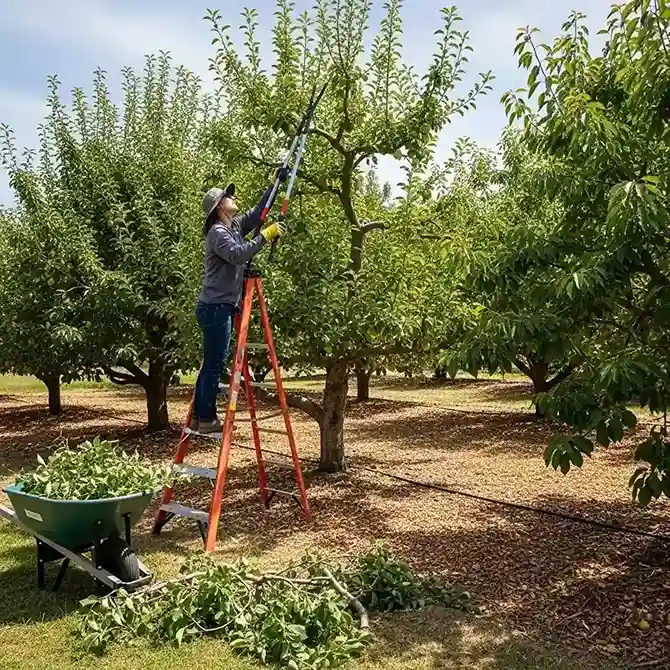
Learning to identify the different types of fruiting wood — spurs, tips, and laterals — for different fruit species is the foundation of effective orchard pruning, as the same pruning approach that stimulates productivity in one species can actually reduce it in another. For more tree pruning and orchard management guidance, our tree landscaping ideas guide covers fruit tree pruning techniques in practical, comprehensive detail.
The core principles of productive backyard orchard pruning:
- Prune apples and pears in winter while dormant — November to February in the UK
- Prune stone fruits (plums, cherries, peaches) in early summer — never in winter — silver leaf risk
- Remove crossing branches — improve air circulation and light penetration throughout canopy
- Remove dead, diseased, damaged wood first — always before any other pruning cuts
- Create an open centre — allows light to reach all developing fruit throughout the canopy
- Avoid over-pruning — removing more than one-third of growth in a single season weakens trees
- Use sharp, clean tools — blunt tools create ragged wounds susceptible to disease infection
16. Pest and Disease Management in an Orchard
A backyard orchard managed with biodiversity, companion planting, correct pruning, and regular monitoring will naturally experience significantly fewer pest and disease problems than a monoculture commercial orchard relying on chemical intervention, as the diverse ecosystem of a well-managed garden orchard supports natural predator populations that manage pest pressure effectively. For natural pest control strategies, our guides on get rid of ants in your yard, eliminate ground moles, and keep ground squirrels out cover garden pest management approaches that work in harmony with orchard biodiversity.
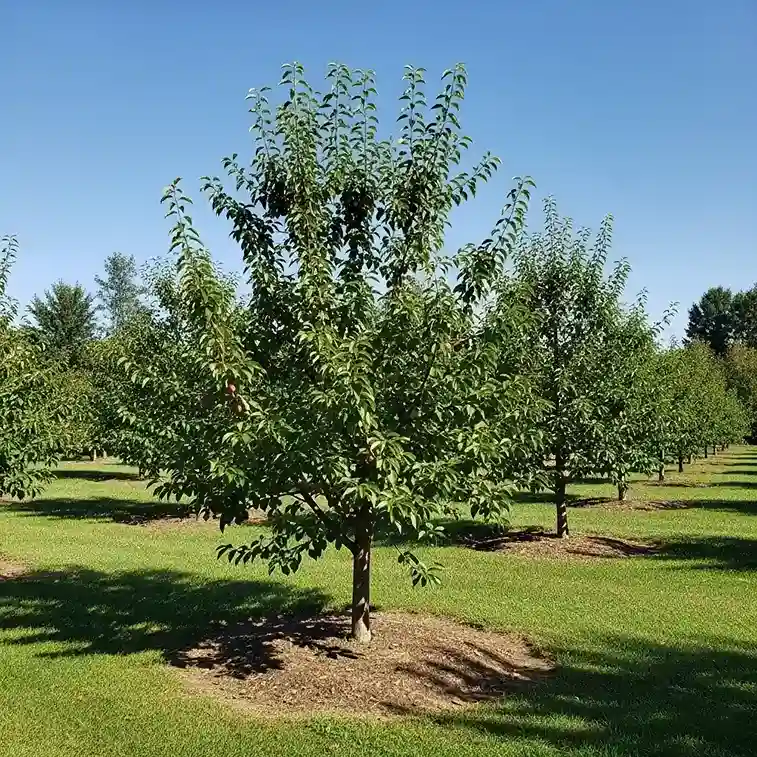
The most common backyard orchard pests and diseases and their natural management:
- Codling moth — use pheromone traps from May — apply grease bands to trunk in autumn
- Apple scab — choose resistant varieties — collect and destroy fallen leaves in autumn
- Brown rot — remove all mummified fruit from trees and ground promptly before it spreads
- Aphids — encourage natural predators (ladybirds, lacewings) — use companion nasturtiums as trap crop
- Woolly aphid — scrub off colonies with a stiff brush — apply methylated spirits to persistent colonies
- Fireblight (pear and apple) — cut back 12 inches beyond infection — sterilise tools between cuts
- Canker — pare back to clean wood and seal — choose resistant rootstocks and varieties
17. Harvesting Fruit from a Backyard Orchard
Knowing when and how to harvest fruit correctly from a backyard orchard is a skill that improves with every growing season, as picking too early produces hard, flavourless fruit while leaving fruit too long on the tree results in overripe, wasp-damaged, and prematurely fallen crops that lose their full quality.
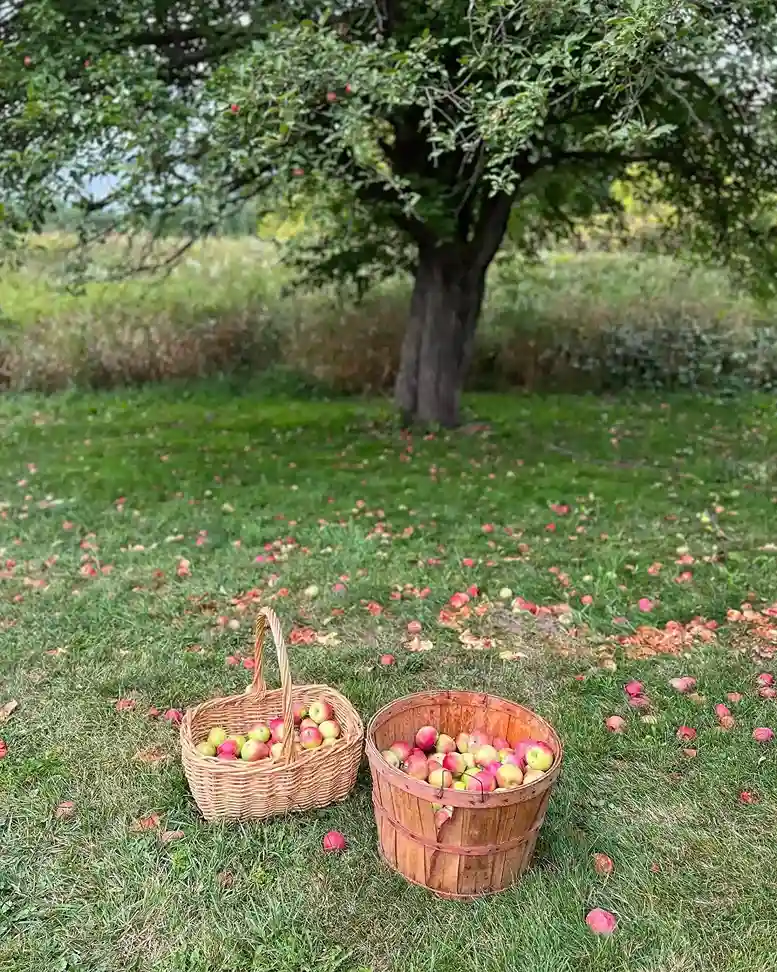
Source: @the_lazy_acres
Key harvest timing and technique guidelines for each main backyard orchard fruit:
- Apples — ready when fruit lifts with a slight twist — early varieties July–August, late October–November
- Pears — harvest before fully ripe — ripen indoors in a cool room for best flavour development
- Plums — harvest when fully coloured and slightly soft — eat or preserve immediately after picking
- Cherries — harvest with stalks intact to prevent disease entry — pick when fully coloured and firm
- Quinces — harvest in October before first frost — ripen in store for 6–8 weeks before using
- Figs — harvest when skin begins to split and fruit droops heavily on the stem — eat immediately
- Store carefully — wrap individual apples and pears in newspaper — store in cool, dark, frost-free space
18. Storing and Preserving Your Orchard Harvest
A productive backyard orchard can generate more fruit than a household consumes fresh, making a practical storage and preservation strategy an essential part of backyard orchard planning that ensures no harvest is wasted and the orchard’s productivity is enjoyed throughout the entire year.
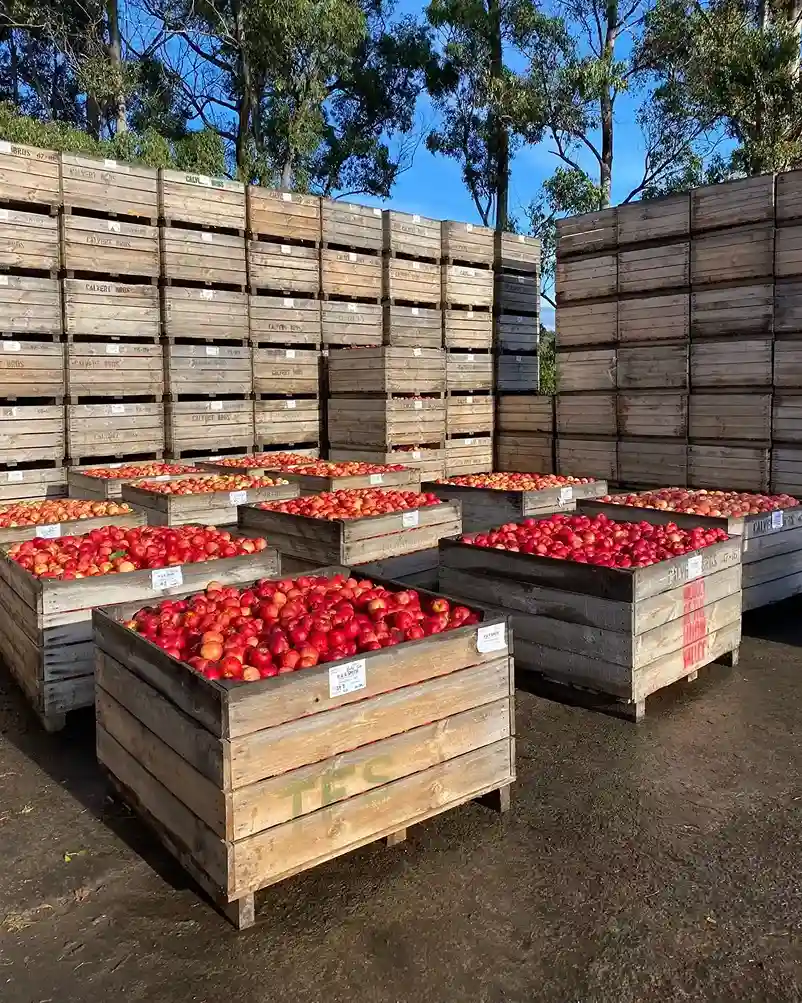
Source: @harrisfarmmarkets
The best storage and preservation methods for common backyard orchard fruits:
- Apple storage — wrap in newspaper individually — store in slatted boxes in cool, dark, frost-free shed
- Jam and jelly — plums, damsons, quinces, and crab apples make outstanding preserves — easy to make
- Apple juice and cider — press surplus apples into juice — pasteurise for long storage or ferment to cider
- Drying — apple rings and pear slices dried in a low oven — store in airtight jars for months
- Freezing — plums, cherries, and cooked apple freeze excellently — portion into usable quantities
- Chutney — surplus windfall apples and plums make outstanding chutneys — long shelf life
- Fruit cheese — quince and damson cheese — firm, sliceable preserve — excellent with cheese
19. Orchard Wildlife and Biodiversity
A backyard orchard managed sensitively and enriched with companion planting, habitat features, and a diverse understorey creates one of the most ecologically valuable garden habitats available to any homeowner, supporting an extraordinary range of insects, birds, bats, and small mammals throughout every season of the year.
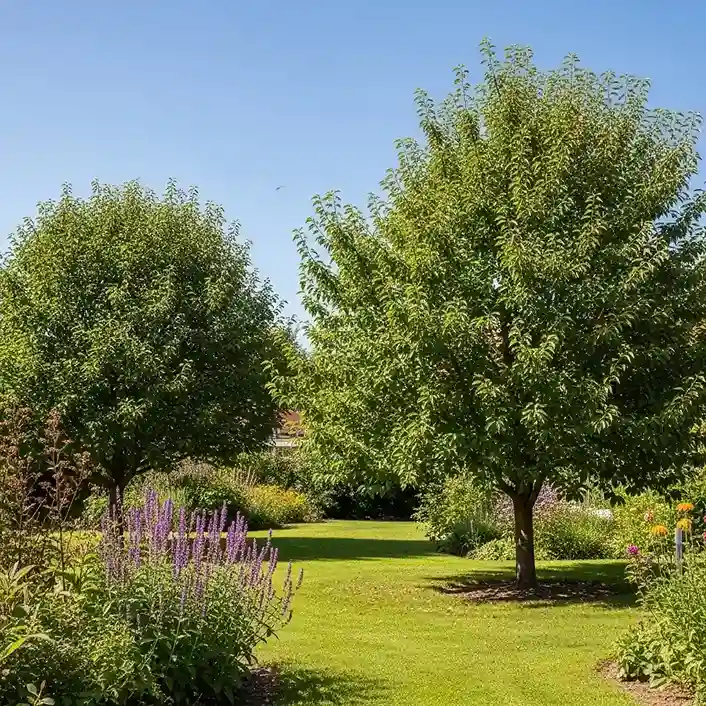
Allowing a small area of grass beneath the orchard to grow long, installing bat boxes and bird boxes in fruit trees, leaving windfall fruit for wildlife, and maintaining log piles at orchard edges collectively create a complete, self-sustaining wildlife orchard ecosystem of genuine conservation value. For more wildlife garden feature and habitat ideas, our yard ideas for outdoor spaces guide covers orchard wildlife habitat design in caring, practical detail.
| Wildlife Feature | Details |
|---|---|
| Long Grass Areas | Leave unmown patches for invertebrates and small mammals |
| Bird and Bat Boxes | Install in fruit trees — tits, sparrows, bats all benefit |
| Windfall Fruit | Leave some on ground — outstanding for wasps, blackbirds, thrushes |
| Log Piles | At orchard edges — stag beetles, woodlice, hedgehogs |
| Wildflower Understorey | Between trees — outstanding for bees and butterflies |
| Pond or Water Source | Near orchard — dramatically increases species diversity |
20. Backyard Orchard in a Small Garden
A small garden is no barrier to enjoying a productive and beautiful backyard orchard — modern dwarfing rootstocks, space-efficient training systems, and carefully chosen compact varieties allow gardeners with even the most limited outdoor space to grow a diverse and genuinely productive collection of fruit trees.
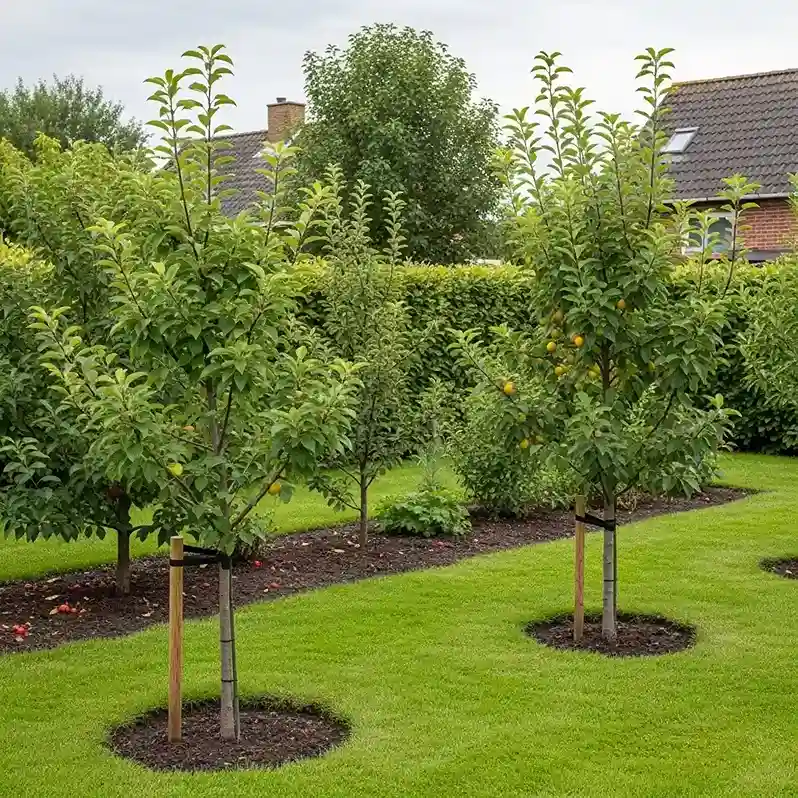
Three espalier apple trees trained against a sunny south-facing fence can produce a remarkable quantity of high-quality fruit from a space just 15 feet wide, while a row of cordon-trained trees along a single wire framework produces multiple varieties in a footprint of just 18 inches depth. For more small-space productive garden ideas, our small garden ideas and tiny backyard ideas guides cover compact orchard planting in excellent, creative detail.
The best space-saving approaches for a small garden backyard orchard:
- Espalier training against a south or west-facing fence or wall — most space-efficient system
- Cordon training at 45° on a post and wire framework — multiple varieties in minimal space
- Dwarf bush trees on M27 rootstock — 4–6 feet — suitable for beds and borders
- Stepover trees — 18-inch horizontal espaliers — charming edging for paths and vegetable beds
- Container growing — dwarf trees in 15-gallon containers on patios and balconies
- Fan-trained on a warm wall — ideal for peaches, nectarines, and cherries in small spaces
- Mix with ornamental planting — integrate fruit trees into mixed borders for dual function
21. Backyard Orchard on a Slope
A sloped garden site offers some genuine advantages for orchard growing — improved air drainage prevents frost pocket formation that damages spring blossom, good soil drainage reduces waterlogging risk, and terraced planting on slopes creates beautiful, structured orchard landscapes of outstanding visual character.
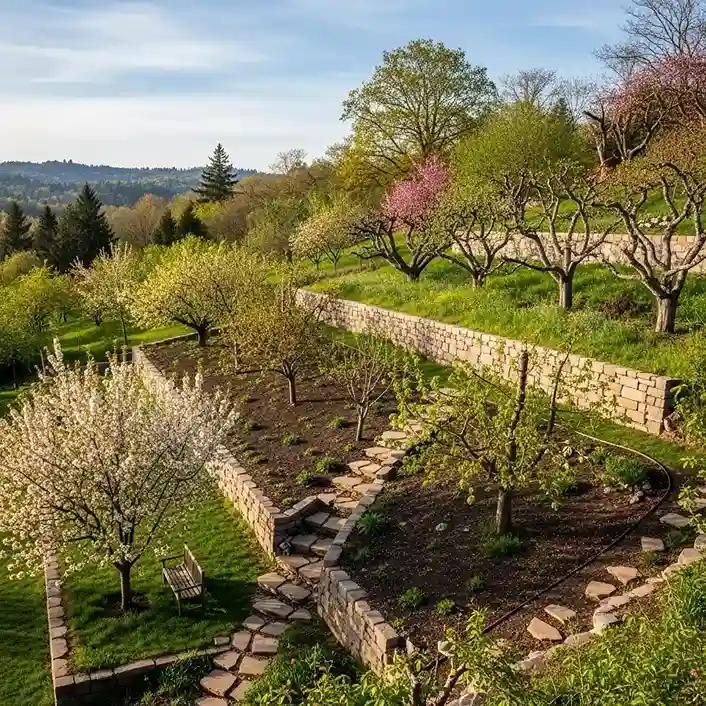
The main challenge of a sloped orchard is preventing soil erosion between tree rows, which is best managed through dense grass or clover understorey planting, swale earthworks along the contour, and timber or stone terrace walls that hold soil in level planting pockets. For more sloped garden management and planting strategies, our sloped backyard ideas on a budget guide covers orchard and productive garden planting on sloped sites in practical, accessible detail.
| Feature | Details |
|---|---|
| Slope Advantage | Improved air drainage — reduces frost damage to blossom |
| Slope Challenge | Soil erosion between tree rows — manage with ground cover |
| Terrace System | Level planting pockets — reclaimed timber or stone walls |
| Swales | Contour earthworks to slow water flow and harvest rainfall |
| Tree Positioning | Plant on the slope’s uphill side of each terrace |
| Best Ground Cover | Clover, creeping thyme, low grass mix between trees |
22. Budget Backyard Orchard
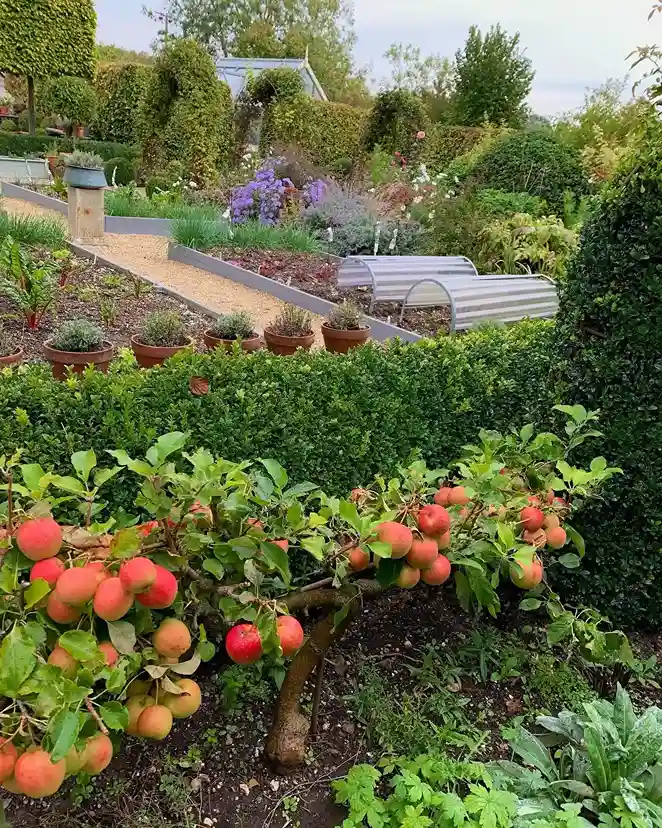
Establishing a beautiful, productive backyard orchard on a tight budget is entirely achievable through strategic bare-root purchasing in winter, growing from cuttings and grafting, joining local fruit tree swaps, and prioritising the most productive and versatile varieties that deliver the best yield per pound invested in trees and establishment costs.
Source: @terrywinters9141
A complete five-tree backyard orchard of bare-root apple, pear, plum, cherry, and quince trees can be established for under $150 in most cases when purchased as bare-root whips in winter, representing outstanding long-term value for a productive garden feature that will deliver harvests for thirty or more years. For comprehensive budget productive garden strategies, our cheap landscaping ideas guide covers budget backyard orchard establishment in genuinely practical, money-saving detail.
Key budget strategies for establishing a productive backyard orchard:
- Buy bare-root — November to March — 60–70% cheaper than container-grown equivalents
- Start with one or two trees — expand gradually as confidence and budget allow each season
- Join local fruit tree swaps — community orchards and gardening groups often share surplus trees
- Learn to graft — propagate your own trees from scion wood of local varieties at minimal cost
- Choose self-fertile varieties — reduces the number of trees needed for reliable cropping
- Grow companion plants from seed — comfrey, phacelia, and clover cost pennies from seed
- Make your own compost — free fertility from kitchen and garden waste for mulching and feeding
Frequently Asked Questions (FAQs)
Q1: How much space do I need for a backyard orchard?
Even a single dwarf tree in a 15-gallon container qualifies as a backyard orchard, making any outdoor space sufficient for at least one productive fruit tree. Three to five dwarf or trained trees on a dwarfing rootstock create a genuinely diverse backyard orchard in a space as small as 20×20 feet with careful planning and training.
Q2: Which fruit trees are easiest to grow in a backyard orchard?
Apples, pears, and plums are the easiest and most reliable fruit trees for beginner backyard orchardists in temperate climates, requiring minimal specialist care once established. Our food forest guide covers the best beginner fruit tree varieties and their ideal growing conditions in comprehensive, encouraging detail for new orchard growers.
Q3: Do I need more than one fruit tree for pollination?
Many fruit trees require a compatible pollination partner nearby to set fruit reliably, but self-fertile varieties — including Victoria plum, Stella cherry, Conference pear, and most figs and quinces — crop reliably without a partner. Our garden herb pairing guide covers companion planting principles that apply to orchard pollination strategies in excellent, practical detail.
Q4: When will my backyard orchard start producing fruit?
Dwarf trees on dwarfing rootstocks typically begin producing their first small crops within two to three years of planting, with full productive cropping usually achieved by years four to five. Standard trees on vigorous rootstocks may take five to seven years before producing meaningful crops but ultimately produce significantly larger harvests once fully established.
Conclusion
A backyard orchard is the most rewarding, productive, and enduringly beautiful garden project any homeowner can undertake — creating a living legacy of seasonal harvests, extraordinary wildlife value, and timeless natural beauty that improves with every passing year of careful, attentive cultivation.
Explore more productive garden and outdoor design inspiration through our guides on food forest guide and tree landscaping ideas to begin planning your perfect backyard orchard today.