A sloped yard offers a unique opportunity to create a multi-dimensional masterpiece. In 2026, tiered gardening and living slopes define trending landscaping ideas. You move away from flat, one-dimensional lawns. You work with the natural elevation of your land. This approach creates dramatic vistas, hidden retreats, and cascading greenery.
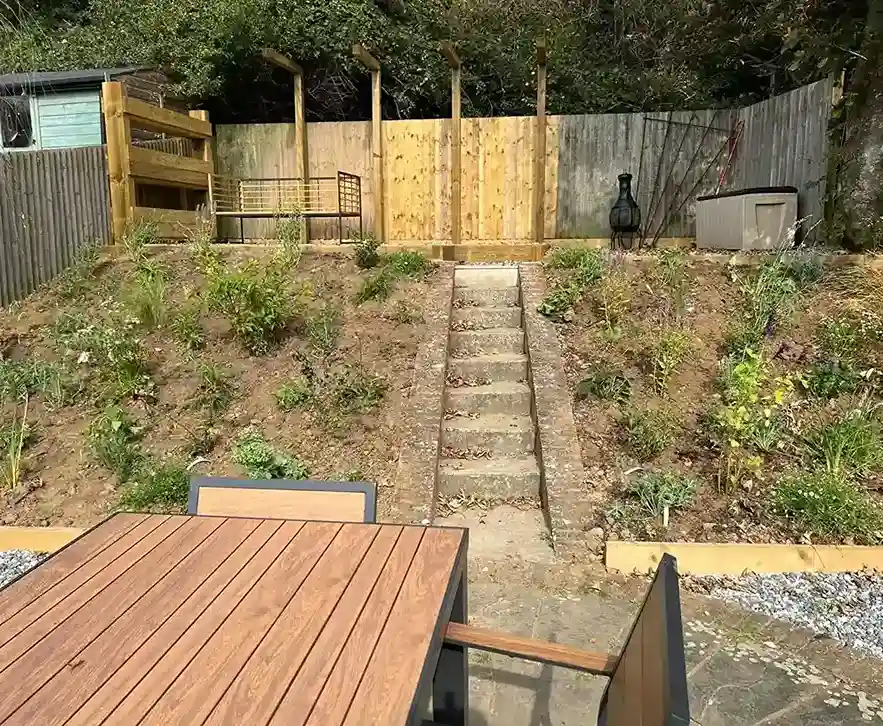
Source: @ivyandwhytegardendesign
| Element | Benefit |
| Elevation | Provides better views and visual depth |
| Drainage | Natural gravity helps move water away |
| Zoning | Creates distinct “rooms” on different levels |
Understand the Challenges of Grade and Drainage
Water runoff remains the primary concern for any sloped garden. Heavy rains wash away topsoil and nutrients without proper management. This leaves your best outdoor plants with poor soil. You observe how water moves across your property. This knowledge prevents erosion and ensures your garden remains stable and lush through all seasons.
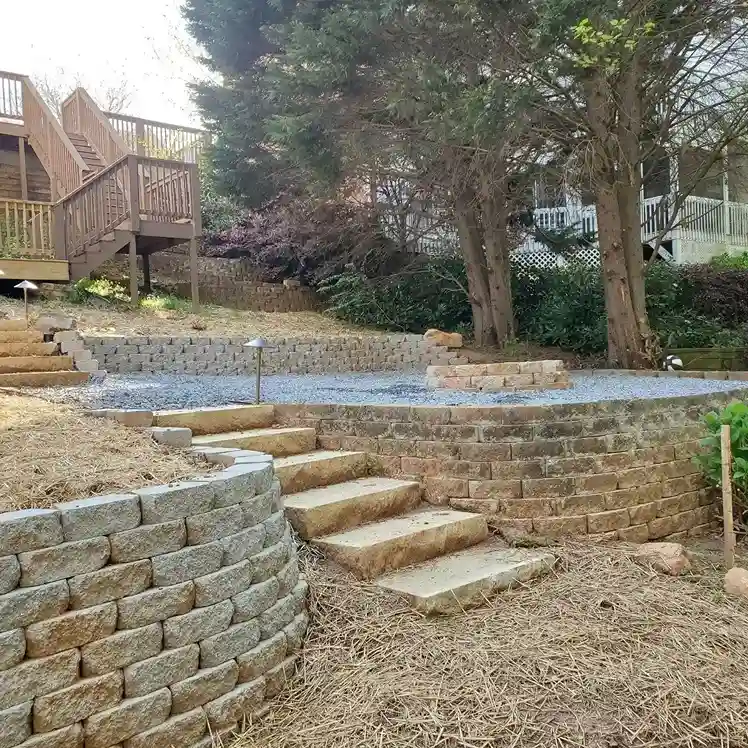
Source: @higginbothamdesignsllc
| Issue | Solution |
| Erosion | Use silt fences or heavy mulch |
| Nutrient Loss | Add organic compost to stabilize soil |
| Runoff Speed | Install obstacles like rocks to slow water |
Implement Terraces for Level Planting Zones
Terracing turns a steep incline into usable garden space. You build a series of steps into the hillside. These steps create flat levels for flower beds, vegetable patches, or a small patio. This method dominates backyard landscaping ideas. It breaks the visual wall of a slope. It also makes garden maintenance much easier for the homeowner.
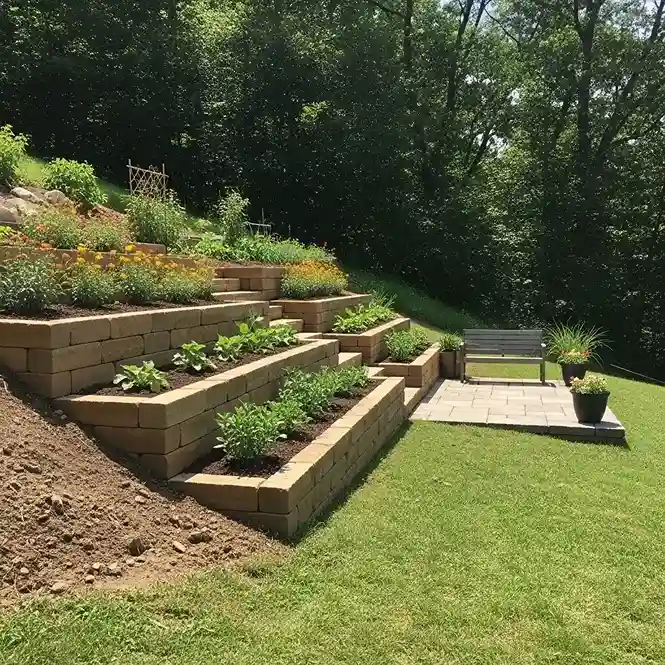
| Structure | Purpose |
| Tiers | Create flat surfaces for activity |
| Steps | Allow safe travel between levels |
| Planting Pockets | Deepen soil for root growth |
Choose Retaining Walls for Style and Support
Retaining walls act as the backbone of a sloped garden. They hold the weight of the earth in place. You choose from many materials, such as natural stacked stone for cottage garden ideas. Sleek concrete offers a modern look. Pressure-treated timber or interlocking blocks provide a cost-effective solution for sloped backyard ideas on a budget.
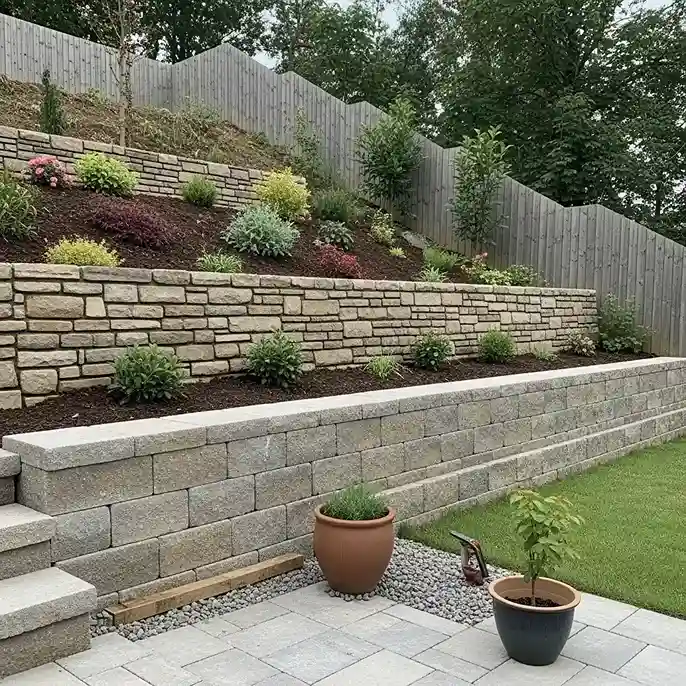
| Material | Aesthetic | Longevity |
| Stone | Natural / Rustic | High |
| Timber | Warm / Traditional | Moderate |
| Concrete | Modern / Industrial | Very High |
Create Natural Stone Rockeries
A rockery provides an organic look for your landscape. It stabilizes a slope while it adds character. You embed large boulders into the hillside. These rocks create pockets of soil where succulents thrive. This style improves front yard landscaping. It gives your home entrance a rugged appeal. It also requires very little water to maintain.
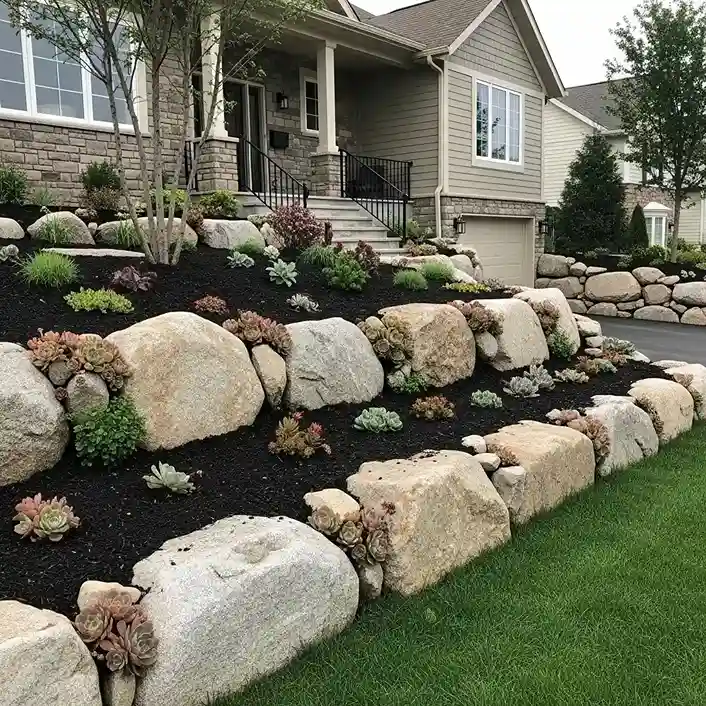
| Component | Role |
| Boulders | Provide structural mass and anchor soil |
| Gravel | Improves drainage around plant crowns |
| Alpines | Thrive in small, rocky crevices |
Design Functional Stairways and Paths
Access proves vital when you deal with elevation. You incorporate a winding path or wide, shallow stairs. These elements allow you to move through the garden with ease. You match materials to your walkway ideas outdoor space. Flagstone, gravel, or repurposed wood work well. These choices ensure a cohesive transition from the house to the top of the slope.
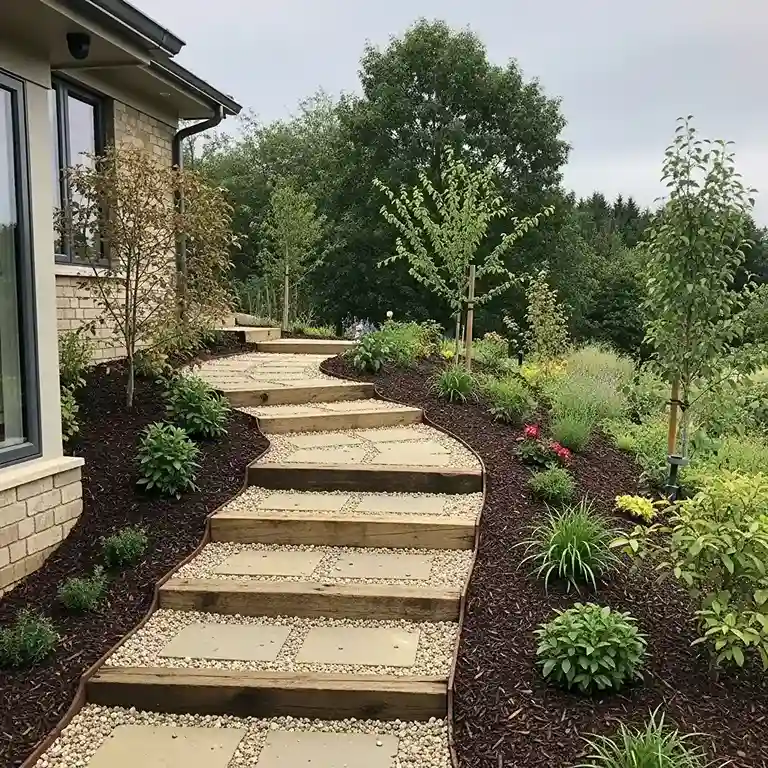
| Path Type | Best For | Safety Level |
| Switchback | Very steep inclines | High |
| Direct Stairs | Short, sharp rises | Moderate |
| Meandering | Gentle slopes | High |
Select Deep-Rooted Plants for Erosion Control
You rely on plants with aggressive, deep root systems to keep soil in place. Creeping junipers and ornamental grasses act as biological anchors. These species belong with the best shrubs for front of house. They knit the soil together. This reduces landslide risks. They also provide a thick carpet of green that smothers unwanted weeds.
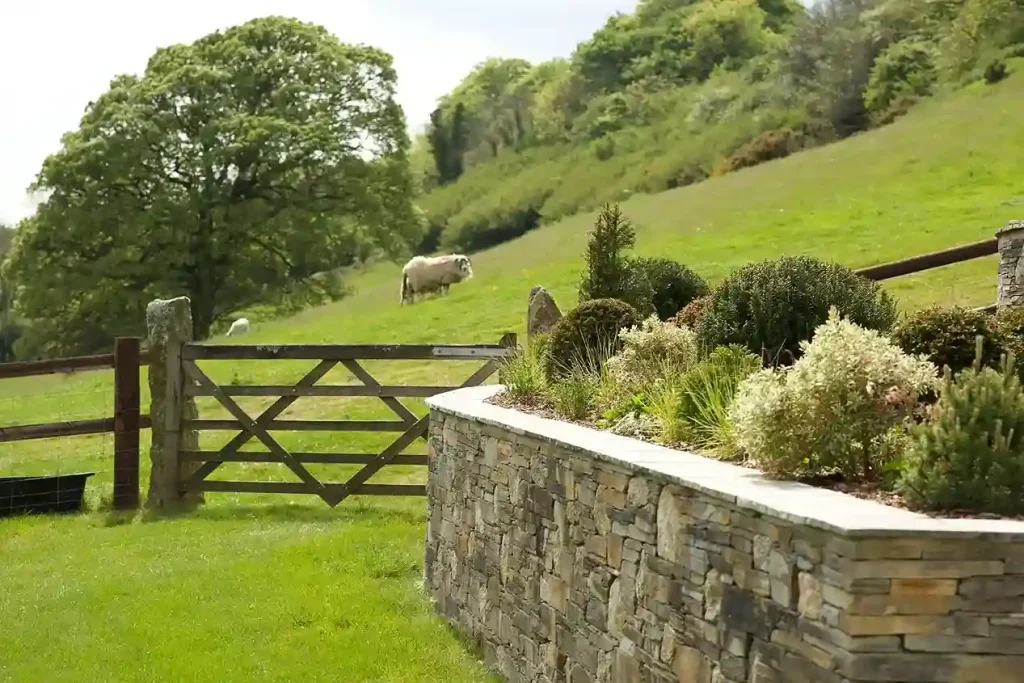
Source: @chrishullgardens
| Plant Type | Example | Benefit |
| Groundcover | Creeping Phlox | Rapid surface coverage |
| Shrub | Forsythia | Strong, deep root network |
| Grass | Switchgrass | Filters runoff and binds soil |
Manage Water with French Drains and Swales
You must tell the water where to go on a sloped property. You install a French drain or a gravel-filled swale at the base of your tiers. This redirects excess moisture away from the foundation of the home. This technical step protects your privacy fence ideas from damage. It also stops hardscaping from shift when the ground becomes oversaturated.
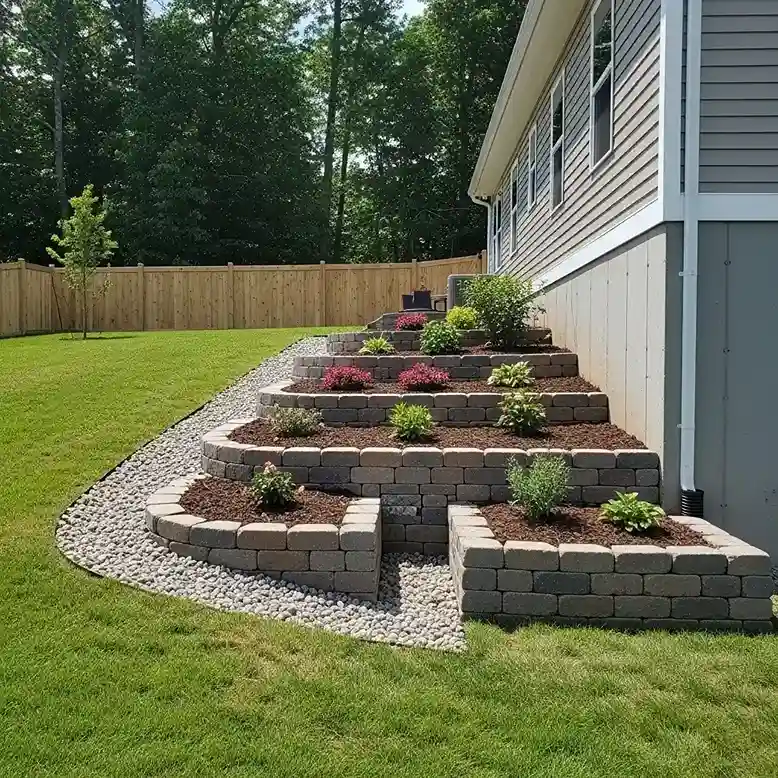
| System | Components | Action |
| French Drain | Perforated pipe and gravel | Carries water underground |
| Swale | Shallow ditch and plants | Slows and absorbs surface water |
| Dry Well | Underground basin | Collects and disperses runoff |
Utilize Vertical Space for Visual Impact
A slope draws the eye upward naturally. It serves as a perfect canvas for vertical elements. Tall trellises and upright evergreens emphasize the height of the garden. A well-placed front yard fence at the peak adds privacy. This perspective allows you to create layers of color. You place low groundcovers at the bottom and towering blooms at the top.
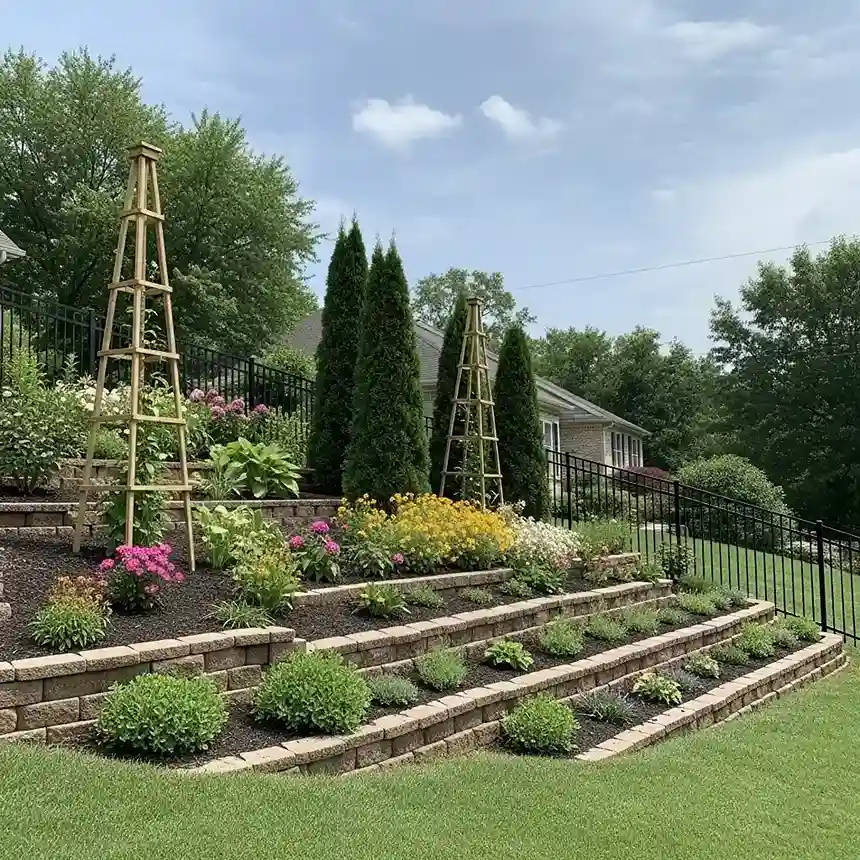
| Layer | Height | Examples |
| Foreground | 0–1 foot | Creeping Thyme, Sedum |
| Midground | 2–4 feet | Lavender, Coneflowers |
| Background | 5+ feet | Arborvitae, Trellised Vines |
Incorporate Cascading Water Features
Gravity becomes your best friend with water features. A sloped garden provides an ideal setting for a natural stream. Waterfalls spill from one level to the next. This adds a soothing sound to your yard ideas outdoor space. It also creates a unique habitat for moisture-loving plants. You consult a water plants guide for the best species.
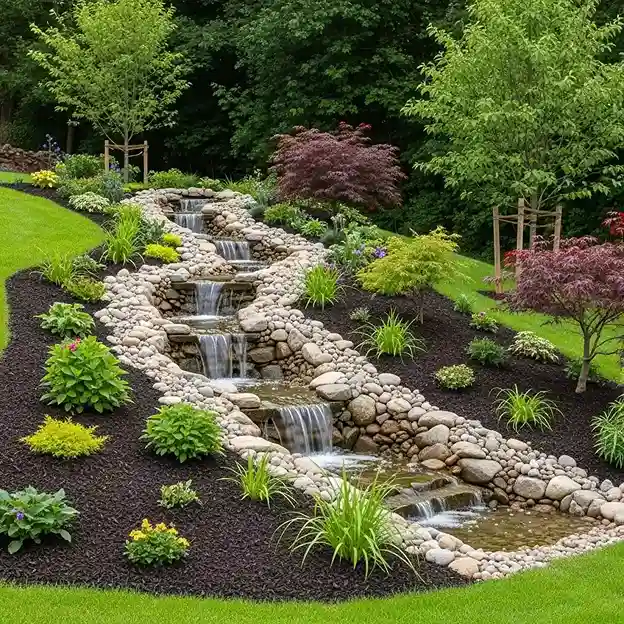
| Feature | Sound Level | Maintenance |
| Waterfall | High | Moderate |
| Babbling Brook | Low | High (pump required) |
| Tiered Pond | Moderate | Moderate |
Create Secluded Viewing Platforms
One major perk of a sloped garden involves the view. You place a bench or a bistro set at the highest point. This creates a private lookout for the family. You use pallet garden ideas for simple DIY furniture projects. This quiet spot allows you to survey the landscape. You enjoy the sunset away from the main activity of the house.
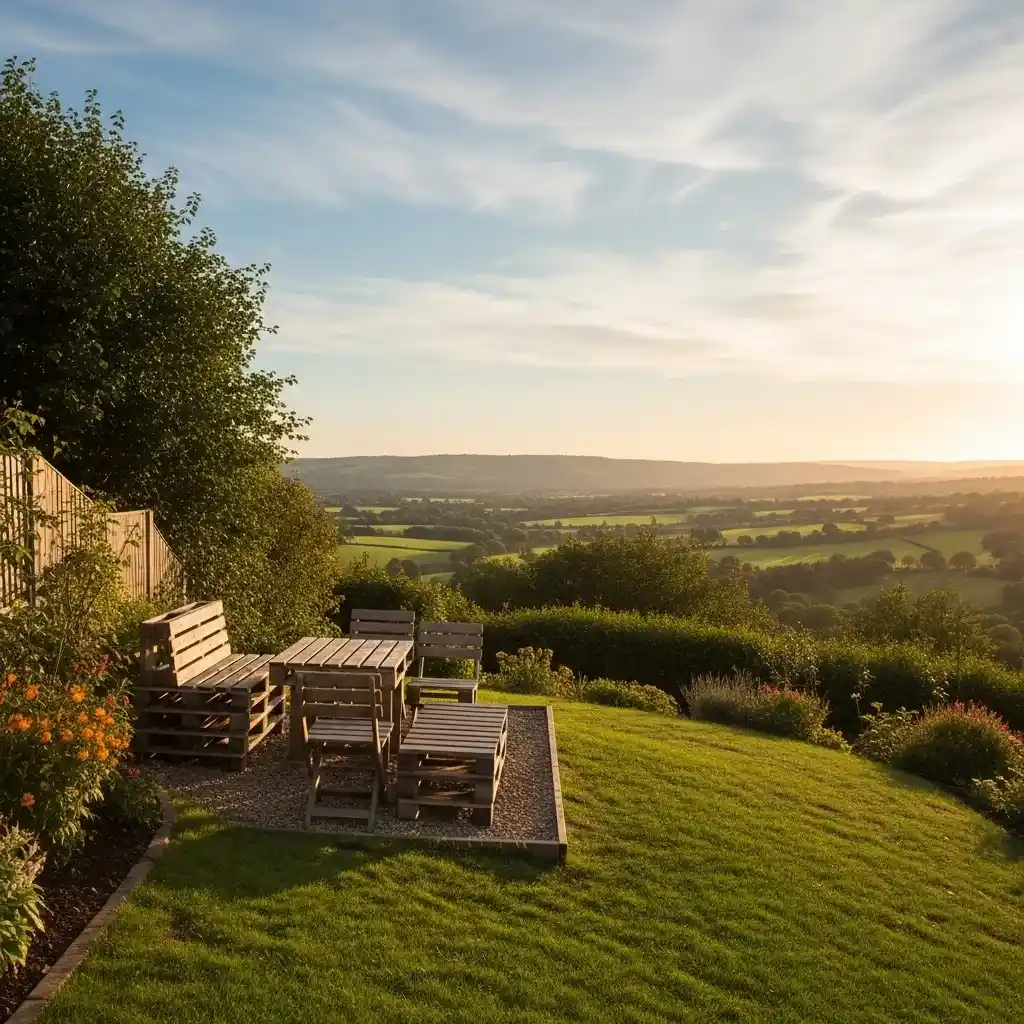
| Platform Type | Material | Experience |
| Decks | Wood or Composite | Formal and sturdy |
| Patios | Pavers or Flagstone | Grounded and rustic |
| Hammock Post | Timber | Relaxed and bohemian |
Use Groundcovers for Low-Maintenance Slopes
Turn to high-density groundcovers for steep sections you cannot mow. Species like Pachysandra or Vinca provide a lush look with almost zero effort. This counts as one of the most effective cheap landscaping ideas. It replaces a difficult lawn with a self-sustaining ecosystem. These plants thrive where grass often fails to grow.
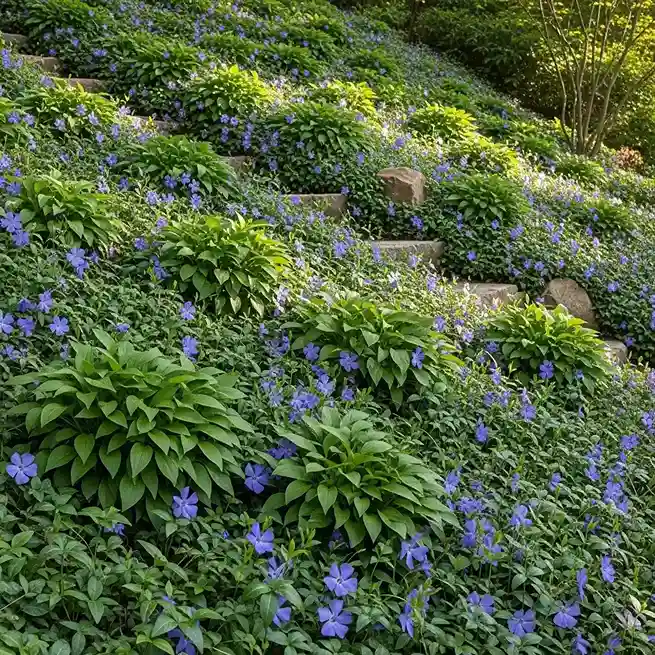
| Species | Sun/Shade | Growth Rate |
| Ajuga | Shade | Fast |
| Stonecrop | Full Sun | Moderate |
| Ivy | Full Shade | Very Fast |
Design with Lighting for Nighttime Drama
A sloped garden looks spectacular at night with the right lights. You use uplighting on trees and moonlighting along paths. This highlights the different levels and textures of the hill. It adds safety to your walkway ideas outdoor space. It also makes the garden feel like a magical, deep-dimensioned space after the sun sets.
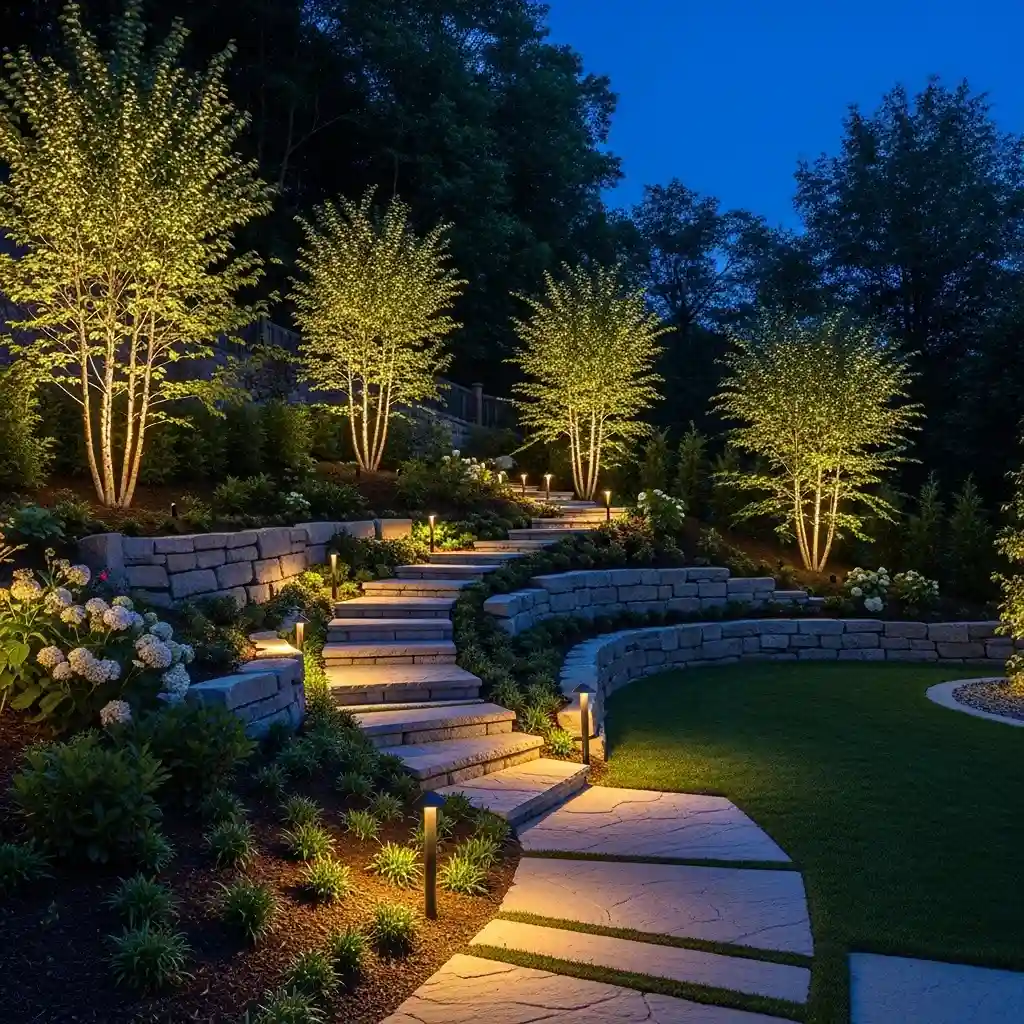
| Light Type | Purpose | Placement |
| Path Lights | Safety | Along stairs and edges |
| Spotlights | Focus | Base of large trees or walls |
| Floodlights | Security | Wide tiers or open areas |
Select Drought-Tolerant Species for High Points
The top of a slope dries out faster than the bottom. Water naturally drains downward to the lower tiers. You choose drought-tolerant species for the upper levels. You place moisture-loving plants in the lower sections. This smart strategy ensures every plant in your backyard landscaping ideas receives the right hydration.
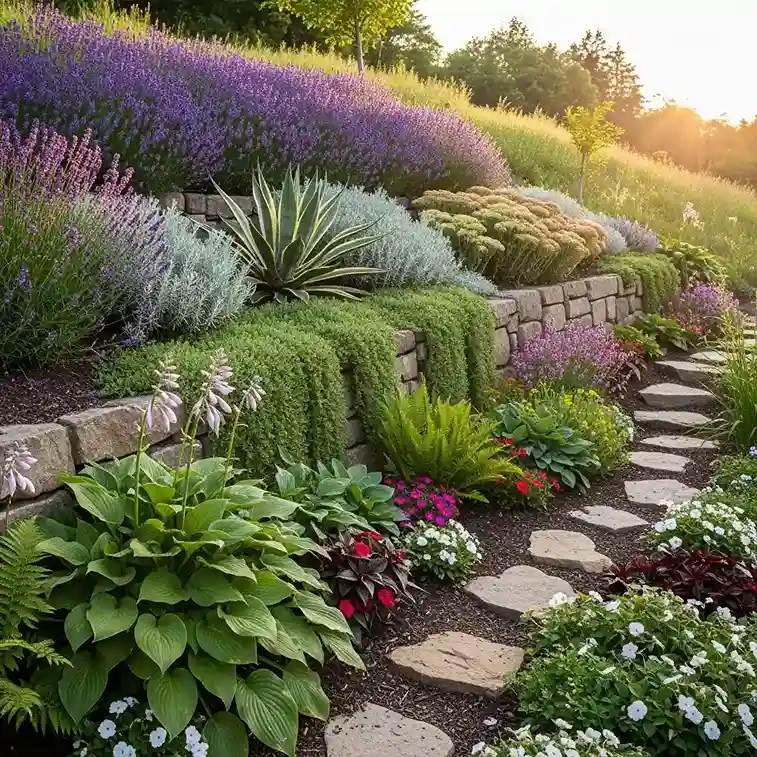
| Zone | Moisture Level | Plant Suggestions |
| Crest (Top) | Low | Yucca, Sage, Rosemary |
| Slope (Middle) | Moderate | Daylilies, Russian Sage |
| Toe (Bottom) | High | Ferns, Irises, Hostas |
Soften Hardscape with Overhanging Plants
Make retaining walls feel like part of the landscape. You use plants that spill over the edges. Trailing rosemary and creeping phlox soften sharp lines. These match the style of a horizontal fence or stone wall. This creates a romantic, established feel. It fits the vibe of a hippie garden bohemian outdoor.
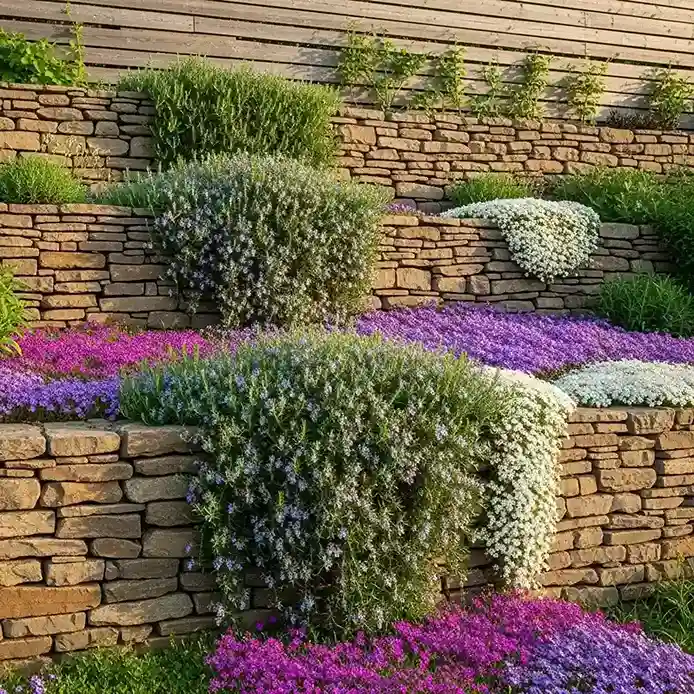
| Plant | Growth Style | Visual Effect |
| Trailing Lobelia | Cascading | Soft blue “waterfall” |
| Creeping Jenny | Spreading | Lime-green “curtain” |
| Nasturtium | Climbing/Trailing | Vibrant color pops |
Prepare for Long-Term Maintenance
Maintaining a sloped garden requires a unique approach. You ensure you have stable footing throughout the space. Mowing strips or wide ledges allow you to prune and weed safely. For those used to indoor plants, this represents a more active endeavor. The rewarding views and unique plant life make the extra effort worth it.
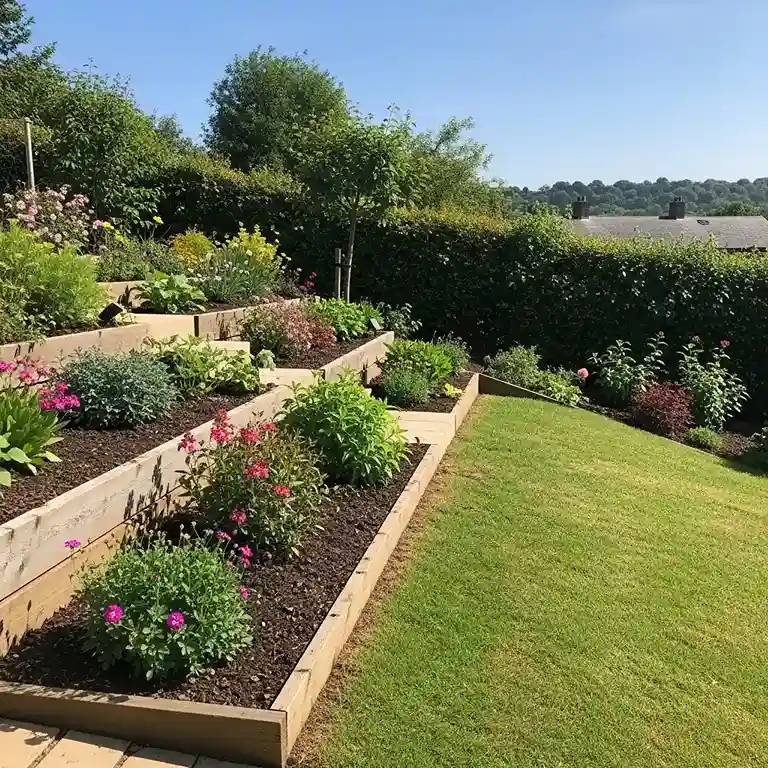
| Task | Frequency | Difficulty |
| Weeding | Monthly | Moderate |
| Mulching | Yearly | High (on incline) |
| Wall Check | Bi-annually | Low |
Sloped Garden FAQs
What counts as the cheapest way to landscape a slope?
Groundcovers and deep-rooted shrubs stabilize the soil for a low price. You avoid expensive retaining walls this way. You also use straw wattles to hold soil while plants establish their roots.
How do I prevent a retaining wall from failure?
Proper drainage proves essential for wall health. You place a layer of gravel and install weep holes behind the structure. Without these, wet soil pressure causes the wall to lean or collapse.
Is a lawn possible on a slope?
Yes, but it presents a danger if the grade exceeds a 1:3 ratio. For steep inclines, you replace grass with terraced beds. You can also use a variety of the best shrubs for front of house.
Which plants work best for a sunny slope?
Sun-loving, drought-tolerant plants like Lavender and Sedum work best. They handle intense heat. They also survive the faster drainage common on the upper sections of a hill.
Conclusion
A sloped garden offers endless creative possibilities. You embrace elevation through terracing, rockeries, and strategic planting. You turn a difficult hill into a multi-tiered paradise. Whether you want structured stone walls or bohemian beauty, your slope holds the key. Plan carefully and choose the right structures. You soon discover that the best views come from the climb.