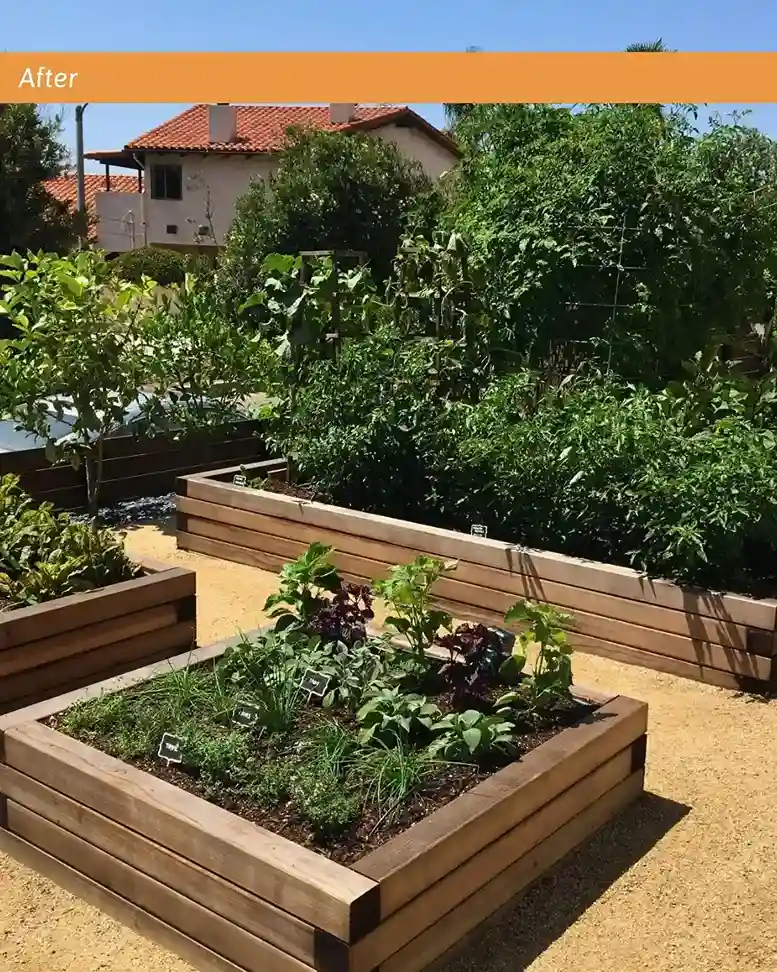
Food forests mimic natural woodland ecosystems while producing abundant edible yields through layered perennial plantings that require minimal maintenance once established. These sustainable systems combine fruit trees, berry shrubs, herbs, vegetables, and groundcovers creating diverse productive landscapes that regenerate naturally without chemical inputs or intensive labor.
Source: @farmscape
Unlike traditional gardens requiring annual tilling, planting, and heavy maintenance, food forests work with nature to create resilient self-sustaining systems providing food for decades. These layered ecosystems improve over time as plants mature, soil enriches, and beneficial relationships develop among species creating harmonious productive environments mimicking forest ecology.
1. Understanding Food Forest Layers
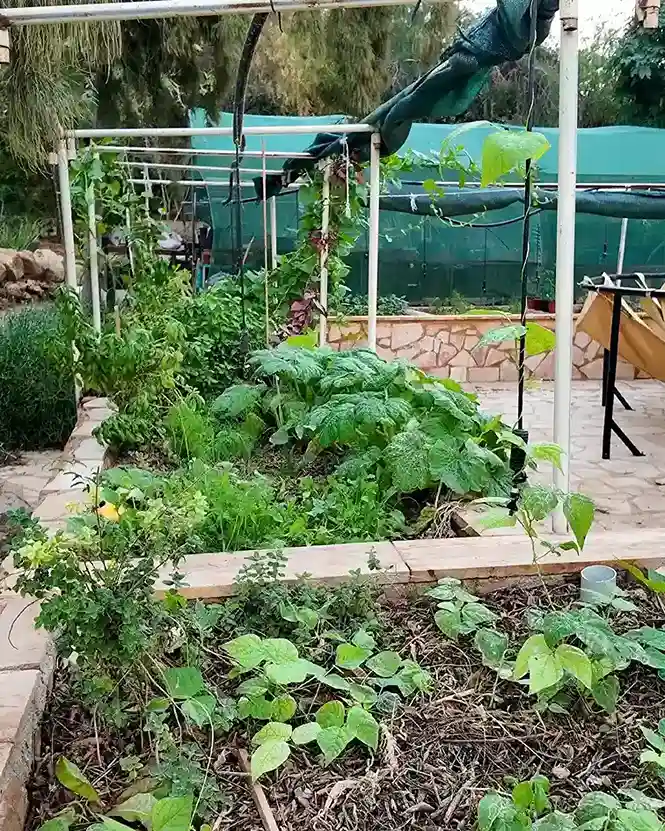
Food forests utilize seven vertical layers maximizing space and productivity by stacking different plant types occupying distinct heights. The canopy layer consists of tall fruit and nut trees while understory trees fill the mid-level zone beneath tall canopy specimens creating productive vertical dimensions.
Source: @geofflawtononline
Shrub layers provide berries and bushy fruits, herbaceous layers contain perennial vegetables and herbs, groundcover layers spread across soil surfaces preventing weeds, root layers grow edible tubers underground, and vertical layers include vines climbing upward on trees and structures. This stacked approach mimics natural forest structure while producing abundant diverse harvests from relatively small footprints.
Each layer serves specific functions within the ecosystem while contributing to overall productivity and resilience. Tall trees provide shade protecting understory plants, nitrogen-fixing species enrich soil benefiting all neighbors, and diverse plantings attract beneficial insects controlling pests naturally without chemical interventions required.
| Layer | Height | Examples | Primary Function |
|---|---|---|---|
| Canopy | 30+ feet | Apple, walnut, oak | Shade, large fruits/nuts |
| Understory | 15-30 feet | Pawpaw, serviceberry | Medium fruits, partial shade |
| Shrub | 3-15 feet | Blueberry, currant | Berries, nitrogen fixing |
| Herbaceous | 0-3 feet | Herbs, perennial vegetables | Greens, medicinal plants |
| Groundcover | 0-1 foot | Strawberry, clover | Soil protection, nitrogen |
| Root | Underground | Jerusalem artichoke, potato | Tubers, root vegetables |
| Vertical | Climbing | Grape, kiwi, beans | Fruits, uses vertical space |
2. Canopy Layer Tree Selection
Canopy trees form the backbone of food forests providing shade, structure, and substantial harvests of fruits and nuts for decades. Apple, pear, cherry, plum, peach, walnut, chestnut, and pecan trees suit different climate zones while their deep roots mine nutrients from lower soil layers making them available to shallower-rooted companions.

Choose disease-resistant varieties suited to your hardiness zone and chill hour requirements. Standard-sized trees reach 25-40 feet tall while semi-dwarf varieties fit smaller properties better. Space canopy trees 20-30 feet apart allowing adequate mature spread without overcrowding as they develop over years.
These structural elements connect with tree landscaping ideas principles creating functional beauty. Plant canopy trees first as they take longest to reach productivity, then add faster-maturing understory layers while waiting for main canopy to develop fully.
| Tree Type | Mature Height | Spacing | Hardiness Zones | Harvest Season |
|---|---|---|---|---|
| Apple | 25-40 feet | 25-30 feet | 3-8 | Fall |
| Pear | 25-40 feet | 20-25 feet | 4-8 | Fall |
| Cherry | 30-40 feet | 25-30 feet | 5-9 | Summer |
| Walnut | 50-75 feet | 40-50 feet | 4-9 | Fall |
| Pecan | 70-100 feet | 40-60 feet | 6-9 | Fall |
3. Understory Tree Varieties
Understory trees fill mid-level spaces beneath tall canopy providing fruits, flowers, and habitat while tolerating partial shade from overhead trees. Pawpaw, persimmon, serviceberry, cornelian cherry, and crabapple produce edible yields while their moderate size suits layered forest systems perfectly without dominating available space.
These smaller trees reach 15-25 feet tall creating transitional zones between tall canopy and lower shrub layers. Many understory species tolerate shade better than full-sun fruits making them ideal for food forest conditions where dappled light predominates throughout growing seasons.
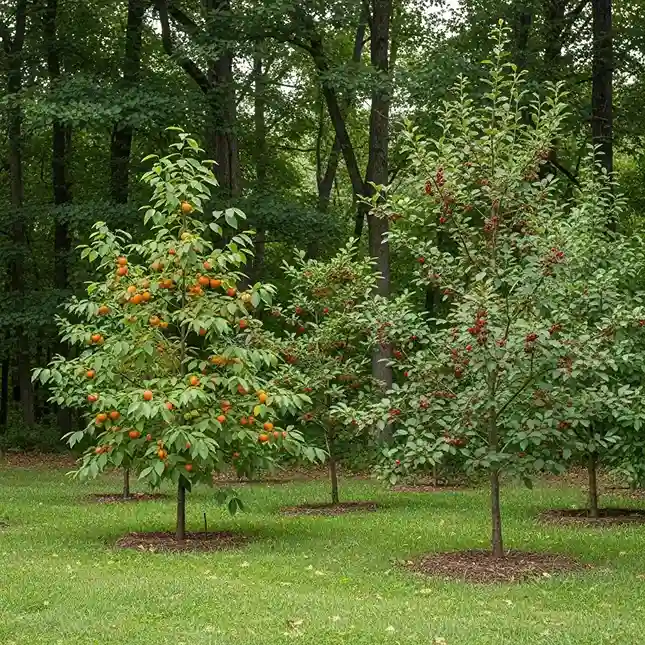
Plant understory trees 12-18 feet apart filling spaces between canopy specimens. These mid-sized producers begin yielding within 3-5 years providing harvests while larger canopy trees mature slowly reaching full productivity over longer timeframes.
| Understory Tree | Mature Height | Light Tolerance | Hardiness Zones | Special Notes |
|---|---|---|---|---|
| Pawpaw | 15-20 feet | Shade tolerant | 5-9 | Tropical flavor, native |
| Persimmon | 20-25 feet | Full sun to part shade | 4-9 | Fall harvest, astringent types |
| Serviceberry | 15-25 feet | Part shade | 3-8 | Native, multi-season interest |
| Cornelian Cherry | 15-20 feet | Part shade | 4-8 | Early blooms, tart fruits |
4. Nitrogen-Fixing Plants
Nitrogen-fixing plants capture atmospheric nitrogen through root nodules making it available to neighboring plants, effectively fertilizing the entire food forest naturally. Leguminous trees like black locust, autumn olive, and Siberian pea shrub enrich soil while providing additional yields through edible flowers, pods, or berries.
These biological fertilizer factories reduce or eliminate need for external nitrogen inputs saving money and environmental impacts. They create sustainable closed-loop systems where plants support each other through beneficial relationships developed over time without human intervention required.
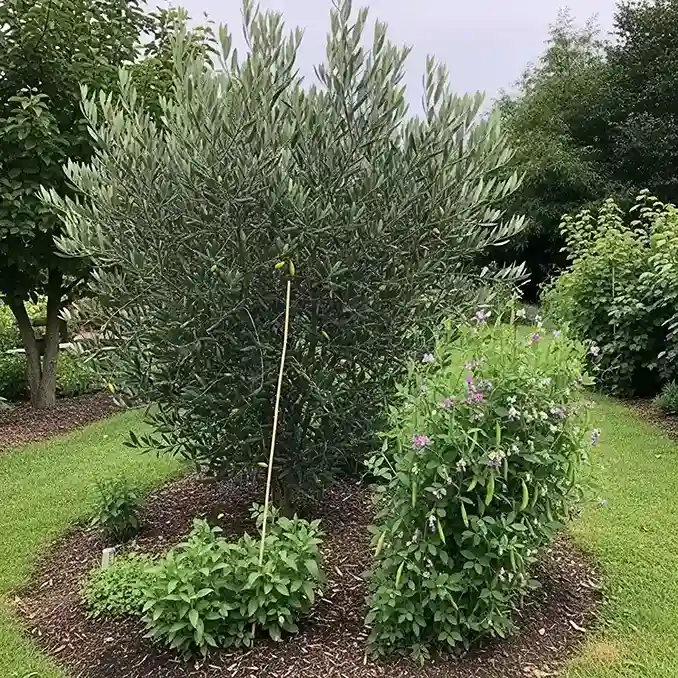
Include nitrogen-fixing species throughout all layers—trees, shrubs, herbs, and groundcovers—ensuring consistent soil enrichment benefiting all neighbors. This strategic planting approach connects with garden herb pairing guide concepts creating beneficial plant communities supporting each other naturally.
| Plant | Layer | Height | Additional Benefits |
|---|---|---|---|
| Black Locust | Canopy | 40-60 feet | Rot-resistant wood, flowers |
| Autumn Olive | Shrub | 10-15 feet | Nitrogen and berries |
| Siberian Pea Shrub | Shrub | 8-12 feet | Nitrogen and edible pods |
| Clover | Groundcover | 6-12 inches | Living mulch, bee forage |
| Lupine | Herbaceous | 1-3 feet | Nitrogen and flowers |
5. Berry Shrub Selections
Berry-producing shrubs form the mid-level shrub layer providing abundant harvests from relatively small plants. Blueberries, currants, gooseberries, raspberries, blackberries, elderberries, and aronia thrive in food forests producing reliable crops while their dense growth creates wildlife habitat and visual interest throughout seasons.
Choose varieties adapted to your climate and space constraints. Blueberries prefer acidic soil while most others tolerate neutral pH. Space shrubs 4-6 feet apart allowing adequate air circulation preventing disease problems while maximizing production from available areas.
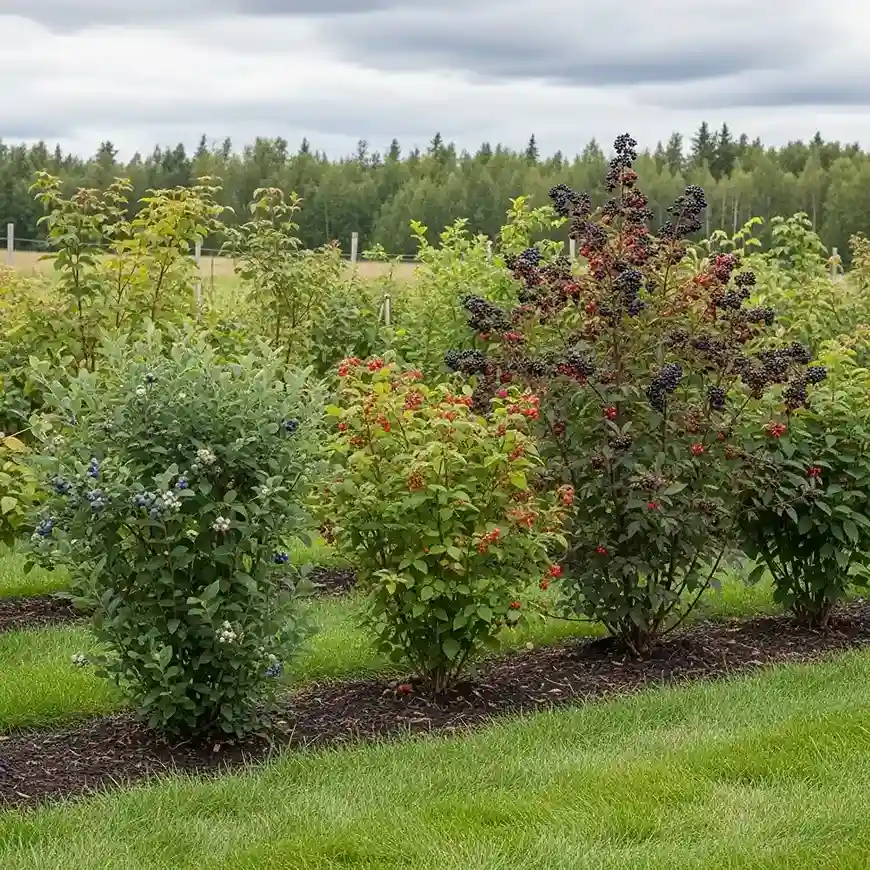
These productive plants begin bearing within 2-3 years providing early returns while longer-lived tree crops mature slowly. The continuous harvests from diverse berry types extend fresh eating seasons from early summer through fall creating succession harvests.
| Berry Shrub | Height | Soil pH | Hardiness Zones | Harvest Time |
|---|---|---|---|---|
| Blueberry | 4-6 feet | Acidic (4.5-5.5) | 3-9 | Summer |
| Currant | 3-5 feet | Neutral | 3-8 | Summer |
| Raspberry | 4-6 feet | Slightly acidic | 3-9 | Summer/Fall |
| Elderberry | 8-12 feet | Neutral | 3-9 | Late summer |
| Aronia | 6-8 feet | Neutral | 3-8 | Fall |
6. Perennial Vegetables Layer
Perennial vegetables provide harvests year after year without replanting, making them ideal food forest components requiring minimal maintenance. Asparagus, rhubarb, artichokes, horseradish, and walking onions establish permanent patches producing reliably for decades once properly sited and established.
These low-maintenance producers fit the food forest philosophy of working smarter rather than harder. Unlike annual vegetables requiring yearly tilling, planting, and intensive care, perennials simply emerge each spring continuing production cycles without constant human intervention.
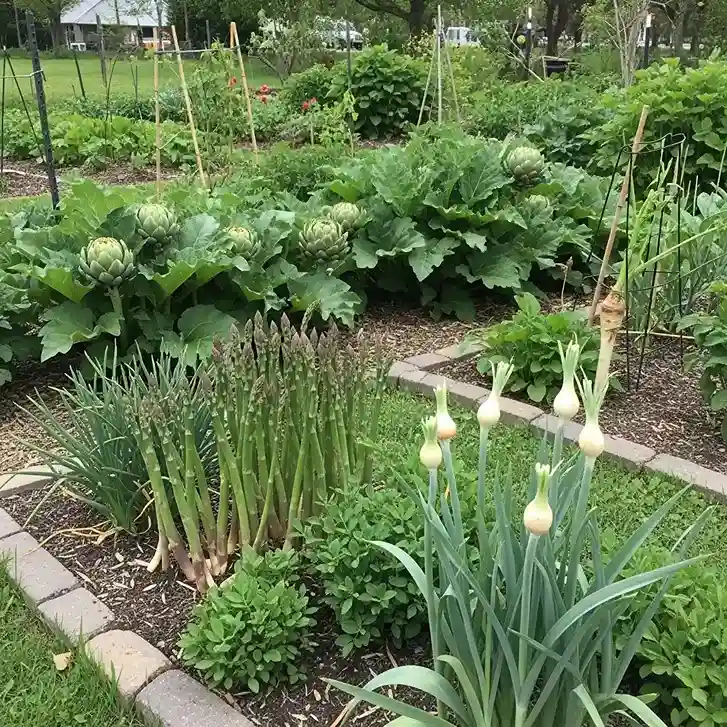
Position perennial vegetables in accessible locations facilitating easy harvests throughout growing seasons. These plants work wonderfully with small vegetable gardens concepts providing continuous yields from permanent plantings rather than annual installations.
| Perennial Vegetable | Height | Harvest Period | Years Productive |
|---|---|---|---|
| Asparagus | 3-5 feet | Spring | 15-20 years |
| Rhubarb | 2-3 feet | Spring/Summer | 10-15 years |
| Artichoke | 3-4 feet | Summer | 5-7 years |
| Horseradish | 2-3 feet | Fall | Indefinite |
| Walking Onion | 1-2 feet | Spring/Fall | Indefinite |
7. Herb Guild Plantings
Herb guilds combine beneficial herbs around fruit trees creating mutually supportive plant communities. Comfrey accumulates nutrients bringing them to surface soil where tree roots access them, yarrow attracts beneficial insects controlling pests, and chamomile improves neighboring plant health through beneficial compounds released.
Plant dynamic accumulators like comfrey beneath fruit trees where their deep roots mine minerals while surface chop-and-drop mulching returns nutrients to topsoil. Aromatic herbs like lavender and rosemary deter pests while attracting pollinators creating balanced ecosystems naturally.
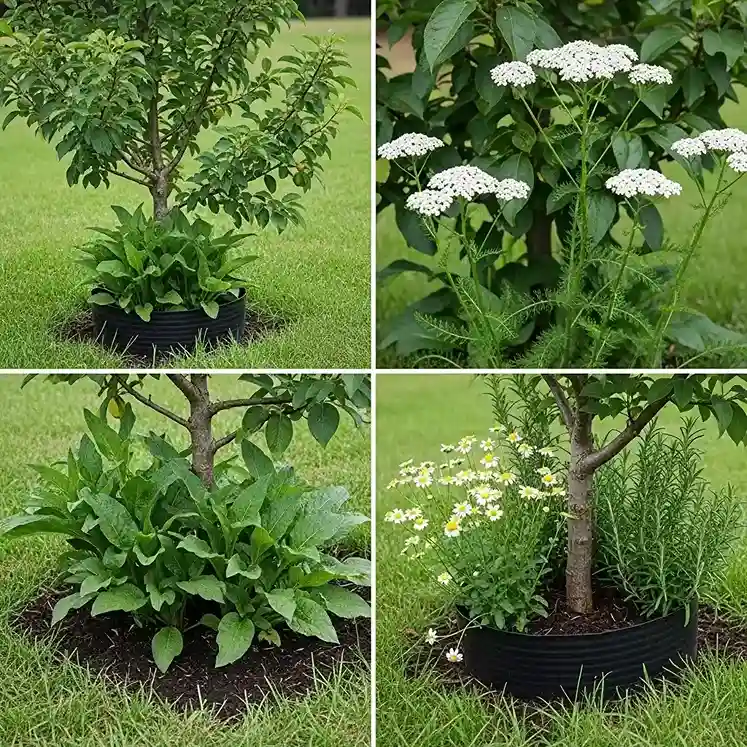
These strategic combinations demonstrate permaculture guild concepts where thoughtful plant groupings create synergistic relationships benefiting all members. The herbs require minimal care while providing medicinal and culinary harvests alongside their ecosystem support functions.
| Herb | Function | Height | Special Properties |
|---|---|---|---|
| Comfrey | Nutrient accumulator | 2-3 feet | Deep roots, chop-and-drop |
| Yarrow | Beneficial insect attractor | 1-3 feet | Medicinal, pest control |
| Chamomile | Plant health improver | 1-2 feet | Medicinal, aromatic |
| Lavender | Pollinator attractor | 2-3 feet | Deer resistant, fragrant |
| Mint | Groundcover, aromatic | 1-2 feet | Spreads vigorously |
8. Groundcover Layer Options
Groundcover plants carpet soil surfaces preventing weeds, retaining moisture, and protecting soil from erosion while many produce edible yields. Strawberries, low-growing herbs like thyme and oregano, clover, and creeping raspberries create living mulches eliminating bare soil while providing additional harvests.
These low-maintenance plants establish quickly once soil is prepared, then spread naturally filling spaces without requiring constant attention. They reduce watering needs by shading soil surfaces and improve soil biology through constant root activity and organic matter contributions.
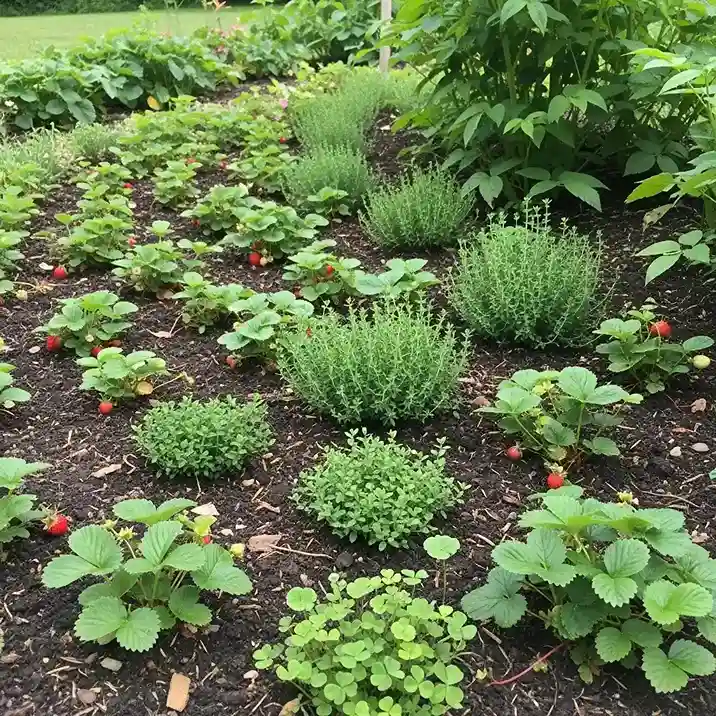
Groundcovers work beautifully beneath taller plants utilizing otherwise wasted space productively. This layered approach connects with shade plants concepts maximizing production from shaded areas where traditional vegetables struggle to thrive.
| Groundcover | Height | Spread Rate | Edible Parts |
|---|---|---|---|
| Strawberry | 6-8 inches | Moderate | Fruits |
| Creeping Thyme | 2-4 inches | Slow | Leaves |
| White Clover | 4-8 inches | Fast | Flowers, nitrogen fixer |
| Wintergreen | 3-6 inches | Slow | Berries, leaves |
| Wood Sorrel | 4-6 inches | Moderate | Leaves |
9. Root Crop Integration
Root crops occupy the underground layer producing tubers, roots, and bulbs without interfering with above-ground plant layers. Jerusalem artichokes, potatoes, garlic, sunchokes, and groundnuts produce substantial yields while their foliage contributes to mid-level herbaceous layers creating dual-function plantings.
These underground producers store well providing food security through winter months when fresh harvests diminish significantly. Many root crops tolerate partial shade making them suitable for food forest understories where full sun proves limited.

Source: @peppercreekfarmgirl
Harvest root crops carefully avoiding damage to perennial plant roots nearby. Position annual root crops like potatoes in accessible edges while perennial types integrate more permanently throughout forest interior spaces.
| Root Crop | Type | Harvest Time | Storage Life |
|---|---|---|---|
| Jerusalem Artichoke | Perennial | Fall/Winter | 1-2 months |
| Potato | Annual | Summer/Fall | 2-6 months |
| Garlic | Annual | Summer | 6-8 months |
| Groundnut | Perennial | Fall | 2-3 months |
| Sunchoke | Perennial | Fall/Winter | 1-2 months |
10. Vertical Layer Vines
Vining plants utilize vertical space climbing trees, fences, and structures without consuming additional ground area. Grapes, kiwi, hops, passion fruit, and perennial beans grow upward producing substantial yields while their climbing habit makes them space-efficient additions to food forests.
Provide sturdy supports handling mature vine weights and fruit loads. Train vines onto structures avoiding damage to host trees by keeping growth controlled. Prune regularly maintaining manageable sizes and encouraging fruiting wood development.
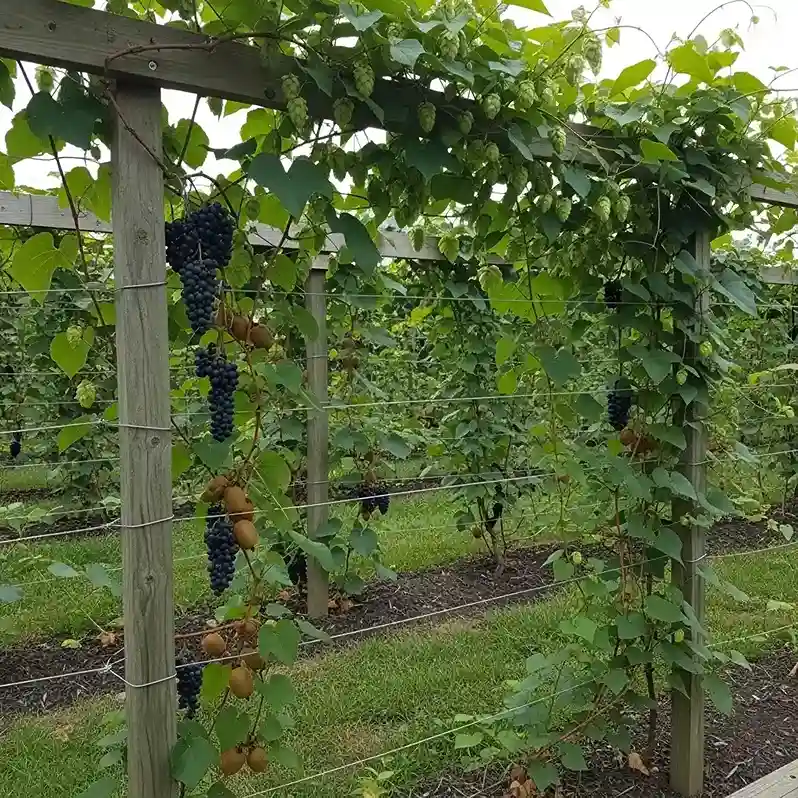
These vertical growers work wonderfully with vertical gardening guide principles maximizing production from limited footprints. Position vines on south-facing structures or along property boundaries creating productive screens providing privacy and food simultaneously.
| Vine | Fruit Type | Support Needed | Hardiness Zones |
|---|---|---|---|
| Grape | Clusters | Sturdy trellis | 4-10 |
| Kiwi | Individual fruits | Very sturdy pergola | 4-9 |
| Passion Fruit | Individual fruits | Fence or trellis | 9-11 |
| Hops | Cones | Tall poles | 3-8 |
| Scarlet Runner Bean | Pods | Annual support | Annual |
11. Mulching Strategies
Heavy mulching suppresses weeds, retains moisture, regulates soil temperature, and feeds soil biology as organic materials decompose slowly. Wood chips, leaves, straw, and compost create 4-6 inch deep layers protecting soil while eliminating most weed problems naturally without chemical herbicides.
Apply mulch around all plants leaving several inches clear around trunks and stems preventing rot problems. Replenish mulch annually as materials decompose enriching soil continuously. This practice builds soil fertility over time while dramatically reducing maintenance requirements.
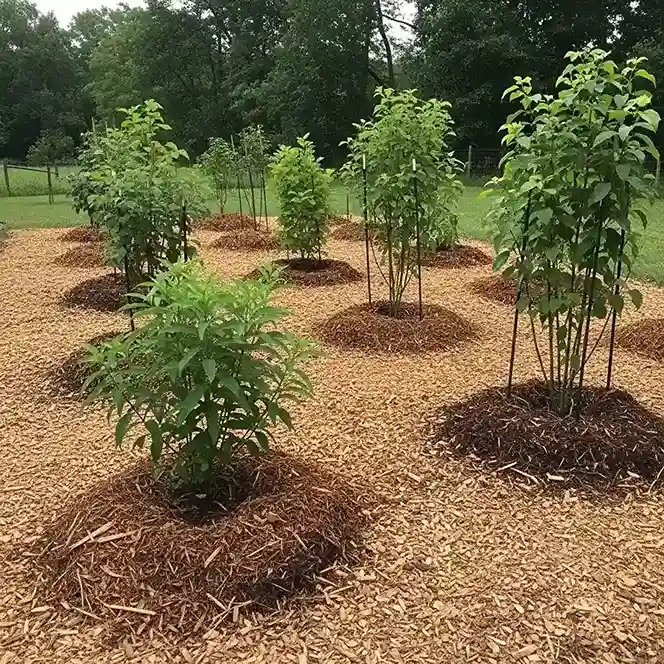
Mulch creates favorable conditions for beneficial soil organisms including earthworms, fungi, and bacteria that improve soil structure and nutrient availability. This fundamental practice makes food forests largely self-maintaining once established with minimal ongoing labor.
| Mulch Type | Depth | Duration | Best Uses |
|---|---|---|---|
| Wood Chips | 4-6 inches | 2-3 years | Paths, around trees |
| Leaves | 4-6 inches | 1 year | Around plants |
| Straw | 6-8 inches | 1 season | Annual beds |
| Compost | 2-3 inches | 6 months | Around plants |
12. Water Management Systems
Food forests require water management systems capturing, storing, and distributing moisture efficiently throughout landscapes. Swales, rain gardens, mulch basins, and drip irrigation ensure plants receive adequate moisture especially during establishment years before deep roots develop accessing groundwater reserves.
Design landscapes on contour creating level swales that catch and infiltrate rainfall rather than allowing runoff. Position water-loving plants in swale bottoms where moisture accumulates while drought-tolerant species occupy drier ridge tops creating appropriate moisture zones.
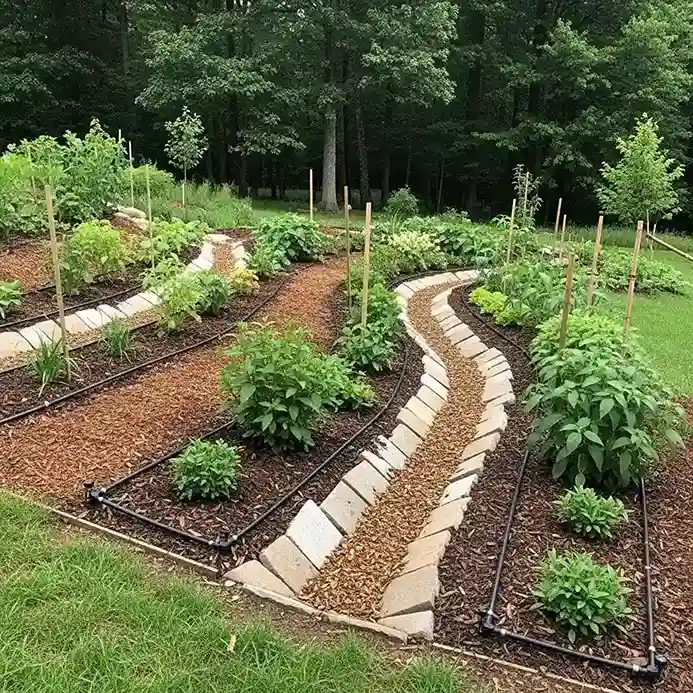
These water-wise practices connect with sloped backyard ideas on a budget concepts managing challenging terrain through thoughtful design. Proper water management reduces or eliminates irrigation needs once forests mature and establish deep resilient root systems.
| Water System | Function | Best For | Maintenance |
|---|---|---|---|
| Swales | Capture and infiltrate | Slopes | Annual clearing |
| Rain Gardens | Store excess water | Low spots | Minimal |
| Mulch Basins | Direct water to roots | Individual trees | Occasional reform |
| Drip Irrigation | Efficient watering | Establishment | Seasonal checks |
13. Soil Building Techniques
Healthy soil forms the foundation of productive food forests requiring continuous organic matter additions and minimal disturbance practices. Compost, mulch, cover crops, and nitrogen-fixing plants build soil fertility naturally without synthetic fertilizers while improving structure, biology, and water-holding capacity.
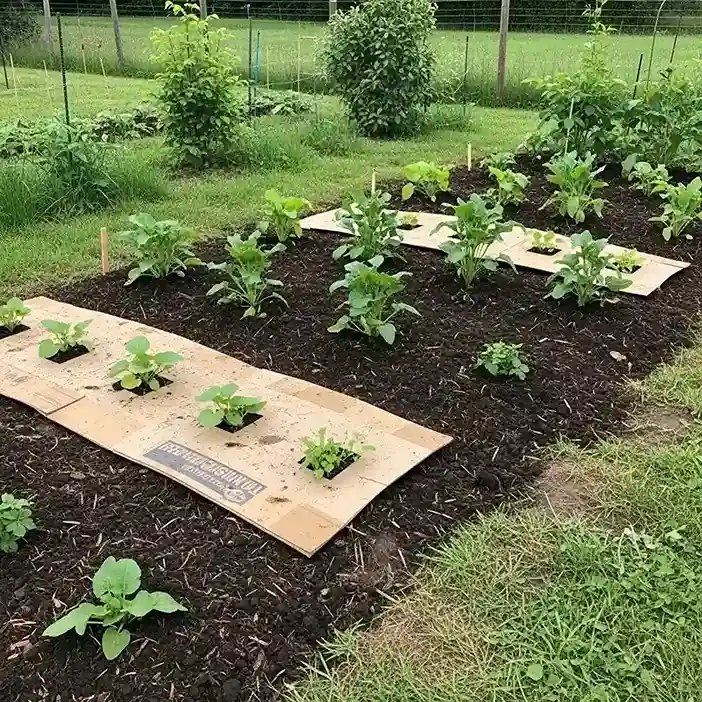
Avoid tilling which destroys soil structure and beneficial fungal networks. Instead, practice sheet mulching layering cardboard and organic materials directly atop existing vegetation smothering grass while creating rich planting beds. This no-till approach preserves soil ecology while building fertility.
Test soil pH and nutrient levels initially, amending as needed for specific plant requirements. Most food forest plants tolerate slightly acidic to neutral pH though blueberries require more acidic conditions requiring localized amendments in their planting areas.
| Soil Amendment | Purpose | Application Rate | Frequency |
|---|---|---|---|
| Compost | Fertility, structure | 2-4 inches annually | Yearly |
| Wood Chips | Mulch, slow fertility | 4-6 inches | Every 2-3 years |
| Lime | Raise pH | Per soil test | As needed |
| Sulfur | Lower pH | Per soil test | As needed |
14. Polyculture Planting Benefits
Polyculture systems grow multiple species together creating diverse ecosystems more resilient than monocultures. This diversity confuses pests reducing damage, attracts beneficial insects providing natural pest control, and maximizes space utilization through complementary plant forms and functions.
Unlike conventional agriculture planting vast areas of single crops, food forests mimic natural diversity reducing pest and disease problems dramatically. When one species struggles, others continue producing creating stable reliable yields despite individual plant challenges.
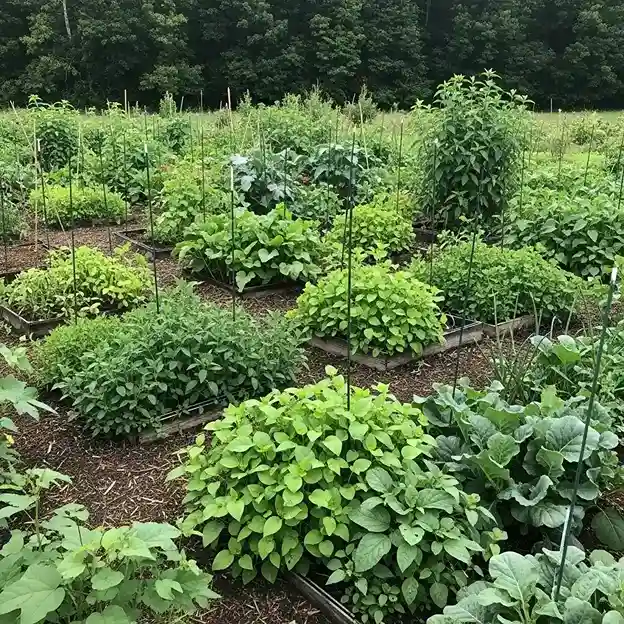
This ecological approach aligns with cottage garden ideas celebrating abundance and diversity. The varied plantings create beautiful landscapes while producing food, medicine, and ecological benefits impossible in simplified monoculture systems.
| Benefit | Mechanism | Result |
|---|---|---|
| Pest Confusion | Multiple scents/forms | Reduced pest damage |
| Beneficial Habitat | Diverse flowers/shelter | Natural pest control |
| Resource Efficiency | Varied root depths | Complete nutrient use |
| Disease Resistance | Genetic diversity | Stable production |
15. Establishment Timeline
Food forests develop gradually over 3-10 years as plants mature and relationships establish. Year one focuses on site preparation, canopy tree planting, and mulching. Year two adds understory trees and larger shrubs while canopy trees establish root systems.
Years three through five see herbaceous layers, groundcovers, and annual vegetables filling spaces while woody plants mature slowly. By years six through ten, canopy trees begin significant production while understory layers yield abundantly creating fully functional productive ecosystems.
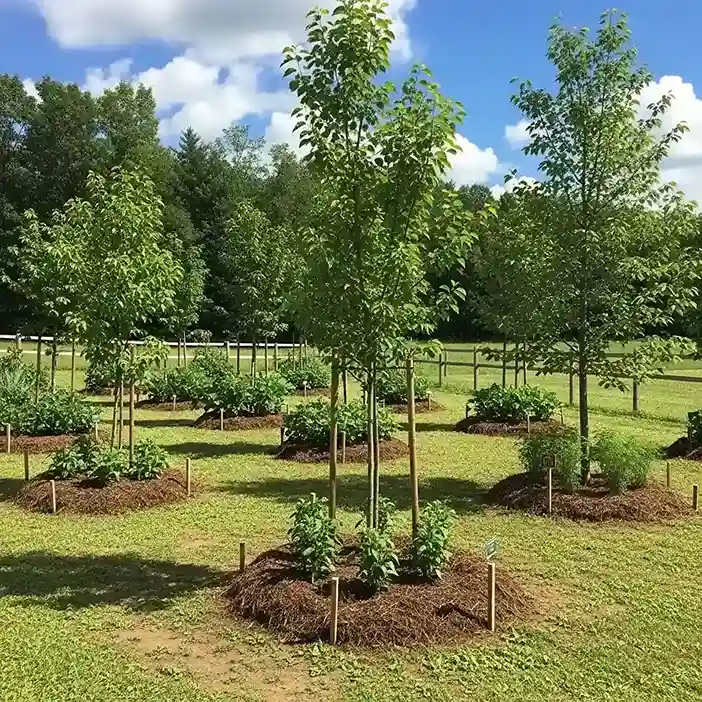
Patience proves essential as food forests mature slowly but reward with decades of low-maintenance productivity. The initial establishment work creates systems generating increasing returns over time without continuous heavy labor investments.
| Year | Primary Activities | Expected Production |
|---|---|---|
| 1 | Site prep, canopy trees | None |
| 2-3 | Understory, shrubs | Minimal from annuals |
| 4-5 | Herbaceous layers | Berries, herbs begin |
| 6-10 | Maintenance, observation | Increasing tree production |
| 10+ | Minimal intervention | Abundant diverse yields |
16. Maintenance Requirements
Mature food forests require minimal maintenance compared to traditional gardens or lawns. Annual tasks include mulch replenishment, pruning for health and access, pest monitoring, and selective thinning removing excess seedlings. These straightforward activities require far less time than conventional gardening methods.
Early years demand more attention as plants establish, weeds compete, and systems develop. Once canopy closes and groundcovers establish, maintenance drops dramatically as the forest becomes largely self-maintaining through natural processes.
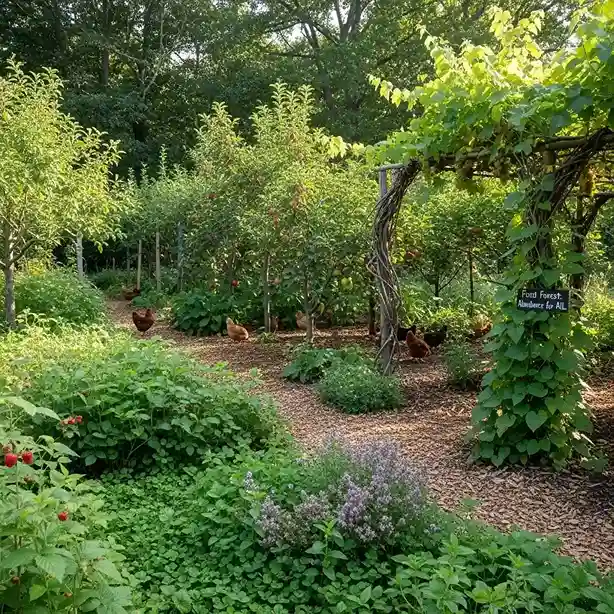
This low-maintenance aspect makes food forests ideal for busy people and aging gardeners desiring productive landscapes without constant intensive labor. The systems work with nature rather than against it reducing human intervention requirements dramatically.
| Task | Frequency | Time Required | Season |
|---|---|---|---|
| Mulch Application | Annual | 4-8 hours | Spring/Fall |
| Pruning | Annual | 2-4 hours | Dormant season |
| Pest Monitoring | Weekly | 30 minutes | Growing season |
| Harvesting | Variable | Variable | Season dependent |
17. Companion Planting Strategies
Strategic companion planting enhances food forest productivity through beneficial plant relationships. Nitrogen-fixers support heavy feeders, aromatic herbs deter pests, and flowering plants attract pollinators creating synergistic communities where plants support each other naturally.
Plant garlic and chives beneath fruit trees deterring borers and fungal diseases while their flowers attract beneficial insects. Position strawberries under berry bushes creating productive groundcovers while nasturtiums act as trap crops luring aphids away from valuable crops.
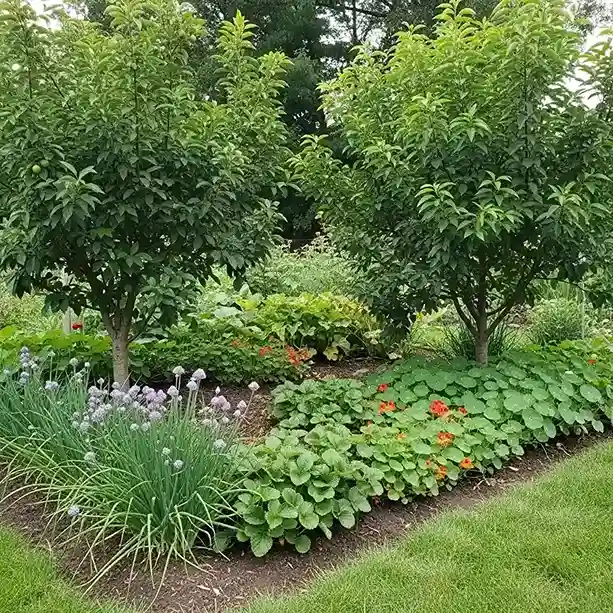
These intentional combinations connect with bushes for front of house principles creating functional beauty. The strategic plantings solve problems naturally without chemical interventions while maximizing space utilization through complementary relationships.
| Companion Pair | Benefit | Planting Distance |
|---|---|---|
| Fruit Trees + Garlic | Pest deterrent | Under canopy |
| Berries + Strawberries | Space utilization | Under shrubs |
| Trees + Nitrogen Fixers | Soil fertility | Adjacent planting |
| Vegetables + Marigolds | Pest control | Interplanted |
18. Pest Management Naturally
Food forest diversity creates natural pest control through beneficial insect habitat, confusing pest location, and avoiding monoculture conditions that enable pest explosions. Ladybugs, lacewings, predatory wasps, and beneficial nematodes control problem insects when provided appropriate habitat and food sources.
Tolerate minor pest damage accepting that some loss proves acceptable in exchange for avoiding chemical inputs. Most damage remains cosmetic rather than catastrophic in diverse ecosystems where plants grow vigorously with strong natural defenses.
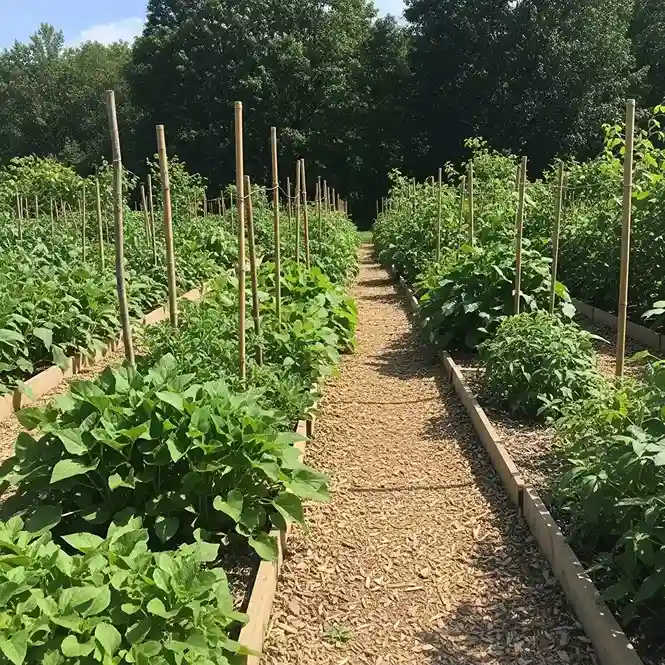
Encourage birds through berry-producing plants and water sources. They consume vast quantities of insects providing free pest control. These natural systems work wonderfully with get rid of ants in your yard solutions managing pests ecologically.
| Beneficial | Pests Controlled | Attractant Plants |
|---|---|---|
| Ladybugs | Aphids, mites | Yarrow, dill |
| Lacewings | Aphids, caterpillars | Angelica, coriander |
| Parasitic Wasps | Caterpillars, flies | Fennel, parsley |
| Ground Beetles | Slugs, grubs | Groundcovers, mulch |
19. Wildlife Integration
Food forests provide exceptional wildlife habitat supporting birds, beneficial insects, pollinators, and small mammals while producing human food. This integration creates balanced ecosystems where wildlife contributes to forest health through pollination, pest control, and nutrient cycling.
Accept that some production will feed wildlife viewing it as paying ecosystem service providers for their contributions. Share generously knowing abundant diverse plantings produce more than single households need while supporting local biodiversity and ecological health.
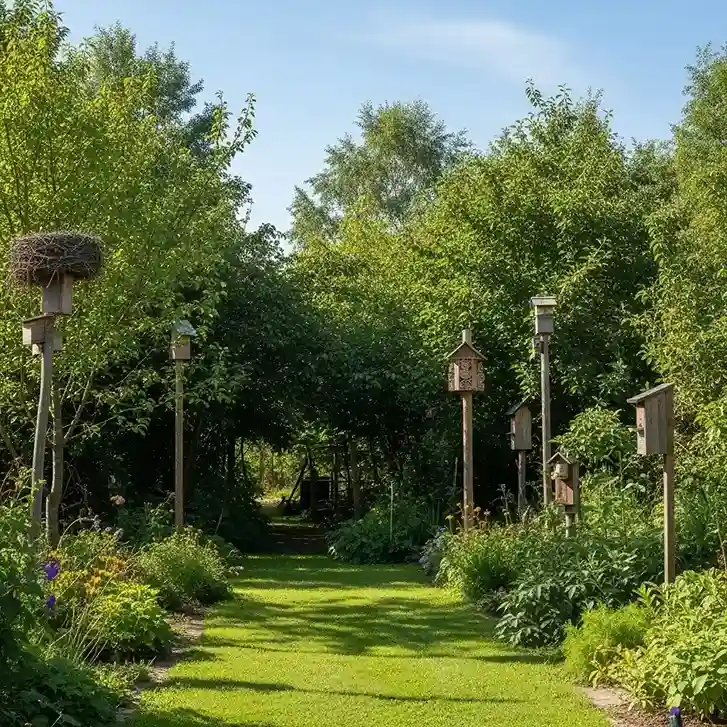
Install nest boxes, bee hotels, and water features enhancing wildlife habitat. These additions create complete ecosystems supporting robust populations of beneficial species that maintain forest health naturally through their ecological roles.
| Wildlife | Benefit | Habitat Support |
|---|---|---|
| Birds | Pest control, pollination | Berry shrubs, nesting sites |
| Bees | Pollination | Diverse flowers |
| Butterflies | Pollination, beauty | Host plants, nectar |
| Bats | Insect control | Bat houses |
20. Seasonal Harvest Planning
Food forests provide diverse harvests throughout seasons from early spring greens through winter-stored nuts and roots. Plan plantings ensuring continuous production rather than concentrated harvests overwhelming processing capabilities and creating feast-or-famine cycles.
Spring brings asparagus, rhubarb, and early greens. Summer offers berries, stone fruits, and vegetables. Fall delivers apples, pears, nuts, and root crops. Winter provides stored harvests and evergreen herbs maintaining kitchen supplies year-round.
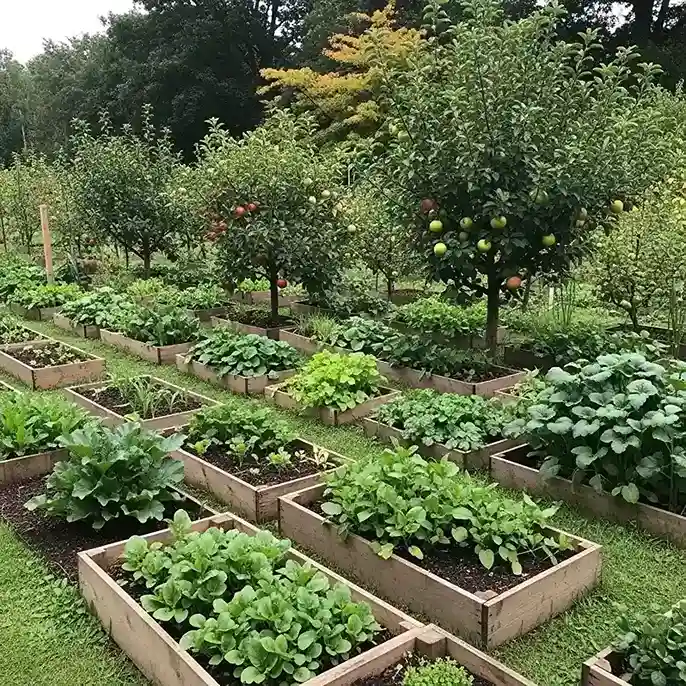
This seasonal diversity connects with small vegetable gardens principles extending fresh food availability. The continuous harvests reduce grocery dependence while providing superior nutrition from vine-ripened organic produce picked at peak freshness.
| Season | Typical Harvests | Storage Methods |
|---|---|---|
| Spring | Asparagus, greens, herbs | Fresh eating |
| Summer | Berries, stone fruits | Preserving, freezing |
| Fall | Apples, pears, nuts | Cold storage, canning |
| Winter | Stored crops, greens | Root cellar, greenhouse |
21. Propagation Techniques
Propagate food forest plants through seeds, cuttings, layering, and division reducing costs while maintaining desired varieties. Many plants propagate easily allowing forest expansion without significant financial investments in new specimens.
Take hardwood cuttings from currants, elderberries, and willows in late winter. Layer raspberries and blackberries by burying cane tips that root naturally. Divide perennial herbs and vegetables every few years creating new plants from existing stock.
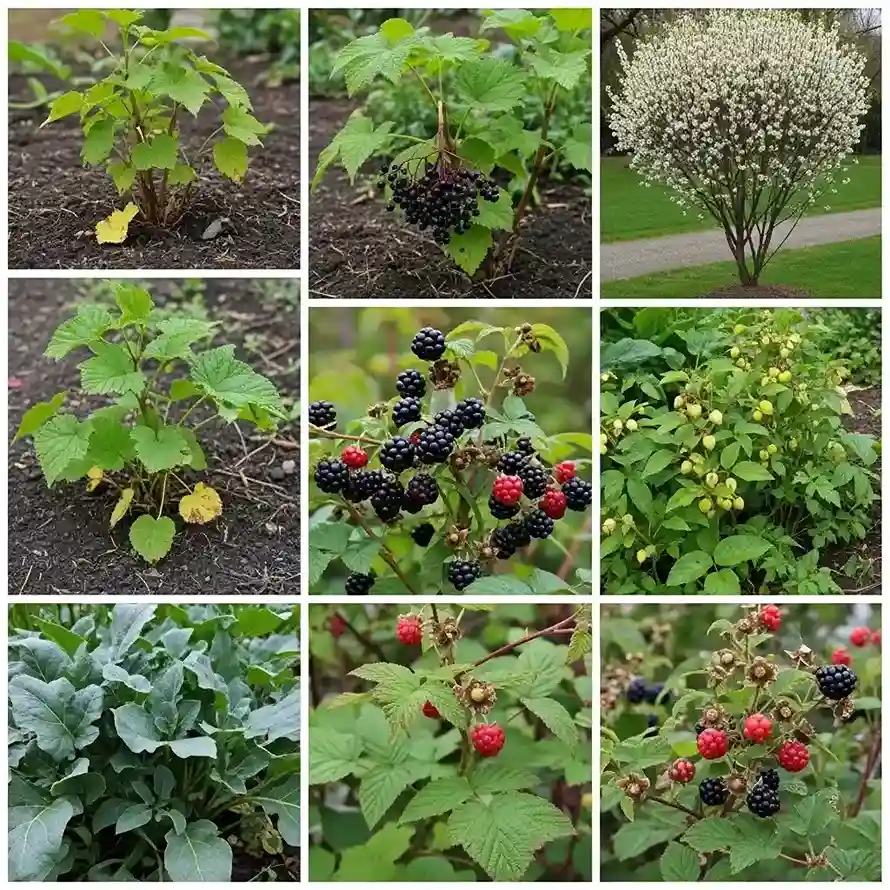
Save seeds from open-pollinated vegetables and fruits growing new generations adapted to your specific conditions. These self-sufficient practices reduce external inputs while building locally-adapted plant populations thriving in your unique microclimate.
| Method | Best Plants | Success Rate | Timing |
|---|---|---|---|
| Hardwood Cuttings | Currants, elderberries | High | Late winter |
| Layering | Raspberries, blackberries | Very high | Spring/Summer |
| Division | Herbs, perennials | Very high | Spring/Fall |
| Seeds | Annuals, trees | Variable | Season dependent |
22. Permaculture Design Principles
Food forests embody permaculture ethics of earth care, people care, and fair share through sustainable land management. Design principles include observing nature, catching and storing energy, obtaining yields, and using renewable resources creating self-maintaining productive systems.
Position elements considering multiple functions where possible. Ponds provide water storage, aquatic habitat, and microclimate moderation. Chickens offer eggs, pest control, and fertilizer when integrated thoughtfully. These stacked functions maximize value from every system component.

Apply permaculture zones placing intensively managed elements near homes while extensive systems occupy distant areas. This logical organization reduces unnecessary labor traveling long distances for frequent maintenance tasks while maintaining productive landscapes.
| Principle | Application | Food Forest Example |
|---|---|---|
| Observe and Interact | Study patterns | Track sun, water, frost |
| Catch and Store | Capture resources | Swales, ponds, mulch |
| Obtain a Yield | Productivity | Diverse harvests |
| Self-Regulate | Feedback loops | Natural pest control |
23. Climate Appropriate Selections
Choose plants adapted to your specific climate zone, rainfall patterns, and temperature extremes ensuring success without excessive irrigation or protection. Native and regionally adapted species thrive with minimal inputs while non-adapted plants require constant care often failing despite efforts.
Research historical temperature ranges, frost dates, and precipitation patterns informing plant selections. Many subtropical and tropical species offer food forest potential in warm climates while temperate zones support different plant palettes entirely.
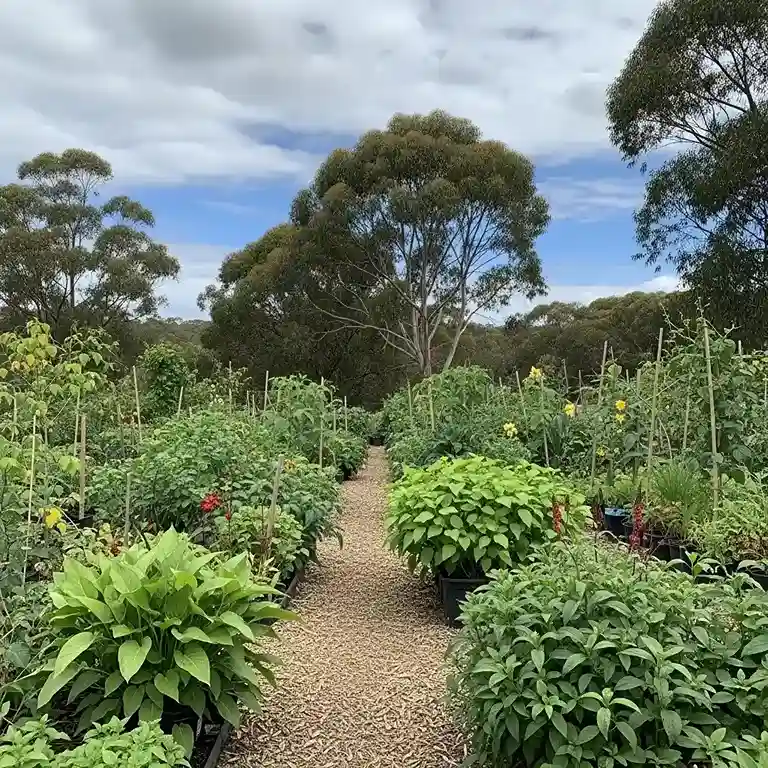
Climate selection connects with best outdoor plants principles matching species to conditions. This fundamental consideration determines success or failure making it critical for establishing productive resilient food forests.
| Climate Type | Suitable Trees | Suitable Shrubs | Special Considerations |
|---|---|---|---|
| Temperate | Apple, pear, walnut | Blueberry, currant | Winter chill required |
| Subtropical | Citrus, avocado | Guava, loquat | Frost protection |
| Tropical | Mango, banana | Coffee, cacao | No cold tolerance |
| Arid | Fig, pomegranate | Jujube, prickly pear | Drought adapted |
24. Small Space Food Forests
Food forests adapt to small urban lots and backyards through dwarf varieties, intensive layering, and creative vertical growing. A 1,000 square foot yard accommodates several dwarf fruit trees, berry shrubs, herbs, and groundcovers producing substantial yields.
Use espalier techniques training fruit trees flat against fences or walls saving space while maintaining productivity. Choose columnar fruit tree varieties occupying minimal footprints. Emphasize vertical vines and compact shrub selections maximizing production from limited areas.
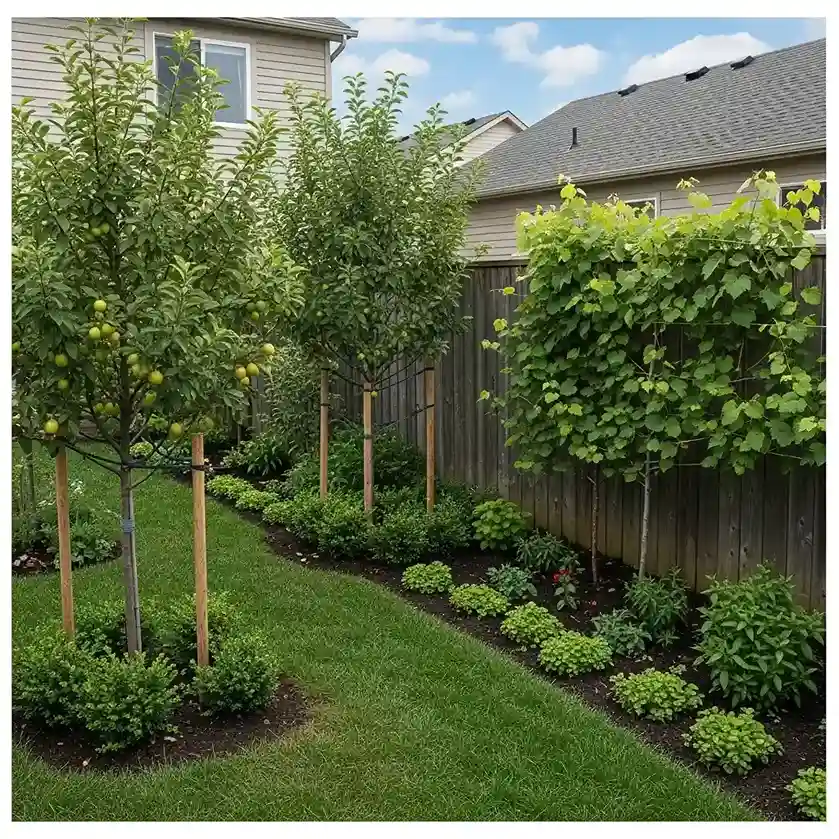
This scaled approach works beautifully with tiny backyard ideas creating productive ecosystems in constrained spaces. Even balconies and patios support container food forest concepts using large pots and vertical structures.
| Space Size | Recommended Trees | Additional Layers | Expected Yield |
|---|---|---|---|
| 500 sq ft | 1-2 dwarf trees | Berries, herbs, vines | Supplemental produce |
| 1,000 sq ft | 3-4 dwarf trees | Full layers | Significant yields |
| 2,500 sq ft | 6-8 trees | Diverse plantings | Substantial production |
| 5,000+ sq ft | 10+ trees | Complete system | Large harvests |
25. Community Food Forest Projects
Community food forests transform public spaces into productive landscapes providing free food for neighborhoods while beautifying areas and building social connections. Schools, churches, parks, and vacant lots host successful projects engaging volunteers in meaningful work.
Organize community workdays for installation and maintenance sharing labor while building relationships. Establish clear harvesting guidelines ensuring fair access while preventing premature picking. These shared spaces teach food production skills while addressing food security issues.
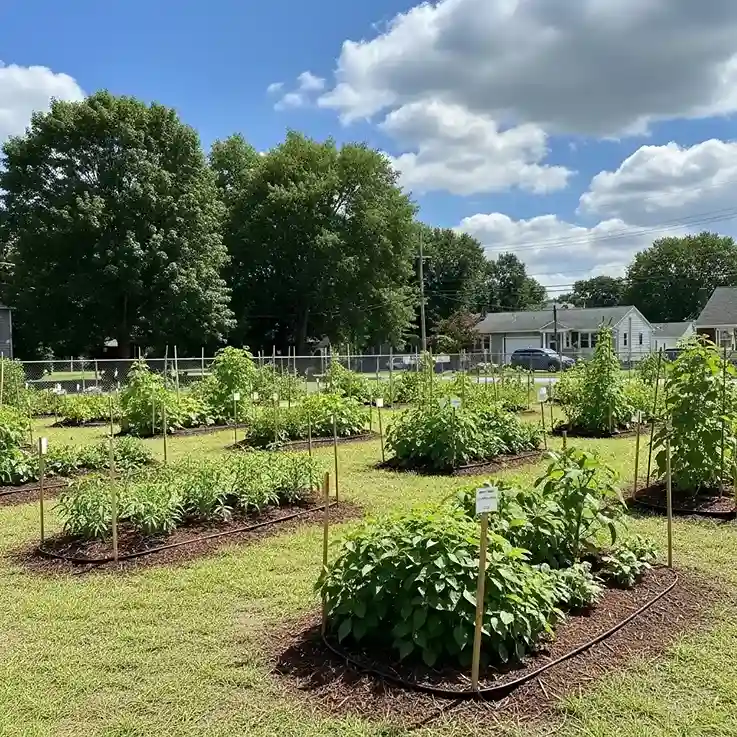
Community projects demonstrate food forest viability on larger scales creating demonstration sites inspiring residential applications. The collaborative nature builds social capital while producing tangible community benefits through shared harvests and environmental improvements.
| Project Type | Ideal Size | Participants | Maintenance |
|---|---|---|---|
| School Garden | 2,000-5,000 sq ft | Students, teachers | School community |
| Neighborhood Park | 5,000-20,000 sq ft | Residents | Volunteer teams |
| Church Grounds | 1,000-10,000 sq ft | Congregation | Member groups |
| Municipal Project | 20,000+ sq ft | Public | Paid staff + volunteers |
26. Economic Benefits Analysis
Food forests provide significant economic returns through reduced grocery bills, increased property values, and avoided landscape maintenance costs. Mature forests produce hundreds to thousands of pounds of food annually worth substantial amounts at retail prices.
Initial establishment costs range from $2,000-10,000 depending on size and plant selections. These investments return value within 5-10 years through harvests while providing decades of continued production. The systems essentially become edible retirement accounts generating increasing returns.
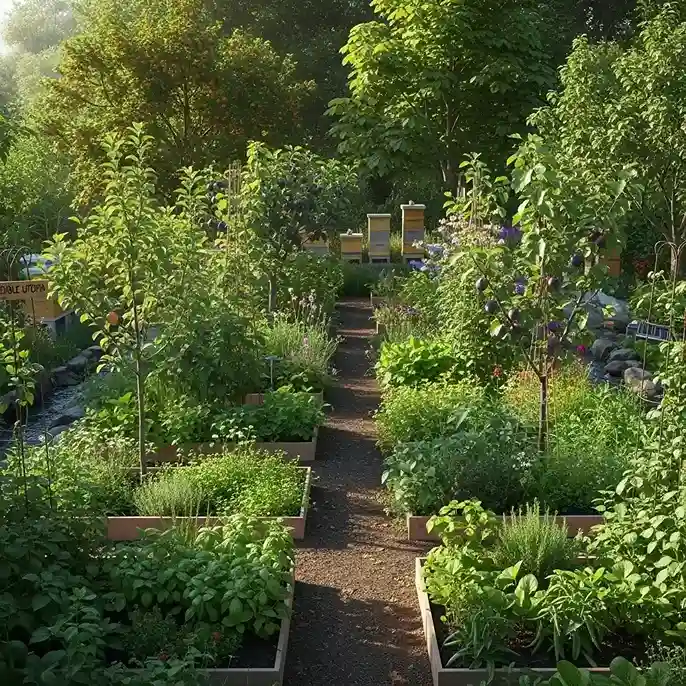
Reduced lawn maintenance saves time and money eliminating mowing, fertilizing, and irrigation costs. Water bills decrease as deep-rooted perennials require minimal supplemental irrigation once established. These ongoing savings accumulate substantially over years.
| Cost Category | Initial | Annual Savings | Payback Period |
|---|---|---|---|
| Plant Materials | $1,000-5,000 | N/A | N/A |
| Installation Labor | $1,000-5,000 | N/A | N/A |
| Grocery Savings | N/A | $500-2,000 | 3-10 years |
| Maintenance Reduction | N/A | $200-500 | Immediate |
27. Integrating Annual Vegetables
Annual vegetables integrate into food forests through strategic placement in sunny patches, forest edges, and temporary gaps. These provide immediate harvests while perennial systems mature slowly over years.
Create annual beds along south-facing forest edges where full sun remains available. Use forest interior clearings for shade-tolerant crops like lettuce and greens. Plant annual vines like beans and squash on structures or climbing dead trees.
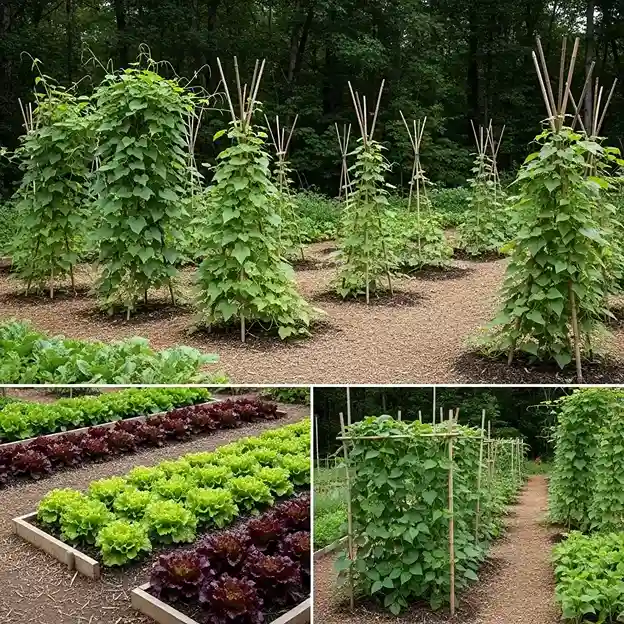
This combination connects with small vegetable gardens concepts integrating annuals and perennials. The mixed approach provides continuous food throughout establishment years while building toward permanent productive systems.
| Annual Crop | Best Location | Light Needs | Integration Strategy |
|---|---|---|---|
| Tomatoes | Sunny edges | Full sun | Temporary until canopy closes |
| Lettuce | Dappled shade | Part shade | Under young trees |
| Beans | Vertical structures | Full sun | Climbing supports |
| Squash | Open clearings | Full sun | Edges, moving as needed |
28. Medicinal Plant Integration
Food forests provide ideal conditions for medicinal herbs creating natural pharmacies alongside food production. Goldenseal, ginseng, black cohosh, and bloodroot thrive in woodland conditions while echinacea, calendula, and chamomile prefer sunnier edges.
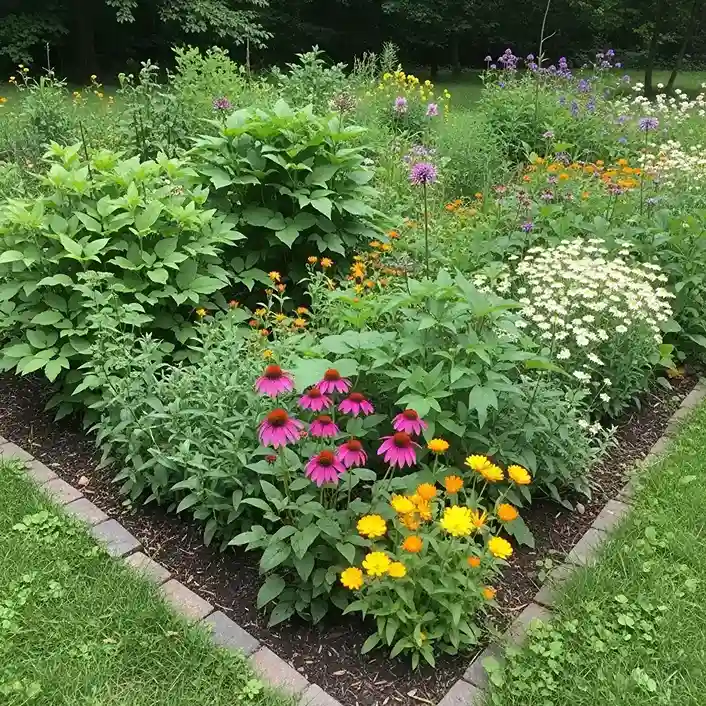
These valuable plants require minimal care once established while providing remedies for common ailments. Harvest sustainably taking only what’s needed while allowing plants to reproduce and expand naturally over time.
Medicinal integration demonstrates food forests’ multiple value streams producing food, medicine, and beauty simultaneously. This holistic approach addresses various household needs through single integrated systems requiring minimal separate management.
| Medicinal Plant | Layer | Conditions | Uses |
|---|---|---|---|
| Goldenseal | Herbaceous | Deep shade | Immune support |
| Echinacea | Herbaceous | Sun to part shade | Immune support |
| Chamomile | Herbaceous | Full sun | Digestive, calming |
| Elder | Shrub | Sun to part shade | Immune, cold remedy |
29. Mushroom Cultivation
Integrate mushroom production into food forests through log inoculation and wood chip beds creating additional yields from otherwise unused resources. Shiitake, oyster, and wine cap mushrooms grow successfully on logs and mulch producing nutritious fungi.
Inoculate fresh logs with mushroom spawn stacking in shaded moist areas. Wood chip beds throughout forest produce wine cap mushrooms naturally once inoculated. These low-maintenance additions provide gourmet produce while breaking down woody materials enriching soil.
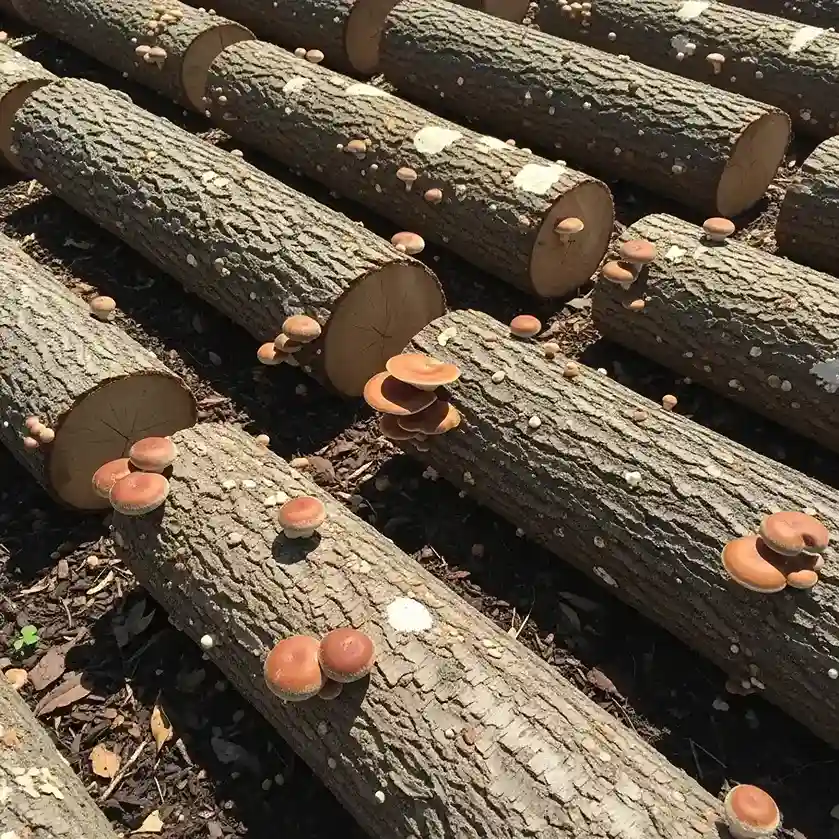
Mushroom cultivation connects with shade shrubs creating complete shade ecosystem utilization. The fungi decompose wood while providing food demonstrating elegant closed-loop nutrient cycling within food forest systems.
| Mushroom Type | Growing Medium | Shade Requirements | Production Timeline |
|---|---|---|---|
| Shiitake | Oak/Maple logs | Full shade | 6-12 months after inoculation |
| Oyster | Various hardwood logs | Dappled shade | 4-6 months after inoculation |
| Wine Cap | Wood chips/straw | Part shade | 4-6 months after inoculation |
| Lion’s Mane | Oak logs | Full shade | 9-12 months after inoculation |
30. Preserving and Processing Harvests
Food forest abundance requires preservation skills transforming fresh harvests into stored foods lasting months. Canning, freezing, drying, and root cellaring extend food forest benefits throughout non-productive seasons maintaining year-round self-sufficiency.
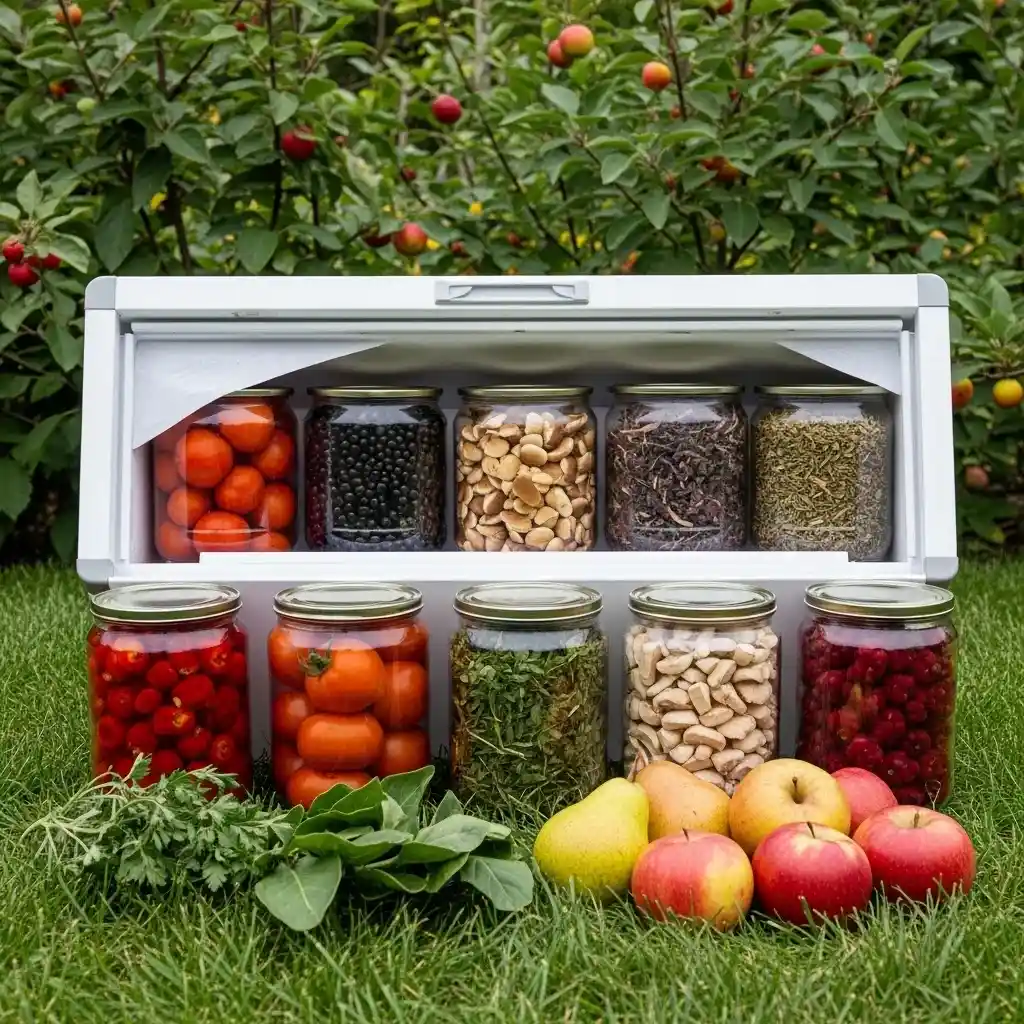
Can high-acid fruits like tomatoes, berries, and apples. Freeze soft fruits preserving fresh flavor. Dry herbs, mushrooms, and some fruits creating concentrated flavors. Store apples, pears, and root crops in cool cellars maintaining freshness.
These traditional skills complement food production creating complete food security systems. Learn preservation methods gradually building skills as harvests increase with forest maturity over time.
| Method | Best For | Storage Duration | Equipment Needed |
|---|---|---|---|
| Canning | Fruits, tomatoes | 1-2 years | Canner, jars |
| Freezing | Berries, vegetables | 8-12 months | Freezer |
| Drying | Herbs, mushrooms | 6-12 months | Dehydrator |
| Root Cellaring | Apples, roots | 2-6 months | Cool storage |
31. Record Keeping and Observation
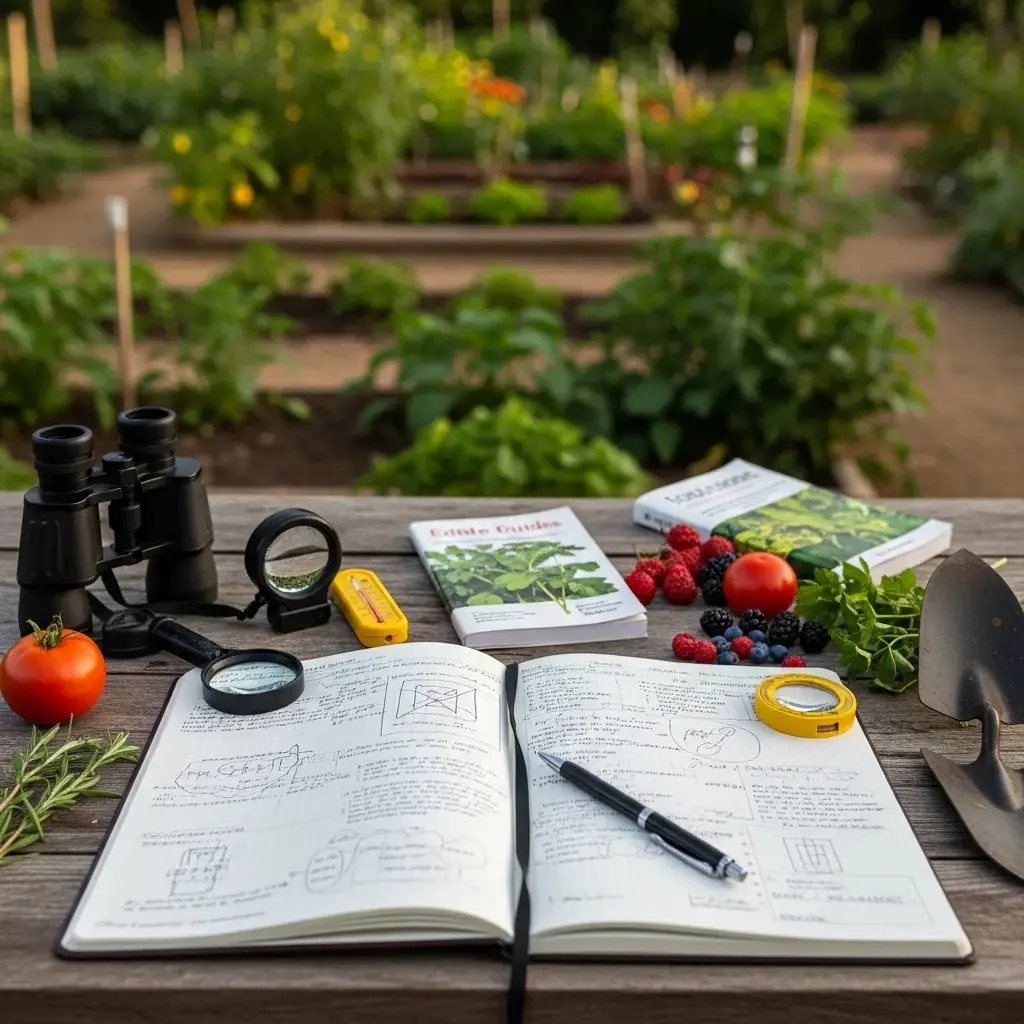
Maintain detailed records tracking plantings, harvests, maintenance activities, and observations informing future decisions. Note what succeeds and what fails, when harvests occur, and how weather affects production creating valuable reference data.
Photograph forests throughout seasons documenting development and changes. Map plant locations preventing accidental damage during maintenance. Record variety names and sources allowing reordering successful performers.
These records prove invaluable over years as memory fades and forests mature. The documentation creates institutional knowledge ensuring continued success through leadership changes in community projects or property ownership transitions.
| Record Type | Information Tracked | Frequency | Value |
|---|---|---|---|
| Planting Log | Species, date, location | At planting | Tracking development |
| Harvest Log | Crop, quantity, date | Each harvest | Planning future plantings |
| Maintenance Log | Activities, dates | Each session | Scheduling future work |
| Observation Notes | Weather, pests, growth | Weekly/Monthly | Problem solving |
32. Troubleshooting Common Issues
Address problems promptly preventing small issues becoming major challenges. Common concerns include pest outbreaks, disease problems, poor growth, and unexpected plant death requiring investigation and correction.
Poor growth often indicates improper siting, inadequate water, or nutrient deficiency. Test soil addressing deficiencies through targeted amendments. Ensure plants receive appropriate light levels for their requirements.
Pest problems usually indicate ecosystem imbalances. Increase diversity attracting more beneficial insects. Tolerate minor damage avoiding interventions disrupting natural controls. These challenges decrease as forests mature and balance develops naturally.
| Problem | Likely Cause | Solution |
|---|---|---|
| Stunted Growth | Poor soil, wrong location | Amend soil, relocate |
| Pest Outbreak | Low diversity, stress | Add diversity, improve care |
| Disease Issues | Poor air circulation | Prune, thin plants |
| Plant Death | Improper care, wrong zone | Replace with adapted species |
Frequently Asked Questions
How much space do I need for a food forest?
Food forests adapt to any size from small urban yards to large rural acreages. Even 500 square feet supports several dwarf fruit trees, berry bushes, herbs, and groundcovers producing meaningful harvests. Larger spaces naturally accommodate more plants and greater diversity creating more resilient productive systems.
How long before a food forest produces food?
Berries and herbs produce within 1-3 years while fruit trees begin significant yields in 5-10 years depending on varieties selected. Annual vegetables planted during establishment provide immediate harvests while perennial layers mature gradually. Expect increasing production each year as systems develop and mature naturally.
Do food forests require a lot of maintenance?
Initial establishment requires regular attention during first 2-3 years establishing plants and controlling weeds. Once canopy closes and groundcovers establish, maintenance drops dramatically to occasional pruning, mulching, and harvest activities. Mature food forests require far less work than traditional gardens or lawns.
Can food forests work in small urban yards?
Yes, food forest principles scale to any size property through dwarf varieties, intensive layering, and creative vertical growing. Small spaces emphasize compact plants and maximize vertical dimensions producing surprising yields from limited areas. Even balconies support container food forest concepts.
Conclusion
Food forests represent revolutionary approaches to food production creating self-sustaining ecosystems that work with nature rather than against it through ecological principles mimicking natural forests. These layered perennial systems provide diverse abundant harvests while building soil, supporting wildlife, and creating beautiful landscapes requiring minimal maintenance once established successfully.
Starting a food forest requires vision, patience, and willingness to learn from nature as systems develop over years. The initial work creates regenerative landscapes generating increasing returns over decades while providing food security, ecological benefits, and connection to natural cycles that sustain all life on Earth.