Vertical gardening is the art of using the vertical plane to cultivate plants, effectively turning walls, fences, and balconies into living tapestries.
This technique is a game-changer for modern homeowners, allowing for lush landscapes where traditional ground space is limited. By moving your garden upward, you not only save space but also improve airflow and reduce pest issues.
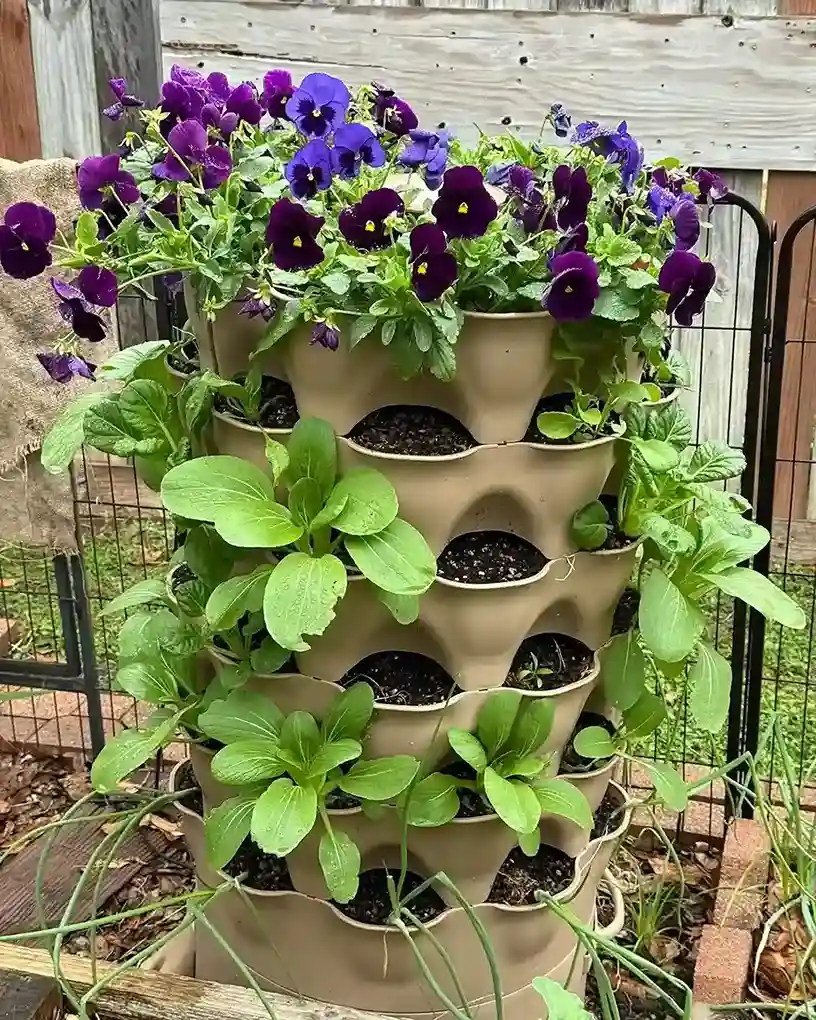
Source: @gardentowerproject
Whether you are working with a sprawling estate or a compact urban lot, verticality offers a fresh perspective on backyard landscaping ideas.
1. Maximize Your Square Footage
In a world of shrinking outdoor spaces, vertical gardening is the ultimate solution for tiny backyard ideas. By growing plants upward, you preserve precious floor space for dining sets, fire pits, or play areas.
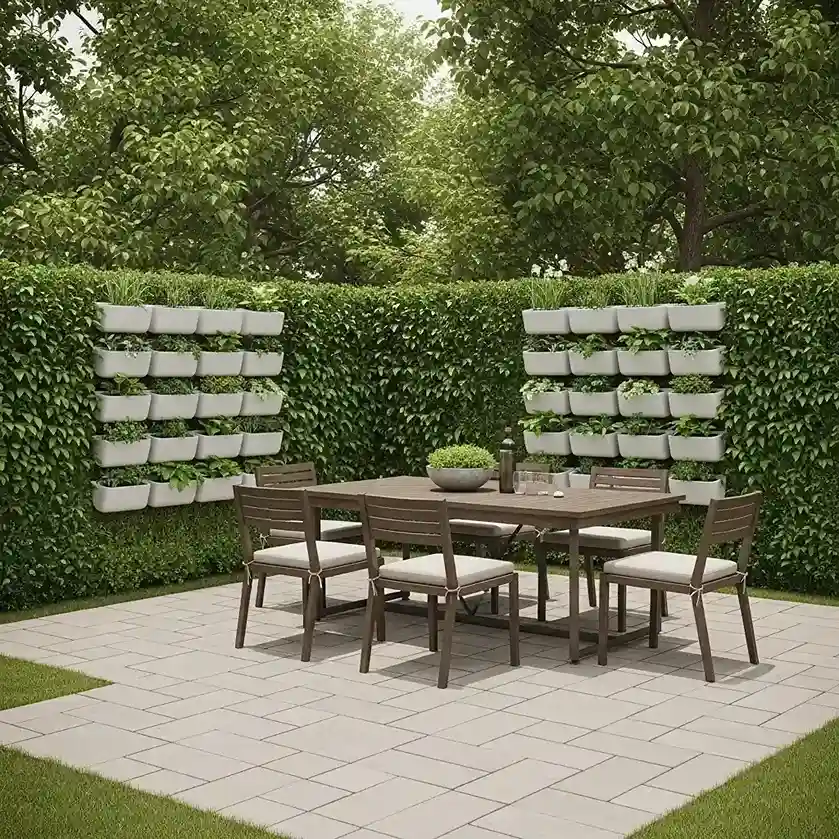
- Strategy: Use wall-mounted planters or modular “pocket” systems.
- Benefit: Makes a small 10×10 patio feel like a lush, immersive forest.
2. Transform Any Privacy Fence
Your perimeter shouldn’t just be a barrier; it should be a feature. Attaching planters to a privacy fence ideas setup softens the wood or vinyl and integrates the structure into the garden.
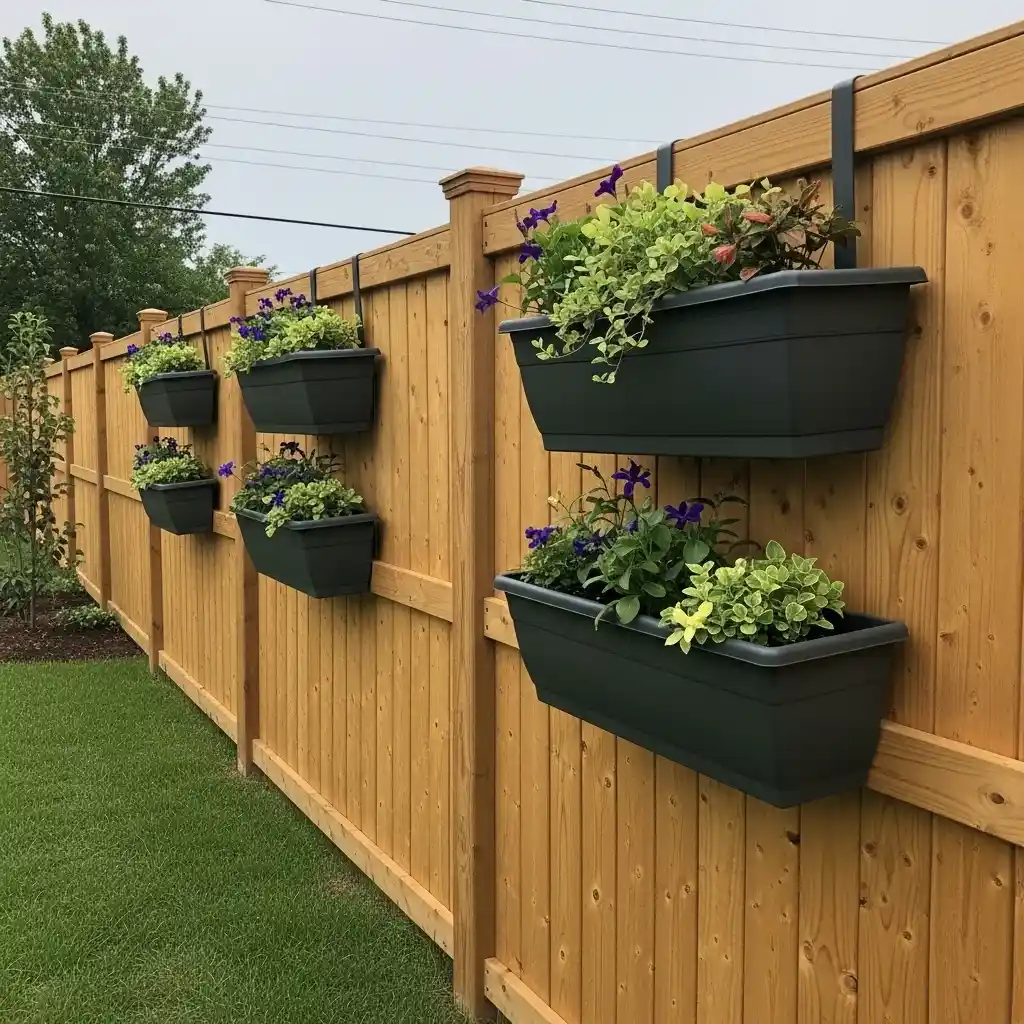
- DIY Tip: Use “S-hooks” to hang pots on a metal fence without drilling.
- Aesthetic: Perfect for hiding the stark lines of a horizontal fence.
3. Vertical Solutions for Sloped Yards
Slopes are notoriously difficult to landscape, but verticality makes it easier. Utilizing sloped backyard ideas on a budget like terraced planters allows you to stack greenery up the hillside.
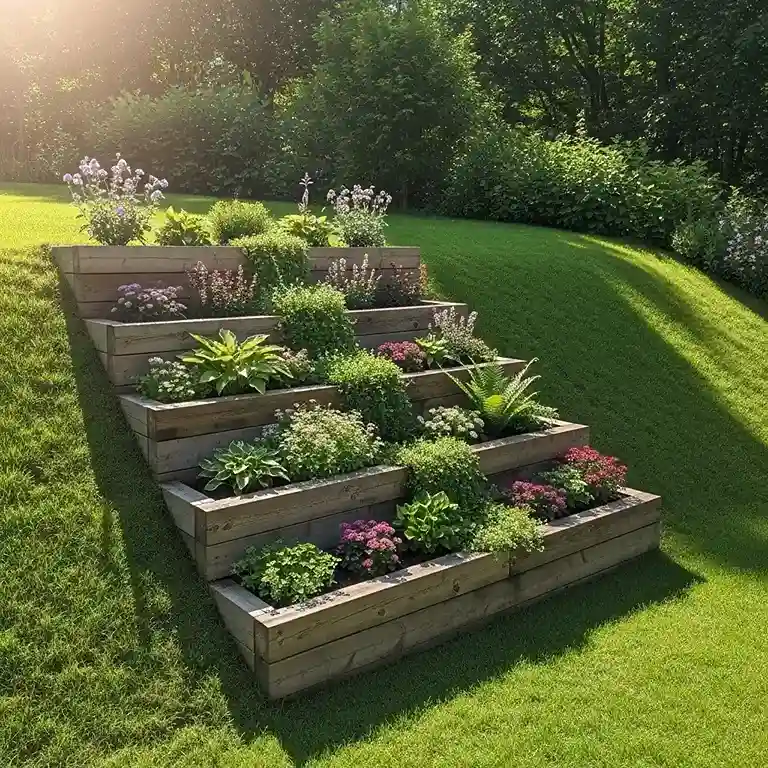
- Function: Helps prevent soil erosion during heavy rains.
- Visual: Creates a cascading “waterfall” of foliage and flowers.
4. Living Walls as Garden Art
A dedicated living wall is a structural masterpiece. Unlike individual pots, these systems often feature a continuous felt or mesh backing that allows plants to grow together into a seamless carpet.
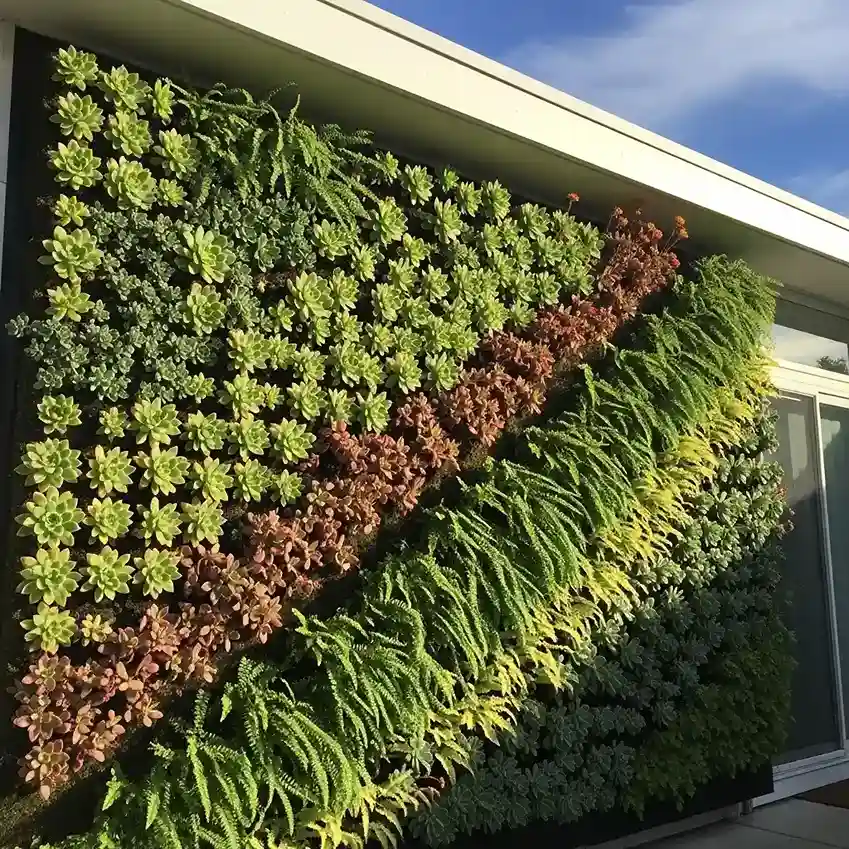
- Ideas: Explore different garden wall ideas using succulents or ferns.
- Atmosphere: Provides natural cooling and sound insulation for your home.
5. Edible Vertical Herb Gardens
You don’t need a large plot to be self-sufficient. Growing herbs vertically keeps them at waist height for easy harvesting. To ensure your kitchen garden thrives, follow a garden herb pairing guide.
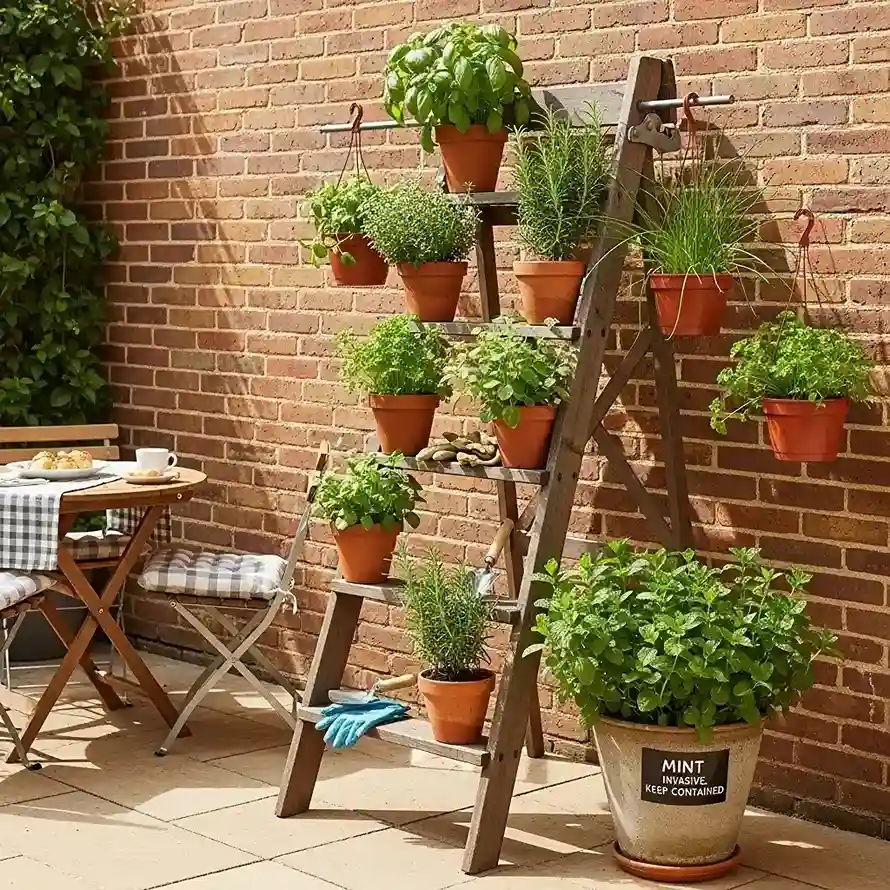
- Setup: A simple wooden ladder or a tiered shelf works perfectly.
- Freshness: Keeps invasive herbs like mint contained and manageable.
6. Bohemian and Hippie Vibes
Vertical gardens are the backbone of the hippie garden bohemian outdoor aesthetic. Think macramé hangers and mismatched pots overflowing with trailing ivy and colorful blooms.
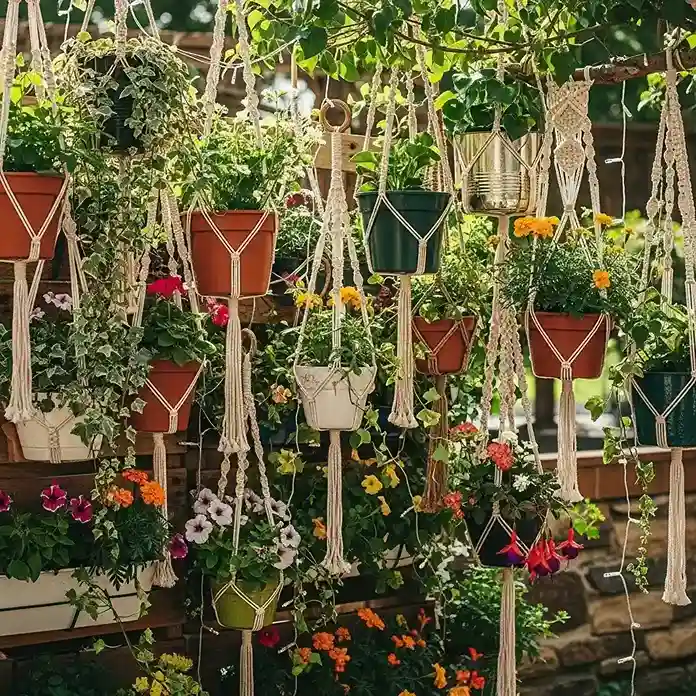
- Vibe: Focus on “ordered chaos” with plenty of texture and hanging elements.
- Decor: Incorporate fairy lights to make the greenery glow at night.
7. Strategic DIY Privacy Screens
If you have a neighbor’s window overlooking your yard, a vertical garden is a “soft” alternative to a wall. Creating diy privacy fences with tall trellises and fast-growing vines offers privacy without the “boxed-in” feeling.
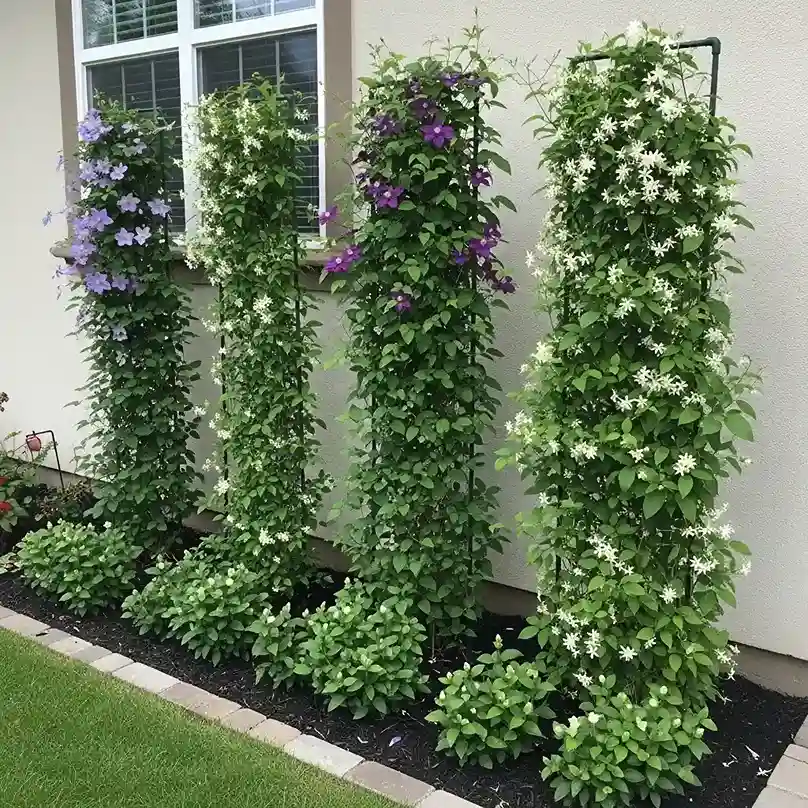
- Plant Choice: Use Clematis or Star Jasmine for a fragrant, flowering screen.
- Speed: Vining plants cover vertical space much faster than shrubs.
8. Architectural Arches and Walkways
Add a “ceiling” to your garden by using arches covered in climbing plants. This is a staple of professional walkway ideas outdoor space that adds a sense of mystery and transition.
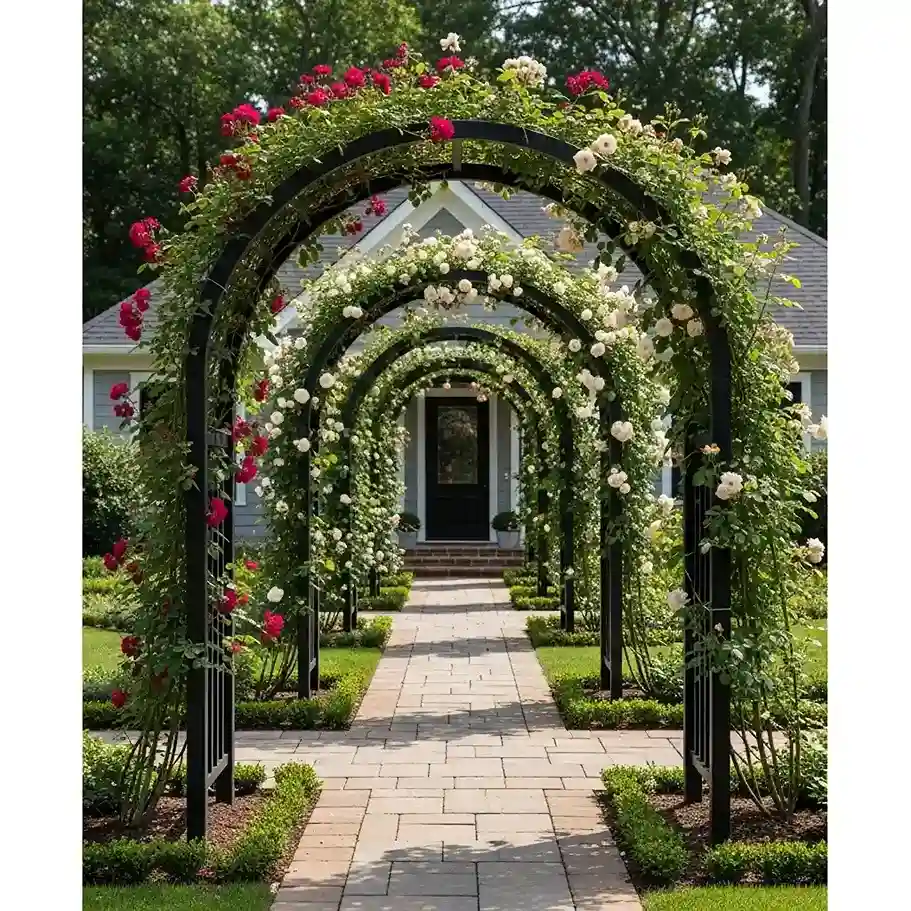
- Impact: Creates a stunning entrance to your front or backyard.
- Traditional Look: Use climbing roses for a classic, romantic English garden feel.
9. Elevating Front Yard Appeal
Verticality shouldn’t be hidden in the back. Using trellises as part of your front yard landscaping adds immediate height and can distract from a boring front yard fence.
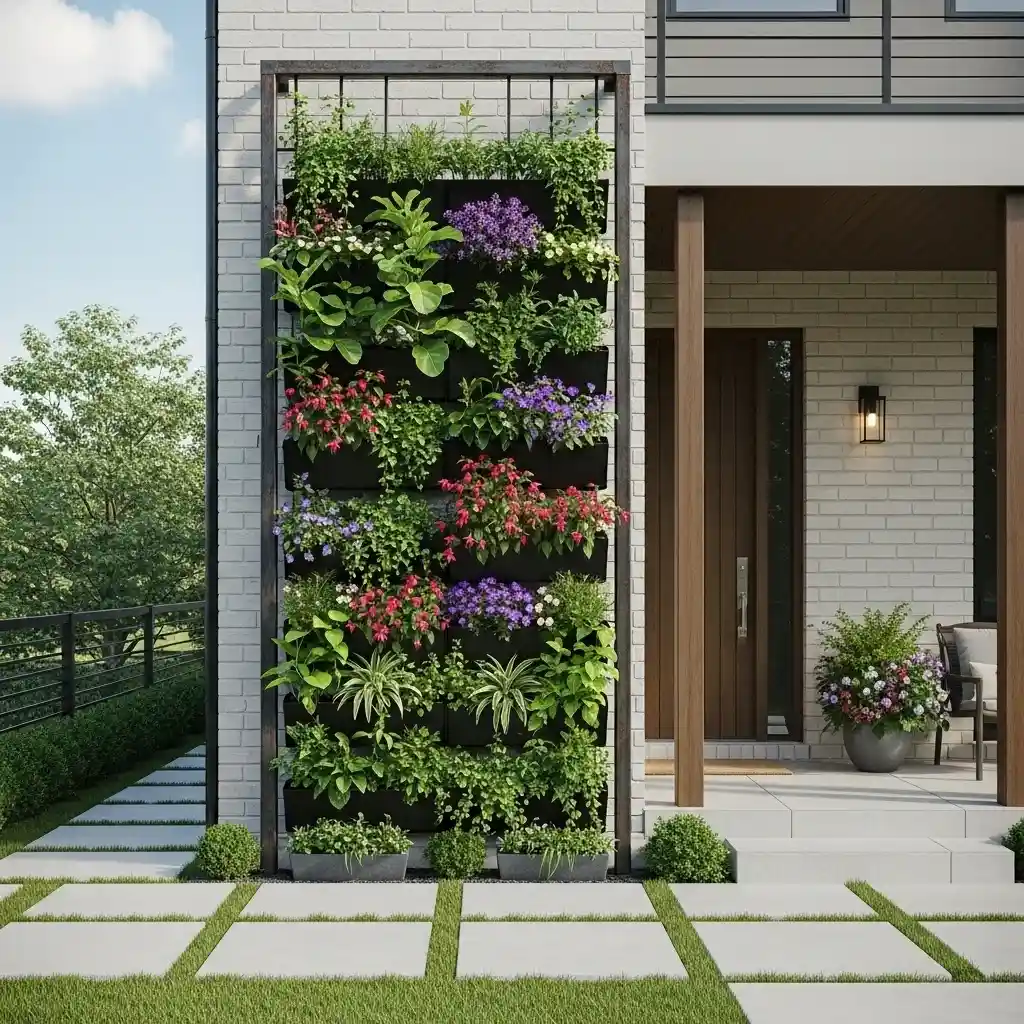
- Curb Appeal: A vertical garden on a porch wall makes the entrance look expensive.
- Space-Saving: Ideal for townhomes with very little front-of-house soil.
10. Indoor Vertical Displays
The principles of growing up work just as well inside. You can use specialized shelving to create stunning house plant display ideas that act as living wallpaper in your living room.
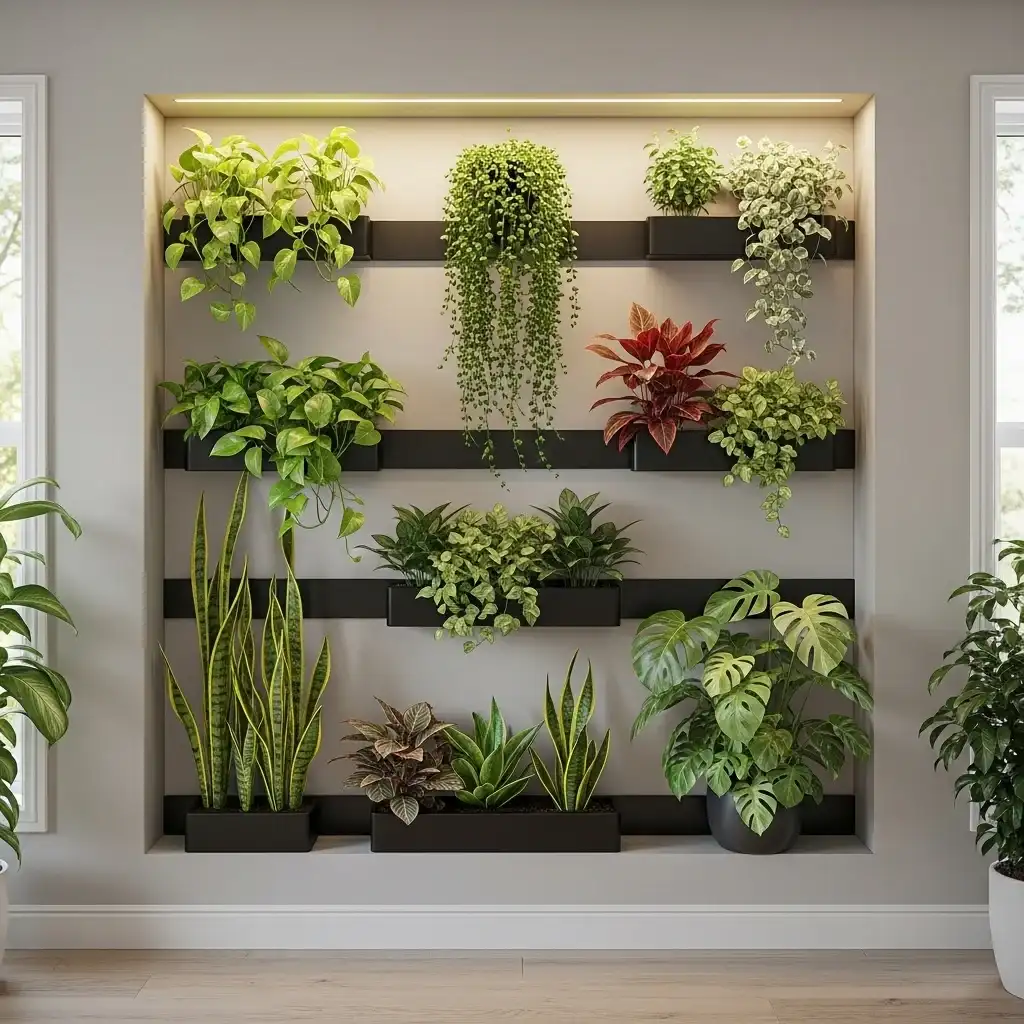
- Air Quality: More plants per square foot means cleaner indoor air.
- Style: Perfect for those who have already mastered the basics in our house plants guide.
11. Utilize Fence Line Landscaping
Don’t let your boundaries remain bare. By using fence line landscaping, you can attach specialized planters that allow flowers to spill over the top of the fence.
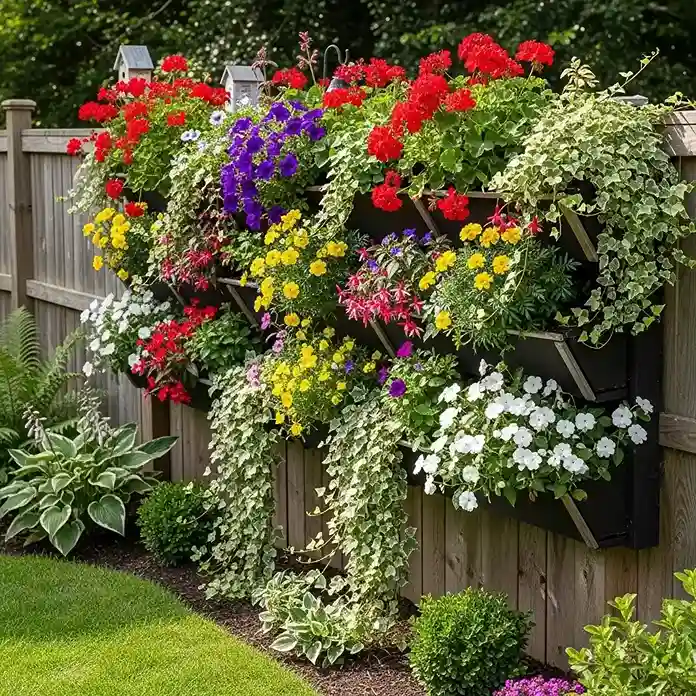
- Benefit: Breaks up long, monotonous stretches of fencing.
- Visual: Creates a seamless blend between your hardscaping and softscaping.
12. Incorporate Fairy Garden Magic
Vertical gardening provides the perfect “cliffside” backdrop for miniature landscapes. You can use tiered shelving to implement fairy garden ideas at multiple levels.
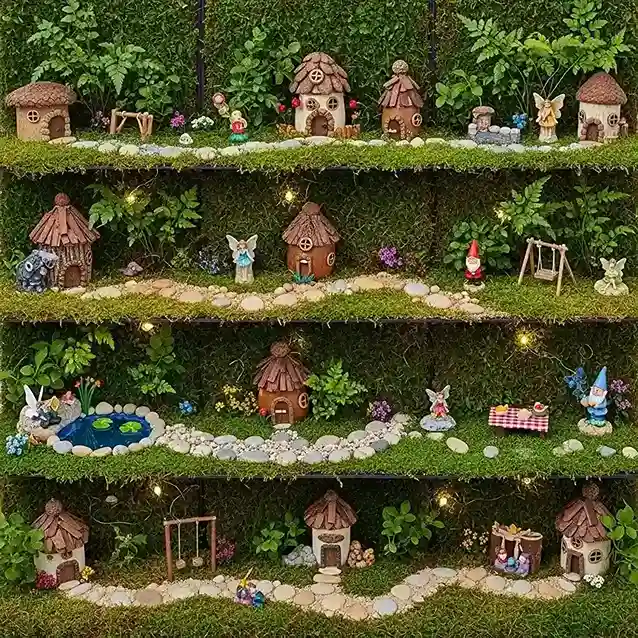
- Detail: Use small mosses and micro-ferns on the vertical panels.
- Whimsy: Great for involving children in vertical horticulture projects.
13. Tree Landscaping and Verticality
If you have large trees, their trunks are natural vertical real estate. Use tree landscaping ideas to mount staghorn ferns or air plants directly onto the bark.
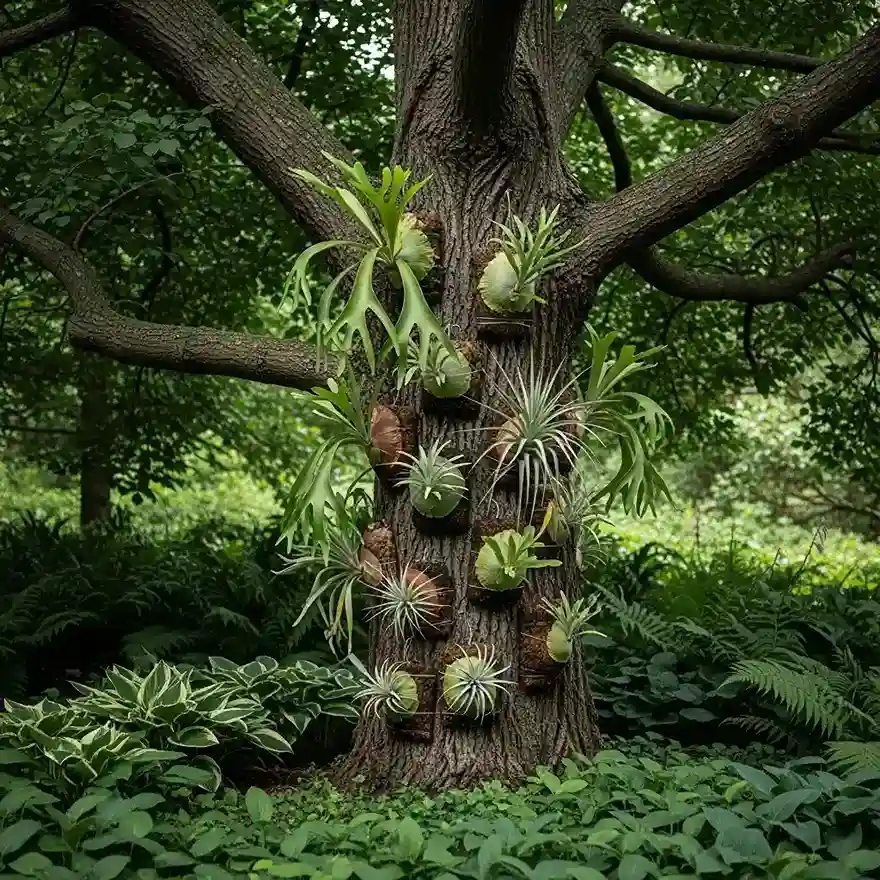
- Naturalistic: Mimics how plants grow in tropical rainforests.
- Low Impact: Allows you to garden in the shade without digging into tree roots.
14. Water Plants in Vertical Systems
Hydroponic vertical towers allow you to grow water plants guide species like watercress or aquatic mint in a recirculating system.
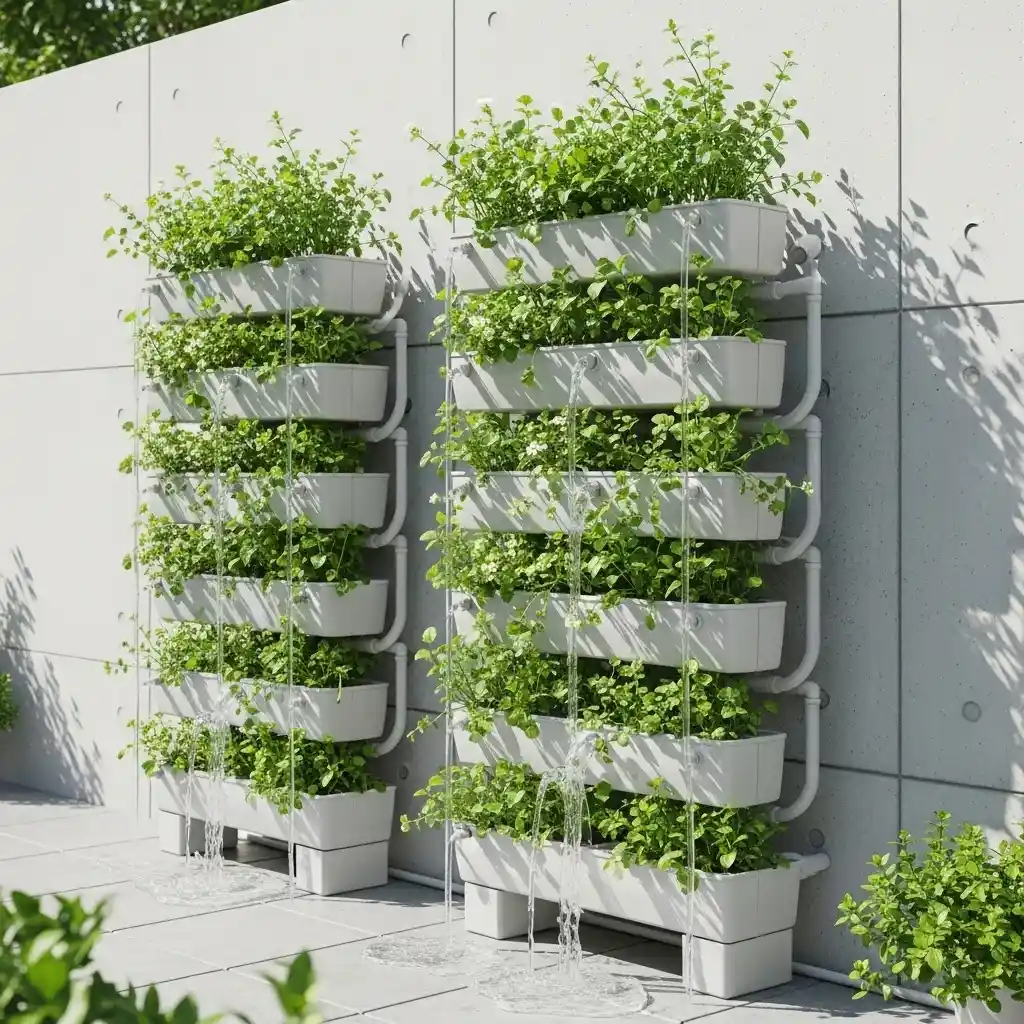
- Innovation: Uses 90% less water than traditional soil gardening.
- Modernity: Perfect for minimalist, tech-forward backyard designs.
15. Cheap Landscaping with Pallets
If you’re on a budget, you don’t need expensive modular systems. Using cheap landscaping ideas like upcycled wooden pallets is an eco-friendly way to go vertical.
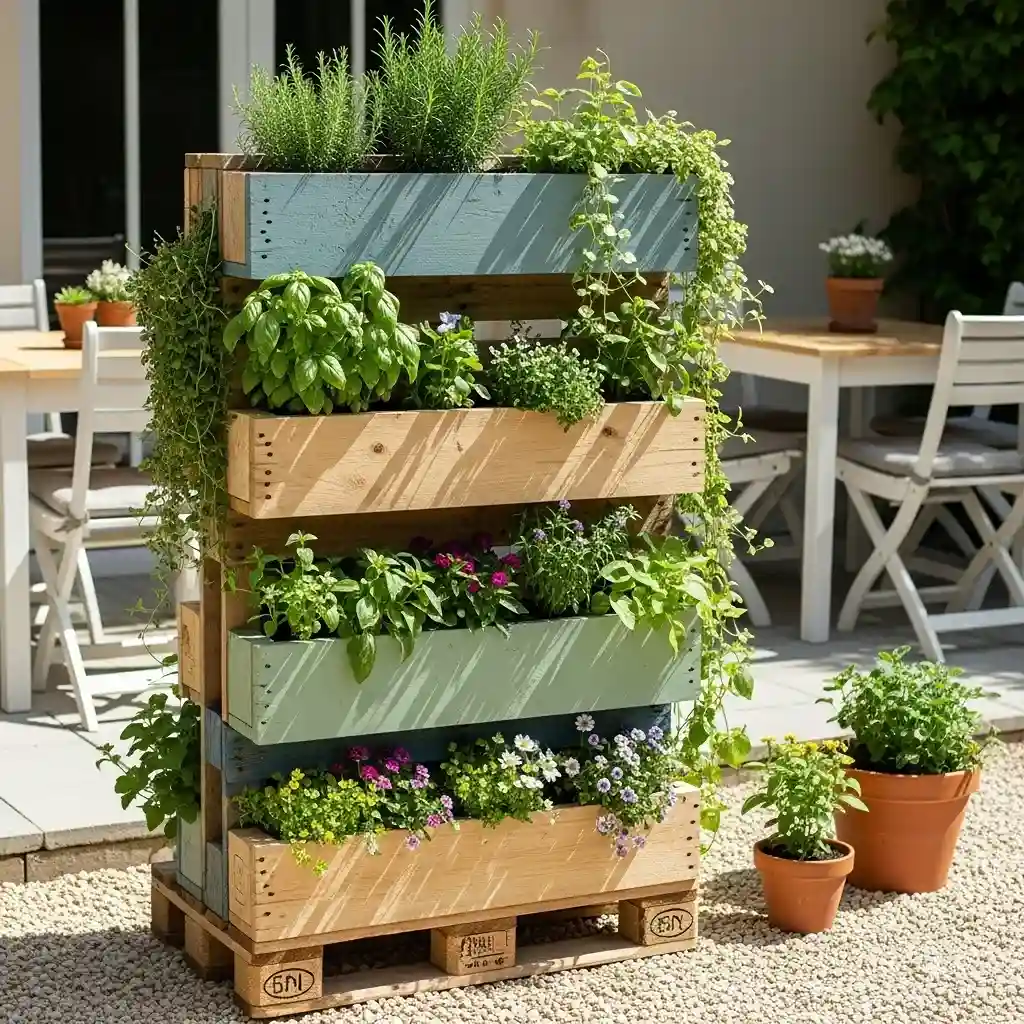
- Affordability: Pallets are often available for free or under $5.
- Customization: You can paint them to match your existing outdoor furniture.
16. White Stone and Vertical Contrast
To make your vertical garden truly pop, consider the ground beneath it. Using white stone landscaping ideas at the base of a green wall creates a high-contrast, professional look.
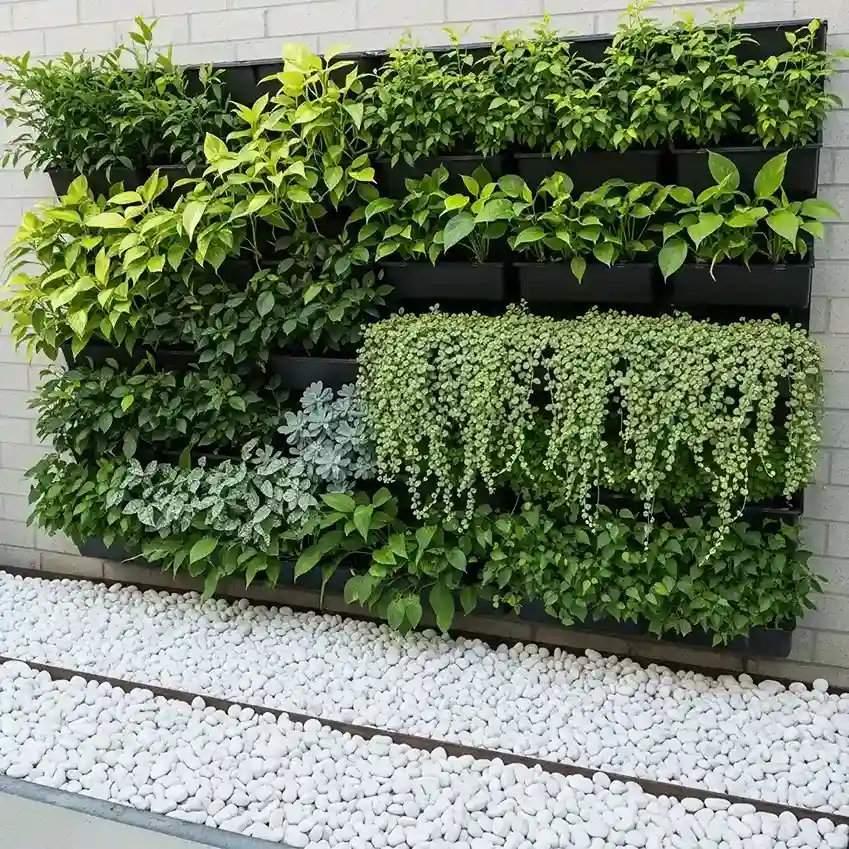
- Brightness: The white stone reflects light up into the lower leaves of the vertical garden.
- Cleanliness: Prevents mud from splashing onto your wall-mounted plants during rain.
Vertical Gardening FAQs
How do I water the plants at the very top?
The most efficient method is a drip irrigation system with a timer. If hand-watering, always start from the top; the excess water will naturally trickle down to the lower levels, reducing waste.
What are the best low-maintenance plants for a vertical wall?
Succulents and “Pothos” are incredibly resilient. For outdoor walls, look for the best outdoor plants like Ivy or Creeping Jenny that can handle a bit of neglect.
Is a vertical garden too heavy for a standard fence?
It can be. A gallon of wet soil weighs about 10 pounds. Ensure your privacy fence ideas include reinforced posts or use lightweight growing mediums like coco coir.
Conclusion
Vertical gardening is the ultimate tool for the modern gardener, blending small garden ideas with high-end trending landscaping ideas. By reclaiming your walls and fences, you create a 360-degree environment of greenery that enhances your yard ideas outdoor space regardless of its size.