What makes some homes instantly catch your eye while others fade into the background as you drive through neighborhoods? The answer lies in thoughtful front yard landscaping that transforms ordinary properties into welcoming showcases of natural beauty and intentional design.
Your front yard serves as your home’s first impression, greeting visitors, neighbors, and potential buyers with visual messages about your property’s care, style, and character. Strategic landscaping doesn’t just beautify—it increases property values by 15-20 percent while creating outdoor spaces that enhance your daily homecoming experience and neighborhood reputation.
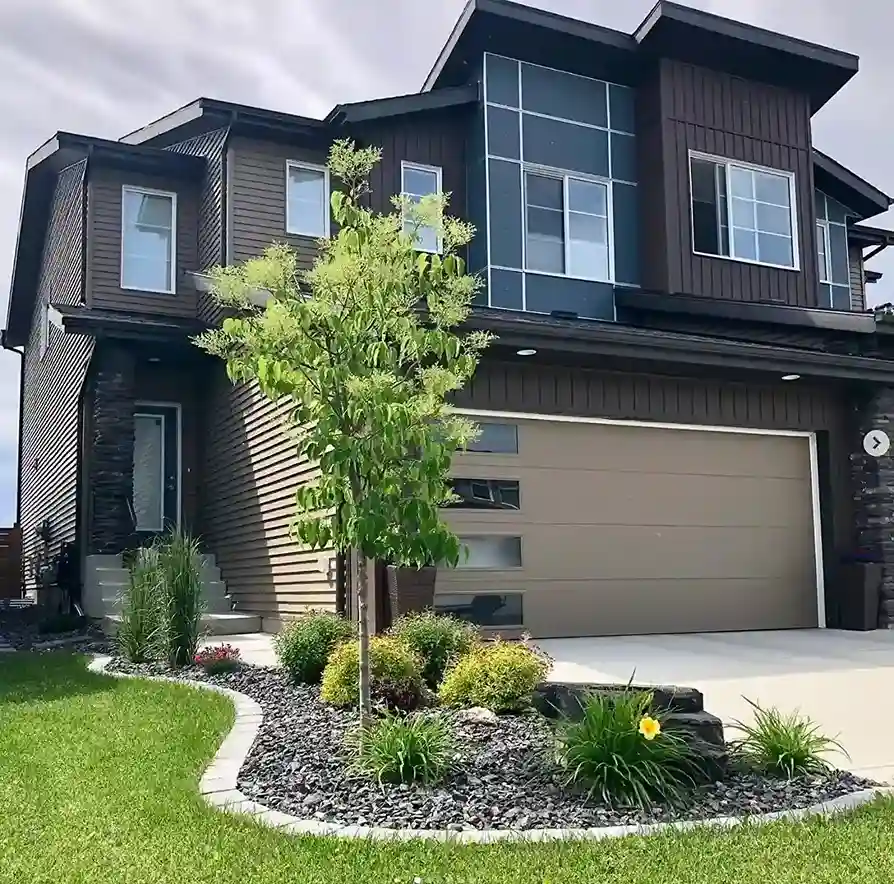
Effective front yard design balances aesthetic appeal with practical considerations including maintenance requirements, water usage, climate appropriateness, and architectural compatibility with your home’s existing style.
Whether you’re working with compact urban lots, sprawling suburban lawns, or challenging slopes and shade conditions, countless landscaping approaches exist to maximize your property’s potential while reflecting your personal taste and lifestyle needs.
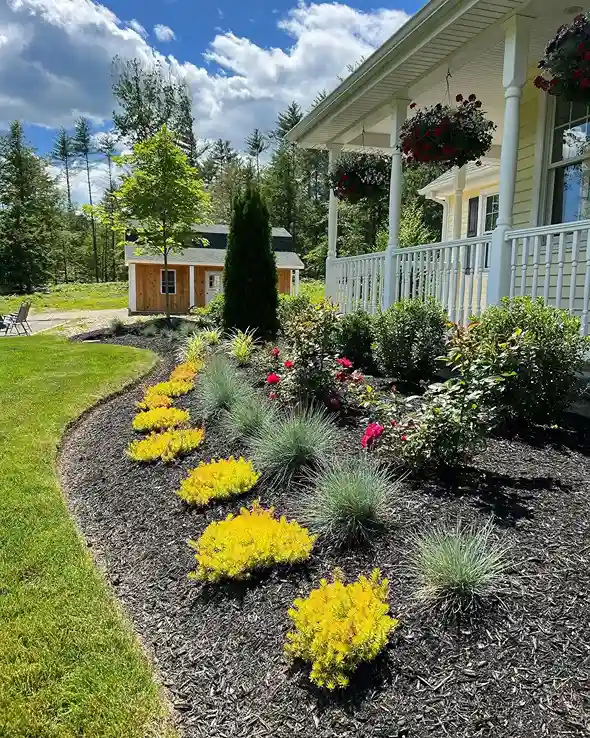
Source: @plantforsucces
The key lies in creating cohesive designs that feel intentional rather than random, establishing visual hierarchy through strategic plant placement and hardscape elements.
Foundation Planting Frameworks
Foundation plantings anchor homes to landscapes while softening harsh architectural lines where structures meet ground. Strategic placement of best shrubs for front of house creates layered visual interest using varied heights, textures, and colors that frame entries and windows without obscuring architectural features or blocking natural light penetration.
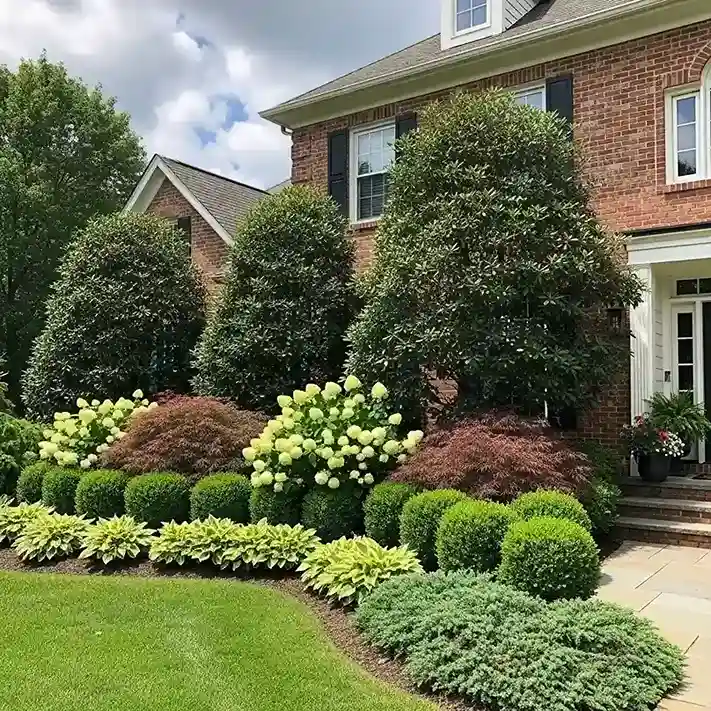
Design foundation beds using the layering principle—tallest plants near corners stepping down to mid-height shrubs and finishing with low groundcovers along bed edges. Leave adequate space between plants and house foundations for air circulation preventing moisture damage while accommodating mature plant sizes. This classic approach provides timeless structure that adapts across architectural styles from traditional to contemporary designs.
Curved Border Garden Beds
Flowing curved borders create organic, naturalistic front yard layouts that feel more inviting than rigid geometric designs. Gentle curves guide eyes through landscapes while adding visual movement and softness that contrasts beautifully with homes’ straight architectural lines, creating balanced compositions that feel professionally designed rather than haphazardly arranged.
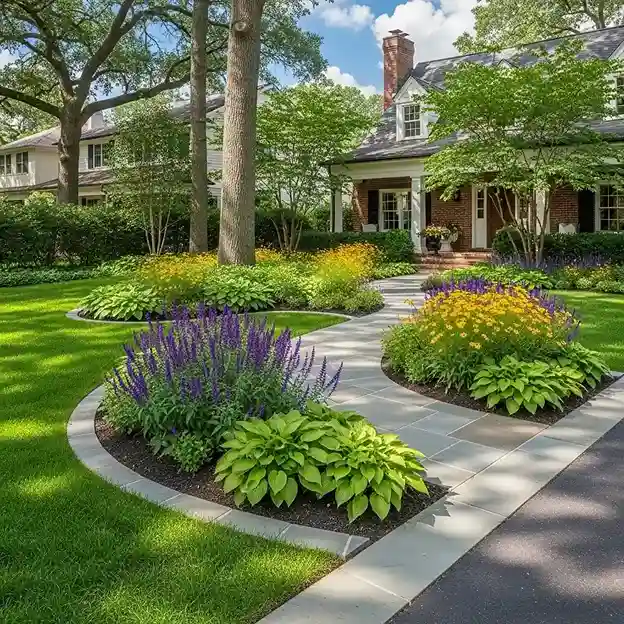
Use garden hoses to outline potential bed shapes, adjusting curves until proportions feel harmonious with home scale and lot dimensions. Avoid overly serpentine curves requiring excessive maintenance while ensuring curves remain gentle and purposeful. This design technique works particularly well within backyard landscaping ideas that extend visual flow from front yards through entire properties cohesively.
Specimen Tree Focal Points
Single distinctive trees positioned strategically create powerful focal points that anchor front yard designs while providing seasonal interest, shade, and vertical dimension. Japanese maples, flowering dogwoods, ornamental cherries, and unique evergreens command attention without overwhelming landscapes, serving as living sculptures that mature beautifully over decades of growth and seasonal changes.
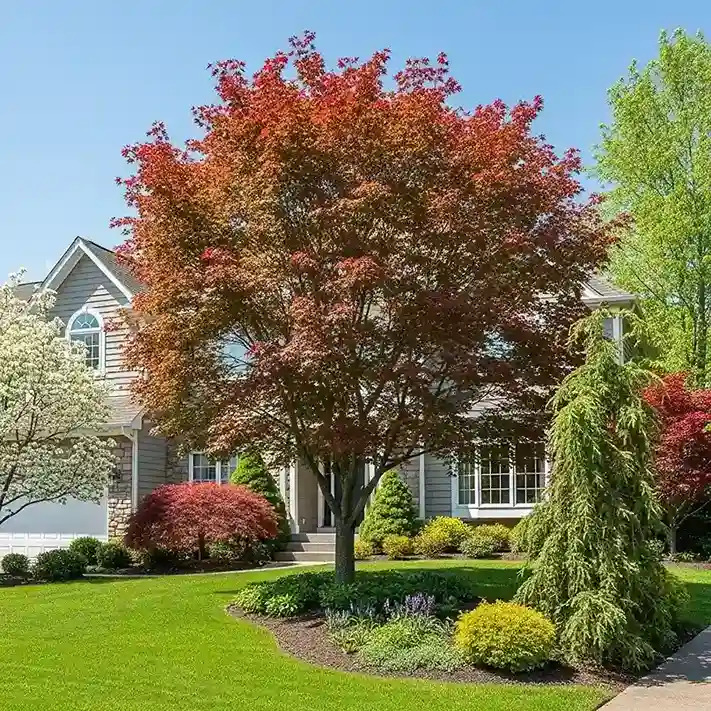
Position specimen trees asymmetrically for dynamic compositions rather than centering them formulaically. Consider mature sizes carefully to prevent future conflicts with utilities, structures, or sightlines. Connect specimen tree selection with comprehensive tree landscaping ideas that integrate single showpiece trees into broader landscape frameworks successfully and sustainably.
Symmetrical Formal Entrances
Symmetrical plantings flanking front entries create formal, traditional aesthetics conveying elegance and timeless sophistication. Matching plants—boxwoods, topiaries, or columnar evergreens—positioned identically on both entry sides establish balanced compositions that emphasize doorways as focal points while creating ceremonial approaches to home entrances that feel dignified and welcoming.
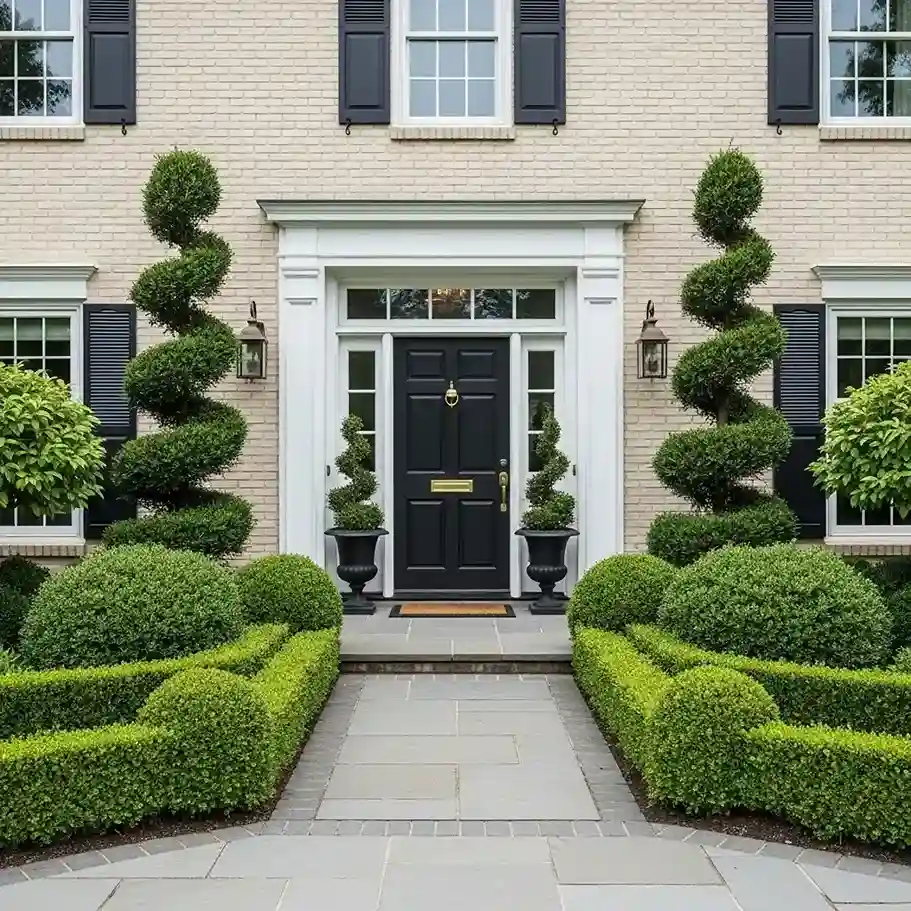
Maintain symmetrical plantings meticulously since uneven growth disrupts intended balance noticeably. This formal approach suits Colonial, Georgian, and traditional architectural styles particularly well. Combine with matching pathway treatments and centered walkways for complete formal presentations that convey established refinement and classical design sensibilities.
Mixed Perennial Borders
Layered perennial borders provide continuous color rotation throughout growing seasons using plants that return annually without replanting. Strategic combinations of spring bulbs, summer bloomers, and fall asters create evolving displays that maintain visual interest across months while requiring less maintenance than annual bedding schemes demanding seasonal replacement efforts.
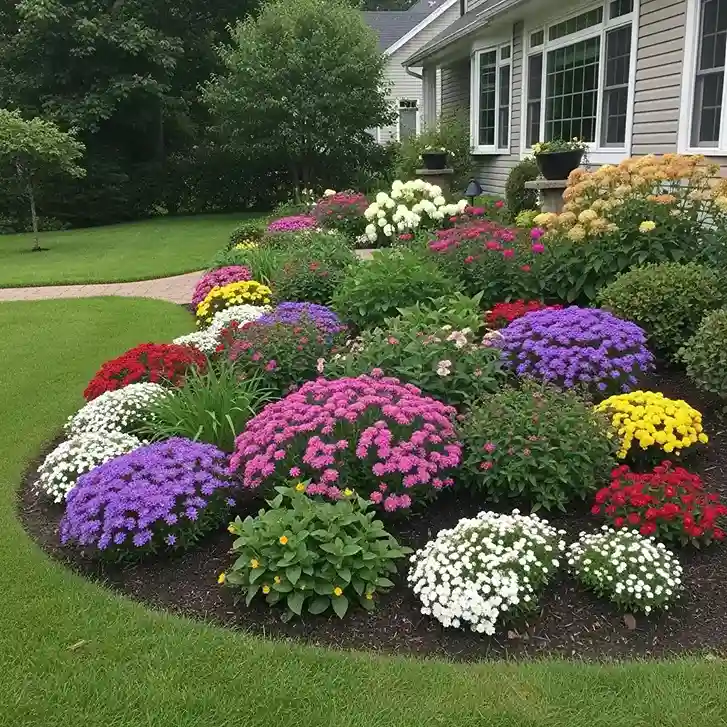
Design perennial borders using height gradation—tall plants background, medium mid-border, low edging—with color repetition creating visual rhythm throughout bed lengths. Include evergreen structural plants preventing winter bareness. This sustainable approach aligns with best outdoor plants selections emphasizing low-maintenance beauty and ecological benefits.
Ornamental Grass Features
Ornamental grasses add movement, texture, and seasonal interest through their flowing forms and changing colors from fresh spring growth through autumn bronze tones and winter architectural seed heads. These low-maintenance perennials provide vertical accents and soft textural contrasts against rigid shrubs while requiring minimal water once established in appropriate climate zones.

Group grasses in odd-numbered clusters for natural appearances rather than single specimens appearing isolated. Pair with flowering perennials and evergreens for multi-season interest beyond grass-only displays. The flowing forms create dynamic landscapes responding to breezes, adding kinetic beauty static plants cannot provide throughout growing seasons.
Mulched Bed Maintenance Reduction
Quality mulch applied 2-3 inches deep throughout planting beds suppresses weeds, retains moisture, regulates soil temperatures, and creates polished finished appearances that unify disparate plant groupings visually. Organic mulches including shredded bark, pine needles, or compost improve soil structure as they decompose while reducing ongoing maintenance requirements significantly.
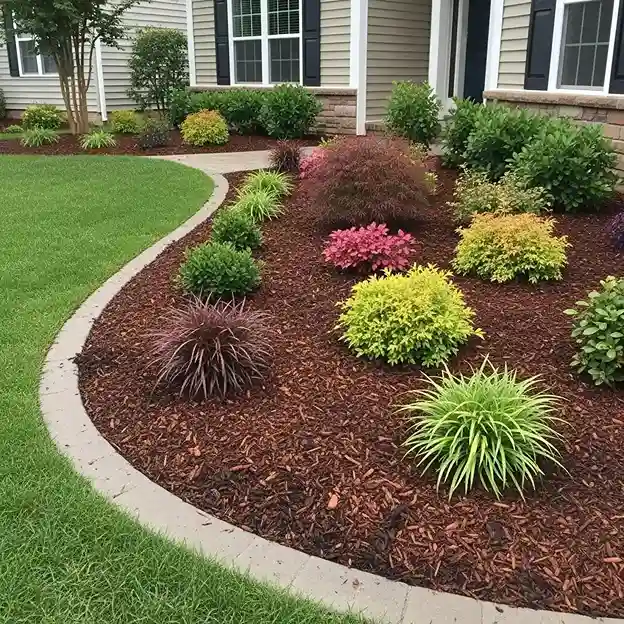
Refresh mulch annually to maintain depth and appearance as materials decompose naturally. Edge beds crisply where they meet lawns for professional definition. This practical approach reflects cheap landscaping ideas that reduce long-term maintenance costs through strategic material applications preventing weed competition and moisture loss.
Evergreen Year-Round Structure
Incorporating substantial evergreens ensures front yards maintain structure and visual interest during winter months when deciduous plants stand dormant and bare. Boxwoods, hollies, dwarf conifers, and broadleaf evergreens provide permanent green backdrops supporting seasonal color rotations while preventing landscapes from appearing empty or neglected during off-seasons.

Position evergreens strategically as structural anchors with deciduous plants adding seasonal variation around permanent frameworks. This four-season approach creates landscapes remaining attractive year-round rather than peak-season beauties turning barren and unappealing during dormant periods when curb appeal matters equally for maintaining property presentation.
Pathway and Walkway Integration
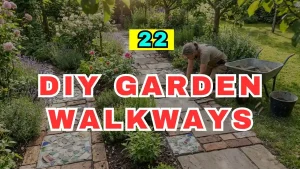
Front walkways connecting streets to entries deserve thoughtful design attention as primary circulation routes guiding visitors while establishing landscape character through material choices and planting treatments. Creative walkway ideas outdoor space using pavers, flagstone, brick, or decorative concrete create welcoming approaches while providing opportunities for bordering plantings that soften hard edges beautifully.
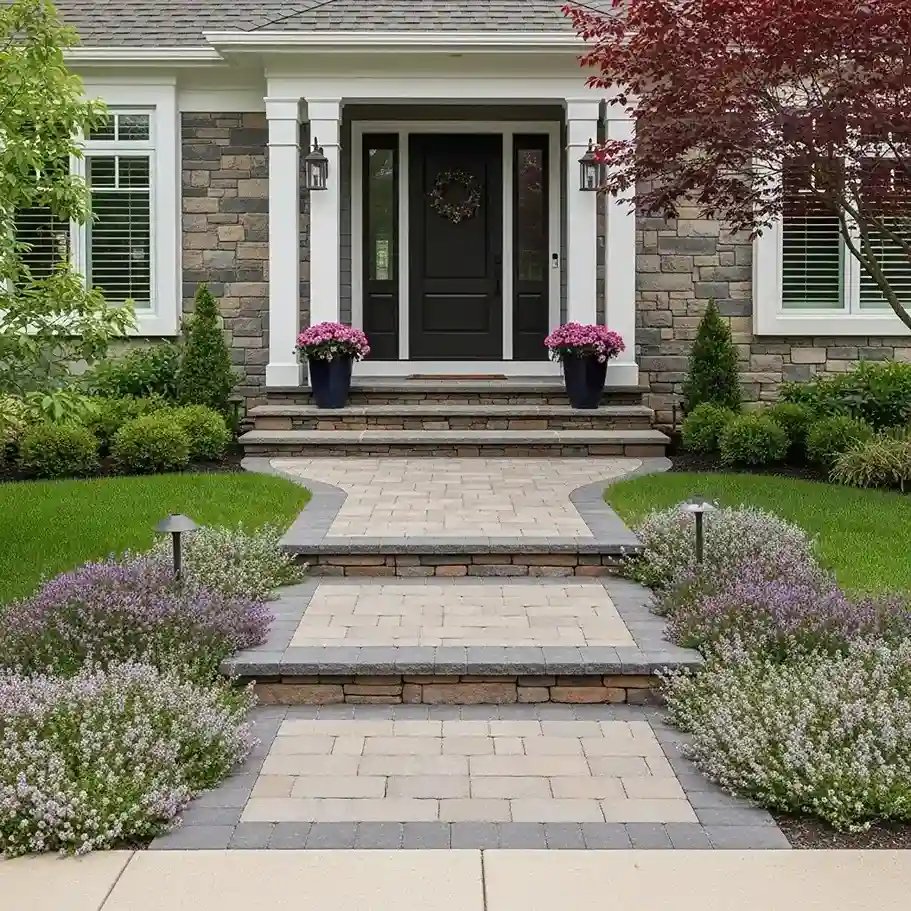
Widen pathways to minimum 4-foot widths allowing comfortable side-by-side walking rather than single-file passage. Edge with low-growing plants like creeping thyme or sedums that tolerate occasional foot traffic. Well-designed pathways integrate seamlessly into overall landscape compositions rather than appearing like afterthought additions cutting through otherwise cohesive designs.
Drought-Tolerant Xeriscape Design
Water-wise landscaping using drought-tolerant native and adapted plants reduces irrigation requirements while creating sustainable, environmentally responsible front yards. Xeriscaping doesn’t mean barren rock gardens—thoughtful plant selections including ornamental grasses, succulents, and flowering perennials create lush appearances using significantly less water than traditional turf-dominated landscapes require.
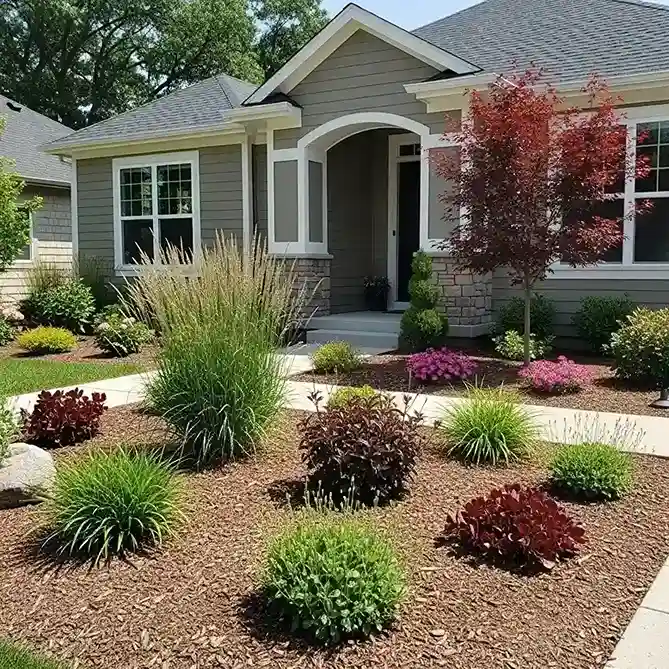
Group plants with similar water needs together, concentrating thirstier specimens near entries where they receive more attention. Use mulch extensively to retain soil moisture. This sustainable approach reflects trending landscaping ideas prioritizing environmental stewardship and reduced resource consumption without sacrificing visual appeal or curb impact.
Edible Front Yard Gardens
Incorporating edible plants including herbs, vegetables, and fruit trees transforms front yards into productive landscapes providing fresh harvests while maintaining ornamental beauty. Attractive edibles like blueberries, strawberries, kale, and colorful chard offer visual interest matching purely ornamental plants while delivering nutritional benefits and reducing grocery expenses simultaneously.
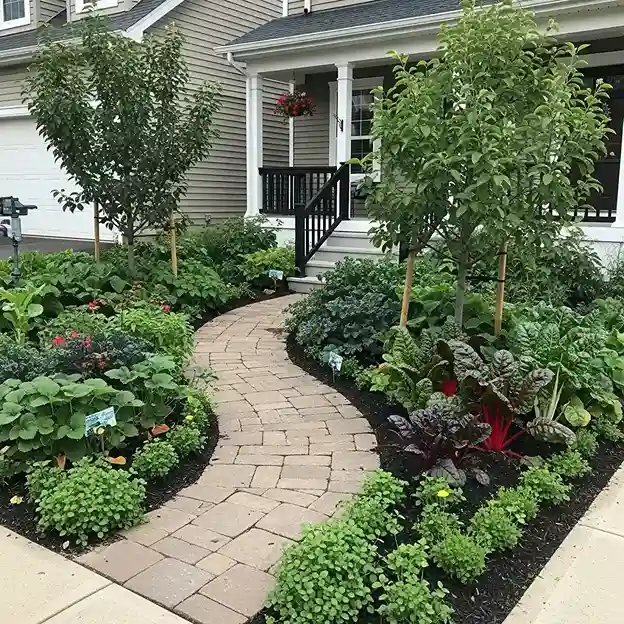
Design edible landscapes using ornamental principles—color combinations, textural variety, height layering—ensuring productive gardens remain visually appealing. Connect this approach with garden herb pairing guide principles creating companion plantings that support plant health while maximizing harvest yields in limited front yard spaces.
Seasonal Color Rotation Displays
Strategic annual plantings in key focal areas provide vibrant seasonal color accents refreshing front yard appearances throughout the year. Rotate cool-season pansies and violas with warm-season petunias, marigolds, and zinnias maintaining continuous bloom without permanent plant commitments, allowing experimentation with colors and styles adapting to changing preferences.

Concentrate annuals in high-visibility containers flanking entries or mass in small beds for maximum impact with minimum maintenance area. This flexible approach allows updating front yard personalities seasonally without redesigning entire landscapes, keeping properties feeling fresh and well-maintained through intentional attention to seasonal transitions.
Rock Garden Modern Minimalism
Contemporary rock gardens using decorative stones, boulders, and drought-tolerant plants create striking modern landscapes requiring minimal maintenance while delivering bold visual statements. Strategic boulder placement combined with architectural plants like agaves, yuccas, and ornamental grasses creates sculptural compositions emphasizing form, texture, and negative space over traditional flowery abundance.
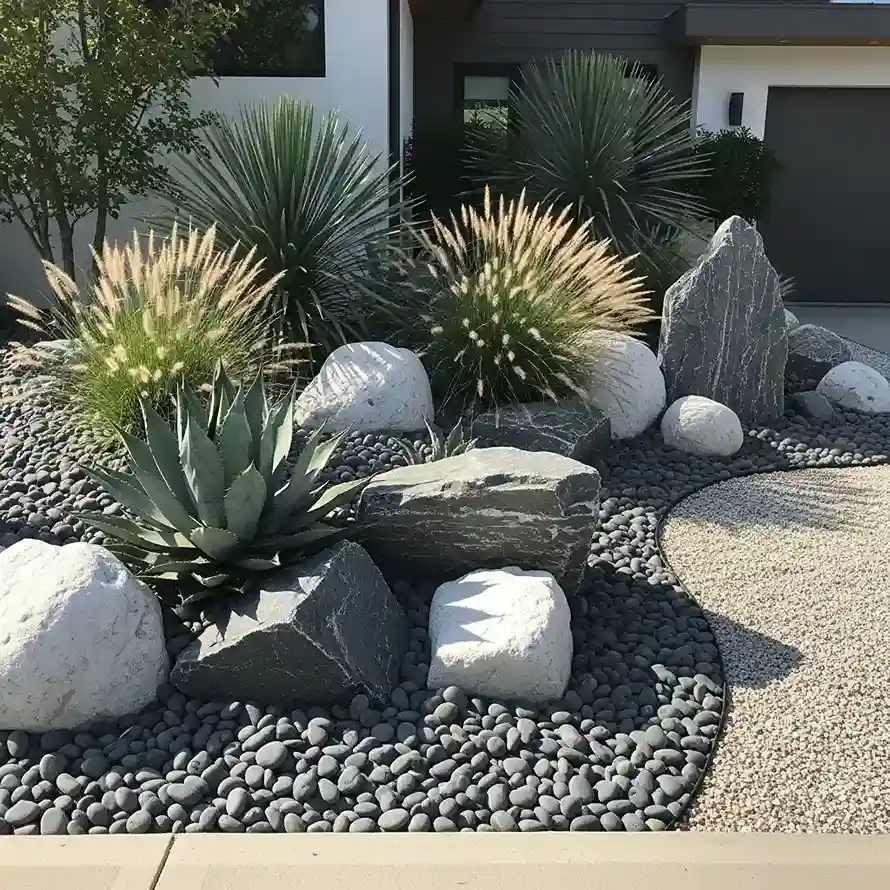
Incorporate principles from white stone landscaping ideas using light-colored gravels creating bright, clean aesthetics particularly effective in contemporary architectural settings. This low-maintenance approach suits busy lifestyles while making strong design statements reflecting modern minimalist sensibilities and water-conscious environmental values.
Lawn Alternative Groundcovers
Replacing high-maintenance turf grass with low-growing groundcovers reduces mowing, watering, and fertilizing while providing attractive green carpets or flowering mats. Creeping thyme, clover, moss, or native groundcovers create lush appearances requiring fraction of lawn’s ongoing maintenance while supporting pollinators and reducing chemical inputs improving environmental sustainability.
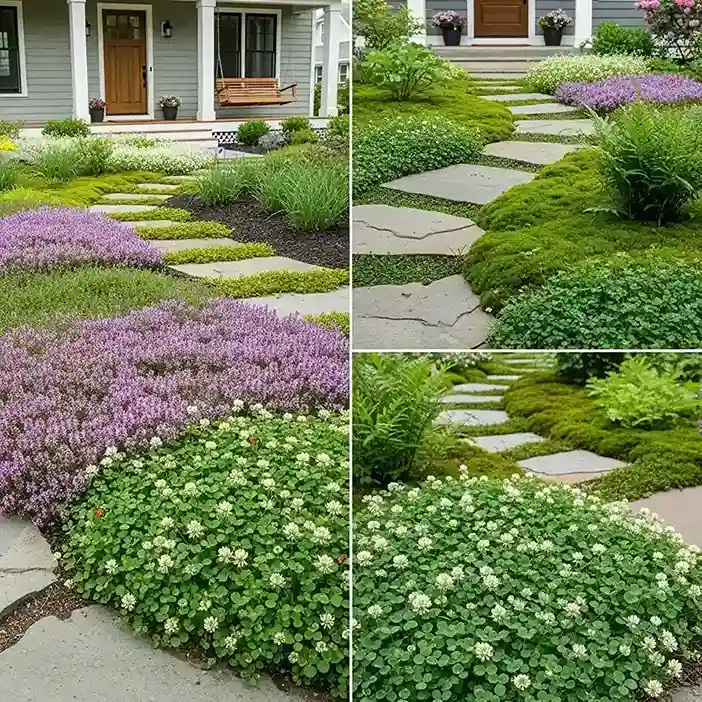
Transition gradually by converting high-visibility areas first, expanding groundcover zones as plants establish. Some groundcovers tolerate light foot traffic while others suit visual-only applications. This progressive approach demonstrates commitment to sustainability while reducing long-term maintenance time and expenses significantly compared to traditional lawn-dominated front yards.
Lighting Landscape Enhancement
Strategic landscape lighting extends front yard enjoyment into evening hours while improving security and dramatically enhancing nighttime curb appeal. Uplighting specimen trees, path lighting walkways, and accent lighting architectural features creates welcoming evening ambiance transforming properties after dark when many neighbors and passersby experience your home’s exterior presentation.
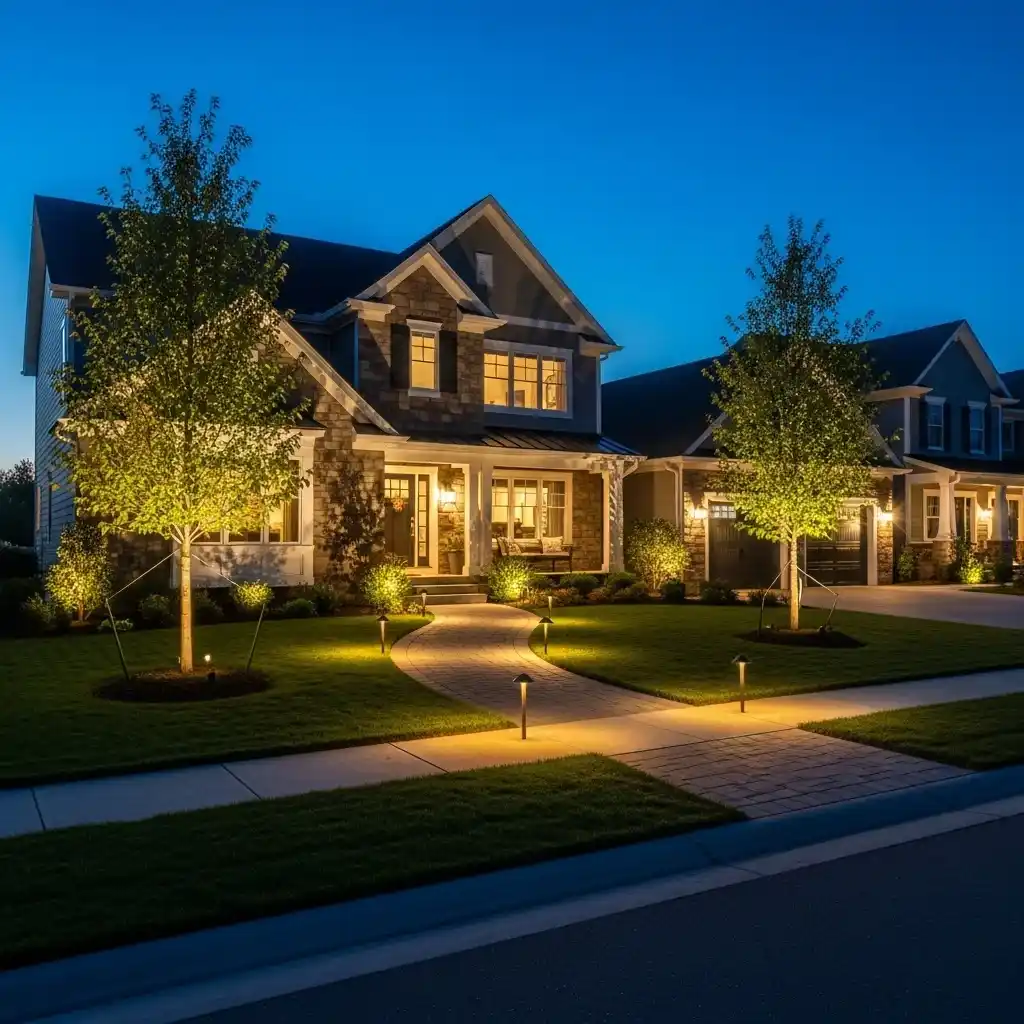
Use LED fixtures for energy efficiency and longevity. Focus on subtle highlighting rather than floodlit brightness creating glare. Properly designed lighting adds dimension and drama impossible during daylight while making homes appear well-cared-for and inviting regardless of viewing time throughout daily cycles.
Native Plant Ecological Gardens
Selecting regionally native plants creates ecologically responsible landscapes supporting local wildlife, requiring minimal supplemental irrigation once established, and resisting regional pests naturally without chemical interventions. Native gardens celebrate regional character while reducing maintenance demands and environmental impacts compared to exotic plant collections requiring ongoing resource inputs.
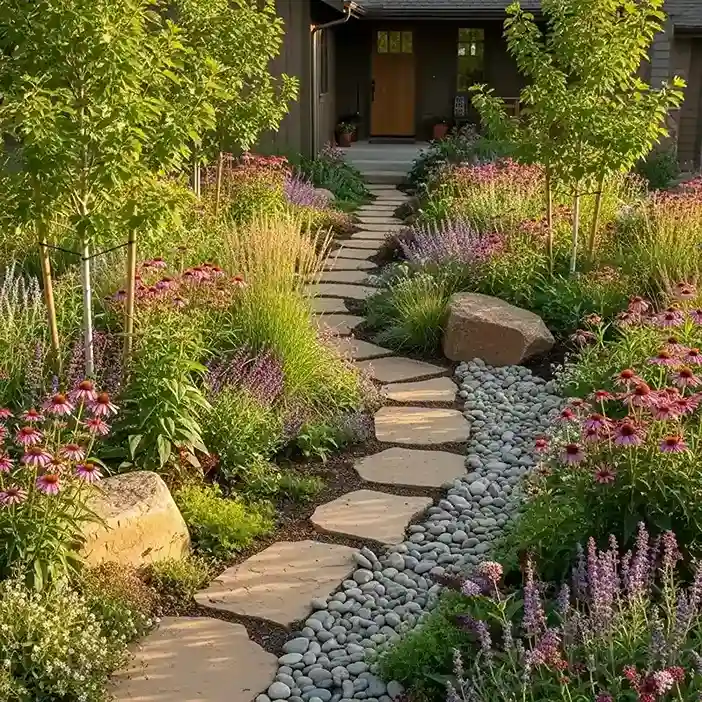
Research plants native to your specific ecoregion rather than broadly native to entire states or countries. Combine natives with compatible non-invasive adapted plants expanding design possibilities while maintaining ecological benefits. This environmentally conscious approach connects properties to surrounding natural ecosystems rather than creating isolated landscape bubbles dependent on intensive management.
Vertical Garden Elements
Incorporating vertical growing surfaces including trellises, arbors, and living walls maximizes planting space in compact front yards while adding architectural dimension. Climbing roses, clematis, or evergreen vines transform flat surfaces into living tapestries providing privacy screening, seasonal flowers, and textural variety that horizontal plantings alone cannot achieve effectively.
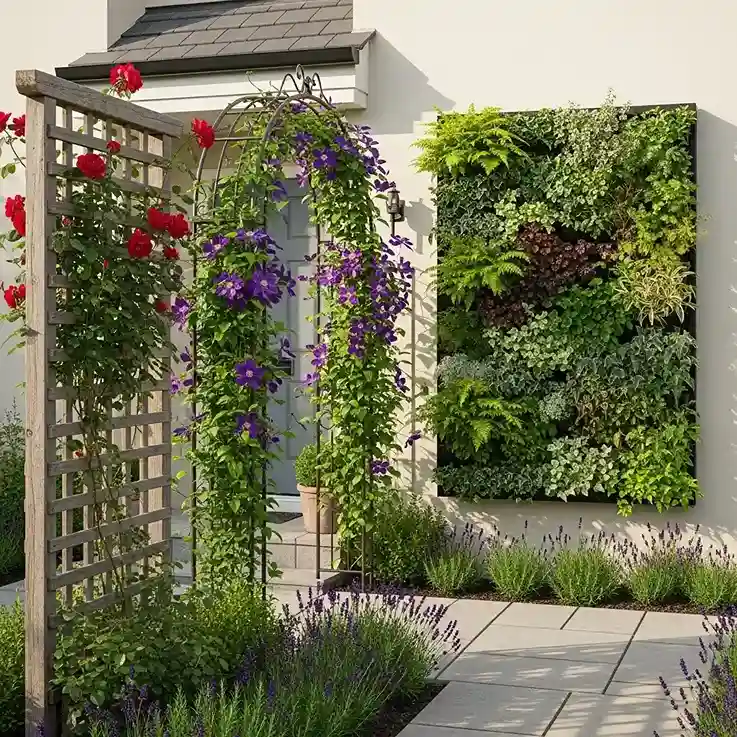
Position vertical elements framing entries, concealing utility boxes, or creating architectural focal points where ground space limitations prevent traditional bed expansion. This space-efficient approach reflects small garden ideas maximizing limited square footage through strategic vertical growing capitalizing on underutilized dimensional opportunities.
Container Garden Flexibility
Strategic container plantings flanking entries, lining walkways, or accenting key focal points provide portable color and flexibility impossible with in-ground plantings. Containers allow experimenting with plant combinations, moving displays for optimal sun exposure, and refreshing appearances instantly by simply replacing pots rather than redesigning entire beds.

Choose containers proportional to home scale—larger pots for substantial homes, modest containers for cottages. Group containers in odd numbers for natural arrangements. This adaptable approach works beautifully within house plant display ideas principles extended outdoors, creating cohesive indoor-outdoor design continuity.
Slope Terracing Solutions
Converting challenging front yard slopes into terraced levels creates usable planting beds while controlling erosion and adding architectural interest through retaining walls and varied elevations. Multiple terraces break up monotonous slopes while providing level growing areas for plants struggling on steep grades where water runs off before penetrating soil effectively.
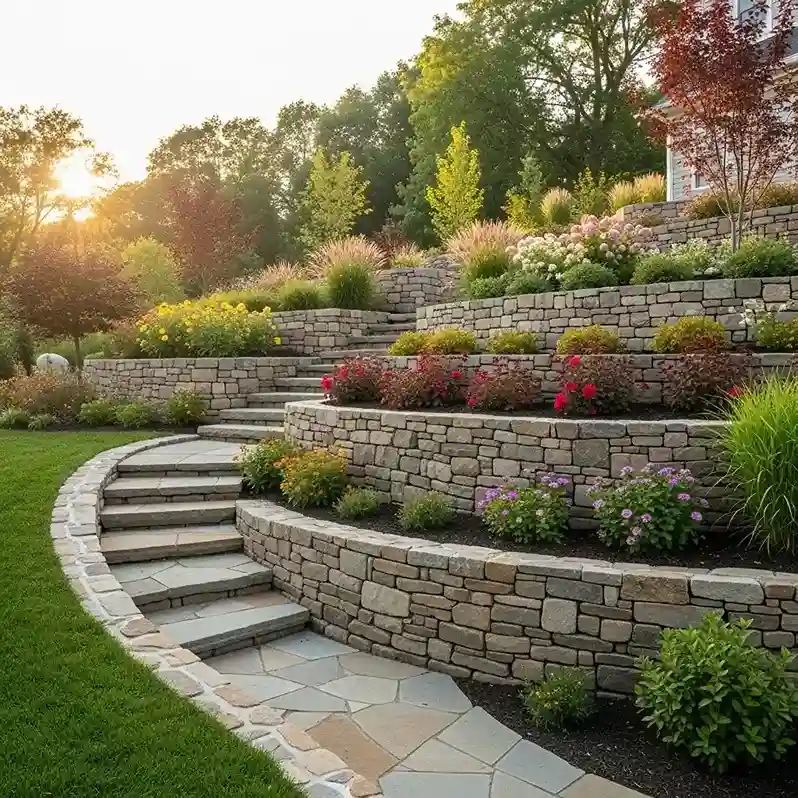
Build terraces using stone, timber, or brick retaining walls appropriate to home architecture. Plant terraces with varied heights creating visual layers. This practical solution transforms problem slopes into design opportunities showcasing creativity while solving legitimate drainage and planting challenges through thoughtful terraced construction.
Parking Strip Gardens
Transforming narrow planting strips between sidewalks and streets into attractive gardens maximizes every square foot of front yard space. These often-neglected zones become opportunities for colorful displays using tough, drought-tolerant plants withstanding harsh conditions including reflected heat, salt exposure, compacted soil, and occasional foot traffic without constant maintenance demands.
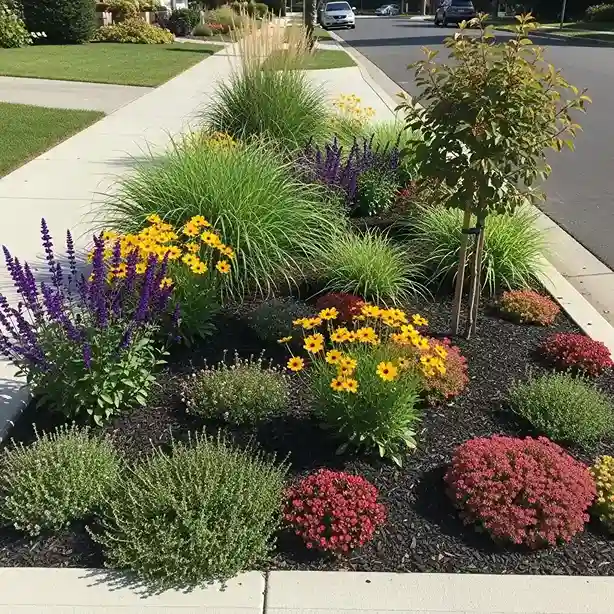
Choose low-growing plants preventing sightline obstruction for drivers and pedestrians. Avoid plants with thorns, allergenic properties, or attractive fruits creating sidewalk mess. This space-maximizing approach demonstrates attention to detail extending landscape design beyond traditional front yard boundaries into public-adjacent zones enhancing neighborhood streetscapes.
Privacy Screening Plantings
Strategic evergreen plantings create natural privacy screens buffering front yards from street traffic, sidewalks, or neighboring properties without resorting to harsh fence installations. Layered shrub borders using mixed evergreens at varied heights create attractive living walls providing year-round screening while supporting wildlife and improving air quality compared to manufactured privacy barriers.

Connect privacy screening strategies with privacy fence ideas that combine living plants with architectural elements creating layered privacy solutions. Plant screens several feet from property lines allowing maintenance access and preventing neighborly disputes over encroaching vegetation crossing boundaries without permission.
Water Feature Focal Points
Incorporating small fountains, bubbling urns, or naturalistic pond features adds soothing water sounds and movement attracting birds while creating distinctive focal points differentiating properties from neighboring landscapes. Water features range from simple container fountains costing hundreds to elaborate pond installations requiring thousands, accommodating varied budgets while delivering similar peaceful ambiance and visual interest.
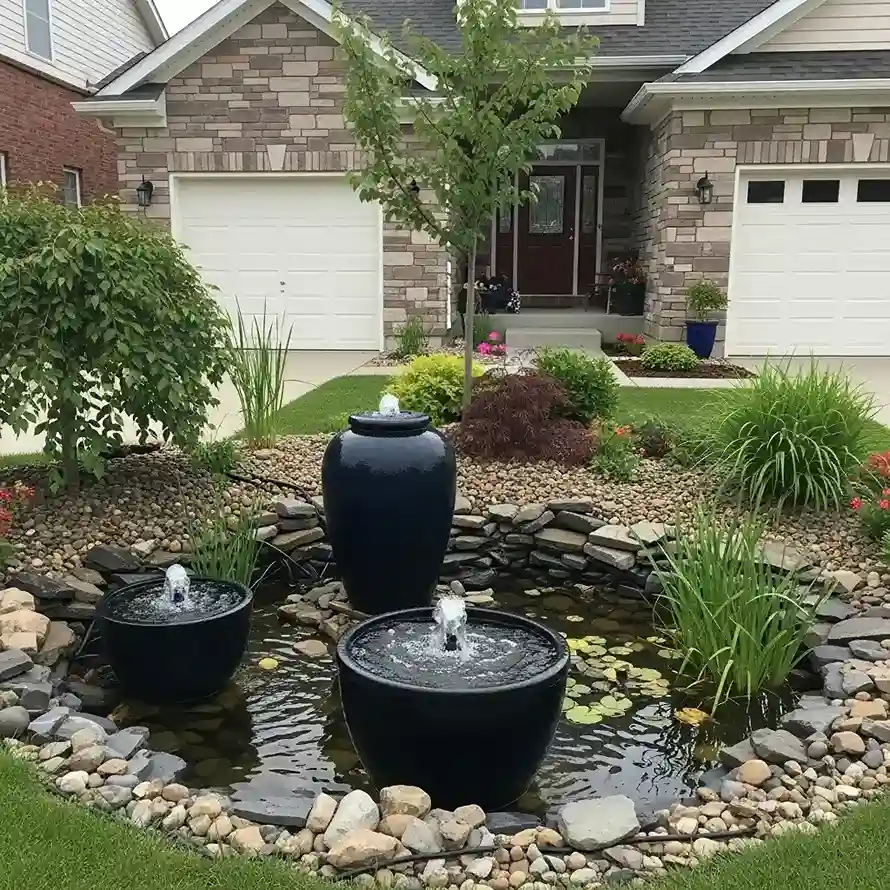
Position water features where sounds reach entries and primary windows maximizing enjoyment. Ensure adequate electrical access for pumps. This luxurious enhancement connects to water plants guide principles creating aquatic habitats supporting specialized plant collections adding botanical diversity to standard terrestrial front yard plantings.
Mixed Shrub Borders
Combining multiple shrub varieties in layered borders creates textural richness and continuous seasonal interest through varied bloom times, foliage colors, and growth habits. Mixed borders prevent monotonous appearances while reducing pest vulnerability compared to monoculture plantings where single species infestations devastate entire displays instantly.

Repeat favorite shrubs throughout borders creating visual rhythm while varying combinations preventing predictability. Include evergreen, deciduous flowering, and foliage-focused varieties ensuring multi-season appeal. This diverse approach creates dynamic compositions evolving throughout years as individual plants mature at different rates contributing to landscape’s developing character.
Low-Maintenance Sustainable Design
Designing front yards prioritizing sustainability and minimal ongoing maintenance creates landscapes requiring fewer inputs while maintaining attractive appearances. Strategic plant selections, efficient irrigation, organic mulches, and native species reduce water consumption, chemical dependence, and labor hours while producing environmentally responsible landscapes aligned with contemporary ecological values.
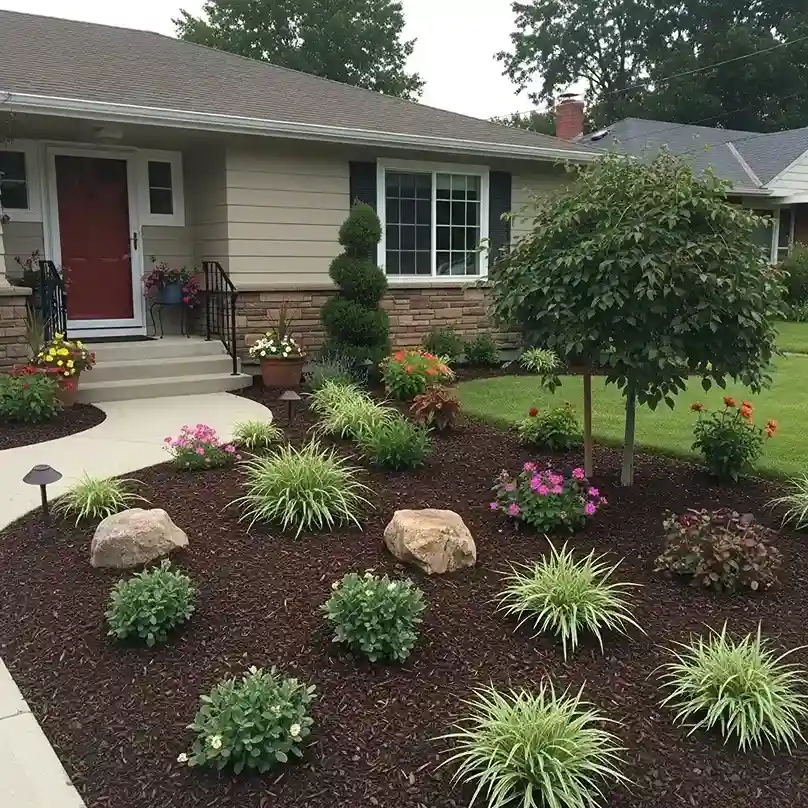
Group plants by water and maintenance needs, concentrating high-maintenance areas near entries where they receive more attention. Allow some informal naturalness rather than demanding constant perfection. This practical philosophy creates landscapes serving owners rather than enslaving them to endless maintenance schedules disrupting lifestyle enjoyment.
Frequently Asked Questions
How much does front yard landscaping cost?
Costs vary dramatically from DIY projects under $500 using plants, mulch, and sweat equity to professional installations exceeding $10,000 for comprehensive designs including hardscaping, mature plants, irrigation, and lighting. Most homeowners spend $3,000-7,000 for professional mid-range front yard renovations.
What are the best low-maintenance front yard plants?
Shrubs like boxwood, holly, and spirea; perennials including daylilies, hostas, and sedum; ornamental grasses; and groundcovers like vinca or liriope offer attractive appearances with minimal care requirements once established in appropriate climate zones.
How do I increase curb appeal quickly?
Fresh mulch, edged beds, seasonal annuals in key spots, clean walkways, and simple foundation plantings deliver immediate impact. Remove dead plants, trim overgrown shrubs, and add lighting for rapid transformations achievable within weekends using modest budgets.
Should I hire professionals or DIY landscaping?
DIY works for plant installation, mulching, and basic bed creation if you’re physically able and have time. Hire professionals for hardscaping, grading, irrigation installation, and large tree planting requiring specialized equipment, expertise, and physical capabilities beyond typical homeowner resources.
Final Thoughts
Front yard landscaping transforms properties from ordinary to extraordinary while providing personal enjoyment and measurable financial returns through increased property values and neighborhood appeal. Whether you prioritize formal elegance, cottage charm, modern minimalism, or sustainable ecology, countless design approaches accommodate your aesthetic preferences, maintenance capabilities, and budget constraints.
Start with clear goals identifying your priorities—curb appeal, low maintenance, privacy, seasonal color—then develop cohesive plans integrating plants and hardscape elements supporting those objectives beautifully. Remember that landscapes evolve over time, improving as plants mature and your design skills develop through hands-on experience creating outdoor spaces reflecting your unique vision and enhancing your daily homecoming experience.