Introduction
Most gardens fall silent and dark after sunset. But a garden planted with night-blooming flowers comes alive in a completely different and magical way after dark. These extraordinary plants save their most beautiful display for the moon, the stars, and the cool evening air.
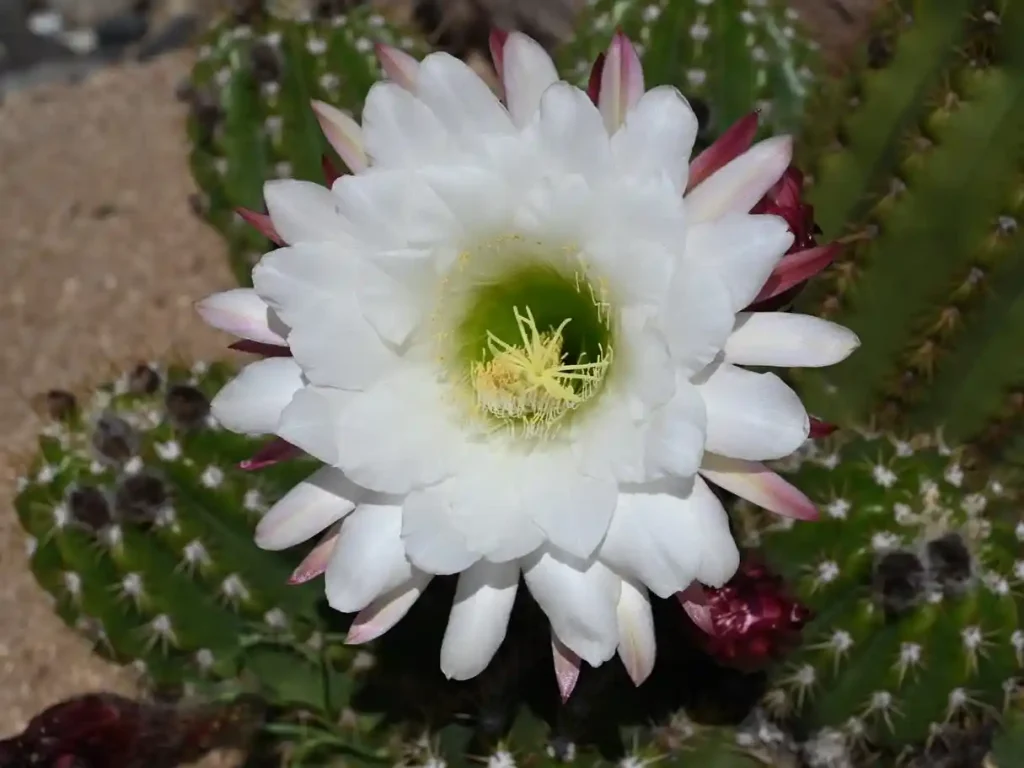
Night-blooming flowers are not just beautiful — they are deeply practical too. Many people only enjoy their garden in the evenings after work or school. A moonlight garden gives you something genuinely spectacular to enjoy during exactly those hours when you actually have time to relax outdoors.
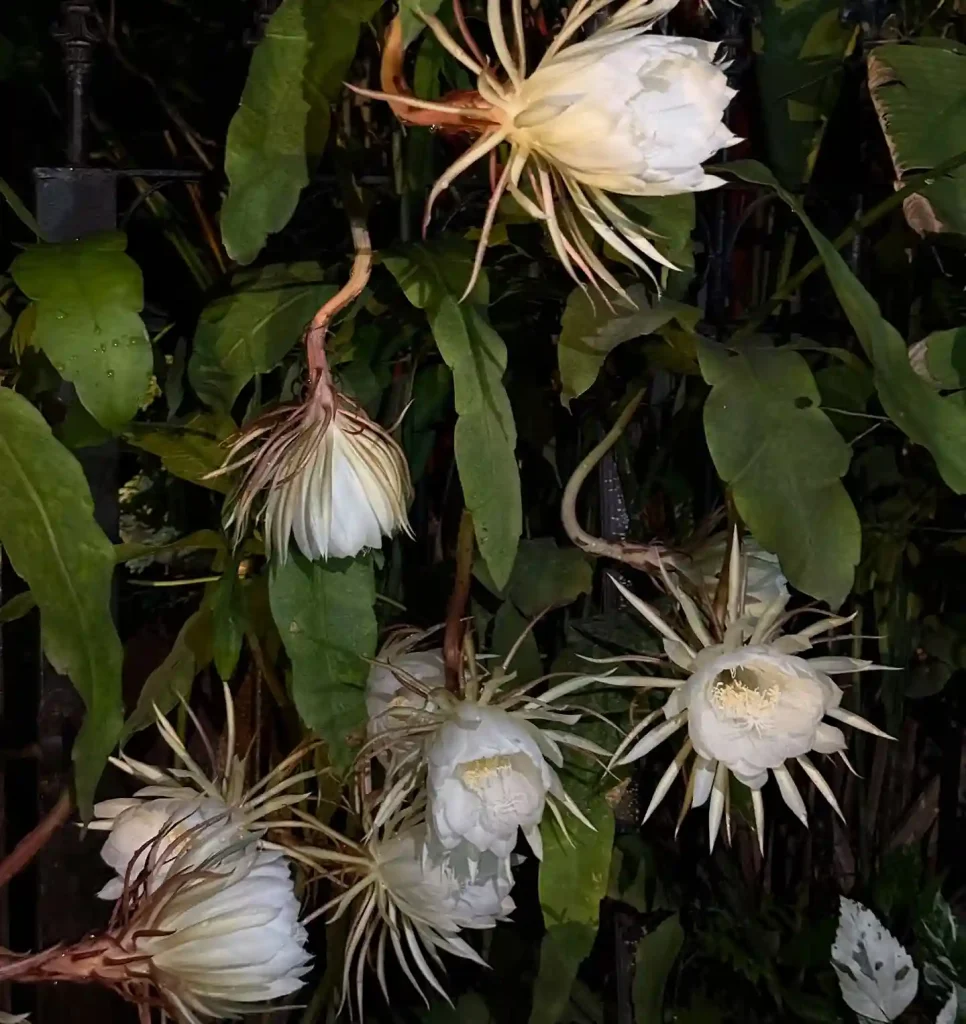
source: @arati.mirji
This guide covers everything you need to know about night-blooming flowers. From the best varieties to grow to design ideas for a complete moonlight garden, you will find all the information you need right here. Get ready to transform your evenings into something truly unforgettable and magical.
1. What Are Night Blooming Flowers and Why Do They Bloom at Night?
Night-blooming flowers are plants that open their petals specifically after sunset and close again during the daytime hours.
This is not accidental — it is a highly evolved survival strategy developed over millions of years. These plants have adapted to be pollinated by nocturnal creatures like moths, bats, and night-flying beetles. You’ll also love seeing shade-loving flowers.
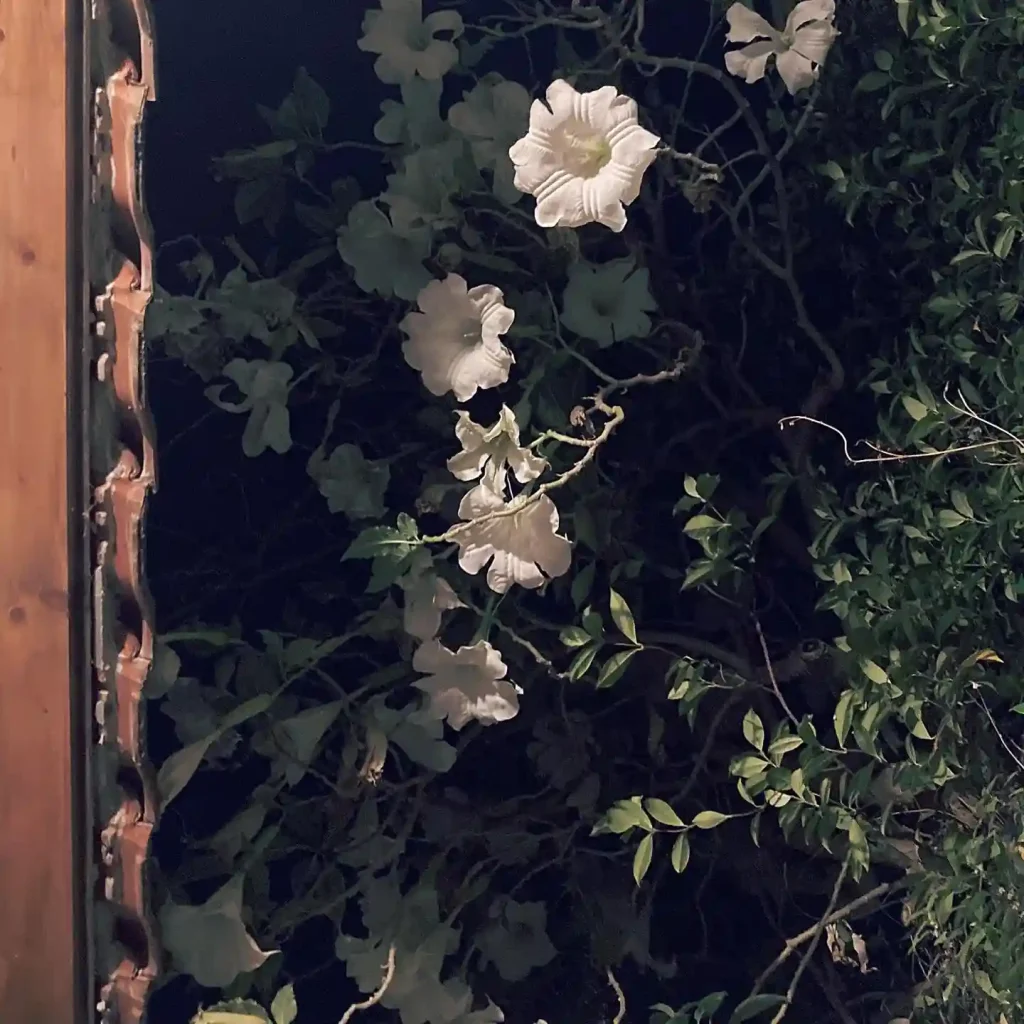
source: @ara_floris
Most night-blooming flowers are white or very pale in color. This is because white reflects moonlight and starlight far more effectively than darker colors.
Their petals glow softly in low light, making them visible and attractive to pollinators in the dark. Many also release powerful fragrances at night to attract pollinators from great distances across the darkness.
Table: Features of Night Blooming Flowers
| Feature | Why It Exists | Benefit to the Plant |
|---|---|---|
| White or pale petals | Reflects moonlight effectively | Visible to nocturnal pollinators |
| Strong evening fragrance | Carries far in cool night air | Attracts moths and bats from distance |
| Opens at dusk | Timed to pollinator activity | Maximum pollination success |
| Large flower size | Easier for large moths to access | More efficient pollen transfer |
| Closes at sunrise | Protects pollen from daytime heat | Preserves reproductive viability |
| Deep tubular shape | Suits long-tongued moth tongues | Forces efficient pollination contact |
2. The Best Night Blooming Flowers: Complete Overview
There are dozens of beautiful night-blooming flowers to choose from across different plant types. Some are annuals that bloom for one season, while others are perennials that return year after year. Understanding which category each flower falls into helps you plan a moonlight garden that has reliable, predictable structure and seasonal interest.
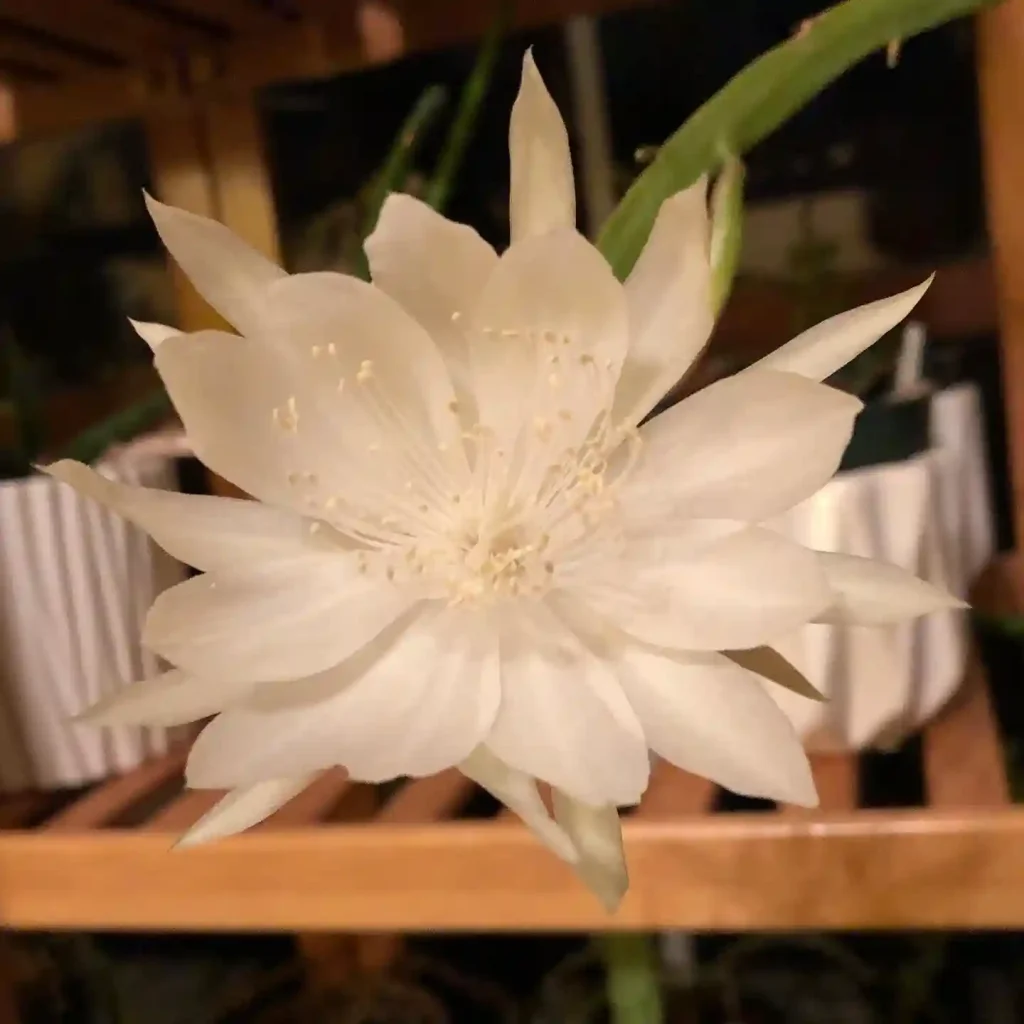
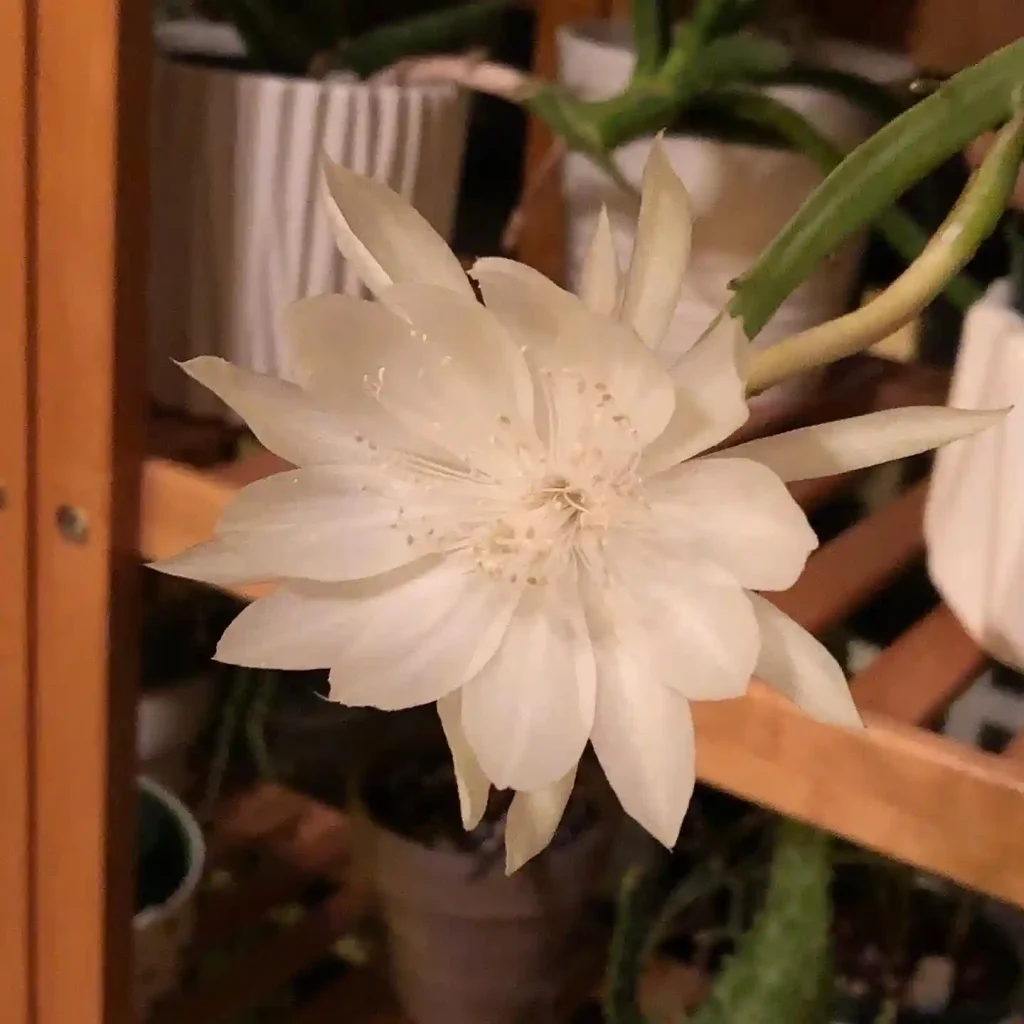
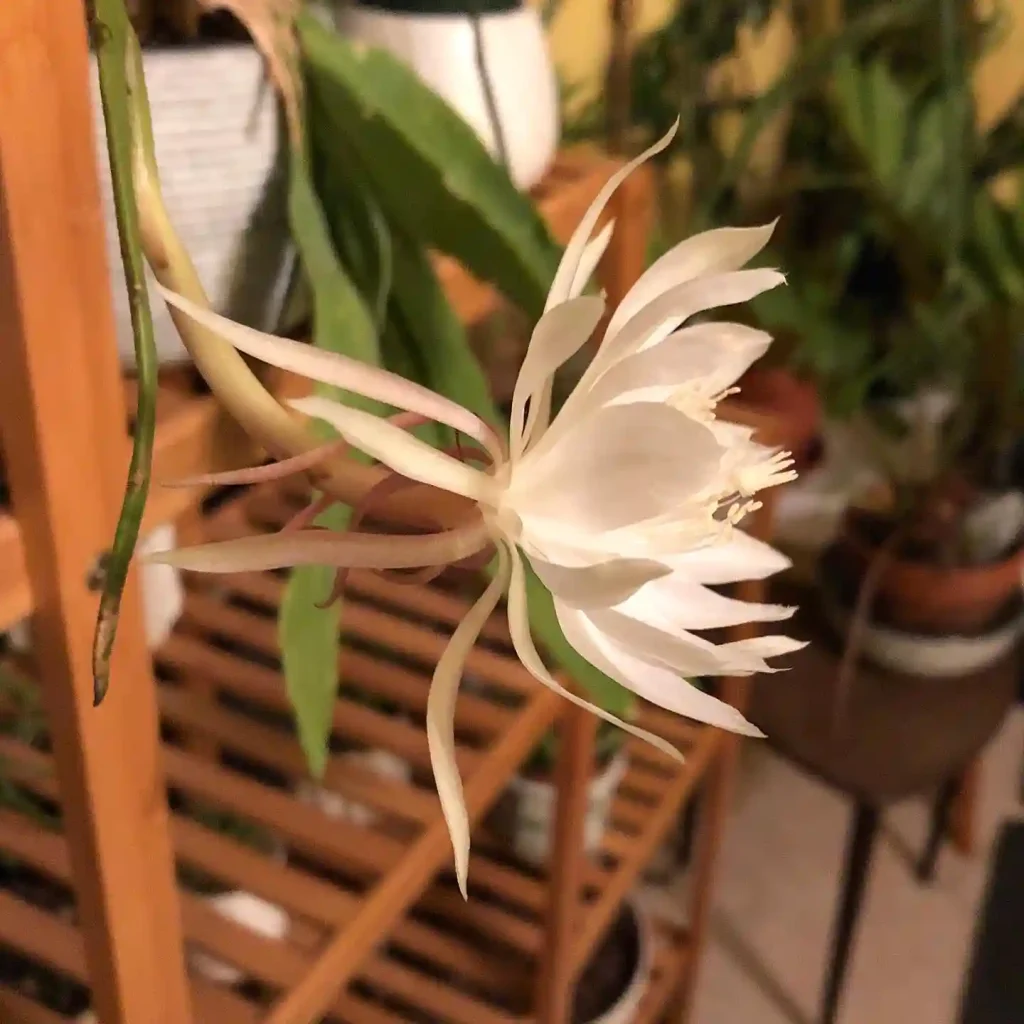
source: @the_swearing_gardener
The flowers listed here range from climbing vines to low ground covers, and from tropical exotics to hardy cottage garden favorites. Together they can create a complete moonlight garden with layers of height, texture, fragrance, and color.
Table: 20 Best Night Blooming Flowers
| # | Flower Name | Type | Color | Fragrance | Bloom Season | Height |
|---|---|---|---|---|---|---|
| 1 | Evening Primrose | Perennial | Yellow | Strong | Summer–Autumn | 60–120cm |
| 2 | Moonflower | Annual Vine | White | Intense | Summer–Frost | 3–6m |
| 3 | Night-Blooming Jasmine | Shrub | White | Powerful | Summer–Autumn | 2–4m |
| 4 | Four O’Clock Flower | Annual/Perennial | Pink, Red, Yellow | Mild | Summer–Frost | 30–90cm |
| 5 | Night-Blooming Cereus | Cactus | White | Strong | Summer | Up to 30cm flower |
| 6 | White Nicotiana | Annual | White | Sweet | Summer–Frost | 30–90cm |
| 7 | Casa Blanca Lily | Perennial Bulb | White | Intense | Midsummer | 90–120cm |
| 8 | Angel’s Trumpet | Shrub/Tree | White, Pink, Yellow | Powerful | Summer–Autumn | 2–5m |
| 9 | Night Phlox | Annual | White/Maroon | Honey-like | Summer | 30–45cm |
| 10 | Stock | Annual/Biennial | White, Pink, Purple | Clove-like | Spring–Summer | 30–75cm |
| 11 | Tuberose | Perennial Bulb | White | Intense | Late Summer | 60–90cm |
| 12 | White Petunia | Annual | White | Sweet | Summer–Frost | 20–40cm |
| 13 | Moonflower Vine | Annual Vine | White | Strong | Summer–Frost | 3–6m |
| 14 | Dusty Miller | Annual | Silver foliage | None | Foliage | 20–40cm |
| 15 | White Roses | Perennial Shrub | White | Mild–Strong | Summer | 60–200cm |
| 16 | Night-Blooming Water Lily | Aquatic Perennial | White, Pink, Purple | Mild | Summer | Floating |
| 17 | Zaluzianskya | Annual | White/Red reverse | Candy-sweet | Summer–Autumn | 15–30cm |
| 18 | White Gaura | Perennial | White/Pink | None | Summer–Autumn | 60–120cm |
| 19 | Dame’s Rocket | Biennial/Perennial | White, Purple | Sweet | Late Spring–Summer | 60–90cm |
| 20 | Night-Blooming Catchfly | Annual | White | Sweet | Summer | 30–60cm |
3. Evening Primrose (Oenothera biennis)
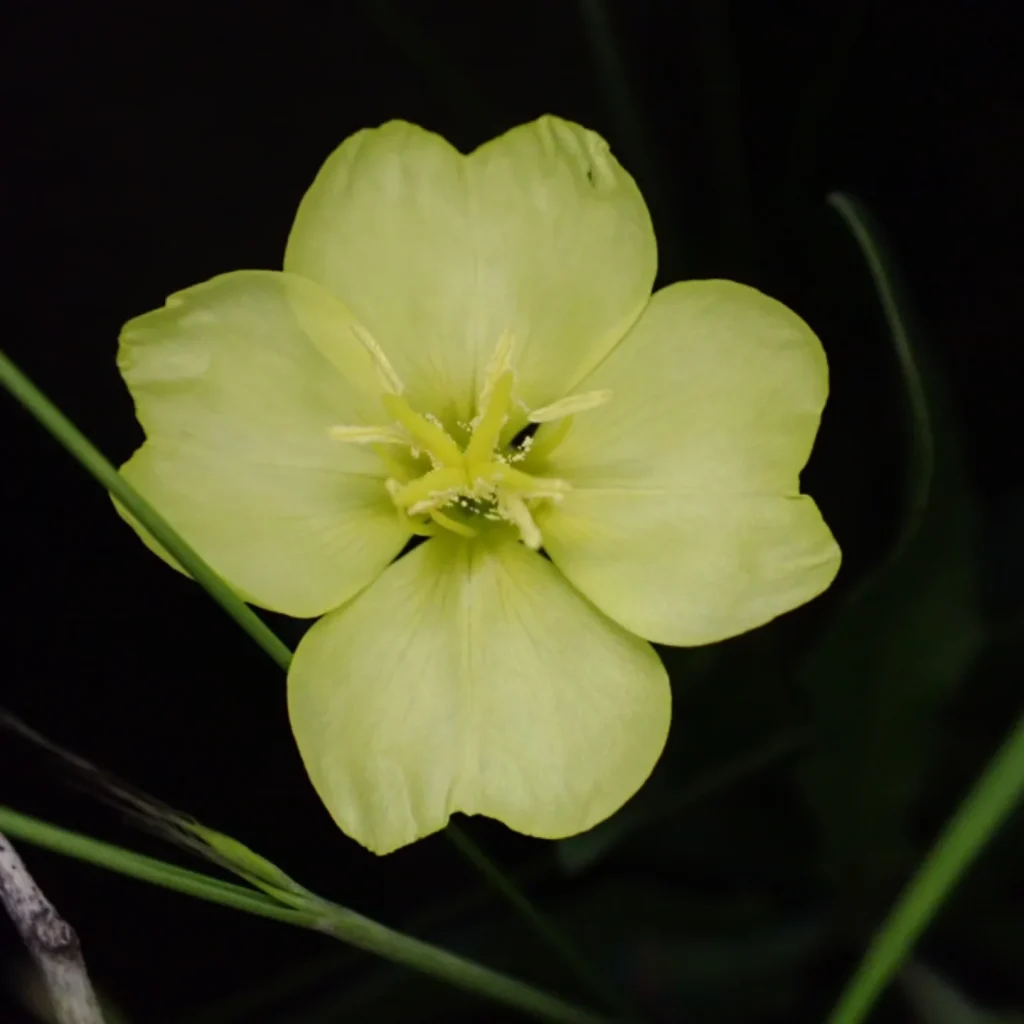
Evening Primrose is one of the most iconic and beloved of all night-blooming wildflowers. Its large, soft-yellow, four-petaled flowers open within minutes of sunset in a display that is genuinely exciting to watch in real time. The blooms are delicate and luminous in the evening light, glowing warmly against dark foliage as dusk falls.
source: @macomorry
It is a biennial or short-lived perennial that self-seeds prolifically once established. Plant it in full sun to partial shade in well-drained, even poor soil — it actually thrives on neglect.
4. Moonflower (Ipomoea alba)
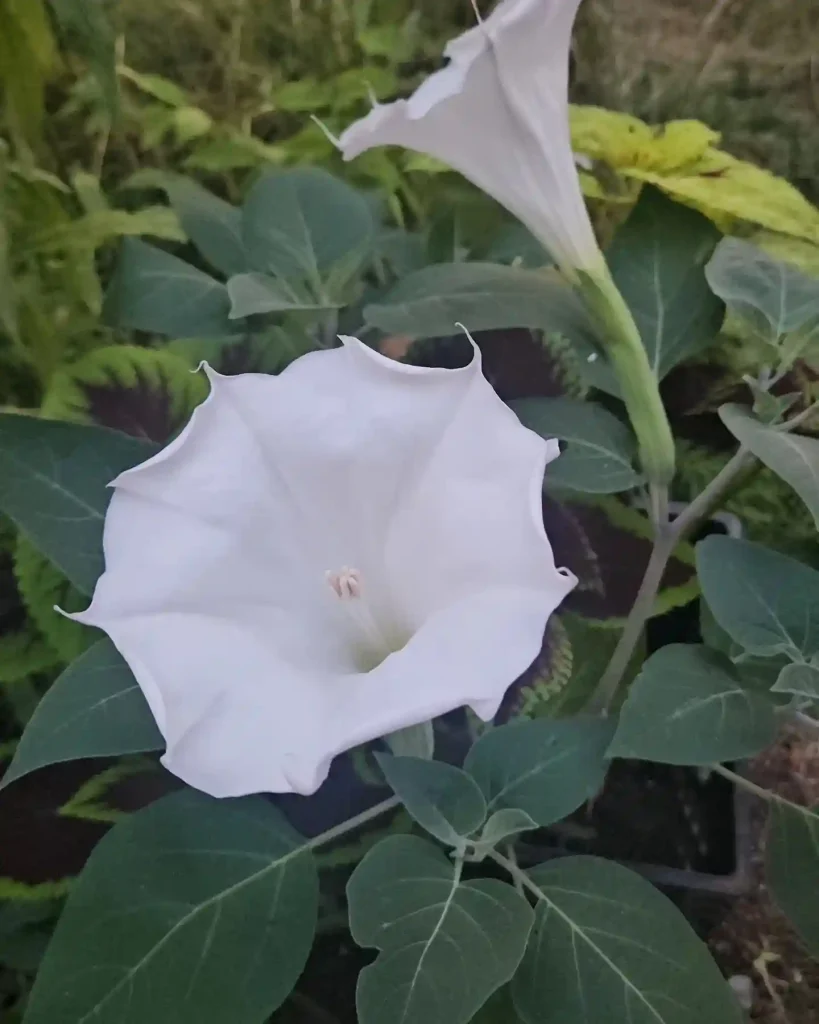
Moonflower is the queen of all night-blooming plants and one of the most stunning garden vines in existence. Its enormous, perfectly round, snow-white flowers open magically at dusk and each bloom can reach up to 15cm across. The flowers release a powerful, sweet fragrance that fills the entire garden with an intoxicating scent on warm summer evenings.
source: @lifewithjolyn
It is a fast-growing tropical vine that can reach 6 metres in a single growing season. Train it over a pergola, arch, or fence for the most dramatic possible display. Soak the seeds overnight before planting to improve germination speed and success rates significantly. See Japanese garden plants for more interesting information.
5. Night-Blooming Jasmine (Cestrum nocturnum)
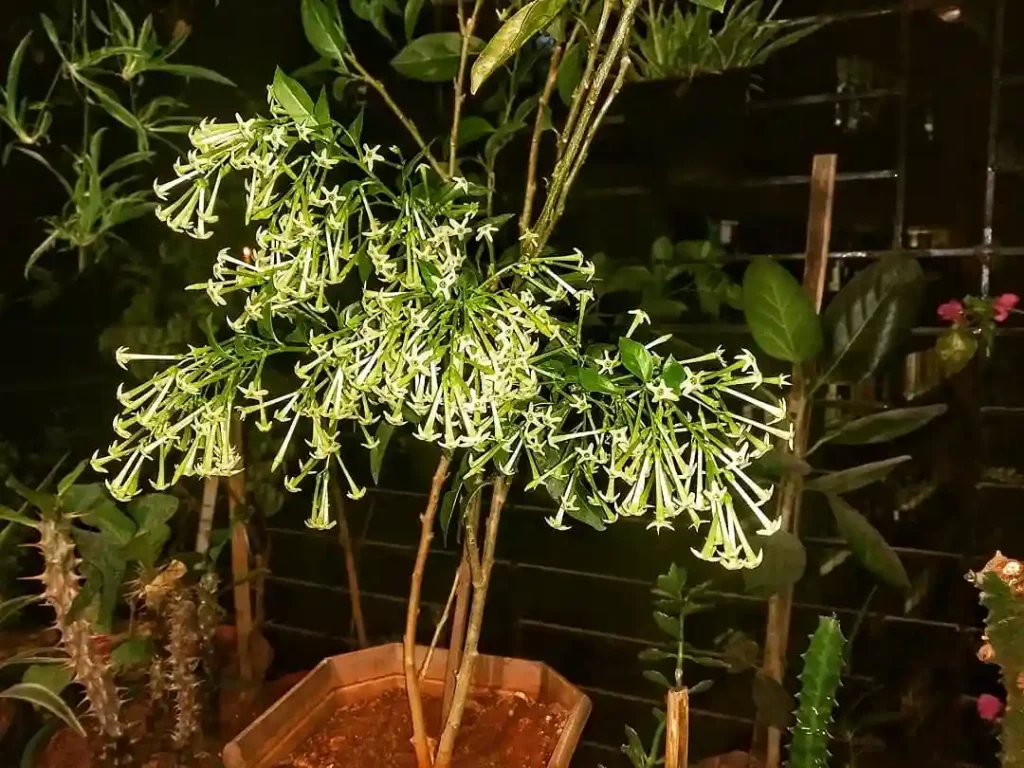
Night-Blooming Jasmine, also known as Queen of the Night, produces clusters of small, tubular greenish-white flowers that seem unremarkable by day.
But at night these modest flowers release one of the most powerful and intoxicating fragrances in the entire plant world. A single plant can perfume an entire garden and even neighboring gardens with its extraordinary evening scent.
It grows as a large evergreen shrub in frost-free climates. In colder areas grow it in a large container and bring it indoors for winter. Position it near a patio, seating area, or open window where the evening fragrance can be most fully enjoyed.
6. Four O’Clock Flower (Mirabilis jalapa)
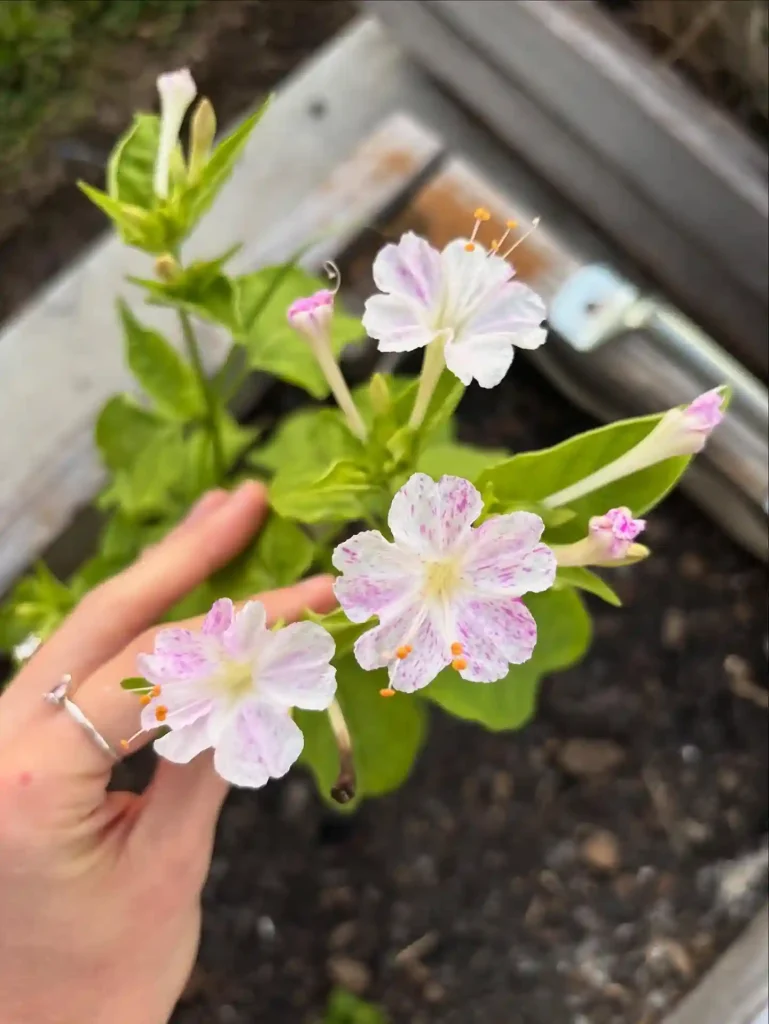
The Four O’Clock Flower gets its delightful name from its habit of opening its trumpet-shaped blooms reliably at around four o’clock in the afternoon every single day. It continues blooming through the night and closes again in the morning sun.
The flowers come in a remarkable range of colors including pink, red, yellow, white, and bicolored striped forms — and different colors often appear on the same plant simultaneously.
source: @thathouseplantig
It grows from large, easy-to-store tubers and performs best in full sun to light shade in well-drained soil. It is wonderfully easy to grow and almost completely pest and disease free.
7. Night-Blooming Cereus (Epiphyllum oxypetalum)
Night-Blooming Cereus is arguably the most dramatic and talked-about night-blooming plant in the world. It blooms only once a year on a single night and the flowers last just a few hours before wilting at dawn. This extraordinary rarity makes the event of its blooming a genuinely special occasion that devoted gardeners eagerly await all year long.
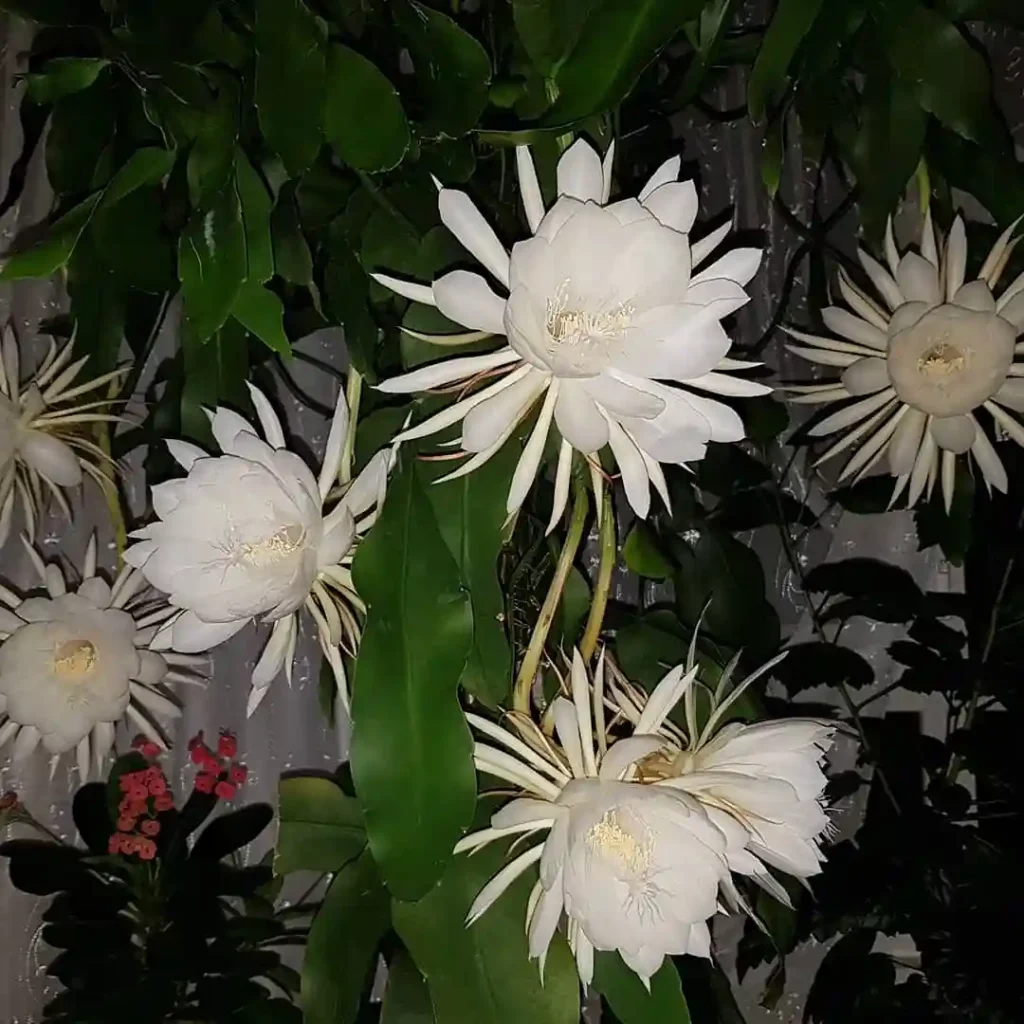
source: @sabiha.kamer
Despite its dramatic reputation, it is surprisingly easy to grow as a houseplant or in a sheltered outdoor position in warm climates. It needs bright indirect light, well-drained soil, and minimal watering.
8. Angel’s Trumpet (Brugmansia species)
Angel’s Trumpet is one of the most spectacular and exotic-looking flowering shrubs you can grow in a garden. Its enormous, pendulous, trumpet-shaped flowers hang in dramatic clusters and can be up to 50cm long in the largest varieties.
They come in white, cream, yellow, peach, pink, and orange, and release a powerful, hypnotic fragrance most strongly during the evening and night hours.
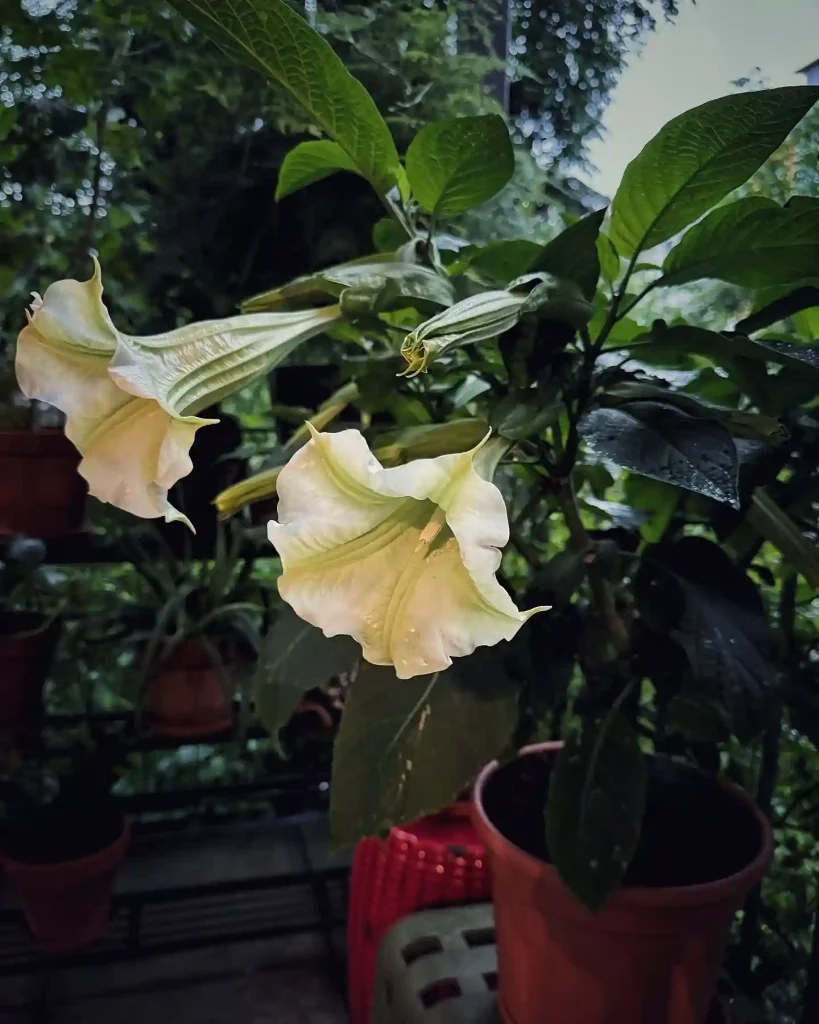
source: @jan_hyr
It grows best in a large container that can be moved to a frost-free position in winter. Warning: All parts of the plant can be toxic, so always handle with gloves and keep well away from young children and pets.
Table: Angel’s Trumpet (Brugmansia) Varieties
| Variety | Flower Color | Fragrance Intensity | Plant Size |
|---|---|---|---|
| B. suaveolens | White | Very Strong | 2–3m |
| B. aurea | Golden Yellow | Strong | 3–5m |
| B. sanguinea | Orange-Red | Mild (daytime) | 2–4m |
| B. arborea | White | Moderate | 2–4m |
| B. versicolor | White to Peach | Very Strong | 3–5m |
| ‘Charles Grimaldi’ | Golden Orange | Intense | 2–3m |
9. Night Phlox (Zaluzianskya capensis)
Night Phlox is a little-known but utterly enchanting annual from South Africa that deserves to be in every moonlight garden. By day its flowers are closed and the deep maroon reverse of the petals is all you see.
At dusk the flowers open to reveal a snow-white face and release an extraordinary fragrance described as a combination of honey, vanilla, and almond — one of the sweetest scents in the entire plant world.
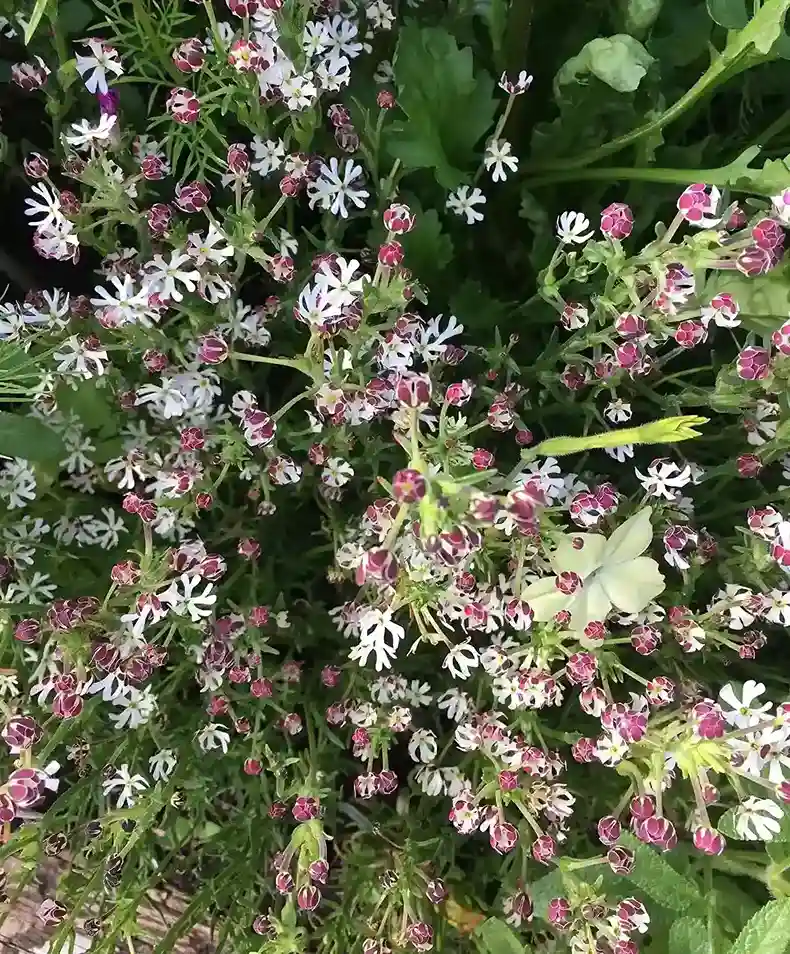
source: @annabel.grey
It grows in a compact, bushy habit and is perfect for containers, window boxes, and the fronts of borders where the fragrance can drift most effectively to nearby seating areas.
10. Tuberose (Polianthes tuberosa)
Tuberose is one of the most intensely fragrant flowers in the world and has been prized by perfumers for centuries for its rich, heady, almost narcotic scent. Its tall spikes of waxy white flowers open from the bottom upward over several weeks, extending the display and the fragrance over a long period in late summer and early autumn. The scent is strongest and most powerful during the evening and night hours.
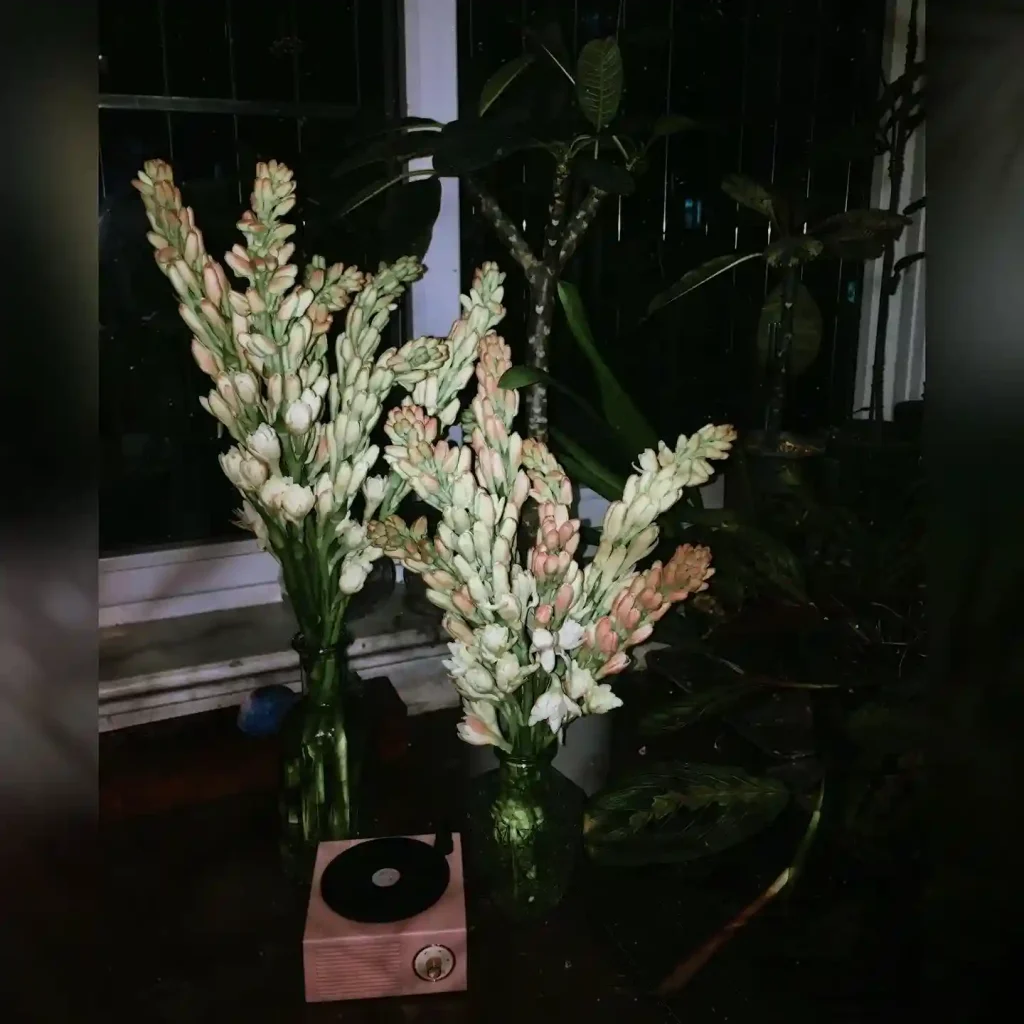
It grows from tubers and needs a long, hot growing season to flower well. Plant tubers in spring in a warm, sunny, sheltered spot in rich, well-drained soil.
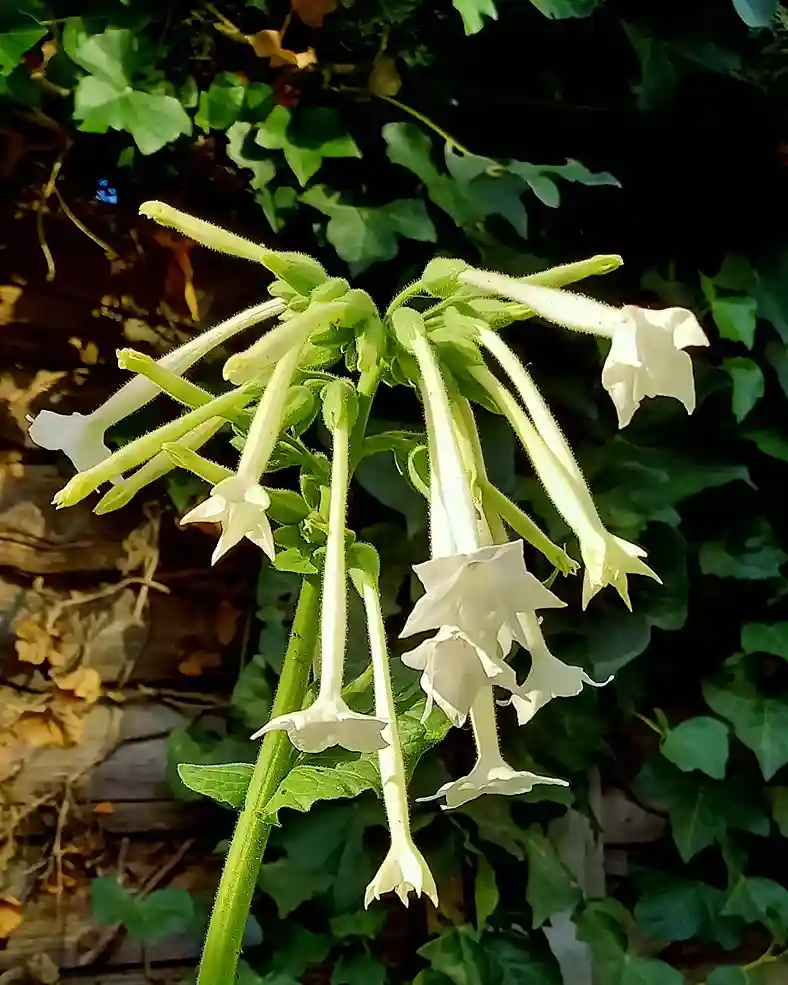
11. White Nicotiana — Flowering Tobacco (Nicotiana sylvestris)
White Nicotiana sylvestris is a tall, dramatic annual that produces large, pendant clusters of long, white tubular flowers on strong upright stems. By day the flowers hang quietly and appear rather unremarkable.
But as evening approaches they lift slightly and begin to release one of the most beautiful sweet fragrances imaginable — light, fresh, and almost luminous on warm evening air.
source: @gerardinegenie
It grows tall and bold, reaching up to 1.5 metres, making it excellent for the back of a border or as a dramatic container plant.
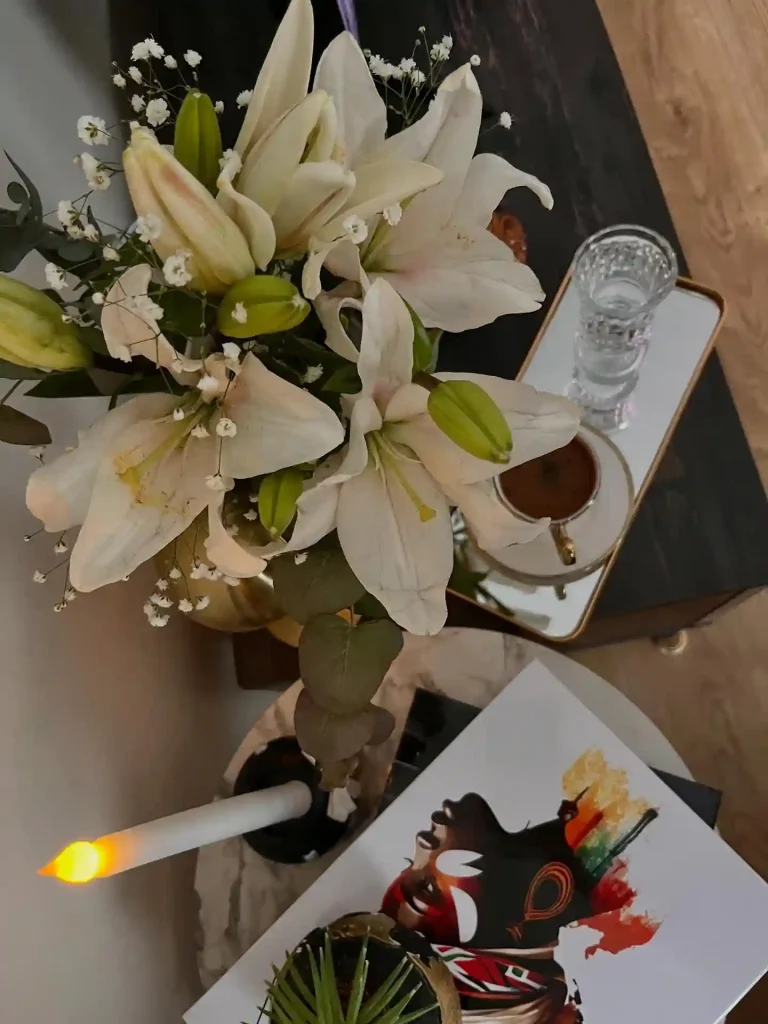
12. Casa Blanca Lily (Lilium ‘Casa Blanca’)
Casa Blanca is widely considered the finest and most beautiful of all white lilies. Its enormous, pure white, bowl-shaped flowers can reach 25cm across and are carried on strong stems that rise to 120cm or more.
The fragrance is rich, sweet, and powerful — filling the entire garden on warm summer evenings with a scent that is both luxurious and completely unforgettable.
Plant the bulbs in autumn or spring in rich, well-drained soil in a sunny position with the base in shade.
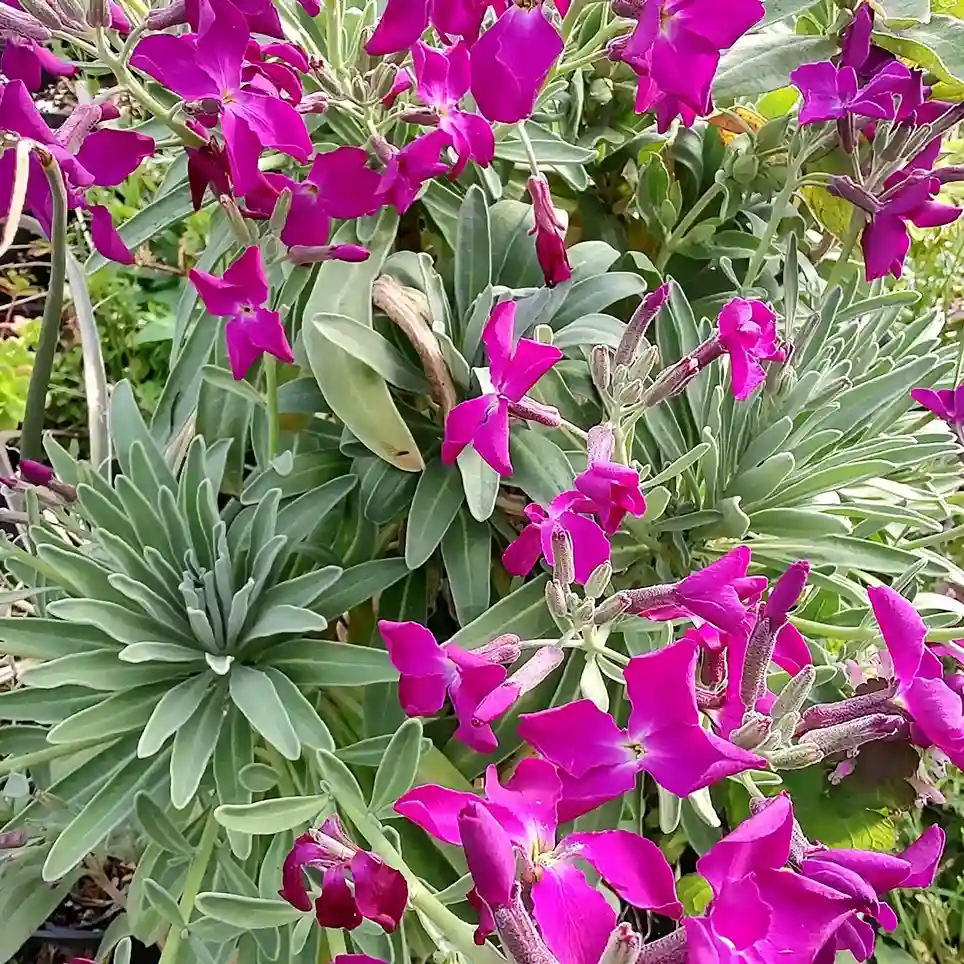
13. Stock (Matthiola incana)
Stock is one of the most richly fragrant of all spring and early summer garden flowers. Its dense spikes of double flowers come in gorgeous shades of white, cream, pink, red, and deep purple.
The fragrance is warm, spicy, and clove-like, and intensifies dramatically in the cool air of the evening — one of the most satisfying and old-fashioned of all garden scents.
source: @malcolmallisonplants
It grows best in cool weather, making it perfect for spring and early summer in most climates. Sow seed in autumn for the earliest spring flowers.
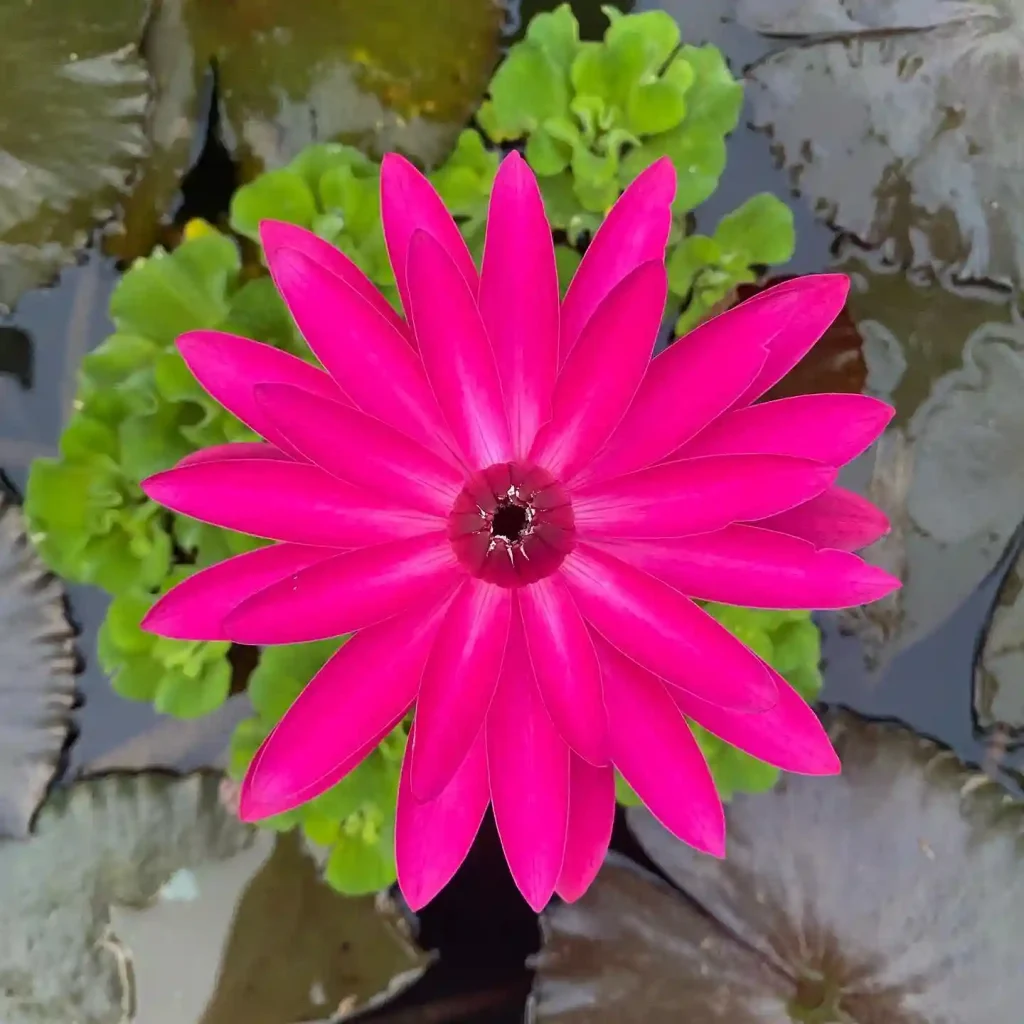
14. Night-Blooming Water Lily (Nymphaea species)
Night-blooming water lilies are extraordinary aquatic plants that open their large, beautiful flowers at dusk and remain open throughout the night until mid-morning the following day.
They come in stunning shades of deep red, rich purple, vivid pink, and pure white. The flowers sit on or just above the water surface and their reflections in still water create a breathtaking double image in the moonlight.
source: @theasiangardener
They need a pond or water feature with still or slow-moving water in full sun. Plant them in submerged containers of heavy clay soil at the appropriate depth for the variety.
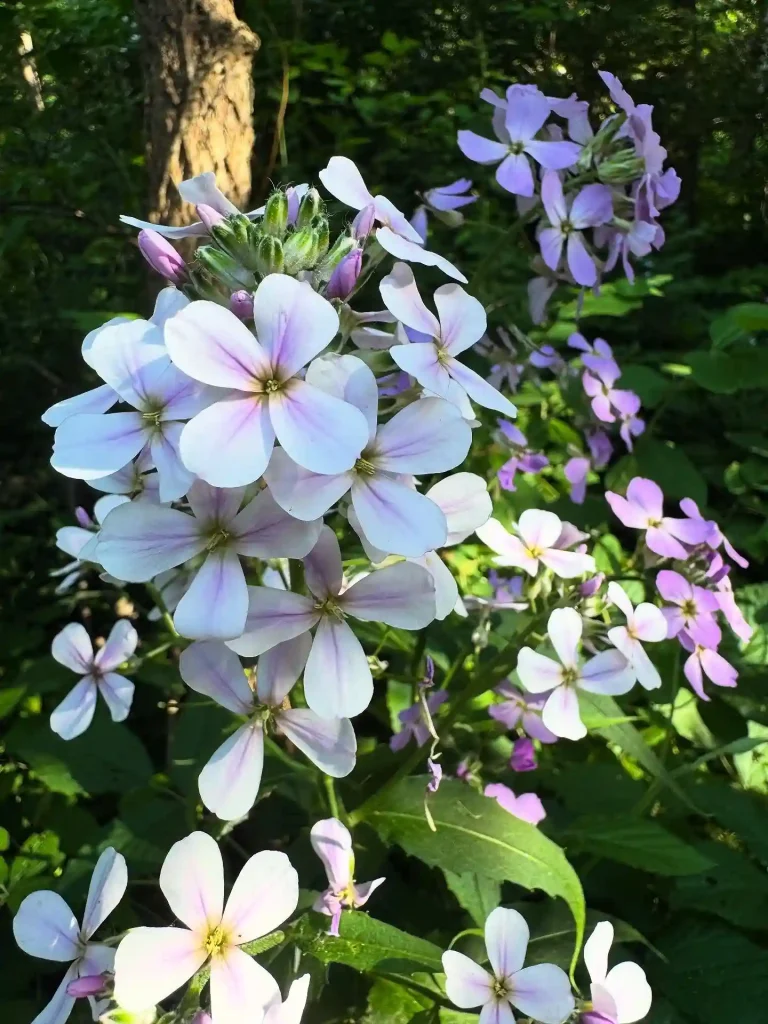
15. Dame’s Rocket (Hesperis matronalis)
Dame’s Rocket is a beautiful and fragrant biennial or short-lived perennial that produces loose clusters of four-petaled flowers in white and shades of purple and lilac.
Its common name refers to its habit of releasing the most powerful and sweet fragrance specifically during the evening hours — the word ‘hesperis’ itself means ‘evening’ in Greek. It is a plant that has been grown and loved in gardens for over four hundred years.
source: @hiking_hippiemama
It self-seeds freely and naturalizes easily in partial shade beneath trees and in woodland garden settings.
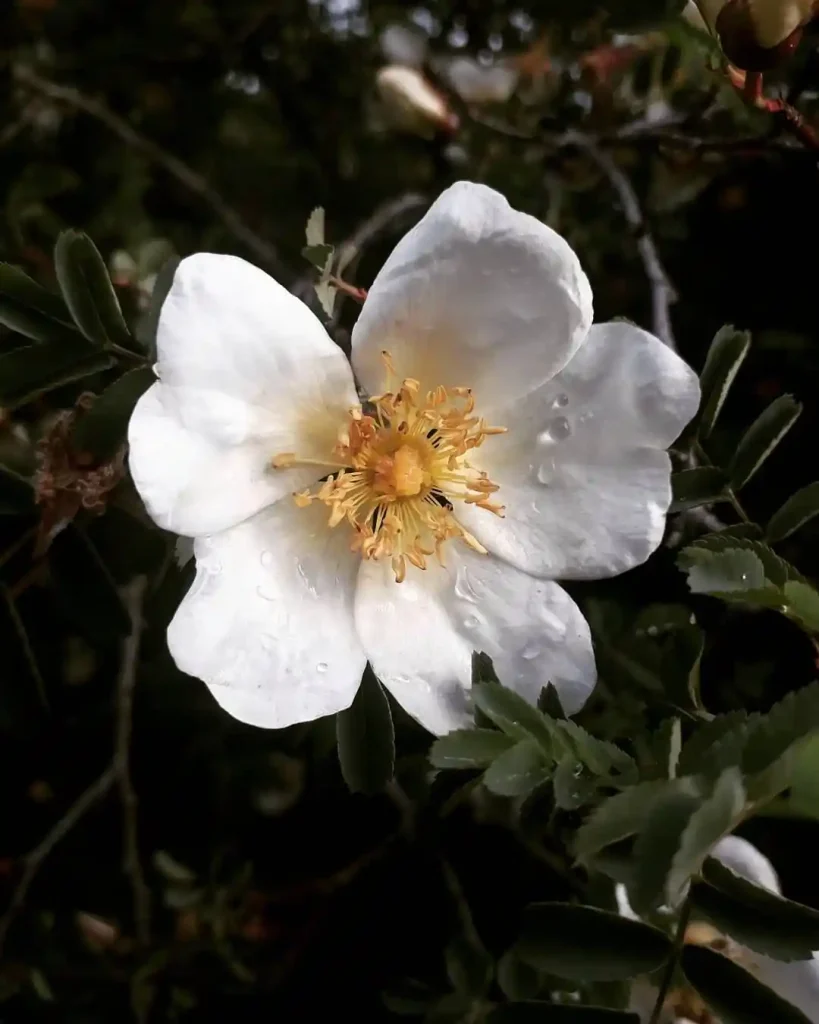
16. White Roses for the Night Garden (Rosa species)
White roses are among the most beautiful and effective plants for a night-time garden. Their pure white petals seem to capture and reflect every available photon of moonlight and starlight, glowing with a soft luminosity that is genuinely romantic and magical after dark. Fragrant white varieties create an experience of almost dreamlike beauty on warm summer evenings.
source: @linum.leonii
Choose strongly fragrant varieties like ‘Iceberg’, ‘Winchester Cathedral’, ‘Madame Hardy’, or ‘Sombreuil’ for the best evening performance.
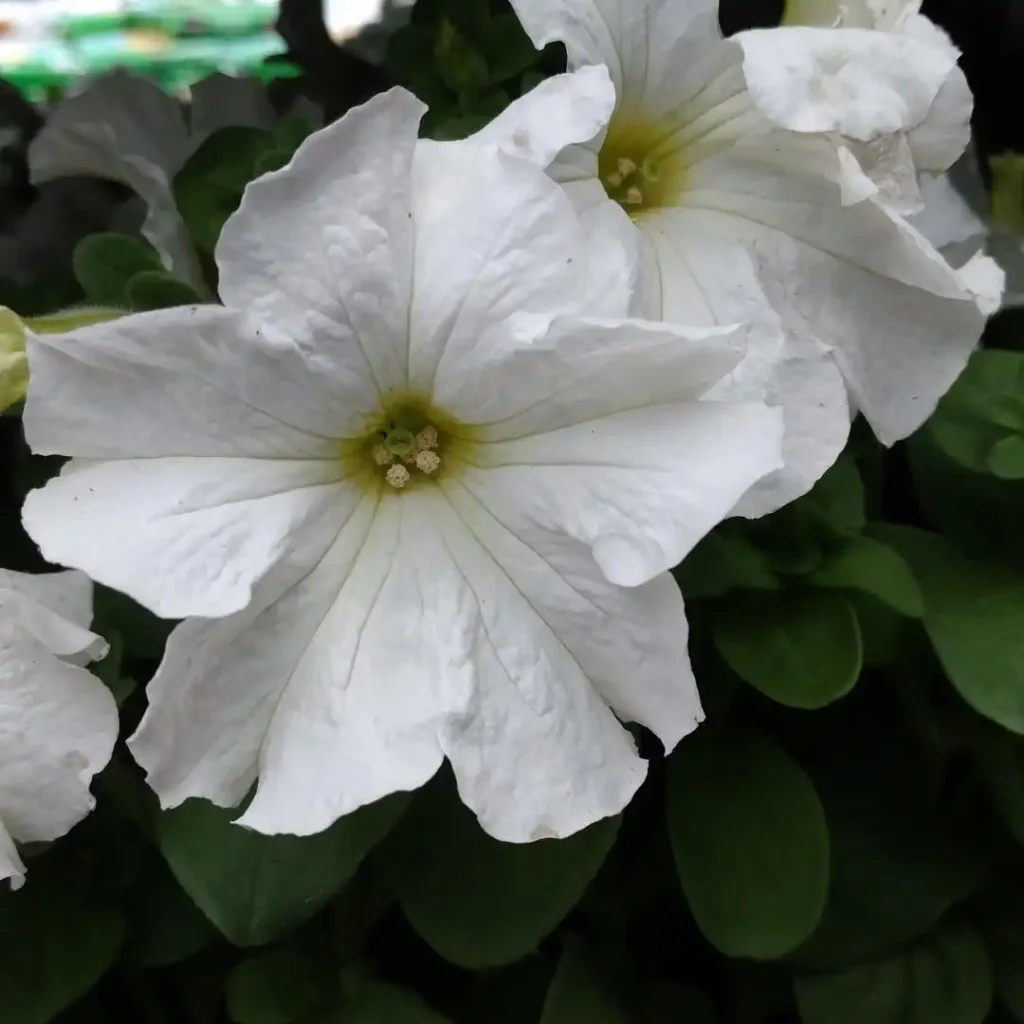
17. White Petunia (Petunia hybrida)
White Petunias are one of the most practical and readily available of all night-garden flowers. Their pure white, trumpet-shaped flowers glow brilliantly in low light and release a pleasant sweet fragrance that intensifies noticeably in the cool air of the evening.
They produce a continuous, season-long display from late spring all the way through to the first autumn frosts without interruption.
source: @gardeningknowhow
They are superb in hanging baskets, window boxes, and mixed containers for shaded patios and evening garden spaces.
18. How to Design a Beautiful Moonlight Garden
A moonlight garden is designed specifically to be at its most beautiful and atmospheric after sunset. The key design principles are simple: use predominantly white and pale-colored flowers, include as many fragrant plants as possible, and layer different plant heights for a full, lush effect. The goal is a garden that glows softly in moonlight and fills the evening air with incredible fragrance.
Position your seating area at the center or focal point of the design so you are surrounded by the flowers and fragrance on all sides. Add pale stone paths and light-colored gravel that reflect available light effectively.
Table: Moonlight Garden Design Zones
| Garden Zone | Recommended Plants | Design Role |
|---|---|---|
| Tall Background | Angel’s Trumpet, Moonflower vine, Night Jasmine, White Nicotiana | Height, drama, and powerful fragrance |
| Mid Border | Tuberose, Casa Blanca Lily, White Roses, Foxglove | Structure and peak fragrance |
| Front Edge | Evening Primrose, Four O’Clock, Night Phlox, White Petunia | Low color and evening fragrance |
| Ground Cover | Sweet Woodruff, White Viola, White Alyssum, Dusty Miller | Pale carpet reflecting moonlight |
| Containers | Moonflower, Angel’s Trumpet, Tuberose, Night Phlox | Moveable fragrant focal points |
| Water Feature | Night Water Lily, White Iris, White Lotus | Reflection and aquatic beauty |
| Climbers on Fence | Moonflower, White Wisteria, White Jasmine | Fragrant vertical screens |
19. Night Garden Fragrance Guide: What Smells Best After Dark?
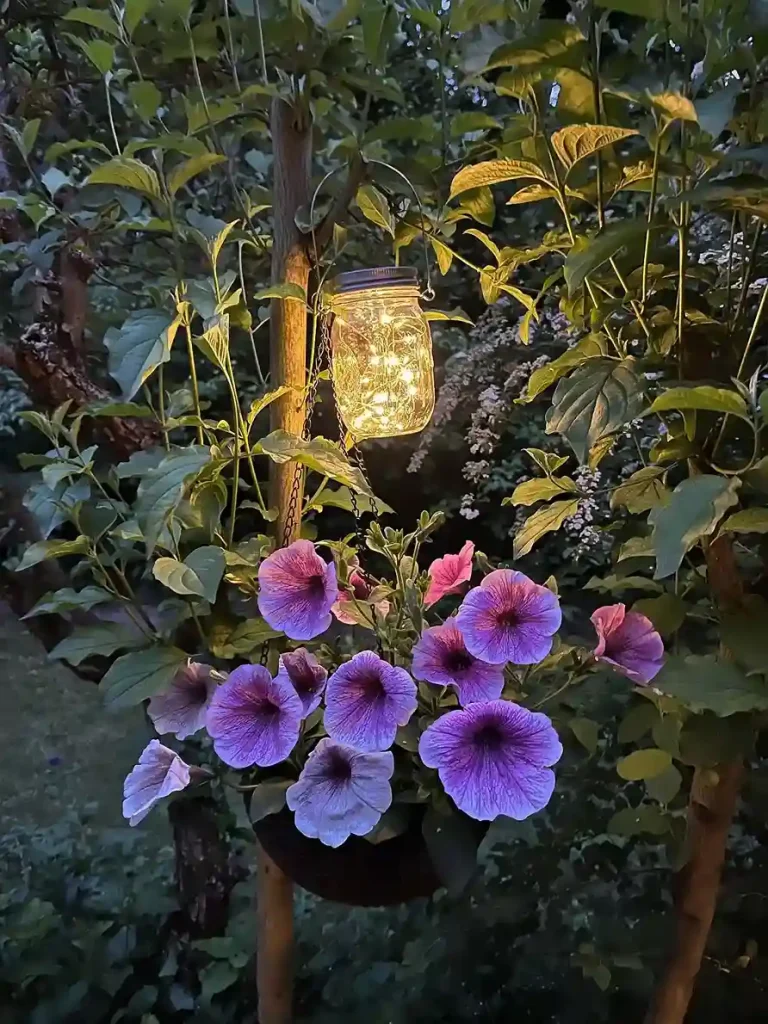
Fragrance is as important as visual beauty in a moonlight garden. When you cannot fully see the flowers in the darkness, the scent takes over completely and creates the atmosphere.
Choosing plants with different fragrance strengths and scent profiles allows you to create a complex, evolving olfactory experience that changes subtly throughout the evening hours.
source: @anaidhappylife
The most powerfully fragrant night bloomers are Night Jasmine, Angel’s Trumpet, Tuberose, and Moonflower. Plant them in a layered sequence so the scent builds as you move through the garden.
Table: Fragrance Guide
| Plant | Scent Profile | Intensity | Best Position |
|---|---|---|---|
| Night-Blooming Jasmine | Sweet, exotic, tropical | Very Strong | Far end of garden |
| Angel’s Trumpet | Heavy, narcotic, complex | Very Strong | Away from seating |
| Tuberose | Rich, buttery, floral | Intense | Mid-garden |
| Moonflower | Sweet, fresh, clean | Strong | Overhead on arch |
| Casa Blanca Lily | Spicy, rich, classic lily | Strong | Mid border |
| White Nicotiana | Light, sweet, clean | Moderate | Near seating |
| Night Phlox | Honey, vanilla, almond | Moderate | Front of border |
| Stock | Clove, spice, warm | Moderate | Path edges |
| Dame’s Rocket | Sweet, violet-like | Gentle | Near entrance |
| Evening Primrose | Light, lemon, fresh | Gentle | Informal borders |
20. Night-Blooming Flowers for Wildlife and Pollinators
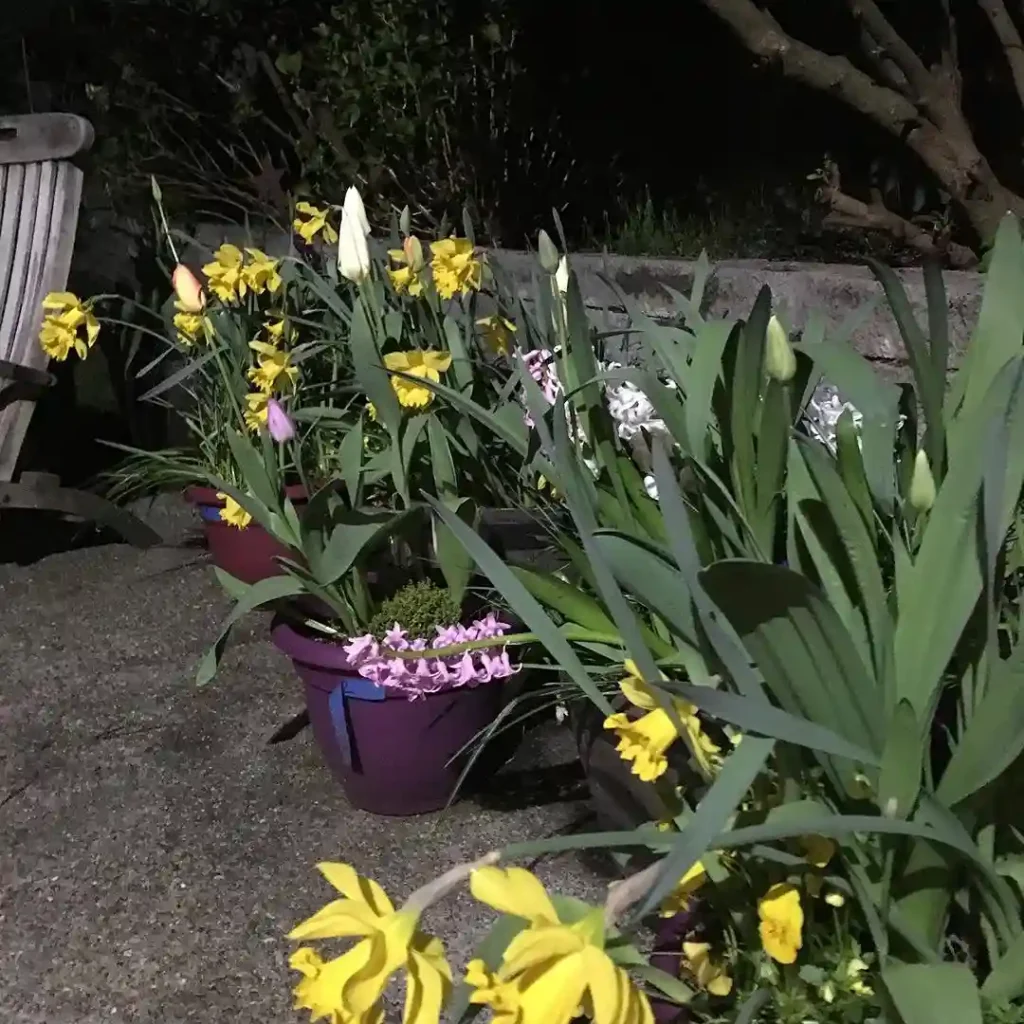
Night-blooming flowers support an often-overlooked community of nocturnal wildlife that is just as important as the daytime pollinators we celebrate. Moths, in particular, are critically important pollinators for many night-blooming flowers and their populations have declined dramatically in recent decades.
Planting a moonlight garden is one of the most meaningful things you can do to support nocturnal biodiversity in your area.
source: @dynamic.load
Bats also visit night gardens to hunt the moths attracted by pale flowers and strong fragrance.
Table: Nocturnal Visitors and Their Preferred Plants
| Nocturnal Visitor | Attracted By | Best Plants to Include |
|---|---|---|
| Hawk Moths | Strong fragrance, tubular flowers | Nicotiana, Evening Primrose, Phlox |
| Bats | Moth activity, pale flowers | Any white fragrant flower |
| Night-Flying Beetles | Light-colored open flowers | Evening Primrose, White Roses |
| Nocturnal Bees | Fragrance, pollen | Four O’Clock, Stock, White Nicotiana |
| Moon Moths | Pale petals, sweet scent | Moonflower, Night Jasmine, Tuberose |
| Fireflies | Moisture, tall grasses nearby | Dame’s Rocket, Evening Primrose |
21. Growing Night Blooming Flowers in Pots and Containers
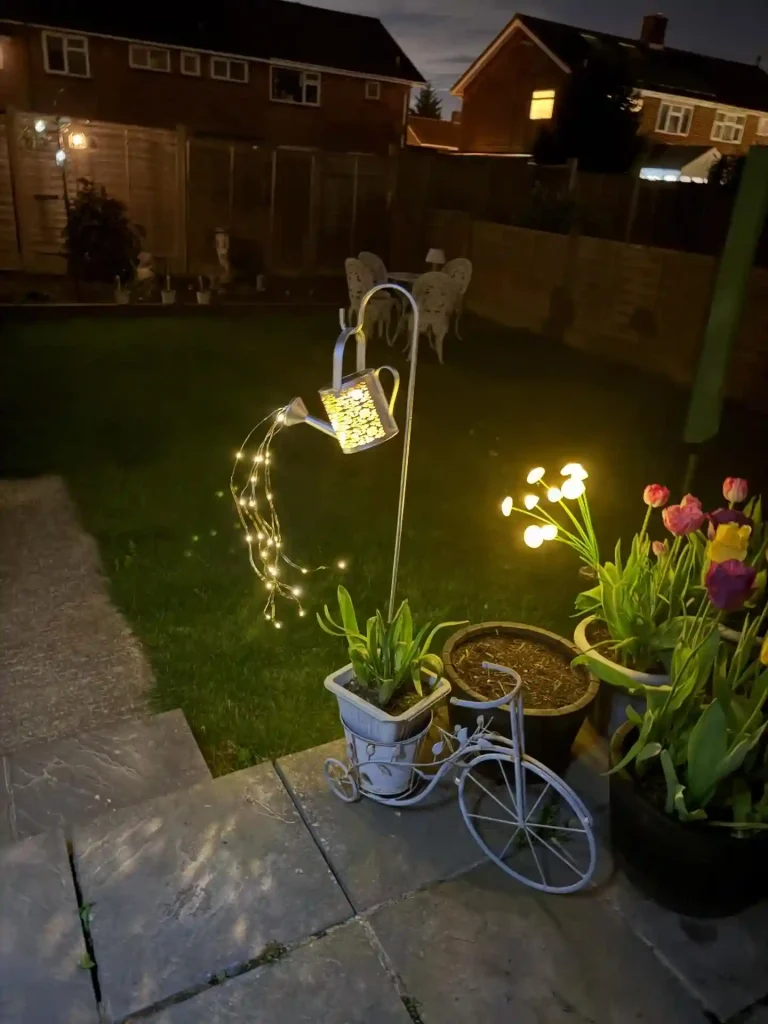
Many of the most spectacular night-blooming flowers grow exceptionally well in pots and containers. This is actually a real advantage because it allows you to move the most powerfully fragrant plants — like Angel’s Trumpet and Night Jasmine — to exactly the right position for each evening’s entertainment.
You can place them right beside your outdoor seating area when in full bloom and then move them away when the fragrance might become overpowering.
source: @pinkladylisa1969
Use large, heavy containers with excellent drainage for the best results with night-blooming plants. Place pale or white containers in the design to reflect available light most effectively.
22. Companion Planting and Pairing Ideas for the Night Garden
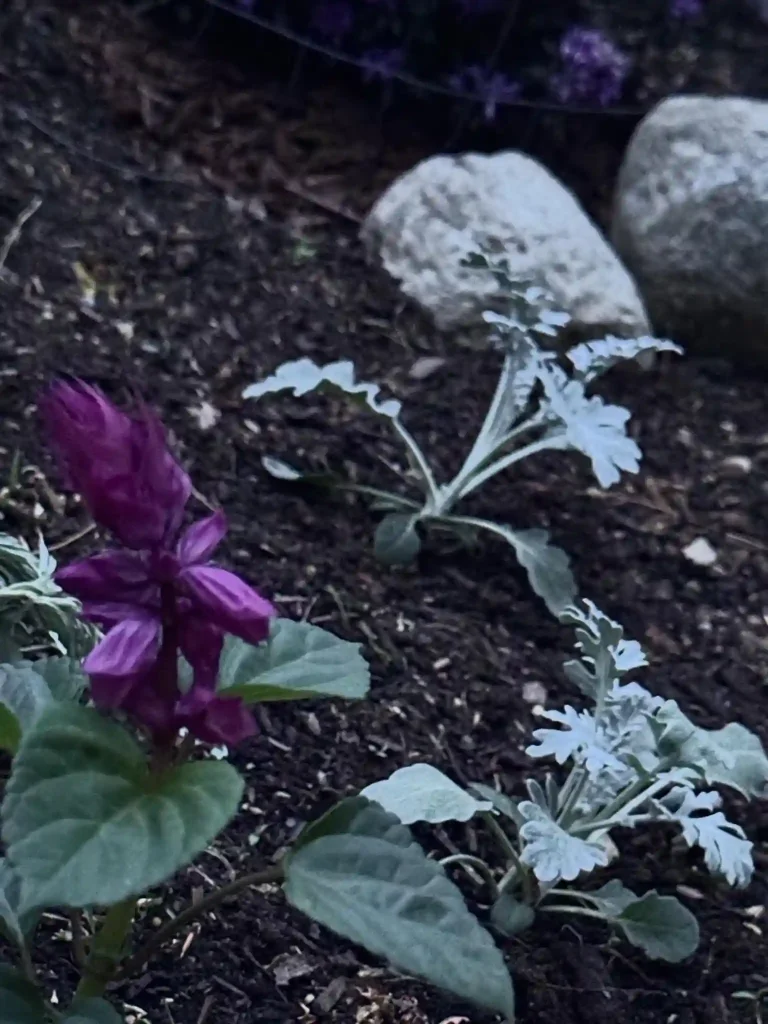
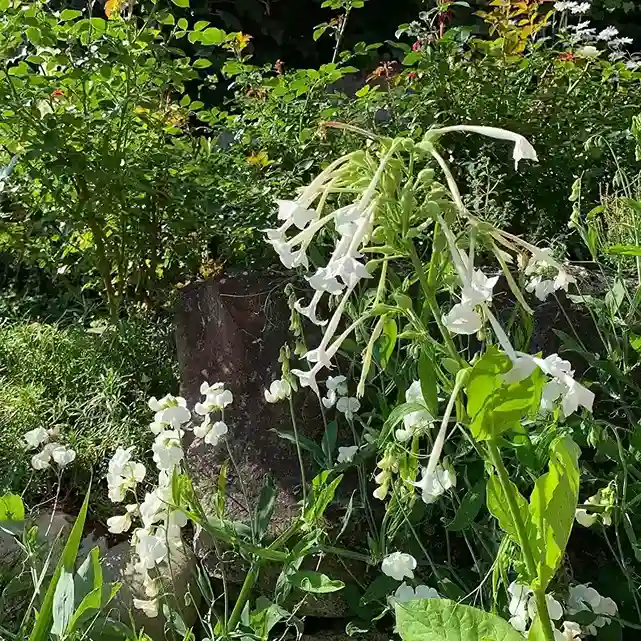
The best night gardens combine night-blooming flowers with complementary foliage plants that enhance the display in low light. Silver and grey-leaved plants are especially valuable because they reflect light beautifully and glow almost luminously in moonlight.
White-variegated foliage plants serve the same purpose and provide valuable structure and brightness even when no flowers are open.
source: @thegardenidea
Table: Companion Planting for Night Garden
| Night Flower | Best Companion Plants | Combined Night Effect |
|---|---|---|
| Moonflower vine | White Wisteria, Silver Artemisia | Glowing, fragrant climbing screen |
| Angel’s Trumpet | Caladium white, White Agapanthus | Tropical drama, bold contrast |
| Tuberose | White Agapanthus, Silver Dusty Miller | Elegant, formal fragrant border |
| Evening Primrose | White Foxglove, Silver Stachys | Wild, naturalistic glow |
| Night Jasmine | White Mandevilla, White Dipladenia | Fragrant, lush tropical screen |
| Casa Blanca Lily | White Astilbe, Silver Hosta | Refined, elegant garden bed |
23. Care Tips, Common Problems, and FAQs
Night-blooming flowers are generally not more difficult to grow than any other garden plant. Most of them actually prefer the same basic conditions: full sun during the day, good drainage, regular watering, and monthly feeding during the growing season.

The biggest challenge with many night-blooming flowers is protecting them from cold temperatures. Most of the most spectacular night bloomers — Moonflower, Angel’s Trumpet, Night Jasmine, and Tuberose — are frost-tender and must be protected or brought indoors in colder climates.
Table: Common Problems and Solutions
| Common Problem | Cause | Solution |
|---|---|---|
| Flowers not opening at night | Too much artificial light nearby | Move plant away from lights |
| Poor or no fragrance | Grown in too much shade | Move to sunnier position |
| Moonflower not blooming | Sown too late or too cold | Start indoors 6–8 weeks early |
| Angel’s Trumpet wilting | Under-watered or root-bound | Water deeply, repot if needed |
| Night Jasmine dropping leaves | Cold draft or temperature shock | Move to sheltered position |
| Tuberose not flowering | Bulbs too shallow or cold start | Plant 5cm deep, start warm |
| Slugs eating new growth | Moist evening conditions | Use slug pellets and beer traps |
Frequently Asked Questions
Q1: Do night-blooming flowers need any special soil or fertilizer?
Most night-blooming flowers grow well in standard, well-drained garden soil enriched with compost. Feed with a high-potash liquid fertilizer every two weeks during the flowering season for best results. Avoid over-feeding with nitrogen-heavy fertilizers as this produces excessive leafy growth at the expense of flowers and fragrance.
Q2: Can I grow a night garden in a small space or balcony?
Absolutely yes. Many of the best night-blooming flowers grow beautifully in containers and are perfect for small patios and balconies. Moonflower in a large pot, Night Phlox in a window box, and white petunias in a hanging basket can create a wonderful miniature moonlight garden even in the tiniest outdoor space available.
Q3: Which night-blooming flower has the strongest fragrance?
Night-Blooming Jasmine (Cestrum nocturnum) is widely considered to have the most powerful evening fragrance of any garden plant. A single mature plant can perfume an entire neighborhood on a warm, still evening. Tuberose and Angel’s Trumpet are close rivals and are equally legendary for their extraordinary and intoxicating night fragrance.
Q4: How do I light a night garden without scaring away moths and other pollinators?
Use warm amber or red-toned low-level lighting rather than bright white or blue-spectrum lights. Position lights low to the ground along paths rather than flooding the plants themselves with light. Candles and lanterns are the most wildlife-friendly and romantically beautiful lighting solution for a moonlight garden on still, warm evenings.
Q5: Which night-blooming flower is best for a beginner?
Evening Primrose is the easiest night-blooming flower for an absolute beginner. It grows in almost any soil, self-seeds freely, requires virtually no care, and produces beautiful glowing yellow flowers reliably every evening from midsummer onwards. Four O’Clock Flower is a close second and is equally easy, reliable, and rewarding for a first-time night garden grower.
Conclusion
Night-blooming flowers open up an entirely new dimension of garden beauty that most people have never experienced. They transform the hours after sunset from a time when the garden is ignored into the most magical and atmospheric part of the entire gardening day. A moonlight garden is not an indulgence — it is a genuine and deeply rewarding extension of your outdoor living space.
From the legendary once-a-year drama of the Night-Blooming Cereus to the reliable nightly display of Evening Primrose, there is a night-blooming flower for every garden size, style, and level of experience. Start with just two or three easy varieties and let the magic of the night garden grow naturally and gradually from there. You will quickly find yourself wanting to add more plants and spend more evenings outdoors.
The night garden also gives something back to the natural world. Every moth you attract, every bat that hunts above your pale flowers, and every nocturnal beetle that feeds on your night blooms is part of an invisible ecological web that your garden helps sustain. Plant night-blooming flowers and you will enrich not just your own evenings, but the lives of countless nocturnal creatures that share the darkness with you.