Flowering trees are among the most transformative and spectacular plants a gardener can grow, delivering breathtaking seasonal displays of colour, fragrance, and wildlife value that elevate any outdoor space from attractive to genuinely extraordinary throughout the growing year.
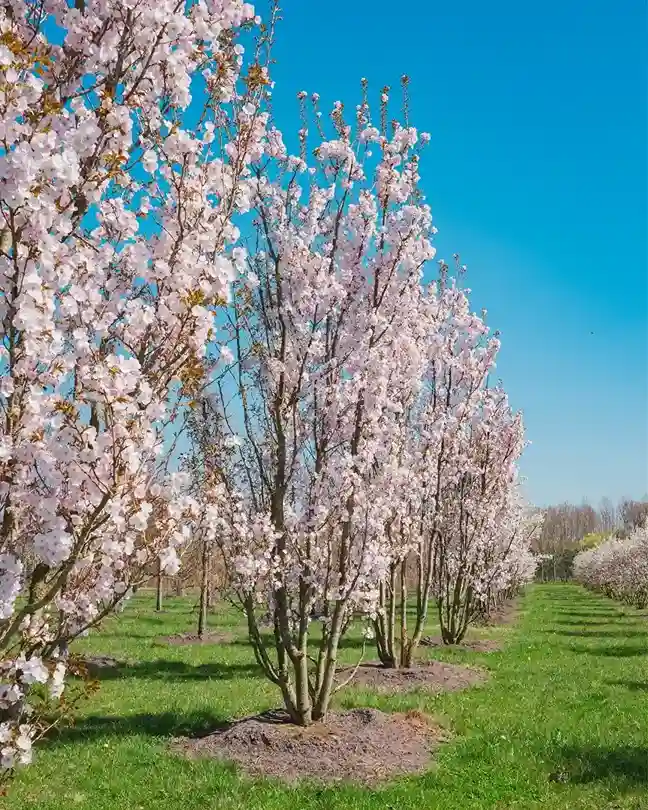
Source: @vandenberknurseries
Whether you have a large garden needing a dramatic focal point or a compact space requiring a perfectly proportioned specimen, these 24 outstanding flowering trees will inspire your planting using our tree landscaping ideas guide.
1. Cherry Blossom (Prunus serrulata)
Cherry blossom is the most beloved and universally celebrated of all flowering trees, its breathtaking spring display of white or pink double flowers creating one of the most spectacularly beautiful seasonal garden moments available to any gardener in a temperate climate.
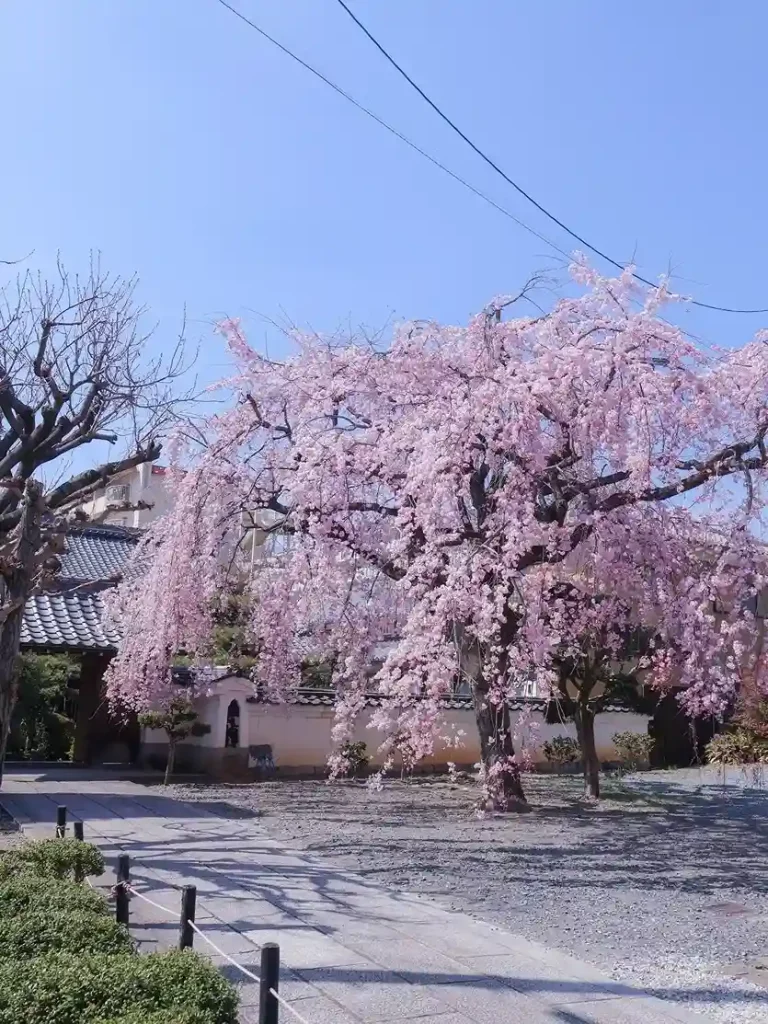
Source: @shihodiary
The relatively brief duration of cherry blossom — typically two to three weeks at its absolute peak — makes its annual appearance all the more precious, anticipated, and emotionally powerful for gardeners who witness it from their own garden each spring. For more ornamental cherry tree selections and spring garden design ideas, our tree landscaping ideas guide covers cherry blossom varieties and planting strategies in comprehensive, inspiring detail.
| Feature | Details |
|---|---|
| Best Varieties | Kanzan, Tai Haku, Yoshino, Shirotae, Prunus x yedoensis |
| Hardiness Zone | Zones 5–8 |
| Mature Height | 15–30 feet |
| Bloom Time | March to April |
| Soil | Well-drained, moderately fertile |
| Best For | Spectacular spring focal point, avenue planting |
2. Magnolia
Magnolia is one of the most architecturally magnificent and primordially ancient of all flowering trees, its enormous, perfectly formed chalice-shaped flowers in white, pink, purple, and cream appearing on bare branches in early spring to create a display of genuinely breathtaking, otherworldly beauty.
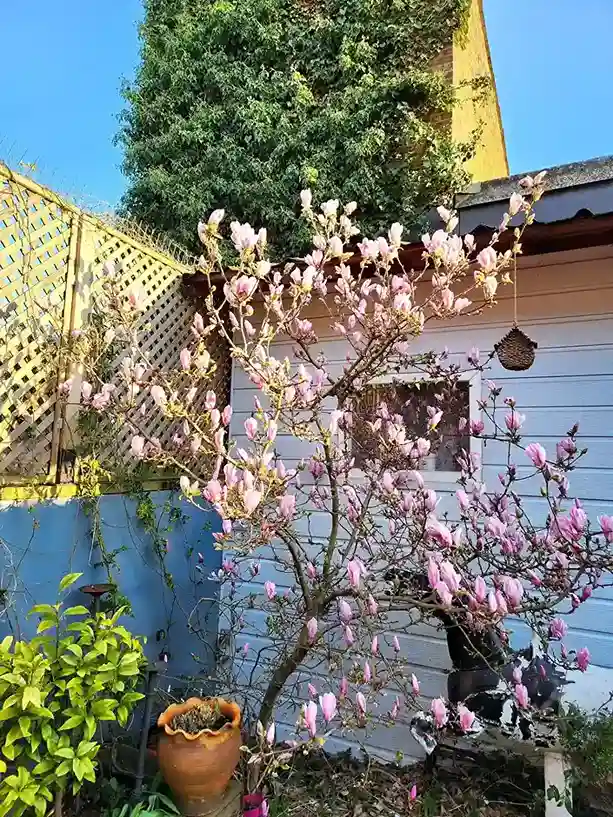
Source: @my_dolce_casa
Magnolia stellata is the finest choice for smaller gardens, its compact size, exceptional cold hardiness, and extraordinarily prolific star-shaped white flower display making it one of the most rewarding small garden specimens available in any temperate climate. For more magnolia and statement specimen tree planting ideas, our tree landscaping ideas guide covers magnolia varieties and garden positioning in beautiful, comprehensive detail.
| Feature | Details |
|---|---|
| Best Garden Varieties | Magnolia stellata, M. soulangeana, M. grandiflora |
| Hardiness Zone | Zones 4–9 depending on variety |
| Mature Height | 8–80 feet depending on variety |
| Bloom Time | February to April (deciduous); June to Sept (evergreen) |
| Soil | Humus-rich, slightly acidic, well-drained |
| Best For | Statement specimen, spring focal point |
3. Wisteria (Wisteria sinensis)
Wisteria trained as a standard tree creates one of the most extraordinarily romantic and visually spectacular flowering tree effects achievable in any garden, its cascading racemes of intensely fragrant blue-violet, white, or pink flowers hanging in breathtaking profusion above a clear trained stem in late spring.
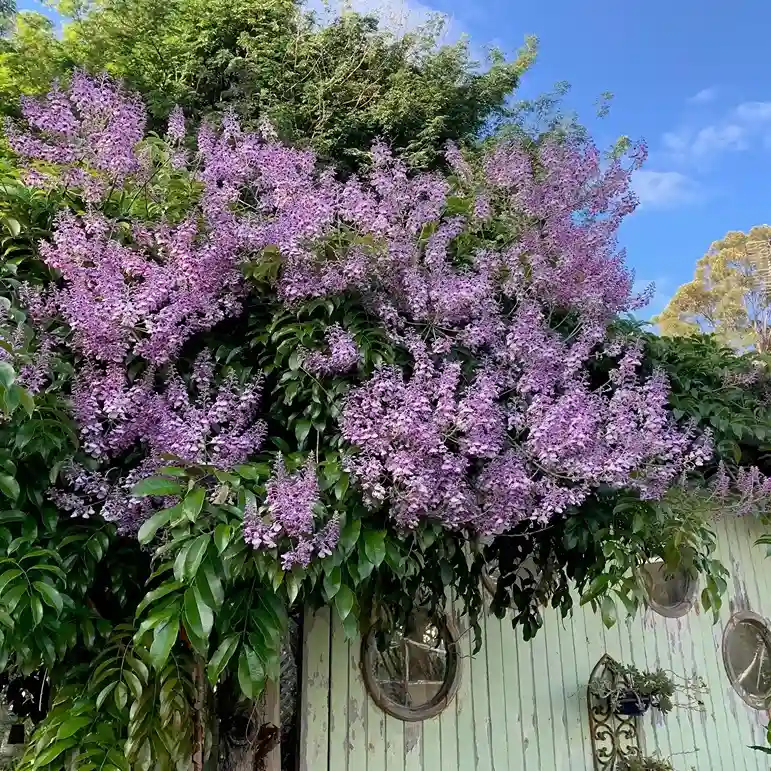
Source: @coolumnativenursery1
A standard wisteria takes several years to train properly but ultimately creates a genuinely unforgettable garden focal point of international quality that becomes more spectacular and more fragrant with every passing growing decade. For more wisteria and fragrant climbing plant display ideas, our vertical gardening guide covers wisteria training and companion planting in wonderful, practical detail.
| Feature | Details |
|---|---|
| Best Varieties | Sinensis, floribunda, Blue Moon, Amethyst Falls |
| Hardiness Zone | Zones 5–9 |
| Mature Height | 10–15 feet as trained standard |
| Bloom Time | May to June |
| Fragrance | Intensely sweet — one of the most fragrant trees |
| Training Time | 3–5 years for a well-formed standard |
4. Crab Apple (Malus sylvestris hybrids)
Crab apple is one of the finest and most four-seasonally rewarding flowering trees available, delivering spectacular spring blossom in white or pink, attractive summer foliage, jewel-like autumn fruit in red, orange, and gold, and valuable winter wildlife food all from a single, perfectly garden-scaled specimen tree.
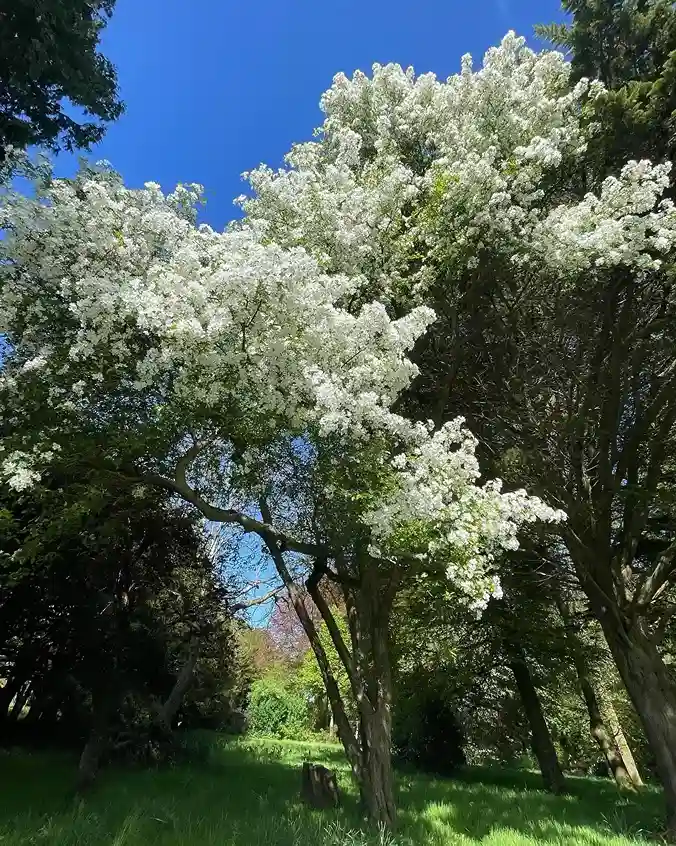
Source: @isabelbannerman
Its exceptional wildlife value — supporting hundreds of invertebrate species, providing nectar for pollinators, and offering fruit for birds and small mammals — makes crab apple one of the most ecologically important flowering trees for any wildlife garden. For more productive and wildlife-friendly flowering tree ideas, our food forest guide covers crab apple and fruit tree guild planting in comprehensive, expert detail.
| Feature | Details |
|---|---|
| Best Varieties | Evereste, Red Sentinel, Golden Hornet, John Downie |
| Hardiness Zone | Zones 4–8 |
| Mature Height | 15–25 feet |
| Bloom Time | April to May |
| Autumn Fruit | Outstanding — yellow, orange, and red crab apples |
| Wildlife Value | Exceptional — supports complete wildlife food web |
5. Japanese Maple (Acer palmatum)
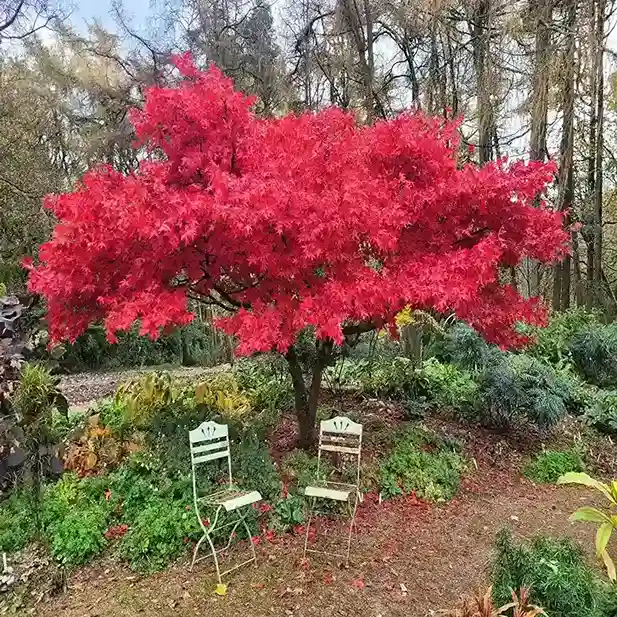
Japanese maple is one of the most exquisitely beautiful and universally admired ornamental flowering trees in existence, its delicate, deeply cut leaves — in colours ranging from vivid lime green through burgundy, wine red, and deep purple — creating a four-season garden specimen of extraordinary refinement and visual sophistication.
Source: @birchandfern.ie
While not a flowering tree in the traditional sense, Japanese maple produces attractive small reddish flowers in spring before its foliage expands to full size, and its spectacular autumn colour display is among the most dramatic of any garden tree available. For more Japanese maple and autumn colour tree ideas, our tree landscaping ideas guide covers Japanese maple varieties and garden positioning in beautiful, comprehensive detail.
| Feature | Details |
|---|---|
| Best Varieties | Bloodgood, Osakazuki, Dissectum, Sango Kaku |
| Hardiness Zone | Zones 5–9 |
| Mature Height | 6–25 feet depending on variety |
| Bloom Time | April (small ornamental flowers) |
| Best Feature | Spectacular spring foliage and autumn colour |
| Best For | Containers, small gardens, specimen planting |
6. Dogwood (Cornus florida and Cornus kousa)
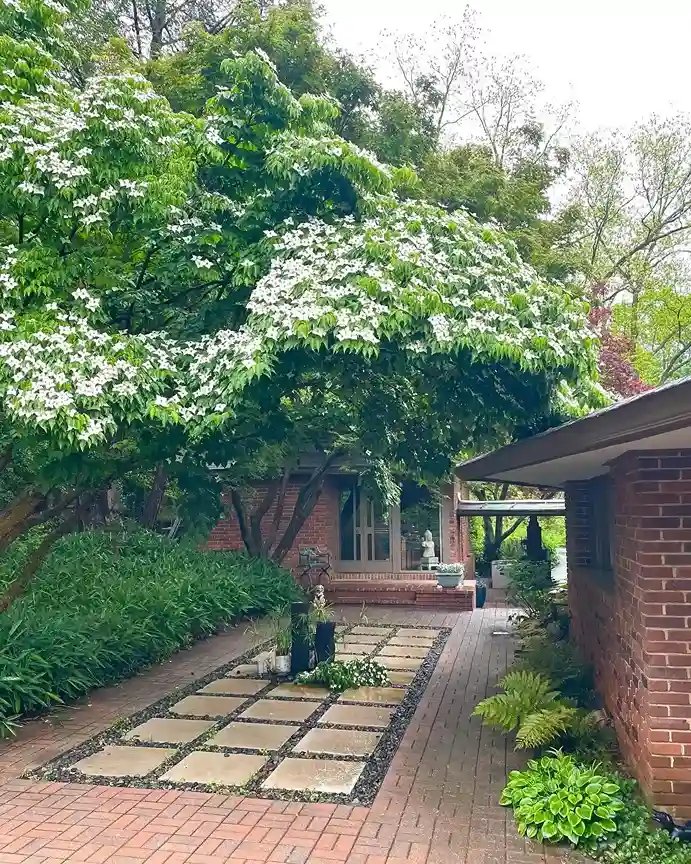
Flowering dogwood is one of North America’s most beloved and spectacularly beautiful native flowering trees, its large white or pink bracts — often mistaken for petals — creating an extraordinary late spring display of remarkable elegance that covers the entire canopy from branch tip to branch tip.
Source: @tedwight
Cornus kousa flowers two to four weeks later than Cornus florida and offers superior disease resistance, making it an excellent alternative for gardens where anthracnose disease has historically been a problem with the native species. For more native and woodland flowering tree ideas, our cottage garden ideas guide covers dogwood and woodland flowering tree planting in beautiful, practical garden context.
| Feature | Details |
|---|---|
| Best Species | Cornus florida, C. kousa, C. x rutgersensis |
| Hardiness Zone | Zones 5–9 |
| Mature Height | 15–30 feet |
| Bloom Time | April to May (florida); June (kousa) |
| Autumn Interest | Outstanding red berries and foliage colour |
| Best For | Woodland gardens, specimen planting |
7. Lilac (Syringa vulgaris)
Lilac is one of the most intensely and unforgettably fragrant of all flowering trees, its enormous conical flower panicles in purple, lavender, pink, white, and deep wine red filling the garden and beyond with an extraordinary, nostalgically powerful perfume throughout its spring flowering season.
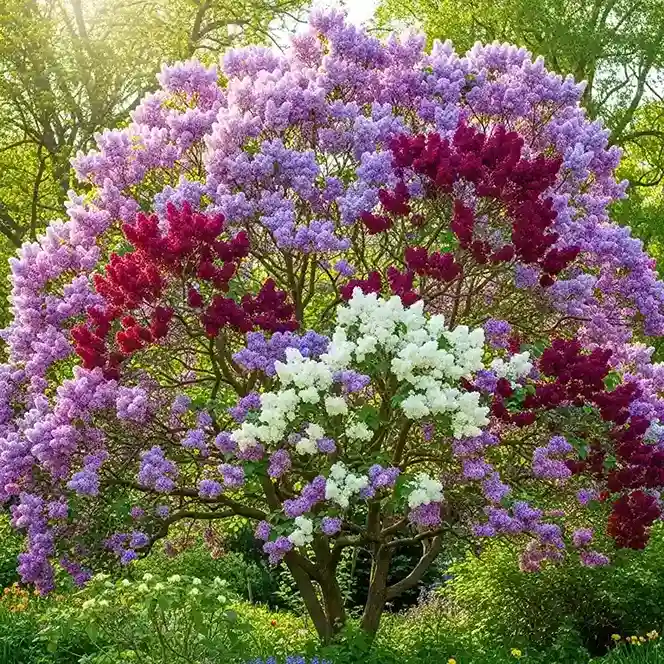
Train a lilac as a small multi-stemmed tree by removing lower side shoots each year to reveal the attractive bare stem, creating a beautifully proportioned small garden specimen of considerable elegance and seasonal impact. For more fragrant flowering tree and shrub ideas, our flowering shrubs guide covers lilac varieties and companion planting in beautiful, fragrant detail.
| Feature | Details |
|---|---|
| Best Varieties | Charles Joly, Sensation, Congo, Madame Lemoine |
| Hardiness Zone | Zones 3–7 |
| Mature Height | 8–20 feet |
| Bloom Time | April to May |
| Fragrance | Intensely sweet — one of the most fragrant trees |
| Best For | Fragrant spring display, cottage and formal gardens |
8. Redbud (Cercis canadensis)
Eastern redbud is one of the most spectacularly beautiful and distinctively American of all flowering trees, its bare branches smothered in vivid magenta-pink flowers before the leaves emerge each spring to create one of the most electrifyingly colourful early season garden displays available in any temperate climate.
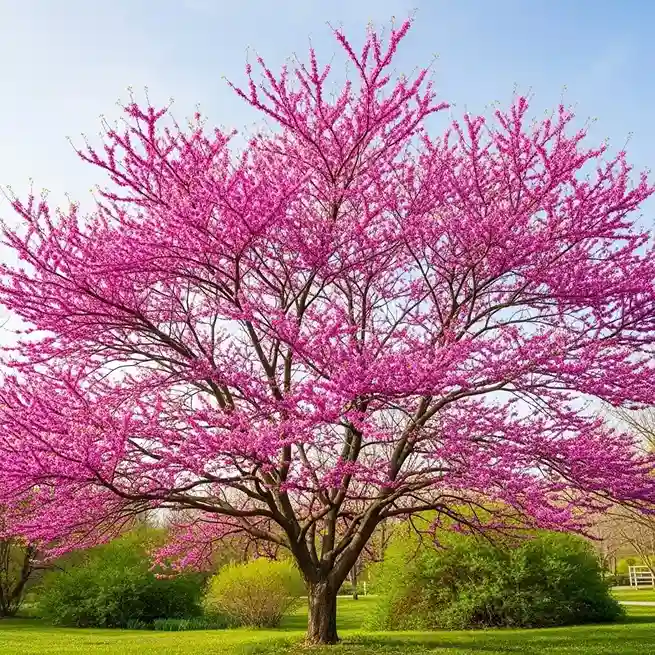
The heart-shaped leaves that follow the flowers are themselves attractive throughout summer, and several varieties offer outstanding golden or burgundy foliage that extends the ornamental value of this exceptional tree well beyond its flowering season. For more spring-flowering tree selections, our tree landscaping ideas guide covers redbud varieties and planting strategies in comprehensive, practical detail.
| Feature | Details |
|---|---|
| Best Varieties | Forest Pansy, Rising Sun, Covey, Ruby Falls |
| Hardiness Zone | Zones 4–9 |
| Mature Height | 20–30 feet |
| Bloom Time | March to April |
| Foliage | Heart-shaped — purple, gold, or green varieties |
| Best For | Spring focal point, woodland edge, small gardens |
9. Laburnum (Laburnum x watereri ‘Vossii’)
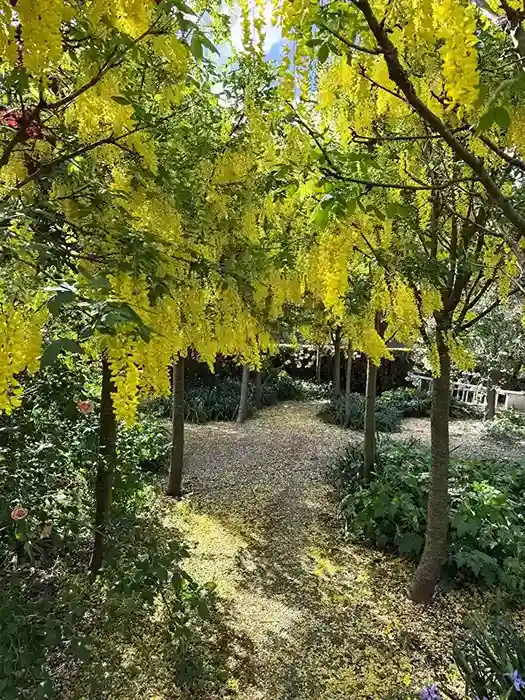
Laburnum Vossii is one of the most dramatically beautiful and visually striking of all flowering trees, its extraordinarily long golden-yellow flower racemes — up to 24 inches in length — hanging in breathtaking cascading curtains from every branch throughout late spring to create a display of pure, radiant, luminous beauty.
Source: @lisastafforddesign
A laburnum arch or tunnel — with trees trained over a metal framework to create an overhead canopy of hanging golden flowers — is one of the most spectacular garden features possible and one of the most photographed garden experiences in the world. For more structural flowering tree feature ideas, our vertical gardening guide covers laburnum arch training and flowering tree overhead structure design in wonderful detail.
| Feature | Details |
|---|---|
| Hardiness Zone | Zones 5–7 |
| Mature Height | 15–25 feet |
| Bloom Time | May to June |
| Flower Length | Up to 24 inches — the longest of any laburnum |
| Caution | All parts highly toxic — keep away from children |
| Best For | Specimen tree, laburnum arch or tunnel feature |
10. Amelanchier (Serviceberry)
Amelanchier is one of the most perfectly four-seasonally beautiful small flowering trees available, its delicate white spring flowers, attractive summer foliage, spectacular fiery autumn colour in orange and red, and abundant edible berries delivering outstanding garden interest and wildlife value throughout every month of the year.
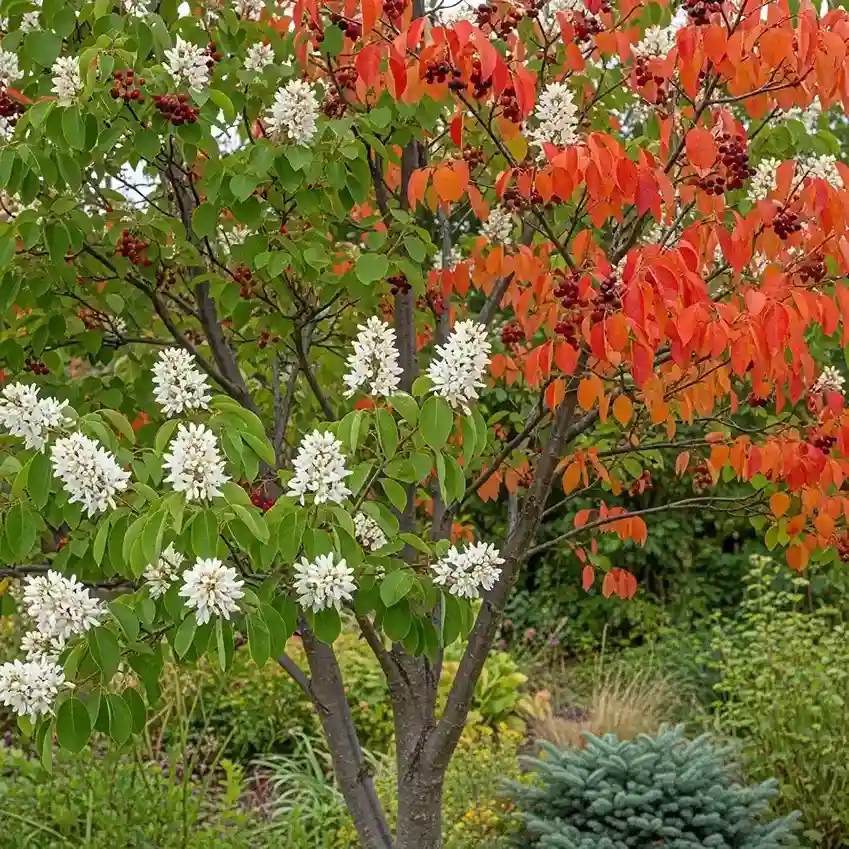
The berries of amelanchier are sweet, edible, and greatly enjoyed by birds and humans alike, making this exceptional flowering tree one of the most genuinely productive as well as ornamentally beautiful small garden specimens available. For more multi-season and wildlife-friendly small flowering tree ideas, our tree landscaping ideas guide covers amelanchier and four-season small garden trees beautifully.
| Feature | Details |
|---|---|
| Best Varieties | Amelanchier lamarckii, A. canadensis, Robin Hill |
| Hardiness Zone | Zones 4–8 |
| Mature Height | 15–25 feet |
| Bloom Time | April |
| Autumn Colour | Outstanding — fiery orange and red |
| Wildlife Value | Excellent — edible berries for birds and people |
11. Hawthorn (Crataegus monogyna)
Common hawthorn is one of the most beautiful, wildlife-valuable, and ecologically important native flowering trees available for temperate gardens, its frothy clouds of white May blossom with their distinctive almond fragrance creating one of the most evocative and beloved flowering displays of the entire British and European spring season.
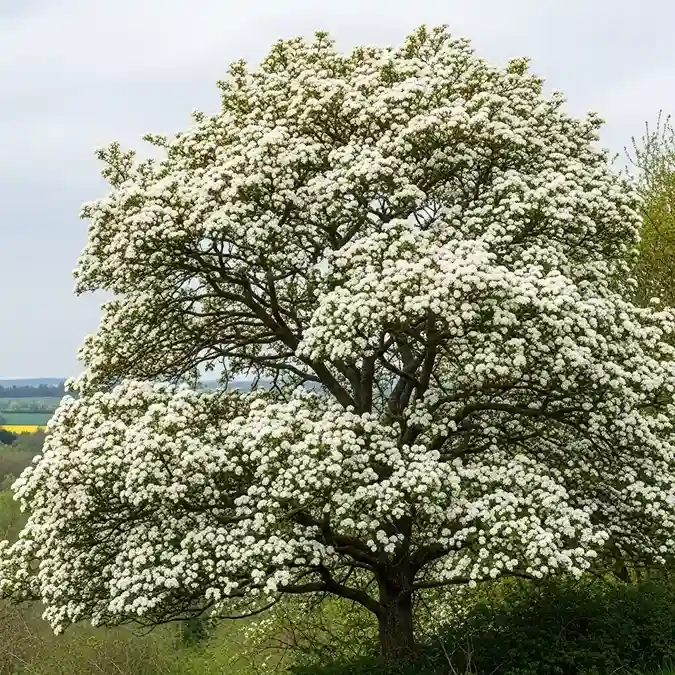
Its abundant autumn berries provide outstanding winter wildlife food for fieldfares, redwings, and many other bird species, making hawthorn one of the single most ecologically important flowering trees any gardener can plant. For more native flowering tree and wildlife garden ideas, our food forest guide covers hawthorn and native tree planting in comprehensive, ecological detail.
| Feature | Details |
|---|---|
| Hardiness Zone | Zones 4–7 |
| Mature Height | 15–30 feet |
| Bloom Time | May |
| Fragrance | Sweet almond — distinctive and evocative |
| Autumn Berries | Outstanding red haws — exceptional wildlife food |
| Wildlife Value | Exceptional — supports 300+ species |
12. Rowan (Sorbus aucuparia)
Rowan is a magnificent native flowering tree of outstanding four-season ornamental value, its flat-headed clusters of creamy white spring flowers, attractive pinnate summer foliage, spectacular clusters of orange-red autumn berries, and elegant winter silhouette creating a garden specimen of genuine year-round beauty and exceptional wildlife importance.
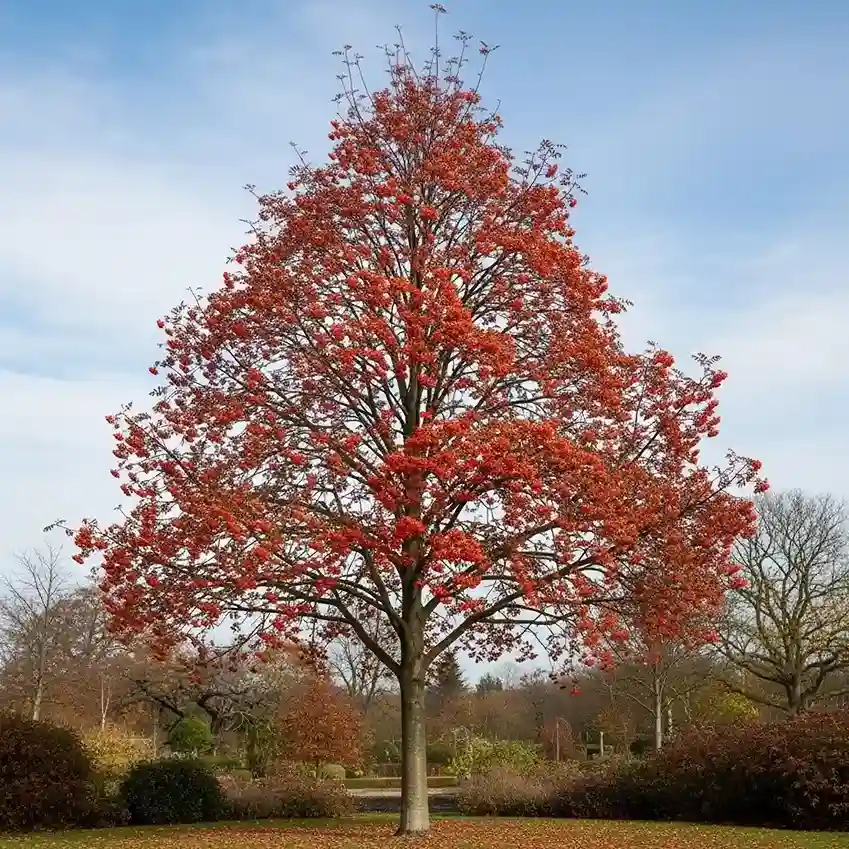
Few garden trees match the rowan’s combination of ornamental beauty, manageable size, ecological value, and remarkable cold hardiness, making it one of the most universally suitable and rewarding flowering trees for gardens of every size and situation. For more native and wildlife-friendly specimen tree ideas, our tree landscaping ideas guide covers rowan varieties and planting strategies in comprehensive, practical detail.
| Feature | Details |
|---|---|
| Best Varieties | Sorbus aucuparia, S. ‘Joseph Rock’, S. vilmorinii |
| Hardiness Zone | Zones 3–7 |
| Mature Height | 20–40 feet |
| Bloom Time | May |
| Autumn Berries | Outstanding — orange, red, yellow, or white |
| Wildlife Value | Exceptional — berries for fieldfares and redwings |
13. Elder (Sambucus nigra)
Elder is a supremely wildlife-valuable and medicinally important flowering tree whose enormous, flat-headed clusters of tiny, intensely fragrant white flowers in early summer are followed by heavy bunches of deep purple-black berries in early autumn — both flowers and berries providing outstanding culinary and wildlife value simultaneously.
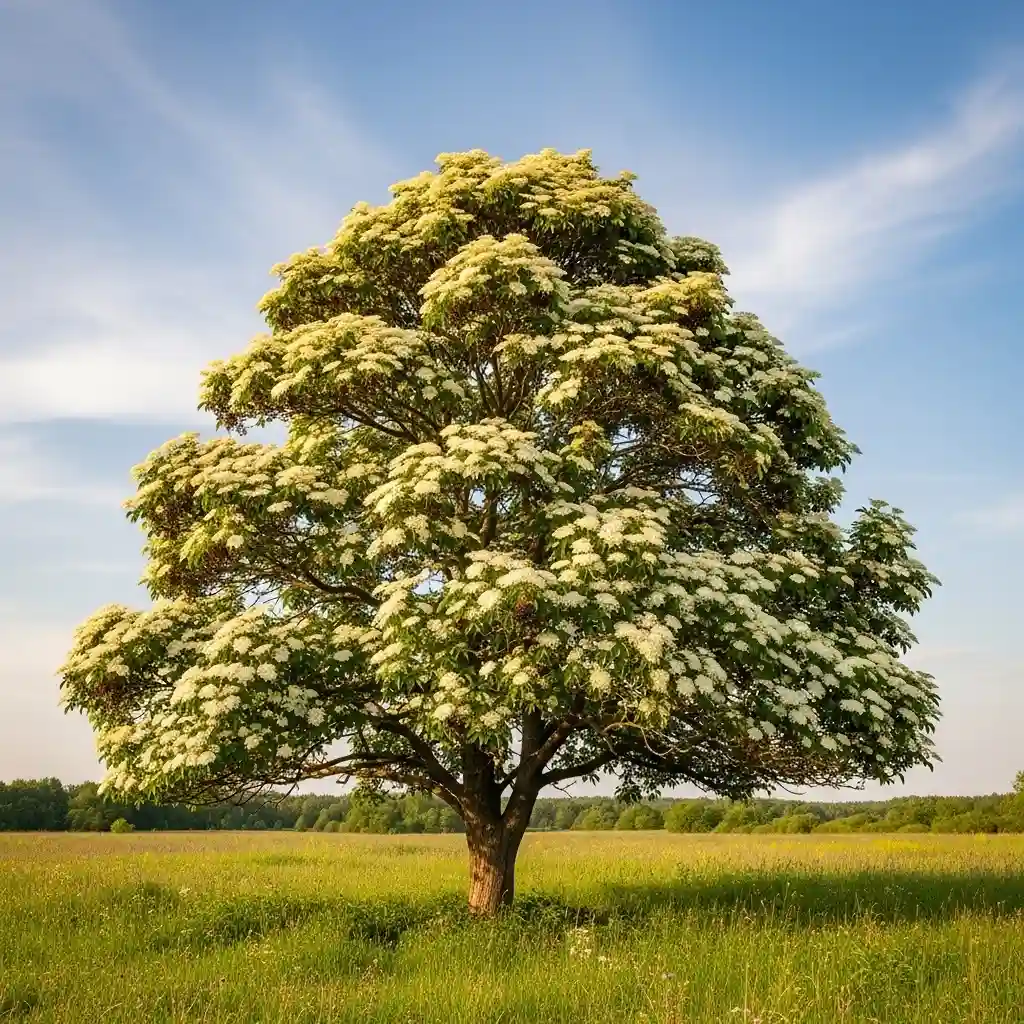
Elderflowers make exceptional cordial, fritters, and sparkling wine, while elderberries produce outstanding jam, syrup, and cold remedy preparations, making elder one of the most genuinely productive and multi-purpose flowering trees available for food forest and cottage garden planting. For more productive and edible flowering tree ideas, our food forest guide covers elder and edible flowering tree planting in comprehensive, expert detail.
| Feature | Details |
|---|---|
| Best Varieties | Sambucus nigra, Black Beauty, Black Lace |
| Hardiness Zone | Zones 4–7 |
| Mature Height | 10–20 feet |
| Bloom Time | June |
| Culinary Value | Elderflower and elderberry — exceptional |
| Wildlife Value | Outstanding — berries for birds, flowers for insects |
14. Horse Chestnut (Aesculus hippocastanum)
Horse chestnut is one of the most magnificent and stately of all flowering trees, its spectacular candelabra-like flower spikes in white flushed with pink and yellow rising vertically from the branch tips in late spring to create a display of truly grand, cathedral-like flowering beauty on an impressive scale.
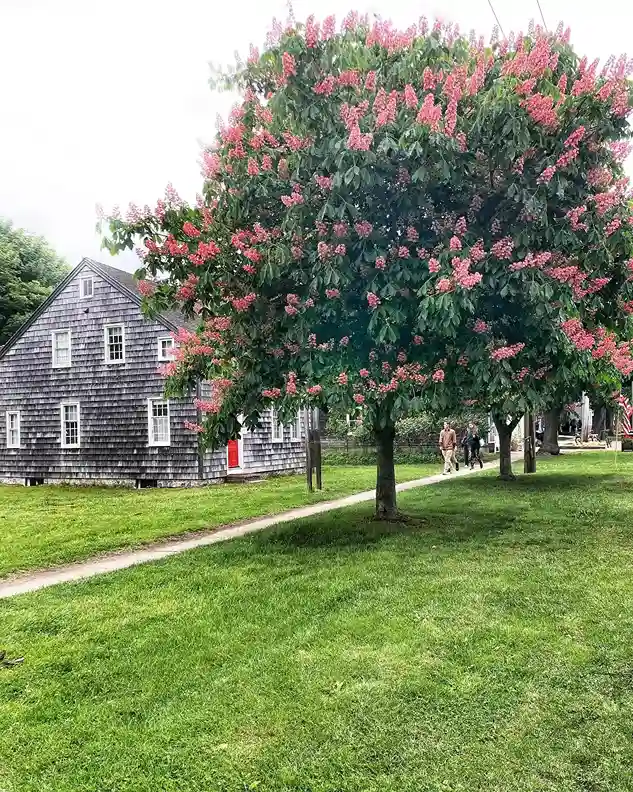
Source: @skaufman4050
While too large for small gardens, horse chestnut creates an unrivalled avenue and parkland flowering tree of extraordinary seasonal impact and nostalgic, deeply comforting character throughout the spring flowering season. For more large specimen and avenue flowering tree ideas, our tree landscaping ideas guide covers horse chestnut and other large flowering trees beautifully.
| Feature | Details |
|---|---|
| Hardiness Zone | Zones 4–7 |
| Mature Height | 50–75 feet |
| Bloom Time | May |
| Flower Style | Candelabra spikes — spectacular vertical display |
| Autumn Interest | Conkers in spiky green cases |
| Best For | Large gardens, avenues, parkland settings |
15. Catalpa (Catalpa bignonioides)
Catalpa is one of the most exotic-looking and spectacularly floriferous of all hardy flowering trees, its enormous heart-shaped leaves and large clusters of white orchid-like flowers with purple and yellow throats creating a tropical-looking garden specimen of extraordinary summer beauty and architectural impact.
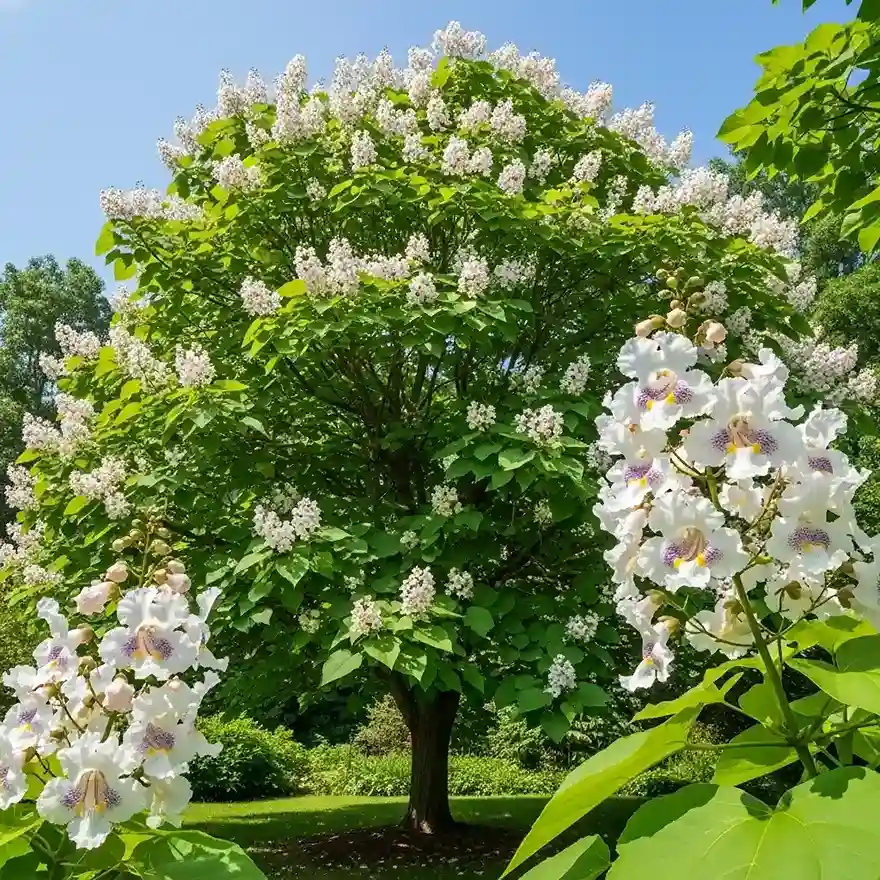
The long, hanging bean-like seed pods that follow the flowers persist through winter to provide additional ornamental interest, making catalpa one of the most theatrically and dramatically interesting four-season garden trees available for warmer temperate climates. For more exotic and statement flowering tree ideas, our trending landscaping ideas guide covers catalpa and other dramatic specimen trees in current, beautifully detailed context.
| Feature | Details |
|---|---|
| Best Varieties | Catalpa bignonioides, C. speciosa, Aurea |
| Hardiness Zone | Zones 4–8 |
| Mature Height | 25–50 feet |
| Bloom Time | June to July |
| Best Feature | Enormous leaves and orchid-like flower clusters |
| Best For | Statement specimen, large garden focal point |
16. Tulip Tree (Liriodendron tulipifera)
The tulip tree is one of North America’s most magnificent and extraordinary native flowering trees, its uniquely shaped, tulip-like flowers in green, orange, and yellow appearing high in the canopy in early summer on a stately, fast-growing tree of impressive natural architecture and outstanding autumn colour.
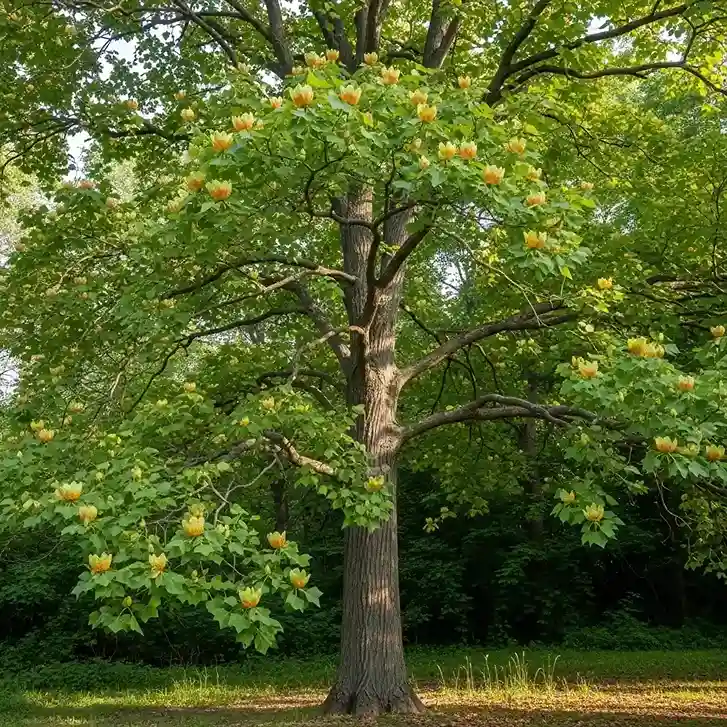
Its distinctive four-lobed leaves turn a spectacular clear golden-yellow in autumn before falling, adding a second season of extraordinary beauty to an already outstanding flowering tree specimen. For more large native flowering tree selections and specimen tree planting ideas, our tree landscaping ideas guide covers tulip tree and other large garden statement trees beautifully.
| Feature | Details |
|---|---|
| Hardiness Zone | Zones 4–9 |
| Mature Height | 60–90 feet |
| Bloom Time | May to June |
| Flower Style | Tulip-shaped — green, orange, and yellow |
| Autumn Colour | Spectacular golden-yellow |
| Best For | Large gardens, parkland, statement specimen |
17. Paulownia (Empress Tree)
Paulownia tomentosa is one of the most spectacularly flowering and fastest-growing ornamental trees available, its enormous clusters of fragrant lavender-blue foxglove-like flowers appearing on bare branches in spring to create a display of tropical, almost surreal beauty on a tree of impressive scale and remarkable architectural impact.
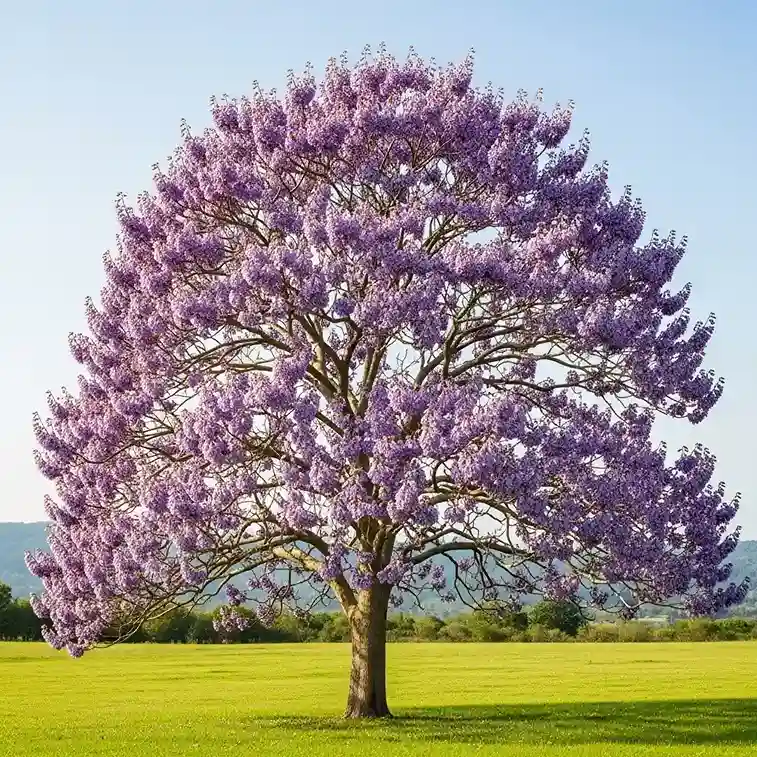
Coppiced regularly to prevent its large mature size, paulownia produces enormous, extraordinarily bold tropical-looking leaves that create a dramatic statement foliage effect throughout summer in even the smallest garden spaces. For more dramatic and exotic flowering tree ideas, our trending landscaping ideas guide covers paulownia and other bold statement flowering trees in current, inspiring detail.
| Feature | Details |
|---|---|
| Hardiness Zone | Zones 5–9 |
| Mature Height | 30–50 feet (kept small by coppicing) |
| Bloom Time | April to May |
| Flower Style | Foxglove-like clusters — lavender-blue |
| Fragrance | Lightly sweet |
| Best For | Statement specimen, exotic garden display |
18. Ornamental Plum (Prunus cerasifera)
Ornamental plum is one of the most vibrantly and richly coloured of all flowering trees, its deep burgundy-purple foliage providing a dramatic, season-long colour statement from spring through autumn while its delicate pale pink flowers — appearing before the leaves in early spring — create an exquisitely beautiful early season display.
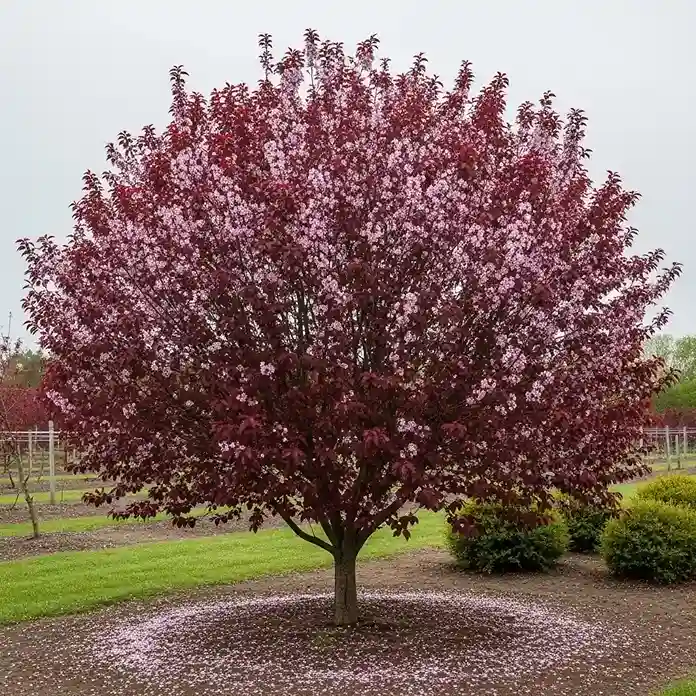
Nigra and Pissardii are the most widely planted ornamental plum varieties, their outstanding combination of early spring flowers and deep purple foliage making them among the most visually striking and immediately recognisable flowering trees in any garden landscape. For more ornamental prunus and spring flowering tree ideas, our tree landscaping ideas guide covers ornamental plum varieties and planting combinations beautifully.
| Feature | Details |
|---|---|
| Best Varieties | Nigra, Pissardii, Thundercloud, Newport |
| Hardiness Zone | Zones 4–8 |
| Mature Height | 15–25 feet |
| Bloom Time | March to April |
| Foliage | Deep burgundy-purple throughout summer |
| Best For | Coloured foliage statement and spring flowers |
19. Acacia (Mimosa — Acacia dealbata)
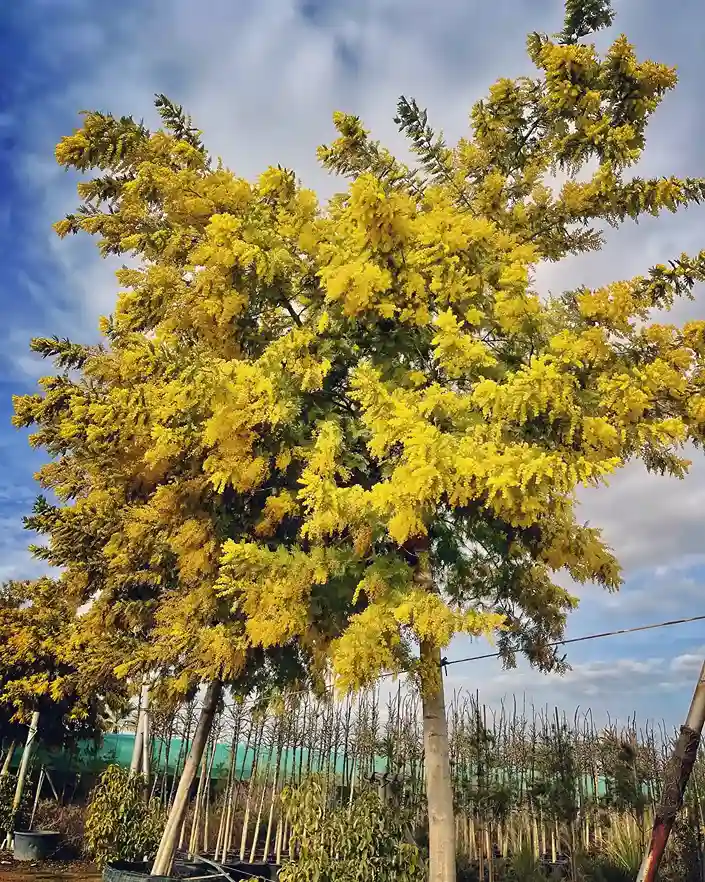
Acacia dealbata, commonly known as mimosa or silver wattle, is one of the most spectacularly and exotically beautiful winter-flowering trees available for mild climate gardens, its extraordinary clouds of tiny, intensely fragrant bright yellow pompom flowers appearing from January through March to create one of the most joyful and uplifting cold season garden displays imaginable.
Source: @viverosangelsl
In frost-prone climates, mimosa grows magnificently against a warm south-facing wall where it receives the reflected heat and shelter it needs to flower reliably and prolifically each winter season. For more winter-flowering and tender exotic tree ideas, our trending landscaping ideas guide covers mimosa and other exotic winter-flowering specimens in current, inspiring detail.
| Feature | Details |
|---|---|
| Hardiness Zone | Zones 8–11 |
| Mature Height | 20–40 feet |
| Bloom Time | January to March |
| Fragrance | Intensely sweet — powdery and exotic |
| Best Position | South-facing wall in frost-prone climates |
| Best For | Winter colour, mild climate specimen tree |
20. Cercidiphyllum (Katsura Tree)
The katsura tree is one of the most romantically beautiful and sensory of all flowering trees, renowned not only for its delicate early spring flowers but for the extraordinary caramel and burnt sugar fragrance released by its falling leaves in autumn — one of the most evocative and memorable scents in all of horticulture.
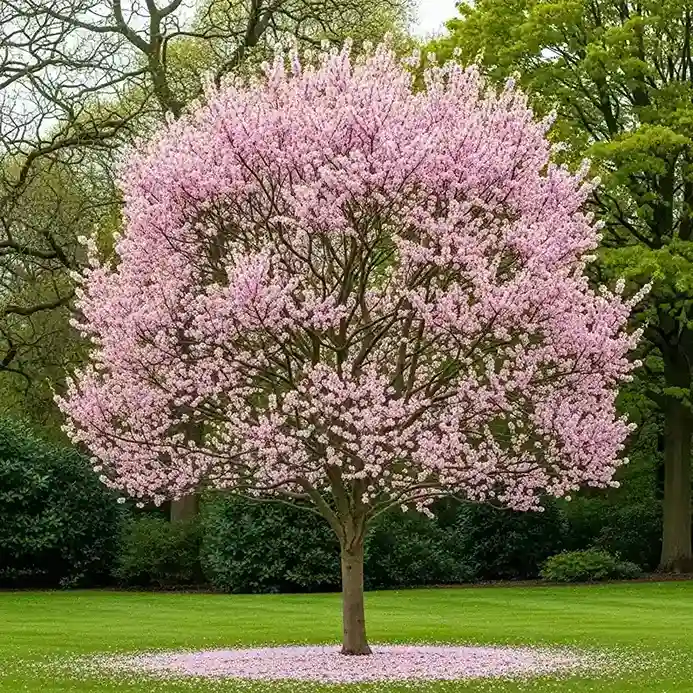
Its heart-shaped leaves emerge pink-bronze in spring, mature to blue-green in summer, and turn spectacular shades of apricot, orange, and gold in autumn to create a four-season specimen tree of genuinely outstanding ornamental quality. For more autumn colour and multi-season specimen tree ideas, our tree landscaping ideas guide covers katsura tree planting and positioning in comprehensive, inspiring detail.
| Feature | Details |
|---|---|
| Hardiness Zone | Zones 4–8 |
| Mature Height | 40–60 feet |
| Bloom Time | March to April |
| Autumn Fragrance | Caramel and burnt sugar — extraordinary |
| Autumn Colour | Spectacular apricot, gold, and orange |
| Best For | Autumn fragrance, four-season specimen tree |
21. Styrax (Snowbell Tree)
Styrax japonicus is one of the most exquisitely beautiful and underused small flowering trees available for temperate gardens, its pendulous clusters of pure white, lightly fragrant bell-shaped flowers hanging beneath the horizontal branches in early summer to create a display of the most graceful, refined, and genuinely enchanting natural beauty.
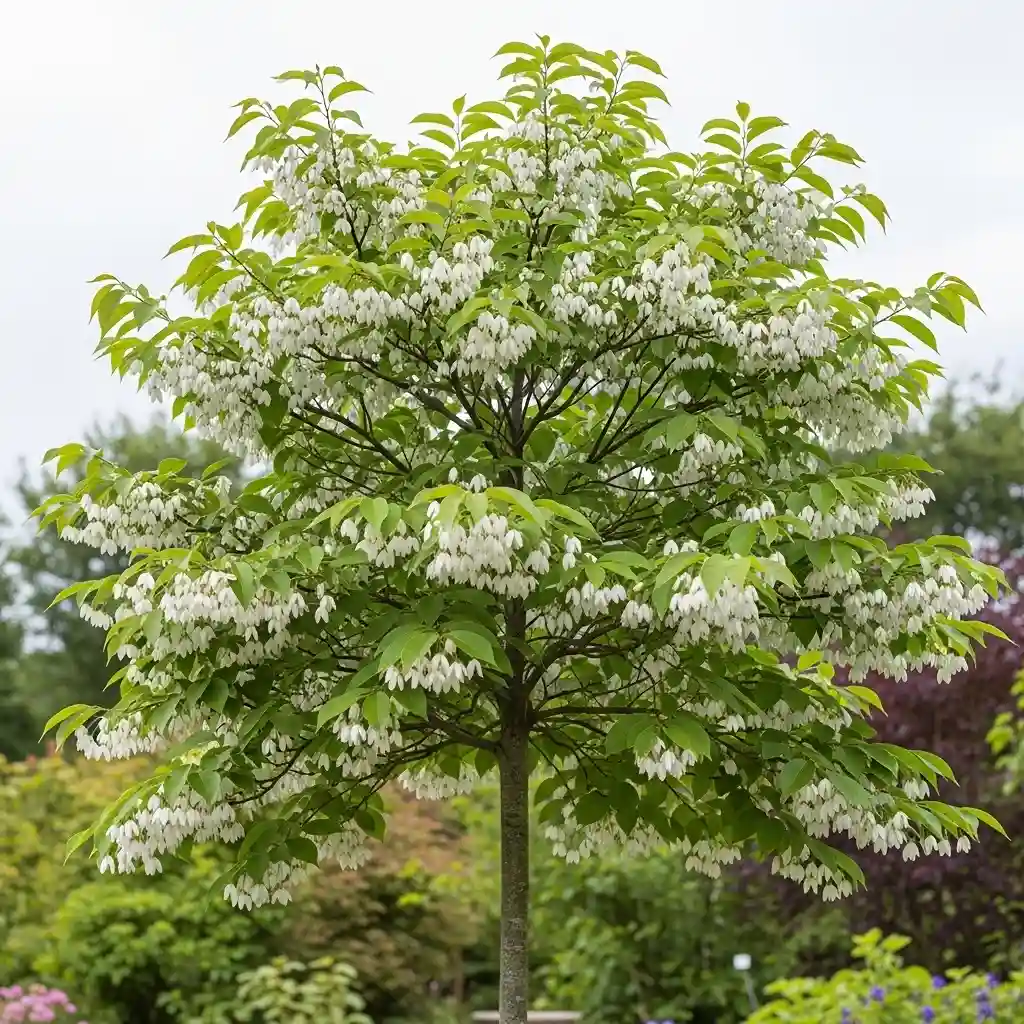
The flowers hang below the branches and are best appreciated from underneath the tree, making styrax an outstanding specimen for planting beside a seating area, alongside a garden path, or above a woodland garden seating feature. For more small and refined flowering tree ideas for intimate garden settings, our cottage garden ideas guide covers styrax and delicate flowering tree planting in beautiful, practical detail.
| Feature | Details |
|---|---|
| Hardiness Zone | Zones 5–8 |
| Mature Height | 20–30 feet |
| Bloom Time | June |
| Fragrance | Lightly sweet |
| Best Viewing | From beneath — flowers hang below branches |
| Best For | Intimate garden settings, beside seating areas |
22. Buddleia alternifolia (Fountain Butterfly Bush)
Buddleia alternifolia trained as a small weeping standard tree creates one of the most breathtakingly beautiful and wildlife-rich early summer flowering tree features available, its arching, pendulous branches smothered in fragrant lilac-purple flower clusters attracting clouds of butterflies, bees, and hoverflies throughout its spectacular early summer flowering season.
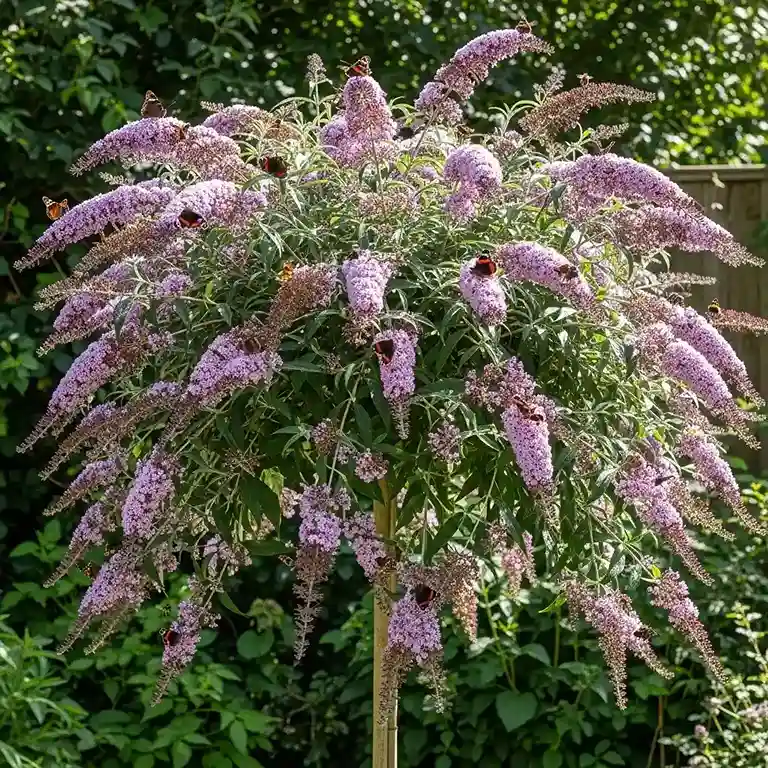
Unlike the common butterfly bush which flowers later on new wood, Buddleia alternifolia flowers on the previous year’s wood in June, creating a completely different and uniquely graceful weeping tree form of extraordinary garden impact. For more butterfly-attracting and wildlife-friendly flowering tree ideas, our flowering shrubs guide covers buddleia species and wildlife-friendly planting in excellent, comprehensive detail.
| Feature | Details |
|---|---|
| Hardiness Zone | Zones 5–9 |
| Mature Height | 10–15 feet as trained standard |
| Bloom Time | June |
| Fragrance | Sweet and honey-like |
| Wildlife Value | Outstanding — exceptional butterfly and bee plant |
| Best For | Weeping specimen, wildlife garden focal point |
23. Gleditsia (Honey Locust)
Gleditsia triacanthos Sunburst is one of the most strikingly and unusually beautiful golden-foliaged flowering trees available, its delicate, finely pinnate golden-yellow leaves creating a light, airy canopy of warm, luminous colour throughout summer while its inconspicuous but sweetly scented flowers provide valuable early summer nectar for pollinators.
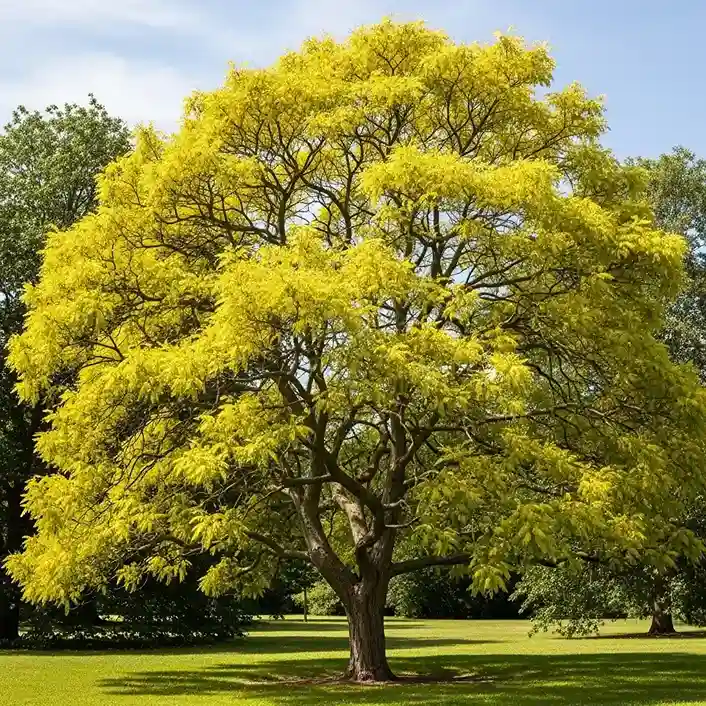
Its extremely fine leaf texture creates a beautifully dappled shade that is far more garden-friendly than the dense shade cast by many other large-canopy trees, making gleditsia an outstanding choice for underplanting with shade-tolerant ground covers and woodland plants. For more golden foliage and statement canopy tree ideas, our tree landscaping ideas guide covers gleditsia and golden-foliaged specimen trees in comprehensive, inspiring detail.
| Feature | Details |
|---|---|
| Best Varieties | Sunburst, Skyline, Imperial, Inermis |
| Hardiness Zone | Zones 4–9 |
| Mature Height | 30–70 feet |
| Bloom Time | June |
| Foliage | Fine, pinnate, golden-yellow — luminous effect |
| Best For | Light dappled shade, golden foliage statement |
24. Flowering Trees for Small Gardens
Many of the most beautiful flowering trees are perfectly scaled for small gardens — Japanese maple, Amelanchier, Magnolia stellata, Prunus Kojo-no-mai, and Cercis canadensis ‘Forest Pansy’ all deliver extraordinary seasonal impact within a compact mature size that suits even the most space-limited outdoor spaces beautifully.
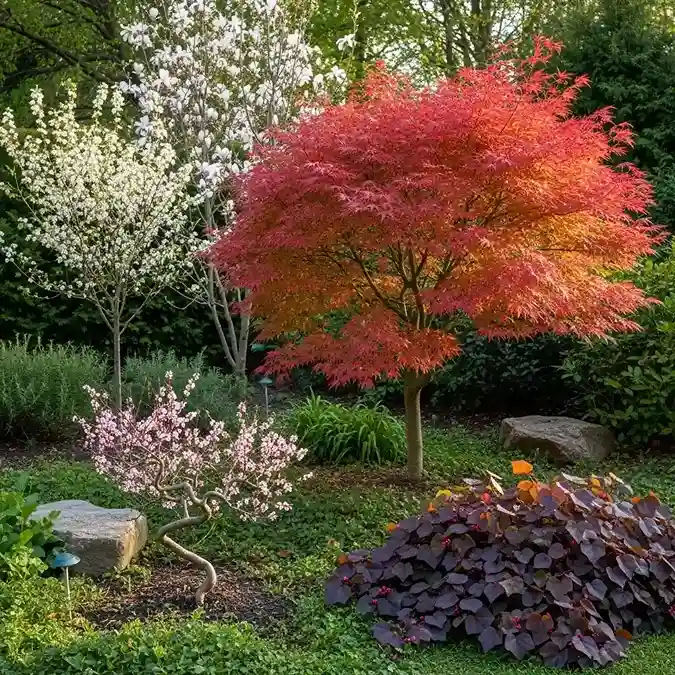
Choosing a small garden flowering tree that delivers multiple seasons of interest — spring flowers, summer foliage, autumn colour, and winter structure — maximises the ornamental return from every square foot of valuable garden space. For more small garden specimen tree ideas and compact garden planting strategies, our small garden ideas and tiny backyard ideas guides cover the best flowering trees for small spaces in excellent detail.
| Feature | Details |
|---|---|
| Best Small Flowering Trees | Magnolia stellata, Amelanchier, Japanese maple |
| Best Compact Prunus | Prunus Kojo-no-mai, Amanogawa, Snofozam |
| Maximum Height | 15–20 feet for true small garden trees |
| Best For | Small gardens, containers, courtyard planting |
| Four-Season Selection | Choose trees delivering spring, summer, autumn interest |
| Estimated Cost | $50–$200 for a quality small flowering tree |
Frequently Asked Questions (FAQs)
Q1: What is the best flowering tree for a small garden?
Magnolia stellata, Amelanchier lamarckii, Japanese maple, Prunus Kojo-no-mai, and Cercis canadensis Forest Pansy are the best flowering trees for small gardens, all staying under 20 feet while delivering spectacular seasonal displays. Our tree landscaping ideas guide covers small garden flowering tree selection and positioning in comprehensive, practical detail.
Q2: What is the longest flowering tree?
Catalpa, elder, and ornamental cherry collectively offer the longest combined flowering season among common garden trees, while individual trees like catalpa and styrax hold their flowers for four to six weeks. Crab apples provide the longest four-season ornamental interest, with flowers, fruit, and autumn colour spanning nine or more months continuously.
Q3: When is the best time to plant a flowering tree?
Autumn is the best time to plant most flowering trees, allowing roots to establish during the cooler, moister months before the demands of spring flowering and summer growth. Bare-root trees planted between November and March cost significantly less than container-grown specimens while establishing equally well in most garden situations.
Q4: How do I care for a newly planted flowering tree?
Water deeply once or twice weekly throughout the first growing season, mulch around the base with a 3-inch layer of composted bark to retain moisture and suppress weeds, and stake firmly for the first two years until the root system anchors securely. For pest management around newly planted flowering trees, our guides on eliminate ground moles and get rid of ants in your yard cover root protection effectively.
Conclusion
Flowering trees are the most transformative, enduring, and emotionally powerful plants any gardener can grow — delivering seasonal displays of extraordinary beauty that create lifelong garden memories and become more magnificent, more characterful, and more beloved with every passing year.
Explore more specimen tree and garden design inspiration through our guides on tree landscaping ideas, trees along fence, and trending landscaping ideas to find your perfect flowering tree today.