Privacy trees planted along a fence create the most beautiful, natural, and permanently improving boundary solution available, combining the structural strength of fencing with the living beauty of trees for a result that becomes more spectacular every single year.
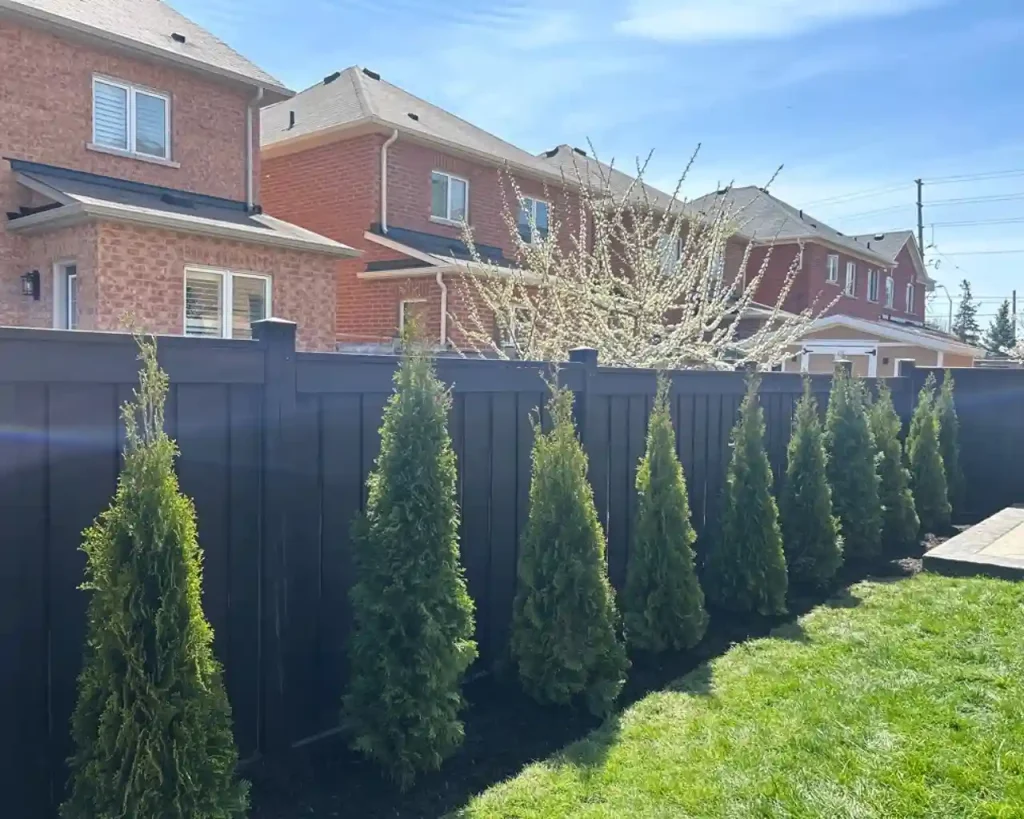
Source: @cedarkings
Whether you need to screen a neighbouring property, block a road, or simply create a more enclosed and private outdoor space, these 21 outstanding privacy trees along fence ideas will help you choose and plant perfectly using our fast growing privacy shrubs guide.
1. Arborvitae (Thuja occidentalis)
Arborvitae is the most widely planted and universally recommended privacy tree for planting along fences in North America, its dense, columnar evergreen form growing reliably to 15–30 feet and creating a thick, year-round privacy screen of outstanding effectiveness and attractive natural character.
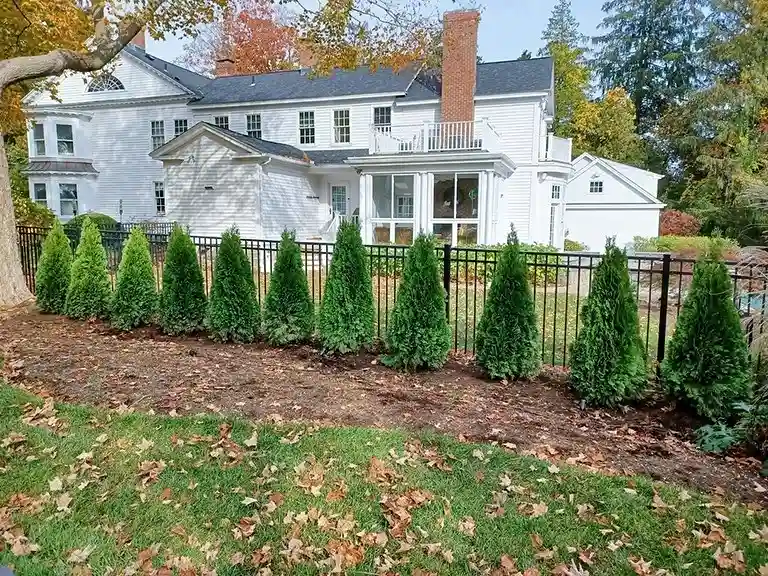
Source: @cttrees
Emerald Green arborvitae is the most popular cultivar for fence-line privacy planting; its narrow, upright habit requires minimal pruning while maintaining an exceptionally neat, well-groomed appearance throughout the year. For more fast-establishing privacy screen plant ideas, our fast growing privacy shrubs guide covers arborvitae varieties and planting strategies in comprehensive, practical detail.
| Feature | Details |
|---|---|
| Best Varieties | Emerald Green, Green Giant, North Pole, Techny |
| Growth Rate | 12–24 inches per year |
| Mature Height | 15–30 feet |
| Hardiness Zone | Zones 2–7 |
| Spacing Along Fence | 3–4 feet for dense screen |
| Maintenance Level | Very low |
2. Leyland Cypress (x Cuprocyparis leylandii)
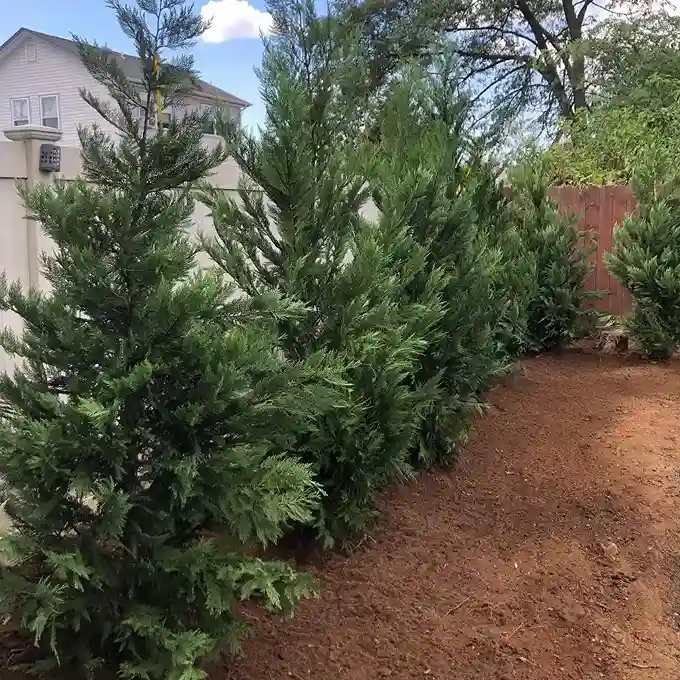
Leyland cypress is one of the fastest-growing privacy trees available for fence line planting, capable of gaining 3–5 feet of height per year in good conditions to create an impressively tall, dense evergreen screen in the shortest possible establishment time of any coniferous privacy tree.
Source: @wading.manor.nursery.in
Its naturally broad, columnar form and feathery, blue-green foliage create an attractive and characterful privacy screen that is particularly effective for blocking views from overlooking neighbouring windows and elevated positions. For comprehensive privacy fence and living screen ideas, our privacy fence ideas guide covers Leyland cypress planting alongside every other popular living fence option in excellent detail.
| Feature | Details |
|---|---|
| Growth Rate | 36–60 inches per year |
| Mature Height | 40–70 feet (can be kept smaller by trimming) |
| Hardiness Zone | Zones 6–10 |
| Spacing Along Fence | 6–8 feet apart |
| Best For | Fast screening of tall overlooking positions |
| Maintenance Level | Moderate (trim annually to control size) |
3. Green Giant Arborvitae (Thuja standishii x plicata)
Green Giant arborvitae is the fastest-growing and most vigorous arborvitae variety available, combining the extraordinary growth rate of 3–5 feet per year with outstanding disease resistance, deer resistance, and adaptability to a wide range of soil types that makes it the premium choice for fence line privacy planting.
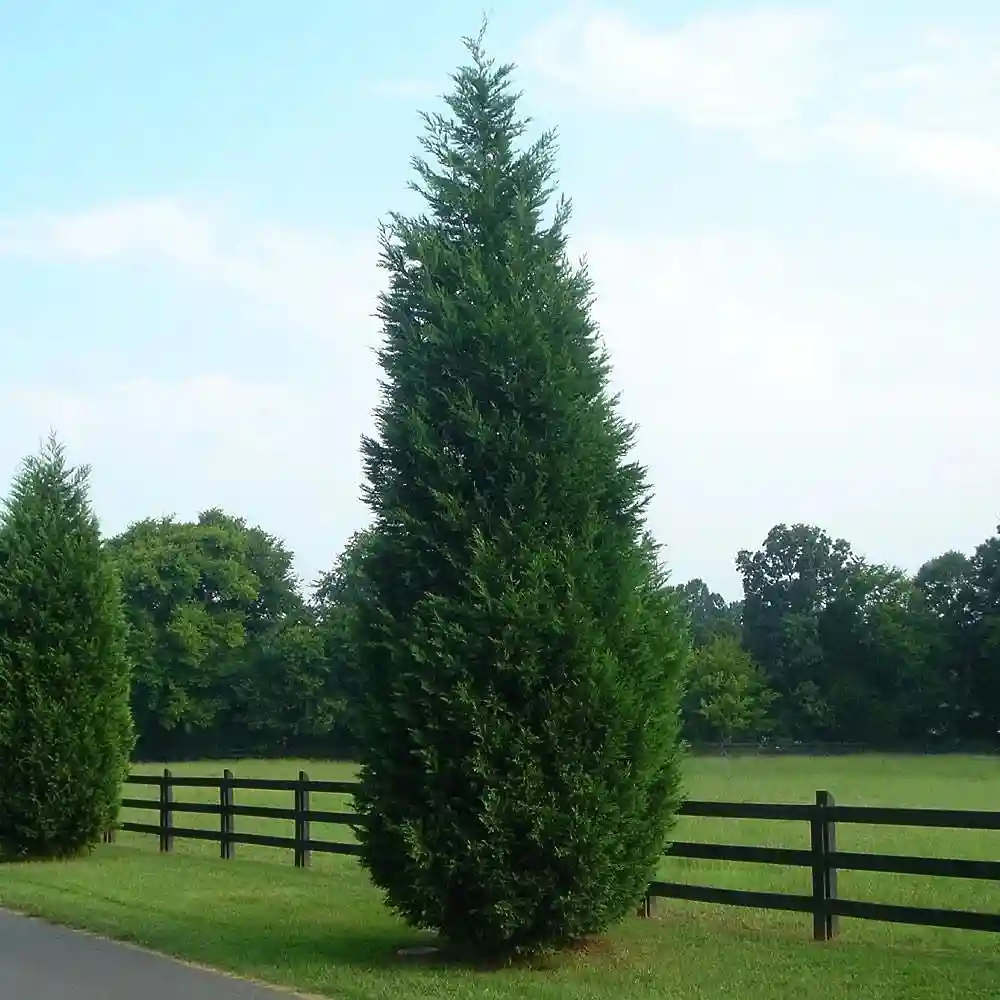
Unlike the slower Emerald Green arborvitae, Green Giant is best suited to larger gardens where its eventual mature height of 40–60 feet can be fully accommodated without becoming a problem for neighbours or structures. For more fast-establishing evergreen privacy tree recommendations, our tree landscaping ideas guide covers Green Giant arborvitae and other large privacy trees in comprehensive, practical detail.
| Feature | Details |
|---|---|
| Growth Rate | 36–60 inches per year |
| Mature Height | 40–60 feet |
| Hardiness Zone | Zones 5–8 |
| Spacing Along Fence | 5–6 feet for dense privacy screen |
| Deer Resistance | Excellent |
| Maintenance Level | Very low |
4. Nellie Stevens Holly (Ilex x ‘Nellie R. Stevens’)
Nellie Stevens holly is one of the most beautiful and effective broadleaf evergreen privacy trees for fence line planting in the South and Mid-Atlantic USA, its dense, glossy dark green foliage and abundant red winter berries creating a privacy screen of extraordinary year-round beauty and wildlife value.
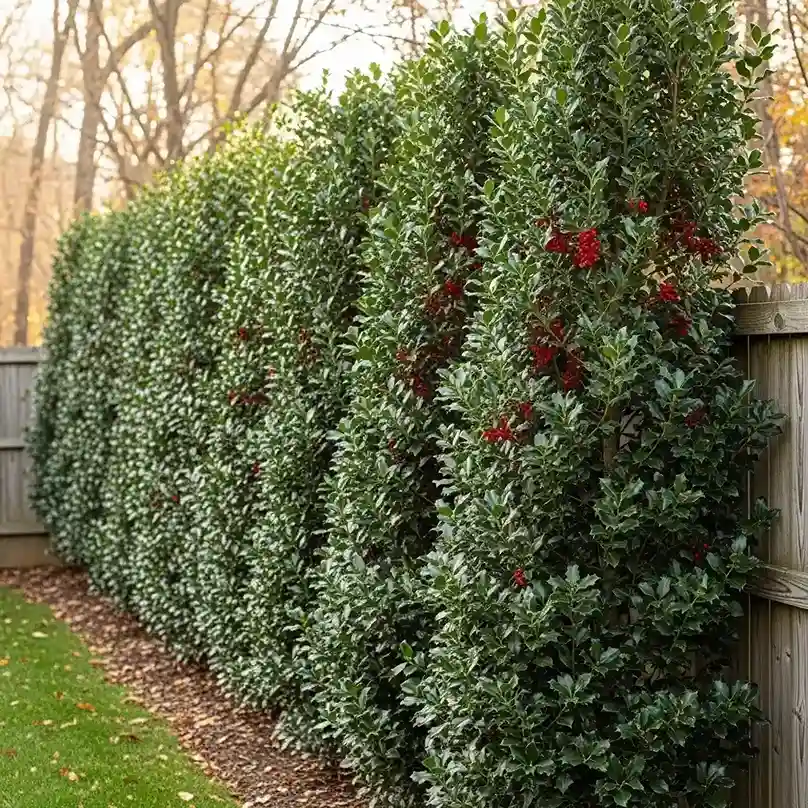
Its naturally pyramidal form requires virtually no pruning to maintain a neat, attractive shape while growing steadily to 15–25 feet to create an impressively effective and permanently beautiful fence line privacy screen. For more broadleaf evergreen privacy planting ideas, our fast growing privacy shrubs guide covers Nellie Stevens holly and other broadleaf evergreen privacy options in excellent detail.
| Feature | Details |
|---|---|
| Growth Rate | 24–36 inches per year |
| Mature Height | 15–25 feet |
| Hardiness Zone | Zones 6–9 |
| Spacing Along Fence | 5–6 feet apart |
| Winter Interest | Outstanding red berries December through March |
| Maintenance Level | Very low |
5. Italian Cypress (Cupressus sempervirens)
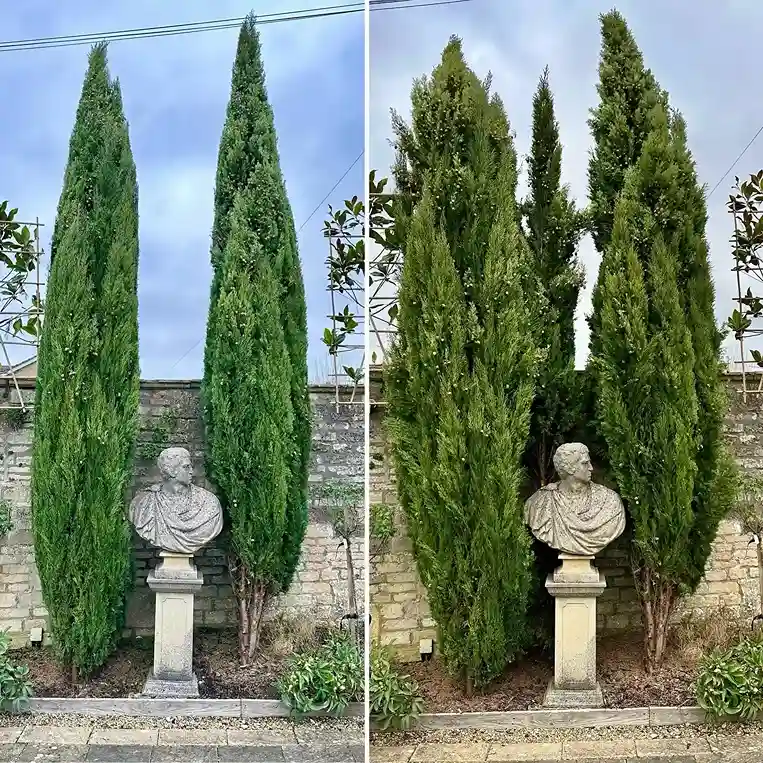
Italian cypress is the most dramatically elegant and architecturally striking privacy tree available for fence line planting in warm climates, its impossibly slender, perfectly columnar dark green form growing to extraordinary heights while occupying minimal horizontal space along the fence line.
Source: @gttrees_
A row of Italian cypress trees planted at regular intervals along a fence creates one of the most classically beautiful and unmistakably Mediterranean garden features achievable, transforming any outdoor space into a sophisticated, resort-like environment. For Mediterranean-style garden and privacy planting ideas, our trending landscaping ideas guide covers Italian cypress and Mediterranean privacy tree planting in current, beautifully detailed context.
| Feature | Details |
|---|---|
| Growth Rate | 12–24 inches per year |
| Mature Height | 40–70 feet |
| Mature Width | Just 3–4 feet — extremely narrow footprint |
| Hardiness Zone | Zones 7–11 |
| Spacing Along Fence | 3–5 feet for most dramatic avenue effect |
| Maintenance Level | Very low |
6. Bamboo (Clumping Varieties)
Clumping bamboo planted along a fence creates one of the fastest-establishing, most exotic-looking, and most space-efficient natural privacy screens available, its dense, leafy canes growing several feet per year to create an impressively tall, beautifully rustling, year-round privacy screen of genuine tropical character.
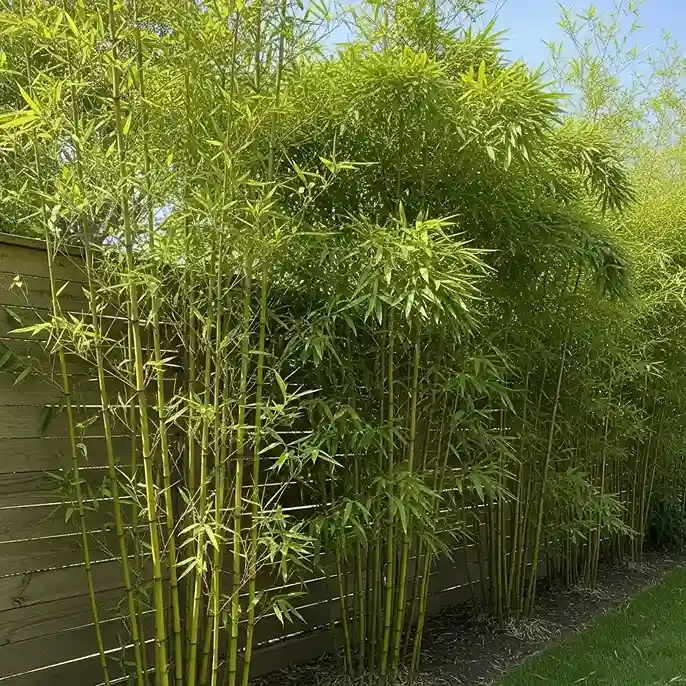
Always choose clumping bamboo varieties such as Fargesia rather than running bamboo, as clumping forms stay contained within their planting area and never become the invasive problem that running bamboo species frequently create along garden boundaries. For more bamboo privacy planting and fence line screening ideas, our privacy fence ideas guide covers bamboo fence line planting in practical, helpful detail.
| Feature | Details |
|---|---|
| Best Clumping Varieties | Fargesia robusta, F. rufa, F. nitida |
| Growth Rate | 24–48 inches per year |
| Mature Height | 10–20 feet depending on variety |
| Hardiness Zone | Zones 5–9 depending on variety |
| Spacing Along Fence | 3–5 feet apart |
| Key Note | Always choose clumping — never running varieties |
7. Photinia (Photinia x fraseri)
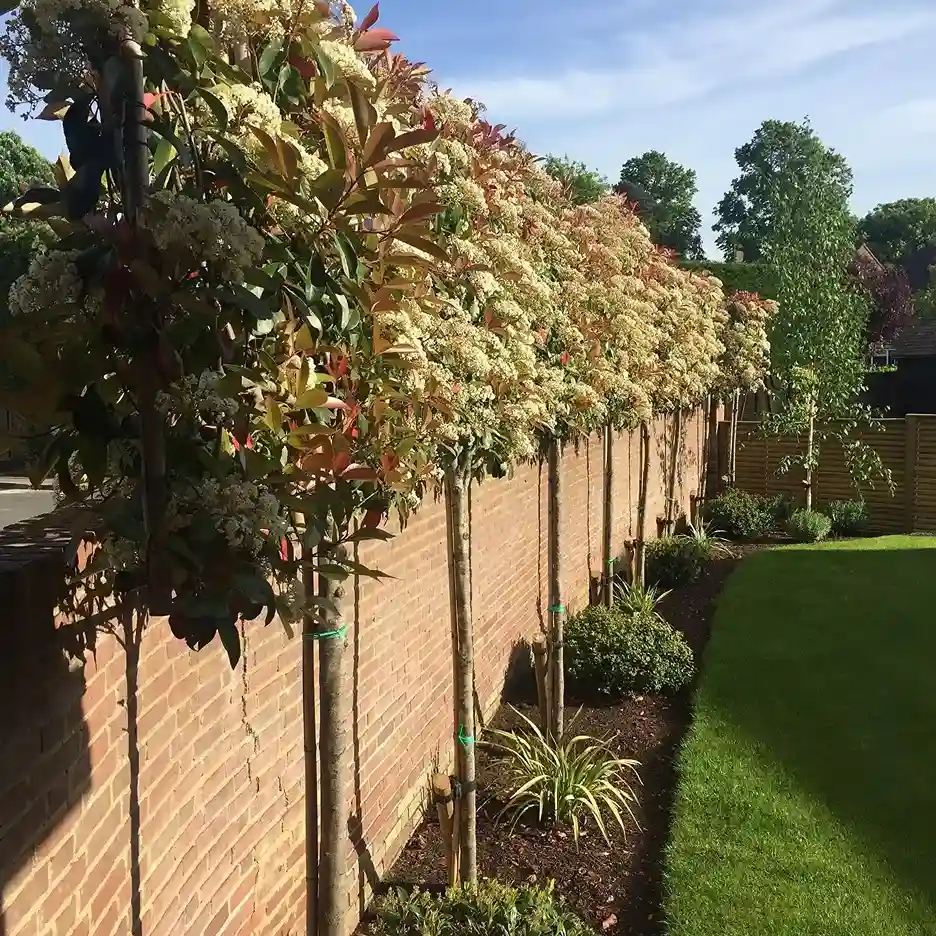
Photinia is one of the most widely planted and universally admired evergreen privacy shrub-trees for fence line planting in temperate climates, its spectacular bright red new growth flushes throughout the growing season and dense evergreen habit creating a privacy screen of extraordinary seasonal beauty and effectiveness.
Source: @creative_landscape_company
Red Robin photinia is the most popular cultivar, its reliable red shoot production and dense, glossy foliage making it an outstanding privacy tree for fence lines in gardens of every size and style. For more photinia and evergreen privacy planting ideas, our fast growing privacy shrubs guide covers photinia varieties and spacing strategies in excellent, practical detail.
| Feature | Details |
|---|---|
| Best Varieties | Red Robin, Pink Marble, Louise, Carre Rouge |
| Growth Rate | 12–24 inches per year |
| Mature Height | 10–20 feet |
| Hardiness Zone | Zones 7–9 |
| Spacing Along Fence | 4–5 feet for dense screen |
| Maintenance Level | Low (trim to encourage red growth) |
8. Laurel (Prunus laurocerasus)
Cherry laurel is the most widely planted large-leaved evergreen privacy tree in UK and European gardens, its large, glossy dark green leaves and vigorous establishment rate creating one of the fastest and most effective dense fence line privacy screens available in temperate growing conditions.
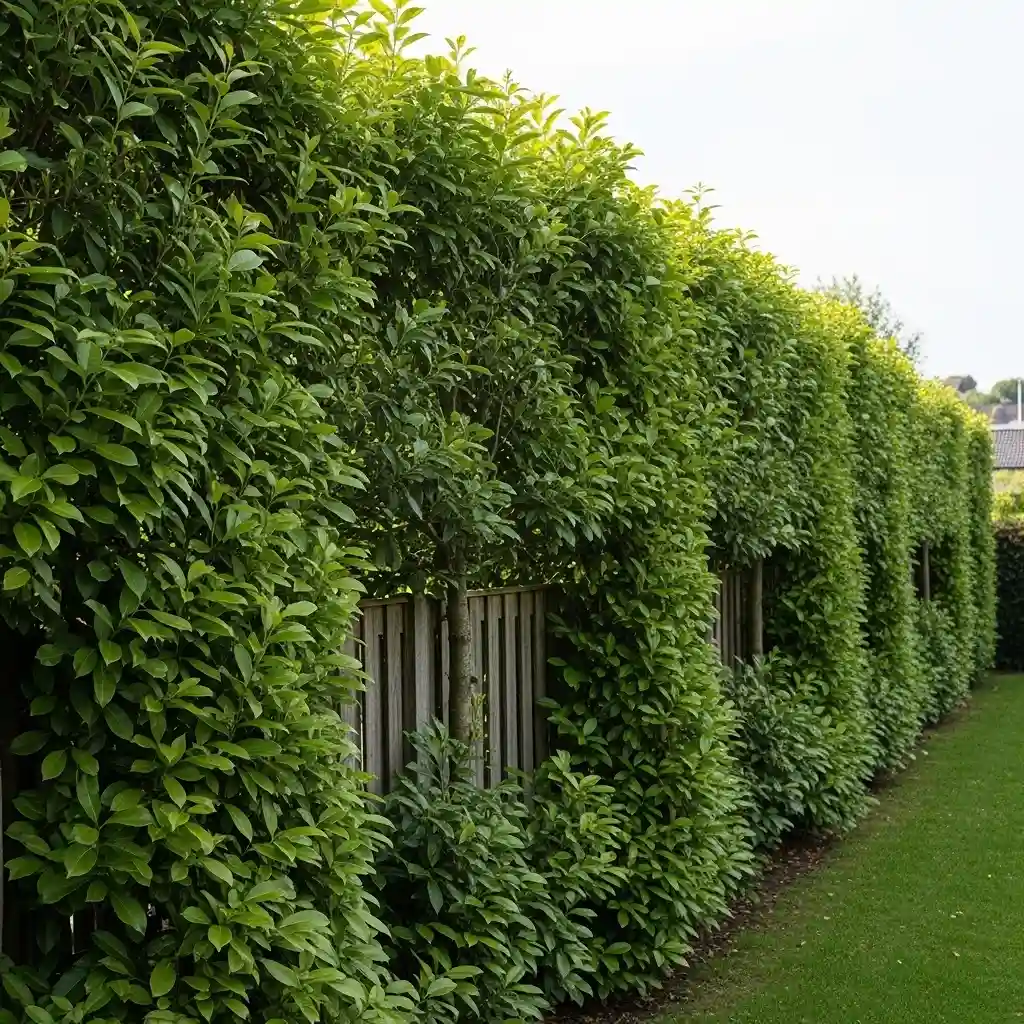
Rotundifolia is the most popular laurel variety for dense privacy screening, its broad, vigorous growth habit quickly filling horizontal gaps along the fence line to create a solid, impenetrable evergreen screen. For comprehensive laurel and evergreen privacy screen planting guidance, our fast growing privacy shrubs guide covers laurel varieties and establishment strategies in comprehensive, practical detail.
| Feature | Details |
|---|---|
| Best Varieties | Rotundifolia, Caucasica, Otto Luyken, Etna |
| Growth Rate | 18–24 inches per year |
| Mature Height | 10–20 feet |
| Hardiness Zone | Zones 6–9 |
| Spacing Along Fence | 3–4 feet for dense screen |
| Maintenance Level | Low (trim once or twice annually) |
9. Eastern Red Cedar (Juniperus virginiana)
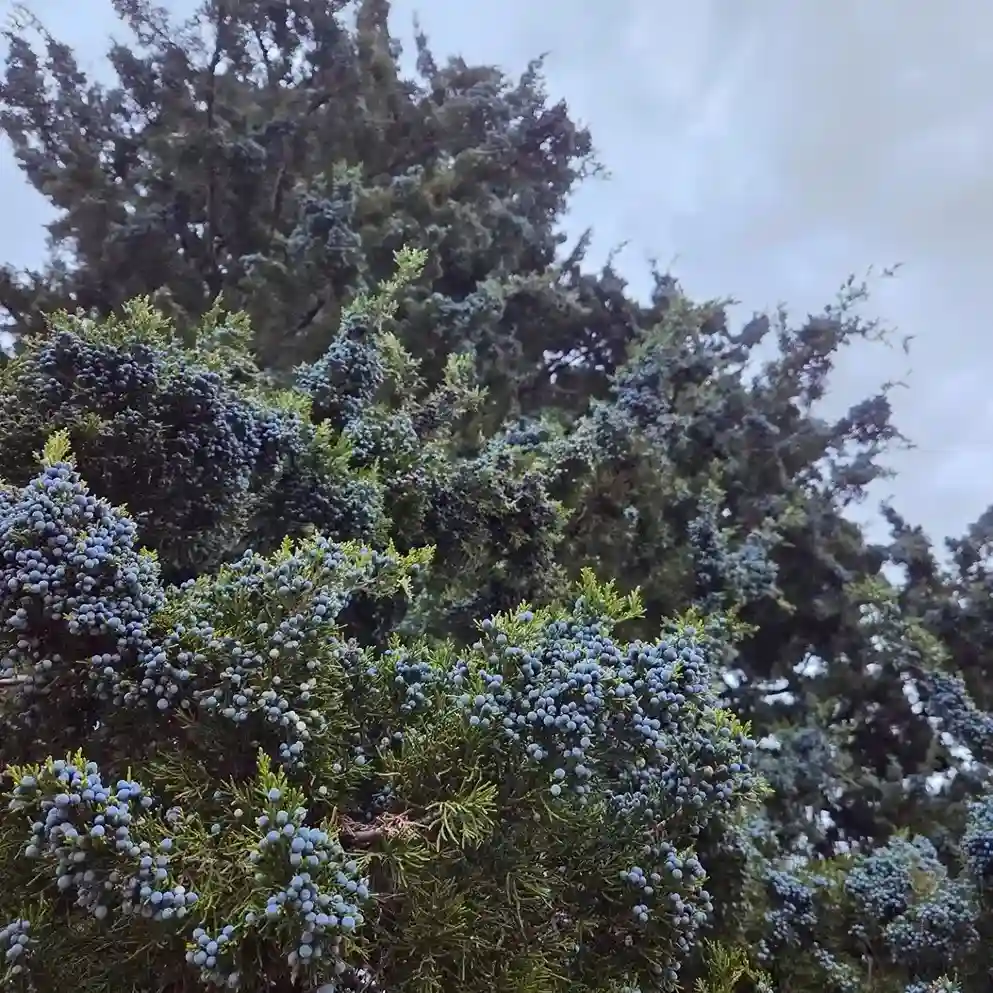
Eastern red cedar is an outstanding native North American evergreen privacy tree for fence line planting, its dense, dark green to blue-green foliage and naturally columnar or pyramidal form creating a beautiful, wildlife-supporting privacy screen with exceptional cold hardiness and drought tolerance once established.
Source: @marie_viljoen
Its small blue-grey berries provide outstanding winter wildlife food for cedar waxwings, mockingbirds, and numerous other bird species, making it one of the most ecologically valuable privacy trees available for fence line planting. For more native and wildlife-friendly privacy tree recommendations, our tree landscaping ideas guide covers native privacy tree selection and planting in excellent, practical detail.
| Feature | Details |
|---|---|
| Growth Rate | 12–24 inches per year |
| Mature Height | 20–40 feet |
| Hardiness Zone | Zones 2–9 |
| Spacing Along Fence | 6–8 feet apart |
| Wildlife Value | Outstanding — berries for birds, nesting habitat |
| Drought Tolerance | Excellent once established |
10. Skip Laurel (Prunus laurocerasus ‘Schipkaensis’)
Skip laurel is one of the best narrow-footprint evergreen privacy trees for fence line planting in smaller gardens, its upright, columnar growth habit reaching 10–18 feet in height while spreading only 5–7 feet wide — making it an outstanding space-efficient privacy screen solution.
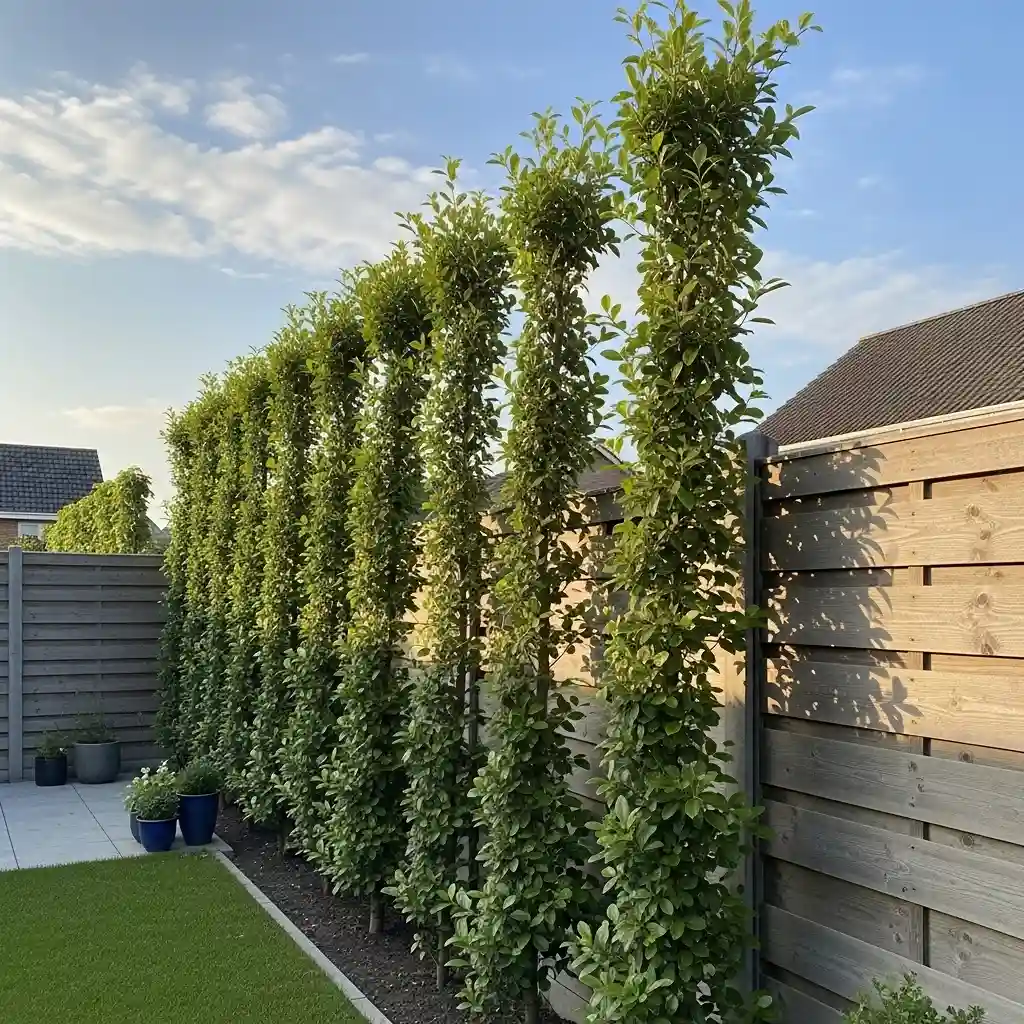
Its cold hardiness to Zone 5 makes skip laurel significantly more winter-hardy than standard cherry laurel, extending its usefulness as a fence line privacy tree into much colder climates than most other broadleaf evergreen options can tolerate. For more space-efficient privacy tree recommendations for smaller gardens, our small garden ideas guide covers narrow-footprint privacy trees for compact spaces in practical, helpful detail.
| Feature | Details |
|---|---|
| Growth Rate | 12–24 inches per year |
| Mature Height | 10–18 feet |
| Mature Width | 5–7 feet — narrow footprint |
| Hardiness Zone | Zones 5–9 |
| Spacing Along Fence | 4–5 feet apart |
| Maintenance Level | Very low |
11. Hornbeam (Carpinus betulus)
Hornbeam is one of the most beautiful and structurally elegant deciduous privacy trees for fence line planting, its pleached or column-trained form creating a sophisticated, architectural privacy screen of exceptional beauty that retains its russet-brown dead leaves throughout winter to provide meaningful year-round screening even when not in full leaf.
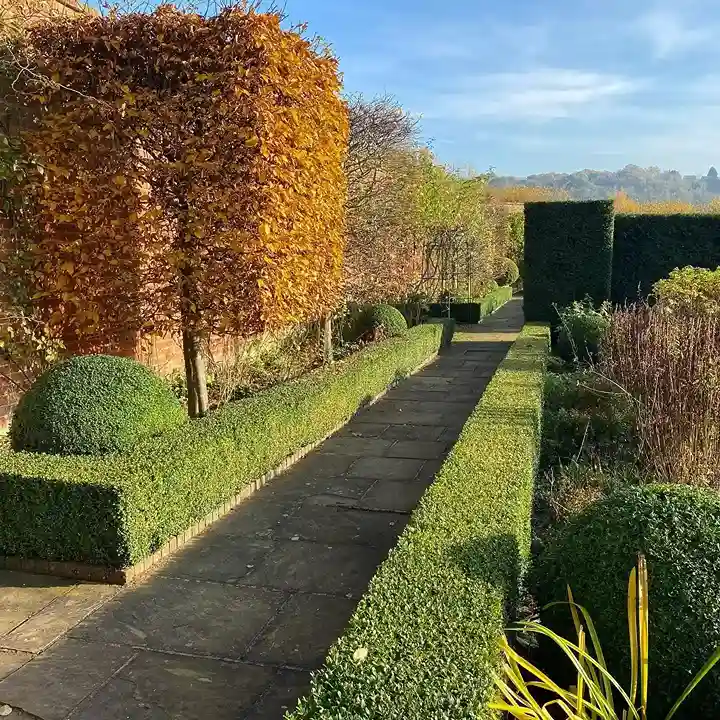
Source: @james_todman
Fastigiata hornbeam is the most popular columnar variety for fence line privacy planting, its naturally upright, narrow form requiring minimal pruning while developing into an impressively dense and beautiful tall screen. For more structural and formal privacy tree planting ideas, our tree landscaping ideas guide covers hornbeam and pleached tree privacy screens in comprehensive, inspiring detail.
| Feature | Details |
|---|---|
| Best Varieties | Fastigiata, Frans Fontaine |
| Growth Rate | 12–18 inches per year |
| Mature Height | 30–40 feet |
| Hardiness Zone | Zones 4–8 |
| Spacing Along Fence | 4–6 feet apart |
| Winter Screening | Retains dead leaves — year-round privacy |
12. Privet (Ligustrum)
Privet is one of the fastest-establishing and most affordable deciduous to semi-evergreen privacy trees for fence line planting, its vigorous growth rate and dense branching structure quickly creating an effective privacy screen that can be maintained at any desired height through regular clipping.
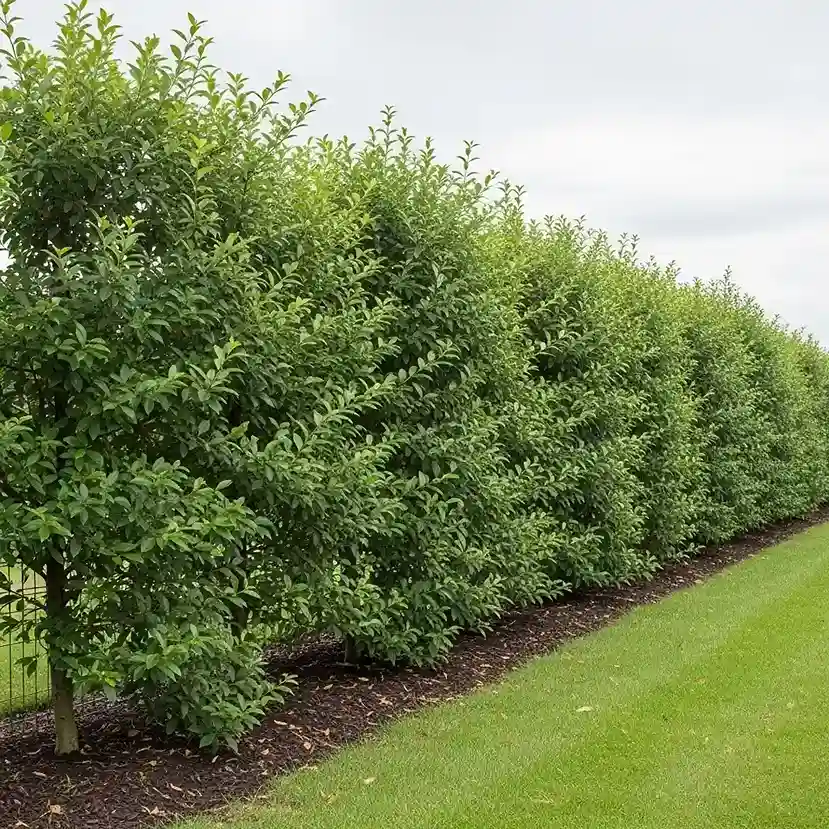
While requiring more frequent trimming than many other privacy trees, privet’s extraordinary vigour, low cost, and ability to establish successfully in almost any soil type and aspect make it one of the most practical all-round fence line privacy screening choices. For more hedging and privacy screen planting strategies, our fast growing privacy shrubs guide covers privet varieties and maintenance requirements in practical, helpful detail.
| Feature | Details |
|---|---|
| Best Varieties | Ligustrum ovalifolium, L. japonicum, Golden Privet |
| Growth Rate | 24–36 inches per year |
| Mature Height | 10–15 feet (maintains well at any height) |
| Hardiness Zone | Zones 5–8 |
| Spacing Along Fence | 2–3 feet for dense screen |
| Maintenance Level | Moderate (trim 2–3 times per year) |
13. Silver Birch (Betula pendula)
A row of silver birch trees planted along a fence creates one of the most beautiful and elegant deciduous privacy screens available, their graceful white-barked trunks, delicate dappled canopy, and spectacular golden autumn foliage providing a privacy solution of extraordinary ornamental quality and natural character.
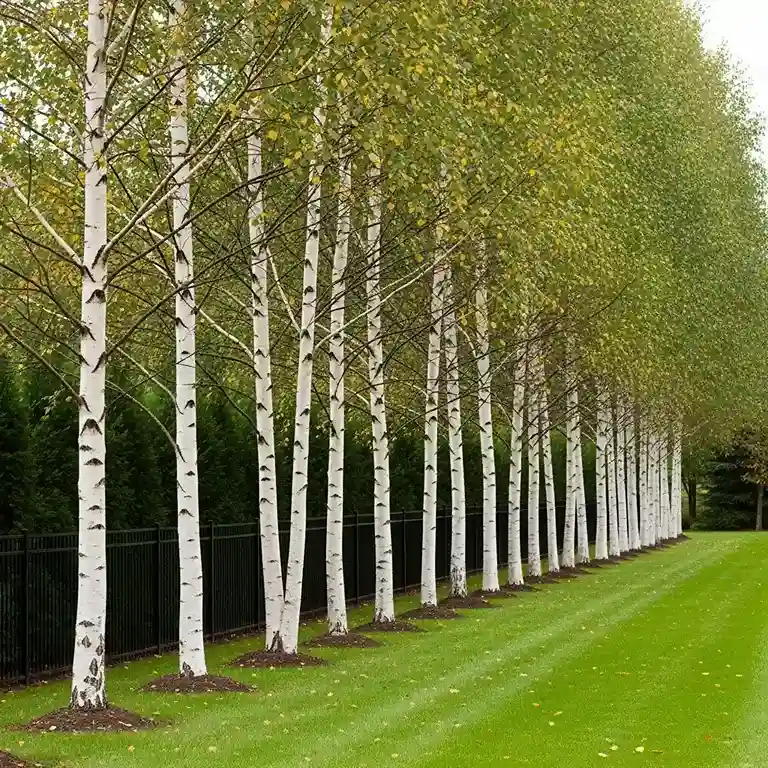
While less opaque than evergreen alternatives, a dense planting of silver birch provides surprisingly effective screening through summer and creates a year-round feature of genuine beauty through the outstanding ornamental value of its distinctive white bark. For more ornamental privacy tree selections, our tree landscaping ideas guide covers silver birch grove planting and privacy screen design in beautiful, practical detail.
| Feature | Details |
|---|---|
| Growth Rate | 24–36 inches per year |
| Mature Height | 40–60 feet |
| Hardiness Zone | Zones 2–7 |
| Spacing Along Fence | 6–8 feet apart |
| Seasonal Privacy | Excellent spring through autumn |
| Winter Interest | Outstanding white bark — year-round beauty |
14. Portugal Laurel (Prunus lusitanica)
Portugal laurel is a superior alternative to cherry laurel for fence line privacy planting, its smaller, darker, more elegantly shaped leaves and greater tolerance of chalky, alkaline soils making it an excellent choice for gardens where standard laurel consistently underperforms or looks coarse.
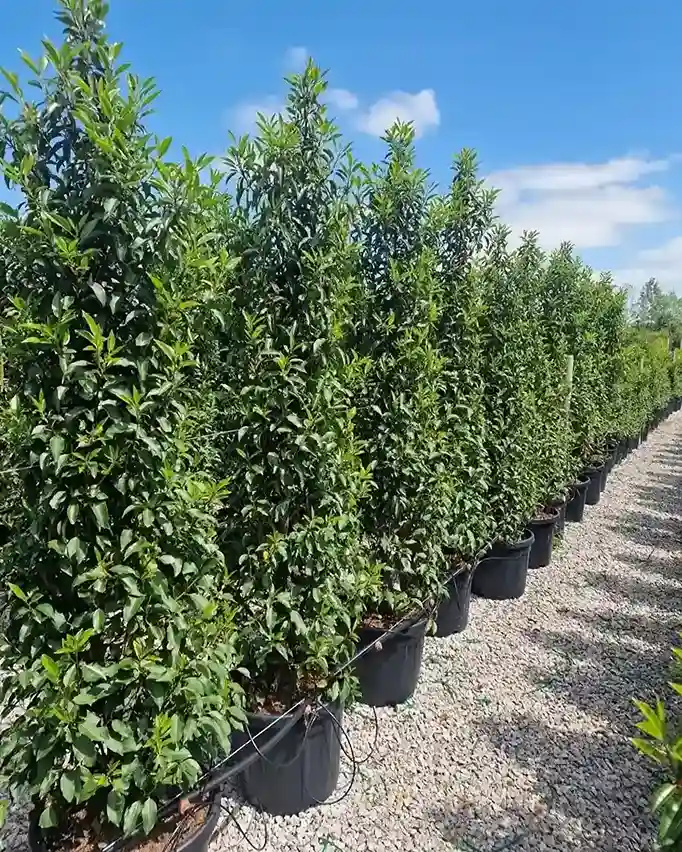
Its ability to be trained into a formal standard or maintained as a multi-stemmed tree gives Portugal laurel outstanding design flexibility as a fence line privacy tree that can suit both formal and informal garden settings. For more evergreen privacy tree alternatives, our fast growing privacy shrubs guide covers Portugal laurel alongside every other popular evergreen privacy option in comprehensive detail.
| Feature | Details |
|---|---|
| Growth Rate | 12–18 inches per year |
| Mature Height | 15–25 feet |
| Hardiness Zone | Zones 7–9 |
| Soil Tolerance | Excellent on chalk and alkaline soils |
| Spacing Along Fence | 4–5 feet apart |
| Maintenance Level | Low |
15. Wax Myrtle (Morella cerifera)
Wax myrtle is an outstanding native evergreen privacy tree for fence line planting in the Southern USA, its aromatic, olive-green foliage and remarkable tolerance of wet soils, drought, salt spray, and poor fertility making it one of the most adaptable and resilient privacy trees available for challenging growing conditions.
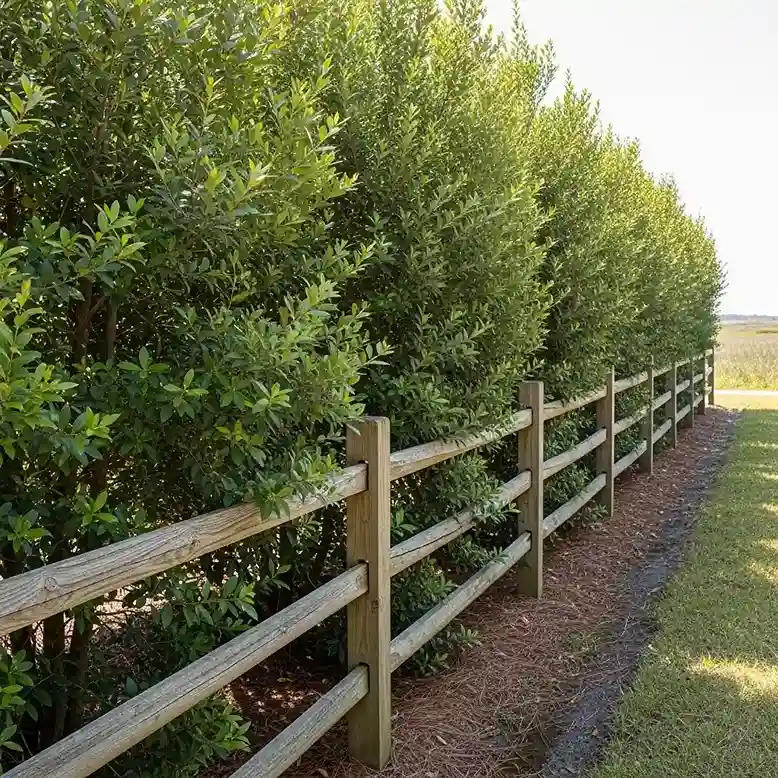
Its attractive blue-grey berries provide outstanding wildlife food for warblers and other migratory songbirds, while its tolerance of coastal salt spray and wind makes it an ideal privacy tree for fence lines in difficult seaside garden positions. For more coastal and tough-site privacy tree recommendations, our coastal backyard garden guide covers wax myrtle and salt-tolerant privacy tree planting in authoritative, practical detail.
| Feature | Details |
|---|---|
| Growth Rate | 24–36 inches per year |
| Mature Height | 10–20 feet |
| Hardiness Zone | Zones 7–11 |
| Soil Tolerance | Wet, dry, poor, salty — remarkably adaptable |
| Wildlife Value | Outstanding — berries for migratory birds |
| Spacing Along Fence | 4–6 feet apart |
16. Emerald Green Arborvitae in Small Gardens
Emerald Green arborvitae is the single best privacy tree for fence line planting in smaller gardens, its narrow, perfectly columnar form growing to just 10–15 feet in height and 3–4 feet in width while creating a dense, impeccably neat evergreen privacy screen that never outgrows its allocated space.
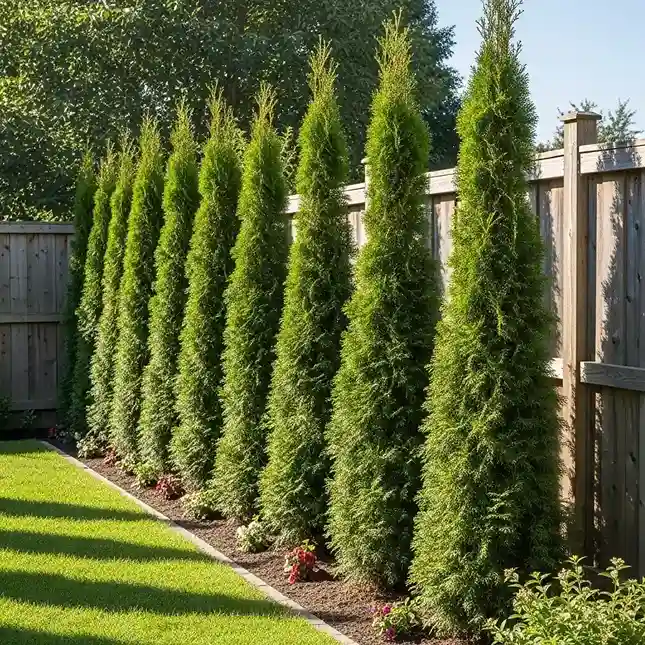
Its slow, predictable growth rate and virtually maintenance-free nature make Emerald Green arborvitae the most practical and foolproof privacy tree available for homeowners seeking a reliable, permanent fence line screen solution. For more space-efficient privacy solutions for smaller outdoor spaces, our small garden ideas and tiny backyard ideas guides cover compact privacy tree planting in excellent detail.
| Feature | Details |
|---|---|
| Growth Rate | 6–9 inches per year |
| Mature Height | 10–15 feet |
| Mature Width | 3–4 feet — extremely compact |
| Hardiness Zone | Zones 2–7 |
| Spacing Along Fence | 3 feet for dense screen |
| Best For | Small gardens where space is genuinely limited |
17. Bay Laurel (Laurus nobilis)
Bay laurel is a beautifully aromatic, slow-growing evergreen privacy tree that provides dense, year-round screening along a fence while simultaneously producing an abundant continuous supply of fresh culinary bay leaves for cooking, making it one of the very few truly productive privacy trees available for garden planting.
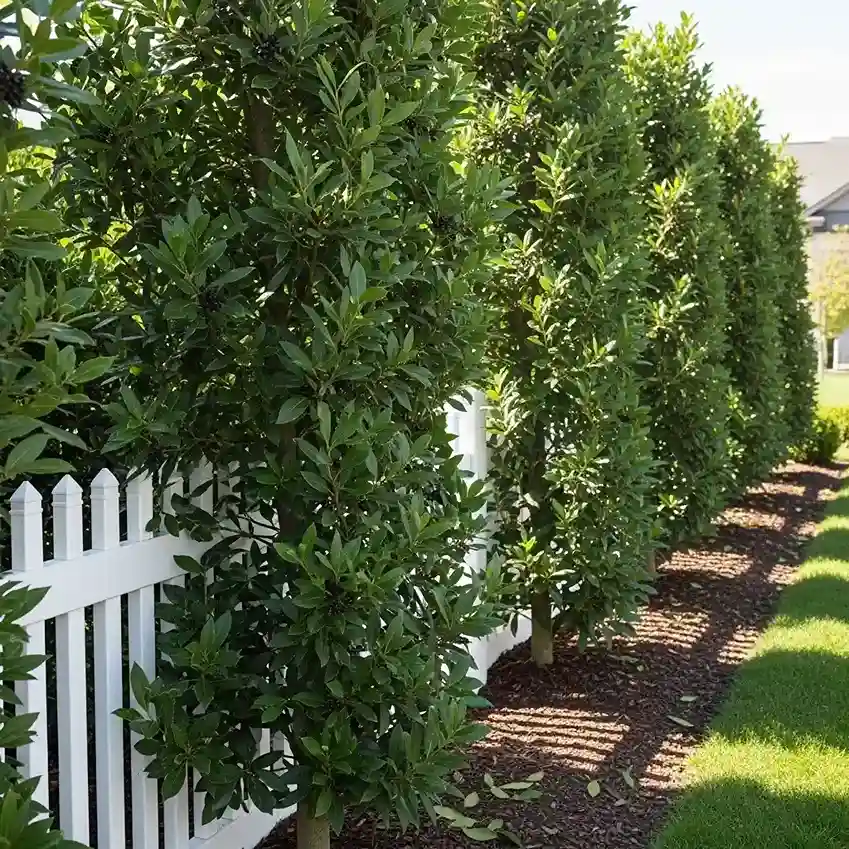
Its ability to be clipped into formal standards, pyramids, and lollipop shapes gives bay laurel outstanding design flexibility as both a privacy tree and an ornamental garden feature of considerable character and sophistication. For more productive and multi-functional privacy planting ideas, our garden herb pairing guide covers bay laurel growing and companion planting in practical, useful detail.
| Feature | Details |
|---|---|
| Growth Rate | 6–12 inches per year |
| Mature Height | 10–40 feet |
| Hardiness Zone | Zones 8–11 |
| Culinary Value | Fresh bay leaves available year-round |
| Spacing Along Fence | 4–6 feet apart |
| Maintenance Level | Low to moderate |
18. Podocarpus (Buddhist Pine)
Podocarpus is an outstanding evergreen privacy tree for fence line planting in warm climates, its fine-textured, dark green foliage and naturally columnar to pyramidal form creating an exceptionally neat, dense, and attractive privacy screen that responds beautifully to clipping and maintains a tidy appearance with minimal maintenance.
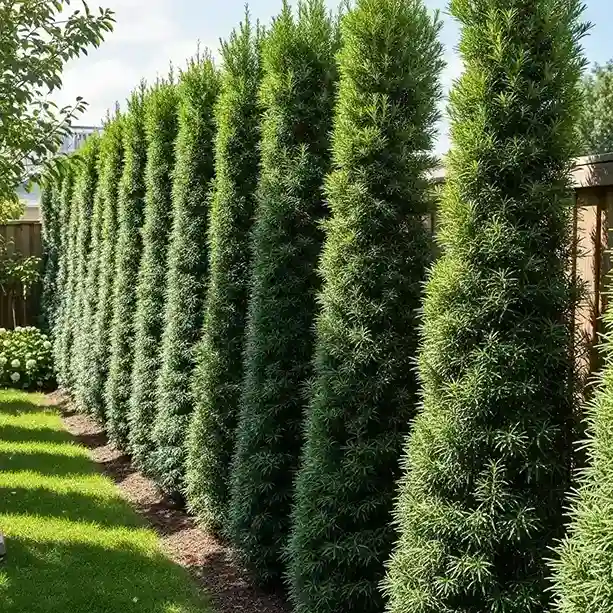
Its tolerance of heat, humidity, salt spray, and a wide range of soil types makes podocarpus one of the most versatile and reliable privacy trees available for challenging warm climate garden positions. For more warm climate privacy tree recommendations, our tree landscaping ideas guide covers podocarpus and other warm climate privacy tree options in excellent, practical detail.
| Feature | Details |
|---|---|
| Growth Rate | 12–24 inches per year |
| Mature Height | 20–40 feet |
| Hardiness Zone | Zones 8–11 |
| Salt Tolerance | Good — suitable for coastal positions |
| Spacing Along Fence | 4–6 feet apart |
| Maintenance Level | Very low |
19. Yew (Taxus baccata)
Yew is the finest, most enduring, and most beautifully characterful privacy tree available for fence line planting in temperate climates, its extraordinary longevity, dense dark green foliage, and outstanding tolerance of clipping into any shape making it the premier choice for formal, long-term privacy screens.
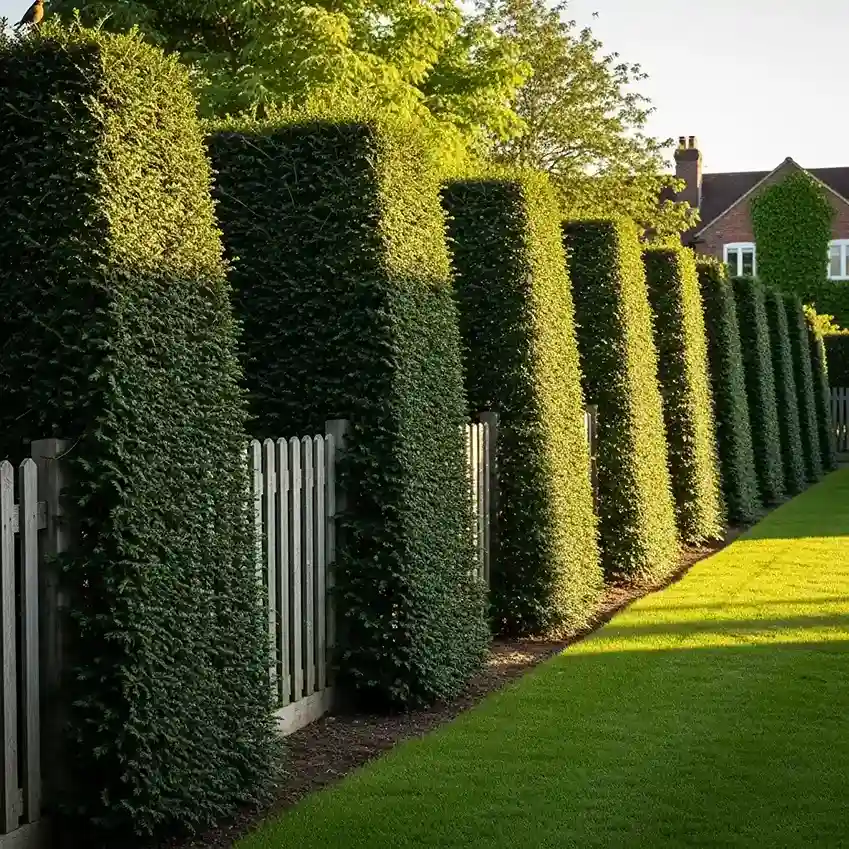
Unlike faster-growing alternatives, yew establishes slowly but rewards patience with a privacy screen of unmatched density, elegance, and indefinite longevity that improves in character and beauty with every passing decade of careful management. For more formal evergreen privacy tree and hedging ideas, our privacy fence ideas guide covers yew and formal evergreen privacy screening in comprehensive detail.
| Feature | Details |
|---|---|
| Growth Rate | 6–12 inches per year |
| Mature Height | 20–40 feet |
| Hardiness Zone | Zones 4–7 |
| Spacing Along Fence | 3–4 feet for dense formal screen |
| Longevity | Centuries — the most permanent privacy screen |
| Caution | All parts except red berry flesh are toxic |
20. Flowering Cherry (Prunus serrulata)
A row of flowering cherry trees planted along a fence creates one of the most spectacularly beautiful deciduous privacy screens imaginable, their extraordinary spring blossom display in white or pink creating a breathtaking seasonal feature of remarkable visual impact before the dense summer leaf canopy provides effective warm-season privacy.
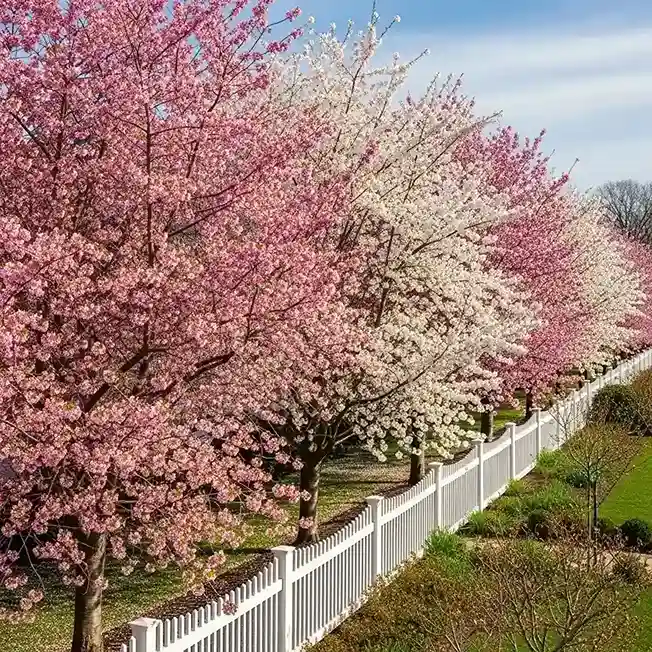
The combination of spring blossom, summer green canopy, and spectacular autumn leaf colour makes flowering cherry one of the most ornamentally rewarding privacy tree choices available for fence line planting in any temperate garden. For more ornamental privacy tree selections and seasonal interest planting, our tree landscaping ideas guide covers flowering cherry privacy screen planting in beautiful, comprehensive detail.
| Feature | Details |
|---|---|
| Best Varieties | Kanzan, Tai Haku, Shirotae, Prunus x yedoensis |
| Growth Rate | 12–24 inches per year |
| Mature Height | 15–30 feet |
| Hardiness Zone | Zones 5–8 |
| Spacing Along Fence | 10–15 feet apart |
| Best For | Seasonal spectacular display plus summer screening |
21. Budget Privacy Trees Along Fence
Creating an effective, beautiful privacy tree screen along a fence on a tight budget is entirely achievable by purchasing bare-root trees and hedging whips in winter, when the same species cost a fraction of their container-grown summer equivalents while establishing just as vigorously.
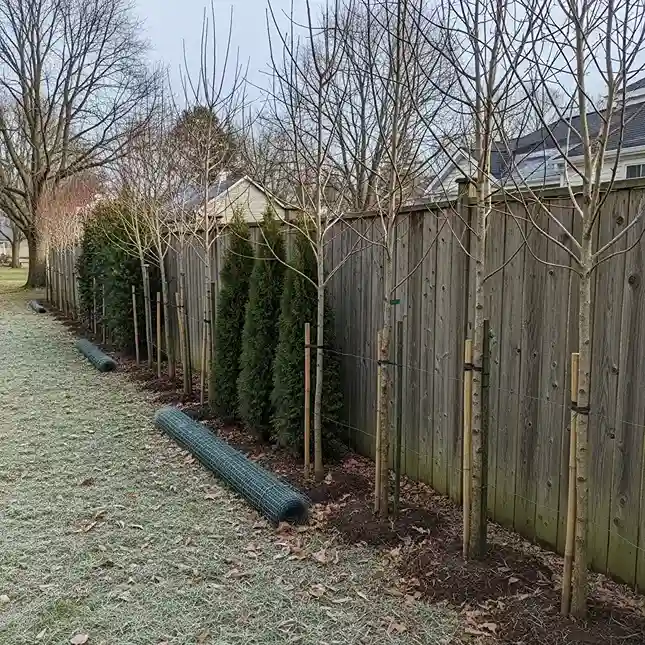
A row of bare-root privet, hornbeam, or arborvitae whips purchased in winter and planted immediately creates a highly effective, fast-establishing fence line privacy screen for a total investment of under $100 in most cases. For comprehensive budget privacy screen and fence line planting strategies, our cheap landscaping ideas guide covers affordable privacy tree planting in genuinely practical, money-saving detail.
| Feature | Details |
|---|---|
| Best Budget Trees | Bare-root privet, hornbeam, arborvitae, laurel whips |
| Best Buying Season | Winter — bare-root prices 70–80% lower |
| Establishment | Bare-root trees often outperform container-grown |
| Spacing | 2–3 feet for quickest screening from budget planting |
| Difficulty Level | Beginner |
| Estimated Cost | $30–$100 for a complete fence line screen |
Frequently Asked Questions (FAQs)
Q1: What is the fastest growing privacy tree to plant along a fence?
Leyland cypress and Green Giant arborvitae are the fastest growing privacy trees for fence lines, both capable of gaining 3–5 feet of height per year under good growing conditions. Our fast growing privacy shrubs guide covers the fastest-establishing privacy trees and their ideal planting conditions in comprehensive, practical detail.
Q2: How far from the fence should I plant privacy trees?
Plant privacy trees a minimum of 3–4 feet from the fence to allow adequate root development and prevent the roots from undermining fence posts over time. Larger trees like Leyland cypress and Green Giant arborvitae should be planted 5–6 feet from the fence to accommodate their eventual trunk width and root spread comfortably.
Q3: How many privacy trees do I need along my fence?
Divide the total fence length by the recommended spacing for your chosen tree species to calculate the number required. Most privacy trees are spaced 3–6 feet apart for effective screening — a 60-foot fence line planted with arborvitae at 4-foot spacing requires approximately 15 trees to create a complete, dense privacy screen.
Q4: How do I care for newly planted privacy trees along a fence?
Water newly planted privacy trees deeply once or twice weekly throughout the first growing season, mulch around the base to retain moisture and suppress weeds, and avoid heavy feeding which encourages soft growth vulnerable to wind and frost damage. Our guides on eliminate ground moles and keep ground squirrels out cover pest management that protects newly planted privacy trees from root damage.
Conclusion
Privacy trees planted along a fence deliver the most natural, beautiful, and permanently improving boundary solution available — creating an outdoor space that becomes more private, more beautiful, and more ecologically valuable with every single passing year.
Explore more privacy and boundary planting inspiration through our guides on fast growing privacy shrubs, privacy shrubs, and fence line landscaping to find your perfect privacy tree solution today.