Creating a breathtaking landscape requires more than just a green thumb; it requires a strategic selection of plants that offer year-round interest, durability, and texture.
Whether you are working with a sun-drenched front yard or a hidden shaded corner, the right combination of greenery can turn any outdoor space into a sanctuary.
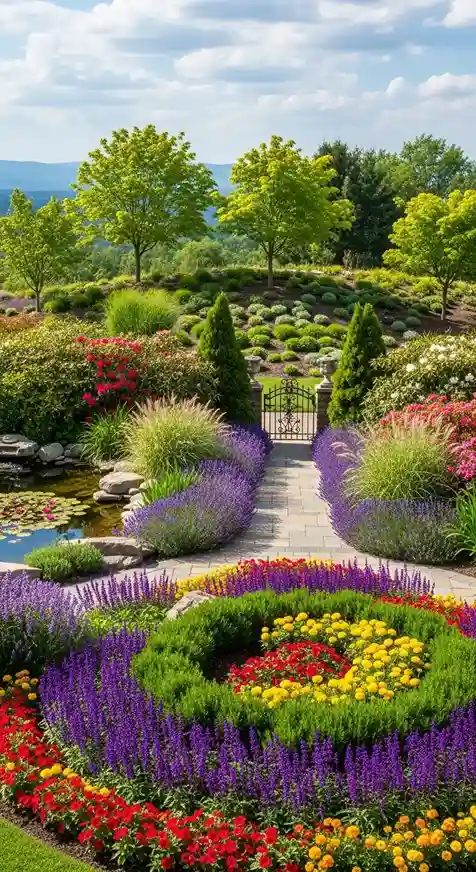
To help you build your dream garden, we have curated a list of 34 outdoor plants. For those also looking to bring the beauty of nature inside, don’t forget to check out our house plants guide for expert indoor tips.
The Ultimate List of 34 Outdoor Plants
1. Lavender (Lavandula)
Lavender is the crown jewel of the sensory garden, offering an iconic fragrance and striking silver-purple spikes. It thrives in the hottest, driest spots of your yard, making it a sustainable choice for water-conscious homeowners.
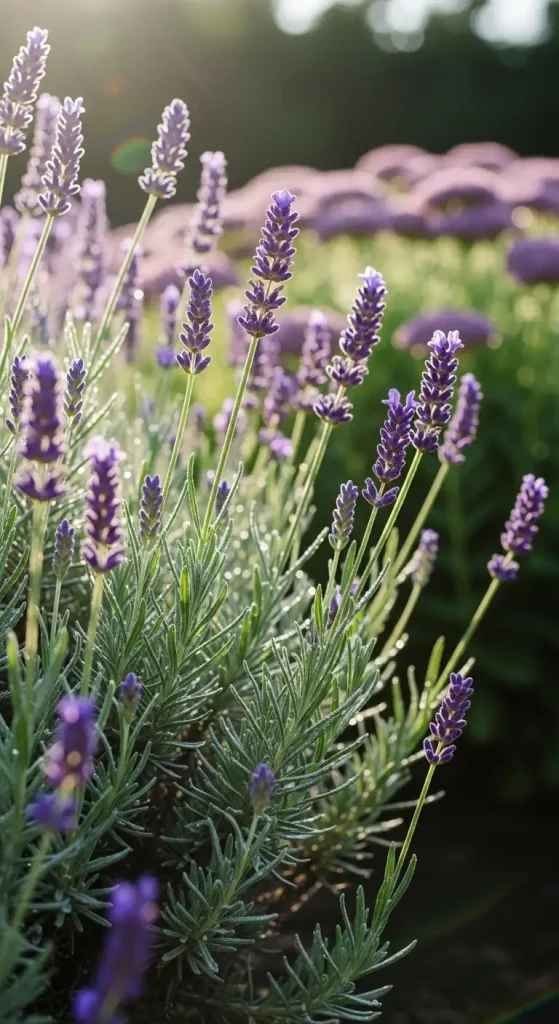
- Why it’s a winner: Naturally repels mosquitoes while attracting bees and butterflies.
- Landscape Tip: Perfect for Mediterranean-style trending landscaping ideas.
- Care Note: Requires “gritty,” well-drained soil; it cannot tolerate standing water.
2. Hosta (Plantain Lily)
The undisputed king of the shade garden, Hostas offer lush, leafy textures where most flowers refuse to grow. With colors ranging from deep blue-green to bright neon chartreuse, they are essential for brightening dark corners.
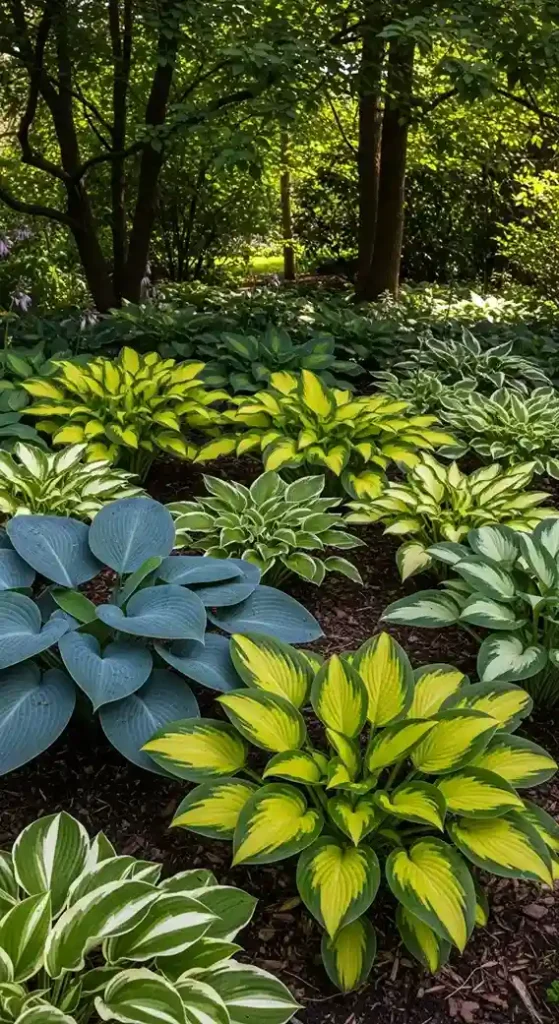
- Varieties: Available in “Giant” sizes (3 feet wide) or “Miniature” (6 inches).
- Usage: Best for shady foundations, under trees, or north-facing walls.
- Design Tip: Plant in large drifts to create a professional, forest-floor aesthetic.
3. Hydrangea
Hydrangeas are the “divas” of the garden, producing massive, billowy flower heads that act as the centerpiece for any landscape design. They are particularly famous for their ability to change color based on the acidity of your soil.
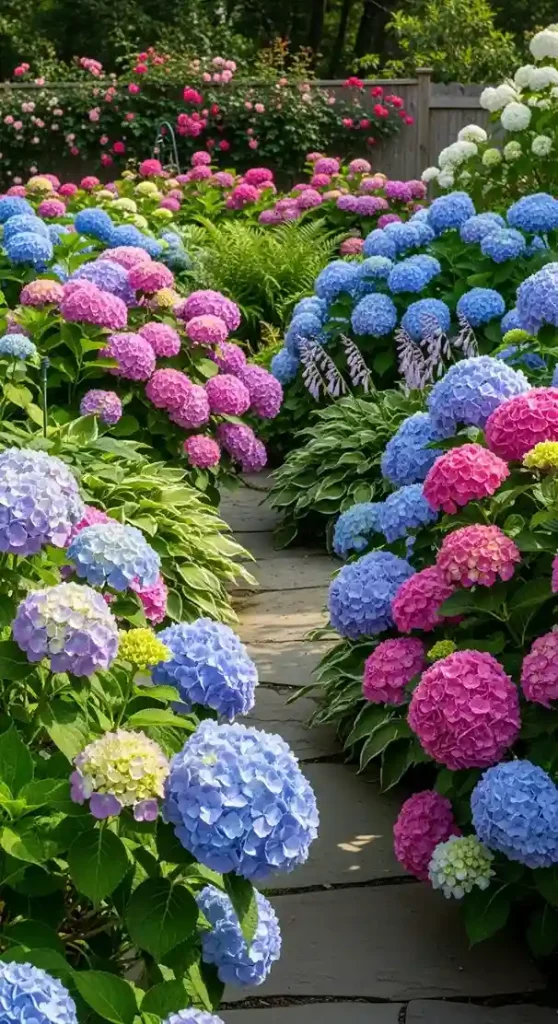
- Visual Appeal: Produces stunning blue, pink, or white blooms that last all summer.
- Popular Types: Mophead, Lacecap, Panicle, and Oakleaf varieties.
- Moisture: They are heavy drinkers; ensure they get consistent water during dry spells.
4. Boxwood (Buxus)
For gardeners who appreciate structure and order, Boxwoods are an indispensable evergreen tool. Their dense, small leaves take to shearing perfectly, allowing you to create everything from low hedges to whimsical spheres.
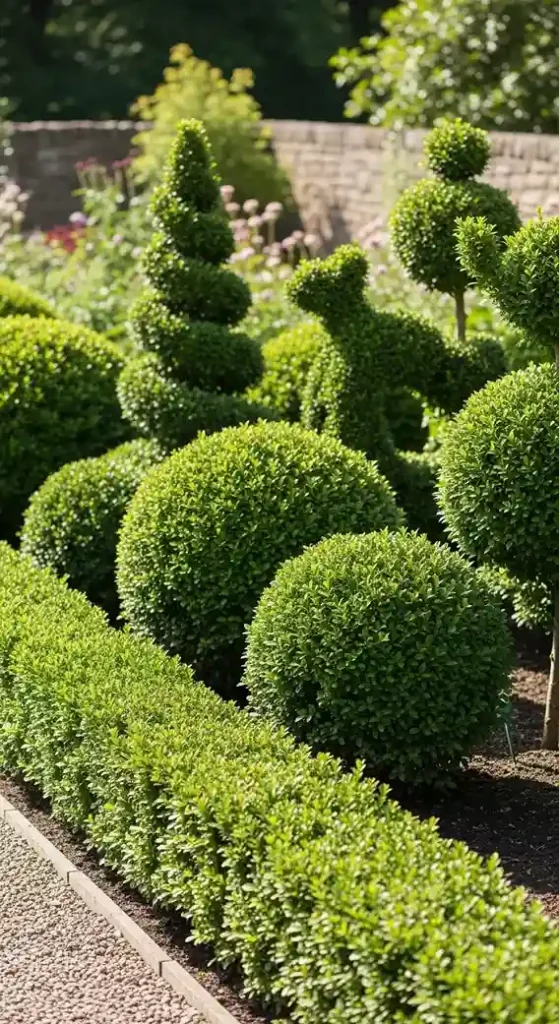
- Year-Round Interest: Stays vibrant green even in the dead of winter.
- Privacy: Use them to define garden “rooms” or hide unsightly foundation walls.
- Durability: Once established, they are incredibly resilient and deer-resistant.
5. Daylily (Hemerocallis)
If you want maximum color with zero effort, the Daylily is your best friend. Often called the “perfect perennial,” these plants are nearly indestructible and can thrive in poor soil, heat, and drought.
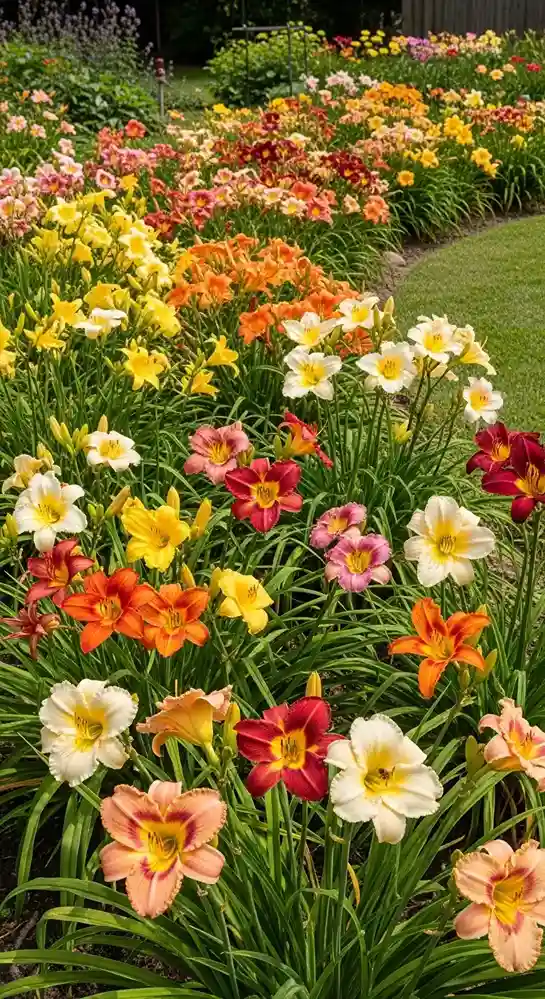
- Bloom Cycle: Each flower lasts a day, but a single plant produces hundreds of buds.
- Colors: Available in every shade except true blue.
- Maintenance: Simply “deadhead” spent blooms to keep the plant looking tidy.
6. Ornamental Grasses
Ornamental grasses like Fountain Grass or Blue Fescue bring a soft, organic movement to the garden that shrubs cannot provide. They add a rhythmic “whispering” sound and catching the light beautifully at sunset.
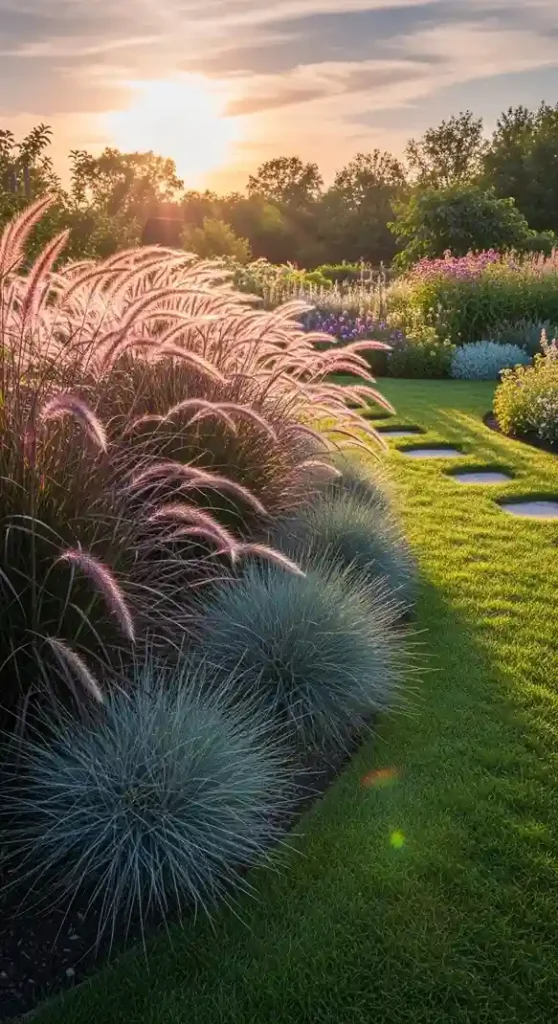
- Texture: Their fine, feathery blades contrast well against broad-leafed plants.
- Sustainability: Highly drought-tolerant and rarely bothered by pests.
- Winter Beauty: Leave them standing in winter to provide food and shelter for birds.
7. Coneflower (Echinacea)
A hardy native wildflower, the Coneflower is a symbol of the American prairie. Its iconic “daisy” shape with a raised center is a favorite for pollinators and adds a rustic, cottage-core vibe.
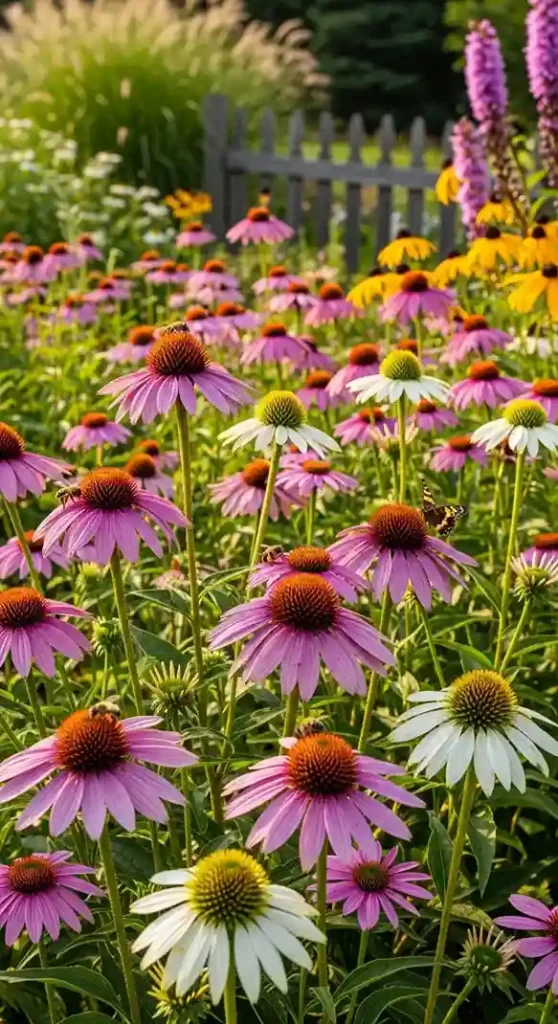
- Wildlife: A primary food source for butterflies and goldfinches (who eat the seeds).
- Toughness: Can handle intense summer heat and rocky, lean soil.
- Longevity: A long-blooming perennial that returns stronger every year.
8. Japanese Maple (Acer palmatum)
This small, slow-growing tree acts as a living sculpture in the landscape. Its delicate, lacy foliage and graceful branching make it a high-end focal point for front yard gardens.
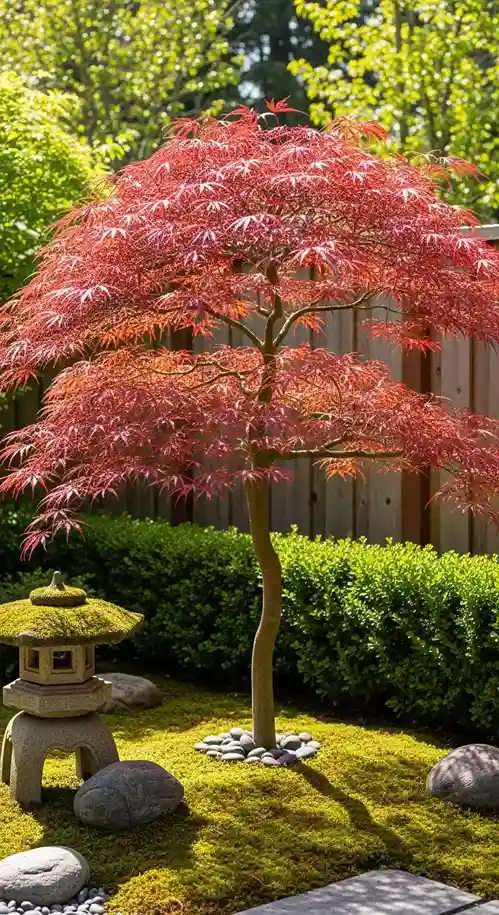
- Fall Color: Known for breathtaking transformations into crimson, gold, and orange.
- Sun/Shade: Prefers dappled sunlight; hot, direct afternoon sun can scorch the leaves.
- Design: Perfect for “anchor” planting at the corners of a home.
9. Sedum (Stonecrop)
Sedums are the ultimate succulents for the outdoor garden. Varieties like ‘Autumn Joy’ provide thick, fleshy leaves and broccoli-like flower heads that turn from pink to deep copper as fall approaches.
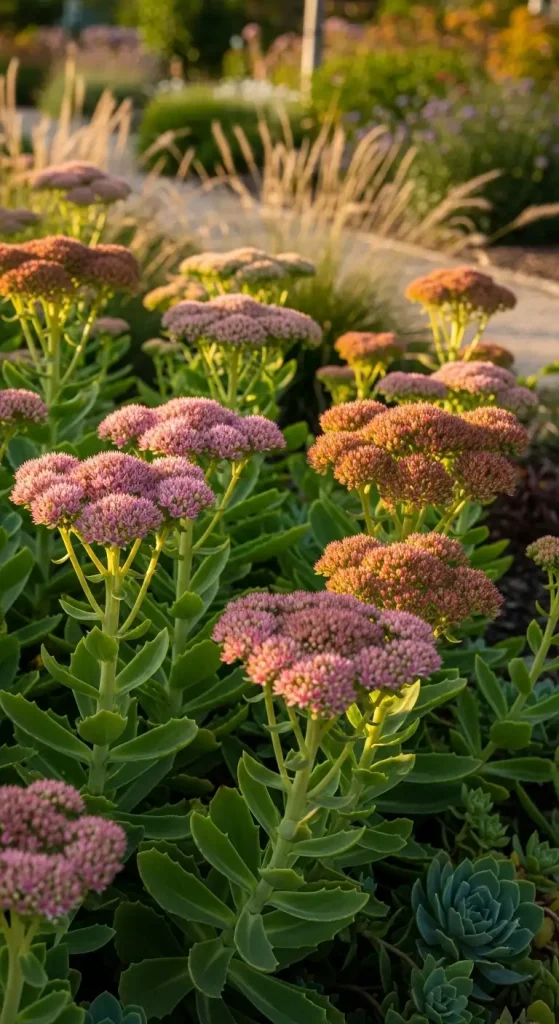
- Water-Wise: Excellent for “Xeriscaping” or water-conscious backyard landscaping ideas.
- Pollinators: One of the last food sources for bees before they hibernate.
- Ease: Requires virtually zero pruning or fertilization.
10. Azalea
Azaleas are a spring masterpiece, offering an explosion of color so dense that the leaves are often completely hidden by flowers. They are the quintessential plant for a classic, traditional landscape.
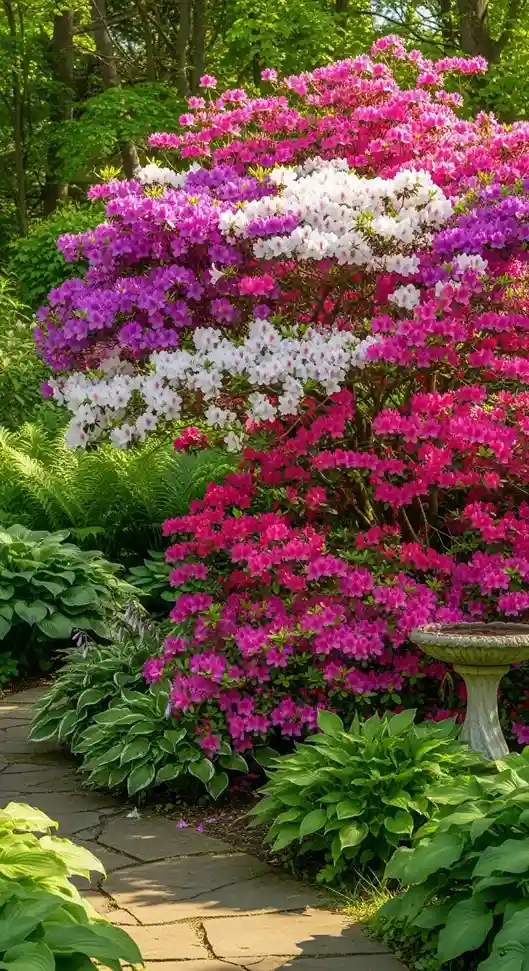
- Placement: Thrives when planted under the canopy of larger, taller trees.
- Acid Lover: They require acidic soil; use pine needles or peat moss as mulch.
- Bloom Season: Primarily spring, though “Encore” varieties bloom twice a year.
11. Peonies
Peonies are the crown jewels of the early summer garden, offering massive, fragrant, and romantic blooms. While they only bloom for a few weeks, their glossy green foliage remains a beautiful garden filler all season.
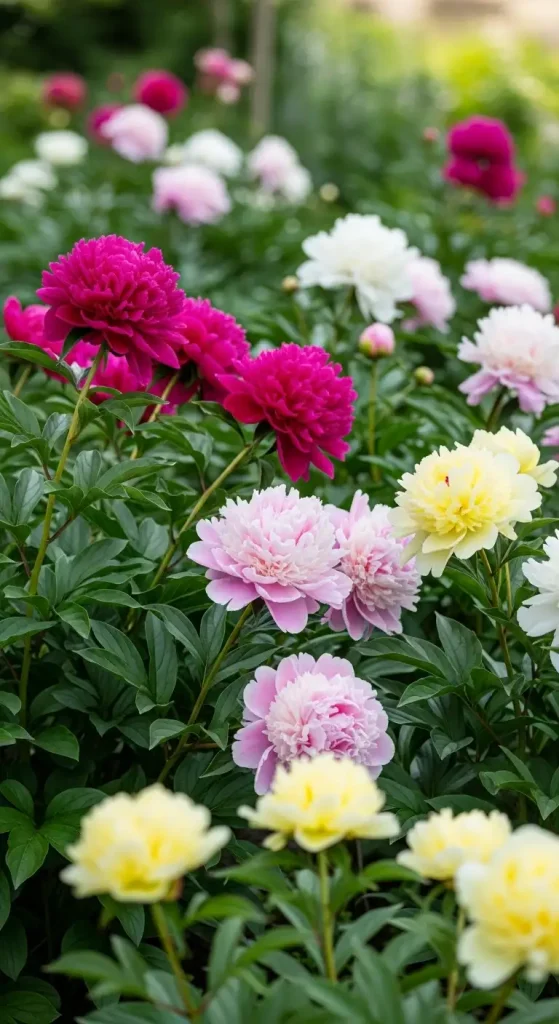
- Heirloom Quality: These plants can live for 50+ years if left undisturbed.
- Scent: Many varieties have a sweet, rosy perfume that carries on the wind.
- Support: Their heavy heads often need wire “hoops” to prevent them from flopping.
12. Coral Bells (Heuchera)
Grown primarily for their stunning, mounded foliage, Coral Bells come in colors you won’t find anywhere else—like obsidian black, neon lime, and bright copper. They are the perfect “filler” for garden beds.
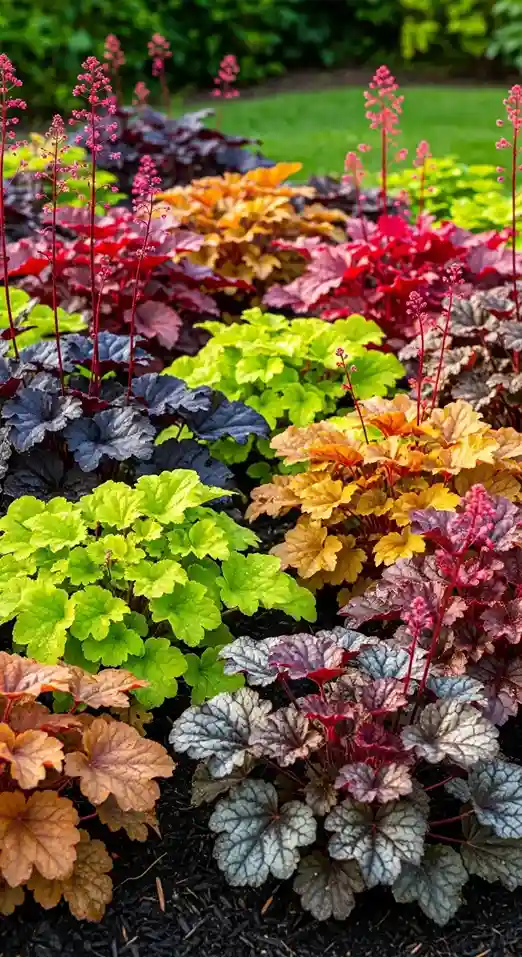
- Versatility: Grows equally well in full sun or partial shade (depending on the variety).
- Size: Compact habit makes them excellent for small garden ideas.
- Winter Interest: Many varieties are semi-evergreen in milder climates.
13. Agapanthus (Lily of the Nile)
Agapanthus brings a touch of coastal elegance to the garden with its tall stalks topped by globes of blue or white flowers. It is an architectural plant that looks best when planted in repeating rows.
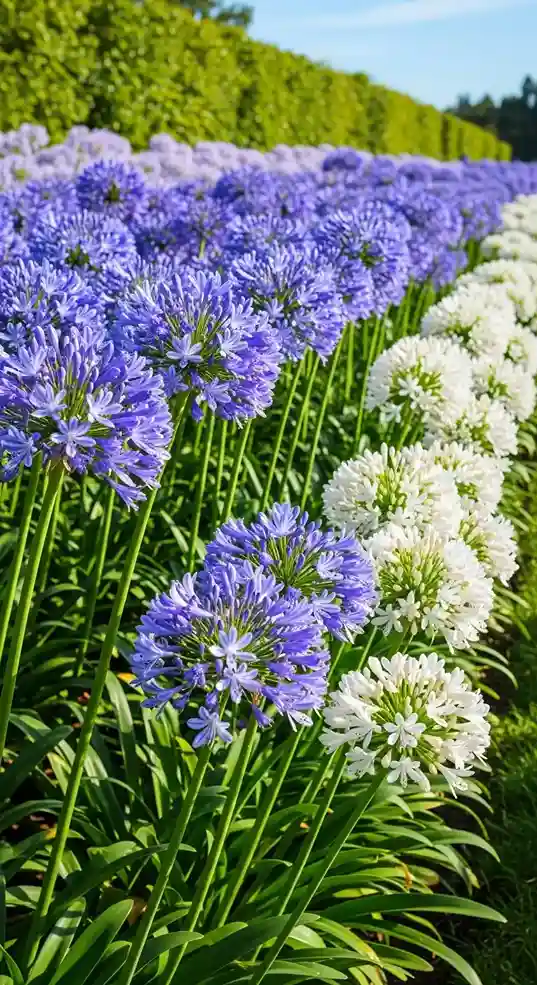
- Foliage: Strappy, thick leaves that stay green year-round in zones 8-11.
- Container Friendly: They actually bloom better when their roots are slightly crowded.
- Vibe: Adds a modern, “resort” feel to any pool area or patio.
14. Forsythia
The Forsythia is the official herald of spring. Its vibrant yellow branches are a welcome sight after a long winter, often blooming before any other plants have even started to wake up.
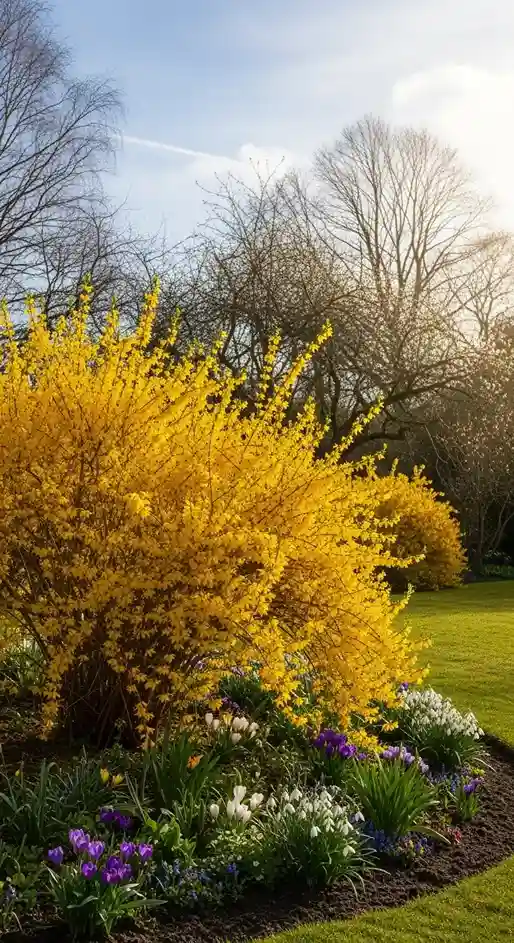
- Growth: A fast-growing shrub that works well as a natural privacy screen.
- Pruning: Always prune after they finish flowering to avoid cutting off next year’s buds.
- Visibility: Their bright color makes them pop against dark evergreens or brick walls.
15. Catmint (Nepeta)
Catmint is the reliable cousin of Lavender. It produces clouds of small, periwinkle-blue flowers and has fragrant, grey-green foliage that deer and rabbits generally ignore.
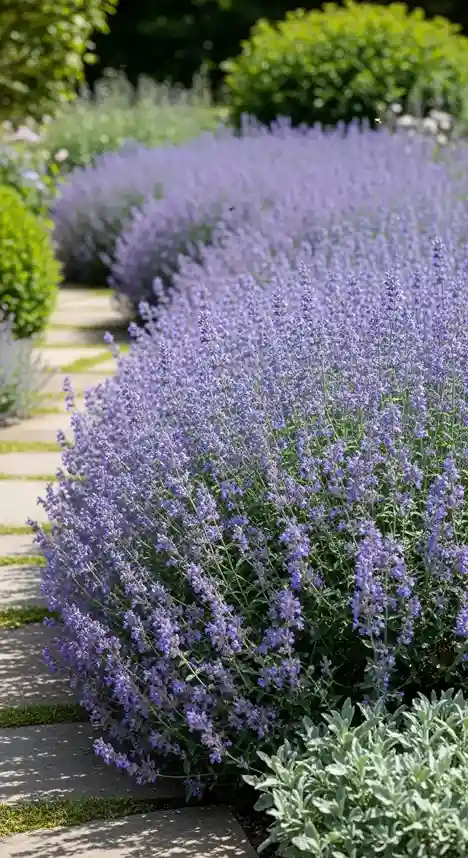
- Long Bloom: If you shear them back mid-summer, they will bloom all over again.
- Edging: Their soft, arching habit is perfect for softening the edges of stone paths.
- Pollinators: It is a “magnet” for honeybees and local butterflies.
16. Hibiscus (Hardy Varieties)
Hardy Hibiscus brings a “tropical vacation” look to cold climates. Unlike their tropical cousins, these perennials survive freezing winters and produce flowers the size of dinner plates.
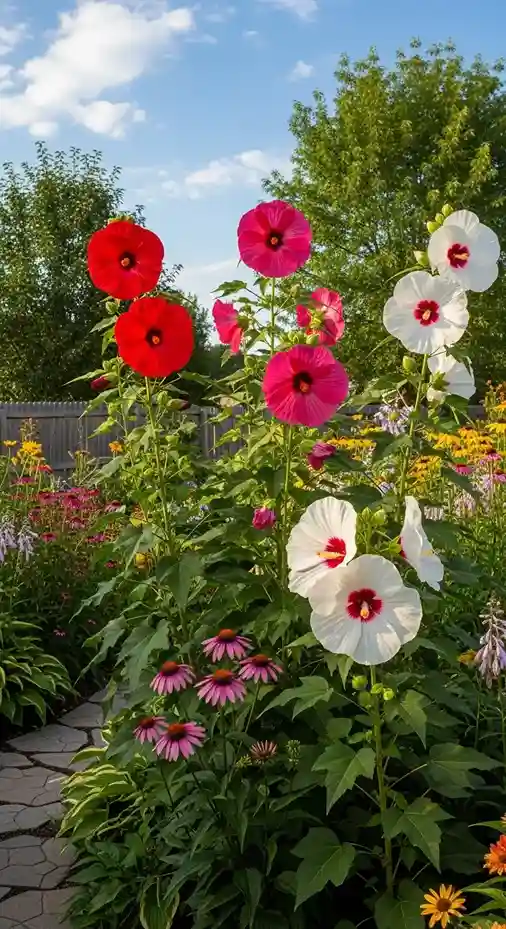
- Impact: They are guaranteed to be the biggest flower in your neighborhood.
- Colors: Deep reds, bright pinks, and pure whites with red “eyes.”
- Timing: They are “late bloomers,” often not emerging from the ground until late May.
17. Juniper
Junipers are the rugged workhorses of the landscape. They come in forms ranging from low-growing “blue rugs” to tall, stately columns, making them useful for almost any garden problem.
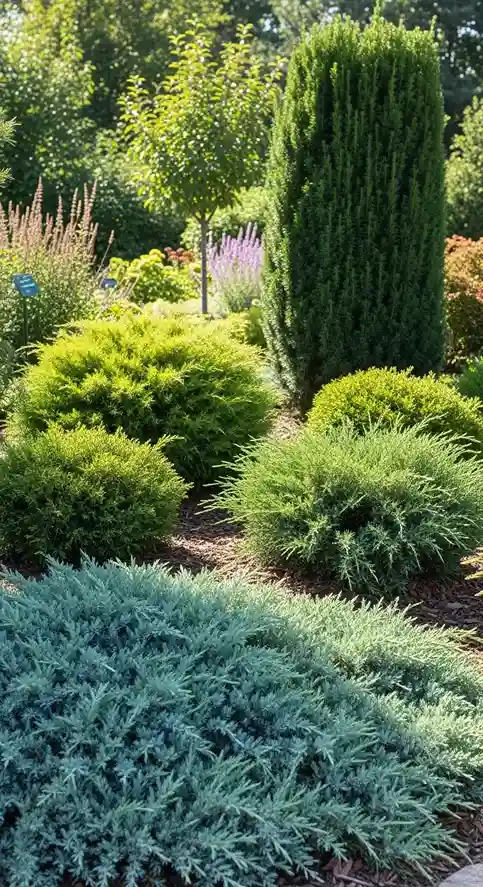
- Resistance: Highly tolerant of road salt, wind, and poor soil conditions.
- Wildlife: Provides dense cover for nesting birds and berries for winter food.
- Texture: Adds a sharp, needle-like texture that contrasts well with soft perennials.
18. Salvia (May Night)
Salvia is a staple of the modern perennial garden, offering upright spikes of deep indigo or violet. It is a sturdy plant that stands tall without the need for staking or support.
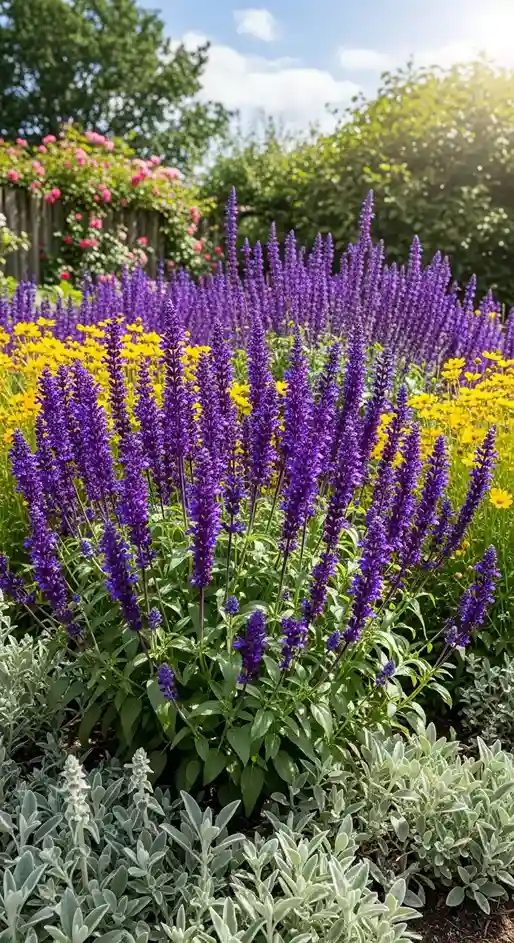
- Reblooming: Cutting off spent flower spikes encourages a second flush of color.
- Durability: Thrives in full sun and can handle the heat of a “hellstrip” by the road.
- Pairing: Looks incredible when planted next to yellow flowers like Coreopsis.
19. Burning Bush
This shrub is a summer wallflower that becomes a autumn superstar. When the temperatures drop, its foliage turns a neon, fiery red that is visible from a block away. You can grow many kinds of shrubs in front of your home as well.
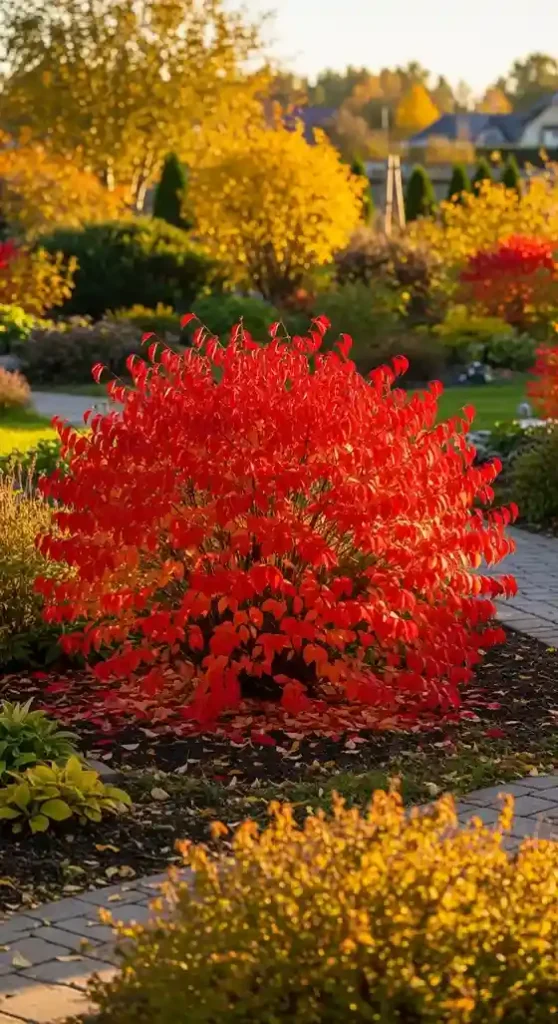
- Size: Can grow quite large, so ensure you have space for its mature width.
- Structure: Features unique “winged” bark that looks interesting in winter.
- Low Maintenance: Once planted, it requires very little attention or water.
20. Rose of Sharon
A member of the hibiscus family, this tall shrub provides much-needed color in late July and August. It’s an excellent way to maintain curb appeal when spring flowers have faded.
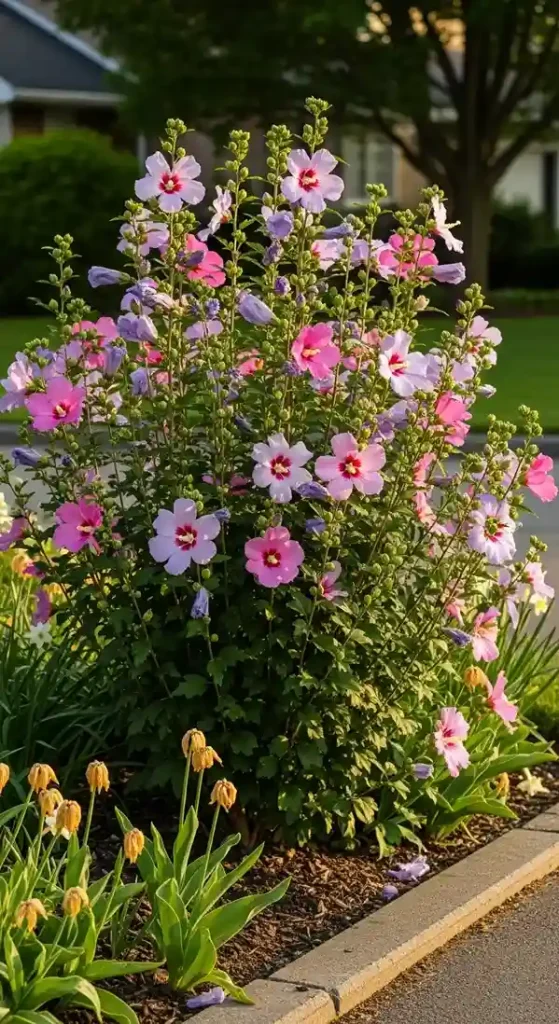
- Form: Can be trained into a tidy tree shape or a thick flowering hedge.
- Seeds: Some varieties re-seed easily, so look for “sterile” types if you want less work.
- Hardiness: Very tolerant of urban pollution and heat.
21. Lantana
Lantana is essentially a “flower factory” for hot, sunny spots. The flower clusters often feature multiple colors (like pink, yellow, and orange) on a single head.
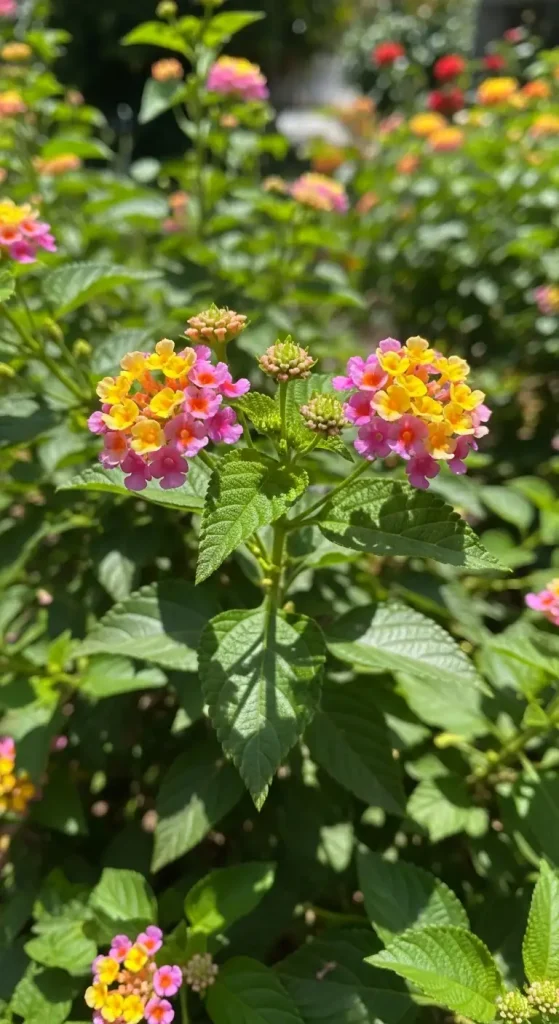
- Summer Champ: The hotter it gets, the more it blooms.
- Wildlife: Hummingbirds find the nectar-rich flowers irresistible.
- Scent: The foliage has a unique, citrus-pine scent when crushed.
22. Black-Eyed Susan (Rudbeckia)
This cheerful native wildflower is the quintessential summer plant. Its bright yellow petals and dark “chocolate” centers add a sunny disposition to any garden bed.
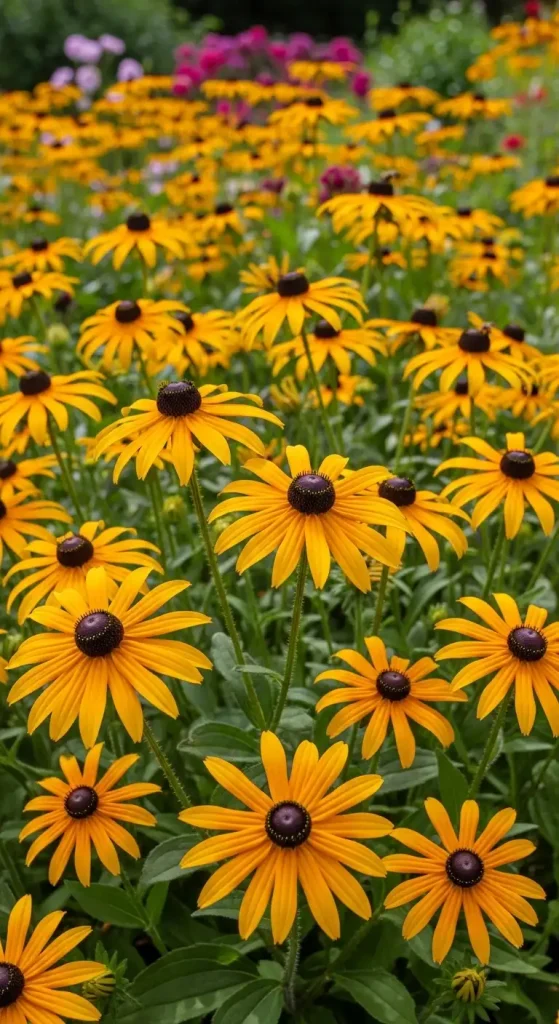
- Ease of Care: Incredibly self-sufficient and thrives in most soil types.
- Bouquets: Makes an excellent, long-lasting cut flower for indoor arrangements.
- Hardiness: Drought-tolerant and capable of handling intense humidity.
23. Clematis
Known as the “Queen of the Vines,” Clematis uses its twisting petioles to climb trellises, fences, or even other shrubs. The flowers are stunning, star-shaped masterpieces.
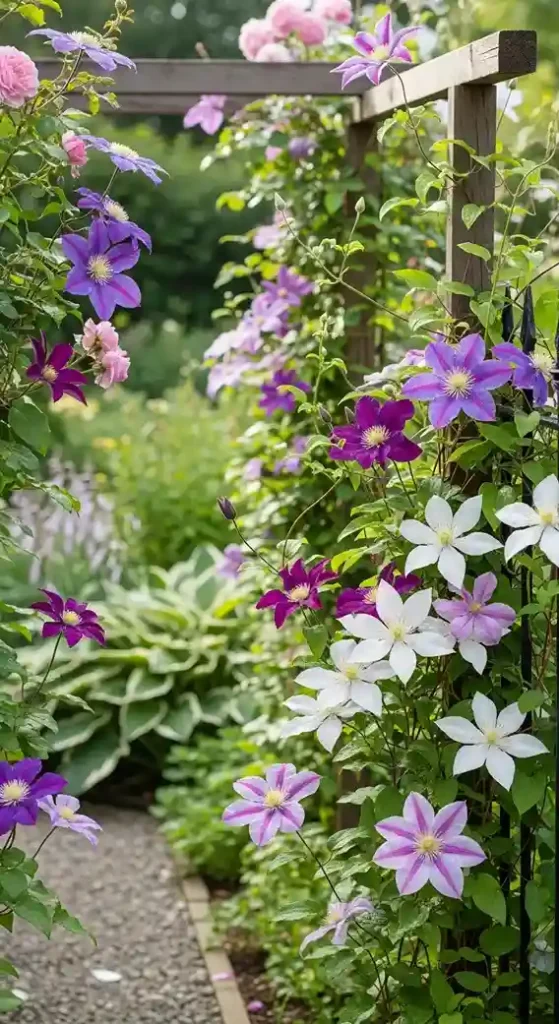
- Planting Rule: They love “feet in the shade, head in the sun.”
- Varieties: Some bloom in spring, others in late summer or fall.
- Color Range: Deep purples, candy-stripe pinks, and snowy whites.
24. Berberis (Barberry)
Barberry is valued for its intense foliage color, which stays vibrant from spring until fall. It is a fantastic plant for adding “pops” of burgundy or gold without relying on flowers.
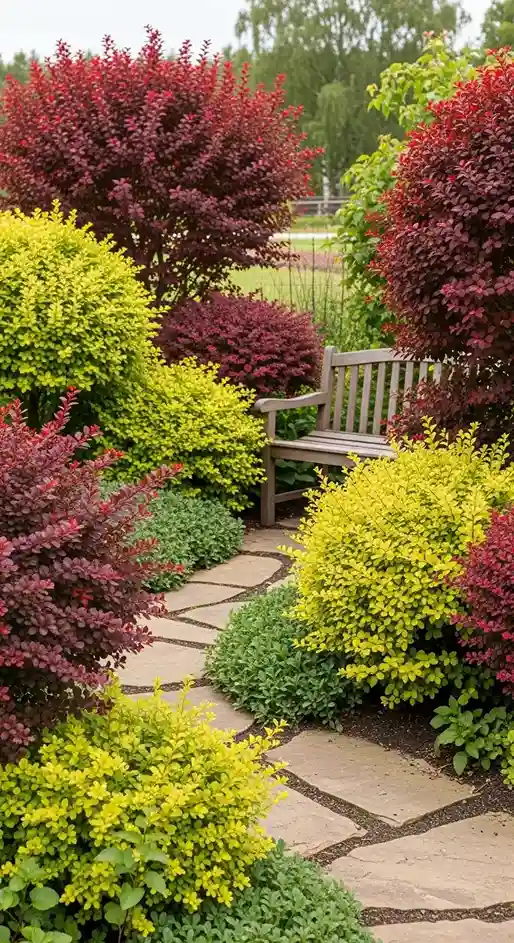
- Security: Thorny branches make it an effective barrier under windows.
- Texture: Small, delicate leaves provide a fine-textured look in the landscape.
- Deer Proof: Animals almost never eat this shrub due to its thorns.
25. Petunia
Petunias are the ultimate “small garden” flower. Modern varieties are bred to be “self-cleaning,” meaning you don’t have to pull off old flowers to keep them blooming.
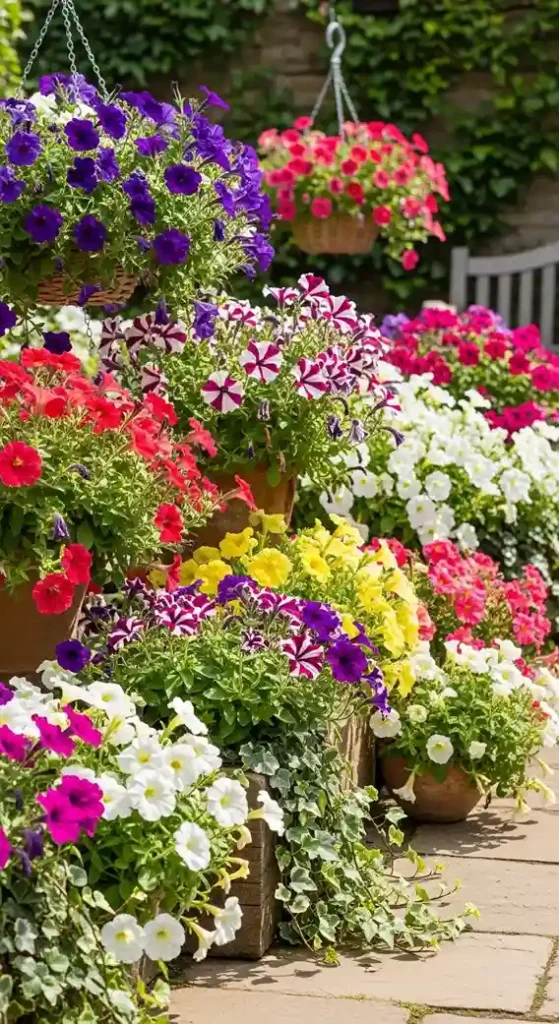
- Fragrance: Many varieties have a sweet, spicy scent that intensifies at night.
- Containers: The perfect “spiller” for window boxes and hanging baskets.
- Color: Available in every pattern imaginable, including “Galaxy” and “Starry Night.”
26. Coleus
Coleus is a foliage superstar. It allows you to add vibrant color to shady areas where flowers are difficult to grow. The patterns on the leaves look almost hand-painted.
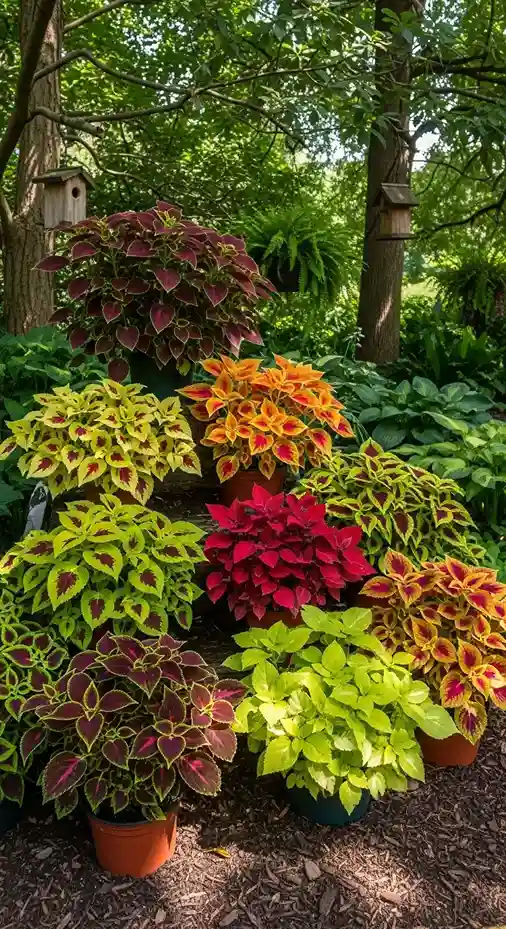
- Flexibility: Some modern types can handle full sun, but most prefer shade.
- Propagation: Extremely easy to grow from cuttings in a glass of water.
- Indoor Use: You can easily transition these to indoor plants before the first frost.
27. Yucca
Yucca offers a bold, architectural look that fits perfectly in modern or desert-inspired landscapes. Its evergreen, sword-like leaves stay sharp and green all winter.
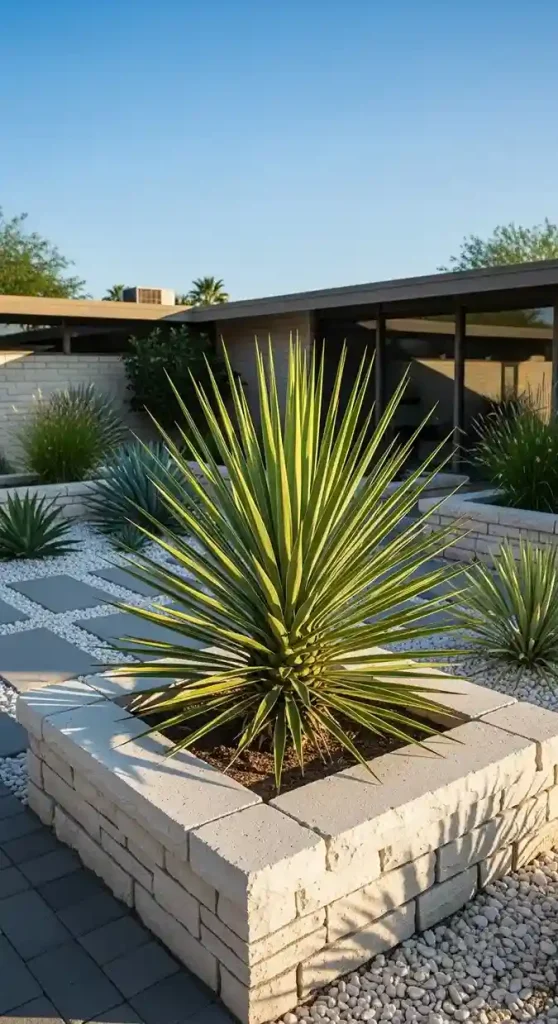
- Drought Power: One of the most water-wise plants you can grow.
- Flowers: Produces massive, 6-foot-tall spikes of creamy, bell-shaped flowers.
- Warning: The leaf tips are very sharp; plant away from high-traffic walkways.
28. Rose (Knock Out Series)
These are not your grandmother’s fussy roses. Knock Out roses are disease-resistant, drought-tolerant, and bloom continuously from spring until the first snow.
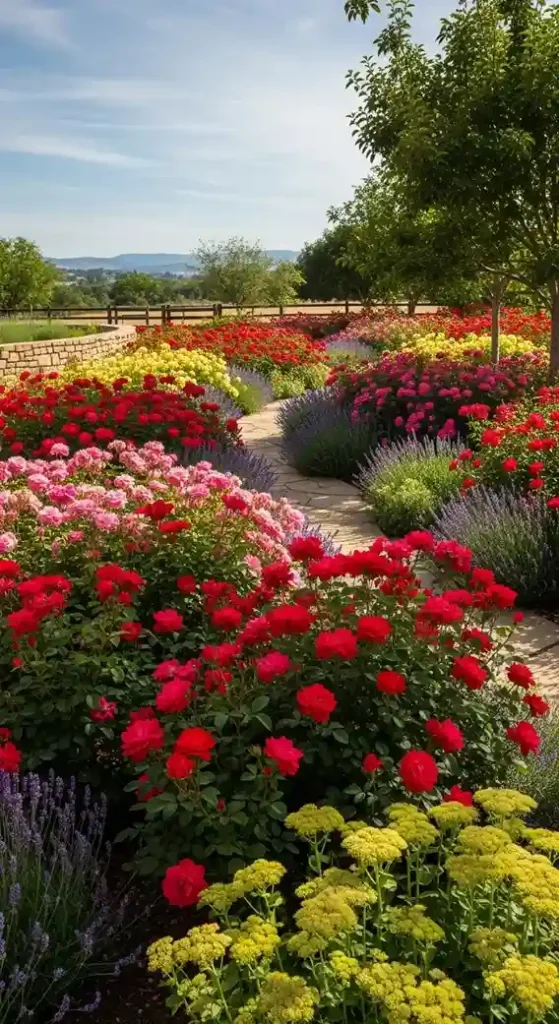
- Self-Sufficient: No need for complicated pruning or chemical spraying.
- Color: Available in red, pink, yellow, and white.
- Landscape Role: Works beautifully as a low-maintenance flowering hedge.
29. Sweet Potato Vine
This trailing vine is the workhorse of summer containers. Its heart-shaped or “lace” leaves grow at an incredible rate, creating a lush carpet of green or purple.
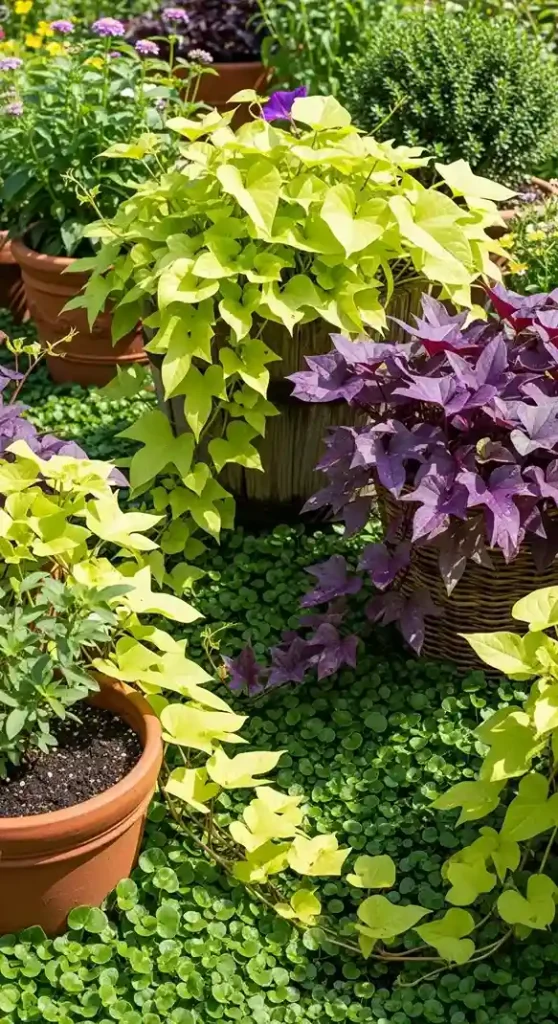
- Contrast: The lime-green “Margarita” variety makes purple flowers pop.
- Groundcover: Can be used in garden beds to quickly fill empty gaps and suppress weeds.
- Hardiness: Loves heat and humidity; will grow until the first frost.
30. Thuja (Arborvitae)
The Thuja is the gold standard for living privacy fences. They grow tall, narrow, and dense, providing a year-round green screen that blocks out noise and neighbors.
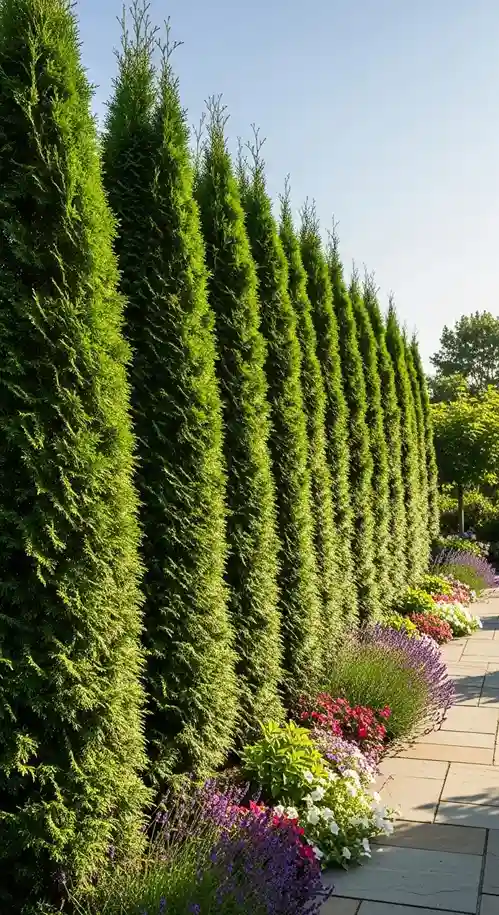
- Speed: “Green Giant” varieties can grow up to 3 feet per year.
- Wildlife: Provides essential winter shelter for local songbirds.
- No Pruning: Naturally maintains a neat, conical shape without shears.
31. Geranium (Cranesbill)
Hardy perennial geraniums (not to be confused with annual Pelargoniums) are fantastic ground-fillers. They weave through other plants, filling gaps with delicate flowers and lush leaves.
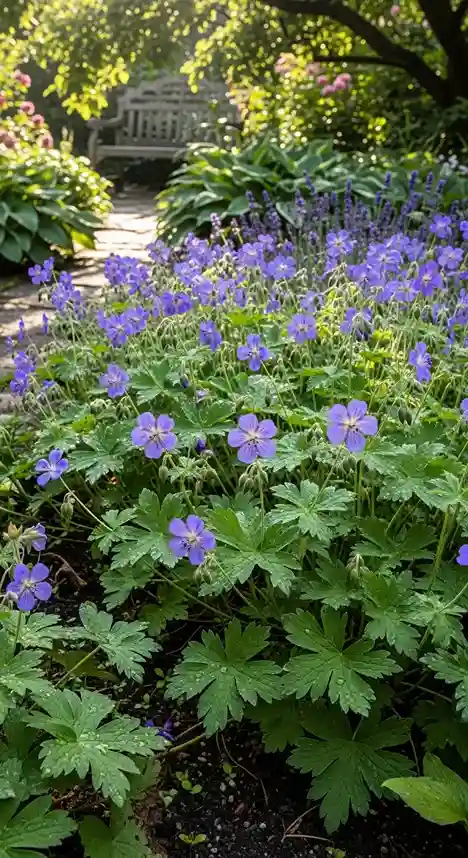
- Weed Control: Their dense growth habit makes it difficult for weeds to take hold.
- Autumn: Many varieties turn a beautiful reddish-bronze in the fall.
- Ease: One of the most “set it and forget it” perennials in existence.
32. Canna Lily
Canna Lilies bring a dramatic, tropical flair to temperate gardens. With leaves that look like banana plants and fiery flowers, they are the tallest stars of the summer border.
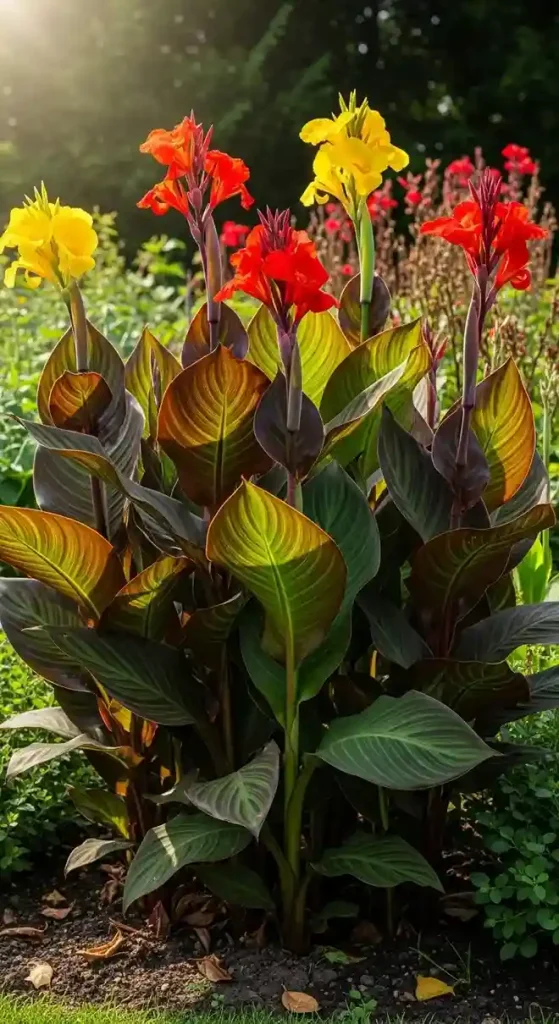
- Height: Some varieties can reach 8 feet tall in a single season.
- Foliage: Look for variegated types with yellow, green, and orange stripes.
- Winter: In cold zones, you must dig up the “rhizomes” and store them indoors.
33. Weigela
Weigela is an old-fashioned shrub that has been improved with modern foliage colors. It’s a favorite for spring color and attracting pollinators to the front yard.
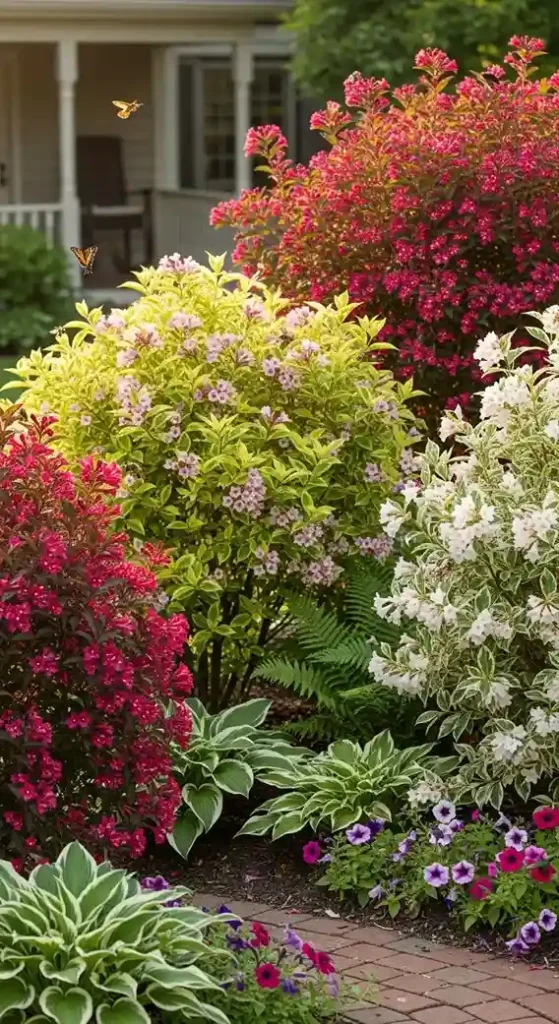
- Bloom Style: Arching branches are literally covered in pink or red bell-shaped flowers.
- Reblooming: Many new varieties will bloom again in late summer.
- Modern Vibe: Look for ‘Wine and Roses’ for stunning dark-purple leaves.
34. Butterfly Bush (Buddleia)
As the name suggests, this shrub is a “gas station” for butterflies. Its long, honey-scented flower spikes are covered in Monarchs and Painted Ladies all summer.
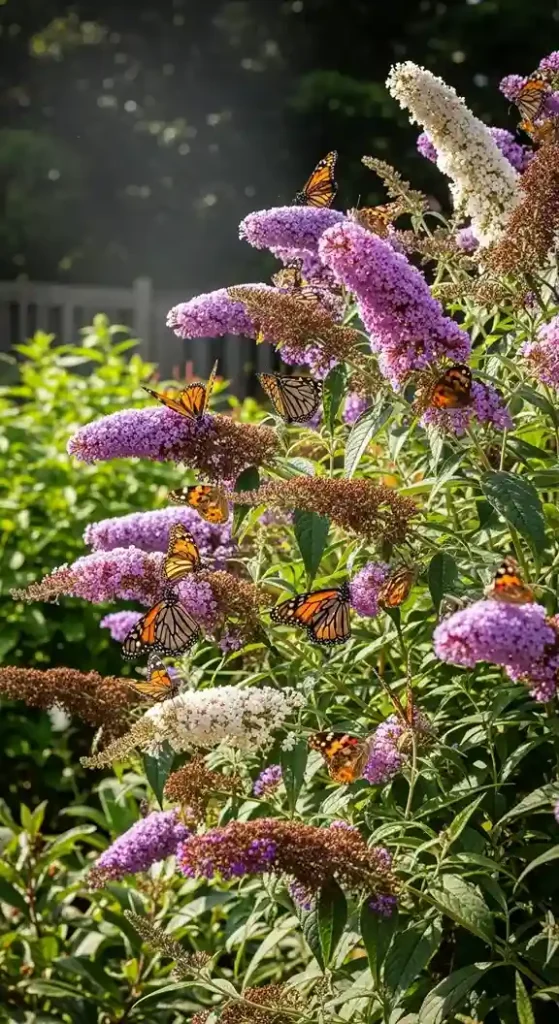
- Fragrance: The scent is sweet and intoxicating on a warm summer evening.
- Size: Available in “dwarf” sizes for small yards or large 10-foot giants.
- Hardy: Extremely tough; can handle heat, drought, and urban air.
FAQs About Outdoor Landscaping
1. How do I know which plants will survive the winter in my area?
Always check the USDA Hardiness Zone of the plant. A plant rated for Zone 5 will survive a much harsher winter than a plant rated for Zone 9. For more layout tips, visit our backyard landscaping ideas guide.
2. Which of these plants are safest for a home with pets?
While many are safe, some (like Yew or certain Lilies) can be toxic. Roses, Snapdragons, and Petunias are generally safe. Always cross-reference with the ASPCA list before planting if you have a curious dog or cat.
3. How often should I fertilize my outdoor plants?
Most perennials and shrubs only need a slow-release fertilizer once in early spring. Over-fertilizing can actually lead to lots of leaves but very few flowers.
4. Can I grow any of these plants if I only have a balcony?
Absolutely! Petunias, Coleus, Lavender, and Dwarf Boxwoods all thrive in pots. Just make sure your balcony gets enough sunlight for the specific plant you choose.
Conclusion
Building a garden is a journey of trial and error, but starting with these 34 proven outdoor plants gives you a massive advantage. By balancing evergreens like Boxwood with flowering stars like Hydrangeas and the vertical interest of vines like Clematis, you can create a professional-grade landscape.
Don’t forget that your green thumb doesn’t have to stop at the front door—you can explore our indoor plants section to learn how to keep your home lush all year long. Happy gardening!