Indoor plants breathe life into our homes, literally and figuratively, purifying air while adding natural beauty to every room.
Whether you’re a seasoned plant parent or just beginning your indoor gardening journey, the right houseplants can transform sterile spaces into vibrant, living environments that boost mood, productivity, and overall well-being.
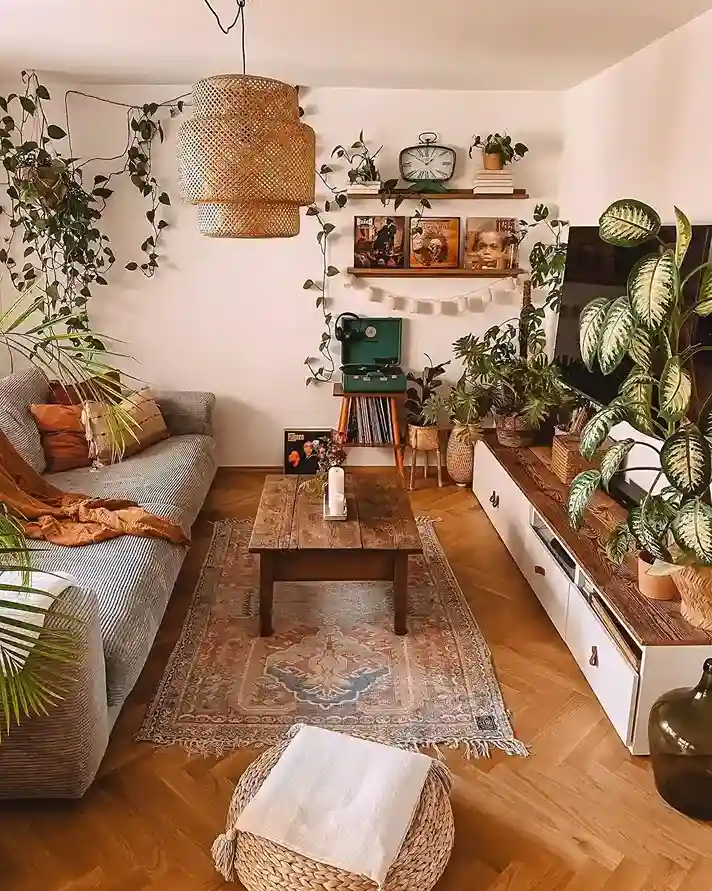
Source: @lottaaliving
From low-light tolerant varieties perfect for dim corners to statement plants that become room focal points, indoor plants offer endless possibilities for enhancing your interior spaces.
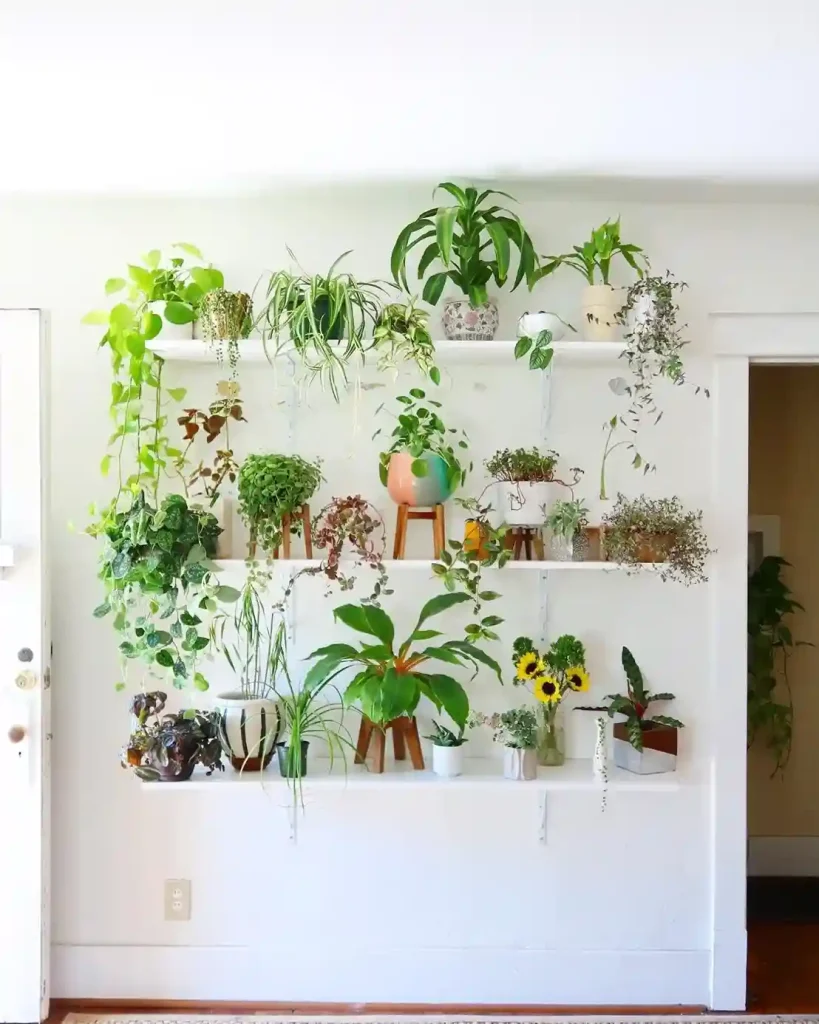
Choosing the right indoor plants depends on your specific conditions including available light, humidity levels, and the time you can dedicate to care. Fortunately, there’s an indoor plant for every situation and skill level, from nearly indestructible succulents requiring minimal attention to lush tropical specimens that thrive with regular care.
Source: @plants_everywhere
These twenty-six exceptional houseplants represent diverse families, growth habits, and care requirements, ensuring you’ll find perfect options for bringing nature’s beauty indoors regardless of your experience or environment.
1. Monstera Deliciosa for Dramatic Foliage
Monstera deliciosa, commonly called Swiss cheese plant, produces enormous, fenestrated leaves with dramatic splits and holes. This tropical vine grows 6-10 feet indoors, creating bold architectural statements in bright, indirect light. Its unique leaf perforations and climbing habit make it instantly recognizable and highly sought after.
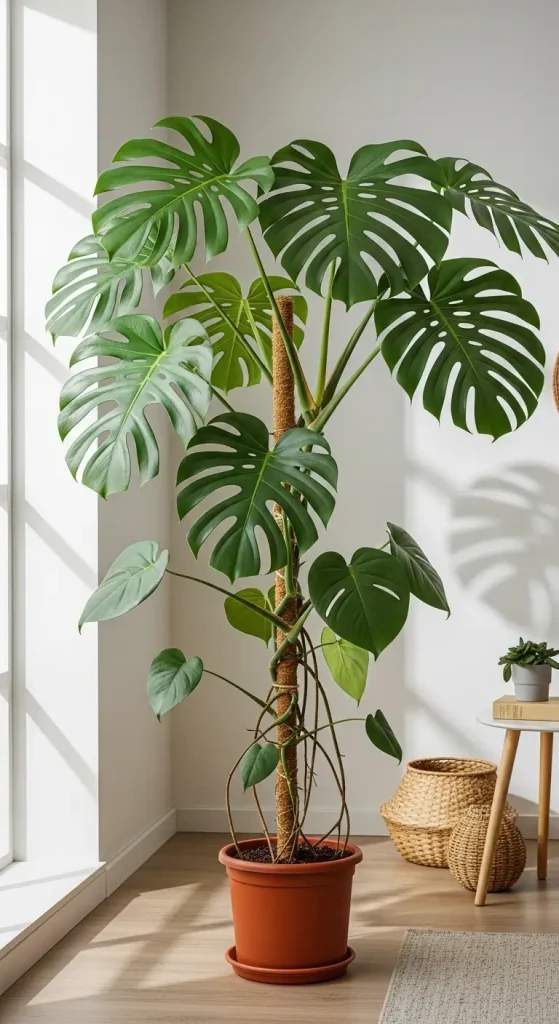
Provide a moss pole or trellis for climbing support as monsteras naturally grow upward toward light. Water when top 2 inches of soil dry and maintain moderate humidity for best leaf development. Mature plants occasionally produce edible fruit indoors, though this occurs rarely without outdoor tropical conditions. If you have space you can try in your outdoor garden as well.
2. Snake Plant for Low-Light Tolerance
Snake plants (Sansevieria) feature upright, sword-shaped leaves with striking variegation in green, yellow, or silver. These virtually indestructible plants tolerate extreme neglect, low light, and irregular watering, making them perfect for beginners or frequently traveled homeowners. They grow 1-4 feet tall depending on variety.
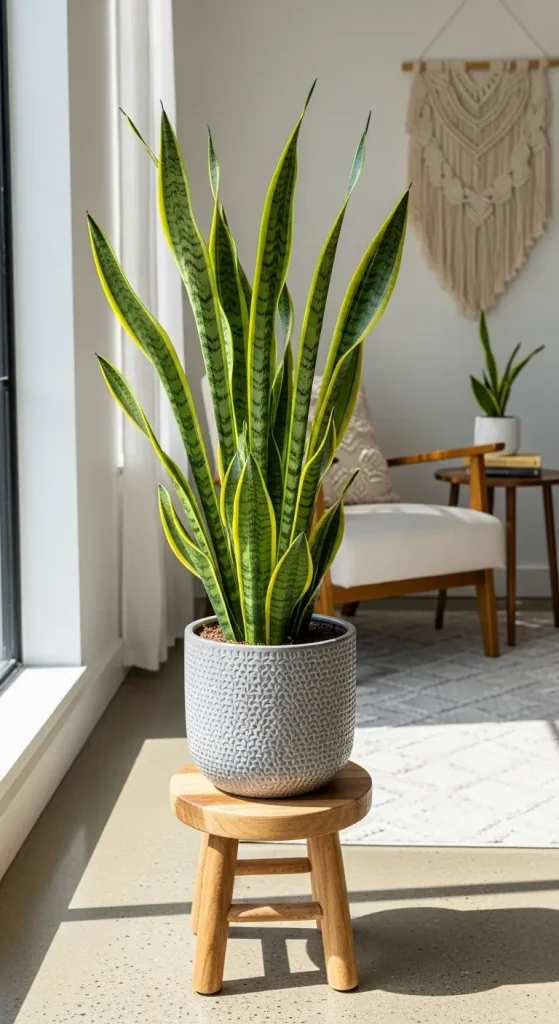
Water sparingly, allowing soil to dry completely between waterings as overwatering causes root rot. Snake plants purify air by removing toxins and uniquely produce oxygen at night. They tolerate temperature fluctuations and require repotting only every 3-5 years when rootbound, thriving on benign neglect.
3. Pothos Varieties for Easy Cascading Vines
Pothos plants produce trailing vines with heart-shaped leaves in green, golden, marble, or neon variations. These fast-growing plants tolerate low light and irregular watering, making them foolproof choices for hanging baskets or high shelves. Vines can extend 10+ feet, creating lush, cascading displays with minimal care.
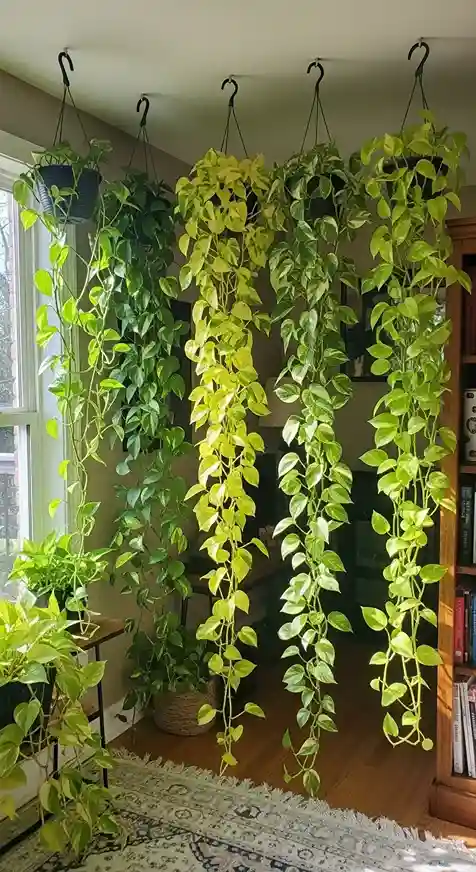
Trim vines to encourage bushier growth or propagate cuttings in water for new plants. Pothos adapts to various light conditions, though brighter indirect light enhances variegation. Water when soil feels dry 1-2 inches down, and wipe leaves occasionally to remove dust and maintain photosynthesis efficiency.
4. ZZ Plant for Ultimate Durability
ZZ plants (Zamioculcas zamiifolia) feature glossy, dark green pinnate leaves on thick, upright stems. This exceptionally drought-tolerant plant stores water in underground rhizomes, surviving weeks without watering. It thrives in low to bright indirect light, making it adaptable to nearly any indoor location.
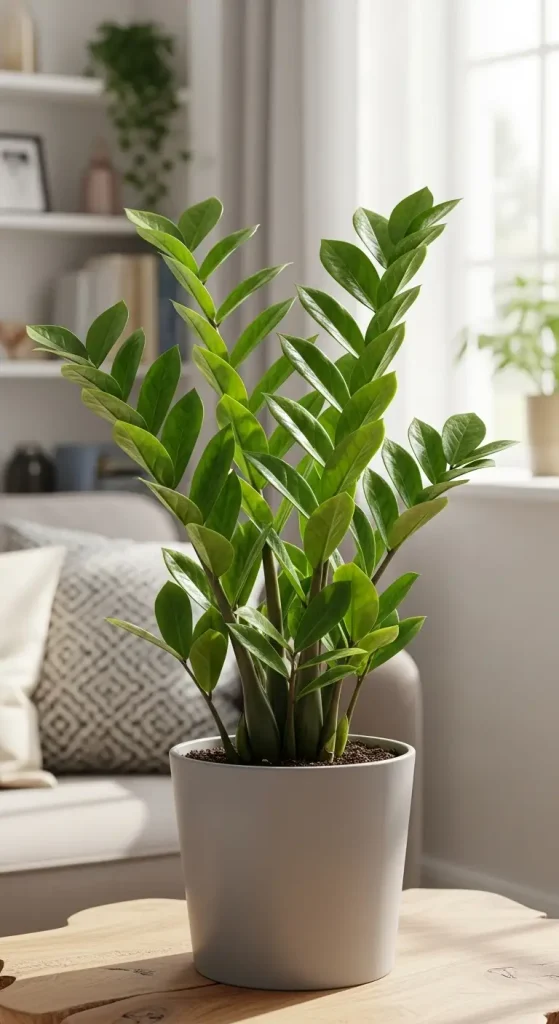
Water only when soil completely dries, typically every 2-3 weeks depending on conditions. ZZ plants grow slowly, reaching 2-3 feet tall, and rarely require fertilizing or repotting. Their waxy leaves naturally resist pests and diseases. Perfect for offices, bathrooms, or any space needing reliable, low-maintenance greenery.
5. Fiddle Leaf Fig for Statement Impact
Fiddle leaf figs produce large, violin-shaped leaves on single or branching trunks, growing 6-10 feet indoors. These dramatic plants require bright, indirect light and consistent care, rewarding attention with impressive, sculptural growth. Their bold foliage creates instant focal points in modern interiors. For less indoor space, try in the backyard for planting.
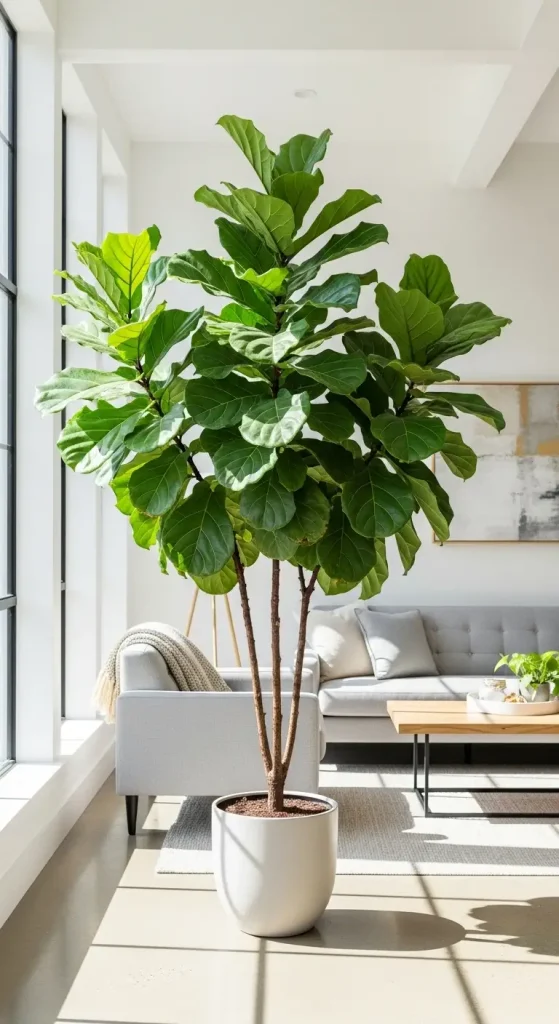
Place near bright windows but avoid direct sun that burns leaves. Water thoroughly when top inch of soil dries, maintaining consistent moisture without waterlogging. Rotate plants regularly for even growth. Fiddle leaf figs dislike moving and drafts, so choose permanent locations carefully before establishing these sensitive beauties.
6. Spider Plant for Air Purification
Spider plants produce arching, striped leaves and dangling baby plantlets on long stems. These classic houseplants tolerate various conditions and reproduce readily through plantlets that root easily in soil or water. They’re excellent air purifiers, removing formaldehyde and other toxins from indoor environments. So, you don’t need big landscape area for this plant.
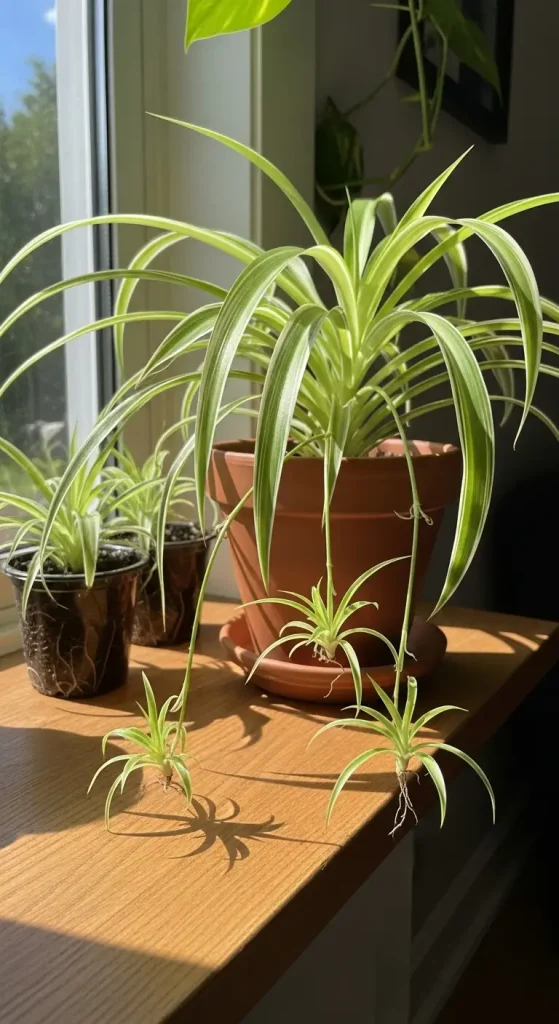
Grow in bright to moderate indirect light, watering when soil surface feels dry. Spider plants prefer slightly pot-bound conditions and thrive with occasional fertilizing during growing season. Trim brown leaf tips caused by fluoride in tap water by using distilled or rainwater for sensitive specimens.
7. Rubber Plant for Bold Leaves
Rubber plants (Ficus elastica) feature large, glossy, oval leaves in deep green, burgundy, or variegated patterns. These sturdy plants grow 6-10 feet indoors with single or branching trunks, creating substantial presence. Their thick, waxy leaves make bold architectural statements in bright rooms.
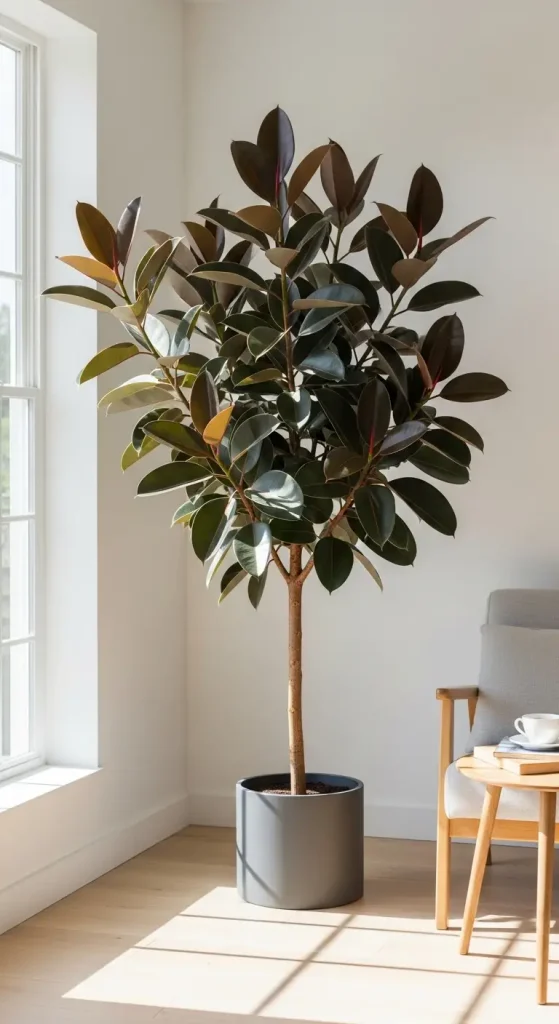
Provide bright, indirect light and water when top 2 inches of soil dry completely. Wipe leaves regularly with damp cloth to remove dust and maintain their glossy appearance. Prune to control height and encourage branching. Rubber plants dislike cold drafts and sudden temperature changes, preferring stable, warm environments.
8. Peace Lily for Elegant Blooms
Peace lilies produce elegant white spathes above dark green, glossy foliage, blooming periodically throughout the year in proper conditions. These shade-tolerant plants signal watering needs by drooping dramatically, making care timing obvious. They grow 1-3 feet tall and wide, fitting various spaces beautifully.
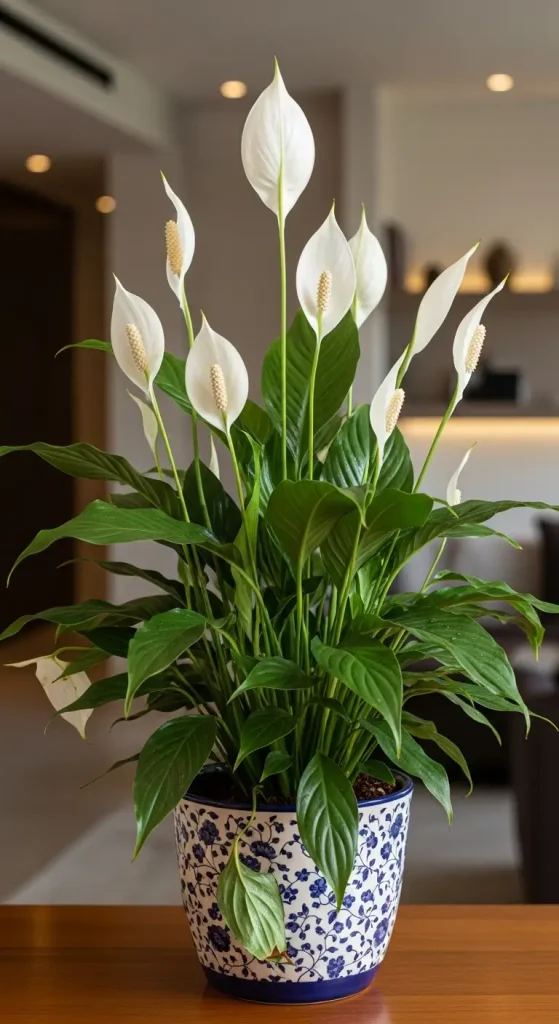
Grow in low to medium indirect light, watering when leaves begin wilting slightly. Peace lilies prefer consistently moist soil and appreciate occasional misting for humidity. Remove spent flowers and yellowing leaves to maintain appearance. They’re excellent air purifiers, removing multiple toxins from indoor air.
9. Succulents for Minimal Care
Succulent varieties including echeveria, jade, and haworthia store water in fleshy leaves, tolerating extended dry periods. These compact plants feature diverse forms, colors, and textures, perfect for sunny windowsills, small spaces, or grouped dish gardens. They grow slowly, requiring infrequent repotting.
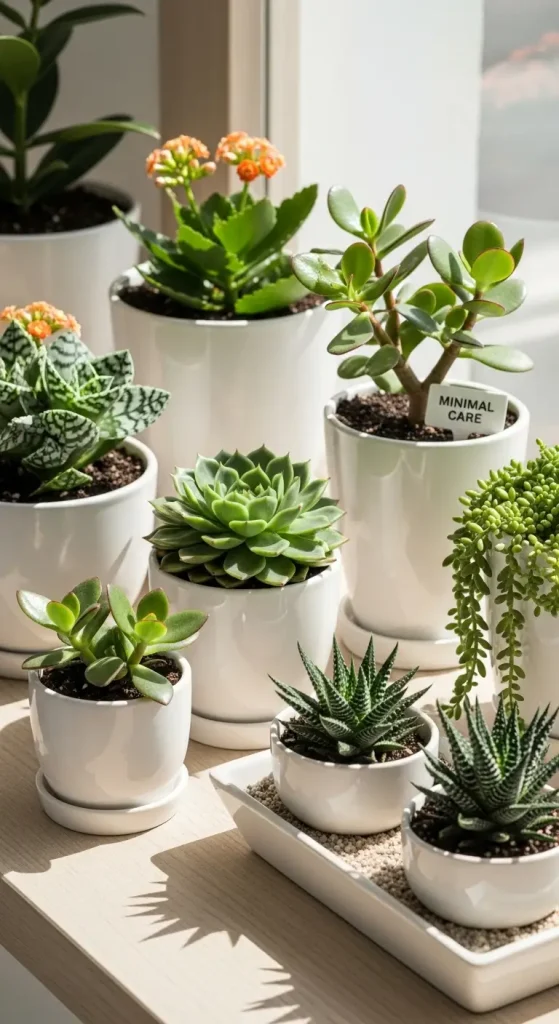
Provide bright, direct light for compact growth and vibrant colors. Water deeply but infrequently, only when soil completely dries. Use fast-draining cactus soil to prevent root rot. Succulents need minimal fertilizing and thrive on neglect, making them ideal for busy or forgetful plant owners.
10. Philodendron Varieties for Versatile Growth
Philodendrons include both climbing and self-heading varieties with heart-shaped or deeply lobed leaves. Species range from compact Brasil with variegated trailing vines to massive Xanadu with upright, architectural form. These adaptable plants tolerate various light conditions and forgive occasional neglect.
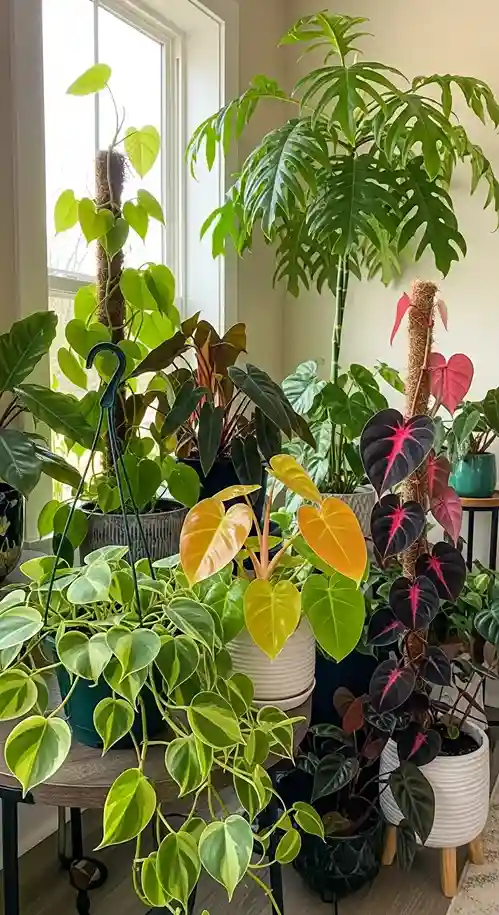
Water when top inch of soil dries, providing brighter light for variegated varieties. Climbing philodendrons benefit from moss poles or trellises for support. They adapt to average household humidity but appreciate occasional misting. Philodendrons grow quickly, creating full, lush displays with minimal effort.
11. Boston Fern for Humidity Loving
Boston ferns produce graceful, arching fronds with delicate leaflets creating soft, feathery texture. These classic houseplants prefer high humidity and consistent moisture, thriving in bathrooms or kitchens. They grow 2-3 feet wide in hanging baskets or pedestals, adding elegant, old-fashioned charm.
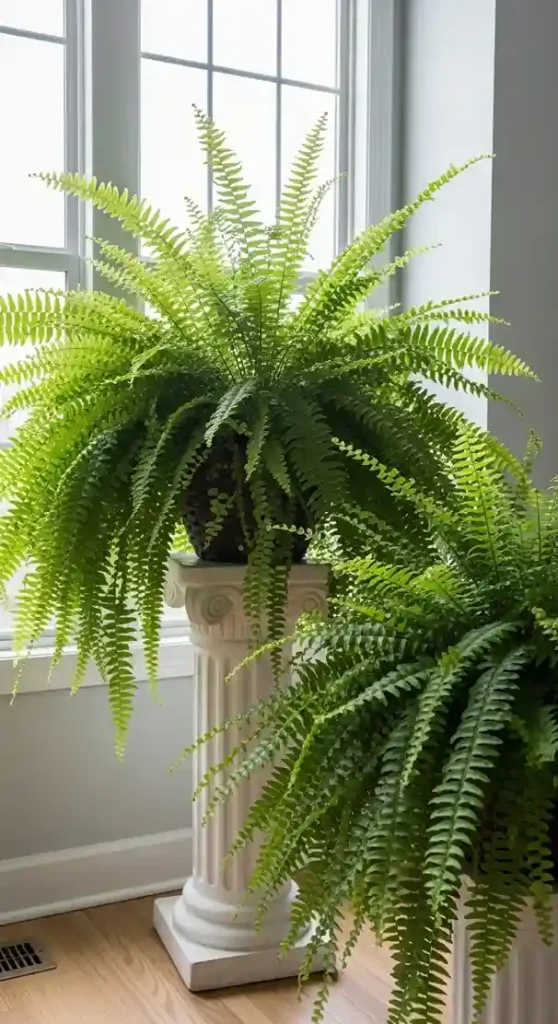
Keep soil consistently moist but not waterlogged, watering more frequently in bright light or low humidity. Mist regularly or use pebble trays for added humidity. Boston ferns prefer bright, indirect light and cool temperatures. Remove brown fronds and refresh plants by trimming back to base in spring.
12. Dracaena for Vertical Interest
Dracaena varieties including ‘Janet Craig’, ‘Lemon Lime’, and ‘Marginata’ feature upright growth with colorful, sword-like leaves. These slow-growing plants tolerate low light and irregular watering, reaching 3-6 feet indoors. Their vertical form suits corners and tight spaces requiring height without width.
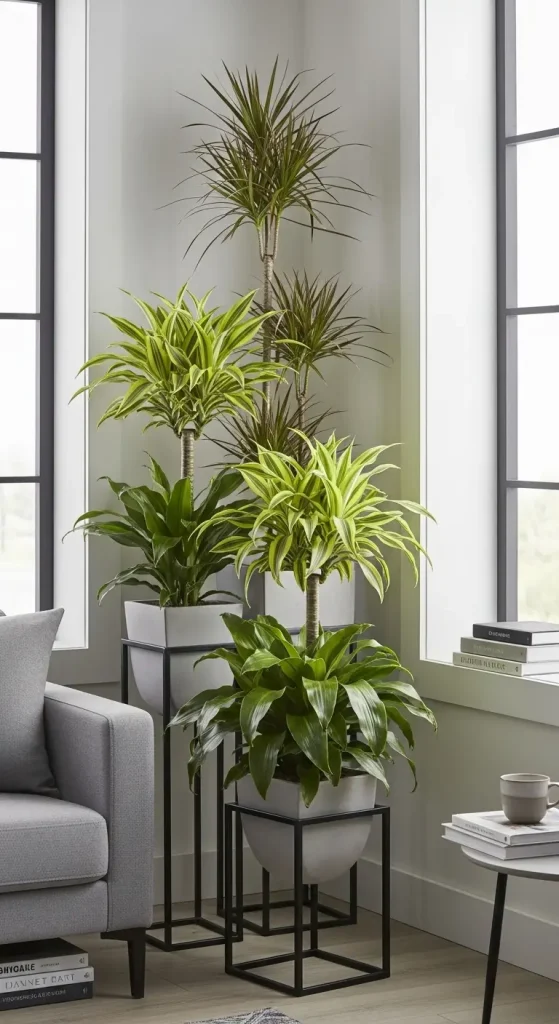
Water when top half of soil dries, reducing frequency in lower light. Dracaenas tolerate fluorescent lighting, making them excellent office plants. Trim brown leaf tips with scissors to maintain appearance. They’re sensitive to fluoride, so use filtered or distilled water if tips brown excessively.
13. Aloe Vera for Medicinal Benefits
Aloe vera produces thick, succulent leaves containing healing gel used for minor burns and skin irritation. These useful plants grow 1-2 feet tall in bright light, producing offsets that can be separated for propagation. Their medicinal properties and easy care make them practical, attractive additions.
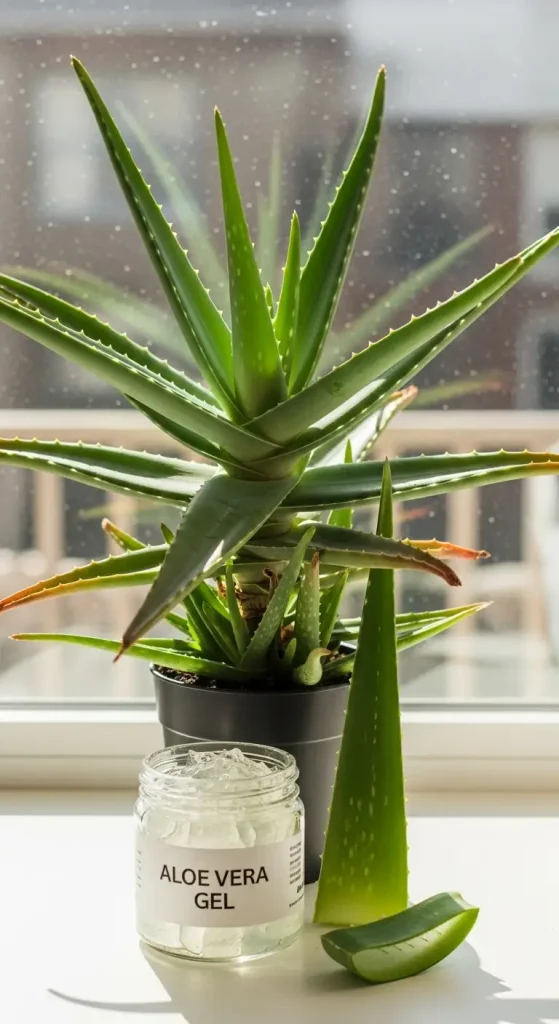
Grow in bright, indirect to direct light using well-draining cactus soil. Water deeply but infrequently, allowing soil to dry completely between waterings. Aloe tolerates neglect better than excessive attention. Harvest outer leaves for gel by cutting at base and extracting clear gel from inside.
14. Chinese Evergreen for Colorful Foliage
Chinese evergreens (Aglaonema) offer stunning foliage patterns in combinations of green, silver, pink, and red. These compact plants tolerate low light better than most colorful varieties, growing 1-3 feet tall and wide. Their diverse cultivars provide options for various color schemes and light conditions.
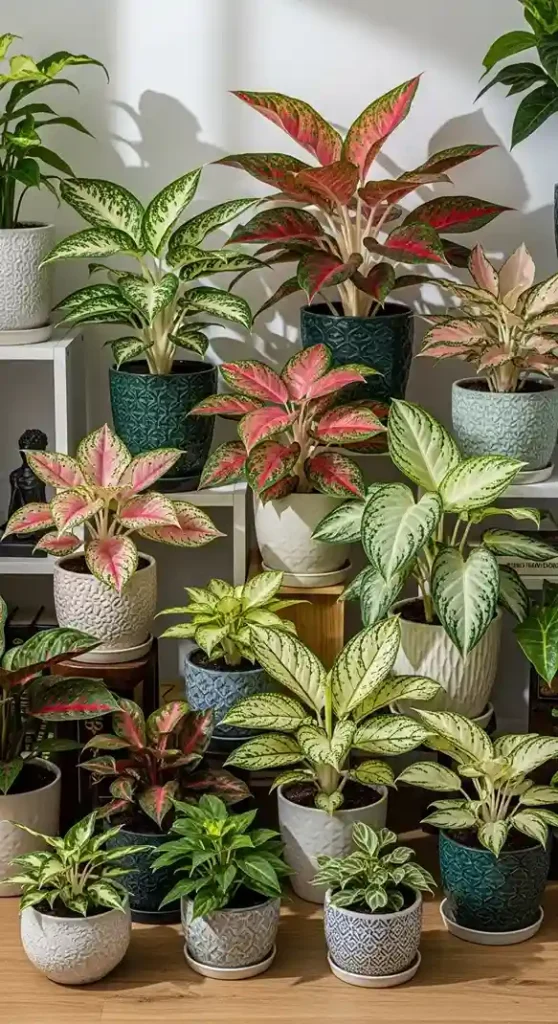
Water when top inch of soil dries, maintaining slightly moist conditions without overwatering. Chinese evergreens prefer warm temperatures and moderate humidity. They grow slowly and rarely need repotting. Variegated and colorful varieties need brighter light to maintain patterns, though all tolerate shade reasonably well.
15. Orchids for Exotic Blooms
Phalaenopsis orchids produce elegant, long-lasting flower spikes in white, pink, purple, or multicolored patterns. These epiphytic plants grow in bark medium rather than soil, blooming for months with proper care. They’re less difficult than reputation suggests, rewarding basic attention with spectacular flowers.
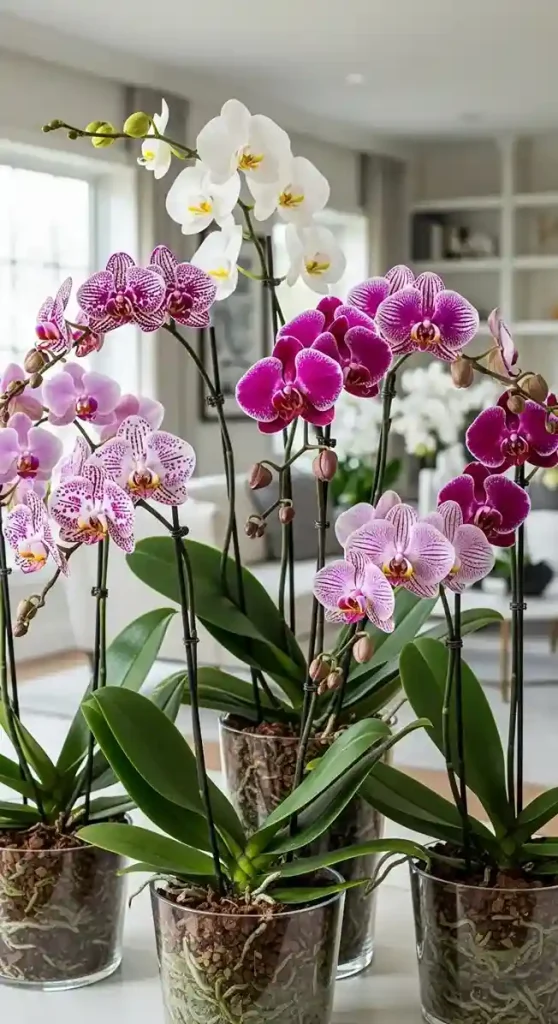
Provide bright, indirect light and water weekly by soaking roots in water for 10 minutes, then draining completely. Orchids prefer humidity and good air circulation. After blooms fade, cut spike above node to encourage reblooming. Use orchid-specific fertilizer monthly during active growth for best flowering.
16. Calathea for Patterned Leaves
Calatheas display intricate leaf patterns with stripes, spots, or painterly designs in combinations of green, purple, pink, and cream. These tropical plants feature leaves that fold upward at night, creating movement. They grow 1-2 feet tall, preferring high humidity and consistent moisture for best foliage development.
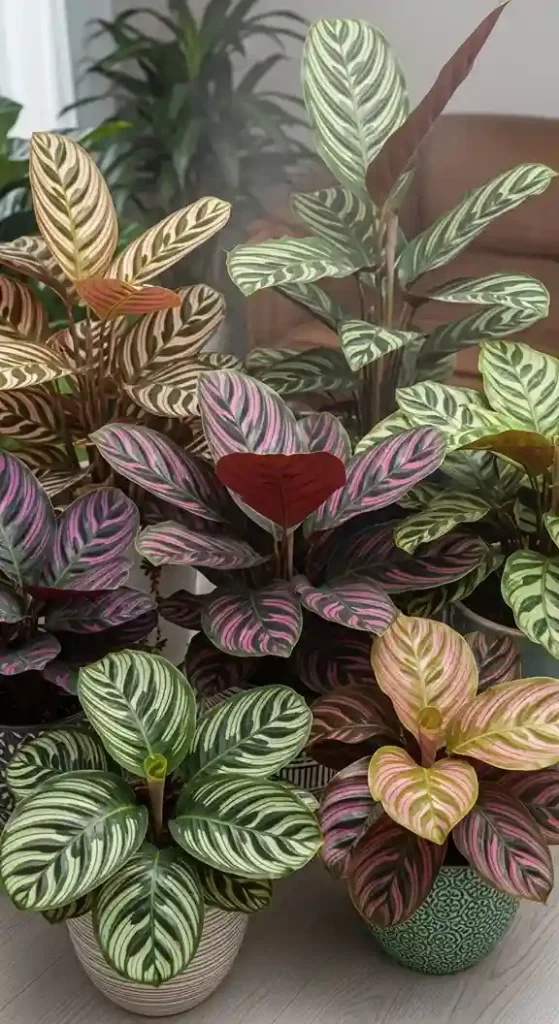
Grow in medium, indirect light as bright light fades patterns while low light slows growth. Keep soil consistently moist using filtered or distilled water to prevent leaf edge browning. Calatheas need high humidity from misting, pebble trays, or humidifiers. They’re more demanding but reward care with stunning foliage.
17. Jade Plant for Bonsai Effect
Jade plants produce thick, succulent leaves on tree-like branching stems, developing miniature tree form with age. These long-lived plants can survive decades with proper care, becoming family heirlooms. They grow slowly to 2-4 feet, developing thick trunks and a gnarled character that resembles bonsai specimens.
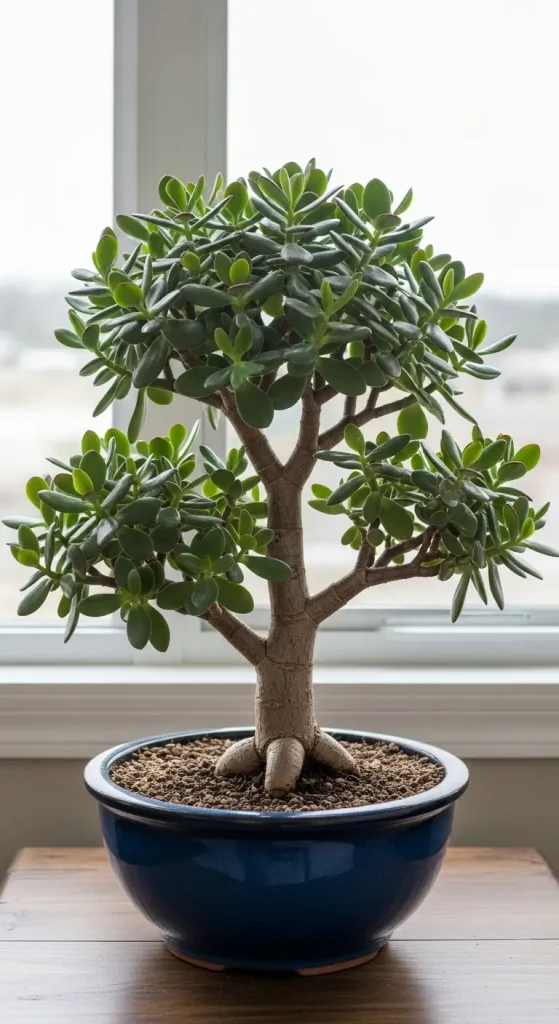
Provide bright light including some direct sun for compact growth and red leaf edges. Water thoroughly when soil dries completely, reducing frequency in winter. Jade plants prefer cool nighttime temperatures and tolerate neglect. Prune to shape and encourage branching, creating more tree-like forms over time.
18. Areca Palm for Tropical Feel
Areca palms produce graceful, arching fronds with narrow, feathery leaflets creating tropical ambiance. These air-purifying palms grow 6-7 feet indoors in bright, indirect light, adding height and movement. They’re less finicky than many palms, tolerating average indoor conditions reasonably well.
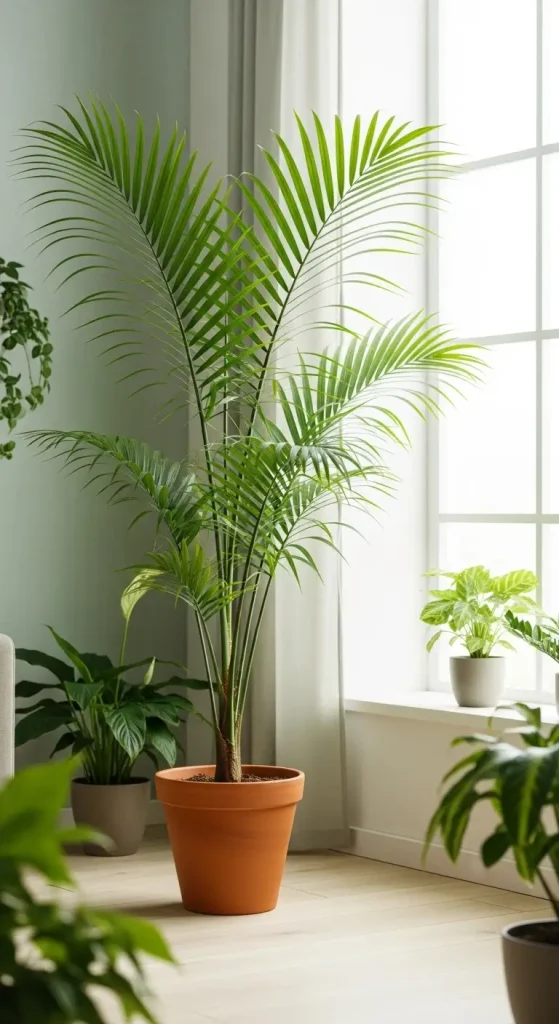
Water when top inch of soil dries, maintaining slight moisture without waterlogging. Areca palms appreciate humidity and benefit from occasional misting or pebble trays. Fertilize monthly during growing season with palm-specific fertilizer. Remove yellowing fronds at base and watch for spider mites in dry conditions.
19. Parlor Palm for Compact Grace
Parlor palms grow slowly to 3-4 feet tall with delicate, feathery fronds perfect for tabletops or floor displays. These Victorian-era favorites tolerate low light better than most palms, adapting to various indoor conditions. They add tropical elegance without requiring bright light or extensive care.
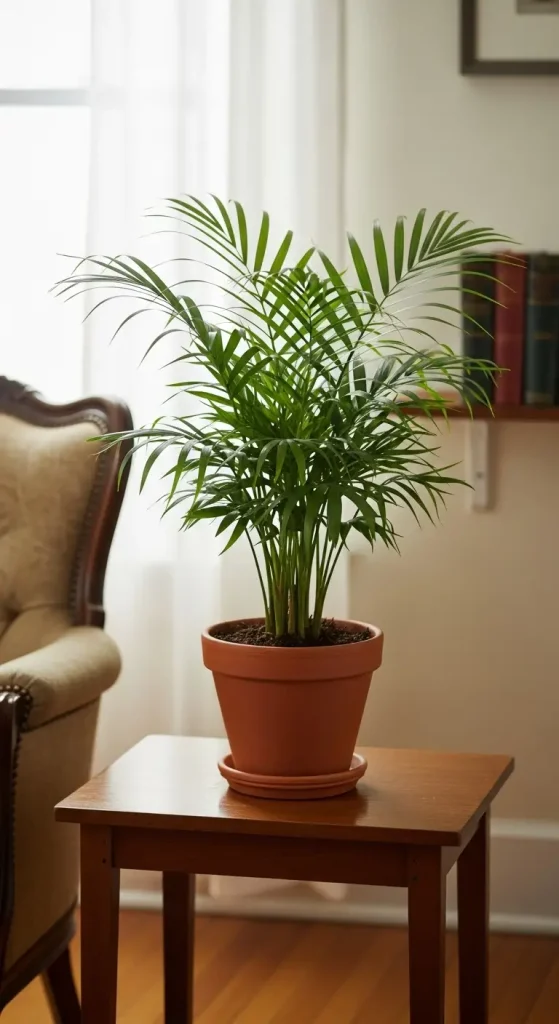
Water when soil surface feels dry, avoiding both drought and soggy conditions. Parlor palms tolerate average humidity but appreciate occasional misting. They prefer temperatures between 65-80°F and adapt to fluorescent lighting. These palms rarely need repotting and dislike root disturbance, thriving when slightly rootbound.
20. String of Pearls for Unique Texture
String of pearls produces trailing stems covered with spherical, bead-like leaves creating unique, sculptural effect. These succulents cascade beautifully from hanging baskets or shelf edges, growing several feet long. Their unusual appearance and easy care make them conversation-starting additions to bright rooms.
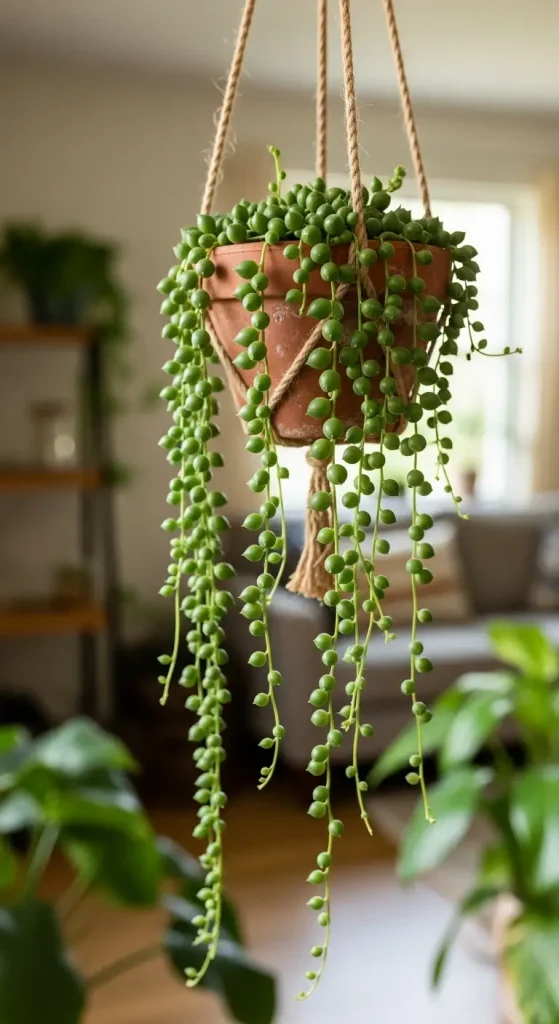
Provide bright, indirect to direct light for compact bead formation. Water sparingly when pearls begin wrinkling slightly, indicating thirst. Use well-draining soil and ensure containers have drainage holes. String of pearls propagates easily from stem cuttings, allowing you to create fuller plants or share with friends.
21. African Violet for Continuous Blooms
African violets produce velvety leaves and cheerful flowers in purple, pink, white, or bi-colors year-round with proper care. These compact plants grow 6-8 inches wide, perfect for windowsills or small spaces. They bloom almost continuously under correct conditions, providing reliable color without seasonal dormancy.
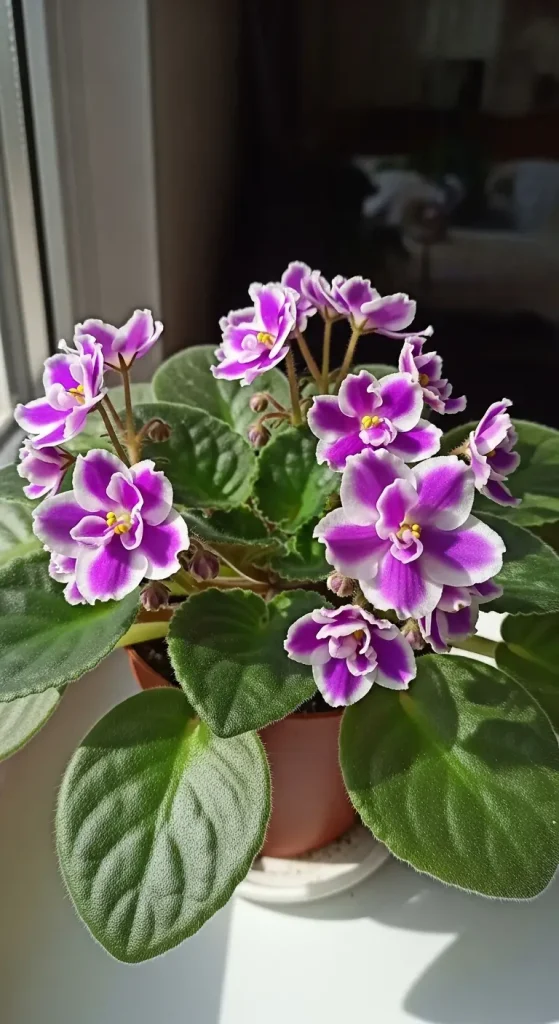
Provide bright, indirect light and water from bottom by placing pot in water-filled saucer to avoid spotting leaves. African violets prefer consistent temperatures around 70°F and moderate humidity. Use African violet-specific fertilizer and soil. Remove spent flowers to encourage continuous blooming throughout the year.
22. Peperomia Varieties for Small Spaces
Peperomias include hundreds of species with diverse leaf shapes, sizes, and colors from watermelon-patterned to rippled textures. These compact plants grow 6-12 inches tall, fitting small spaces perfectly. Their low-maintenance nature and varied appearances make collecting different varieties irresistible for enthusiasts.
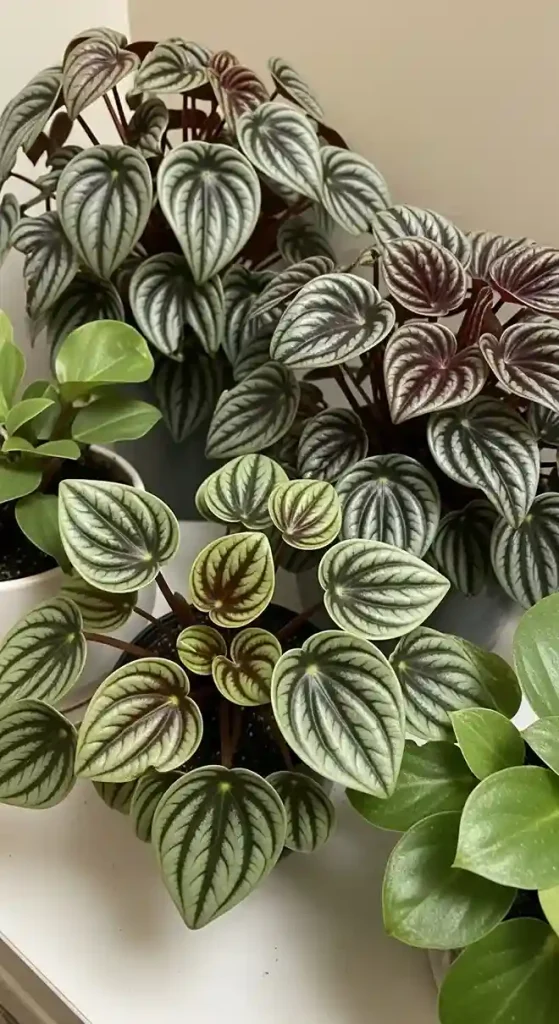
Water moderately, allowing soil to dry between waterings as fleshy leaves store moisture. Peperomias tolerate low to bright indirect light, adapting to various conditions. They prefer warmer temperatures and moderate humidity. These plants rarely need fertilizing or repotting, thriving in slightly rootbound conditions with minimal attention.
23. Bird of Paradise for Architectural Form
Bird of paradise plants produce large, paddle-shaped leaves resembling banana plants, growing 5-8 feet indoors. While they rarely bloom indoors without exceptional conditions, their dramatic foliage creates tropical, architectural presence. They’re statement plants for spacious rooms with bright light and high ceilings.
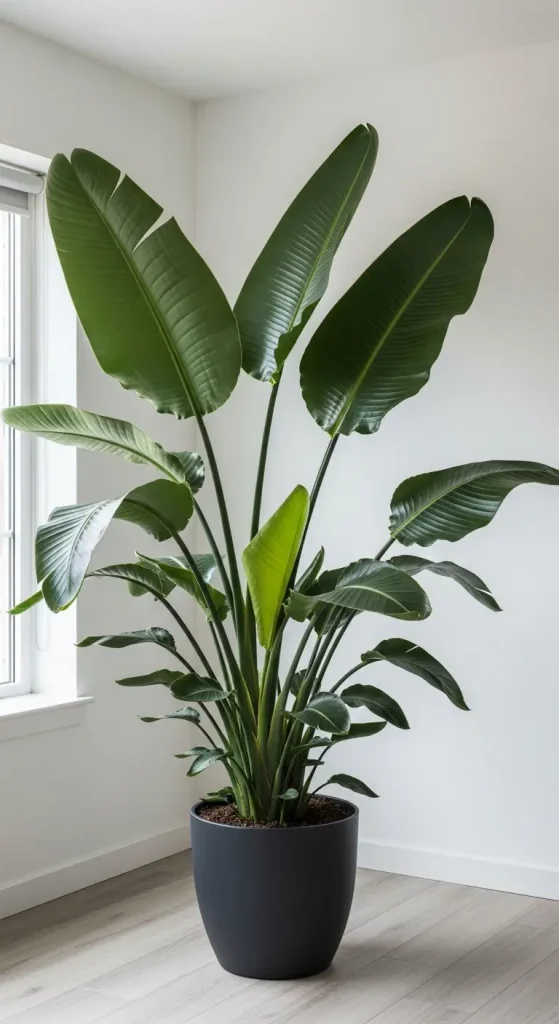
Provide bright, indirect to direct light and water when top inch of soil dries. Bird of paradise appreciates humidity and regular fertilizing during growing season. Wipe large leaves with damp cloth to remove dust. These plants need space as leaves can span 18+ inches, so plan placement accordingly.
24. English Ivy for Trailing Elegance
English ivy produces cascading vines with classic lobed leaves in green or variegated patterns. This versatile plant grows in hanging baskets, climbs supports with aerial roots, or trails from shelves. It tolerates cooler temperatures better than most houseplants, perfect for unheated rooms or entryways.
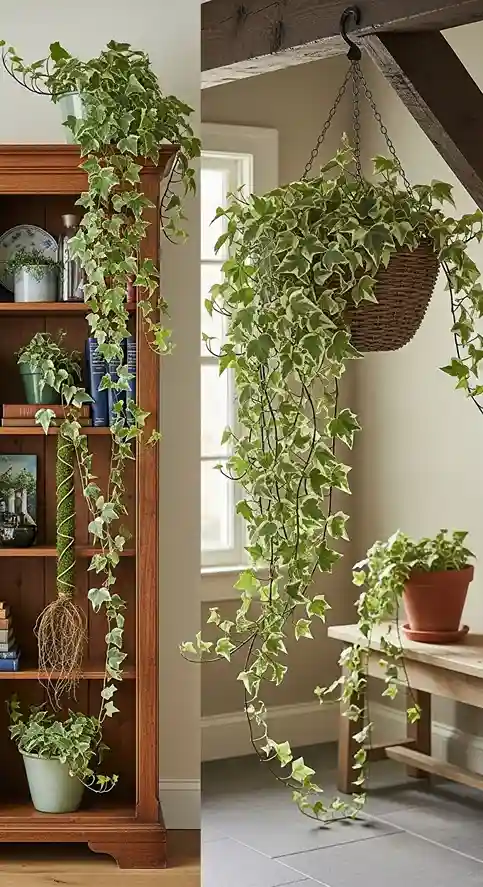
Grow in bright to moderate indirect light, watering when soil surface dries. English ivy prefers cooler temperatures between 50-70°F and appreciates good air circulation. Trim regularly to control growth and encourage bushiness. Watch for spider mites in dry, warm conditions and increase humidity if infestations occur.
25. Anthurium for Heart-Shaped Flowers
Anthuriums produce glossy, heart-shaped spathes in red, pink, white, or coral above attractive foliage, blooming almost continuously with proper care. These tropical plants grow 1-2 feet tall, adding exotic color to bright rooms. Their long-lasting “flowers” (actually modified leaves) provide months of colorful display.
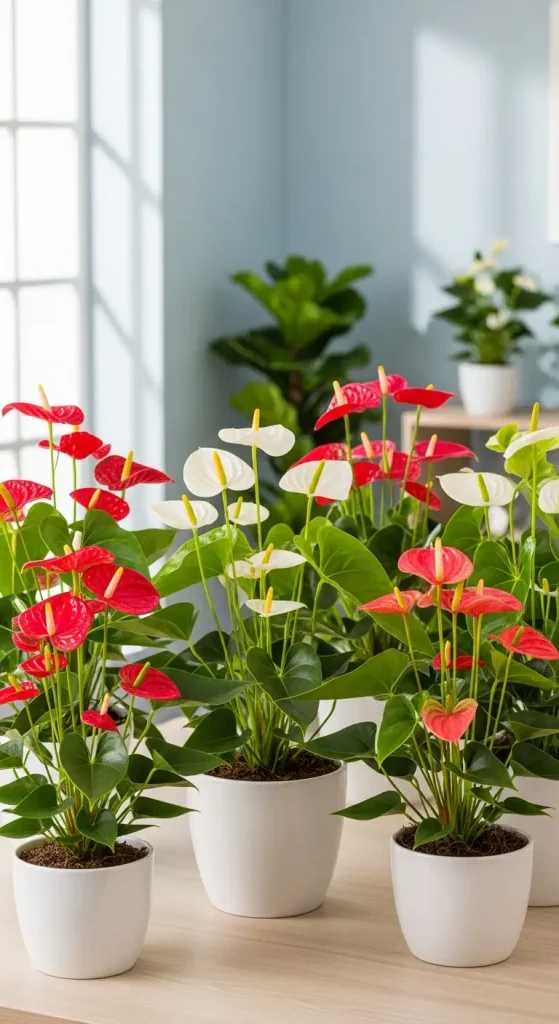
Provide bright, indirect light and keep soil consistently moist but not soggy. Anthuriums need high humidity from misting or pebble trays for best growth and blooming. Fertilize monthly with diluted liquid fertilizer. Remove spent flowers at base and wipe leaves occasionally to maintain glossy appearance.
26. Cast Iron Plant for Extreme Tolerance
Cast iron plants (Aspidistra) tolerate extreme neglect, low light, temperature fluctuations, and irregular watering, earning their indestructible reputation. These slow-growing plants produce dark green, lance-shaped leaves reaching 2-3 feet tall. They’re ideal for challenging locations where most plants fail, including dim corners and drafty entryways.
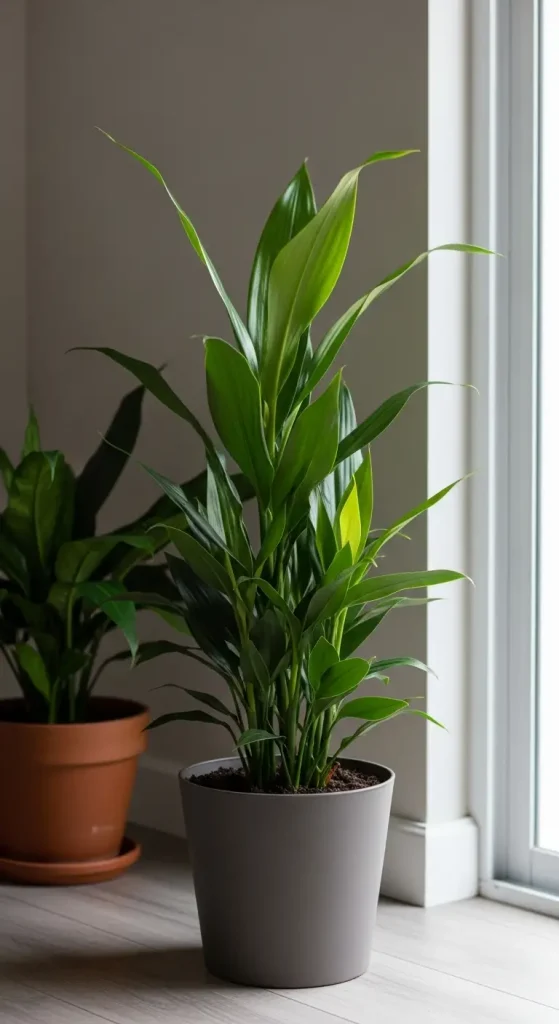
Water when soil dries significantly, tolerating both drought and occasional overwatering. Cast iron plants grow in almost any light from deep shade to bright indirect. They need minimal fertilizing and rarely require repotting. Wipe leaves occasionally to remove dust as these plants grow too slowly to outgrow dirt buildup.
Frequently Asked Questions
What are the best indoor plants for beginners?
Pothos, snake plants, and ZZ plants top the list for beginner-friendly houseplants due to their extreme tolerance of neglect and variable conditions. These plants forgive irregular watering, adapt to various light levels, and resist most pests and diseases. Spider plants and philodendrons also offer excellent starting points for novice indoor gardeners.
How often should I water my indoor plants?
Watering frequency depends on plant type, pot size, light exposure, and environmental conditions rather than fixed schedules. Most plants prefer soil drying somewhat between waterings, with succulents needing complete drying while ferns prefer consistent moisture. Check soil moisture by inserting finger 1-2 inches deep before watering.
Which indoor plants purify air most effectively?
Snake plants, pothos, spider plants, and peace lilies rank among the most effective air-purifying houseplants according to NASA research. These plants remove toxins including formaldehyde, benzene, and trichloroethylene from indoor air while releasing oxygen. English ivy, rubber plants, and Boston ferns also demonstrate strong air-cleaning abilities.
Conclusion
Indoor plants transform houses into homes, bringing nature’s calming presence into our daily living spaces while offering tangible benefits from air purification to stress reduction. The twenty-six plants featured here represent diverse families, care requirements, and aesthetic styles, ensuring options for every skill level, light condition, and design preference. Whether you’re drawn to the dramatic foliage of monstera, the easy care of snake plants, or the blooming beauty of orchids, there’s an indoor plant perfectly suited to your specific situation.
Building an indoor plant collection begins with understanding your space’s conditions and honestly assessing the time you can dedicate to plant care. Start with one or two plants matching your environment and commitment level, then expand gradually as you gain confidence and experience. Indoor gardening is a rewarding journey of continuous learning where even experienced plant parents discover new species and refine their skills. With these exceptional houseplants as your foundation, you’re well-equipped to create thriving indoor gardens that enhance your home’s beauty and your quality of life for years to come.