Shade perennials represent nature’s elegant solution to one of gardening’s most common challenges—creating beautiful, thriving plantings in areas receiving limited sunlight.
These remarkable plants have evolved in forest understories and woodland edges, developing specialized characteristics enabling them to photosynthesize efficiently in low-light conditions while producing stunning foliage and flowers.
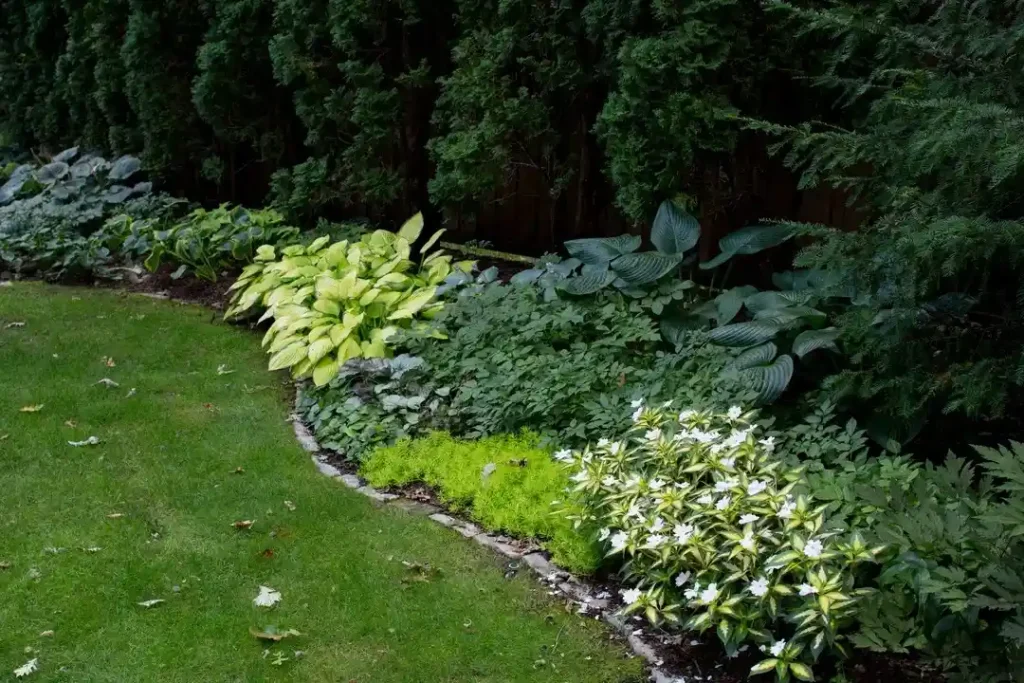
Source: @phillipsgarden
From the silvery patterns of brunnera to the dramatic plumes of astilbe, shade perennials offer extraordinary beauty transforming problematic dark corners into garden highlights.
Shade perennial gardens offer distinct advantages over their sun-loving counterparts including reduced watering requirements, minimal weed pressure in established plantings, and cooler comfortable environments during hot summers.
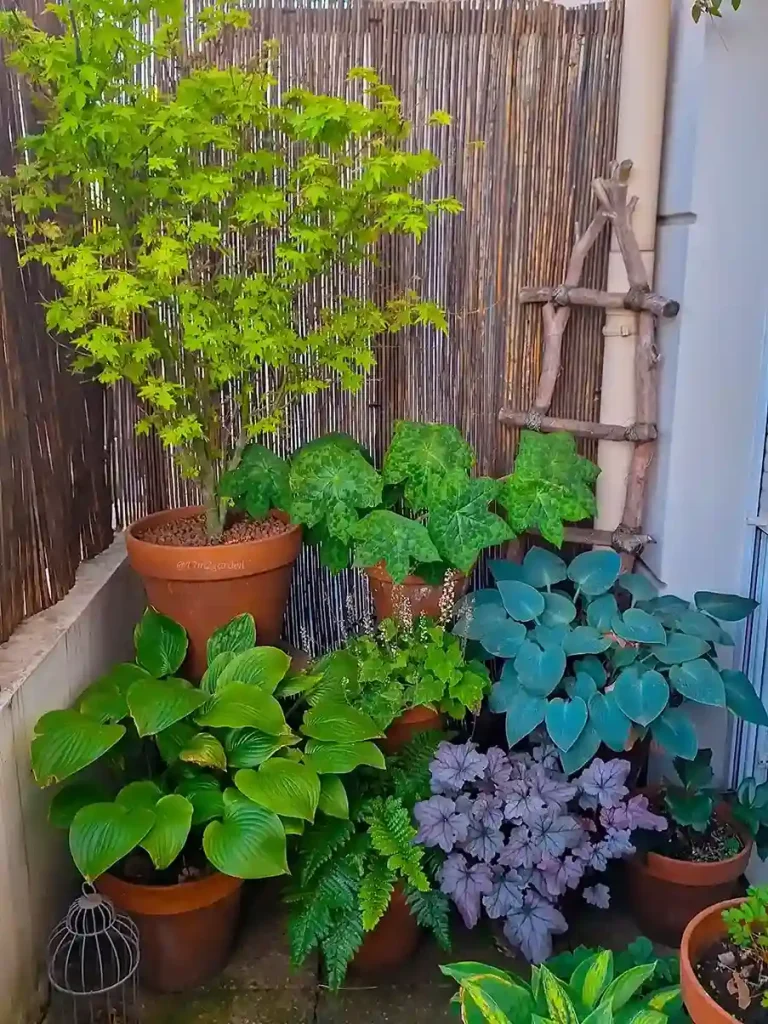
Source: @17m2garden
These specialized plants create lush tapestries of varied foliage textures, subtle flower beauty, and seasonal transformations celebrating nature’s quieter aesthetic. Combined with thoughtful hardscape elements like those featured in gabion wall ideas creating structural backdrops, shade perennial gardens become sophisticated outdoor spaces rivaling any sun-drenched border.
1. Hostas Classic Shade Kings
Hostas remain undisputed kings of shade gardening, providing unmatched foliage variety in blues, greens, golds, and variegated combinations. Hundreds of varieties range from miniature 4-inch specimens to giant 4-foot mounds offering sizes suiting every garden application. The textured leaves in smooth, puckered, or wavy forms add dimensional interest while lavender or white flowers rise above foliage in summer.
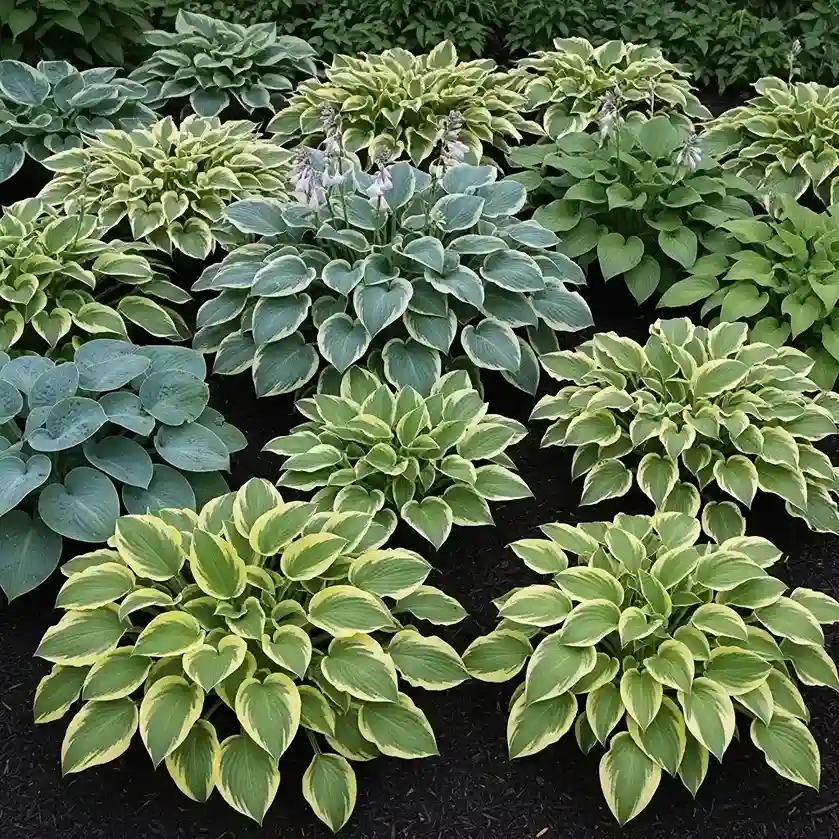
These adaptable perennials tolerate various soil conditions while thriving with consistent moisture and organic-rich soil. Hostas pair beautifully with ferns, astilbes, and other shade companions creating layered woodland displays. Their versatility suits small garden ideas maximizing limited shade spaces while providing reliable structural interest throughout entire growing seasons without demanding constant care.
Care Guide: Plant in partial to full shade with consistent moisture. Fertilize in spring with balanced fertilizer. Divide every 3-5 years. Watch for slug and deer damage regularly.
| Feature | Details |
|---|---|
| Light Requirements | Partial to Full Shade |
| Height | 6 inches to 4 feet |
| Colors | Blue, Green, Gold, Variegated |
| Hardiness Zones | 3-9 |
| Bloom Time | Mid-Summer |
2. Astilbe Feathery Plumes
Astilbe produces feathery flower plumes in pink, white, red, lavender, and purple rising above fern-like foliage creating colorful shade displays throughout summer. These moisture-loving perennials thrive in partial shade with consistent water providing reliable blooming year after year while attracting butterflies with nectar-rich flowers throughout growing seasons.
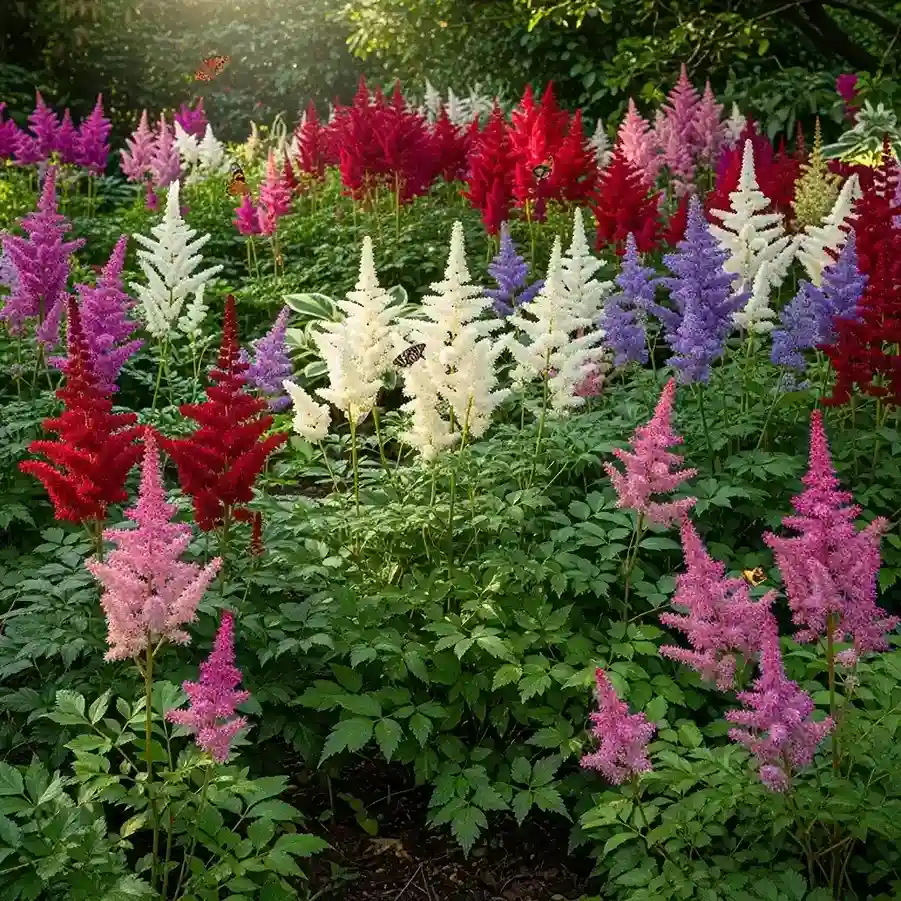
Choose varieties with staggered bloom times extending displays from early to late summer. The divided foliage provides textural interest even when not flowering. Astilbe works beautifully alongside shade plants creating diverse planting combinations with contrasting textures and complementary bloom times maximizing visual interest.
Care Guide: Plant in partial shade with rich, moist soil. Mulch to retain moisture. Fertilize in spring. Divide every 3-4 years maintaining blooming vigor and healthy growth.
| Feature | Details |
|---|---|
| Light Requirements | Partial Shade |
| Height | 1-4 feet |
| Colors | Pink, White, Red, Purple, Lavender |
| Hardiness Zones | 3-8 |
| Bloom Time | Early to Late Summer |
3. Coral Bells Colorful Foliage
Coral bells (Heuchera) provide year-round foliage interest in purple, burgundy, lime, coral, caramel, and silver offering extraordinary color range. Modern hybrids push color boundaries with metallic sheens, ruffled edges, and intricate patterning. Delicate flower wands rise above foliage in spring attracting hummingbirds while leaves remain attractive throughout all seasons.
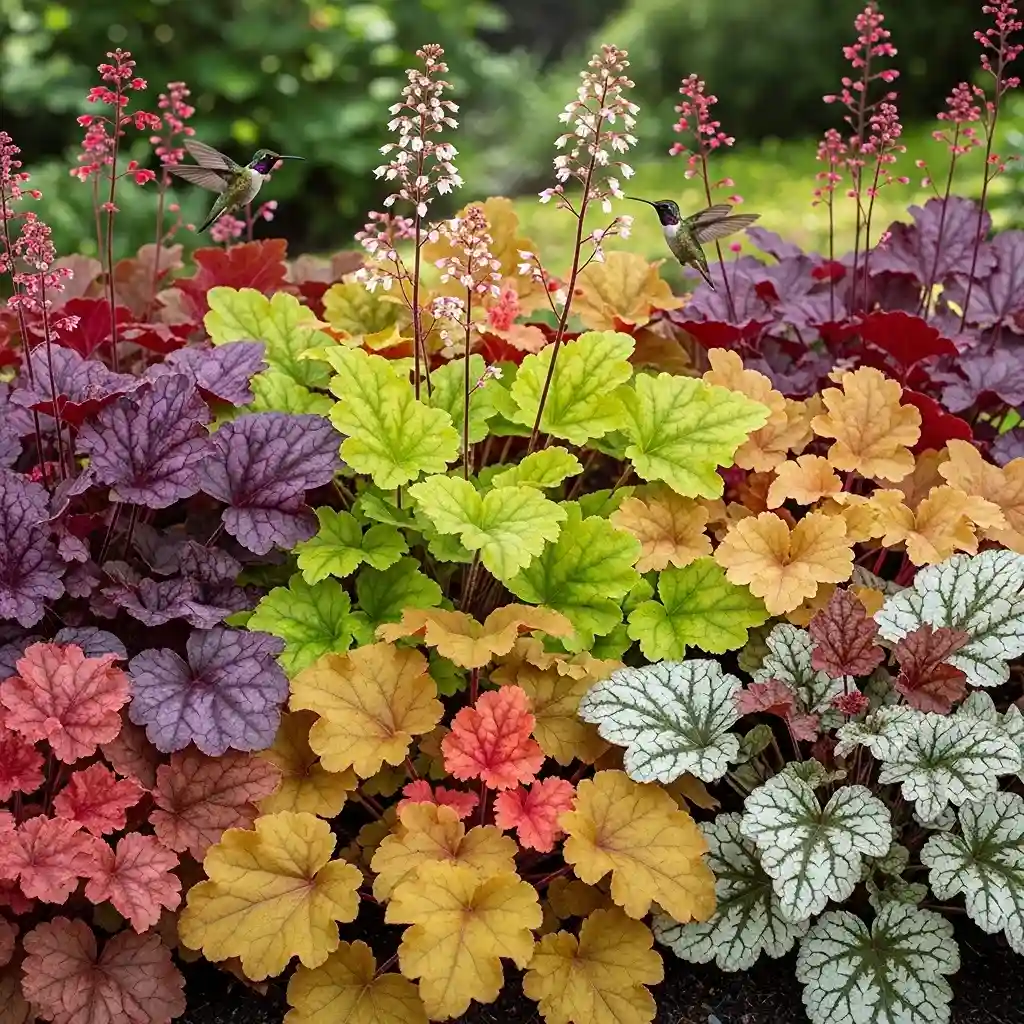
These versatile perennials tolerate partial shade while performing well with some morning sun. The mounding habit creates tidy plants requiring minimal maintenance. Coral bells work excellently in containers and mass plantings and complement colorful shrubs creating multi-layered landscape designs with varied heights and continuous color.
Care Guide: Plant in partial shade with well-drained soil. Fertilize lightly in spring. Remove spent flower stalks. Replant crowns every 3 years preventing woody centers.
| Feature | Details |
|---|---|
| Light Requirements | Partial Shade to Sun |
| Height | 8-18 inches |
| Colors | Purple, Burgundy, Lime, Coral, Silver |
| Hardiness Zones | 4-9 |
| Bloom Time | Spring-Summer |
4. Ferns Textural Elegance
Ferns bring delicate feathery textures creating airy contrast against broad-leaved companions in shaded gardens. Japanese painted fern provides silvery fronds with burgundy midribs while autumn fern offers coppery new growth maturing to glossy green. Lady fern and ostrich fern create dramatic tall specimens anchoring shaded borders.
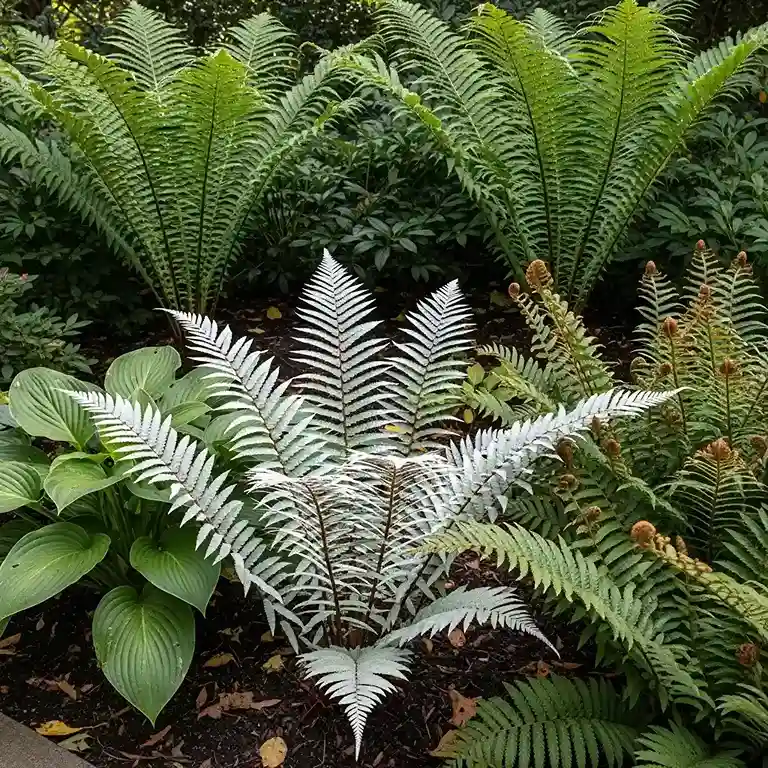
Most ferns prefer consistent moisture and acidic soil rich in organic matter. The unfurling fiddleheads in spring provide seasonal interest before fronds fully develop. Ferns suit cottage garden ideas creating lush understory plantings beneath trees and shrubs that establish romantic woodland aesthetics.
Care Guide: Plant in partial to full shade with consistent moisture. Amend soil with compost. Remove dead fronds in spring before new growth emerges fully.
| Feature | Details |
|---|---|
| Light Requirements | Partial to Full Shade |
| Height | 1-6 feet (species dependent) |
| Colors | Green, Blue-gray, Burgundy, Silver |
| Hardiness Zones | 3-9 |
| Special Notes | Many native species available |
5. Bleeding Heart Romantic Blooms
Bleeding heart produces distinctive heart-shaped flowers dangling from arching stems in pink, white, or bi-colors creating romantic spring displays. Traditional varieties provide bold presence while fringed bleeding heart offers finer foliage and repeat blooming into fall. Both types create excellent companions for spring bulbs and later-blooming shade perennials filling seasonal gaps.
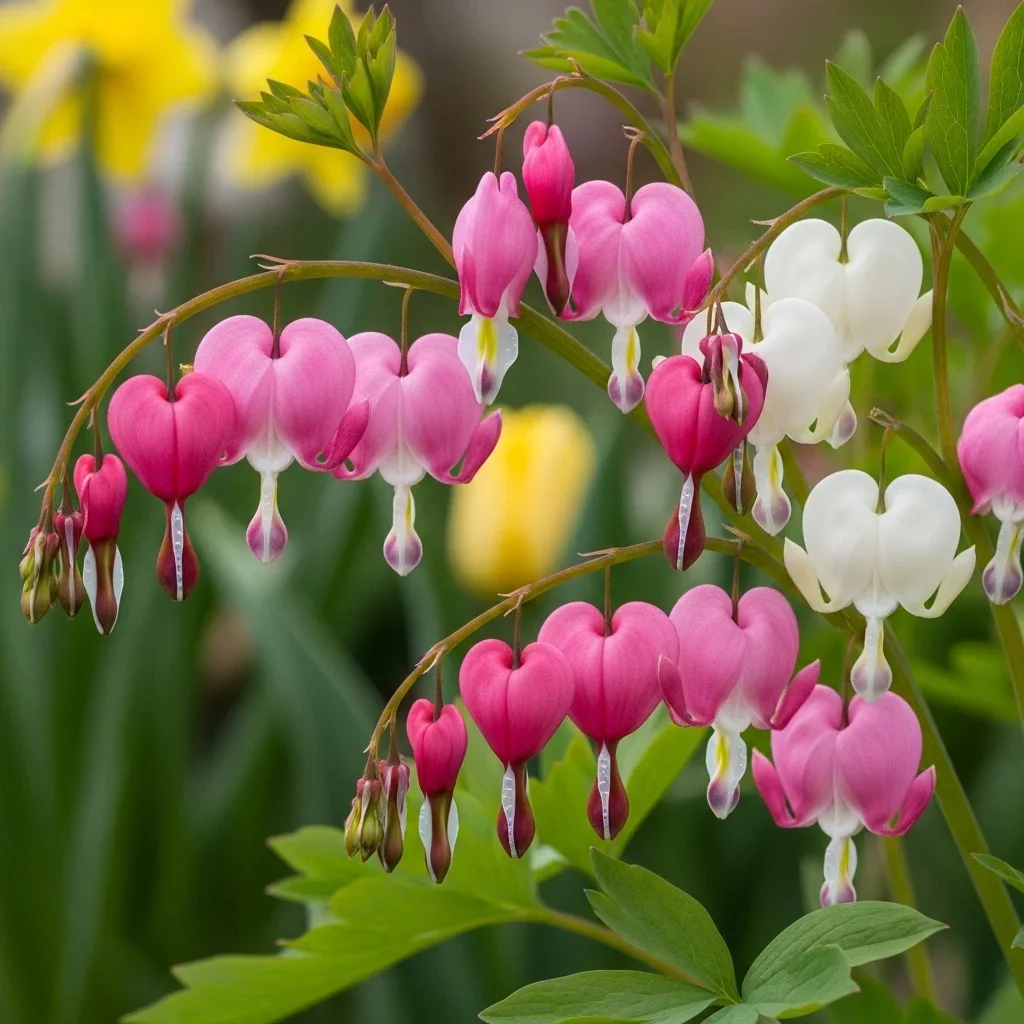
These woodland perennials prefer partial to full shade with cool, moist conditions thriving beneath deciduous trees. Traditional bleeding heart may go dormant in summer heat—pair with later-emerging hostas filling resulting gaps. Their unique flowers create memorable spring statements in front yard landscaping shaded foundation beds.
Care Guide: Plant in partial to full shade with rich, moist soil. Fertilize in early spring. Allow dormancy or maintain moisture preventing summer dieback.
| Feature | Details |
|---|---|
| Light Requirements | Partial to Full Shade |
| Height | 1-3 feet |
| Colors | Pink, White, Bi-color |
| Hardiness Zones | 3-9 |
| Bloom Time | Spring (April-June) |
6. Lungwort Spotted Beauty
Lungwort produces pink buds opening to blue flowers in early spring creating unique two-toned displays beloved by gardeners seeking early color. The spotted or silver-splashed foliage remains attractive throughout seasons providing continued interest long after flowering finishes. These low-growing perennials create excellent groundcovers spreading slowly forming weed-suppressing mats.
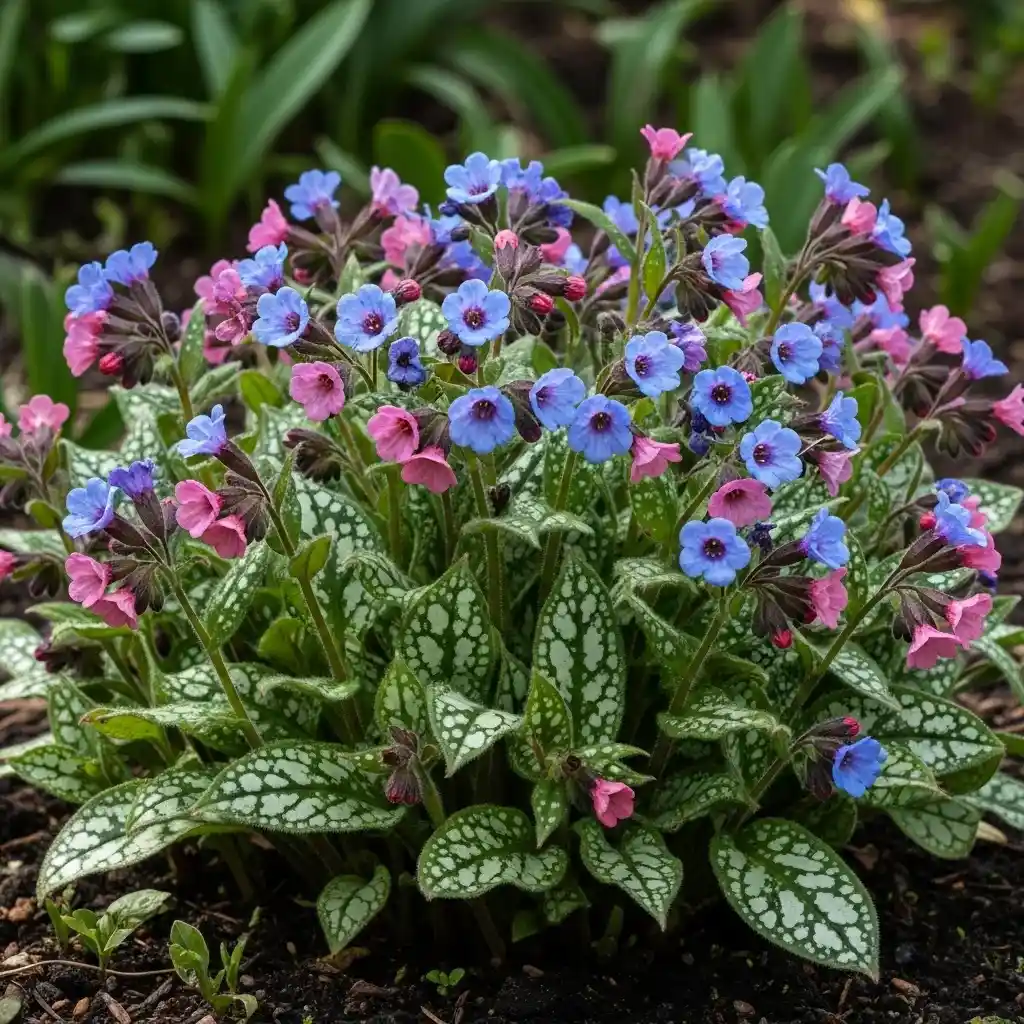
Modern cultivars offer improved mildew resistance and more dramatic foliage patterns. The early flowering provides nectar when few sources exist while spotted leaves brighten shaded areas. Lungwort tolerates dry shade once established making it valuable for challenging sites where shade shrubs compete for moisture.
Care Guide: Plant in partial to full shade with average to moist soil. Fertilize lightly in spring. Remove spent flowers and damaged leaves after blooming.
| Feature | Details |
|---|---|
| Light Requirements | Partial to Full Shade |
| Height | 8-12 inches |
| Colors | Pink, Blue, White |
| Hardiness Zones | 3-8 |
| Bloom Time | Early Spring |
7. Solomon’s Seal Arching Grace
Solomon’s seal produces graceful arching stems lined with oval leaves and small white bell-shaped flowers dangling beneath in spring. This native perennial naturalizes in woodland settings creating elegant colonies. Blue-black berries follow flowers in fall while leaves turn golden-yellow before dormancy adding seasonal interest.
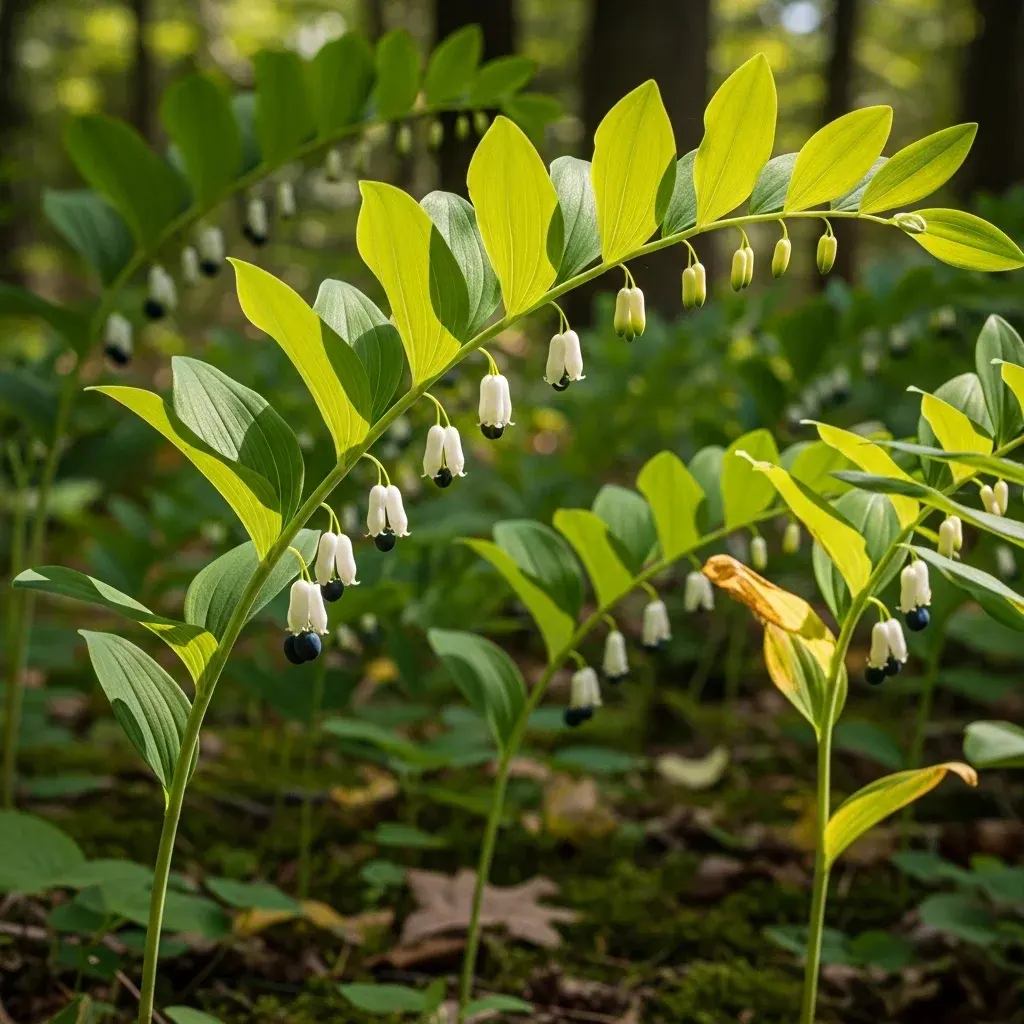
Variegated Solomon’s seal brightens deep shade with white-edged foliage throughout growing seasons. These tall perennials provide vertical interest while arching form creates movement and grace. The low-maintenance nature and native status support local ecosystems while creating beautiful naturalistic plantings throughout shaded landscapes.
Care Guide: Plant in partial to full shade with moist, organic-rich soil. Fertilize in spring with compost. Allow natural spreading or divide to control size.
| Feature | Details |
|---|---|
| Light Requirements | Partial to Full Shade |
| Height | 1-3 feet |
| Colors | White (flowers), Yellow (fall) |
| Hardiness Zones | 3-9 |
| Special Notes | Native, variegated forms available |
8. Hellebores Winter Bloomers
Hellebores produce rose-like flowers in winter through spring in white, pink, purple, burgundy, and green providing color when few plants bloom. These evergreen perennials thrive in partial to full shade with well-drained soil tolerating dry shade once established. The leathery foliage remains attractive year-round while flowers persist for months.
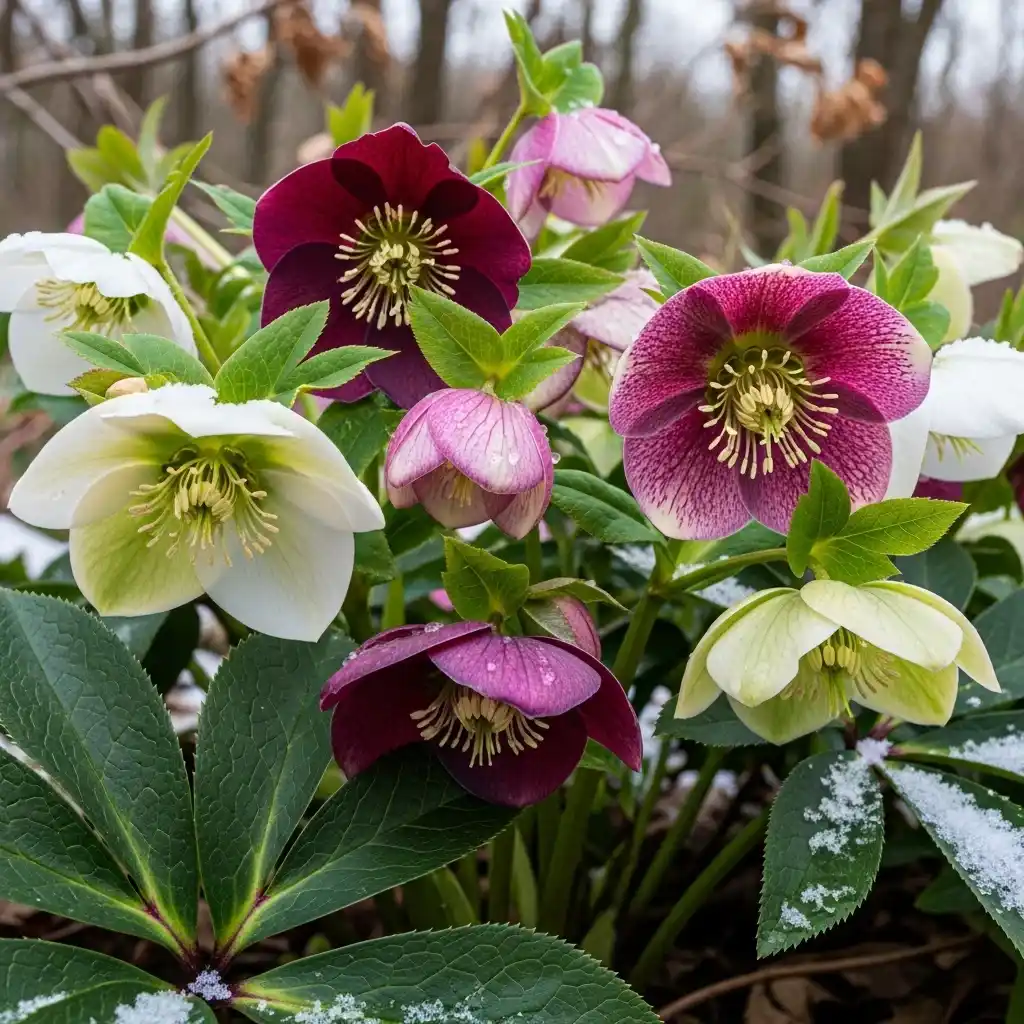
Lenten rose offers easiest cultivation and widest color range while Christmas rose blooms earliest in mild winters. These long-lived perennials resent disturbance once established—choose planting locations carefully. Hellebores complement hydrangea flower guide plantings providing winter interest when hydrangeas remain dormant without foliage.
Care Guide: Plant in partial to full shade with well-drained soil. Fertilize lightly in fall. Remove damaged foliage in late winter before flowering begins.
| Feature | Details |
|---|---|
| Light Requirements | Partial to Full Shade |
| Height | 12-18 inches |
| Colors | White, Pink, Purple, Green, Burgundy |
| Hardiness Zones | 4-9 |
| Bloom Time | Winter-Spring (December-April) |
9. Brunnera Silver Heart
Brunnera produces delicate blue forget-me-not flowers in spring above heart-shaped leaves featuring silver markings and striking variegations. The silver-splashed foliage varieties brighten dark areas throughout entire growing seasons well beyond brief spring flowering. Low-maintenance nature and drought tolerance once established make brunnera valuable for difficult locations.
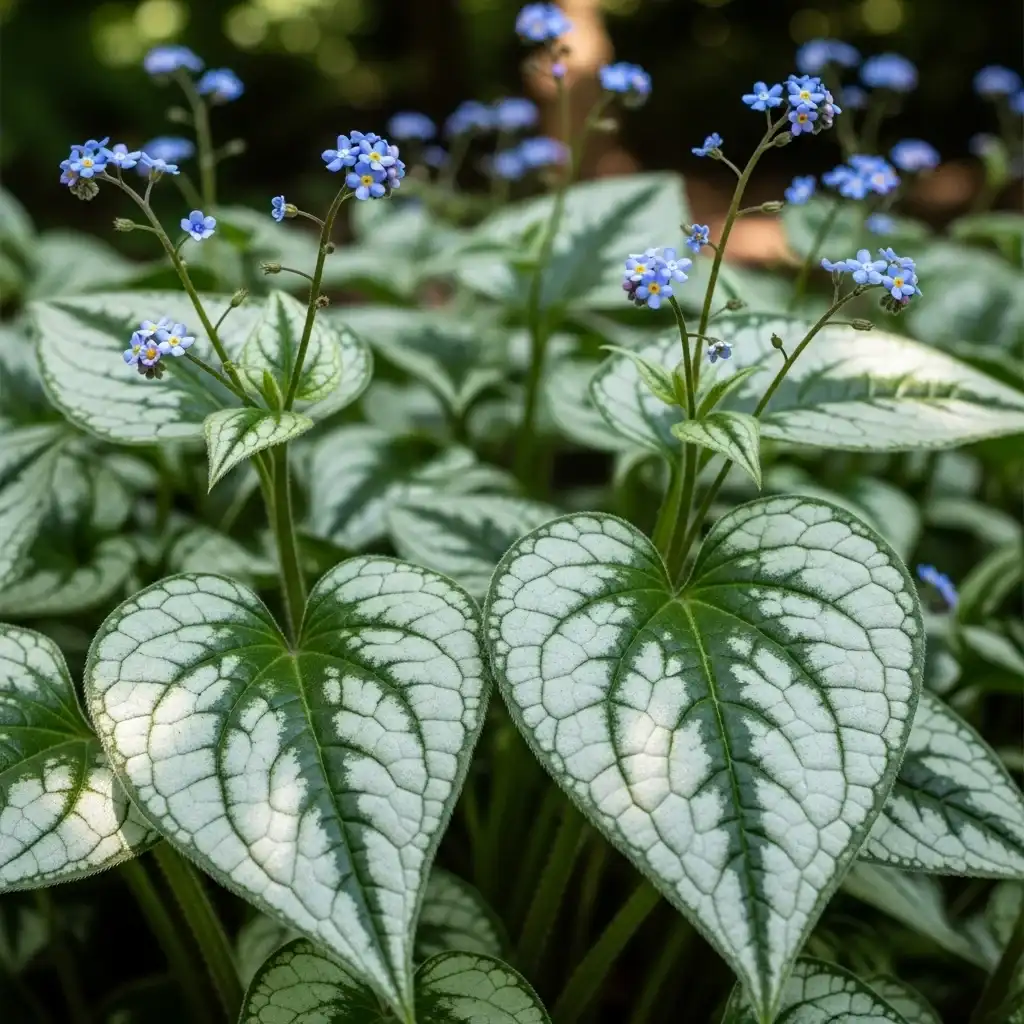
‘Jack Frost’ offers stunning silver foliage with green veining creating living artwork. These slow-spreading perennials rarely require division while maintaining attractive clumps indefinitely. Brunnera works beautifully in front yard landscaping creating elegant shaded foundation plantings where grass struggles competing with shallow tree roots.
Care Guide: Plant in partial shade with average to moist soil. Fertilize lightly in spring. Remove spent flowers and damaged leaves maintaining fresh appearances throughout seasons.
| Feature | Details |
|---|---|
| Light Requirements | Partial Shade |
| Height | 12-18 inches |
| Colors | Blue (flowers), Silver-green (foliage) |
| Hardiness Zones | 3-8 |
| Bloom Time | Early Spring |
10. Japanese Forest Grass
Japanese forest grass provides graceful arching foliage in chartreuse, gold, or variegated patterns creating glowing accents in shade gardens. This ornamental grass thrives in partial shade where most grasses fail providing movement and fine texture contrasting beautifully against broad-leaved companions. The cascading habit creates fountain-like forms brightening dark corners.
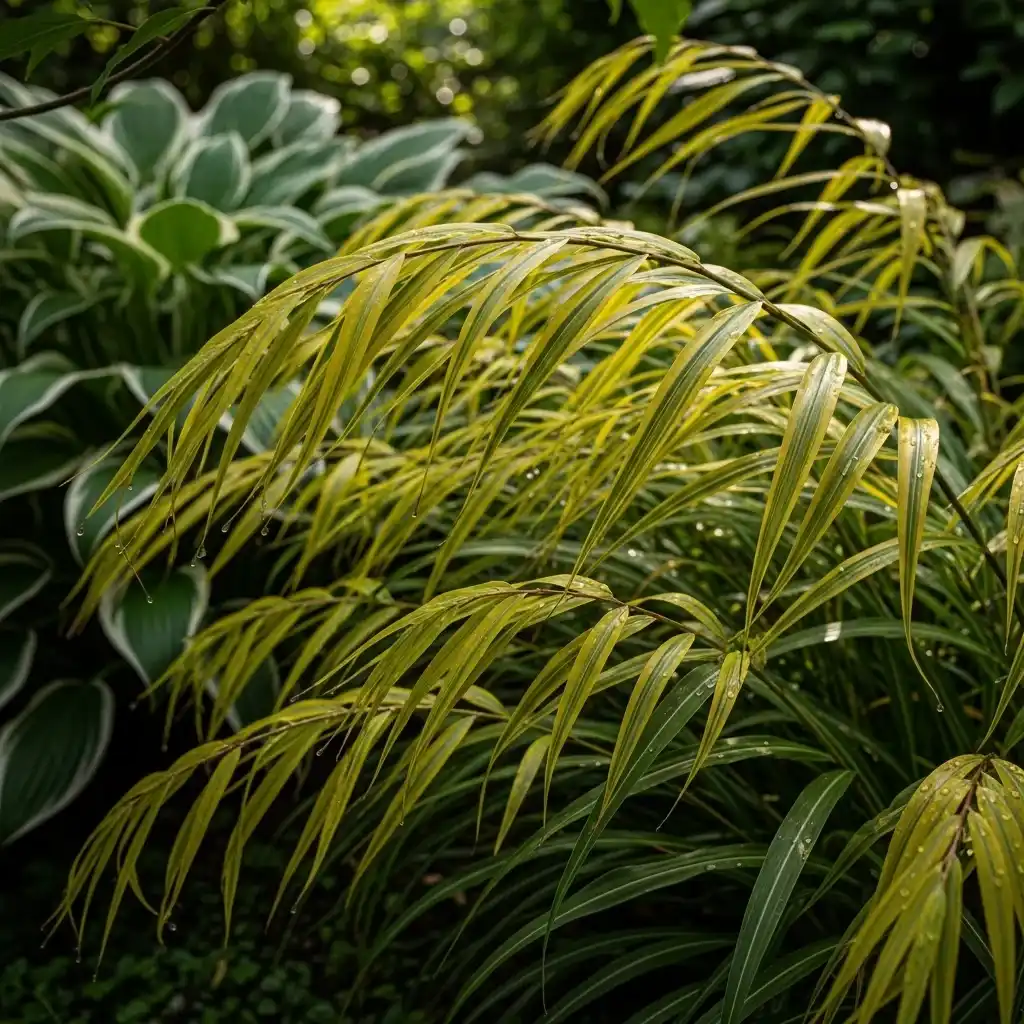
‘Aureola’ offers bright golden foliage with narrow green stripes creating stunning displays in shaded areas. These slow-growing grasses require minimal care beyond removing dead foliage in spring. Japanese forest grass suits tiny backyard ideas providing significant visual impact without overwhelming limited spaces through its refined compact growth habits.
Care Guide: Plant in partial shade with moist, well-drained soil. Fertilize lightly in spring. Cut back dead foliage in early spring before new growth begins.
| Feature | Details |
|---|---|
| Light Requirements | Partial Shade |
| Height | 12-18 inches |
| Colors | Chartreuse, Gold, Variegated |
| Hardiness Zones | 5-9 |
| Special Notes | Deer-resistant, slow-growing |
11. Epimedium Drought Tolerant
Epimedium produces delicate flowers resembling fairy wings in spring in pink, yellow, white, or red hovering above heart-shaped foliage. These low-growing perennials create excellent groundcovers in dry shade spreading slowly through rhizomes. Foliage often features burgundy tints in spring and fall adding multi-season interest beyond brief flowering.
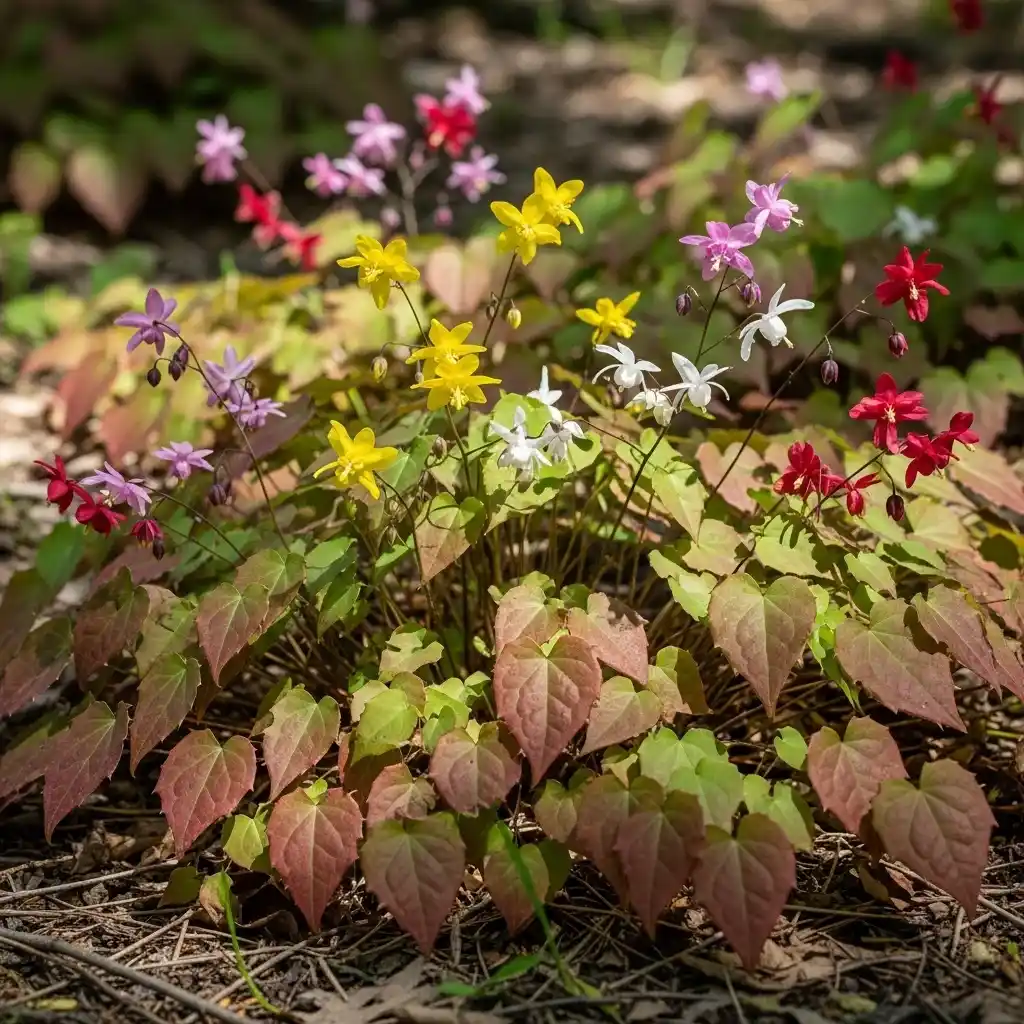
These remarkably tough plants tolerate tree root competition and dry shade once established making them valuable for the most challenging sites. The semi-evergreen foliage in mild climates provides year-round coverage. Epimedium suits landscapes where cheap landscaping ideas demand low-maintenance plants requiring minimal irrigation and fertilization after establishment.
Care Guide: Plant in partial to full shade with well-drained soil. Cut back old foliage in late winter before flowering. Fertilize lightly in spring.
| Feature | Details |
|---|---|
| Light Requirements | Partial to Full Shade |
| Height | 8-12 inches |
| Colors | Pink, Yellow, White, Red |
| Hardiness Zones | 4-9 |
| Special Notes | Drought-tolerant, deer-resistant |
12. Foam Flower Native Groundcover
Foamflower produces fuzzy white or pink flower spikes in spring above attractive maple-leaf-shaped foliage creating native groundcovers perfect for woodland settings. These low-growing perennials spread through runners forming dense mats suppressing weeds while providing continuous foliage interest. Many varieties offer burgundy leaf markings and color-changing fall foliage.
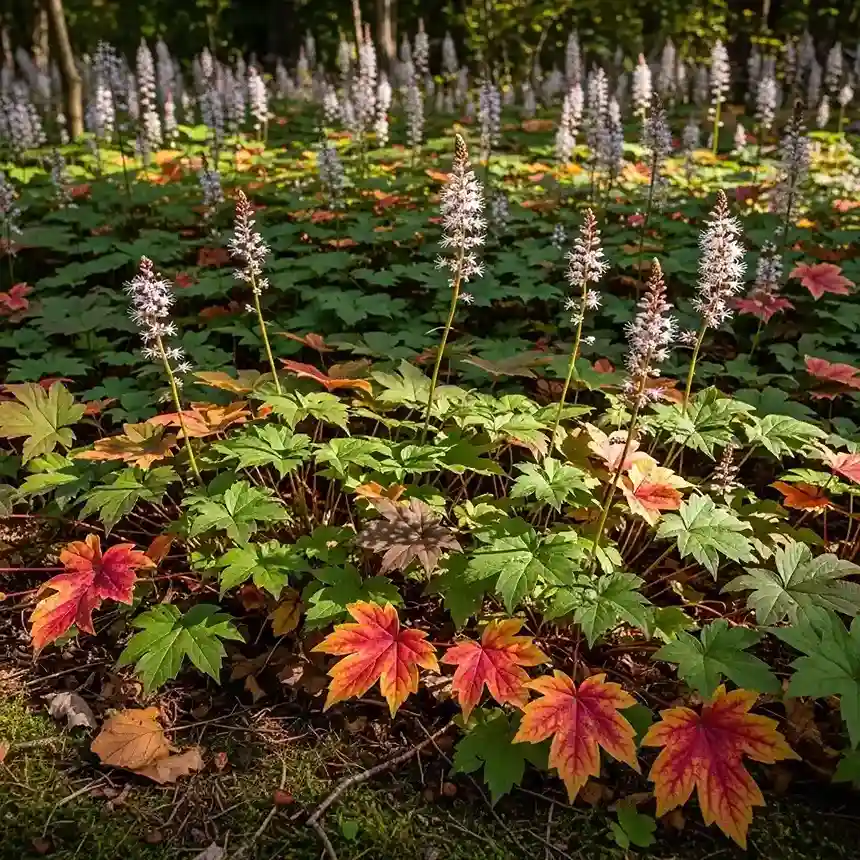
Native Tiarella species support local ecosystems providing nectar and habitat for beneficial insects throughout seasons. These versatile plants tolerate dry shade once established making them valuable beneath mature trees. Foamflower works beautifully in backyard landscaping ideas creating naturalistic plantings that blend seamlessly with surrounding landscapes.
Care Guide: Plant in partial to full shade with moist, organic soil. Fertilize lightly in spring. Divide every few years controlling spread and maintaining vigor.
| Feature | Details |
|---|---|
| Light Requirements | Partial to Full Shade |
| Height | 6-12 inches |
| Colors | White, Pink |
| Hardiness Zones | 3-8 |
| Special Notes | Native, evergreen in mild climates |
13. Columbine Delicate Spurs
Columbine produces unique spurred flowers in nearly every color imaginable attracting hummingbirds to shade gardens throughout spring. These short-lived perennials readily self-seed ensuring continued presence throughout garden spaces. Native and hybrid varieties offer different flower forms and colors suiting various garden styles from woodland to cottage.
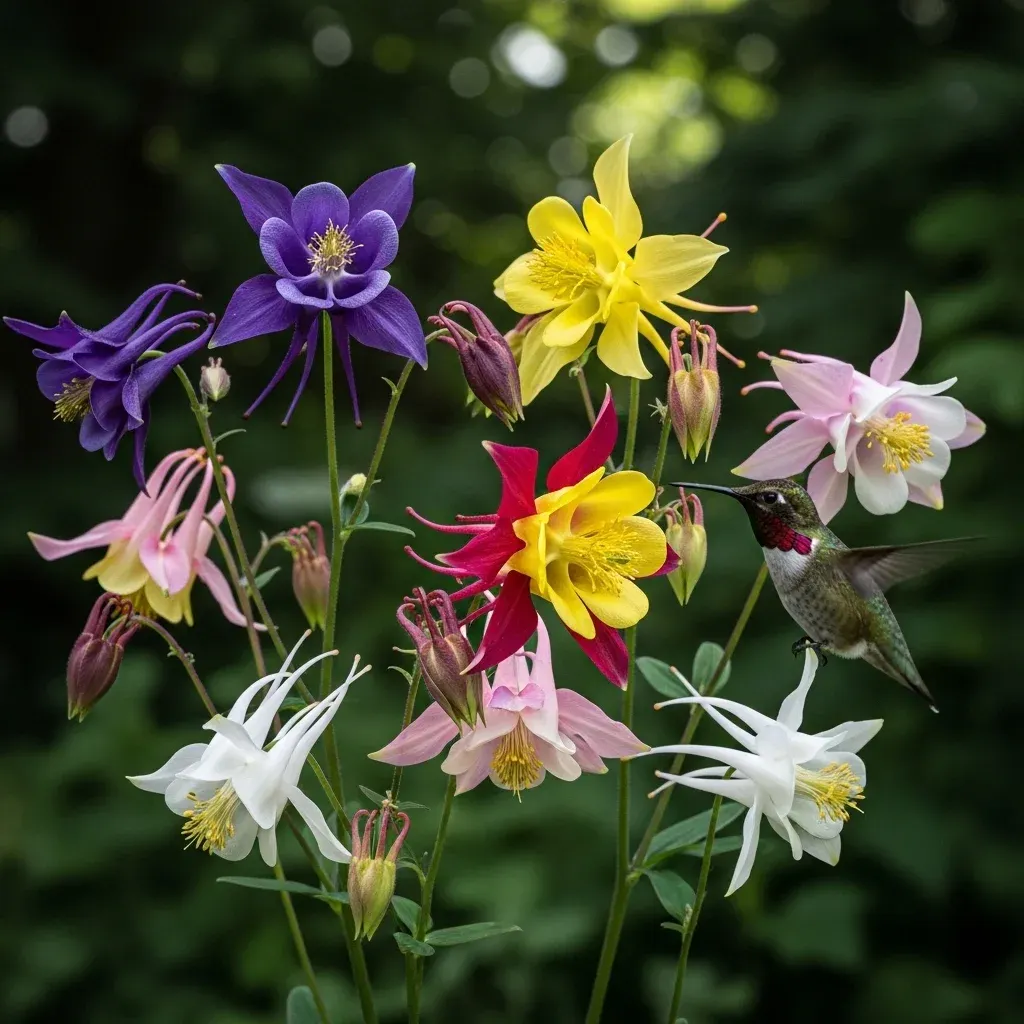
The airy flowers dance above mounding foliage creating whimsical displays in partial shade. Columbine tolerates various soil conditions thriving with minimal care once established. These charming perennials complement flowering shrubs providing delicate vertical interest alongside more substantial woody plants creating dynamic compositions.
Care Guide: Plant in partial shade with well-drained soil. Allow self-seeding for continued presence. Remove spent foliage after flowering. Watch for leaf miners attacking foliage.
| Feature | Details |
|---|---|
| Light Requirements | Partial Shade to Sun |
| Height | 1-3 feet |
| Colors | Red, Yellow, Blue, Pink, White, Bi-color |
| Hardiness Zones | 3-9 |
| Bloom Time | Spring (April-June) |
14. Toad Lily Fall Bloomer
Toad lily produces exotic orchid-like flowers in purple, white, and bi-colors spotted with contrasting markings in late summer and fall. These unusual perennials bloom when most shade plants finish flowering extending color into autumn. The arching stems and exotic flowers create tropical appearances despite excellent cold hardiness.
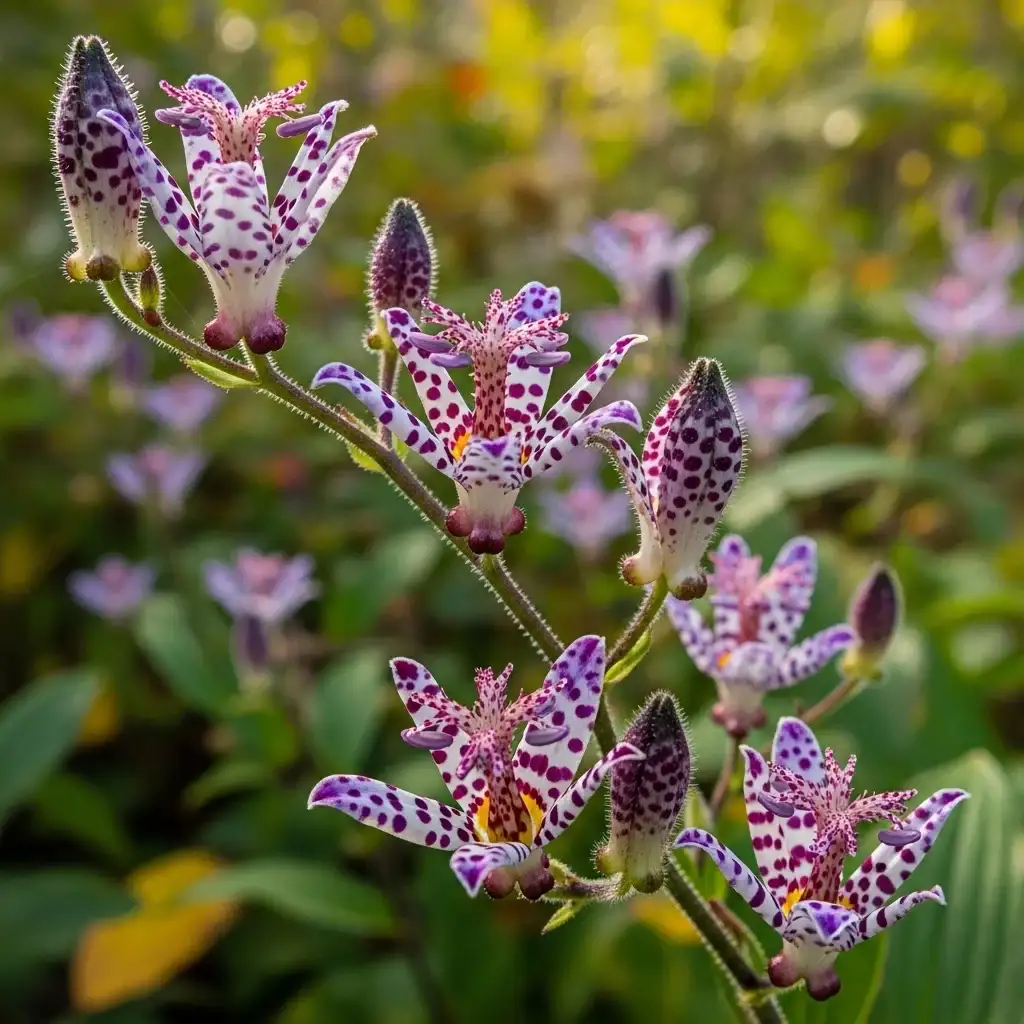
Toad lily requires consistent moisture and partial shade to thrive, producing flowers on current season’s growth. The late-season blooms provide nectar when pollinators struggle finding sources. The exotic appearance suits hippie garden bohemian outdoor aesthetics celebrating unusual and unexpected plants challenging conventional garden design expectations.
Care Guide: Plant in partial shade with consistently moist, rich soil. Fertilize in spring and again in mid-summer. Mulch heavily protecting roots through winter dormancy.
| Feature | Details |
|---|---|
| Light Requirements | Partial Shade |
| Height | 2-3 feet |
| Colors | Purple, White, Bi-color with spots |
| Hardiness Zones | 4-9 |
| Bloom Time | Late Summer-Fall (August-October) |
15. Wild Ginger Native Spreader
Wild ginger creates dense evergreen groundcover using glossy heart-shaped leaves spreading slowly through rhizomes. This low-growing native rarely flowers conspicuously—small brown flowers hide beneath leaves in spring—but the foliage creates attractive carpets in full shade. The aromatic roots smell distinctly of ginger when crushed.
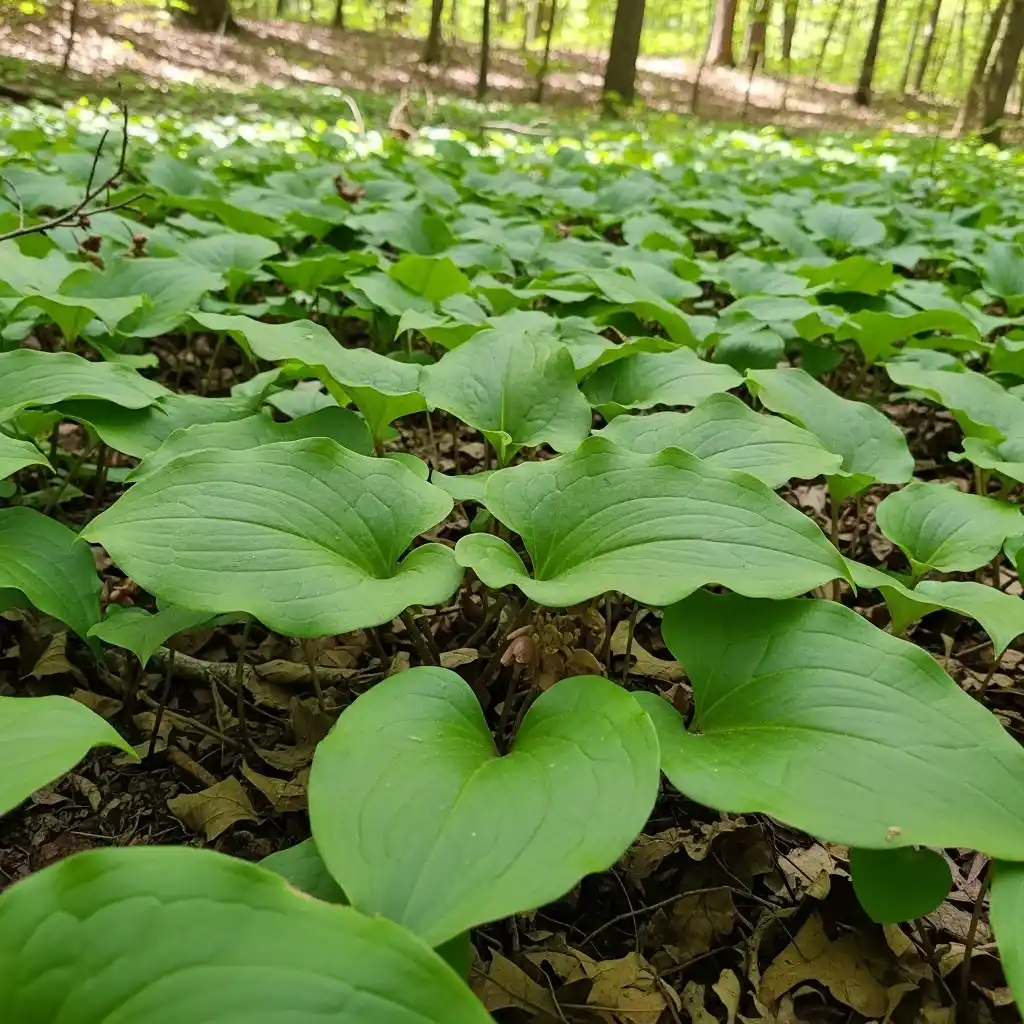
This native species tolerates dense shade and dry conditions once established making it valuable beneath evergreen trees. The slow spreading habit suits controlled groundcover applications. Wild ginger complements tree landscaping ideas creating attractive understory plantings beneath specimen trees where grass struggles to grow.
Care Guide: Plant in partial to full shade with average to moist soil. Mulch with leaf litter mimicking woodland conditions. Fertilize lightly with compost annually.
| Feature | Details |
|---|---|
| Light Requirements | Partial to Full Shade |
| Height | 4-6 inches |
| Foliage | Glossy green heart-shaped leaves |
| Hardiness Zones | 4-8 |
| Special Notes | Native, aromatic roots, slow spreader |
16. Liriope Evergreen Edging
Liriope provides evergreen grass-like foliage and purple or white flower spikes in late summer creating durable borders and groundcovers. These tough perennials tolerate deep shade, drought, and tree root competition thriving where other plants fail. The clumping or spreading types offer different growth habits suiting various applications.
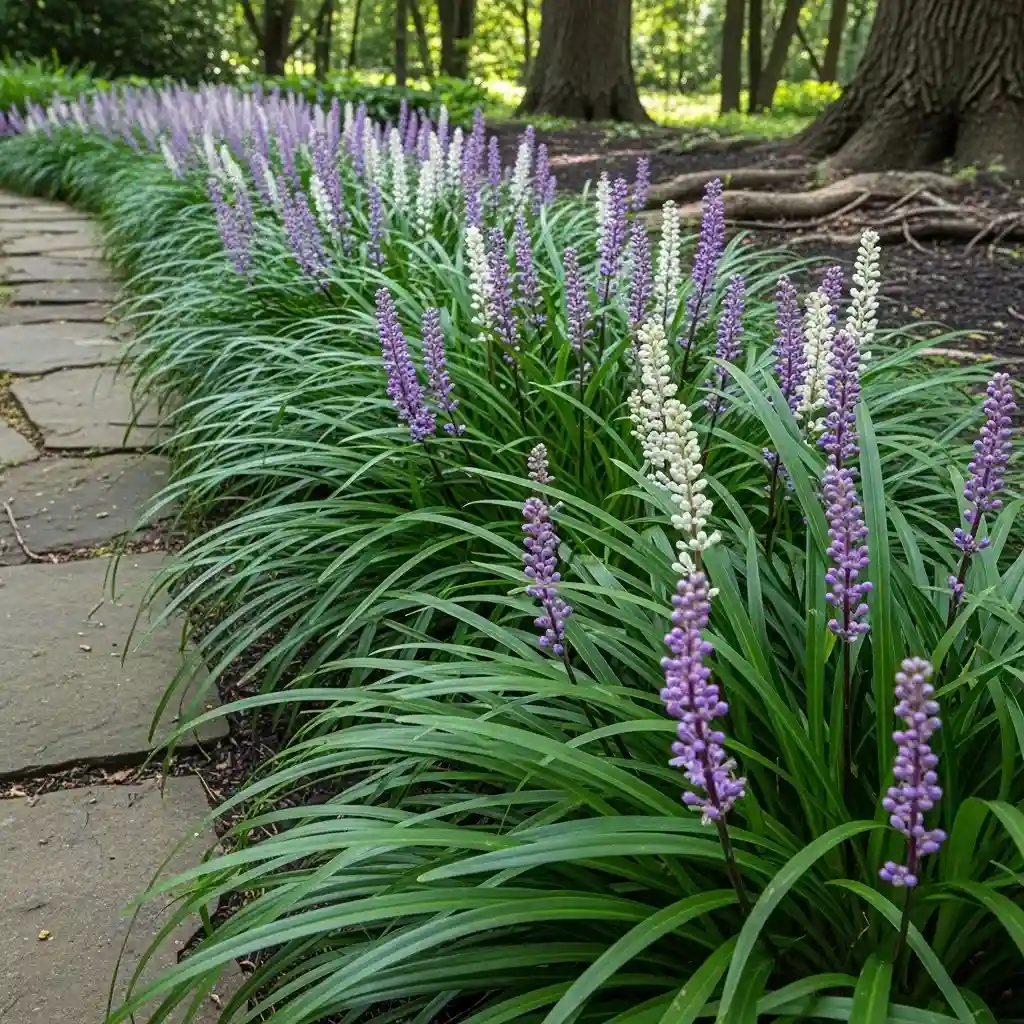
Variegated varieties brighten shaded areas with white or yellow-striped foliage maintaining interest year-round. Liriope requires minimal maintenance beyond cutting back foliage in late winter. This reliable performer suits fence line landscaping creating consistent borders requiring minimal ongoing care throughout all seasons.
Care Guide: Plant in partial to full shade with average soil. Fertilize lightly in spring. Cut back foliage in late winter. Divide clumps every 3-4 years.
| Feature | Details |
|---|---|
| Light Requirements | Partial to Full Shade |
| Height | 10-18 inches |
| Colors | Purple, White (flowers) |
| Hardiness Zones | 5-10 |
| Special Notes | Evergreen, very drought-tolerant |
17. Spiderwort Native Bloomer
Spiderwort produces three-petaled flowers in purple, blue, pink, or white that open each morning and close by afternoon creating continuous daily shows. This native perennial self-seeds freely creating colonies naturalizing in partial shade. The grass-like foliage provides texture while flowers attract pollinators throughout extended blooming periods.
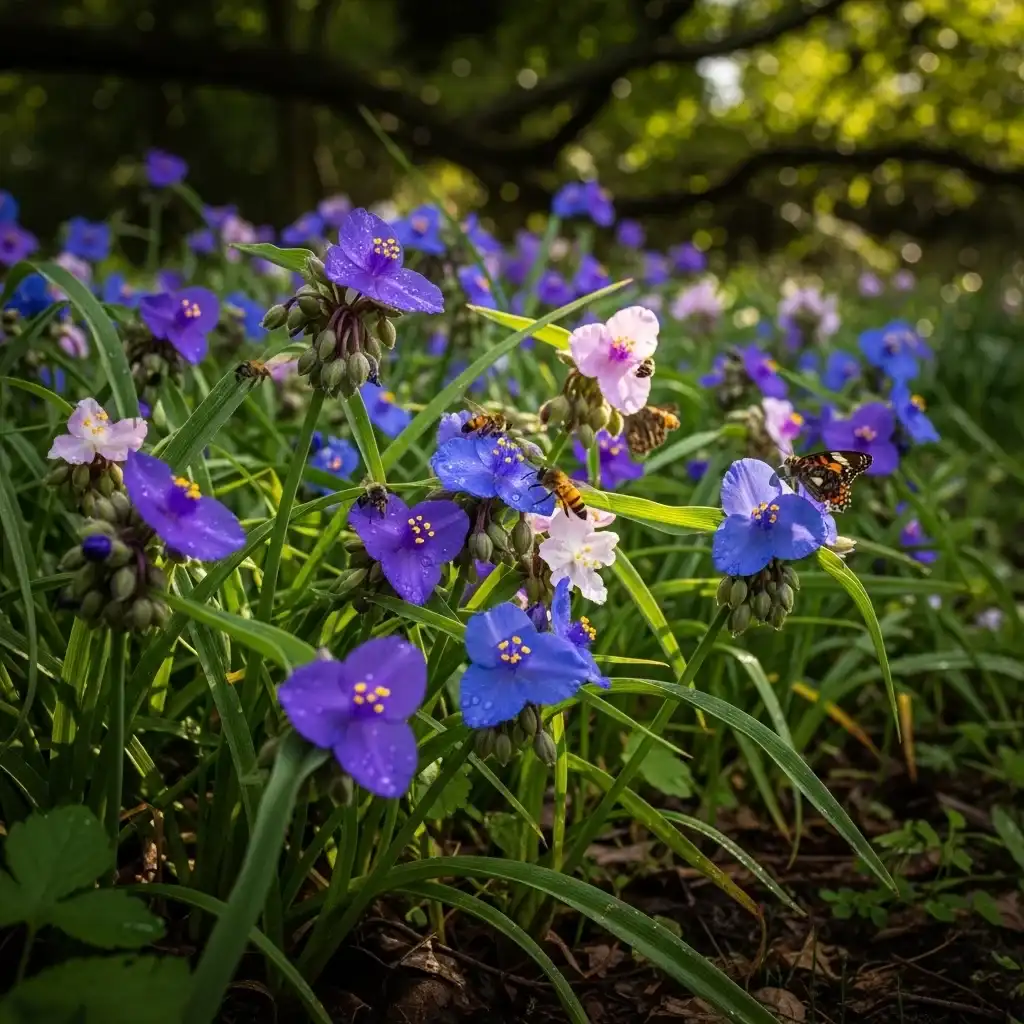
Spiderwort spreads readily requiring some management preventing overwhelming garden companions. The casual spreading nature suits naturalistic and cottage garden ideas where relaxed abundance celebrates natural beauty over rigid control. Cut back hard after first flowering encouraging fresh foliage and potential repeat blooming.
Care Guide: Plant in partial shade with average moisture. Cut back after flowering for fresh growth. Divide clumps annually controlling spread and maintaining vigor.
| Feature | Details |
|---|---|
| Light Requirements | Partial Shade to Sun |
| Height | 1-2 feet |
| Colors | Purple, Blue, Pink, White |
| Hardiness Zones | 4-9 |
| Bloom Time | Late Spring-Summer |
18. Hardy Begonia Late Color
Hardy begonia produces pink flowers in late summer and fall when few shade plants bloom providing extended color. This tuberous perennial survives cold winters returning reliably year after year unlike tender cousins. The heart-shaped leaves feature burgundy undersides creating additional interest while late-season blooms fill important seasonal gaps.
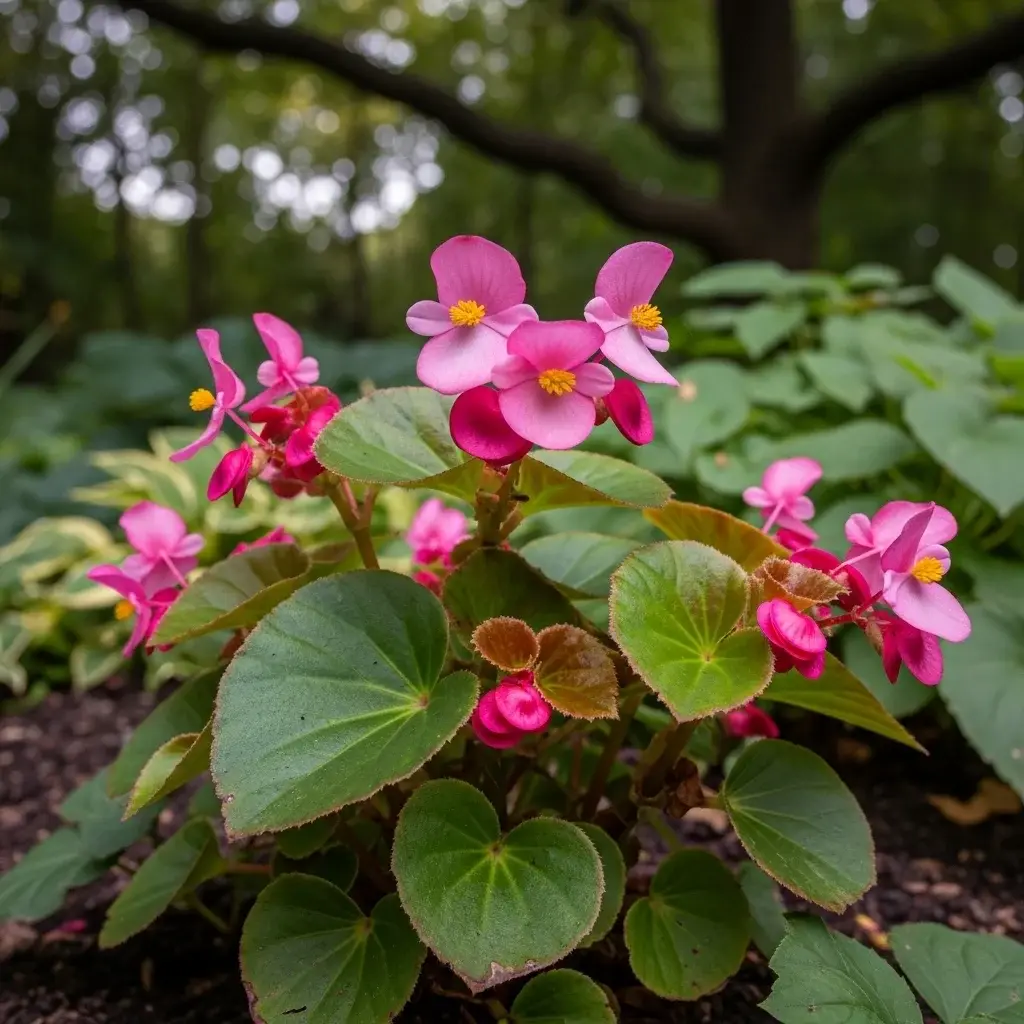
Hardy begonia self-seeds readily establishing colonies in favorable conditions. The unique late blooming period makes it valuable for extended shade garden interest. The elegant flowers and attractive foliage complement best outdoor plants selections ensuring continuous interest throughout entire growing seasons without gaps.
Care Guide: Plant in partial shade with moist, organic soil. Mulch for winter protection in cooler zones. Allow self-seeding. Fertilize lightly in spring.
| Feature | Details |
|---|---|
| Light Requirements | Partial Shade |
| Height | 12-24 inches |
| Colors | Pink, White |
| Hardiness Zones | 6-9 |
| Bloom Time | Late Summer-Fall |
19. Ligularia Bold Leaves
Ligularia produces large dramatic leaves in green or burgundy alongside tall yellow or orange flower spikes creating bold shade garden statements. These substantial perennials thrive in consistently moist soil and partial shade where their impressive foliage creates dramatic focal points. The bold scale contrasts beautifully against fine-textured companions.
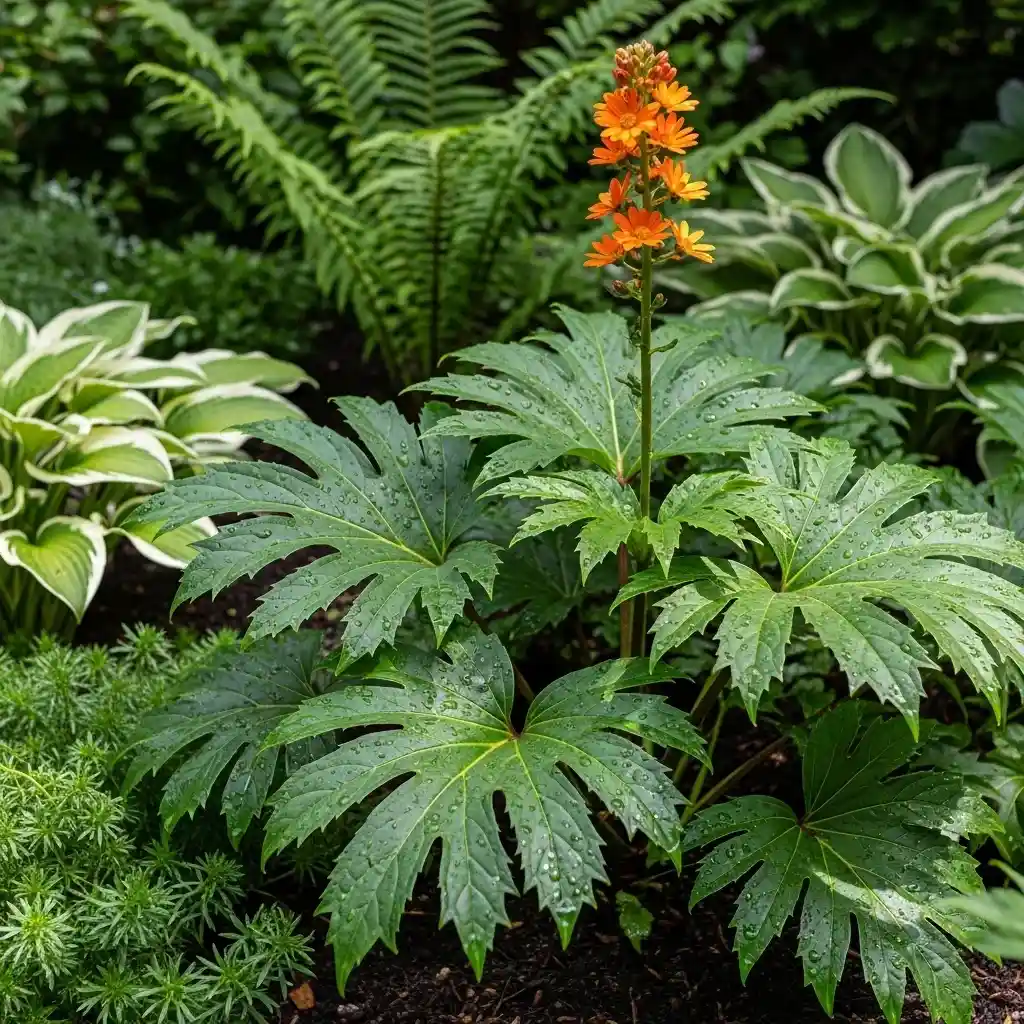
Ligularia wilts dramatically during heat and drought though recovers quickly with watering—plant where afternoon shade prevents excessive heat stress. The towering flower spikes attract butterflies while bold leaves create architectural interest. This statement plant suits yard ideas outdoor space requiring dramatic focal points in moist shaded areas.
Care Guide: Plant in partial shade with consistently moist soil. Fertilize in spring. Mulch to retain moisture. Position away from afternoon sun preventing wilting.
| Feature | Details |
|---|---|
| Light Requirements | Partial Shade |
| Height | 3-5 feet |
| Colors | Yellow, Orange (flowers) |
| Hardiness Zones | 4-8 |
| Special Notes | Requires consistent moisture, dramatic foliage |
20. Ajuga Carpet Groundcover
Ajuga creates dense evergreen groundcover with colorful foliage in purple, bronze, or variegated patterns and blue flower spikes in spring. These low-growing perennials spread quickly through runners forming thick carpets suppressing weeds effectively. The glossy foliage provides year-round interest while spring flowers attract pollinators.
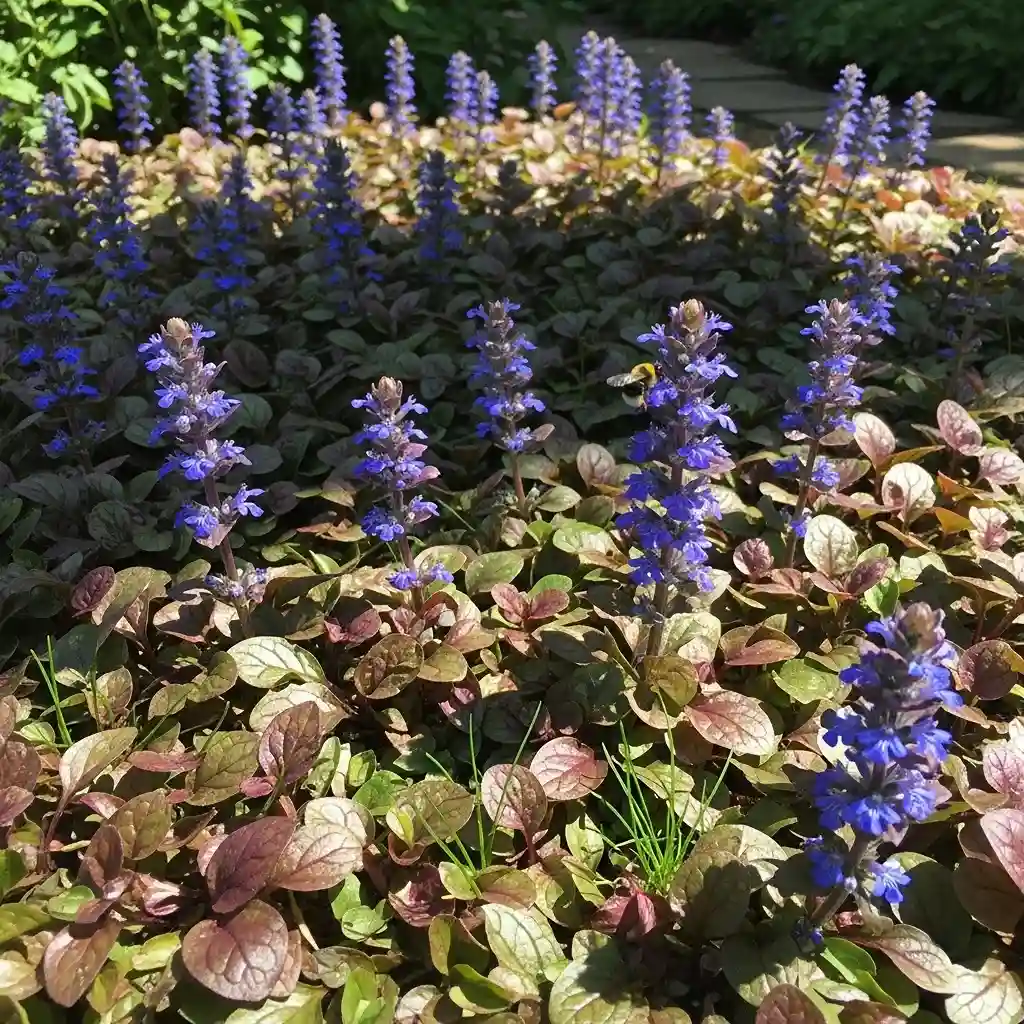
This vigorous groundcover tolerates foot traffic better than many alternatives suiting pathways and lawn replacements. The fast-spreading nature requires monitoring preventing invasion into adjacent beds. Ajuga works beautifully beneath deciduous trees where seasonal light changes suit its adaptable nature throughout changing conditions.
Care Guide: Plant in partial shade to sun with average soil. Trim after flowering. Fertilize lightly in spring. Control spread through regular edging maintaining desired boundaries.
| Feature | Details |
|---|---|
| Light Requirements | Partial Shade to Sun |
| Height | 4-6 inches |
| Colors | Blue, Purple (flowers) |
| Hardiness Zones | 3-10 |
| Special Notes | Evergreen, spreads rapidly |
21. Pulmonaria Colorful Leaves
Pulmonaria (lungwort variation) offers spotted foliage in silver and green creating year-round interest while blue, pink, or white flowers bloom among earliest spring perennials. These reliable shade plants tolerate dry shade once established while providing foliage texture rivaling any ornamental. The silver spotting brightens dark garden areas throughout growing seasons.
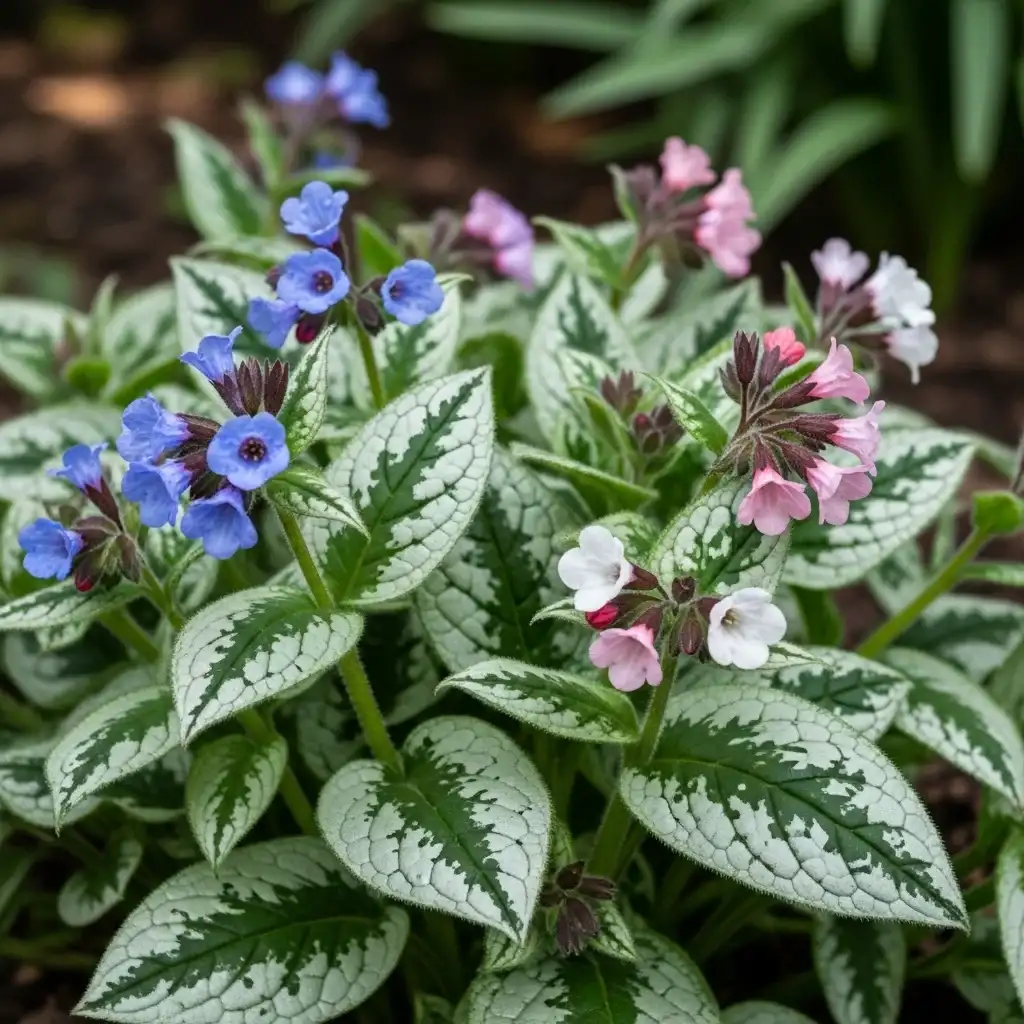
Modern disease-resistant cultivars maintain attractive foliage without powdery mildew problems plaguing older varieties. Pulmonaria suits small garden ideas where year-round interest from single plants proves most valuable in limited spaces. The multi-season appeal justifies prominent placement in visible shade garden locations.
Care Guide: Plant in partial to full shade with average soil. Remove spent flowers and old leaves after blooming. Fertilize lightly in spring supporting healthy growth.
| Feature | Details |
|---|---|
| Light Requirements | Partial to Full Shade |
| Height | 10-15 inches |
| Colors | Blue, Pink, White (flowers) |
| Hardiness Zones | 3-8 |
| Bloom Time | Early Spring |
22. Trillium Native Woodland
Trillium produces distinctive three-petaled flowers in white, pink, or burgundy creating ephemeral woodland displays in spring. These native wildflowers emerge, bloom, and go dormant within weeks providing brief but memorable beauty. The characteristic three leaves arranged around single flowers create recognizable forms beloved by wildflower enthusiasts.
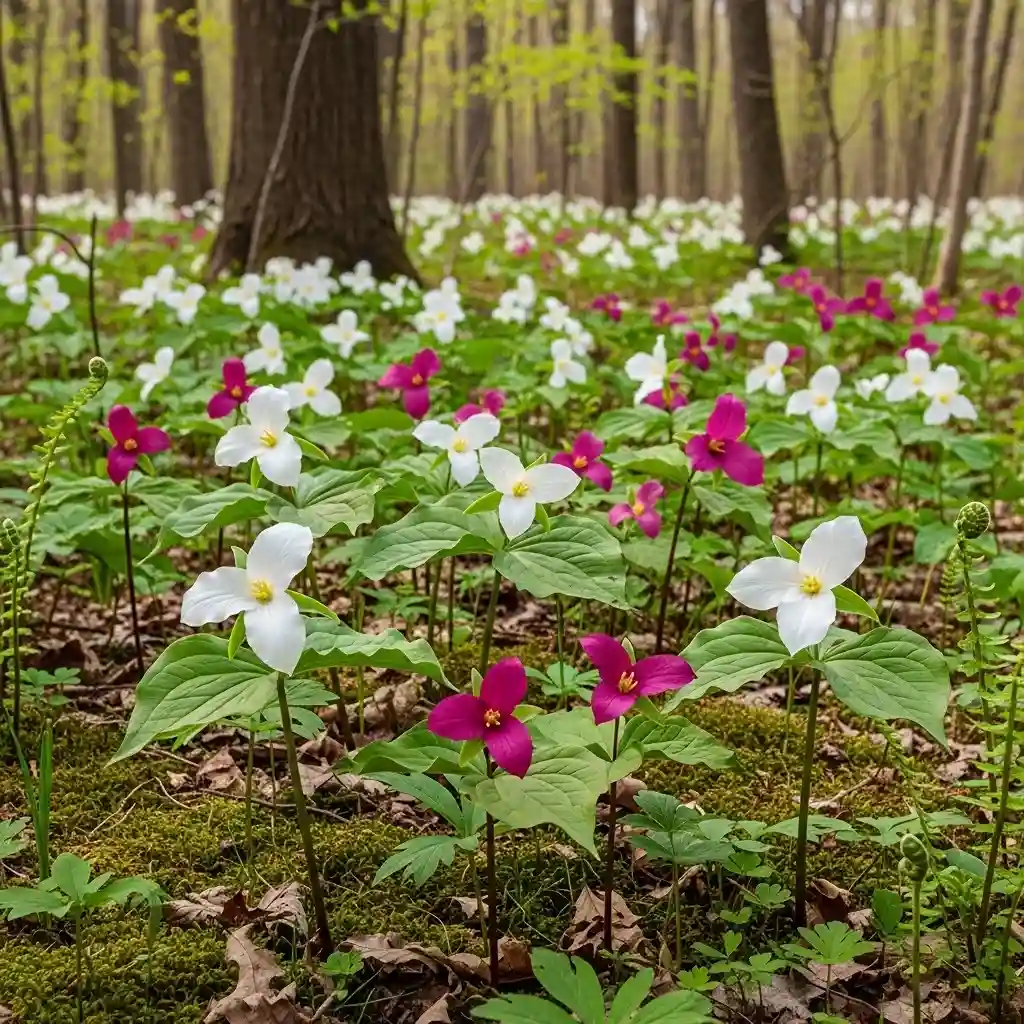
These slow-growing perennials require patience establishing over years before forming colonies. Never collect trilliums from wild—purchase nursery-propagated specimens supporting ethical practices. Their presence indicates healthy woodland garden ecology. These natives support wildlife while creating naturalistic beauty impossible to replicate with cultivated species.
Care Guide: Plant in partial to full shade with rich, organic soil. Mulch with leaf litter. Allow completely undisturbed growth. Fertilize with compost in fall.
| Feature | Details |
|---|---|
| Light Requirements | Partial to Full Shade |
| Height | 6-18 inches |
| Colors | White, Pink, Burgundy |
| Hardiness Zones | 4-9 |
| Bloom Time | Spring (April-May) |
23. Bergenia Elephant Ears
Bergenia produces large, glossy, rounded leaves resembling elephant ears while pink, white, or magenta flowers bloom in early spring. These semi-evergreen perennials tolerate challenging conditions including dry shade, clay soil, and cold temperatures. The leathery foliage turns burgundy-red in winter providing seasonal color variation.
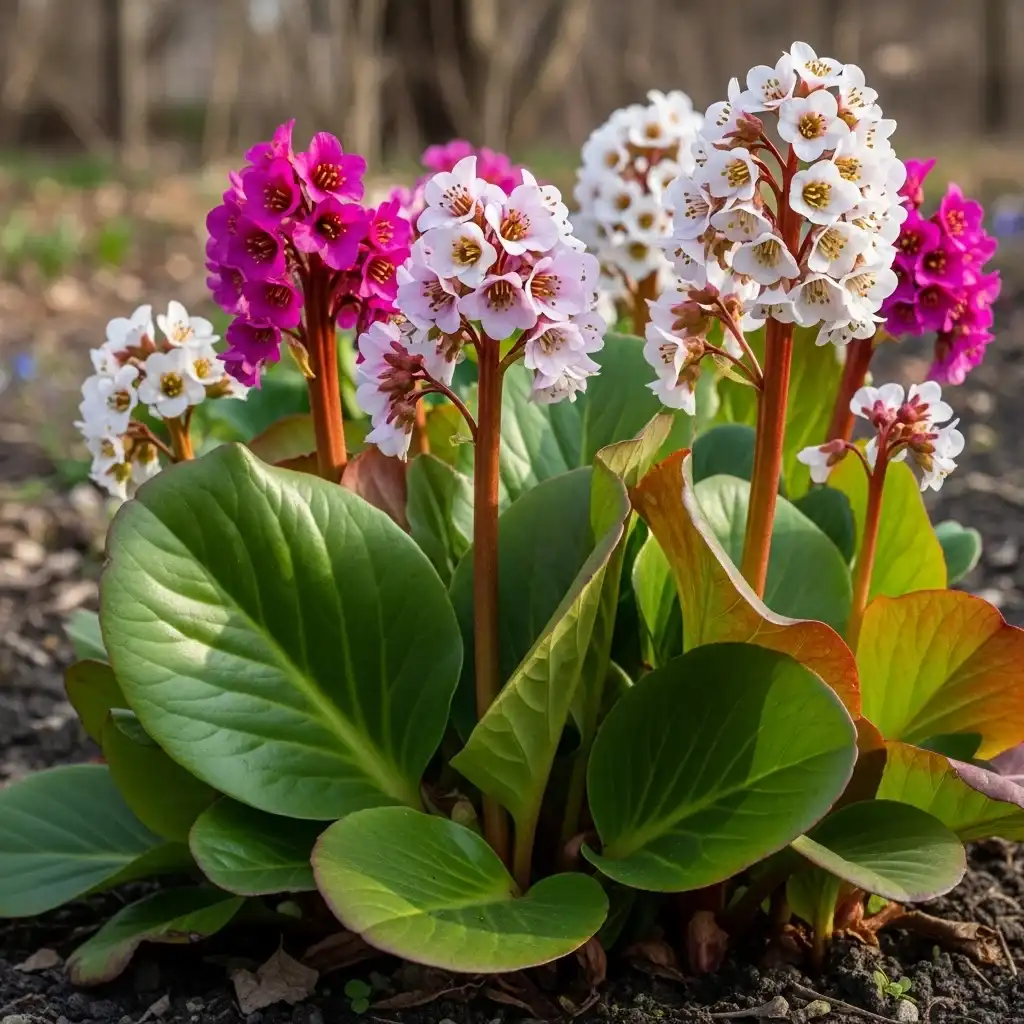
The bold leaves create strong textural contrasts alongside fine-textured companions like ferns and grasses. Bergenia tolerates neglect once established requiring minimal care. The early spring flowers provide nectar when sources remain scarce. This tough perennial works beautifully in garden wall ideas plantings softening hard masonry surfaces with organic leaf forms.
Care Guide: Plant in partial shade with average soil. Remove old leaves in spring before flowering. Fertilize lightly annually. Divide every 5-6 years maintaining vigor.
| Feature | Details |
|---|---|
| Light Requirements | Partial to Full Shade |
| Height | 12-18 inches |
| Colors | Pink, White, Magenta |
| Hardiness Zones | 3-8 |
| Bloom Time | Early Spring |
24. Cimicifuga Bugbane Tall
Cimicifuga (Actaea) produces tall fragrant white flower spikes rising 4-6 feet above bold foliage in late summer and fall. Purple-leaved varieties like ‘Brunette’ provide season-long dramatic foliage while creamy white spires create stunning vertical accents. This tall perennial creates back-of-border specimens in shaded landscapes.
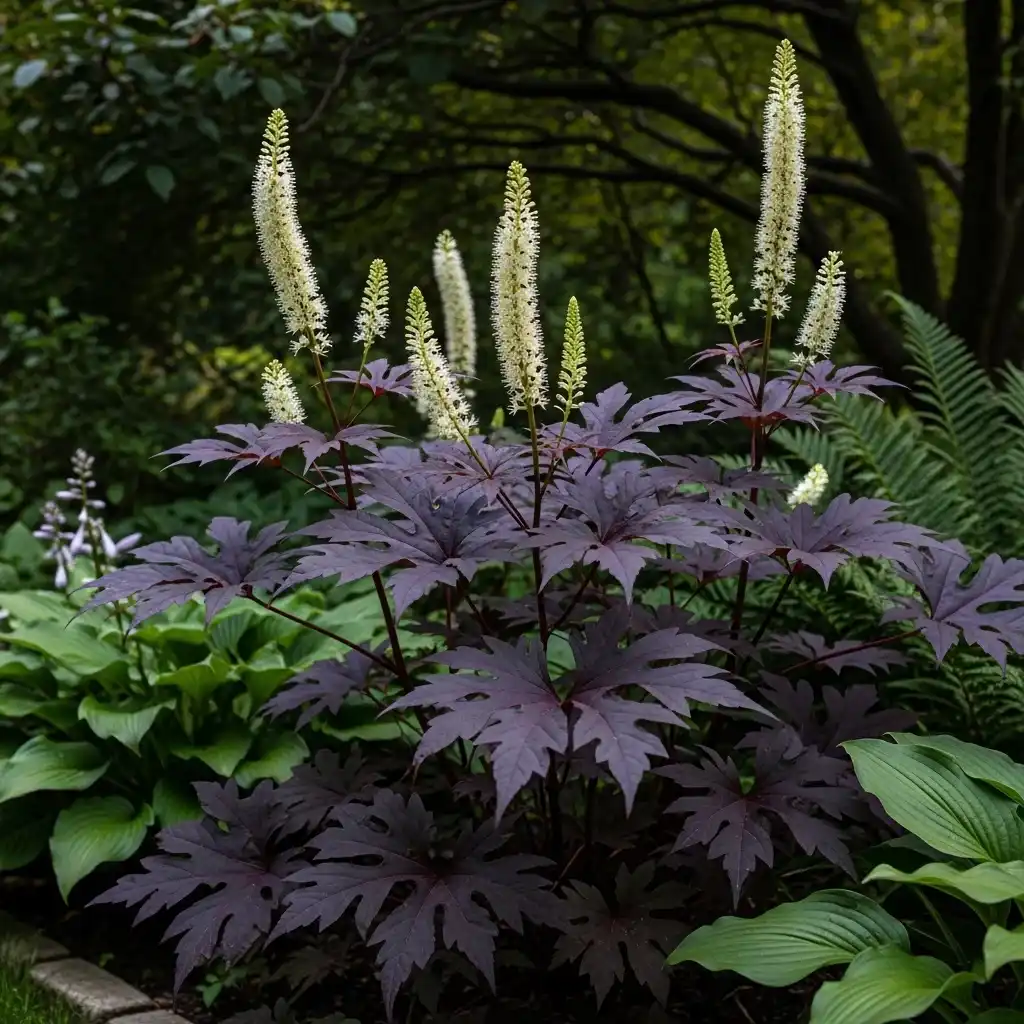
The fragrant flowers attract pollinators while bold foliage provides textural contrast throughout growing seasons. Cimicifuga requires consistently moist soil and partial shade thriving in woodland garden conditions. The vertical presence complements flowering shrubs creating multi-layered plantings combining woody and herbaceous elements effectively throughout seasons.
Care Guide: Plant in partial shade with consistently moist, rich soil. Fertilize in spring. Mulch to retain moisture. Support tall flower spikes in windy exposed locations.
| Feature | Details |
|---|---|
| Light Requirements | Partial Shade |
| Height | 4-6 feet |
| Colors | White (flowers), Green or Purple (foliage) |
| Hardiness Zones | 3-8 |
| Bloom Time | Late Summer-Fall |
25. Pachysandra Japanese Spurge
Pachysandra creates dense evergreen groundcover in partial to full shade suppressing weeds while requiring minimal maintenance. These low-growing perennials spread through underground runners forming thick mats covering large areas. Small white flowers appear in spring while plants are grown primarily for glossy foliage creating uniform carpets.
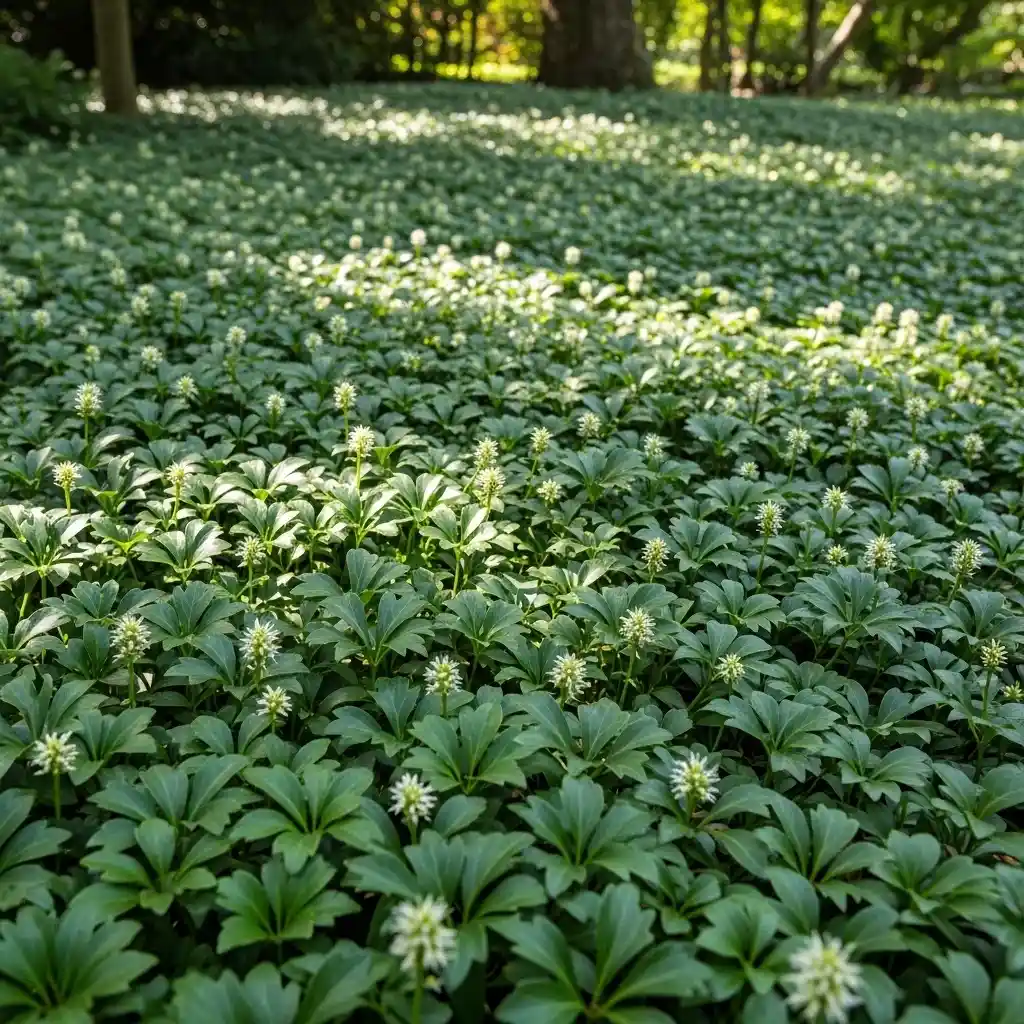
This traditional groundcover tolerates dry shade and tree root competition thriving in challenging conditions. Variegated varieties offer white-edged foliage brightening dark areas. Pachysandra suits horizontal wood fence bases creating clean groundcover that maintains soil moisture and prevents erosion along fence lines.
Care Guide: Plant in partial to full shade with average soil. Fertilize lightly in spring. Trim edges annually. Thin if overgrown preventing disease in dense plantings.
| Feature | Details |
|---|---|
| Light Requirements | Partial to Full Shade |
| Height | 6-8 inches |
| Foliage | Glossy Green, Variegated forms |
| Hardiness Zones | 4-9 |
| Special Notes | Evergreen, spreads vigorously |
26. Lamium Silver Groundcover
Lamium provides silver-variegated foliage and small pink, white, or yellow flowers creating attractive groundcovers in partial to full shade. These spreading perennials tolerate dry shade and tree root competition thriving where other groundcovers struggle. The colorful foliage brightens dark areas throughout growing seasons while flowers attract pollinators.
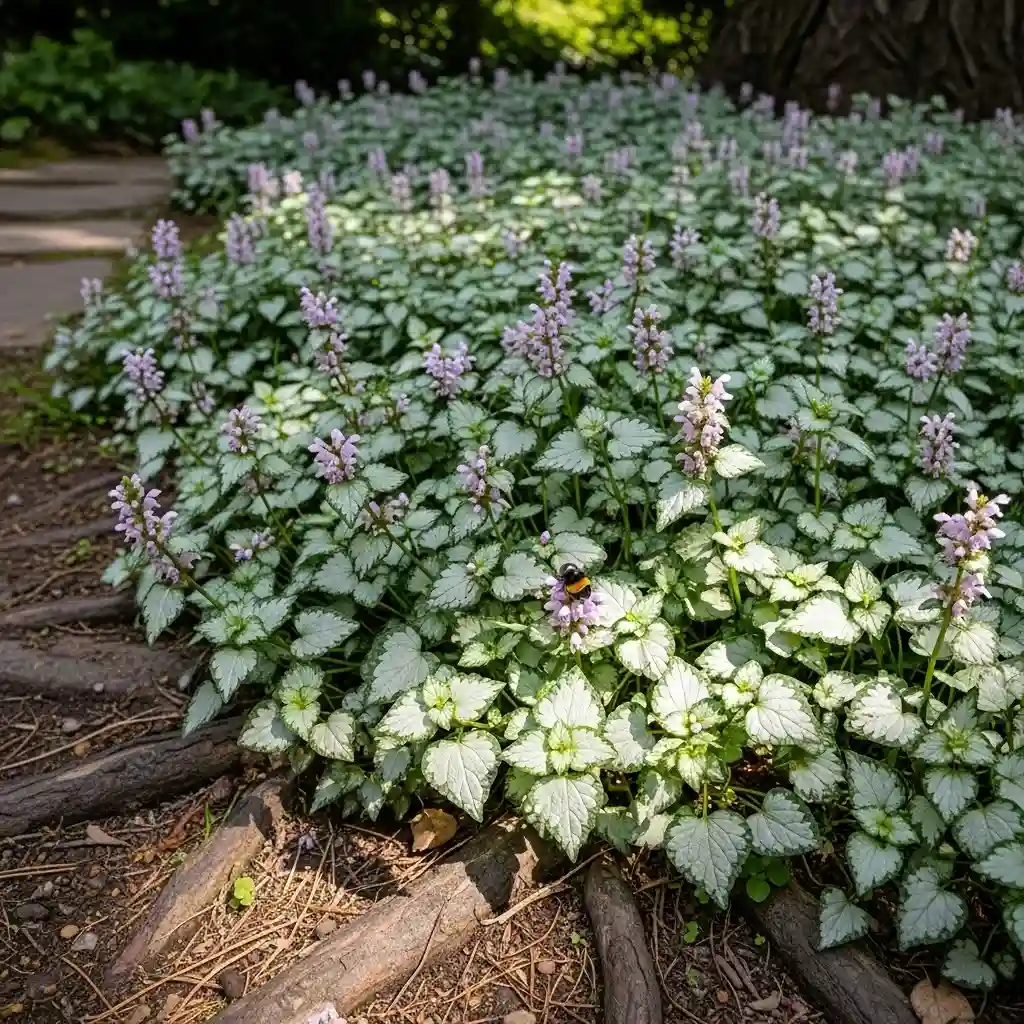
Modern cultivars offer improved growth habits and foliage patterns. The evergreen to semi-evergreen nature provides year-round coverage in mild climates. Lamium works beautifully along walkway ideas outdoor space creating defined edges where shade prevents other groundcovers from establishing successfully.
Care Guide: Plant in partial to full shade with average soil. Trim after flowering maintaining compact growth. Fertilize lightly in spring. Divide to control spread.
| Feature | Details |
|---|---|
| Light Requirements | Partial to Full Shade |
| Height | 6-12 inches |
| Colors | Pink, White, Yellow (flowers) |
| Hardiness Zones | 3-8 |
| Special Notes | Vigorous spreader, deer-resistant |
27. Oxalis Wood Sorrel
Oxalis produces clover-like foliage in green, burgundy, or purple alongside small flowers in pink, yellow, or white creating delicate displays. These low-growing perennials tolerate partial shade while the colorful foliage provides year-round interest in mild climates. The folding leaves respond to darkness closing at night and reopening in morning light.
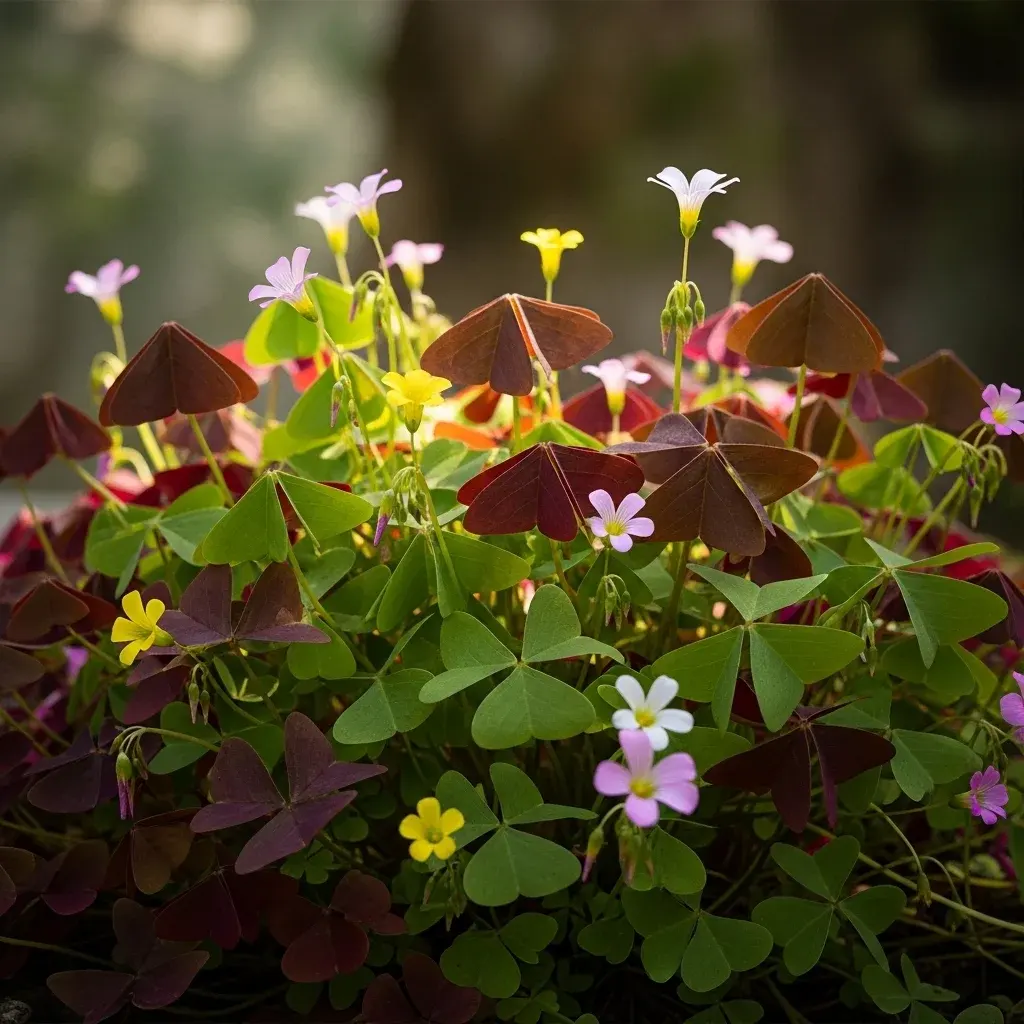
Hardy species like Oxalis oregana naturalize beautifully in woodland settings spreading slowly. The unusual foliage colors create interesting combinations with other shade perennials. This underused perennial adds novelty to vertical gardening guide concepts as hanging basket specimens cascading attractively through varied displays.
Care Guide: Plant in partial shade with average to moist soil. Fertilize lightly in spring. Divide periodically controlling spread. Some species go dormant in summer heat.
| Feature | Details |
|---|---|
| Light Requirements | Partial Shade |
| Height | 4-10 inches |
| Colors | Pink, Yellow, White (flowers) |
| Hardiness Zones | 4-9 (species dependent) |
| Special Notes | Colorful foliage, interesting leaf movement |
28. Geum Avens Bright Blooms
Geum produces bright flowers in red, orange, yellow, and pink above attractive rosettes of hairy leaves providing cheerful spring and early summer color. These compact perennials tolerate partial shade while thriving in well-drained soil. The semi-evergreen foliage persists through mild winters providing year-round structure.
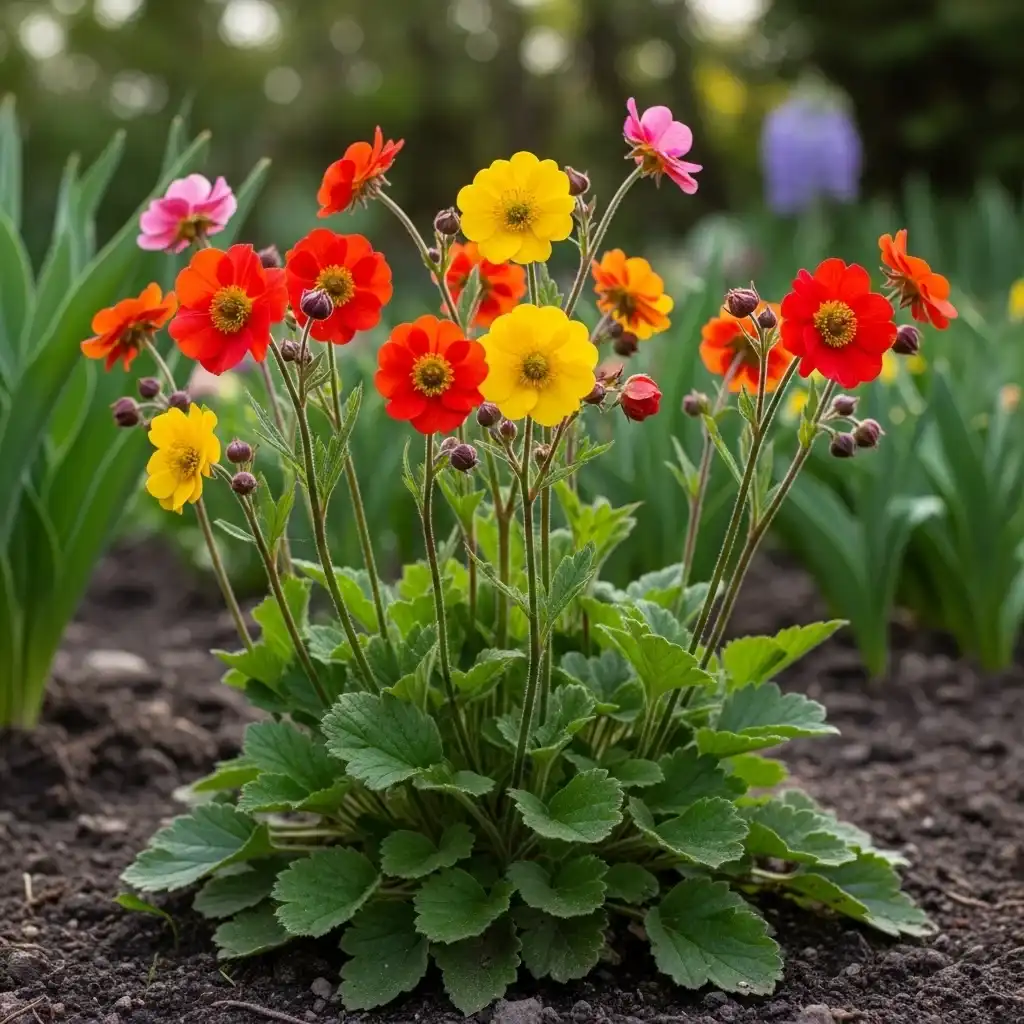
Modern cultivars offer extended blooming periods through summer with deadheading encouraging continuous flower production. The vivid colors create striking accents amid shade gardens’ typically subtle palettes. Geum works beautifully alongside coastal backyard garden guide plantings tolerating maritime conditions while providing reliable seasonal color.
Care Guide: Plant in partial shade with well-drained soil. Deadhead spent blooms encouraging continuous flowering. Fertilize in spring. Divide every 3-4 years maintaining vigor.
| Feature | Details |
|---|---|
| Light Requirements | Partial Shade to Sun |
| Height | 12-24 inches |
| Colors | Red, Orange, Yellow, Pink |
| Hardiness Zones | 5-9 |
| Bloom Time | Spring-Summer |
29. Kirengeshoma Yellow Waxbells
Kirengeshoma produces nodding pale yellow waxy flowers in late summer and fall above large maple-like leaves creating architectural woodland specimens. This uncommon perennial suits collectors and gardeners seeking distinctive plants challenging conventional shade garden designs. The bold foliage provides structural interest throughout seasons beyond flowering.
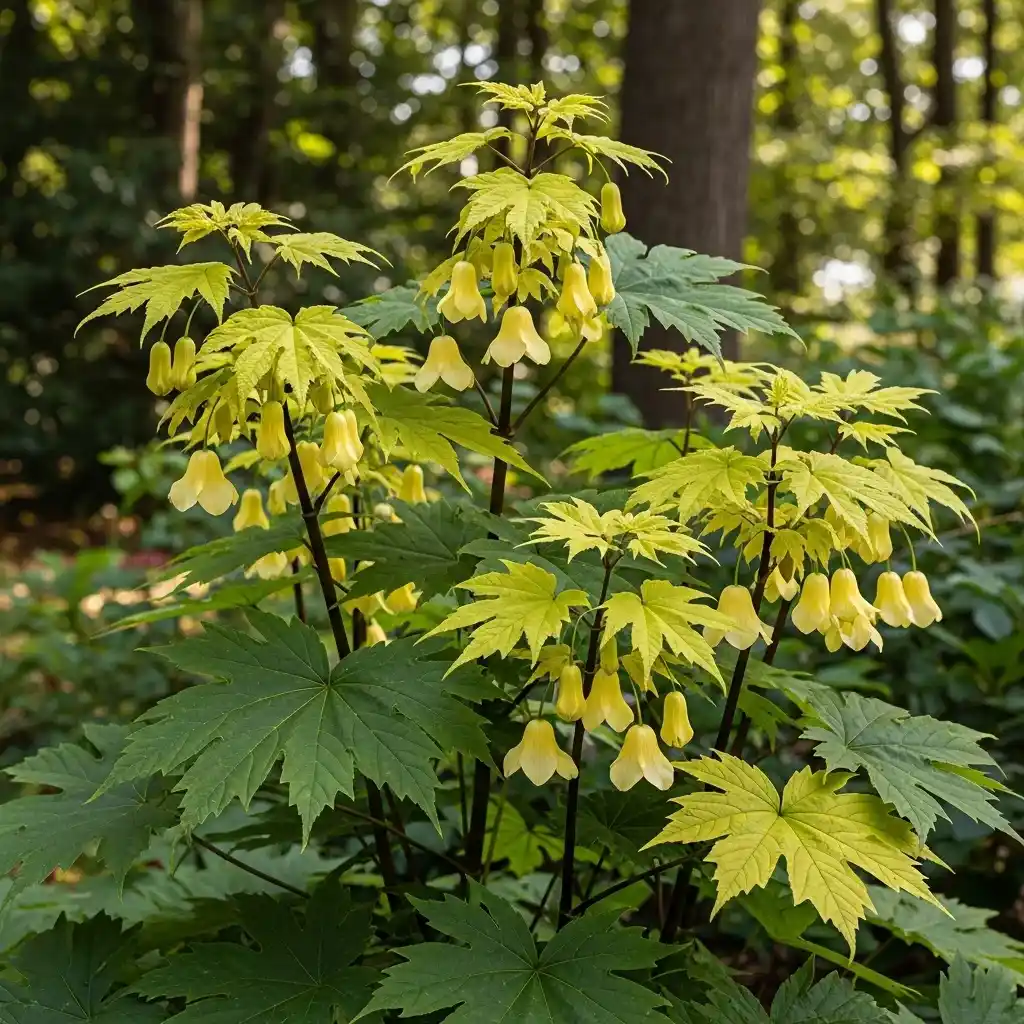
Kirengeshoma requires consistently moist, acidic soil and sheltered partial shade conditions for best performance. The late season blooming provides color when most shade perennials finish. This unusual plant creates conversation-starting focal points in pallet garden ideas using unconventional containers showcasing distinctive specimens.
Care Guide: Plant in partial shade with moist, acidic soil. Mulch heavily retaining moisture. Fertilize in spring. Protect from strong winds preventing damage to substantial leaves.
| Feature | Details |
|---|---|
| Light Requirements | Partial Shade |
| Height | 3-4 feet |
| Colors | Pale Yellow |
| Hardiness Zones | 5-8 |
| Bloom Time | Late Summer-Fall |
30. Vinca Minor Periwinkle
Vinca minor creates evergreen groundcover with glossy leaves and small blue, purple, or white flowers in spring covering large areas. This vigorous trailing perennial spreads through rooting stems forming dense mats suppressing weeds. The shiny foliage remains attractive year-round while spring flowers provide seasonal color in shaded locations.
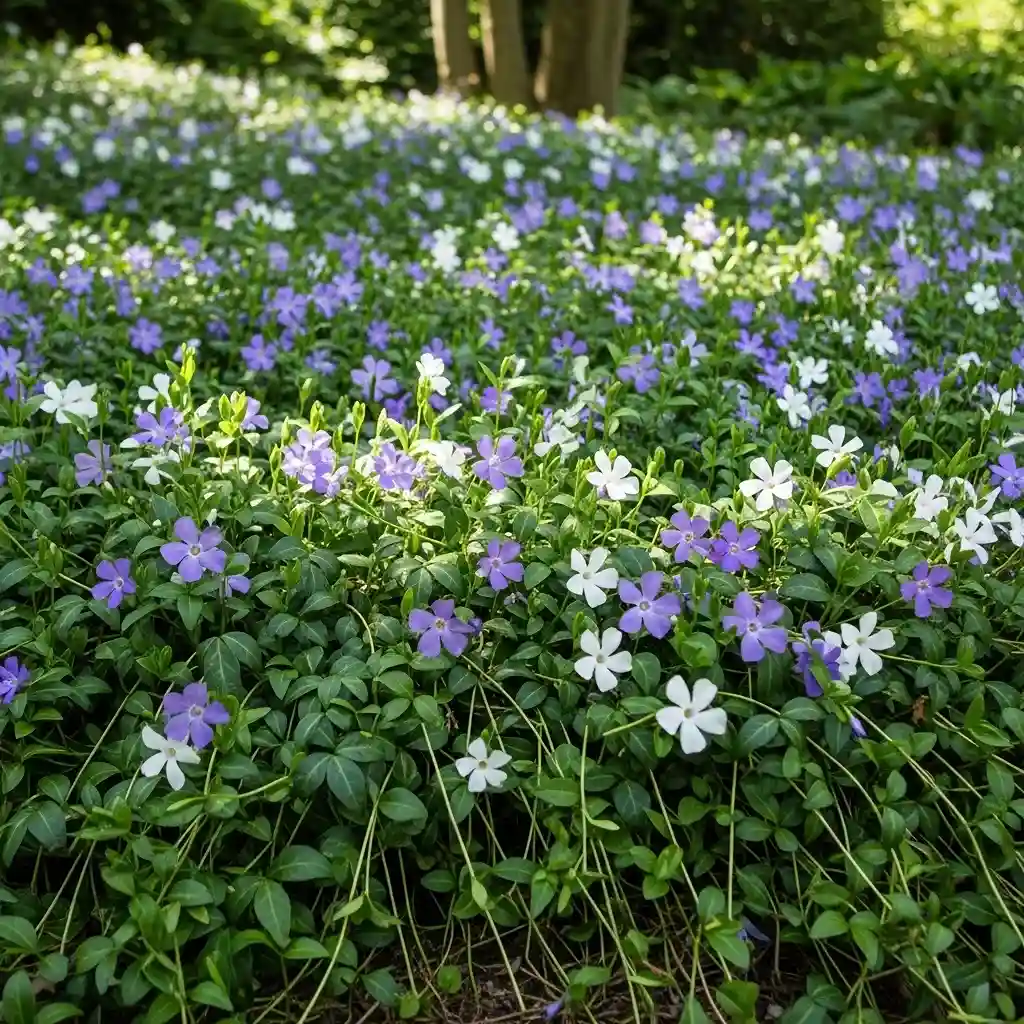
Variegated forms offer white or yellow-edged foliage brightening shaded areas throughout seasons. This traditional groundcover tolerates dry shade and tree root competition. Vinca works beautifully on banks and beneath trees while also pairing well with diy privacy fences creating naturalistic bases softening fence foundations with cascading evergreen growth.
Care Guide: Plant in partial to full shade with average soil. Trim annually maintaining boundaries. Fertilize lightly in spring. Thin if overgrown preventing woody bare patches.
| Feature | Details |
|---|---|
| Light Requirements | Partial to Full Shade |
| Height | 4-6 inches |
| Colors | Blue, Purple, White |
| Hardiness Zones | 4-9 |
| Special Notes | Evergreen, low maintenance |
Frequently Asked Questions
What are the easiest shade perennials for beginners?
Hostas, liriope, pachysandra, vinca, and ajuga provide foolproof shade gardening success requiring minimal expertise. These adaptable plants tolerate various conditions while maintaining attractive appearances throughout seasons. Start with these reliable performers building confidence before introducing more demanding species.
How do I improve soil in shaded areas for perennials?
Amend soil with compost, leaf mold, or aged manure improving drainage and fertility. Apply 2-3 inches of organic mulch annually enriching soil as it decomposes. Many shade perennials prefer acidic soil benefiting from pine needle mulch or sulfur applications lowering pH for optimal performance.
Can shade perennials grow under dense evergreen trees?
Dense shade presents significant challenges but epimedium, pachysandra, wild ginger, and vinca minor tolerate these conditions. Improve soil by removing competing surface roots and amending with organic matter. Even the most shade-tolerant plants benefit from some seasonal light penetration supporting photosynthesis.
How do I create year-round interest in shade gardens?
Combine early spring bloomers like hellebores and lungwort with summer astilbes and hostas, then add fall interest from toad lilies and hardy begonias. Include evergreen species like liriope and pachysandra providing winter structure. This layered approach ensures continuous visual interest throughout entire years.
Conclusion
Shade perennials transform challenging low-light areas into thriving, beautiful garden spaces celebrating nature’s quieter aesthetic and unique botanical adaptations. Understanding specific shade conditions—partial, full, or dense—ensures selecting appropriate plants thriving rather than merely surviving in given light levels. These specialized perennials have evolved displaying remarkable beauty while requiring surprisingly modest care once properly established.
Successful shade perennial gardens combine varied foliage textures, contrasting heights, and staggered bloom times creating dynamic displays maintaining interest throughout growing seasons. Mixing evergreen groundcovers with deciduous perennials and seasonal bloomers ensures year-round appeal while incorporating native species supports local wildlife ecosystems. The reduced maintenance compared to sun gardens makes shade perennial gardening particularly rewarding for busy homeowners seeking beautiful low-maintenance landscapes.
Embrace shaded garden areas as opportunities rather than limitations, selecting plants suited to specific conditions while celebrating shade gardening’s distinctive beauty and tranquil character. With proper plant selection and basic care, those challenging dark corners beneath trees, along north walls, and under overhangs transform into thriving showcase gardens providing cool peaceful retreats throughout hot summers while demonstrating sophisticated design sensibilities celebrating plants evolved for life in nature’s beautiful, dappled shadows.