A woodland garden captures the most magical and serene qualities of the forest floor, creating a cool, dappled, endlessly beautiful outdoor space where shade-loving plants thrive and wildlife flourishes in extraordinary, self-sustaining abundance throughout every season.
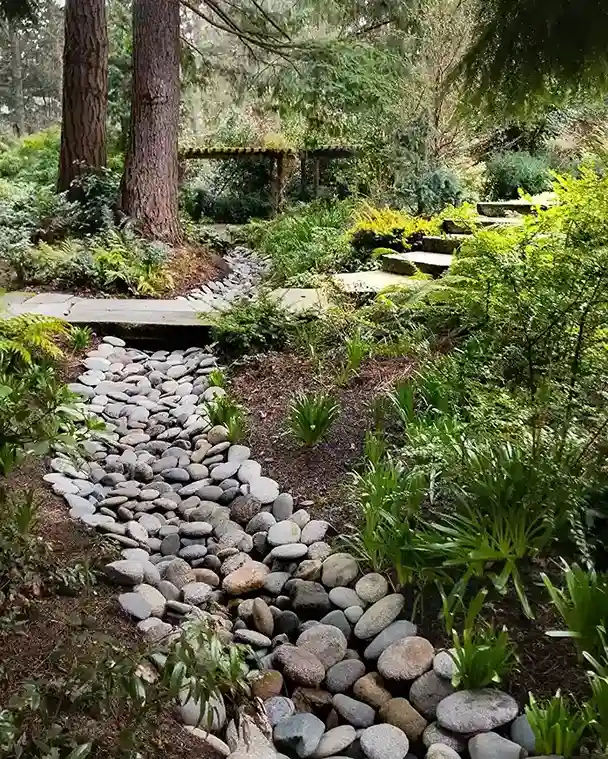
Source: @powellswood
Whether you have an established tree canopy or are starting from scratch with young trees, these 25 inspiring woodland garden ideas will help you create an enchanting natural space of genuine beauty using our backyard landscaping ideas guide.
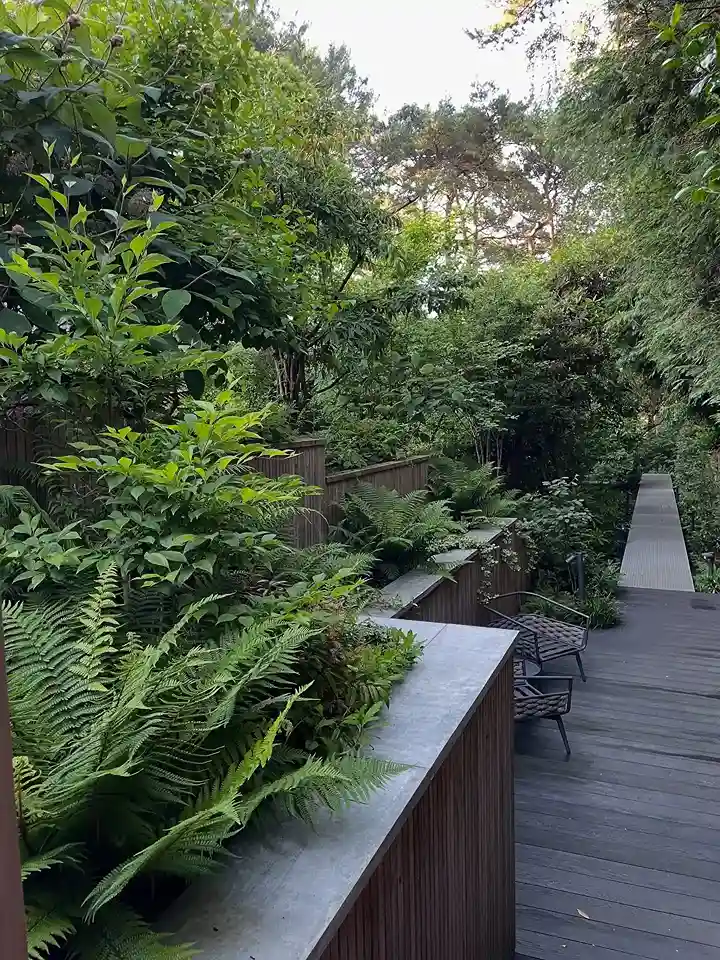
Source: @tomhillgardendesign
1. Bluebell Woodland Carpet
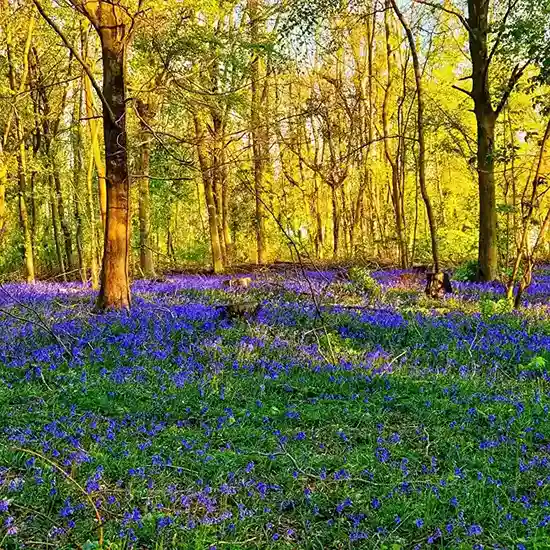
A bluebell woodland carpet is one of the most breathtakingly beautiful and quintessentially woodland garden features achievable in any garden, creating a sea of vivid violet-blue flowers beneath a leafing deciduous canopy that looks genuinely wild, ancient, and extraordinarily romantic in late spring.
Source: @phil_g_t
Plant native bluebells in generous drifts of at least fifty bulbs beneath deciduous trees each autumn, allowing them to naturalise and spread freely year after year into an ever-wider and more spectacular spring flowering display. For more spring bulb planting and shade garden combinations, our shade perennials guide covers the best spring-flowering woodland bulbs and their ideal growing conditions in excellent, practical detail.
| Feature | Details |
|---|---|
| Best Bluebell Species | Native English bluebell (Hyacinthoides non-scripta) |
| Planting Time | Autumn — September to November |
| Minimum Drift Size | 50 bulbs for meaningful visual impact |
| Best Position | Beneath deciduous trees in dappled shade |
| Naturalising | Spreads freely — increases in beauty every year |
| Estimated Cost | $15–$50 for initial bulb investment |
2. Woodland Fern Border
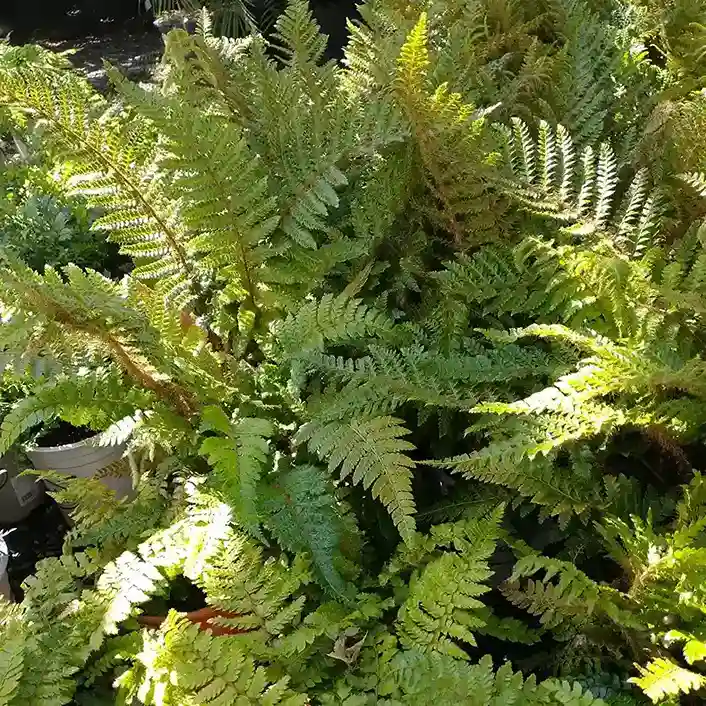
A woodland fern border planted with a rich collection of fern species in every size, texture, and shade of green creates one of the most beautifully serene and primordially ancient garden features available, its layered, arching fronds filling shaded spaces with extraordinary lush, verdant beauty.
Source: @forgetmenots_alongtheway
Mix evergreen and deciduous ferns for year-round interest — the architectural winter silhouettes of evergreen polystichum and the fresh, bright spring unfurling of deciduous lady ferns create a fern border that looks completely different and equally beautiful in every season. For the best fern species for woodland garden borders, our shade plants guide covers every outstanding fern variety with full growing guidance in comprehensive, inspiring detail.
| Feature | Details |
|---|---|
| Best Evergreen Ferns | Polystichum setiferum, Polypodium vulgare |
| Best Deciduous Ferns | Lady fern, male fern, sensitive fern |
| Best Dramatic Ferns | Tree fern, royal fern, ostrich fern |
| Soil | Moisture-retentive, humus-rich, slightly acidic |
| Difficulty Level | Beginner |
| Estimated Cost | $50–$200 for a generous fern collection |
3. Woodland Pathway
A winding woodland pathway of bark chippings, reclaimed timber rounds, or irregular flat stones set into the ground creates a beautifully naturalistic journey through a woodland garden that feels discovered rather than designed, inviting exploration and quiet contemplation at every meandering turn.
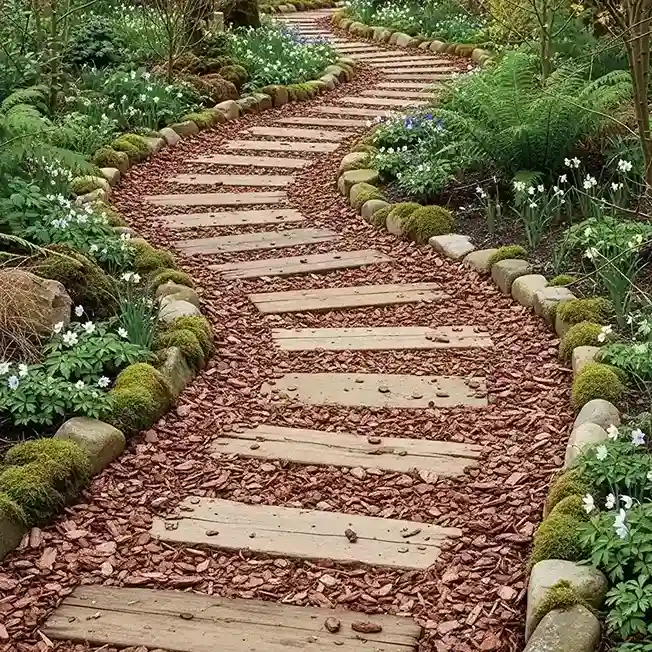
Edge the woodland path with low fern planting, moss-covered stones, and occasional drifts of wood anemones and primroses for a pathway that feels as though it genuinely belongs to the woodland rather than having been imposed upon it. For more woodland path design and planting ideas, our walkway ideas for outdoor spaces guide covers natural woodland path construction and companion planting in beautiful, practical detail.
| Feature | Details |
|---|---|
| Best Path Materials | Bark chippings, timber rounds, reclaimed flat stones |
| Best Edge Plants | Ferns, mosses, wood anemones, primroses |
| Path Style | Winding, curved — never straight |
| Path Width | 24–36 inches for comfortable walking |
| Difficulty Level | Beginner |
| Estimated Cost | $20–$80 |
4. Stumpery Feature
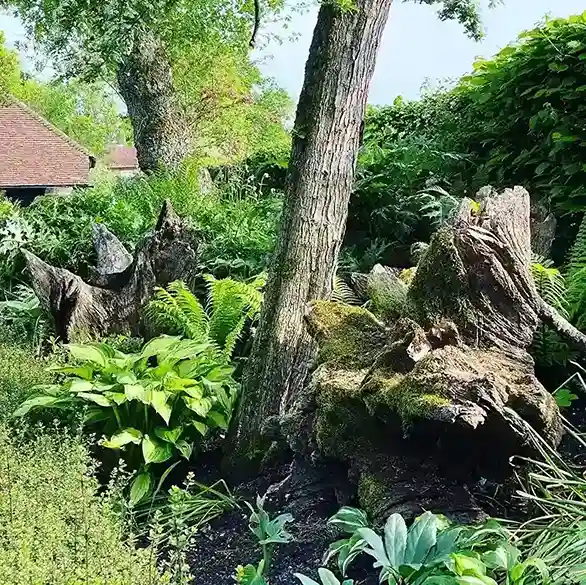
A woodland stumpery garden using upturned tree root systems and weathered timber stumps arranged as dramatic sculptural features creates one of the most original, atmospheric, and ecologically valuable elements a woodland garden can contain, establishing an instantly ancient and genuinely magical woodland character.
Plant generously around and between the timber forms with hostas, ferns, mosses, and woodland wildflowers for a stumpery that grows more beautiful, biodiverse, and atmospheric with every passing season.
Source: @thewellingtonarms
For comprehensive stumpery design and planting guidance, our yard ideas for outdoor spaces guide covers woodland feature design and naturalistic garden structures in inspiring, practical detail.
| Feature | Details |
|---|---|
| Best Timber | Oak, beech, sweet chestnut root systems |
| Best Companion Plants | Hostas, ferns, mosses, primroses, wood anemones |
| Timber Source | Tree surgeons — often free |
| Wildlife Value | Outstanding — supports 1,000+ invertebrate species |
| Difficulty Level | Beginner to intermediate |
| Estimated Cost | $30–$150 for plants plus free timber |
5. Woodland Wildflower Planting
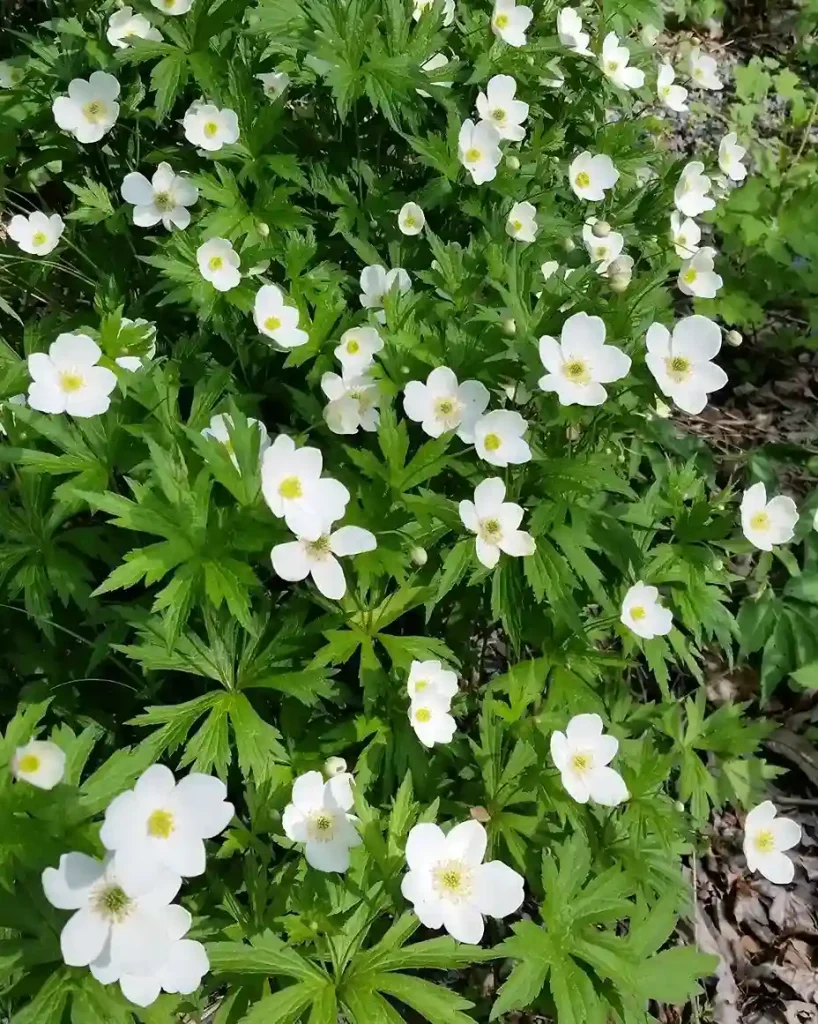
A woodland wildflower planting of native shade-loving flowers — wood anemones, wild garlic, primroses, wood sorrel, and lesser celandine — creates a beautifully natural, seasonally spectacular ground layer that transforms the floor of any wooded garden area into a carpet of exquisite, ever-changing beauty.
Source: @americanmeadows
Allow woodland wildflowers to self-seed and spread freely between established plantings, embracing the spontaneous beauty that makes a woodland wildflower garden feel genuinely wild rather than cultivated or managed in any heavy-handed way. For more naturalistic woodland planting and wildflower garden ideas, our cottage garden ideas guide covers woodland wildflower planting combinations in beautifully romantic, practical detail.
| Feature | Details |
|---|---|
| Best Woodland Wildflowers | Wood anemone, wild garlic, primrose, wood sorrel |
| Planting Style | Generous drifts — allow to self-seed freely |
| Best Season | Spring peak — late February through May |
| Soil | Leaf-mould-rich, moisture-retentive woodland soil |
| Difficulty Level | Beginner |
| Estimated Cost | $20–$80 for initial plant and seed investment |
6. Canopy Tree Planting
Planting a small grove of canopy trees — silver birch, rowan, wild cherry, or alder — creates the essential dappled shade framework around which every other element of a woodland garden is designed, establishing a living woodland structure that improves and matures with every growing decade.
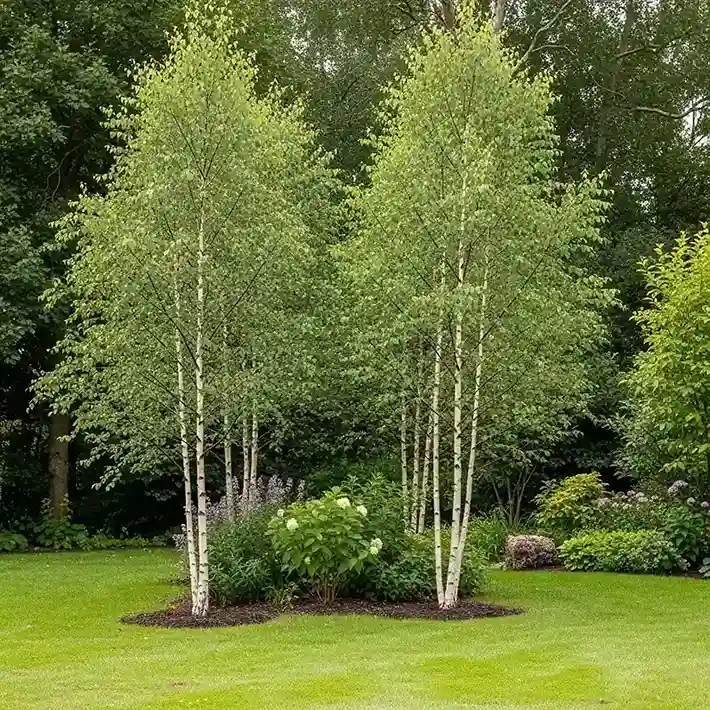
Silver birch is the most popular choice for smaller garden woodland canopies, its elegant white bark, delicate leaf canopy, and fast-establishing nature making it the ideal founding tree for any new woodland garden creation. For tree selection and grove planting advice, our tree landscaping ideas guide covers canopy tree planting and woodland grove establishment in comprehensive, practical detail.
| Feature | Details |
|---|---|
| Best Canopy Trees | Silver birch, rowan, wild cherry, alder, field maple |
| Best for Small Gardens | Silver birch, rowan — narrow, elegant, fast-growing |
| Planting Spacing | 15–20 feet apart for developing canopy |
| Best Buying Time | Bare-root in winter for lowest cost |
| Difficulty Level | Beginner |
| Estimated Cost | $100–$500 for grove planting |
7. Moss Garden Feature
A woodland moss garden cultivated on stones, old timber, and shaded soil patches creates a beautifully serene, jewel-green feature of extraordinary softness and ancient character that perfectly captures the cool, damp, meditative atmosphere of an old-growth forest floor throughout the entire year.
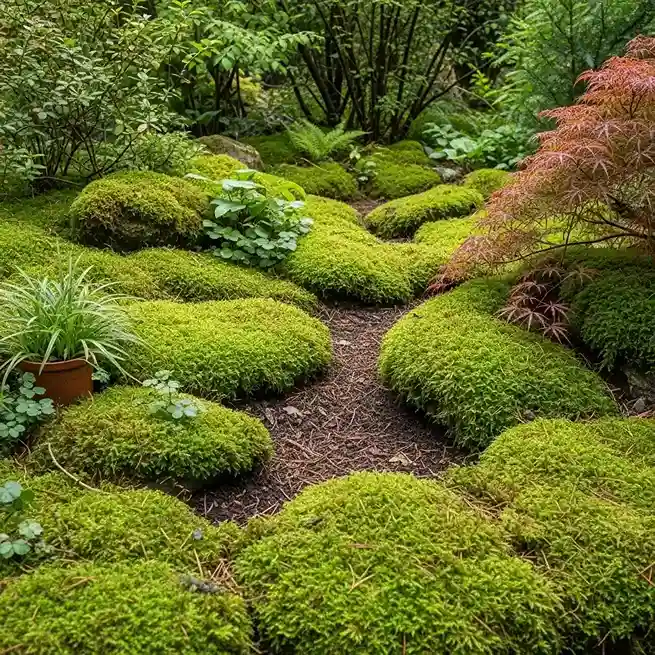
Encourage moss establishment by removing competing grass, keeping surfaces consistently moist, and painting shaded stone surfaces with a live moss and yoghurt blend to accelerate natural moss colonisation across the entire feature area. For more shade garden planting and naturalistic garden feature ideas, our shade plants guide covers moss garden companions and woodland floor planting beautifully.
| Feature | Details |
|---|---|
| Best Moss Types | Cushion moss, sheet moss, star moss, sphagnum |
| Best Surfaces | Shaded stone, timber, compacted woodland soil |
| Establishment Method | Moss and yoghurt blend on consistently damp surface |
| Best Conditions | Consistently moist, shaded, still air |
| Difficulty Level | Beginner |
| Estimated Cost | $0–$20 for establishment |
8. Shade Shrub Understorey
A layered shade shrub understorey planting of rhododendrons, camellias, mahonias, and skimmias beneath the canopy trees creates the essential structural middle layer of a woodland garden, filling the critical height zone between ground plants and canopy with beautiful, flowering, and often fragrant evergreen structure.
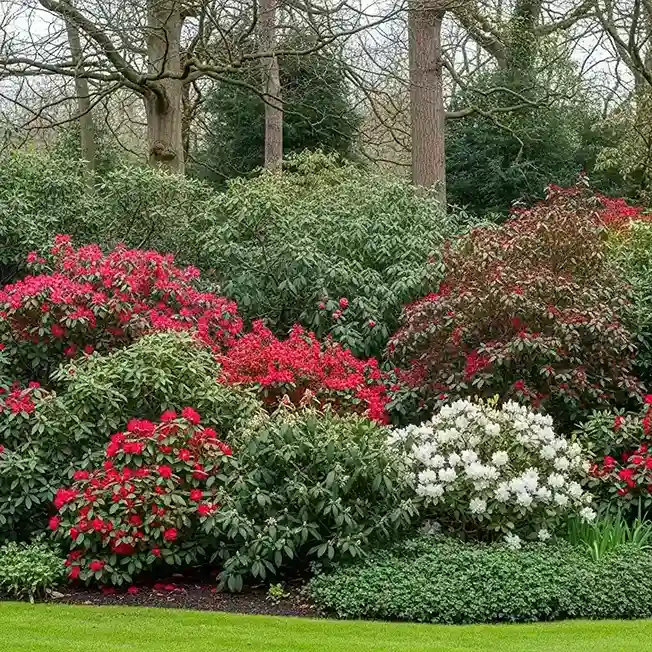
Choose a mix of spring-flowering and autumn-berrying shade shrubs to ensure the woodland understorey layer delivers colour, fragrance, and wildlife value across as many months of the year as possible. For the best shade-tolerant shrubs for woodland understorey planting, our shade shrubs guide covers every outstanding variety in comprehensive, practical detail.
| Feature | Details |
|---|---|
| Best Spring Shrubs | Rhododendron, camellia, viburnum, pieris |
| Best Autumn Shrubs | Mahonia, skimmia, aucuba, holly |
| Planting Spacing | 3–5 feet apart for understorey coverage |
| Soil | Humus-rich, slightly acidic for most woodland shrubs |
| Difficulty Level | Beginner |
| Estimated Cost | $150–$600 for understorey planting |
9. Woodland Hosta Collection
A curated woodland hosta collection planted in generous drifts beneath tree canopies creates one of the most dramatically beautiful and easily achieved shade garden features available, the enormous diversity of hosta leaf forms, colours, and sizes allowing for an extraordinarily rich and visually complex planting from a single plant genus.
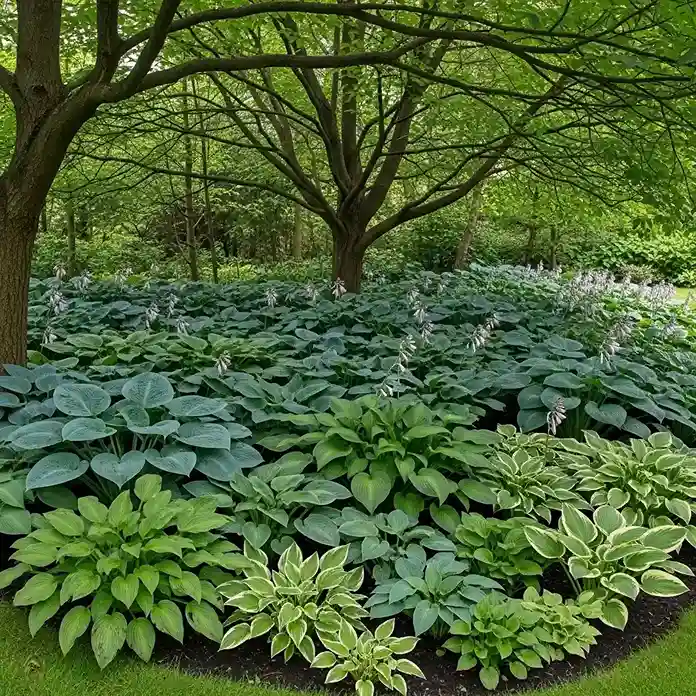
Layer giant hostas as bold anchor plants, medium varieties as generous infill, and miniature hostas as detailed foreground planting for a hosta woodland display of extraordinary depth and visual sophistication. For the best hosta selections for woodland garden displays, our shade perennials guide covers every outstanding hosta variety in excellent, detailed guidance.
| Feature | Details |
|---|---|
| Best Giant Hostas | Sum and Substance, Empress Wu, Sagae |
| Best Medium Hostas | Halcyon, June, Francee, Frances Williams |
| Best Miniature Hostas | Blue Mouse Ears, Pandora’s Box, Cameo |
| Soil | Moisture-retentive, humus-rich woodland soil |
| Difficulty Level | Beginner |
| Estimated Cost | $80–$400 for a curated collection |
10. Woodland Wildlife Garden
A woodland wildlife garden designed specifically to maximise ecological value — with a wildlife pond, log piles, a native hedgerow boundary, bird and bat boxes, and a rich understorey of berry-producing and nectar-rich plants — creates one of the most biodiverse and ecologically important garden habitats achievable.
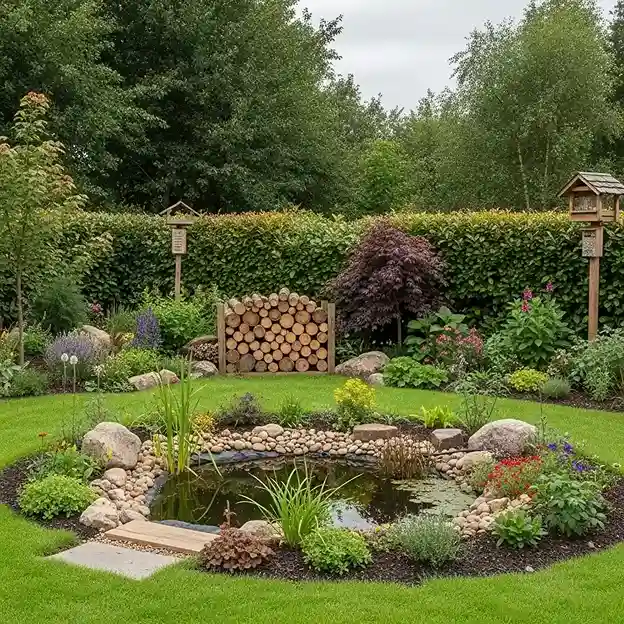
Every element of a woodland wildlife garden serves multiple wildlife functions simultaneously, from the log pile supporting thousands of invertebrates to the pond providing breeding habitat for frogs, newts, and dragonflies throughout the warmer months. For more wildlife-friendly garden habitat feature ideas, our yard ideas for outdoor spaces guide covers woodland wildlife garden design in caring, comprehensive detail.
| Feature | Details |
|---|---|
| Key Features | Pond, log pile, hedgerow, bird boxes, bat boxes |
| Best Wildlife Plants | Holly, hawthorn, elder, ivy, native wildflowers |
| Target Wildlife | Birds, bats, hedgehogs, frogs, invertebrates |
| Maintenance Level | Very low — leave areas undisturbed |
| Wildlife Value | Exceptional — supports complete food web |
| Estimated Cost | $100–$500 |
11. Fairy Garden Woodland Feature
A fairy garden woodland feature nestled beneath tree roots, beside mossy logs, and among woodland wildflower planting creates the most perfectly atmospheric and convincingly magical fairy garden setting imaginable, the natural woodland environment lending an irresistible authenticity to every tiny detail.
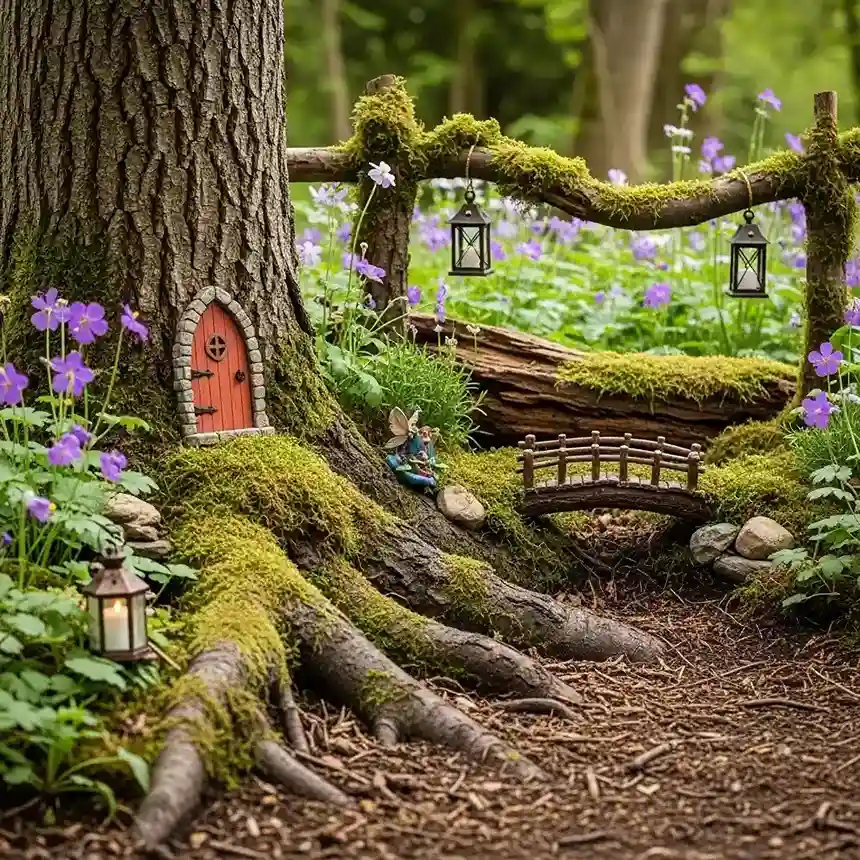
Tiny fairy doors fixed to tree trunks at root level, miniature bridges spanning moss-covered logs, and small lanterns hanging from low branches create a fairy woodland of extraordinary enchantment. For more magical fairy garden ideas and creative accessory inspiration, our fairy garden ideas guide is endlessly creative and wonderfully inspiring for woodland fairy features.
| Feature | Details |
|---|---|
| Best Fairy Locations | Tree trunk bases, mossy logs, between root systems |
| Best Accessories | Tiny doors, miniature bridges, hanging lanterns |
| Best Plants | Miniature hostas, moss, baby ferns, wood violets |
| Best Position | Shaded, sheltered corner — mysterious atmosphere |
| Difficulty Level | Beginner |
| Estimated Cost | $20–$80 |
12. Autumn Colour Woodland Garden
An autumn colour woodland garden planted with Japanese maples, liquidambars, rowans, and Amelanchier creates a breathtaking seasonal display of fiery reds, burning oranges, and golden yellows beneath the woodland canopy that transforms the garden into a spectacular autumn landscape of extraordinary, fleeting beauty.
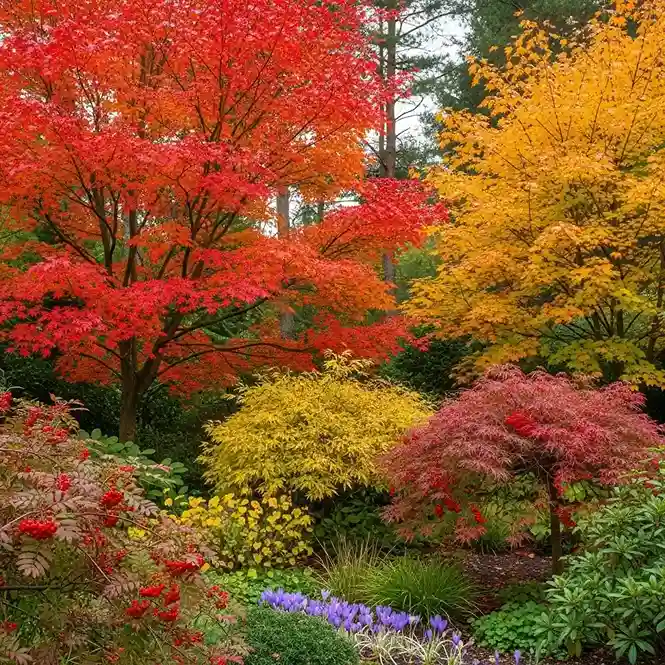
Underplant autumn-colouring canopy trees with late-season woodland perennials — autumn crocus, colchicums, and the vivid red berries of native shrubs — for a woodland autumn display that layers colour from ground level to canopy height. For more autumn colour tree and shrub selections, our tree landscaping ideas guide covers autumn colour woodland planting in comprehensive, inspiring detail.
| Feature | Details |
|---|---|
| Best Autumn Trees | Japanese maple, liquidambar, rowan, Amelanchier |
| Best Autumn Shrubs | Euonymus, fothergilla, Viburnum opulus, sorbus |
| Best Understorey | Autumn crocus, colchicums, cyclamen |
| Peak Season | October to November |
| Difficulty Level | Beginner |
| Estimated Cost | $200–$800 |
13. Woodland Water Feature
A naturalistic woodland water feature — a wildlife pond edged with mossy stones and moisture-loving plants, or a gently trickling stream running between fern-covered banks — adds the magical combination of sound, movement, and ecological richness that transforms any woodland garden from beautiful to truly extraordinary.
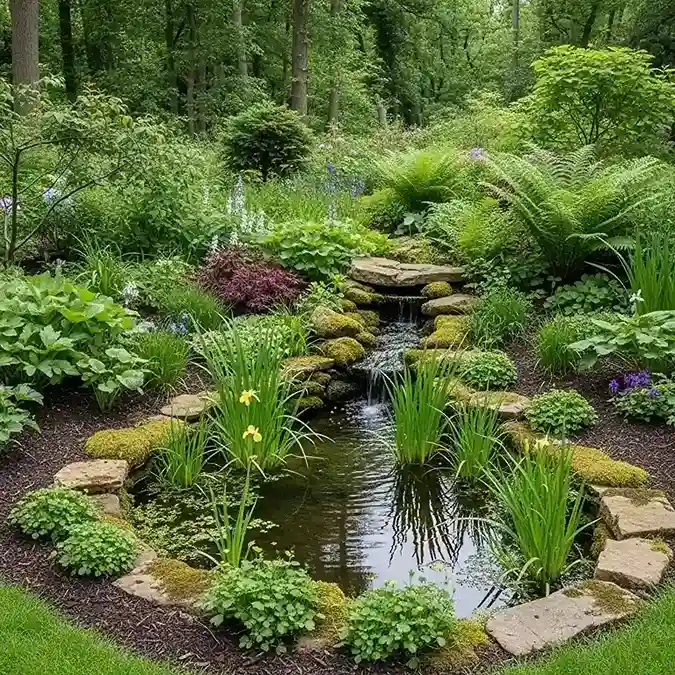
Excavate a shallow pond in the lowest point of the woodland garden, edge it with reclaimed stone and plant the margins with water iris, marsh marigold, and rushes for a completely naturalistic woodland water feature. For the best aquatic and marginal plants for a woodland pond, our water plants guide covers woodland pond planting in comprehensive, inspiring detail.
| Feature | Details |
|---|---|
| Best Water Features | Wildlife pond, bog garden, woodland stream |
| Best Marginal Plants | Water iris, marsh marigold, rushes, primulas |
| Best Edge Plants | Ferns, mosses, hostas, astilbes |
| Pond Size | Minimum 6 square feet for wildlife value |
| Difficulty Level | Intermediate |
| Estimated Cost | $80–$500 |
14. Rhododendron and Azalea Woodland Walk
A woodland walk lined with rhododendrons and azaleas in every colour from white through cream, pink, coral, crimson, and deep purple creates one of the most spectacular seasonal flowering displays achievable in any garden, its peak in late April and May producing an almost overwhelmingly beautiful floral experience.
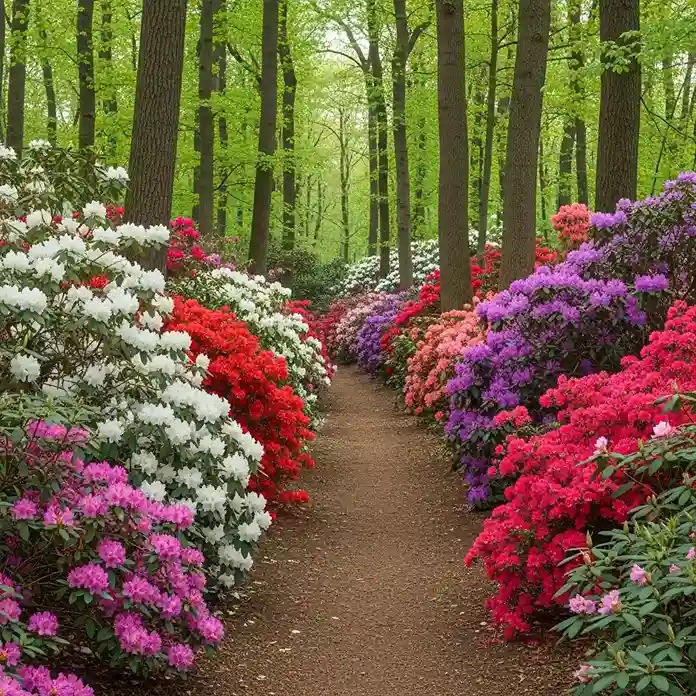
Choose a mix of early, mid-season, and late-flowering rhododendron and azalea varieties to extend the flowering display across as many weeks as possible throughout the spring season. For more flowering shade shrub selections for woodland and shade garden planting, our shade shrubs guide covers rhododendron and azalea varieties in excellent, practical detail.
| Feature | Details |
|---|---|
| Best Early Varieties | Rhododendron praecox, Azalea Palestrina |
| Best Mid Varieties | Rhododendron Loderi, Purple Splendour |
| Best Late Varieties | Azalea Homebush, Rhododendron yakushimanum |
| Soil | Acid, moisture-retentive, humus-rich |
| Difficulty Level | Beginner |
| Estimated Cost | $200–$800 for a woodland walk planting |
15. Cottage-Style Woodland Garden
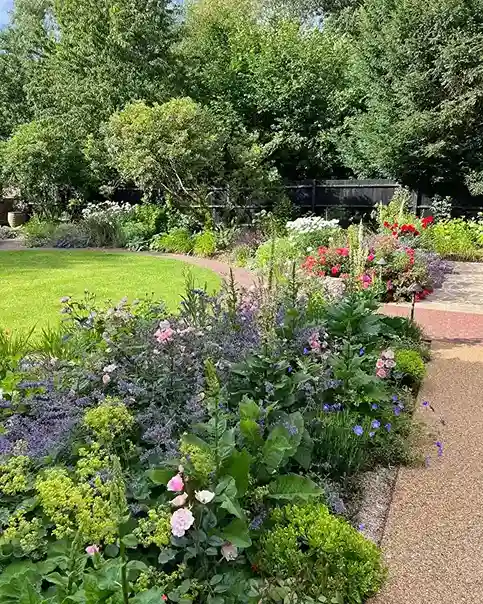
A cottage-style woodland garden blends the romantic abundance of traditional cottage planting with the cool, atmospheric qualities of a shaded woodland setting, creating a wonderfully relaxed, abundantly planted space where foxgloves, astilbes, geraniums, and roses mingle naturally beneath a light deciduous canopy.
Source: @nichoward
Allow plants to self-seed generously throughout the woodland garden, embracing the spontaneous combinations and unexpected pairings that arise when cottage garden plants are given the freedom to find their own perfect positions. For the most beautiful cottage woodland plant combinations, our cottage garden ideas guide covers cottage-style shade garden planting in wonderfully romantic, comprehensive detail.
| Feature | Details |
|---|---|
| Best Cottage Woodland Plants | Foxglove, astilbe, hardy geranium, Jacob’s ladder |
| Best Climbing Element | Rambling roses on low timber supports |
| Self-Seeding Approach | Allow all plants to seed freely |
| Light Level | Dappled to part shade |
| Difficulty Level | Beginner |
| Estimated Cost | $100–$400 |
16. Edible Woodland Garden
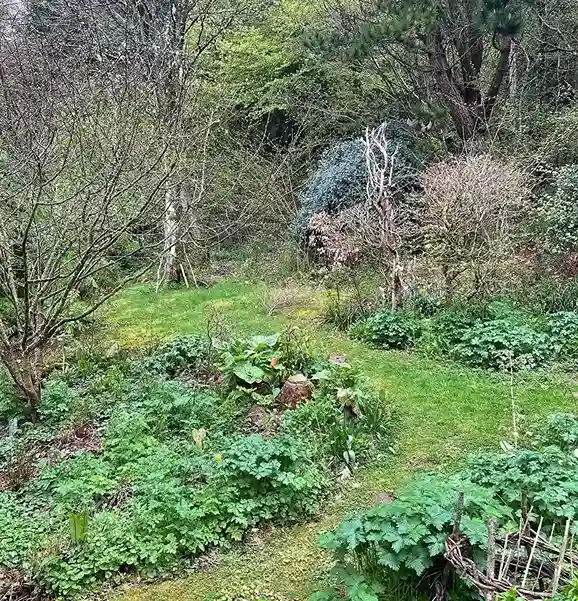
An edible woodland garden plants productive trees, shrubs, and ground-layer edibles in a structured food forest design that mimics the layers of a natural woodland while generating a continuous harvest of fruits, nuts, berries, and woodland herbs throughout every productive season of the year.
Source: @johnwelsh1
Wild garlic, wood sorrel, sweet cicely, and ramsons all grow naturally in woodland conditions and provide outstanding culinary harvests at virtually no cost or maintenance from a well-established woodland edible garden. For more food forest design and productive woodland garden guidance, our food forest guide covers edible woodland garden design in comprehensive, expert detail.
| Feature | Details |
|---|---|
| Best Canopy Edibles | Apple, pear, walnut, sweet chestnut, hazel |
| Best Shrub Edibles | Currants, gooseberry, elder, sea buckthorn |
| Best Ground Edibles | Wild garlic, wood sorrel, sweet cicely, ramsons |
| Maintenance Level | Very low once established |
| Difficulty Level | Intermediate |
| Estimated Cost | $200–$800 |
17. Woodland Rock Garden
A woodland rock garden uses carefully placed natural boulders and stone outcrops within a shaded planting of ferns, mosses, and woodland perennials to create a beautifully natural, geological character that suggests the garden has simply grown up around an existing rocky woodland landscape.
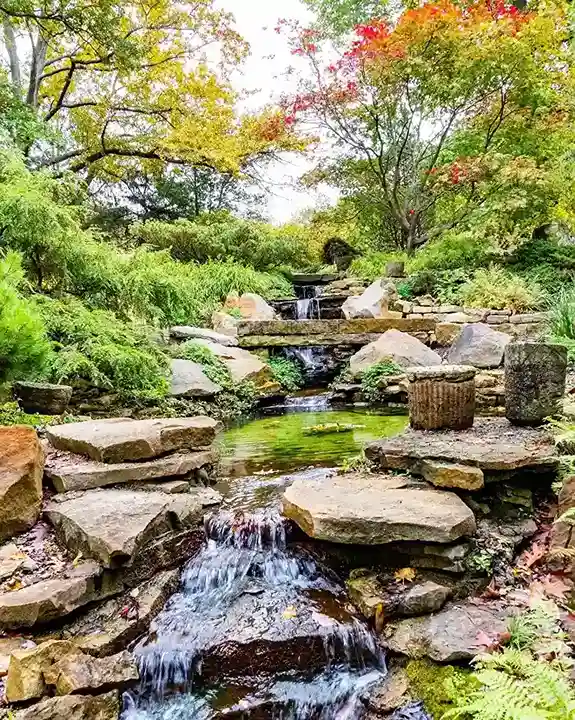
Source: @lipscer
Position larger rocks first as anchor elements, burying one-third of each stone below soil level for a settled, permanently established appearance, then plant between and around them with shade-tolerant plants that cascade naturally over stone surfaces. For more natural rock and stone garden feature ideas, our garden wall ideas covers rock garden construction and naturalistic stone feature design beautifully.
| Feature | Details |
|---|---|
| Best Stone Types | Sandstone, limestone, reclaimed fieldstone, slate |
| Best Rock Plants | Ferns, mosses, woodland violets, cyclamen |
| Stone Setting | Bury one-third below soil for natural appearance |
| Light Level | Part shade to full shade |
| Difficulty Level | Intermediate |
| Estimated Cost | $100–$400 |
18. Snowdrop Woodland Garden
A snowdrop woodland garden planted with large drifts of galanthus varieties creates an extraordinary late winter display that signals the end of the dormant season with remarkable visual impact, its delicate white nodding flowers appearing from January through to March beneath the leafless canopy.
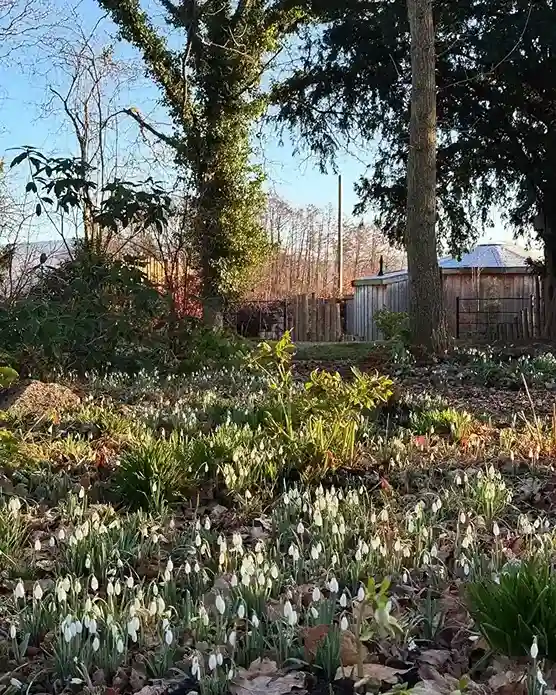
Source: @the_laundry_retreat
Collect different snowdrop varieties for an extended season of interest — early single varieties followed by double forms and then the later-flowering Galanthus elwesii and its hybrids extend the snowdrop display across many weeks. For more early spring shade bulb planting strategies, our shade perennials guide covers snowdrop and winter woodland planting in excellent, practical detail.
| Feature | Details |
|---|---|
| Best Early Varieties | Galanthus nivalis, G. elwesii |
| Best Double Varieties | Galanthus Flore Pleno, Lady Elphinstone |
| Planting Method | In the green or as dry bulbs in autumn |
| Naturalising | Spreads freely to form ever-larger drifts |
| Peak Season | January to March |
| Estimated Cost | $20–$80 for initial drift planting |
19. Woodland Seating and Retreat
Creating a simple woodland seating area — a reclaimed timber bench set beneath a tree canopy, a mossy stone seat beside a woodland path, or a hammock slung between two mature birch trees — establishes the most perfectly restorative, deeply peaceful outdoor retreat imaginable in any garden.
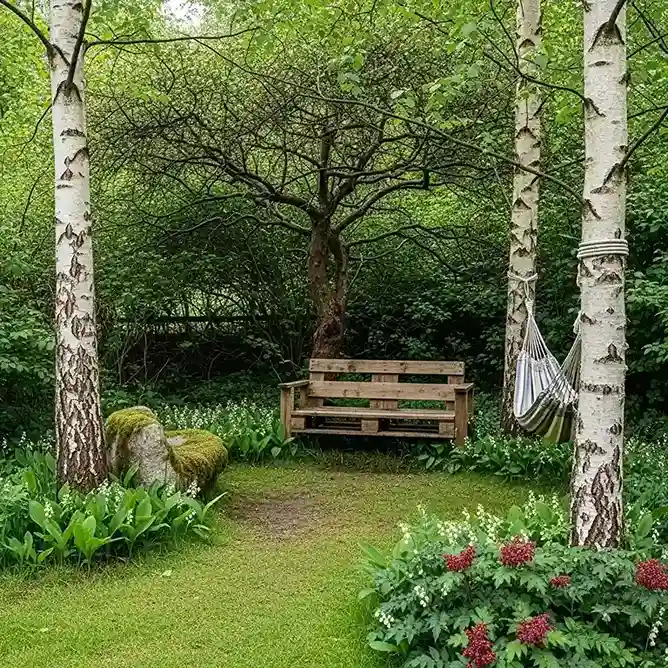
Surround the woodland seating area with the most fragrant woodland plants — lily of the valley, sweet violets, and mahonia — to create a scented sanctuary of extraordinary sensory beauty that engages every sense simultaneously. For more garden retreat and outdoor seating design ideas, our yard ideas for outdoor spaces guide covers garden seating and woodland retreat design in practical, inspiring detail.
| Feature | Details |
|---|---|
| Best Seating Options | Reclaimed timber bench, mossy log, hammock |
| Best Scented Plants | Lily of valley, sweet violet, mahonia, honeysuckle |
| Best Position | Sheltered clearing within the woodland garden |
| Atmosphere | Deeply peaceful, cool, restorative |
| Difficulty Level | Beginner |
| Estimated Cost | $50–$200 |
20. Woodland Garden for a Small Space
A small-scale woodland garden created in a shaded corner, beneath a single specimen tree, or along a north-facing boundary delivers the full atmospheric richness of a traditional woodland garden in a remarkably compact footprint that suits urban and suburban garden spaces of every size.
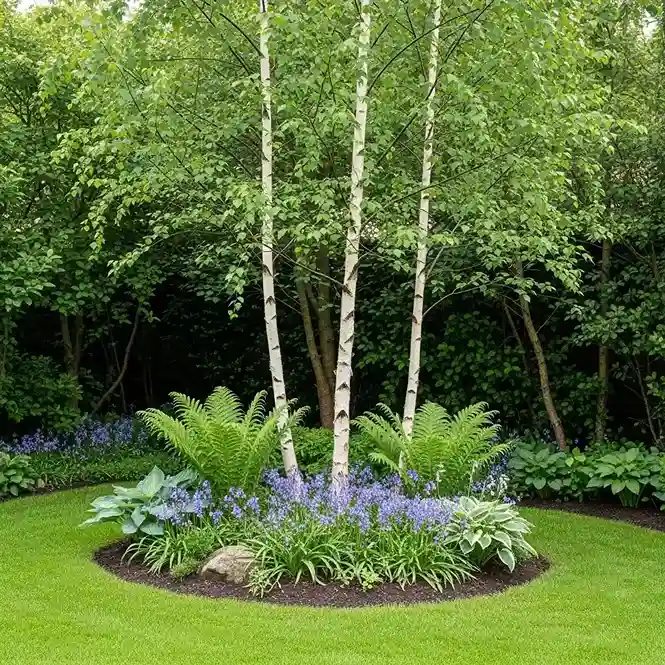
Three silver birch trees planted as a grove, underplanted with ferns, hostas, and a carpet of bluebells, creates a convincingly woodland garden experience in a space no larger than 10×10 feet. For more creative ideas on maximising small shaded garden spaces, our small garden ideas and tiny backyard ideas guides cover small woodland garden design in excellent, space-smart detail.
| Feature | Details |
|---|---|
| Minimum Space | 10×10 feet for a complete small woodland garden |
| Best Trees | 3 silver birch as grove, or single rowan |
| Best Understorey | Ferns, hostas, bluebells, wood anemones |
| Light Level | Creates its own dappled shade |
| Difficulty Level | Beginner |
| Estimated Cost | $100–$350 |
21. Bohemian Woodland Garden
A bohemian woodland garden adds eclectic, colourful, and deeply personal decorative elements — painted timber sculptures, driftwood art, crystal decorations, hanging lanterns, and wind chimes — to a naturalistic woodland planting scheme to create a forest garden of extraordinary character and free-spirited beauty.
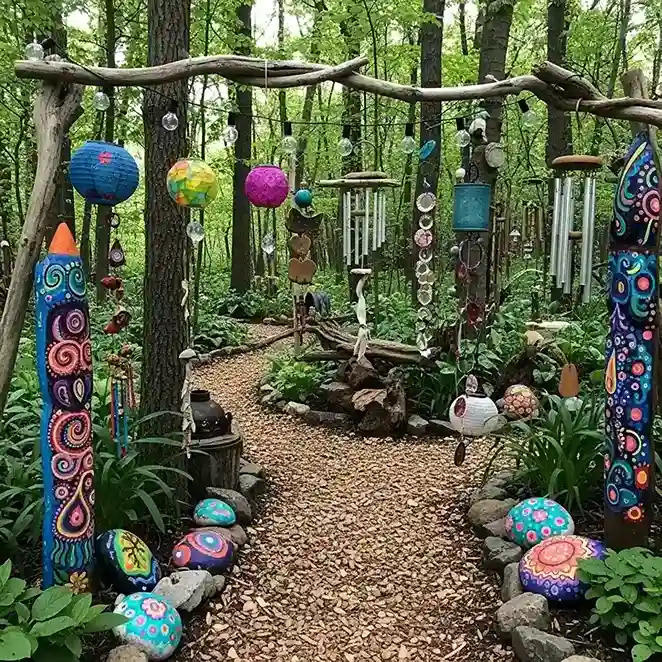
Wind strings of solar fairy lights through low branches, hang crystal prisms to cast dancing rainbows across the woodland floor, and place hand-painted stones among the planting for a bohemian woodland garden of magical, deeply individual atmosphere. For more wonderfully free-spirited outdoor design inspiration, our hippie bohemian outdoor garden guide is full of creative bohemian woodland garden feature ideas.
| Feature | Details |
|---|---|
| Best Decorations | Solar fairy lights, crystal prisms, wind chimes |
| Best Painted Features | Stones, timber sculptures, driftwood art |
| Best Plants | Wildflowers, ferns, hostas, climbing plants |
| Style | Eclectic, joyful, magical, deeply personal |
| Difficulty Level | Beginner |
| Estimated Cost | $50–$200 |
22. Woodland Garden on a Slope
A sloped garden site is one of the very best locations for a woodland garden, the natural drainage of a slope combining with the shade of a canopy planting to create excellent growing conditions for the widest possible range of woodland plants from bulbs to large shrubs.
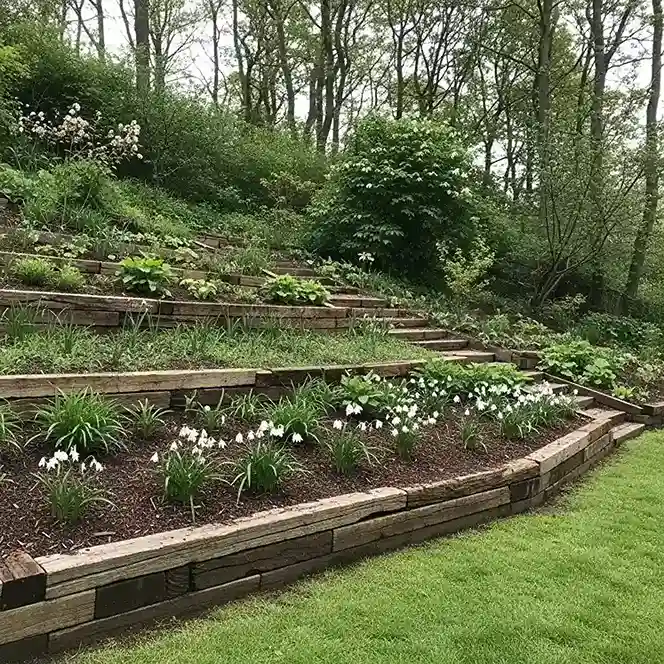
Terrace sloped woodland areas with simple reclaimed timber or log retaining edges to create level planting pockets that prevent soil erosion, retain moisture, and allow for a richer, more diverse planting scheme throughout the sloped woodland space. For more slope management and planting strategies, our sloped backyard ideas on a budget guide covers woodland garden planting on sloped sites in practical, accessible detail.
| Feature | Details |
|---|---|
| Slope Benefits | Excellent drainage, varied microclimates |
| Best Retaining Materials | Reclaimed timber, log edging, natural stone |
| Best Slope Plants | Ferns, hostas, wildflowers, ground cover perennials |
| Erosion Control | Dense ground cover planting essential |
| Difficulty Level | Intermediate |
| Estimated Cost | $150–$500 |
23. Native Woodland Garden
A native woodland garden planted exclusively with indigenous trees, shrubs, wildflowers, and ferns creates the most ecologically valuable and genuinely wildlife-supportive garden feature possible, with every plant selected specifically for its value to native insects, birds, and mammals.
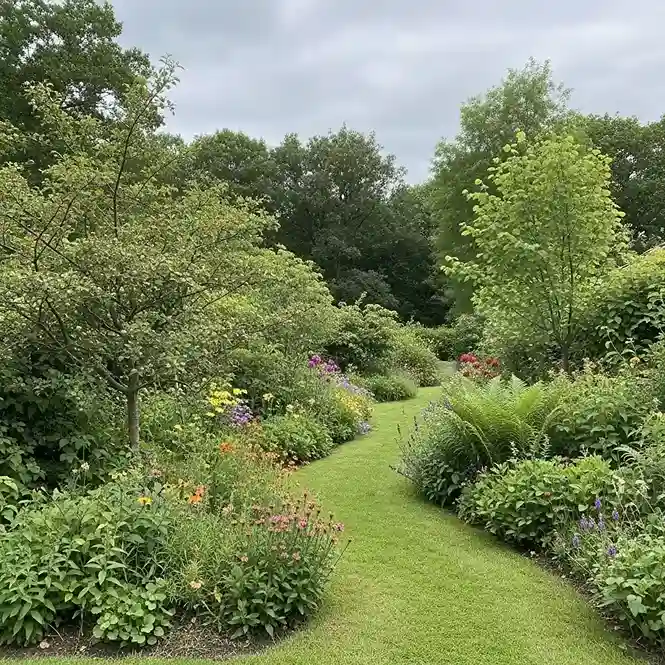
Native hawthorn, hazel, elder, and field maple provide food and shelter for hundreds of wildlife species, while native wildflowers support the specific pollinators and invertebrates that have evolved alongside them over thousands of years of shared ecological history. For the best fast-establishing native hedgerow and woodland species, our fast growing privacy shrubs guide covers native shrub and tree establishment in excellent, practical detail.
| Feature | Details |
|---|---|
| Best Native Trees | Oak, silver birch, rowan, wild cherry, hazel |
| Best Native Shrubs | Hawthorn, elder, blackthorn, dog rose, guelder rose |
| Best Native Ground Plants | Bluebells, wood anemone, primrose, wild garlic |
| Wildlife Value | Outstanding — supports complete native ecosystem |
| Difficulty Level | Beginner |
| Estimated Cost | $150–$600 |
24. Woodland Garden with Mushroom Growing
Introducing cultivated mushroom logs and inoculated stumps into a woodland garden creates a beautifully productive edible feature that delivers regular harvests of oyster, shiitake, and lion’s mane mushrooms from the same decaying timber environment that naturally supports wild fungal growth throughout the woodland floor.
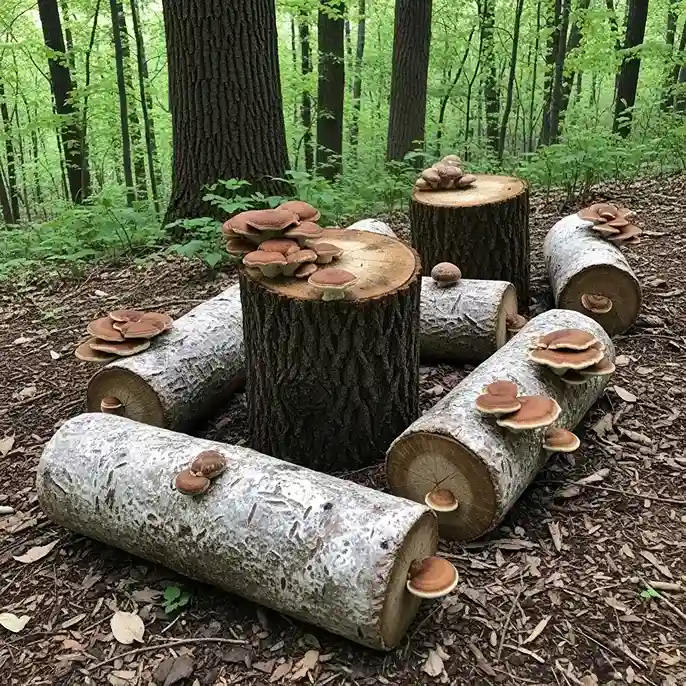
Place inoculated hardwood logs in the coolest, dampest, most sheltered section of the woodland garden and keep them consistently moist for the most productive and reliable mushroom harvests from the very first fruiting season. For more edible woodland garden and productive shade feature ideas, our food forest guide covers mushroom log cultivation and edible woodland garden design in comprehensive, expert detail.
| Feature | Details |
|---|---|
| Best Mushroom Logs | Oak, beech, alder — freshly cut hardwood |
| Best Species | Oyster, shiitake, lion’s mane |
| Best Position | Cool, damp, sheltered woodland floor |
| First Harvest | 6–12 months after inoculation |
| Maintenance Level | Low — keep logs consistently moist |
| Estimated Cost | $30–$100 for mushroom plugs |
25. Budget Woodland Garden
Creating a beautiful, richly planted woodland garden on a very tight budget is completely achievable by sourcing trees as bare-root whips in winter, growing wildflowers from seed, collecting timber from local tree surgeons, and propagating shade plants by division from established garden specimens.
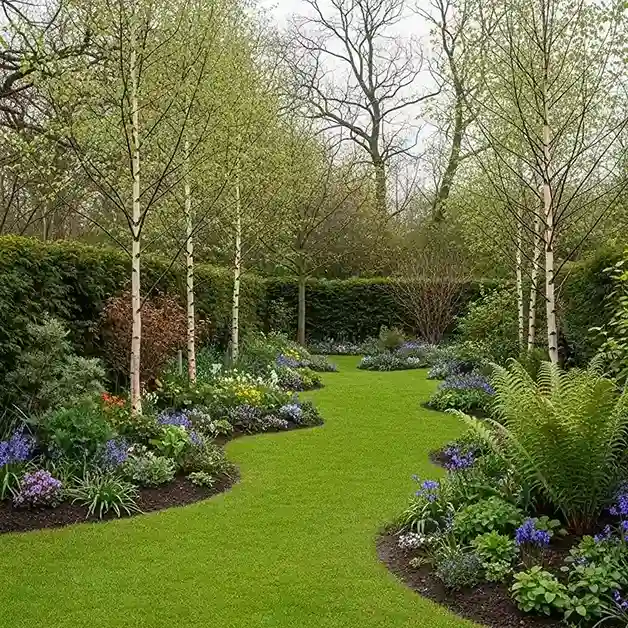
A small grove of three bare-root silver birch whips costs under $15, while a packet of bluebell seed and a handful of divided ferns can create a convincingly woodland garden planting scheme for almost nothing at all. For comprehensive budget garden transformation and affordable planting strategies, our cheap landscaping ideas guide covers budget woodland garden creation in genuinely practical, money-saving detail.
| Feature | Details |
|---|---|
| Best Budget Trees | Bare-root silver birch, rowan, hazel whips |
| Best Free Plants | Divided ferns, self-seeded foxgloves, collected moss |
| Best Budget Bulbs | Bluebell and snowdrop from seed or bulk bulbs |
| Timber Source | Free from local tree surgeons |
| Difficulty Level | Beginner |
| Estimated Cost | $30–$100 for a complete small woodland garden |
Frequently Asked Questions (FAQs)
Q1: How do I start a woodland garden from scratch?
Begin by planting three to five canopy trees as bare-root whips in winter to establish the essential shade framework, then underplant with shade shrubs, ferns, and woodland wildflowers the following spring. Our tree landscaping ideas guide covers canopy tree selection and woodland garden establishment in comprehensive, practical detail for every garden size and budget.
Q2: What are the best plants for a woodland garden?
Ferns, hostas, bluebells, wood anemones, primroses, foxgloves, astilbes, hellebores, and rhododendrons are the best woodland garden plants, all thriving in the dappled shade, humus-rich soil, and cool conditions of a well-established woodland. Our shade plants guide and shade perennials guides cover every outstanding woodland plant in comprehensive, practical detail.
Q3: Can I create a woodland garden in a small space?
Absolutely — a small grove of three silver birch trees underplanted with ferns, hostas, and spring bulbs creates a convincingly woodland atmosphere in a space as small as 10×10 feet. Our small garden ideas and tiny backyard ideas guides cover small-space woodland garden design with excellent, creative space-saving strategies throughout.
Q4: How do I maintain a woodland garden?
Woodland gardens are among the most low-maintenance of all garden styles — mulch annually with leaf mould or composted bark, remove invasive weeds promptly, and allow natural self-seeding and spreading to fill gaps organically. Our guides on eliminate ground moles and get rid of ants in your yard cover woodland garden pest management with effective, natural solutions.
Conclusion
A woodland garden is one of the most beautiful, ecologically rich, and genuinely restorative outdoor spaces any gardener can create — a living, breathing landscape that grows more beautiful, more biodiverse, and more deeply enchanting with every passing season and year.
Explore more shade garden and naturalistic planting inspiration through our guides on shade plants guide and yard ideas for outdoor spaces to begin creating your perfect woodland garden today.