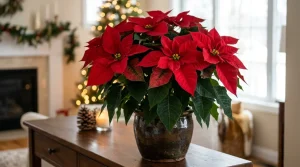
Poinsettias are the plants most people associate with the holiday season. Every November, the poinsettia plant shows up in grocery stores, garden centers, and big retailers like Home Depot, with bright bracts that make a room feel festive within minutes.
Yet many buyers lose their poinsettia flower plant by January, usually because of a cold draft, too much water, or a spot with too little light.
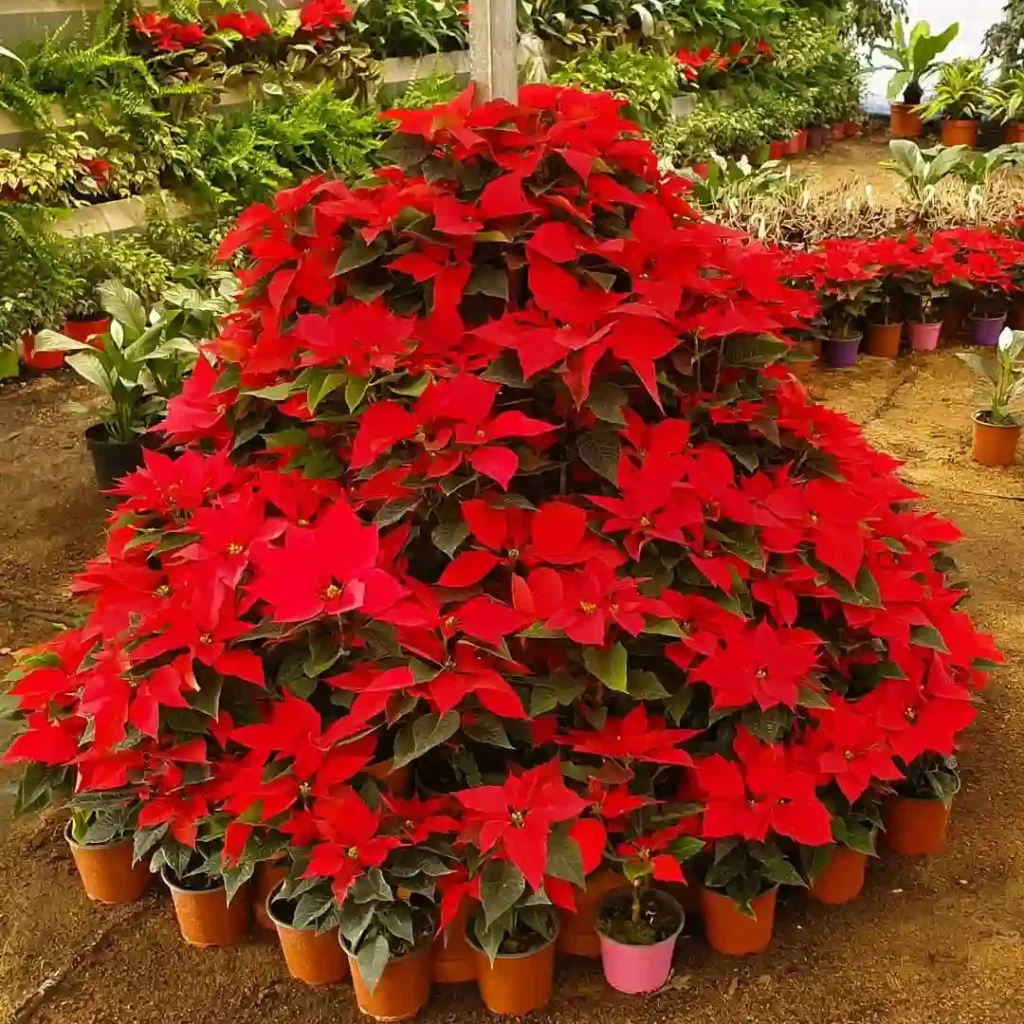
The good news is that a poinsettia plant is easier to keep than its reputation suggests. Once you understand where it comes from and what it needs, you can enjoy the color for weeks, and even keep the plant for years.
Below you will find the facts, color options, buying tips, care routine, outdoor growing advice, and a step-by-step plan to make your poinsettia bloom again next year.
What Is a Poinsettia Flower Plant?
The poinsettia (Euphorbia pulcherrima) is a tender evergreen shrub native to southern Mexico and parts of Central America.
In the wild it grows into a leggy shrub that can reach several feet tall. The compact potted versions sold in stores are the result of decades of breeding for a neat shape and long-lasting color.
Here is the detail that surprises most people: the red, white, or pink “petals” are not petals at all. They are bracts, which are modified leaves.
The true poinsettia flower is the small cluster of yellow-green buds sitting in the center of each bract group. These tiny flowers are called cyathia, and their condition tells you how fresh the plant is.
| Detail | Information |
|---|---|
| Botanical name | Euphorbia pulcherrima |
| Common names | Poinsettia, Christmas star, noche buena plant |
| Native to | Southern Mexico and Central America |
| Plant type | Tender evergreen shrub |
| Typical potted size | 1 to 2 feet (30 to 60 cm) tall |
| Outdoor size in warm climates | Up to 10 feet (3 m) tall |
| Hardiness | USDA zones 9 to 11 |
| Colored parts | Bracts (modified leaves) |
| True flowers | Small yellow-green clusters in the center |
| Toxicity | Mildly irritating if eaten, not deadly |
The Story Behind the Noche Buena Plant
In Mexico, the poinsettia is known as the noche buena plant, a name that refers to Christmas Eve (Nochebuena). The Aztecs knew the plant as cuetlaxochitl and used it to make a reddish dye and for traditional remedies.
The name “poinsettia” comes from Joel Roberts Poinsett, the first United States ambassador to Mexico. He was also a keen botanist, and in 1825 he sent plants home to South Carolina. The plant spread through American greenhouses from there, and National Poinsettia Day is now marked on December 12.
A popular Mexican legend adds to the plant’s holiday reputation. It tells of a poor child named Pepita who had no gift to bring to a Christmas Eve service.
She gathered humble weeds from the roadside, and as she placed them at the altar, they turned a brilliant red. It is a legend rather than a historical record, but it explains why this plant became such a strong symbol of the season.
Poinsettia Colors: Red, White, and Pink
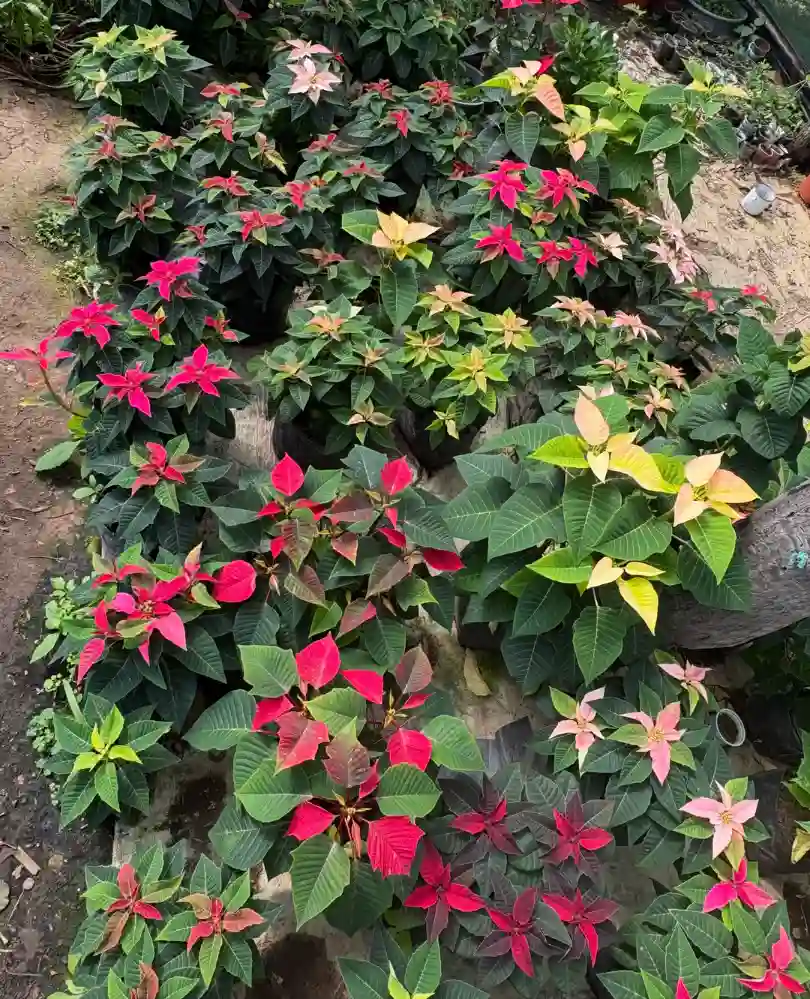
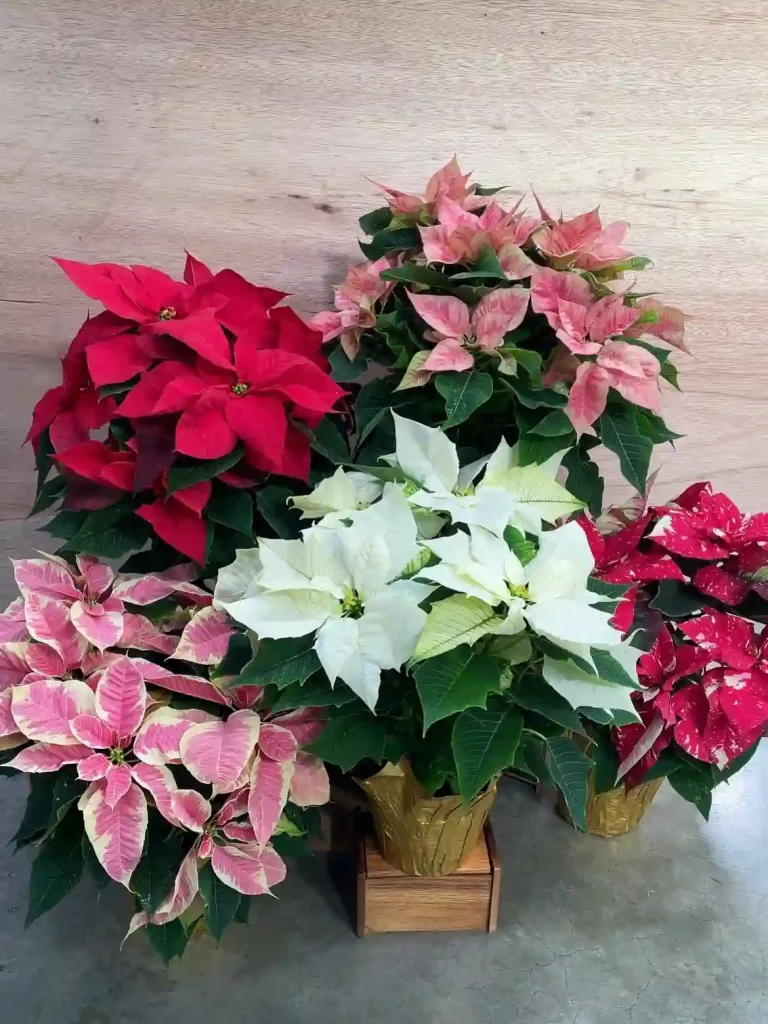
The red poinsettia is still the most popular choice, but breeders now offer a wide range of colors. The table below compares the most common options.
| Type | Appearance | Good to know |
|---|---|---|
| Red poinsettia | Deep or bright red bracts with green leaves | The classic holiday choice and the easiest to find in stores |
| White poinsettia | Creamy white bracts, sometimes with a faint green tint | Looks clean beside silver, gold, or natural decor |
| Pink poinsettia | Soft blush to bold rose bracts | Works well in modern rooms or as a gift for those who want something different |
| Marbled and speckled | Red or pink bracts splashed with cream or white | Varieties such as “Jingle Bells” and “Ice Punch” fall in this group |
| Curled and ruffled | Twisted, rose-like bracts | “Winter Rose” is a well-known example |
A white poinsettia often shows damage more easily than red types, since bruised or handled bracts can look dull or spotted. Handle every color gently, and keep leaves from touching cold windows.
Where to Buy Poinsettias
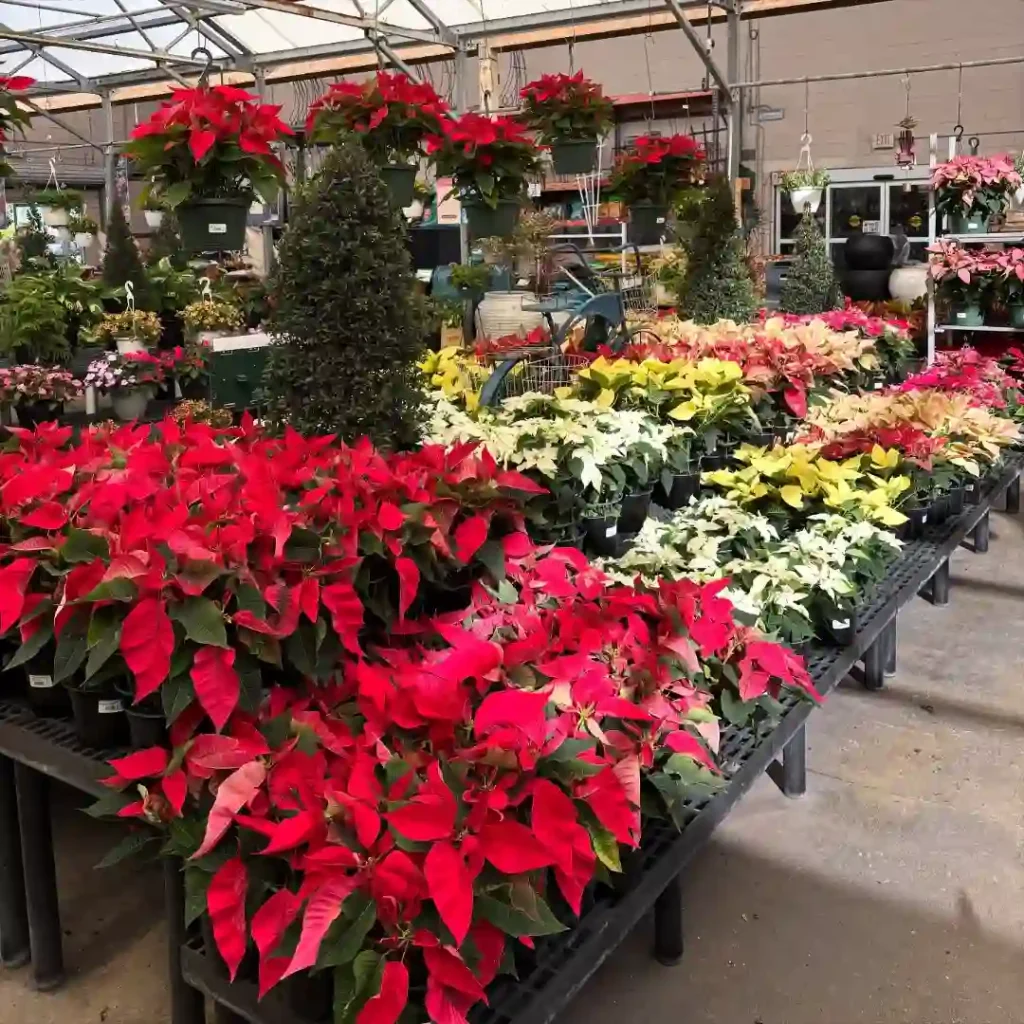
You can find poinsettias in November and December at local nurseries, supermarkets, florists, and home improvement stores. Home Depot poinsettias, for example, usually appear in large displays near the garden section as the holidays approach. Stock and varieties vary by store and region, so check your local store for what is available.
Wherever you shop, use this checklist to pick a healthy plant:
- Look at the tiny yellow flowers in the center. Choose plants with tight buds that are not yet shedding yellow pollen, because those will stay attractive longer.
- Check the foliage. The leaves should be dark green, full, and attached all the way down the stem, with no yellowing or dropped leaves.
- Avoid plants placed near entrance doors or in cold outdoor displays. Chill damage is common and not always visible at first.
- Feel the soil. It should be lightly moist, not bone dry and not sitting in water.
- Ask for a protective sleeve when you leave a store in cold weather. Temperatures below 50°F (10°C) can harm the plant on the way home.
Poinsettia Plant Care Indoors
Most poinsettia problems come from a short list of mistakes. The table below shows what the plant needs and the error that causes the most trouble for each factor. Try various other potted plants near it for a beautiful view.
| Factor | What the poinsettia plant needs | Common mistake |
|---|---|---|
| Light | At least 6 hours of bright, indirect light daily | Placing it in a dim corner or pressing it against a cold window |
| Water | Water when the top inch of soil feels dry, then drain fully | Leaving the pot sitting in a saucer or foil sleeve full of water |
| Temperature | 65°F to 70°F (18°C to 21°C) during the day, not below 60°F (15°C) at night | Setting it near heaters, vents, or drafty doors |
| Humidity | Average household humidity is fine | Allowing very dry air from heating to scorch leaf edges |
| Fertilizer | None while the bracts are colorful | Feeding a plant that is already in bloom |
| Pot | A container with drainage holes | Keeping it sealed in decorative foil with no drainage |
A few extra notes make the difference between a plant that lasts two weeks and one that lasts two months. Place your poinsettia near an east or south-facing window with filtered light. Remove the decorative foil sleeve, or poke holes in the bottom so water can escape. Water slowly at the sink, let the extra drain away, and return the pot to its spot only when it stops dripping.
With good care, the colorful bracts usually last four to six weeks, and often longer in a cool, bright room.
Can You Grow Poinsettias Outdoors?
Yes, but only in the right climate. An outdoor poinsettia grows as a landscape shrub in USDA zones 9 to 11, where winter nights stay mild. In these areas it can reach 6 to 10 feet tall and wide, and it often blooms in winter without any special treatment.
For best results with an outdoor poinsettia:
- Plant it in a spot with morning sun and light afternoon shade in hot regions, or full sun in milder ones.
- Use well-drained soil, and avoid low spots where water collects.
- Shelter it from wind and protect it with a cover on nights that approach freezing, since frost can kill the plant quickly.
- Prune it back in late winter or spring to keep a compact shape and encourage fresh growth.
If you live in a cooler region, you can still use your poinsettia outdoors during summer. Move the pot outside only after nights stay consistently above 50°F (10°C), introduce it gradually to direct sun over a week or so, and bring it back indoors before fall temperatures drop.
How to Make a Poinsettia Bloom Again
The poinsettia is a short-day plant, which means it forms colored bracts only when nights are long and uninterrupted. Following this yearly schedule can bring your plant back to color for the next holiday season:
- Winter, after the holidays: Keep watering and giving it bright light while the leaves stay healthy. Do not worry if the bracts fade and drop in late winter, since this is normal.
- March to April: Cut the stems back to about 4 to 6 inches (10 to 15 cm). Repot into a slightly larger container with fresh, well-draining mix if the roots have filled the pot.
- May to August: Once new growth appears, resume regular feeding with a balanced houseplant fertilizer following the label. Move the plant outdoors after the nights are warm, and pinch the new shoot tips once or twice to build a fuller shape. Stop pinching by late summer.
- Early October to late November: Give the plant about 14 hours of complete darkness each night, from roughly 5 p.m. to 7 a.m., by placing it in a closet or covering it with a box. Return it to a bright window every morning. Even a short burst of artificial light at night can delay coloring. Continue this for 8 to 10 weeks until the bracts show color.
This routine takes patience and consistency, but it is a rewarding project, and it lets you enjoy the same plant year after year instead of buying a new one.
Are Poinsettias Poisonous?
This is one of the most common questions about poinsettias, and the answer is reassuring. The plant is not deadly to people or pets. If a cat or dog chews on it, the milky sap can cause mild drooling, vomiting, or stomach upset, and sometimes mild skin irritation. The sap contains latex, so people with a latex allergy should handle the plant with care and wash their hands afterward.
Still, it is wise to keep the plant out of reach of curious pets and small children. If a pet shows ongoing vomiting or unusual symptoms, contact a veterinarian.
Troubleshooting Common Poinsettia Problems
If your poinsettia plant starts to look unhappy, one of these causes is usually responsible:
- Dropping leaves: Often caused by a cold draft, a sudden temperature change, or overwatering. Move the plant to a stable, warm spot.
- Yellow leaves: Usually a sign of too much water or poor drainage. Let the soil dry slightly and empty any standing water.
- Wilting: Can mean the soil is too dry, but it can also signal root rot from overwatering. Check the soil and roots before you decide.
- Fading bracts: Heat, low light, or dry air can shorten the life of the color. Move the plant to a cooler, brighter room.
- Sticky residue or tiny white insects: These point to whiteflies or mealybugs. Wipe the leaves and treat with insecticidal soap.
Frequently Asked Questions
How long do poinsettias last?
Indoors, the colorful bracts typically last four to six weeks, and sometimes longer. With a good yearly care routine, the plant itself can live for several years.
Should I remove the foil from a poinsettia pot?
Yes, or at least poke drainage holes in it. Water trapped in the foil keeps the roots wet and leads to rot, which is the most common reason poinsettias die early.
Why is my red poinsettia losing its leaves?
Leaf drop usually comes from cold air, heat from a vent, overwatering, or low light. Check the plant’s location first, since moving it often fixes the problem.
Can I keep poinsettias in the same room as other houseplants?
Yes. Give each plant the light and watering schedule it needs, and keep the poinsettia away from cold windows and heating vents.
Final Thoughts
A poinsettia plant rewards simple, steady care. Choose a healthy plant, give it bright indirect light, water only when the soil needs it, and protect it from cold.
Whether you pick a classic red poinsettia, a clean white poinsettia, or a soft pink poinsettia, the same care rules apply. And if you live in a warm climate, an outdoor poinsettia can grow into a striking winter shrub that returns every year.
Share your own poinsettia results in the comments, and let us know which color you decided to grow this season.