House plants have evolved beyond simple pots on windowsills—they’ve become essential interior design elements that bring life, color, and personality to every room in your home.
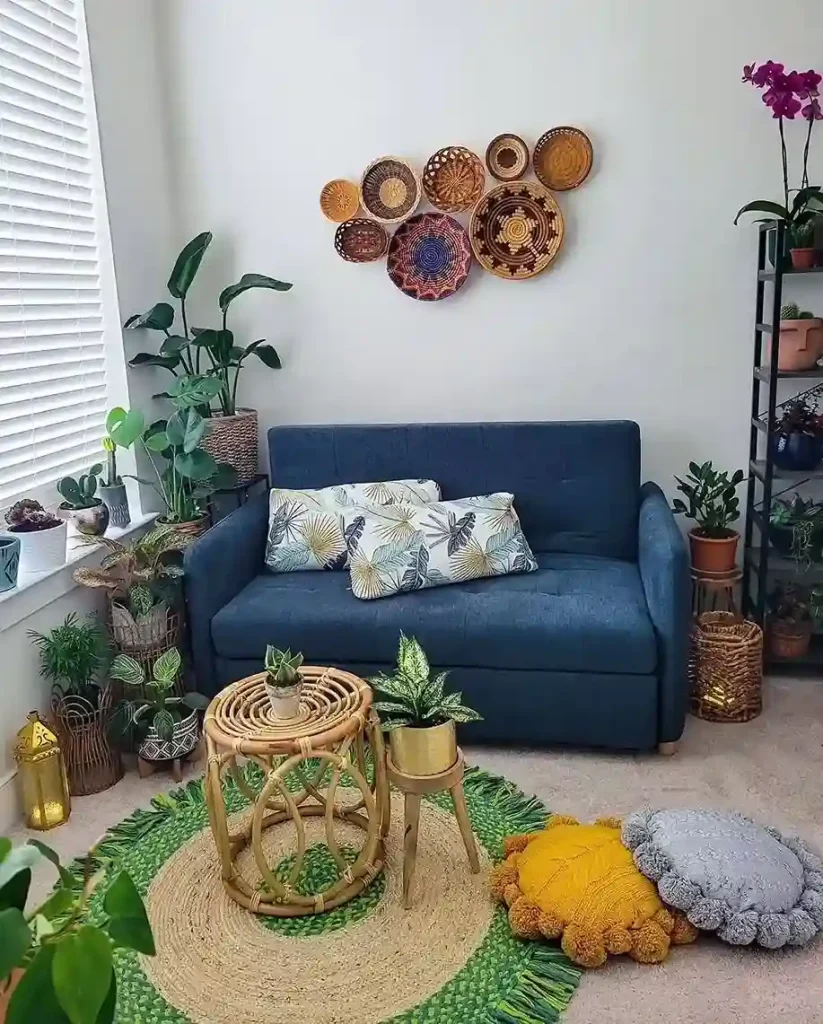
Source: @sweetest_daya
Creative plant displays solve practical problems like limited floor space, inadequate lighting, and awkward corners while adding architectural interest to blank walls and transforming ordinary spaces into botanical sanctuaries. These 22 house plant display ideas help you to create an eye-catching view.
1. Floating Shelf Cascades
Floating shelves arranged at staggered heights create dynamic vertical displays that draw eyes upward while maximizing wall space. Trailing plants like pothos and philodendrons cascade beautifully from these levels.
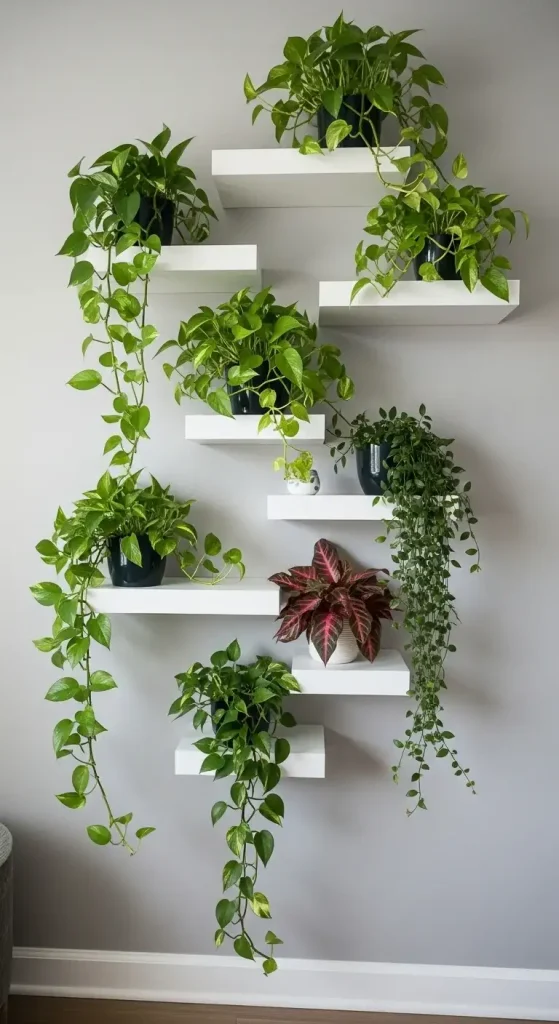
Install shelves near natural light sources or supplement with grow lights. This method pairs wonderfully with organizational principles from the comprehensive house plants guide, resources for optimal placement success.
2. Macramé Hanger Revival
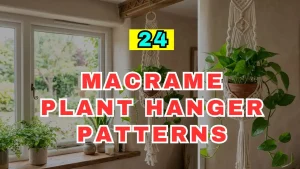
Macramé plant hangers bring vintage bohemian charm to modern interiors while solving floor space limitations. These woven hangers suspend plants at eye level, where their beauty shines most dramatically.
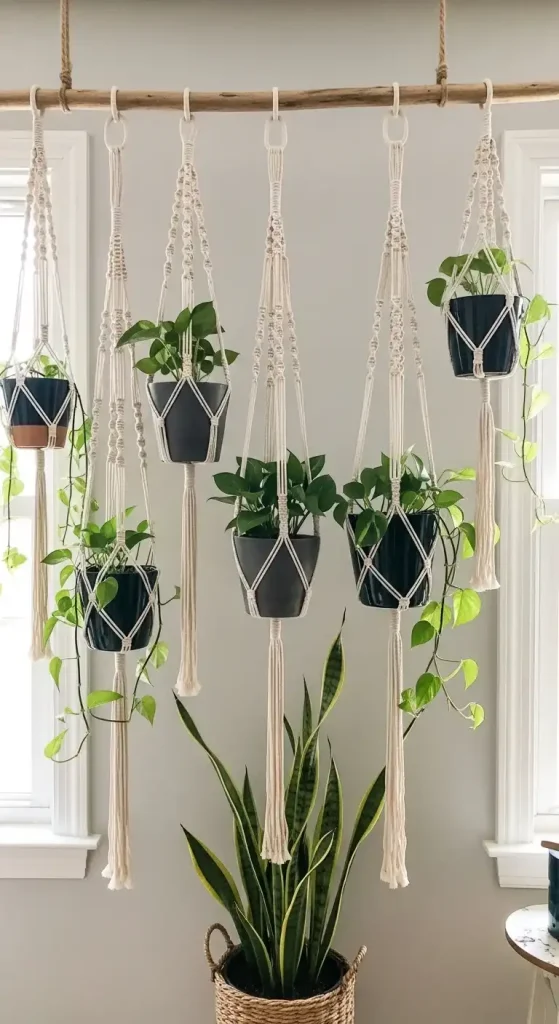
Hang multiple macramé planters at varying lengths to create layered environments. This style proves practical for following indoor plants care guidelines that emphasize proper drainage and air circulation naturally.
3. Plant Ladder Shelving
Repurposed wooden ladders provide rustic, multi-tiered display platforms accommodating numerous plants in minimal floor space. Each rung offers different elevation and light exposure for varying plant requirements and preferences.
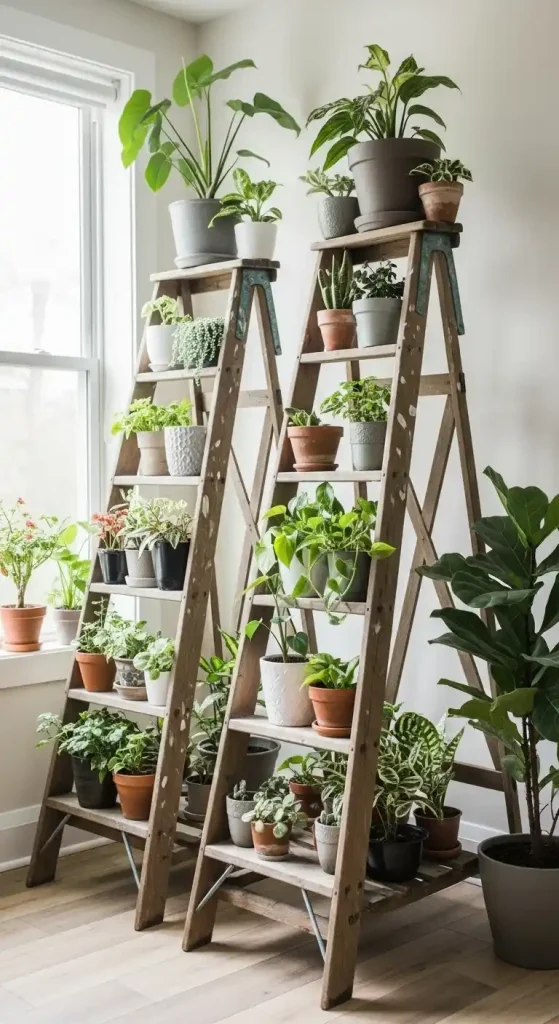
Position ladder displays near windows to maximize natural light distribution. Style with mixed pot sizes and plant types to create visually balanced arrangements that feel intentional rather than cluttered or haphazard.
4. Terrarium Coffee Table Centerpieces
Glass terrariums create living art pieces that spark conversation while bringing nature indoors. These enclosed environments work perfectly for humidity-loving plants like ferns, moss, and delicate tropical varieties that thrive.
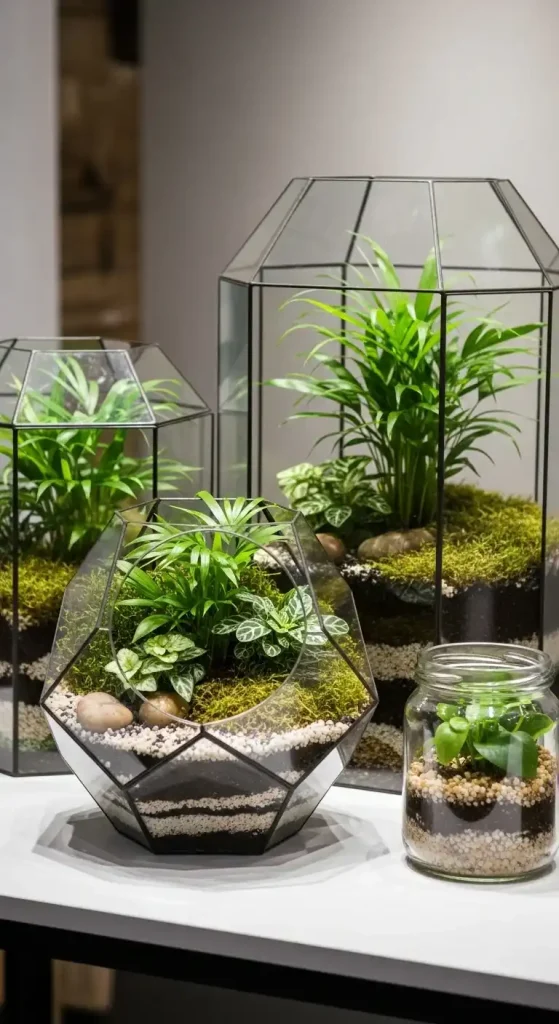
Choose geometric glass containers for modern aesthetics or vintage jars for eclectic charm. Layer with decorative stones and quality potting mix to create miniature ecosystems that require minimal maintenance throughout seasons.
5. Window Sill Herb Gardens
Transform sunny window sills into functional herb gardens that provide fresh culinary ingredients while greening your kitchen space. Basil, mint, parsley, and thyme thrive in these bright, accessible locations beautifully.
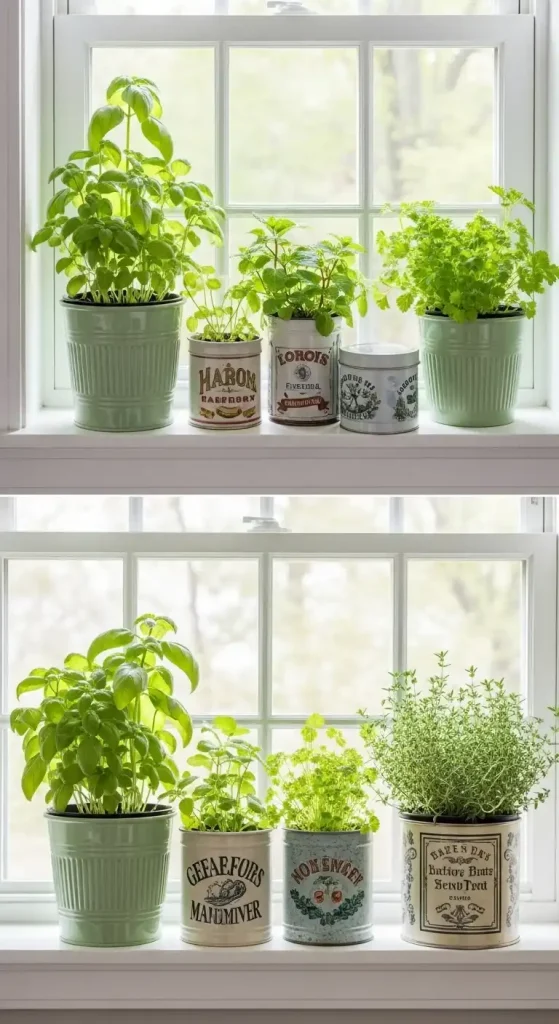
This approach combines aesthetics with practicality, much like strategic garden herb pairing guide principles. Use matching containers or eclectic vintage tins to suit your kitchen’s design style and personality.
6. Rolling Plant Carts
Mobile plant carts offer flexibility to move greenery toward light sources or rearrange displays seasonally. These wheeled platforms work perfectly for heavy plants that otherwise remain stationary once positioned and established.
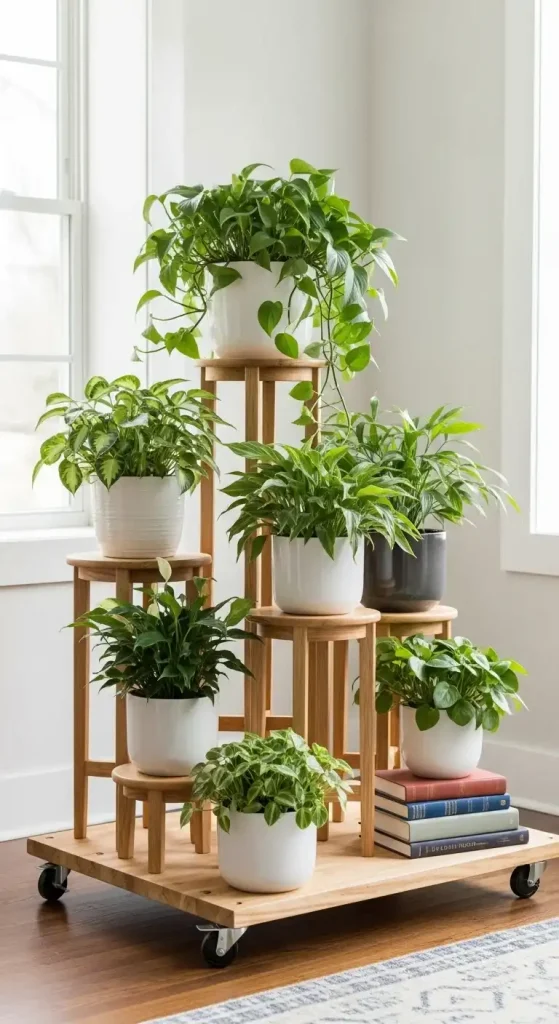
Style carts with varied heights using plant stands or stacked books. This mobility proves invaluable for chasing sunlight through seasons or accommodating changing room configurations and furniture arrangements easily.
7. Bathroom Jungle Atmosphere
Bathrooms provide ideal humidity levels for tropical plants that struggle in drier rooms. Ferns, orchids, peace lilies, and prayer plants thrive in steamy environments created by daily showers and baths.
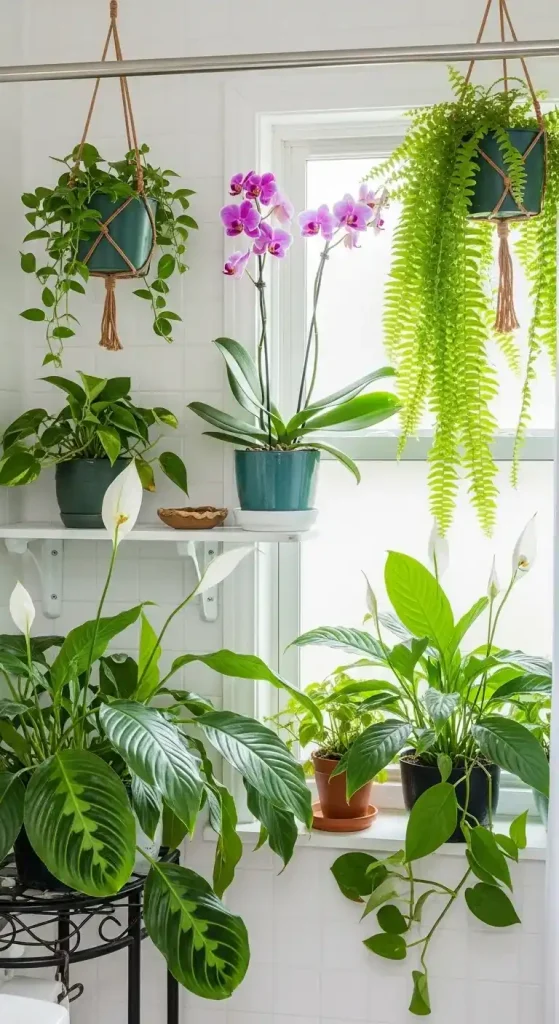
Position moisture-loving plants on shelves, windowsills, or hanging from shower curtain rods. The lush greenery transforms utilitarian bathrooms into spa-like retreats that promote relaxation and natural wellness daily.
8. Picture Ledge Plant Display
Picture ledges double as plant shelves, creating gallery-style displays that mix greenery with artwork and decorative objects. This approach adds personality while maintaining clean, organized aesthetics throughout your living spaces.
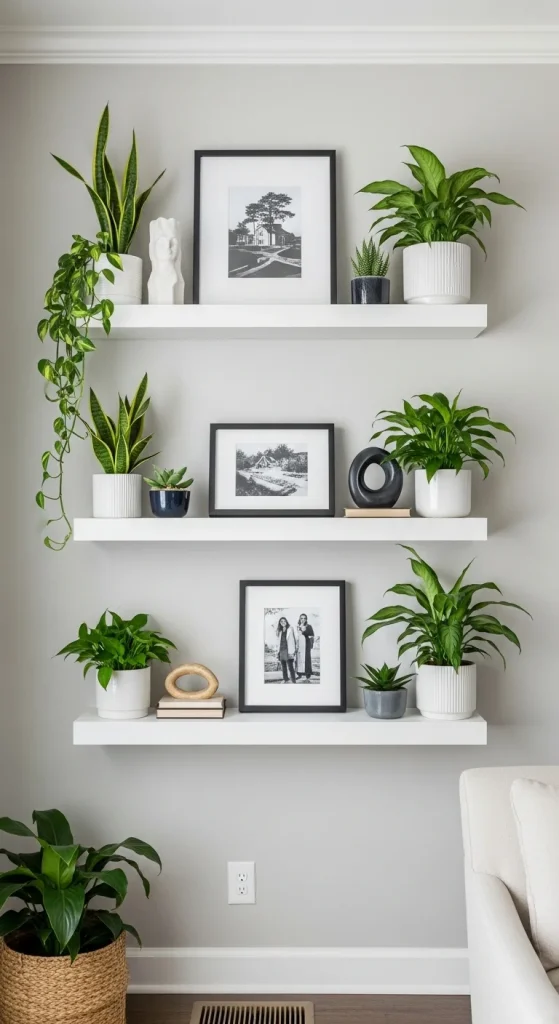
Arrange plants of varying heights with framed photos and small sculptures. Rotate displays seasonally to keep arrangements fresh, much like updating trending landscaping ideas in outdoor garden spaces regularly.
9. Vertical Wall Gardens
Living walls transform entire surfaces into stunning vertical gardens that maximize growing space dramatically. Modular pocket systems or mounted planters create impressive green installations that serve as living architectural features throughout homes.
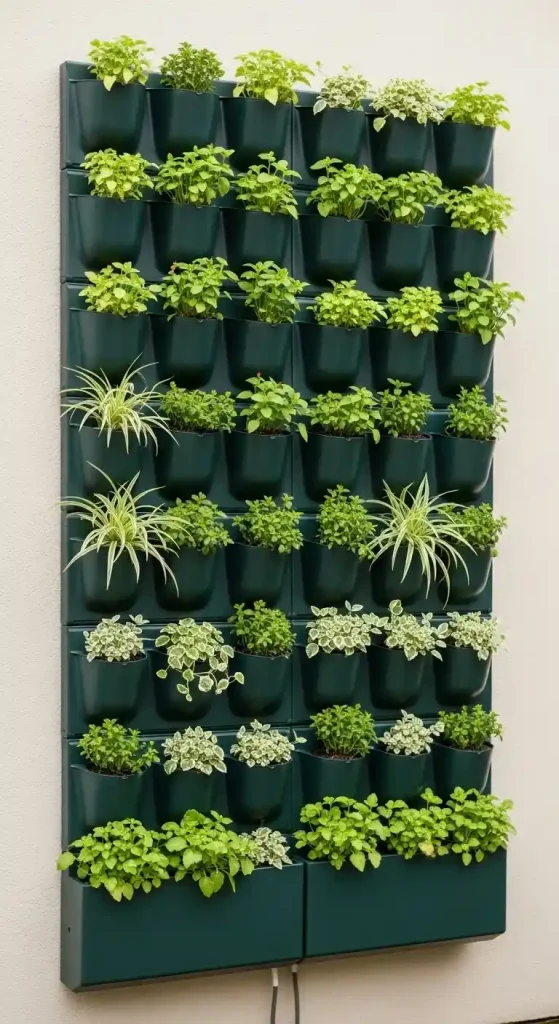
Choose drought-tolerant varieties or install irrigation systems for larger installations. Vertical gardens work beautifully in compact spaces, applying principles similar to small garden ideas for maximizing limited square footage effectively.
10. Corner Plant Towers
Tall plant stands or corner shelving units transform awkward dead spaces into vibrant plant displays. These vertical solutions utilize overlooked areas while adding height and visual interest to room corners that typically go unused.
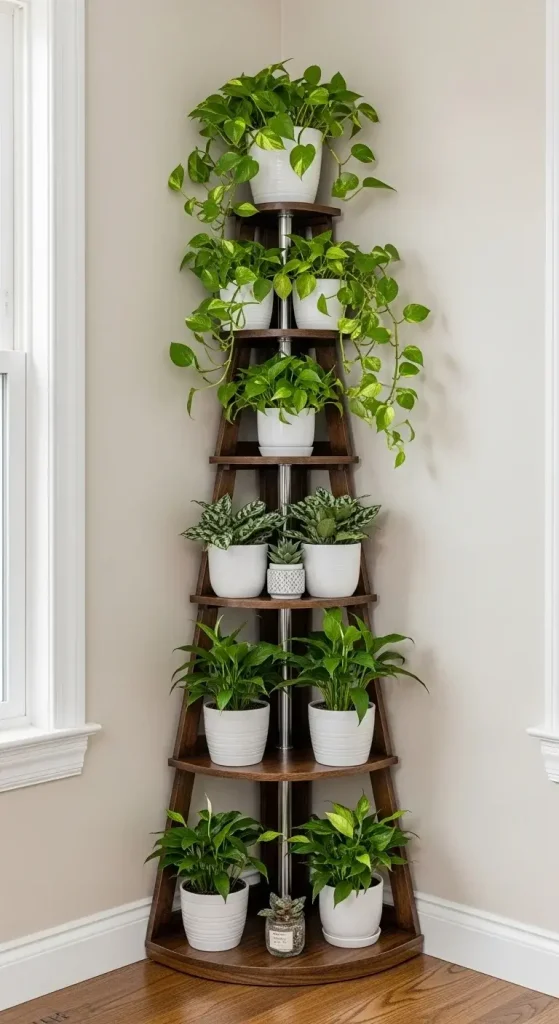
Stack plants with varying light requirements vertically, placing sun-lovers highest. Corner displays create focal points that anchor room arrangements while softening harsh architectural angles with organic, flowing greenery naturally and beautifully.
11. Hanging Glass Orbs
Suspended glass orbs create modern, minimalist displays for air plants and small succulents. These transparent spheres appear to float magically, adding whimsical, artistic elements to contemporary interiors with sophisticated styling appeal.
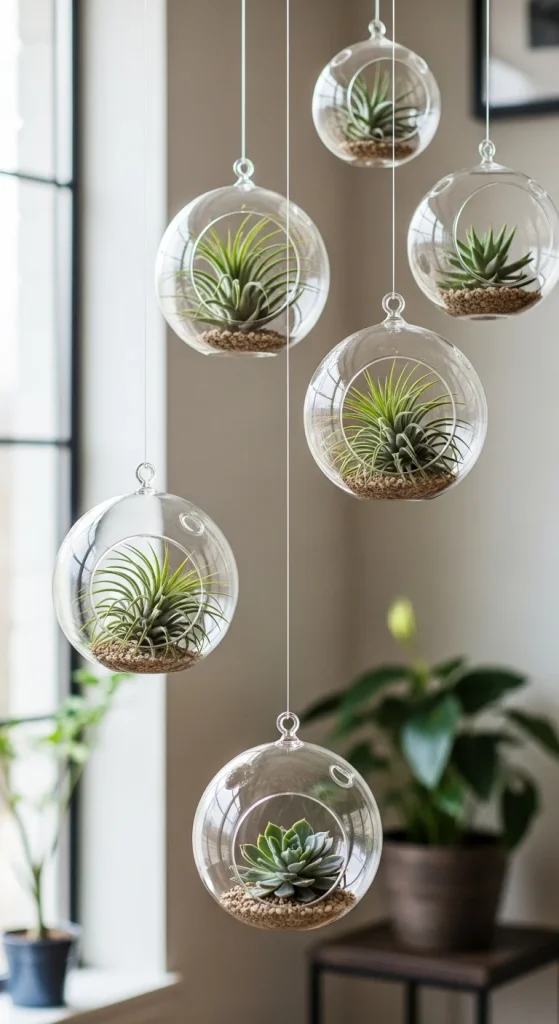
Hang at varying heights near windows or artificial light sources. Glass orbs require minimal maintenance while providing maximum visual impact, perfect for busy homeowners seeking low-maintenance beauty in their indoor spaces.
12. Bookshelf Integration
Intersperse plants throughout bookshelves to break up visual monotony and add organic softness to rigid linear arrangements. Greenery creates breathing space between books while purifying the air near reading nooks and study areas.
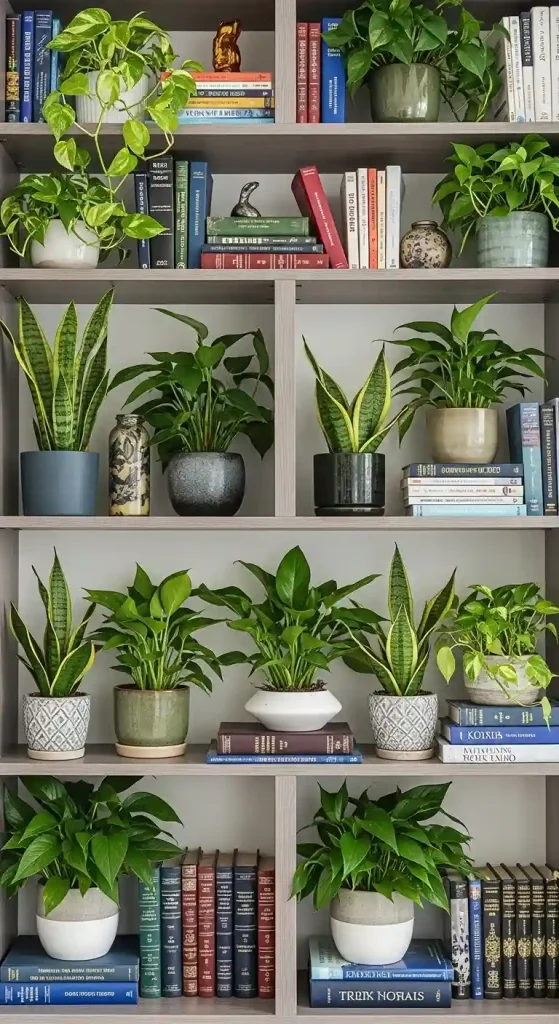
Choose compact plants that won’t overwhelm book collections. Pothos, snake plants, and small ferns integrate seamlessly while complementing leather-bound volumes and decorative objects with natural texture and vibrant color accents.
13. Grouped Floor Planters
Cluster large floor plants of varying heights to create impactful botanical arrangements that anchor living spaces. This technique works especially well in corners, beside furniture, or flanking architectural features like fireplaces and built-ins.
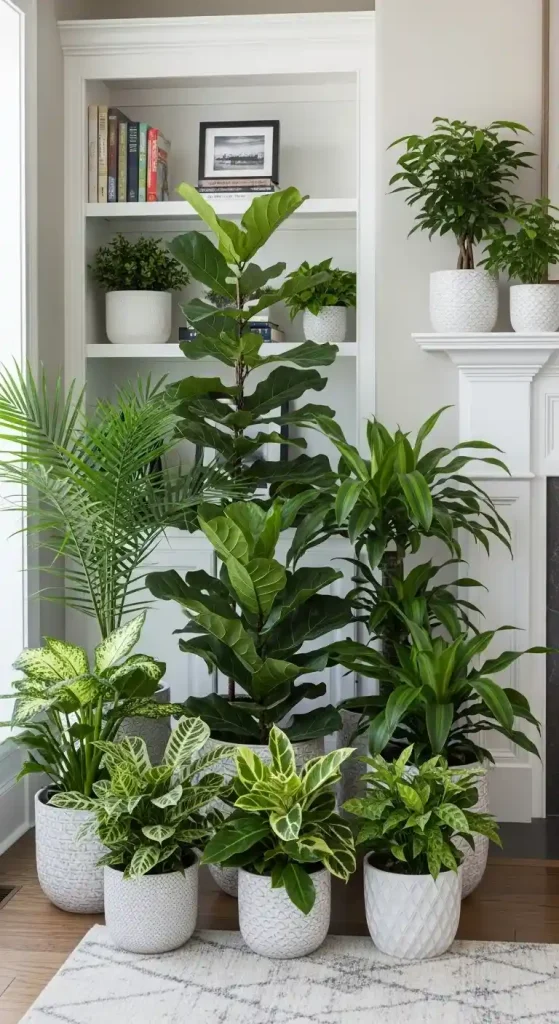
Mix foliage types, textures, and pot styles for visual interest. Group odd numbers of plants—three, five, or seven—following design principles that create balanced, professional-looking displays mimicking backyard landscaping ideas layouts indoors.
14. Bar Cart Plant Station
Repurpose vintage bar carts as mobile plant displays that add functional style. The tiered structure accommodates multiple plants while wheels allow easy repositioning for cleaning, light adjustment, or room rearrangement needs.
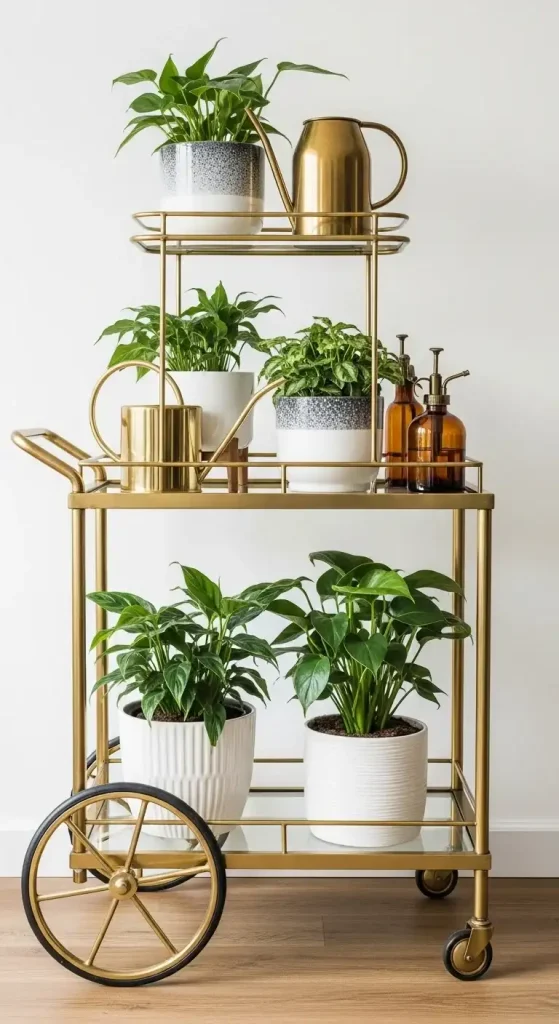
Style with brass or copper watering cans, decorative pebbles, and attractive plant misting bottles. This trendy display method combines mid-century charm with contemporary plant parenthood aesthetics popular on social media platforms.
15. Windowsill Greenhouse Boxes
Custom window boxes installed inside create miniature greenhouse environments perfect for starting seeds or growing delicate tropical varieties. These enclosed systems maintain humidity while maximizing precious window real estate for sun-loving plants.
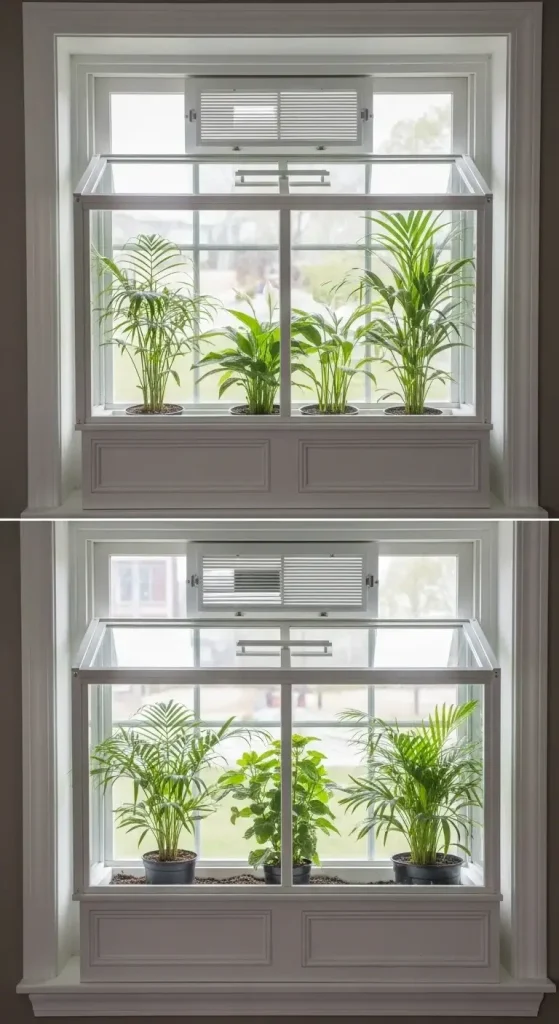
Add ventilation or removable tops for temperature control. This approach mirrors the contained environments useful in coastal backyard garden guide principles for protecting plants from harsh elements naturally and effectively.
16. Pedestal Plant Stands
Individual pedestal stands elevate statement plants to prominence, treating them as living sculptures worthy of individual attention. Mid-century modern or classical column styles add architectural interest while showcasing prized specimens dramatically.
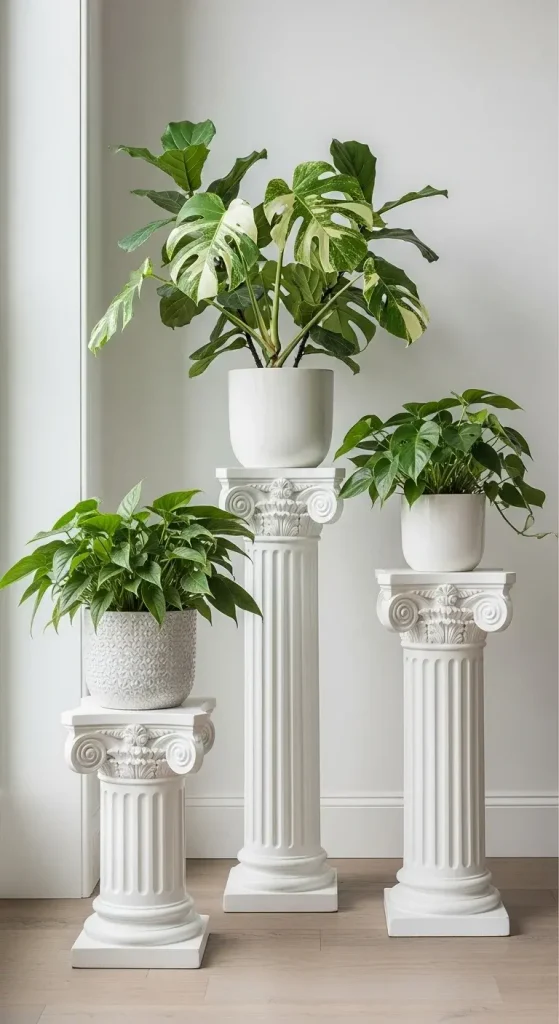
Position pedestals strategically to create room flow and guide movement. This display method works perfectly for showcasing variegated monstera, mature fiddle leaf figs, or other premium plants deserving spotlight treatment and admiration.
17. Shower Curtain Rod Hangers
Utilize unused shower curtain rod space for hanging moisture-loving plants that thrive in bathroom humidity. This clever solution maximizes vertical space while creating lush, jungle-like atmospheres in compact bathroom environments.
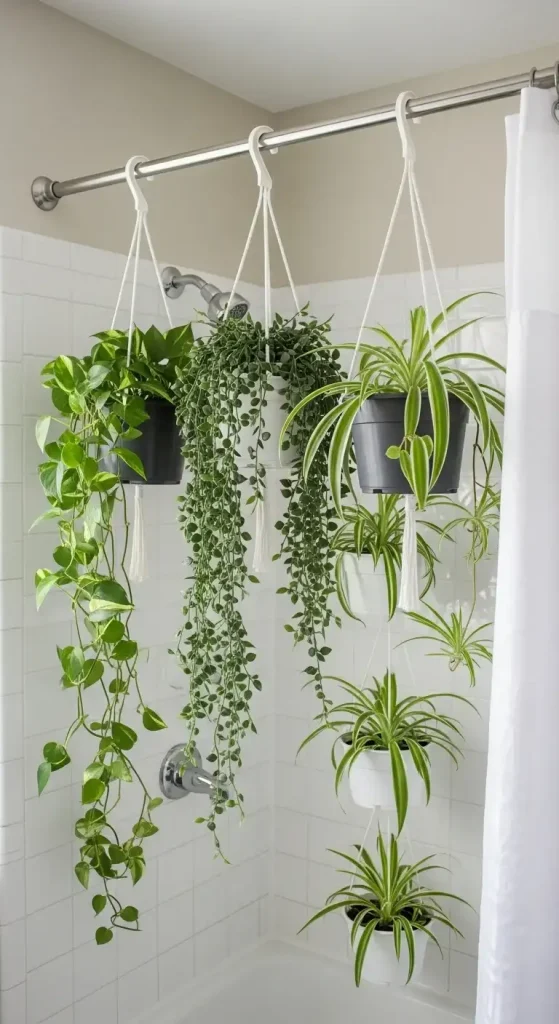
Choose lightweight pots with secure hanging mechanisms. Boston ferns, string of hearts, and spider plants flourish in steamy conditions while adding privacy and softening bathroom’s hard tile surfaces with flowing greenery.
18. Kitchen Island Centerpiece
Large planter boxes or grouped pots atop kitchen islands create living centerpieces that remain accessible from all sides. Herbs, small vegetables, or decorative foliage add functionality and beauty to cooking spaces simultaneously.
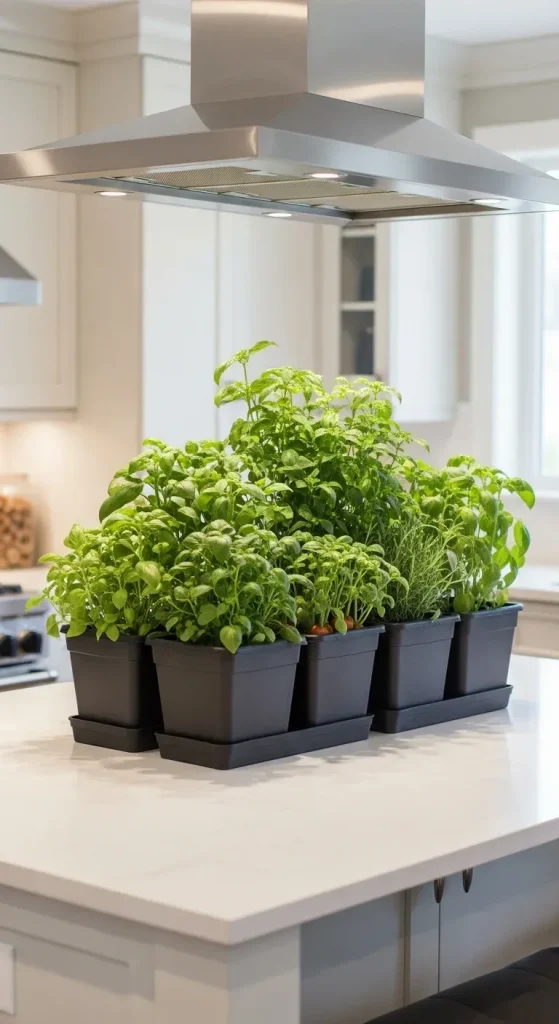
Select food-safe plants if growing edibles. This practical display keeps fresh ingredients within arm’s reach while greening kitchen spaces, much like thoughtful, cheap landscaping ideas maximize outdoor budget and beauty efficiently.
19. Staircase Plant Gallery
Line staircase steps or landings with potted plants to transform transitional spaces into botanical displays. Each level provides different light exposures, allowing you to accommodate plants with varying brightness requirements and preferences.
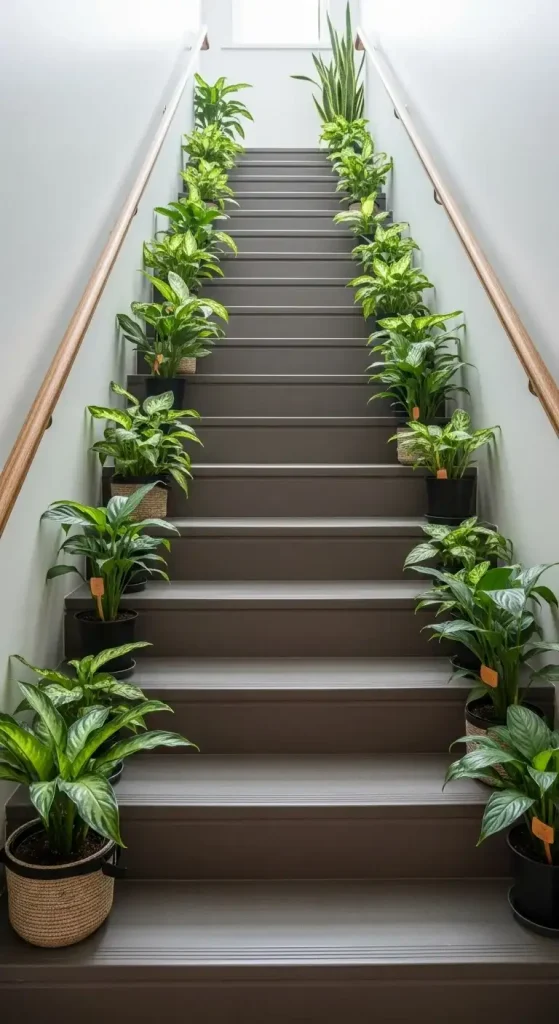
Secure pots to prevent tipping accidents. Trailing plants positioned at higher steps cascade downward beautifully, creating dramatic visual effects similar to fountain displays while maintaining safe passage up and down stairs.
20. Mirror-Backed Plant Shelves
Install shelves with mirrors behind plants to amplify light reflection and create depth illusions. This technique makes small spaces appear larger while doubling your plants’ visual impact through reflective surfaces strategically positioned.
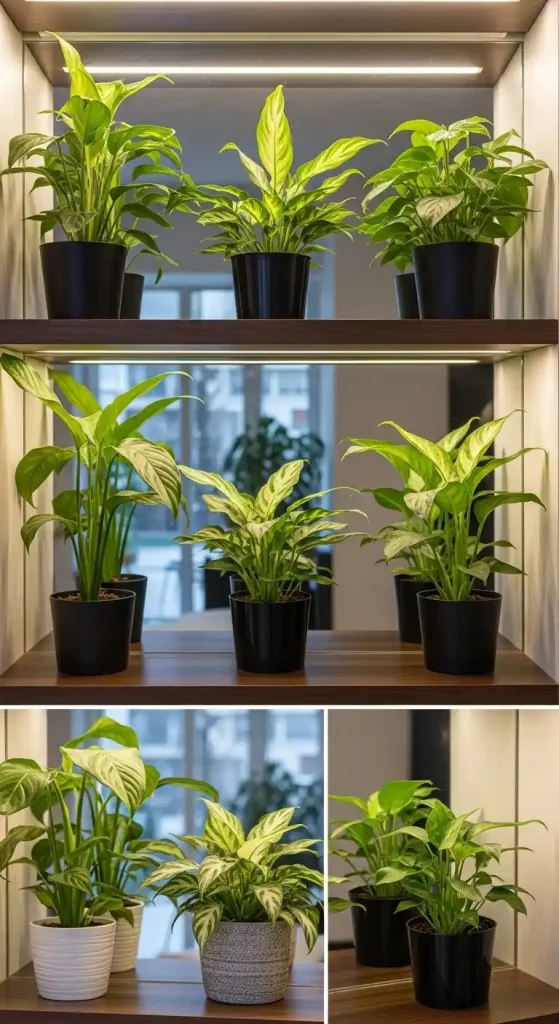
Position near windows for maximum light multiplication. Mirrors also allow you to appreciate plants from all angles, showcasing leaf undersides and growth patterns typically hidden from view in standard display arrangements.
21. Ceiling-Mounted Pot Racks
Repurpose kitchen pot racks as hanging plant displays that free floor space while creating overhead botanical interest. This unconventional approach works brilliantly in rooms with high ceilings where vertical space remains underutilized.
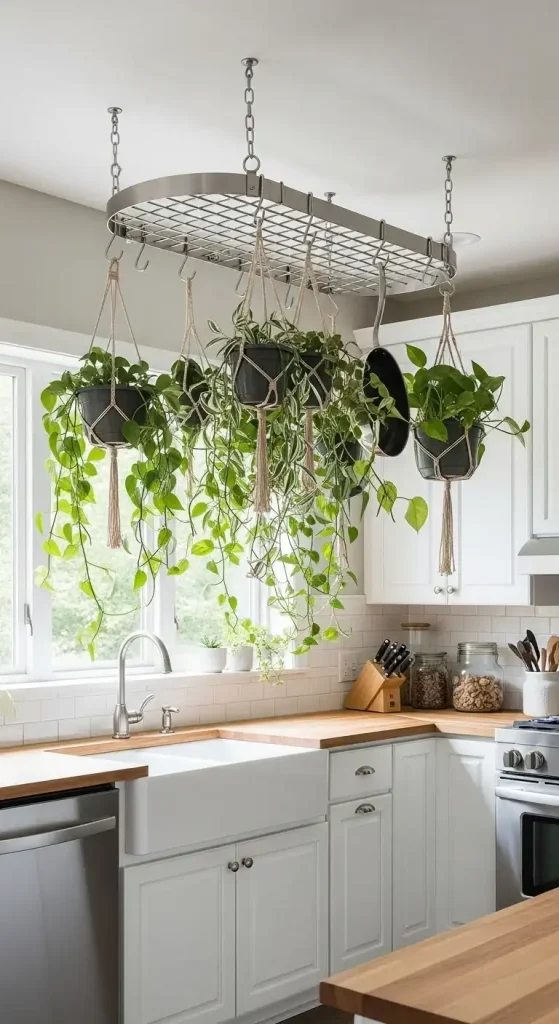
Hang trailing and cascading varieties for maximum drama. Ensure proper installation to support the combined weight of pots, soil, and water, especially important after watering when plants are significantly heavier than when dry.
22. Room Divider Plant Screens
Use tall shelving units filled with plants to divide open-concept spaces naturally. These living screens provide privacy while maintaining visual flow and filtering light beautifully between different functional zones within larger rooms.
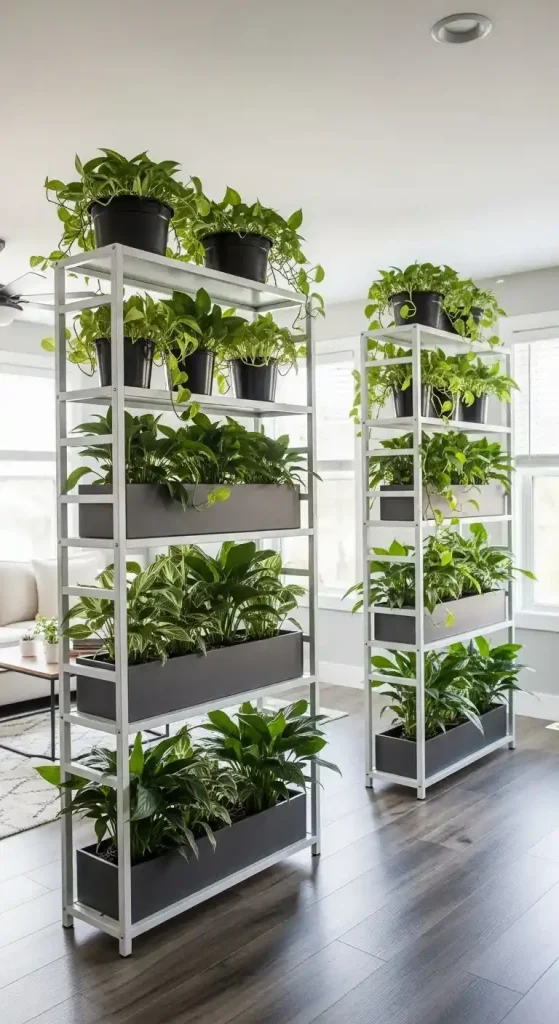
Choose appropriate plant heights for desired privacy levels. This technique applies similar principles to diy privacy fences outdoors, but translated indoors with greenery, creating softer, more organic boundaries between living areas.
Frequently Asked Questions
What are the best low-maintenance plants for display?
Snake plants, pothos, ZZ plants, and spider plants tolerate neglect beautifully while looking attractive in various display styles. These hardy varieties forgive occasional watering lapses and adapt to different light conditions.
How do I prevent water damage with indoor plant displays?
Use saucers under pots, consider self-watering planters, and ensure proper drainage holes. Elevate plants on protective mats and allow pots to drain completely before returning them to display locations.
What display works best for small apartments?
Vertical displays like floating shelves, macramé hangers, and wall-mounted planters maximize limited space. These solutions utilize walls and ceiling height rather than consuming precious floor square footage in compact living areas.
How many plants are too many for one room?
Balance aesthetics with air circulation needs—crowded plants develop fungal issues. Follow the rule: if you can’t easily access plants for watering and maintenance, you’ve likely exceeded your space’s reasonable capacity.
Can I mix real and artificial plants in displays?
Yes, high-quality artificial plants can fill gaps where light conditions prohibit real plants. Mix strategically, placing artificial varieties in low-light areas while reserving bright spots for living plants that photosynthesize.
What lighting works best for plant displays?
Natural light remains ideal, but full-spectrum LED grow lights supplement effectively. Position lights 6-12 inches above foliage, running 12-16 hours daily for plants lacking adequate window exposure for healthy growth.
How do I style plants with different pot colors?
Either coordinate pots in complementary colors or embrace eclectic mixes. White, terracotta, or black pots create cohesive looks, while mixed colors add playful personality depending on your interior design preferences and style.
Should I rotate plants in displays?
Yes, rotate plants quarterly to ensure even growth since they lean toward light sources. This practice maintains symmetrical shapes and prevents lopsided development that occurs when one side receives more sunlight consistently.
Conclusion
Thoughtful house plant displays transform living spaces into vibrant, healthy environments that nurture both plants and people. Whether you prefer minimalist arrangements or abundant jungle aesthetics, the right display method showcases your greenery while solving practical space and care challenges.
Consider your home’s lighting, available space, and maintenance preferences when selecting display styles that work for your lifestyle. Start with one or two methods that excite you most, then expand your indoor botanical collection as confidence grows. Your home deserves the life, color, and air-purifying benefits that beautifully displayed house plants provide throughout every season of the year.