A steep hill in your yard may feel like an impossible landscaping challenge, but with the right ideas it becomes one of the most dramatic, beautiful, and rewarding outdoor spaces imaginable.
From terraced gardens and gabion walls to cascading wildflower meadows and rock gardens, these 23 steep hill landscaping ideas will inspire you using tips from our sloped backyard ideas on a budget guide.
Source: @cardonadesigns
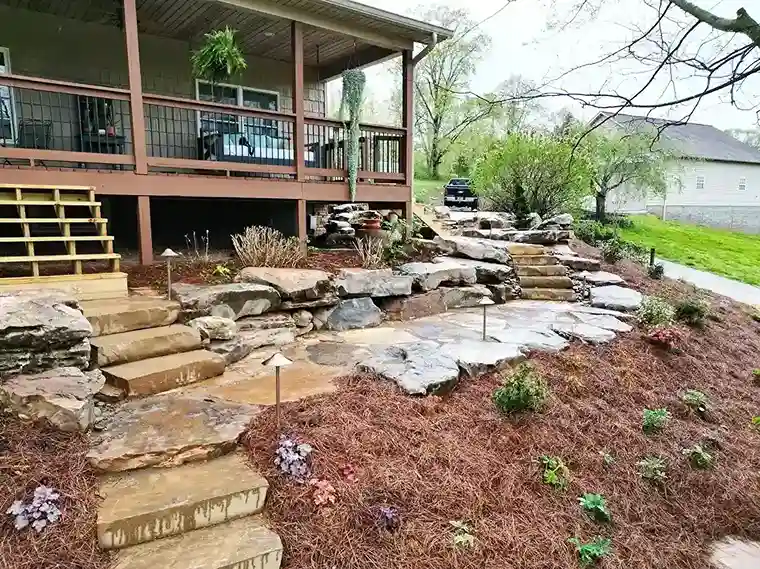
1. Stone Retaining Wall Terraces
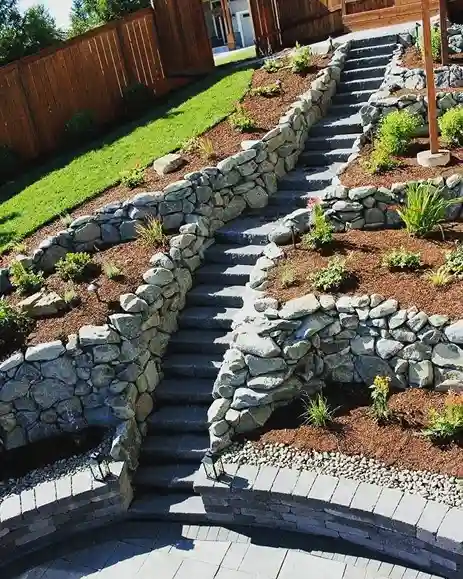
Building stone retaining wall terraces across a steep hill is one of the most effective, beautiful, and long-lasting solutions available, transforming an unworkable slope into a series of level, productive planting areas with genuine architectural character.
Source: @civilengineering.co
Natural limestone, sandstone, and granite all create beautifully textural walls that blend seamlessly into garden settings and improve dramatically with age as moss and weathering add authentic patina. For more retaining wall and terrace design inspiration, our garden wall ideas guide covers every approach in excellent detail.
| Feature | Details |
|---|---|
| Best Materials | Limestone, sandstone, granite, fieldstone |
| Difficulty Level | Intermediate to advanced |
| Maintenance Level | Very low |
| Best For | Moderate to very steep slopes |
| Key Benefit | Creates flat planting areas, controls erosion |
| Estimated Cost | $800–$5,000 |
2. Gabion Wall System
Gabion walls filled with natural stone create bold, modern-industrial retaining structures that hold steep hillside soil firmly in place while adding dramatic textural beauty and outstanding drainage performance to even the most challenging steep slopes.
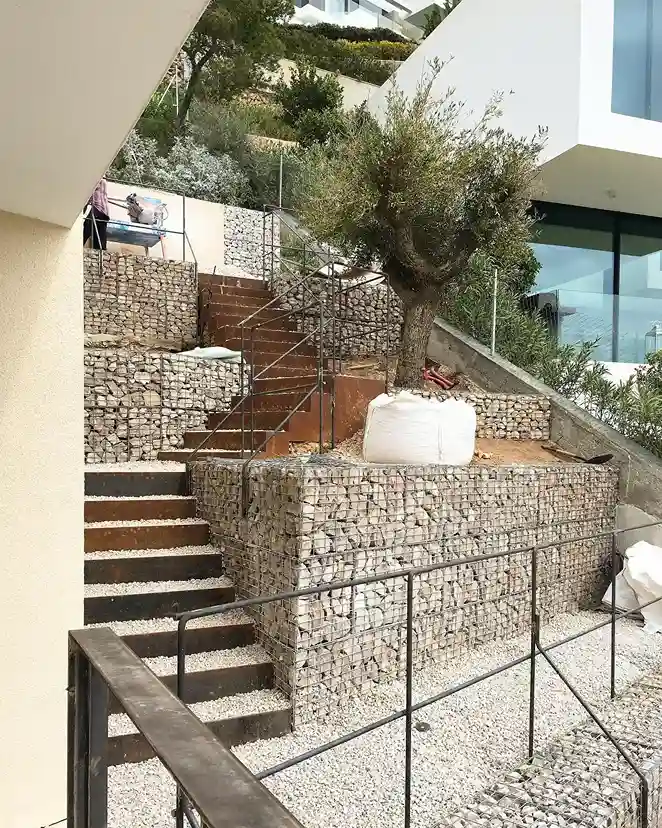
Wire-cage gabions are surprisingly accessible to install for intermediate DIYers and become more characterful and beautiful as they weather and settle over time into the landscape. For detailed design layouts and creative applications, our gabion wall ideas guide is a comprehensive and inspiring resource.
| Feature | Details |
|---|---|
| Best Fill Materials | Granite, limestone, river rock, recycled concrete |
| Difficulty Level | Intermediate |
| Maintenance Level | Very low |
| Best For | Very steep slopes, modern garden styles |
| Key Benefit | Extremely strong erosion control, striking appearance |
| Estimated Cost | $700–$4,000 |
3. Native Ground Cover Erosion Control
Planting a dense, fast-spreading carpet of native ground cover plants across a steep hill is the most natural and cost-effective erosion control strategy available, with deep-rooting plants physically binding the soil together against even heavy rainfall.
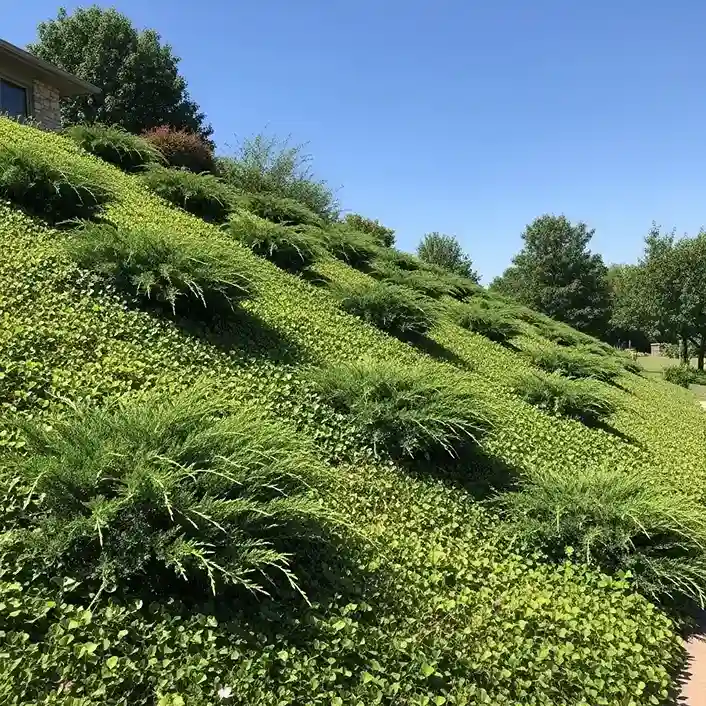
Creeping juniper, vinca, ivy, and native grasses all establish quickly on steep slopes and create an increasingly dense, weed-suppressing mat that looks attractive year-round. Our best outdoor plants guide covers the most reliable ground cover species for steep slope planting in excellent detail.
| Feature | Details |
|---|---|
| Best Ground Covers | Creeping juniper, vinca, ivy, sedum, native grasses |
| Difficulty Level | Beginner |
| Maintenance Level | Very low once established |
| Best For | Large steep slopes needing quick coverage |
| Key Benefit | Natural, affordable, highly effective erosion control |
| Estimated Cost | $100–$500 |
4. Wildflower Meadow Slope
Transforming a steep hill into a sweeping native wildflower meadow creates one of the most spectacularly beautiful and ecologically rich landscapes possible, requiring minimal maintenance while stabilising soil naturally and supporting pollinators in extraordinary numbers.
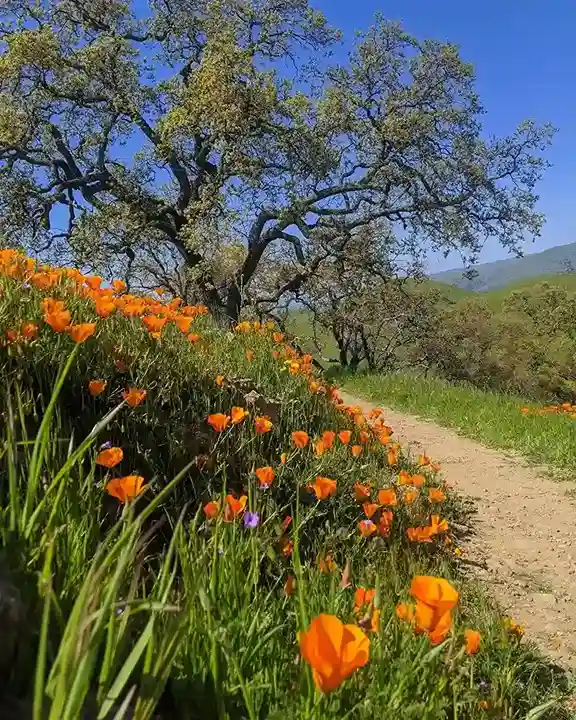
Scatter a native wildflower and grass seed mix across the prepared slope in autumn and allow it to establish naturally over its first growing season for the best, most authentic results. For more naturalistic planting ideas, our cottage garden ideas guide offers wonderful plant combination inspiration suited to relaxed hillside meadow plantings.
| Feature | Details |
|---|---|
| Best Plants | Native grasses, echinacea, rudbeckia, poppy, cornflower |
| Difficulty Level | Beginner |
| Maintenance Level | Very low |
| Best For | Large steep slopes, naturalistic settings |
| Key Benefit | Beautiful, wildlife-rich, self-sustaining |
| Estimated Cost | $50–$300 |
5. Rock Garden with Alpine Plants
A rock garden using large boulders and stones placed naturally across a steep slope creates a breathtakingly dramatic, sculptural planting that looks as though it has always existed there, with alpine plants and sedums tucked beautifully into every crevice and pocket.
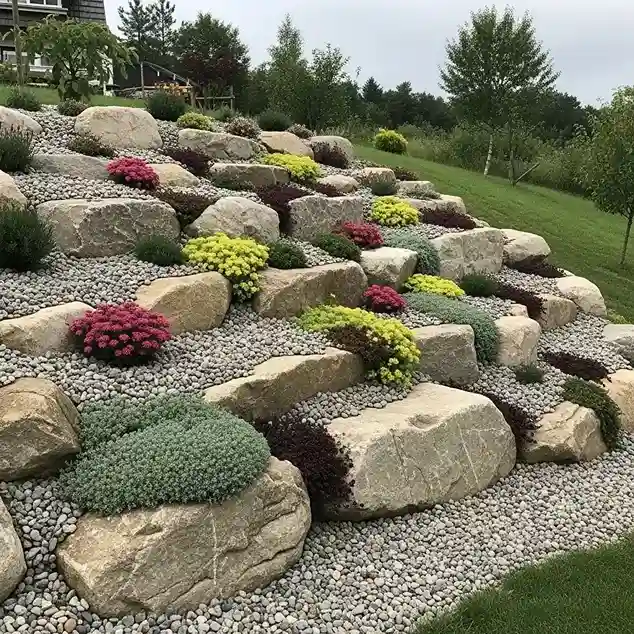
The boulders act as natural retaining elements that slow water runoff and prevent erosion while creating a stunning, permanent landscape feature that looks more beautiful every year. For stone placement and planting inspiration, our white stone landscaping ideas guide is a wonderfully creative resource.
| Feature | Details |
|---|---|
| Best Plants | Sedums, alpine dianthus, creeping thyme, saxifrage |
| Best Stones | Granite boulders, sandstone, slate, limestone |
| Difficulty Level | Intermediate |
| Maintenance Level | Low |
| Best For | Steep dry slopes, Mediterranean and naturalistic styles |
| Estimated Cost | $300–$2,500 |
6. Timber Sleeper Steps with Planting
Installing timber sleeper steps down the face of a steep hill creates safe, practical access while the spaces between and alongside the steps provide beautiful planting opportunities that soften the structure and integrate it naturally into the surrounding slope.
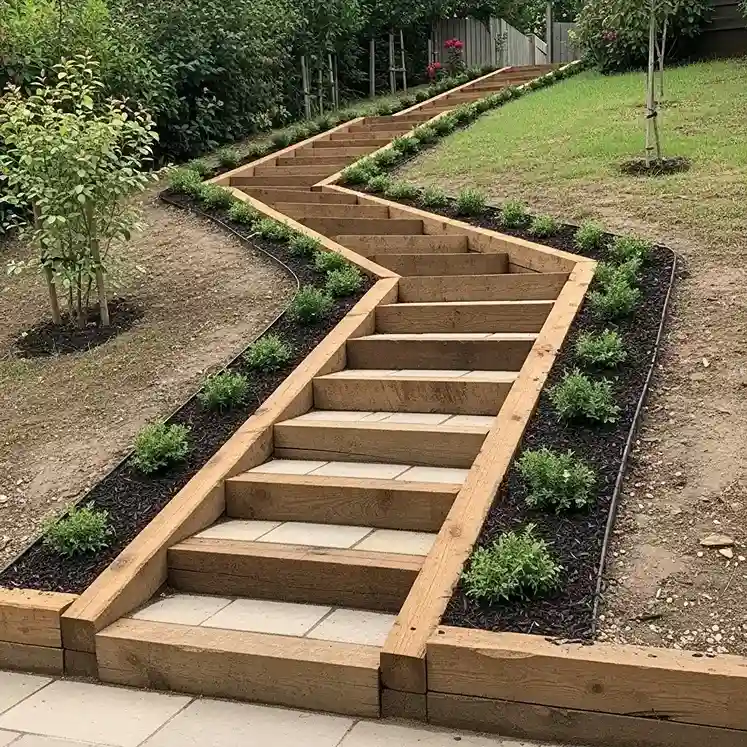
Treated hardwood or railway sleepers are the most popular and durable choice, ageing beautifully to a rich, warm tone that complements almost any planting scheme. For creative step design and companion planting ideas, our walkway ideas for outdoor spaces guide is full of practical and beautiful inspiration.
| Feature | Details |
|---|---|
| Best Materials | Hardwood sleepers, railway sleepers, treated timber |
| Best Step Plants | Creeping thyme, sedum, ornamental grasses |
| Difficulty Level | Intermediate |
| Maintenance Level | Low |
| Best For | Steep slopes requiring foot access |
| Estimated Cost | $400–$2,000 |
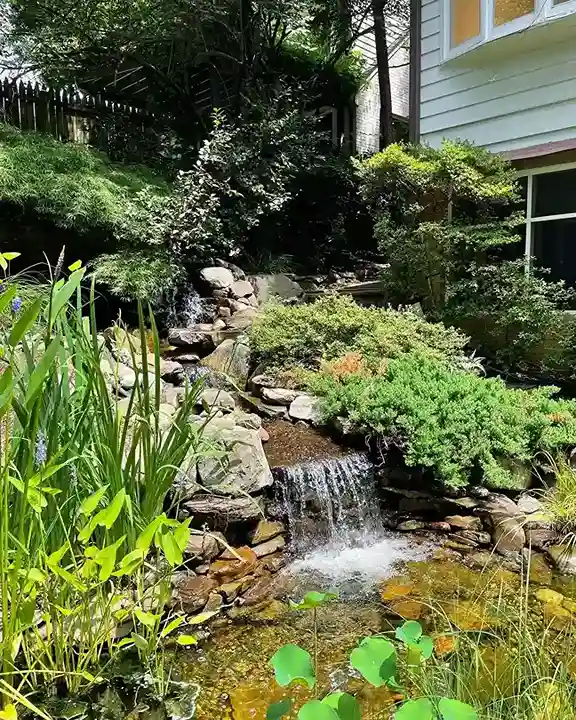
7. Cascading Water Feature
A cascading water feature designed to flow naturally down the face of a steep hill transforms the gradient from a problem into a breathtaking asset, creating a dramatic, moving, sound-rich focal point that becomes the centrepiece of the entire garden.
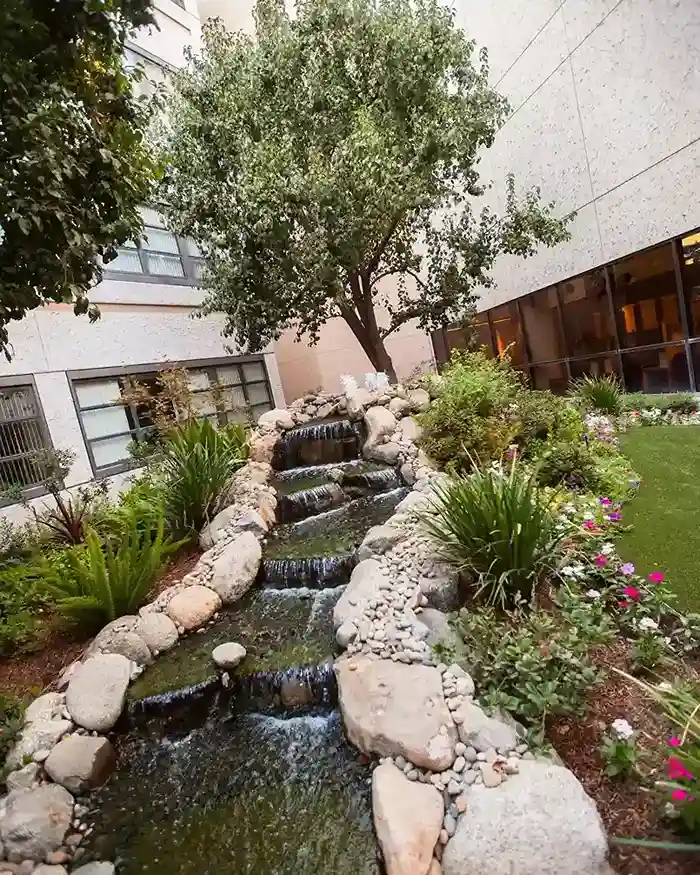
Natural stone channels, boulder-lined streams, and formal rills all work beautifully on steep slopes where the gradient itself powers the water flow without the need for a powerful pump. For aquatic planting advice that completes a hillside water feature, our water plants guide is an outstanding resource.
| Feature | Details |
|---|---|
| Best Feature Types | Boulder stream, stone cascade, formal rill, waterfall |
| Best Plants | Water iris, rushes, primulas, moisture ferns |
| Difficulty Level | Advanced |
| Maintenance Level | Moderate |
| Best For | Steep slopes with good water access |
| Estimated Cost | $1,500–$10,000 |
8. Flowering Shrub Bank
Covering a steep hillside bank with a mass planting of flowering shrubs creates a spectacular, long-season colour display that looks magnificent from a distance while providing excellent soil stabilisation through the shrubs’ deep, spreading root systems.
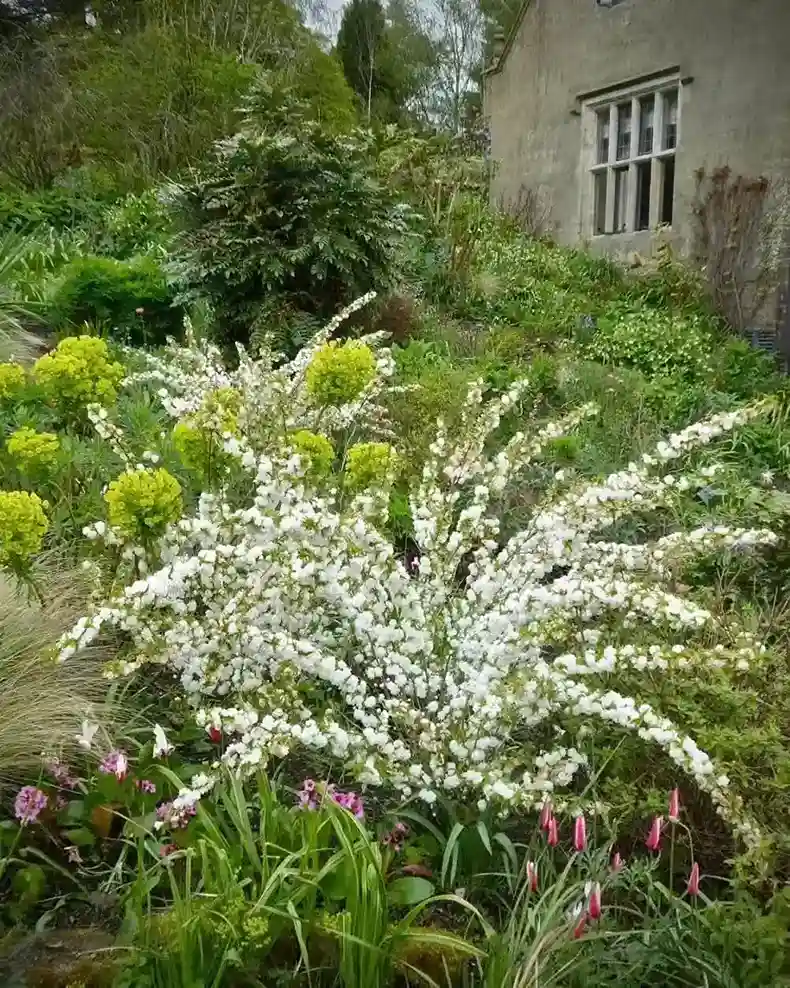
Mix early, mid, and late-season flowering varieties to ensure continuous colour and interest across the entire bank from early spring through to late autumn without gaps in the display. For the best shrub selections for steep hillside banks, our flowering shrubs guide covers every top variety in excellent detail.
| Feature | Details |
|---|---|
| Best Shrubs | Forsythia, hypericum, potentilla, spirea, weigela |
| Difficulty Level | Beginner |
| Maintenance Level | Low |
| Best For | Large steep banks visible from the garden |
| Key Benefit | Season-long colour and strong erosion control |
| Estimated Cost | $200–$1,200 |
9. Horizontal Fence Terracing
Installing a series of horizontal timber fence panels across the face of a steep slope in a stepped arrangement creates a bold, contemporary terracing solution that combines strong erosion control with a dramatically modern aesthetic that suits contemporary homes beautifully.
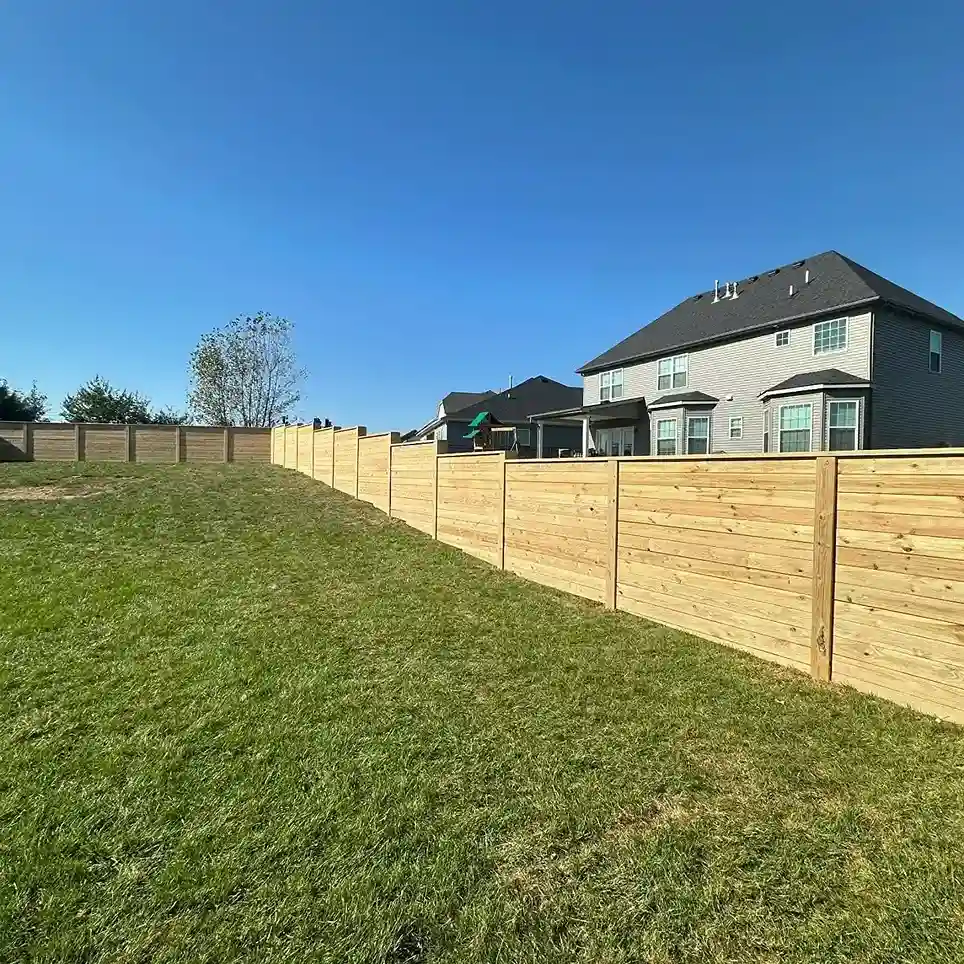
This approach works particularly well where traditional stone or masonry retaining walls would be too expensive or structurally complex to install. For design options and installation guidance, our horizontal wood fence guide covers this stylish approach in comprehensive, practical detail.
| Feature | Details |
|---|---|
| Best Materials | Cedar, hardwood, composite boards |
| Difficulty Level | Intermediate |
| Maintenance Level | Low |
| Best For | Modern homes, steep slopes needing budget terracing |
| Key Benefit | Contemporary look, effective slope management |
| Estimated Cost | $600–$3,000 |
10. Privacy Hedge on a Steep Slope
Planting a fast-growing privacy hedge along the top or sides of a steep hill creates a natural living screen that adds year-round structure, reduces wind exposure on the slope below, and frames the hillside landscape with beautiful green definition.
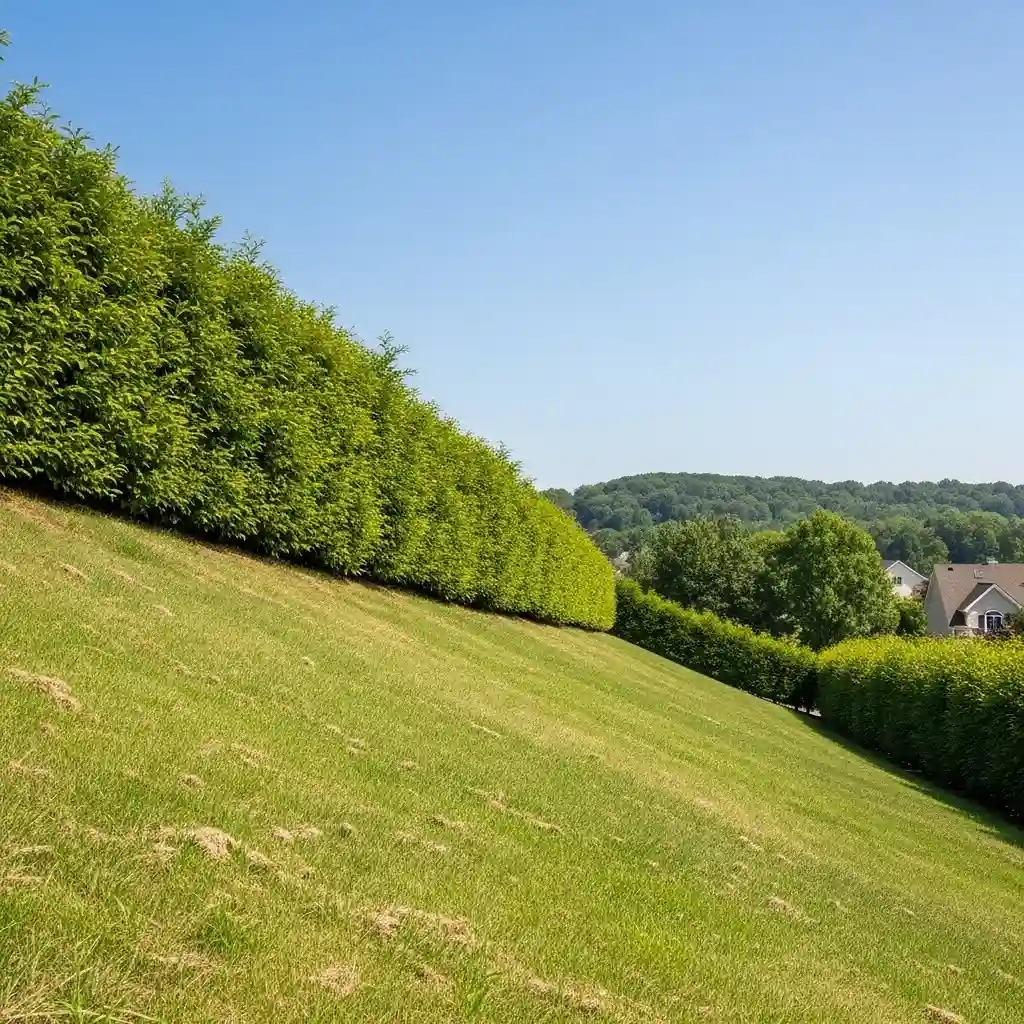
Deep-rooting hedging species are particularly valuable on steep slopes as their root systems actively contribute to soil stabilisation alongside their screening function. Our fast growing privacy shrubs guide will help you select the very best screening species for steep hillside conditions.
| Feature | Details |
|---|---|
| Best Shrubs | Arborvitae, photinia, laurel, leylandii, privet |
| Difficulty Level | Beginner |
| Maintenance Level | Low to moderate |
| Best For | Exposed steep slopes needing wind and privacy protection |
| Key Benefit | Privacy, wind reduction, soil stabilisation |
| Estimated Cost | $300–$1,500 |
11. Colorful Shrub Tapestry Planting
Planting a steep hillside with a richly varied tapestry of colorful foliage and flowering shrubs creates a breathtaking, year-round display of colour and texture that transforms one of the most challenging garden features into one of the most spectacular and celebrated.
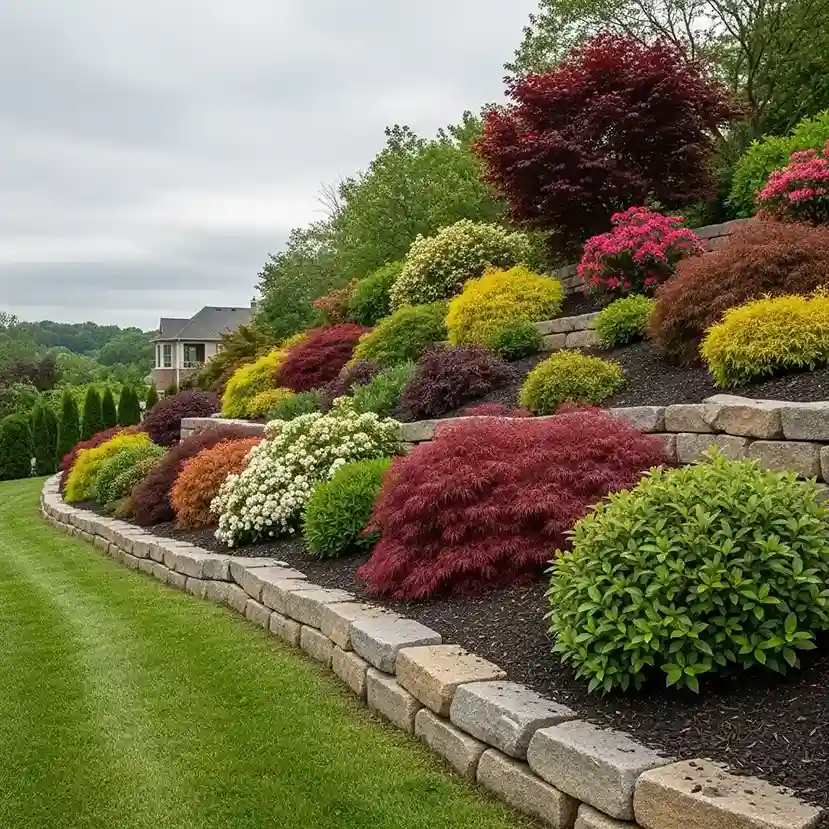
Layer contrasting heights, foliage colours, and bloom times from the top to the bottom of the slope for a composition that looks completely intentional and masterfully designed. Our colorful shrubs guide is full of outstanding varieties for bold, long-lasting steep hillside impact.
| Feature | Details |
|---|---|
| Best Shrubs | Nandina, barberry, physocarpus, weigela, spirea |
| Difficulty Level | Beginner |
| Maintenance Level | Low |
| Best For | Steep slopes visible from the house or street |
| Key Benefit | Year-round colour, texture, and erosion control |
| Estimated Cost | $250–$1,500 |
12. Shade Garden on a North-Facing Steep Slope
A north-facing steep slope that receives very little direct sunlight is the perfect canvas for a lush, atmospheric woodland shade garden that transforms an extremely challenging space into one of the most beautifully serene areas of the entire garden.
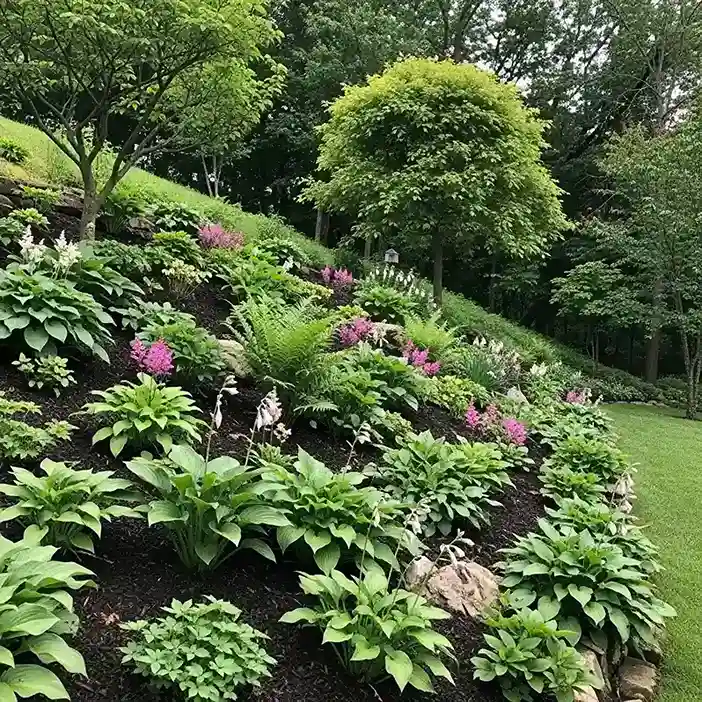
Hostas, astilbes, ferns, and hellebores thrive in these conditions and create an increasingly lush and layered woodland-floor aesthetic that gets more beautiful with every passing season. For the best shade-loving species for steep slopes, our shade plants guide and shade perennials guides are both excellent resources.
| Feature | Details |
|---|---|
| Best Plants | Hostas, astilbe, ferns, hellebores, brunnera |
| Sun Requirements | Part shade to full shade |
| Watering Needs | Moderate |
| Maintenance Level | Low |
| Best For | North or east-facing steep shaded slopes |
| Estimated Cost | $150–$600 |
13. Cottage Garden Steep Slope
A cottage-style planting on a steep slope creates a wonderfully romantic and relaxed hillside garden that tumbles naturally down the gradient in an abundantly colourful, self-seeding display that looks more beautiful and established with every passing growing season.
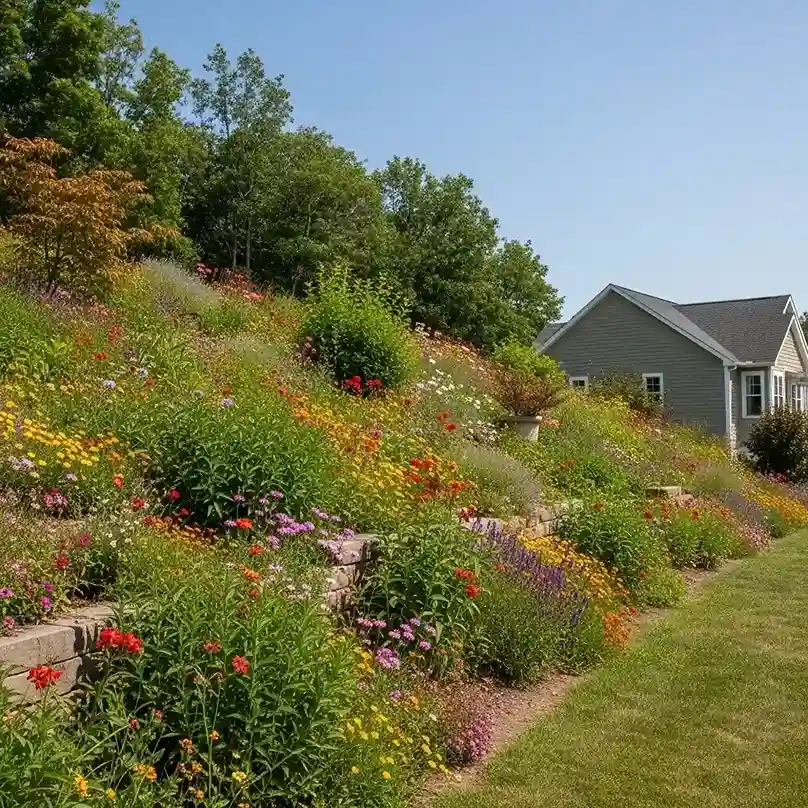
The self-seeding nature of cottage garden plants means the slope gradually fills in more densely year after year, reducing maintenance while increasing beauty over time. For plant combinations and layout ideas, our cottage garden ideas guide is an essential and inspiring resource for steep hillside planting.
| Feature | Details |
|---|---|
| Best Plants | Foxglove, salvia, delphinium, hardy geranium, lavender |
| Difficulty Level | Beginner |
| Maintenance Level | Low to moderate |
| Best For | Gentle to moderate steep slopes |
| Key Benefit | Romantic, self-seeding, increasingly low maintenance |
| Estimated Cost | $150–$600 |
14. Pallet Garden Steep Slope Feature
Repurposed wooden pallets staked firmly into the face of a steep slope create surprisingly effective budget planting structures that make excellent use of the gradient and bring colour, herbs, and trailing plants to even the most challenging and inaccessible steep sections.
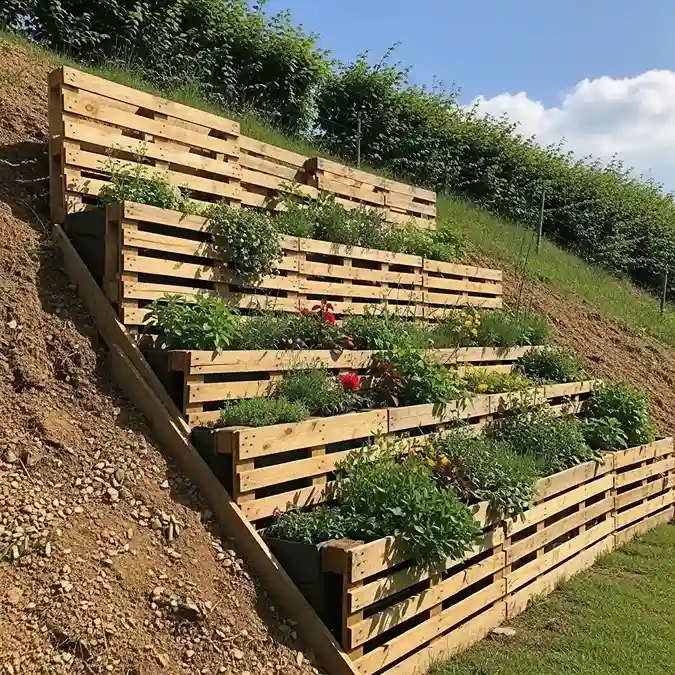
This creative, eco-conscious approach requires very little investment and can be implemented quickly to begin stabilising a slope while more permanent solutions are planned and budgeted for. For more creative and affordable pallet garden projects, our pallet garden ideas guide is full of practical inspiration.
| Feature | Details |
|---|---|
| Best Plants | Trailing petunias, sedums, herbs, strawberries |
| Difficulty Level | Beginner |
| Maintenance Level | Moderate |
| Best For | Budget-conscious steep slope projects |
| Key Benefit | Very low cost, quick to install, creative |
| Estimated Cost | $20–$150 |
15. Bohemian Steep Hill Garden
A bohemian approach to steep hill landscaping embraces the dramatic, irregular character of the slope with free-spirited planting, natural materials, and eclectic decorative features that celebrate the hillside’s wildness rather than trying to tame or formalise it.
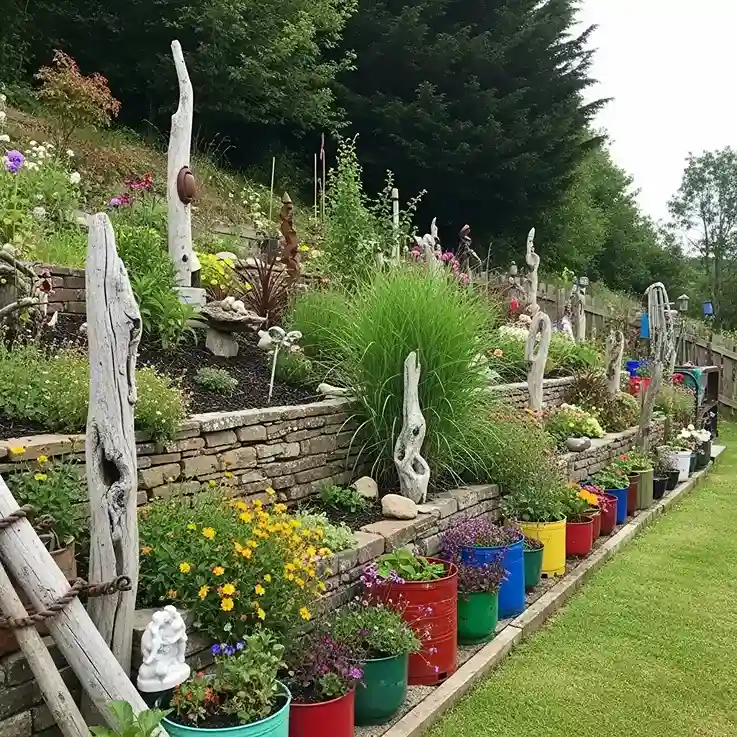
Driftwood sculptures, wildflower drifts, ornamental grasses, and colourful repurposed containers all contribute to a bohemian steep hill garden that feels joyful, deeply personal, and completely one-of-a-kind. For eclectic outdoor design inspiration, our hippie bohemian outdoor garden guide is wonderfully creative and perfectly suited to steep hillside settings.
| Feature | Details |
|---|---|
| Best Plants | Wildflowers, ornamental grasses, dahlias, salvias |
| Best Features | Driftwood, natural stone, repurposed containers |
| Difficulty Level | Beginner |
| Maintenance Level | Low |
| Best For | Creative homeowners, naturalistic settings |
| Estimated Cost | $100–$500 |
16. Vertical Garden Wall on Retaining Structure
Installing a vertical garden system on the face of a steep hillside retaining wall transforms a necessary engineering structure into a spectacular living wall that maximises planting space while adding extraordinary colour and texture to the hillside landscape.
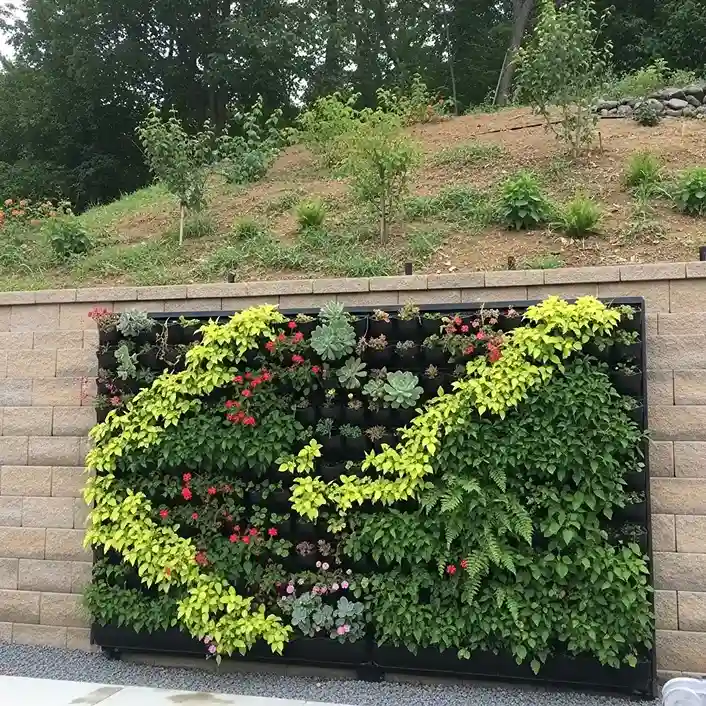
Succulents, ferns, and trailing flowers all perform beautifully in wall-mounted vertical planting systems and create a stunning visual impact that draws the eye upward across the entire height of the slope. For the best plant choices and installation systems, our vertical gardening guide is a comprehensive and detailed resource.
| Feature | Details |
|---|---|
| Best Plants | Succulents, ferns, trailing flowers, sedums, orchids |
| Best Wall Types | Concrete retaining walls, timber, gabion faces |
| Difficulty Level | Intermediate |
| Maintenance Level | Moderate |
| Best For | Retaining walls on prominent steep slopes |
| Estimated Cost | $200–$1,500 |
17. Tree Planting for Long-Term Stabilisation
Planting trees strategically across a steep hillside provides the most powerful and long-lasting erosion control available, as mature tree root systems penetrate deeply into the slope and bind enormous volumes of soil together permanently and effectively.
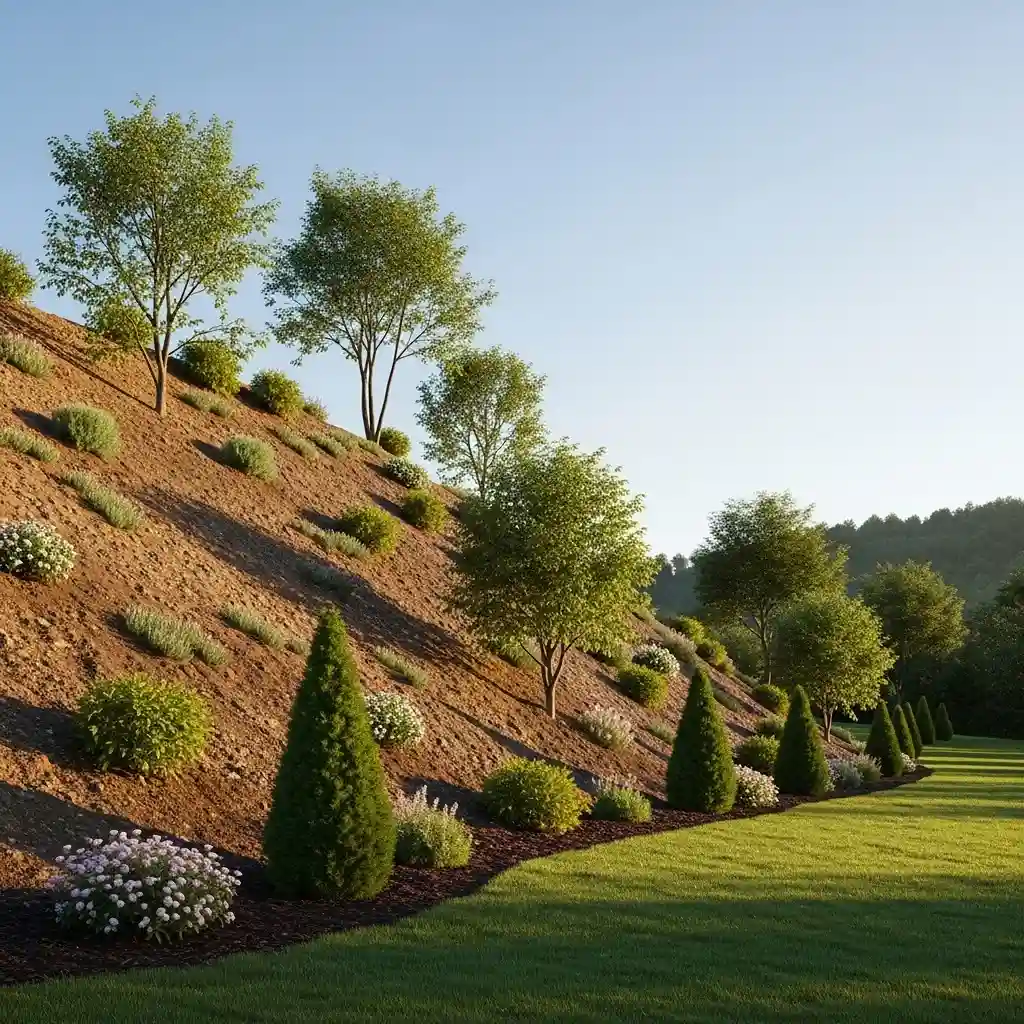
Choose species appropriate to your climate, aspect, and soil type and mix deciduous with evergreen trees for year-round structural interest alongside their essential practical function. For species selection and placement advice, our tree landscaping ideas guide covers steep hillside tree planting in comprehensive, helpful detail.
| Feature | Details |
|---|---|
| Best Trees | Oak, pine, birch, maple, alder, willow |
| Difficulty Level | Beginner |
| Maintenance Level | Very low once established |
| Best For | Large steep slopes requiring permanent stabilisation |
| Key Benefit | Deepest possible erosion control, long-term beauty |
| Estimated Cost | $200–$2,500 |
18. Coastal Steep Hill Garden
A coastal-inspired steep hill garden planted with ornamental grasses, agapanthus, sea lavender, and drought-tolerant ground covers creates a beautiful, wind-resilient landscape that is particularly well-suited to exposed hillside positions facing prevailing winds and salt-laden air.
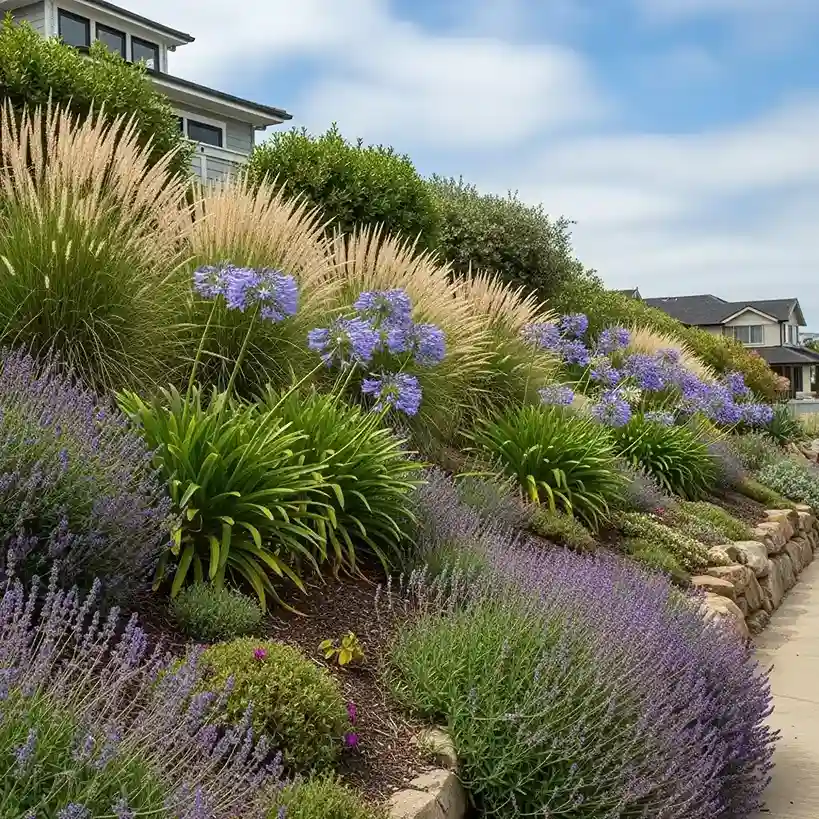
The natural resilience of coastal plants makes them ideally suited to the challenging growing conditions that steep, exposed hillside positions regularly present throughout the year. For more coastal design ideas and plant selections, our coastal backyard garden guide is a comprehensive and beautifully illustrated resource.
| Feature | Details |
|---|---|
| Best Plants | Agapanthus, sea lavender, cordyline, ornamental grasses |
| Sun Requirements | Full sun |
| Watering Needs | Very low |
| Maintenance Level | Very low |
| Best For | Exposed coastal or wind-prone steep hillsides |
| Estimated Cost | $200–$1,000 |
19. Food Forest on a Steep Hill
A steep hill planted as a productive food forest creates a self-sustaining, multi-layered edible ecosystem that makes extraordinary use of difficult terrain, combining fruit trees, berry-producing shrubs, herbs, and edible ground covers in a beautifully productive landscape.
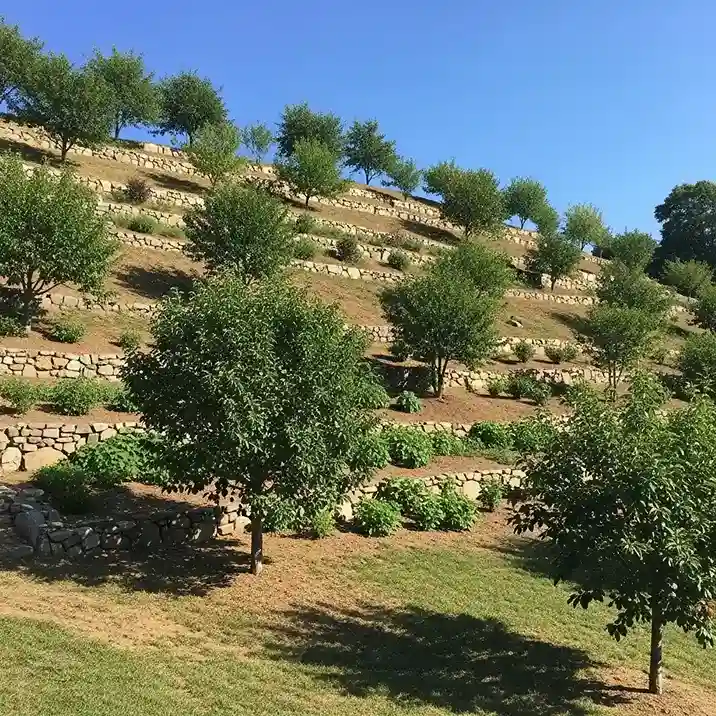
The multi-layered structure of a food forest is perfectly adapted to the different growing conditions found at different heights on a steep slope, from the windier, drier top to the more sheltered, moisture-retentive base. Our food forest guide walks you through planning and planting a productive steep hillside food forest from scratch.
| Feature | Details |
|---|---|
| Best Plants | Fruit trees, berry shrubs, herbs, edible ground covers |
| Difficulty Level | Intermediate |
| Maintenance Level | Low once established |
| Best For | Large south-facing steep slopes with full sun |
| Key Benefit | Productive, self-sustaining, beautiful, and practical |
| Estimated Cost | $500–$3,500 |
20. Lavender Bank
A sweeping bank of lavender planted across a steep south-facing slope creates one of the most iconic, fragrant, and visually stunning hillside landscapes imaginable, its silvery foliage and purple flower spikes creating a breathtaking display throughout the summer months.
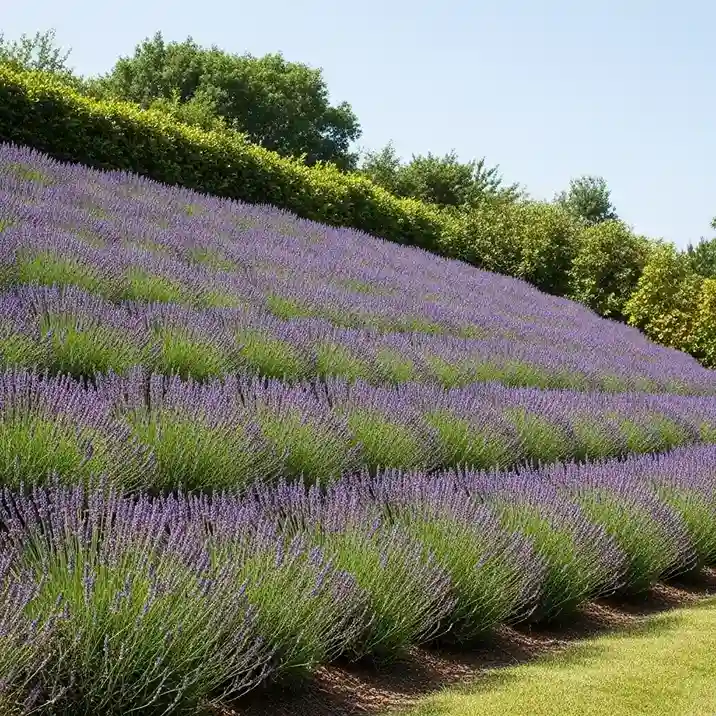
Lavender’s naturally low-spreading habit, drought tolerance, and deep root system make it an outstanding choice for steep, dry, sun-baked slopes that challenge most other plants. For more drought-tolerant planting ideas for challenging positions, our cheap landscaping ideas guide covers low-cost, high-impact steep slope solutions in practical detail.
| Feature | Details |
|---|---|
| Best Varieties | Hidcote, Munstead, Phenomenal, Grosso |
| Sun Requirements | Full sun |
| Watering Needs | Very low |
| Maintenance Level | Very low |
| Best For | Dry south-facing steep slopes |
| Estimated Cost | $150–$600 |
21. Hydrangea Hillside Planting
A steep hillside planted with a sweeping mass of hydrangeas creates one of the most spectacular and memorable garden displays available, the natural elevation of the slope allowing their enormous, lush blooms to be admired from every angle simultaneously.
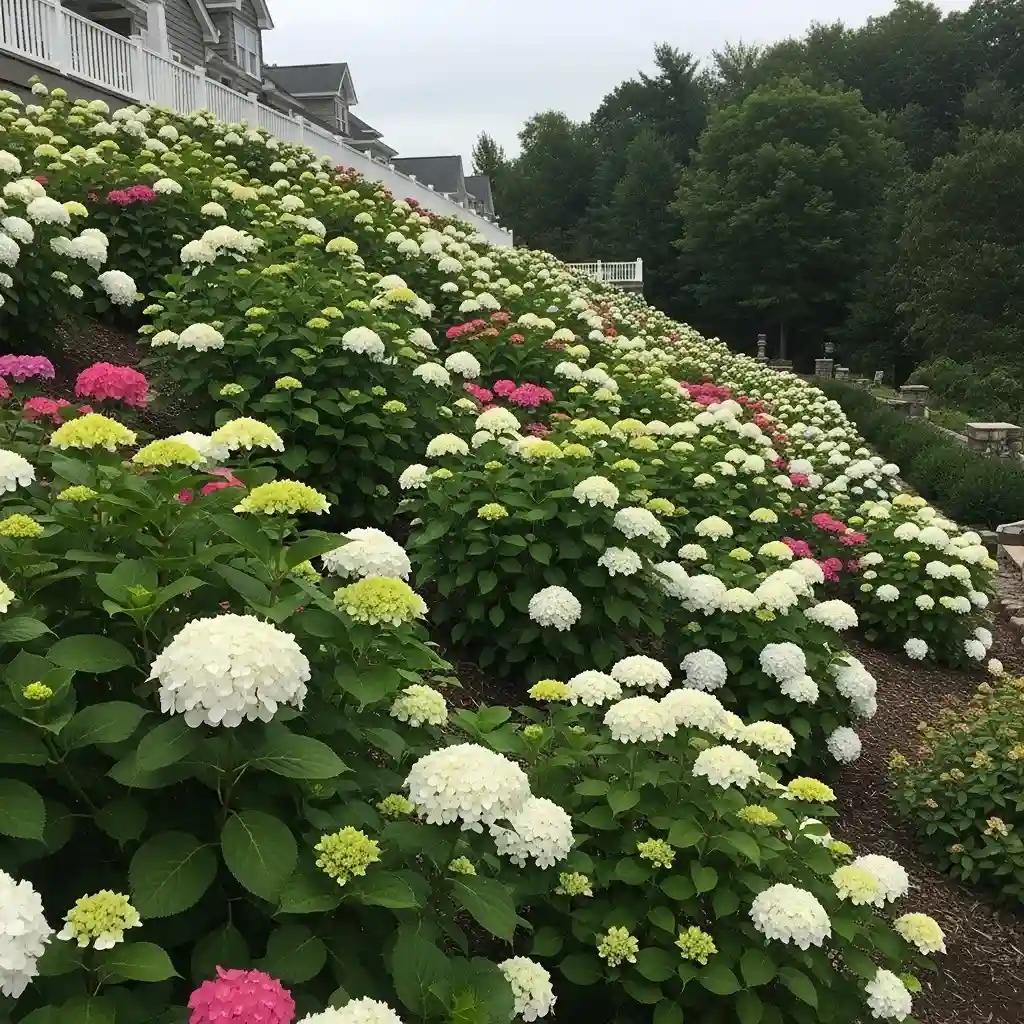
Choose a variety of hydrangea types with staggered bloom times for a continuous display running from early summer through to the first frosts of autumn each year. Our comprehensive hydrangea flower guide will help you select the perfect varieties for your hillside aspect and conditions.
| Feature | Details |
|---|---|
| Best Varieties | Annabelle, Endless Summer, Limelight, Incrediball |
| Sun Requirements | Part shade to full sun |
| Watering Needs | Moderate |
| Maintenance Level | Low |
| Best For | Gentle to moderate steep slopes in part shade |
| Estimated Cost | $300–$1,800 |
22. Fence with Planted Border on a Slope
Installing a fence along or across a steep slope and planting a lush border on the downhill side creates a beautifully defined landscape feature that combines effective slope management with genuine visual elegance and long-season planting interest.
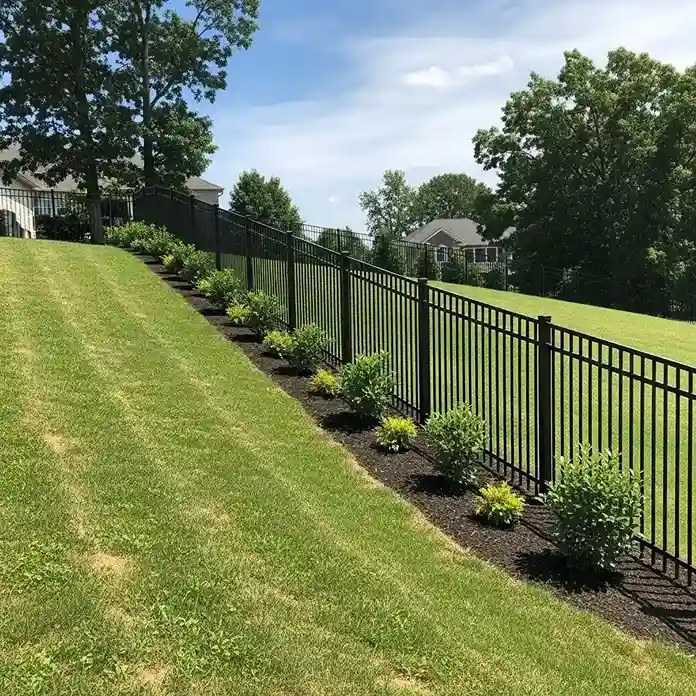
A well-planted fence border also softens the visual impact of the fencing itself, making the entire structure feel more natural and integrated into the surrounding landscape. For fence styles and planting combinations perfectly suited to sloped positions, our fence line landscaping guide is an excellent practical resource.
| Feature | Details |
|---|---|
| Best Fence Types | Post and rail, timber board, wire, split rail |
| Best Plants | Ornamental grasses, lavender, echinacea, salvia |
| Difficulty Level | Intermediate |
| Maintenance Level | Low |
| Best For | Steep slopes needing boundary definition |
| Estimated Cost | $400–$2,500 |
23. Budget Steep Hill Landscaping
Transforming a steep hill on a limited budget is completely achievable with the right combination of affordable strategies, native plants, and creative problem-solving that delivers impressive results without requiring significant financial investment upfront.
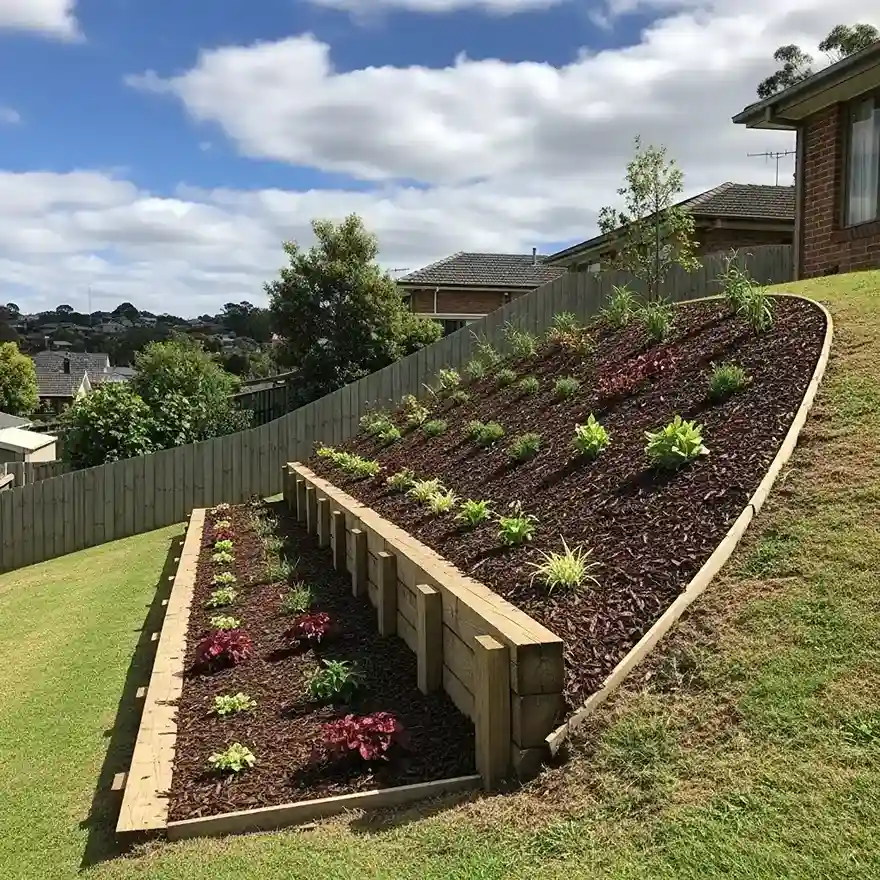
Native seed mixes, plant divisions, recycled timber edging, and deep mulching all work together to stabilise and beautify a steep slope at a fraction of the cost of traditional hard landscaping solutions. For detailed money-saving strategies that still produce genuinely impressive hillside results, our cheap landscaping ideas and pallet garden ideas guides are full of practical, budget-friendly inspiration.
| Feature | Details |
|---|---|
| Best Approaches | Native seed, plant divisions, mulching, recycled timber |
| Difficulty Level | Beginner |
| Maintenance Level | Low |
| Best For | Budget-conscious homeowners with steep slopes |
| Key Benefit | Maximum visual impact for minimum investment |
| Estimated Cost | $50–$400 |
Frequently Asked Questions (FAQs)
Q1: What is the most effective way to stop erosion on a steep hill?
Dense ground cover planting with deep-rooting species combined with structural solutions like gabion walls, stone terracing, and timber retaining walls provides the most effective and long-lasting erosion control on steep hillside slopes of any gradient.
Q2: What plants grow best on a steep sunny hillside?
Lavender, creeping juniper, sedum, ornamental grasses, cistus, and native wildflowers all thrive on steep sunny slopes, tolerating drought, poor soil, and the fast drainage typical of steep hillside positions with outstanding resilience and minimal care requirements.
Q3: How do I landscape a steep hill on a tight budget?
Start with affordable native ground cover seed mixes and plant divisions for erosion control, use recycled timber for simple edging and steps, and mulch heavily to retain moisture. Our cheap landscaping ideas guide provides excellent budget-friendly steep hill strategies throughout.
Q4: How do I deal with pests on a steep hillside garden?
Steep hillsides are particularly prone to burrowing pests like moles and ground squirrels that destabilise soil on slopes. Our guides on eliminate ground moles, keep ground squirrels out, and get rid of ants in your yard provide targeted, effective solutions for protecting your steep hillside planting.
Conclusion
A steep hill is never a problem — it is an opportunity to create one of the most dramatic, layered, and breathtaking outdoor spaces imaginable when approached with the right ideas and plants.
Explore more inspiration through our guides on backyard landscaping ideas and trending landscaping ideas to bring your complete steep hillside vision beautifully to life. For more interesting and helpful guide keep visiting bloomprogarden and share with your friends.