A vintage garden captures the romance, charm, and gentle beauty of bygone eras, creating an outdoor space that feels both familiar and enchanted.
Unlike modern minimalist landscapes with their clean lines and architectural plants, vintage gardens embrace abundance, softness, and the comfortable patina of age. They remind us of grandmother’s cottage, secret gardens discovered in childhood stories, and a time when gardens were meant to be wandered through, not just viewed from a patio.
Source: @heronbarn
The vintage garden aesthetic draws inspiration from various periods—Victorian formality, Edwardian abundance, cottage garden informality, and even Art Deco structure—blending them into a personal vision that feels authentically nostalgic rather than merely historical.
Whether you have a sprawling country property or a modest urban plot, these design ideas will help you create a garden that whispers stories of the past while providing a beautiful sanctuary for the present.

Source: @theresa_gromski
This comprehensive guide presents 20 vintage garden design ideas that you can adapt to your own space. For complementary inspiration, explore our cottage garden ideas and hippie garden bohemian outdoor guides.
1. Embrace the Romantic Color Palette
Vintage gardens speak in soft, romantic colors rather than bold, modern brights. Think faded roses, lavender blues, creamy whites, soft pinks, and gentle purples—colors that look as though they’ve been gently washed by time and weather.

Source: @reginasotti
Key vintage colors include:
- Blush pink (old-fashioned roses, peonies)
- Lavender and mauve (catmint, lavender, heliotrope)
- Cream and ivory (Shasta daisies, moonflowers, antique roses)
- Soft yellow (lady’s mantle, primroses, pale coreopsis)
- Dusty blue (love-in-a-mist, bluebells, forget-me-nots)
Avoid harsh reds, electric oranges, or neon shades that feel contemporary. Instead, choose cultivars with “old” names or heirloom status—they often carry the subtle, complex colors that define vintage gardens.
For more color inspiration, our colorful shrubs guide offers plants with vintage-appropriate hues.
2. Include Heirloom and Heritage Plants
The heart of any vintage garden beats in its plants—specifically the heirloom varieties that have been grown for generations. These plants carry history in their DNA and often possess fragrances, forms, and flavors that modern hybrids have lost in pursuit of disease resistance or shipping durability.

Source: @rebecca_anchorban_house
Essential heirloom plants for vintage gardens:
Old-fashioned roses form the backbone of vintage gardens. Unlike modern hybrid teas, antique roses like ‘Madame Hardy’, ‘Charles de Mills’, or ‘Zéphirine Drouhin’ offer complex fragrances, lush blooms, and romantic, sprawling habits. They bloom once or repeat sparingly, making each flower feel precious.
Peonies (both herbaceous and tree types) bring June glory with their massive, fragrant blooms. Heirloom varieties like ‘Festiva Maxima’ (white with crimson flecks) or ‘Sarah Bernhardt’ (soft pink) have graced gardens for over a century.
Hollyhocks (Alcea rosea) tower along fences and walls, their flower spikes clothed in single or double blooms in soft shades. They self-seed freely, creating the delightful randomness characteristic of vintage gardens.
Foxgloves (Digitalis purpurea) bring vertical interest and woodland magic to partly shaded spots. Their spotted throats invite closer inspection and delight children and adults alike.
Larkspur and love-in-a-mist (Nigella) self-seed generously, filling gaps with delicate foliage and charming flowers that look exactly like old botanical illustrations.
For comprehensive heirloom plant recommendations, our best outdoor plants guide features many vintage-appropriate varieties.
3. Create Winding Pathways
Straight, utilitarian paths belong to modern gardens—vintage gardens invite wandering along gentle curves that reveal new views with each turn. Winding pathways create mystery and encourage slow, contemplative exploration.

Source: @bloomprogarden
Path materials with vintage character:
Brick paths, especially those laid in herringbone or basket-weave patterns, instantly age a garden. Use old, reclaimed bricks when possible—their irregular surfaces and soft colors can’t be replicated by new materials. Allow moss to grow between bricks for authentic patina.
Gravel paths produce the satisfying crunch that announces arrivals and creates sensory pleasure. Choose gravel in soft buffs, grays, or warm browns rather than harsh white. Our white stone landscaping ideas guide offers inspiration for path materials.
Flagstone laid in irregular patterns with moss or creeping thyme filling gaps creates paths that look centuries old. Choose stones with varied shapes and colors for maximum authenticity.
Stepping stones half-hidden by sprawling plants encourage slow walking and peek-a-boo views of what lies ahead.
Edge pathways with billowing plants that soften hard lines—lavender, catmint, or lady’s mantle spilling onto path edges create that coveted “cottage” look.
4. Install Rustic Structures and Arbors
Wooden structures weathered to silver-gray provide the bones of vintage gardens, supporting climbing plants and creating garden “rooms” that feel established and permanent.

Source: @bloomprogarden
Essential vintage structures:
Arbors and archways draped with climbing roses, honeysuckle, or clematis mark transitions between garden areas. The simple act of passing under flowers overhead transforms a walk into an experience.
Trellises against walls or fences support climbing plants while adding architectural interest. Choose simple wooden designs—elaborate Victorian trellises suit formal gardens, while rustic lattice suits cottage styles.
Pergolas provide shaded walkways and define outdoor rooms. Train wisteria, grapes, or climbing hydrangea overhead for dappled shade and seasonal interest.
Picket fences painted white or left to weather naturally enclose vintage gardens with charming authenticity. Our picket fence guide offers design and installation advice.
Gateways with latches that click satisfyingly create entrance rituals. Arched gates draped with climbing plants promise magic beyond.
For more structural inspiration, our garden wall ideas and wood and wire fence guides offer complementary ideas.
5. Incorporate Weathered Containers and Ornaments
Vintage gardens collect containers and ornaments the way attics collect treasures—each piece carrying its own history and character. The key is authentic weathering; new items look wrong until they’ve aged naturally.

Container ideas with vintage appeal:
Terracotta pots develop beautiful moss and patina over time. Choose classic shapes—urns, long toms, or simple rounded pots—in authentic terra cotta rather than modern glazed versions.
Galvanized metal containers (old watering cans, troughs, buckets) bring utilitarian charm. Their silvery surfaces complement soft flower colors and develop rust patterns that add character.
Stone troughs and sinks planted with miniature gardens create focal points. Genuine antique stone sinks command high prices, but convincing reproductions weather beautifully.
Enamelware (old pitchers, bowls, basins) adds unexpected whimsy. Plant with small succulents or trailing plants for delightful combinations.
Ornamental accents include sundials (genuinely old or reproduction), birdbaths with lichen-covered surfaces, stone finials, and cast-iron urns. Place them where they’ll be discovered—half-hidden by foliage rather than displayed prominently.
Our container gardening guide and potted plants resources offer planting ideas for vintage containers.
6. Create Secret Garden Spaces
Every vintage garden needs at least one hidden corner—a place to sit unnoticed, read, dream, or simply observe. These secret spaces tap into childhood memories of hideaways and the universal desire for private retreat.

Source: @rebecca_anchorban_house
Ideas for secret garden spaces:
A bench tucked behind a flowering shrub creates an instant hideaway. Choose a simple wooden bench (weathered, of course) and surround it with fragrant plants—lavender, roses, jasmine—that perfume the air.
A vine-draped arbor with a small seat inside feels like a green cave. Train fast-growing vines like silver lace or honeysuckle for quick coverage.
A hidden seating circle created by surrounding a small space with tall perennials—delphiniums, hollyhocks, or ornamental grasses—feels discovered rather than designed.
A pathway that seems to end but actually curves behind a large shrub or hedge invites exploration. Place a small seat or ornament at the hidden destination.
These secret spaces become favorite spots for morning coffee, afternoon reading, or evening contemplation. They needn’t be large—just 4×4 feet creates room for a small bench and sense of enclosure.
For small-space inspiration, our tiny backyard ideas guide offers creative approaches.
7. Plant in Abundant, Layered Drifts
Vintage gardens reject the modern tendency toward sparse, specimen planting in favor of lush abundance. Plants mingle, self-seed, and create layered tapestries of foliage and flower.

Source: @fionacumberpatch
Planting principles for vintage abundance:
Drifts rather than single specimens create naturalistic swaths of color. Plant in odd numbers—3, 5, or 7 of each variety—for informal rhythm.
Layering by height places tall plants (delphiniums, hollyhocks, foxgloves) at the back or center, with medium plants (peonies, irises, roses) in the middle, and low plants (lady’s mantle, violas, creeping thyme) at the front.
Self-seeding allowed—let plants like love-in-a-mist, poppies, and foxgloves scatter their seeds where they will. The resulting randomness creates the charming “cottage garden” look that feels uncontrived.
Foliage texture matters as much as flowers. Mix broad leaves (hostas, bergenias) with fine textures (fennel, astilbe, ferns) for rich visual interest even when few plants bloom.
Seasonal succession ensures something interesting in every month. Choose plants with overlapping bloom times and varied peak seasons.
For detailed planting strategies, our flower beds in front of house and front of house landscape ideas guides offer adaptable approaches.
8. Include Fragrant Plants for Sensory Delight
Vintage gardens engage all senses, but fragrance holds special importance. The scents of old roses, lavender, and honeysuckle trigger memories and emotions in ways that visual beauty alone cannot match.

Essential fragrant plants for vintage gardens:
Old roses remain unmatched for complex, changing fragrances. ‘Gertrude Jekyll’, ‘Graham Thomas’, and ‘Abraham Darby’ (all David Austin roses bred to capture old rose character) offer intense scents.
Lavender (English lavender, Lavandula angustifolia) provides the quintessential vintage fragrance. Plant along paths where brushing against foliage releases scent.
Honeysuckle (Lonicera periclymenum) perfumes evening air, attracting moths and creating magical twilight moments. ‘Serotina’ offers particularly intense fragrance.
Lilacs (Syringa vulgaris) bring spring fragrance that generations have treasured. Choose old-fashioned varieties like ‘Charles Joly’ or ‘Mme Lemoine’ for authentic scent.
Sweet peas (Lathyrus odoratus) grown on tepees or trellises provide cut flowers with enchanting fragrance all summer. Heirloom varieties like ‘Cupani’ or ‘Painted Lady’ offer the strongest scents.
Mock orange (Philadelphus coronarius) fills June gardens with citrus-sweet fragrance. Its simple white flowers look appropriately old-fashioned.
Heliotrope offers vanilla-scented purple flowers that attracted Victorian gardeners. Grow in containers near seating areas.
For more plant recommendations, our flowering shrubs guide includes many fragrant options.
9. Incorporate Water Features with Character
Water adds movement, sound, and life to vintage gardens. The key is choosing features with old-world character rather than modern minimalist designs.

Vintage-appropriate water features:
Stone troughs or sinks converted to miniature ponds provide water interest on a small scale. Plant with dwarf water lilies or marginal plants and add a small recirculating pump for gentle movement.
Wall-mounted fountains with lion heads or simple spouts suit small gardens or courtyards. The sound of trickling water masks traffic noise and creates tranquility.
Birdbaths on pedestals attract feathered visitors while adding architectural interest. Choose classic designs in stone or cast stone that develop moss and patina over time.
Formal reflecting pools suit larger, more structured vintage gardens. Keep edges soft with overhanging plants rather than crisp paving.
Naturalistic ponds with irregular shapes and abundant marginal planting feel like discovered gems. Include a small bench nearby for contemplation.
For water garden inspiration, our water plants guide offers planting ideas for pond margins.
10. Create Cozy Seating Areas
Vintage gardens invite lingering, which requires comfortable, well-placed seating throughout the space. Rather than a single patio, scatter multiple seating opportunities where different views and experiences await.

Seating ideas with vintage character:
Wrought iron benches with curlicue details suit formal vintage gardens. Paint them traditional colors—dark green, black, or cream—and allow rust patterns to develop naturally.
Wooden Adirondack chairs painted in soft colors provide comfortable, casual seating. Position them for afternoon tea with a view of the garden’s best features.
Stone or marble benches look wonderfully permanent and age beautifully. Place one at the end of a long view or tucked into a shady corner.
Bistro sets (small table with two chairs) suit intimate seating areas. Choose wrought iron or cast aluminum with classic detailing.
Built-in seating along walls or around trees maximizes space in small gardens. Stone or brick benches with wood seats combine permanence with comfort.
Swing seats or porch swings suspended from sturdy arbors add playful nostalgia. Drape with climbing plants for dappled shade.
For outdoor living inspiration, our yard ideas outdoor space guide offers additional seating concepts.
11. Incorporate Vintage Garden Tools and Accents
Thoughtfully placed vintage tools and accents add authentic period details that reward close inspection. The key is restraint—a few well-chosen items scattered where discovery feels natural, not clutter.

Source: @junkrefunkery
Garden accents with vintage appeal:
Old watering cans (galvanized or copper) placed near seating areas or at path intersections add utility and charm. Allow them to develop honest patina rather than keeping them polished.
Clay plant labels handwritten with plant names suit kitchen gardens and plant collections. The imperfect handwriting adds human touch.
Glass cloches protect tender plants while adding Victorian greenhouse charm. Place one over a special plant or simply as decoration.
Old garden tools (hand forks, trowels, shears) displayed on walls or tucked into containers suggest the garden’s ongoing story. Clean them for use or display as-is.
Wire plant supports (pea sticks, obelisks, plant rings) made from twigs or simple wire look appropriately rustic. Avoid plastic-coated supports.
Bee skeps (traditional straw beehives) make decorative accents even without active hives. Place them near bee-attracting plants.
For unique decorative ideas, our driftwood art ideas for garden and fairy garden ideas guides offer creative inspiration.
12. Plant a Vintage Cutting Garden
Vintage gardens exist partly to provide flowers for the house—armloads of blooms arranged casually in old pitchers and mason jars. A dedicated cutting area ensures constant supply without depleting display beds.

Source: @livetpalahaugen
Essential cutting garden plants:
Annuals for cutting: Sweet peas, larkspur, bachelor’s buttons, love-in-a-mist, calendula, and snapdragons provide generous blooms all summer. Plant in rows or blocks for easy harvesting.
Perennials for cutting: Peonies, irises, delphiniums, phlox, coneflowers, and black-eyed Susans return each year with increasing abundance.
Shrubs for cutting: Roses (especially old varieties), lilacs, hydrangeas, and spirea provide structure and abundance.
Foliage for cutting: Lady’s mantle, ferns, hosta leaves, and ornamental grasses add texture to arrangements.
Plant cutting gardens near the house for easy access in all weather. Include a small bench or table for arranging flowers immediately after cutting.
For edible cutting garden ideas, our small vegetable gardens guide offers complementary approaches.
13. Include Edible Elements with Ornamental Appeal
Vintage gardens often blurred the line between ornamental and edible, with vegetables, fruits, and herbs woven throughout flower borders. This practical beauty adds another layer of interest and productivity.

Edible plants with ornamental value:
Artichokes (both globe and Jerusalem) provide dramatic architectural foliage and striking flowers if allowed to bloom.
Asparagus ferns (the mature foliage) add airy texture to borders while productive crowns hide below.
Rhubarb offers enormous leaves and colorful stalks—choose varieties with red coloration for maximum impact.
Berry bushes (currants, gooseberries, blueberries) provide spring flowers, summer fruit, and fall color. Our colorful shrubs guide includes edible options.
Fruit trees trained as espaliers or fans against walls save space while providing structure and harvests. Choose antique varieties for historical accuracy.
Herbs of all kinds—rosemary, sage, thyme, oregano—offer foliage, flowers, and fragrance throughout the growing season.
For more edible landscaping ideas, our food forest guide and garden herb pairing guide provide comprehensive inspiration.
14. Create Romantic Shade with Trees and Vines
Vintage gardens need areas of dappled shade where one can escape summer heat. Trees and vines trained over structures create these romantic, cool retreats.

Trees for vintage garden shade:
Flowering crabapples offer spring blossom, summer shade, and fall fruit for wildlife. Choose old varieties like ‘Dolgo’ or ‘Transcendent’ for authentic character.
Serviceberry (Amelanchier) provides white spring flowers, edible berries, and brilliant fall color in a manageable size.
Redbud (Cercis canadensis) bears purple-pink flowers directly on branches in early spring before leaves emerge—a magical effect.
Dogwood (Cornus florida) offers iconic spring flowers, summer shade, and fall color. Choose straight species rather than modern hybrids for vintage authenticity.
Vines for overhead shade:
Wisteria draped over pergolas creates the ultimate romantic shade structure. Allow at least 5-7 years for establishment before expecting significant bloom.
Grapes (Vitis vinifera or native species) provide edible harvests and dense summer shade. Their fall color adds another season of interest.
Climbing hydrangea (Hydrangea anomala subsp. petiolaris) thrives on north-facing walls and structures, providing lush coverage without overwhelming.
For shade garden inspiration, our shade garden, shade perennials, and shade plants guides offer extensive plant recommendations.
15. Incorporate Period-Appropriate Hardscaping
Hardscaping elements—paths, patios, walls, and steps—provide the bones around which vintage gardens grow. Choose materials and patterns that evoke your chosen period.

Victorian-era hardscaping (1837-1901) :
- Intricate brick or tile patterns (herringbone, basket weave)
- Cast iron railings and gates with decorative details
- Formal geometric layouts with strong axial lines
- Stone urns and statuary as focal points
Edwardian hardscaping (1901-1910) :
- Slightly looser layouts than Victorian formality
- Mixed materials (brick edges with gravel centers)
- Arts and Crafts influences in details
- Pergolas and other outdoor living structures
Arts and Crafts hardscaping (1880-1920) :
- Emphasis on craftsmanship and natural materials
- Local stone laid in irregular patterns
- Simple, honest construction without pretense
- Integration of house and garden through similar materials
Cottage garden hardscaping :
- Informal, seemingly unplanned layouts
- Mixed, recycled, and found materials
- Narrow paths that force slow walking
- Plants softening every hard edge
For comprehensive hardscape ideas, our garden wall ideas and walkway ideas outdoor space guides offer detailed inspiration.
16. Include Wildlife-Friendly Features
Vintage gardens existed before modern pesticides, when gardeners accepted that sharing space with wildlife was normal and desirable. Embrace this philosophy by incorporating features that attract birds, butterflies, bees, and beneficial insects.

Wildlife-friendly vintage garden features:
Bee hotels made from bundled hollow stems or drilled wood blocks provide nesting sites for solitary bees. Mount them in sunny, sheltered spots.
Butterfly puddling areas (shallow dishes filled with damp sand) provide essential minerals. Place them near butterfly-attracting plants like buddleia, echinacea, and asters.
Bird houses and feeders in vintage styles (reproduction Victorian designs, simple wooden boxes) attract feathered visitors while adding decorative interest.
Log piles and leaf litter left in quiet corners provide overwintering habitat for hedgehogs, toads, and beneficial insects. Make them look intentional rather than messy.
Native plants integrated throughout the garden support local wildlife adapted to them. Even in vintage gardens, native species have their place alongside heirlooms.
For more wildlife gardening ideas, our privacy landscaping guide includes native plant recommendations.
17. Create Mystery with Partially Hidden Views
Vintage gardens reveal themselves gradually rather than all at once. Design elements that partially hide views create mystery and encourage exploration.

Techniques for creating mystery:
Arbors and archways frame views while partially obscuring what lies beyond. The glimpse of color or structure through an arch invites investigation.
Hedges with openings (deliberate gaps or niches) provide peeks into adjacent areas without full exposure.
Plants that screen selectively—a tall perennial placed to block a direct view while allowing side glimpses—create layered discovery.
Curving paths prevent long views, revealing garden spaces one at a time. Each turn brings new discovery.
Changes in level (a few steps up or down) signal transition to new garden “rooms” without revealing everything at once.
This gradual revelation makes even small gardens feel larger and more interesting. Visitors remember the experience of discovery rather than seeing everything immediately.
18. Incorporate Vintage-Style Lighting
Evening transforms vintage gardens into magical spaces, especially with thoughtfully placed lighting that mimics the soft glow of gas lamps or candlelight.

Vintage-appropriate lighting ideas:
Lantern-style fixtures (reproduction Victorian or Edwardian designs) mounted on walls or posts provide period-appropriate illumination. Choose warm LED bulbs that mimic flame color.
String lights with large, vintage-style bulbs draped through trees or over seating areas create festive evening atmosphere. Edison-style filament bulbs add authentic detail.
Candle lanterns placed on tables or hung from shepherd’s hooks provide intimate, flickering light for evening dining. Use LED candles for safety and convenience.
Path lights with frosted glass panels and simple metal construction illuminate walkways without modern glare. Space them irregularly for authentic effect.
Uplighting focused on specimen trees or structures creates dramatic shadows and extends garden enjoyment after dark.
For outdoor lighting inspiration, our yard ideas outdoor space guide includes creative illumination concepts.
19. Add Personal Collections and Display Areas
Vintage gardens reflect their gardeners’ personalities through displayed collections and personal treasures. These touches make gardens unique and meaningful.

Collection ideas for vintage gardens:
Vintage garden tools collected over time and displayed on a shed wall or in a glass-fronted cabinet celebrate gardening history.
Old seed packets framed or displayed in a small case add colorful period detail. Their botanical illustrations are works of art.
Collection of watering cans (different sizes, materials, eras) grouped near a potting bench or along a path creates industrial-chic display.
Vintage plant labels (enameled metal, etched slate) collected from nurseries or flea markets add authentic detail when placed among plants.
Old gardening books (especially those with beautiful illustrations) displayed in a small outdoor library or on a covered shelf suggest generations of garden wisdom.
These personal touches transform generic vintage style into authentic expression of your interests and history.
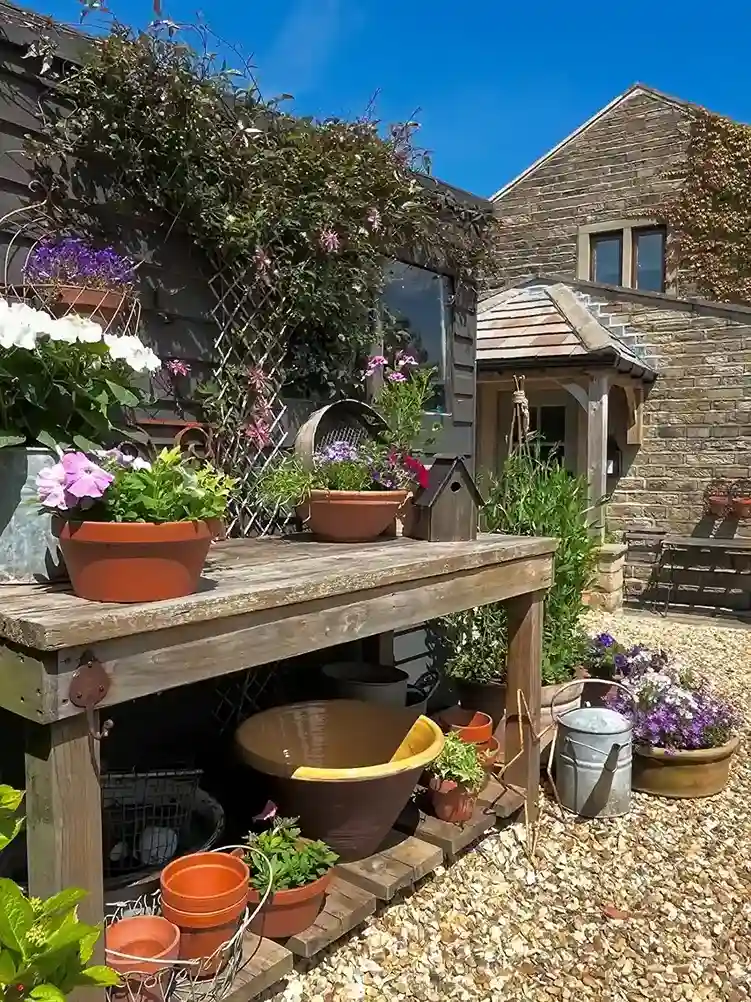
20. Create a Potting Bench and Work Area
Every vintage garden needs a dedicated space for potting, arranging flowers, and tending plants. This work area becomes a garden room in itself—practical and full of character.

Elements of a vintage potting bench:
The bench itself—an old table, purpose-built wooden bench, or even a repurposed dresser—provides work surface and storage. Look for pieces with weathered surfaces and useful drawers or shelves.
Storage containers (galvanized buckets, ceramic crocks, old canning jars) hold tools, twine, and supplies while adding visual interest.
Tool racks mounted on nearby walls keep frequently used tools accessible. Old rake heads or hay rakes can serve as hooks.
Sink or wash-up area (even just a basin with water access) makes cleaning vegetables and arranging flowers easier.
Shelving for pots, seed trays, and supplies keeps everything organized and visible.
Nearby compost bin for potting waste and plant trimmings closes the garden loop.
For additional workspace ideas, our container gardening guide offers potting area inspiration.
Vintage Garden FAQs
How do I make my modern garden look vintage instantly?
Start with the hardscape—install winding gravel paths and rustic wooden structures. Add weathered containers planted with old-fashioned annuals like sweet peas and love-in-a-mist. Include a bench in a tucked-away corner. Most importantly, resist the urge to be tidy—vintage gardens embrace self-seeding plants and gently unkempt edges.
What are the best low-maintenance plants for a vintage garden?
Many heirloom plants are surprisingly tough. Catmint, lavender, peonies, daylilies, and ornamental grasses all thrive with minimal care once established. Shrubs like hydrangeas, roses (especially shrub and species types), and weigela provide structure without demanding attention. Our perennials low maintenance guide offers excellent options.
Can I create a vintage garden in a small space?
Absolutely! Many vintage garden elements scale down beautifully. Focus on a few key features—a small arbor with climbing rose, weathered containers grouped on a patio, a miniature water feature. Vertical elements (trellises, wall-mounted planters) maximize space while adding vintage character. Our small garden ideas guide offers space-saving strategies.
How do I find authentic vintage garden accessories?
Flea markets, estate sales, and antique shops offer treasures with genuine patina. Architectural salvage yards stock gates, urns, and stonework. Online marketplaces (eBay, Etsy, Facebook Marketplace) connect you with sellers nationwide. Be patient—collecting over time creates more interesting collections than buying everything at once.
Conclusion: Your Vintage Garden Journey Begins
Creating a vintage garden is about more than assembling period-appropriate plants and accessories—it’s about cultivating a relationship with the past and with the natural rhythms of growth and decay. These gardens remind us that beauty need not be pristine, that abundance trumps perfection, and that the best gardens tell stories across generations.
As you plant your heirloom roses and arrange your weathered containers, remember that vintage gardens aren’t created in a season. They grow into their character over years, with each passing season adding layers of meaning and memory. The moss on your paths, the size of your peony clumps, the way your roses have wound through the arbor—these things take time, and that’s exactly as it should be.
Start with the ideas that speak most strongly to you—perhaps a curving path, a fragrant seating area, or a collection of old-fashioned plants. Let your garden evolve naturally as you discover what works in your space and what delights you most. Before long, you’ll have created not just a garden, but a place that feels like it’s always been there, waiting for you to discover it.
For ongoing inspiration and guidance, explore our comprehensive resources on shade sail ideas, backyard landscaping ideas, front yard landscaping, side yard landscaping ideas, and sloped backyard ideas on a budget. Your vintage garden journey starts now.
For additional period garden inspiration, don’t miss our guides on Mediterranean garden, cottage garden ideas, hippie garden bohemian outdoor, and fairy garden ideas. Each offers unique perspectives that can enrich your vintage garden design.
Plant enthusiasts will appreciate our best outdoor plants, flowering shrubs, perennials low maintenance, shade plants, and colorful shrubs guides for comprehensive plant recommendations.
Your timeless garden sanctuary awaits—one plant, one treasure, one season at a time.