A wildlife feeding station transforms any garden into a thriving, living ecosystem, attracting birds, hedgehogs, squirrels, and countless other creatures that bring extraordinary beauty, movement, and natural joy to your outdoor space throughout every season.

Source: @little_lady_greythesquirrel
Whether you have a sprawling country garden or a compact urban backyard, these 20 creative wildlife feeding station ideas will help you welcome nature beautifully using inspiration from our backyard landscaping ideas guide.
1. Classic Multi-Arm Bird Feeding Station
A classic multi-arm bird feeding station is the most popular and practical wildlife feeding setup available, allowing several different feeder types to hang simultaneously from a single freestanding post to attract a wide variety of bird species throughout every season of the year.

Source: @daintydressdiaries
Offering a combination of seed feeders, fat ball holders, suet cake feeders, and nyjer seed tubes on one station maximises the diversity of bird species visiting your garden at any given time. For more ideas on creating a beautifully wildlife-friendly garden, our backyard landscaping ideas guide covers wildlife garden design in wonderful, inspiring detail.
| Feature | Details |
|---|---|
| Best Position | Open area, 6–10 feet from cover |
| Best Feeder Types | Seed, fat ball, suet cake, nyjer tube |
| Best Food | Sunflower hearts, mixed seed, fat balls, nyjer |
| Post Height | 5–6 feet above ground |
| Maintenance Level | Low (clean feeders fortnightly) |
| Estimated Cost | $30–$120 |
2. Rustic Timber Post Feeding Station
A rustic timber post feeding station built from reclaimed wood, rough-sawn lumber, or a natural branch creates a beautifully characterful wildlife feature that blends seamlessly into cottage, farmhouse, and naturalistic garden settings while providing an outstanding feeding hub for garden birds.

The natural, weathered character of reclaimed timber adds genuine authenticity and warmth to a garden feeding station that no manufactured metal post can ever replicate. For more rustic garden feature ideas using natural and reclaimed materials, our pallet garden ideas guide covers creative reclaimed timber garden projects in practical, inspiring detail.
| Feature | Details |
|---|---|
| Best Materials | Reclaimed timber, rough-sawn oak, natural branch |
| Best Finish | Natural weathering, linseed oil, wood stain |
| Best Feeders | Hanging seed feeders, platform tray, fat ball holder |
| Difficulty Level | Beginner to intermediate |
| Maintenance Level | Low |
| Estimated Cost | $10–$50 using reclaimed materials |
3. Ground Level Feeding Station for Hedgehogs
A dedicated ground level feeding station provides essential supplementary food for hedgehogs, which are one of the most beloved and most threatened garden wildlife species, giving them a safe, sheltered place to feed away from the reach of foxes and cats.

Use a low wooden box with a small entrance hole of approximately 4 inches diameter that allows hedgehogs to enter but excludes larger predators, placed in a quiet, sheltered corner of the garden. For more advice on creating a genuinely wildlife-friendly garden, our yard ideas for outdoor spaces guide covers garden wildlife habitat features in practical, caring detail.
| Feature | Details |
|---|---|
| Best Food | Wet cat food, dry cat biscuits, specialist hedgehog food |
| Entrance Hole Size | 4 inches diameter |
| Best Position | Quiet, sheltered corner away from disturbance |
| Feeding Time | Evening and overnight |
| Avoid | Bread, milk, mealworms (harmful to hedgehogs) |
| Estimated Cost | $10–$40 |
4. Hanging Log Feeder for Woodpeckers
A hanging log feeder drilled with holes and packed with suet paste, peanut butter, or specialist log feeder mixture creates an irresistible feeding station for woodpeckers, nuthatches, and treecreepers that mimic their natural foraging behaviour on tree bark perfectly.

Suspend the log feeder from a sturdy branch or a tall feeding station post at a height of 5–8 feet for best results, ideally near trees where these species already naturally forage. For more ideas on attracting a diverse range of garden wildlife, our shade shrubs guide covers the best berry-producing and wildlife-friendly shrubs that complement feeding stations beautifully.
| Feature | Details |
|---|---|
| Best Log Types | Oak, birch, apple — hardwoods preferred |
| Drill Hole Size | 1–1.5 inches diameter |
| Best Filling | Suet paste, peanut butter, specialist mix |
| Best Position | Near trees, 5–8 feet high |
| Target Species | Woodpeckers, nuthatches, treecreepers |
| Estimated Cost | $5–$20 |
5. Bird Table Platform Feeding Station
A classic bird table with a flat platform feeding surface, a roof for weather protection, and a raised post creates one of the most welcoming and traditionally beloved wildlife feeding stations for a wide range of garden birds including robins, blackbirds, and thrushes.

The open platform design suits ground-feeding species that are reluctant to use hanging feeders, significantly broadening the range of bird species that regularly visit and feed in your garden. For more traditional garden feature inspiration, our cottage garden ideas guide covers bird table placement and surrounding planting in beautifully traditional garden detail.
| Feature | Details |
|---|---|
| Best Food | Mixed seed, fruit, mealworms, grated cheese |
| Platform Size | Minimum 12×12 inches |
| Post Height | 4–5 feet above ground |
| Best Position | Open area visible from the house |
| Target Species | Robins, blackbirds, thrushes, starlings, sparrows |
| Estimated Cost | $20–$80 |
6. Wall-Mounted Feeding Station
A wall-mounted feeding station fixed to a fence, wall, or shed exterior creates an outstanding wildlife feeding solution for small gardens, balconies, and urban spaces where freestanding posts are impractical due to limited ground space or paved surfaces.

Wall-mounted bracket systems can support multiple hanging feeders, a small platform tray, and a water dish within a very compact footprint, making them ideal for maximising wildlife feeding in restricted outdoor spaces. For more creative ideas on making the most of small outdoor garden spaces, our small garden ideas and tiny backyard ideas guides are full of excellent space-saving inspiration.
| Feature | Details |
|---|---|
| Best Mounting Surfaces | Timber fence, rendered wall, shed exterior |
| Best Bracket Types | Single arm, multi-arm, extendable |
| Best Feeders | Hanging seed, fat ball, water dish |
| Height | 5–6 feet above ground |
| Best For | Small gardens, balconies, paved courtyards |
| Estimated Cost | $15–$50 |
7. Squirrel Feeding Station
A dedicated squirrel feeding station provides entertainment, reduces competition at bird feeders, and gives these energetic, acrobatic creatures their own reliable food source that keeps them happily occupied and less likely to raid more expensive bird food supplies elsewhere in the garden.

A simple wooden box feeder filled with whole peanuts, corn cobs, and hazelnuts mounted on a post or tree trunk at 3–4 feet above ground creates the perfect squirrel feeding station. For more advice on managing squirrels in the garden, our keep ground squirrels out guide covers squirrel behaviour and garden management strategies in practical, balanced detail.
| Feature | Details |
|---|---|
| Best Food | Whole peanuts, corn cobs, hazelnuts, sunflower seeds |
| Best Feeder Type | Wooden box feeder, corn cob holder |
| Best Position | Mounted on post or tree at 3–4 feet |
| Feeding Time | All day |
| Target Species | Grey squirrel, red squirrel |
| Estimated Cost | $10–$30 |
8. Water Feature Feeding Station Combination
Combining a wildlife feeding station with a nearby water source — a bird bath, shallow dish, or small garden pond — creates a complete wildlife support hub that attracts far more species than a feeding station alone by providing the water that all garden wildlife needs daily for drinking and bathing.

Even a simple shallow dish of clean water placed near a feeding station dramatically increases the number and variety of wildlife species that visit your garden on a daily basis. For more water feature and garden pond ideas, our water plants guide covers wildlife-friendly water features and aquatic planting in comprehensive, inspiring detail.
| Feature | Details |
|---|---|
| Best Water Features | Bird bath, shallow dish, small pond |
| Water Dish Depth | Maximum 2 inches for safe bathing |
| Distance from Feeders | 3–6 feet to avoid food contamination |
| Maintenance | Change water every 2–3 days |
| Target Species | All garden birds and mammals |
| Estimated Cost | $10–$200 depending on water feature type |
9. Pallet Wildlife Feeding Station
A repurposed wooden pallet transformed into a wildlife feeding station creates a budget-friendly, creative, and surprisingly functional wildlife hub that can incorporate hanging feeders, a platform tray, water dish, and even small bat or insect boxes all within one reclaimed structure.

Stand the pallet upright and secure it to fence posts to create a freestanding feeding station frame, then attach feeders, hooks, and wildlife accessories to suit the species you most want to attract. For more creative pallet garden project ideas, our pallet garden ideas guide covers pallet wildlife feature construction in practical, budget-friendly detail.
| Feature | Details |
|---|---|
| Best Pallet Types | Heat-treated (HT stamped) pallets only |
| Best Attachments | Hanging hooks, platform shelf, water dish bracket |
| Finish Options | Natural weathering, non-toxic paint, wood stain |
| Difficulty Level | Beginner |
| Maintenance Level | Low |
| Estimated Cost | $5–$30 for fixings and feeders |
10. Fairy Garden Wildlife Feeding Station
A miniature wildlife feeding station integrated into a fairy garden feature creates a delightfully whimsical, enchanting garden scene that attracts small birds and insects while adding magical charm and visual delight to any garden corner it inhabits throughout the year.

Tiny seed feeders, a thimble-sized water dish, and miniature perches scaled to match the fairy garden setting create a feeding station that feels as though it belongs in the pages of a children’s storybook. For more magical fairy garden ideas and planting inspiration, our fairy garden ideas guide is endlessly creative and full of enchanting, achievable ideas for gardens of every size.
| Feature | Details |
|---|---|
| Best Feeders | Miniature seed tube, tiny platform, water thimble |
| Best Scale | 4–8 inches tall to match fairy garden proportions |
| Target Species | Wrens, robins, blue tits, small insects |
| Best Position | Sheltered fairy garden corner |
| Difficulty Level | Beginner |
| Estimated Cost | $10–$30 |
11. Vertical Feeding Station Tower
A vertical feeding station tower uses a tall central post fitted with feeding arms, hooks, and platforms at multiple heights to create a space-efficient, visually dramatic wildlife feature that maximises feeding capacity in a minimal footprint — ideal for smaller garden spaces.

Staggering different feeder types at different heights on the same post mirrors the natural feeding behaviour of different bird species, which naturally feed at different levels in the wild. For more vertical garden and space-maximising ideas, our vertical gardening guide covers vertical garden structure design and installation in comprehensive, creative detail.
| Feature | Details |
|---|---|
| Best Height | 6–8 feet with arms at multiple levels |
| Best Feeder Arrangement | Seed at top, fat balls mid, platform at base |
| Post Material | Galvanised metal, hardwood, treated timber |
| Target Species | All garden birds from ground to canopy feeders |
| Difficulty Level | Beginner |
| Estimated Cost | $40–$100 |
12. Feeding Station in a Wildlife Garden Border
Positioning a feeding station within or directly alongside a dense wildlife garden border of berry-producing shrubs, seed-bearing perennials, and native plants creates a complete wildlife feeding ecosystem combining supplementary feeders with natural food sources for maximum wildlife benefit.

Birds move naturally between the feeding station and the surrounding border planting, foraging for insects, berries, and seeds in the most naturalistic and visually beautiful wildlife garden setting imaginable. For the best berry-producing and wildlife-friendly plants for a wildlife garden border, our flowering shrubs guide covers the most wildlife-valuable shrubs in excellent, practical detail.
| Feature | Details |
|---|---|
| Best Border Shrubs | Pyracantha, holly, elder, hawthorn, viburnum |
| Best Border Perennials | Echinacea, teasel, rudbeckia, sunflowers, verbena |
| Feeder Distance from Border | 3–6 feet for predator escape cover |
| Target Species | All garden birds, hedgehogs, insects |
| Maintenance Level | Low |
| Estimated Cost | $100–$400 for border planting plus feeders |
13. Bohemian Wildlife Feeding Station
A bohemian wildlife feeding station celebrates creative, eclectic design with hand-painted feeders, driftwood perches, colourful mosaic decorations, and a wonderfully free-spirited arrangement of feeding, water, and habitat features that turns wildlife care into a genuine garden art installation.

Repurposed colanders as fat ball holders, painted tin cans as seed feeders, and driftwood branch perches all contribute to a bohemian feeding station of extraordinary charm and individuality that birds absolutely love. For more free-spirited outdoor design inspiration, our hippie bohemian outdoor garden guide is full of wonderfully creative and eclectic wildlife garden feature ideas.
| Feature | Details |
|---|---|
| Best Repurposed Feeders | Colanders, tin cans, teapots, wooden spoons |
| Best Perch Materials | Driftwood, natural branches, reclaimed timber |
| Best Decorations | Mosaics, painted patterns, natural objects |
| Difficulty Level | Beginner |
| Maintenance Level | Low |
| Estimated Cost | $10–$50 using repurposed materials |
14. Winter Wildlife Feeding Station
A dedicated winter wildlife feeding station provides critically important supplementary food for birds and mammals during the coldest months when natural food sources are exhausted, ice covers ground foraging areas, and the energy demands of surviving cold nights are at their highest.

High-energy foods including fat balls, suet products, and whole peanuts are the most important winter foods, providing the concentrated calories that birds need to survive cold nights. For more seasonal garden wildlife support ideas, our yard ideas for outdoor spaces guide covers year-round wildlife garden management in helpful, caring detail.
| Feature | Details |
|---|---|
| Best Winter Foods | Fat balls, suet cakes, whole peanuts, sunflower hearts |
| Key Winter Species | Robins, blackbirds, long-tailed tits, fieldfares |
| Water Management | Use heated bird bath or change water twice daily |
| Feeding Frequency | Daily — do not let feeders empty in winter |
| Extra Feature | Sheltered position to protect from wind and rain |
| Estimated Cost | $20–$60 per season for food |
15. Feeding Station for Butterflies and Insects
A butterfly and insect feeding station combines shallow dishes of sugar water, overripe fruit plates, and a surrounding planting of nectar-rich flowers to create a complete feeding habitat for butterflies, bees, hoverflies, and other beneficial garden insects throughout the warm season.

Source: @tinyteacupvintage
Overripe bananas, fallen plums, and diluted honey water are all outstanding attractants for garden butterflies in late summer when natural nectar sources are declining. For the best nectar-rich planting to complement an insect feeding station, our best outdoor plants guide covers the most wildlife-valuable flowering plants in excellent, practical detail.
| Feature | Details |
|---|---|
| Best Insect Foods | Overripe fruit, diluted honey water, sugar syrup |
| Best Nectar Plants | Buddleia, verbena, echinacea, lavender, sedum |
| Best Position | Full sun, sheltered from wind |
| Target Species | Butterflies, bees, hoverflies, moths |
| Best Season | Late spring through early autumn |
| Estimated Cost | $10–$50 |
16. Feeding Station with Nesting Box Integration
Combining a feeding station with integrated nesting boxes creates a complete wildlife breeding and feeding habitat in a single, space-efficient garden structure that supports garden birds from egg to fledgling and beyond, right through to the following breeding season.

Position nesting boxes on the upper section of the feeding station post with feeders below, ensuring the entrance holes face away from prevailing winds and direct afternoon sun for optimal nesting conditions. For more wildlife habitat and garden structure ideas, our garden wall ideas guide covers integrated wildlife feature structures in creative, practical garden design detail.
| Feature | Details |
|---|---|
| Best Nesting Box Types | Blue tit (1.1 inch hole), robin (open front), sparrow |
| Box Position | North to east-facing entrance hole |
| Distance from Feeders | Nesting boxes above feeders on same post |
| Target Nesting Species | Blue tits, great tits, robins, house sparrows |
| Maintenance | Clean boxes annually in autumn |
| Estimated Cost | $30–$100 for post, feeders, and boxes |
17. Coastal Wildlife Feeding Station
A coastal wildlife feeding station designed for exposed seaside garden positions uses heavy-duty, corrosion-resistant materials and sheltered positioning to withstand the salt spray, high winds, and accelerated weathering that marine environments inflict on standard feeding station components.

Stainless steel and powder-coated aluminium feeders, galvanised metal posts, and marine-grade treated timber all provide excellent longevity in coastal wildlife feeding station installations that standard materials cannot match. For more coastal garden design and planting ideas suited to exposed positions, our coastal backyard garden guide is a comprehensive and authoritative resource.
| Feature | Details |
|---|---|
| Best Post Materials | Galvanised steel, marine-treated hardwood |
| Best Feeder Materials | Stainless steel, powder-coated aluminium |
| Best Position | Sheltered corner, lee side of wall or hedge |
| Target Species | Coastal birds — finches, sparrows, tits, robins |
| Maintenance Level | Moderate (annual treatment of timber) |
| Estimated Cost | $40–$150 |
18. Children’s Wildlife Feeding Station
A children’s wildlife feeding station designed and built with young gardeners creates an outstanding outdoor education opportunity, encouraging children to connect with nature, observe wildlife behaviour, and develop a lifelong love of gardens and the living world around them.
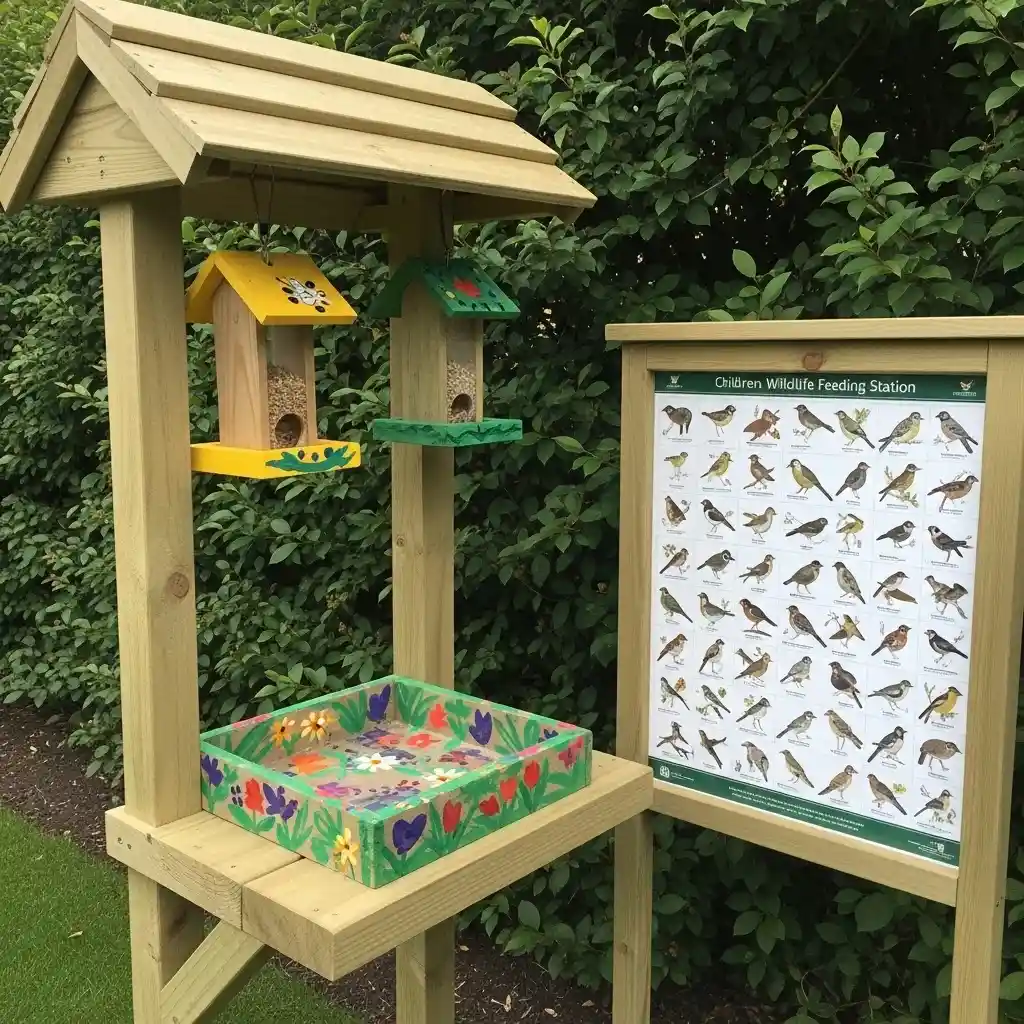
Simple painted wooden feeders, a decorated bird bath, and a wildlife identification chart mounted alongside the station transforms feeding wildlife into an engaging, educational, and deeply rewarding activity for children of all ages. For more family-friendly garden feature ideas, our fairy garden ideas guide covers children’s garden features and activities in wonderfully creative, engaging detail.
| Feature | Details |
|---|---|
| Best Child-Friendly Feeders | Simple wooden seed box, fat ball holder, water dish |
| Best Child Activities | Wildlife diary, identification chart, feeder building |
| Best Position | Visible from a window for easy observation |
| Target Species | Common garden birds for easy identification |
| Difficulty Level | Beginner (great DIY project with children) |
| Estimated Cost | $15–$50 |
19. Shade Garden Wildlife Feeding Station
A wildlife feeding station positioned within or alongside a shade garden creates a beautifully naturalistic, woodland-edge feeding environment that particularly suits the many woodland bird species — nuthatches, treecreepers, and great spotted woodpeckers — that prefer sheltered, dappled feeding conditions.

The proximity of dense shrubs and shade planting to a shaded feeding station also provides essential escape cover for feeding birds, making them feel significantly safer and encouraging longer, more relaxed feeding visits. For the best shade-tolerant shrubs and plants that provide both wildlife habitat and feeding station cover, our shade shrubs guide and shade plants guide are both excellent resources.
| Feature | Details |
|---|---|
| Best Position | Within 6 feet of dense shrub cover |
| Target Species | Woodland birds — nuthatches, treecreepers, tits |
| Best Feeders | Hanging log feeder, suet cage, seed tube |
| Light Requirements | Part shade to full shade |
| Maintenance Level | Low |
| Estimated Cost | $25–$80 |
20. Budget Wildlife Feeding Station
Creating an effective, attractive wildlife feeding station on a very tight budget is completely achievable using repurposed household items, reclaimed materials, and homemade bird food recipes that cost almost nothing but attract just as many garden birds and wildlife as expensive commercial setups.

Recycled plastic bottles as seed feeders, pine cones rolled in peanut butter and bird seed, and a simple upturned dustbin lid as a bird bath all create a fully functional budget wildlife feeding station. For comprehensive budget garden ideas and money-saving landscaping strategies, our cheap landscaping ideas guide covers affordable wildlife garden features in practical, inspirational detail.
| Feature | Details |
|---|---|
| Best Budget Feeders | Plastic bottles, pine cones, mesh bags, tin cans |
| Best Homemade Food | Lard and seed cakes, peanut butter pine cones |
| Best Budget Water | Upturned dustbin lid, old ceramic dish |
| Difficulty Level | Beginner |
| Maintenance Level | Low |
| Estimated Cost | $0–$20 using repurposed materials |
Frequently Asked Questions (FAQs)
Q1: Where is the best place to position a wildlife feeding station?
Position a feeding station in an open area 6–10 feet from dense shrub cover, visible from the house for observation, sheltered from prevailing winds, and away from cats’ regular patrol routes. Avoid positioning directly under trees where squirrels can access feeders easily from above.
Q2: What is the best food to put in a wildlife feeding station?
Sunflower hearts, high-quality mixed seed, fat balls, and suet products attract the widest variety of garden bird species. Supplement with nyjer seed for goldfinches, whole peanuts for tits and woodpeckers, and mealworms for robins. Our best outdoor plants guide covers berry-producing plants that naturally complement supplementary feeding stations.
Q3: How do I stop squirrels raiding my bird feeding station?
Use squirrel-proof feeders with weight-sensitive closing mechanisms, apply baffles on feeder poles, and position feeders away from launch points like fences and trees. Alternatively, set up a dedicated squirrel feeding station nearby to distract them. Our keep ground squirrels out guide covers squirrel management in practical, effective detail.
Q4: How often should I clean my wildlife feeding station?
Clean feeders thoroughly every two weeks using a mild disinfectant solution, rinse completely, and allow to dry fully before refilling. Clean the surrounding area of fallen seed husks regularly to prevent mould and disease buildup. Dirty feeders spread avian diseases that can devastate local garden bird populations rapidly.
Conclusion
A wildlife feeding station is one of the most rewarding and impactful additions any gardener can make — creating a living connection with the natural world that brings beauty, movement, and genuine joy to your garden throughout every season of the year.
Explore more garden wildlife and outdoor design inspiration through our guides on yard ideas for outdoor spaces, rustic garden and trending landscaping ideas to create the perfect wildlife haven in your garden today.