
White stone landscaping creates clean, contemporary aesthetics that brighten outdoor spaces while providing practical benefits like weed suppression and moisture retention. The crisp contrast of white pebbles, gravel, or larger rocks against green foliage enhances plant colors dramatically, making gardens appear more vibrant and intentionally designed.
From minimalist modern yards to Mediterranean-inspired landscapes, white stone serves as versatile hardscaping that complements diverse architectural styles while reducing maintenance compared to traditional mulch or grass.

Source: @innoscape_
Incorporating white stone into landscape design opens creative possibilities for combining texture, color, and form in fresh ways that transform ordinary yards into sophisticated outdoor environments. The reflective properties of white stone brighten shaded areas, while its heat-absorbing qualities benefit heat-loving plants in sunny locations.
Similar to how trending landscaping ideas showcase contemporary outdoor design, white stone applications demonstrate how simple materials create dramatic impact when thoughtfully paired with appropriate plants. These thirty ideas explore diverse approaches to white stone landscaping that enhance beauty while supporting healthy plant growth.

Source: @romanofinelandscapes
1. White Gravel with Lavender Borders
White gravel contrasts beautifully with purple-flowering lavender creating Mediterranean-inspired borders that evoke sun-drenched European gardens. The silvery foliage and purple blooms of lavender stand out dramatically against bright white stone backgrounds. This drought-tolerant combination requires minimal watering while offering fragrance, pollinator attraction, and year-round structure.

Plant lavender 18 inches apart in full sun with excellent drainage, spreading 2-3 inches of white gravel around plants as permanent mulch. The stone reflects heat and light, intensifying lavender’s aromatic oil production while suppressing weeds effectively. This pairing suits sunny borders, pathways, or foundation plantings requiring low maintenance and water conservation.
2. White River Rock with Japanese Maples
Large white river rocks create stunning contrasts beneath Japanese maples with their delicate, colorful foliage in red, purple, or variegated patterns. The smooth, rounded stones complement these trees’ elegant branching structure while providing clean ground cover that showcases leaf colors. This combination creates serene, Asian-inspired garden spaces perfect for contemplative areas.

Arrange river rocks 3-6 inches in diameter around Japanese maple bases, leaving space near trunks for air circulation and water penetration. Japanese maples prefer partial shade and consistent moisture, so ensure stones don’t completely cover soil surfaces preventing water infiltration. The light-colored rocks brighten shaded areas while highlighting seasonal foliage transformations from spring through fall.
3. White Pebble Mulch for Succulent Gardens
White pebbles provide ideal mulch for succulent gardens, reflecting light onto plants while preventing moisture retention that causes root rot. The clean, modern aesthetic of white stone complements succulent forms and colors—echeverias, sedums, and sempervivums appear sculptural against bright backgrounds. This combination creates contemporary, low-water landscapes requiring minimal maintenance.

Spread 1-2 inches of white pebbles over well-draining soil around succulents planted in full sun. The stone mulch prevents soil splash during watering while allowing excellent drainage that succulents require. White pebbles heat quickly in sun, creating warm microclimates beneficial for heat-loving succulent varieties while dramatically reducing water evaporation from soil.
4. White Stone Pathway with Creeping Thyme
White stone pathways bordered by creeping thyme create fragrant, walkable landscapes that soften hardscaping with living edges. Thyme spreads gradually between pathway stones, releasing pleasant scent when stepped upon while providing purple or pink blooms in early summer. This combination blends functionality with natural beauty, creating charming garden routes.

Lay white stepping stones or crushed gravel paths with 2-3 inch gaps, planting creeping thyme varieties in spaces between stones. Thyme tolerates light foot traffic and thrives in full sun with excellent drainage that stone pathways naturally provide. The white stone stays cooler than dark alternatives, making barefoot walking more comfortable during summer months.
5. White Rock Garden with Ornamental Grasses
White rocks of varying sizes create dramatic backdrops for ornamental grasses like blue fescue, fountain grass, and maiden grass swaying gracefully above stone surfaces. The textural contrast between smooth stones and feathery grass plumes generates visual interest throughout seasons. This pairing suits contemporary landscapes emphasizing natural materials and movement.

Arrange white rocks randomly or in organized patterns, planting ornamental grasses in pockets between stones filled with well-draining soil. Grasses grow 1-5 feet tall depending on variety, creating vertical elements rising from horizontal stone planes. The light-colored rocks reflect sunlight onto grass blades, intensifying their colors while preventing soil erosion on slopes.
6. White Marble Chips with Boxwood Hedges
White marble chips provide elegant mulch for formal boxwood hedges, enhancing traditional garden aesthetics with clean, bright ground coverage. The refined appearance of marble complements boxwood’s fine texture and formal shapes, creating sophisticated landscapes reminiscent of classic estate gardens. This combination suits structured designs requiring year-round polish.

Apply 2-3 inches of marble chips around boxwood bases after planting hedges 18-24 inches apart in full sun to partial shade. The white surface reflects light onto lower boxwood branches, promoting dense growth to ground level. Marble chips stay in place better than lighter gravels, maintaining neat appearances with minimal redistribution needed.
7. White Stone Mulch with Hostas
White stone mulch brightens shaded areas where hostas thrive, reflecting available light onto bold foliage patterns and colors. The contrast between smooth white stones and hostas’ textured leaves in green, blue, gold, or variegated combinations creates striking visual effects. This pairing solves common shade gardening challenges while maximizing aesthetic impact.

Spread white pebbles or crushed stone 2-3 inches deep around hostas planted in shade to partial shade with rich, moist soil. The reflective stone surface increases light penetration into shaded areas, improving hosta growth and color intensity. White mulch also deters slugs that dislike crossing dry stone surfaces, reducing pest damage naturally.
8. White Gravel with Dark-Foliaged Plants
White gravel creates maximum contrast when paired with dark-foliaged plants like purple smoke bush, black mondo grass, or burgundy coral bells. This dramatic color combination intensifies both elements—dark foliage appears richer while white stone seems brighter. The bold contrast suits modern landscapes emphasizing strong visual impact through color oppositions.

Plant dark-foliaged varieties 18-24 inches apart in full sun to partial shade depending on species, surrounding with 2-3 inches of white gravel mulch. This pairing works particularly well in contemporary designs, Japanese-inspired gardens, or anywhere dramatic contrast enhances overall aesthetics. The reflective gravel prevents dark plants from disappearing into shadows, maintaining visibility.
9. White River Rock Dry Creek Bed
White river rocks create naturalistic dry creek beds directing water runoff while providing attractive landscape features even when dry. Plant moisture-loving perennials like daylilies, iris, and ornamental grasses along edges, creating transitions between rocks and surrounding landscapes. These functional water management features double as artistic garden focal points.

Arrange white river rocks 2-8 inches in diameter in shallow trenches following natural drainage patterns across properties. Edge with native grasses and flowering perennials that tolerate periodic wet conditions during heavy rains but survive dry periods between storms. The white stones remain visible beneath water flows, creating attractive visual effects during rain events.
10. White Pebble Ground Cover with Roses
White pebbles provide clean, reflective ground cover beneath rose bushes, bouncing light onto lower foliage while preventing soil-borne diseases from splashing onto leaves. The classic pairing of white stone and roses evokes formal garden traditions while serving practical functions. This combination suits traditional landscapes prioritizing elegance and plant health.

Apply 3-4 inches of white pebbles around established roses planted in full sun with well-draining soil, keeping stones several inches from canes to allow air circulation. The reflective surface increases light availability for lower leaves, improving overall plant vigor and flowering. White mulch stays cooler than dark alternatives, benefiting rose roots during hot summers.
11. White Stone Border with Coneflowers
White stone borders define beds planted with native coneflowers creating clean edges that contain plantings while highlighting purple, pink, white, or orange blooms. The bright stone edging prevents lawn encroachment into flower beds while providing visual separation between different landscape zones. This pairing combines native plant benefits with tidy, intentional design.

Install white stone edging 6-12 inches wide along bed perimeters, planting coneflowers 18-24 inches apart in full sun behind borders. The stone edging simplifies lawn mowing by creating clear boundaries while eliminating need for constant edge trimming. Coneflowers self-seed moderately, with seedlings easily visible against white stone for removal or relocation.
12. White Gravel Zen Garden Elements
White gravel creates peaceful Zen garden spaces when raked into patterns around carefully placed rocks and minimal plantings like Japanese maples or bamboo. This contemplative style emphasizes simplicity, balance, and natural materials arranged to inspire meditation. The white gravel symbolizes water in traditional Japanese gardens, with raked patterns representing waves or currents.

Prepare level areas by removing vegetation and installing landscape fabric before spreading 2-3 inches of white gravel or crushed stone. Place focal rocks strategically and plant sparingly, maintaining emphasis on negative space and gravel patterns. Rake regularly to maintain pattern crispness, creating meditative maintenance rituals that enhance garden meaning.
13. White Stone Mulch with Hydrangeas
White stone mulch around hydrangeas reflects light onto blooms while moderating soil temperature and moisture fluctuations these plants prefer. The neutral stone background allows hydrangea flower colors—blue, pink, white, or purple—to stand out dramatically without competing visual elements. This pairing suits partial shade locations where hydrangeas thrive naturally.

Spread 2-3 inches of white stone around hydrangeas planted 3-5 feet apart in morning sun with afternoon shade. The reflective mulch brightens shaded areas while retaining moisture that hydrangeas require for best flowering. White stone doesn’t alter soil pH unlike organic mulches, allowing you to control hydrangea bloom colors through soil amendments.
14. White Pebbles Between Stepping Stones
White pebbles fill gaps between stepping stones creating cohesive pathways that prevent weed growth while maintaining clean, finished appearances. This approach works beautifully in formal and informal gardens, providing practical walking surfaces without solid paving. The white fill material stays visible beneath foot traffic, maintaining pathway definition over time.

Install stepping stones 18-24 inches apart for comfortable walking pace, filling gaps with 1-2 inches of white pebbles over landscape fabric. The pebbles provide stable footing while allowing water infiltration between pavers. Consider planting low-growing, traffic-tolerant groundcovers like creeping thyme in some gaps for softening effects while maintaining white pebbles elsewhere.
15. White Rock Edging with Salvia
White rocks create bright borders defining beds filled with salvia producing vertical purple, blue, pink, or red flower spikes throughout summer. The clean stone edging contains salvia’s spreading habit while providing visual contrast that highlights colorful blooms. This drought-tolerant combination suits sunny, well-drained locations requiring minimal water once established.

Install white rock borders 8-12 inches wide along bed edges, planting salvia varieties 18-24 inches apart in full sun behind edging. The stone barrier prevents salvia from spreading into lawns while simplifying maintenance by eliminating edge trimming. Reflected heat from white rocks benefits Mediterranean salvia species, promoting compact growth and abundant flowering.
16. White Gravel with Architectural Agaves
White gravel complements architectural agaves and yucca creating bold, sculptural landscapes emphasizing form and texture over flowers. The stark contrast between spiky plants and smooth gravel generates dramatic modern aesthetics. This xeriscape approach conserves water while creating high-impact gardens requiring minimal maintenance beyond occasional weeding.

Plant agaves and yucca in full sun with excellent drainage, surrounding with 2-4 inches of white gravel extending several feet beyond plants. The reflective stone intensifies desert plant forms through strong contrast and shadows. This combination suits contemporary landscapes, rock gardens, or water-wise yards where architectural plants become living sculptures.
17. White Stone with Evergreen Azaleas
White stone mulch brightens areas around evergreen azaleas producing pink, red, white, or purple spring blooms above attractive year-round foliage. The light-colored stone enhances acidic soil these plants require while preventing weed competition. This classic combination creates traditional Southern garden aesthetics or Asian-inspired landscapes depending on arrangement styles.
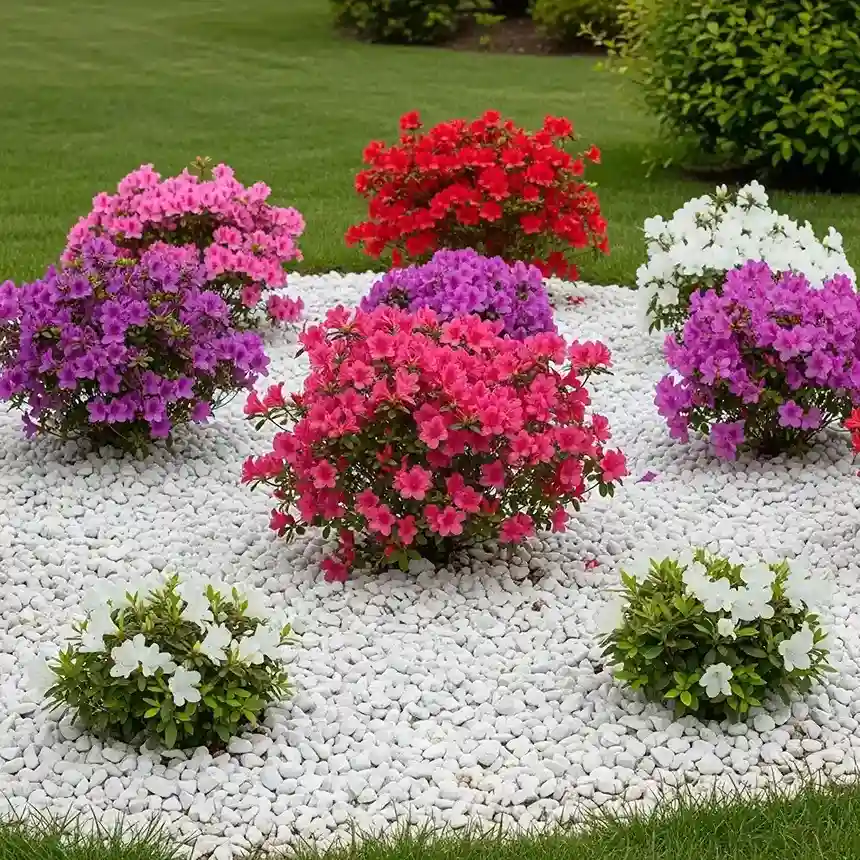
Apply 2-3 inches of white stone around azaleas planted 3-4 feet apart in partial shade with acidic, well-draining soil. The reflective mulch increases light penetration into shaded areas, improving azalea flowering and foliage density. Unlike organic mulches that may raise soil pH, white stone remains neutral, preserving acidic conditions azaleas need.
18. White Pebble Mulch with Ornamental Cabbage
White pebbles provide striking backgrounds for ornamental cabbage and kale displaying purple, pink, or white rosettes in cool seasons. This unexpected pairing creates vibrant fall and winter color when most gardens fade. The smooth stone surface complements ruffled foliage textures while preventing soil splash that mars decorative leaves.

Plant ornamental cabbage in full sun to partial shade during fall, surrounding with 1-2 inches of white pebbles as decorative mulch. The reflective surface bounces light onto colorful foliage, intensifying colors while keeping leaves clean during rainy seasons. This combination transitions seamlessly into spring by replacing cabbage with warm-season annuals while maintaining white pebble mulch.
19. White River Rock with Fountain Grass
White river rocks create textural contrast beneath fountain grass producing arching, purple or burgundy plumes that sway gracefully above stone surfaces. The combination of smooth, static rocks and moving, feathery grasses generates visual interest through contrasting characteristics. This pairing suits contemporary landscapes or naturalistic gardens incorporating both hardscaping and softscaping elements.

Arrange white river rocks 2-6 inches in diameter around fountain grass planted 24-36 inches apart in full sun. The light-colored rocks reflect heat beneficial for warm-season grasses while preventing weed growth effectively. Fountain grass grows 2-4 feet tall, creating substantial presence above horizontal stone planes that ground plantings visually.
20. White Marble Chips with Formal Gardens
White marble chips create refined mulch for formal gardens featuring geometric beds, clipped hedges, and symmetrical plantings requiring polished appearances. The elegant stone surface complements structured designs while suppressing weeds that would disrupt formal aesthetics. This traditional approach suits period landscapes, estate gardens, or contemporary interpretations of classical styles.

Apply 2-3 inches of marble chips throughout formal beds planted with boxwood, roses, or other traditional formal garden plants. The white surface creates uniform backgrounds allowing plant forms and colors to dominate visual attention. Marble chips settle firmly, resisting displacement from wind or rain better than lighter gravels, maintaining crisp appearances.
21. White Stone Path with Daylily Borders
White stone pathways bordered by daylilies create colorful routes through gardens with reliable blooms in yellow, orange, red, pink, or purple lining walkways. The bright paths highlight flower colors while providing clean walking surfaces that remain attractive year-round. This combination balances practical functionality with ornamental beauty effectively.

Install white gravel or stone pathways 3-4 feet wide, planting daylilies 18-24 inches apart along edges in full sun to partial shade. The reflective path surface brightens garden areas while daylilies provide seasonal color without requiring pathway maintenance. Flowers arch gracefully over path edges, softening hard lines while maintaining clear circulation routes.
22. White Pebbles with Mondo Grass
White pebbles create stark contrast with dark-green or black mondo grass producing modern, minimalist landscapes emphasizing color oppositions. The fine-textured grass foliage contrasts beautifully with smooth pebble surfaces, generating visual interest through material differences. This combination suits contemporary gardens, Asian-inspired designs, or anywhere bold contrasts enhance aesthetics.

Plant mondo grass 6-8 inches apart in sun to shade, filling between clumps or surrounding plantings with white pebbles. The bright stone highlights dark grass dramatically while preventing weed growth that would disrupt clean design lines. This low-maintenance pairing requires only occasional trimming to remove winter-damaged grass blades.
23. White Gravel with Tropical Palms
White gravel provides bright, modern mulch around tropical palms creating resort-style landscapes that evoke vacation destinations. The reflective surface bounces light onto palm fronds while preventing water evaporation from soil. This pairing suits warm climates or protected courtyards where tropical aesthetics create outdoor retreats.

Plant cold-hardy or tropical palms depending on climate, surrounding with 2-4 inches of white gravel extending to palm canopy drip lines. The bright mulch creates clean, contemporary appearances while reducing maintenance compared to organic alternatives requiring replacement. Reflected light from gravel benefits lower palm fronds, promoting healthy growth to ground level.
24. White Rock Border with Russian Sage
White rock borders define beds filled with Russian sage producing silvery foliage and lavender-blue flower spikes from midsummer through fall. The bright edging contains spreading sage while providing contrast that highlights airy flowers and aromatic foliage. This drought-tolerant combination creates low-water borders requiring minimal care once established.

Install white rock borders 8-12 inches wide, planting Russian sage 24-30 inches apart in full sun behind edging. The stone barrier prevents sage from flopping into adjacent lawn areas while simplifying maintenance. Reflected heat from rocks benefits Mediterranean sage species, promoting compact growth and intensifying fragrance and flower production.
25. White Stone with Sedum Ground Cover
White stones create bright backgrounds for sedum ground covers displaying fleshy, colorful foliage and star-shaped flowers in pink, yellow, or white. This succulent combination offers year-round interest with minimal water requirements. The stone mulch prevents moisture retention around sedums that prefer dry conditions between waterings.
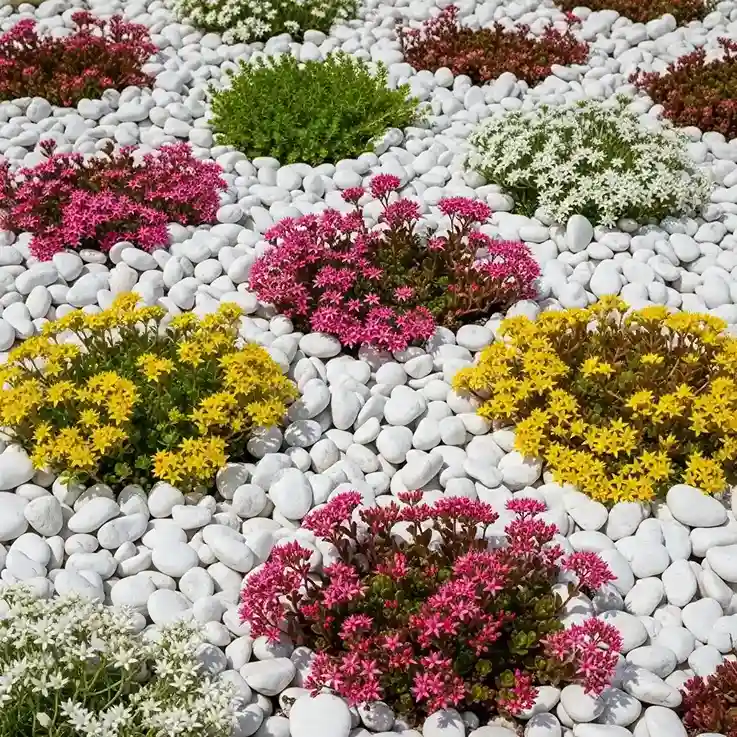
Plant low-growing sedums 12-18 inches apart in full sun with excellent drainage, spreading 1-2 inches of white stones between plants. As sedums spread and fill gaps, attractive patterns emerge with succulent foliage contrasting against stone backgrounds. This combination suits rock gardens, slopes, or challenging dry areas requiring attractive, low-maintenance solutions.
26. White Pebble Mulch with Butterfly Bush
White pebble mulch around butterfly bushes reflects light while providing clean backgrounds highlighting fragrant purple, pink, white, or yellow flower spikes attracting butterflies throughout summer. The neutral stone allows colorful blooms and visiting wildlife to capture visual attention. This pairing creates pollinator-friendly gardens with contemporary aesthetics.

Spread 2-3 inches of white pebbles around butterfly bushes planted 5-6 feet apart in full sun with well-draining soil. The reflective mulch brightens areas beneath and around shrubs while simplifying maintenance compared to organic mulches. Butterflies seeking nectar create constantly changing displays against clean white backgrounds.
27. White River Rock with Dwarf Conifers
White river rocks complement dwarf conifers like blue spruce, juniper, or false cypress creating year-round landscapes combining evergreen structure with bright hardscaping. The smooth stones contrast beautifully with textured conifer foliage in green, blue, or gold. This combination provides consistent interest through all seasons without requiring annual replanting.

Arrange white river rocks around dwarf conifers planted according to mature sizes in full sun to partial shade. The light-colored rocks prevent dark conifers from appearing heavy or overwhelming in landscapes while highlighting unique foliage textures and colors. This pairing suits foundation plantings, rock gardens, or modern landscapes emphasizing form and texture.
28. White Gravel with Perennial Border
White gravel pathways through perennial borders provide clean circulation while creating bright contrast showcasing colorful blooms from spring through fall. The neutral surface allows diverse flower colors to shine without competing backgrounds. This traditional approach combines functionality with beauty, creating accessible gardens that evolve through seasons.

Install white gravel paths 2-3 feet wide through perennial plantings featuring coneflowers, daylilies, salvia, and ornamental grasses in full sun. The bright paths remain visible even when perennials grow lush, maintaining circulation routes through abundant plantings. Gravel surfaces handle foot traffic well while allowing water infiltration that nearby plants appreciate.
29. White Stone Mulch with Coral Bells
White stone mulch brightens shade gardens where coral bells grow, highlighting colorful foliage in purple, burgundy, lime, orange, or silver that remains attractive year-round. The reflective surface increases light penetration into shaded areas, intensifying leaf colors while preventing moisture-related diseases. This combination solves common shade gardening challenges elegantly.

Plant coral bells 12-15 inches apart in partial shade to full sun depending on variety, spreading 1-2 inches of white stones around plants. The bright mulch prevents dark-foliaged varieties from disappearing into shadows while showcasing lime or orange selections dramatically. Delicate flower spikes in late spring appear more prominently against clean stone backgrounds.
30. White Pebbles with Minimalist Bamboo
White pebbles create serene, minimalist landscapes around clumping bamboo providing modern Asian-inspired aesthetics emphasizing negative space and natural materials. The smooth stones contrast with bamboo’s vertical lines and rustling foliage, generating peaceful garden spaces. This combination suits contemporary designs, Zen gardens, or anywhere tranquil atmospheres enhance outdoor experiences.

Plant clumping (non-invasive) bamboo varieties in full sun to partial shade, surrounding with 2-3 inches of white pebbles extending several feet from plants. The reflective surface brightens areas while allowing bamboo forms to dominate compositions without visual competition. This pairing requires minimal maintenance beyond occasional bamboo thinning and stone redistribution.
Frequently Asked Questions
What plants look best with white stone landscaping?
Dark-foliaged plants like black mondo grass, purple smoke bush, and burgundy coral bells create maximum contrast against white stone backgrounds. Colorful flowering plants including lavender, roses, salvia, and coneflowers stand out dramatically against bright surfaces. Succulents, ornamental grasses, and silver-foliaged plants complement white stone’s modern aesthetics beautifully.
Evergreen shrubs like boxwood and dwarf conifers provide year-round structure when paired with white stone mulch. Shade-loving hostas benefit from light reflection white stones provide in dim areas. Nearly any plant appears more vibrant against white backgrounds compared to dark mulches. For comprehensive plant selection guidance, explore our best outdoor plants collection.
Does white stone heat up and damage plants?
White stone reflects rather than absorbs heat, actually staying cooler than dark-colored rocks or mulches in direct sun. The reflective properties can increase ambient temperatures around plants slightly but benefit heat-loving species like lavender, succulents, and Mediterranean herbs. Most plants tolerate white stone well when properly watered and planted with appropriate spacing.
Avoid piling white stones directly against plant stems or trunks where reflected heat concentrations might cause issues. Maintain 2-3 inch gaps around plant bases for air circulation. In extremely hot climates, consider white stone’s heat reflection carefully when planting shade-preferring species, potentially choosing organic mulches for sensitive plants. Similar considerations apply to fence line landscaping where stone meets plants.
How do I maintain white stone landscaping?
Install landscape fabric beneath white stones to prevent weed growth and keep stones clean by blocking soil contact. Rake or redistribute stones periodically to maintain even coverage and desired depths. Rinse stones annually with garden hoses to remove accumulated dust, pollen, and organic debris that dulls white appearances over time.
Remove fallen leaves and plant debris regularly to prevent staining and maintain crisp aesthetics white stone provides. Edge beds carefully to prevent soil or lawn clippings from mixing with white stones during maintenance. Replenish stones every few years as pieces settle into soil or redistribute unevenly. White stone requires less maintenance than organic mulches that decompose and need annual replacement. For additional maintenance tips, check our yard ideas outdoor space guide.
Conclusion
White stone landscaping offers versatile solutions for creating bright, contemporary outdoor spaces that enhance plant colors while providing practical benefits including weed suppression, moisture retention, and reduced maintenance. The thirty ideas presented demonstrate how various white stone types—from fine pebbles to large river rocks—pair beautifully with diverse plants including flowering perennials, evergreen shrubs, ornamental grasses, and architectural succulents. Whether creating formal gardens, modern landscapes, or naturalistic designs, white stone serves as neutral yet impactful hardscaping that elevates overall aesthetics.
Successful white stone landscaping balances aesthetic goals with practical considerations including plant needs, climate conditions, and maintenance capabilities. Start with small projects like pathway borders or single bed transformations before expanding to larger areas as you refine techniques and preferences.
Just as backyard landscaping ideas and small garden ideas inspire outdoor transformations, white stone applications demonstrate how simple materials create sophisticated results when thoughtfully combined with appropriate plantings. The bright, reflective qualities of white stone brighten landscapes while showcasing plants effectively, proving that strategic hardscaping choices significantly impact overall garden beauty and functionality.
For comprehensive design inspiration, explore our trending landscaping ideas, best shrubs for front of house, and even indoor plants for complete indoor-outdoor gardening guidance.