
A well-designed walkway does more than simply connect two points in your landscape—it creates visual interest, guides visitors through your garden, and adds significant curb appeal to your property.
Whether you’re working with a sprawling backyard or a compact front yard, the right pathway can completely transform your outdoor aesthetic while providing practical functionality.
Source: @pennellas_landscape
From classic brick patterns to modern stepping stones, the possibilities for creating an inviting passage through your garden are virtually endless.
Choosing the perfect walkway involves considering factors like your home’s architectural style, existing landscape features, budget constraints, and maintenance preferences. The materials you select will set the tone for your entire outdoor space, whether you’re aiming for rustic charm, contemporary elegance, or timeless sophistication.

Source: @dreamyardlandscapes
With thoughtful planning and creative execution, your walkway can become a stunning focal point that enhances both the beauty and value of your property.
1. Classic Brick Herringbone Pattern
The herringbone brick pattern remains one of the most timeless and elegant walkway designs, offering a sophisticated look that complements both traditional and contemporary homes. This diagonal weaving pattern creates visual movement and texture while providing excellent durability and traction underfoot. The interlocking nature of the herringbone layout also adds structural stability, making it less prone to shifting over time compared to simpler brick arrangements.
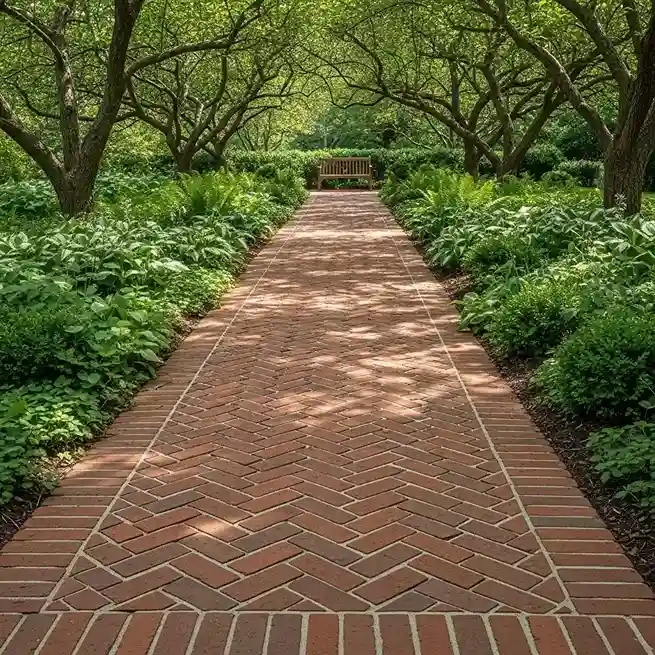
Installing a brick herringbone walkway requires precision and patience, but the results are well worth the effort. Consider using reclaimed or tumbled bricks for an aged, cottage-garden aesthetic, or opt for uniform pavers for a more polished appearance. This design pairs beautifully with other cheap landscaping ideas and can be bordered with low-growing plants or ground covers to soften the edges and create a seamless transition between hardscape and garden beds.
2. Natural Stone Flagstone Path
Flagstone walkways offer an organic, irregular beauty that blends seamlessly with natural landscapes and cottage-style gardens. These flat, split stones come in various colors and sizes, from warm sandstone tones to cool bluish-gray slate, allowing you to customize the look to match your home’s exterior palette. The irregular shapes create a casual, meandering effect that encourages leisurely strolls through your garden while maintaining a sense of rustic elegance.
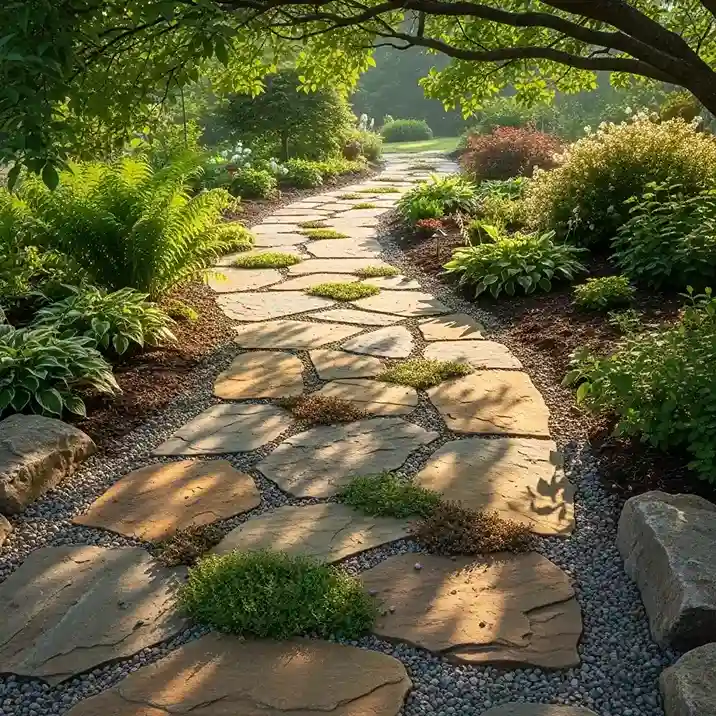
Installation flexibility is one of flagstone’s greatest advantages—you can set the stones directly in sand, mortar them in place for a more permanent solution, or lay them on a gravel base for improved drainage. Leaving gaps between stones and filling them with moss, creeping thyme, or fine gravel adds character and helps the pathway feel integrated into the surrounding landscape. For a cohesive outdoor design, consider incorporating similar stone elements in your fence line landscaping to create visual continuity throughout your property.
3. Decomposed Granite Pathway
Decomposed granite provides a budget-friendly, permeable walkway option that delivers a soft, natural appearance while maintaining excellent functionality. This finely crushed stone compacts firmly when properly installed, creating a stable walking surface that drains well and stays relatively weed-free. The warm, earthy tones of decomposed granite complement Mediterranean, desert, and contemporary landscape designs, offering a refined alternative to traditional gravel paths.

The installation process is straightforward and accessible for DIY enthusiasts, requiring only a well-prepared base, landscape edging, and proper compaction. Decomposed granite paths develop a beautiful patina over time and require minimal maintenance beyond occasional raking and replenishing. This material works particularly well when paired with drought-tolerant plantings and xeriscaping principles, making it an excellent choice for yard ideas in water-conscious regions or for homeowners seeking sustainable landscaping solutions.
4. Poured Concrete with Stamped Patterns
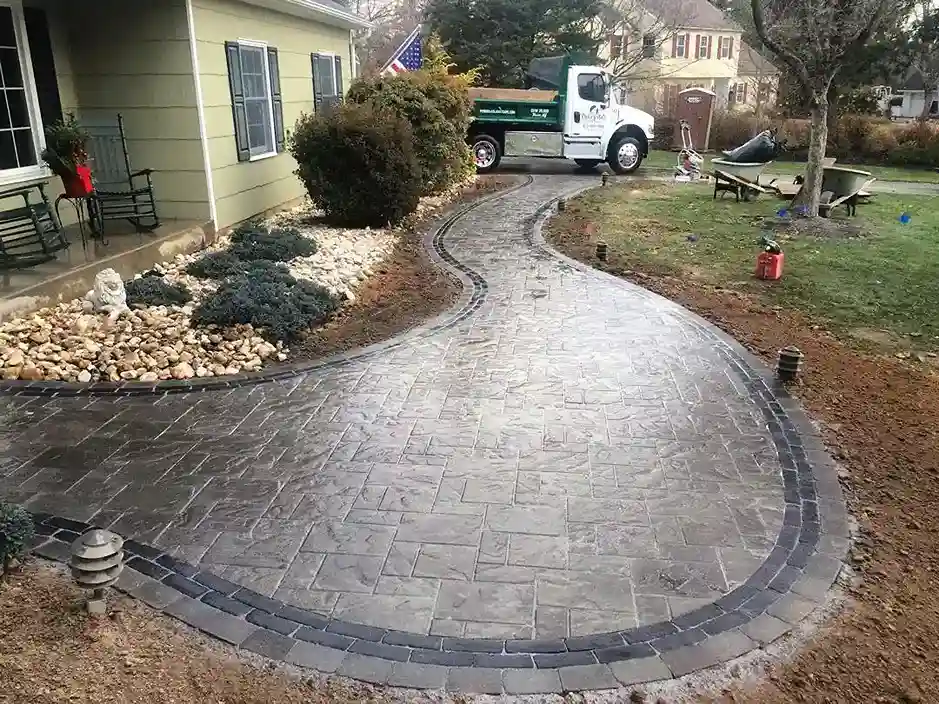
Stamped concrete walkways offer the appearance of expensive natural materials at a fraction of the cost, with endless design possibilities to suit any architectural style. Modern stamping techniques can replicate the look of stone, brick, wood planks, or even decorative tile, providing exceptional versatility for homeowners who want a high-end aesthetic without the premium price tag. The continuous surface also eliminates weed growth between pavers and creates a smooth, accessible pathway ideal for wheelchairs, strollers, and foot traffic.
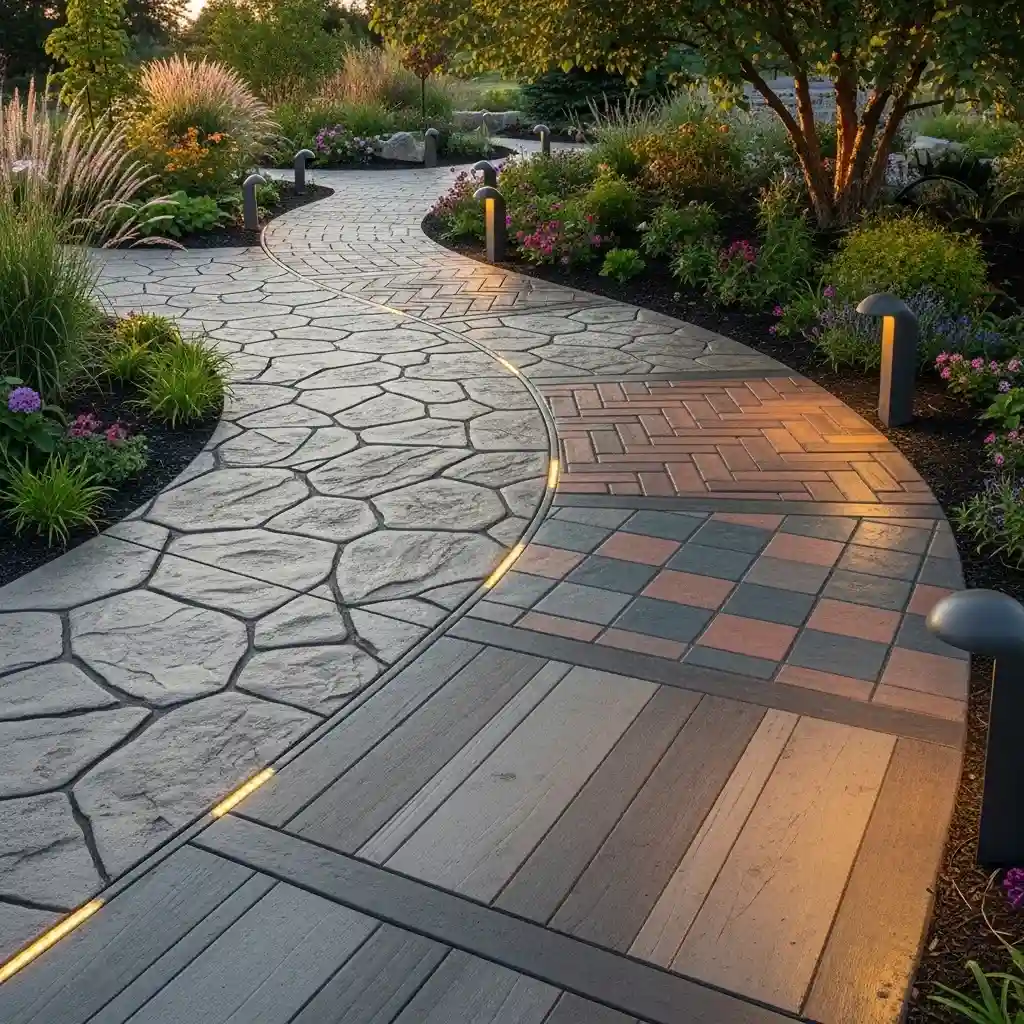
Customization options extend beyond patterns to include various color treatments, from subtle earth tones to bold statement hues that complement your home’s exterior. Adding decorative borders, integrating exposed aggregate sections, or incorporating geometric designs can elevate a simple concrete path into a true outdoor art piece. For those exploring comprehensive backyard landscaping ideas, stamped concrete provides a cohesive foundation that ties together different outdoor living zones while maintaining visual interest throughout the space.
5. Wooden Boardwalk Style
Wooden boardwalk pathways evoke seaside charm and work beautifully in coastal backyard garden settings or anywhere you want to create a relaxed, vacation-inspired atmosphere. Cedar, redwood, and pressure-treated lumber are popular choices due to their natural resistance to rot and insect damage, though composite decking materials offer even greater longevity with minimal maintenance requirements. The elevated nature of boardwalks also makes them ideal for traversing low-lying, damp areas or protecting sensitive root systems in heavily planted gardens.

Construction typically involves building a simple frame structure with cross supports, then laying decking boards perpendicular to the path direction for optimal strength and drainage. Leave small gaps between boards to allow rainwater to pass through and prevent water pooling, which extends the walkway’s lifespan. The warm, organic texture of wood creates an inviting passage that softens the transition between indoor and outdoor spaces while adding vertical dimension to flat landscapes.
6. Mosaic Tile Artistry
Mosaic tile walkways transform functional pathways into stunning works of outdoor art, incorporating colorful patterns, intricate designs, or even personalized family emblems. Using weather-resistant porcelain, ceramic, or natural stone tiles, you can create everything from simple geometric borders to elaborate scenes that reflect your personality and style. This approach works particularly well for shorter pathways, entryways, or focal point areas where the detailed artistry can be properly appreciated.
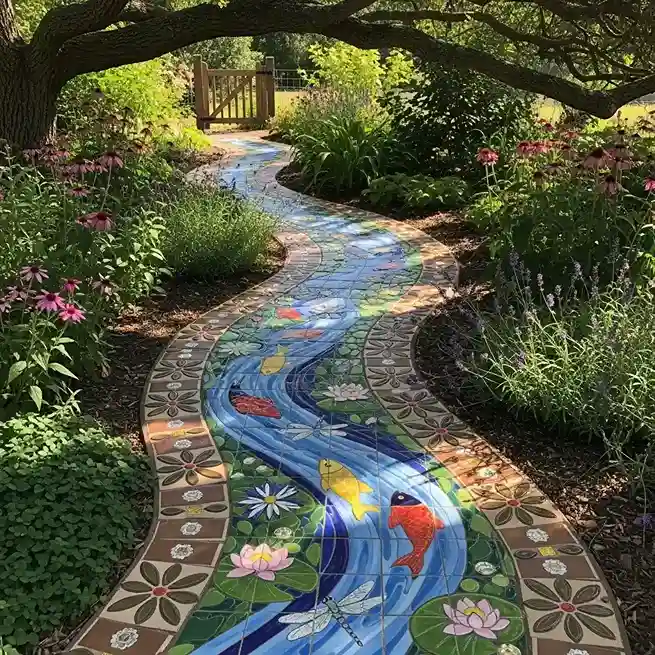
Installation requires a solid concrete base and careful planning to ensure proper tile placement and grout sealing against moisture penetration. Consider mixing tile with other materials like stone or concrete to balance cost and visual impact, using mosaic sections as decorative inserts or borders rather than covering the entire pathway. When planning your overall landscape design, mosaic elements can echo patterns found in white stone landscaping ideas to create a coordinated, designer-quality outdoor environment.
7. Gravel and Paver Combination
Combining gravel with strategically placed pavers creates a walkway that balances casual charm with structural guidance, offering both visual appeal and practical functionality. Large stepping stones or rectangular pavers set within a gravel base provide stable footing while the surrounding loose stone adds texture, improves drainage, and suppresses weed growth. This hybrid approach costs less than solid paver installations while delivering a more refined appearance than gravel alone.

The contrast between the solid pavers and loose gravel creates natural visual rhythm that draws the eye forward along the path. Spacing pavers at comfortable walking intervals—typically 18 to 24 inches apart—ensures a natural gait while the gravel fill accommodates variations in stride length. This versatile design adapts easily to curved layouts and informal garden styles, complementing cottage gardens, contemporary minimalist landscapes, and everything in between.
8. Recycled Rubber Pavers
Eco-conscious homeowners are increasingly turning to recycled rubber pavers as a sustainable, durable, and surprisingly attractive walkway solution. Made from reclaimed tires, these pavers offer excellent slip resistance, shock absorption, and weather resistance while diverting waste from landfills. Available in various colors, textures, and patterns that mimic natural materials, rubber pavers provide a softer walking surface that’s gentle on joints and comfortable underfoot.

Installation is remarkably simple since rubber pavers are lightweight, easy to cut, and can be laid directly over existing surfaces or packed gravel bases without mortar. They perform exceptionally well in high-traffic areas, playground transitions, or beneath shady trees where moss and algae might make traditional materials slippery. When considering trending landscaping ideas that prioritize environmental responsibility, recycled rubber pathways represent an innovative solution that doesn’t sacrifice aesthetics for sustainability.
9. River Rock Stream Design
Creating a walkway that mimics a dry river bed brings naturalistic beauty and movement to your landscape while providing excellent drainage for problem areas. Large, flat stepping stones serve as crossing points within a “stream” of smaller river rocks, creating the illusion of water flowing through your garden. This design works particularly well on slopes or in transitional areas between different garden zones, adding dynamic visual interest while solving drainage challenges.
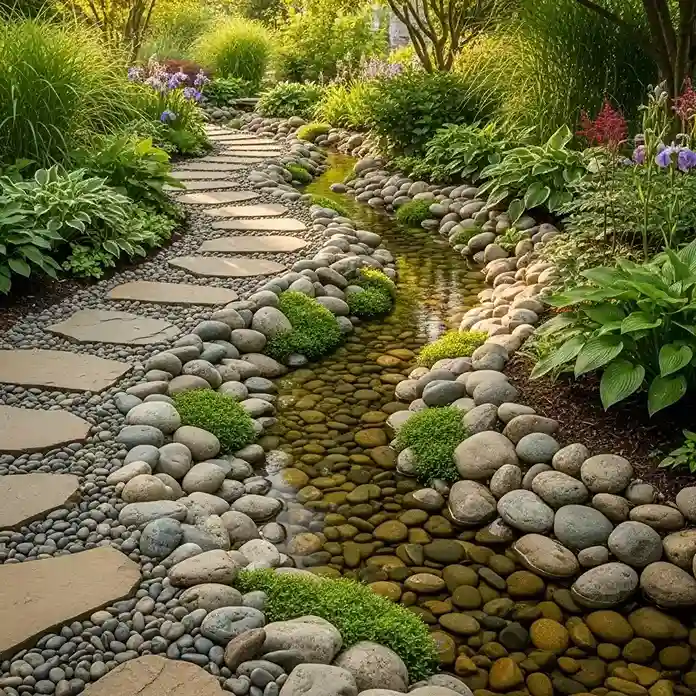
Selecting river rocks in graduated sizes—from fist-sized stones down to pea gravel—creates depth and realism in your design. Border the pathway with larger boulders and moisture-loving plants to enhance the streambed effect and anchor the feature within your broader landscape. This approach integrates seamlessly with small garden ideas by maximizing visual impact in limited spaces while requiring less hardscape material than traditional solid pathways.
10. Mulch and Log Round Path
Rustic log rounds set into a mulch pathway create an enchanting woodland walk that feels straight from a fairy tale setting. Thick slices cut from tree trunks provide stable stepping surfaces while the surrounding mulch offers soft, organic texture that blends beautifully with naturalistic plantings. This approach is exceptionally budget-friendly, especially if you have access to fallen trees or can source log rounds locally, and it adds instant character to shaded garden areas.

Proper installation involves excavating slightly for each log round to ensure stability and prevent wobbling, then backfilling around them with hardwood mulch that complements the wood tones. Over time, the logs will weather naturally, developing moss and lichen growth that enhances their woodland charm. This pathway style pairs perfectly with shade-loving plantings and works well as a secondary path through gardens where a more natural, less formal aesthetic is desired.
11. Concrete Stepping Stones with Grass
Alternating concrete stepping stones with living grass create a contemporary, minimalist walkway that balances hardscaping with softscaping in perfect harmony. This design approach reduces the amount of impervious surface in your landscape while maintaining clean, defined pathways that guide movement through your outdoor space. The geometric precision of evenly spaced concrete pavers contrasts beautifully with the organic texture of grass, creating visual interest through simplicity.

Installation requires careful planning to ensure pavers sit slightly below grass level for easy mowing, with adequate spacing to accommodate your natural stride. Consider using large-format pavers—24 inches square or larger—to create a more substantial, modern aesthetic. This design philosophy extends well to broader landscape planning, and incorporating elements from best shrubs for front of house plantings along pathway edges creates layered visual interest while maintaining the clean, uncluttered feel.
12. Crushed Seashell Pathway
For coastal properties or anyone wanting to evoke beachside ambiance, crushed seashell pathways deliver instant vacation vibes with their bright, reflective surfaces and distinctive texture. These calcium-rich materials compact well, provide excellent drainage, and brighten shaded areas with their naturally light color. The gentle crunching sound underfoot adds an auditory dimension to your garden experience while the shells’ alkaline nature benefits certain plantings.
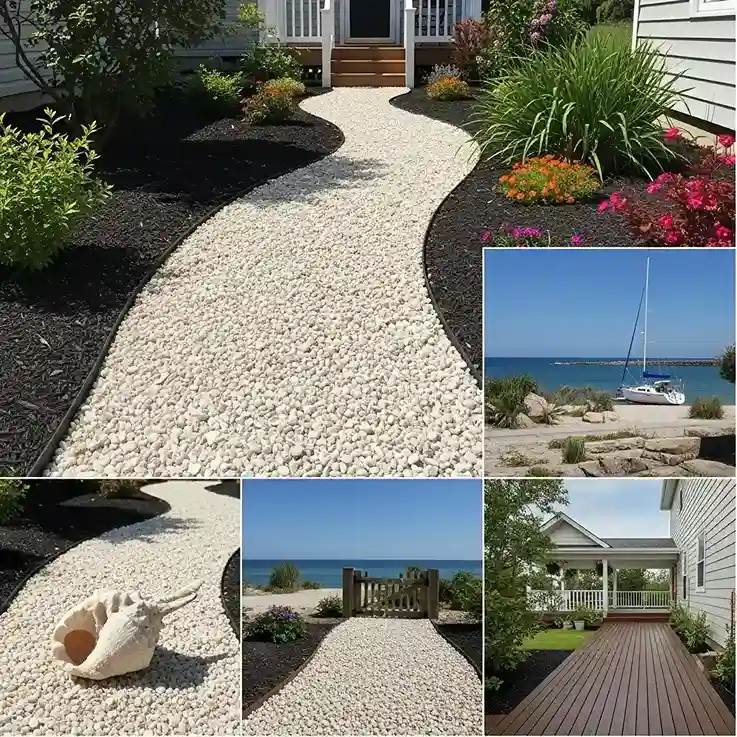
Proper edging is essential to contain crushed shells and prevent them from migrating into surrounding lawn or garden beds. Consider mixing shell sizes for improved compaction and visual texture, or create patterns by incorporating shells of different colors and types. When developing comprehensive coastal backyard garden guide plantings, seashell pathways provide authentic maritime character while supporting the growth of lime-loving plants positioned along pathway edges.
13. Permeable Pavers for Sustainability
Permeable paver systems represent the cutting edge of environmentally responsible walkway design, allowing rainwater to filter through the surface rather than running off into storm drains. These specialized pavers feature gaps or porous materials that reduce flooding, replenish groundwater, and minimize pollutant runoff while providing stable, attractive walking surfaces. Available in various styles from contemporary concrete grids to traditional-looking stones with wide joints, permeable options suit nearly any design aesthetic.
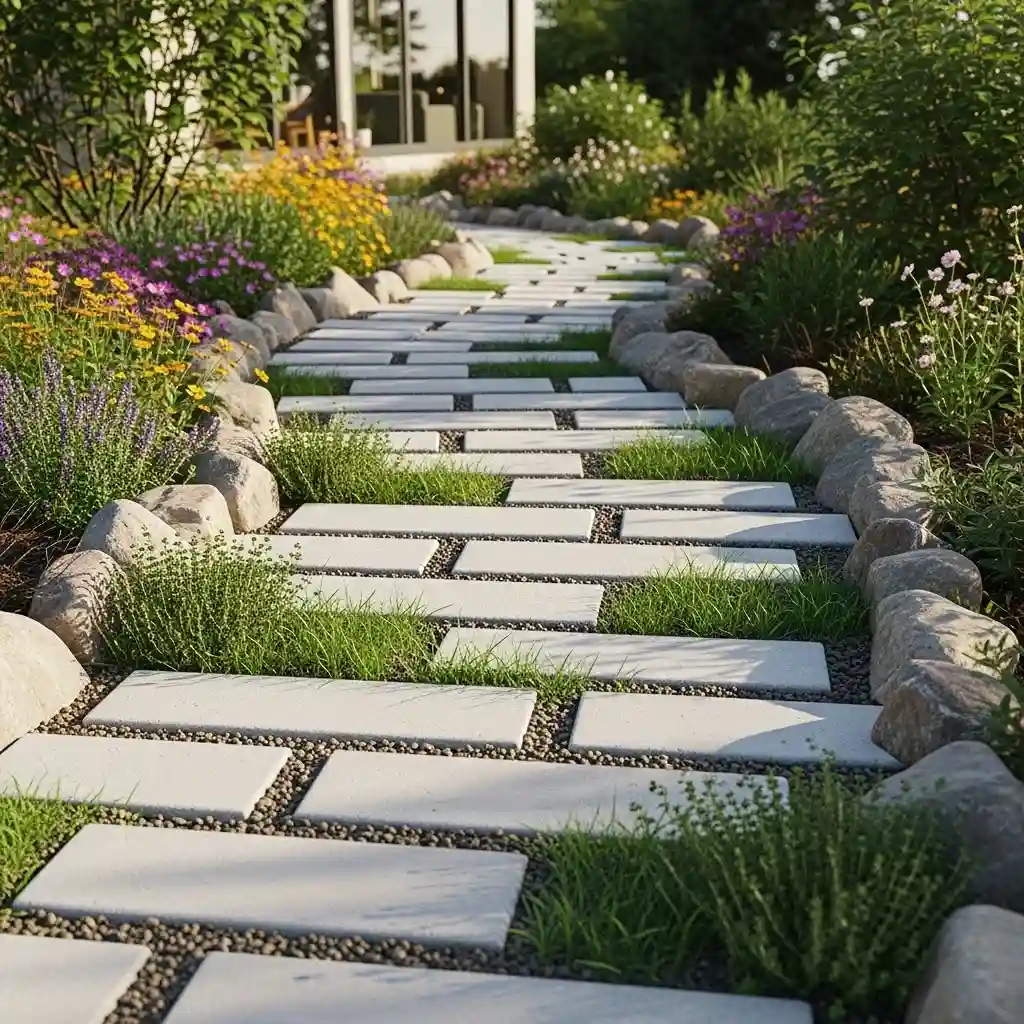
Installation involves creating a proper sub-base of graduated stone layers that facilitate drainage and structural support. While initial costs may exceed traditional paving, permeable systems often qualify for green building incentives and significantly reduce long-term environmental impact. Homeowners interested in best outdoor plants benefit from permeable pathways that direct water toward garden beds rather than away from them, supporting healthier plant growth while demonstrating environmental stewardship.
14. Brick and Cobblestone Border Design
Combining a central walkway material with contrasting brick or cobblestone borders creates architectural definition and visual sophistication that elevates simple pathway designs. This technique works with almost any primary material—from poured concrete to gravel—by framing it with more refined edging that adds structure and prevents material migration. The border treatment also provides opportunities to introduce color contrast, pattern variation, and historical character that references classical garden design traditions.
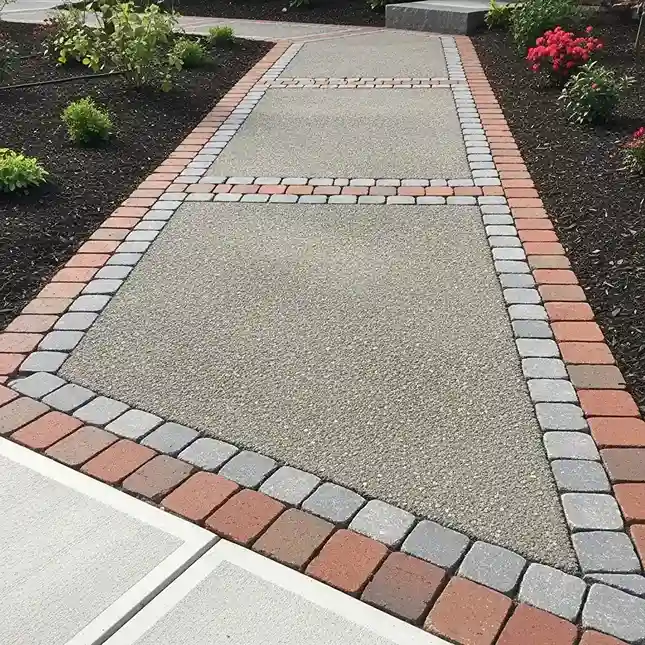
Creating crisp, professional-looking borders requires careful excavation, proper leveling, and secure edge restraints to prevent shifting over time. Consider varying border widths to adjust visual impact, using wider borders for primary pathways and narrower versions for secondary garden routes. This layered design approach complements structured landscape plans and works particularly well when incorporated into overall fence line landscaping schemes that emphasize boundaries, definition, and traditional garden formality.
15. Illuminated Glass Block Path
Incorporating glass blocks into walkway design creates magical nighttime ambiance while providing unexpected artistic flair during daylight hours. These translucent or colored blocks can be mortared into existing pathways as decorative accents or installed as primary paving elements for truly unique outdoor features. When positioned to catch sunlight or lit from below with solar-powered or LED systems, glass blocks create luminous pathways that enhance safety while adding enchanting visual effects.
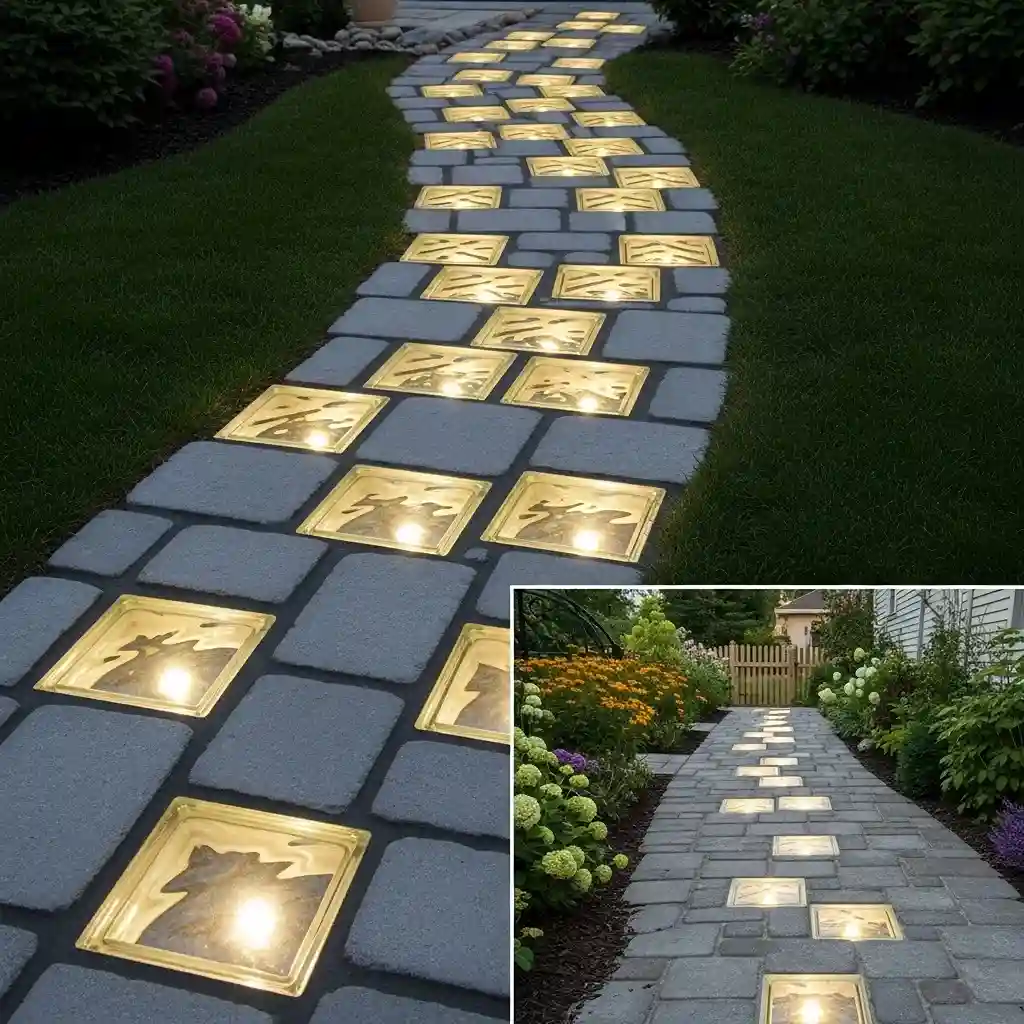
Installation requires careful consideration of weight-bearing requirements and proper setting to prevent cracking, making this approach better suited for low-traffic areas or decorative garden paths rather than heavy-use main walkways. Frosted or textured glass provides better traction than smooth surfaces while still transmitting light effectively. This innovative design element brings the same creative thinking that influences house plants guide selections—prioritizing unique visual impact alongside practical considerations.
16. Interlocking Paver Systems
Modern interlocking paver systems offer DIY-friendly installation, exceptional durability, and clean contemporary aesthetics that suit a wide range of architectural styles. These precisely manufactured units fit together like puzzle pieces, creating stable surfaces without mortar while accommodating ground movement better than rigid installations. Available in countless colors, shapes, and sizes, interlocking pavers allow for creative pattern work from simple running bonds to complex geometric designs.

The self-aligning nature of these pavers makes installation accessible for motivated homeowners, requiring only proper base preparation, edge restraints, and polymeric sand to lock units in place. Many systems include matching borders, steps, and accents that create cohesive hardscape designs throughout your property. When planning comprehensive outdoor improvements, interlocking paver walkways coordinate beautifully with diy privacy fences and other hardscape elements to create unified, professionally finished landscapes.
17. Stained Concrete Artisan Finish
Acid-stained or water-based colored concrete transforms ordinary walkways into vibrant, artistic statements with unique mottled patterns that resemble natural stone or aged patina. Chemical reactions with the concrete create variegated colors that develop depth and character impossible to achieve with standard pigmented concrete. This technique allows for custom color palettes that complement your home’s exterior while adding sophisticated visual interest to functional pathways.

The application process involves careful surface preparation, strategic stain application, and proper sealing to protect the finish from weather and traffic wear. Multiple colors can be layered to create complex effects, or stencils can add borders and patterns that elevate the design further. This customization approach reflects the same attention to aesthetic detail that guides selections for indoor plants that complement interior design schemes—extending your personal style throughout all living spaces.
18. Slate Tile Elegant Pathway
Slate tile walkways deliver refined elegance with their smooth surfaces, rich color variations, and naturally slip-resistant texture that performs beautifully in wet conditions. Available in tones ranging from charcoal gray to rusty orange and deep purple, slate brings sophisticated color depth that weathers gracefully while maintaining its structural integrity. The material’s natural cleft surface provides excellent traction without compromising the polished appearance that makes slate a premium paving choice.
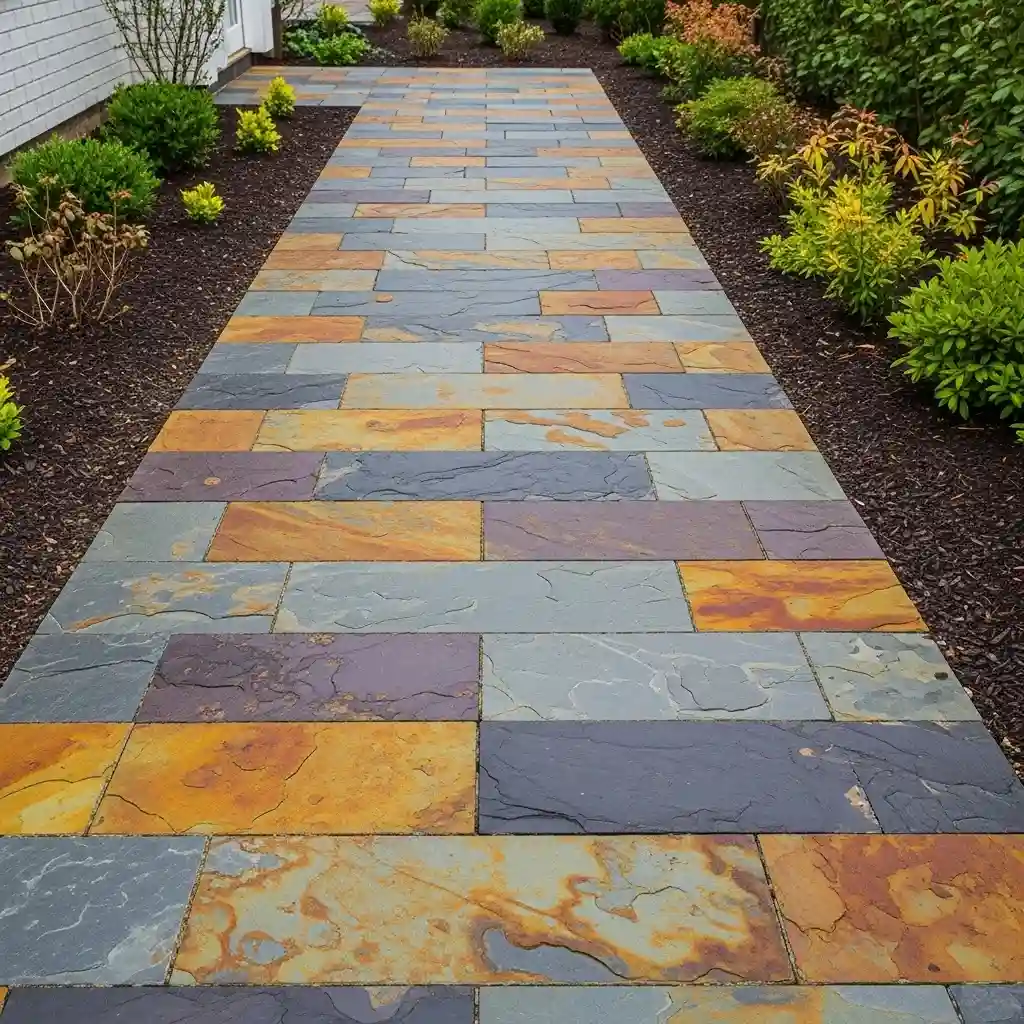
Installation requires a level concrete base or well-compacted gravel foundation to prevent cracking, as slate can be more brittle than some stone alternatives. Setting tiles in mortar ensures longevity and creates a permanent, high-end pathway worthy of main entries and primary garden routes. The timeless appeal of slate complements both traditional and contemporary architecture, making it a versatile choice that maintains property value while providing decades of service.
19. Pebble Mosaic Patterns
Hand-laid pebble mosaics represent the ultimate in artisan walkway design, creating stunning patterns from smooth river stones arranged in traditional or contemporary motifs. This ancient technique produces durable, textured surfaces with incredible visual impact that transforms pathways into garden gallery installations. While labor-intensive, pebble mosaics offer unmatched customization potential, allowing you to incorporate family symbols, cultural patterns, or purely decorative designs that reflect your unique vision.
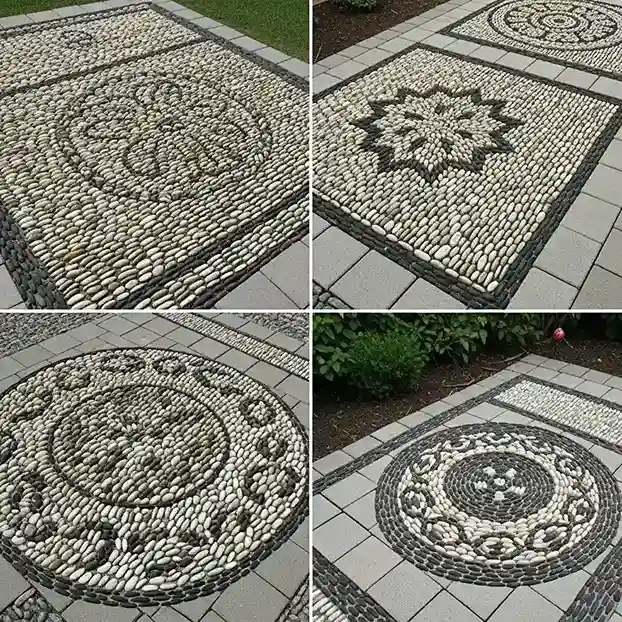
The process involves setting pebbles vertically in sand and cement, carefully selecting stones for size and color to execute your design. Simpler patterns like spirals, waves, or radiating circles provide striking results without requiring advanced artistic skills, while more complex pictorial scenes become true outdoor masterpieces. When developing holistic landscape designs, these artistic pathways serve as conversation pieces that anchor your outdoor aesthetic, much like featured best shrubs for front of house plantings create focal points in foundation beds.
20. Reclaimed Brick Vintage Charm
Salvaged bricks from demolished buildings and old streets bring instant history and character to walkway designs, offering weathered patinas and irregular surfaces that new materials cannot replicate. The variations in color, texture, and size found in reclaimed brick create authentic vintage appeal while supporting sustainable building practices through material reuse. These aged pavers tell stories through their worn edges and accumulated patinas, adding soul and depth to landscape designs.

Sourcing quality reclaimed brick requires patience and careful inspection to ensure structural integrity, but specialty salvage yards and demolition companies often stock excellent selections. The slightly irregular nature of old bricks adds to their charm, though it may require more careful installation work to achieve level surfaces. This nostalgic material choice aligns with broader cheap landscaping ideas that prioritize creativity and resourcefulness over expensive new materials.
21. Geometric Concrete Pavers
Bold geometric concrete pavers bring contemporary flair to outdoor spaces with clean lines, precise angles, and modern minimalist aesthetics. Large-format hexagons, triangles, or asymmetric shapes create eye-catching patterns that feel distinctly current while maintaining the durability and low maintenance that make concrete practical for high-traffic areas. These statement-making walkways serve as sculptural elements within your landscape, demonstrating that functional pathways can also be artistic expressions.

The key to successful geometric paver installations lies in precise planning, accurate cutting, and thoughtful color selection that complements your home’s architecture. Mixing paver colors creates additional visual interest, while incorporating small gaps filled with contrasting materials like grass, gravel, or ground covers softens the hard edges. This design-forward approach reflects the same creative thinking behind trending landscaping ideas that push boundaries while maintaining practical functionality.
22. Mixed Material Eclectic Path
Combining multiple materials—brick with stone, concrete with wood, gravel with pavers—creates eclectic walkways that feel curated and intentional while offering exceptional visual interest. This approach allows you to work with materials you already have, incorporate salvaged elements, or gradually build pathways as budget allows without compromising aesthetic appeal. The varied textures, colors, and patterns create dynamic surfaces that prevent monotony while guiding movement through your garden with artistic flair.
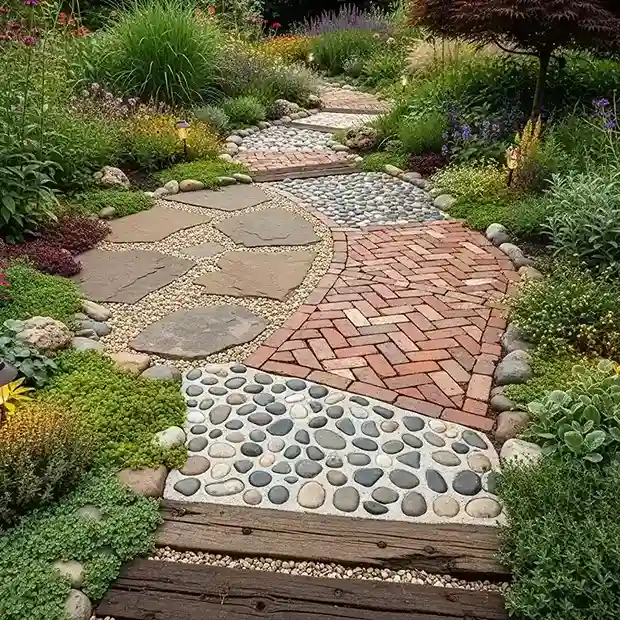
Successful mixed-material designs require careful planning to ensure transitions between materials feel purposeful rather than haphazard. Consider using one material as the dominant element—perhaps 60-70% of the surface—with others serving as accents or borders. This technique offers maximum creative freedom while accommodating budget constraints and material availability, making it an ideal solution for those developing small garden ideas where every design decision must maximize impact within limited space.
Frequently Asked Questions
What is the most budget-friendly walkway material?
Gravel and decomposed granite are typically the most affordable options, with mulch and recycled materials also offering cost-effective alternatives for informal pathways.
How wide should a garden walkway be?
Primary walkways should measure at least 3-4 feet wide to allow two people to walk comfortably side-by-side, while secondary garden paths can be as narrow as 2 feet.
Do walkways need a base layer?
Most walkways benefit from a properly prepared base of compacted gravel or sand to ensure drainage, prevent settling, and extend the life of your pathway installation.
How do I prevent weeds in my walkway?
Install landscape fabric beneath your pathway material, use polymeric sand between pavers, and apply pre-emergent herbicides or natural alternatives like vinegar solutions to discourage weed growth.
What’s the best material for a curved walkway?
Smaller pavers, flagstone, gravel, and flexible materials like rubber pavers adapt most easily to curved designs, while large-format pavers and concrete work better for straight pathways.
How much slope should a walkway have?
Pathways should slope approximately 1-2% (about 1/8 to 1/4 inch per foot) to ensure proper drainage without creating uncomfortable walking surfaces.
Can I install a walkway over existing grass?
While possible, it’s better to excavate grass and prepare a proper base for stability, drainage, and longevity; simply laying pavers on grass typically results in uneven, unstable pathways.
How long do different walkway materials last?
Concrete and stone can last 50+ years with proper installation, brick and pavers typically last 25-50 years, while wood, gravel, and mulch require more frequent maintenance or replacement every 5-15 years.
Conclusion
Creating the perfect walkway transforms your outdoor space from ordinary to extraordinary while providing essential functionality that enhances daily life. Whether you choose classic materials with timeless appeal or experimental combinations that showcase your creativity, thoughtful pathway design connects your landscape’s elements into a cohesive, inviting environment.
Remember that the best walkway reflects your personal style while serving practical needs and complementing your home’s architecture. With proper planning, quality materials, and attention to installation details, your new pathway will provide years of beauty and service while increasing your property’s value and curb appeal.