
Modern landscaping trends reflect our evolving relationship with outdoor spaces, blending sustainability, functionality, and aesthetic appeal in fresh, innovative ways.
Today’s homeowners seek landscapes that serve multiple purposes—creating beautiful environments while supporting local ecosystems, conserving resources, and providing spaces for outdoor living and relaxation.

Source: @greengenielandscapes
These contemporary approaches prioritize native plants, low-maintenance designs, and eco-conscious choices that benefit both property owners and the environment.
From rewilded meadow small gardens to sophisticated outdoor living rooms, current landscaping trends emphasize natural beauty over formal perfection and sustainable practices over resource-intensive maintenance.

Whether you’re planning a complete landscape overhaul or simply refreshing specific areas, these twenty trending ideas showcase what’s capturing attention in residential landscaping today. Let’s explore the innovative concepts transforming ordinary yards into extraordinary outdoor sanctuaces that align with modern values and lifestyles.
1. Native Prairie Meadows for Biodiversity
Native meadow plantings featuring wildflowers and grasses create naturalistic landscapes teeming with pollinators and wildlife. Species like little bluestem, black-eyed Susans, purple coneflowers, and butterfly milkweed establish self-sustaining ecosystems requiring minimal watering, fertilizing, or mowing once established, making them exceptionally eco-friendly landscape choices.
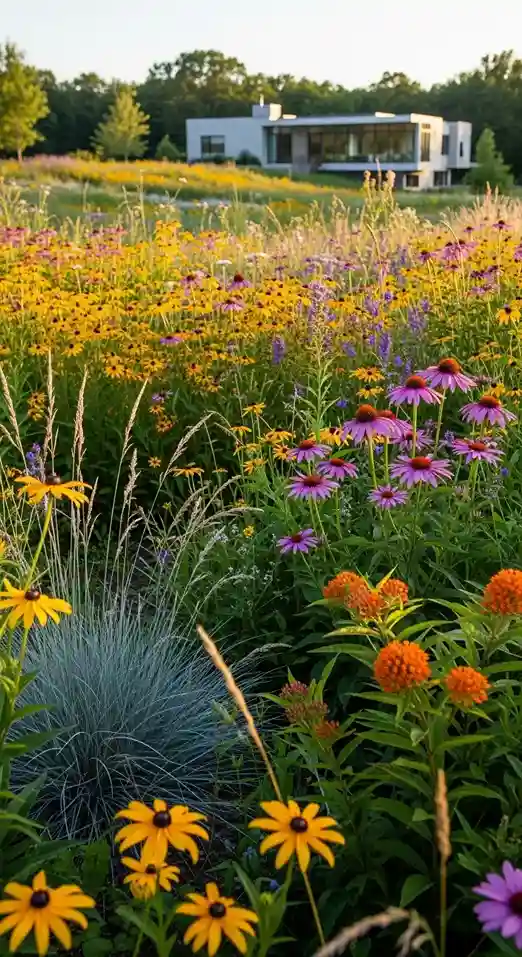
These meadows provide four-season interest with blooming wildflowers, swaying grasses, seed heads attracting birds, and standing winter structure. They require initial weed control during establishment but become virtually maintenance-free afterward. Meadow gardens support declining pollinator populations while reducing lawn care time and chemical use significantly.
2. Outdoor Living Rooms with Native Plants
Fully furnished outdoor spaces function as extensions of indoor living areas, featuring comfortable seating, weatherproof rugs, fire features, and ambient lighting. Plantings of native shrubs like ninebark, serviceberry, and oakleaf hydrangea provide natural privacy screening and seasonal interest while framing these outdoor rooms with regionally appropriate vegetation.

These sophisticated spaces blur boundaries between indoors and outdoors, incorporating weather-resistant furniture, outdoor kitchens, and entertainment systems. Native plantings soften hardscaping while attracting beneficial wildlife. Design outdoor rooms with microclimates in mind, positioning seating to capture sun or shade as seasons change for year-round usability.
3. Pollinator Gardens with Purposeful Planting
Dedicated pollinator gardens filled with native nectar sources like bee balm, goldenrod, asters, and Joe Pye weed support declining bee, butterfly, and hummingbird populations. These gardens combine ecological responsibility with visual beauty, featuring layered plantings that bloom successively from spring through fall to provide continuous food sources.

Plant in sunny locations with well-drained soil, grouping species in masses for easier navigation by pollinators. Include host plants for caterpillars alongside nectar sources for adults. Avoid pesticides completely and leave seed heads standing through winter for bird food and beneficial insect overwintering habitat.
4. Edible Front Yard Landscapes
Ornamental edible plantings replace traditional foundation shrubs and flower beds, featuring attractive food-producing plants like blueberry bushes, dwarf fruit trees, colorful Swiss chard, and decorative kale. This trend combines curb appeal with productivity, proving edible landscapes can be beautiful while providing fresh, homegrown produce.

Design with aesthetics in mind, using vegetable foliage colors and textures as ornamental elements. Purple-leafed basil, bronze fennel, rainbow chard, and variegated sage offer visual interest alongside culinary value. Integrate perennial edibles like asparagus, rhubarb, and artichokes with annual vegetables for low-maintenance, productive front yards.
5. Rain Gardens for Stormwater Management
Rain gardens positioned in low-lying areas capture runoff from roofs, driveways, and lawns, filtering pollutants while reducing erosion and flooding. Native moisture-loving plants like cardinal flower, iris, sedges, and swamp milkweed thrive in these periodically wet conditions, creating beautiful, functional landscapes that solve drainage problems naturally.
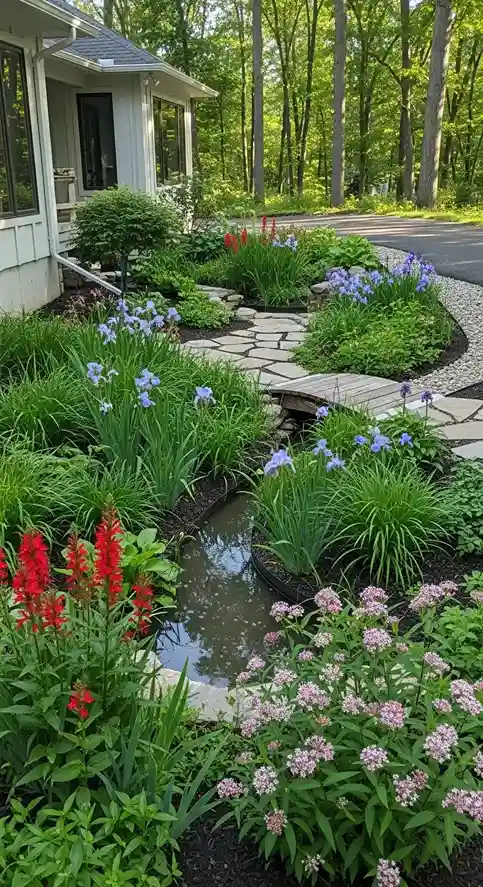
Design rain gardens 4-8 inches deep with amended soil for improved infiltration and drainage. Plant in concentric zones based on moisture tolerance, with wetland plants in the center and drier-adapted species on edges. Rain gardens recharge groundwater, reduce municipal stormwater system burden, and create habitat in suburban landscapes.
6. Dark-Foliaged Plants for Dramatic Contrast
Deep burgundy, purple, and near-black foliage plants like ‘Royal Purple’ smoke bush, ‘Black Lace’ elderberry, and dark-leafed coral bells create striking contrasts against green landscapes. This trending color palette adds sophistication and depth, making surrounding colors appear more vibrant while providing modern, dramatic focal points.

Position dark plants strategically where they’ll receive adequate light to prevent them from disappearing into shadows. Pair them with chartreuse, silver, or variegated foliage for maximum impact. Dark foliage works particularly well in contemporary and formal garden styles, adding richness without relying on flowers alone.
7. Gravel Gardens for Low-Water Landscapes
Gravel gardens featuring drought-tolerant plants like lavender, Russian sage, salvia, and ornamental grasses set in attractive stone mulch create modern, low-maintenance landscapes. This Mediterranean-inspired approach conserves water dramatically while providing year-round texture and interest through foliage, seed heads, and minimal flowering periods.
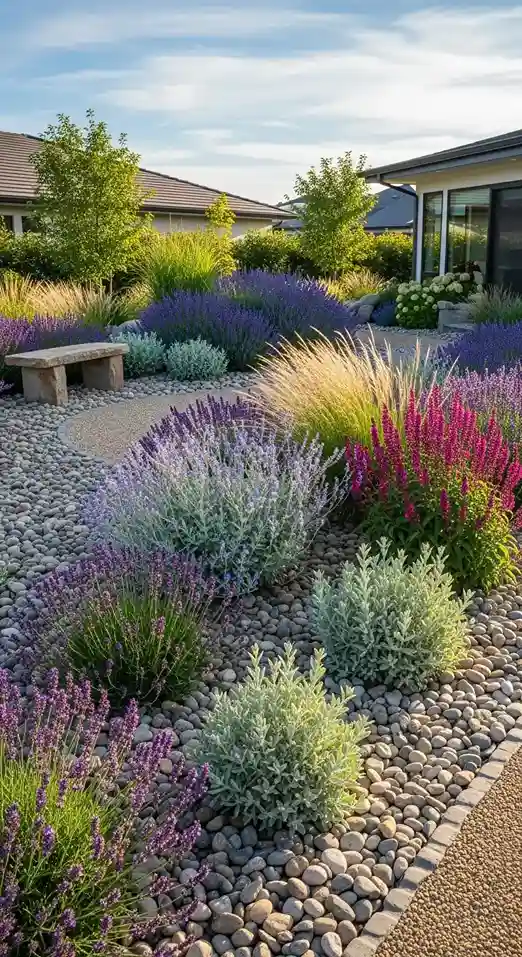
Prepare beds with excellent drainage and minimal organic matter to mimic dry, rocky habitats. Use decorative gravel in natural tones as mulch, which reflects heat and suppresses weeds while requiring no replacement. These gardens suit contemporary architecture perfectly and thrive in sunny, well-drained locations with minimal supplemental irrigation.
8. Vertical Gardens on Walls and Fences
Living walls and vertical gardens transform blank fences and walls into lush, green focal points using modular planting systems or climbing plants. Varieties like Boston ivy, climbing hydrangea, Virginia creeper, and clematis cover vertical surfaces quickly, adding greenery to small spaces while improving air quality and providing wildlife habitat.
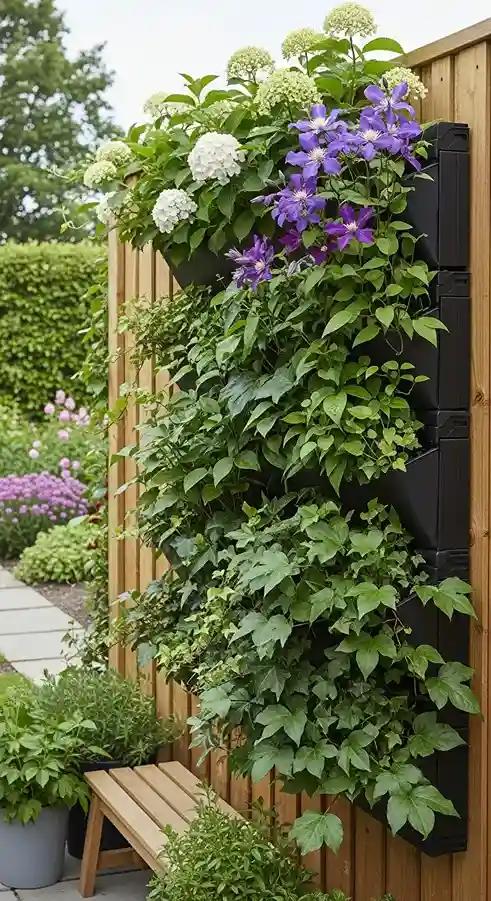
Select climbers appropriate for your structure and sun exposure, using support systems matched to plant attachment methods. Self-clinging vines need no additional support while twining plants require trellises or wires. Vertical gardens maximize limited space in urban settings while softening hard architectural surfaces with natural beauty.
9. Native Shade Gardens Under Trees
Shade gardens featuring native woodland plants like wild ginger, Solomon’s seal, native ferns, and trillium transform difficult areas under mature trees into lush, low-maintenance plantings. These gardens celebrate regional native flora while solving the common problem of bare ground beneath tree canopies where grass struggles.

Choose plants naturally adapted to forest floor conditions in your region. Avoid disturbing tree roots by planting in existing gaps and pockets rather than extensive digging. Native shade plants require minimal care once established, thriving on natural leaf litter and seasonal moisture patterns without supplemental watering or feeding.
10. Naturalized Bulb Plantings for Seasonal Waves
Mass plantings of naturalized bulbs like daffodils, crocus, and species tulips create spectacular spring displays that return and multiply annually. This trending approach abandons formal arrangements for naturalistic drifts planted randomly throughout lawns and garden beds, mimicking wildflower meadows with waves of early color.
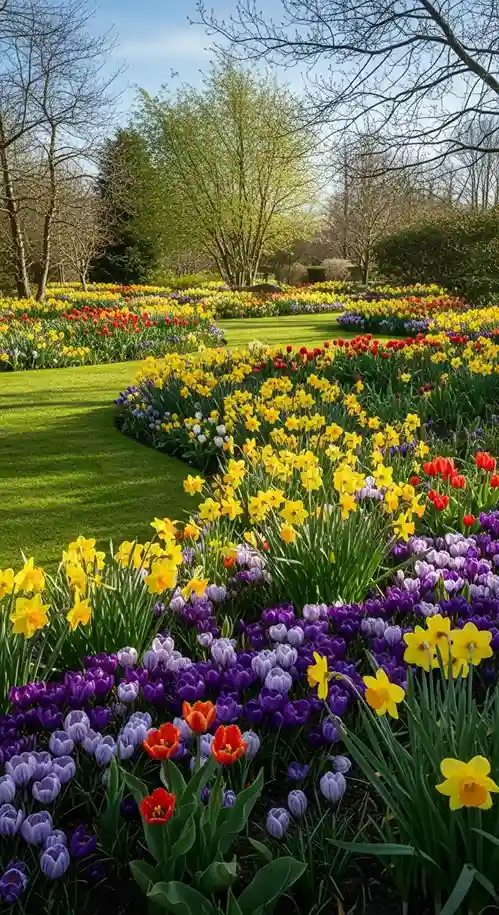
Plant bulbs in fall by scattering handfuls and planting where they land for natural-looking distributions. Choose varieties that naturalize reliably, avoiding hybrid tulips that decline after first year. Allow foliage to yellow completely before mowing to ensure bulbs store energy for next season’s blooms and continued spreading.
11. Ornamental Vegetable Gardens with Structure
Formal vegetable gardens incorporating decorative elements like boxwood edging, symmetrical beds, ornamental support structures, and attractive pathways elevate food production to art. This potager-style approach features vegetables chosen for appearance alongside productivity, with colorful chards, sculptural artichokes, and flowering herbs creating beautiful compositions.
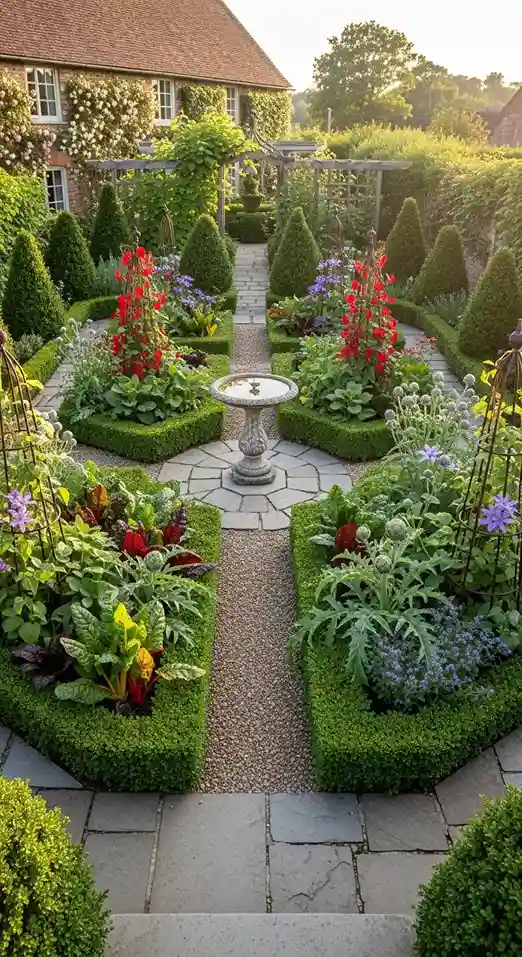
Design geometric bed patterns with permanent pathways between for easy access and visual structure. Incorporate perennial herbs and flowers as borders, using annuals and vegetables as seasonal focal points. Vertical elements like obelisks supporting beans or tomatoes add height and architectural interest to otherwise flat vegetable plantings.
12. Sustainable Xeriscaping with Succulents
Xeriscape designs featuring drought-adapted plants like sedums, agaves, yuccas, and hardy ice plants eliminate or drastically reduce irrigation needs. This water-wise landscaping approach combines attractive rock mulches with sculptural succulent forms, creating modern, sustainable landscapes especially suited to arid climates and water-conscious homeowners.
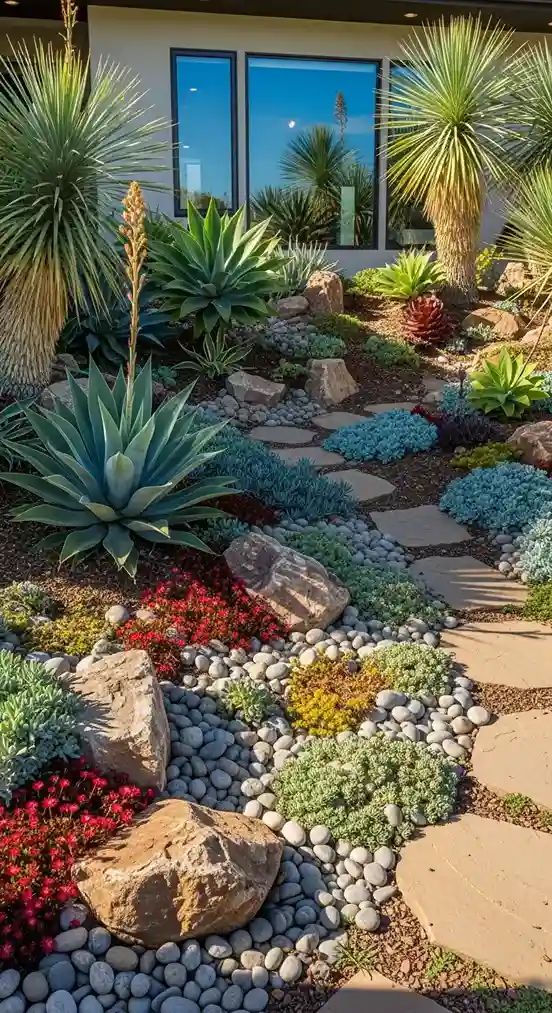
Group plants with similar water needs together and use efficient drip irrigation if supplemental water proves necessary. Prepare soil with excellent drainage as succulents rot in consistently wet conditions. These landscapes require minimal maintenance while providing year-round interest through diverse foliage colors, textures, and architectural forms.
13. Black Mondo Grass for Modern Edging
Black mondo grass creates striking, contemporary borders with near-black, grass-like foliage that remains evergreen in mild climates. This slow-growing perennial reaches 6-8 inches tall, providing dramatic contrast when edging pathways, beds, or as ground cover beneath lighter-foliaged plants in modern landscape designs emphasizing bold color contrasts.

Plant in partial shade to full sun depending on climate, spacing 4-6 inches apart for continuous edging. Black mondo grass tolerates various soil types and requires minimal maintenance once established. Its dark foliage intensifies colors of surrounding plants while adding unexpected sophistication to contemporary and Asian-inspired landscape styles.
14. Native Groundcovers Replacing Traditional Lawns
Native groundcovers like wild strawberry, creeping phlox, Pennsylvania sedge, and blue star creeper replace high-maintenance turfgrass with eco-friendly alternatives. These low-growing plants provide green coverage requiring no mowing, less water, and no chemical inputs while supporting native insects and creating more biodiverse, sustainable residential landscapes.

Select groundcovers appropriate for sun exposure and traffic patterns, as most tolerate only occasional foot traffic. Prepare sites carefully, removing existing turf and weeds before planting. Native groundcovers establish slowly but create permanent, self-sustaining carpets that outperform traditional lawns environmentally while reducing maintenance time and costs dramatically.
15. Outdoor Kitchens Surrounded by Herb Gardens
Full outdoor kitchens featuring grills, sinks, refrigeration, and prep surfaces surrounded by culinary herb gardens combine functionality with fresh ingredients. Plantings of rosemary, thyme, sage, oregano, and basil growing within arm’s reach create convenient, aromatic cooking spaces that blur lines between garden and kitchen seamlessly.
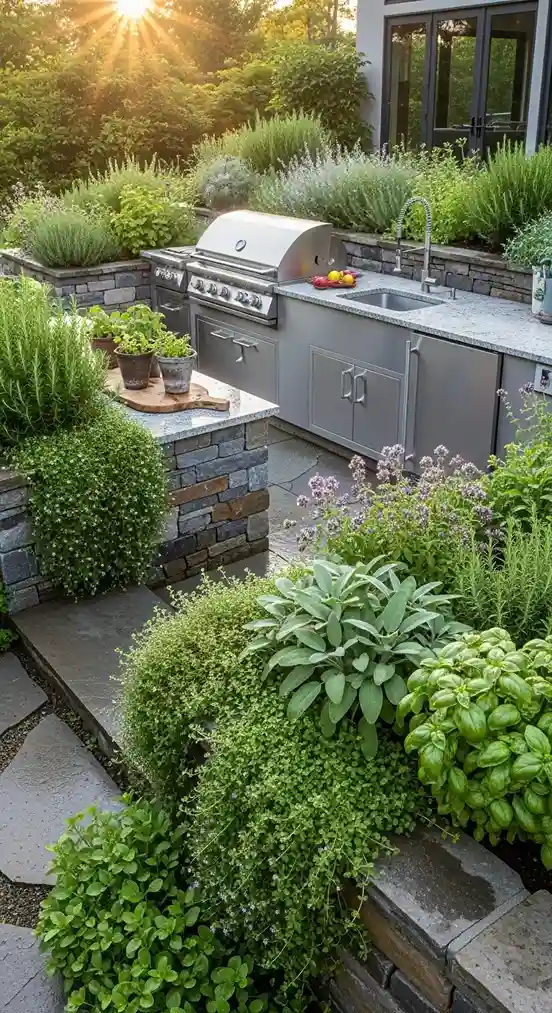
Position kitchens on level areas with utility access for water and electricity. Surround with raised beds or large containers filled with culinary herbs and edible flowers. Mediterranean herbs thrive in sunny, well-drained locations near outdoor cooking areas, providing fresh flavoring while scenting the air and attracting beneficial pollinators.
16. Bioswales Integrating Landscape and Drainage
Bioswales are vegetated channels directing and filtering stormwater runoff while creating attractive landscape features. Planted with native sedges, rushes, moisture-tolerant grasses, and flowering perennials, these functional landscapes manage water sustainably while providing wildlife habitat and visual interest along property edges or between different landscape zones.

Design bioswales with gentle slopes ensuring water flows slowly enough for infiltration and filtration. Plant with species tolerant of both periodic flooding and dry conditions. These features prevent erosion, recharge groundwater, and filter pollutants naturally while integrating seamlessly into attractive, ecologically responsible landscape designs.
17. Monochromatic Color Schemes in Plantings
Single-color garden schemes using varying shades and tones create sophisticated, cohesive landscapes with modern appeal. White gardens featuring white-flowering plants and silver foliage, or purple gardens combining lavender, salvia, and catmint demonstrate how monochromatic approaches create calm, elegant spaces with strong visual impact.
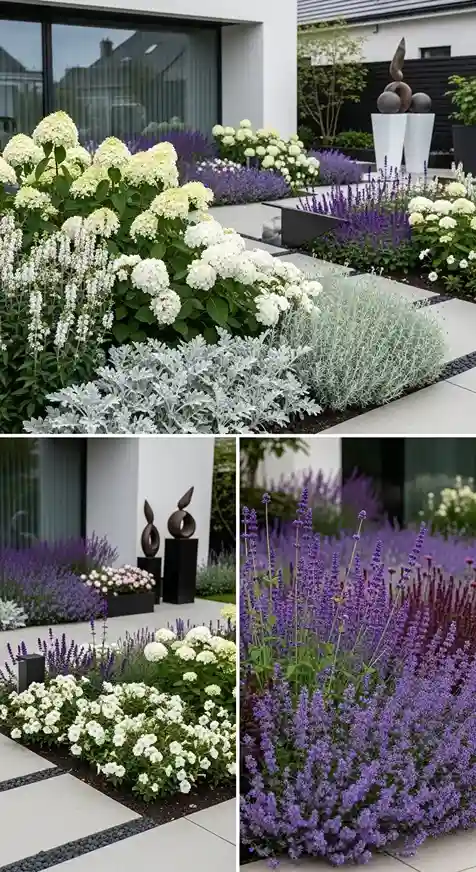
Select plants with varying bloom times to extend single-color displays across seasons. Include foliage plants in complementary tones to maintain color themes when flowers fade. Monochromatic schemes work particularly well in small spaces where too many colors create visual chaos, offering simplicity and sophistication instead.
18. Wildlife Corridors Connecting Fragmented Habitats
Landscape designs incorporating continuous plantings of native trees, shrubs, and perennials create corridors allowing wildlife movement between fragmented habitats. These ecologically conscious landscapes prioritize biodiversity, featuring layered native plantings from ground covers through canopy trees that provide food, shelter, and safe passage for birds, butterflies, and beneficial insects.
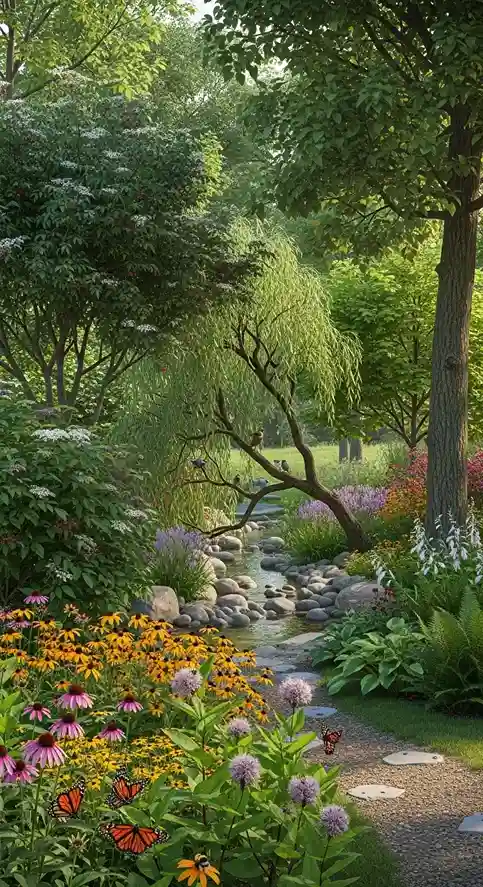
Plant in layers mimicking natural ecosystems with canopy trees, understory shrubs, and ground layer perennials. Include plants providing year-round food sources through flowers, berries, seeds, and nuts. Avoid pesticides and leave natural debris like leaf litter and fallen branches for insect habitat and natural nutrient cycling.
19. Textural Foliage Gardens Minimizing Flowers
Gardens emphasizing foliage texture, form, and color over flowers create sophisticated, low-maintenance landscapes with year-round appeal. Combinations of hostas, ferns, ornamental grasses, and bold-leafed plants like ligularia provide diverse textures and colors without depending on seasonal blooms, offering consistent beauty requiring minimal deadheading.
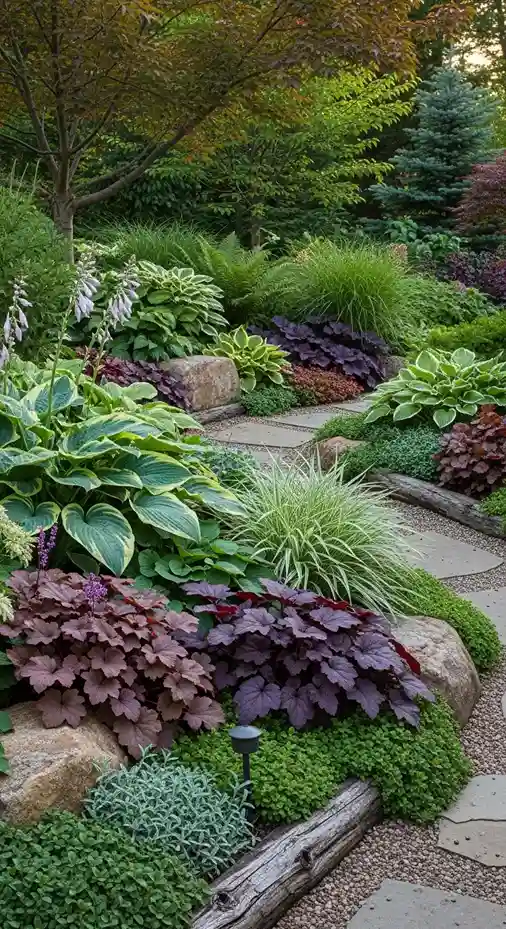
Layer plants with contrasting leaf sizes, shapes, and textures for maximum interest. Combine fine-textured ferns or grasses with bold hostas or elephant ears. Include evergreen structural plants for winter interest. Foliage gardens suit shaded areas perfectly while requiring less maintenance than flower-dependent designs.
20. Fire-Resistant Landscaping with Succulents and Natives
Defensible space landscaping using fire-resistant plants like ice plant, lavender, rockrose, and native shrubs protects homes in wildfire-prone areas. These landscapes emphasize proper spacing, low-fuel-volume plants, and elimination of dead plant material, creating attractive gardens that reduce fire risk while conserving water and supporting local ecosystems.

Zone properties with fire-resistant, well-irrigated plants nearest structures and gradually transitioning to native, water-wise species farther away. Maintain adequate spacing between plants preventing fire spread and remove dead vegetation regularly. Use gravel or stone mulches near buildings instead of flammable wood chips for additional protection.
Frequently Asked Questions
What landscaping trends are most environmentally sustainable?
Native plant gardens, rain gardens, and meadow plantings rank among the most sustainable landscaping trends. These approaches reduce or eliminate irrigation, chemical fertilizers, and pesticides while supporting local ecosystems and wildlife. Native plants adapted to regional conditions require minimal intervention once established, conserving resources significantly.
How can I incorporate trending ideas on a budget?
Start with one area and expand gradually rather than attempting complete landscape transformations simultaneously. Native plant gardens and meadows cost less than traditional landscapes long-term due to reduced maintenance and water needs. Propagate plants through division and seeds rather than purchasing mature specimens.
Which trending landscaping ideas work best for small yards?
Vertical gardens, container herb gardens, and dark-foliaged accent plants work exceptionally well in limited spaces. Edible landscaping maximizes productivity per square foot while maintaining beauty. Monochromatic color schemes create visual cohesion without overwhelming small areas with competing colors.
Conclusion
Today’s landscaping trends reflect growing awareness of environmental sustainability, water conservation, and creating outdoor spaces that serve multiple purposes beyond simple aesthetics. From native meadow gardens supporting pollinators to sophisticated outdoor living rooms extending usable home space, these twenty trending ideas demonstrate how modern landscapes balance beauty, functionality, and ecological responsibility. The shift toward native plants, water-wise designs, and wildlife-friendly approaches represents positive change benefiting both homeowners and broader ecosystems.
Implementing trending landscaping ideas doesn’t require complete property overhauls or unlimited budgets. Start with concepts matching your climate, space constraints, and personal preferences, then expand gradually as time and resources allow. Whether you choose pollinator gardens, edible landscapes, or contemporary gravel gardens, these trends offer fresh approaches creating beautiful, sustainable outdoor spaces that enhance property values while supporting environmental health for years to come.