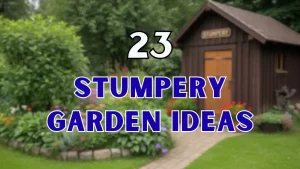
A stumpery garden is one of the most enchanting, ecologically rich, and genuinely original garden features available, using upturned tree roots, weathered stumps, and fallen timber to create a hauntingly beautiful woodland landscape of extraordinary natural character.
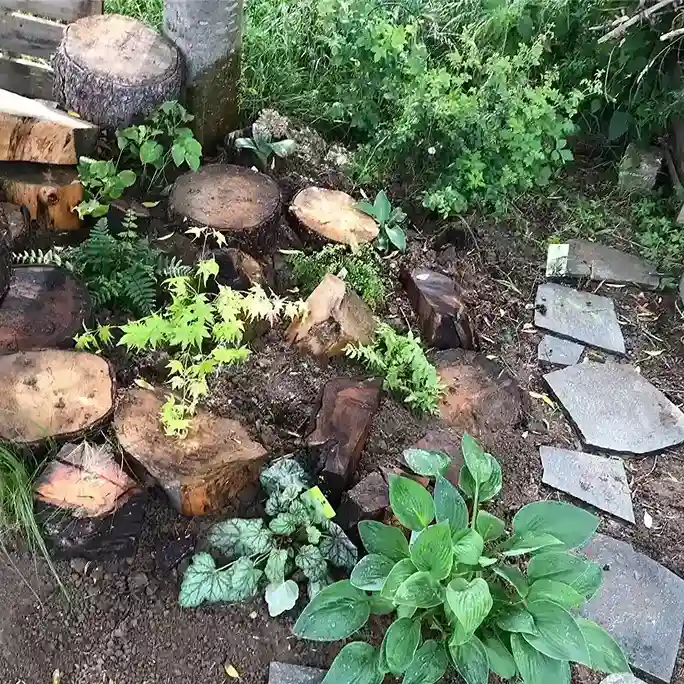
Source: @josly76
Whether you have a shaded corner crying out for transformation or a collection of fallen timber waiting for purpose, these 23 inspiring stumpery garden ideas will help you create a breathtaking woodland feature using our backyard landscaping ideas guide.
1. Classic Victorian Stumpery
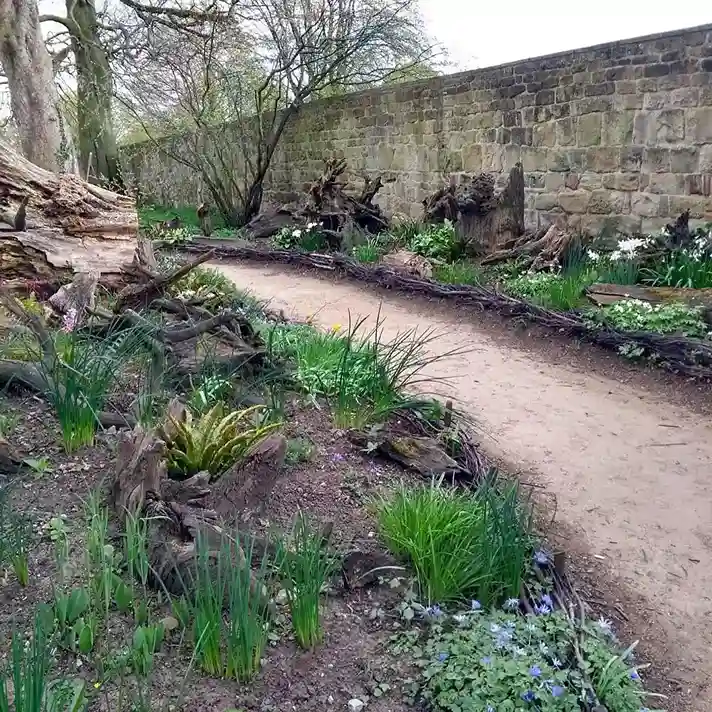
The classic Victorian stumpery was invented at Biddulph Grange in the 1850s and remains the most celebrated and architecturally dramatic stumpery style available, arranging large upturned tree root systems as bold, sculptural features in a shaded garden setting planted with ferns and woodland flowers.
Source: @blogassodas
Position the largest and most dramatically shaped root systems as focal points and anchor pieces, then build outward with progressively smaller stumps to create a naturalistic landscape of extraordinary gothic beauty. For more dramatic woodland garden feature ideas, our shade plants guide covers the best ferns and woodland companions for a Victorian stumpery in excellent, inspiring detail.
| Feature | Details |
|---|---|
| Best Root Systems | Oak, beech, chestnut — large, dramatic forms |
| Best Companion Plants | Ferns, hostas, astilbes, hellebores, mosses |
| Best Position | Shaded, sheltered, north or east-facing |
| Style | Dramatic, gothic, theatrical |
| Difficulty Level | Intermediate |
| Estimated Cost | $50–$300 for plants plus free timber |
2. Fern Stumpery
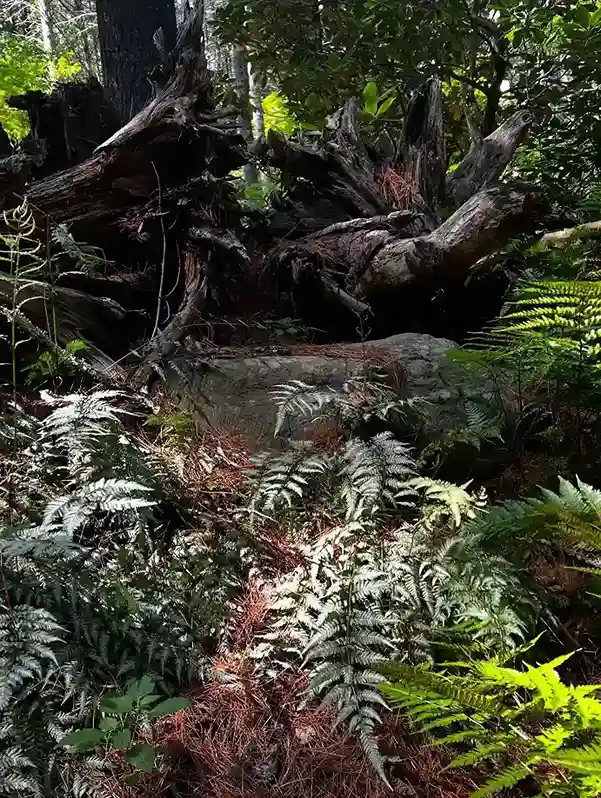
A fern stumpery positions weathered stumps and root systems as the perfect growing hosts for a diverse collection of fern species, whose delicate, arching fronds weave between the timber forms to create a beautifully layered, green, and deeply peaceful woodland garden feature of outstanding natural beauty.
Source: @heidi_hanley
Plant ferns directly into the crevices of hollow stumps and the gaps between root systems, where they establish beautifully in the moisture-retentive decomposing wood and create an increasingly lush, convincing woodland floor planting. For the best fern species and shade-loving plant combinations for a fern stumpery, our shade plants guide is a comprehensive and wonderfully inspiring resource.
| Feature | Details |
|---|---|
| Best Fern Species | Hart’s tongue, soft shield fern, male fern, lady fern |
| Best Planting Position | Crevices between roots, hollow stump tops |
| Light Requirements | Full to part shade |
| Soil | Moisture-retentive, humus-rich |
| Difficulty Level | Beginner |
| Estimated Cost | $30–$150 for fern collection |
3. Moss and Lichen Stumpery
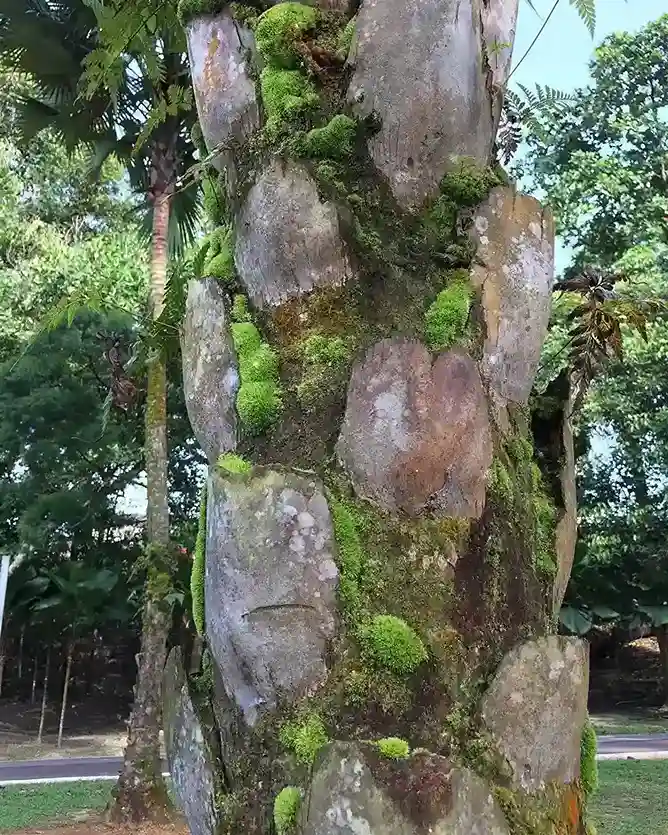
A moss and lichen stumpery embraces the extraordinarily beautiful natural colonisation of timber surfaces by mosses, lichens, and liverworts to create a stumpery of ancient, jewel-like beauty that looks as though it has existed undisturbed for centuries of silent woodland time.
Source: @lh.fan
Encourage moss establishment by painting stump surfaces with a mixture of live moss blended with yoghurt or buttermilk, keeping the surface consistently damp until the moss establishes and begins spreading naturally across the timber. For more naturalistic woodland garden planting and habitat feature ideas, our shade plants guide covers moss garden companions and woodland floor planting beautifully.
| Feature | Details |
|---|---|
| Best Moss Varieties | Cushion moss, sheet moss, star moss, sphagnum |
| Establishment Method | Moss and yoghurt blend painted onto damp timber |
| Best Conditions | Consistently moist, shaded, still air |
| Companion Plants | Ferns, liverworts, lichens, woodland violets |
| Difficulty Level | Beginner |
| Estimated Cost | $0–$20 for establishment |
4. Hosta Stumpery
A hosta stumpery combines the bold, architectural foliage of hostas in every size, colour, and texture with the organic sculptural forms of weathered stumps to create a beautifully dramatic shade garden feature that looks extraordinarily lush and designed throughout the entire growing season.
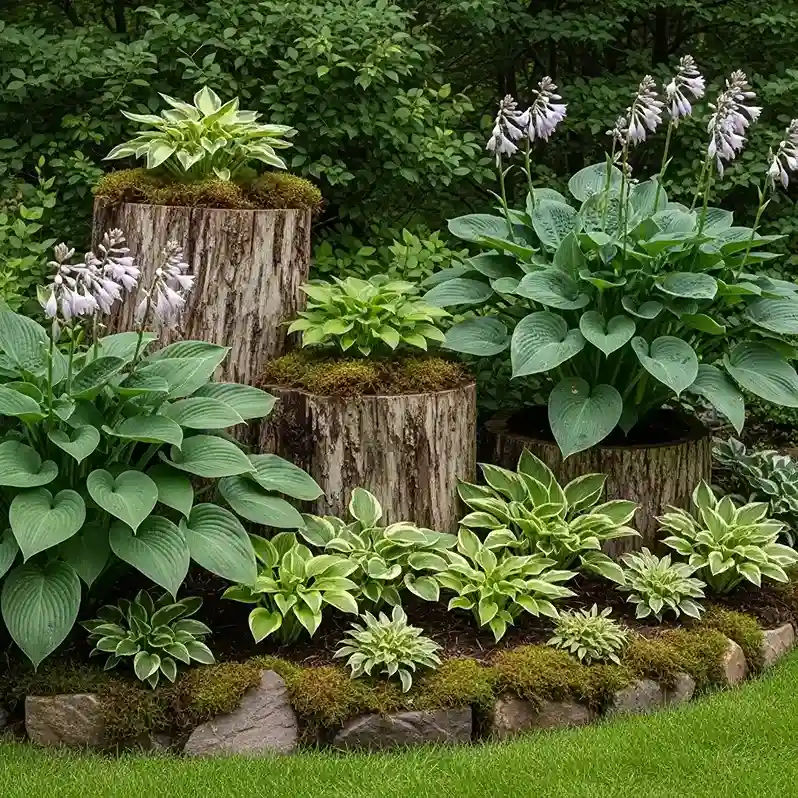
Position giant hostas like Sum and Substance and Empress Wu beside the largest stumps for maximum dramatic contrast, and fill gaps between root systems with smaller hosta varieties and moss for a layered, richly textured display. For the best hosta selections for shade garden and stumpery planting, our shade perennials guide covers every outstanding hosta variety in excellent, practical detail.
| Feature | Details |
|---|---|
| Best Giant Hostas | Sum and Substance, Empress Wu, Big Daddy |
| Best Small Hostas | Blue Mouse Ears, Mighty Mouse, Pandora’s Box |
| Best Position | Deep to part shade |
| Soil | Moisture-retentive, humus-rich |
| Difficulty Level | Beginner |
| Estimated Cost | $80–$300 for hosta collection |
5. Wildlife Stumpery
A wildlife stumpery designed specifically to maximise ecological value uses a combination of decaying logs, hollow stumps, brush piles, and moisture-retentive woodland planting to create one of the richest and most biodiverse wildlife habitats possible in any domestic garden setting.
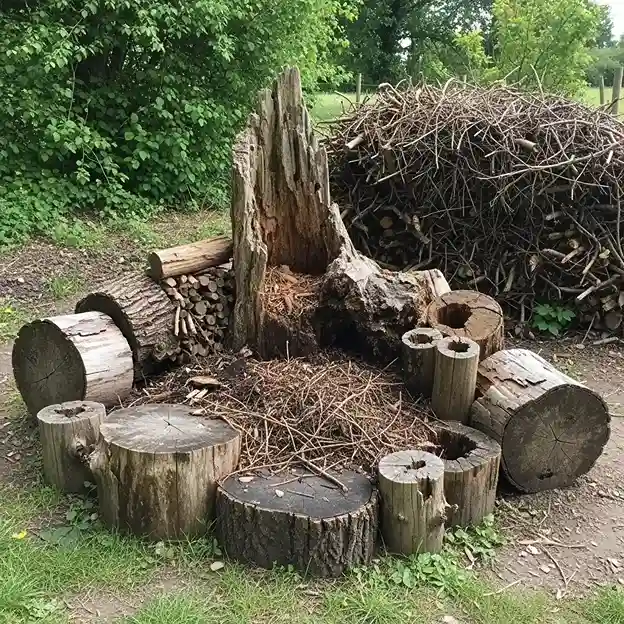
Leave stumps and logs entirely unmanaged to decompose naturally, as decaying wood supports over a thousand species of beetles, fungi, mosses, and invertebrates that form the base of a complete woodland food web. For more wildlife-friendly garden habitat feature ideas, our yard ideas for outdoor spaces covers wildlife habitat garden design in caring, practical detail.
| Feature | Details |
|---|---|
| Best Wood | Oak, ash, beech — dense hardwoods decay slowly |
| Key Habitat Features | Hollow logs, bark crevices, damp decaying wood |
| Target Wildlife | Stag beetles, fungi, mosses, newts, hedgehogs |
| Maintenance Level | None — leave completely undisturbed |
| Wildlife Value | Outstanding — one of the richest garden habitats |
| Estimated Cost | Free — use garden or local fallen timber |
6. Cottage Garden Stumpery
A cottage garden stumpery softens the dramatic gothic quality of classical stumpery design with an abundance of romantic cottage planting — foxgloves, primroses, wood anemones, and bleeding hearts weaving between the timber forms to create a stumpery of extraordinary warmth and romantic beauty.
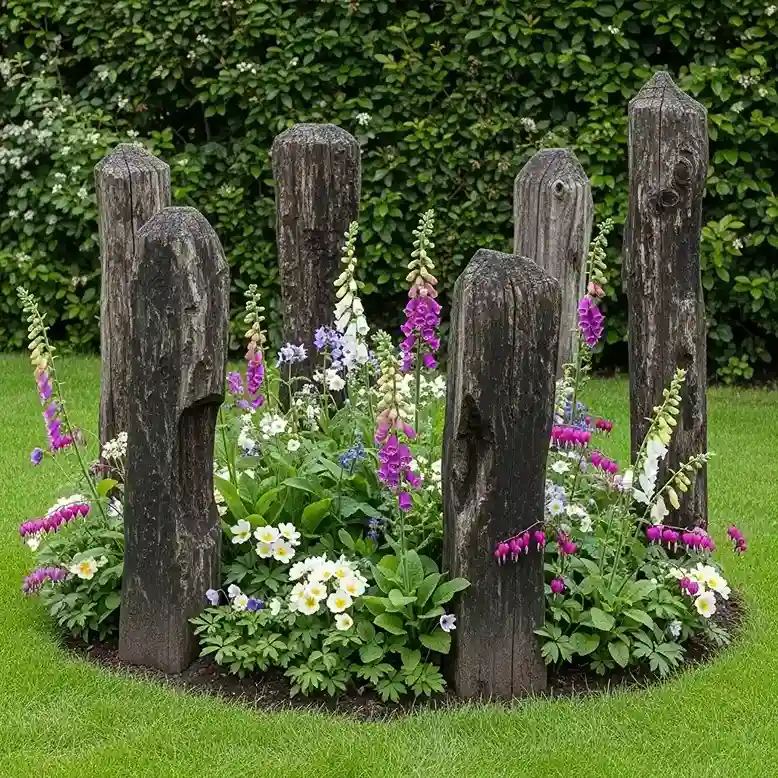
The contrast between the dark, weathered timber and the delicate pastel blooms of cottage garden woodland plants creates a garden feature of genuinely breathtaking beauty that peaks in late spring and early summer. For the most beautiful cottage garden woodland plant combinations, our cottage garden ideas guide covers woodland cottage planting in wonderfully romantic, practical detail.
| Feature | Details |
|---|---|
| Best Cottage Plants | Foxglove, primrose, wood anemone, bleeding heart |
| Best Position | Dappled shade under deciduous trees |
| Bloom Season | Late spring to early summer |
| Best Timber | Gnarly, weathered oak or apple stumps |
| Difficulty Level | Beginner |
| Estimated Cost | $50–$200 for cottage plant collection |
7. Fairy Garden Stumpery
A fairy garden stumpery combines the magical atmosphere of a woodland stumpery with enchanting fairy garden details — tiny doors fixed to stump faces, miniature bridges spanning moss-covered logs, and fairy houses nestled between root systems — to create a garden feature of extraordinary whimsy and imagination.
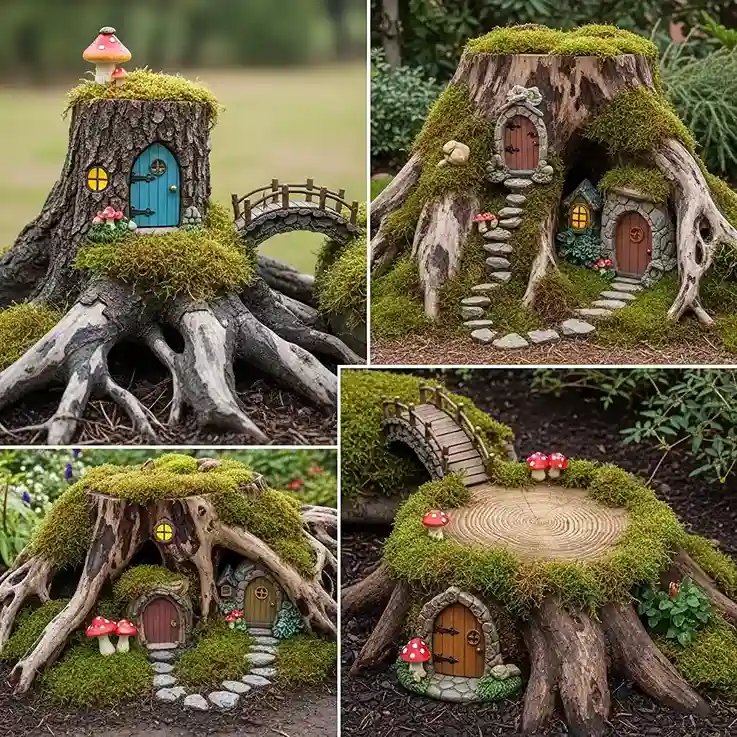
Every gnarled root and hollow cavity of a stumpery becomes an opportunity for a fairy garden detail, from a tiny lit window in a stump face to a miniature mushroom circle on a mossy log surface. For more magical fairy garden ideas and accessory inspiration, our fairy garden ideas guide is endlessly creative and wonderfully inspiring for stumpery fairy garden features.
| Feature | Details |
|---|---|
| Best Fairy Features | Tiny doors, miniature bridges, fairy houses |
| Best Companion Plants | Miniature hostas, moss, baby ferns, creeping thyme |
| Best Accessories | Miniature lanterns, pebble paths, tiny furniture |
| Best Position | Shaded corner — dappled, mysterious atmosphere |
| Difficulty Level | Beginner |
| Estimated Cost | $20–$80 |
8. Beginner Stumpery
A beginner stumpery using just three to five stumps of varying sizes, a simple planting of hardy ferns and hostas, and a thick moss-encouraging mulch of leaf mould creates an entirely achievable, beautiful introduction to stumpery design for gardeners new to this wonderful Victorian garden tradition.
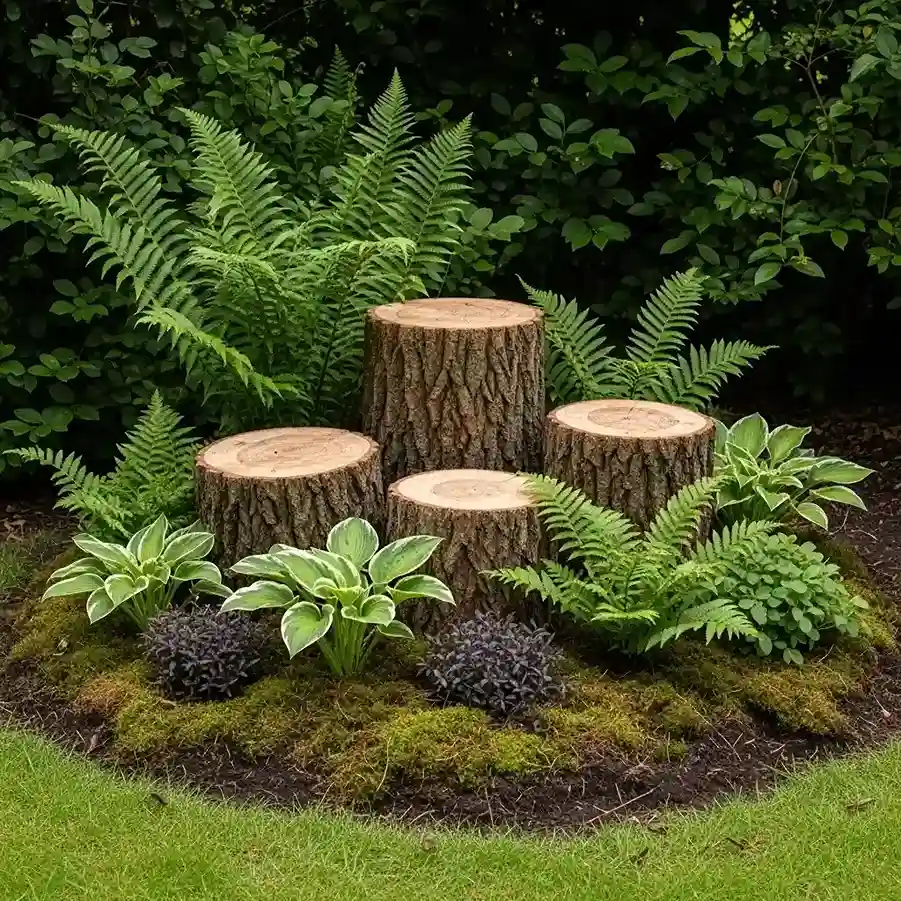
Source stumps from local tree surgeons — who often have quantities of cut timber available for free or at very low cost — and arrange them in a shaded border corner for an instant, authentic stumpery beginning. For more beginner-friendly shade garden and woodland planting ideas, our shade shrubs guide covers the easiest establishing woodland plants for a beginner stumpery beautifully.
| Feature | Details |
|---|---|
| Minimum Stumps | 3–5 stumps of varied sizes |
| Best Beginner Plants | Hardy ferns, hostas, primroses, woodland violets |
| Best Mulch | Leaf mould, composted bark, woodland soil |
| Timber Source | Local tree surgeons — often free |
| Difficulty Level | Beginner |
| Estimated Cost | $20–$80 |
9. Large Statement Stumpery
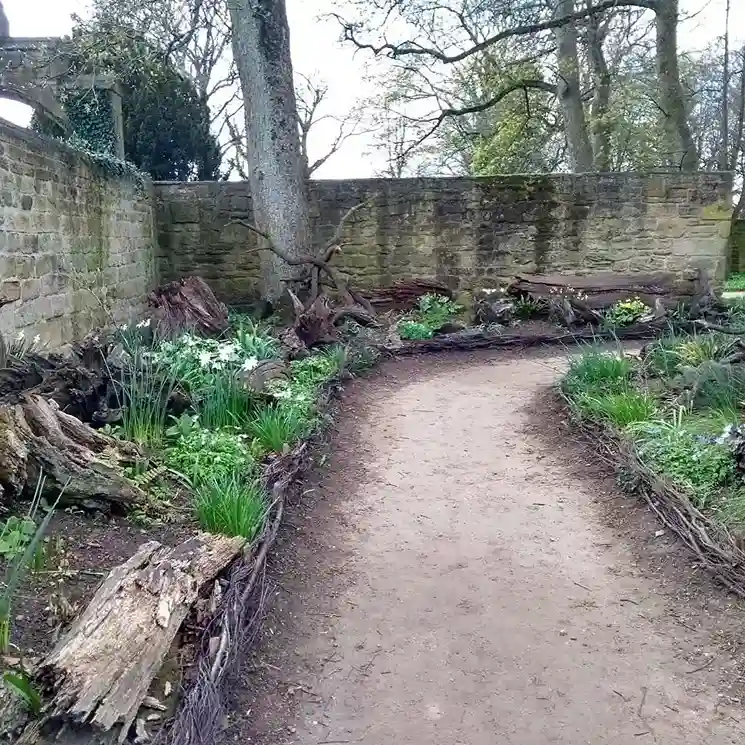
A large statement stumpery using substantial upturned root systems of oak, beech, or chestnut creates a garden feature of truly museum-quality drama, the scale and complexity of large root forms producing a naturalistic woodland landscape of breathtaking, almost cinematic visual impact.
Source: @blogassodas
Plan the layout carefully before installation, positioning the largest root systems first as structural anchors and building the surrounding planting and smaller timber elements progressively outward to create a coherent, naturalistic composition. For large-scale structural planting and specimen tree ideas that complement a statement stumpery, our tree landscaping ideas guide covers bold woodland garden design in comprehensive, inspiring detail.
| Feature | Details |
|---|---|
| Best Root Systems | Mature oak, beech, sweet chestnut |
| Minimum Root Size | 3 feet diameter for statement impact |
| Layout Planning | Position largest anchor pieces first |
| Best Companion Plants | Large hostas, tree ferns, bamboo, astilbes |
| Difficulty Level | Intermediate to advanced |
| Estimated Cost | $100–$500 for plants plus free timber |
10. Stumpery with Water Feature
Combining a stumpery with a small naturalistic water feature — a shallow wildlife pond, a moss-edged bog garden, or a trickling stream — creates a complete woodland ecosystem of extraordinary beauty and ecological richness that attracts an outstanding diversity of wildlife throughout the year.
The combination of decaying timber, damp woodland planting, and a water source creates exactly the cool, moist, sheltered habitat conditions that frogs, newts, dragonflies, and woodland invertebrates require for successful breeding and year-round habitation. For the best aquatic plants to complete a stumpery water feature, our water plants guide covers pond and bog garden planting in comprehensive, inspiring detail.
| Feature | Details |
|---|---|
| Best Water Features | Wildlife pond, bog garden, shallow stream |
| Best Aquatic Plants | Water iris, marsh marigold, rushes, primulas |
| Pond Size | Minimum 6 square feet for meaningful biodiversity |
| Best Position | Lowest point of stumpery for natural water flow |
| Difficulty Level | Intermediate |
| Estimated Cost | $80–$400 |
11. Stumpery Herb Garden
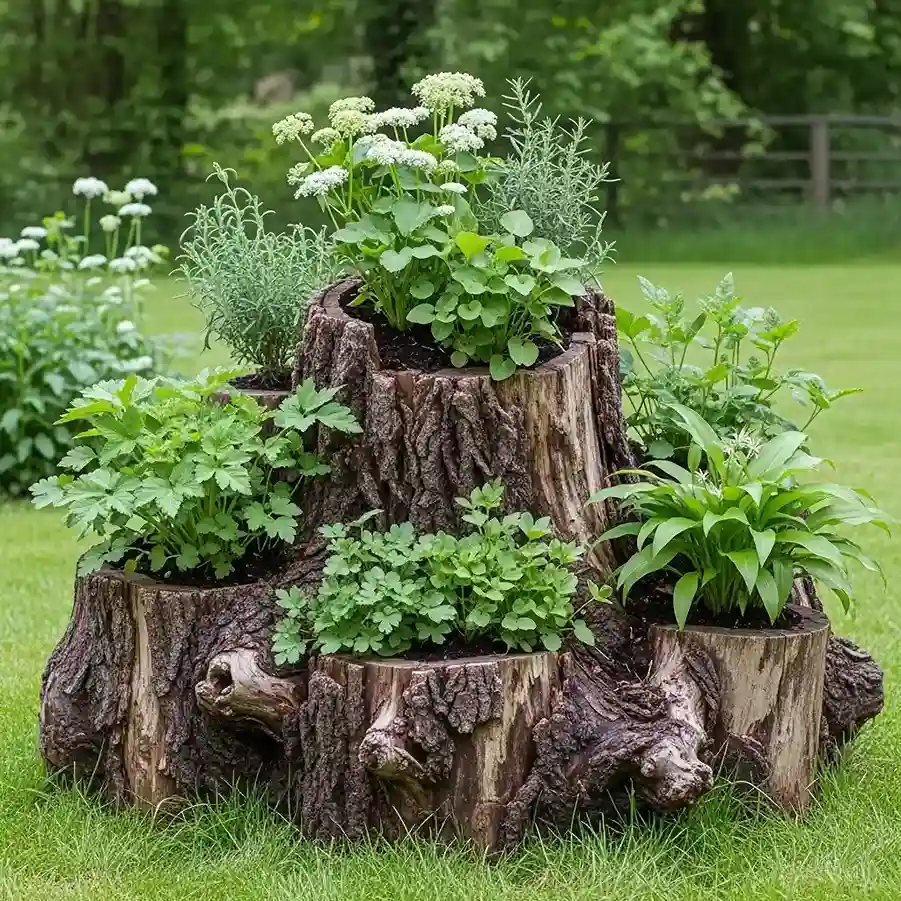
A stumpery herb garden plants culinary and medicinal herbs directly into hollow stumps and between root crevices, creating a beautifully unusual and productive growing feature that uses decaying timber as a naturally moisture-retentive, nutrient-releasing growing medium for woodland-edge herbs.
Woodland herbs including sweet cicely, angelica, wood sorrel, and wild garlic are particularly well-suited to stumpery growing conditions, thriving in the damp, shaded, humus-rich environment that decaying timber provides naturally. For the best herb pairing and combination planting strategies, our garden herb pairing guide covers woodland herb growing and companion planting in excellent, practical detail.
| Feature | Details |
|---|---|
| Best Woodland Herbs | Sweet cicely, angelica, wood sorrel, wild garlic |
| Best Culinary Herbs | Chervil, mint, lemon balm, lovage |
| Planting Method | Plant directly into hollow stump cavities |
| Best Conditions | Damp, shaded, humus-rich |
| Difficulty Level | Beginner |
| Estimated Cost | $20–$60 for herb collection |
12. Children’s Discovery Stumpery
A children’s discovery stumpery invites young gardeners to explore, investigate, and connect with the extraordinary world of woodland minibeasts, fungi, and mosses that inhabit decaying timber, creating an outstanding outdoor nature education feature that develops curiosity and environmental awareness from the earliest age.
Add simple identification guides mounted on small waterproof cards beside the stumpery, magnifying glasses on a string, and a discovery journal station where children can record their wildlife observations throughout the growing season. For more children’s garden feature and outdoor education ideas, our fairy garden ideas guide covers children’s nature discovery garden features in wonderfully engaging, creative detail.
| Feature | Details |
|---|---|
| Best Discovery Features | Identification guides, magnifying glass station |
| Best Wildlife | Beetles, woodlice, centipedes, fungi, mosses |
| Best Companion Plants | Easy-to-identify ferns, hostas, wildflowers |
| Best Age Range | 3–12 years |
| Difficulty Level | Beginner |
| Estimated Cost | $20–$60 |
13. Stumpery as Garden Boundary
Using a row of upright stumps and root systems as a decorative garden boundary feature creates a genuinely original, deeply characterful alternative to conventional fencing or hedging that defines the garden space with an unmistakably naturalistic, woodland-inspired authority.
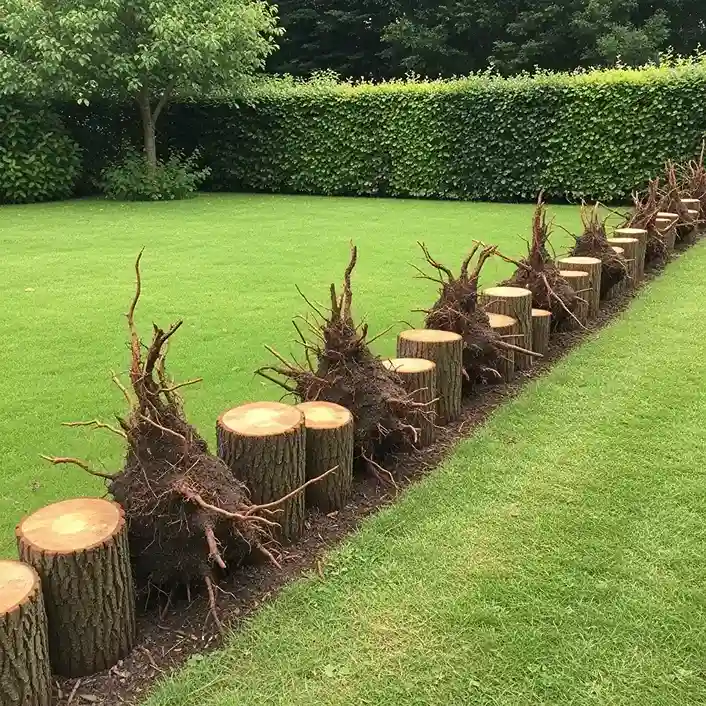
A row of stumps set at varying heights along a garden edge creates a beautifully irregular, organic boundary line that looks completely at home in naturalistic, cottage, and wildflower garden settings. For more garden boundary and edging ideas, our garden wall ideas guide covers natural and unconventional garden boundary features in creative, comprehensive detail.
| Feature | Details |
|---|---|
| Best Timber | Upright logs, root systems, weathered stumps |
| Arrangement | Varying heights for natural, irregular appearance |
| Best Planting | Ferns, wildflowers, moss between stump bases |
| Boundary Height | 2–4 feet for decorative boundary definition |
| Difficulty Level | Beginner to intermediate |
| Estimated Cost | $20–$100 for planting |
14. Stumpery in a Small Garden
A small-scale stumpery using just two or three carefully chosen stumps in a compact shaded corner creates a beautifully convincing woodland feature that delivers the full atmospheric impact of a traditional stumpery in a fraction of the space typically associated with this Victorian garden style.
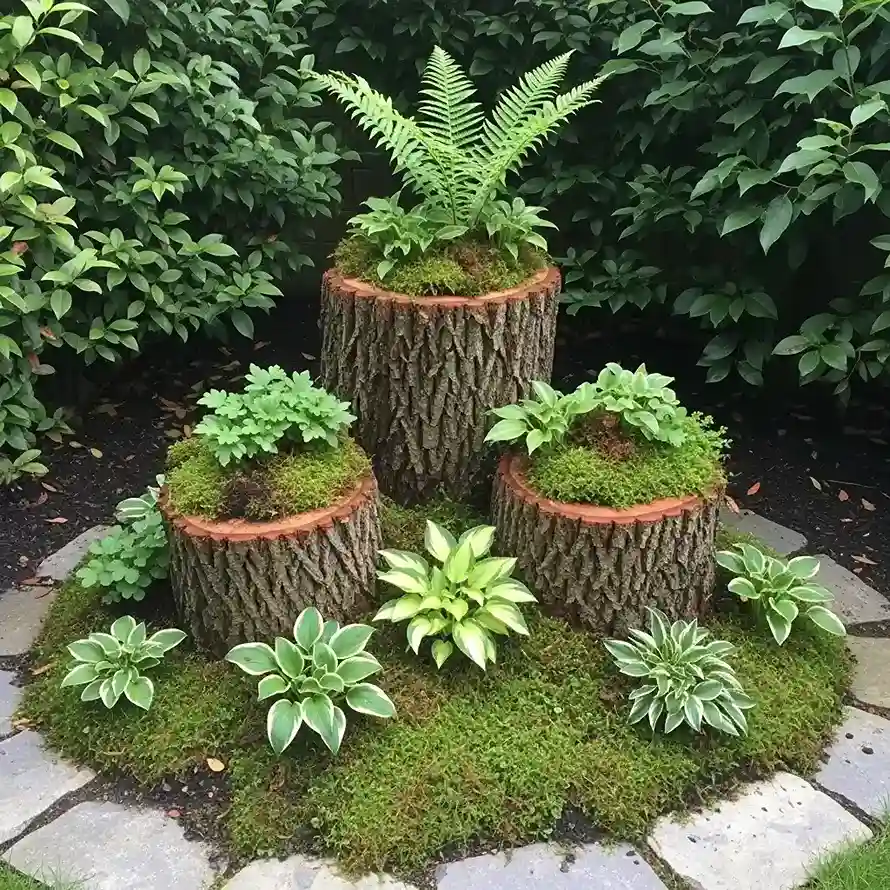
Choose smaller stumps with interesting forms and crevices, plant generously with a mix of ferns, mosses, and small hostas, and allow everything to establish naturally for a compact stumpery of extraordinary charm and character. For more creative ideas on making the most of compact garden spaces, our small garden ideas and tiny backyard ideas guides cover small-space woodland feature design beautifully.
| Feature | Details |
|---|---|
| Minimum Stumps | 2–3 interesting, creviced stumps |
| Best Small Plants | Miniature hostas, baby ferns, moss, wood violets |
| Space Required | As little as 4×4 feet for a complete small stumpery |
| Best Position | Shaded corner, against wall or fence |
| Difficulty Level | Beginner |
| Estimated Cost | $20–$80 |
15. Stumpery with Bulb Planting
Planting spring bulbs throughout a stumpery — snowdrops, bluebells, wood anemones, and wild garlic — creates a spectacular seasonal flowering display that erupts from the woodland floor each spring before the canopy leafs out, transforming the stumpery from a year-round foliage feature into a breathtaking seasonal spectacle.
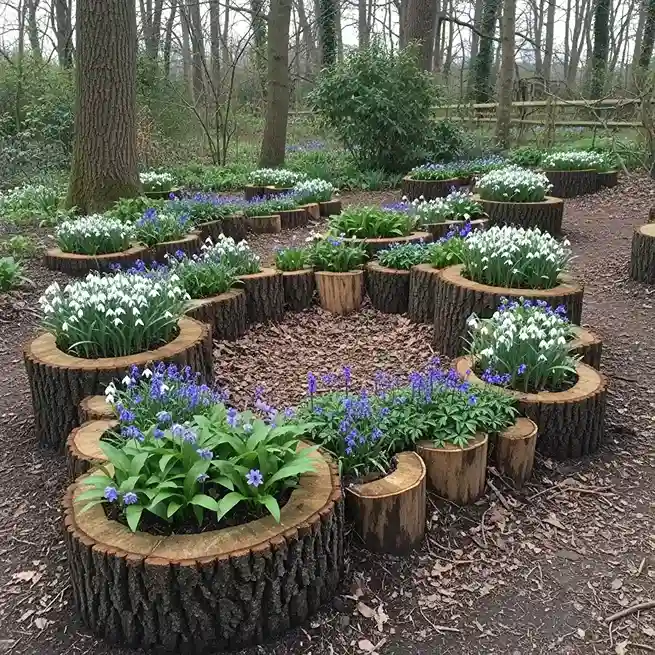
Plant bulbs generously in drifts between and beneath the timber features each autumn for a spring flowering display that naturalises and increases in beauty with every successive growing season. For more shade-loving perennial and bulb planting ideas, our shade perennials guide covers spring bulb planting in woodland and stumpery settings in excellent, practical detail.
| Feature | Details |
|---|---|
| Best Spring Bulbs | Snowdrops, bluebells, wood anemones, wild garlic |
| Planting Time | Autumn for spring flowering |
| Naturalising | All four species naturalise freely year on year |
| Best Planting Style | Generous drifts — minimum 20 bulbs per group |
| Difficulty Level | Beginner |
| Estimated Cost | $20–$60 for bulb collection |
16. Rustic Stumpery Seating Feature
Incorporating a simple rustic timber seat — a flat-topped log slice, a smoothed section of large trunk, or a reclaimed timber bench — within the stumpery creates a contemplative, deeply atmospheric woodland sitting space of extraordinary character and peaceful, restorative beauty.
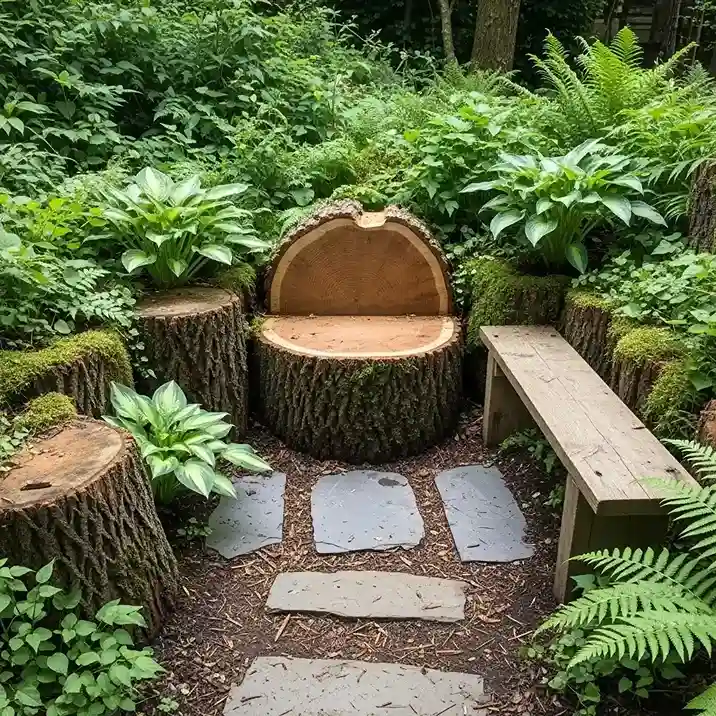
Position the seat at the heart of the stumpery surrounded by ferns, hostas, and mossy logs, and add a simple stepping stone path of reclaimed slate or flat stones leading to it for a complete, beautifully finished woodland retreat feature. For more rustic garden seating and outdoor retreat ideas, our yard ideas for outdoor spaces guide covers rustic woodland seating features in practical, inspiring detail.
| Feature | Details |
|---|---|
| Best Seat Materials | Log slice, smoothed trunk section, reclaimed timber |
| Best Access | Stepping stone path of slate or flat stones |
| Best Surrounding Plants | Large ferns, hostas, astilbes, foxgloves |
| Atmosphere | Contemplative, peaceful, deeply restorative |
| Difficulty Level | Beginner |
| Estimated Cost | $20–$80 |
17. Coastal Stumpery
A coastal stumpery uses bleached, salt-weathered driftwood and sea-sculpted timber pieces in place of conventional woodland stumps to create a beautifully distinctive, windswept coastal woodland feature planted with salt-tolerant shade plants and decorated with sea glass, shells, and pebble mulch.
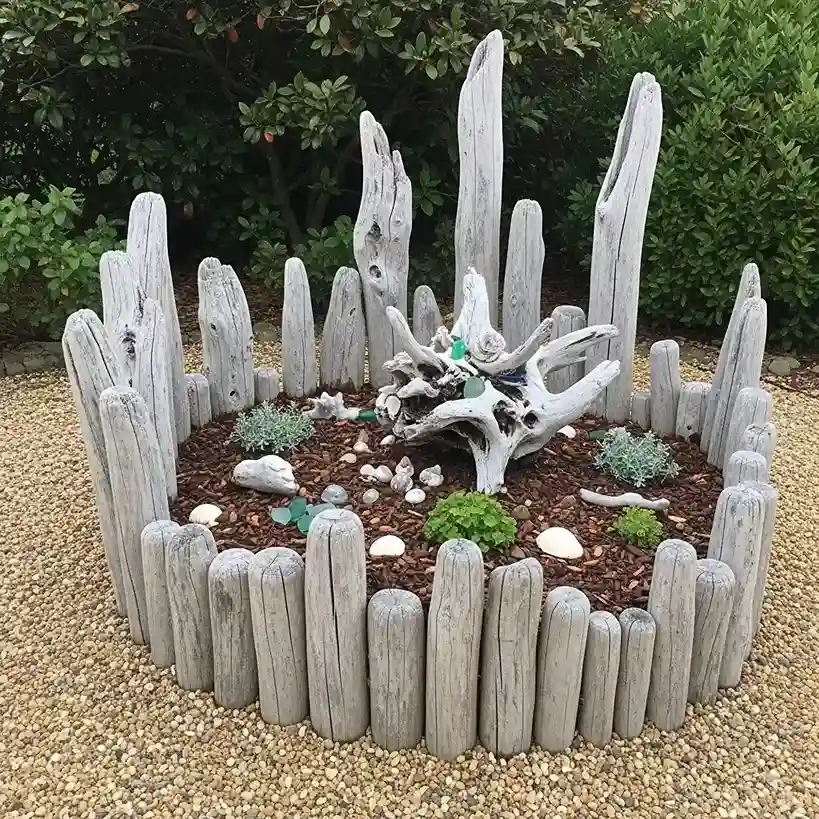
The naturally bleached, sculptural quality of coastal driftwood creates stumpery forms of extraordinary visual beauty that look completely authentic in coastal garden settings and add a unique, seaside character to the woodland garden tradition. For more coastal garden design and plant selection ideas, our coastal backyard garden guide covers coastal stumpery design in comprehensive, authoritative detail.
| Feature | Details |
|---|---|
| Best Timber | Bleached driftwood, sea-weathered timber pieces |
| Best Plants | Salt-tolerant ferns, coastal grasses, sea campion |
| Best Mulch | Pebbles, shell grit, sea glass |
| Best Accessories | Shells, sea glass collections, rope accents |
| Difficulty Level | Beginner to intermediate |
| Estimated Cost | $30–$120 |
18. Stumpery with Climbing Plants
Training climbing plants — ivy, climbing hydrangea, and Virginia creeper — over and through a stumpery creates a beautifully verdant, enveloping woodland feature where the distinction between planted and self-colonised growth becomes wonderfully blurred and the timber forms gradually disappear beneath a canopy of living green.
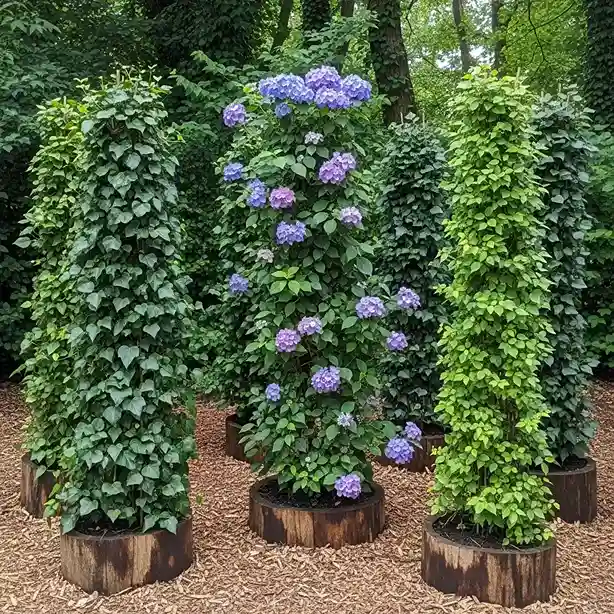
Allow the climbers to establish their own natural growth direction over the timber rather than training them precisely, embracing the spontaneous, organic quality that makes a planted stumpery feel genuinely wild and ancient. For the best climbing plant selections for woodland and shade garden features, our vertical gardening guide covers shade-tolerant climbing plants in comprehensive, creative detail.
| Feature | Details |
|---|---|
| Best Climbers | Ivy, climbing hydrangea, Virginia creeper, vinca |
| Training Style | Natural, unguided — embrace organic growth direction |
| Coverage Time | 2–3 seasons for meaningful coverage |
| Best Timber | Upright stumps and root systems as natural supports |
| Difficulty Level | Beginner |
| Estimated Cost | $20–$80 for climbing plant collection |
19. Stumpery as Food Garden Feature
A productive stumpery grows edible mushrooms on inoculated logs, wild garlic and wood sorrel between root systems, and culinary herbs in hollow stump cavities to create a beautifully unusual, genuinely productive food garden feature of extraordinary character and flavour.
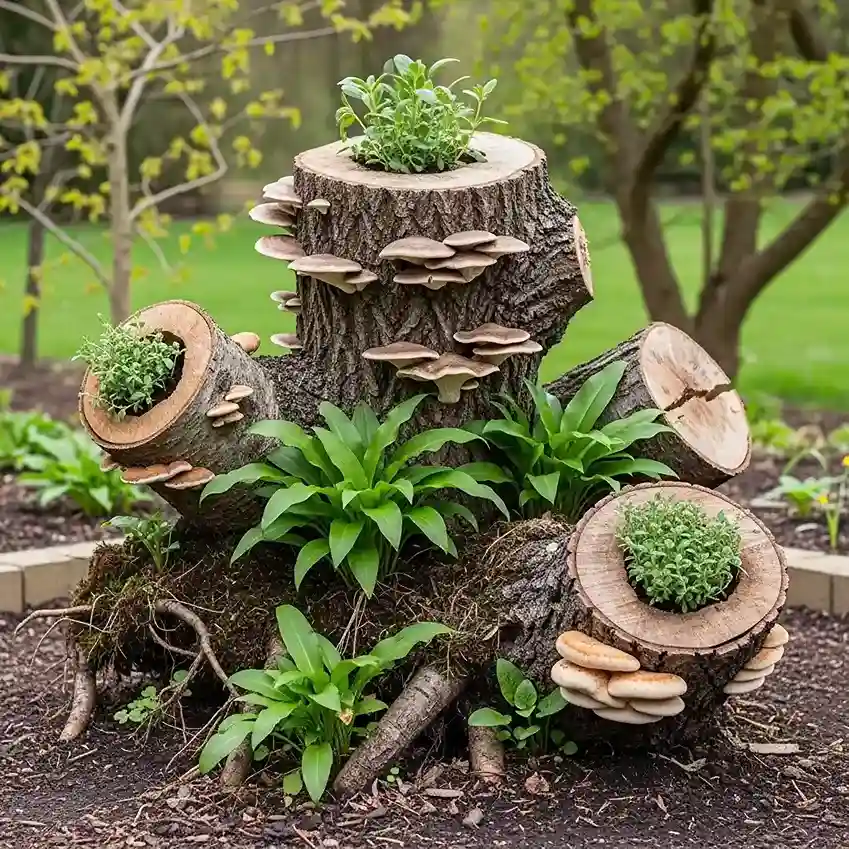
Inoculate oak, beech, or alder logs with oyster mushroom, shiitake, or lion’s mane mushroom plugs for a stumpery that produces regular mushroom harvests over several years from a single inoculation investment. For more productive garden and edible feature ideas, our food forest guide covers edible woodland garden design and mushroom log growing in comprehensive, expert detail.
| Feature | Details |
|---|---|
| Best Mushroom Logs | Oak, beech, alder — freshly cut hardwood |
| Best Mushroom Species | Oyster, shiitake, lion’s mane |
| Best Edible Plants | Wild garlic, wood sorrel, sweet cicely, ramsons |
| Harvest Time | 6–12 months after inoculation |
| Difficulty Level | Beginner to intermediate |
| Estimated Cost | $30–$100 for mushroom plugs and plants |
20. Bohemian Stumpery
A bohemian stumpery celebrates the most creative and eclectic approach to woodland garden design, adding colourful mosaic accents, painted stump faces, driftwood sculptures, crystal and glass decorations, and an exuberant, wildly abundant planting scheme to the traditional stumpery framework.
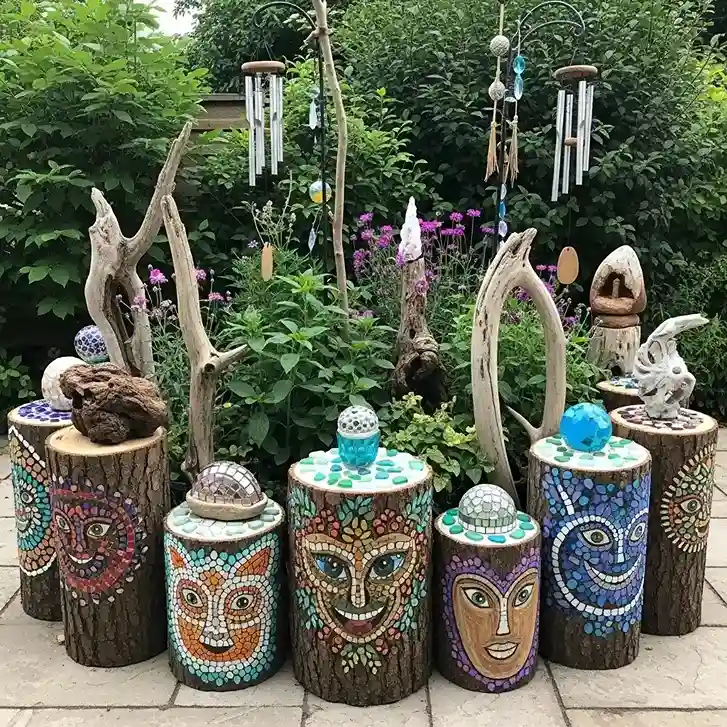
Paint stump faces with folk art patterns or woodland creature portraits, press sea glass and coloured tiles into rendered stump surfaces, and hang wind chimes from upright root systems for a bohemian stumpery of extraordinary character and joyful individuality. For more wonderfully free-spirited outdoor design inspiration, our hippie bohemian outdoor garden guide is full of creative bohemian woodland garden feature ideas.
| Feature | Details |
|---|---|
| Best Decorations | Mosaic accents, painted faces, crystals, sea glass |
| Best Plants | Wildflowers, ferns, colourful hostas, primroses |
| Best Accessories | Wind chimes, driftwood art, hanging lanterns |
| Style | Eclectic, joyful, deeply personal |
| Difficulty Level | Beginner |
| Estimated Cost | $30–$100 |
21. Stumpery with Ornamental Grasses
Combining the structural, sculptural forms of a stumpery with sweeping ornamental grasses creates a beautifully dynamic, contemporary woodland-edge garden feature where the fluid, animated movement of the grasses contrasts magnificently with the solid, static permanence of the timber forms.
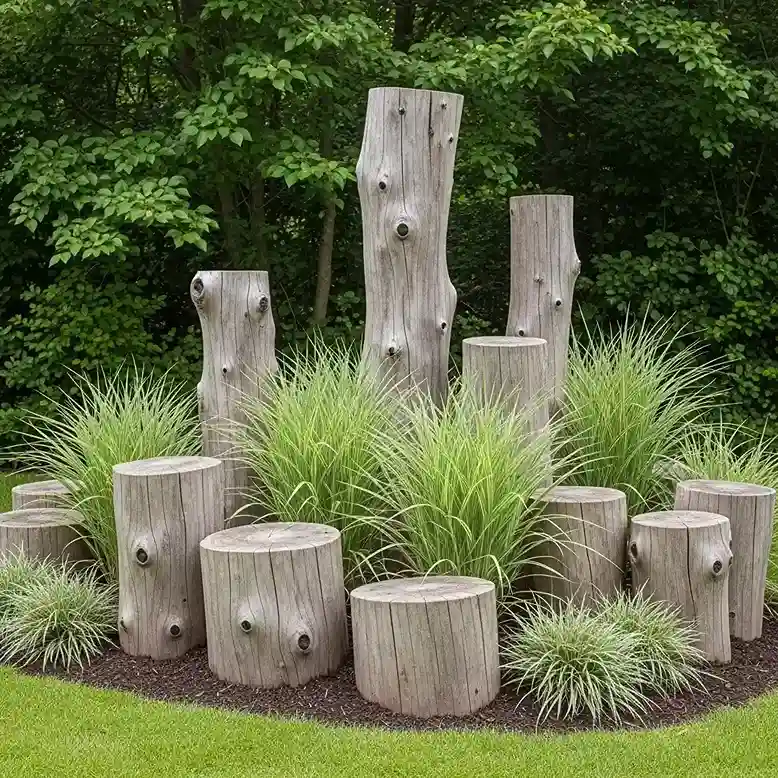
Plant shade-tolerant grasses like Hakonechloa macra and Carex varieties between and around stump features for a modern, stylish stumpery planting that looks outstanding from spring through to the first hard frosts of winter. For more ornamental grass varieties and structural planting ideas, our best outdoor plants guide covers shade-tolerant ornamental grasses and their ideal growing conditions in excellent detail.
| Feature | Details |
|---|---|
| Best Shade Grasses | Hakonechloa macra, Carex morrowii, Carex oshimensis |
| Best Contrasting Grasses | Miscanthus at stumpery edges for height |
| Best Position | Dappled shade to part shade |
| Seasonal Interest | Outstanding from spring through late autumn |
| Difficulty Level | Beginner |
| Estimated Cost | $60–$200 for grass collection |
22. Budget Stumpery
Creating a genuinely beautiful, ecologically rich stumpery on a very tight budget is completely achievable by sourcing timber for free from local tree surgeons and arborists, growing companion plants from seed and division, and allowing moss and natural colonisation to do the decorative work over time.
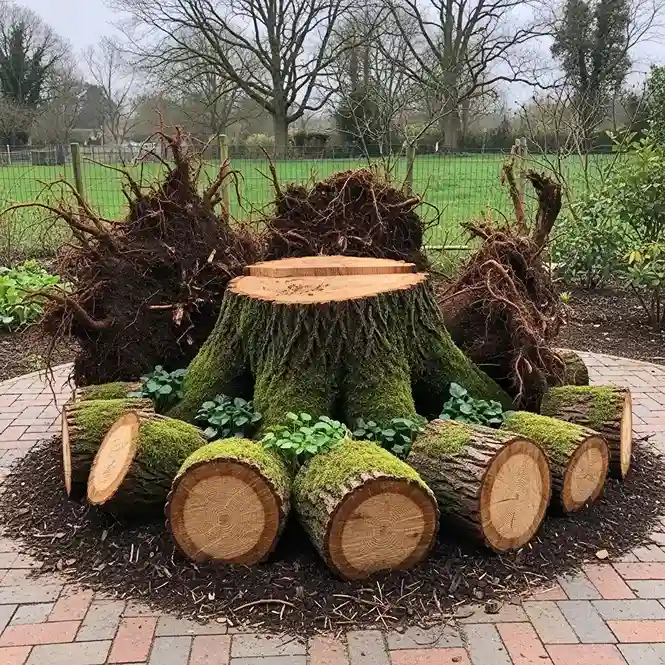
Contact local tree surgeons who regularly have quantities of cut stumps, root systems, and log sections that they are happy to give away to anyone willing to collect them from their yard or job site. For more budget garden transformation and affordable natural feature ideas, our cheap landscaping ideas guide covers free and low-cost stumpery and woodland garden creation in practical, inspiring detail.
| Feature | Details |
|---|---|
| Free Timber Sources | Tree surgeons, council tree work, fallen garden trees |
| Best Free Plants | Divided ferns, self-seeded foxgloves, collected moss |
| Best Low-Cost Plants | Bare-root hostas, seed-grown primroses |
| Difficulty Level | Beginner |
| Maintenance Level | Very low |
| Estimated Cost | $0–$40 for a complete beginner stumpery |
23. Year-Round Stumpery Planting Plan
A year-round stumpery planting plan combines spring bulbs, summer ferns and hostas, autumn fungi and berrying shrubs, and winter structure from evergreen ferns and mosses to ensure the stumpery offers genuine beauty, interest, and ecological value through every season of the gardening year.
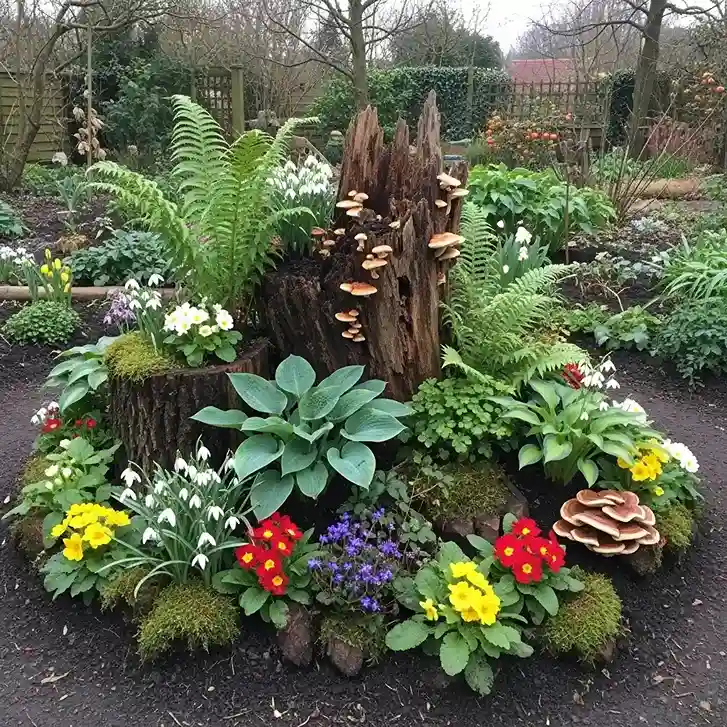
Layer the planting so that something is always at its peak of beauty — snowdrops in February giving way to primroses in March, then hostas unfolding in April, ferns arching through summer, and fungi emerging on decaying timber in autumn. For seasonal shade garden planting strategies and year-round interest planting guides, our shade perennials and shade plants guide are both outstanding resources for year-round stumpery planning.
| Feature | Details |
|---|---|
| Spring Interest | Snowdrops, bluebells, primroses, wood anemones |
| Summer Interest | Hostas, ferns, astilbes, foxgloves |
| Autumn Interest | Fungi, autumn fern colour, berrying shrubs |
| Winter Interest | Evergreen ferns, mosses, structural timber forms |
| Difficulty Level | Intermediate |
| Estimated Cost | $100–$350 for a full seasonal planting scheme |
Frequently Asked Questions (FAQs)
Q1: What is a stumpery garden?
A stumpery is a Victorian garden feature using upturned tree root systems, weathered stumps, and fallen logs as bold sculptural elements in a shaded garden setting, planted with ferns, mosses, hostas, and woodland flowers. Originally invented in the 1850s, stumperies are enjoying a magnificent renaissance in contemporary garden design throughout the world.
Q2: Where should I position a stumpery in my garden?
A stumpery is best positioned in a shaded, sheltered location — beneath deciduous trees, along north or east-facing boundaries, or in a cool garden corner — where damp, woodland conditions encourage the moss, fern, and fungal growth that makes a stumpery most beautifully atmospheric. Our shade plants guide covers ideal stumpery positioning and companion planting in excellent detail.
Q3: How do I get stumps for a stumpery?
Contact local tree surgeons and arborists who regularly remove trees and often have stumps, root systems, and log sections available for free collection. Local council tree work, neighbourhood social media groups, and fallen trees in your own garden are all excellent sources of free stumpery timber that requires no financial investment whatsoever.
Q4: What plants grow best in a stumpery?
Ferns, hostas, mosses, primroses, foxgloves, astilbes, hellebores, and wood anemones are the best stumpery plants, all thriving in the cool, damp, humus-rich conditions that decaying timber creates naturally. Our shade perennials guide covers the full range of outstanding stumpery companion plants in comprehensive, practical detail for every garden setting.
Conclusion
A stumpery garden is one of the most magical, ecologically rich, and genuinely original features any gardener can create — transforming fallen timber into a breathtaking woodland landscape that grows more beautiful, more biodiverse, and more atmospheric with every passing season.
Explore more woodland garden and shade planting inspiration through our guides on shade plants guide and yard ideas for outdoor spaces to begin creating your own extraordinary stumpery garden today.