Limited outdoor space doesn’t mean you have to sacrifice your gardening dreams or settle for a lackluster landscape.
Small gardens offer unique opportunities for creativity, intimacy, and charm that larger spaces often struggle to achieve.

Source: @thetomicityproject
With thoughtful planning and smart plant selections, even the tiniest balcony, patio, or postage-stamp yard can become a lush, productive, and beautiful garden sanctuary.
The key to successful small garden design lies in maximizing every inch while maintaining balance and avoiding visual clutter. From vertical growing techniques to dwarf plant varieties specially bred for compact spaces, these thirty ideas will help you transform limited square footage into a thriving garden oasis.

Whether you’re growing herbs on a windowsill or creating a complete backyard retreat in just a few square meters, these strategies will inspire your small-space gardening journey.
1. Dwarf Conifers for Year-Round Structure
Dwarf conifers like miniature Alberta spruce and dwarf hinoki cypress provide evergreen interest without overwhelming small spaces. These compact specimens grow 2-4 feet tall over many years, offering textured foliage in shades of green, blue, and gold that maintain their beauty through all seasons.

Plant them in containers or garden beds as focal points that anchor your design. They require minimal pruning and thrive in full sun with well-drained soil. Their slow growth makes them ideal for small gardens where space is precious and plant size must remain manageable long-term.
2. Climbing Beans on Vertical Supports
Pole beans grow upward on trellises, teepees, or stakes, producing abundant harvests without consuming valuable ground space. Varieties like ‘Kentucky Wonder’ and ‘Purple Podded’ reach 6-8 feet tall, offering edible pods throughout summer while creating attractive vertical elements with their twining vines and colorful flowers.

Plant seeds directly in containers or narrow beds after frost danger passes. Provide sturdy supports for climbing growth and harvest beans regularly to encourage continued production. They’re perfect for renters or those wanting productive gardens in minimal square footage.
3. Compact Blueberry Bushes in Containers
Dwarf blueberry varieties like ‘Top Hat’ and ‘Peach Sorbet’ grow just 1-2 feet tall, thriving in pots on patios or balconies. These ornamental and edible shrubs produce spring flowers, summer berries, and brilliant fall foliage, offering multi-season interest in extremely limited spaces requiring acidic soil conditions.

Use large containers filled with acidic potting mix designed for azaleas and rhododendrons. Plant at least two varieties for cross-pollination and increased berry production. Water consistently and fertilize with acid-loving plant food for best fruiting results in container gardens.
4. Hanging Baskets with Trailing Petunias
Trailing petunias cascade beautifully from hanging baskets, adding color at eye level without using precious ground space. Wave and Surfinia varieties produce abundant blooms in pink, purple, red, white, or yellow from spring until frost, creating stunning vertical displays that maximize limited garden dimensions.
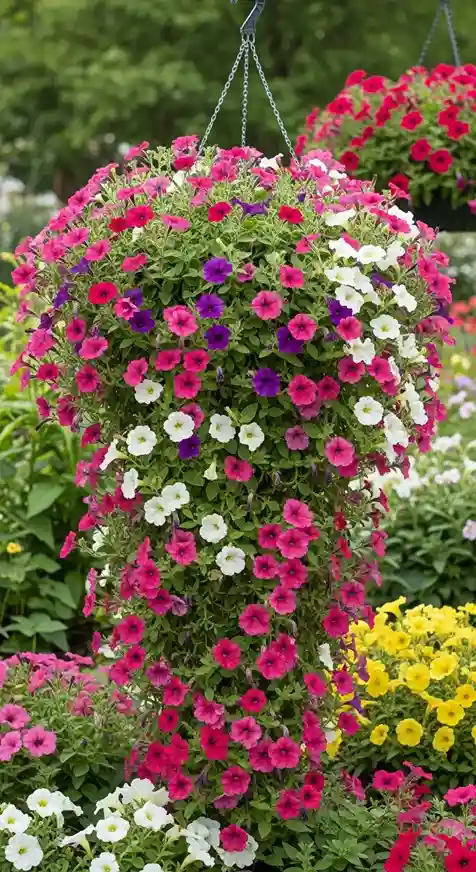
Hang baskets in sunny locations receiving 6+ hours of daily sunlight. Water frequently as hanging containers dry quickly, and fertilize weekly with liquid bloom fertilizer. Deadheading isn’t necessary with modern self-cleaning varieties, making maintenance minimal despite spectacular flower production.
5. Miniature Roses for Compact Borders
Miniature roses grow just 12-18 inches tall while producing perfectly proportioned blooms throughout the growing season. These small-scale versions of their larger cousins come in every rose color and many fragrant varieties, providing classic rose beauty suitable for tiny beds, containers, or border edgings.

Plant them in full sun with rich, well-drained soil amended with compost. Space 12 inches apart for continuous low hedges or grow individually in decorative containers. They require the same care as standard roses including regular deadheading, watering, and feeding for continuous blooming.
6. Thyme Ground Cover Between Pavers
Creeping thyme varieties form fragrant, low-growing carpets that tolerate foot traffic between stepping stones and pavers. This aromatic herb produces tiny pink, purple, or white flowers in early summer while releasing pleasant scents when walked upon, creating functional and beautiful pathways in compact spaces.

Plant small plugs in crevices between pavers or stones in full sun. Thyme spreads gradually to fill gaps, suppressing weeds while requiring almost no maintenance. It tolerates drought once established and provides culinary leaves for harvesting alongside its ornamental qualities.
7. Narrow Columnar Apple Trees
Columnar apple varieties like ‘Northpole’ and ‘Scarlet Sentinel’ grow upright to 8-10 feet tall while remaining just 2 feet wide. These space-saving fruit trees produce full-sized apples on extremely compact forms perfect for planting along fences, in narrow beds, or even large containers on patios.

Plant in full sun with well-drained soil, spacing just 2-3 feet apart for edible hedges. Most varieties are self-pollinating but produce better with cross-pollination partners. Water regularly and thin fruit for larger apples. Their narrow growth habit maximizes fruit production per square foot.
8. Window Boxes with Compact Annuals
Window boxes extend growing space beyond ground level, transforming vertical surfaces into productive garden areas. Fill them with compact annuals like dwarf marigolds, lobelia, alyssum, and pansies that bloom profusely in confined root spaces, creating vibrant displays visible from both inside and outside your home.

Use boxes at least 8 inches deep with drainage holes to prevent waterlogging. Plant trailing varieties at edges and upright plants toward the back for layered interest. Water daily during hot weather and fertilize every two weeks for continuous blooming throughout the season.
9. Compact Lavender Varieties for Fragrance
Dwarf lavender varieties like ‘Munstead’ and ‘Hidcote’ grow 12-18 inches tall, fitting perfectly in small garden borders or containers. These aromatic herbs produce purple flower spikes that attract pollinators while releasing calming fragrance, providing sensory appeal in minimal space with Mediterranean charm and drought tolerance.
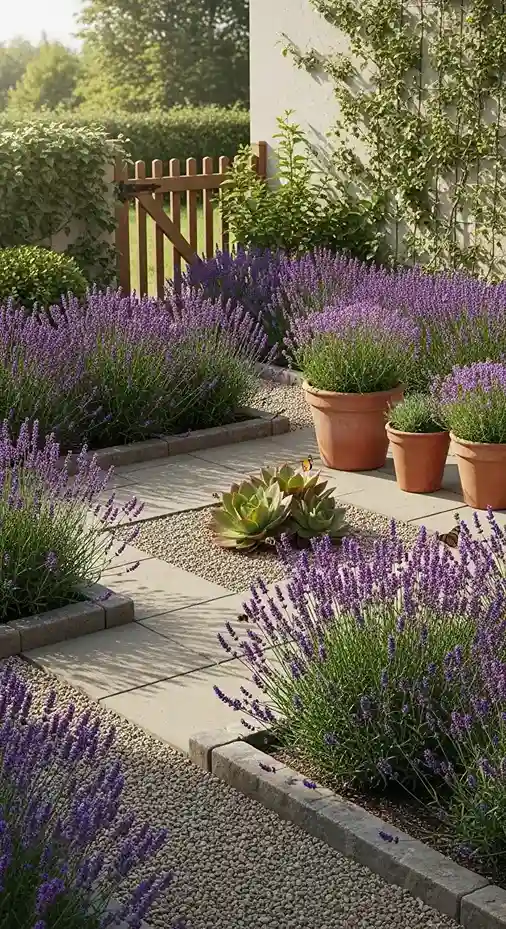
Plant in full sun with excellent drainage, spacing 12-15 inches apart. Lavender thrives in slightly alkaline soil and tolerates poor, rocky conditions. Trim after flowering to maintain compact shape and prevent woody growth. Their silvery foliage provides year-round structure in small gardens.
10. Vertical Pallet Gardens for Herbs
Repurposed wooden pallets mounted vertically create multi-level planting surfaces perfect for herbs like basil, parsley, cilantro, and oregano. This space-saving approach transforms bare walls into productive vertical gardens, keeping culinary herbs within easy reach while adding rustic charm to balconies or small patios.

Line pallet pockets with landscape fabric to contain soil and moisture. Fill with quality potting mix and plant herb seedlings or transplants. Position in sunny locations and water regularly as vertical gardens dry faster. Harvest frequently to encourage bushy, productive growth on minimal square footage.
11. Dwarf Ornamental Grasses for Movement
Compact ornamental grasses like dwarf fountain grass and blue fescue add texture and movement without overwhelming small spaces. These varieties grow 12-18 inches tall, offering fine-textured foliage and delicate seed plumes that sway gracefully in breezes, creating dynamic interest in containers or tight garden corners.

Plant in full sun with well-drained soil for best performance and color. They tolerate drought once established and require minimal maintenance beyond annual spring cutback. Use them as textural accents among flowering plants or mass for modern, naturalistic designs in limited space.
12. Espalier Fruit Trees Against Walls
Espalier training flattens fruit trees against walls or fences in decorative patterns, maximizing fruit production on minimal depth. Apple, pear, and peach trees trained in horizontal tiers or fan shapes grow just 6-12 inches deep while spanning 6-8 feet wide, creating productive living art.

Start with young, flexible trees or pre-trained specimens for easier shaping. Secure support wires to walls and prune regularly to maintain flat form. Position against sunny, south-facing walls for best fruiting. This centuries-old technique combines productivity with ornamental appeal in tight quarters.
13. Potted Dwarf Japanese Maples
Dwarf Japanese maple cultivars like ‘Shaina’ and ‘Crimson Queen’ grow 4-6 feet tall, thriving in large containers on small patios or balconies. Their delicate, colorful foliage in red, purple, or variegated patterns provides elegant focal points, offering four-season interest in exceptionally limited growing spaces.

Use large containers with drainage holes and quality potting soil. Maples prefer partial shade and consistent moisture, especially in containers that dry quickly. Protect from harsh afternoon sun and winter winds. Their slow growth and compact habits make them ideal permanent container specimens.
14. Strawberry Jars for Vertical Growing
Strawberry jars with multiple planting pockets maximize vertical space for growing everbearing strawberries or trailing herbs. These specialized containers produce abundant harvests from minimal footprint, perfect for sunny patios, balconies, or doorstep gardens where ground space is extremely limited but fresh produce is desired.

Fill jars completely with potting mix before planting to ensure even moisture distribution. Plant one strawberry or herb per pocket, watering from top to allow moisture to filter through all levels. Place in full sun and fertilize monthly during growing season for continuous berry or herb production.
15. Shade-Tolerant Hostas for Dim Corners
Compact hosta varieties like ‘Blue Mouse Ears’ and ‘Kabitan’ grow 6-12 inches tall, bringing lush foliage to shaded small gardens where many plants struggle. Their decorative leaves in green, blue, gold, or variegated combinations brighten dim corners, thriving under trees or along shaded building foundations.

Plant in shade to partial shade with rich, moisture-retentive soil amended with compost. Space according to variety size, allowing room for gradual spreading. Hostas require minimal care beyond occasional watering and slug control, making them reliable, low-maintenance choices for challenging small spaces.
16. Compact Butterfly Bush for Pollinators
Dwarf butterfly bush varieties like ‘Blue Chip’ and ‘Petite Plum’ grow just 2-3 feet tall while producing fragrant flower spikes that attract butterflies and hummingbirds. These compact shrubs bloom from summer through fall in purple, pink, white, or blue, creating pollinator havens in small garden spaces.

Plant in full sun with well-drained soil for best flowering performance. Deadhead spent blooms to encourage continuous flower production throughout the season. Prune hard in early spring to maintain compact size. Their dwarf habit delivers all the butterfly-attracting benefits without overwhelming limited garden dimensions.
17. Succulent Gardens in Shallow Containers
Succulents like sedums, sempervivums, and echeverias thrive in shallow containers, creating living sculptures on minimal soil depth. These drought-tolerant plants come in diverse colors, textures, and forms, allowing creative arrangements that require infrequent watering and almost no maintenance in small spaces.

Use well-draining cactus soil in containers with drainage holes. Arrange different varieties for contrasting colors and textures in geometric or naturalistic designs. Water sparingly, allowing soil to dry completely between waterings. Succulents tolerate neglect while providing year-round interest on balconies or windowsills.
18. Compact Hydrangeas for Shaded Color
Dwarf hydrangea varieties like ‘Little Lime’ and ‘Bobo’ grow 2-4 feet tall, producing large flower clusters in small garden spaces. These compact shrubs bloom in white, pink, or blue depending on variety and soil pH, brightening shaded areas with dramatic summer flowers and attractive foliage.

Plant in morning sun with afternoon shade for best performance in small gardens. Amend soil with compost and maintain consistent moisture during growing season. Prune minimally on established plants to preserve flower buds. Their manageable size suits small beds, borders, or large containers beautifully.
19. Vertical Trellis with Climbing Cucumbers
Cucumber varieties trained vertically on trellises or cages produce abundant harvests without sprawling ground vines. This space-saving approach keeps fruit clean and visible, making harvesting easier while maximizing production per square foot in small vegetable gardens or container setups on sunny patios.

Plant 2-3 seeds per container or 12 inches apart in beds near sturdy supports. Provide consistent water and full sun for best cucumber production. Train vines upward as they grow and harvest frequently to encourage continued fruiting throughout summer in minimal footprint.
20. Dwarf Coreopsis for Continuous Blooms
Compact coreopsis varieties like ‘Moonbeam’ and ‘Zagreb’ grow 12-18 inches tall, producing cheerful yellow flowers continuously from summer through fall. These low-maintenance perennials tolerate heat and drought while attracting butterflies, providing long-lasting color in small garden beds or containers with minimal care.

Plant in full sun with well-drained soil, spacing 12 inches apart. They tolerate poor soil and require little fertilizer once established. Deadhead occasionally to encourage additional blooms, though modern varieties flower prolifically without this maintenance. Their compact growth suits border edges and container combinations.
21. Boxwood Spheres in Matching Containers
Small boxwood shrubs clipped into spherical forms create classic, formal accents for flanking doorways or defining small garden spaces. These evergreen topiaries maintain year-round structure in compact sizes, offering timeless elegance that suits both traditional and contemporary small garden designs perfectly.

Plant in large containers with quality potting soil for mobility and root control. Trim 2-3 times annually to maintain spherical shapes and dense growth. Boxwood tolerates shade and adapts to various conditions. Use matching pairs for symmetrical designs or odd-numbered groupings for casual arrangements.
22. Compact Salvia for Long Blooming
Dwarf salvia varieties like ‘May Night’ and ‘Caradonna’ grow 12-18 inches tall, producing vertical flower spikes in purple, blue, pink, or red from late spring through summer. These drought-tolerant perennials attract hummingbirds and butterflies while providing vibrant color and texture in small garden spaces.

Plant in full sun with well-drained soil for best flowering and compact growth. Space 12-15 inches apart in beds or grow in containers. Cut back after initial flowering to encourage second bloom flush. Salvia tolerates heat and drought, making it ideal for low-water small gardens.
23. Tiered Container Gardens for Dimension
Stacking containers in graduated sizes creates multi-level planting areas that maximize vertical growing space on patios or balconies. This arrangement allows diverse plant combinations in minimal footprint, growing vegetables, herbs, and flowers together in visually interesting displays that utilize height for increased capacity.

Start with largest container as base, adding progressively smaller pots above for stability. Plant taller plants in upper tiers and trailing varieties in lower containers. Ensure all pots have drainage and water each tier appropriately as upper containers dry faster than lower ones.
24. Compact Sweet Peppers in Pots
Dwarf pepper varieties like ‘Redskin’ and ‘Mohawk’ grow 12-18 inches tall in containers, producing full-sized sweet peppers on compact plants perfect for small-space vegetable gardens. These productive plants thrive on sunny balconies or patios, offering fresh produce from minimal square footage throughout summer.

Plant in containers at least 12 inches deep with quality potting soil. Peppers need full sun, consistent moisture, and regular feeding for best fruit production. Support plants with small stakes as peppers develop. Harvest regularly to encourage continued fruiting on these space-efficient vegetable plants.
25. Low-Growing Dianthus for Border Edges
Compact dianthus varieties form dense, mat-like growth just 6-10 inches tall, producing fragrant, fringed flowers in pink, red, white, or bi-colors. These evergreen perennials edge small garden beds beautifully while providing spicy-sweet fragrance and continuous blooms from late spring through summer in minimal space.

Plant in full sun with well-drained, slightly alkaline soil for best performance. Space 8-10 inches apart for continuous border edging. Deadhead spent flowers to promote additional blooming. Their blue-green foliage provides year-round interest even when plants aren’t flowering in small gardens.
26. Pocket Herb Gardens in Walls
Wall-mounted pocket planters create vertical herb gardens on fences, walls, or balcony railings, transforming vertical surfaces into productive growing areas. Felt or fabric pockets hold soil and plants while taking up zero floor space, perfect for growing culinary herbs within arm’s reach.

Fill pockets with lightweight potting mix and plant herb seedlings or divisions. Position in sunny locations with good air circulation. Water regularly as vertical planters dry quickly in sun and wind. Harvest frequently to encourage bushy, productive growth and prevent plants from becoming leggy.
27. Compact Astilbe for Shaded Elegance
Dwarf astilbe varieties grow 12-18 inches tall, producing feathery flower plumes in pink, red, white, or purple above attractive ferny foliage. These shade-loving perennials brighten dim corners of small gardens where few flowering plants thrive, offering elegant texture and color from late spring through summer.

Plant in partial to full shade with rich, consistently moist soil. Space 12 inches apart for gradually spreading clumps. Astilbe tolerates deep shade better than most flowering perennials, making it valuable for challenging small spaces under trees or along shaded building sides.
28. Dwarf Citrus Trees for Containers
Compact citrus varieties like ‘Improved Meyer’ lemon and ‘Calamondin’ orange grow 4-6 feet tall in containers, producing fragrant flowers and edible fruit on small patios or even indoors. These evergreen trees offer year-round foliage, seasonal blooms, and fresh citrus in exceptionally limited growing spaces.

Use large containers with drainage holes and citrus-specific potting soil. Citrus needs full sun, consistent moisture, and regular feeding with citrus fertilizer. Bring containers indoors before frost in cold climates. Their compact size allows fresh citrus production in smallest outdoor or indoor spaces.
29. Trailing Nasturtiums Cascading from Railings
Trailing nasturtium varieties cascade beautifully from balcony railings, hanging baskets, or elevated containers, producing cheerful orange, yellow, or red edible flowers throughout summer. Both flowers and peppery leaves are edible, adding ornamental and culinary value to small vertical growing spaces.

Sow seeds directly in containers after frost danger or transplant seedlings. Nasturtiums prefer full sun but tolerate partial shade and poor soil. They require minimal fertilizer and moderate watering. These fast-growing annuals quickly cover railings with colorful blooms perfect for small-space gardens.
30. Compact Geraniums for Continuous Color
Dwarf and ivy geraniums grow compactly in 6-8 inch pots, producing vibrant flower clusters continuously from spring through frost. These reliable container plants bloom in red, pink, white, or coral, providing foolproof color for small balconies, windowsills, or doorstep gardens requiring minimal maintenance.

Plant in containers with drainage holes using quality potting mix. Geraniums prefer full sun but tolerate partial shade. Water when soil surface dries and fertilize monthly with balanced liquid fertilizer. Deadhead spent blooms regularly for continuous flowering. They’re perfect for small-space gardeners wanting reliable, long-lasting color.
Frequently Asked Questions
What vegetables grow best in small gardens?
Compact vegetables like cherry tomatoes, bush beans, lettuce, radishes, and herbs thrive in small spaces and containers. Choose dwarf or patio varieties specifically bred for limited areas. Vertical crops like pole beans, cucumbers, and peas maximize production without consuming valuable ground space efficiently.
How can I make my small garden look bigger?
Use vertical growing techniques like trellises, wall planters, and hanging baskets to draw the eye upward and maximize planting space. Choose lighter colors and fine-textured plants that create depth rather than heavy, dark foliage that closes in spaces. Curved pathways and diagonal planting beds create illusions of greater distance.
What are the best low-maintenance plants for small spaces?
Avoid cluttering small gardens with too many different plants or decorative elements. Repeat key plants throughout for cohesive design that feels spacious rather than chaotic. Mirrors, light-colored paving, and removing unnecessary barriers help small gardens feel more open and expansive than actual dimensions.
Conclusion
Small gardens offer incredible opportunities for creativity, intimacy, and personalized design that larger landscapes often cannot match. By implementing vertical growing techniques, selecting compact plant varieties, and maximizing every available surface, you can create a lush, productive garden regardless of space limitations. The thirty small garden ideas presented here demonstrate that size restrictions need not limit your gardening ambitions or the beauty and functionality of your outdoor space.
Whether you’re working with a tiny balcony, narrow side yard, or compact urban patio, thoughtful plant selection and creative space utilization transform limited square footage into abundant gardens. Start with a few ideas that match your growing conditions and personal style, then expand gradually as you gain confidence and experience. Remember that small gardens evolve beautifully over time, becoming more refined and productive with each season as you discover what works best in your unique space.