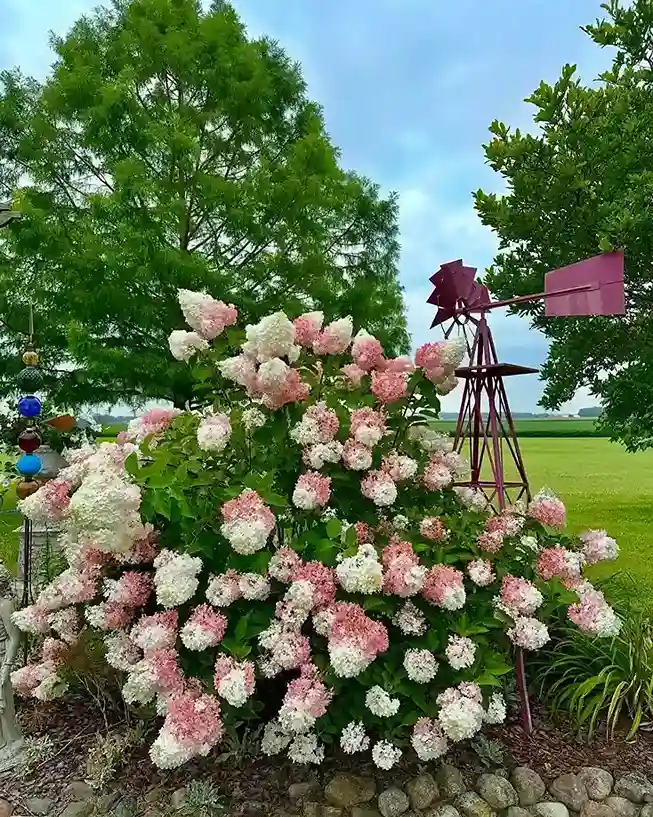
Hydrangeas stand among the most beloved flowering shrubs, captivating gardeners with their spectacular blooms ranging from delicate lacecaps to enormous mopheads in colors spanning the spectrum. These versatile shrubs adapt to various climates and conditions while providing months of color from early summer through fall, with dried flower heads persisting into winter, creating continued interest.
Source: @constancesgardens
The key to hydrangea success lies in understanding which type you’re growing, as different varieties have distinct pruning schedules, bloom timing, and fertilization needs. Some hydrangeas bloom on old wood, requiring careful timing to avoid removing flower buds, while others flower on new growth, allowing aggressive spring pruning. This comprehensive guide covers 24 popular hydrangea varieties with detailed care instructions, ensuring your plants thrive and bloom prolifically year after year.
1. Endless Summer Bigleaf
Endless Summer revolutionized hydrangea growing by blooming on both old and new wood, creating flowers from spring through fall continuously. This bigleaf variety produces large mophead blooms in pink or blue depending on soil pH—acidic soils yield blue flowers while alkaline conditions create pink. The reblooming nature forgives pruning mistakes providing second chances at flowers.
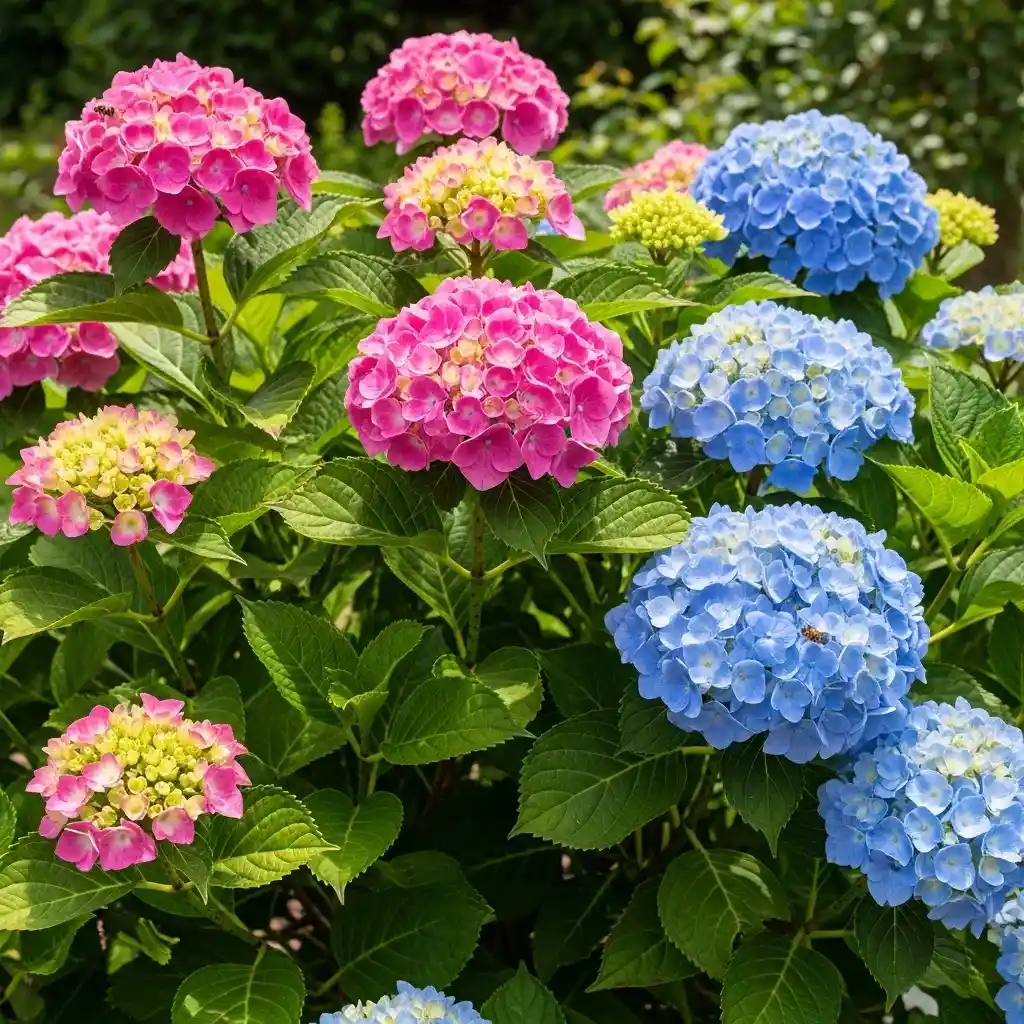
When to Fertilize: Apply balanced fertilizer in early spring (March-April) and again in early summer (June). Use aluminum sulfate for bluer flowers or lime for pinker blooms.
When to Cut: Prune lightly in early spring removing only dead wood and spent blooms. Major pruning can be done anytime since it blooms on both old and new wood, though avoid late summer cutting.
| Feature | Details |
|---|---|
| Bloom Time | Summer-Fall (June-October) |
| Colors | Pink, Blue (pH dependent) |
| Height | 3-5 feet |
| Hardiness Zones | 4-9 |
| Bloom Type | Old and new wood |
2. Nikko Blue Bigleaf
Nikko Blue produces classic large mophead blooms in stunning blue shades when grown in acidic soil, making it the quintessential blue hydrangea. This Japanese variety requires consistent moisture and afternoon shade in hot climates preventing leaf scorch. The reliable blooming and intense color make it enduringly popular despite zone limitations.
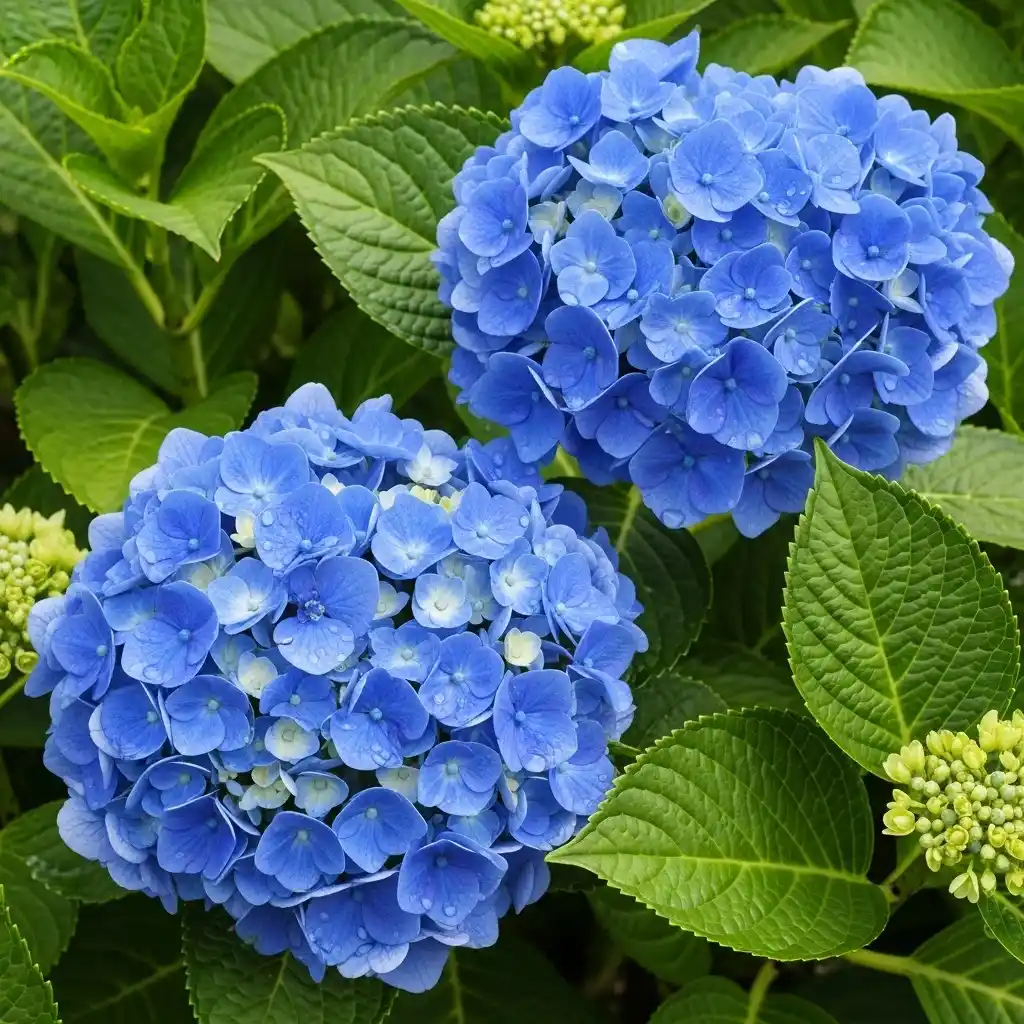
When to Fertilize: Feed in early spring (March) with acid-loving plant fertilizer and again in May. Add aluminum sulfate monthly during growing season for deeper blue colors.
When to Cut: Prune immediately after flowering (July-August) removing spent blooms just above first set of healthy buds. Avoid fall or spring pruning which removes flower buds.
| Feature | Details |
|---|---|
| Bloom Time | Summer (June-July) |
| Colors | Blue (pink in alkaline soil) |
| Height | 4-6 feet |
| Hardiness Zones | 6-9 |
| Bloom Type | Old wood only |
3. Annabelle Smooth Hydrangea
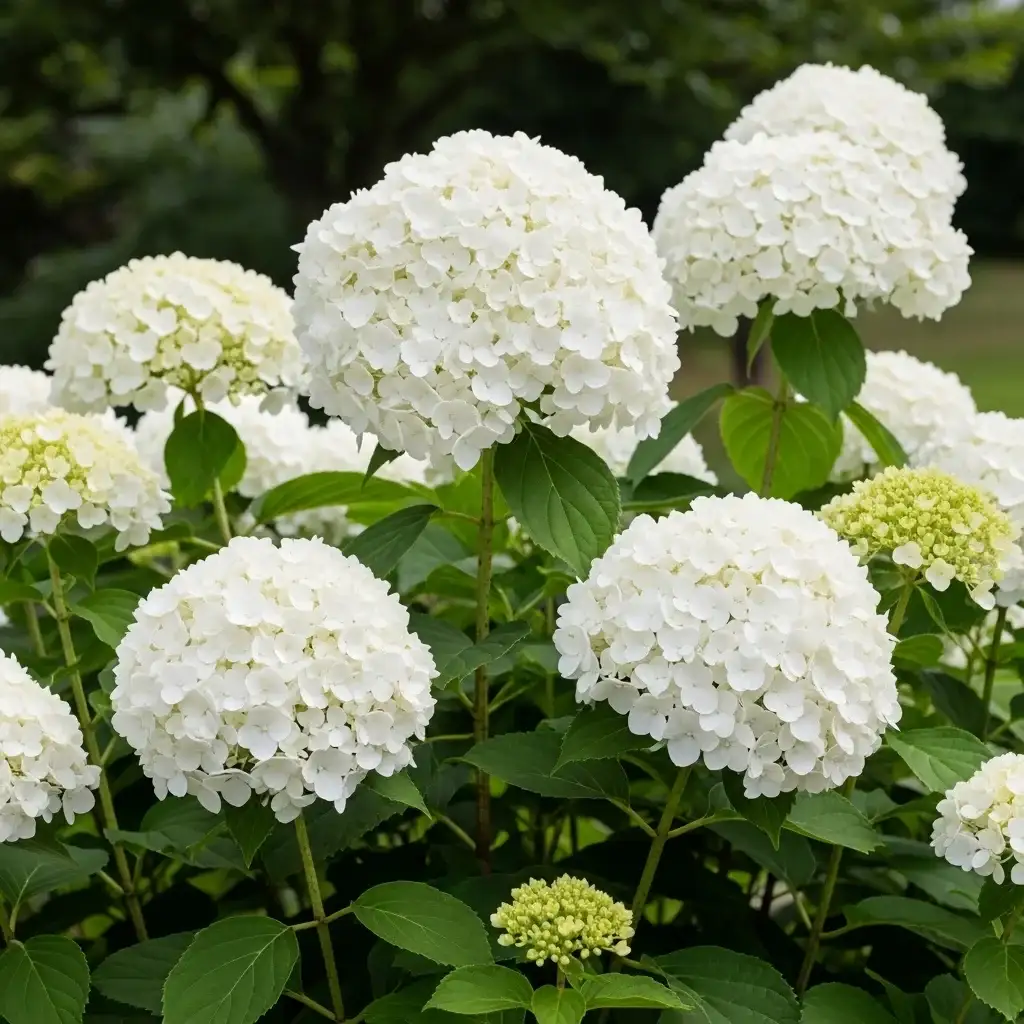
Annabelle produces enormous white snowball blooms up to 12 inches across on strong stems that support heavy flowers without staking. This native smooth hydrangea blooms on new wood tolerating harsh winters and aggressive pruning. The dramatic flowers create stunning displays while adaptability makes cultivation nearly foolproof for beginners.
When to Fertilize: Apply balanced fertilizer in early spring (March-April) as new growth emerges. Avoid over-fertilizing which creates weak stems unable to support large blooms properly.
When to Cut: Prune heavily in late winter or early spring (February-March) cutting stems to 12-18 inches for largest flowers. Remove spent blooms anytime during season for tidiness.
| Feature | Details |
|---|---|
| Bloom Time | Summer (June-August) |
| Colors | White |
| Height | 3-5 feet |
| Hardiness Zones | 3-9 |
| Bloom Type | New wood |
4. Limelight Panicle Hydrangea
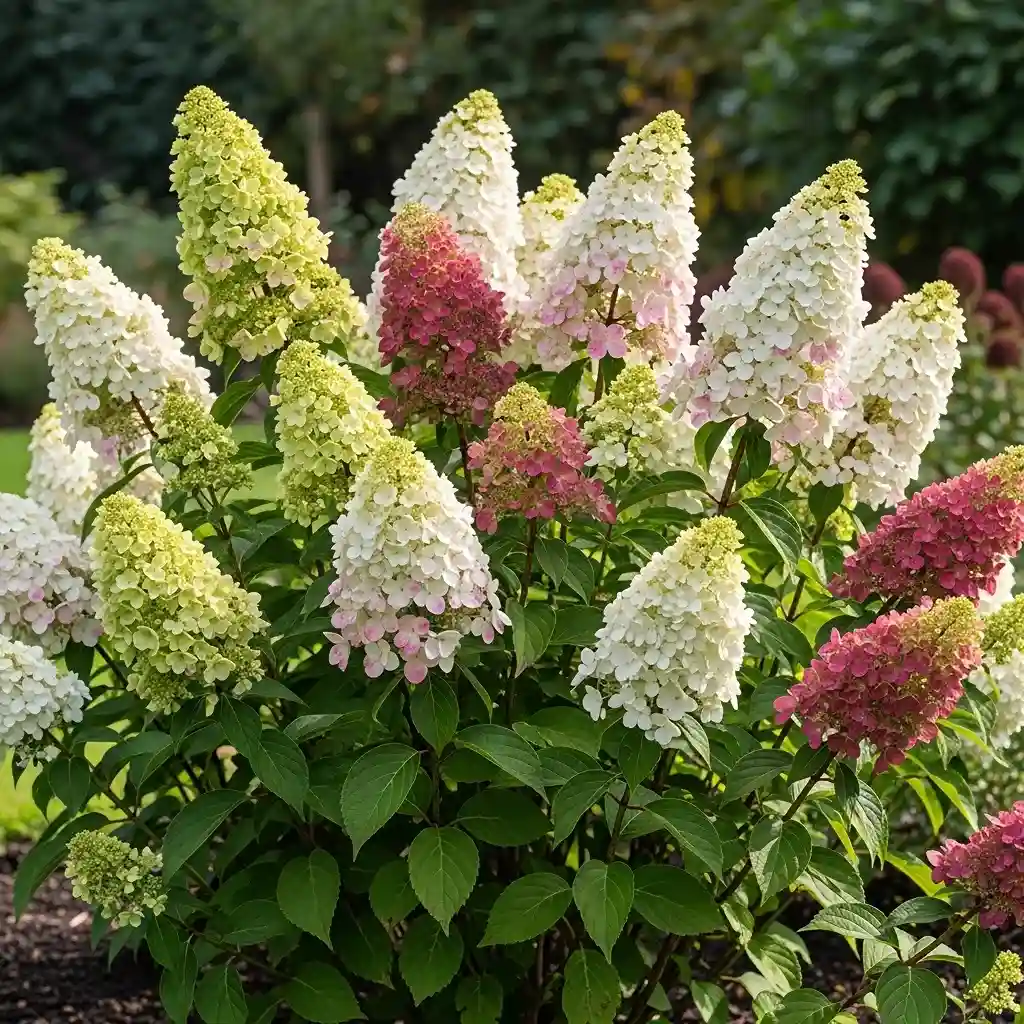
Limelight produces large cone-shaped flower panicles emerging lime-green then transitioning to white, pink, and finally burgundy creating multi-toned displays. This panicle hydrangea blooms on new wood tolerating cold winters and spring pruning. The sturdy upright habit and color-changing flowers provide months of evolving interest.
When to Fertilize: Feed in early spring (March) with balanced fertilizer and again in early summer (June). Avoid high nitrogen fertilizers which reduce flowering favoring foliage growth instead.
When to Cut: Prune in late winter or early spring (February-March) before growth begins. Cut back by one-third to one-half or leave taller for tree-form development over time.
| Feature | Details |
|---|---|
| Bloom Time | Mid-Summer-Fall (July-October) |
| Colors | Lime-green aging to white, pink, burgundy |
| Height | 6-8 feet |
| Hardiness Zones | 3-8 |
| Bloom Type | New wood |
5. Pinky Winky Panicle
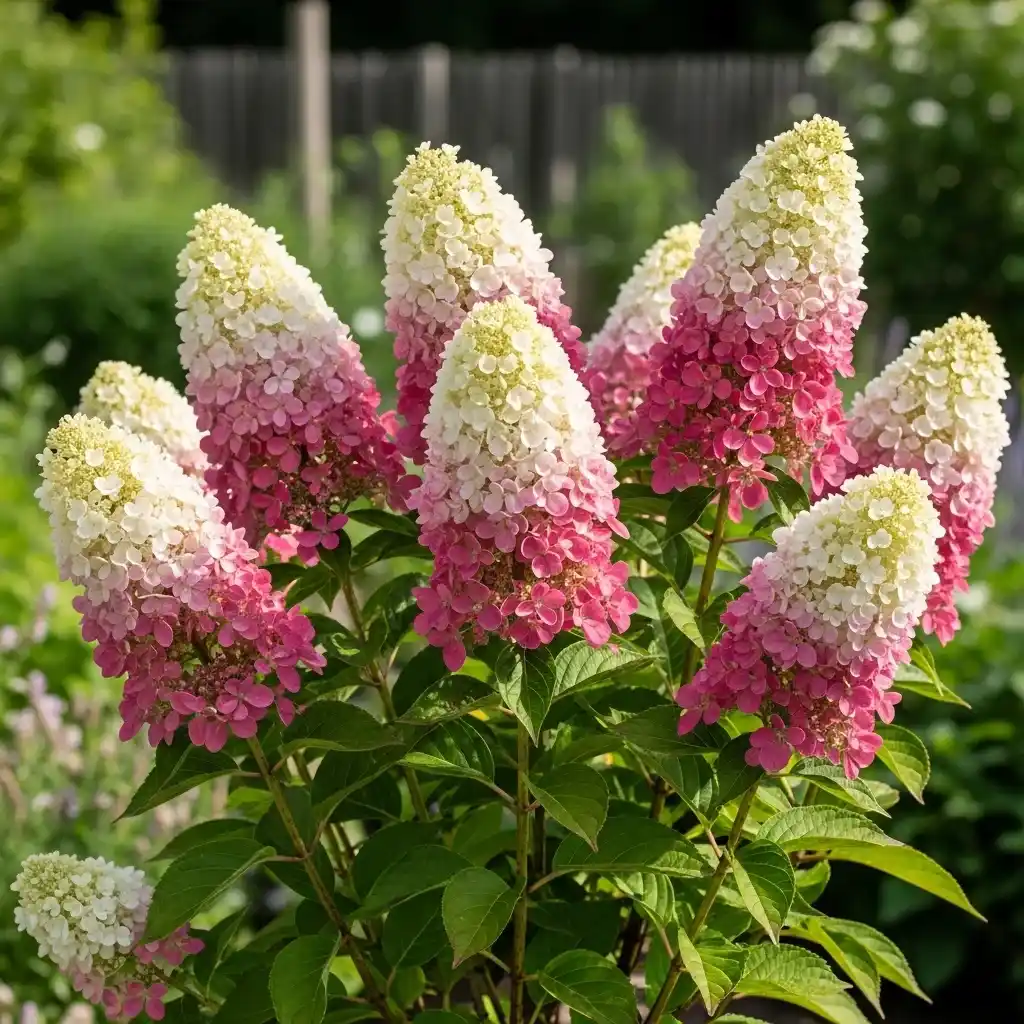
Pinky Winky produces distinctive two-toned panicles with white flowers at the top while lower blooms age to pink creating unique bicolor effects. This upright panicle hydrangea blooms on new wood providing reliable flowers even after harsh winters. The strong stems support heavy blooms without flopping making staking unnecessary.
When to Fertilize: Apply slow-release balanced fertilizer in early spring (March) providing nutrients throughout season. Supplement with liquid fertilizer in June if growth appears weak or yellowing occurs.
When to Cut: Prune in late winter (February-March) cutting stems to desired height—typically 18-24 inches for compact growth or leave taller for larger specimens creating tree forms.
| Feature | Details |
|---|---|
| Bloom Time | Mid-Summer-Fall (July-September) |
| Colors | White aging to pink (bicolor) |
| Height | 6-8 feet |
| Hardiness Zones | 3-8 |
| Bloom Type | New wood |
6. Oakleaf Hydrangea
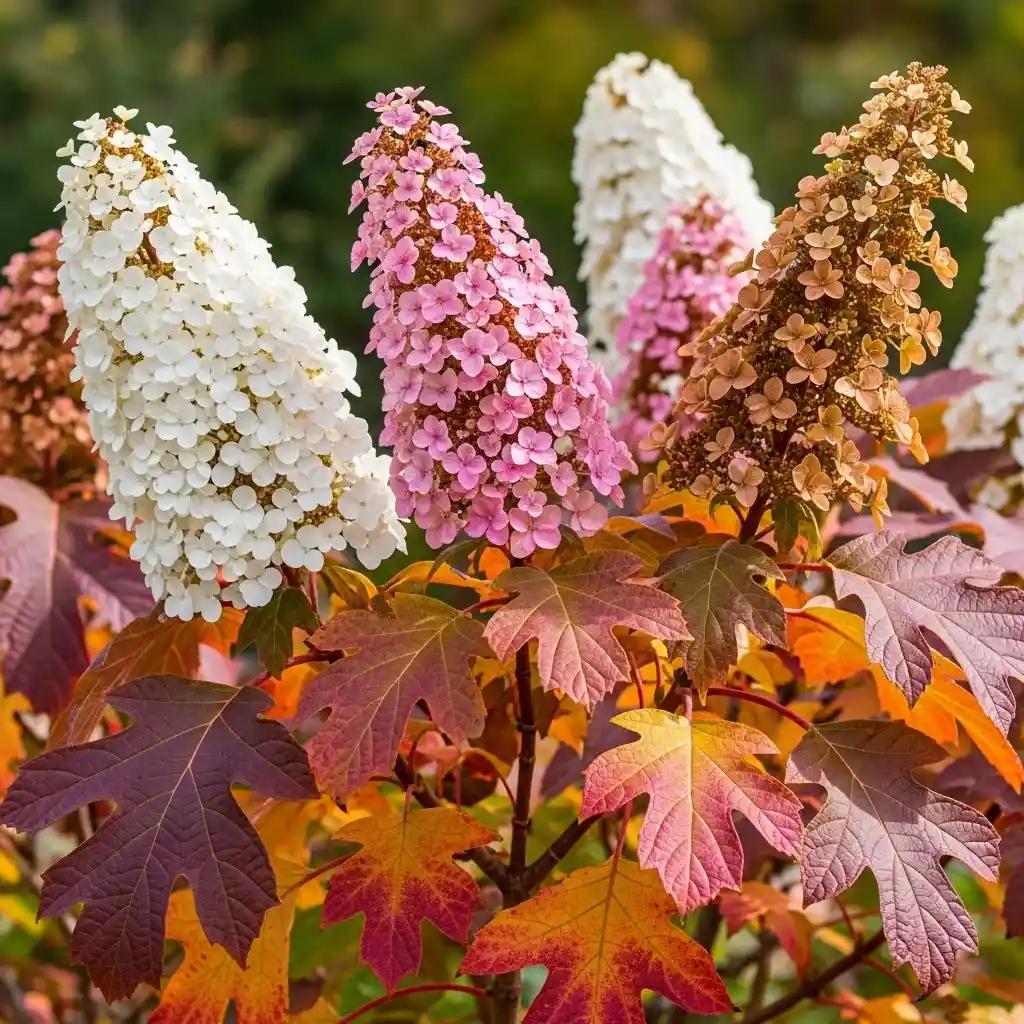
Oakleaf hydrangea produces large white panicles aging to pink then tan while oak-shaped leaves turn burgundy, orange, and purple in fall. Exfoliating cinnamon bark provides winter interest creating four-season appeal. This native blooms on old wood requiring careful pruning but offers unmatched multi-season beauty worth extra attention.
When to Fertilize: Feed in early spring (March) with balanced fertilizer. Avoid late-season fertilization which encourages tender growth vulnerable to winter damage reducing next year’s blooms significantly.
When to Cut: Prune immediately after flowering (July-August) removing spent blooms and shaping as needed. Avoid spring pruning which eliminates flower buds formed previous season on old wood.
| Feature | Details |
|---|---|
| Bloom Time | Summer (June-July) |
| Colors | White aging to pink then tan |
| Height | 6-8 feet |
| Hardiness Zones | 5-9 |
| Bloom Type | Old wood |
7. Little Lime Dwarf Panicle
Little Lime offers Limelight’s color-changing blooms in compact 3-5 foot plants perfect for small gardens and containers. This dwarf panicle hydrangea blooms on new wood providing reliable flowers while manageable size suits limited spaces. The proportionally large flowers create impressive displays despite modest plant dimensions.
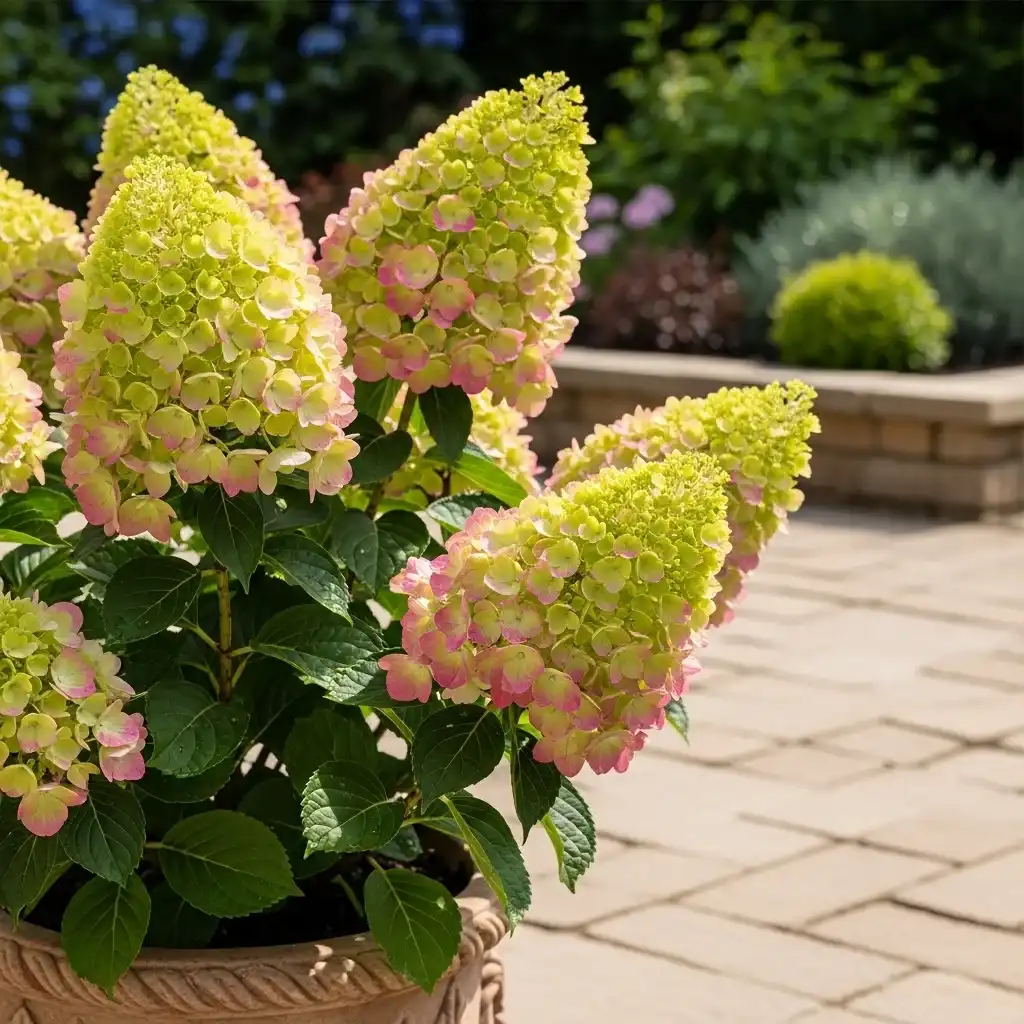
When to Fertilize: Apply balanced fertilizer in early spring (March) and again in early summer (June). Container-grown plants benefit from monthly liquid feeding during active growth supporting continuous blooming efforts.
When to Cut: Prune in late winter or early spring (February-March) cutting back to 12-18 inches maintaining compact size. Deadhead spent blooms during season encouraging continued flowering through fall.
| Feature | Details |
|---|---|
| Bloom Time | Mid-Summer-Fall (July-September) |
| Colors | Lime-green aging to white, pink |
| Height | 3-5 feet |
| Hardiness Zones | 3-8 |
| Bloom Type | New wood |
8. Tardiva Panicle Hydrangea
Tardiva blooms later than other panicle varieties producing white cone-shaped flowers in late summer extending hydrangea season. This vigorous grower develops into large specimens or small trees when trained properly. The late flowering provides color when many plants finish blooming creating extended interest.
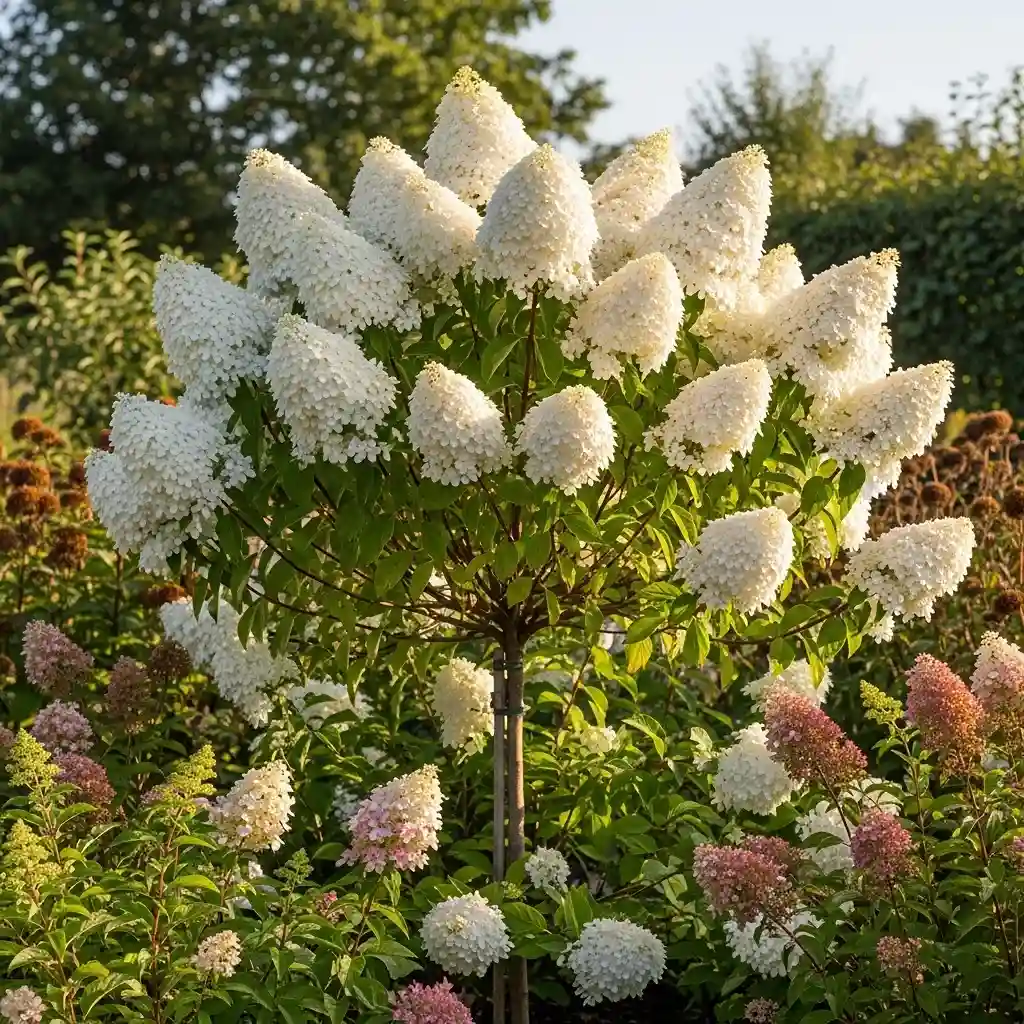
When to Fertilize: Feed in early spring (March) with balanced fertilizer. Late bloomers benefit from additional feeding in early summer (June) supporting late-season flower development requiring sustained nutrition.
When to Cut: Prune in late winter (February-March) before growth begins. Cut back significantly for shrub form or prune selectively developing tree structure over multiple years through patient training.
| Feature | Details |
|---|---|
| Bloom Time | Late Summer-Fall (August-October) |
| Colors | White aging to pink |
| Height | 8-12 feet |
| Hardiness Zones | 4-8 |
| Bloom Type | New wood |
9. Cityline Series Compact Bigleaf
Cityline hydrangeas offer full-sized mophead blooms on compact 2-3 foot plants perfect for containers and small gardens. Multiple colors including Paris (pink/blue), Venice (red/purple), and Berlin (pink/blue) provide options. These bigleaf varieties bloom on old and new wood ensuring flowers despite occasional winter damage.
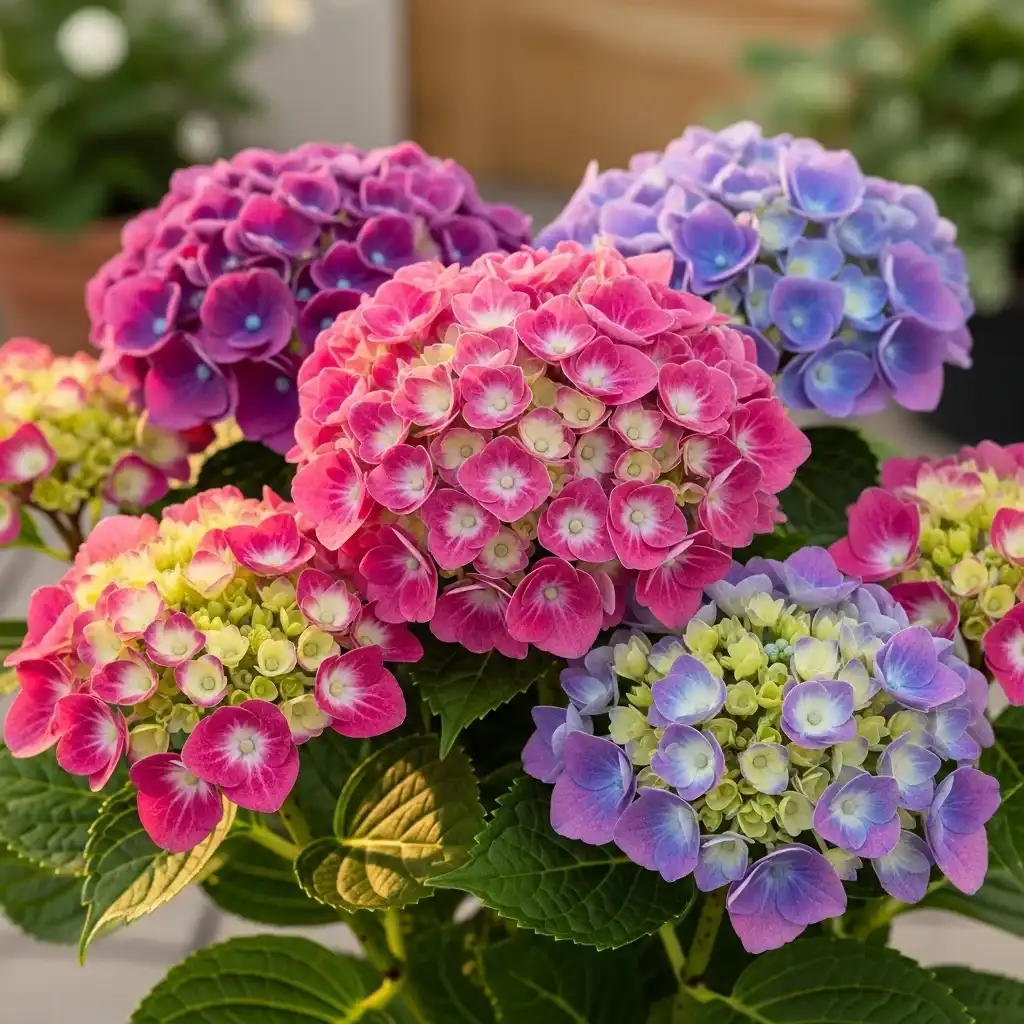
When to Fertilize: Apply balanced fertilizer in early spring (March) and mid-summer (June). Container specimens require more frequent feeding—use liquid fertilizer monthly during growing season supporting continuous bloom production.
When to Cut: Prune lightly in early spring removing only dead wood. Deadhead spent blooms throughout season promoting reblooming. Avoid heavy pruning which reduces flowering despite new wood blooming capability.
| Feature | Details |
|---|---|
| Bloom Time | Summer-Fall (June-September) |
| Colors | Pink, Blue, Red, Purple (variety dependent) |
| Height | 2-3 feet |
| Hardiness Zones | 5-9 |
| Bloom Type | Old and new wood |
10. Vanilla Strawberry Panicle
Vanilla Strawberry produces white panicles aging to pink then strawberry-red creating stunning tri-color displays on single plants. This panicle hydrangea blooms on new wood providing reliable flowers while dramatic color transitions create evolving displays throughout seasons. Strong stems support heavy blooms without staking requirements.
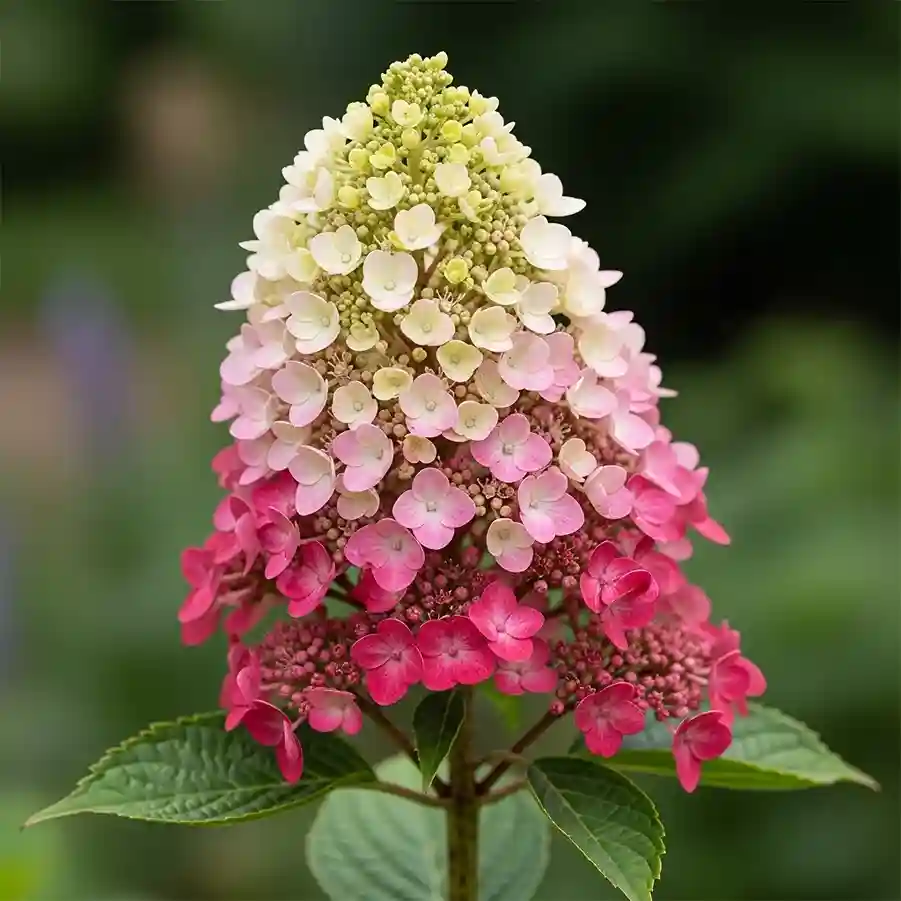
When to Fertilize: Feed in early spring (March) with balanced fertilizer and again in early summer (June). Avoid excessive nitrogen which creates lush foliage at flowering expense diminishing bloom quality.
When to Cut: Prune in late winter or early spring (February-March) cutting back to 18-24 inches. Leave spent blooms through winter providing interest then remove during spring pruning removing dried flowers.
| Feature | Details |
|---|---|
| Bloom Time | Mid-Summer-Fall (July-September) |
| Colors | White aging to pink then strawberry-red |
| Height | 6-7 feet |
| Hardiness Zones | 3-8 |
| Bloom Type | New wood |
11. Blushing Bride Bigleaf
Blushing Bride produces pure white mophead blooms with hints of pink and green creating elegant displays. This bigleaf variety blooms on old and new wood providing reliable flowers while unique coloring distinguishes it from standard pink or blue hydrangeas. The romantic blooms suit wedding arrangements and elegant gardens.
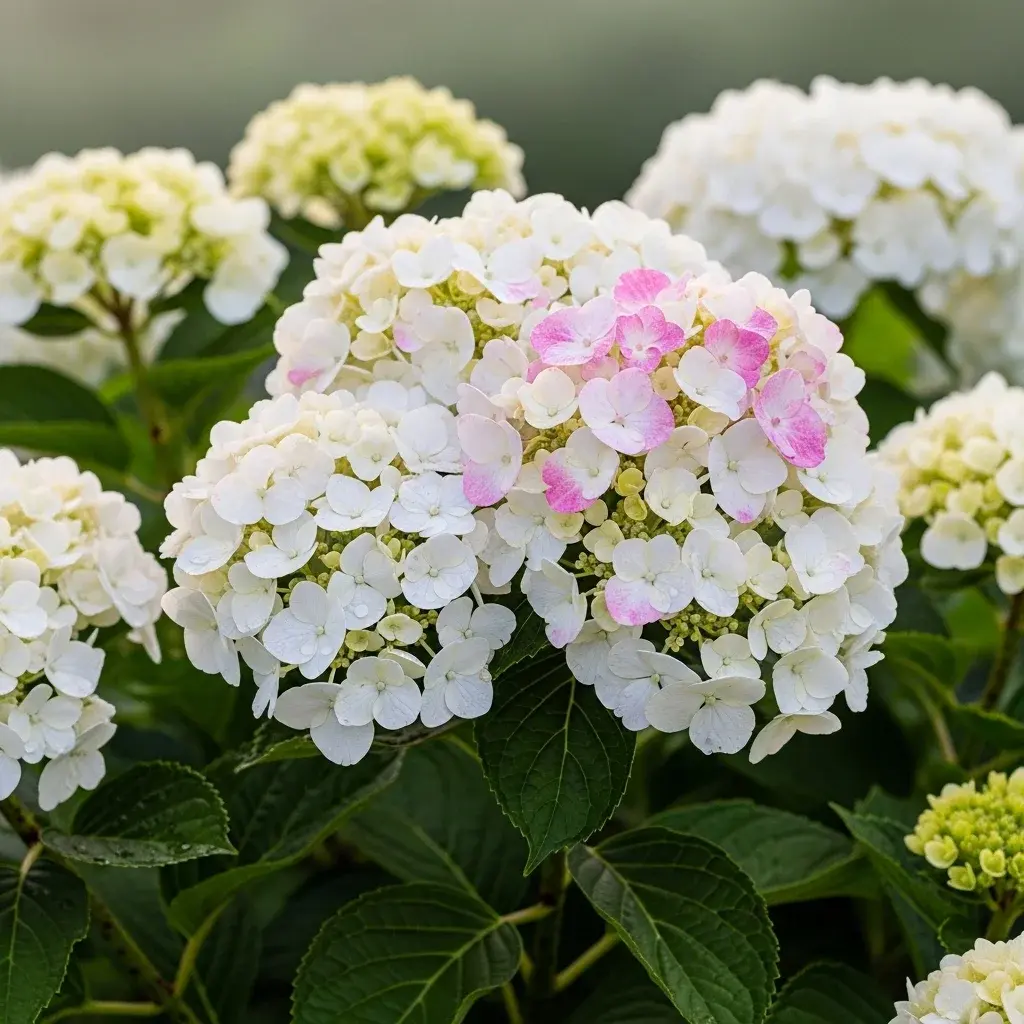
When to Fertilize: Apply balanced fertilizer in early spring (March) and again in June. Maintain neutral to slightly alkaline soil pH preserving white coloration—acidic conditions create unwanted blue tones diminishing intended appearance.
When to Cut: Prune lightly in early spring removing dead wood and shaping gently. Deadhead spent blooms encouraging reblooming. Avoid aggressive pruning reducing flower production despite remontant blooming nature allowing second chances.
| Feature | Details |
|---|---|
| Bloom Time | Summer-Fall (June-September) |
| Colors | White with pink/green hints |
| Height | 3-4 feet |
| Hardiness Zones | 5-9 |
| Bloom Type | Old and new wood |
12. Invincibelle Spirit Smooth
Invincibelle Spirit produces pink mophead blooms on smooth hydrangea providing rare pink color in this species typically offering white flowers. This native blooms on new wood tolerating cold climates and spring pruning. The unique coloring and native status make it valuable for supporting local ecosystems.
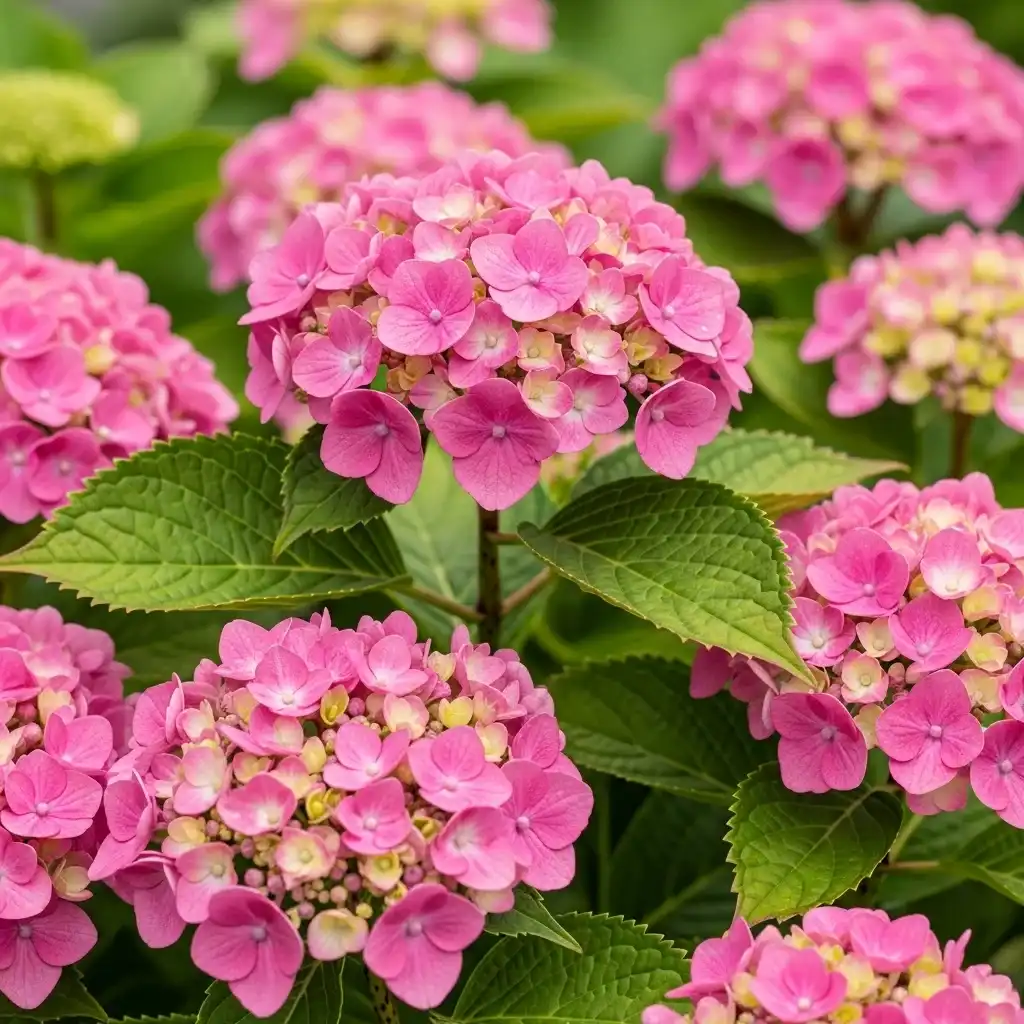
When to Fertilize: Feed in early spring (March) with balanced fertilizer. Avoid over-fertilizing causing weak stems unable to support heavy blooms—smooth hydrangeas naturally produce large flowers requiring strong structural support.
When to Cut: Prune heavily in late winter or early spring (February-March) cutting to 12-18 inches. Remove spent blooms during season maintaining appearances while encouraging additional flowering from new growth throughout summer.
| Feature | Details |
|---|---|
| Bloom Time | Summer (June-August) |
| Colors | Pink |
| Height | 3-5 feet |
| Hardiness Zones | 3-8 |
| Bloom Type | New wood |
13. Quick Fire Panicle
Quick Fire blooms earlier than other panicle hydrangeas producing white flowers in early summer aging to pink. This early flowering extends hydrangea season while new wood blooming provides reliability. The rapid color change creates evolving displays as white flowers transition to rosy pink within weeks.
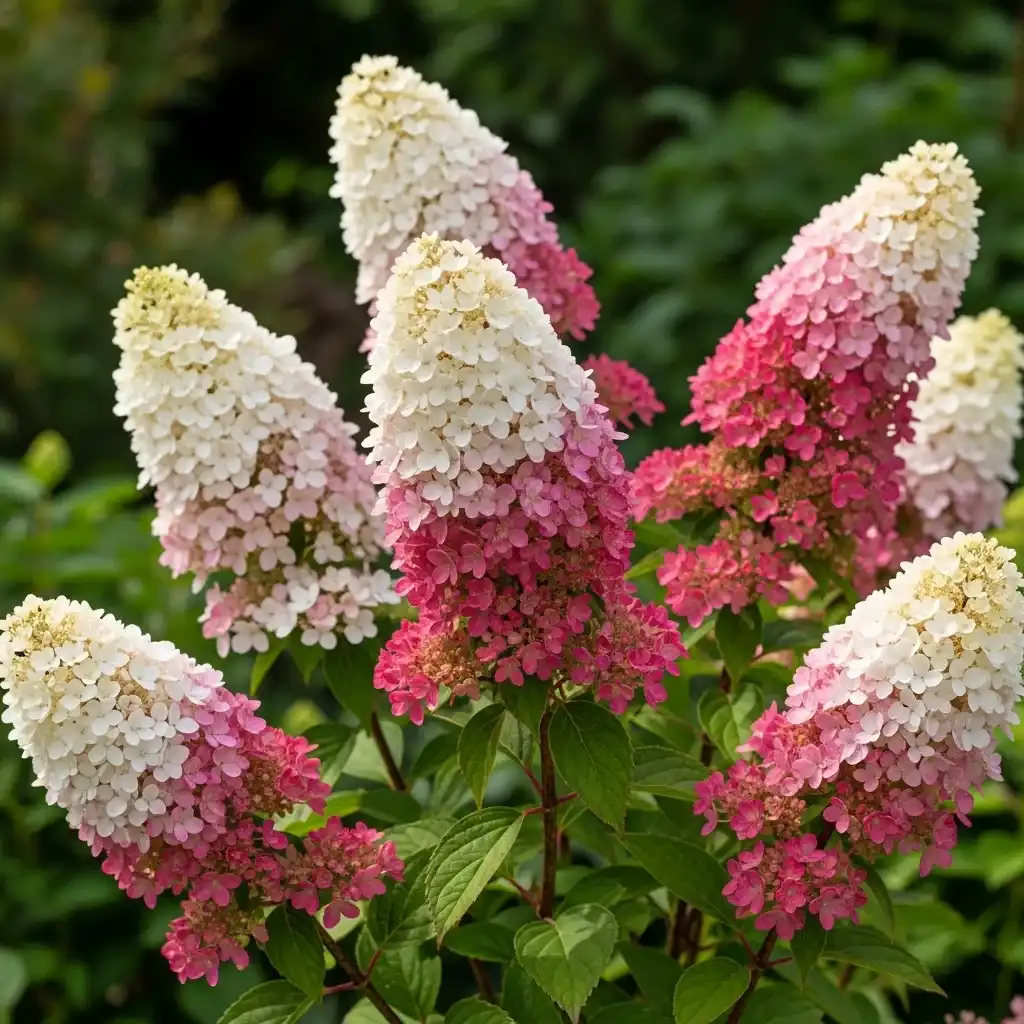
When to Fertilize: Apply balanced fertilizer in early spring (March) supporting early bloom development. Supplement with second feeding in June after initial flowering promoting continued growth and potential late-season blooms.
When to Cut: Prune in late winter (February-March) before growth begins. Cut back to desired size—typically one-third to one-half total height creating compact well-branched specimens producing abundant blooms.
| Feature | Details |
|---|---|
| Bloom Time | Early-Mid Summer (June-August) |
| Colors | White aging to pink |
| Height | 6-8 feet |
| Hardiness Zones | 3-8 |
| Bloom Type | New wood |
14. Let’s Dance Series
Let’s Dance hydrangeas bloom on old and new wood providing reliable flowers in various colors including blue, pink, and purple. These compact bigleaf varieties suit small gardens and containers while reblooming nature ensures flowers despite occasional bud damage. Multiple cultivars offer color variety within consistent compact size ranges.
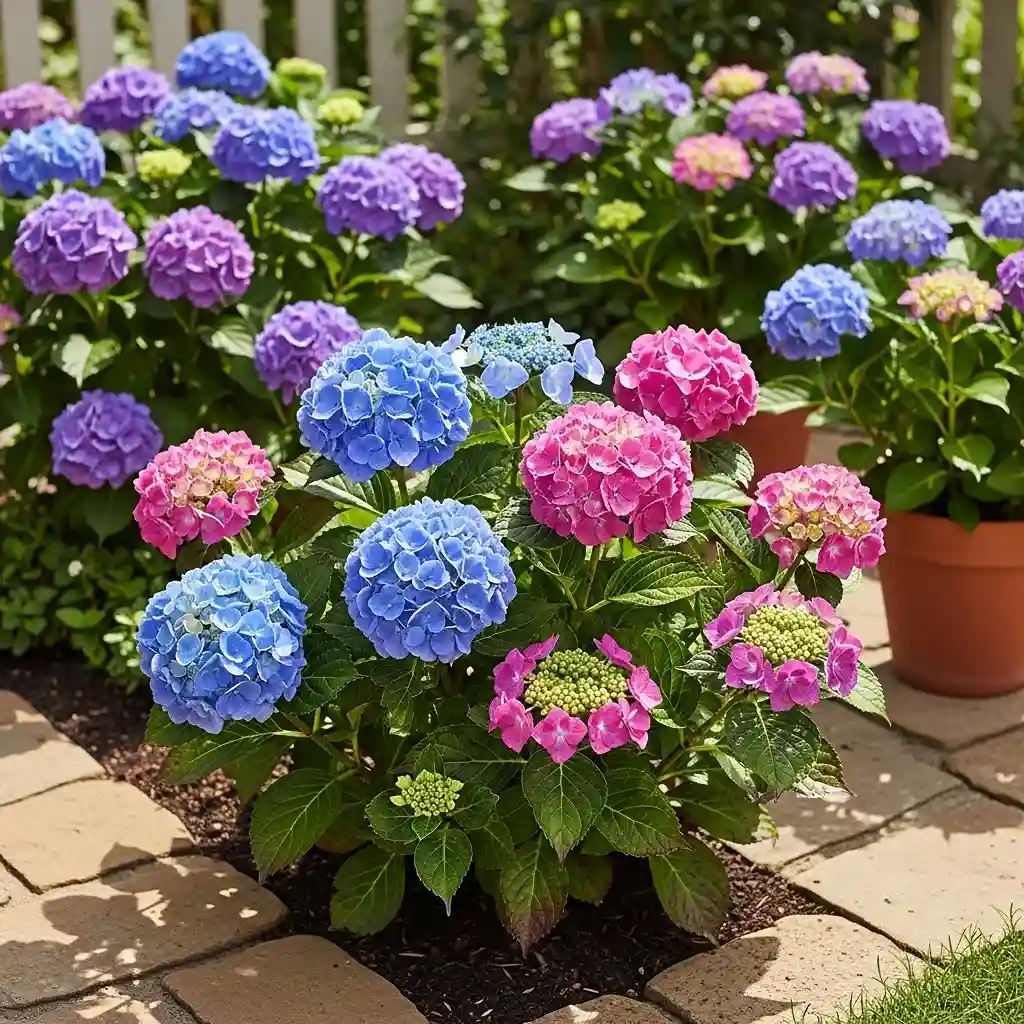
When to Fertilize: Feed in early spring (March) and again in early summer (June). Adjust soil pH using aluminum sulfate for blue flowers or lime for pink depending on desired coloring and natural soil conditions.
When to Cut: Prune lightly in early spring removing only dead wood and spent blooms. Avoid heavy pruning which reduces flowering. Deadhead throughout season encouraging continuous blooming through multiple flushes extending color display periods.
| Feature | Details |
|---|---|
| Bloom Time | Summer-Fall (June-September) |
| Colors | Blue, Pink, Purple (variety dependent) |
| Height | 2-3 feet |
| Hardiness Zones | 5-9 |
| Bloom Type | Old and new wood |
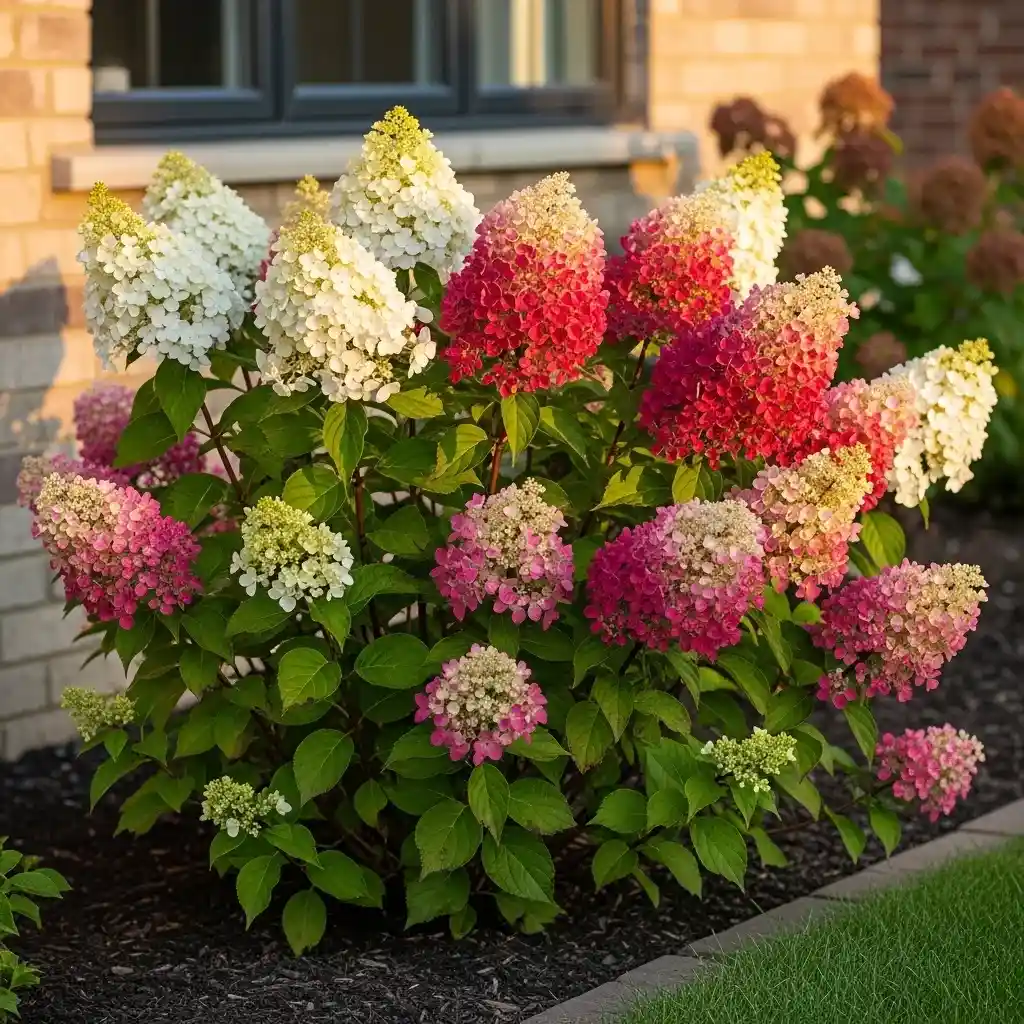
15. Little Quick Fire
Little Quick Fire offers Quick Fire’s early blooming and color change in compact 3-5 foot plants perfect for small spaces. This dwarf panicle hydrangea blooms on new wood providing reliable flowers while manageable size suits foundation plantings. The proportionally large blooms create impressive displays despite modest dimensions.
When to Fertilize: Apply balanced fertilizer in early spring (March) and again in June. Container specimens benefit from monthly liquid feeding during active growth supporting continuous blooming and healthy foliage development throughout seasons.
When to Cut: Prune in late winter or early spring (February-March) cutting back to 12-18 inches maintaining compact form. Remove spent blooms during season tidying appearances while potentially encouraging additional late-season flowering.
| Feature | Details |
|---|---|
| Bloom Time | Early-Mid Summer (June-August) |
| Colors | White aging to pink-red |
| Height | 3-5 feet |
| Hardiness Zones | 3-8 |
| Bloom Type | New wood |
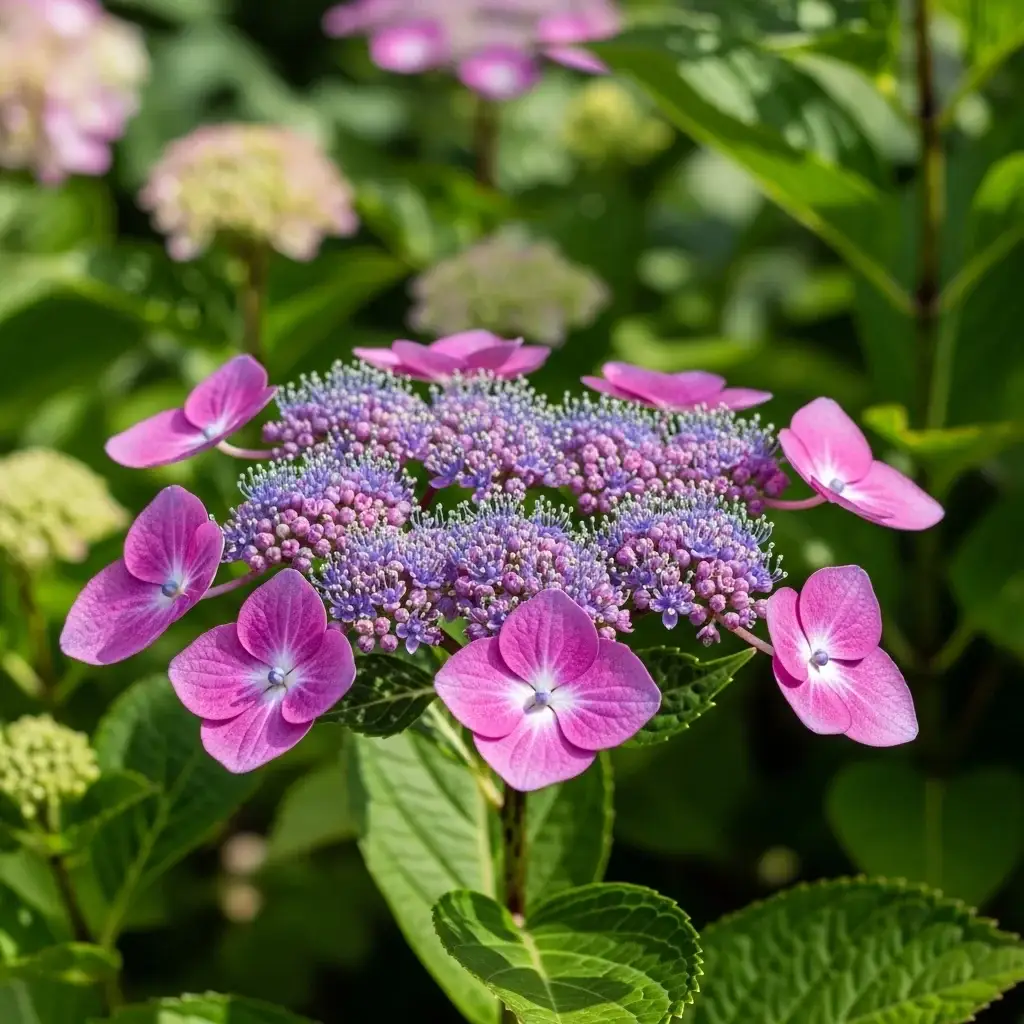
16. Twist-n-Shout Lacecap
Twist-n-Shout produces delicate lacecap flowers with outer florets surrounding tiny fertile centers creating elegant displays. This bigleaf variety blooms on old and new wood providing reliable flowers while lacecap form distinguishes it from mophead types. The airy appearance suits naturalistic and cottage garden settings.
When to Fertilize: Feed in early spring (March) with balanced fertilizer and again in June. Adjust soil pH for desired color—acidic soils create blue outer florets while alkaline conditions produce pink flowers surrounding centers.
When to Cut: Prune lightly in early spring removing dead wood only. Deadhead spent blooms encouraging reblooming. The delicate flower structure benefits from minimal pruning maintaining natural graceful form throughout growing seasons without aggressive cutting.
| Feature | Details |
|---|---|
| Bloom Time | Summer-Fall (June-September) |
| Colors | Pink, Blue (pH dependent) |
| Height | 3-5 feet |
| Hardiness Zones | 5-9 |
| Bloom Type | Old and new wood |
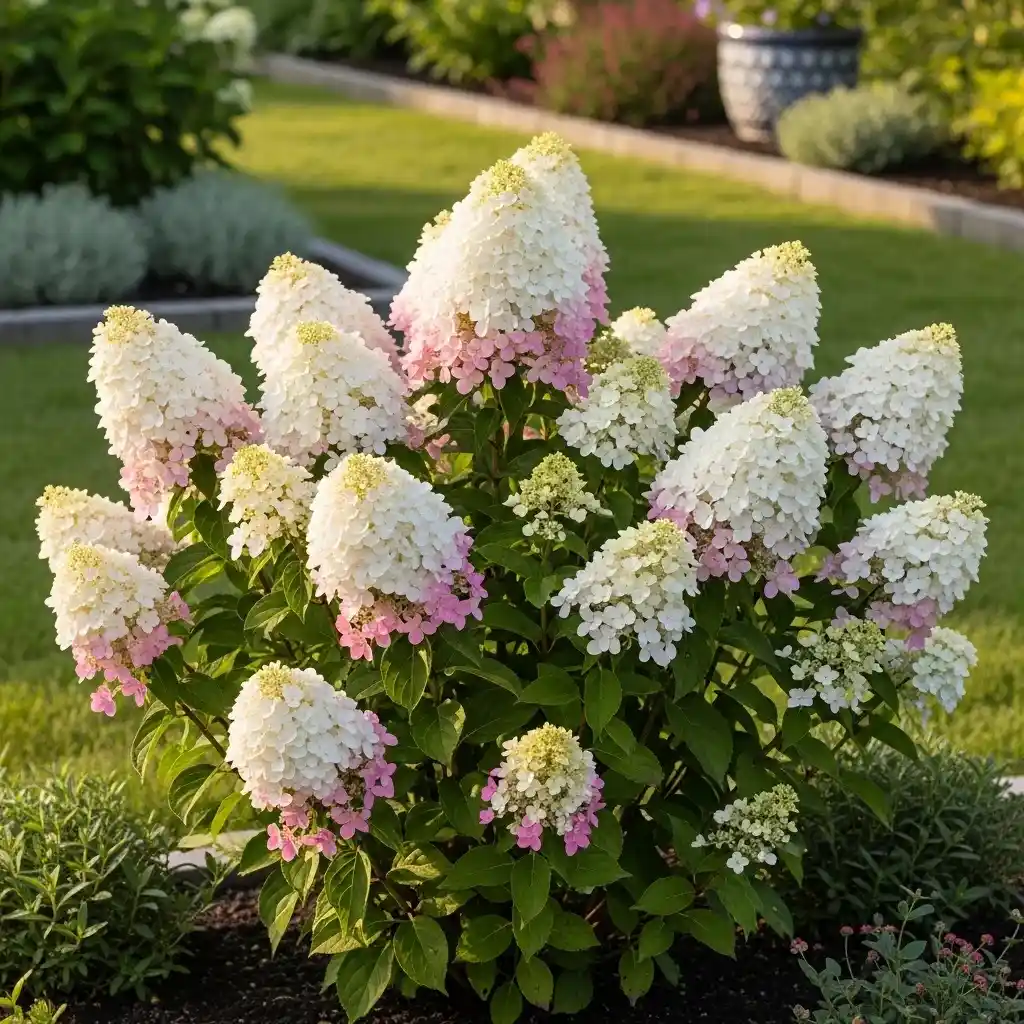
17. Bobo Dwarf Panicle
Bobo produces white panicles aging to pink on extremely compact 2-3 foot plants perfect for front borders and containers. This dwarf panicle hydrangea blooms on new wood providing reliable flowers while tiny size creates petite garden gems. The proportionally large blooms create impressive displays on diminutive plants.
When to Fertilize: Apply balanced fertilizer in early spring (March) and again in June. Container-grown specimens require more frequent feeding—liquid fertilizer every 2-3 weeks during active growth supporting abundant blooming on compact plants.
When to Cut: Prune in late winter or early spring (February-March) cutting to 8-12 inches maintaining ultra-compact size. Deadhead spent blooms during season encouraging potential reblooming while maintaining tidy appearances throughout growing periods.
| Feature | Details |
|---|---|
| Bloom Time | Mid-Summer-Fall (July-September) |
| Colors | White aging to pink |
| Height | 2-3 feet |
| Hardiness Zones | 3-9 |
| Bloom Type | New wood |
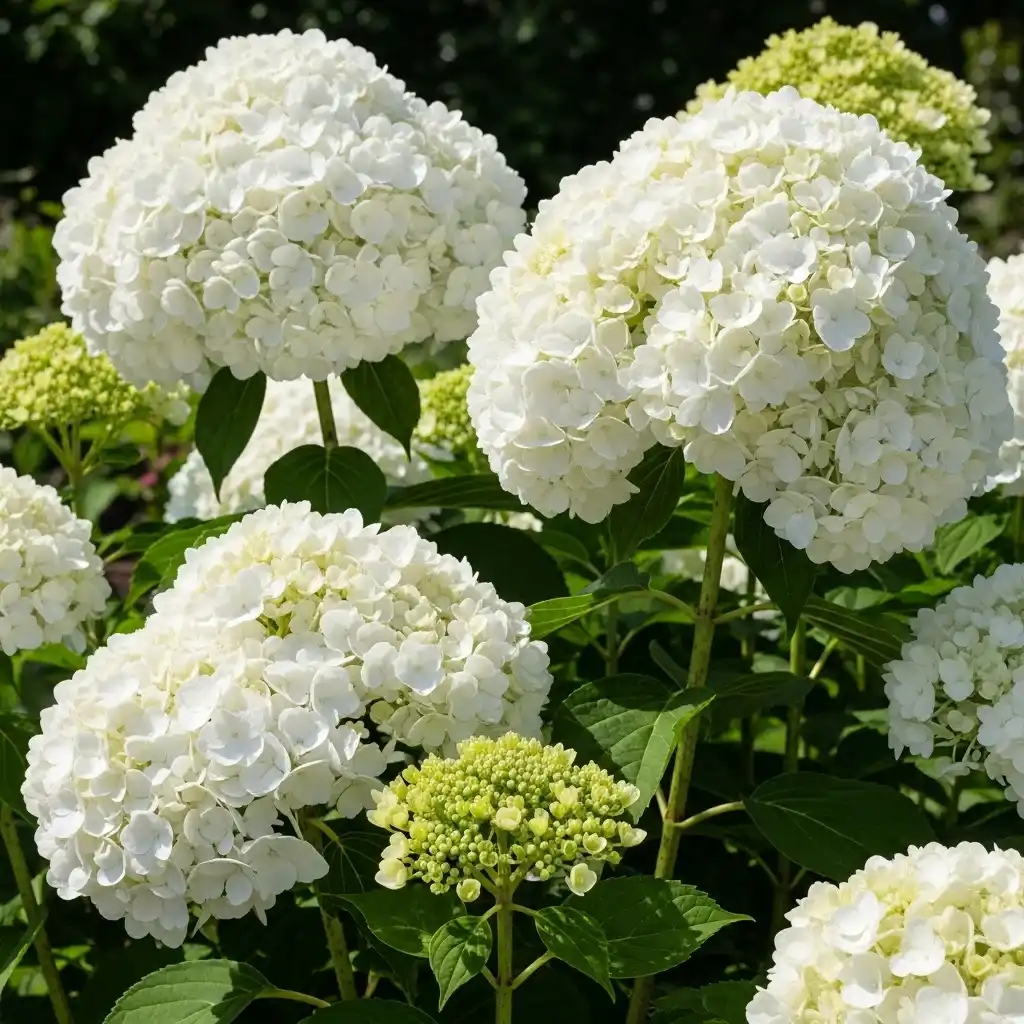
18. Incrediball Smooth Hydrangea
Incrediball produces massive 12-inch white blooms on sturdy stems that support enormous flowers without staking required. This smooth hydrangea blooms on new wood tolerating harsh winters and aggressive pruning. The gigantic blooms create dramatic focal points while improved stem strength addresses Annabelle’s flopping tendencies.
When to Fertilize: Feed in early spring (March) with balanced fertilizer. Avoid excessive fertilization creating weak growth unable to support already enormous blooms—moderate nutrition produces strongest stems supporting heavy flowers properly.
When to Cut: Prune heavily in late winter or early spring (February-March) cutting to 12-18 inches. Alternatively, cut to ground level for maximum flower size though this reduces overall plant height significantly throughout seasons.
| Feature | Details |
|---|---|
| Bloom Time | Summer (June-August) |
| Colors | White |
| Height | 4-5 feet |
| Hardiness Zones | 3-8 |
| Bloom Type | New wood |
19. Fire Light Panicle
Fire Light produces white panicles quickly aging to red creating vibrant displays. This panicle hydrangea blooms on new wood providing reliable flowers while rapid color change creates dramatic transformations. The intense red coloring distinguishes Fire Light from pink-aging varieties offering bolder hues throughout seasons.
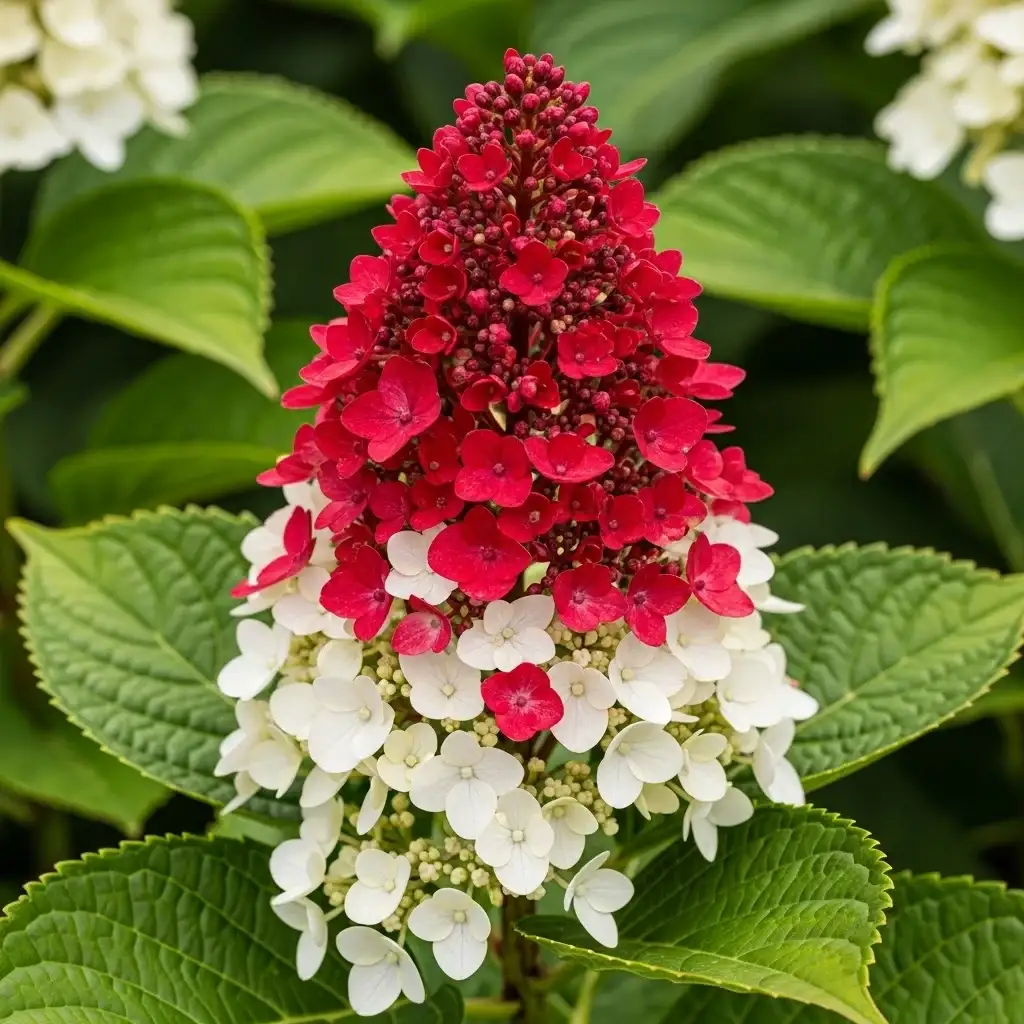
When to Fertilize: Apply balanced fertilizer in early spring (March) and again in early summer (June). Avoid high phosphorus fertilizers which can reduce red pigment development—balanced nutrition supports best coloration development during aging process.
When to Cut: Prune in late winter or early spring (February-March) before growth begins. Cut back to 18-24 inches or leave taller for tree-form development. Leave dried blooms through winter providing interest before spring removal.
| Feature | Details |
|---|---|
| Bloom Time | Mid-Summer-Fall (July-September) |
| Colors | White aging to red |
| Height | 6-8 feet |
| Hardiness Zones | 3-8 |
| Bloom Type | New wood |
20. Ruby Slippers Oakleaf
Ruby Slippers produces white panicles aging to ruby-red creating intensely colored displays on oakleaf hydrangea. This compact native blooms on old wood requiring careful pruning while dramatic color change and oak-shaped foliage provide multi-season appeal. Fall foliage turns burgundy creating additional seasonal interest beyond flowers.
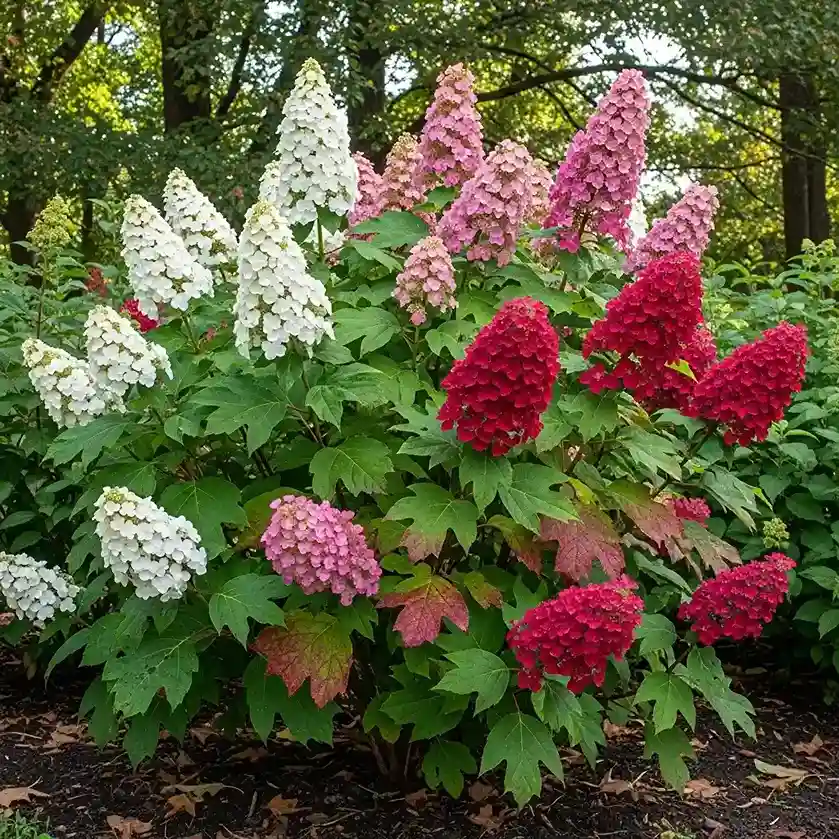
When to Fertilize: Feed in early spring (March) with balanced fertilizer. Avoid late-season fertilization encouraging tender growth vulnerable to winter damage potentially reducing next season’s bloom production significantly on old-wood flowering plants.
When to Cut: Prune immediately after flowering (July-August) removing spent blooms and shaping as needed. Avoid spring pruning eliminating flower buds formed previous season. Remove only dead wood in early spring preserving flowering stems.
| Feature | Details |
|---|---|
| Bloom Time | Summer (June-July) |
| Colors | White aging to ruby-red |
| Height | 3-4 feet |
| Hardiness Zones | 5-9 |
| Bloom Type | Old wood |
21. Strawberry Sundae Panicle
Strawberry Sundae produces white panicles quickly transitioning through pink to strawberry-red creating dessert-inspired color combinations. This panicle hydrangea blooms on new wood providing reliable flowers while rapid multi-stage color changes create constantly evolving displays. The whimsical name and coloring suit cottage gardens.
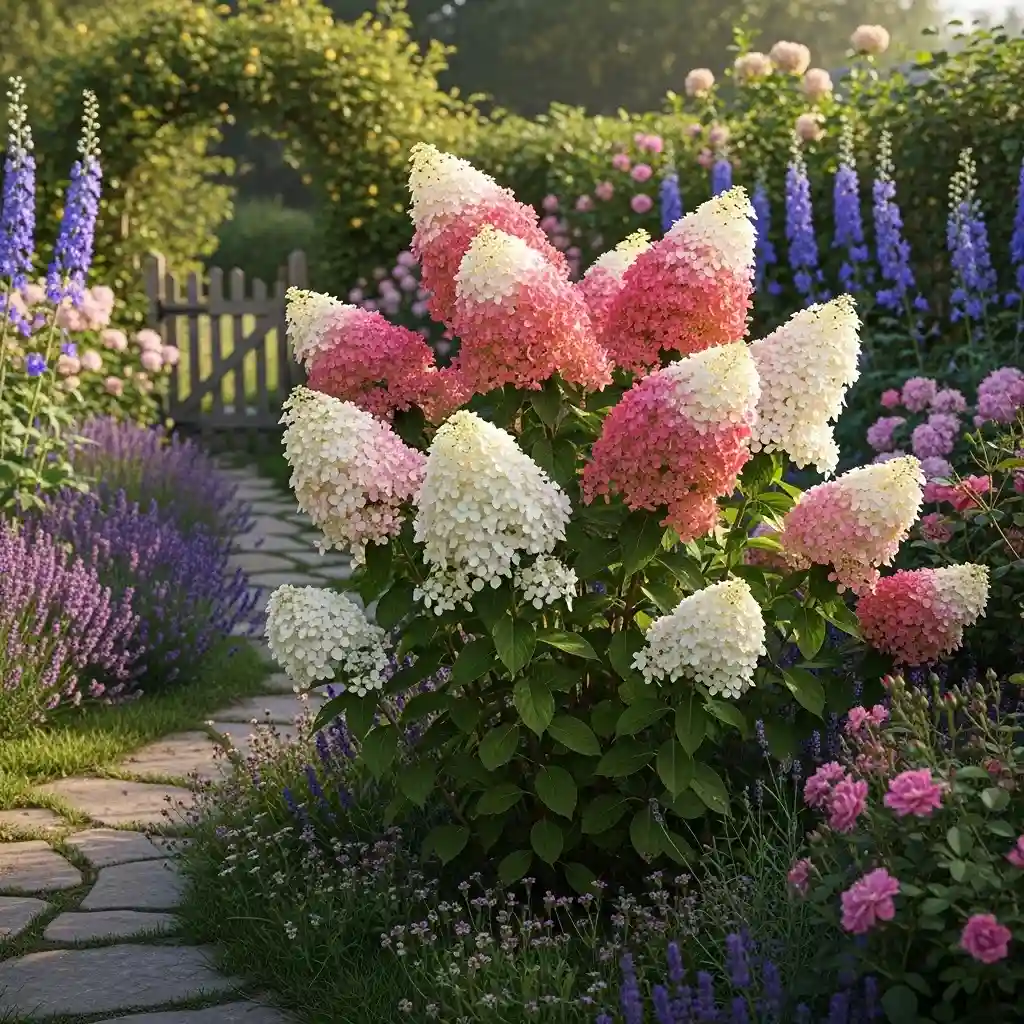
When to Fertilize: Apply balanced fertilizer in early spring (March) supporting initial growth and again in June encouraging continued flowering. Adequate nutrition supports color development during aging process creating most dramatic color transitions possible.
When to Cut: Prune in late winter or early spring (February-March) cutting back to desired height typically 18-30 inches. Deadhead spent blooms during season or leave dried flowers through winter providing continued interest before spring removal.
| Feature | Details |
|---|---|
| Bloom Time | Mid-Summer-Fall (July-September) |
| Colors | White aging to pink then strawberry-red |
| Height | 4-5 feet |
| Hardiness Zones | 4-9 |
| Bloom Type | New wood |
22. Alice Oakleaf Hydrangea
Alice produces enormous 12-inch white panicles on oakleaf hydrangea creating spectacular displays. This large native blooms on old wood requiring careful pruning while massive flowers and oak-shaped foliage provide dramatic appeal. Fall color and exfoliating bark add multi-season interest beyond impressive summer blooms.
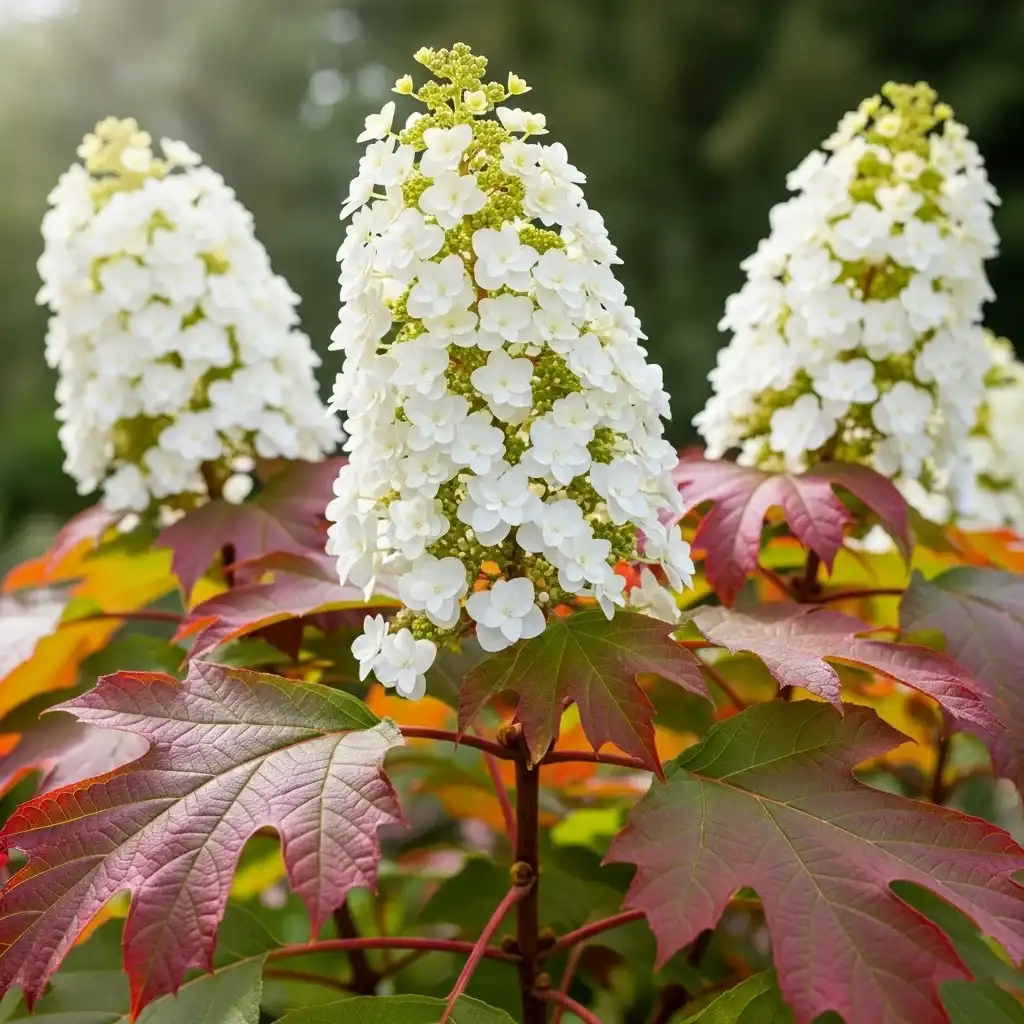
When to Fertilize: Feed in early spring (March) with balanced fertilizer. Supplement with compost or organic matter improving soil structure supporting large plant development—Alice reaches substantial sizes requiring adequate nutrition supporting vigorous growth patterns.
When to Cut: Prune immediately after flowering (July-August) removing spent blooms and shaping as necessary. Avoid spring pruning removing flower buds. Oakleaf hydrangeas tolerate rejuvenation pruning removing oldest canes to ground level encouraging new growth.
| Feature | Details |
|---|---|
| Bloom Time | Summer (June-July) |
| Colors | White aging to pink |
| Height | 6-8 feet |
| Hardiness Zones | 5-9 |
| Bloom Type | Old wood |
23. Little Honey Oakleaf
Little Honey offers golden-yellow foliage and white panicles in compact 3-4 foot plants creating unique color combinations. This dwarf oakleaf hydrangea blooms on old wood requiring careful pruning while colorful foliage provides interest beyond brief flowering periods. The golden leaves brighten shaded areas throughout entire seasons.
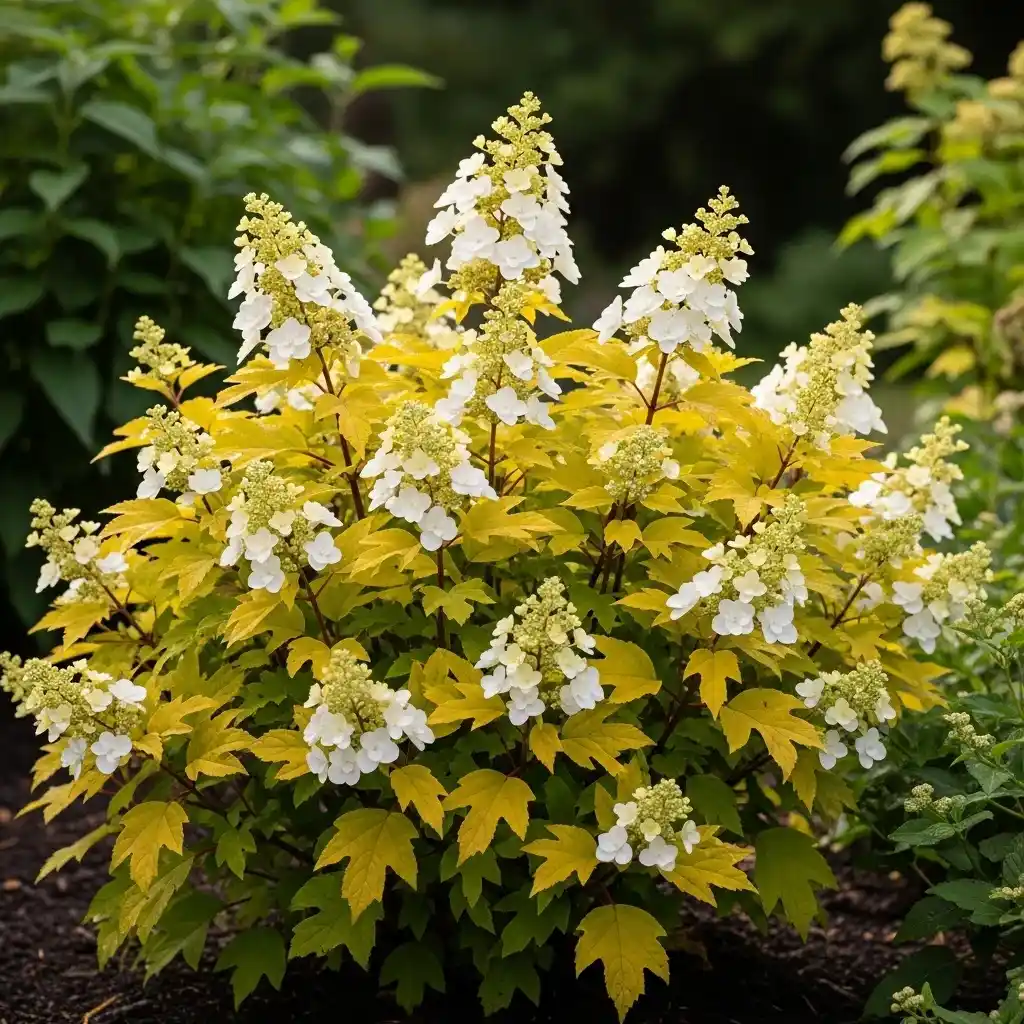
When to Fertilize: Apply balanced fertilizer in early spring (March) sparingly—excessive fertilization can reduce golden foliage intensity creating greenish tones rather than desired bright yellow coloring maintained through moderate nutrition levels.
When to Cut: Prune immediately after flowering (July-August) removing spent blooms. Avoid spring pruning eliminating flower buds formed previous year. Thin oldest canes to ground level maintaining vigorous growth and best foliage color throughout seasons.
| Feature | Details |
|---|---|
| Bloom Time | Summer (June-July) |
| Colors | White (flowers), Golden-yellow (foliage) |
| Height | 3-4 feet |
| Hardiness Zones | 5-9 |
| Bloom Type | Old wood |
24. Phantom Panicle Hydrangea
Phantom produces massive 15-inch white panicles aging to pink creating colossal displays on vigorous plants. This large panicle hydrangea blooms on new wood providing reliable flowers while enormous blooms create show-stopping specimens. The substantial size suits large landscapes requiring bold statements through oversized floral displays.
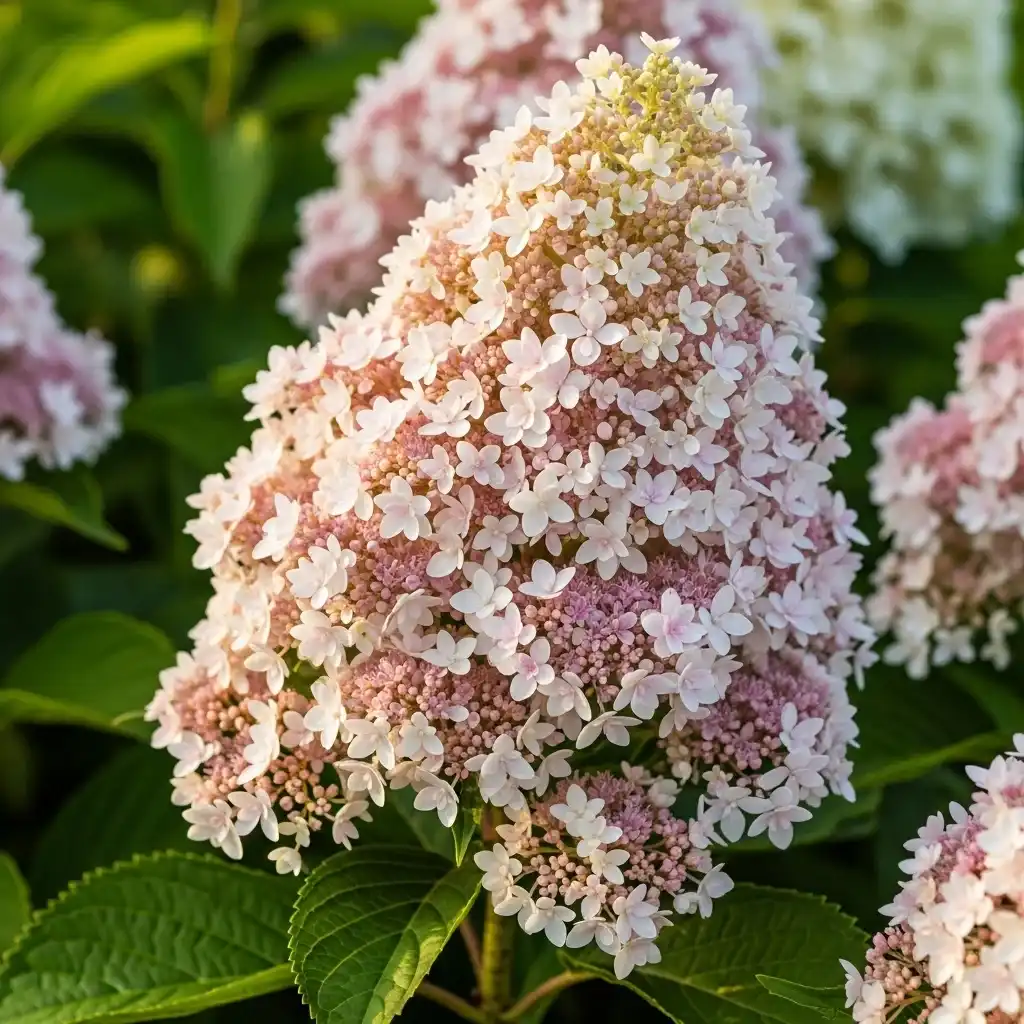
When to Fertilize: Feed in early spring (March) with balanced fertilizer and again in June. Phantom’s vigorous growth and massive blooms benefit from adequate nutrition—supplement with compost or organic matter supporting robust plant development throughout seasons.
When to Cut: Prune in late winter or early spring (February-March) cutting back to 2-3 feet for shrub form. Alternatively, prune selectively developing tree structure over time. Strong stems support enormous blooms without staking required despite massive flower weights.
| Feature | Details |
|---|---|
| Bloom Time | Mid-Summer-Fall (July-September) |
| Colors | White aging to pink |
| Height | 7-8 feet |
| Hardiness Zones | 3-8 |
| Bloom Type | New wood |
General Fertilization Guidelines
Hydrangeas benefit from regular feeding supporting vigorous growth and abundant flowering throughout growing seasons. Apply slow-release balanced fertilizer (10-10-10 or similar) in early spring as new growth emerges providing nutrients gradually throughout seasons. Supplement with second application in early summer after initial bloom flush supporting continued flowering and plant development through fall.
Avoid fertilizing after mid-summer preventing tender new growth vulnerable to winter damage reducing next season’s bloom potential significantly. Organic options including compost, aged manure, or fish emulsion provide gentle nutrition supporting healthy growth without chemical fertilizer concerns. Adjust fertilization based on soil tests and plant performance—yellowing leaves may indicate nutrient deficiencies requiring supplemental feeding addressing specific deficiencies appropriately.
Soil pH dramatically affects bigleaf hydrangea flower color—acidic soils (pH 5.0-5.5) produce blue flowers while alkaline conditions (pH 6.0-6.5) create pink blooms. Apply aluminum sulfate lowering pH for bluer flowers or lime raising pH for pinker blooms. White and panicle hydrangeas maintain consistent coloring regardless of pH making soil amendments unnecessary for color manipulation in these varieties.
General Pruning Guidelines
Pruning timing depends entirely on bloom type—old wood bloomers require pruning immediately after flowering (July-August) while new wood bloomers tolerate late winter or early spring pruning (February-March). Old wood hydrangeas including most bigleafs, oakleafs, and climbing varieties form flower buds on previous season’s growth requiring careful timing avoiding bud removal reducing blooming significantly if pruned incorrectly.
New wood hydrangeas, including panicle and smooth types, bloom on current-season growth and tolerate aggressive spring pruning without reducing flowering. These forgiving varieties suit gardeners uncertain about proper timing or those desiring smaller plants maintained through annual cutting. Reblooming bigleaf varieties blooming on old and new wood provide insurance against pruning mistakes producing flowers even if old wood buds get damaged.
Remove dead wood anytime during year, improving appearances and plant health without affecting flowering. Deadheading spent blooms throughout season maintains tidy appearances while potentially encouraging reblooming in remontant varieties. Leave dried flower heads through winter providing interest and protecting developing buds beneath before removing during spring cleanup preparing for new season growth.
Frequently Asked Questions
Why won’t my hydrangea bloom?
Common causes include incorrect pruning timing removing flower buds, insufficient sunlight (most need 4-6 hours), late spring frosts damaging buds, over-fertilization encouraging foliage over flowers, or immature plants requiring establishment time. Identify your variety’s bloom type ensuring appropriate pruning timing matching old or new wood flowering patterns.
How do I change hydrangea flower color?
Only bigleaf hydrangeas change color based on soil pH—acidic soils (pH 5.0-5.5) create blue flowers while alkaline (pH 6.0-6.5) produces pink. Apply aluminum sulfate for blue or lime for pink several months before blooming. White, panicle, oakleaf, and smooth hydrangeas maintain consistent colors regardless of pH making amendments ineffective.
When should I transplant hydrangeas?
Transplant hydrangeas in early spring before growth begins or fall after flowering and leaf drop. Dig generous root balls preserving as much root system as possible. Water thoroughly after transplanting and throughout first season supporting establishment. Avoid transplanting during active growth or flowering stressing plants significantly.
Do hydrangeas need deadheading?
Deadheading improves appearances and may encourage reblooming in remontant varieties though it’s not essential for plant health. Leave dried blooms through winter for interest and bud protection, removing during spring cleanup. Some gardeners prefer dried flower arrangements using cut blooms for indoor displays extending enjoyment beyond outdoor viewing.
Conclusion
Hydrangeas offer unmatched versatility providing options for every garden situation from compact containers to large landscape specimens. Understanding your specific variety’s requirements regarding fertilization and pruning timing ensures successful cultivation and abundant flowering year after year. The diverse colors, forms, and bloom times allow creating extended displays maintaining interest throughout growing seasons.
Proper care including timely fertilization, appropriate pruning, adequate moisture, and suitable sun exposure transforms mediocre hydrangea performance into spectacular displays. These relatively low-maintenance shrubs reward basic attention with months of color and years of reliable beauty. Whether you prefer classic mopheads, elegant lacecaps, or dramatic panicles, hydrangeas offer something for every taste and garden style.
Invest time learning your hydrangeas’ specific needs, then enjoy decades of spectacular blooms from these beloved flowering shrubs. The initial effort understanding bloom types and care requirements pays dividends through years of reliable flowering requiring minimal intervention once proper practices establish. These versatile shrubs deserve prominent placement where their beauty receives proper appreciation throughout extended flowering seasons.