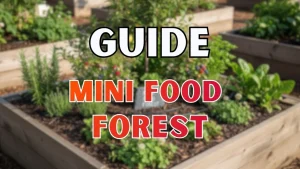
A mini food forest transforms even modest backyards into productive, self-sustaining ecosystems that mimic nature’s patterns while providing abundant harvests. Unlike traditional vegetable gardens that require annual replanting and constant inputs, a food forest builds soil health, supports wildlife, and produces food for decades with decreasing maintenance over time.

Source: @colorfulworldacreage
The concept draws inspiration from natural forests, where diverse plants grow in layers, support each other, and cycle nutrients without human intervention. By applying these principles on a small scale, you can create an edible landscape that feeds your family, beautifies your property, and connects you to the natural world.

Source: @kebun_kalem
This comprehensive guide walks you through every step of creating your own mini food forest, from design principles to planting strategies and ongoing care. For broader permaculture inspiration, explore our food forest guide and permaculture garden design resources.
What Is a Mini Food Forest?
A mini food forest is a deliberately designed ecosystem that incorporates edible plants in multiple vertical layers, mimicking the structure of a natural forest. Unlike row crops or conventional orchards, food forests emphasize perennial plants, mutually beneficial plant relationships (guilds), and minimal external inputs.

The “mini” designation simply means adapting these principles to smaller spaces—typically urban or suburban lots under ¼ acre. Even a 10×10 foot area can host a productive mini food forest with careful planning.
| Core Principles | Application |
|---|---|
| Diversity | Multiple plant species in every layer |
| Perennial Focus | Plants that return year after year |
| Soil Building | Never leaving soil bare, constant mulching |
| Closed Loop | Nutrients cycled within the system |
| Wildlife Integration | Beneficial insects and animals welcomed |
Step 1: Observe Your Site Thoroughly
Before planting anything, spend time observing your potential food forest site throughout the seasons. This patient approach, central to permaculture design, reveals crucial information that determines which plants will thrive and where to place them.

Source: @thedesignfiles
What to Observe
Sun patterns: Mark where sunlight falls during morning, midday, and afternoon. Note how this changes across seasons—a spot that’s sunny in spring may be shaded by deciduous trees in summer.
Water flow: Watch where rain pools, where it runs quickly, and which areas stay consistently moist or dry. This informs irrigation needs and plant placement.
Wind direction: Identify prevailing winds and create windbreaks where needed to protect vulnerable plants.
Existing vegetation: Note what’s already growing well—these plants indicate soil conditions and microclimates you can work with.
Wildlife activity: Observe birds, insects, and other animals. Many will become valuable allies in your food forest.
For detailed observation techniques, our small vegetable gardens guide offers practical site assessment tips.
Step 2: Design Your Food Forest Layers
Natural forests grow in distinct vertical layers, and your mini food forest should too. Each layer serves specific functions while contributing to the whole ecosystem.

Source: @derivedfromnaturenz
The Seven Layers of a Food Forest
Layer 1: Canopy Trees
The tallest layer, typically large fruit or nut trees that form the food forest backbone. In mini food forests, choose smaller varieties or plan for regular pruning to maintain appropriate scale.
Layer 2: Understory Trees
Smaller trees that thrive in partial shade beneath the canopy. Dwarf fruit trees, serviceberries, and pawpaws work beautifully here.
Layer 3: Shrubs
Berry bushes and flowering shrubs fill this layer. Blueberries, currants, goji berries, and hazelnuts are excellent choices.
Layer 4: Herbaceous Plants
Perennial vegetables and culinary herbs occupy this layer. Asparagus, rhubarb, sorrel, and perennial onions provide years of harvests.
Layer 5: Groundcovers
Low-growing plants that protect soil, suppress weeds, and often provide food. Strawberries, creeping thyme, and sweet potato vines excel here.
Layer 6: Roots
Below-ground crops that don’t compete heavily with surface plants. Jerusalem artichokes, perennial potatoes, and groundnuts work well.
Layer 7: Vines
Climbing plants that use vertical space efficiently. Grapes, kiwis, and hardy passionfruit can be trained up trees or trellises.
For plant recommendations in each layer, our best outdoor plants guide offers extensive options.
Step 3: Choose Your Site and Prepare the Ground
Selecting the right location and preparing it properly sets your food forest up for long-term success.

Site Selection Criteria
Sunlight: Most food-producing plants need at least 6 hours of direct sun daily. If your yard is partially shaded, focus on shade-tolerant species like many berries and perennial greens.
Accessibility: Place your food forest where you’ll see and visit it regularly—ideally visible from the house. This ensures you notice problems early and harvest regularly.
Water access: While mature food forests need little irrigation, young plants require consistent water. Ensure you can easily reach the site with a hose or irrigation system.
Soil quality: Food forests build soil over time, but starting with reasonably good soil accelerates establishment. Conduct a soil test to understand pH and nutrient levels.
Ground Preparation Methods

Sheet mulching (lasagna gardening) : This no-dig approach builds soil while suppressing existing vegetation. Layer cardboard over grass or weeds, add 4–6 inches of compost or aged manure, then top with 2–4 inches of wood chip mulch. Let this sit for several months before planting.
Raised beds: For poorly drained sites or contaminated soils, build raised beds and fill with quality soil mix. These warm faster in spring and provide excellent growing conditions.
Swales and berms: On sloped properties, dig shallow trenches on contour (swales) and pile soil downhill (berms). This captures rainwater, prevents erosion, and creates varied microclimates for diverse planting.
For comprehensive soil preparation guidance, our container gardening guide offers adaptable techniques for small spaces.
Step 4: Select Your Plants Strategically
Plant selection makes or breaks a mini food forest. Choose varieties suited to your climate, soil, and available space while considering their roles in the ecosystem.

Plant Functions to Consider
Nitrogen fixers: Plants like goumi berry, sea buckthorn, and clover partner with soil bacteria to convert atmospheric nitrogen into plant-available forms, fertilizing neighboring plants.
Dynamic accumulators: Deep-rooted plants like comfrey and borage mine minerals from subsoil, making them available to shallow-rooted plants when leaves decompose.
Pollinator attractors: Flowers that provide nectar and pollen throughout the growing season ensure good fruit set. Include plants with overlapping bloom times from spring through fall.
Pest confusers: Aromatic herbs like rosemary, sage, and thyme can mask the scent of vulnerable plants, reducing pest pressure.
Wildlife supporters: Berries for birds, seeds for beneficial insects, and habitat for predatory insects create a balanced ecosystem.
Space-Saving Strategies for Mini Food Forests
Dwarf and columnar varieties: Modern fruit tree cultivars stay small while producing full-sized fruit. Columnar apples grow just 2–3 feet wide, perfect for tight spaces.
Multi-functional plants: Choose plants serving multiple purposes. Goumi berry fixes nitrogen, produces delicious fruit, and makes an attractive hedge. Elderberry offers berries and flowers while supporting wildlife.
Succession planting: Interplant fast-growing annuals between slower perennials during establishment. Radishes, lettuce, and bush beans produce harvests while waiting for trees to mature.
Our small garden ideas guide offers additional space-maximizing strategies.
Step 5: Create Plant Guilds
Guilds are intentional communities of plants that support each other—the heart of food forest design. Each guild typically centers on a fruit or nut tree, with surrounding plants providing specific benefits.

Source: @derivedfromnaturenz
Designing a Basic Apple Tree Guild
Central element: Semi-dwarf apple tree (choose disease-resistant variety)
Nitrogen fixers: Plant clover or perennial peas in the understory to fertilize the tree naturally.
Dynamic accumulators: Comfrey planted at the tree’s drip line mines minerals and provides chop-and-drop mulch.
Pollinator attractors: Borage, calendula, and bee balm encircle the guild, ensuring good pollination for the apple tree.
Pest repellents: Artemisia, tansy, and nasturtium confuse pests and attract beneficial insects.
Groundcovers: Strawberries or creeping thyme protect soil, suppress weeds, and provide additional harvests.
Root crops: Plant jerusalem artichokes or perennial potatoes at the guild edges where they won’t compete heavily with the tree.
For more guild design inspiration, our perennials low maintenance guide features excellent companion plants.
Step 6: Install Hardscape Elements Thoughtfully
Before planting, install pathways, seating areas, and structures that make your food forest accessible and enjoyable.

Source: @southerncutdesignandbuild
Essential Hardscape Considerations
Pathways: Create permanent paths that allow access without compacting soil around plants. Wood chip paths work beautifully—they’re permeable, comfortable to walk on, and break down slowly to feed the soil.
Water access: Install hose bibs or irrigation lines before planting. Drip irrigation on timers provides consistent water during establishment while minimizing waste.
Compost system: Locate compost bins conveniently near the food forest for easy kitchen scrap transfer and finished compost application.
Seating: Include a bench or small seating area where you can sit and observe—this seemingly simple addition transforms how you interact with your garden.
Tool storage: If possible, position a small shed or tool rack nearby so necessary tools are always at hand.
Our garden wall ideas guide offers inspiration for attractive hardscape elements.
Step 7: Plant in Succession, Not All at Once
Resist the urge to plant everything immediately. Strategic succession planting creates faster ground cover, reduces maintenance, and allows you to observe and adjust as your food forest develops.

Year-by-Year Planting Approach
Year 1: Plant canopy and understory trees first—they take longest to mature. Install nitrogen-fixing shrubs and dynamic accumulators around them. Cover all bare soil with mulch or fast-growing annuals.
Year 2: Add shrub layer plants between trees. Interplant with more annuals and fast-maturing perennials like asparagus and rhubarb.
Year 3: Introduce groundcovers and remaining herbaceous plants. By now, the system should have significant ground cover and require minimal weeding.
Year 4 and beyond: Fill any remaining gaps, add vines, and continue observing. Your food forest should now be largely self-maintaining.
This gradual approach prevents overwhelm, spreads costs over time, and lets you learn from each season’s successes and challenges.
Step 8: Mulch Heavily and Continuously
Mulch is the secret weapon of successful food forests. It suppresses weeds, retains soil moisture, moderates soil temperature, and slowly decomposes to build rich organic matter.

Best Mulch Materials for Food Forests
Wood chips: Ideal for pathways and between perennial plants. Arborist wood chips (fresh from tree trimming) provide excellent long-lasting mulch that slowly feeds the soil.
Straw or hay: Works well around vegetables and annuals but may contain weed seeds. Apply 4–6 inches thick.
Leaves: Shredded leaves make excellent free mulch that breaks down quickly to feed soil organisms. Collect bags from neighbors each fall.
Compost: Apply as a thin layer beneath other mulches to inoculate the soil with beneficial organisms and provide immediate nutrients.
Living mulches: Low-growing plants like clover or creeping thyme protect soil while adding beauty and function.
Mulching Strategies
Apply mulch 4–6 inches deep around all plants, keeping it pulled back slightly from tree trunks to prevent rot. Replenish annually as previous layers decompose. In established food forests, falling leaves and pruned branches become self-generated mulch, closing the nutrient loop.
For natural soil-building techniques, our epsom salt for plants guide offers complementary insights.
Step 9: Install Efficient Water Systems
While mature food forests need minimal irrigation, young plants require consistent moisture. Design water systems that work with natural patterns rather than against them.

Water Harvesting Techniques
Rain barrels: Connect to downspouts and position near the food forest for easy gravity-fed irrigation.
Swales and berms: On sloped sites, swales capture rainwater and slowly infiltrate it into the soil, eliminating the need for irrigation entirely in many climates.
Ollas: Unglazed clay pots buried with openings above ground slowly release water to surrounding soil. These ancient irrigation tools work brilliantly for individual trees or shrubs.
Drip irrigation: For precise water delivery, install drip lines with emitters at each plant. Cover with mulch to reduce evaporation and protect from UV damage.
Gray water systems: With appropriate plant-safe soaps, laundry and shower water can irrigate food forests. Research local regulations before installing.
Our water plants guide offers additional water management strategies.
Step 10: Integrate Animals Thoughtfully
Animals play essential roles in healthy ecosystems, and your mini food forest can benefit from carefully managed animal integration.

Animal Options for Small Food Forests
Chickens: When rotationally managed, chickens eat pests, scratch up weed seeds, and deposit manure. Move them through the food forest in portable coops to concentrate benefits without damaging plants.
Ducks: Excellent slug and snail control, particularly valuable in moist climates. Ducks cause less soil disturbance than chickens.
Bees: Honeybees and native bees dramatically improve pollination. Place hives or bee houses in sunny, protected spots.
Beneficial insects: Attract ladybugs, lacewings, and predatory wasps with diverse flowering plants. These natural pest controllers eliminate the need for sprays.
Compost worms: Red wigglers in dedicated bins process kitchen scraps into rich vermicompost while providing protein for chickens when strategically fed.
Animal Management Principles
- Provide water access in every animal-occupied area
- Rotate animals frequently to prevent overgrazing or soil compaction
- Protect young trees from scratching or browsing until established
- Use electric netting for portable, effective containment
For natural pest management strategies, our guides on get rid of ants in your yard, keep ground squirrels out, and eliminate ground moles complement animal integration beautifully.
Step 11: Prune and Maintain Strategically
Food forests require less maintenance than conventional gardens, but strategic pruning and occasional intervention keep them productive and healthy.

Pruning Priorities
Tree training: Establish strong structure in fruit trees during first 3–5 years. Open centers allow light penetration and air circulation.
Dead or diseased wood: Remove promptly to prevent spread of problems. Keep tools clean between cuts.
Overcrowding: Thin branches that cross or rub. Ensure each plant has adequate space and light.
Rejuvenation pruning: Periodically cut back overgrown shrubs to ground level—they’ll regrow vigorously with renewed productivity.
Chop-and-drop pruning: Regular trimming of dynamic accumulators and nitrogen fixers provides continuous mulch and nutrient release as pruned material decomposes in place.
Ongoing Maintenance Tasks
- Monitor for pest outbreaks—catching problems early allows targeted intervention
- Replenish mulch annually as previous layers decompose
- Harvest regularly—consistent harvesting encourages continued production
- Observe and adjust—successful food forests evolve with your learning
Our privacy landscaping guide offers additional plant management techniques applicable to food forests.
Step 12: Harvest Continuously and Creatively
Harvesting isn’t just about gathering food—it’s an ongoing interaction that shapes your food forest’s productivity and your relationship with it.

Harvest Strategies for Continuous Yield
Succession harvesting: Different plants produce at different times. Design your planting calendar for year-round harvests rather than seasonal gluts.
Perennial vegetables: Plants like asparagus, rhubarb, and perennial kale provide harvests for months each year and return for decades.
Wild edibles: Many “weeds” like purslane, lamb’s quarters, and dandelion offer nutritious harvests. Learn to identify and incorporate them.
Preservation planning: When harvests exceed fresh eating needs, have preservation strategies ready—fermentation, drying, freezing, or canning.
Seed saving: Allow some plants to go to seed, harvesting for next year’s planting and sharing with other gardeners.
For edible garden inspiration, our small vegetable gardens guide offers additional harvesting strategies.
Step 13: Observe, Adapt, and Expand
The most successful food forests evolve over years as you learn what works in your unique conditions. Embrace this process of continuous adaptation.

What to Observe and Record
Plant performance: Which varieties thrive? Which struggle? Note successes and failures.
Microclimate variations: Discover warm pockets that extend seasons, cool spots suited to specific plants.
Wildlife patterns: Which beneficial insects appear? What pests cause problems? How do animals move through the space?
Harvest timing: When do different crops ripen? How can you extend harvest windows?
Soil changes: Notice improvements in soil structure, earthworm populations, and water infiltration.
Expansion Strategies
Once your initial food forest is established, consider:
- Adding new guilds in adjacent areas
- Extending pathways to access additional space
- Incorporating new plant varieties
- Adding water features or wildlife habitat
- Creating propagation areas to grow your own plants
Our trending landscaping ideas guide offers inspiration for ongoing garden evolution.
23 Essential Plants for Your Mini Food Forest
Here are 23 outstanding plants organized by layer, perfect for mini food forest applications:
Canopy Trees (Layer 1)
- Dwarf apple (choose disease-resistant varieties like ‘Liberty’ or ‘Williams’ Pride’)
- Dwarf pear (‘Seckel’ or ‘Bartlett’ on quince rootstock)
- Dwarf plum (‘Methley’ or ‘Santa Rosa’ on dwarfing rootstock)
- Fig (‘Chicago Hardy’ for cold climates, ‘Brown Turkey’ for mild areas)
- Persimmon (American or Asian varieties suited to your climate)
Understory Trees (Layer 2)
- Serviceberry (delicious berries, beautiful spring flowers, stunning fall color)
- Pawpaw (tropical-flavored fruit, shade tolerant, pest-free)
- Elderberry (medicinal flowers and berries, fast-growing)
- Mulberry (prolific fruiting, choose dwarf ‘Gerardi’ for small spaces)
- Juneberry (also called saskatoon, productive and ornamental)
Shrubs (Layer 3)
- Blueberry (choose varieties for your climate, acidic soil required)
- Goumi berry (nitrogen-fixer, delicious tart berries, beautiful shrub)
- Hazelnut (nuts, wildlife support, attractive form)
- Currant (red, black, or white currants thrive in partial shade)
- Gooseberry (unique fruit, shade tolerant, pest-resistant)
Herbaceous Plants (Layer 4)
- Asparagus (decades of production from well-prepared beds)
- Rhubarb (perennial vegetable, choose varieties with red stalks)
- Jerusalem artichoke (abundant root crop, tall sunflower-like plants)
- Sorrel (lemony perennial green for salads and soups)
- Egyptian walking onion (perennial onion that spreads and multiplies)
Groundcovers (Layer 5)
- Strawberry (choose alpine or everbearing for continuous harvest)
- Creeping thyme (edible, aromatic, beautiful flowers, tough groundcover)
- Sweet potato (ornamental and edible, excellent warm-season groundcover)
For comprehensive plant profiles, explore our best outdoor plants, flowering shrubs, and perennials low maintenance guides.
Mini Food Forest Design Examples
Urban Backyard Food Forest (25×25 feet)
- Center: Dwarf apple tree with comfrey guild underneath
- North side: Serviceberry and hazelnut shrubs
- South side: Blueberry patch with creeping thyme groundcover
- East edge: Asparagus bed along fence line
- West edge: Vertical trellis with hardy kiwi and grapes
- Pathways: Wood chip paths with strawberry borders
Suburban Front Yard Transformation (30×40 feet)
- Street edge: Goumi berry hedge (nitrogen-fixing, beautiful, productive)
- Canopy: Two dwarf pears, one dwarf plum
- Understory: Elderberry and currant shrubs
- Ground layer: Sweet potato and strawberry groundcovers
- Herb layer: Mixed perennial herbs throughout
- Vines: Grapes trained on arbor over seating area
Apartment Balcony Mini Food Forest (6×10 feet)
- Vertical element: Columnar apple in large pot
- Shrub layer: Blueberry in container (acidic soil mix)
- Herb layer: Culinary herbs in hanging planters
- Groundcover: Strawberries in window boxes
- Vines: Hardy kiwi trained on balcony railing
For small-space design inspiration, our tiny backyard ideas and container gardening guide offer adaptable strategies.
Mini Food Forest FAQs
How much space do I need for a mini food forest?
Mini food forests work beautifully in spaces as small as 10×10 feet. The key is choosing appropriately sized plants—dwarf trees, compact shrubs, and careful vertical stacking maximize production in limited areas.
How long until my food forest produces?
Trees take 3–5 years to bear significant fruit, but shrub and herbaceous layers produce in year one or two. Plant annual vegetables between perennials during establishment for immediate harvests while waiting for the system to mature.
Do I need to water a food forest?
Young plants need regular water during establishment—typically 1–2 years. Mature food forests with deep mulch and healthy soil need minimal irrigation except during extreme drought, as the system captures and stores water naturally.
What if I have poor soil?
Food forests excel at building soil over time. Sheet mulching, compost applications, and chop-and-drop mulching gradually transform poor soils into rich, living ecosystems. Choose pioneer plants that tolerate current conditions while building soil for more demanding species.
Conclusion: Your Food Forest Journey Begins Now
Creating a mini food forest ranks among the most rewarding gardening projects you’ll ever undertake. Unlike conventional gardens that demand constant inputs and annual replanting, a well-designed food forest evolves into a self-sustaining ecosystem that provides increasing abundance with decreasing effort over time.
The journey requires patience—trees take years to mature, guilds need time to establish, and soil builds slowly. But each season brings new discoveries, new harvests, and deeper connection to the living systems that sustain us. Your mini food forest becomes not just a food source but a legacy—a gift to your family, your community, and the planet.
Start small, observe carefully, and let your food forest teach you. The principles outlined in this guide provide the framework, but your unique site, climate, and creativity will shape the final result. Embrace the process, celebrate successes, learn from challenges, and soon you’ll be harvesting food from a thriving edible ecosystem you created with your own hands.
For ongoing inspiration and guidance, explore our comprehensive resources on backyard landscaping ideas, front yard landscaping, privacy landscaping, and small garden ideas. Your edible paradise awaits.
For additional permaculture and food forest inspiration, don’t miss our guides on Mediterranean garden, cottage garden ideas, shade garden, and vertical gardening guide. Each offers unique perspectives that can enrich your food forest design.
Edible gardening enthusiasts will appreciate our small vegetable gardens, garden herb pairing guide, and how to grow bell pepper indoor resources.
Your journey to a more abundant, sustainable landscape starts now—one plant, one guild, one season at a time.