Horizontal wood fencing has revolutionized traditional fence design, transforming ordinary boundary installations into sleek architectural statements that define contemporary landscapes.
The horizontal wood fence layout makes narrow yards appear wider through optical illusion while providing identical privacy and security functions as traditional fencing with dramatically enhanced aesthetic appeal.

Source: @geraniumstreet
Proper construction techniques and material selection are critical to the success of a horizontal fence, since boards positioned flat collect water, potentially accelerating rot without adequate protection. Understanding wood species characteristics, installation methods, and maintenance requirements ensures horizontal fences deliver decades of beauty and function.
From budget-friendly pressure-treated pine to premium ipe hardwood, material choices accommodate various budgets while consistent horizontal orientation maintains cohesive modern character throughout installations.

Source: @cstudio_id
Understanding Horizontal Fence Benefits
Horizontal fencing creates contemporary aesthetics that complement modern architecture while making properties feel wider through visual manipulation. The clean lines and geometric repetition provide sophisticated appearances distinguishing homes from traditionally-fenced neighbors. This orientation suits minimalist design philosophies emphasizing simplicity, functionality, and honest material expression celebrated in contemporary residential architecture.

The horizontal layout allows creative spacing variations creating unique privacy levels and light-filtering effects. Tight spacing provides complete screening while deliberate gaps permit airflow and filtered views balancing privacy with openness. This flexibility makes horizontal fencing valuable for privacy fence ideas requiring customizable screening levels suiting specific property needs and personal preferences throughout installations.
Cedar Horizontal Slat Construction
Cedar provides naturally rot-resistant material perfect for horizontal installations requiring minimal maintenance while developing beautiful silver-gray patinas over time. The wood’s straight grain and dimensional stability prevent warping while aromatic oils deter insects naturally. Cedar’s lightweight nature simplifies DIY installations while premium grades deliver knot-free appearances suitable for high-visibility applications.

Install cedar boards horizontally with small gaps for modern semi-transparent effects or tightly butted for complete privacy. Clear cedar lumber costs more but provides superior appearances without knots disrupting clean linear patterns. This premium natural material ages gracefully while accepting stains beautifully if maintaining original honey tones proves desirable over natural weathering processes occurring gradually.
Cost Consideration: Clear cedar boards cost $3-6 per linear foot while standard grades run $1.50-3 per linear foot. Complete installations average $25-45 per linear foot including materials and labor.
Maintenance Requirements: Apply penetrating oil or stain every 2-3 years maintaining color or allow natural weathering to silver-gray. Inspect annually for loose boards or damage requiring repairs.
| Feature | Details |
|---|---|
| Material Characteristics | Naturally rot-resistant, aromatic, lightweight |
| Typical Board Sizes | 1×4, 1×6, 1×8 in 6-8 foot lengths |
| Expected Lifespan | 15-20 years untreated, 25-30 with maintenance |
| Color Options | Natural honey aging to silver-gray, or stained |
| Best Applications | Full fences, accent walls, privacy screens |
Pressure-Treated Pine Budget Option
Pressure-treated lumber offers economical alternatives for horizontal fencing projects where budgets constrain material selections. Modern copper-based preservatives create long-lasting installations resistant to rot and insects at fraction of cedar or composite costs. The greenish tint fades over time as wood weathers naturally or accepts stains immediately hiding treatment colors.

Choose kiln-dried after treatment (KDAT) boards minimizing warping and twisting common in standard pressure-treated lumber. While lacking cedar’s natural beauty, treated pine provides excellent value when stained or painted creating uniform appearances. This budget-conscious choice works well within cheap landscaping ideas delivering modern horizontal aesthetics without premium material expenses.
Cost Consideration: Pressure-treated boards cost $0.75-2 per linear foot with complete installations averaging $15-30 per linear foot including labor, making this most affordable horizontal fencing option.
Maintenance Requirements: Stain or seal annually for first 2-3 years then every 2-3 years maintaining protection. Check fasteners periodically as chemicals can corrode non-rated hardware.
| Feature | Details |
|---|---|
| Material Characteristics | Chemically preserved, economical, readily available |
| Typical Board Sizes | 1×4, 1×6, 1×8, 5/4×6 in various lengths |
| Expected Lifespan | 15-25 years with proper maintenance |
| Color Options | Weathered gray naturally, or stained any color |
| Best Applications | Budget fences, temporary installations, starter projects |
Black-Stained Modern Aesthetic
Black horizontal fences create dramatic contemporary statements providing bold contrasts against homes and landscapes. Exterior wood stain in matte black transforms any wood species into striking modern installations emphasizing geometric patterns and clean lines. The dark color recedes visually making fences appear less imposing despite substantial heights.

Black finishes require quality stains with UV inhibitors preventing rapid fading in direct sunlight. Semi-transparent black stain allows wood grain showing through maintaining natural texture while solid stain provides opaque coverage hiding wood completely. This bold design choice works beautifully within front yard landscaping schemes emphasizing contemporary minimalism and architectural sophistication.
Cost Consideration: Quality exterior black stain costs $30-60 per gallon covering 200-300 square feet. Professional staining adds $2-4 per square foot to base installation costs.
Maintenance Requirements: Reapply black stain every 2-4 years maintaining color intensity. High-quality products fade less rapidly reducing maintenance frequency and long-term costs.
| Feature | Details |
|---|---|
| Visual Impact | Bold, dramatic, recedes visually |
| Stain Types | Semi-transparent or solid, matte or satin |
| Maintenance Frequency | Every 2-4 years depending on sun exposure |
| Color Longevity | Quality products maintain 3-5 years |
| Best Applications | Modern homes, contemporary landscapes, statement walls |
Spaced Slat Semi-Privacy Design
Horizontal fences with 1-2 inch gaps between boards create semi-transparent screening balancing privacy with airflow and light penetration. This design provides substantial visual screening from straight angles while allowing filtered views and breezes passing through deliberate openings. Fence spacers ensure consistent gaps throughout installations maintaining professional appearances and uniform patterns.

The spaced design reduces material costs while creating lighter, more open aesthetics than solid panels. Wind passes through gaps reducing structural stress compared to solid installations acting as sails during storms. This practical approach maintains friendly neighborhood aesthetics while clearly defining boundaries without creating fortress-like barriers isolating properties completely.
Cost Consideration: Spaced designs save 15-25% on materials compared to solid installations. Calculate board quantities based on desired spacing—1-inch gaps use approximately 20% less lumber.
Maintenance Requirements: Same as solid fences but gaps allow easier cleaning and faster drying after rain reducing moisture-related deterioration over time.
| Feature | Details |
|---|---|
| Gap Spacing | Typically 1-2 inches for privacy balance |
| Privacy Level | 70-85% screening from straight viewing angles |
| Airflow Benefit | Reduces wind load, improves ventilation |
| Material Savings | 15-25% less lumber than solid construction |
| Best Applications | Windy locations, friendly boundaries, modern aesthetics |
Alternating Width Pattern Interest
Create visual interest by alternating board widths throughout horizontal installations mixing 1×4, 1×6, and 1×8 boards in repeating or random patterns. This dimensional variation adds texture and depth preventing monotonous uniformity while showcasing design sophistication through thoughtful material combinations. The varied widths create shadow lines enhancing three-dimensional qualities.

Plan patterns carefully ensuring material availability and consistent installation logic throughout fence runs. This custom approach transforms standard horizontal fencing into artistic installations reflecting homeowner creativity and attention to detail. The technique works particularly well on feature walls and accent sections where extra design effort receives maximum appreciation.
Cost Consideration: Mixed-width designs increase material costs 10-20% due to waste and cutting. Labor costs may increase 15-30% due to additional measuring and installation complexity.
Maintenance Requirements: Identical to single-width installations though varied depths may trap moisture differently requiring monitoring ensuring uniform weathering and preventing isolated decay problems.
| Feature | Details |
|---|---|
| Design Complexity | Moderate to high depending on pattern |
| Visual Impact | High—creates unique custom appearances |
| Material Efficiency | Lower due to cutting and waste |
| Installation Time | 20-40% longer than uniform widths |
| Best Applications | Accent walls, feature sections, artistic statements |
Composite Horizontal Panels
Composite fencing combines recycled plastics and wood fibers creating maintenance-free horizontal installations resisting fading, warping, and weather damage indefinitely. These engineered materials mimic wood grain convincingly while eliminating painting, staining, and sealing requirements throughout decades of service. Composite decking boards repurposed as fencing provide additional color and texture options.

Though initially expensive, composite eliminates ongoing maintenance costs and replacement cycles justifying premium pricing through lifecycle value. The consistent colors and dimensions create uniform installations impossible with natural wood’s inherent variations. This modern material reflects trending landscaping ideas prioritizing sustainability through recycled content and reduced maintenance demands.
Cost Consideration: Composite boards cost $4-8 per linear foot with complete installations averaging $35-60 per linear foot. Premium products exceed $75 per linear foot installed.
Maintenance Requirements: Wash annually with soap and water. No staining, sealing, or painting required throughout entire lifespan maintaining original appearances without ongoing treatment expenses.
| Feature | Details |
|---|---|
| Material Composition | Recycled plastic and wood fibers |
| Color Options | Browns, grays, blacks, multi-tones |
| Expected Lifespan | 25-50+ years with minimal maintenance |
| Warranty Coverage | Typically 20-25 years against fading/staining |
| Environmental Impact | Made from recycled materials, recyclable at end |
Ipe Hardwood Premium Choice
Ipe wood delivers unmatched durability and distinctive beauty for premium horizontal fence installations. This incredibly dense Brazilian hardwood resists rot, insects, and weather naturally without treatments lasting 40+ years with minimal maintenance. The rich brown tones and fine grain create sophisticated appearances justifying significant material costs through exceptional longevity.

Hardwoods require specialized cutting tools due to density and pre-drilling for fasteners preventing splits. Stainless steel or epoxy-coated screws provide corrosion-resistant connections matching wood’s exceptional lifespan. This investment-grade option suits high-end properties where fence quality matches overall landscape and architectural standards.
Cost Consideration: Ipe boards cost $8-15 per linear foot with professional installations averaging $60-100+ per linear foot. Material costs alone often exceed complete pressure-treated fence installations.
Maintenance Requirements: Allow natural weathering to silver-gray or apply UV-protective oil annually maintaining brown color. Extremely durable requiring minimal maintenance beyond periodic cleaning.
| Feature | Details |
|---|---|
| Density | Extremely dense, sinks in water |
| Rot Resistance | Exceptional—naturally decay resistant |
| Expected Lifespan | 40-75 years with minimal care |
| Hardness | Very hard—requires pre-drilling |
| Best Applications | Luxury homes, coastal properties, permanent installations |
Horizontal Board-on-Board Style
Combine horizontal base boards with vertical battens creating grid patterns mixing orientations for added visual complexity. This hybrid design maintains horizontal primary lines while vertical accents add structural reinforcement and decorative detail. Wood battens applied over board seams hide joints while creating dimensional shadowlines increasing perceived depth.

The board-and-batten treatment suits transitional designs bridging modern horizontal trends with traditional vertical elements. This versatile approach adapts across architectural styles while providing opportunities for contrasting stain colors highlighting battens against background boards creating two-toned effects.
Cost Consideration: Board-on-board construction uses 25-40% more materials than simple horizontal fencing. Labor costs increase 30-50% due to additional installation steps and complexity.
Maintenance Requirements: More crevices trap moisture requiring careful inspection and treatment. Vertical battens may hold water against horizontal boards potentially accelerating rot without proper drainage considerations.
| Feature | Details |
|---|---|
| Material Usage | 25-40% more than standard horizontal |
| Visual Complexity | High—creates grid patterns and shadows |
| Structural Benefit | Increased strength from perpendicular reinforcement |
| Installation Difficulty | Moderate to high |
| Best Applications | Transitional styles, statement walls, custom designs |
Metal Post Modern Support
Integrate metal fence posts into horizontal wood installations creating industrial-modern combinations. Black steel posts supporting natural wood boards create striking contrasts while stainless steel provides corrosion-resistant connections maintaining clean appearances. Metal cap rails protecting board tops add finished details while preventing water absorption.
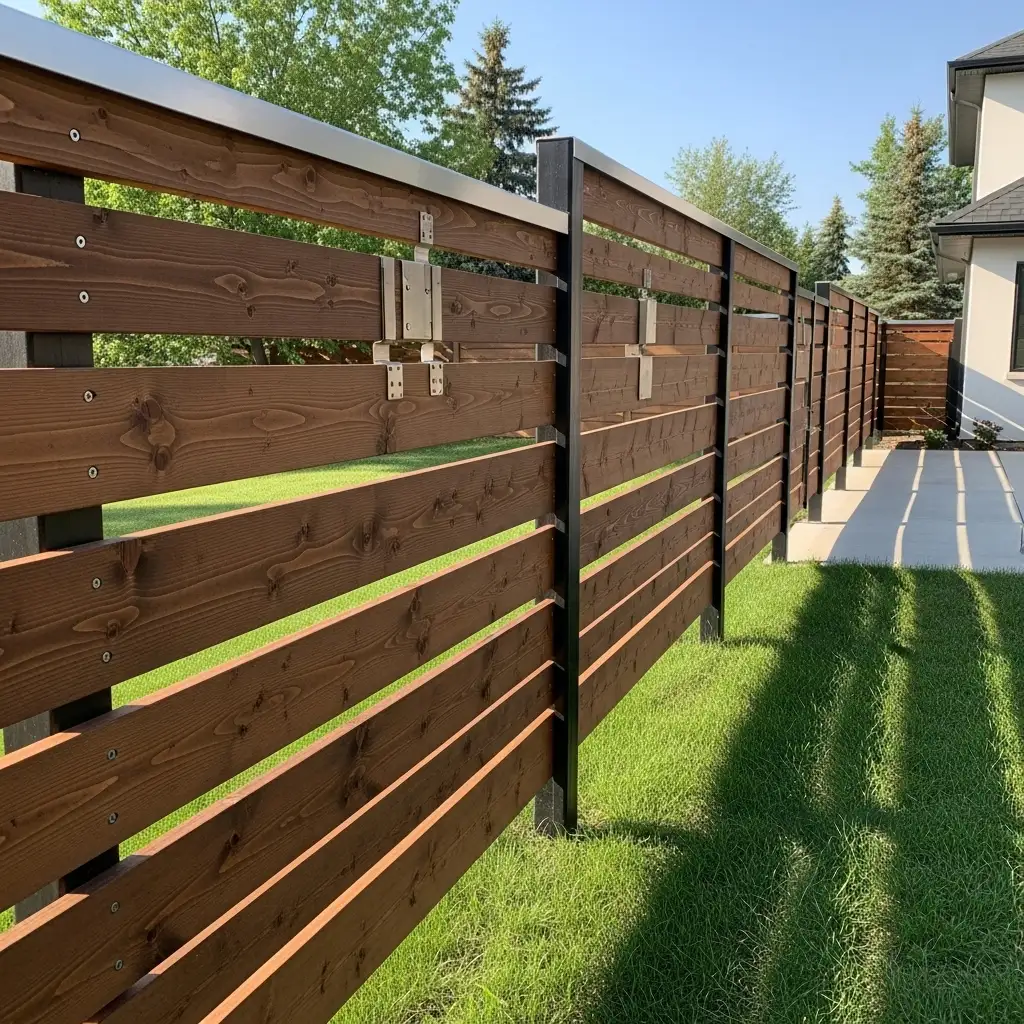
These mixed-material details elevate standard installations through thoughtful accent selections. Metal elements require minimal maintenance while adding contemporary edge distinguishing designs from purely wooden constructions. This approach demonstrates how small material additions significantly impact overall aesthetics.
Cost Consideration: Metal posts cost $50-150 each installed compared to $15-40 for wood posts. Budget additional $5-15 per linear foot for metal accents and specialized hardware.
Maintenance Requirements: Metal requires minimal care—occasional cleaning maintaining appearances. Inspect wood-to-metal connections ensuring proper attachment and preventing galvanic corrosion where dissimilar metals contact.
| Feature | Details |
|---|---|
| Post Materials | Steel, aluminum, stainless steel |
| Finish Options | Powder-coated, galvanized, bare metal |
| Durability | 40-50+ years with quality materials |
| Aesthetic Impact | High—creates industrial-modern look |
| Best Applications | Contemporary homes, mixed-material designs |
Floating Horizontal Board Design
Install horizontal boards with deliberate vertical spacing creating floating appearances where boards appear suspended with gaps between each course. This airy design maintains privacy from straight viewing angles while allowing substantial light and air passage through installations. Hidden fastener systems maintain clean board faces enhancing floating illusions.

The floating effect creates sophisticated modern aesthetics emphasizing horizontal lines through negative space. This advanced technique requires precise installation ensuring consistent spacing throughout. The design works beautifully in small garden ideas where visual lightness prevents overwhelming compact spaces.
Cost Consideration: Floating designs cost 20-35% more than solid construction due to additional framing and precise installation requirements. Hidden fasteners add $1-3 per linear foot.
Maintenance Requirements: Gaps allow easier inspection and maintenance access. Faster drying after rain reduces moisture-related problems common in solid installations without proper drainage considerations.
| Feature | Details |
|---|---|
| Gap Height | Typically 1-4 inches between board courses |
| Privacy Level | 60-80% depending on gap size |
| Installation Complexity | High—requires precise spacing and alignment |
| Visual Effect | Very light and airy, emphasizes horizontal lines |
| Best Applications | Modern minimalist designs, artistic installations |
Weathered Gray Finish
Allow naturally weather-resistant woods like cedar or redwood to gray naturally creating soft neutral tones blending beautifully with landscapes. Alternatively, apply weathered wood stain mimicking aged appearances immediately without waiting years for natural patina development. The neutral gray tones create sophisticated backdrops showcasing colorful plantings.
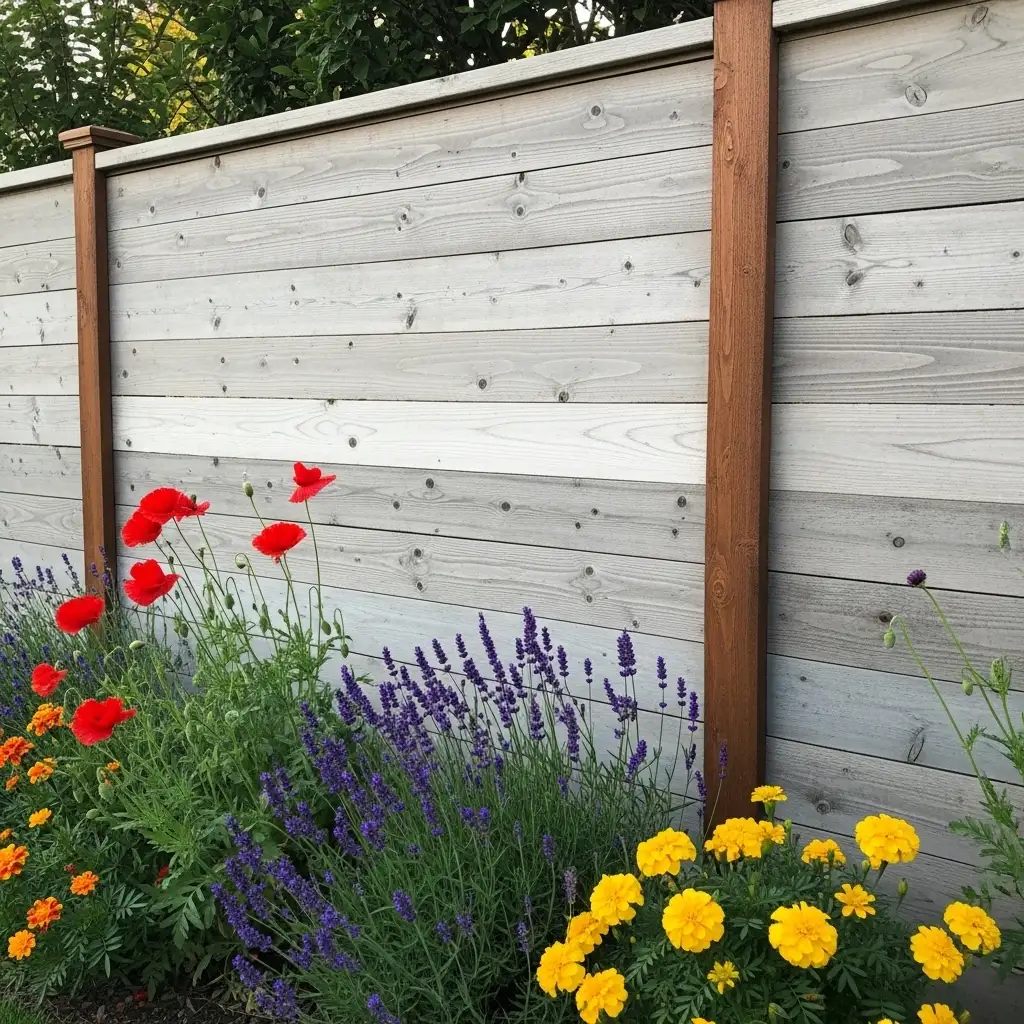
Weathered aesthetics suit coastal, modern farmhouse, and contemporary rustic styles. UV-resistant clear sealer over weathered stains prevents further color changes while protecting wood from moisture damage. This natural appearance reflects current design trends favoring organic materials and authentic finishes.
Cost Consideration: Natural weathering costs nothing beyond initial installation. Pre-weathered stain costs $35-70 per gallon plus application labor adding $2-4 per square foot to projects.
Maintenance Requirements: If allowing natural weathering, no color maintenance required. Sealed weathered finishes need reapplication every 3-5 years protecting wood while maintaining color consistency.
| Feature | Details |
|---|---|
| Weathering Timeline | Natural process takes 1-3 years |
| Color Range | Light silver to charcoal gray |
| Maintenance Level | Low—periodic cleaning only |
| UV Protection | Clear sealer recommended preserving wood integrity |
| Best Applications | Coastal properties, farmhouse styles, naturalistic designs |
Two-Tone Horizontal Designs
Paint or stain alternating board sections in contrasting colors creating two-toned patterns adding visual interest through color rather than solely dimensional variations. Black and natural wood combinations create striking modern contrasts while gray and white pairings provide softer sophisticated palettes.

Plan color patterns carefully ensuring balanced distributions throughout fence runs preventing random haphazard appearances. This decorative technique personalizes fences while demonstrating attention to aesthetic details elevating standard installations. The approach works beautifully within hippie garden bohemian outdoor schemes celebrating bold color.
Cost Consideration: Two-tone finishing adds $3-6 per square foot beyond standard staining costs due to additional labor masking and applying multiple colors carefully.
Maintenance Requirements: Different stains may weather differently requiring more frequent attention maintaining intended color contrasts and preventing uneven fading diminishing visual impact over time.
| Feature | Details |
|---|---|
| Color Combinations | Black/natural, gray/white, custom pairings |
| Application Method | Masking and separate applications |
| Maintenance Frequency | Every 2-3 years maintaining color definition |
| Visual Impact | High—creates bold patterns |
| Best Applications | Artistic installations, modern designs, accent walls |
Horizontal Fence Gate Design
Extend horizontal fence aesthetics to gate designs maintaining visual continuity throughout property boundaries. Horizontal slat gates require robust framing preventing sagging but deliver signature modern appearances matching surrounding fencing. Heavy-duty gate hinges and automatic closers ensure proper function despite horizontal board weight distributions.

Design gates as focal points incorporating decorative hardware, integrated lighting, or contrasting materials drawing attention to entries. The horizontal orientation applied to gates demonstrates design commitment throughout entire installations. This cohesive approach creates professional presentations where every element supports overall aesthetic visions.
Cost Consideration: Horizontal gates cost 30-50% more than vertical equivalents due to additional framing requirements. Quality hardware adds $100-300 per gate ensuring proper long-term function.
Maintenance Requirements: Check gate alignment annually adjusting hinges maintaining proper swing and latch engagement. Oil hinges and hardware preventing rust and ensuring smooth operation throughout seasons.
| Feature | Details |
|---|---|
| Frame Requirements | Heavy-duty diagonal bracing essential |
| Hardware Needs | Heavy hinges, self-closing mechanisms |
| Weight Considerations | Heavier than vertical gates |
| Installation Difficulty | High—requires expertise preventing sag |
| Best Applications | Driveway gates, entry gates, pedestrian access |
Horizontal Privacy Screen Partitions
Use horizontal fencing creating interior yard partitions dividing spaces into functional outdoor rooms rather than only perimeter boundaries. Freestanding fence panels separate dining from play areas or screen utilities from entertaining spaces. The horizontal orientation maintains visual flow between spaces preventing complete isolation.

These interior screens work particularly well in tiny backyard ideas creating perceived separation without consuming substantial square footage. The partial height screens—4-6 feet—define zones while maintaining openness and sightlines across properties preventing claustrophobic feelings.
Cost Consideration: Freestanding screens cost $150-400 per 8-foot section depending on materials and construction. Installation complexity increases without existing posts or structures providing attachment points.
Maintenance Requirements: Same as perimeter fencing though freestanding sections may require additional bracing ensuring stability especially in windy exposed locations without structural building connections.
| Feature | Details |
|---|---|
| Typical Heights | 4-6 feet for partial screening |
| Panel Widths | 4-8 feet wide per section |
| Foundation Needs | Concrete footings or heavy bases |
| Portability | Can be relocated with effort |
| Best Applications | Yard divisions, utility screening, outdoor rooms |
Horizontal Fence Lighting Integration
Integrate LED strip lighting within horizontal board gaps creating dramatic nighttime illumination highlighting fence architecture. Solar post cap lights atop support posts add functional pathway lighting while landscape spotlights positioned at fence bases uplight horizontal patterns. The integrated lighting transforms fences into nighttime focal points.

Plan electrical needs during installation running conduit through posts before board installations. The lighting adds security while showcasing fence investments after dark. This enhancement demonstrates how functional improvements serve aesthetic purposes simultaneously through thoughtful integrated planning.
Cost Consideration: LED strip lighting costs $15-40 per linear foot installed. Solar lights cost $20-60 per post cap. Low-voltage landscape lighting adds $100-300 per fixture including transformers.
Maintenance Requirements: LED lights last 25,000-50,000 hours requiring minimal replacement. Clean fixtures annually. Check connections periodically ensuring proper function and replacing failed components promptly.
| Feature | Details |
|---|---|
| Lighting Types | LED strips, post caps, spotlights, path lights |
| Power Options | Low-voltage, solar, line voltage |
| Installation Timing | Easiest during initial construction |
| Energy Efficiency | LED technology extremely efficient |
| Best Applications | Security lighting, ambiance, architectural highlighting |
Horizontal Slat with Greenery
Design horizontal fences incorporating planting pockets supporting vertical gardens or espalier training. Fence planters mounted between boards add living elements softening hard surfaces. This integration blurs lines between hardscape and softscape creating cohesive landscape presentations connecting fencing with surrounding gardens.

Position planters strategically avoiding drainage issues damaging fence materials below. This living fence approach connects to vertical gardening guide principles creating productive vertical growing spaces. The combination demonstrates how functional boundaries serve multiple purposes through thoughtful integrated design.
Cost Consideration: Add $30-80 per planter box including mounting hardware and waterproofing materials. Living walls require irrigation systems adding $200-500 depending on complexity and automation.
Maintenance Requirements: Water plants regularly. Monitor fence moisture preventing rot from irrigation overspray or drainage issues. Prune vegetation preventing excessive growth obscuring fence completely or causing damage.
| Feature | Details |
|---|---|
| Planter Options | Mounted boxes, integrated pockets, trellis attachments |
| Plant Types | Succulents, herbs, vines, trailing species |
| Irrigation Needs | Manual or automated depending on scope |
| Weight Considerations | Ensure adequate support for soil and water |
| Best Applications | Living walls, edible landscapes, green screens |
Staggered Horizontal Board Pattern
Install boards at slightly different depths, creating three-dimensional staggered effects adding dramatic shadows and visual interest. Some boards protrude 1-2 inches beyond others creating layered appearances changing throughout days as sunlight angles shift. This sculptural approach transforms functional fencing into artistic installations.

The staggered technique requires additional material and labor but delivers striking results distinguishing properties from standard installations. This architectural detail demonstrates commitment to design excellence through executed craftsmanship elevating ordinary fencing into extraordinary landscape features worthy of admiration.
Cost Consideration: Staggered designs increase materials 15-25% and labor 40-60% due to complexity. Expect costs reaching $45-75 per linear foot professionally installed.
Maintenance Requirements: More surfaces exposed to weather requiring comprehensive treatment. Recessed boards may trap debris requiring periodic cleaning maintaining appearances and preventing moisture accumulation leading to premature decay.
| Feature | Details |
|---|---|
| Depth Variation | Typically 1-3 inches between planes |
| Shadow Creation | Dramatic—changes with sun position |
| Installation Complexity | Very high—requires precise framing |
| Visual Impact | Exceptional—true three-dimensional effect |
| Best Applications | Luxury homes, architectural statements, feature walls |
Horizontal Fence Top Treatments
Cap horizontal fences with flat trim boards or angled cap rails protecting exposed board tops from water absorption and providing finished appearances. These protective elements extend fence lifespan while adding dimensional detail creating polished professional presentations. Metal cap rails offer superior weather resistance outlasting wood alternatives.

The finished top prevents water pooling on horizontal surfaces—primary maintenance concern with this orientation. Caps also hide end grain and fasteners creating clean refined edges. This detail transforms utilitarian fencing into carefully crafted landscape elements worthy of architectural recognition.
Cost Consideration: Wood cap rails add $3-6 per linear foot. Metal caps cost $8-15 per linear foot but last indefinitely. Budget 10-15% additional labor installing protective top treatments.
Maintenance Requirements: Inspect caps annually ensuring proper attachment and weather-tightness. Replace damaged sections promptly preventing water infiltration into fence structure below causing accelerated deterioration problems.
| Feature | Details |
|---|---|
| Material Options | Wood, metal, composite, PVC |
| Profile Styles | Flat, angled, decorative shapes |
| Primary Function | Water protection, finished appearance |
| Longevity Benefit | Extends fence life 30-50% |
| Best Applications | All horizontal fences, essential for longevity |
Mixed Horizontal-Vertical Sections
Combine horizontal and vertical fence sections creating visual interest through orientation changes. Vertical panels might flank horizontal entries or alternate throughout runs creating rhythm. This mixed approach adds complexity while maintaining cohesive design through consistent materials and color treatments unifying varied orientations.

Plan transitions carefully ensuring logical pattern development throughout installations. This design strategy works well on long fence runs preventing monotony while demonstrating sophisticated design thinking. The varied orientations create dynamic compositions more engaging than single-orientation installations throughout entire perimeters.
Cost Consideration: Mixed orientations increase labor 25-40% due to multiple framing requirements. Material costs remain similar though cutting waste may increase slightly with orientation changes.
Maintenance Requirements: Identical care regardless of orientation though different exposures may weather differently requiring attention maintaining uniform appearances across varied sections preventing patchy uneven aging.
| Feature | Details |
|---|---|
| Pattern Options | Alternating panels, feature sections, entry highlights |
| Design Complexity | Moderate to high |
| Visual Interest | High—prevents monotony |
| Installation Time | Longer due to multiple techniques |
| Best Applications | Long fence runs, varied terrain, artistic designs |
Frequently Asked Questions
Is horizontal fencing more expensive than vertical?
Yes, horizontal fencing typically costs 20-40% more due to additional structural requirements, precise installation demands, and often premium materials. Expect costs ranging $25-60 per linear foot compared to $15-35 for vertical fencing professionally installed.
Do horizontal fences last as long as vertical?
With proper maintenance, horizontal fences last equally long. Key differences include horizontal boards’ exposure to standing water requiring regular sealing and adequate drainage. Quality materials and protective finishes ensure decades of service comparable to vertical alternatives.
What wood works best for horizontal fences?
Cedar provides optimal balance of natural rot resistance, workability, and attractive aging. Redwood offers similar benefits in western regions while ipe delivers maximum longevity despite significant costs. Pressure-treated pine provides budget options when properly sealed and maintained.
How do I prevent horizontal fence boards from warping?
Use kiln-dried lumber, install boards crown-side-up allowing water runoff, apply quality wood sealer regularly, ensure adequate post spacing (6-8 feet maximum), and use appropriate fasteners securing boards properly preventing movement causing warping over time.
Conclusion
Horizontal wood fencing transforms ordinary boundary installations into modern architectural statements enhancing property values while providing functional screening and privacy. Understanding material characteristics, proper construction techniques, and maintenance requirements ensures horizontal fences deliver decades of beauty and service. These contemporary designs distinguish properties from traditionally-fenced neighbors while accommodating varied budgets through diverse material selections.
Successful horizontal fence installations combine quality materials with precise craftsmanship and appropriate protective treatments maximizing longevity. Whether choosing budget-friendly pressure-treated pine or premium ipe hardwood, consistent horizontal orientation maintains cohesive modern character throughout projects. The additional investment over standard vertical fencing delivers distinctive aesthetics justifying premium costs through enhanced curb appeal and contemporary design cachet.