Fruit trees are among the most rewarding and multi-functional plants any gardener can grow, delivering spectacular seasonal blossom, outstanding wildlife value, and genuinely delicious harvests that reward years of patient, attentive cultivation with abundance and flavour.
Source: @gaspergardeners
Whether you have a large orchard, a compact urban garden, or simply a sunny patio, these 30 outstanding fruit trees will inspire you to grow your own productively and beautifully using our food forest guide.
1. Apple (Malus domestica)
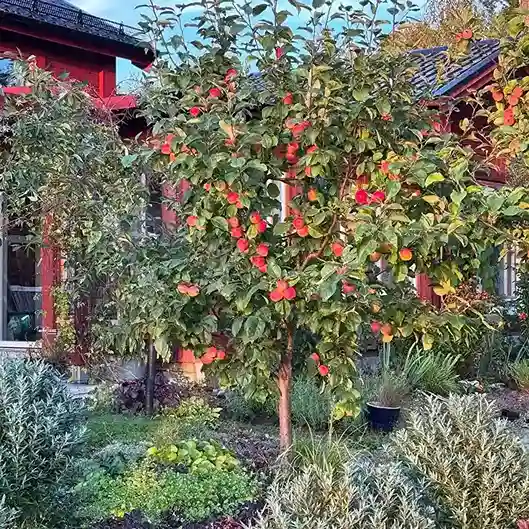
The apple is the most widely grown and universally loved fruit tree in temperate gardens worldwide, offering an extraordinary range of varieties spanning every flavour profile from sharp and crisp to soft and honeyed, every colour from palest cream to deepest burgundy, and ripening seasons from July through to November.
Source: @odlainorr
Modern dwarfing rootstocks allow apple trees to be grown in containers, trained as espaliers against fences, or planted as compact bush trees in even the smallest garden spaces with reliably productive results. For comprehensive apple growing and orchard planning guidance, our mini food forest guide covers apple tree cultivation in expert, inspiring detail.
| Feature | Details |
|---|---|
| Best Dessert Varieties | Cox, Gala, Braeburn, Honeycrisp, Fuji |
| Best Cooking Varieties | Bramley, Grenadier, Lord Derby |
| Hardiness Zone | Zones 3–8 depending on variety |
| Pollination | Most require cross-pollination partner |
| Harvest Season | July to November depending on variety |
| Best Rootstock | M9 (dwarf), MM106 (semi-dwarf), MM111 (standard) |
2. Pear (Pyrus communis)
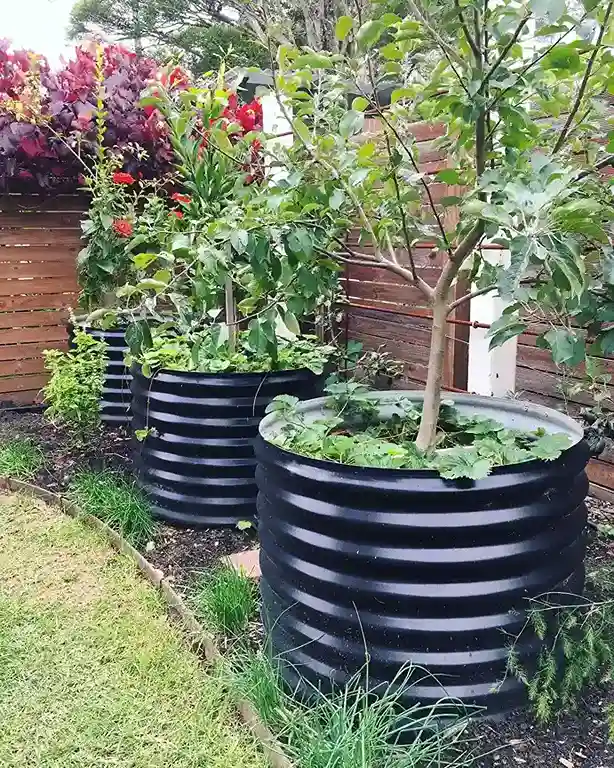
Pear trees are outstanding long-lived fruit trees that reward patient establishment with decades of reliable, high-quality harvests of one of the most deliciously flavourful fruits that any home garden can produce. Pears are particularly well suited to training as espaliers against warm, sheltered walls where their slender, elegant form creates a genuinely beautiful permanent garden feature.
Source: @suburban.existence
Conference is the most reliable and widely planted garden pear, its partial self-fertility making it capable of some cropping without a partner while delivering significantly better yields when a compatible variety is grown nearby. For more training system guidance, our stumpery garden helps you a lot.
| Feature | Details |
|---|---|
| Best Varieties | Conference, Williams, Concorde, Beth, Doyenné du Comice |
| Hardiness Zone | Zones 4–9 |
| Pollination | Cross-pollination usually required |
| Harvest Season | August to October depending on variety |
| Harvest Tip | Pick before fully ripe — ripen indoors |
| Best Rootstock | Quince A (semi-dwarf), Quince C (dwarf) |
3. Plum (Prunus domestica)
Plums are among the most generous and rapidly producing fruit trees available for garden planting, often beginning to crop within two to three years of planting and delivering abundant harvests of richly flavoured fruit in every colour from yellow and green through red, purple, and near-black depending on the variety selected.
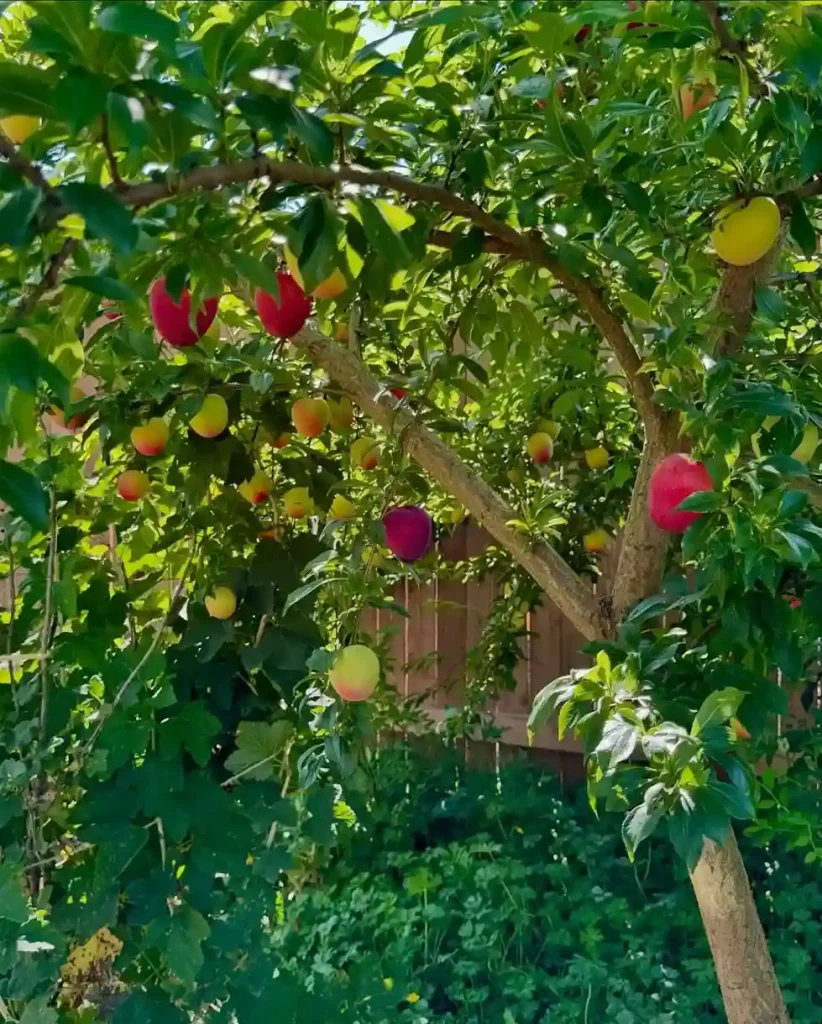
Victoria plum remains the most popular garden plum variety worldwide for excellent reason — its partial self-fertility, reliable heavy cropping, versatility for fresh eating and cooking, and outstanding flavour make it the ideal first plum tree for any garden.
| Feature | Details |
|---|---|
| Best Varieties | Victoria, Czar, Opal, Marjorie’s Seedling, Oullins |
| Hardiness Zone | Zones 4–9 |
| Pollination | Victoria self-fertile — most others need partner |
| Harvest Season | July to October depending on variety |
| Pruning Time | Summer only — never prune in winter |
| Best Rootstock | Pixy (dwarf), St Julien A (semi-vigorous) |
4. Cherry (Prunus avium and Prunus cerasus)
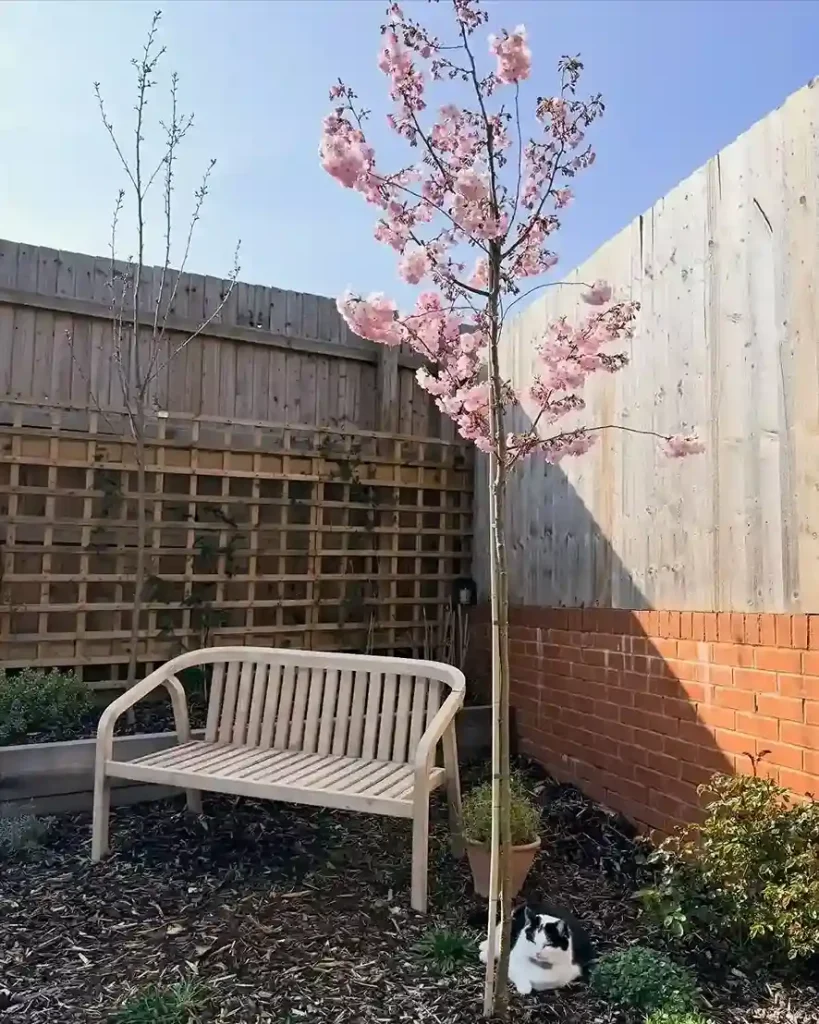
Cherry trees are among the most spectacularly beautiful flowering fruit trees available, their breathtaking spring blossom display rivalling the finest ornamental cherries before giving way to crops of bright, jewel-like fruit that are among the most coveted and delicious of all summer garden harvests.
Source: @natalieatnumber8
Sweet cherries require a compatible pollination partner for reliable cropping, while self-fertile varieties like Stella and Sweetheart make reliable single-tree garden choices that crop abundantly without requiring a second tree alongside them. For more cherry tree varieties and growing guidance, our tree landscaping ideas guide covers ornamental and fruiting cherry tree selection beautifully.
| Feature | Details |
|---|---|
| Best Sweet Varieties | Stella, Sweetheart, Sunburst, Lapins |
| Best Sour/Morello | Morello — self-fertile, shade-tolerant |
| Hardiness Zone | Zones 4–8 |
| Pollination | Stella and Sweetheart self-fertile |
| Harvest Season | June to August |
| Best Rootstock | Gisela 5 (dwarf), Colt (semi-vigorous) |
5. Quince (Cydonia oblonga)
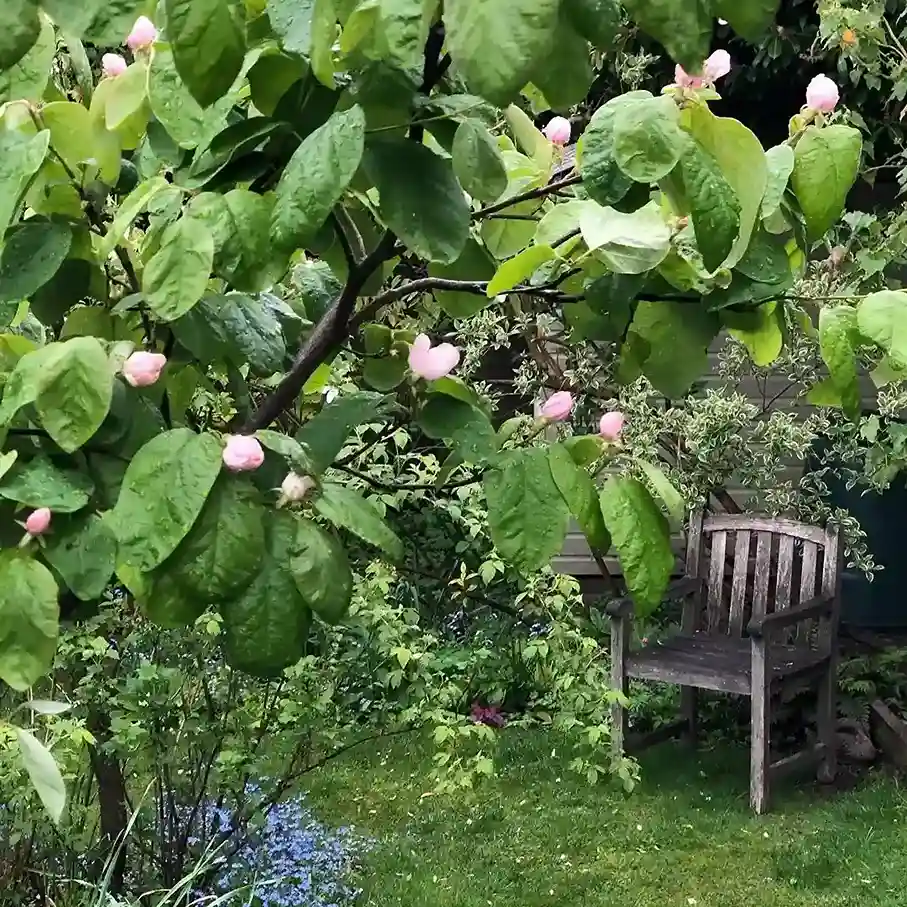
Quince is one of the most beautiful and underused fruit trees available for garden planting, its large, blowsy white and pink spring flowers creating an outstanding ornamental display before the tree produces large, golden-yellow, intensely aromatic fruits in autumn that are quite unlike any other fruit available in the garden or supermarket.
Source: @snapdragon_jules
Completely self-fertile and relatively low-maintenance once established, quince makes an outstanding single-specimen fruit tree for any garden that has space for a medium-sized, multi-season tree of genuine ornamental and culinary distinction.
| Feature | Details |
|---|---|
| Best Varieties | Vranja, Leskovac, Champion, Isfahan |
| Hardiness Zone | Zones 5–9 |
| Pollination | Self-fertile — no partner required |
| Harvest Season | October to November |
| Culinary Use | Jelly, paste, poaching, quince cheese |
| Mature Height | 10–15 feet — ideal garden-scale tree |
6. Fig (Ficus carica)
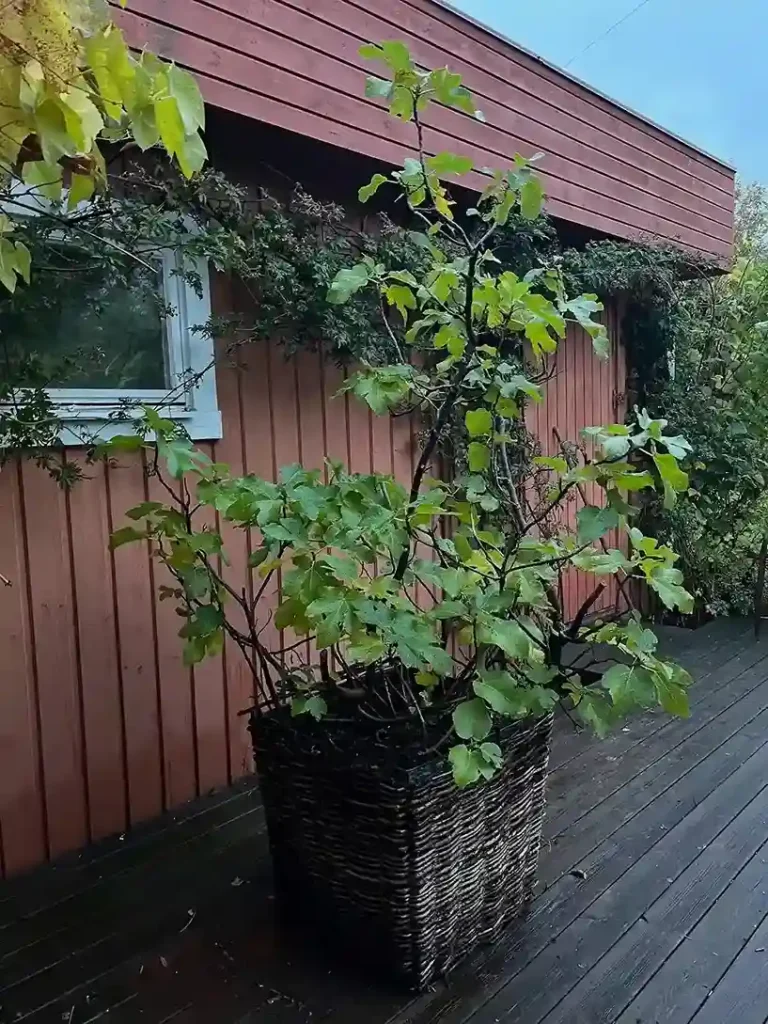
The fig is one of the most exotic-looking and reliably productive fruit trees available for temperate gardens, its enormous, architecturally dramatic leaves, gnarled trunk character, and sweet, honey-rich fruit combining to create a specimen of genuinely Mediterranean beauty that thrives in a warm, sheltered garden position with surprisingly little care.
Source: @annsofie_c.m
Root restriction — planting in a sunken container or against a south-facing wall in a restricted growing pit — is the key technique for encouraging reliable fig cropping in cooler climates, focusing the tree’s energy into fruit production rather than excessive vegetative growth. For more Mediterranean fruit tree and container growing ideas, our container gardening guide covers fig tree container growing and patio display in practical, inspiring detail.
| Feature | Details |
|---|---|
| Best Varieties | Brown Turkey, Rouge de Bordeaux, Violette de Bordeaux |
| Hardiness Zone | Zones 7–11 |
| Pollination | Self-fertile — no partner required |
| Harvest Season | August to October |
| Key Growing Tip | Restrict roots for best fruiting |
| Best Position | South or west-facing wall — maximum warmth |
7. Peach (Prunus persica)
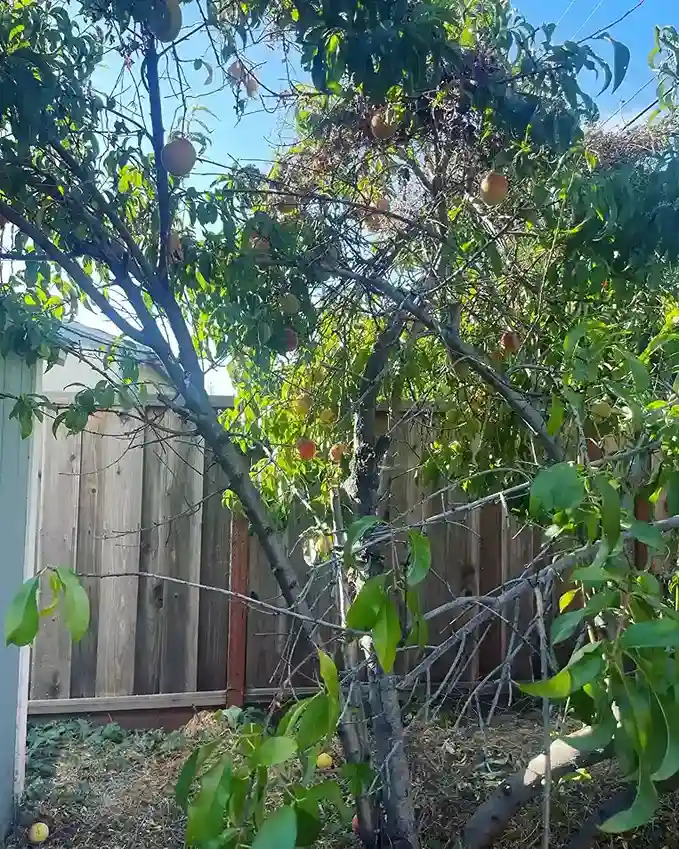
Peaches are one of the most thrillingly rewarding fruit trees a gardener can grow, the experience of harvesting a sun-warmed, perfectly ripe peach from a tree in your own garden delivering a flavour and quality of fruit that is simply impossible to replicate from any shop-bought equivalent at any price.
Source: @antoinettescalilifestyle
Fan-training a peach against a warm, south-facing wall in cooler climates provides the warmth, shelter, and frost protection that peach trees need to flower and fruit reliably year after year without the losses that can affect trees grown in more exposed positions. For more fan-trained fruit tree and wall training ideas, our vertical gardening guide covers wall-trained fruit tree systems in creative, practical detail.
| Feature | Details |
|---|---|
| Best Varieties | Rochester, Peregrine, Avalon Pride, Red Haven |
| Hardiness Zone | Zones 5–9 |
| Pollination | Self-fertile — no partner required |
| Harvest Season | July to September |
| Key Disease | Peach leaf curl — protect with polythene in winter |
| Best Training | Fan against south-facing wall in cool climates |
8. Nectarine (Prunus persica var. nectarina)
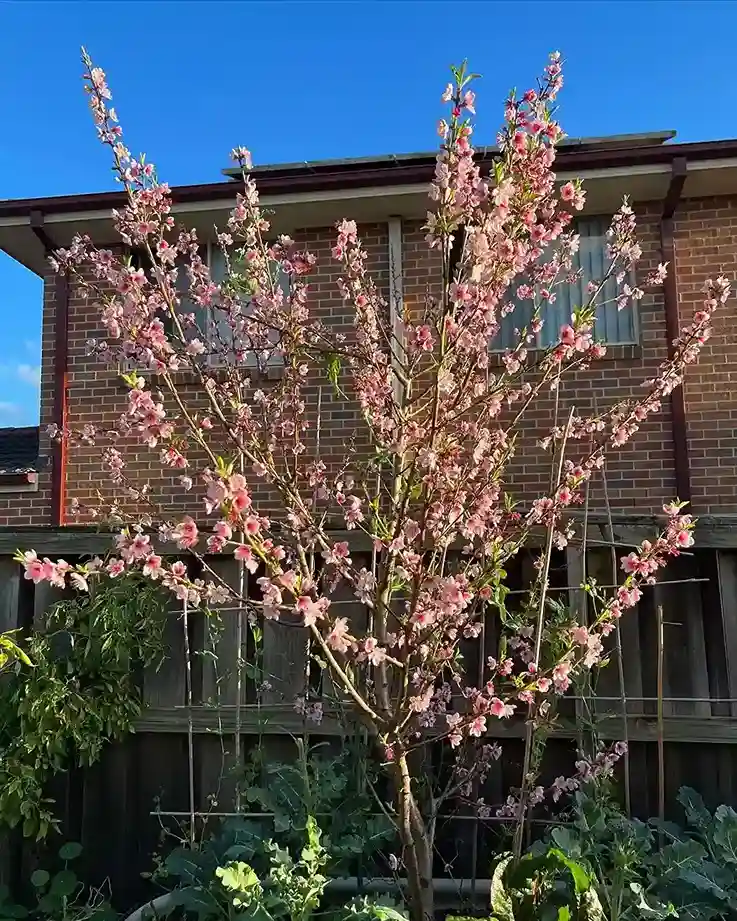
Nectarine is the smooth-skinned, intensely flavoured cousin of the peach, producing equally delicious and even more vibrantly coloured fruit without the fuzzy skin, and thriving in the same warm, sheltered, south-facing wall positions that produce the most reliable peach crops in temperate gardens.
Source: @growiththeflo_
The flavour of a home-grown nectarine is arguably even more complex and intensely sweet than a home-grown peach, making it an outstanding choice for gardeners who want the most flavourful possible stone fruit from a single wall-trained tree.
| Feature | Details |
|---|---|
| Best Varieties | Lord Napier, Early Rivers, Fantasia, Pineapple |
| Hardiness Zone | Zones 6–9 |
| Pollination | Self-fertile — no partner required |
| Harvest Season | July to September |
| Best Position | South or west-facing sheltered wall |
| Key Care | Thin fruit to 6 inches apart for largest crop |
9. Apricot (Prunus armeniaca)
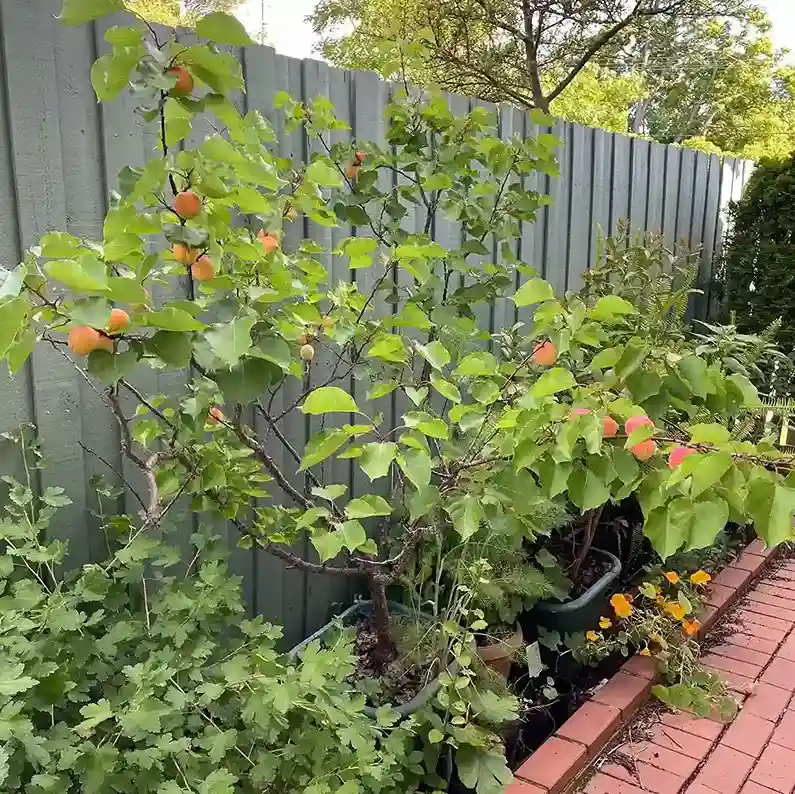
Apricot trees produce one of the most exquisitely flavoured and beautiful fruits available to the home gardener, their small, velvety orange fruits with their distinctive honeyed, slightly tart flavour being impossible to find in the quality that a home-grown tree produces in any commercial retail outlet.
Source: @theurbannanna
The key to reliable apricot cropping in cooler climates is choosing a late-flowering variety that avoids the spring frosts that damage early blossom, and training the tree against a warm, south-facing wall where reflected heat advances ripening and provides crucial frost protection. For more warm wall fruit tree training ideas, our vertical gardening guide covers espalier and fan training for stone fruits beautifully.
| Feature | Details |
|---|---|
| Best Varieties | Flavourcot, Tomcot, Moorpark, Alfred |
| Hardiness Zone | Zones 5–9 |
| Pollination | Self-fertile — no partner required |
| Harvest Season | July to August |
| Frost Risk | Choose late-flowering varieties for reliability |
| Best Training | Fan against south-facing wall |
10. Damson (Prunus insititia)
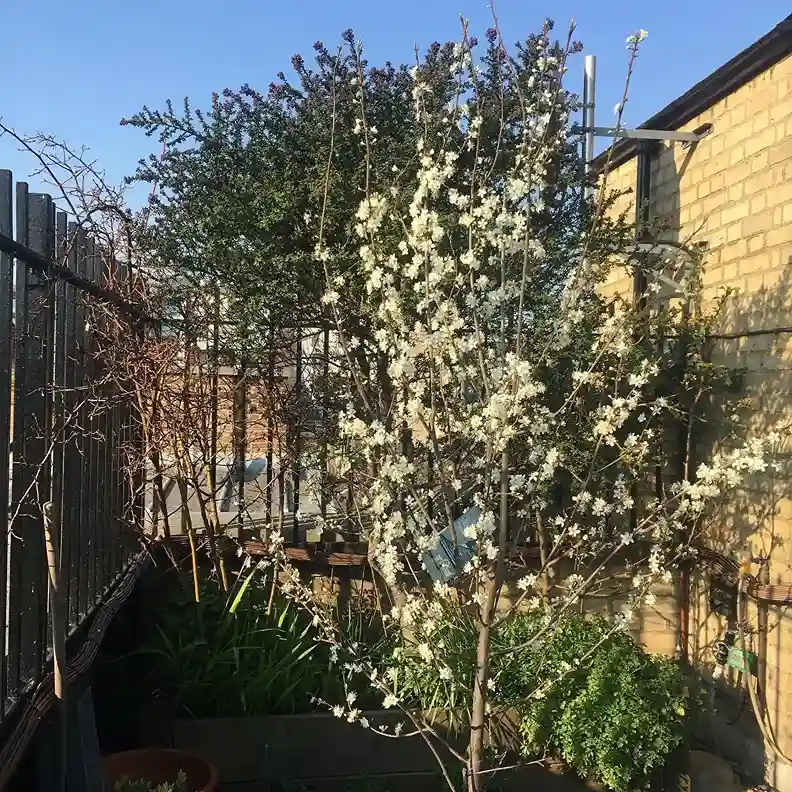
Damson is one of the most characterful and quintessentially English small fruit trees available, its billowing white spring blossom creating a spectacular early season display before the tree produces abundant crops of small, intensely flavoured, deep blue-black fruits that make the finest jam, gin, and fruit cheese of any plum family member.
Source: @sohoroofgarden
Completely self-fertile and highly disease resistant, damson is one of the toughest and most reliable fruiting trees available for challenging sites — tolerating cold, exposure, and poor soils that would defeat most other fruit tree species.
| Feature | Details |
|---|---|
| Best Varieties | Merryweather, Farleigh, Shropshire Prune |
| Hardiness Zone | Zones 4–8 |
| Pollination | Self-fertile — highly reliable cropper |
| Harvest Season | September to October |
| Best Culinary Use | Jam, gin, damson cheese, crumbles |
| Site Tolerance | Excellent — tolerates poor soils and exposure |
11. Greengage (Prunus domestica italica)
Greengage is the most exquisitely sweet and honeyed of all plum-family fruit trees, its small, translucent green or golden-green fruits delivering a flavour of incomparable richness and aromatic complexity that makes them among the most highly prized of all garden-grown fruits by those fortunate enough to have tasted them at peak ripeness.
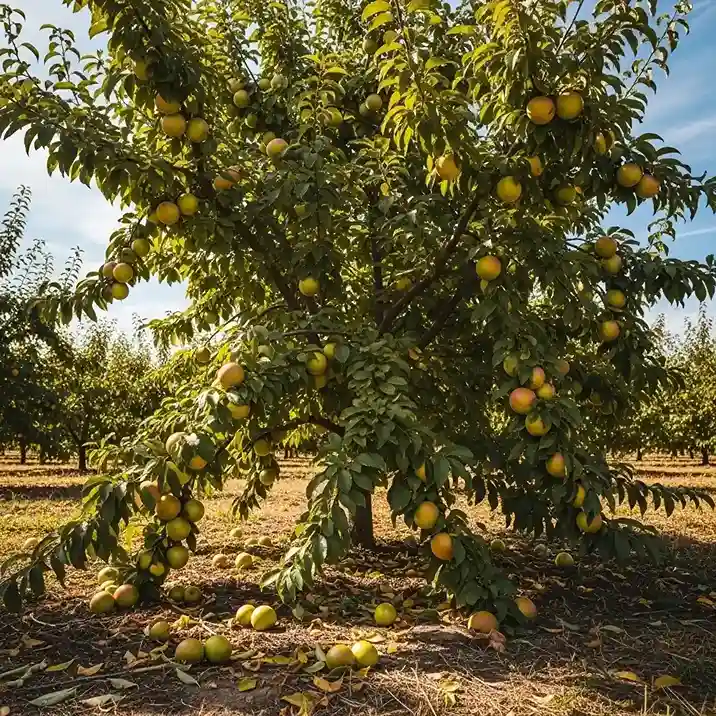
Greengages require a warm, sheltered position and a reliable pollination partner to crop well, but reward those who provide these conditions with harvests of genuinely extraordinary quality that justify every moment of patient cultivation and careful garden positioning.
| Feature | Details |
|---|---|
| Best Varieties | Cambridge Gage, Old Greengage, Oullins Golden Gage |
| Hardiness Zone | Zones 5–9 |
| Pollination | Cross-pollination recommended for best yields |
| Harvest Season | August to September |
| Flavour | Exceptionally sweet and honeyed — finest of all plums |
| Best Position | Warm, sheltered, south-facing aspect |
12. Elderberry (Sambucus nigra)
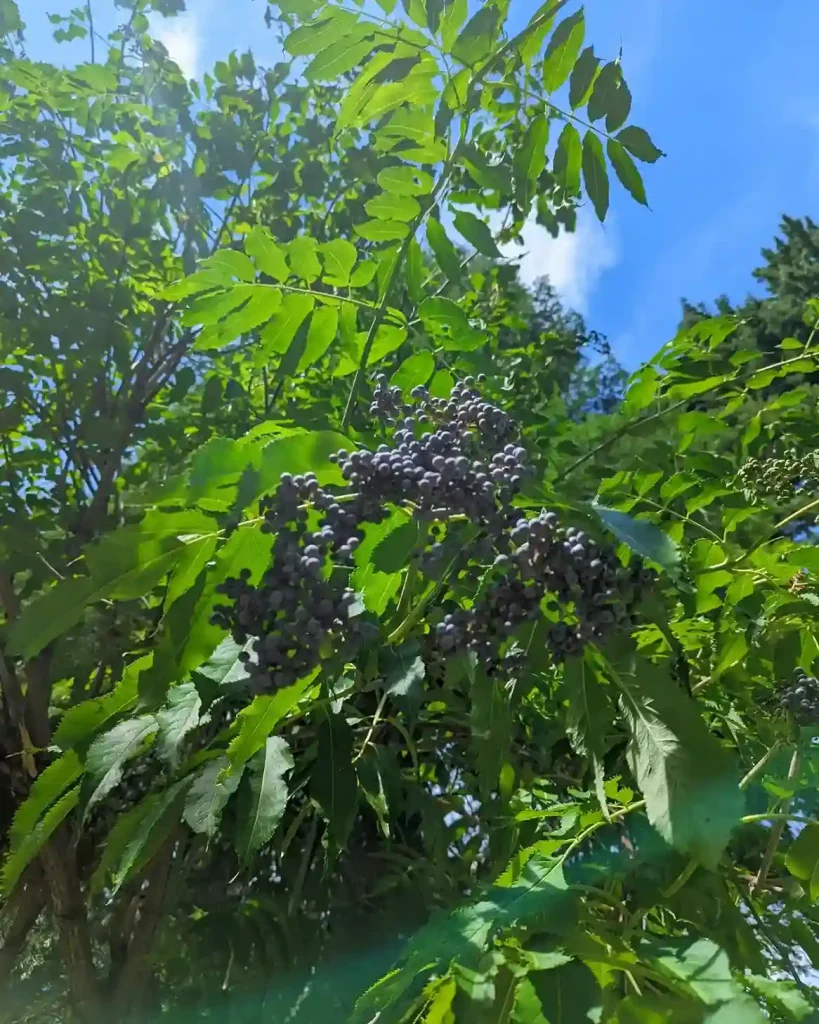
Elderberry is one of the most medicinally valuable, ecologically important, and productively rewarding small fruit trees available for garden planting, its flat-headed clusters of fragrant white flowers in early summer — beloved for elderflower cordial and sparkling wine — followed by heavy bunches of deep purple-black berries of outstanding culinary and health value.
Source: @rachellaskody
Its vigorous growth, self-fertile habit, remarkable tolerance of poor soils and difficult positions, and extraordinary dual yield of both flowers and berries make elderberry one of the most versatile and rewarding multi-purpose fruit trees for any garden or food forest system.
| Feature | Details |
|---|---|
| Best Varieties | Sambucus nigra, Black Beauty, Black Lace, Haschberg |
| Hardiness Zone | Zones 4–7 |
| Pollination | Self-fertile — but cross-pollination improves yield |
| Harvest Season | Flowers June, berries August–September |
| Culinary Use | Cordial, wine, syrup, jam, cold remedy |
| Wildlife Value | Outstanding — berries for birds, flowers for insects |
13. Mulberry (Morus nigra)
The black mulberry is one of gardening’s most magnificent, long-lived, and flavoursome fruit trees — a genuine ancient variety whose extraordinarily rich, wine-dark berries deliver a depth of flavour and staining intensity unlike any other fruit available, and whose gnarled, characterful trunk becomes one of the garden’s most remarkable living sculptures with age.
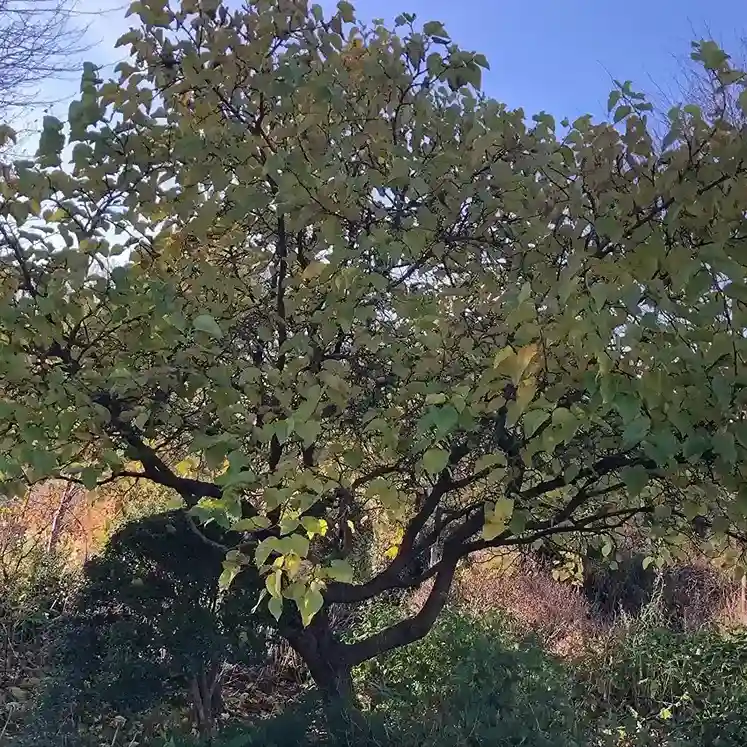
Source: @a.zen.gardener
Mulberries are slow to establish and may take five to ten years before producing their first meaningful crop, but once settled they crop reliably for centuries, making them the most genuinely long-term and generational of all garden fruit tree investments.
| Feature | Details |
|---|---|
| Best Species | Morus nigra (black mulberry) — finest flavour |
| Hardiness Zone | Zones 5–9 |
| Pollination | Self-fertile — no partner required |
| Harvest Season | July to September |
| First Crop | 5–10 years from young tree |
| Best For | Long-term specimen — improves over centuries |
14. Medlar (Mespilus germanica)
Medlar is one of the most historically fascinating and ornamentally beautiful fruit trees available, a medieval orchard staple whose unusual brown, russet-toned fruits require a process called bletting — controlled overripening until soft — before they develop their unique flavour of spiced apple and brown sugar that is quite unlike any other fruit.
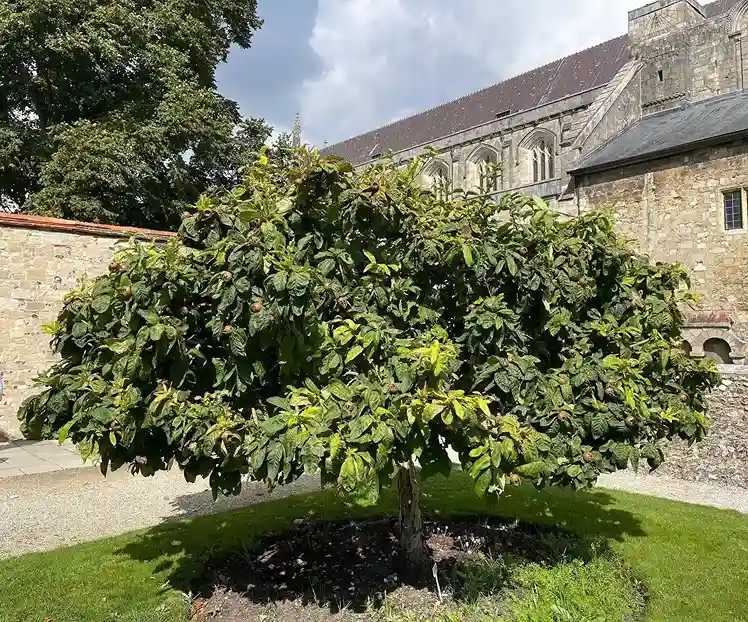
Source: @w._grellman
Its outstanding spring blossom, attractive autumn foliage colour, and extraordinary characterful winter form make medlar one of the most four-seasonally ornamental of all fruit trees, valued as much for its garden beauty as for its unusual and historically interesting culinary fruit.
| Feature | Details |
|---|---|
| Best Varieties | Nottingham, Dutch, Royal, Large Russian |
| Hardiness Zone | Zones 4–8 |
| Pollination | Self-fertile — no partner required |
| Harvest Season | October–November — blet until soft |
| Culinary Use | Jelly, paste, eaten bletted with cream |
| Ornamental Value | Exceptional — blossom, autumn colour, winter form |
15. Hazel (Corylus avellana)
Hazel is one of the most productive, wildlife-valuable, and multi-functional of all fruiting trees, its catkins providing the earliest spring pollen for emerging bumblebees, its summer growth providing outstanding bird nesting habitat, and its autumn nut crop delivering nutritious, delicious hazelnuts for both human consumption and wildlife feeding.
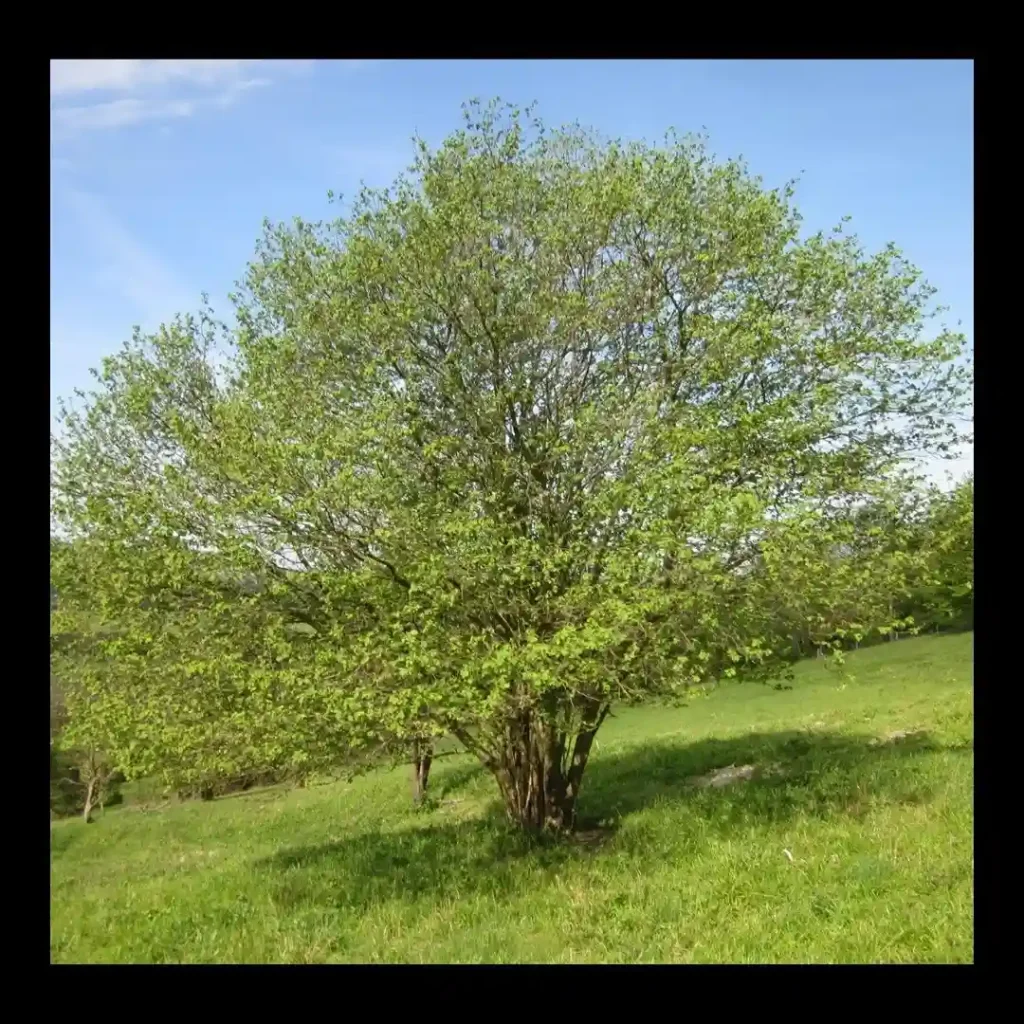
Source: @sonjafblanco
Coppiced hazel produces the finest, straightest poles for traditional garden staking, bean poles, and woven hurdle panels, making it simultaneously one of the most productive food trees and one of the most practically useful garden material-producing trees available.
| Feature | Details |
|---|---|
| Best Varieties | Cosford, Pearson’s Prolific, Kentish Cob |
| Hardiness Zone | Zones 3–9 |
| Pollination | Cross-pollination between 2+ varieties recommended |
| Harvest Season | September to October |
| Wildlife Value | Outstanding — nuts for squirrels and birds |
| Additional Use | Coppice for garden poles and bean sticks |
16. Walnut (Juglans regia)
The walnut is one of the most magnificent, long-lived, and productively rewarding large fruit trees available for spacious gardens, its handsome pinnate foliage, impressive stature, and abundant crops of nutritious, richly flavoured walnuts making it a garden investment of truly generational significance and lasting ornamental value.
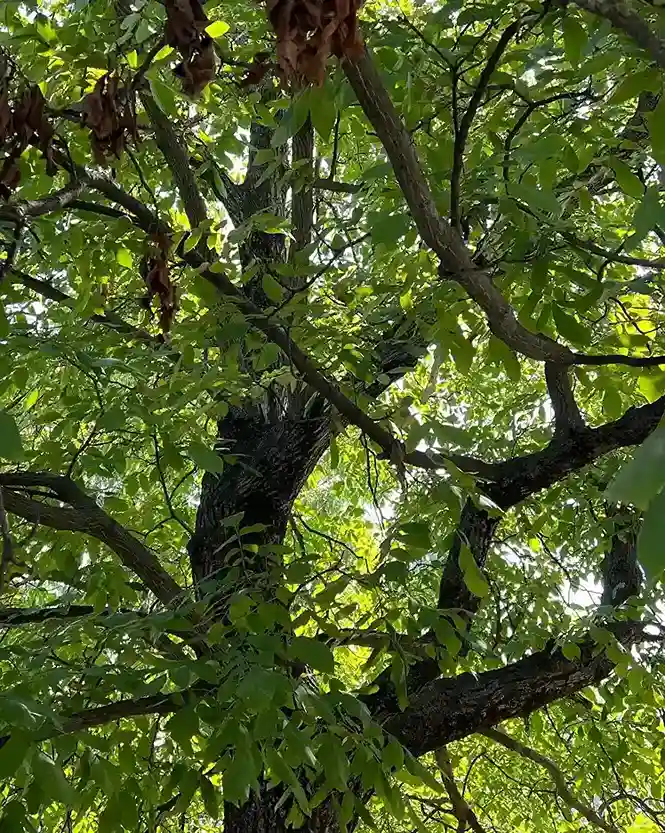
Source: @marryam
English walnut trees begin cropping meaningfully from around five to seven years from planting on grafted stock, eventually producing harvests of many kilograms of fresh walnuts annually from a single mature specimen of genuinely impressive garden presence.
| Feature | Details |
|---|---|
| Best Varieties | Broadview, Buccaneer, Lara, Franquette |
| Hardiness Zone | Zones 4–9 |
| Pollination | Cross-pollination improves yield — plant 2 varieties |
| Harvest Season | October |
| First Crop | 5–7 years on grafted stock |
| Mature Height | 40–60 feet — needs generous space |
17. Sweet Chestnut (Castanea sativa)
Sweet chestnut is a magnificent, fast-growing fruit tree of impressive stature and extraordinary productive potential, its spiny chestnut cases splitting in October to reveal glossy brown nuts that roast magnificently, make outstanding flour, and provide a genuinely nutritious, calorie-rich harvest from a tree of exceptional ornamental character.
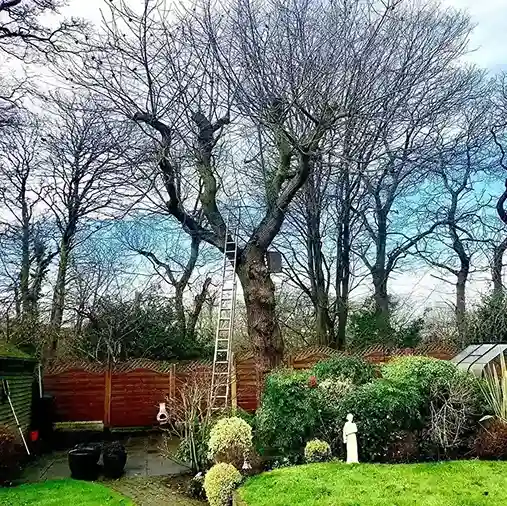
Two sweet chestnut trees are needed for reliable cross-pollination and nut set, but the ornamental value of the tree’s creamy-white catkins in summer, deeply ridged bark character, and spectacular golden autumn foliage fully justifies planting even without considering the nut harvest. For more large productive tree and food forest design ideas, our food forest guide covers sweet chestnut integration in comprehensive, expert orchard and food forest detail.
| Feature | Details |
|---|---|
| Best Varieties | Marron de Lyon, Marigoule, Belle Epine |
| Hardiness Zone | Zones 5–9 |
| Pollination | Cross-pollination required — plant 2+ trees |
| Harvest Season | October |
| Culinary Use | Roasting, flour, stuffing, marrons glacés |
| Mature Height | 50–70 feet — large garden or parkland only |
18. Lemon (Citrus limon)
The lemon tree is the most widely grown and universally loved citrus fruit tree for container cultivation in cooler climates, its glossy, dark green evergreen foliage, intensely fragrant white flowers, and continuous production of vivid yellow lemons creating an outstanding year-round patio and conservatory specimen of genuine Mediterranean beauty.
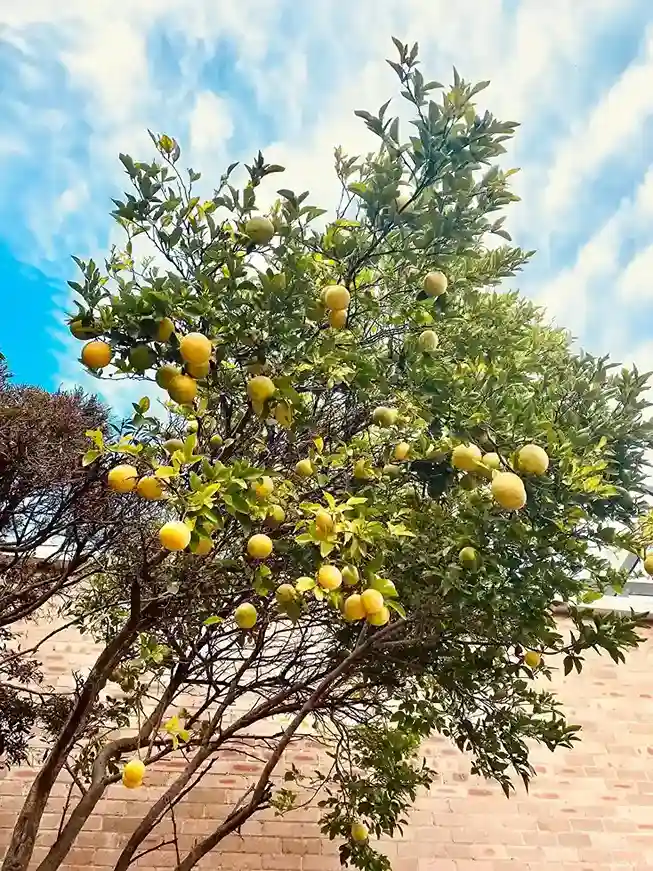
Source: @saminbalmain
Lemon trees crop most prolifically when given warm, sheltered summer conditions outdoors and frost-free winter protection indoors, with a consistent feeding and watering regime that supports the tree’s extraordinary ambition to flower and fruit simultaneously throughout the entire year. For more citrus container growing and Mediterranean fruit tree ideas, our container gardening guide covers lemon tree container cultivation in practical, inspiring detail.
| Feature | Details |
|---|---|
| Best Varieties | Eureka, Lisbon, Meyer, Variegata (Pink Lemon) |
| Hardiness Zone | Zones 9–11 (container grown in cooler zones) |
| Pollination | Self-fertile — no partner required |
| Harvest Season | Year-round on established trees |
| Winter Care | Bring indoors when temperatures drop below 5°C |
| Best Feed | Specialist citrus fertiliser — year-round feeding |
19. Orange (Citrus sinensis)
The sweet orange tree is an outstanding container fruit tree for temperate gardens, its extraordinarily fragrant blossom — one of the most intoxicatingly beautiful floral fragrances in the entire plant kingdom — and eventual crop of sweet, juicy oranges creating a genuinely exotic and deeply rewarding growing experience in any sunny garden or conservatory.
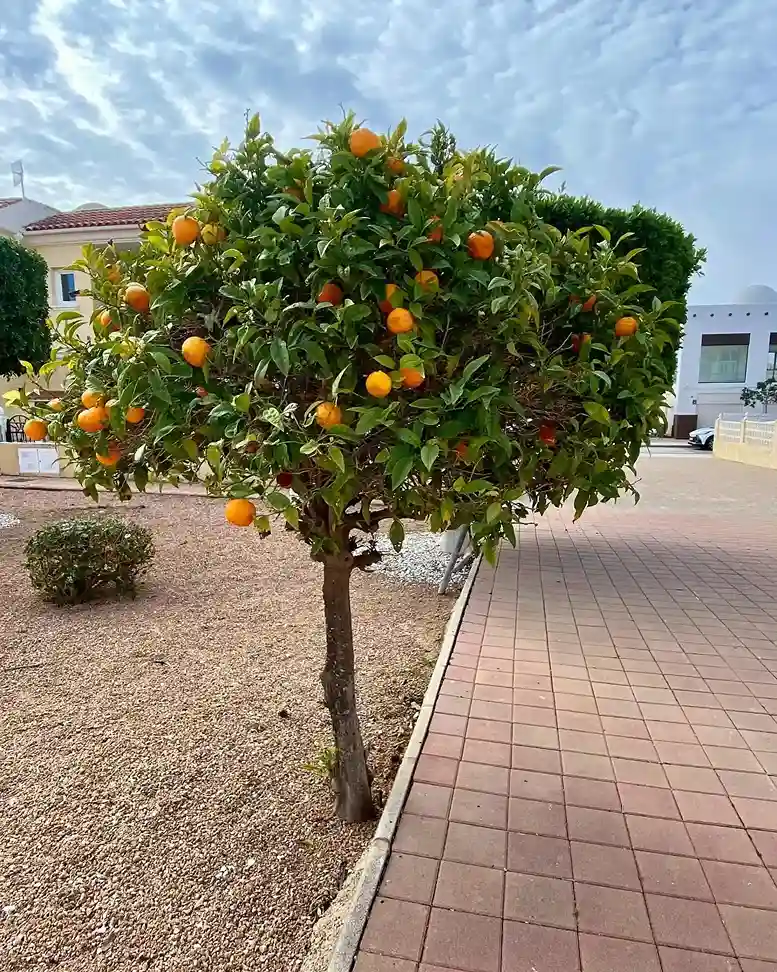
Source: @anitaboyce
Valencia and Navel oranges are the most reliable and productive varieties for container growing in cooler climates, both producing excellent quality fruit when given the warm, sheltered growing conditions and consistent specialist citrus fertiliser that all container-grown citrus trees require throughout the entire growing year. For more citrus and exotic fruit tree container growing ideas, our container gardening flowers guide covers citrus tree patio display and container management in colourful, practical detail.
| Feature | Details |
|---|---|
| Best Varieties | Valencia, Washington Navel, Cara Cara |
| Hardiness Zone | Zones 9–11 (container in cooler zones) |
| Pollination | Self-fertile — no partner required |
| Harvest Season | Winter to spring on established trees |
| Fragrance | Blossom — exceptionally beautiful fragrance |
| Best Position | Full sun, sheltered, south-facing in summer |
20. Lime (Citrus aurantiifolia)
Lime trees are the most compact and container-friendly of all citrus fruit trees, their small stature, attractive glossy evergreen foliage, fragrant flowers, and continuous production of aromatic green limes making them outstanding patio and conservatory specimens for gardeners who want the complete citrus growing experience from the smallest possible footprint.
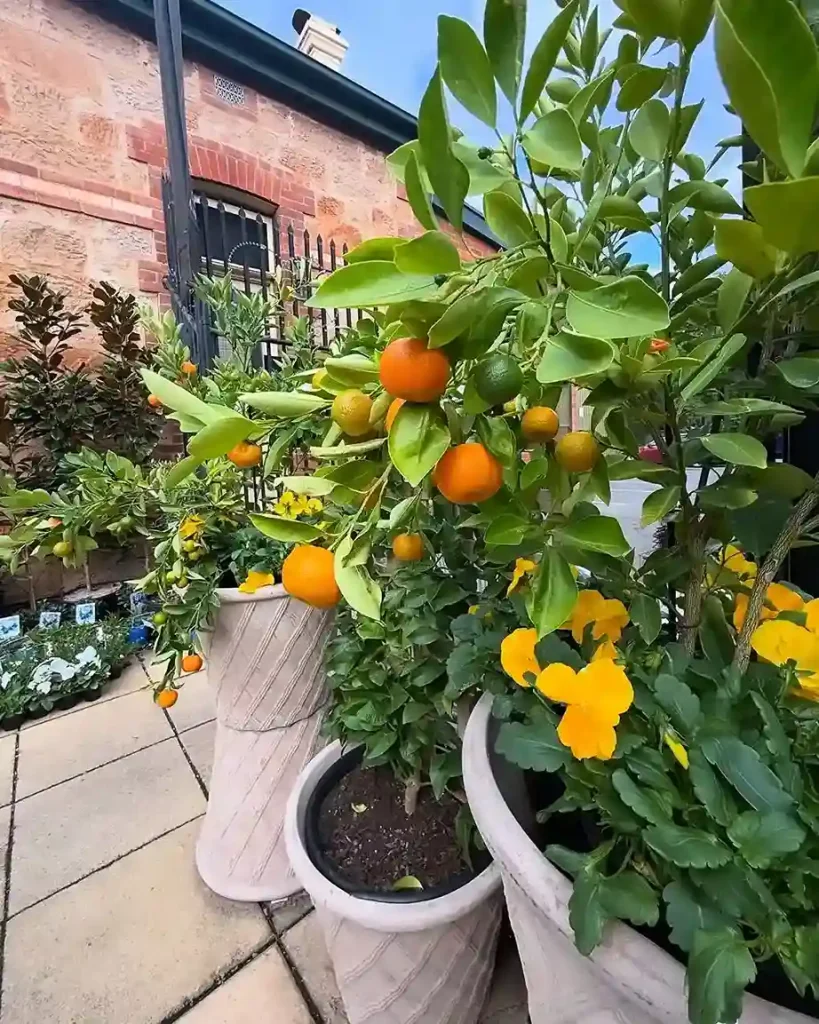
Source: @theconservatoryatunley
The Tahiti or Persian lime is the most reliable lime variety for container growing in cooler climates, its seedless, juicy fruit and relative cold tolerance making it significantly more suitable for British and northern European garden conditions than the more tender Key lime. For more compact and container citrus tree ideas, our container gardening guide covers lime tree container growing and care in practical, helpful detail.
| Feature | Details |
|---|---|
| Best Varieties | Tahiti (Persian) Lime, Key Lime, Kaffir Lime |
| Hardiness Zone | Zones 9–11 (container in cooler zones) |
| Pollination | Self-fertile — no partner required |
| Harvest Season | Year-round on established trees |
| Best Use | Cocktails, cooking, Thai and Mexican cuisine |
| Container Size | Minimum 15-gallon for productive cropping |
21. Olive (Olea europaea)
The olive tree is the most architecturally beautiful, drought-tolerant, and evocatively Mediterranean of all fruit trees that can be grown in temperate gardens, its silver-green evergreen foliage, extraordinarily gnarled mature trunk character, and occasional edible olive harvest creating a specimen tree of remarkable permanence and year-round ornamental distinction.
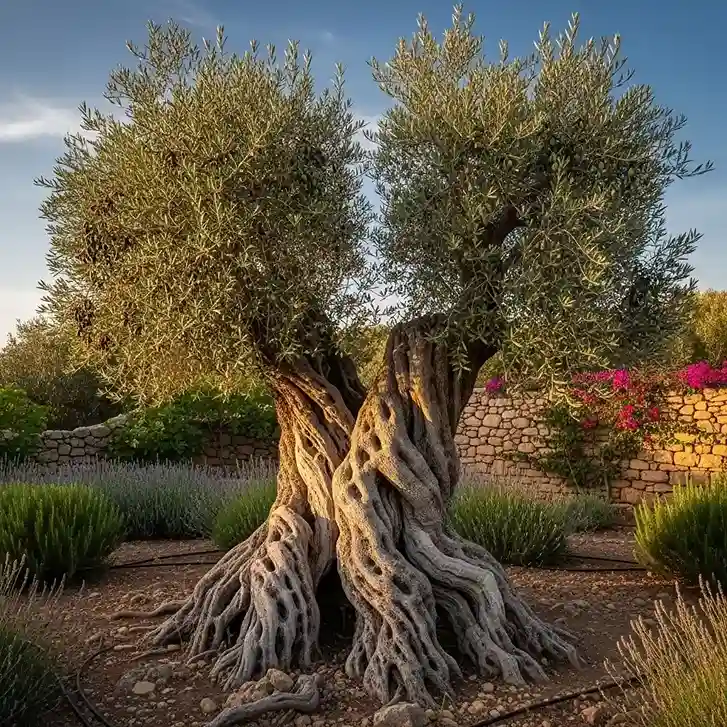
While reliable olive fruiting requires consistently hot, dry summer temperatures that most temperate climates struggle to provide, the olive tree’s outstanding ornamental qualities — particularly as a specimen or container tree — justify planting in any garden that can provide a warm, sheltered, sunny position throughout the growing year. For more olive tree and Mediterranean specimen tree ideas, our container gardening guide covers olive container growing and patio display beautifully.
| Feature | Details |
|---|---|
| Best Varieties | Arbequina, Picual, Frantoio, Koroneiki |
| Hardiness Zone | Zones 8–11 |
| Pollination | Self-fertile — cross-pollination improves yield |
| Harvest Season | October to December in warm climates |
| Best For | Ornamental specimen — drought-tolerant garden tree |
| Drought Tolerance | Exceptional once established |
22. Kiwi (Actinidia deliciosa and Actinidia arguta)
Kiwi fruit vines trained as small trees or over a pergola framework create one of the most exotic-looking and surprisingly productive fruit tree alternatives available for temperate gardens, with the hardy kiwi variety Actinidia arguta proving reliably productive in much cooler climates than the standard fuzzy kiwi fruit.
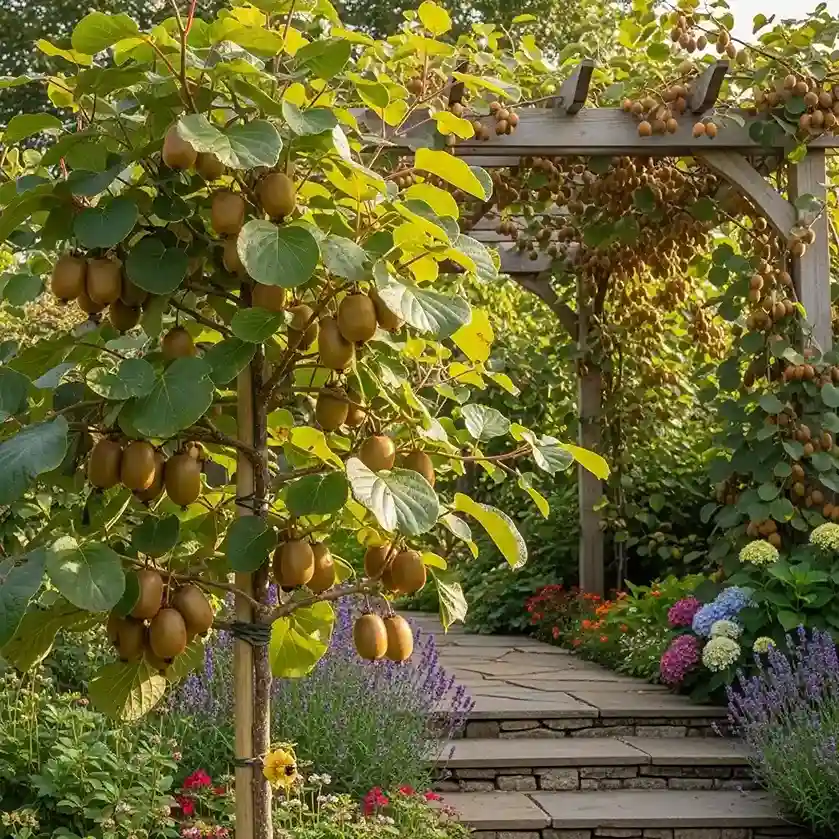
The hardy kiwi produces small, smooth-skinned, grape-sized fruits of excellent sweetness that are eaten whole without peeling, requiring both male and female plants to produce fruit and a sturdy supporting framework capable of supporting the vigorous, heavyweight mature vine. For more vigorous climbing fruit and productive garden structure ideas, our vertical gardening guide covers kiwi training systems and productive climbing plants beautifully.
| Feature | Details |
|---|---|
| Best Hardy Variety | Actinidia arguta — zones 3–8 |
| Best Fuzzy Variety | Actinidia deliciosa — zones 7–9 |
| Pollination | Separate male and female plants required |
| Harvest Season | September to October |
| Support Required | Sturdy pergola or post and wire framework |
| First Crop | 3–5 years from planting |
23. Persimmon (Diospyros kaki)
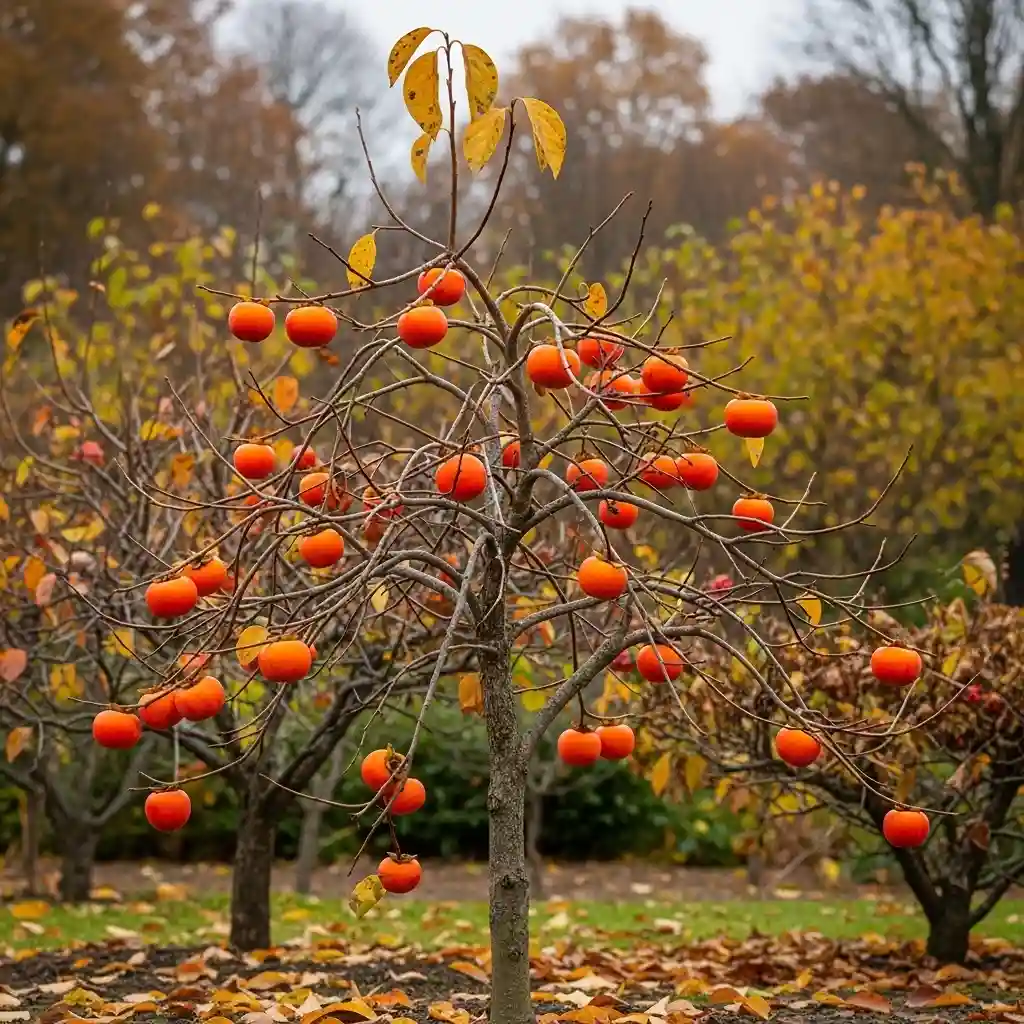
Persimmon is one of the most strikingly beautiful and unusual fruit trees available for temperate gardens, its large, orange-red fruits hanging like luminous lanterns on bare branches in late autumn after the leaves have fallen to create one of the most spectacular and exotic-looking fruit tree winter displays imaginable.
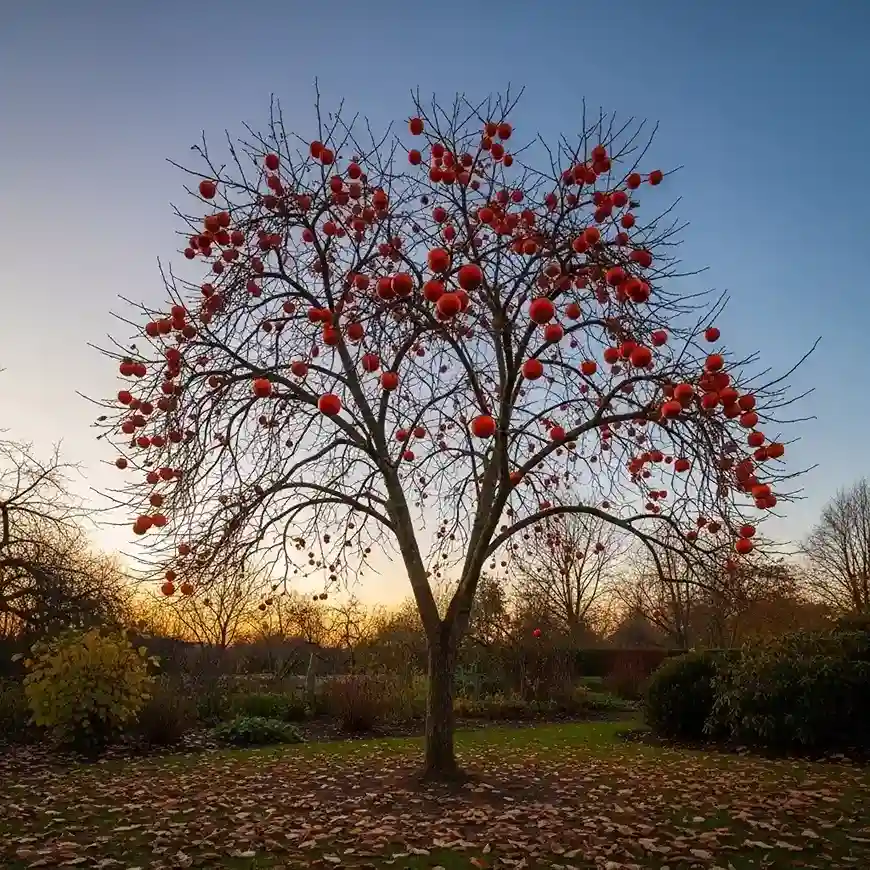
The American persimmon (Diospyros virginiana) offers significantly better cold hardiness for colder climate zones, while the Oriental persimmon (Diospyros kaki) produces the largest and most flavoursome fruit in warmer temperate positions. For more unusual and exotic fruit tree ideas, our trending landscaping ideas guide covers persimmon and other exotic specimen fruit trees in current, beautifully detailed context.
| Feature | Details |
|---|---|
| Best Varieties | Fuyu, Hachiya, Saijo, American Persimmon |
| Hardiness Zone | Zones 4–9 depending on species |
| Pollination | Most varieties self-fertile |
| Harvest Season | October to December |
| Fruit Type | Astringent (Hachiya) and non-astringent (Fuyu) |
| Ornamental Value | Outstanding — fruit on bare winter branches |
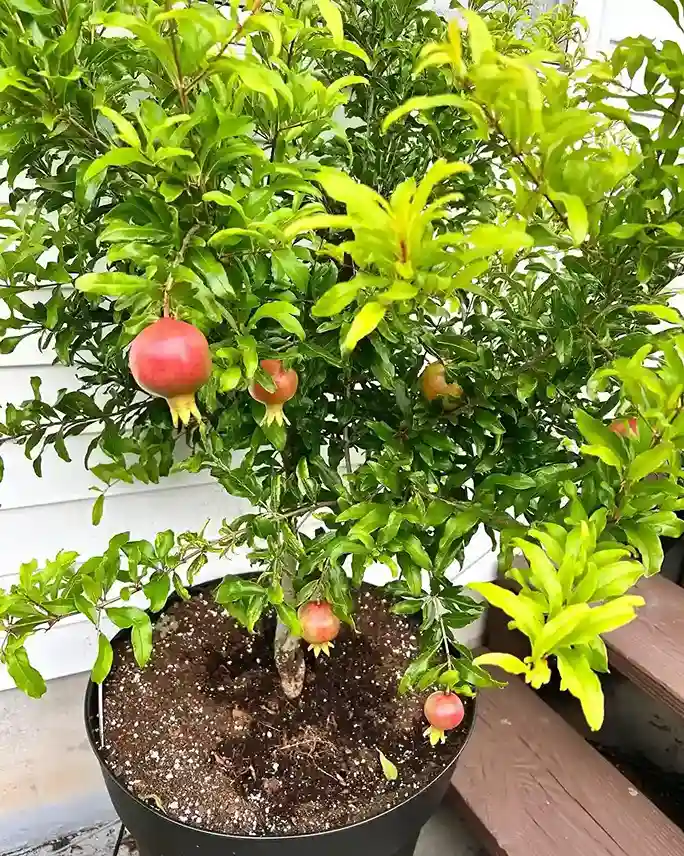
24. Pomegranate (Punica granatum)
Pomegranate is one of the most exotic and richly beautiful fruit trees available for warm temperate garden growing, its brilliant scarlet tubular flowers in summer and stunning red fruit in autumn creating an extraordinarily colourful and ornamentally spectacular specimen that doubles as a genuinely productive fruiting tree in warmer positions.
In cooler climates, pomegranate grows magnificently as a large container specimen that spends sheltered summers outdoors on a warm patio and winters in a frost-free conservatory or greenhouse, still producing a meaningful crop of fruit in good years.
| Feature | Details |
|---|---|
| Best Varieties | Wonderful, Haku Botan, Nana (dwarf) |
| Hardiness Zone | Zones 7–11 |
| Pollination | Self-fertile — no partner required |
| Harvest Season | September to November |
| Flower Colour | Brilliant scarlet — outstanding ornamental display |
| Best Position | Warm, sheltered, south-facing or container grown |
25. Crab Apple (Malus sylvestris hybrids)
Crab apple is one of the finest multi-season ornamental and productive fruit trees available for any garden, its breathtaking spring blossom, attractive summer foliage, and spectacular autumn display of jewel-like miniature fruits in red, orange, and gold creating a four-season garden specimen of quite extraordinary beauty and outstanding wildlife value.
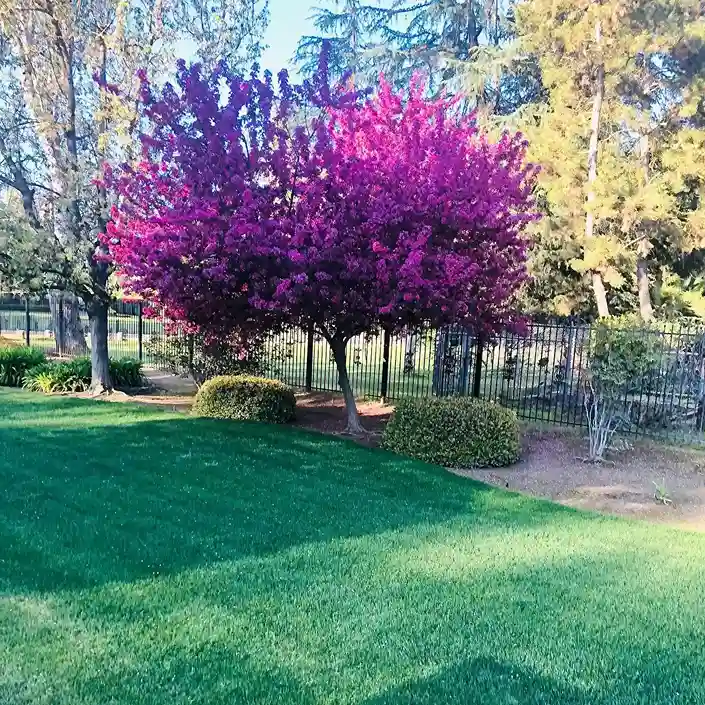
Source: @our_norcal_nest
Crab apple fruit makes the finest and most naturally setting jelly available from any garden fruit, the high pectin content of the small fruits creating a beautifully clear, intensely flavoured preserve that requires no added pectin and relatively little sugar to produce an outstanding result.
| Feature | Details |
|---|---|
| Best Varieties | Evereste, Red Sentinel, Golden Hornet, John Downie |
| Hardiness Zone | Zones 4–8 |
| Pollination | Universal pollinator for other apple varieties |
| Harvest Season | September to November |
| Best Culinary Use | Jelly, cider, wine, crab apple cheese |
| Wildlife Value | Exceptional — fruit for birds through winter |
26. Sloe (Prunus spinosa — Blackthorn)
Blackthorn or sloe is one of the most cold-hardy, wildlife-valuable, and productively rewarding native fruiting trees available for temperate garden planting, its spectacular white blossom appearing on bare thorny stems in early spring and its abundant dark blue-black sloe berries in autumn producing the finest gin flavouring and sloe jelly available from any garden fruit.
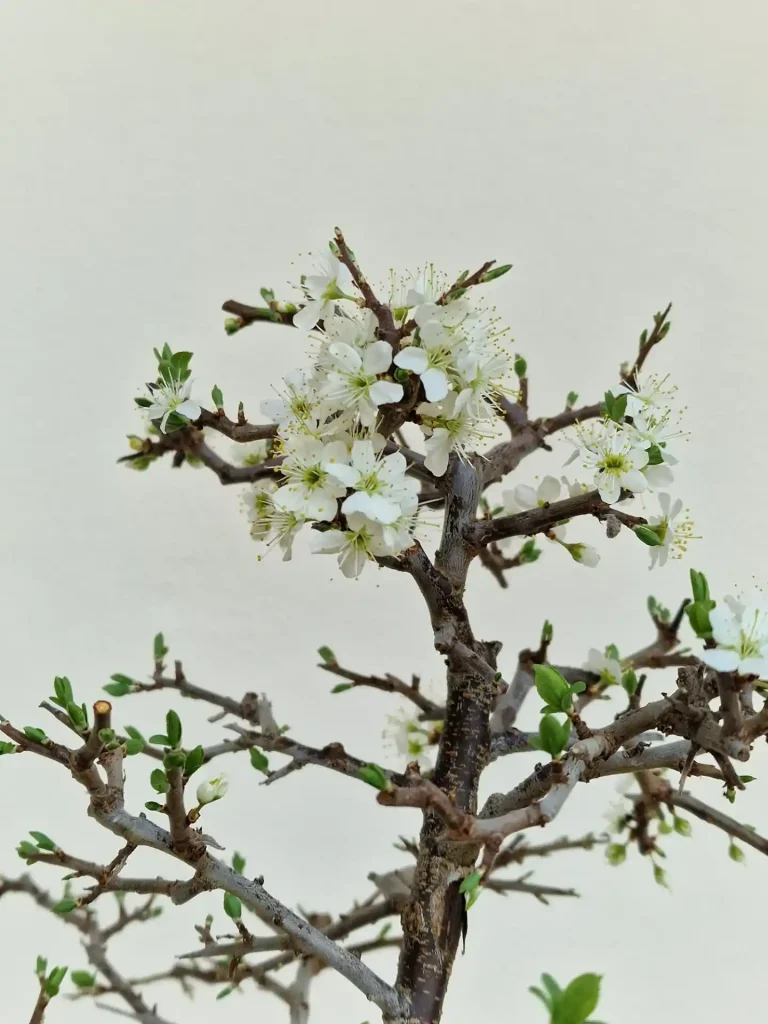
Source: @robert_schlichter
As a garden boundary specimen or informal hedge tree, blackthorn creates an almost impenetrable thorny barrier of outstanding wildlife value — supporting over 100 invertebrate species, providing outstanding nesting habitat for birds, and delivering its distinctive sloe harvest each autumn with no care whatsoever. For more native and wildlife-friendly fruiting tree ideas, our fast growing privacy shrubs guide covers blackthorn hedging and native boundary planting beautifully.
| Feature | Details |
|---|---|
| Hardiness Zone | Zones 4–8 |
| Pollination | Cross-pollination recommended |
| Harvest Season | October after first frost for best flavour |
| Best Culinary Use | Sloe gin, sloe jelly, sloe wine |
| Wildlife Value | Exceptional — 100+ invertebrate species |
| Best For | Boundary planting, wildlife hedging |
27. Goumi Berry (Elaeagnus multiflora)
Goumi berry is one of permaculture’s most celebrated multi-functional fruiting trees, its nitrogen-fixing roots improving soil fertility, its fragrant spring flowers feeding pollinators, its abundant June crop of sweet-tart red berries delivering outstanding nutrition, and its silver-green foliage providing attractive year-round garden structure with minimal care or maintenance.
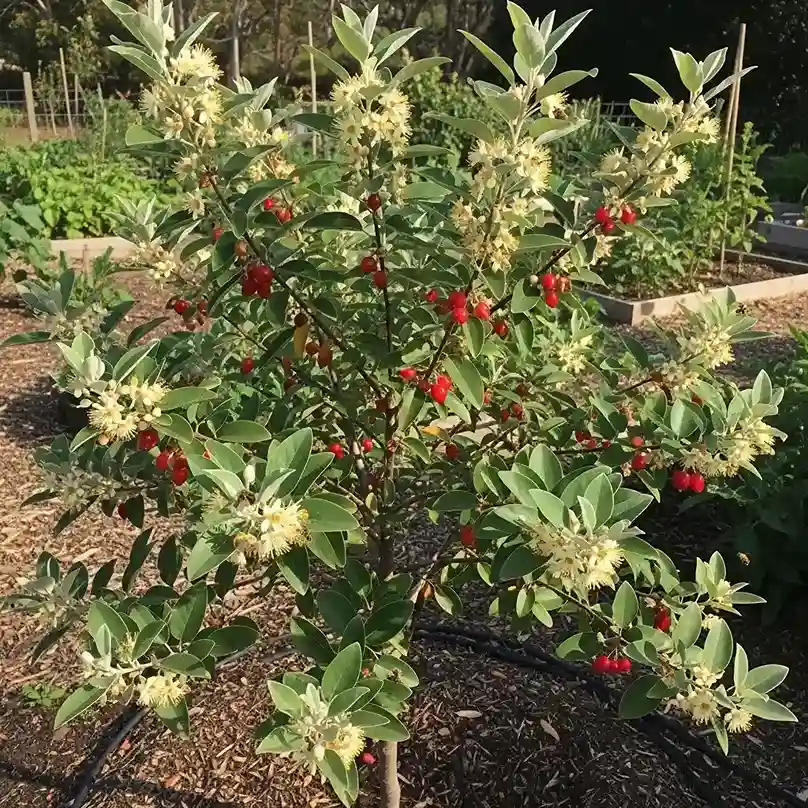
Completely self-fertile, cold-hardy to Zone 3, and tolerant of poor soils, exposed positions, and drought conditions that would challenge most other fruiting trees, goumi berry is one of the most genuinely resilient and low-maintenance productive fruit trees available for any garden situation.
| Feature | Details |
|---|---|
| Hardiness Zone | Zones 3–9 |
| Pollination | Self-fertile — but cross-pollination improves yield |
| Harvest Season | June to July |
| Nitrogen Fixation | Excellent — improves surrounding soil fertility |
| Fruit Flavour | Sweet-tart — fresh eating and jam |
| Best For | Food forest, wildlife garden, permaculture system |
28. Sea Buckthorn (Hippophae rhamnoides)
Sea buckthorn is one of the most vibrantly coloured, nutritionally extraordinary, and ecologically valuable fruiting trees available for coastal and exposed garden positions, its spectacular dense clusters of intensely orange berries — among the highest vitamin C content of any fruit — creating an extraordinary autumn display on female trees alongside outstanding wildlife food value.
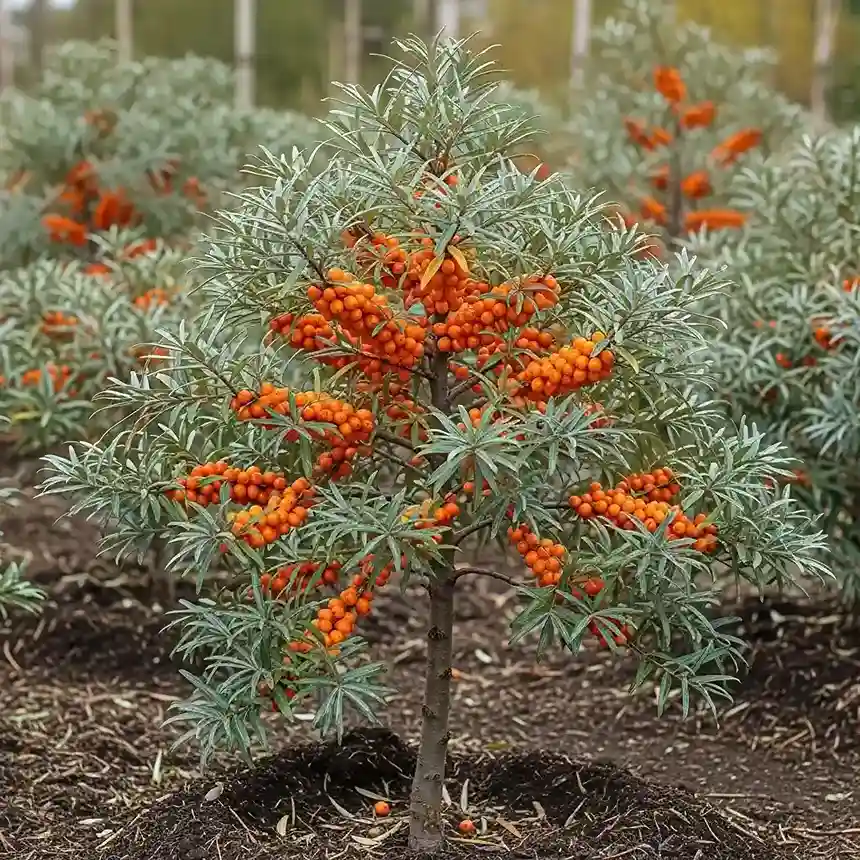
Requiring one male tree for every five to six female trees for pollination, sea buckthorn rewards its planting with crops of remarkable nutritional quality and striking ornamental impact that make it one of the most genuinely valuable fruiting trees for health-conscious, wildlife-friendly gardeners. For more coastal and tough-site fruiting tree ideas, our coastal backyard garden guide covers sea buckthorn and salt-tolerant fruiting trees in authoritative, practical detail.
| Feature | Details |
|---|---|
| Hardiness Zone | Zones 3–8 |
| Pollination | 1 male per 5–6 female trees required |
| Harvest Season | August to October |
| Nutritional Value | Extremely high vitamin C, omega-7 fatty acids |
| Salt Tolerance | Excellent — outstanding coastal fruiting tree |
| Wildlife Value | Outstanding — berries for birds through winter |
29. Serviceberry (Amelanchier lamarckii)
Amelanchier is one of the most perfectly four-seasonally ornamental and productively rewarding small fruiting trees available for any garden, its delicate white spring blossom, attractive summer foliage, sweet edible June berries, and spectacular fiery orange and red autumn colour making it arguably the finest overall ornamental fruiting tree for temperate garden planting.
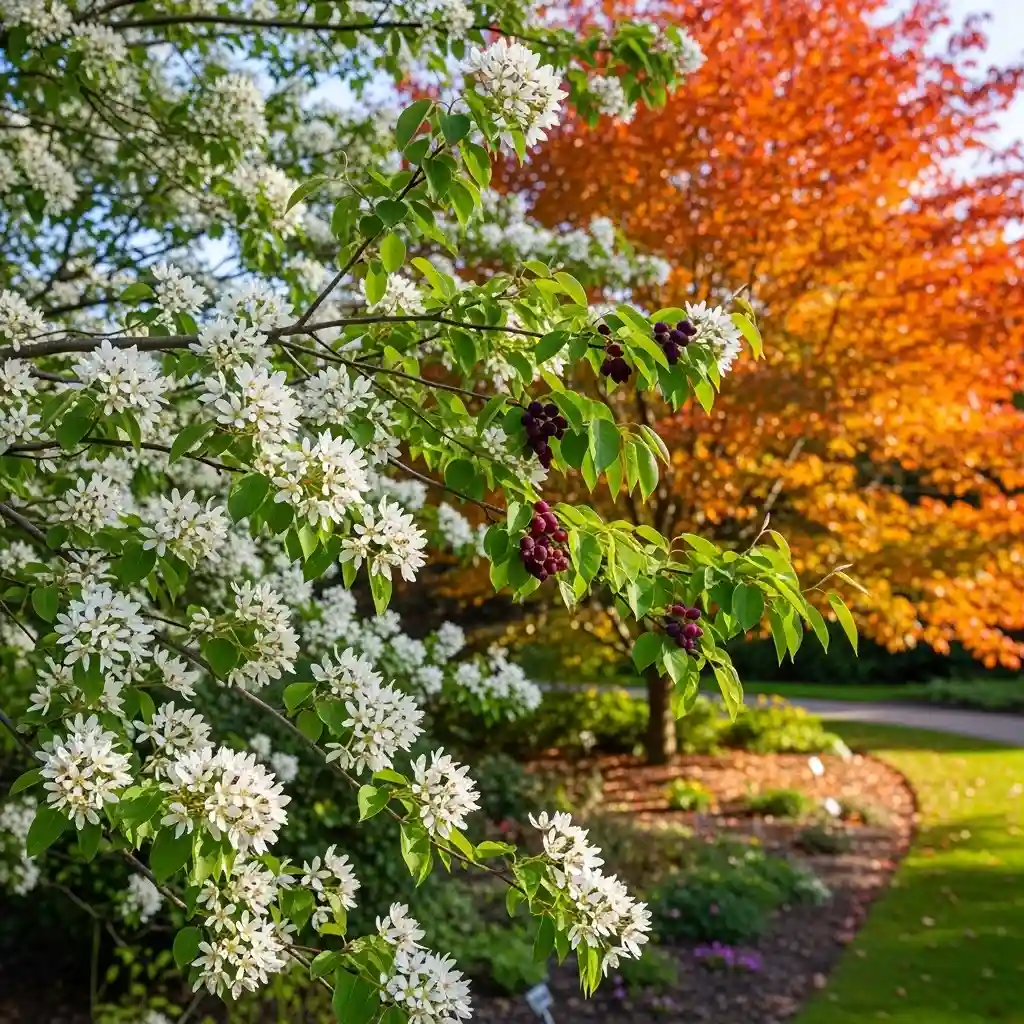
The sweet, blueberry-like berries of amelanchier ripen in June — one of the earliest fruiting trees of the season — and are greatly enjoyed by both garden birds and humans, making this outstanding tree a truly valuable dual-purpose ornamental and productive garden specimen. For more four-season and multi-function fruiting tree ideas, our tree landscaping ideas guide covers amelanchier varieties and garden positioning in beautiful, comprehensive detail.
| Feature | Details |
|---|---|
| Best Varieties | Amelanchier lamarckii, A. canadensis, Robin Hill |
| Hardiness Zone | Zones 4–8 |
| Pollination | Self-fertile — no partner required |
| Harvest Season | June — one of earliest fruiting trees |
| Autumn Colour | Outstanding — fiery orange and red |
| Wildlife Value | Excellent — early berries for birds |
30. Loquat (Eriobotrya japonica)
Loquat is one of the most exotic-looking and surprisingly cold-hardy evergreen fruiting trees available for sheltered temperate gardens, its large, architectural dark green leaves, fragrant winter flowers, and clusters of golden-orange spring fruits creating a genuinely tropical-looking garden specimen of extraordinary beauty and unusual productivity that is quite unlike any other commonly available fruit tree.
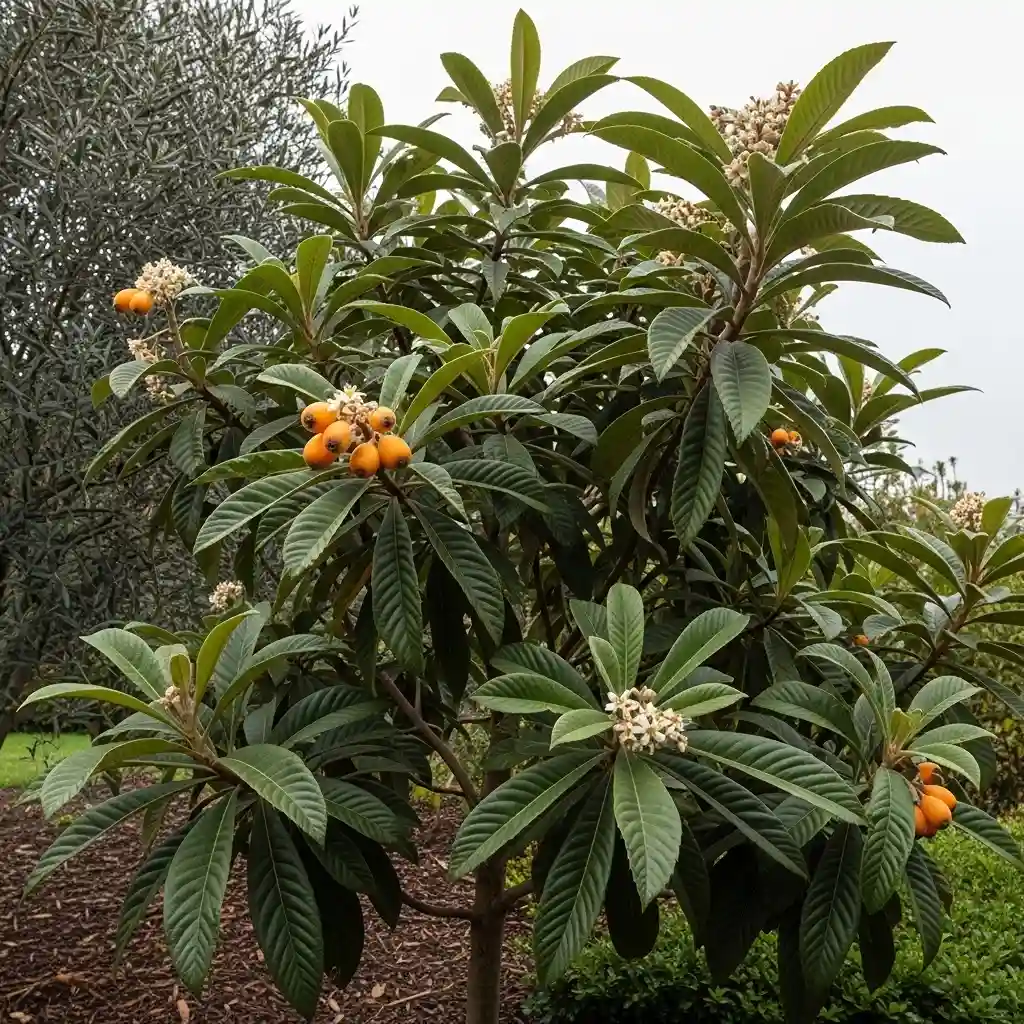
In cooler climates, loquat makes an outstanding large container specimen or wall-trained tree against a warm south-facing wall, where its dramatic evergreen foliage provides year-round architectural interest regardless of whether the tree produces a meaningful fruit crop in any given season. For more exotic evergreen and architectural fruit tree ideas, our trending landscaping ideas guide covers loquat and other exotic fruiting specimens in current, beautifully detailed context.
| Feature | Details |
|---|---|
| Hardiness Zone | Zones 7–10 |
| Pollination | Self-fertile — no partner required |
| Harvest Season | March to May |
| Fruit Flavour | Sweet-tart — fresh eating, jam, and wine |
| Ornamental Value | Outstanding — large architectural evergreen leaves |
| Best Position | South-facing sheltered wall or large container |
Frequently Asked Questions (FAQs)
Q1: Which fruit trees are easiest to grow for beginners?
Apples, plums, and pears are the easiest and most reliable fruit trees for beginner gardeners in temperate climates, requiring minimal specialist care once established and producing rewarding crops relatively quickly. Our food forest guide covers the best beginner fruit tree varieties and their ideal growing conditions in comprehensive, encouraging detail for gardeners starting their first orchard.
Q2: Which fruit trees are self-fertile and do not need a partner?
Victoria plum, Stella cherry, Conference pear, quince, fig, peach, nectarine, apricot, damson, lemon, lime, orange, pomegranate, amelanchier, loquat, and goumi berry are all reliably self-fertile fruit trees that crop without a pollination partner. Our food forest guide covers pollination requirements for every commonly grown fruit tree in practical, clear detail.
Q3: What fruit trees grow well in containers?
Lemon, lime, orange, fig, olive, dwarf apple on M27 rootstock, dwarf pear on Quince C, and pomegranate all grow exceptionally well in containers. Our container gardening guide covers the best container fruit trees and their growing requirements in comprehensive, practical detail for patio and balcony fruit growing in gardens of every size.
Q4: When is the best time to plant fruit trees?
Autumn and winter are the best times to plant fruit trees — bare-root trees planted between November and March cost significantly less than container-grown specimens while establishing equally well and beginning cropping on the same schedule. For more fruit tree planting timing and establishment guidance, our cheap landscaping ideas guide covers budget fruit tree establishment strategies in practical, money-saving detail.
Conclusion
Fruit trees are among the most rewarding, beautiful, and enduringly valuable plants any gardener can grow — delivering seasonal blossom, wildlife support, and delicious harvests that become more generous, more reliable, and more deeply satisfying with every passing year of patient, attentive cultivation.
Explore more productive garden and tree planting inspiration through our guides on food forest guide and tree landscaping ideas to find your perfect fruit trees today.