
Fence lines often represent missed opportunities in landscape design, functioning merely as boundaries rather than contributing to overall yard beauty and functionality. Thoughtfully landscaped fence borders transform these utilitarian structures into attractive garden features that soften hard edges, provide privacy layers, and create cohesive transitions between properties.
Strategic plantings along fences maximize vertical growing space, hide aging materials, and add depth to landscapes while supporting wildlife and increasing property appeal significantly.

Source: @studiomox
Whether you’ve recently installed a DIY privacy fence or want to enhance existing borders, the right plant selections dramatically improve fence aesthetics and functionality. From flowering vines that cascade over rails to evergreen shrubs providing year-round screening, fence line plantings offer creative solutions for challenging narrow spaces.
These twenty-eight fence line landscaping ideas showcase diverse approaches for transforming bare fence lines into lush, productive, and beautiful garden borders that enhance your entire outdoor environment.
1. Climbing Roses for Romantic Color
Climbing roses transform plain fences into spectacular vertical gardens covered with fragrant blooms from late spring through fall. Varieties like ‘New Dawn’, ‘Zephirine Drouhin’, and ‘Eden’ produce abundant flowers on long canes reaching 10-15 feet. Their romantic blooms in pink, white, red, or yellow create stunning backdrops for garden beds below.

Train rose canes horizontally along fence rails to encourage more blooming points along entire lengths rather than just at tops. Roses need full sun exposure with at least 6 hours daily and regular feeding during growing seasons. Deadhead spent flowers to promote continuous blooming and prune in late winter to remove dead wood and shape plants for upcoming seasons.
2. Evergreen Boxwood Hedge Foundation
Boxwood creates classic, formal hedges along fence bases providing year-round structure and traditional elegance. These versatile evergreen shrubs grow 2-4 feet tall depending on variety, maintaining dense foliage that remains attractive through all seasons. Their fine texture and ability to withstand pruning make them perfect for structured fence line plantings.

Plant boxwood 2-3 feet from fence bases, spacing 18-24 inches apart for continuous hedges. They tolerate partial shade and adapt to various soil types with good drainage. Trim 2-3 times annually to maintain desired shapes and heights, using sharp shears for clean cuts that promote healthy growth and prevent disease entry points.
3. Clematis Vines for Vertical Interest
Clematis produces spectacular flowers in purple, pink, white, blue, or bi-colors on climbing vines perfect for fence coverage. These perennial vines bloom spring through fall depending on variety, providing changing displays throughout growing seasons. Their delicate flowers and twining habit soften fence structures while adding cottage garden charm and vertical color layers.

Plant clematis with roots in shade but vines climbing into sunlight—”cool roots, warm tops” ensures best performance. Provide support for tendrils to grasp as they climb fence structures and prune according to variety group for optimal flowering. Different clematis types bloom on old or new wood, so understanding pruning requirements prevents accidentally removing flower buds.
4. Ornamental Grasses for Soft Texture
Ornamental grasses like maiden grass, feather reed grass, and switchgrass planted along fence lines create soft, flowing borders with movement and texture. These low-maintenance perennials grow 3-6 feet tall depending on variety, providing seasonal interest through feathery plumes, fall color, and winter structure. They soften hard fence lines beautifully while requiring minimal care.

Space grasses 2-3 feet apart in full sun with well-drained soil for best growth and flowering. They tolerate drought once established and need only annual spring cutback to remove previous year’s growth. Ornamental grasses provide excellent privacy screening when planted densely while adding naturalistic, contemporary aesthetics to fence borders year-round.
5. Hydrangea Shrubs for Shade Tolerance
Hydrangeas thrive along fence lines receiving partial shade, producing large flower clusters in blue, pink, white, or purple from summer through fall. These deciduous shrubs grow 3-6 feet tall and wide, creating substantial borders that fill space between fences and lawns. Their lush foliage remains attractive even after flowers fade, maintaining interest throughout seasons.

Plant hydrangeas 3-4 feet from fence bases with adequate spacing between plants for air circulation and mature spread. Soil pH affects bloom color in certain varieties—acidic soil produces blue flowers while alkaline creates pink blooms. Maintain consistent moisture during growing season and mulch around root zones to retain water and regulate soil temperatures.
6. Trumpet Vine for Hummingbird Attraction
Trumpet vines produce vibrant orange, red, or yellow tubular flowers that attract hummingbirds throughout summer on vigorous climbing stems. These deciduous vines grow quickly, covering fences with attractive foliage and showy blooms that create wildlife habitats. Their aggressive growth habit makes them excellent for covering large fence sections rapidly but requires management to prevent spreading.

Plant trumpet vines in full sun to partial shade with well-drained soil, providing sturdy fence support for heavy vine weight. Prune regularly to control size and prevent unwanted spreading through suckers and runners. Despite vigorous growth requiring management, trumpet vines offer unmatched hummingbird attraction and dramatic color displays along fence lines throughout warm months.
7. Lavender Border for Fragrant Edging
Lavender creates fragrant, purple-flowering borders along fence bases that release aromatic oils when brushed against or warmed by sun. These drought-tolerant Mediterranean plants grow 18-24 inches tall, providing neat, compact edging that attracts pollinators while naturally repelling mosquitoes. Their silvery foliage remains attractive year-round in mild climates, offering multi-season interest.

Plant lavender in full sun with excellent drainage, spacing 18 inches apart for continuous hedges along fence lines. They thrive in poor, rocky soil and tolerate drought once established, making them ideal low-maintenance options. Prune after flowering to maintain compact shapes and prevent woody growth, harvesting flowers for dried arrangements or culinary uses.
8. Honeysuckle Vine for Sweet Fragrance
Honeysuckle vines produce sweetly fragrant, tubular flowers in yellow, orange, pink, or white that perfume entire areas throughout summer. These fast-growing climbers quickly cover fences with attractive foliage and blooms that attract hummingbirds and butterflies. Their vigorous growth provides rapid coverage for new fences or unsightly older structures needing concealment.

Choose less invasive native varieties like coral honeysuckle over aggressive exotic species that become problematic weeds. Plant in full sun to partial shade with average soil and train young vines onto fence structures. Prune annually after flowering to control size and remove dead wood while maintaining healthy, flowering growth for subsequent seasons.
9. Daylily Mass Planting Color
Daylilies planted in masses along fence lines create vibrant color displays in yellow, orange, red, pink, or purple from late spring through summer. These tough perennials tolerate various conditions, multiply readily, and require minimal maintenance while blooming prolifically. They form substantial clumps that fill space effectively, creating impressive borders with reliable, long-lasting color.
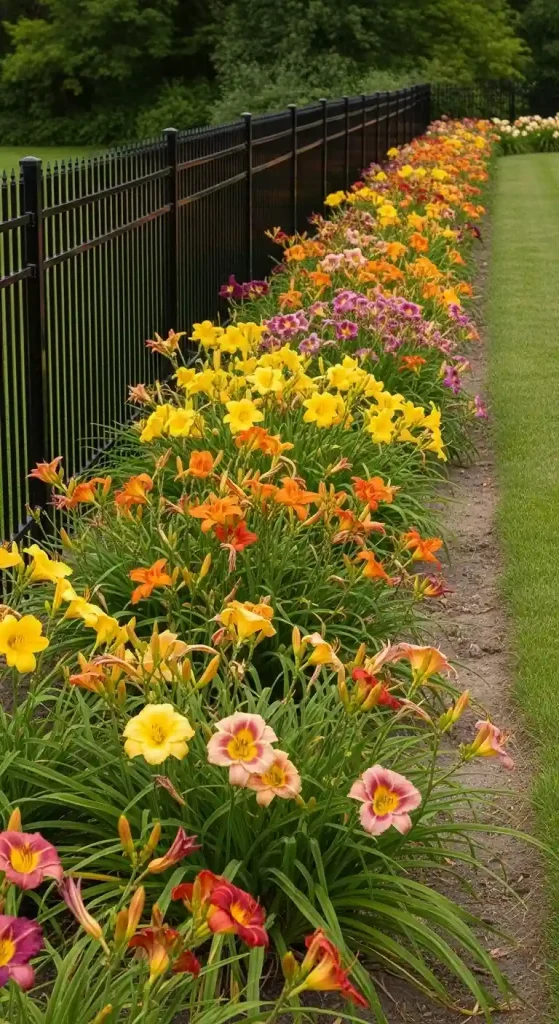
Plant daylilies 18-24 inches apart in full sun to partial shade with well-drained soil for best performance. They tolerate drought, poor soil, and neglect while still blooming abundantly each season. Divide overcrowded clumps every 3-4 years to maintain vigor and share divisions with neighbors or expand plantings along additional fence sections.
10. Arborvitae Column for Privacy Layering
Arborvitae planted along fence lines creates additional privacy layers with dense, evergreen foliage rising above fence heights. These narrow, columnar conifers grow 10-20 feet tall depending on variety while remaining just 3-4 feet wide. They provide year-round screening and wind protection while adding vertical dimension to fence borders.

Space arborvitae 3-4 feet apart for solid privacy screens or 5-6 feet for individual specimens allowing fence visibility between plants. They tolerate various soil conditions and require minimal pruning to maintain natural columnar forms. Water regularly during establishment and apply mulch around bases to retain moisture and suppress competing weeds.
11. Butterfly Bush for Pollinator Support
Butterfly bushes produce fragrant, cone-shaped flower clusters in purple, pink, white, or yellow that attract butterflies and hummingbirds throughout summer along fence lines. These fast-growing deciduous shrubs reach 4-8 feet tall, creating substantial borders filled with wildlife activity. Their long blooming period and pollinator attraction make them excellent additions to ecologically conscious landscapes.

Plant in full sun with well-drained soil, spacing 5-6 feet apart for individual specimens or closer for continuous borders. Deadhead spent blooms regularly to encourage continuous flowering through fall and prune hard in early spring to control size. Some regions consider certain butterfly bush varieties invasive, so choose sterile cultivars or native alternatives where appropriate.
12. Virginia Creeper for Fall Color
Virginia creeper provides vigorous fence coverage with attractive five-leaflet foliage that transforms into brilliant red in fall. This native deciduous vine climbs using adhesive tendrils, covering fences quickly without requiring additional support structures. It tolerates shade better than most vines and provides important food sources for birds through small blue berries.

Plant in sun to shade with average soil, training young vines onto fence structures until they attach independently. Virginia creeper grows vigorously and may require annual pruning to prevent spreading into unwanted areas. Despite aggressive growth, its spectacular fall color, wildlife value, and adaptability make it excellent for large fence sections needing rapid coverage.
13. Forsythia for Early Spring Blooms
Forsythia creates brilliant yellow displays along fence lines in early spring before most plants leaf out, announcing season changes. These deciduous shrubs grow 6-10 feet tall and wide, producing arching branches covered in bright flowers. Their vigorous growth quickly fills fence borders while providing one of earliest color shows each year.

Plant forsythia 4-6 feet apart in full sun to partial shade with well-drained soil for best flowering. Prune immediately after blooming ends to shape plants and remove old wood while preserving next year’s flower buds. Though flowers last just 2-3 weeks, forsythia’s dramatic early season display and ease of care make it valuable for spring interest.
14. Coral Bells for Colorful Foliage
Coral bells offer colorful foliage in purple, burgundy, lime, orange, or silver at fence bases, providing year-round interest beyond flowers. These compact perennials grow just 12-18 inches tall, making them perfect for edging taller fence line plantings. Their diverse foliage colors and delicate flower spikes in late spring create attractive, low-maintenance borders.

Plant coral bells 12-15 inches apart in partial shade to full sun depending on variety and climate heat. They prefer rich, well-drained soil with consistent moisture and benefit from mulching. Remove spent flower stalks and refresh plantings every 3-4 years by dividing and replanting as crowns lift above soil over time.
15. Wisteria for Dramatic Spring Display
Wisteria produces cascading clusters of fragrant, purple, pink, or white flowers in spring creating breathtaking displays along fence tops. These vigorous deciduous vines require strong fence support due to substantial mature weight but reward with spectacular blooms. Their twining habit and heavy wood development make them suitable only for sturdy fence structures.

Plant grafted specimens for reliable flowering as seed-grown wisteria may not bloom for many years. Provide full sun and well-drained soil with regular pruning to control vigorous growth and encourage flowering. Wisteria requires commitment to ongoing management but offers unmatched spring drama when covered with fragrant flower cascades along fence lines.
16. Hosta Border for Shade Solutions
Hostas create lush, shade-tolerant borders along fence lines receiving little direct sun with attractive foliage in green, blue, gold, or variegated combinations. These reliable perennials grow 6-36 inches tall depending on variety, offering diverse sizes for any fence border situation. Their bold leaves provide substantial presence throughout growing seasons in challenging shaded locations.

Plant hostas 18-36 inches apart depending on mature size in shade to partial shade with rich, moisture-retentive soil. They require minimal care beyond occasional watering during drought and slug control. Hostas spread gradually over years, filling spaces beautifully while remaining easy to divide and relocate as needed for adjusting borders.
17. Russian Sage for Silvery Texture
Russian sage produces airy spikes of lavender-blue flowers above silvery, aromatic foliage from midsummer through fall along fence lines. This drought-tolerant perennial grows 3-4 feet tall, adding soft texture and long-lasting color to sunny borders. Its fine foliage contrasts beautifully with bold-leafed plants while tolerating heat, drought, and poor soil.

Plant in full sun with excellent drainage, spacing 2-3 feet apart for continuous borders that fill over one or two seasons. Russian sage requires minimal care beyond annual spring cutback to encourage compact, bushy growth. Deer and rabbits avoid this fragrant plant, making it ideal for areas with browsing pressure along property borders.
18. Serviceberry for Multi-Season Interest
Serviceberry trees planted along fence lines provide white spring flowers, edible summer berries, brilliant fall foliage, and attractive bark for year-round interest. These native small trees grow 15-25 feet tall, creating substantial presence behind or beside fences. They offer wildlife food while serving as beautiful ornamental specimens with four-season landscape value.
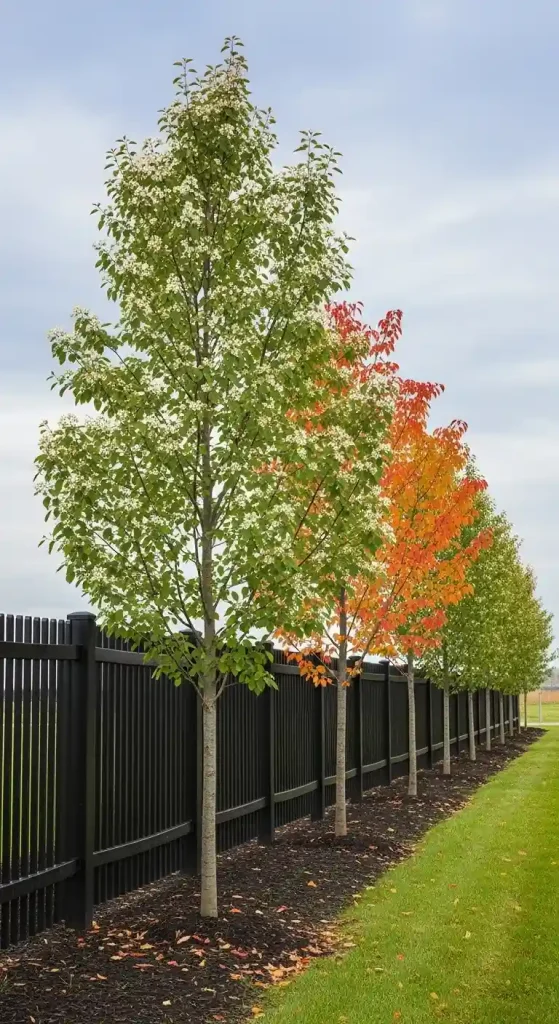
Plant in full sun to partial shade with well-drained soil, spacing 8-10 feet apart for individual specimens. Serviceberries adapt to various soil types and require minimal pruning beyond removing dead or crossing branches. Sweet berries attract birds but can be harvested for human consumption before wildlife discovers them.
19. Black-Eyed Susan Mass Planting
Black-eyed Susans create cheerful yellow displays with dark centers from midsummer through fall when planted in masses along fence bases. These tough native perennials tolerate heat, drought, and poor soil while reliably returning year after year. They spread gradually, filling fence borders with bright color that attracts pollinators throughout blooming periods.

Plant in full sun to partial shade, spacing 18 inches apart for quickly filling borders. Black-eyed Susans self-seed readily but aren’t aggressively invasive, creating natural-looking drifts over time. Deadhead to prolong blooming or leave seed heads for winter bird feeding and structural interest. These low-maintenance perennials suit diverse fence line situations.
20. Burning Bush for Fall Drama
Burning bush creates spectacular fall displays with brilliant red foliage along fence lines from September through October. These deciduous shrubs grow 4-8 feet tall depending on variety, providing substantial presence and seasonal drama. Their compact, rounded forms remain attractive throughout growing seasons before transforming into fiery focal points each autumn.

Plant in full sun to partial shade with well-drained soil, spacing 5-6 feet apart for individual specimens. Burning bush tolerates various conditions and requires minimal maintenance beyond occasional shaping. Some regions consider certain varieties invasive, so check local recommendations and choose compact or sterile cultivars where appropriate for responsible landscaping.
21. Coneflower Border for Native Beauty
Purple coneflowers bring native plant beauty to fence lines with daisy-like blooms featuring prominent central cones from midsummer through fall. These drought-tolerant perennials bloom in purple, pink, white, orange, or yellow depending on variety, attracting butterflies while providing seeds for goldfinches in winter. They spread moderately, creating natural-looking borders requiring minimal maintenance.

Plant in full sun with well-drained soil, spacing 18-24 inches apart for continuous borders filling in second or third seasons. Coneflowers self-seed moderately, creating additional plants over time without becoming invasive. Leave seed heads standing through winter for wildlife food and architectural interest beneath snow and frost, cutting back in early spring.
22. Carolina Jessamine for Evergreen Vining
Carolina jessamine produces fragrant yellow flowers in early spring on evergreen vines perfect for fence coverage in warm climates. This native vine maintains attractive foliage year-round while blooming prolifically when most plants remain dormant. Its moderate growth rate covers fences thoroughly without excessive maintenance while providing consistent green backdrop for other plantings.

Plant in full sun to partial shade with well-drained soil in zones 7-9 where hardy. Train young vines onto fence structures and prune after flowering to shape and control size. Carolina jessamine provides year-round interest with spring flowering bonus, making it valuable for warm-climate fence line landscaping requiring evergreen coverage.
23. Spirea Hedge for Easy Care
Spirea creates easy-care flowering hedges along fence lines with white or pink blooms in spring or summer depending on variety. These deciduous shrubs grow 2-6 feet tall with options for various heights and sizes along borders. Their reliable flowering, pest resistance, and minimal maintenance requirements make them excellent choices for busy homeowners wanting attractive fence plantings.

Plant in full sun to partial shade with well-drained soil, spacing according to mature size for desired hedge density. Spireas tolerate various conditions and need only occasional pruning to maintain shapes and remove oldest stems. They provide reliable seasonal blooms and attractive foliage while requiring virtually no special care or attention throughout years.
24. Passion Vine for Unique Flowers
Passion vines produce exotic, intricate flowers with distinctive corona structures in purple, blue, white, or red throughout summer on fast-growing vines. These tropical to semi-hardy climbers quickly cover fences with attractive three-lobed foliage and fascinating blooms that attract butterflies. Some varieties produce edible passion fruit adding functional benefits to ornamental value.

Plant in full sun with well-drained soil in zones appropriate for variety hardiness, treating as annuals in cold climates. Provide sturdy fence support as vines grow vigorously and may become heavy with foliage. Passion vines offer unique beauty for adventurous gardeners willing to provide appropriate support and cold protection where needed.
25. Liriope Ground Cover Edging
Liriope creates neat, grass-like borders along fence bases with arching foliage and purple or white flower spikes in late summer. This evergreen ground cover grows 8-12 inches tall, providing year-round edging that requires minimal maintenance. Its clumping or spreading habit depending on variety offers options for various fence line landscaping situations and maintenance preferences.

Plant in sun to shade with average soil, spacing 12-18 inches apart for continuous borders filling in one to two seasons. Liriope tolerates drought, neglect, and various conditions while remaining attractive throughout years. Trim back foliage in early spring before new growth emerges to refresh plantings and remove winter-damaged leaves.
26. Dogwood Shrubs for Colorful Stems
Dogwood shrubs provide colorful red, yellow, or black stems creating winter interest along fence lines when most plants appear dormant. These deciduous shrubs grow 6-10 feet tall with attractive foliage through growing seasons and spectacular stem color November through March. Their multi-season interest and adaptability make them valuable additions to fence borders in cold climates.

Plant in full sun to partial shade with moist, well-drained soil for best stem color development. Dogwood shrubs produce best color on young stems, so prune older growth in late winter to encourage new, vibrantly colored shoots. They tolerate wet soils better than most shrubs, making them suitable for challenging fence line locations.
27. Salvia for Long Summer Blooms
Salvias produce vertical flower spikes in purple, blue, pink, red, or white from late spring through fall along fence lines receiving full sun. These drought-tolerant perennials grow 18-36 inches tall depending on variety, attracting hummingbirds and butterflies throughout long blooming periods. Their heat tolerance and low water needs suit challenging sunny fence borders perfectly.

Plant in full sun with well-drained soil, spacing 18-24 inches apart for borders filling in single seasons. Salvias require minimal care beyond occasional deadheading to encourage additional blooming flushes. Many varieties reseed moderately, creating natural expansions over time while others remain confined to original planting locations depending on species chosen.
28. Fothergilla for Fragrant Spring Blooms
Fothergilla produces fragrant, bottlebrush-like white flowers in spring before leaves emerge, followed by excellent fall color in orange, red, and yellow. These native deciduous shrubs grow 3-6 feet tall, offering multi-season interest along fence lines. Their compact growth habit and low maintenance requirements make them excellent choices for naturalistic or native plant fence borders.

Plant in full sun to partial shade with acidic, well-drained soil amended with organic matter for best performance. Fothergillas require minimal pruning beyond removing dead or damaged branches and prefer consistent moisture during establishment. They offer spring blooms, summer foliage, fall color, and winter structure making them four-season contributors to fence line landscapes.
Frequently Asked Questions
What plants work best for sunny fence lines?
Drought-tolerant perennials like lavender, Russian sage, salvia, and coneflowers thrive along sunny fence lines with minimal water once established. Climbing roses, clematis, and trumpet vines provide vertical coverage with spectacular blooms. Ornamental grasses add movement and texture while tolerating heat and full sun exposure excellently throughout growing seasons.
How far from fences should I plant?
Plant small perennials and ground covers 12-18 inches from fence bases allowing room for growth without crowding. Medium shrubs need 2-3 feet of space while larger shrubs require 3-5 feet for adequate air circulation and mature spread. This spacing prevents moisture problems against fences while allowing maintenance access for painting or repairs.
Can I landscape along chain-link fences attractively?
Absolutely! Vines like clematis, honeysuckle, and Carolina jessamine weave through chain-link beautifully, creating living screens that essentially hide fencing. Plant tall ornamental grasses like maiden grass or switchgrass in front, creating visual barriers without touching fences. Layered plantings with shrubs behind perennials create depth that draws eyes away from chain-link toward attractive plants.
Conclusion
Fence line landscaping transforms utilitarian property boundaries into attractive garden features that enhance entire landscapes while maximizing limited growing space. The twenty-eight ideas presented here showcase diverse plant options from flowering vines and colorful shrubs to textured grasses and evergreen screens, demonstrating that fence borders offer tremendous creative potential for gardeners willing to look beyond basic functionality. Strategic plantings along fences provide privacy layers, wildlife habitat, seasonal interest, and visual appeal that elevates ordinary yards into cohesive, professionally designed landscapes.
Successful fence line landscaping begins with understanding your specific conditions including sun exposure, soil quality, available space, and maintenance capabilities before selecting appropriate plants. Start with one fence section, establishing proven combinations before expanding to additional areas as confidence and experience grow. Just as trending landscaping ideas and backyard landscaping ideas inspire outdoor transformations, thoughtful fence border plantings complete landscape visions by addressing often-neglected perimeter spaces.
Whether you prefer cottage garden abundance, formal hedges, or naturalistic native plantings, these fence line solutions help create beautiful, cohesive outdoor environments that delight throughout seasons while increasing property value and curb appeal significantly. For comprehensive gardening guidance including small garden ideas and even house plants guide for indoor inspiration, explore our complete collection of resources.