While wooden fences rot and vinyl fades, a living fence grows more beautiful and effective every year. A natural boundary provides a sound barrier, a windbreak, and a sanctuary for local birds.
If you’re just starting your landscape journey, our house plants guide can help you get comfortable with greenery indoors before you tackle the great outdoors.
1. The Power of Thuja Green Giant
If you need privacy fast, the Thuja Green Giant is the undisputed king of screening. This hybrid can grow up to 3 feet per year, quickly forming a dense, evergreen wall that stays lush from the ground to the sky.
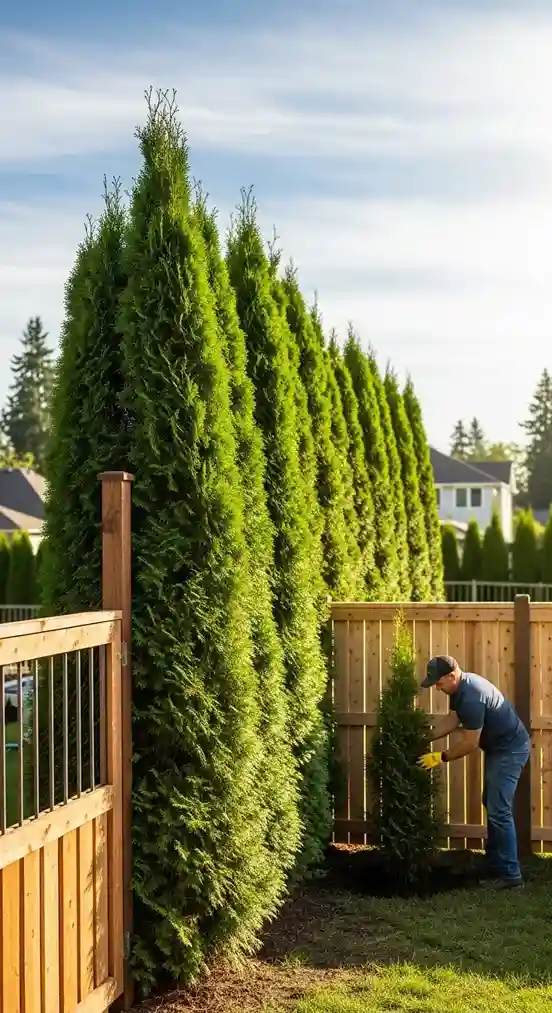
- Speed: Reaches maturity faster than almost any other conifer.
- Spacing: Plant 5–6 feet apart for a solid, impenetrable wall.
2. Leyland Cypress for Formal Borders
The Leyland Cypress is a classic choice for large properties. Its fine, feathery foliage creates a soft look, but it can be sheared into a crisp, formal box shape if you prefer a manicured aesthetic.

- Height: Can reach over 50 feet if not pruned.
- Vibe: Perfect for classic, stately trending landscaping ideas.
3. Emerald Green Arborvitae for Small Yards
For those working with small garden ideas, the Emerald Green variety is a better fit. It stays narrow and grows slowly, meaning it won’t eat up your precious lawn space.

- Shape: Naturally grows in a tidy, narrow pyramid.
- Maintenance: Requires almost no pruning to look professional.
4. Privet Hedges for Classic Screening
Privet has been used for centuries to create “living walls.” It grows incredibly thick, making it nearly impossible for neighbors to see through once it reaches eye level. See more outdoor plants for the privacy fencing.

- Flowers: Produces small, fragrant white flowers in the spring.
- Hardiness: Very tolerant of heavy pruning and urban pollution.
5. Using Bamboo for Modern Minimalist Screens
Bamboo offers a contemporary, Zen-like aesthetic and grows faster than any tree. However, it requires a specific DIY approach to prevent it from spreading where it isn’t wanted.

- Important: Always choose “clumping” bamboo varieties over “running” ones.
- Sound: Creates a beautiful, relaxing rustling sound in the wind.
6. Skip Laurel for Shady Boundaries
Most privacy trees need full sun, but the Skip Laurel thrives in the shade. Its large, glossy dark green leaves provide a tropical, high-end look for north-facing yards.

- Hardiness: Extremely salt-tolerant and great for coastal areas.
- Blooms: Features white flower spikes in the spring.
7. American Holly for Natural Security
The American Holly is a dual-purpose plant. Its prickly leaves act as a natural deterrent for intruders, while its evergreen nature ensures year-round privacy.

- Winter Interest: Beautiful red berries provide color during the holidays.
- Wildlife: Provides essential winter shelter for local songbirds.
8. Boxwood for Low Property Dividers
If you only need to define a boundary rather than block a view, Boxwoods are the gold standard. They are the backbone of most backyard landscaping ideas because of their tidy, evergreen habit.

- Style: Can be kept as low as 2 feet or grown to 6 feet.
- Longevity: A very long-lived plant that stays green for decades.
9. Rose of Sharon for Vertical Flowers
The Rose of Sharon is a deciduous shrub that grows upright and narrow. It’s perfect for summer privacy when you’re most likely to be using your patio or deck.

- Impact: Produces massive hibiscus-like flowers in late summer.
- Sun: Needs full sun to produce the best bloom count.
10. Canadian Hemlock for Soft Texture
The Hemlock offers a much softer, more delicate texture than a traditional pine. It can be kept as a sheared hedge or allowed to grow into a graceful, feathery screen.

- Shade: One of the few evergreens that can handle significant shade.
- Growth: Responds beautifully to regular trimming.
11. Red Twig Dogwood for Winter Color
Most people forget about privacy in the winter, but the Red Twig Dogwood ensures your boundary looks amazing even when the leaves are gone. Its bright red stems look striking against the snow.

- Summer: Dense green foliage provides a solid screen.
- Pruning: Cut back the oldest stems to keep the red color vibrant.
12. Using Trellises with Star Jasmine
In warmer climates, a DIY trellis covered in Star Jasmine provides a slim, space-saving privacy wall. It creates a mat of evergreen leaves that completely hides whatever is behind it.
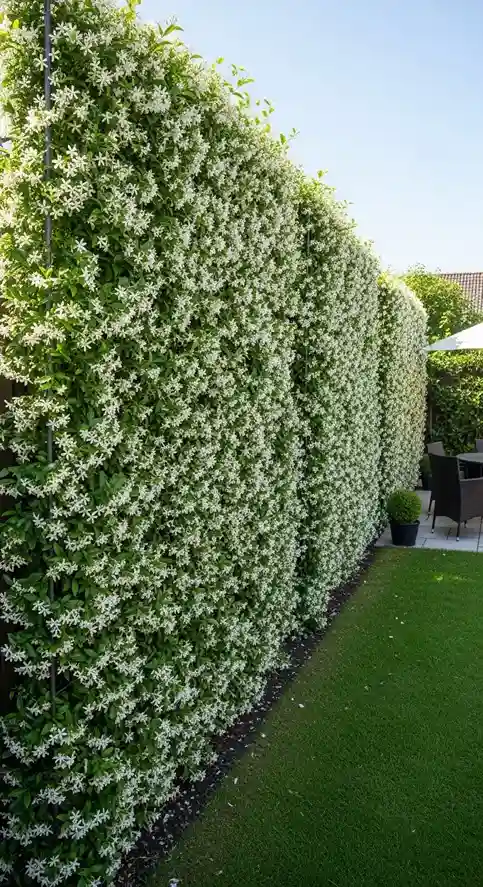
- Scent: The perfume from the white flowers is intoxicating in the evening.
- Spacing: Perfect for balconies or narrow side yards.
13. Clematis for the “Queen of Vines”
Clematis doesn’t provide a thick wall on its own, but when grown over a chain-link fence or lattice, it turns a cold metal structure into a blooming masterpiece.

- Bloom: Stunning, star-shaped flowers in shades of purple, pink, and white.
- Tip: Plant with other evergreens to maintain coverage in winter.
14. Forsythia for an Early Spring Screen
The Forsythia grows tall and arching, creating a wild, natural-looking hedge. It’s the first plant to bloom in spring, providing a wall of yellow when everything else is still brown.

- Growth: Very fast-growing and can easily reach 8–10 feet.
- Use Case: Best for large, informal property lines.
15. Hornbeam for European Style Hedges
European Hornbeams are often used in “pleached” hedges, where the branches are trained to grow together. They hold their dead leaves through winter, providing privacy even when they aren’t green.

- Strength: Very strong wood that acts as an excellent windbreak.
- Look: Offers a sophisticated, high-end architectural feel.
16. Lilacs for a Fragrant Barrier
Common Lilacs grow tall and suckering, meaning they naturally fill in gaps at the base to create a dense thicket. They are a classic choice for country-style privacy.

- Nostalgia: Provides one of the most beloved scents in the gardening world.
- Hardiness: Very cold-hardy and thrives in Northern climates.
17. Burning Bush for a Fiery Border
If you want your privacy fence to be a conversation starter in the fall, the Burning Bush is the answer. It turns a neon, glowing red that is visible from a mile away.

- Structure: Stays very dense and tidy throughout the year.
- Utility: A great medium-height hedge for front-yard boundaries.
18. Juniper Spires for Blue Tones
Junipers like ‘Skyrocket’ or ‘Blue Arrow’ offer a different color palette for your privacy wall. Their steel-blue foliage provides a beautiful contrast to traditional green lawns.

- Toughness: Can handle extreme wind, heat, and drought.
- Size: Stays very narrow, perfect for framing a driveway.
19. Photinia for “Red Robin” Accents
Photinia is a popular evergreen shrub known for its bright red new growth. It creates a colorful, changing privacy wall that feels more dynamic than a standard green hedge.

- Density: Grows very thick, making it a great noise buffer.
- Pruning: Frequent trimming encourages more of the red leaves to appear.
20. Climbing Hydrangea for Brick Walls
If your privacy issue is an ugly brick wall or a tall wooden fence, the Climbing Hydrangea will scale it and cover it in lush, white-flowered greenery.
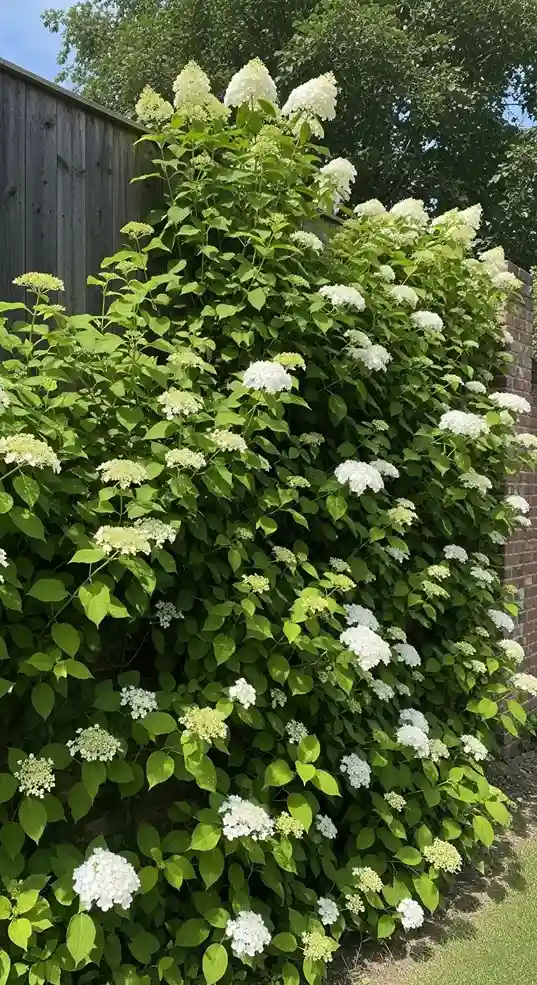
- Strength: A slow-to-start but vigorous vine once established.
- Detail: The exfoliating bark looks beautiful even in the winter.
21. Yew Hedges for Dark Green Elegance
Yews are the most shade-tolerant evergreens and can be sheared into incredibly tight, crisp shapes. They are the hallmark of a high-end, luxury garden.

- Longevity: These trees can live for hundreds of years.
- Caution: Berries and needles are toxic to pets, so plant with care.
22. Butterfly Bush for a Living Gallery
While it’s a deciduous shrub, the Butterfly Bush grows so fast that it can reach 8 feet in a single season, providing a flowering privacy wall that is teeming with life.

- Environment: Attracts Monarchs, swallowtails, and hummingbirds.
- Aroma: Honey-scented flowers carry through the whole yard.
23. Japanese Euonymus for Variegated Color
For a privacy fence that doesn’t look “heavy,” use variegated Euonymus. The yellow and green leaves brighten up shady areas and look great year-round.

- Growth: Naturally mounding and very easy to prune.
- Adaptability: Thrives in a variety of light conditions.
24. Sweet Autumn Clematis for Fall Privacy
While most vines bloom in spring, this variety explodes with a wall of white, honey-scented flowers in September. It’s a great way to end the season with a privacy bang.

- Vigor: Can cover a 20-foot fence in a single season.
- Care: Be sure to prune it back hard in the spring.
25. Italian Cypress for Mediterranean Vibe
In warm, dry climates, the Italian Cypress is the ultimate “exclamation point” for your yard. These tall, skinny trees create a sophisticated screen without taking up any width.

- Vibe: Perfect for poolside privacy or lining a path.
- Climate: Best for zones 7-10; loves the heat.
26. Barberry for Thorny Security
If you want to keep neighbors and animals out of your yard, the thorns of a Barberry hedge are a natural deterrent. Plus, the burgundy foliage is stunning.

- Resilience: Nearly impossible to kill once it takes root.
- Color: Stays deep red or bright gold all summer long.
27. Weigela for a Flowering Wall
Weigela is an arching shrub that creates a dense, fountain-like privacy screen. Modern varieties have dark purple leaves that look striking against pink flowers.

- Wildlife: A top choice for gardeners who want to attract hummingbirds.
- Pruning: Very easy to manage with standard garden shears.
28. Potentilla for Low-Maintenance Borders
Potentilla is a workhorse shrub that blooms for months. While it stays shorter (about 3-4 feet), it is perfect for “street-side” privacy on a front lawn.

- Hardiness: One of the most cold-hardy shrubs in existence.
- Bloom: Produces happy, buttercup-like flowers all summer.
29. Silver Sheen Pittosporum for Shimmer
This plant has tiny, silvery leaves and black stems, creating a “shimmering” effect in the wind. It’s a very high-end look for modern privacy screens.

- Growth: Fast-growing and very upright.
- Airflow: Its airy texture allows for better ventilation than dense pines.
30. Using Potted Bamboo for Portable Privacy
If you are a renter or want privacy on a deck, plant clumping bamboo in large, galvanized troughs. This creates a portable, “instant” privacy wall.

- Flexibility: Can be moved to follow the sun or change your layout.
- Indoor Tip: Some of these can even transition into indoor plants if you have enough light!
DIY Privacy Fence FAQs
1. What is the fastest-growing plant for privacy?
The Thuja Green Giant and Bamboo are the fastest. Both can grow 3 feet or more in a single year under the right conditions.
2. How do I stop a living fence from becoming too tall?
Regular “topping” is key. Once the plant reaches your desired height, prune the central leader (the main vertical stem) to encourage the plant to grow wider rather than taller.
3. Do I need a permit for a living fence?
Generally, no. Most cities have height limits on wood fences (usually 6 feet), but many do not have the same strict limits for trees and shrubs. Always check local HOA rules first.
4. How far apart should I plant privacy trees?
It depends on the species. For a solid wall of Thujas, 5-6 feet is standard. For narrow Junipers, 2-3 feet is better.
Conclusion
Designing a DIY privacy fence is about more than just blocking a view—it’s about creating a living ecosystem around your home. Whether you choose the speed of a Green Giant or the elegance of a Yew, a natural boundary is a legacy project that adds immense value to your property.
If you enjoy the process of tending to your outdoor screen, you’ll find that many of the same principles apply to keeping indoor plants healthy. Happy planting!