A well-planned companion planting layout is one of the most powerful tools a gardener can use, naturally improving pest control, pollination, soil fertility, and overall crop yields without a single synthetic chemical input.
Whether you are designing a new vegetable garden from scratch or improving an existing one, these 22 companion planting layout ideas and combinations will help you create a beautifully productive, ecologically intelligent outdoor growing space using our garden herb pairing guide.
Source: @reshgala
1. The Three Sisters Layout
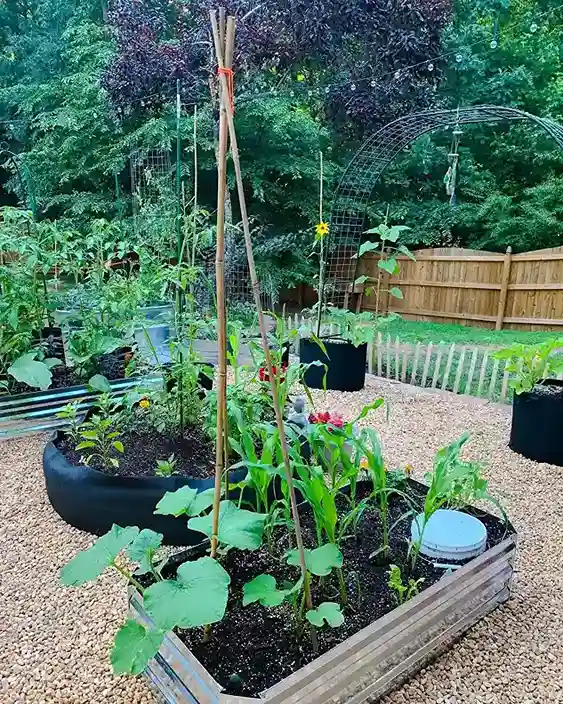
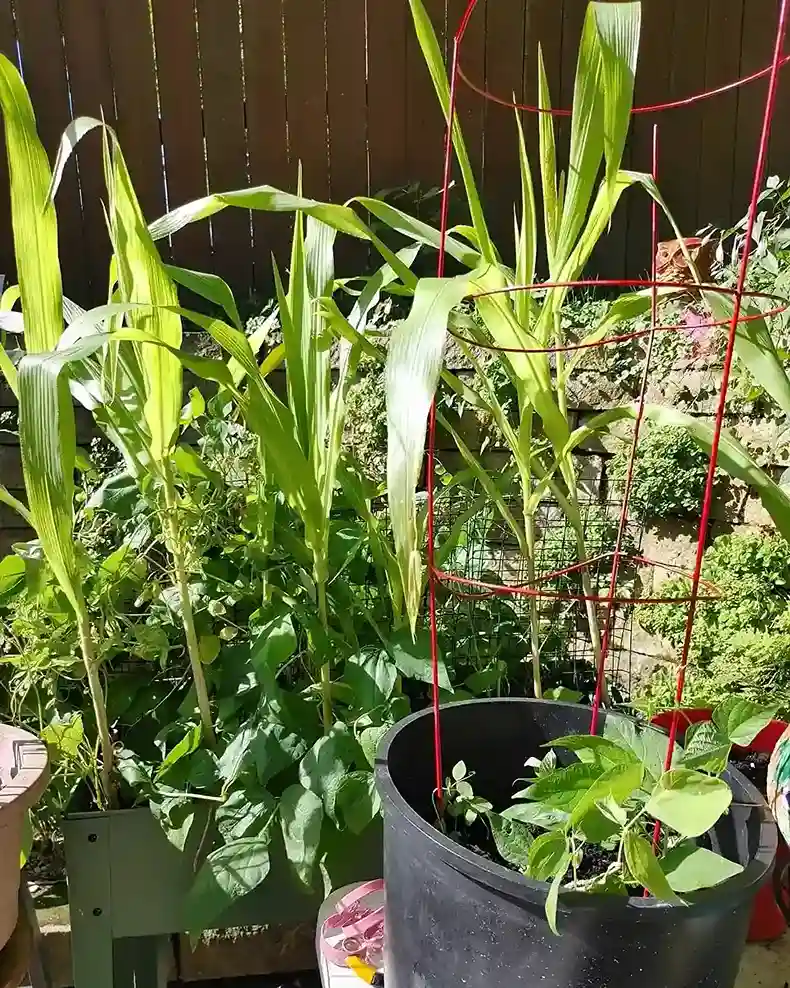
The Three Sisters is the most celebrated and time-tested companion planting layout in the world, combining corn, climbing beans, and sprawling squash in a mutually beneficial guild that has sustained Indigenous North American communities with extraordinary productivity for thousands of years.
Source: @jasminesinthegarden_
Corn provides a natural climbing pole for beans, beans fix atmospheric nitrogen that feeds all three plants, and squash spreads along the ground suppressing weeds and retaining soil moisture with its large, shading leaves. For more productive garden layout and food growing strategies, our food forest guide covers guild planting and multi-crop growing combinations in comprehensive, inspiring detail.
| Feature | Details |
|---|---|
| Core Plants | Sweetcorn, climbing beans, summer squash |
| Planting Spacing | Corn at 12 inches, beans around corn, squash at edges |
| Key Benefits | Nitrogen fixation, weed suppression, moisture retention |
| Best Bed Size | Minimum 6×6 feet for effective guild function |
| Difficulty Level | Beginner |
| Productivity Gain | Up to 30% more yield than monoculture |
2. Tomato and Basil Companion Layout
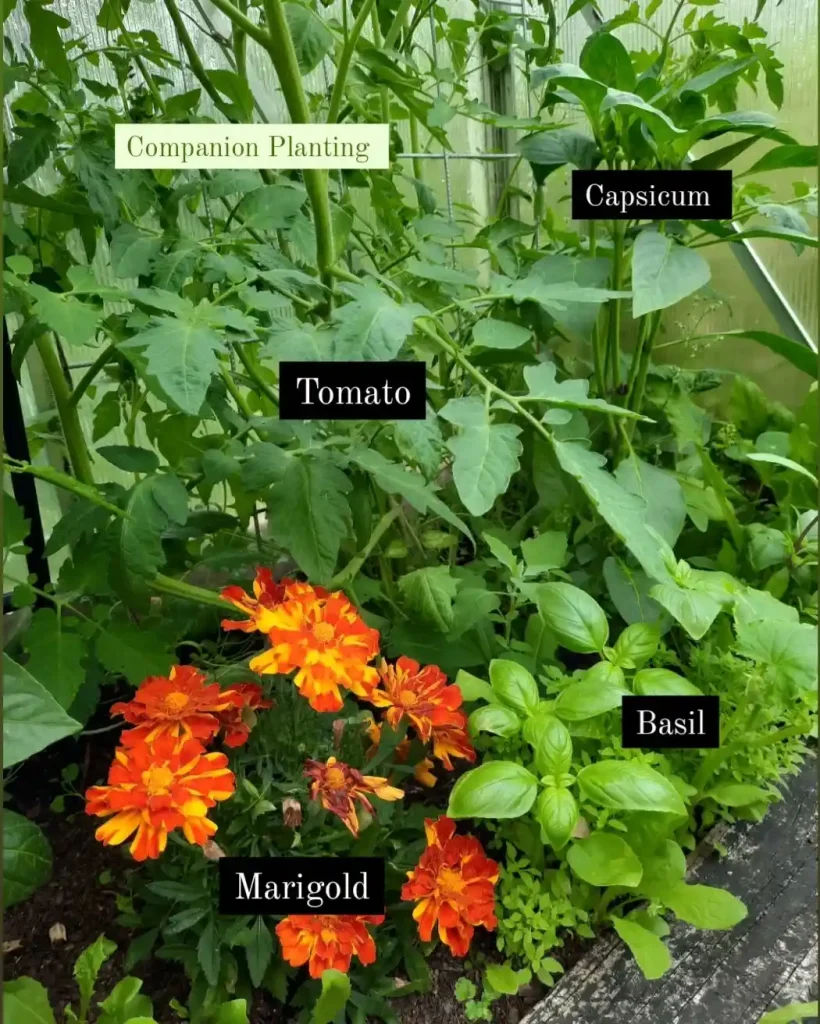
Tomatoes and basil are the most iconic companion planting pairing in the kitchen garden, with basil repelling aphids, whitefly, and spider mites from tomato plants while simultaneously improving tomato flavour through aromatic volatile compounds released into the shared growing environment.
Source: @derivedfromnaturenz
Plant a basil plant every 18 inches along the base of a tomato row, alternating with marigolds for additional pest deterrence and pollinator attraction throughout the entire growing season. For more herb companion planting strategies and fragrant plant combinations, our garden herb pairing guide covers tomato and herb companion layouts in practical, productive detail.
| Feature | Details |
|---|---|
| Core Plants | Tomatoes, basil, French marigolds |
| Planting Spacing | 1 basil plant per 18 inches of tomato row |
| Key Benefits | Pest repellence, flavour enhancement, pollinator attraction |
| Best Varieties | Any tomato with Genovese or Sweet basil |
| Difficulty Level | Beginner |
| Additional Companions | Parsley, chives, borage |
3. Raised Bed Companion Planting Layout
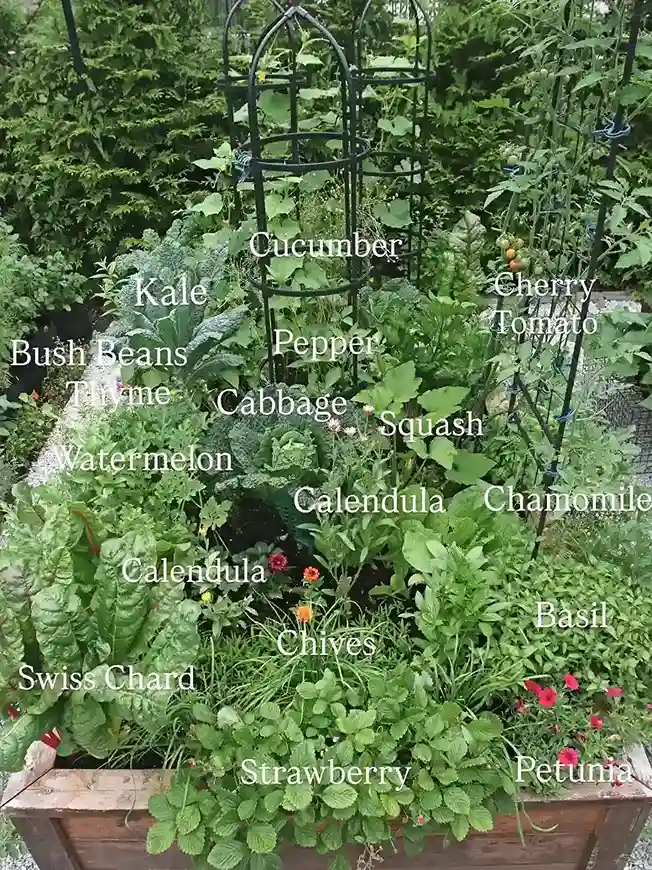
A raised bed companion planting layout divides a single raised bed into strategic planting zones, pairing tall crops like tomatoes and climbing beans at the back with medium herbs in the middle and low-growing companion plants like marigolds and nasturtiums along the front edge.
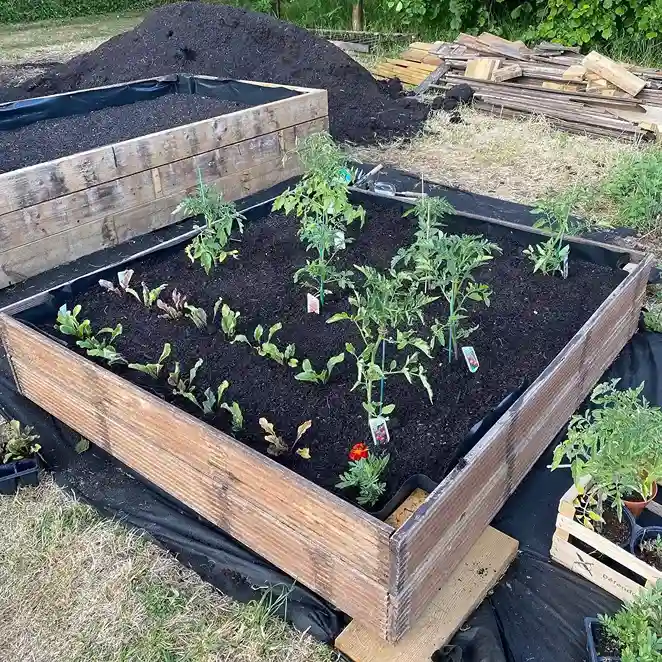
This layered raised bed layout maximises light interception, minimises pest pressure, and creates a beautifully productive, multi-functional growing space from even a small 4×8 foot raised bed. For more raised bed design and productive growing strategies, our small vegetable gardens guide covers companion planting in raised beds in practical, accessible detail.
| Feature | Details |
|---|---|
| Back Row | Tall crops — tomatoes, beans, sweetcorn |
| Middle Row | Medium herbs — basil, parsley, dill |
| Front Row | Low companions — marigolds, nasturtiums, chives |
| Bed Size | 4×8 feet minimum for effective layering |
| Difficulty Level | Beginner |
| Key Benefit | Maximises light, space, and pest management |
4. Carrot and Onion Companion Layout
Carrots and onions are a classic companion planting pairing where each plant’s aromatic compounds confuse and deter the other’s primary pest — carrot fly is repelled by the onion’s sulphurous scent while onion fly is deterred by the carrots’ volatile carrot aroma.
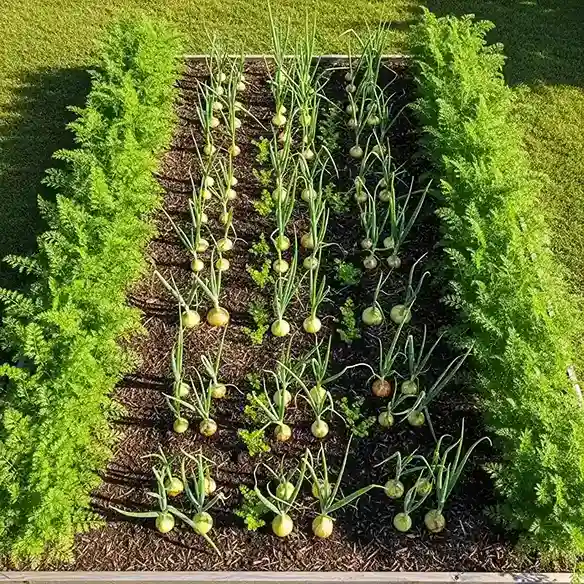
Interplant rows of carrots and onions in alternating single rows throughout the bed, spacing them at their standard growing distances for the most effective mutual pest deterrence benefit throughout the growing season. For more vegetable garden companion planting strategies, our small vegetable gardens guide covers carrot and onion companion layouts alongside every other key vegetable pairing in excellent detail.
| Feature | Details |
|---|---|
| Core Plants | Carrots, onions (or leeks, chives, spring onions) |
| Layout | Alternating single rows throughout the bed |
| Key Benefits | Mutual pest deterrence — carrot fly and onion fly |
| Spacing | Standard spacing for each crop individually |
| Difficulty Level | Beginner |
| Additional Companions | Rosemary, sage, lettuce |
5. Brassica Companion Planting Layout
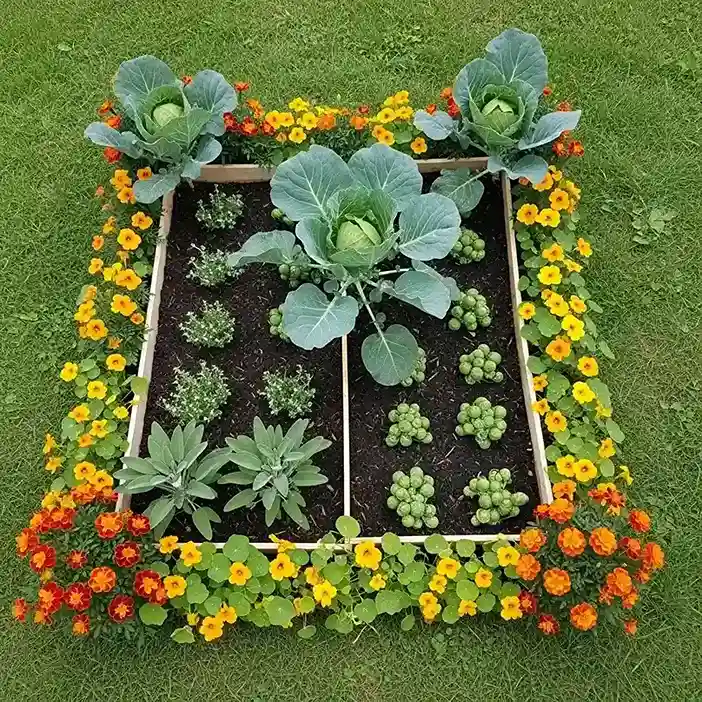
Brassica crops — cabbages, broccoli, kale, and Brussels sprouts — are among the most heavily pestered vegetables in the garden, making a well-designed companion planting layout using aromatic deterrents, trap crops, and beneficial insect attractors essential for successful brassica growing.
Source: @dreambigurbanfarm
Surround brassica beds with French marigolds, plant nasturtiums as sacrificial aphid trap crops at the bed edges, and interplant with aromatic sage, rosemary, and thyme to confuse and deter cabbage white butterflies and other brassica pests effectively. For more brassica growing and pest management strategies, our food forest guide covers companion planting for pest-vulnerable crops in comprehensive, practical detail.
| Feature | Details |
|---|---|
| Core Crops | Cabbage, broccoli, kale, Brussels sprouts, cauliflower |
| Best Companion Plants | French marigolds, nasturtiums, sage, rosemary, thyme |
| Trap Crop | Nasturtiums — sacrificial aphid attractant |
| Pest Deterrents | Aromatic herbs confuse cabbage white butterflies |
| Difficulty Level | Beginner to intermediate |
| Key Benefit | Significant reduction in aphid and caterpillar damage |
6. Squash and Nasturtium Companion Layout
Nasturtiums planted generously around squash, courgette, and pumpkin beds act as a powerful companion planting tool, attracting aphids away from the squash plants as a sacrificial trap crop while simultaneously luring predatory insects that manage pest populations throughout the wider garden.
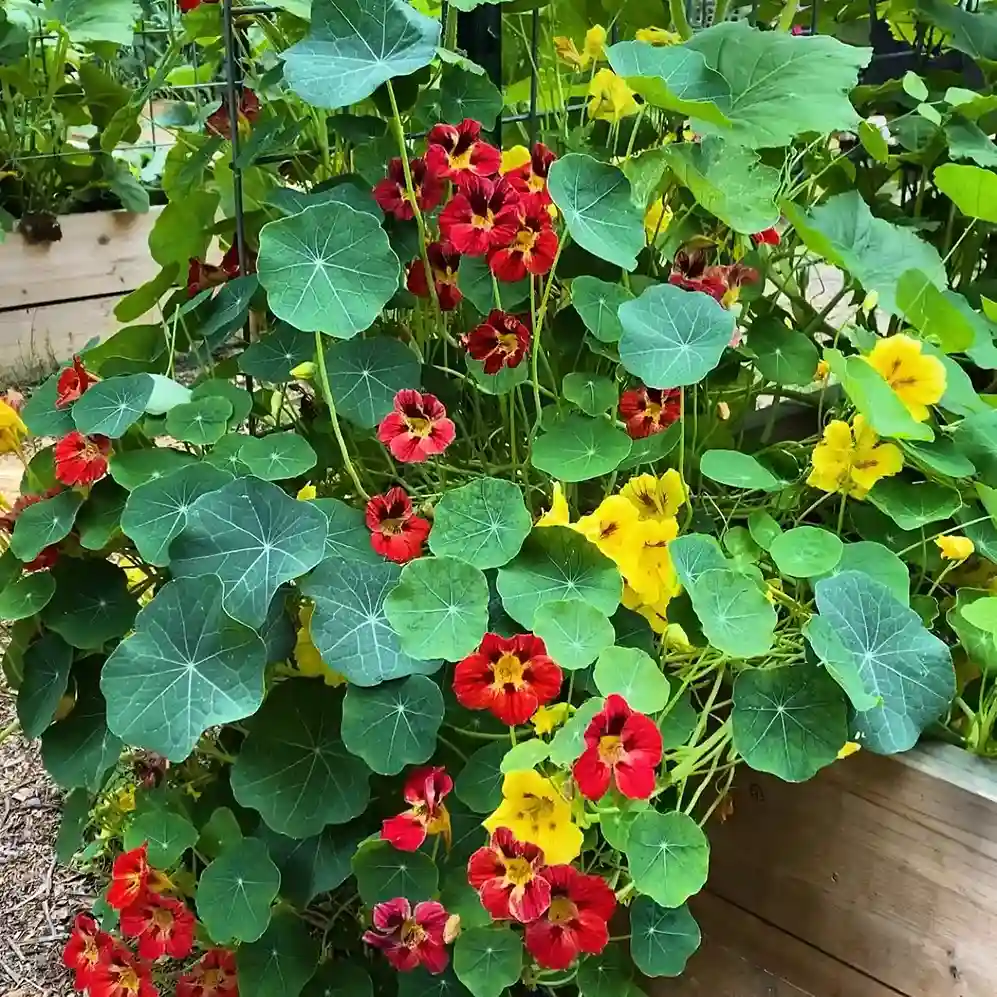
The trailing habit of nasturtiums mirrors and complements the sprawling growth of squash plants, creating a beautifully lush, colourful bed edge that is as attractive as it is functionally beneficial throughout the growing season. For more companion planting flower combinations, our container gardening flowers guide covers nasturtium growing and companion planting applications in colourful, practical detail.
| Feature | Details |
|---|---|
| Core Plants | Squash, courgette, pumpkin, cucumber |
| Companion Plant | Nasturtiums — trailing varieties at bed edges |
| Key Benefits | Aphid trap crop, predator attraction, ground cover |
| Planting Spacing | 1 nasturtium every 12 inches around bed perimeter |
| Difficulty Level | Beginner |
| Additional Companions | Borage, marigolds, dill |
7. Garlic and Rose Companion Layout
Planting garlic bulbs around the base of rose bushes is one of the most effective and long-established companion planting strategies in the ornamental garden, with garlic’s powerful sulphurous compounds repelling aphids, blackfly, and fungal diseases including black spot from roses naturally.
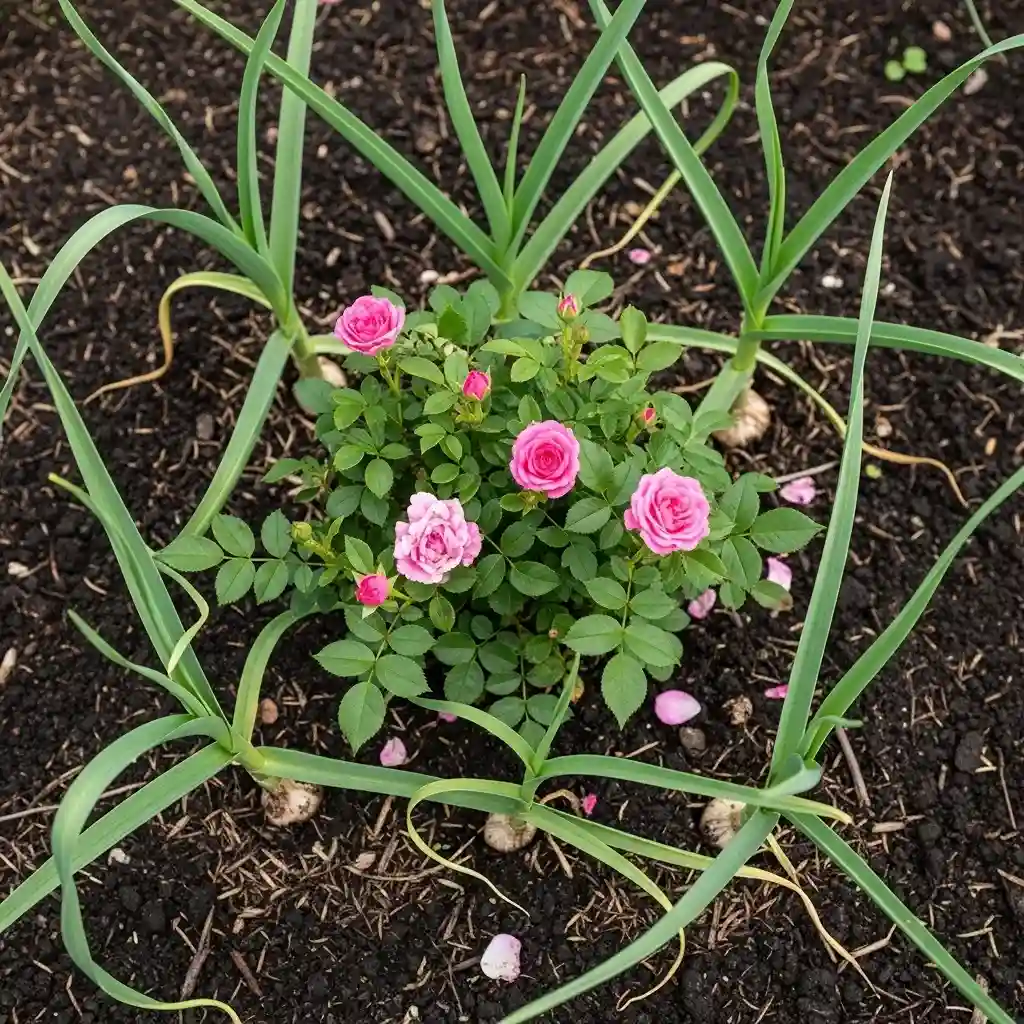
Plant a ring of garlic cloves 4–6 inches from each rose stem in autumn for spring growth that coincides perfectly with the season when aphid pressure on roses begins to intensify significantly. For more rose companion planting and garden border design guidance, our cottage garden ideas guide covers rose companion planting in beautifully traditional garden detail.
| Feature | Details |
|---|---|
| Core Plants | Roses (any variety) and garlic |
| Planting Distance | 4–6 inches from rose stems |
| Planting Time | Autumn for spring emergence |
| Key Benefits | Aphid repellence, black spot prevention |
| Difficulty Level | Beginner |
| Additional Companions | Lavender, chives, catmint, parsley |
8. Lettuce and Tall Crop Companion Layout
Growing lettuce and other salad crops beneath taller vegetables like tomatoes, sweetcorn, or climbing beans uses the partial shade cast by the taller crops to protect heat-sensitive lettuce from bolting in summer, simultaneously making productive use of otherwise wasted growing space beneath the canopy.
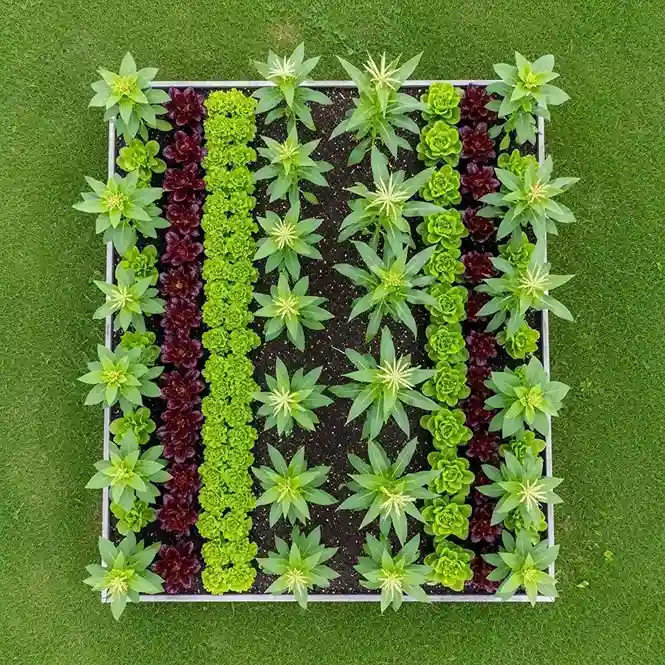
This vertical companion planting layout effectively doubles the productivity of a single growing area by stacking shade-tolerant crops beneath light-hungry tall crops in a space-efficient two-layer system. For more space-maximising vegetable garden layout strategies, our small vegetable gardens guide covers vertical crop stacking and shade planting combinations in excellent, practical detail.
| Feature | Details |
|---|---|
| Tall Crops | Tomatoes, sweetcorn, climbing beans, brassicas |
| Understorey Crops | Lettuce, spinach, rocket, radishes, herbs |
| Key Benefit | Shade protection prevents bolting in hot summers |
| Space Efficiency | Up to 2x more produce per square foot |
| Difficulty Level | Beginner |
| Best Season | Late spring through midsummer |
9. Pollinator Strip Companion Layout
A dedicated pollinator strip of companion flowering plants planted alongside or between vegetable beds dramatically increases pollination rates for fruiting crops, improving yields of tomatoes, beans, squash, cucumbers, and all other crops that require insect pollination to set fruit.
Sow a continuous 12–18 inch wide strip of phacelia, borage, calendula, and sweet alyssum alongside vegetable beds for the most effective, cost-efficient pollinator companion planting layout available in any productive garden. For more pollinator-attracting plant selections, our best outdoor plants guide covers the best flowering companion plants for vegetable garden pollinator strips in excellent detail.
| Feature | Details |
|---|---|
| Best Pollinator Plants | Phacelia, borage, calendula, sweet alyssum, dill |
| Strip Width | 12–18 inches alongside vegetable beds |
| Sowing Time | Direct sow from early spring onward |
| Key Benefit | Dramatically improved fruit set on all fruiting crops |
| Difficulty Level | Beginner |
| Estimated Cost | $5–$15 for seed mix |
10. Potato and Horseradish Companion Layout
Planting horseradish at the corners of potato beds is a traditional companion planting strategy that releases volatile compounds into the surrounding soil that deter Colorado potato beetle, one of the most destructive potato pests, while improving the overall disease resistance of the potato crop.
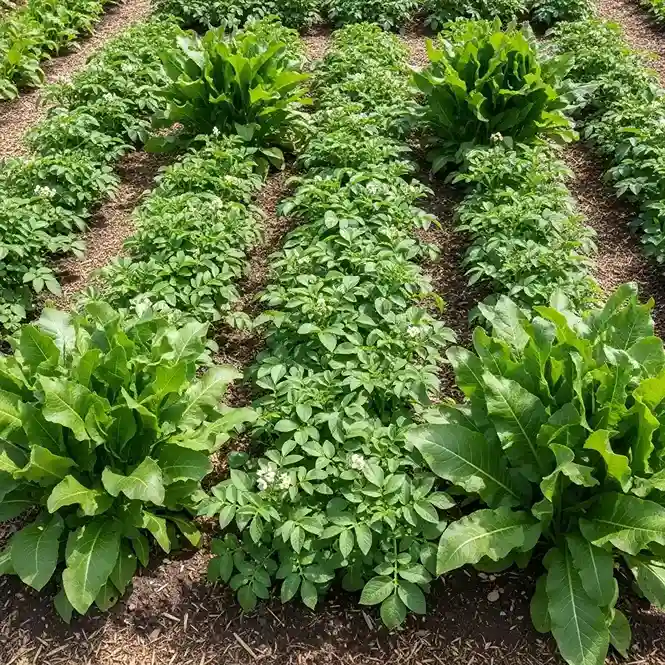
A single horseradish plant at each corner of a potato bed provides sufficient coverage for the entire planting area and can be harvested each autumn for culinary use as an additional yield from the companion planting relationship. For more productive companion planting strategies, our food forest guide covers root vegetable companion planting and soil health strategies in comprehensive, expert detail.
| Feature | Details |
|---|---|
| Core Plants | Potatoes and horseradish |
| Horseradish Position | One plant at each corner of potato bed |
| Key Benefits | Colorado beetle deterrence, disease resistance |
| Additional Companions | Beans, coriander, dead nettle |
| Avoid | Cucumber, pumpkin, tomato, sunflower near potatoes |
| Difficulty Level | Beginner |
11. Fruit Tree Guild Companion Layout
A fruit tree guild is a carefully designed companion planting layout around a single fruit tree, using nitrogen-fixing plants, dynamic accumulators, pollinator attractors, pest deterrents, and ground covers to create a self-sustaining, mutually beneficial plant community that reduces maintenance while increasing productivity.
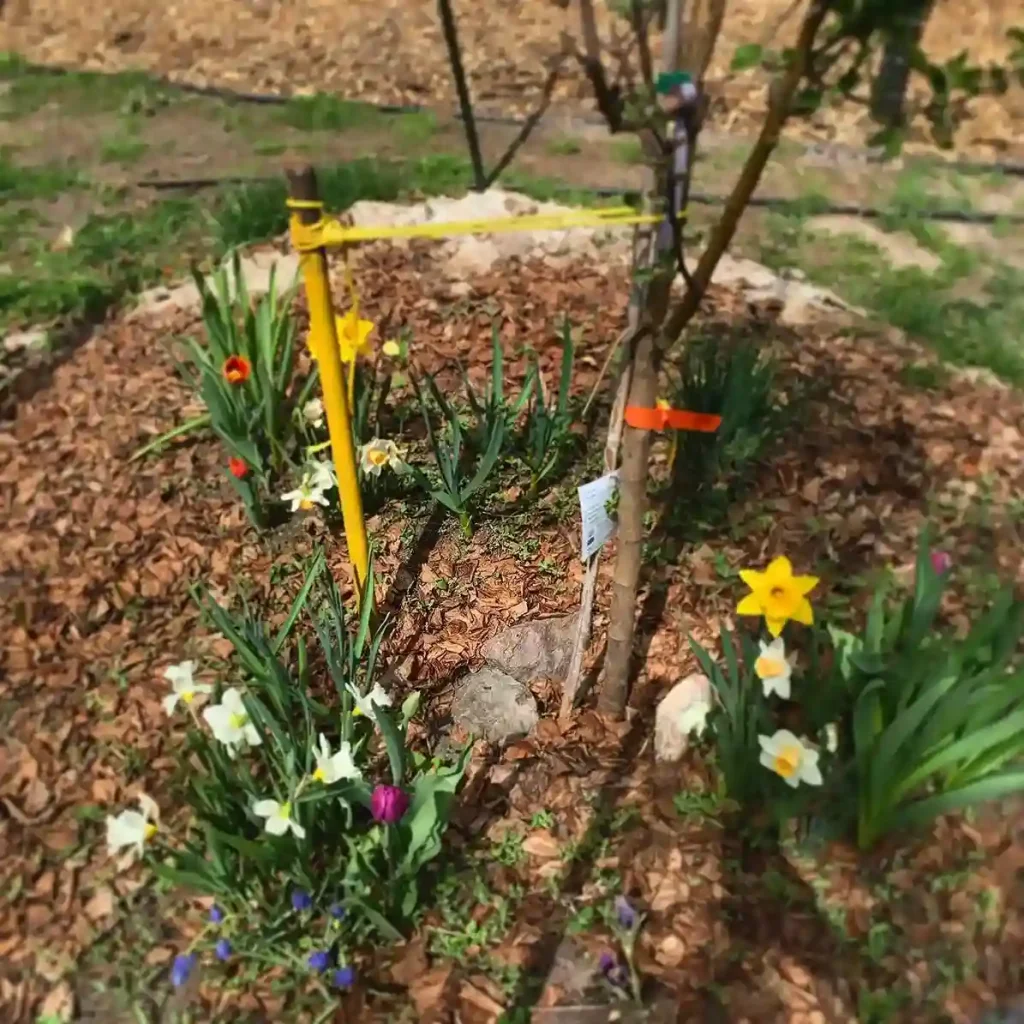
Plant comfrey, yarrow, chives, and clover in a ring around each fruit tree to create a functional guild that fixes nitrogen, accumulates minerals, attracts pollinators, and suppresses weeds simultaneously at virtually zero ongoing cost. For detailed fruit tree guild design and planting guidance, our food forest guide covers fruit tree guild companion planting in comprehensive, expert detail.
| Feature | Details |
|---|---|
| Core Plant | Any fruit tree — apple, pear, plum, cherry |
| Nitrogen Fixers | Comfrey, clover, lupin, alder |
| Dynamic Accumulators | Comfrey, yarrow, dandelion |
| Pest Deterrents | Chives, garlic, nasturtiums, tansy |
| Pollinator Attractors | Borage, phacelia, sweet alyssum, calendula |
| Guild Radius | 3–6 feet around tree drip line |
12. Herb Companion Planting Layout
A dedicated herb companion planting layout positions aromatic herbs strategically throughout the vegetable garden to deter specific pests, attract beneficial insects, and improve the flavour and growth of neighbouring crops through allelopathic and aromatic chemical interactions in the growing environment.
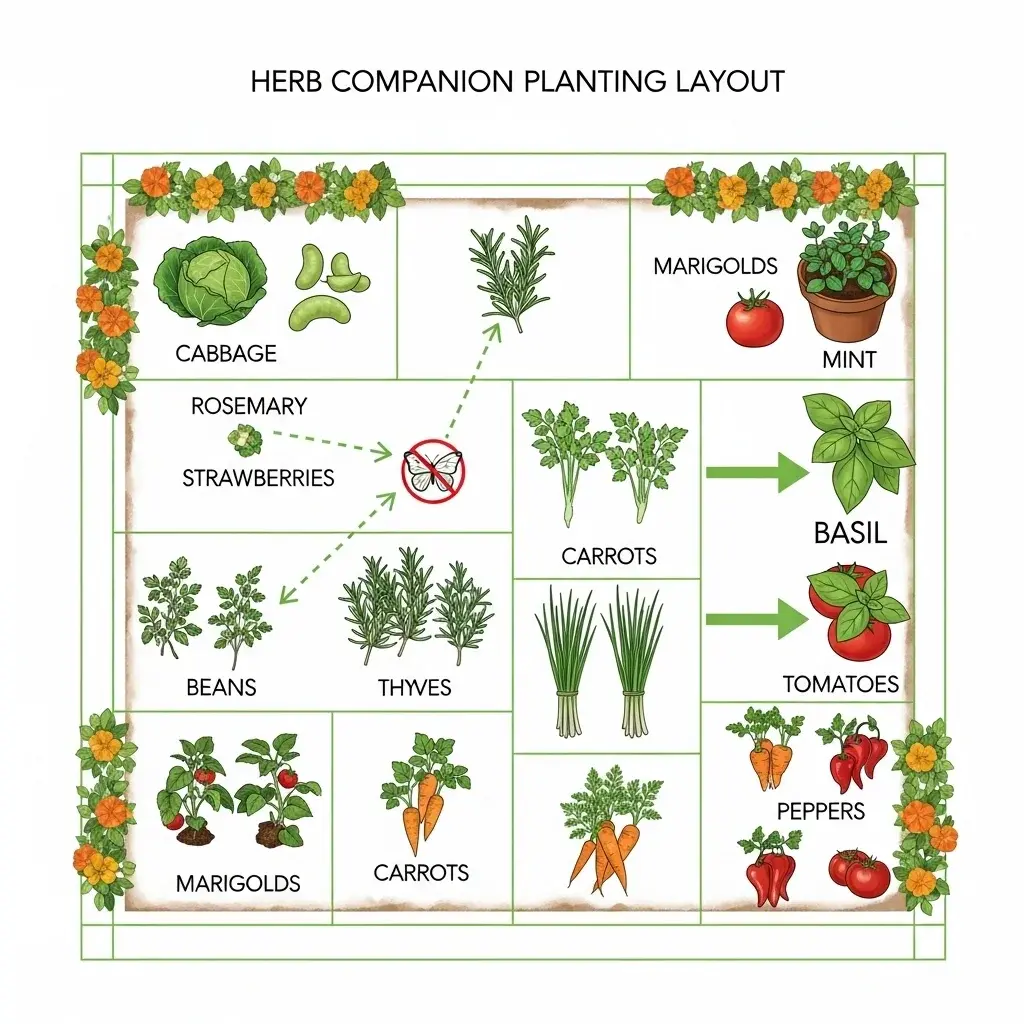
Rosemary near carrots and cabbages, dill near cucumbers and onions, and chamomile near brassicas and cucumbers all create targeted companion herb relationships that deliver measurable benefits throughout the growing season. For the best herb pairing and companion planting combinations, our garden herb pairing guide covers every key herb companion relationship in wonderfully practical, detailed guidance.
| Feature | Details |
|---|---|
| Rosemary | Near carrots, beans, brassicas — deters carrot fly |
| Dill | Near cucumbers, onions — attracts beneficial wasps |
| Chamomile | Near brassicas, cucumbers — improves growth |
| Mint | Near brassicas — deters cabbage white butterfly |
| Difficulty Level | Beginner |
| Key Benefit | Targeted, crop-specific pest and growth benefits |
13. Marigold Border Companion Layout
A continuous border of French marigolds planted around the entire perimeter of a vegetable garden creates a powerful, multi-spectrum pest deterrence system that repels nematodes in the soil, deters aphids and whitefly above ground, and attracts hoverflies and other beneficial predatory insects simultaneously.

French marigolds (Tagetes patula) rather than African marigolds (Tagetes erecta) are the more effective companion planting variety, their roots releasing thiophenes that actively suppress soil nematode populations when planted densely. For more flowering companion plant selections and garden border design ideas, our colorful shrubs guide covers marigold and companion flower border planting in colourful, practical detail.
| Feature | Details |
|---|---|
| Best Marigold | French marigold (Tagetes patula) |
| Planting Position | Continuous border around entire vegetable garden |
| Planting Spacing | 6–9 inches apart for dense coverage |
| Key Benefits | Nematode suppression, aphid deterrence, predator attraction |
| Difficulty Level | Beginner |
| Estimated Cost | $5–$15 for a full border from seed |
14. Cucumber and Dill Companion Layout
Dill planted alongside cucumbers creates a mutually beneficial companion relationship where dill attracts predatory wasps, lacewings, and hoverflies that manage cucumber beetle and aphid populations while cucumber’s shade protects bolting-prone mature dill plants from excessive summer heat.
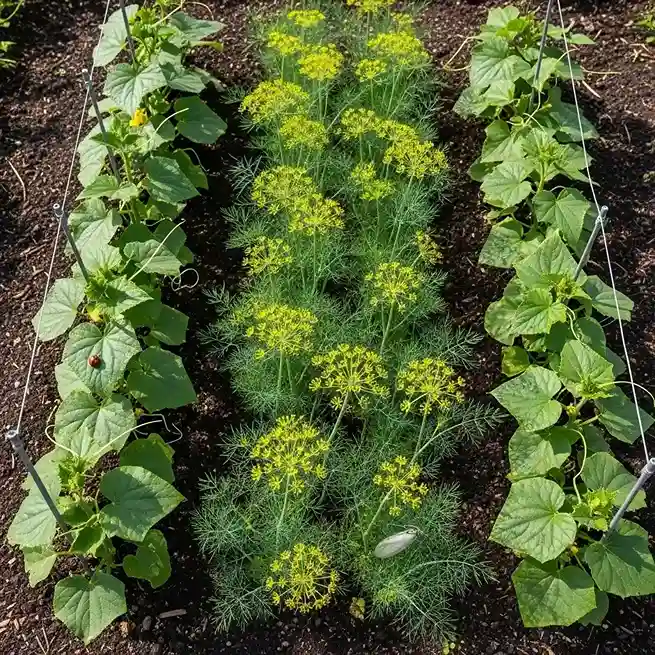
Avoid planting dill near carrots as the two are allelopathically incompatible, but dill excels as a companion for cucumbers, onions, lettuce, and brassicas throughout the vegetable garden. For more herb and vegetable companion planting strategies, our garden herb pairing guide covers dill companion relationships in excellent, practical detail.
| Feature | Details |
|---|---|
| Core Plants | Cucumbers and dill |
| Planting Spacing | 1 dill plant per 24 inches of cucumber row |
| Key Benefits | Predatory insect attraction, cucumber beetle deterrence |
| Avoid | Never plant dill near carrots or tomatoes |
| Difficulty Level | Beginner |
| Additional Companions | Borage, marigolds, nasturtiums |
15. Companion Planting for Raised Beds in Small Gardens
In small gardens, a compact companion planting layout that combines vegetables, herbs, and flowers in every raised bed simultaneously maximises pest management, pollination, and productivity from the very limited growing space available without any single bed being dedicated to a single crop type.
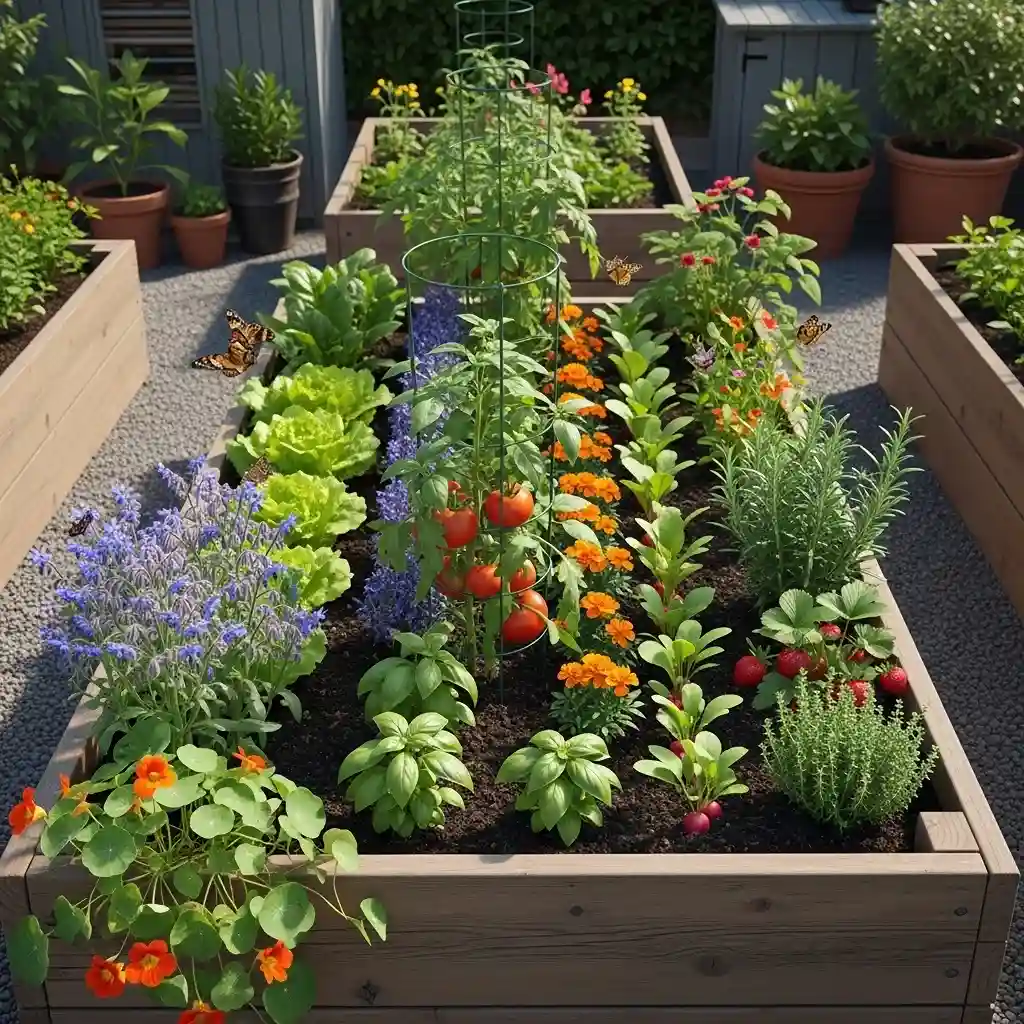
A 4×4 foot raised bed can comfortably house a tomato plant, three basil plants, two French marigolds, a parsley plant, and a trailing nasturtium at the edges — creating a complete companion planting ecosystem in minimal space. For more small space garden design strategies, our small garden ideas and tiny backyard ideas guides cover compact companion planting layouts in excellent, space-smart detail.
| Feature | Details |
|---|---|
| Best for 4×4 Bed | 1 tomato, 3 basil, 2 marigolds, 1 parsley, nasturtium |
| Best for 4×8 Bed | Full Three Sisters or mixed brassica guild |
| Key Strategy | Never grow single-crop monoculture in small beds |
| Difficulty Level | Beginner |
| Space Efficiency | Maximum biodiversity in minimum footprint |
| Estimated Cost | $10–$30 for seeds and starter plants |
16. Borage and Strawberry Companion Layout
Borage planted alongside strawberry beds is one of the most celebrated and effective fruit garden companion planting combinations, with borage repelling strawberry pest insects, attracting pollinating bees with its vivid blue flowers, and improving strawberry fruit flavour and yield measurably.
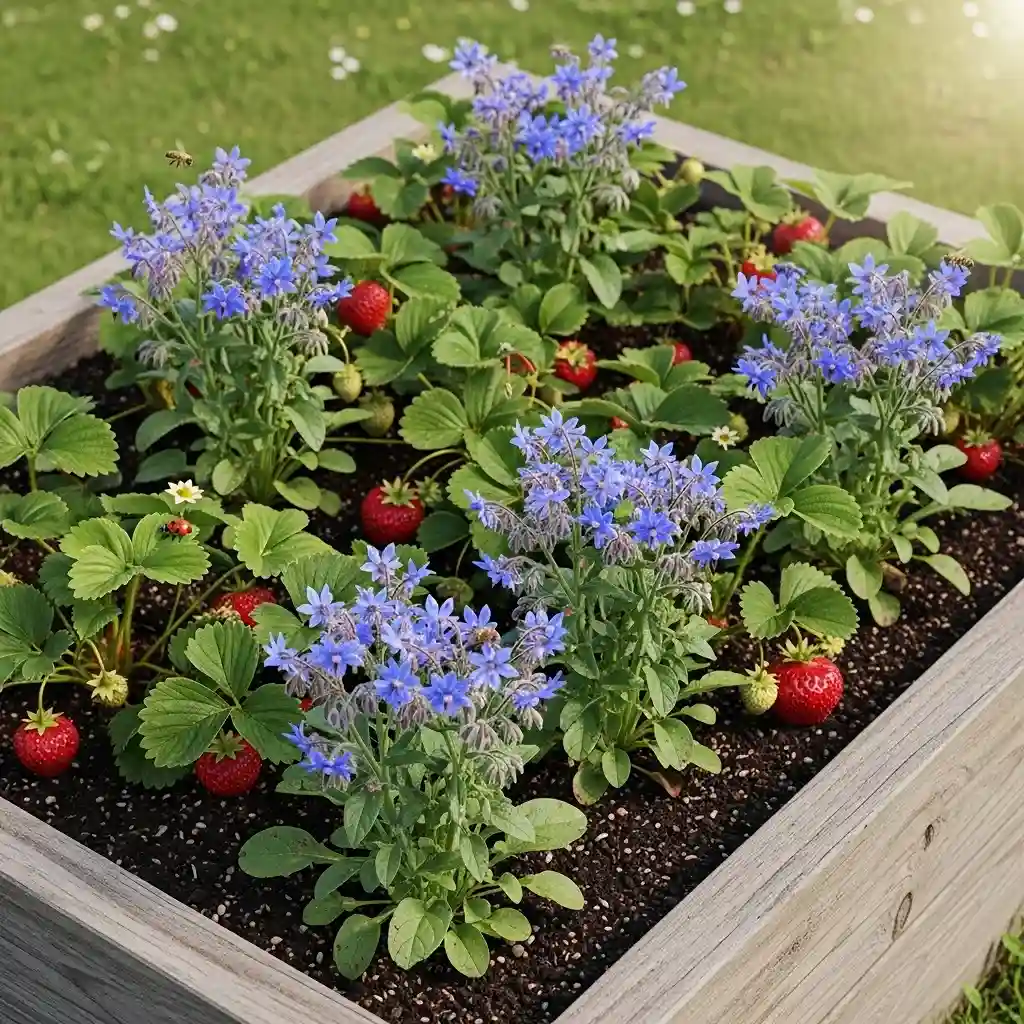
Plant one borage plant at each end of a strawberry row and allow it to self-seed prolifically for subsequent seasons, creating a permanent, self-sustaining companion planting arrangement that establishes itself more generously each growing year. For more productive fruit garden and edible planting ideas, our food forest guide covers fruit companion planting layouts in comprehensive, productive detail.
| Feature | Details |
|---|---|
| Core Plants | Strawberries and borage |
| Planting Position | 1 borage at each end of strawberry row |
| Key Benefits | Pest repellence, pollinator attraction, flavour improvement |
| Self-Seeding | Borage self-seeds freely for permanent companion planting |
| Difficulty Level | Beginner |
| Additional Companions | Thyme, sage, lettuce, spinach |
17. Vertical Companion Planting Layout
A vertical companion planting layout uses climbing and trailing plants on trellises, fences, and supports to create complementary growing relationships in three dimensions rather than just across the horizontal ground plane, dramatically increasing the companion planting diversity and productivity of any growing space.
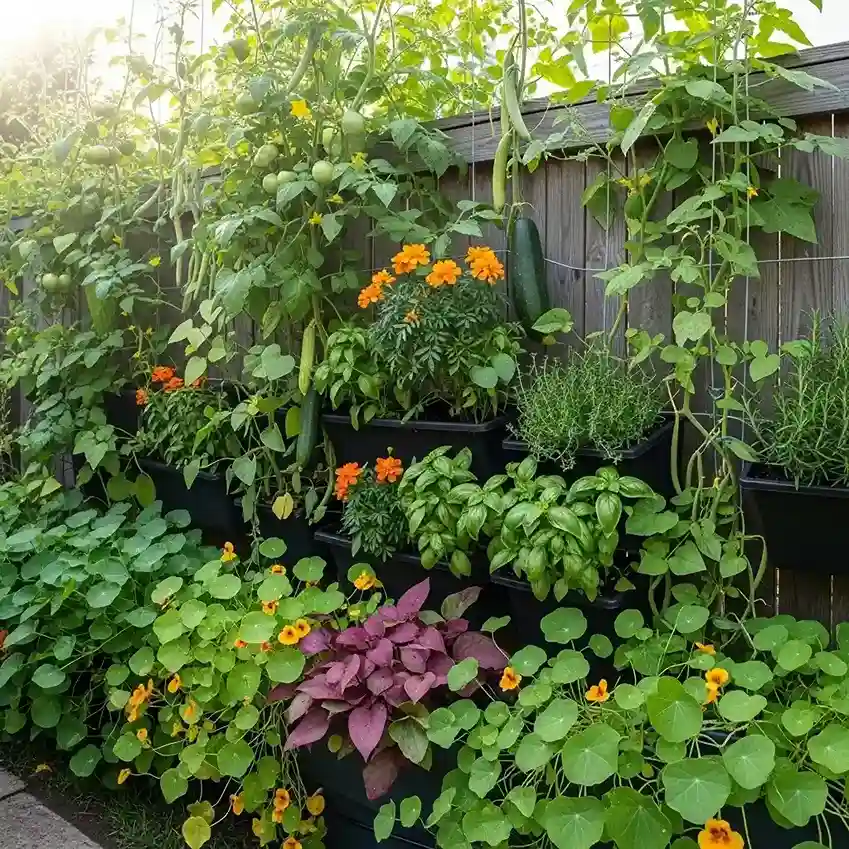
Climbing beans grown on a trellis behind low-growing lettuce, with fragrant sweet peas on the adjacent fence providing pollinator attraction, creates a space-efficient three-layer vertical companion planting system. For more vertical garden system design and climbing plant combinations, our vertical gardening guide covers vertical companion planting layouts in creative, practical detail.
| Feature | Details |
|---|---|
| Best Vertical Crops | Climbing beans, cucumbers, peas, tomatoes |
| Best Low Companions | Lettuce, herbs, radishes, nasturtiums |
| Best Trellis Companions | Sweet peas, nasturtiums, climbing borage |
| Key Benefit | 3x more companion planting interactions per square foot |
| Difficulty Level | Beginner |
| Space Efficiency | Outstanding for small gardens |
18. Companion Planting for Pest Control Layout
A pest-control-focused companion planting layout uses a systematic combination of aromatic deterrents, sacrificial trap crops, and beneficial insect attractors positioned strategically throughout the entire vegetable garden to create a comprehensive, chemical-free integrated pest management system.
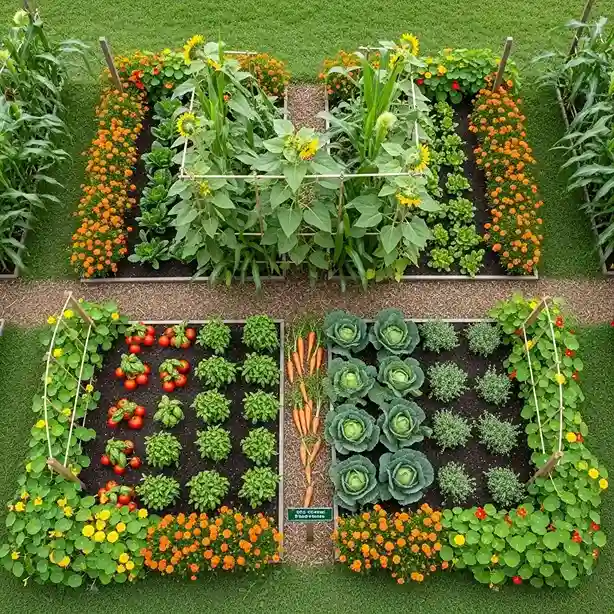
Position French marigolds at every bed corner, nasturtiums as perimeter trap crops, dill and fennel as parasitic wasp attractors, and interplant strongly aromatic herbs throughout every bed for maximum multi-pest deterrence coverage. For more natural garden pest management strategies, our guides on get rid of ants in your yard and eliminate ground moles cover broader pest control in the companion-planted garden.
| Feature | Details |
|---|---|
| Perimeter Plants | French marigolds and nasturtiums at all bed edges |
| Trap Crops | Nasturtiums, mustard, blue hubbard squash |
| Beneficial Insect Attractors | Dill, fennel, phacelia, sweet alyssum |
| Aromatic Deterrents | Lavender, rosemary, mint, sage, chives |
| Difficulty Level | Beginner to intermediate |
| Key Benefit | Whole-garden chemical-free pest management |
19. Cottage Garden Companion Planting Layout
A cottage garden companion planting layout blends vegetables, herbs, and ornamental flowers together in a beautifully informal, relaxed arrangement that creates outstanding biodiversity, exceptional pollinator support, and natural pest management while producing a planting of extraordinary visual beauty throughout the season.
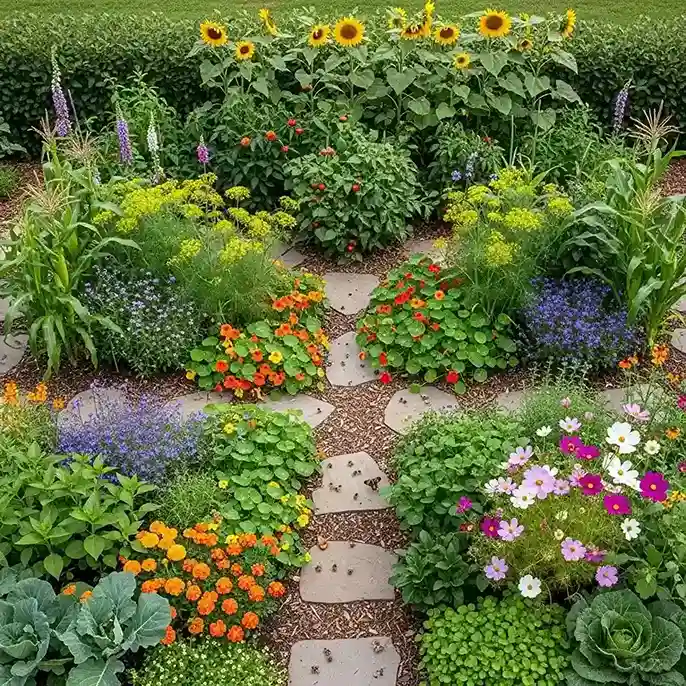
Self-seeding companions like borage, calendula, nasturtiums, and cornflowers weave themselves freely between cottage garden crops and flowers, creating an increasingly biodiverse, productive, and beautiful companion planting system that manages itself with every passing growing season. For the most beautiful cottage garden companion planting combinations, our cottage garden ideas guide covers mixing edibles and ornamentals in traditional cottage garden layouts beautifully.
| Feature | Details |
|---|---|
| Best Self-Seeding Companions | Borage, calendula, nasturtiums, cornflowers, phacelia |
| Best Edible Companions | Herbs, salads, climbing beans, courgette |
| Best Ornamental Companions | Roses, foxgloves, delphiniums, sweet peas |
| Maintenance Level | Very low — self-managing through self-seeding |
| Difficulty Level | Beginner |
| Key Benefit | Beauty and productivity in perfect harmony |
20. Companion Planting in a Food Forest Layout
A food forest companion planting layout arranges plants in ecological layers from canopy to ground cover, with each plant performing multiple companion planting functions simultaneously — fixing nitrogen, accumulating minerals, deterring pests, attracting pollinators, or suppressing weeds within the wider food forest system.
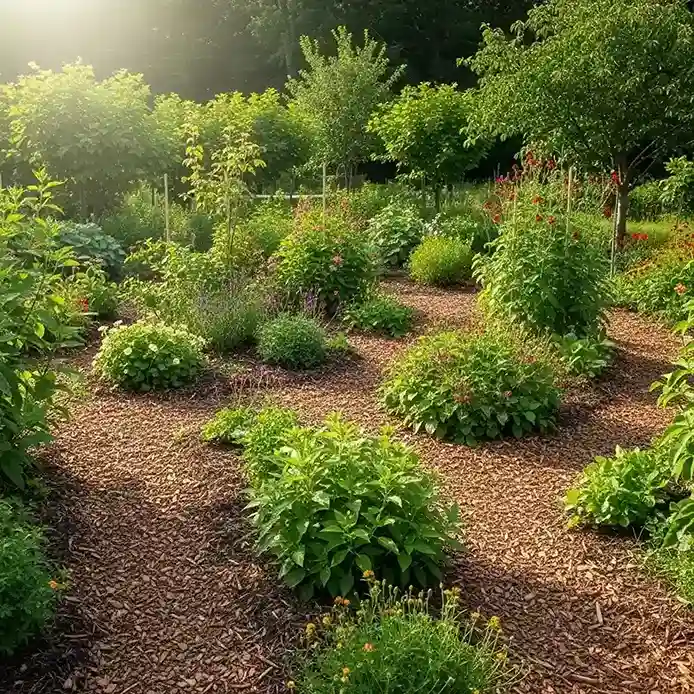
Every plant chosen for a food forest companion layout must ideally fulfil three or more functions to justify its place in the system, creating the most productive and ecologically efficient garden possible. For comprehensive food forest design and companion planting guidance, our food forest guide covers every layer of food forest companion planting in expert, inspiring detail.
| Feature | Details |
|---|---|
| Canopy Companions | Nitrogen-fixing trees — alder, robinia, siberian pea tree |
| Shrub Layer | Comfrey, sea buckthorn, goumi, elaeagnus |
| Herb Layer | Yarrow, chives, fennel, lemon balm |
| Ground Cover | Clover, thyme, strawberry, creeping nasturtium |
| Difficulty Level | Intermediate to advanced |
| Key Benefit | Completely self-sustaining companion ecosystem |
21. Companion Planting for Container Gardens
A companion planting layout adapted for container gardens applies the same principles of mutual benefit, pest deterrence, and pollinator attraction to pots, window boxes, and raised container beds, creating productive, healthy container gardens with dramatically fewer pest and disease problems.
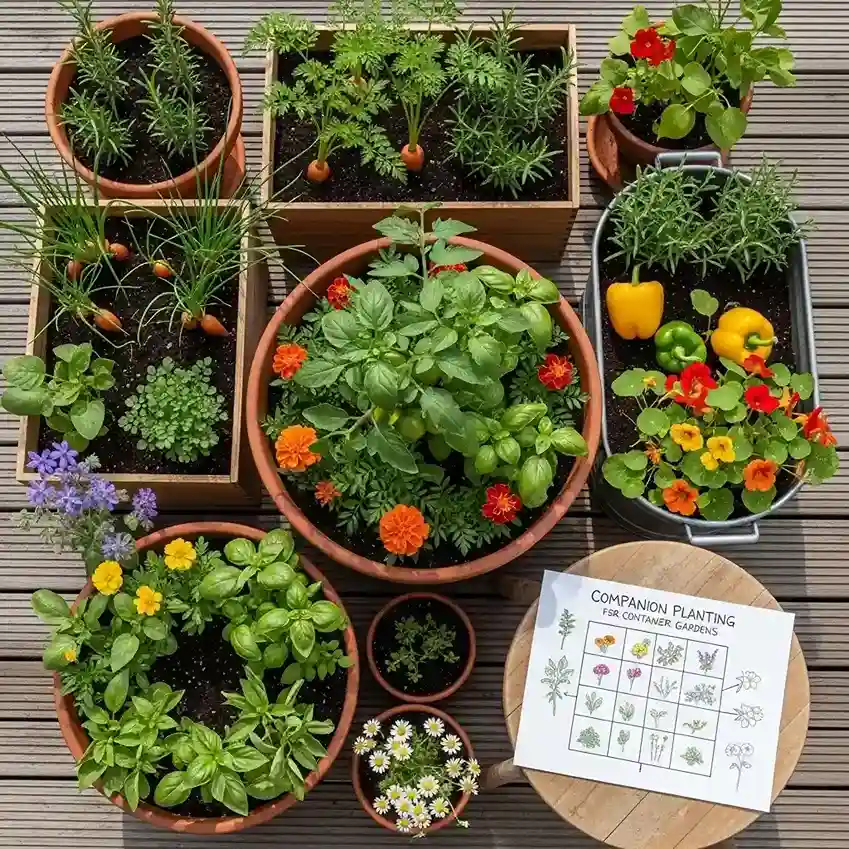
Plant a tomato with basil and a single French marigold in a large container, or combine a miniature sweet pepper with parsley and sweet alyssum in a window box for an effective, space-efficient container companion planting combination. For seasonal container planting combinations and care guidance, our container gardening guide covers companion planting in container gardens in practical, creative detail.
| Feature | Details |
|---|---|
| Best Container Combinations | Tomato + basil + marigold in large pot |
| Window Box Combination | Pepper + parsley + sweet alyssum |
| Key Benefit | Pest reduction in isolated container environment |
| Minimum Container Size | 12 inches diameter for companion combinations |
| Difficulty Level | Beginner |
| Estimated Cost | $15–$40 for plants and compost |
22. Seasonal Companion Planting Layout Plan
A well-designed seasonal companion planting layout rotates companion relationships throughout the year, following spring companions with summer successors and autumn companions in the same beds to maintain continuous pest management, soil fertility, and pollinator support from earliest spring to latest autumn.
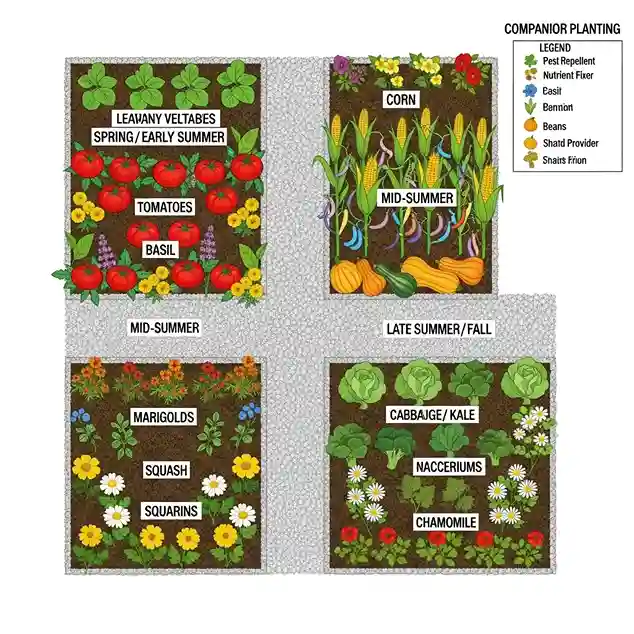
Spring peas with spinach give way to summer tomatoes with basil, followed by autumn brassicas with aromatic herb companions — creating a complete year-round companion-planting rotation that builds soil health with each passing season. For seasonal planting planning and year-round garden management strategies, our backyard landscaping ideas guide covers seasonal garden rotation and planning in comprehensive, practical detail.
| Feature | Details |
|---|---|
| Spring Companions | Peas + spinach + chives + lettuce |
| Summer Companions | Tomatoes + basil + marigolds + borage |
| Autumn Companions | Brassicas + sage + rosemary + nasturtiums |
| Winter Cover | Clover, winter tares — nitrogen-fixing cover crop |
| Difficulty Level | Intermediate |
| Key Benefit | Year-round soil health and pest management |
Frequently Asked Questions (FAQs)
Q1: What is companion planting and how does it work?
Companion planting positions plants together strategically so they benefit each other through pest deterrence, nitrogen fixation, pollinator attraction, or physical support. Plants release aromatic compounds, root chemicals, and physical structures that create mutually beneficial growing relationships. Our garden herb pairing guide covers the science and practice of companion planting in accessible, practical detail.
Q2: What are the best companion plants for a vegetable garden?
French marigolds, nasturtiums, borage, basil, dill, and chives are the most versatile and effective companion plants for any vegetable garden, offering broad-spectrum pest deterrence, pollinator attraction, and soil improvement benefits. Our food forest guide covers companion planting plant selection for productive vegetable and food growing gardens in comprehensive detail.
Q3: Which plants should not be planted together?
Fennel is allelopathically incompatible with most vegetables and should be grown separately. Onions inhibit bean and pea growth. Dill should never be planted near carrots or tomatoes. Potatoes and tomatoes are susceptible to the same blight diseases and should always be kept well separated throughout the growing garden.
Q4: How do I start a companion planting layout as a beginner?
Start with the simplest and most proven combinations — tomatoes with basil and marigolds, or the Three Sisters of corn, beans, and squash — before expanding to more complex guild arrangements. Our small vegetable gardens guide covers beginner companion planting layouts for raised beds and small gardens in excellent, encouraging, practical detail.
Conclusion
A thoughtfully designed companion planting layout transforms any garden into a beautifully productive, ecologically intelligent growing space that manages pests naturally, builds soil fertility, and increases yields with every passing season of careful, observation-based refinement.
Explore more productive garden design and planting inspiration through our guides on backyard landscaping ideas, spiral herb garden and yard ideas for outdoor spaces to create your ideal companion planting garden today.