
Your backyard holds endless potential to become a stunning outdoor retreat that reflects your personal style and connects you with nature. Whether you’re working with a compact urban space or a sprawling suburban lawn, the right plant selections can transform ordinary yards into extraordinary landscapes.

Source: @yardsunlimited
From flowering trees that mark the seasons to hardy shrubs that provide year-round structure, these landscaping ideas will inspire your next garden project.
1. Japanese Maple Trees for Focal Points
Japanese maples offer stunning foliage in shades of red, purple, and green. These ornamental trees grow 15-25 feet tall and provide year-round visual interest with their delicate leaves and elegant branching structure.

Source: @omniaetnihilbeautiful
Their compact size makes them perfect for small yards. Plant them as standalone specimens or in groups. They thrive in partial shade and well-drained soil, requiring minimal maintenance once established.
2. Lavender Borders for Fragrant Pathways
Lavender creates beautiful purple borders along walkways and garden beds. This drought-tolerant plant releases aromatic oils when brushed against, filling your backyard with a calming Mediterranean fragrance throughout summer.

Source: @chippingnortongardenco
Choose English lavender for colder climates or French lavender for warmer regions. Space plants 12-18 inches apart for a continuous hedge effect. Lavender attracts pollinators while naturally repelling mosquitoes and other pests.
3. Ornamental Grasses for Texture and Movement
Ornamental grasses like fountain grass, maiden grass, and blue fescue add flowing texture to landscapes. Their feathery plumes sway gracefully in breezes, creating dynamic visual interest and soft rustling sounds that enhance garden ambiance.

These low-maintenance plants tolerate drought and poor soil conditions. They provide winter interest with dried seed heads and golden foliage. Cut back annually in early spring to encourage fresh growth and maintain their attractive appearance.
4. Hydrangea Shrubs for Colorful Blooms
Hydrangeas produce massive flower clusters in blue, pink, white, or purple from summer through fall. These deciduous shrubs grow 3-6 feet tall and wide, creating impressive displays that work beautifully as foundation plantings or privacy screens.
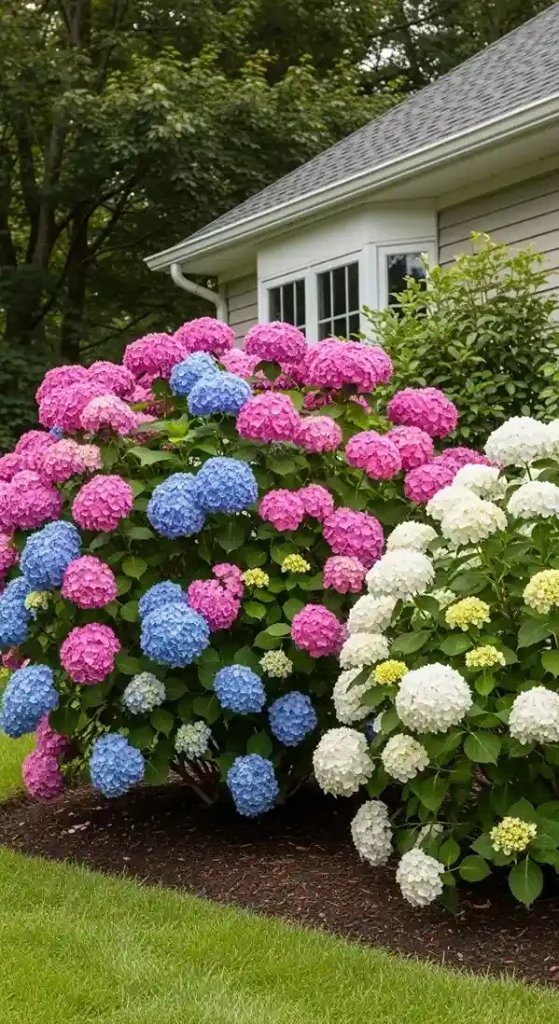
Soil pH affects bloom color in certain varieties. Acidic soil produces blue flowers while alkaline soil creates pink blooms. Plant them in morning sun with afternoon shade and keep soil consistently moist for best flowering results.
5. Boxwood Hedges for Formal Structure
Boxwood creates classic, manicured hedges that define garden spaces with timeless elegance. These evergreen shrubs respond well to pruning and shaping, allowing you to create geometric patterns, low borders, or tall privacy screens depending on your design preferences.

They grow slowly but steadily, requiring trimming 2-3 times annually. Boxwood tolerates shade and adapts to various soil types. Use them to edge flower beds, line walkways, or create traditional parterre gardens with intricate patterns.
6. Climbing Roses on Trellises and Arbors
Climbing roses transform vertical structures into romantic, flowering focal points. Varieties like ‘New Dawn’, ‘Eden’, and ‘Zephirine Drouhin’ produce abundant blooms on long canes that can reach 10-20 feet, covering arbors, fences, and pergolas magnificently.

Train canes horizontally to encourage more blooms along the entire length. Roses need 6+ hours of sunlight daily and regular feeding during growing season. Deadhead spent flowers to promote continuous blooming throughout summer and fall.
7. Hostas for Shade Garden Solutions
Hostas thrive in shaded areas where many plants struggle to grow. These perennials offer impressive foliage variety with leaves ranging from miniature to plate-sized, in colors including green, blue, gold, and variegated combinations that brighten dim spaces.

They spread gradually to form attractive ground cover under trees and along shaded borders. Hostas require minimal care beyond occasional watering and slug control. Divide clumps every few years to propagate new plants or control their spread.
8. Crepe Myrtle Trees for Summer Color
Crepe myrtles deliver spectacular summer blooms in pink, red, white, or purple that last for months. These deciduous trees feature attractive exfoliating bark and brilliant fall foliage, providing multi-season interest in landscapes from zones 7-9.

They tolerate heat, drought, and various soil types once established. Varieties range from dwarf shrubs to 30-foot trees. Prune in late winter to maintain shape and encourage vigorous blooming, avoiding excessive trimming that reduces flower production.
9. Peonies for Fragrant Spring Blooms
Peonies produce luxurious, fragrant flowers in late spring that are perfect for cutting gardens. These long-lived perennials return reliably each year, with some plants blooming for decades. Their lush foliage remains attractive throughout the growing season.

Plant peony roots in fall with eyes 1-2 inches below soil surface. They need cold winter temperatures to bloom properly and prefer full sun with well-drained soil. Support stems with peony rings to prevent heavy flowers from drooping.
10. Evergreen Arborvitae for Year-Round Privacy
Arborvitae provides dense, year-round screening that blocks unsightly views and creates secluded outdoor spaces. These narrow, columnar evergreens grow 10-40 feet tall depending on variety, making them ideal for property lines and backyard borders requiring vertical privacy.

Plant them 3-4 feet apart for solid privacy screens. Arborvitae tolerates various soil conditions and requires minimal pruning. Water regularly during establishment and apply mulch to retain moisture and suppress weeds around root zones.
11. Daylilies for Low-Maintenance Color Bursts
Daylilies offer vibrant blooms in nearly every color except blue, with individual flowers lasting just one day but plants producing numerous buds. These tough perennials thrive in diverse conditions and multiply readily, creating impressive displays with minimal care required.

They tolerate drought, poor soil, and neglect while still blooming prolifically. Plant them in full sun to partial shade, spacing 18-24 inches apart. Divide overcrowded clumps every 3-4 years to maintain vigor and share with neighbors or friends.
12. Dwarf Fruit Trees for Edible Landscapes
Dwarf apple, peach, cherry, and pear trees provide spring blossoms, summer fruit, and compact growing habits suitable for small yards. These trees grow 8-10 feet tall, making harvesting easy while adding productive beauty to your backyard landscape design.

Choose varieties suited to your climate zone and chill hour requirements. Plant in full sun with well-draining soil and adequate spacing. Most fruit trees require cross-pollination, so plant at least two compatible varieties or choose self-fertile cultivars.
13. Butterfly Bush for Pollinator Attraction
Butterfly bushes produce fragrant, cone-shaped flower clusters that attract butterflies, hummingbirds, and bees throughout summer. These fast-growing shrubs reach 6-10 feet tall and bloom in purple, pink, white, or yellow, creating vibrant focal points teeming with beneficial wildlife.

Deadhead spent blooms to encourage continuous flowering until frost. They prefer full sun and tolerate drought once established. Prune hard in early spring to control size and promote vigorous new growth with abundant flower production.
14. Ornamental Cherry Trees for Spring Spectacles
Ornamental cherries create breathtaking spring displays with clouds of pink or white blossoms covering bare branches. Varieties like Yoshino and Kwanzan offer different bloom times, flower forms, and fall color, transforming backyards into temporary wonderlands each spring season.
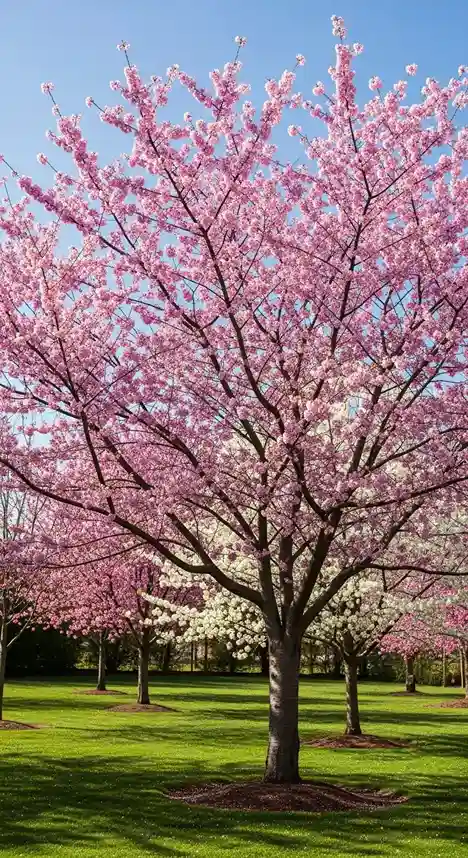
These trees prefer full sun and well-drained, slightly acidic soil. They grow 15-30 feet tall depending on variety. Choose disease-resistant cultivars to minimize maintenance. Flowering cherries require minimal pruning and produce small, ornamental fruits enjoyed by birds.
15. Sedum Ground Cover for Rock Gardens
Sedums are succulent perennials perfect for rock gardens, slopes, and areas with poor soil. These drought-tolerant plants feature fleshy leaves and star-shaped flowers in pink, yellow, or white. Low-growing varieties create attractive, weed-suppressing carpets requiring virtually no maintenance.

They thrive in full sun and excellent drainage, making them ideal for challenging dry areas. Sedums spread gradually through stems that root where they touch soil. Plant different varieties together for diverse textures and blooming periods extending from spring through fall.
16. Weeping Willow Trees for Waterside Drama
Weeping willows create romantic, cascading canopies near ponds, streams, or water features. Their long, pendulous branches sway gracefully in breezes, reaching 30-50 feet tall and wide. These fast-growing trees establish quickly, providing shade and dramatic focal points within few years.

Plant them only where their extensive root systems won’t interfere with structures or utilities. Willows need consistently moist soil and full sun. They drop leaves and small branches regularly, requiring ongoing cleanup but offering unmatched aesthetic appeal near water.
17. Coneflowers for Prairie-Style Gardens
Purple coneflowers bring native plant beauty to backyard landscapes with daisy-like blooms featuring prominent central cones. These drought-tolerant perennials bloom from midsummer through fall in purple, pink, white, or orange, attracting butterflies while providing seeds for goldfinches in winter.

Plant them in full sun with well-drained soil, spacing 18-24 inches apart. Coneflowers self-seed moderately, creating natural-looking drifts over time. Leave seed heads standing through winter for wildlife food and architectural interest beneath snow and frost.
18. Blue Spruce for Evergreen Elegance
Blue spruce trees offer striking silvery-blue needles and perfect pyramidal forms. These stately evergreens grow 50-75 feet tall over decades, serving as dramatic specimen trees or windbreaks. Their unique coloration provides year-round contrast against green landscapes and winter snow.

They prefer full sun and well-drained, slightly acidic soil. Blue spruce tolerates cold climates but struggles in hot, humid conditions. Plant them with adequate spacing to accommodate mature size. Minimal pruning needed; simply remove dead branches and maintain natural shape.
19. Black-Eyed Susans for Cheerful Summer Color
Black-eyed Susans produce golden-yellow flowers with dark centers from midsummer through fall. These tough native perennials tolerate heat, drought, and poor soil while reliably returning year after year. They spread gradually, filling garden spaces with cheerful, easy-care color.
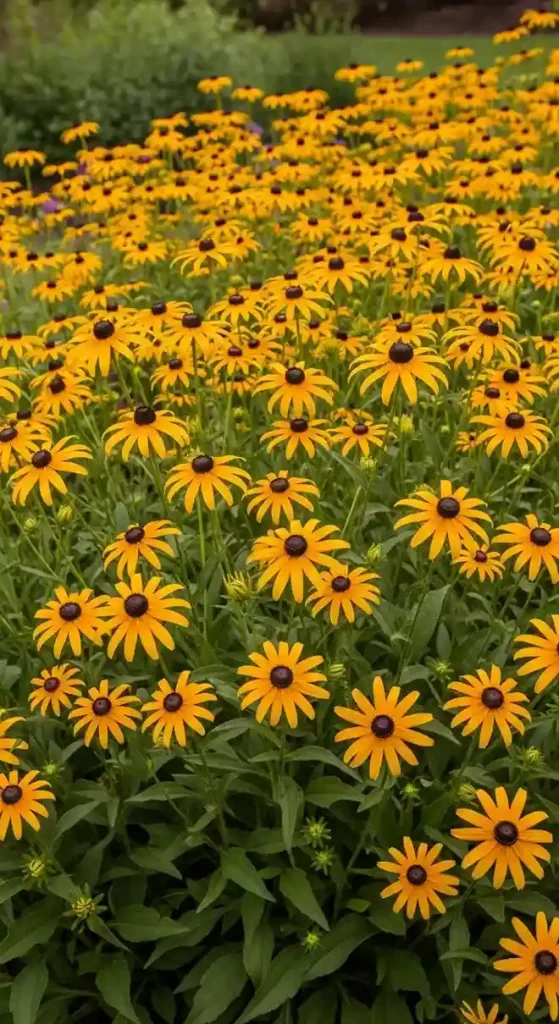
Plant them in full sun to partial shade, spacing 18 inches apart. They self-seed readily but aren’t aggressively invasive. Black-eyed Susans attract pollinators and beneficial insects while deterring deer. Deadhead to prolong blooming or leave seed heads for winter bird feeding.
20. Evergreen Yew Shrubs for Versatile Hedging
Yews are classic evergreen shrubs excellent for hedges, foundation plantings, and topiary. Their dense, dark green needles respond beautifully to shearing and shaping. Varieties range from low-growing ground covers to upright columns, offering flexibility for various landscape needs.

They tolerate shade better than most evergreens and adapt to various soil types. Yews grow slowly, requiring less frequent trimming than faster-growing hedges. Note that all parts are toxic to humans and pets, so plant them away from areas frequented by children.
21. Clematis Vines for Vertical Flower Displays
Clematis vines produce stunning flowers in purple, pink, white, or blue on climbing stems reaching 6-20 feet. These perennial vines transform fences, mailboxes, and arbors into vertical gardens. Different varieties bloom in spring, summer, or fall, offering extended seasonal interest.

Plant with roots shaded but vines in sunlight—”cool roots, warm tops.” Clematis needs support structures for tendrils to climb. Prune according to variety group for best flowering. Combine multiple clematis varieties for succession blooming and diverse flower forms.
22. Azaleas for Spring Explosion of Color
Azaleas deliver spectacular spring blooms in pink, red, white, coral, or purple shades. These flowering shrubs range from compact dwarfs to large specimens, creating stunning focal points or continuous borders. Many varieties offer attractive evergreen or semi-evergreen foliage year-round.
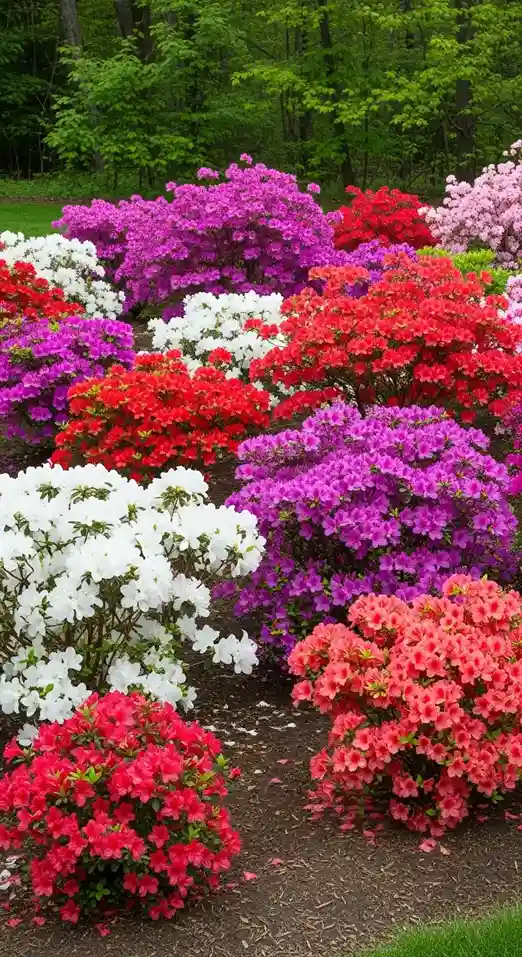
Plant in acidic, well-drained soil enriched with organic matter. Azaleas prefer partial shade, especially afternoon protection in hot climates. Water consistently during dry periods and mulch to maintain soil moisture. Prune immediately after flowering to shape plants and remove dead wood.
23. Serviceberry Trees for Multi-Season Interest
Serviceberry trees offer white spring flowers, edible purple berries in summer, brilliant fall foliage, and attractive bark. These native trees grow 15-25 feet tall, providing food for birds and wildlife while serving as beautiful ornamental specimens with four-season landscape value.

They adapt to various soil types and tolerate partial shade. Plant in spring or fall, watering regularly during establishment. Serviceberries require minimal pruning beyond removing dead or crossing branches. The sweet berries attract birds but can also be harvested for jams and pies.
24. Russian Sage for Silvery Texture
Russian sage produces airy spikes of lavender-blue flowers above silvery, aromatic foliage from midsummer through fall. This drought-tolerant perennial grows 3-5 feet tall, adding soft texture and long-lasting color. Its fine-textured appearance contrasts beautifully with bold-leaved plants in mixed borders.

Plant in full sun with excellent drainage; Russian sage tolerates heat, drought, and poor soil. Cut plants back hard in early spring to encourage compact, bushy growth. Deer and rabbits avoid this fragrant plant, making it ideal for areas with wildlife browsing pressure.
25. Dogwood Trees for Woodland Garden Appeal
Dogwood trees feature showy spring bracts in white, pink, or red, followed by attractive foliage and bright red berries. These understory trees grow 15-30 feet tall with horizontal branching patterns that create elegant, layered forms. Their fall color and winter bark add off-season interest.
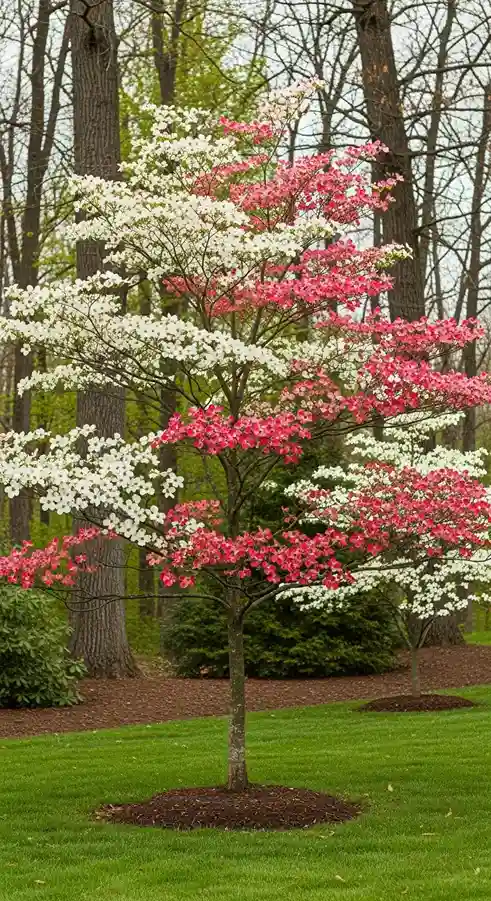
Plant in partial shade with acidic, well-drained soil rich in organic matter. Dogwoods prefer consistent moisture and benefit from mulching. Choose disease-resistant varieties like Kousa dogwood to avoid common problems. They work beautifully under taller trees in naturalistic woodland settings.
Frequently Asked Questions
What are the easiest plants for backyard landscaping beginners?
Daylilies, hostas, black-eyed Susans, and ornamental grasses are excellent choices for beginners. These plants tolerate various conditions, require minimal maintenance, and forgive occasional neglect. They establish quickly and provide reliable seasonal interest without demanding special care or attention.
Shrubs like butterfly bush and spirea also work well for novice gardeners. They grow vigorously, bloom prolifically, and need only basic pruning. Start with native plants adapted to your region for best success rates and lower maintenance requirements.
How do I choose the right plants for my climate zone?
Check your USDA hardiness zone and select plants rated for your zone or colder for reliable winter survival. Consider additional factors like heat tolerance, humidity preferences, and rainfall patterns. Local garden centers typically stock plants suited to your area’s specific growing conditions.
Native plants adapted to your region generally perform best with least maintenance. Consult cooperative extension resources or local master gardeners for plant recommendations. Observe which plants thrive in neighboring yards to identify proven performers for your specific microclimate and conditions.
What’s the best time to plant trees and shrubs?
Fall is ideal for planting most trees and shrubs in moderate climates. Cooler temperatures reduce transplant stress while soil remains warm enough for root establishment before winter. Spring planting works well in cold climates where fall-planted specimens might not establish before hard freezes arrive.
Container-grown plants can be planted almost any time, though avoid extreme heat or frozen ground. Water newly planted specimens regularly during their first growing season regardless of planting time. Fall-planted trees and shrubs establish stronger root systems before facing summer heat and drought stress.
Conclusion
Transforming your backyard with thoughtful plant selections creates a beautiful, functional outdoor space that enhances your home’s value and your quality of life. The twenty-five landscaping ideas presented here offer diverse options for every garden style, from formal hedges to naturalistic wildflower meadows. Whether you prefer the delicate blooms of Japanese maples, the fragrant appeal of lavender borders, or the year-round structure of evergreen shrubs, these plant varieties provide the foundation for stunning landscape designs that evolve and improve over time.
Start with a few key plants that suit your climate, soil conditions, and maintenance preferences, then gradually expand your backyard landscape as your confidence and experience grow. Remember that successful landscaping is a journey rather than a destination—plants mature, tastes change, and gardens evolve season by season. By selecting quality specimens and placing them thoughtfully, you’ll create an outdoor sanctuary that provides beauty, wildlife habitat, and personal enjoyment for years to come.